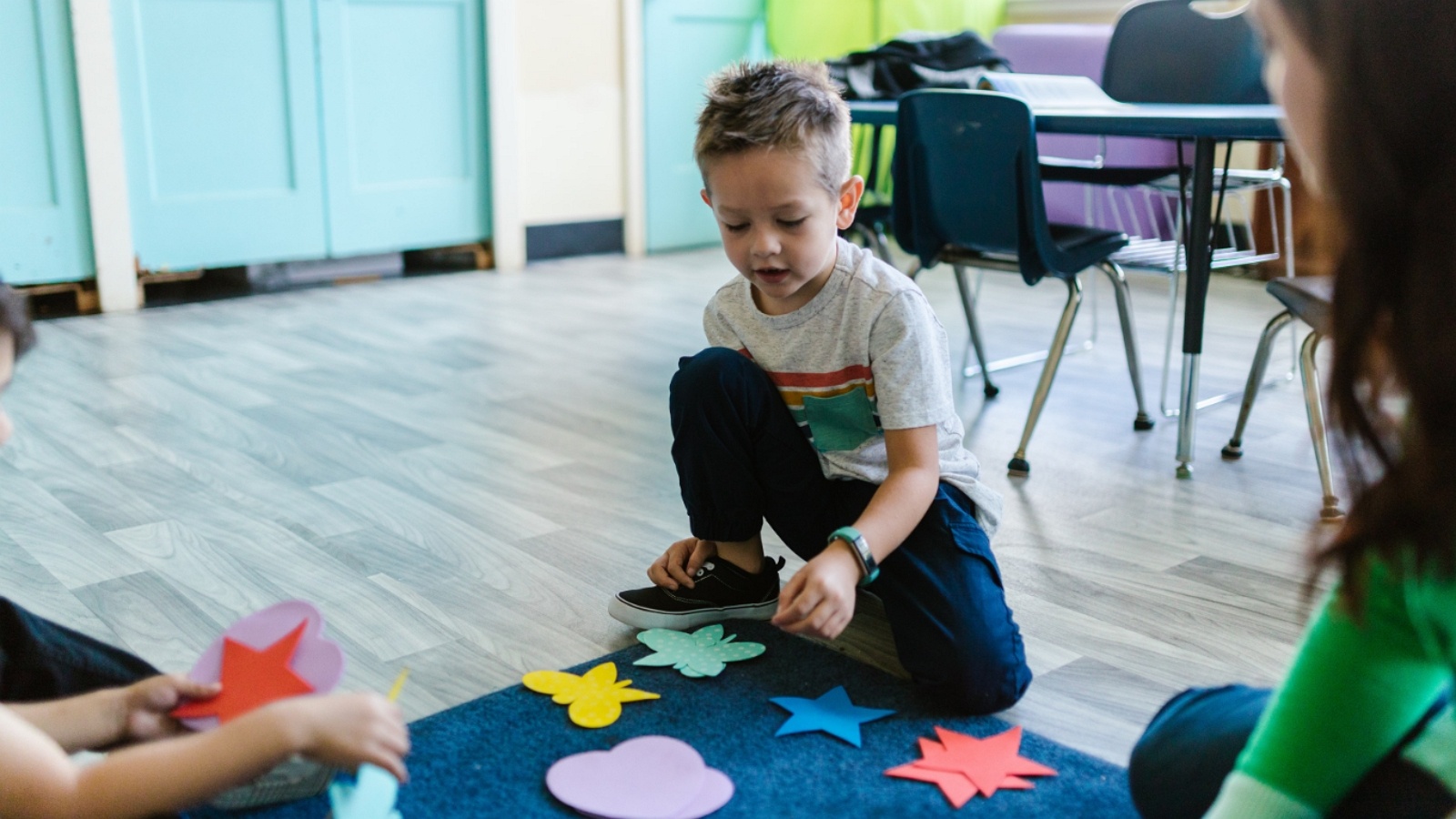

Best Educational Games for 5 Year Olds Online 2026






The best educational games for 5 year olds online 2026 turn short play into letters, counting, and kindness. Five-year-olds learn best when tasks stay short, colorful, and calm. A strong pick keeps ads out and lets kids practice focus without noise.
Parents who started with the best educational games for kids age 3 often keep the same calm style at five. The best educational games for kids 4 years old online still fit short letters and counting play. As focus grows, the best educational games for 6 year olds and the best educational games for 7 year olds add a little more challenge without ads or noise.
Find calm educational games for 5 year olds online in TutoClub!
What Five-Year-Olds Need from Online Learning Games

A five-year-old is often starting kindergarten, or getting ready for it. They can name many letters, count past ten, and follow a simple story. They still need short rounds, clear pictures, and a win that arrives fast. The best educational games for 5 year olds online match that stage. They mix early reading, number sense, sorting, and feelings. They also leave room for pretend play. Care games, dress-up, and tidy-up stories teach the same skills as a worksheet, with less pushback.
Educational games for 5 year olds and kids educational games for a 5 year old sit in that same early band. A younger sibling may still be in educational games for 4 year olds online, while a child who is already reading more may move toward educational games for 6 year olds.
Parents usually look for a few checks before they open a new title:
- Tasks finish in a few minutes, so a child can stop without a fight.
- Speech and pictures carry the lesson, since many five-year-olds are still early readers.
- Ads, surprise shops, and chat with strangers stay off the screen.
- The same account can open on a tablet at home and a phone in the car.
- Play supports letters, numbers, and kindness, not just tapping.
Online learning games for five year olds work best when the goal is clear. A child feeds a pet, sorts shapes, or sounds out a word, then moves on. That loop builds focus without a long lesson. Learning games for kids and kid educational games follow the same idea. Educational websites for kids help when the round starts in a browser instead of an app. Families comparing educational games for kids age 5 often want both school skills and calm play. A library that holds both is easier to manage than a pile of single apps. Kids educational games and educational kids games collect that mix in one reading list. Games for young kids cover the years just before and just after five.
How to Pick a Safe Game for Kindergarten Play
Safety comes first at this age. A good online game for a five-year-old does not ask for a public profile. It does not open outside links. It does not reward longer sessions with louder prizes. How to protect kids online lines up with those checks, and safe apps for kids stay inside a closed family space.
Look for parent controls, a simple login, and content made for early childhood. Ad-free play matters. Pop-ups break focus, and some of them lead to other apps. Offline play after a download also helps on trips and in spots with weak Wi-Fi. Store setup notes sit on the App Store FAQ, the Google Play FAQ, and the Amazon FAQ. Web play notes sit on the web FAQ.
Skill fit matters just as much. At five, useful practice includes:
- Letter sounds and simple words
- Counting, patterns, and early adding
- Sorting by color, size, and shape
- Feelings words and turn-taking
- Everyday routines such as cleaning, cooking, and getting ready
Kindergarten educational games should feel like a play the child would choose. If they talk about the pet they helped or the room they cleaned, the session did real work. If they only remember a prize flash, the game was mostly noise. English learning apps for kids help when sounds and simple words are the main job. Memory games for kids add a short hold on pictures and patterns. A short parent check after play is enough. Ask what they made, who they helped, or which number they used. That one question shows whether the game is teaching. Privacy details live on the privacy FAQ and the privacy policy. Account questions sit on the subscription FAQ.
Best Educational Games for 5 Year Olds Online 2026
1. TutoClub - Best Educational Games for 5 Year Olds Online 2026
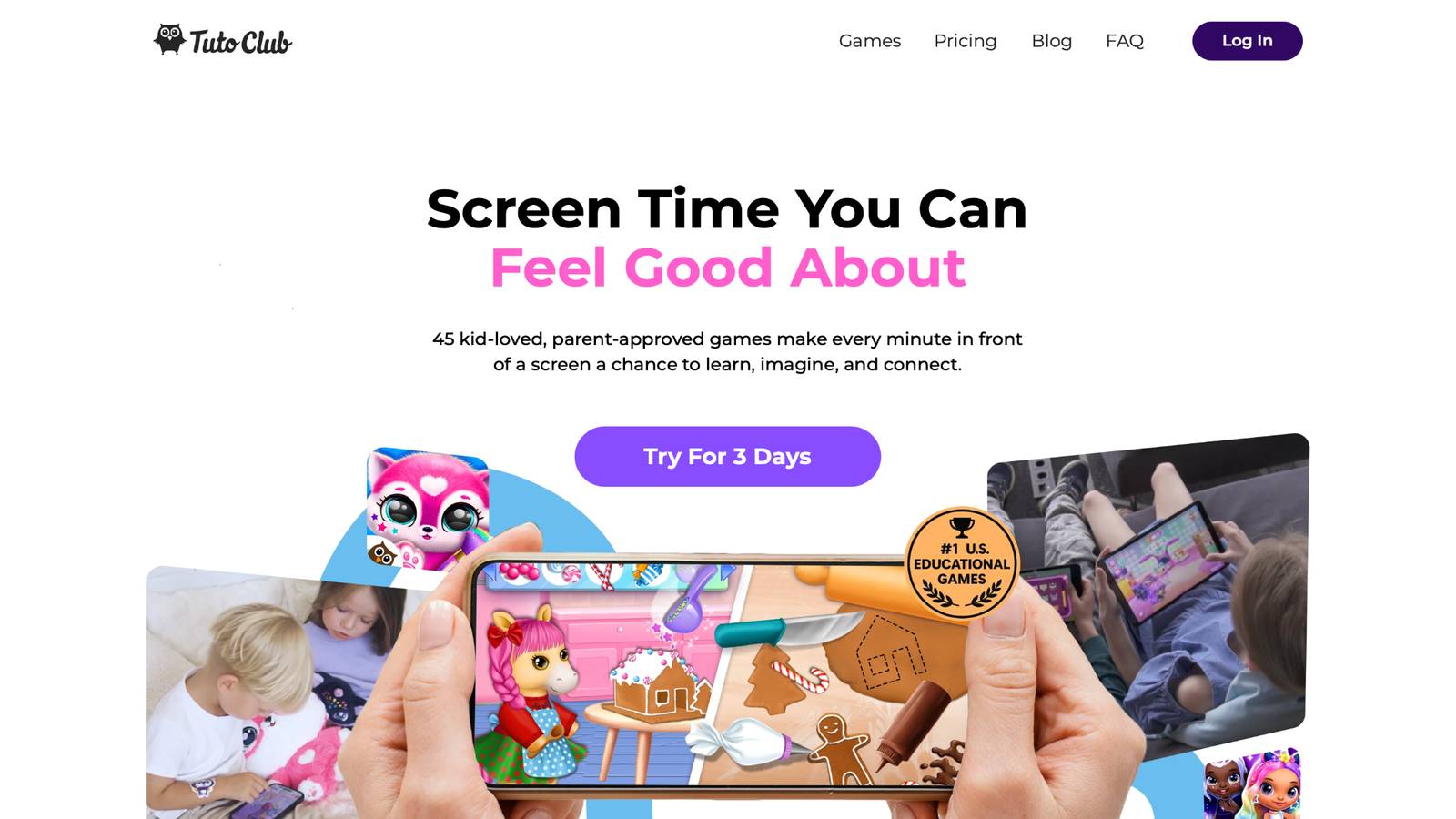
Educational games for 5 year olds from TutoClub open one calm library of TutoTOONS titles built for early play. The studio is based in Vilnius, Lithuania, and designs bright care-and-create worlds that fit a five-year-old’s attention. Kids hatch fluffy pets, practice letters and spelling inside a pet house, and tidy rooms as a game. They also show kindness by looking after a baby unicorn. Fashion quests, castle care, and short dance play sit beside memory puzzles and decorating tasks. The same family login works across devices, and many games keep working after the first download. Sessions stay free of pop-ups, so focus can stay on the story. What makes it feel different is the mix of empathy, routines, and light academic practice in games kids already want to open again.
Facts and information
- A large set of ad-free TutoTOONS games in one family subscription
- Care, create, and routine play that supports kindness, focus, and confidence
- Letters, numbers, and spelling inside pet-care stories such as Smolsies
- Multi-device access, with many titles playable after the first download
- Regular updates and a family-friendly space with no in-app buys while membership is active
TutoClub Overview
TutoClub is your gateway to a magical world of educational games designed especially for children.
As part of TutoTOONS, a leading kids' games studio, we offer premium access to over 45 ad-free games.
Our mission is to blend learning and play, helping kids explore, create, and grow in a safe online space.
Thousands of parents trust us for family-friendly content that sparks imagination and builds essential skills.
Key Features
- Unlimited Access: Unlock full content in all games with no interruptions.
- Ad-Free Experience: Enjoy seamless play without any ads or distractions.
- Skill Development: Games foster creativity, social skills, communication, and more through fun activities like pet care and cleanup challenges.
- Regular Updates: Get new releases, exclusive content, and future updates automatically.
- Easy Subscription: Cancel anytime with no obligations, simple and flexible for families.
Explore Our World
TutoClub provides a rich ecosystem of educational games for kids, featuring ad-free experiences that promote creativity, focus, and emotional growth through play.
This platform turns screen time into valuable learning opportunities, with parent-approved content that builds essential skills and sparks curiosity in young minds.
- TutoClub Games: Over 45 educational games, including popular titles like Fluvsies, Smolsies, and the Sweet Baby Girl series
- Blog: Insights, tips, and stories for families on kids' learning and play
- FAQ: Comprehensive answers to frequently asked questions about subscriptions, features, and more
Get TutoClub on Your Device
TutoClub delivers premium kids educational games directly to your mobile devices, making learning accessible anytime, anywhere.
With apps available on major platforms, families can easily download and subscribe for ad-free play that turns screen time into skill-building adventures.
Perfect for parents seeking safe, engaging content on iOS, Android, or Amazon devices.
Why Choose TutoClub?
We're committed to 100% safe, enriching entertainment that kids love and parents approve.
Join the thousands who've seen their children thrive through playful learning.
Ready to start the adventure?
Start ad-free educational games for 5 year olds online with a TutoClub family login!
2. Fluvsies Academy
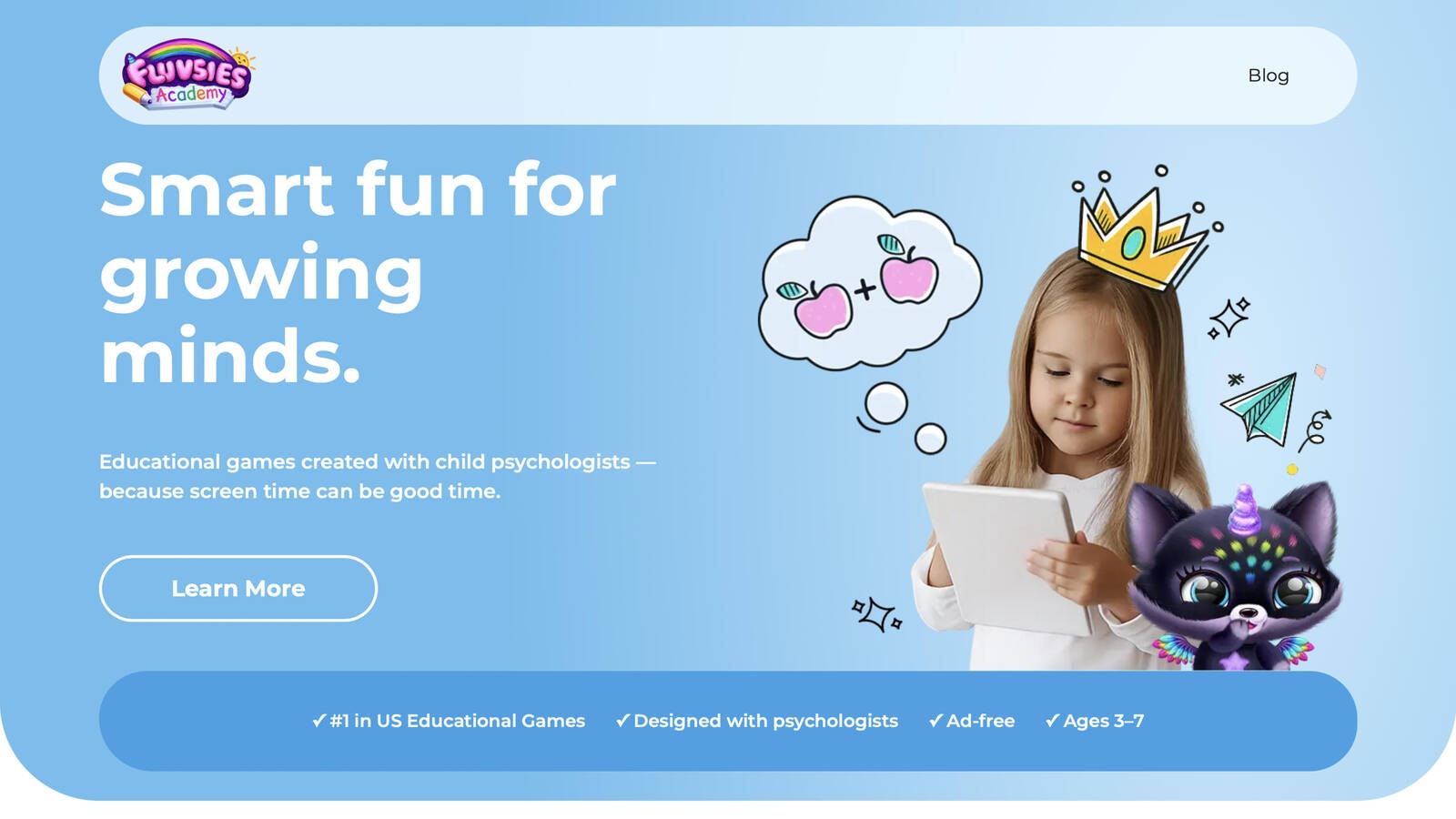
Fluvsies Academy is an early learning home for children ages 3 to 7, made by the same TutoTOONS family that parents already know from pet-care play. Every activity was shaped with child psychologists so the pace stays warm, the art stays friendly, and the tasks match how preschool minds work. A five-year-old can move through language and phonics, number play, logic and attention, sorting, and life skills without feeling pushed into a long lesson. Helping at a shop, brushing teeth, and sorting objects sit beside letter sounds and simple counting. Two modes keep the day balanced. Active tasks ask for focus and a clear answer. Quieter profession stories feel like imaginative play and still introduce real jobs. The app is fully ad-free, and difficulty steps up as the child grows, so a younger sibling and a kindergartener can both find a fit. Characters stay soft and familiar, which helps kids who already love Fluvsies from care games. Short rounds make it easy to stop when a timer rings. For a five-year-old who likes friendly faces and everyday stories, this is a gentle next step that still feels like a game they chose.
Key features
- Language, math, logic, sorting, and life-skill categories
- Active learning tasks plus quieter profession stories
- Age-appropriate steps for children from 3 to 7
- Ad-free play designed with child psychologists
Facts and information
- Built around familiar Fluvsies characters
- Everyday skills such as routines, sorting, and simple jobs sit beside early academics
- Tasks stay short so a five-year-old can finish a round and still feel proud
3. Khan Academy Kids
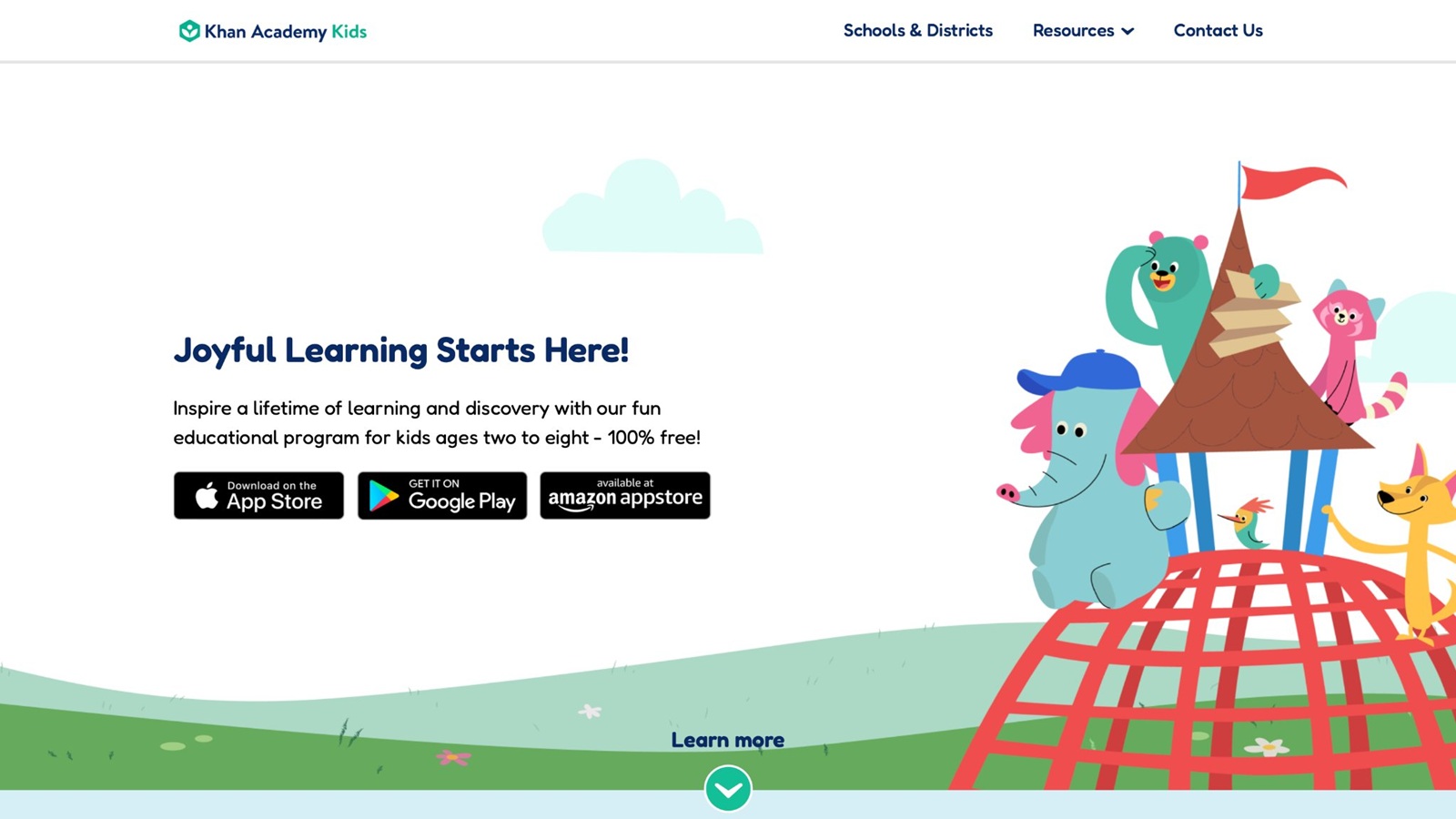
Khan Academy Kids is a free early learning app from the nonprofit Khan Academy, based in Mountain View, California. It is built for ages 2 to 8, which puts a five-year-old right in the middle of the range. Friendly animal guides lead kids through books, drawing, letter play, counting, and feelings activities. The path adapts, so a child who already knows letter names can move toward sounds and simple words, while a child who is still counting small groups stays with those tasks. Parents get a progress view, and many activities work offline after a download. The tone is warm and classroom-friendly, with read-aloud support for kids who are not reading on their own yet. Creative tools let a child draw and record, which adds a make-something break between lessons. Some sessions feel more like a guided lesson than a story game. That structure helps school practice. Kids who only want pretend play may need a parent to start the first round. As a free, ad-free option with a clear learning path, it is one of the steadiest companions for kindergarten skills at home.
Key features
- Reading, math, writing, and social-emotional activities
- Adaptive paths and a parent progress view
- Books, creative tools, and character guides
- Offline use after download
Facts and information
- Made for ages 2 to 8 and often used as a free kindergarten companion
- Content covers early literacy and number sense without ads
- Creative play sits next to guided lessons
4. ABCmouse
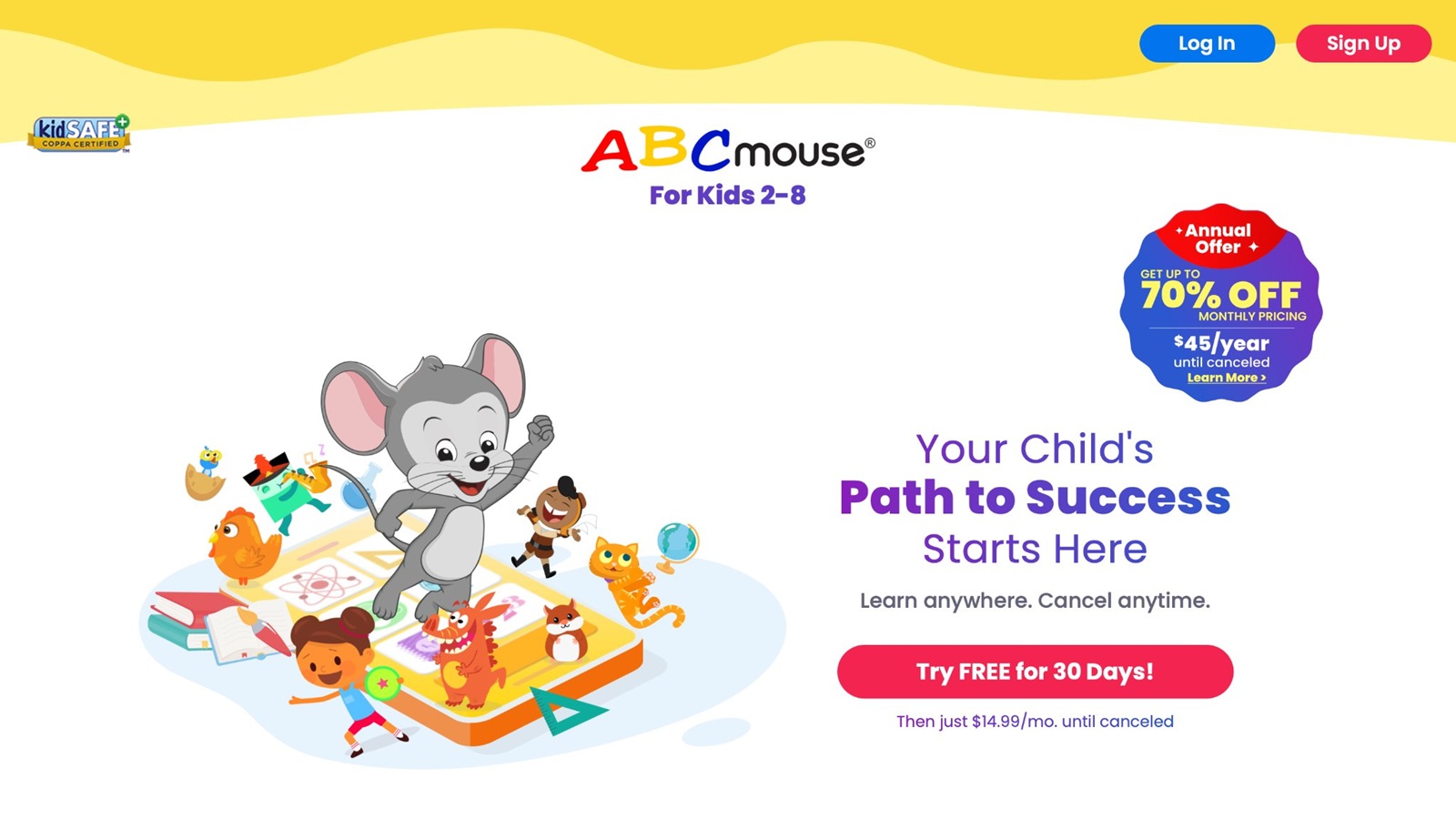
ABCmouse, from Age of Learning in Glendale, California, offers a step-by-step path for children ages 2 to 8. A five-year-old can move through reading, math, science, and art with games, books, songs, and puzzles that build in order. The Learning Path keeps lessons lined up, which helps families who want a clear school-style plan instead of a loose menu. Tickets and avatar rewards mark finished work and keep many kids coming back the next day. The library is very large, so some children need a parent to pick a starting point or they wander. A parent dashboard shows what was finished, which is useful before a parent-teacher chat. Songs and short books support kids who learn by listening. Art and science sit beside core reading and math, so the week does not have to be only letters. The format is closer to a digital classroom than an open care game. Children who like a map and a next step usually settle in. Children who want free pretend play may use it for a short block, then switch to a story game.
Key features
- Guided path across reading, math, science, and art
- Books, songs, puzzles, and games in one login
- Parent progress tools
- Rewards that mark finished lessons
Facts and information
- Aimed at pre-K through early elementary
- Lessons build in order rather than as single pick-up games
- Art and science sit beside core reading and math
5. PBS KIDS Games
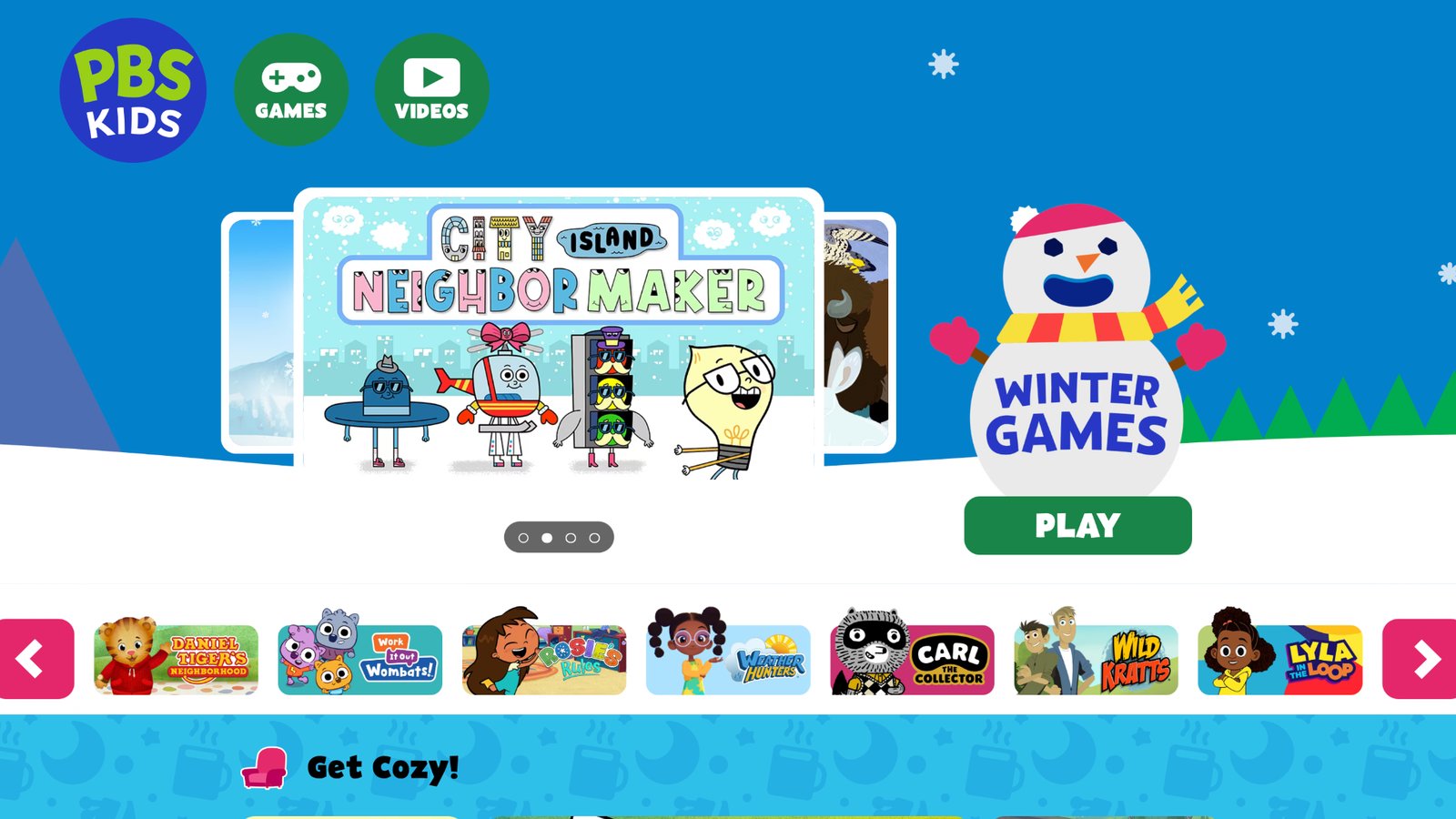
PBS KIDS Games is a free collection tied to shows many five-year-olds already know, including Daniel Tiger’s Neighborhood and Wild Kratts. PBS is based in Arlington, Virginia, and the games follow the same calm public-media tone as the shows. Activities cover feelings, science, reading, and simple math through puzzles, dress-up, and short quests. The games are ad-free and built for ages 2 to 8. Because each game stands alone, a child can hop between characters after one round. That freedom is fun on a rainy afternoon. It is less of a single learning path than a full curriculum app, so skill growth depends on which games a parent opens. Daniel Tiger titles are especially useful for feelings words and routines. Wild Kratts titles lean toward animals and simple science. Parents who already trust the shows usually find the art familiar and the instructions easy to follow. A small limit is the open catalog: without a pick, some kids bounce. Chosen with a purpose, these games are a gentle, free add-on to home play.
Key features
- Character games linked to PBS KIDS shows
- Feelings, science, reading, and math activities
- Browser and app play
- Ad-free early childhood content
Facts and information
- A wide mix of short games rather than one locked path
- Useful when a child already loves a specific show
- Strong fit for social-emotional play as well as school skills
6. Starfall
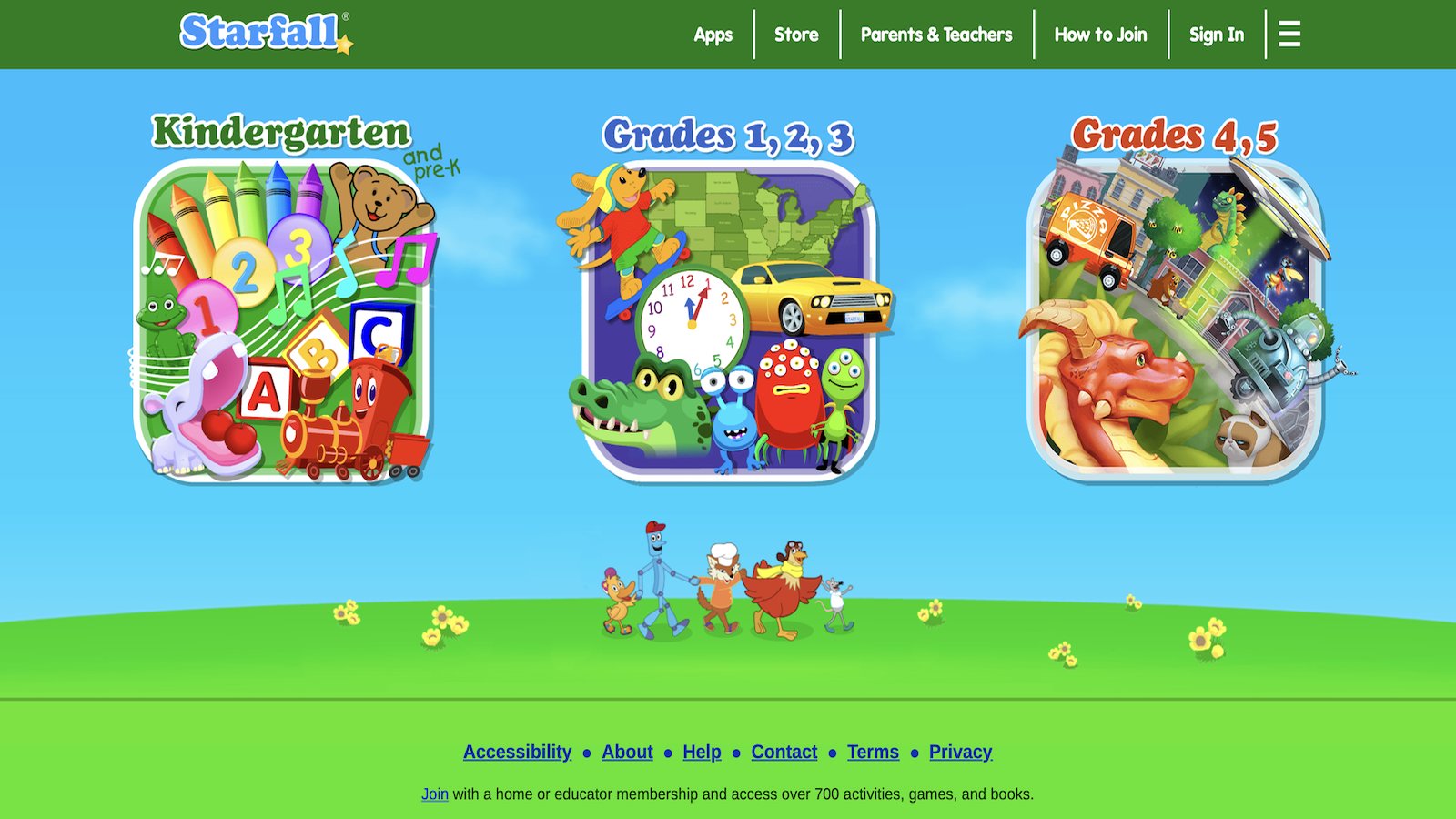
Starfall is an early reading and math platform from Starfall Education, long used in classrooms, with a home version for pre-K through early grades. Songs, animated books, and clickable letters help a five-year-old hear sounds and match them to print. Math activities cover counting, patterns, and simple number ideas. The style is classic and direct. Some kids find that clarity comforting. Others find the art plain next to newer games. A free section lets a family try letter songs and short books before opening the fuller home set. The multisensory loop, hear it, see it, click it, suits emergent readers and children learning English. It is not a pretend-care world, so empathy and dress-up are not the focus. Families who want reading readiness often keep Starfall as the letter block and use a story game for the rest of screen time. Repetition is the teaching method. A child may play the same sound page more than once, and that repeat is part of how the skill sticks.
Key features
- Phonics songs, books, and letter activities
- Early math practice
- Web and mobile access
- Content used in many early classrooms
Facts and information
- Strong focus on letter sounds and early reading
- Best for children who like clear, repeatable practice
- Less story-game play than care or adventure titles
7. ABCya
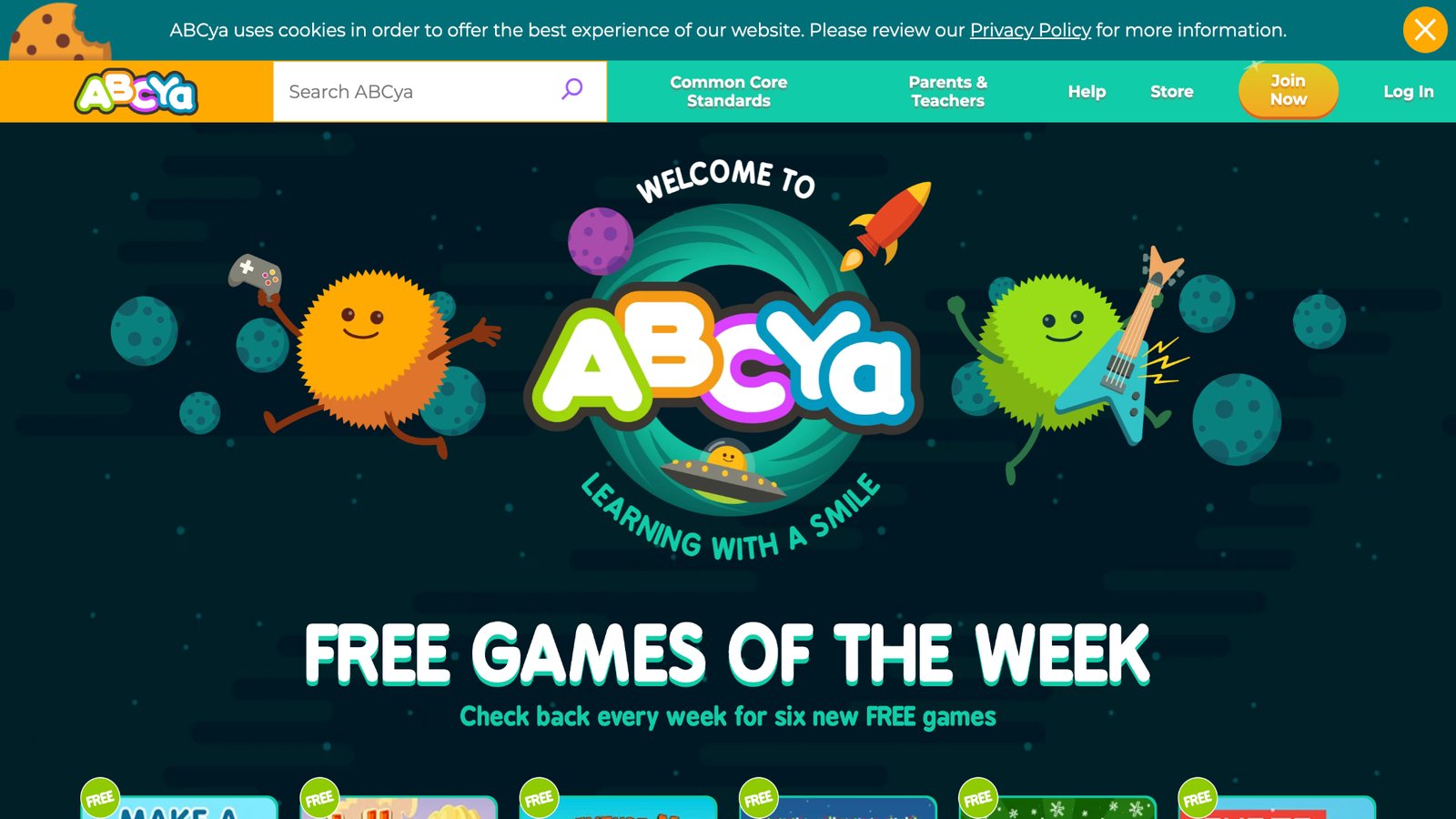
ABCya offers teacher-made games from pre-K through later elementary, so a five-year-old can stay with kindergarten activities while an older sibling uses higher grades. The site is widely used in U.S. classrooms and at home. Math, reading, puzzles, and typing games open in a browser or app. Kids can pick a single game and finish it fast, which suits short attention spans. The open menu is a strength and a small snag. Without a path, some children bounce between games instead of staying with one skill. Parents often use it as a practice add-on, not the only learning home. Racing and building themes make number practice feel like a break. Logic puzzles add a quiet focus task. Because the range runs well past age five, a parent should filter by grade so a kindergartener does not land in a game meant for older students. Updates add new activities through the year. It works well for a targeted session: one counting game, then off the screen.
Key features
- Games sorted by grade and subject
- Reading, math, logic, and typing practice
- Short activities with quick feedback
- Browser-friendly play
Facts and information
- Teacher-created activities aligned with school topics
- Useful for mixed-age families
- Works well for a single skill session
8. Teach Your Monster to Read
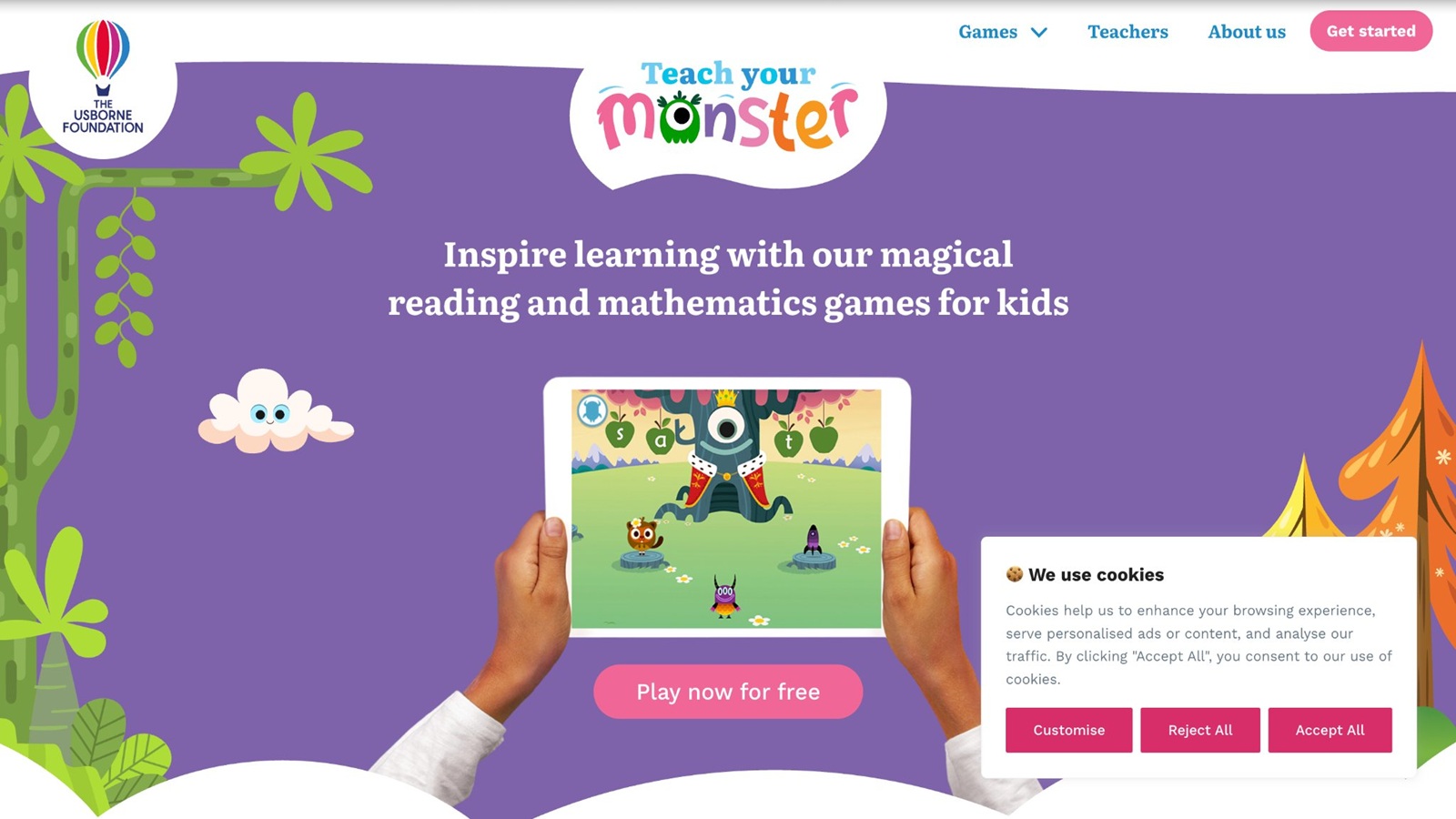
Teach Your Monster to Read turns phonics into a story. A child builds a monster and guides it through letter sounds, word building, and early reading. The program was developed with reading specialists, including work linked to Roehampton University, and it lines up with common school phonics stages. The company behind the games is based in the United Kingdom. It is a strong match for a five-year-old who is learning to read and likes a character they made themselves. Colorful minigames break the path into small wins, so a child can stop after one island and still feel done. The focus is narrow on purpose. Math and life skills are not the center, so families often pair it with a broader game library. Some kids want to replay the monster maker more than the reading tasks, and a parent may need to nudge them back to the next sound. Even so, the story frame keeps early reading from feeling like a drill. It is one of the clearer phonics games for this age.
Key features
- Custom monster and story path
- Letter sounds, word building, and simple reading
- Staged games that follow phonics progress
- Playful art that keeps early readers engaged
Facts and information
- Built with input from reading experts
- Best when early reading is the goal
- A focused tool rather than a full-subject library
9. Homer
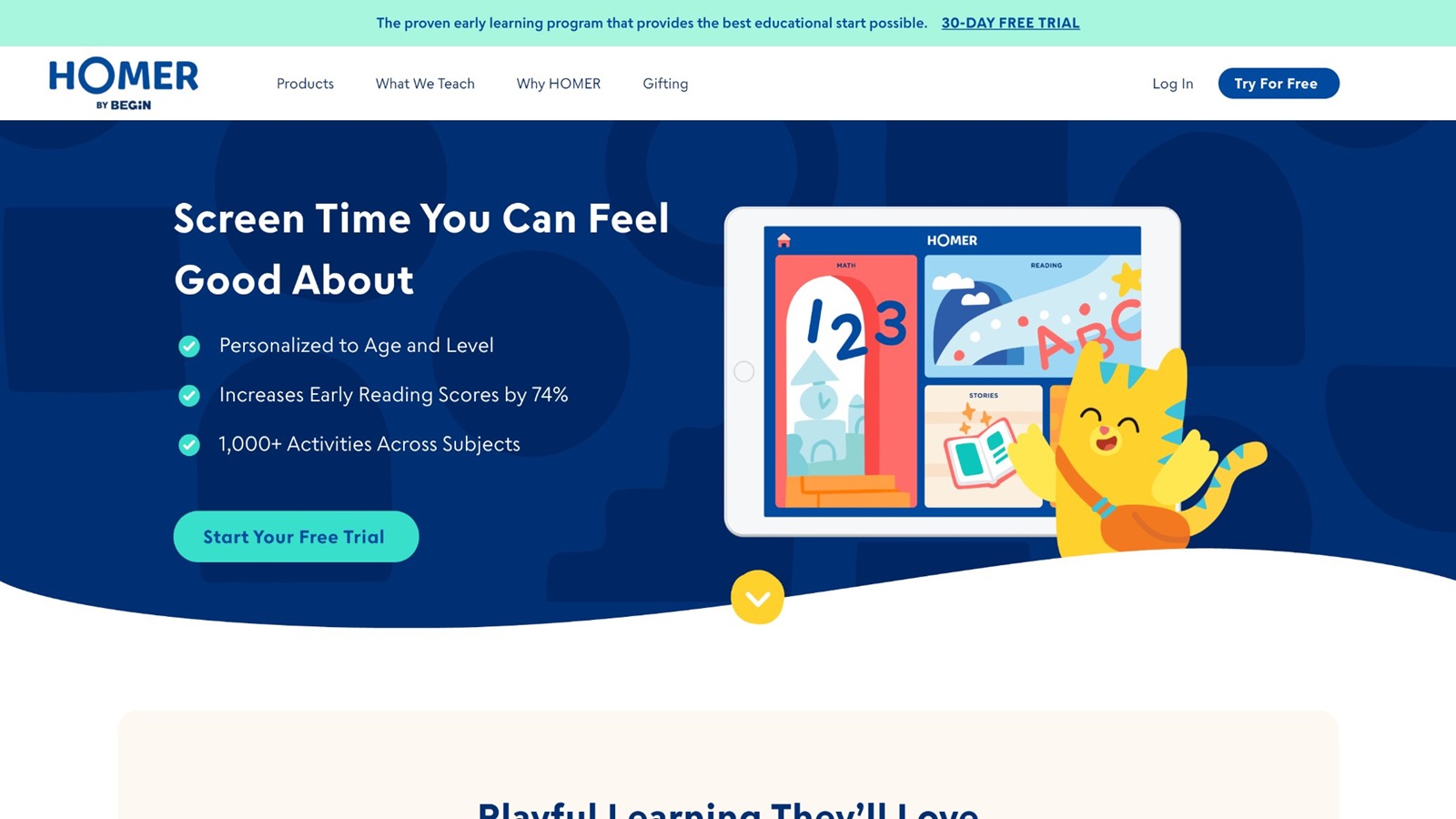
Homer, part of the Begin family of early learning apps in New York, personalizes a path for ages 2 to 8. A five-year-old starts with a short placement and then sees reading, math, and creativity activities at that level. Lessons are short, characters are friendly, and interests such as animals or space can shape what appears next. Read-aloud support helps children who are not ready to read every word alone. Some children like the guided order because they always know the next step. Others want more open pretend play than the lesson format allows. It is a steady choice for daily reading practice at home, especially when a parent wants a placement instead of guessing the level. Creative breaks sit between skills so the session is not only flashcards. The path can feel linear if a child would rather pick a game from a shelf. Used for a few minutes a day, it supports kindergarten reading without asking for a long sit.
Key features
- Placement and a personal learning path
- Reading-first activities with math and creative extras
- Interest-based themes
- Short sessions for young attention spans
Facts and information
- Designed for ages 2 to 8
- Strong on early literacy routines
- More lesson path than open-world play
10. Duolingo ABC
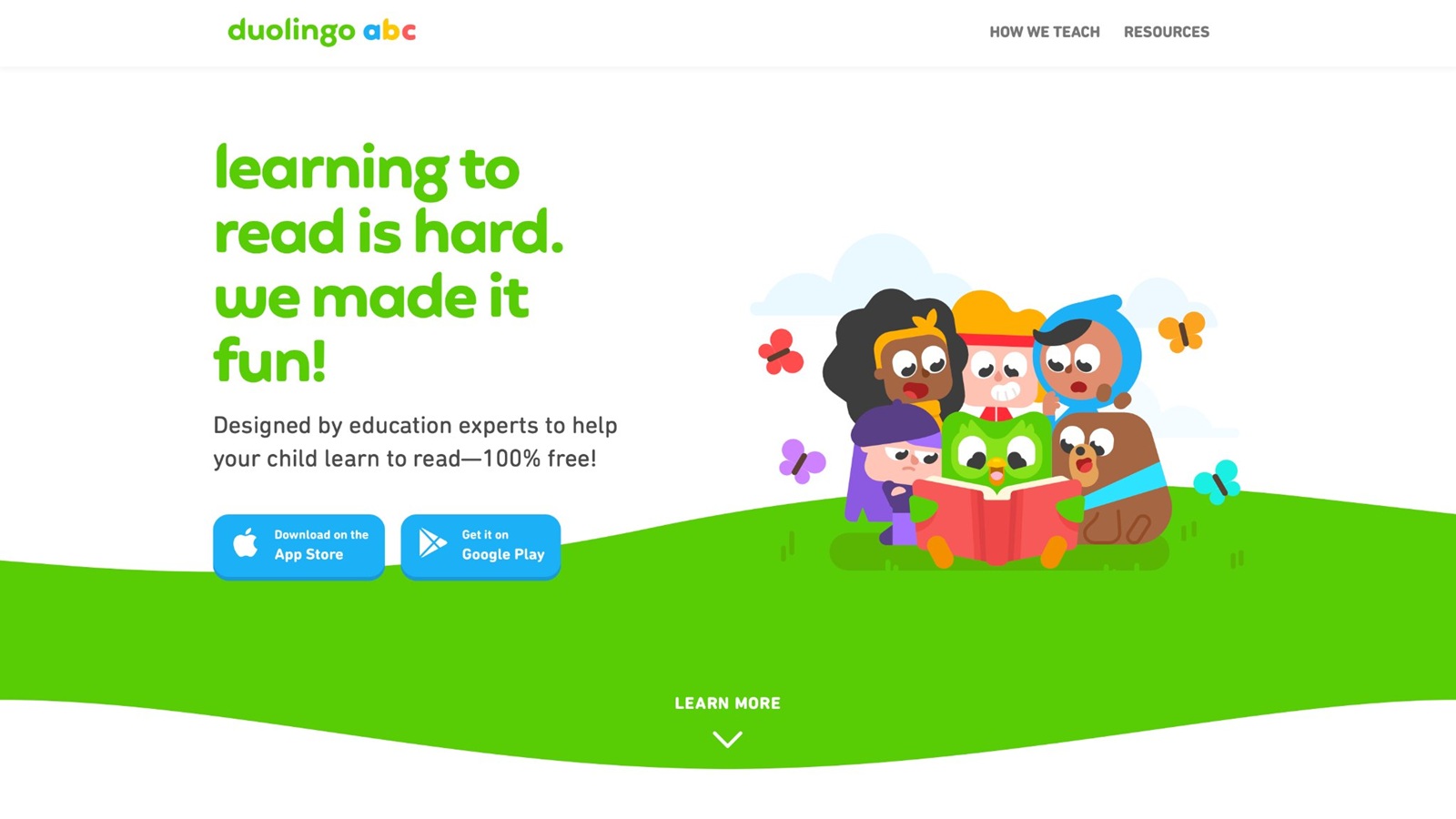
Duolingo ABC comes from Duolingo in Pittsburgh and focuses on early reading for young children. Letter tracing, sounds, and short stories make up the core. A five-year-old who is ready for phonics can practice a little each day without a long setup. The art is simple and the steps are clear, with taps and traces that small hands can manage. It does not try to cover science, feelings, or pretend care, so it works best as a reading add-on next to a wider library. Kids who want a bigger world may finish a lesson and ask for a story game next. The bite-size format fits a before-dinner block. There is less parent reporting than in a full curriculum app, which some families like and others miss. Instructions stay visual, a help for early readers. As a focused literacy game, it does one job well and leaves other skills to different titles.
Key features
- Letter sounds, tracing, and early words
- Short reading steps
- Clear, simple screens
- A focused literacy path
Facts and information
- Built for beginning readers
- Useful beside a broader play library
- Narrow subject range by design
11. ScratchJr
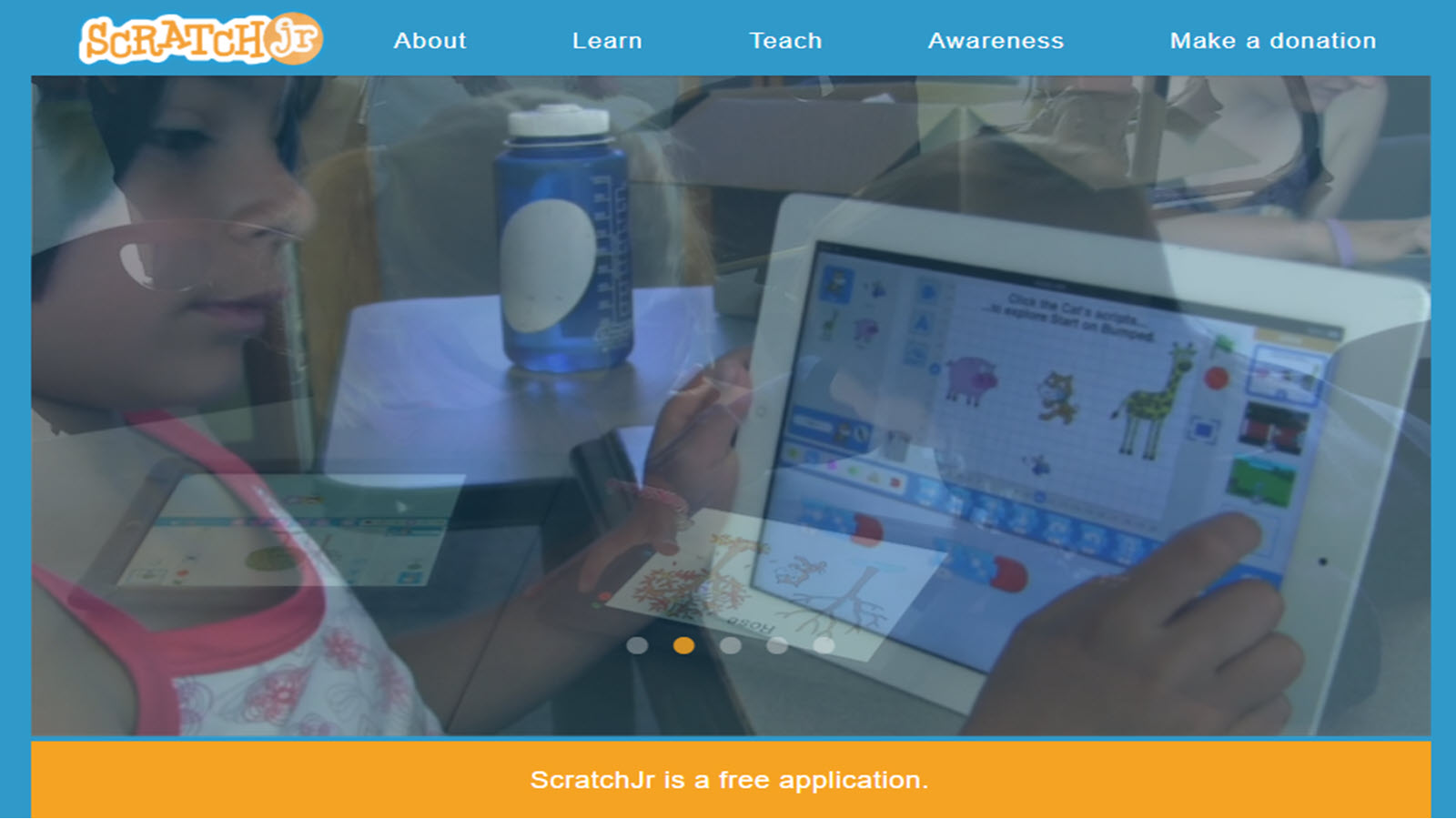
ScratchJr comes from the DevTech Research Group, the Scratch team, and partners linked to Tufts and MIT in Massachusetts. It lets children ages 5 to 7 snap blocks together to make characters move. A five-year-old can learn sequence, cause and effect, and simple storytelling by programming a short scene. There is no reading-heavy menu, which helps early learners. It is a creation tool more than a curriculum. Some kids need a parent nearby for the first sessions. After that, many build their own little stories with motion, sound, and speech bubbles. There are no points and no level map, so the reward is the scene itself. That open style delights makers and can stall children who want to be told the next task. A short prompt from a parent, such as "make the cat jump," is often enough. It will not replace letter practice, but it is a rare online game at this age that asks a child to build, not only to answer.
Key features
- Block coding for young children
- Character movement, sound, and scenes
- Story projects a child can save
- No ads in the core creative flow
Facts and information
- Aimed at about ages 5 to 7
- Builds sequencing and early logic
- Best as a make-something session, not a full school path
12. Moose Math
.jpg)
Moose Math, from Duck Duck Moose, sets early number play inside a town children can rebuild. Five-year-olds count, add, sort, and match shapes while they run a shop or help animal neighbors. The math lines up with common kindergarten goals, and the rounds stay short. The art is friendly, and town rewards give a reason to finish a set of problems. After many sessions the town goals can feel repetitive, so it works best in rotation with other games. Number talk is built into the play: a child counts dots, makes a smoothie order, or completes a pattern. That is closer to class math than a pure story game. Reading is not the focus. Families who want number sense often pair it with a phonics title. Duck Duck Moose is known for calm early learning apps, and Moose Math keeps that tone. It is a clear pick when counting and early adding are the skills a family wants to grow.
Key features
- Counting, adding, sorting, and shapes
- Town-building rewards
- Short math rounds
- Kindergarten-level number practice
Facts and information
- Made for early math, with common kindergarten goals
- Playful setting for children who like collecting and building
- Narrower than a full reading-and-feelings library
13. Reading Eggs
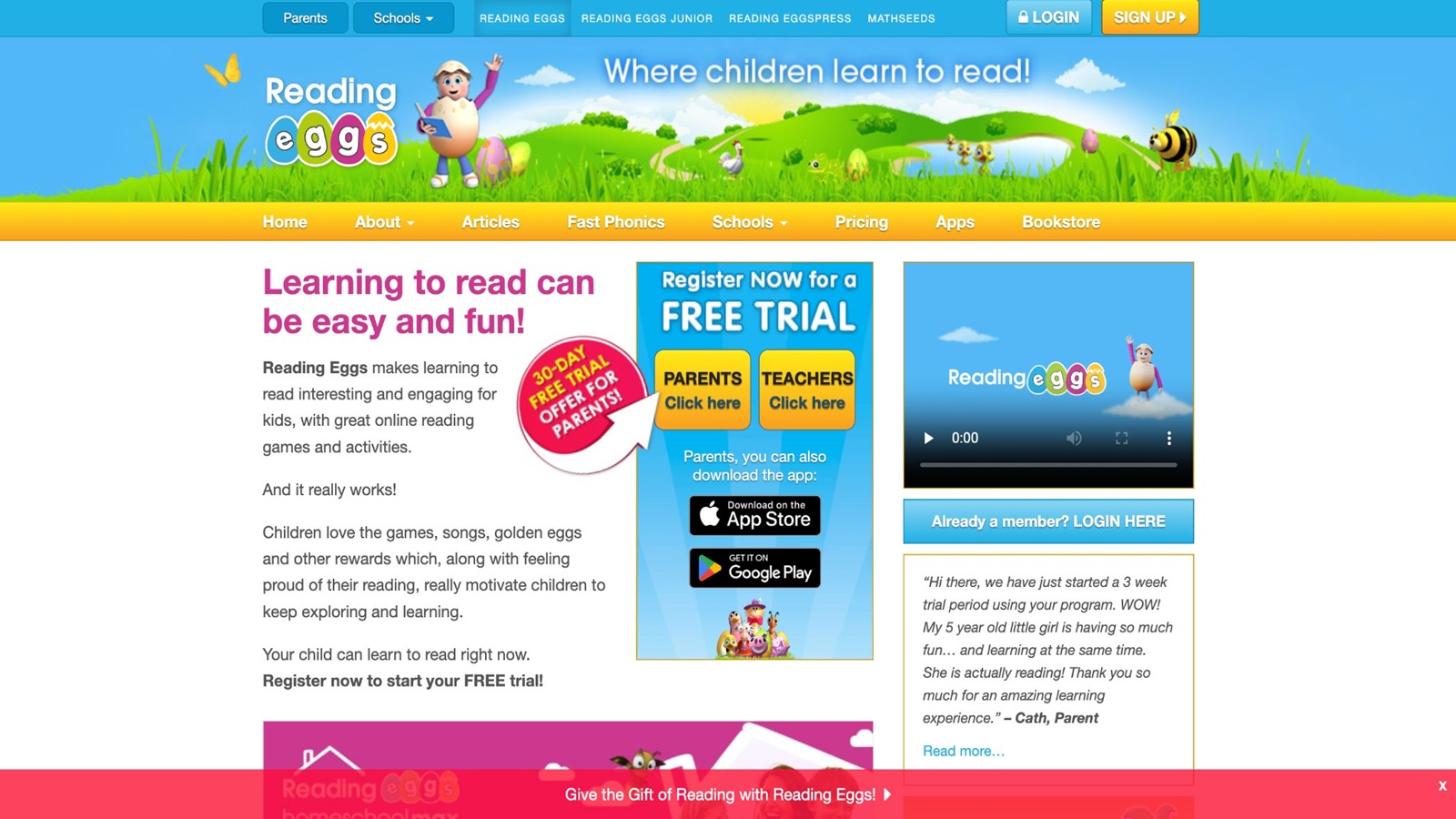
Reading Eggs, from 3P Learning in Sydney, Australia, is a structured reading program for early learners, with a kindergarten placement that suits many five-year-olds. Lessons move from letter sounds to simple books, with games and rewards between steps. A child hatches pets and earns items as they finish maps, which keeps the path from feeling like a bare workbook. Read-aloud support helps before independent reading starts. The sequence is clear, so a parent can see where the child sits. Some kids love the map. Others find the lesson order slower than a pick-up game. Spelling and sight-word practice appear as reading grows. It is less about pretend care and more about reading stamina. Used a few times a week, it gives a five-year-old a steady letter-to-book bridge. Families who want feelings play or open creating usually add a second title beside it.
Key features
- Placement and a mapped reading path
- Phonics, books, and spelling games
- Rewards tied to finished lessons
- Read-aloud support for early readers
Facts and information
- Built as a reading program for young children
- Lessons follow an order from sounds to simple books
- Stronger on literacy than on open pretend play
14. Lingokids
Lingokids offers a broad Playlearning mix for ages 2 to 8, with games, songs, and videos across literacy, math, science, art, and social-emotional skills. The company has roots in Spain and serves families in many countries. A five-year-old can practice phonics, number sense, and everyday themes in short activities led by bright characters. The range is wide, which is useful when a parent wants one app for several subjects. The menu can also feel busy, so a younger kindergartener may need a parent to choose the first activity. Songs help children who learn by listening. Offline play is available for many activities after download. It is not a single story world, so care and pretend play are lighter than in a pet game. As a mixed-subject option, it covers a lot of kindergarten ground in a playful format, with the best results when sessions stay short and chosen.
Key features
- Games, songs, and videos across several subjects
- Phonics, math, and creative activities
- Character-led short tasks
- Offline access for many activities
Facts and information
- Aimed at ages 2 to 8
- Mixes academic play with music and art
- A wide catalog that works best with a parent pick at the start
15. Mathseeds
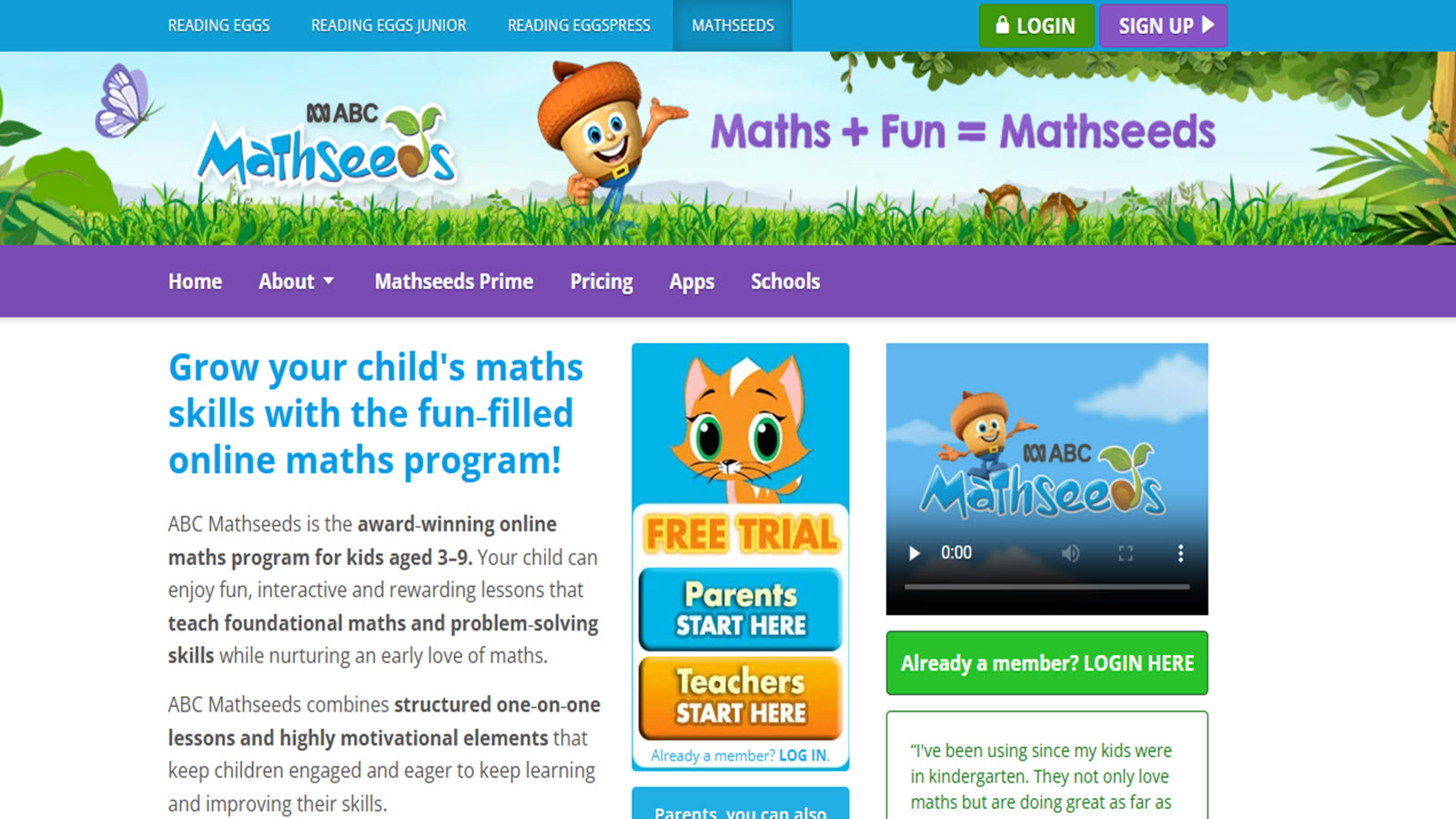
Mathseeds, also from the 3P Learning family behind Reading Eggs, turns kindergarten math into a mapped adventure. Friendly characters, pets, and a treehouse give five-year-olds a place to return after each lesson. A placement starts the child at a fitting step instead of forcing every learner through the same first page. Counting, patterns, shapes, and early adding show up as short games. Golden rewards and a home base keep the tone light. The path is more structured than a town-building math game, which helps families who want to know the next skill. Some children want more freedom to roam. Reading is not the main job here, so it pairs well with a phonics title. End-of-lesson checks show whether a skill stuck. For a five-year-old who likes characters and a clear next step, Mathseeds is a steady number-sense option.
Key features
- Mapped early math lessons
- Placement so the path can start at the right step
- Pets, rewards, and a home base
- Counting, patterns, shapes, and early adding
Facts and information
- Built for early elementary math, including kindergarten
- Lessons follow an order with short checks
- A companion-style fit next to a reading game
Skills to Practice at Age Five
Five is a bridge year. Many children can hear the first sound in a word, count a small set, and wait for a short turn. Online games help when they practice those skills in context. Learning through play activities and learning through play examples show how a story can carry a skill without a lecture.
Reading play should include letter sounds, not only letter names. A child who can match "m" to a picture of a moon is building a skill they will use in class. Number play should include counting real groups, not only tapping a number button. Sorting and patterns support both math and focus. Fun educational games for kids and educational games for kids that are fun keep that practice light.
Feelings matter at this age too. Games where a child helps a character, waits, or names a mood give language for the classroom. Preschool and early kindergarten games that include care routines often carry this skill without a lecture. Social emotional games for kids, emotional games for kids, and emotional regulation games for kids all sit in that feelings lane. Responsibility games for kids turn tidy-up and care into the task. Confidence building games let a child finish a small job and feel proud.
A simple weekly mix works for many families:
- Two short reading or letter sessions
- Two short number or sorting sessions
- One creative or care session
- One shared session with a parent
That mix keeps school skills fresh and still leaves room for joy. Dress up games for girls online can fill the creative block. A Fluvsies paper doll printable moves the same characters off the screen.
A Simple Weekly Plan for Online Play
A plan removes the daily debate. Pick two or three games and rotate them. New titles every day can overstimulate a five-year-old. A family weekly planner can hold the letter block, the number block, and the care round so they do not pile into one sitting.
Try this rhythm:
- After school, one letter or number game for a few minutes.
- Later, one care or creative game as a wind-down.
- On the weekend, a shared round where the child teaches you the rules.
Keep the tablet in a family space. Ask one question at the end. Stop when the round ends, even if the child wants "one more." The stop is part of the lesson. Learning apps for kids can fill those short blocks. Educational but fun games for kids and educational and fun games for kids keep the wind-down from feeling like a second lesson.
Learning games online fit this plan when they do not punish a short session. Care games, phonics rounds, and sorting tasks all have a natural finish. That is the format most five-year-olds can handle. Games for kids online educational and kids games online educational describe that same short-round style. Games for kids educational and an educational games for kids app help when the plan lives on a phone.
Parents who want answers on accounts, devices, and downloads can check the FAQ section. Multi-device login and offline play after download are the details that matter on busy weeks. Family help requests go through support. A sibling who is younger may still need apps for preschoolers or educational games for kids age 3 in the same week.
FAQ
What are the best educational games for 5 year olds online?
The best educational games for 5 year olds online mix short tasks with skills a kindergartener can use the same day. At five, that usually means letter sounds, counting real groups, sorting by color or size, and simple care stories about helping someone. Spoken help matters, because many children this age are still early readers and should not have to decode a menu before they can play. Educational games for kids that keep letters, numbers, and kindness in one calm, ad-free library are easier to manage than a stack of single apps with different logins. A strong pick also has a clear end to each round, so stopping does not turn into a fight. The art should stay gentle, the task should be obvious from the pictures, and the same family login should open on more than one device. After the first download, play that still works without a constant connection is a real help on trips and in rooms with weak Wi-Fi. Empathy, focus, and everyday routines belong in the same session as early reading and number sense. The right game is one a child can finish, talk about, and leave when the story wraps.
Are online games good for kindergarten readiness?
Online games can support kindergarten readiness when they practice the same skills a classroom expects. Letter sounds, counting groups, patterns, turn-taking, and feelings words all show up in a typical kindergarten day. A child who can match a sound to a picture, wait for a short turn, or name a mood is building habits that transfer off the screen. Games do not replace books, blocks, outdoor play, or a real conversation at the table. They work as a small extra beside those habits, not as the whole plan. Online kids educational games with spoken instructions and a clear end to each task are the ones that help most. Care routines, such as tidying a room or looking after a character, also give language for kindness and responsibility. Sorting and simple patterns support both math and focus, which teachers notice when a child can stay with a short job. If a child can say what they practiced, the session supported readiness. If they only remember a flashing prize, the game did not do much school work.
How long should a 5 year old play learning games?
Many families do well with short blocks rather than one long sitting. A few minutes of focused play, then a break, fits a five-year-old better than an open-ended session that never really ends. Games that finish a round on their own make the stop easier, because the child can see that the task is done. Play in a shared room, stay nearby for a new title, and stop while the mood is still good. High-quality content and a parent nearby matter more than a perfect timer. Fun games that are educational for kids with a natural finish fit this pattern well. A later care or creative round can sit apart from the letter or number block, so the day is not one long stretch of screen time. The same family login on more than one device also helps when play moves from the tablet at home to a phone in the car. A weekend round where the child explains the rules adds a shared moment without adding a second long session. A clean stop at the end of a round is part of the lesson, not a punishment.
What should parents avoid in games for five-year-olds?
Parents should skip games with ads, open chat, or links that leave the app. Titles that push extra buys in the middle of play are a poor fit too, because a five-year-old cannot tell a shop from the game. Very fast reward loops can make stopping harder and crowd out the actual skill. Loud pop-ups and surprise characters that lead somewhere else break focus just as fast. A public profile or a chat box is another skip at this age, since a kindergartener cannot judge who is on the other side. A better sign is a task with a purpose, such as helping a character, building a word, or sorting a group. Kids games educational picks keep the session inside a family login and off public profiles. Offline play after a download is another useful check for trips and weak Wi-Fi. Parent controls and a simple account make the setup easier to trust. Updates should refresh the stories without changing the calm tone. If you cannot tell what the child learned, a different game is a better next pick.
How can parents tell that online play is teaching a five-year-old?
A useful check is what the child says after the round. If they talk about a pet they helped, a room they cleaned, a shape they sorted, or a sound they matched, the game did real work. If they only remember a prize flash, the session was mostly noise. Educational games for toddlers are a different stage, while age-five play should include care, letters, and sorting a child can talk about afterward. One question at the end is enough: what did you make, who did you help, or which number did you use? The answer shows whether focus, kindness, or early school skills were part of the play. Over a week, a mix of reading, number play, and a shared round tells you more than any single session. A child who can teach you the rule of the game has usually understood it. Watch the next real-world moment too. A child who sorts toys by color, sounds out the first letter of a snack, or waits for a turn at the table is carrying the game into the room. That carryover is the clearest sign the play was worth the time.
Read Also:
- Best Educational Games For Kids Age 5 in 2026
- Best Educational Games For Kindergarten in 2026
- Best Games For Preschoolers in 2026
- Best Kids Learning Games Online in 2026
- Best Educational Online Games For Kids in 2026
Find calm educational games for 5 year olds online in TutoClub!