

Best Educational Kids Games






Finding great educational kids games can turn screen time into a valuable experience. These games help children develop key abilities like problem-solving, creativity, and emotional awareness while keeping them engaged. With so many options out there, parents often seek ad-free choices that align with developmental needs. Discover the best educational kids games in 2026 that blend fun with learning, perfect for sparking curiosity and building skills in young minds.
Families looking for more options can find the best educational games for kids iPad, alongside carefully selected best mobile games for kids and engaging tablet games for kids. Additional roundups of the best kids games educational and the best fun educational games for kids highlight age-appropriate titles that combine learning, creativity, and safe screen time.
Discover the best educational kids games- TutoClub
Why Educational Games Boost Child Development
.jpg)
Educational games play a big role in helping kids grow. They encourage active participation, which leads to better retention of concepts compared to passive activities. Kids interact with characters and scenarios that teach empathy and decision-making. Research from sources like the American Academy of Pediatrics shows that well-designed games support cognitive and emotional progress.
Many families notice improvements in focus and confidence when children use these tools regularly. Some games even promote family bonding by allowing joint play sessions. After trying various options, parents often turn to reliable platforms for kids learning games that deliver consistent benefits.
To support these benefits, parents can explore targeted categories of educational games designed specifically for child development. Starting with the best safe games for kids ensures a secure environment, while brain games for kids strengthen cognitive abilities and memory games for kids enhance recall and concentration. Additionally, the best emotional games help children better understand feelings, build empathy, and develop emotional intelligence in a fun, interactive way.
How to Choose the Right Educational Kids Games for Your Child
Choosing the right educational kids games requires focusing on your child’s age, interests, and developmental needs. Start by evaluating whether the game supports key skills like brain games, memory games, confidence building, and responsibility skills.
Look for fun and educational games with clear learning goals, age-appropriate difficulty, and short sessions that match young attention spans. Prioritize options that offer adaptive challenges so children stay motivated without frustration. Check for strong parental controls, minimal ads, and balanced screen time features. The top best educational kids games also encourage real-world application of skills, helping children develop independence and responsibility while having fun.
What Makes a Great Educational Kids Game in 2026?
A great educational kids game in 2026 successfully merges entertainment with real developmental benefits. It feels like play first, so children remain engaged while naturally absorbing skills.
Key characteristics include:
- Balanced design that develops brain, memory, logic, and creativity
- Adaptive difficulty that grows with the child’s abilities
- Strong focus on confidence building through positive reinforcement
- Elements that teach responsibility, patience, and independent problem-solving
- Safe, ad-light environment suitable for different ages
The strongest fun and educational games within best educational kids games turn learning into joyful exploration. They support multiple skills at once, provide clear progress tracking for parents, and maintain high replay value so children keep practicing without pressure. This combination creates lasting benefits for cognitive growth and emotional development.
Educational Games for Different Age Groups
Educational games match skills to each stage of a child's growth. Toddlers explore simple matching and colors that build early recognition. Preschoolers enjoy stories and routines that teach sharing along with basic counting. Older kids work on puzzles that sharpen logic and planning abilities.
Many families discover options through educational games for kids that support varied ages and needs. These experiences pair well with tablet games for flexible play at home or on the go. Parents often see improvements in focus during short daily sessions. Activities centered on character care encourage kindness in gentle, everyday ways. This style keeps learning natural and tied closely to play children genuinely enjoy.
Types of Skills Built Through Play-Based Learning
Different activities target specific areas while blending together smoothly. Logic puzzles strengthen problem-solving skills for children as they test various solutions. Storytelling boosts imagination and language skills in creative ways. Routine challenges help build responsibility through repeated gentle practice.
The best educational kids games often combine creativity with focus and social awareness. Open-ended design features let kids create their own worlds and stories. Emotional growth appears naturally when children navigate character feelings in calm settings. Parents value how these moments connect to real-life habits like tidying up or helping others. The variety supports balanced development that feels more like fun than formal lessons.
The Role of Ad-Free Environments in Healthy Screen Time
Clean interfaces without distractions allow children to stay engaged in meaningful activities. Extra elements can pull attention away from learning goals and add pressure. Platforms that remove them keep the focus on creativity and skill practice. Many ad-free educational games create calmer sessions where kids explore puzzles or stories at their own pace. This setup makes it simpler for families to build consistent routines. Content stays reliable and safe throughout every playtime.
Integrating Games with Family Routines
Short play periods fit naturally around meals, bedtime, or quiet moments. Some activities invite adults and children to join together for shared experiences. Progress in fun games often leads to conversations about what kids discovered or liked. Subscription options that work across devices support easy family use. Joint participation in character care or building tasks turns individual time into connected moments. These experiences reinforce positive habits while keeping play enjoyable.
Best Educational Kids Games in 2026
1. TutoClub - Best Educational Kids Games Subscription
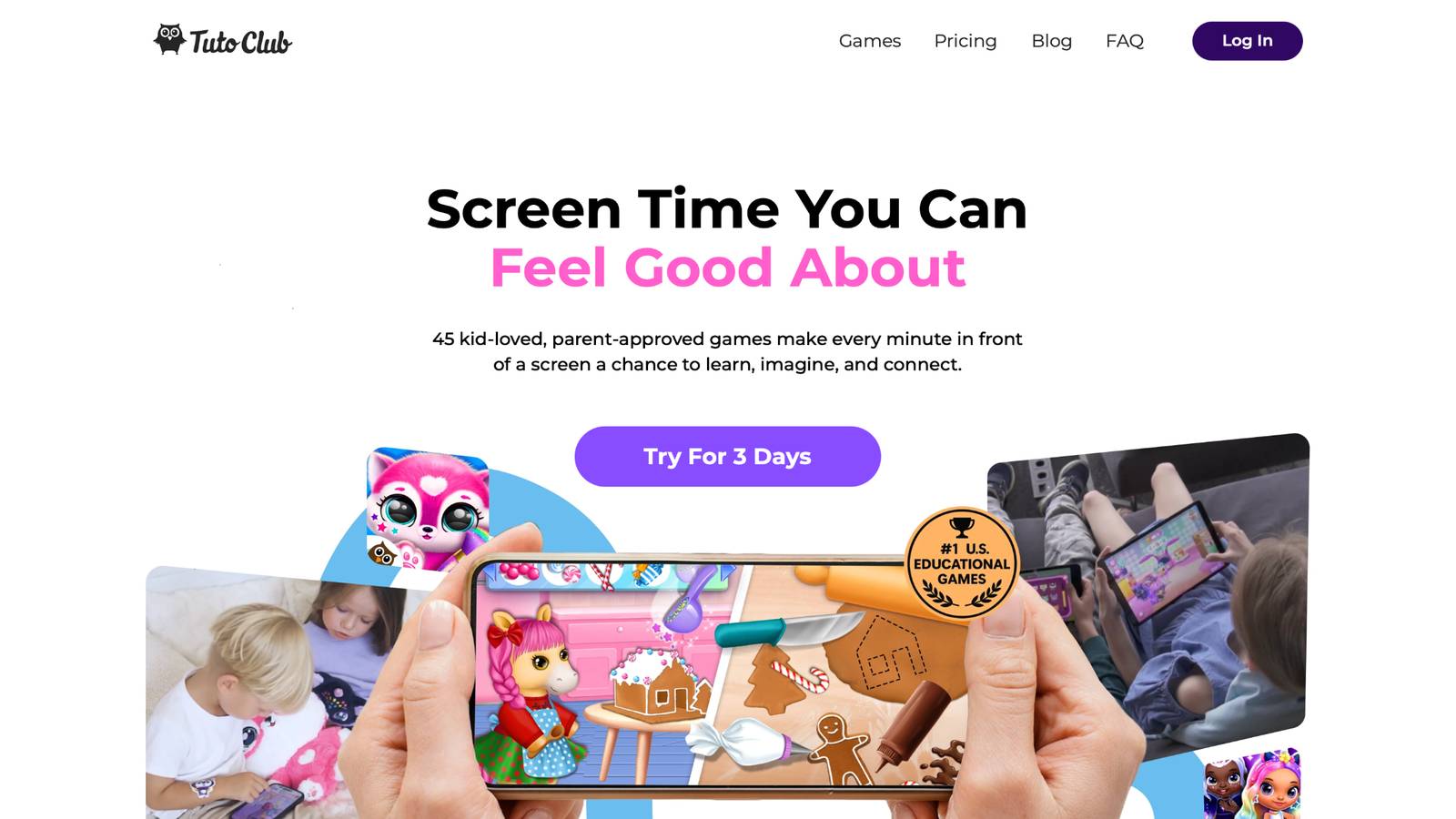
Discover educational kids games through TutoClub, a subscription service that unlocks access to 45 ad-free games designed to make screen time meaningful. Kids dive into worlds where they care for characters, design and build, and explore open-ended adventures that spark imagination. Each game draws from research to build creativity, improve focus, and foster social and emotional skills like empathy, compassion, and responsibility.
Parents love how it turns devices into tools for growth, with content that encourages kindness, curiosity, and confidence. Games feature vibrant graphics and intuitive controls, perfect for young players to navigate independently or with family. TutoClub stands out by balancing fun with developmental value, helping children learn through play without interruptions. It's accessible on multiple devices, making it easy for busy families to incorporate into daily routines. The service emphasizes healthy habits, ensuring kids gain real benefits from every session.
- Standout features: Ad-free gameplay, open-ended exploration activities, character caregiving elements that teach emotional awareness.
- Facts and information: Supports skills in creativity and problem-solving, promotes family play options, aligns with child development research for balanced screen use.
TutoClub Overview
TutoClub is your gateway to a magical world of educational games designed especially for children.
As part of TutoTOONS, a leading kids' games studio, we offer premium access to over 45 ad-free games.
Our mission is to blend learning and play, helping kids explore, create, and grow in a safe online space.
Thousands of parents trust us for family-friendly content that sparks imagination and builds essential skills.
Key Features
- Unlimited Access: Unlock full content in all games with no interruptions.
- Ad-Free Experience: Enjoy seamless play without any ads or distractions.
- Skill Development: Games foster creativity, social skills, communication, and more through fun activities like pet care and cleanup challenges.
- Regular Updates: Get new releases, exclusive content, and future updates automatically.
- Easy Subscription: Cancel anytime with no obligations, simple and flexible for families.
Explore Our World
TutoClub provides a rich ecosystem of educational games for kids, featuring ad-free experiences that promote creativity, focus, and emotional growth through play.
This platform turns screen time into valuable learning opportunities, with parent-approved content that builds essential skills and sparks curiosity in young minds.
- TutoClub Games: Over 45 educational games, including popular titles like Fluvsies, Smolsies, and the Sweet Baby Girl series
- Blog: Insights, tips, and stories for families on kids' learning and play
- FAQ: Comprehensive answers to frequently asked questions about subscriptions, features, and more
Get TutoClub on Your Device
TutoClub delivers premium kids educational games directly to your mobile devices, making learning accessible anytime, anywhere.
With apps available on major platforms, families can easily download and subscribe for ad-free play that turns screen time into skill-building adventures.
Perfect for parents seeking safe, engaging content on iOS, Android, or Amazon devices.
Why Choose TutoClub?
We're committed to 100% safe, enriching entertainment that kids love and parents approve.
Join the thousands who've seen their children thrive through playful learning.
Ready to start the adventure?
Subscribe to TutoClub today and unlock endless fun!
2. Fluvsies Academy
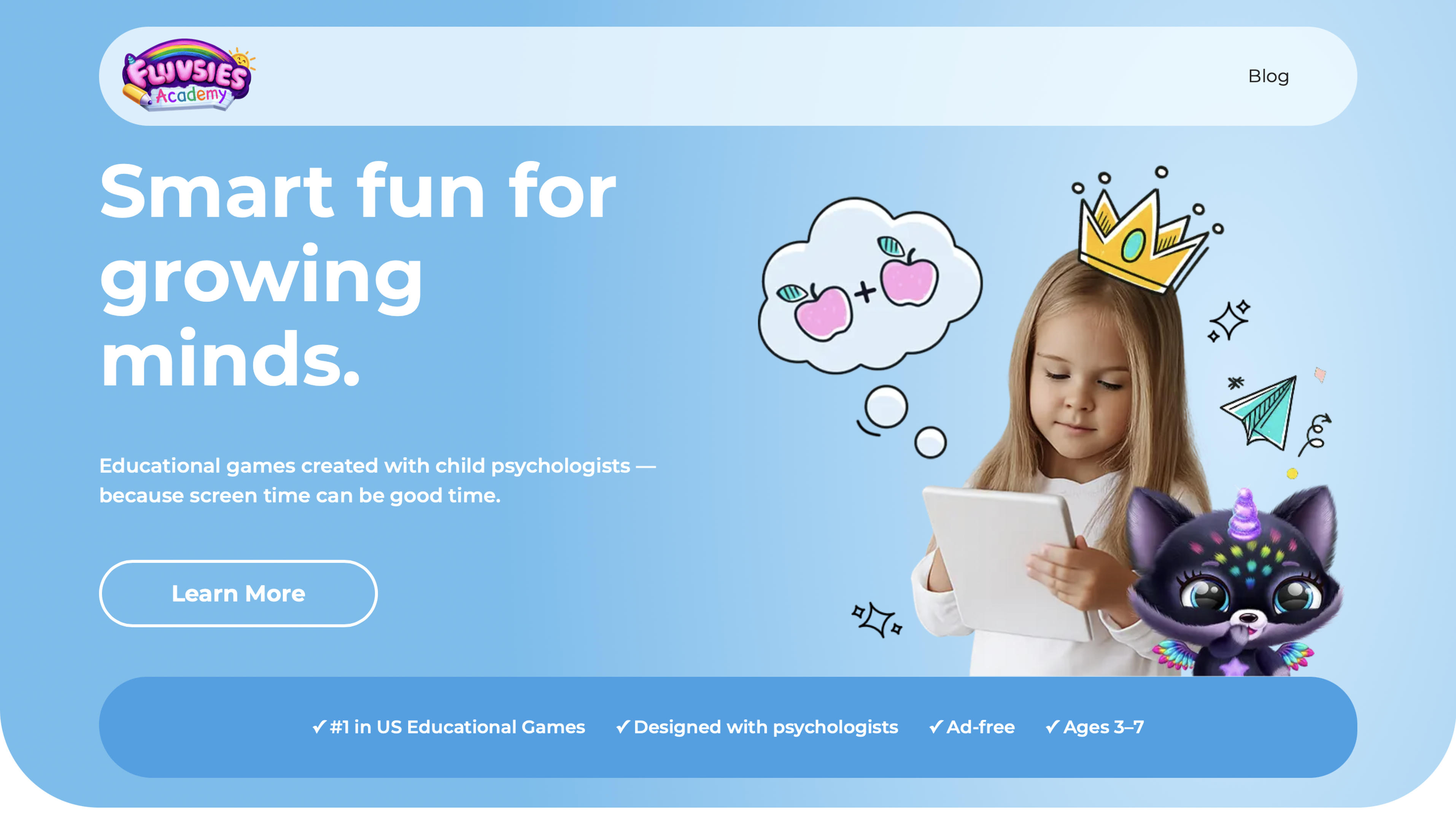
Fluvsies Academy transforms screen time into joyful learning adventures featuring cute Fluvsies characters that preschoolers adore. Targeted at children ages 3 to 7, the app delivers games focused on building language, math, logic, and life skills in a safe, ad-free setting. With expert input from child psychologists, it supports holistic development including focus, creativity, and emotional skills.
Fluvsies Academy offers interactive games teaching fun exploration of real professions like baker or astronaut to expand vocabulary. Activities promote mindfulness, yoga, and healthy habits such as teeth brushing while parent progress reports monitor your child's development. It helps preschoolers develop focus, creativity, empathy, and real-world readiness.
Ranked as a top educational game in the US, it features a subscription model with a 7-day free trial and is available on both iOS and Android devices. The app encourages independent play while transferring skills to daily routines and combines fun with psychologist-approved content for balanced early learning.
- Ad-free and completely safe environment designed for preschoolers
- Lovable Fluvsies characters that guide kids through puzzles and stories
3. Khan Academy Kids
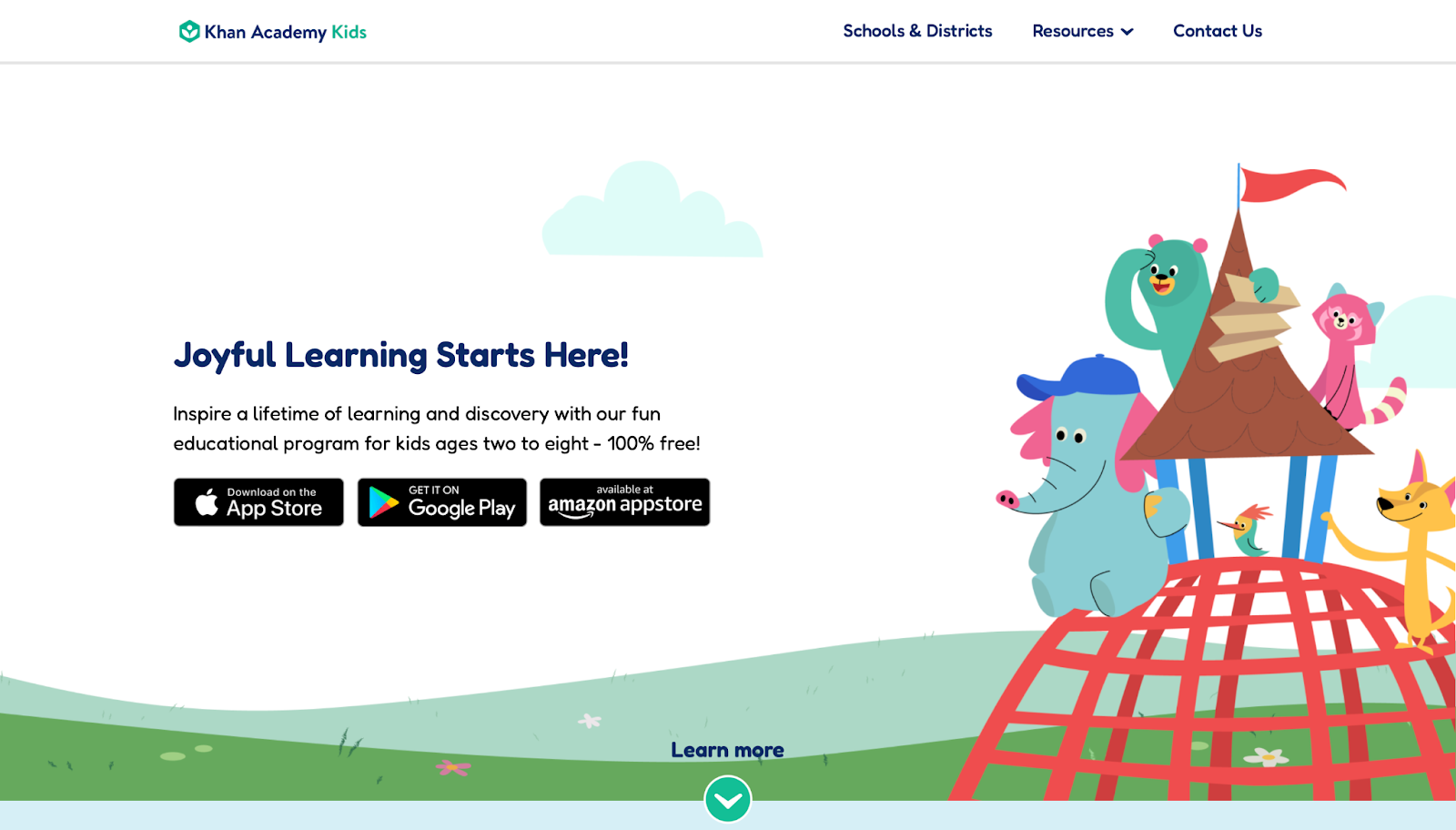
Khan Academy Kids offers a free app with interactive lessons in reading, math, and social-emotional learning for young children. Whimsical characters guide kids through stories, games, and videos that build foundational skills. It personalizes paths based on progress, making it adaptable for different learners. Strengths include its alignment with educational standards and support for English learners via visuals and read-alouds. Some parents find it engaging for daily use, though it may lack depth in creative play compared to others. The app works well in classrooms or at home, with tools for tracking growth. Headquarters in Mountain View, USA.
- Key features: Personalized learning paths, bite-sized lessons in phonics and counting, emotion recognition activities.
- Facts and information: Helps with academic and emotional growth, used in many schools, inspires long-term interest in learning.
4. ABCmouse
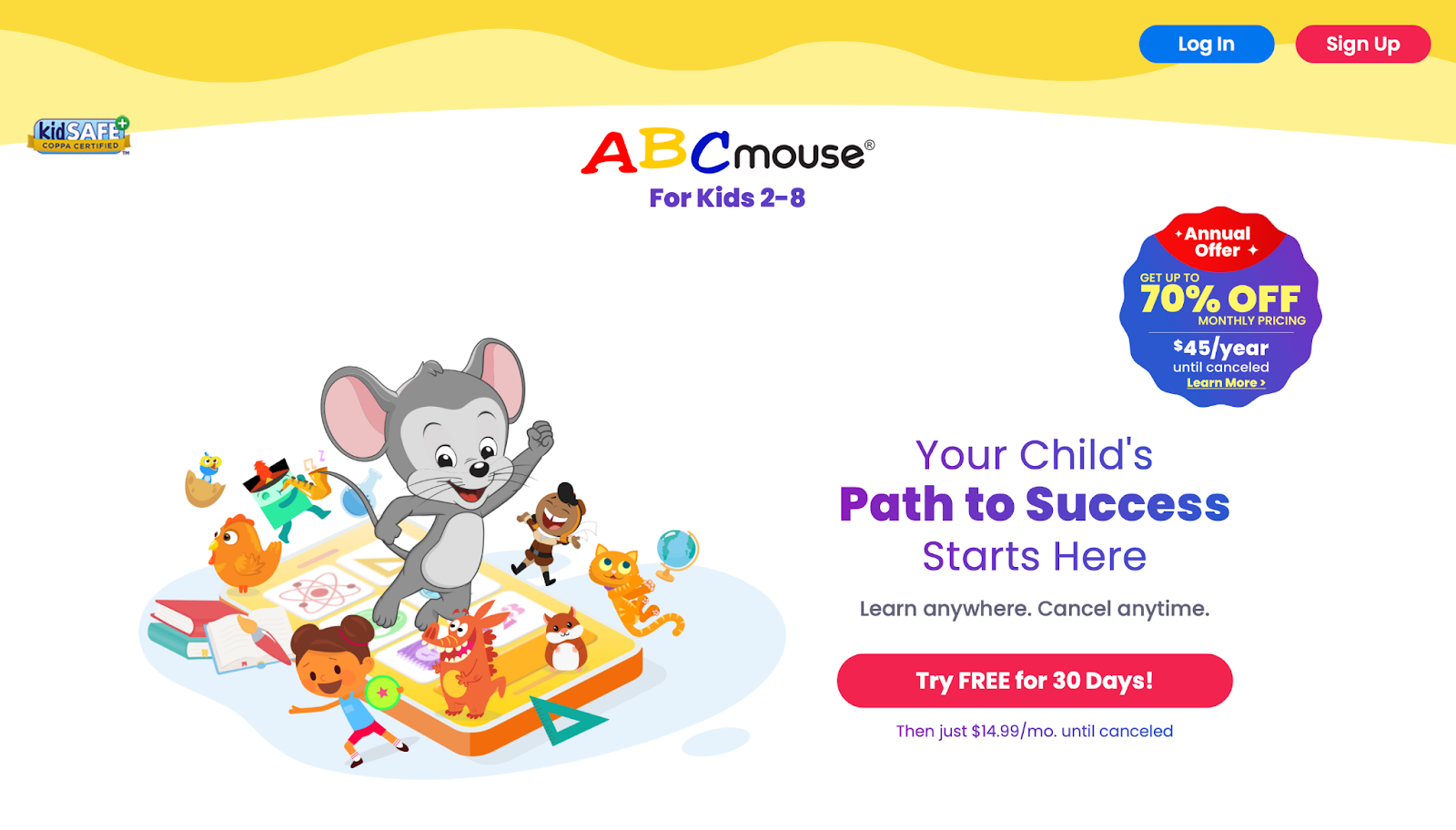
ABCmouse delivers a comprehensive early learning curriculum that covers reading, math, science, and art for preschool and kindergarten children through interactive games, books, videos, and activities. Its structured, step-by-step progression builds foundational skills while rewarding milestones to maintain motivation and a sense of accomplishment. The platform brings abstract concepts to life with colorful animations and clear explanations, helping young learners develop curiosity and confidence in their abilities.
Many families use it successfully for homeschooling or as a supplement to traditional schooling, appreciating the virtual classroom elements that mimic real school routines. While the guided approach works well for building consistent habits, some parents note it may feel less open-ended for highly creative children who prefer freer exploration. Overall, ABCmouse remains a reliable, broad-scope option that supports daily learning routines and helps children gain vocabulary, comprehension, and early academic confidence in an engaging environment.
- Key features: Interactive activities for letter sounds and numbers, virtual classroom elements, progress rewards system.
- Facts and information: Builds vocabulary and comprehension, supports many families in daily routines, enhances confidence in learning.
5. Prodigy Math
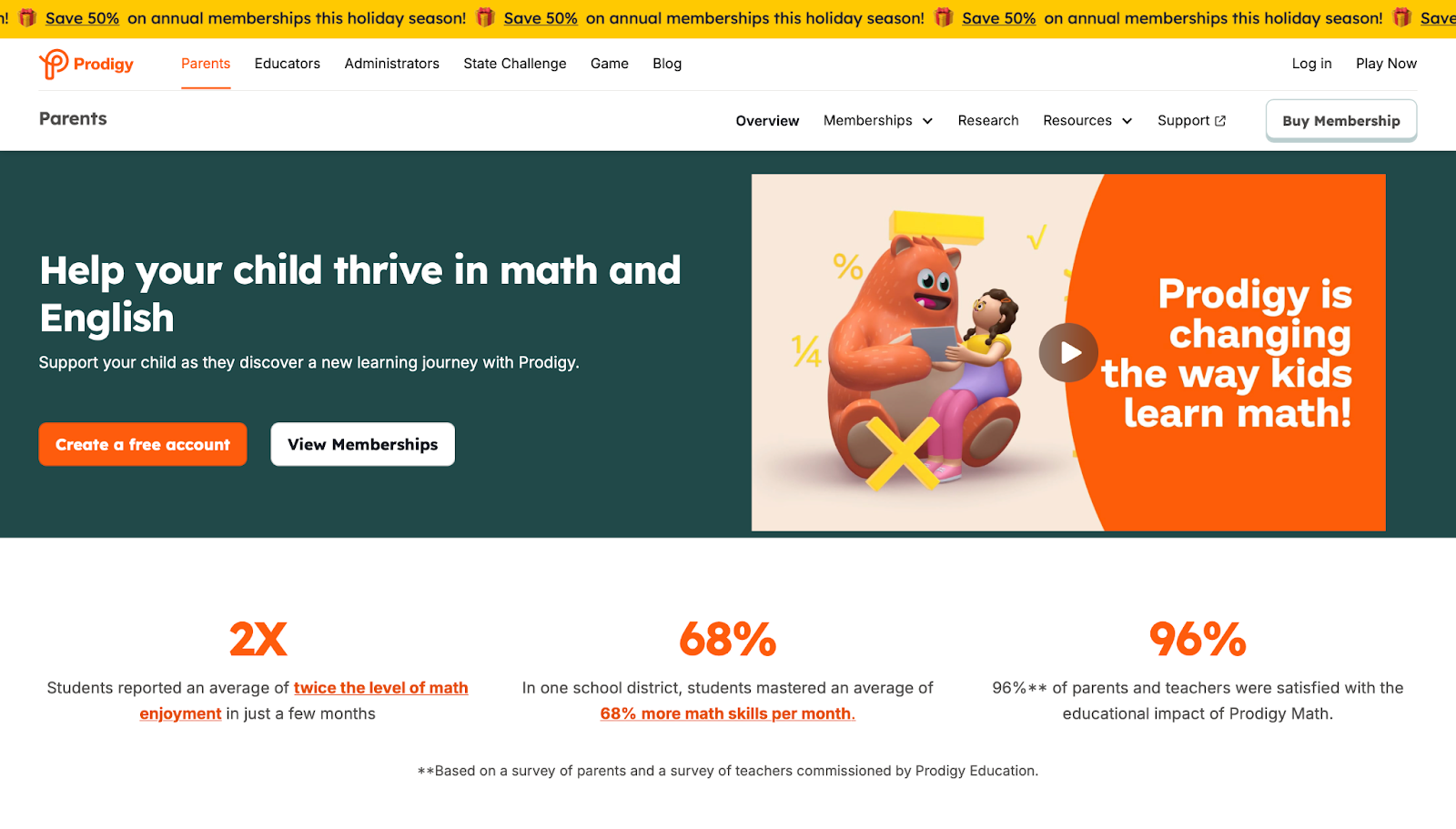
Prodigy Math transforms traditional math practice into an exciting role-playing adventure where children battle monsters and complete quests while solving adaptive problems aligned with school standards. The game adjusts difficulty in real time based on performance, ensuring kids stay challenged yet supported as they master concepts.
Rewards and spell-casting mechanics keep sessions fun and motivating, often turning reluctant learners into enthusiastic math players. Parents receive detailed insights into progress, making it easier to identify strengths and areas needing extra attention. The platform works well both at home and in classrooms, with many educators incorporating it into their teaching. Although the strong game elements occasionally shift focus away from pure conceptual understanding, Prodigy effectively boosts enjoyment and confidence in mathematics while helping children achieve measurable improvement in grade-level skills.
- Key features: Adaptive questions in quests, spell-casting mechanics, English skill integration.
- Facts and information: Increases math confidence, used by many educators, helps with standard mastery.
6. Duolingo ABC
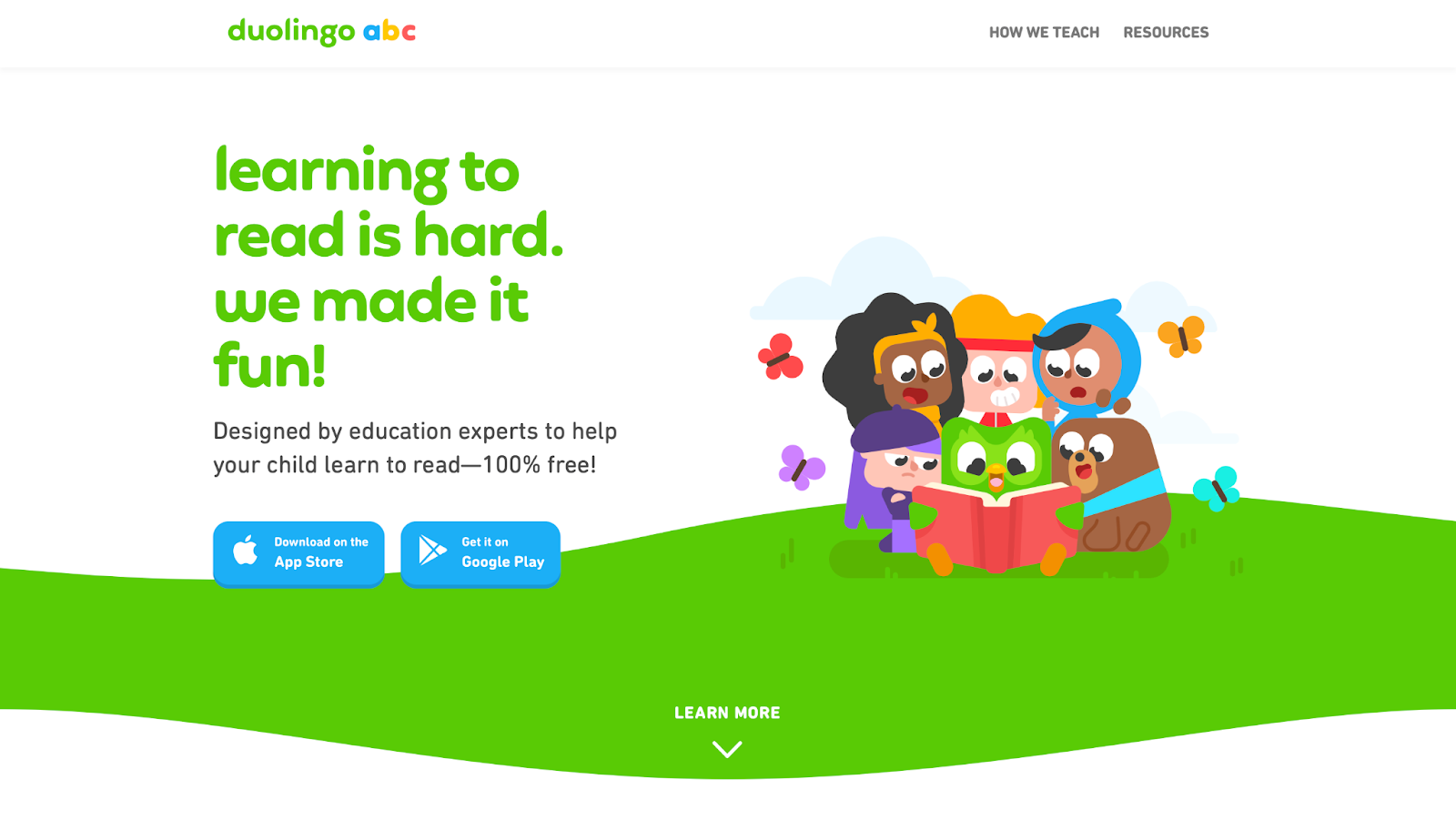
Duolingo ABC makes early reading development approachable and enjoyable through short, story-driven lessons focused on phonics, sight words, and handwriting practice. Lovable characters guide children through bite-sized activities that feel more like games than formal instruction, reducing pressure while building solid literacy foundations. The research-based curriculum progresses naturally from letter sounds to word recognition and simple sentences, with tracing exercises that support fine motor skills.
Its flexible format suits busy schedules and works particularly well for beginners or homeschooling families. While some users find the content less varied for extended long-term use compared to broader platforms, Duolingo ABC excels at sparking genuine interest in reading and helping young learners recognize words quickly in a lighthearted, encouraging atmosphere.
- Key features: Bite-sized phonics sessions, handwriting tracing, vocabulary builders.
- Facts and information: Boosts reading interest, aids word recognition, supports many young learners effectively.
7. Starfall
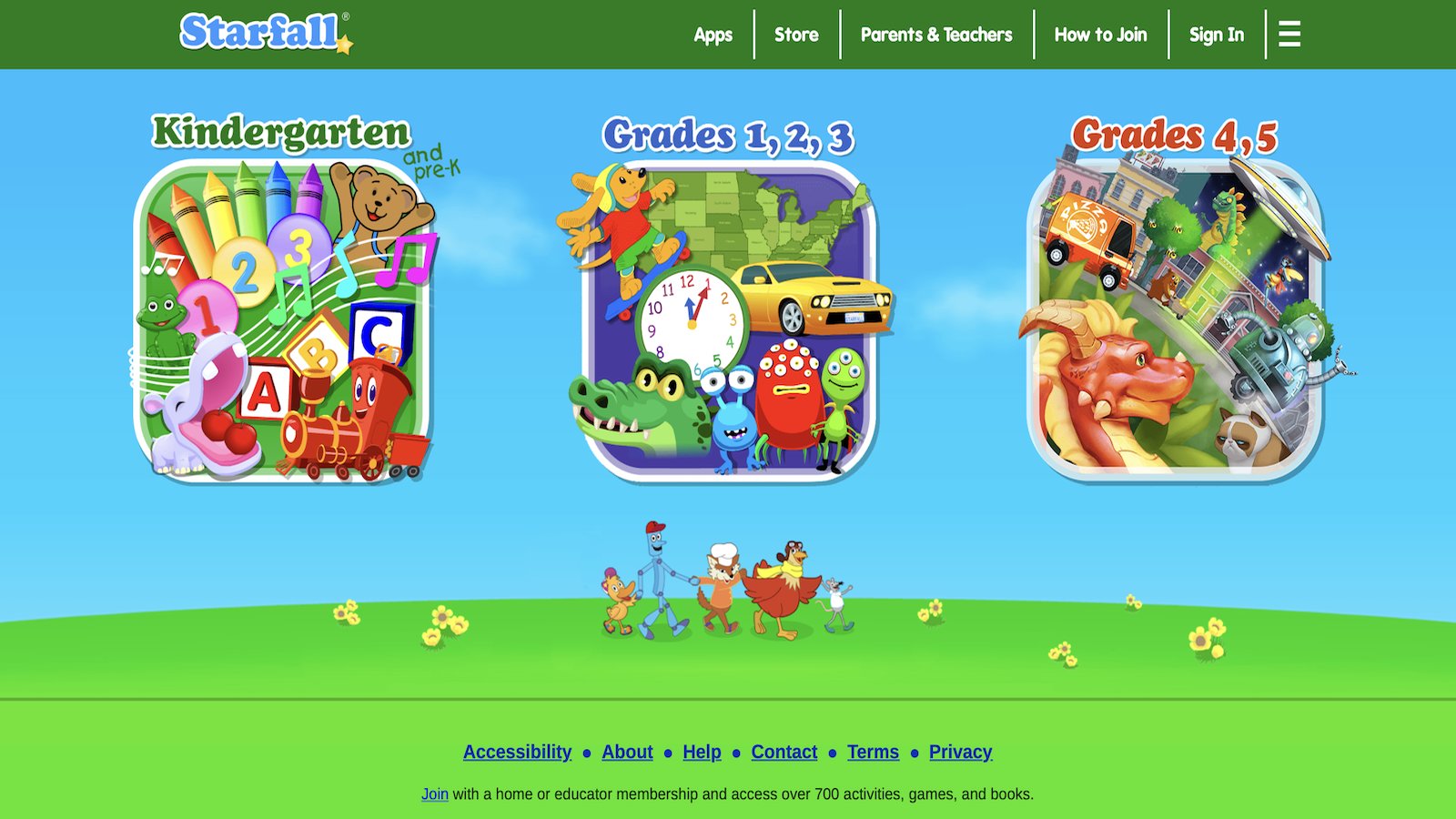
Starfall offers a multisensory approach to reading and math fundamentals with interactive songs, games, and animations that emphasize phonics, sight words, and basic arithmetic. Its playful design promotes active engagement, making learning feel natural and enjoyable rather than forced. The platform particularly shines in supporting special needs learners and English language students through clear visuals and repetition.
Positive reinforcement builds lasting confidence as children master skills at their own pace. Although the interface may appear simpler or somewhat dated to tech-savvy kids, its focused, ad-free environment has earned trust in many classrooms and homes. Starfall continues to help young learners develop reading fluency and mathematical understanding while encouraging intrinsic motivation through gentle, supportive activities.
- Key features: Audiovisual phonics interactivity, math objective alignments, no-ad environment.
- Facts and information: Develops reading fluency, used in many classrooms, encourages intrinsic motivation.
8. PBS Kids Games
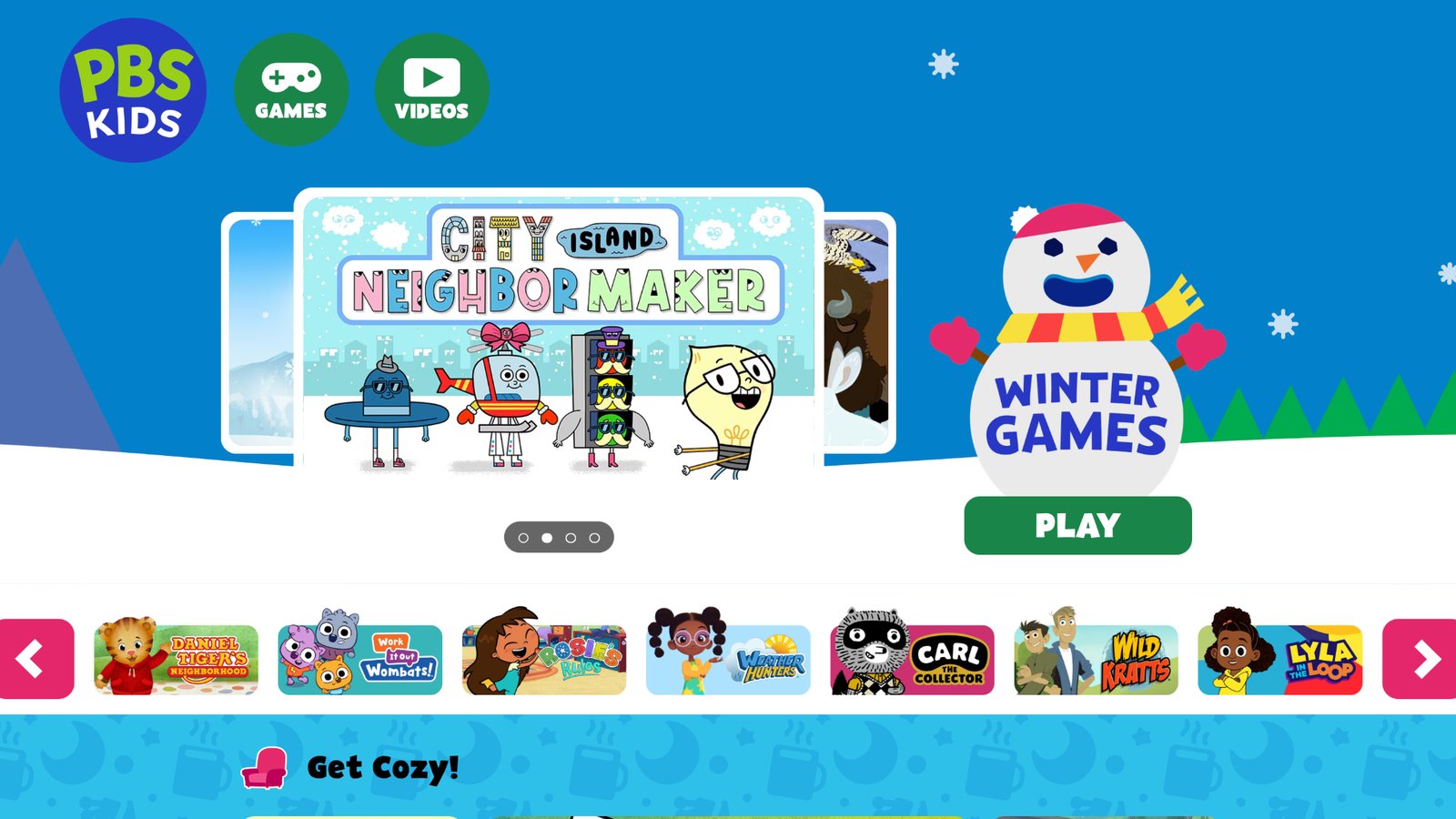
PBS Kids Games provides free, high-quality activities inspired by popular educational television shows, covering science, creativity, problem-solving, and social skills. Children explore familiar worlds with beloved characters in short, engaging challenges that feel like extensions of their favorite programs. The trusted PBS brand ensures content remains wholesome, age-appropriate, and curiosity-driven.
Parents appreciate the balance of entertainment and learning, especially for quick sessions during busy days or family viewing time. While some subjects offer limited depth compared to dedicated curriculum tools, the games excel at sparking imagination and reinforcing everyday skills. PBS Kids Games serves as an excellent, no-cost introduction to educational digital play that aligns well with public education values and family routines.
- Key features: Show-based challenges, creativity tools, social skill elements.
- Facts and information: Enhances imagination, supports many public education efforts, builds everyday skills.
9. Endless Alphabet
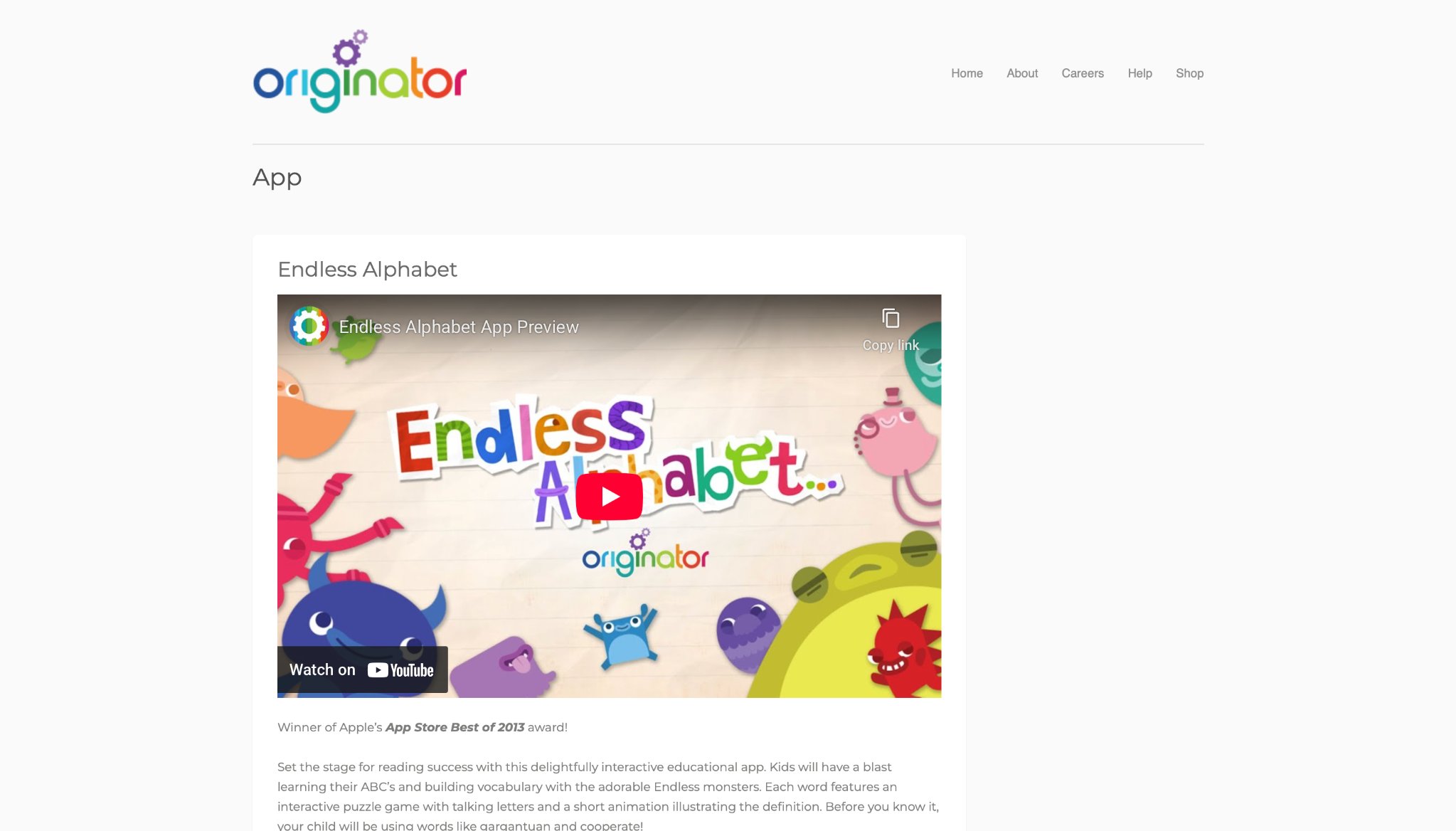
Endless Alphabet turns vocabulary building into a delightful, silly experience using animated monster characters and interactive letter puzzles. Children drag letters into place to form words, then watch lively animations that bring definitions and usage to life. The combination of humor, sound effects, and visual rewards makes spelling and word recognition genuinely fun and memorable. Its narrow focus on early literacy works perfectly for preschoolers just starting to explore language.
The engaging monster cast keeps kids laughing while they learn, creating positive associations with reading. Although it concentrates mainly on alphabet and basic vocabulary rather than broader subjects, Endless Alphabet remains a favorite for building strong foundational language skills through joyful, hands-on play.
- Key features: Interactive letter puzzles, animated definitions, monster characters.
- Facts and information: Improves spelling and vocabulary, engages many preschoolers, fosters laughter in learning.
10. Lingokids
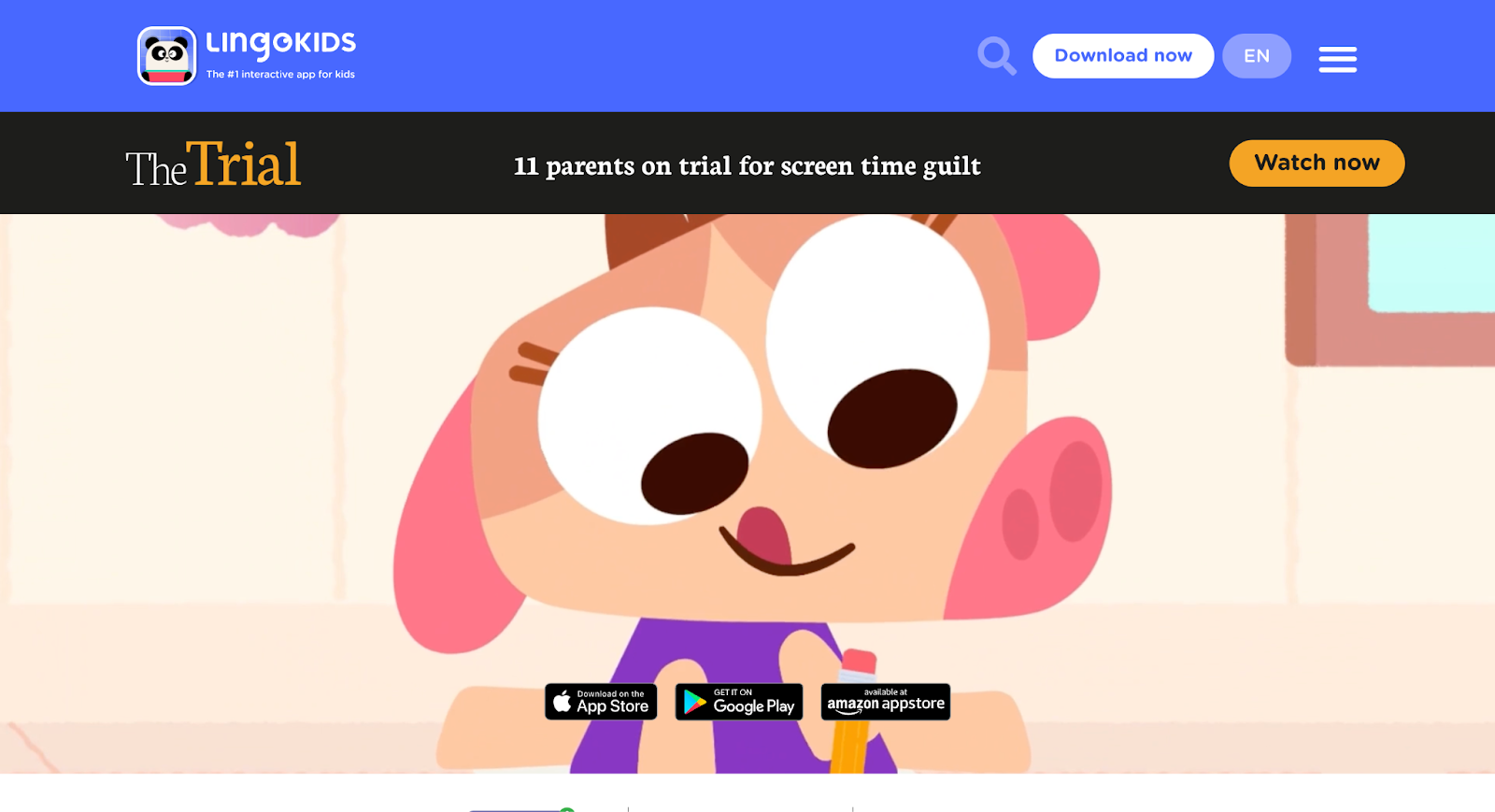
Lingokids delivers a comprehensive learning experience through an app packed with over 1,200 activities, including games, songs, videos, and interactive stories aimed at kids aged 2-8. It covers essential subjects like English language skills, math, science, creativity, and even life skills such as yoga and mindfulness in a colorful, engaging format. Strengths shine in its ability to adapt to individual progress, fostering curiosity and making education feel like an adventure. Some users mention the wide range of options can feel a bit scattered initially, requiring time to navigate preferred paths. The platform encourages parental involvement with progress reports and offline downloads for flexibility. Headquarters in Madrid, Spain.
- Key features: Adaptive learning paths, bilingual content options, themed adventures with characters.
- Facts and information: Builds foundational skills across multiple areas, supports many young learners in developing independence, integrates real-world themes for practical understanding.
11. SplashLearn
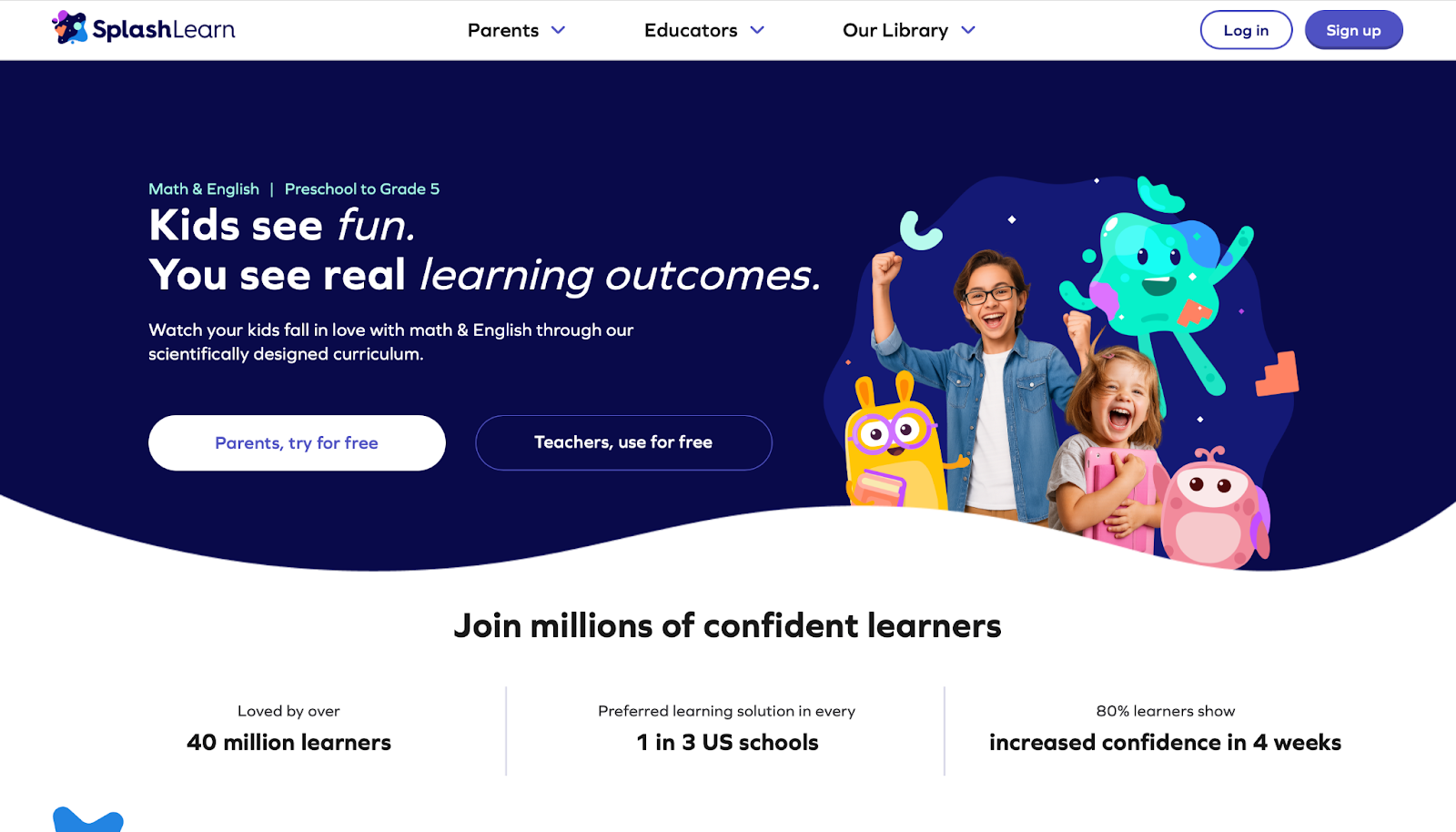
SplashLearn engages children in math and reading through immersive games and stories set in a vibrant Splashverse world, targeting kids from pre-K to grade 5. It offers thousands of activities that align with common core standards, personalizing content to match each child's pace without timed pressures. Strengths include its focus on building confidence through rewards and progress tracking, helping kids master concepts like addition, phonics, and comprehension in a fun way. Some find it requires regular sessions to see full benefits, as sporadic use might not reinforce skills as deeply. The app includes printable worksheets and parent dashboards for monitoring growth. Headquarters in Gurgaon, India.
- Key features: Story-based challenges, live classes integration, skill-specific boosters.
- Facts and information: Enhances academic performance in core subjects, appeals to many educators for classroom use, promotes enjoyment in daily learning routines.
12. Epic!

Epic! serves as a vast digital library for kids aged 2-12, providing instant access to over 40,000 books, audiobooks, and educational videos from trusted publishers like National Geographic and HarperCollins. Kids can explore topics from fiction adventures to STEM facts, with personalized recommendations based on reading levels and interests. Strengths lie in its curated, high-quality content that sparks a love for reading and includes bilingual options for diverse learners. Some note the search function could be more intuitive for younger users, leading to occasional browsing challenges. The app tracks reading stats and awards badges to motivate continued engagement. Headquarters in Redwood City, USA.
- Key features: Read-along highlighting, quizzes after books, offline downloads for travel.
- Facts and information: Expands vocabulary and knowledge across subjects, used by many families to supplement schoolwork, encourages independent exploration of interests.
13. Homer
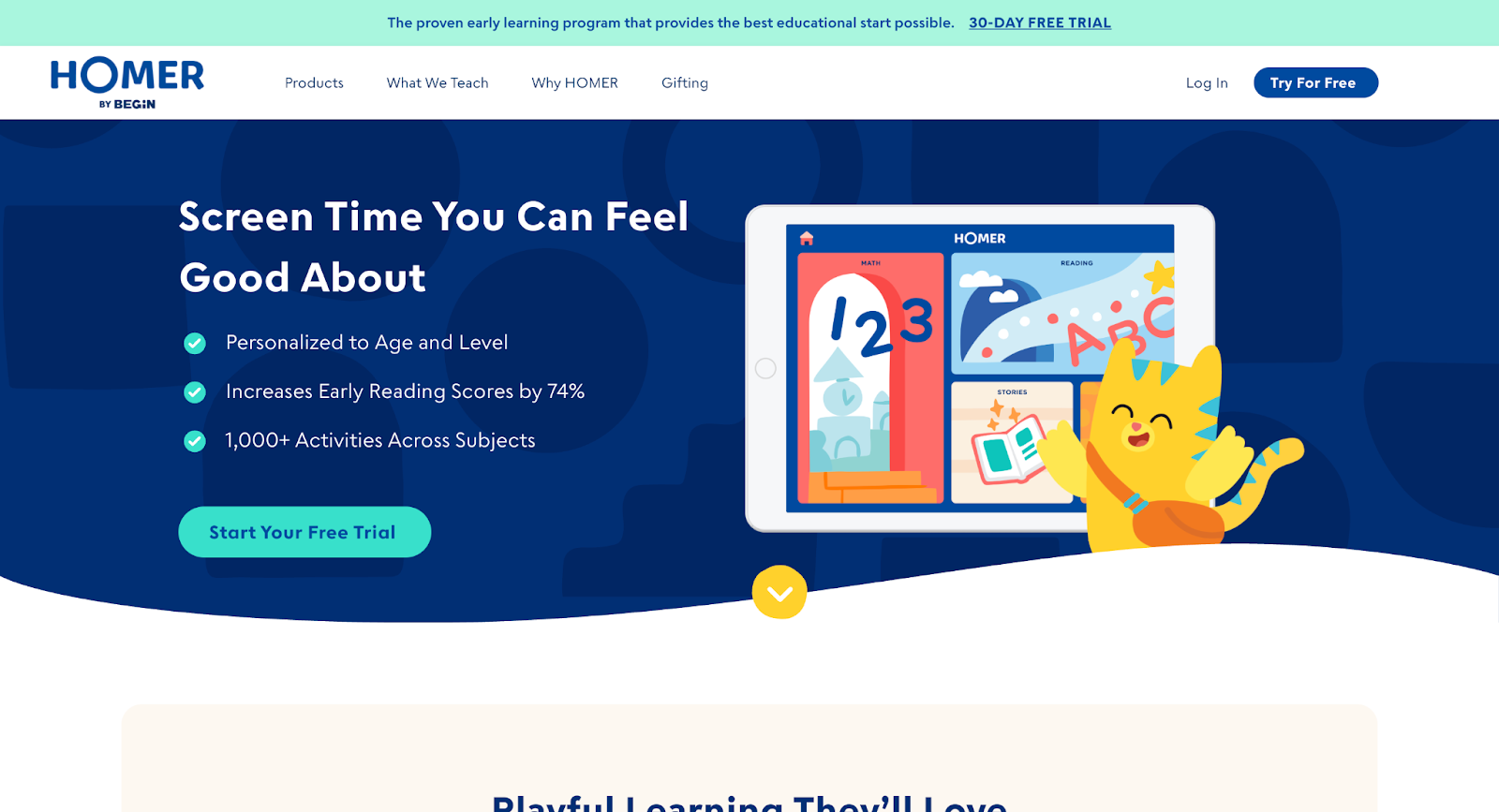
Homer focuses on early literacy for children aged 2-8, offering a personalized pathway with phonics lessons, stories, songs, and games that build reading skills step by step. It also incorporates math, creativity, and social-emotional learning through interactive activities like drawing and emotion recognition. Strengths are its research-backed approach that adapts to a child's strengths and needs, making sessions feel supportive and fun. Some users experience minor technical glitches, which can interrupt flow during play. The app includes parent resources like printables and tips for extending learning offline. Headquarters in New York, USA.
- Key features: Sight word practice, math games with patterns, SEL stories on feelings.
- Facts and information: Strengthens foundational reading and emotional awareness, helps many kids transition to school confidently, combines play with structured progress.
14. Osmo
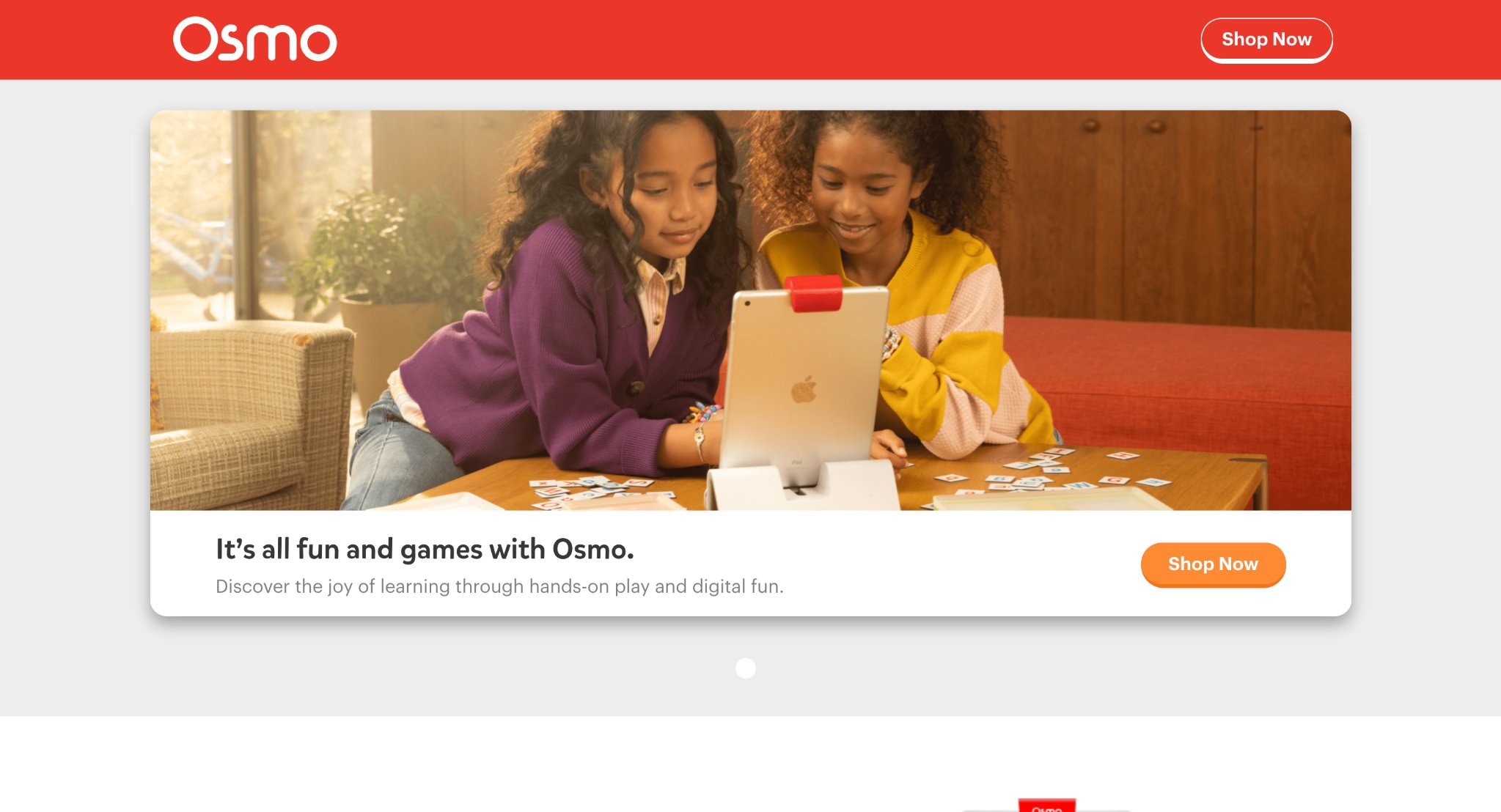
Osmo creates a unique bridge between physical and digital play by using an iPad camera and reflective technology to recognize tangible game pieces like blocks, tiles, and shapes. Suitable for ages 3 to 10, it covers coding, mathematics, reading, drawing, and more through hands-on activities that develop both academic skills and fine motor coordination. Children manipulate real objects while interacting with the screen, making learning feel active and tangible rather than purely virtual.
The system encourages social play when siblings or friends join, and expandable kits allow families to explore additional subjects like physics and creative design. While it requires compatible devices and some setup space, Osmo stands out for fostering creativity, problem-solving, and collaborative learning in a way few other platforms can match.
- Key features: Coding blocks for sequences, tangram puzzles for geometry, word formation tiles.
- Facts and information: Develops fine motor skills alongside academics, enjoyed by many in home and school settings, fosters collaborative learning experiences.
15. Code.org
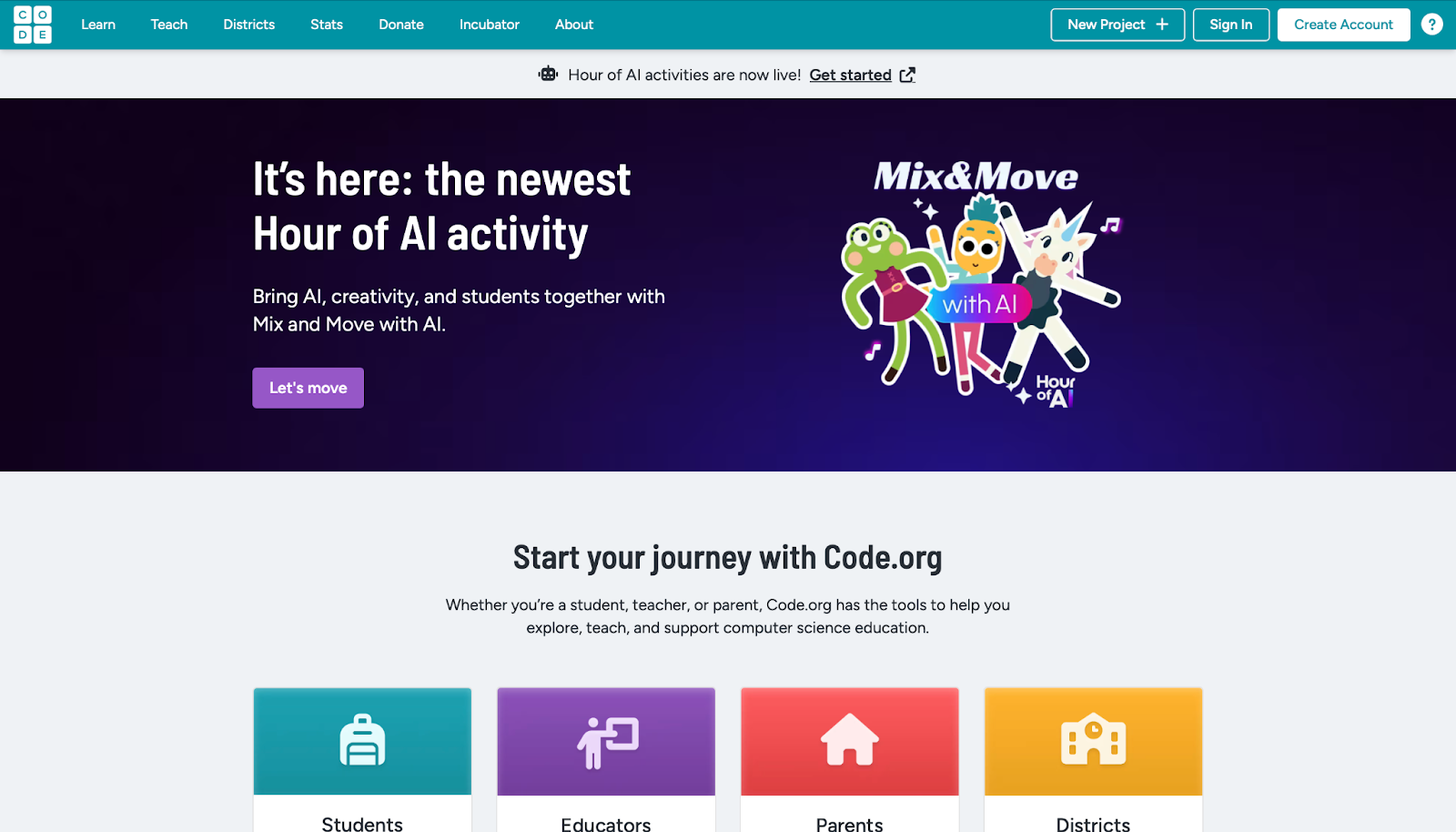
Code.org makes coding accessible and exciting for children starting at age 5 through free, interactive games and projects that progress from simple block-based puzzles to more advanced text programming. Themed activities featuring beloved characters from Minecraft, Star Wars, and other popular franchises teach logic, sequencing, and computational thinking in an approachable way.
Comprehensive teacher resources and alignment with educational standards make it valuable for both home and classroom use. The platform’s Hour of Code initiatives have introduced millions of students worldwide to programming concepts. While younger children may initially need guidance with more complex sections, Code.org effectively builds foundational tech skills and opens pathways toward future careers in a fun, inclusive environment.
- Key features: Game Lab for custom creations, App Lab for mobile designs, AI explorations.
- Facts and information: Introduces computational thinking early, reaches many students worldwide through schools, builds pathways to tech careers.
16. Minecraft Education Edition
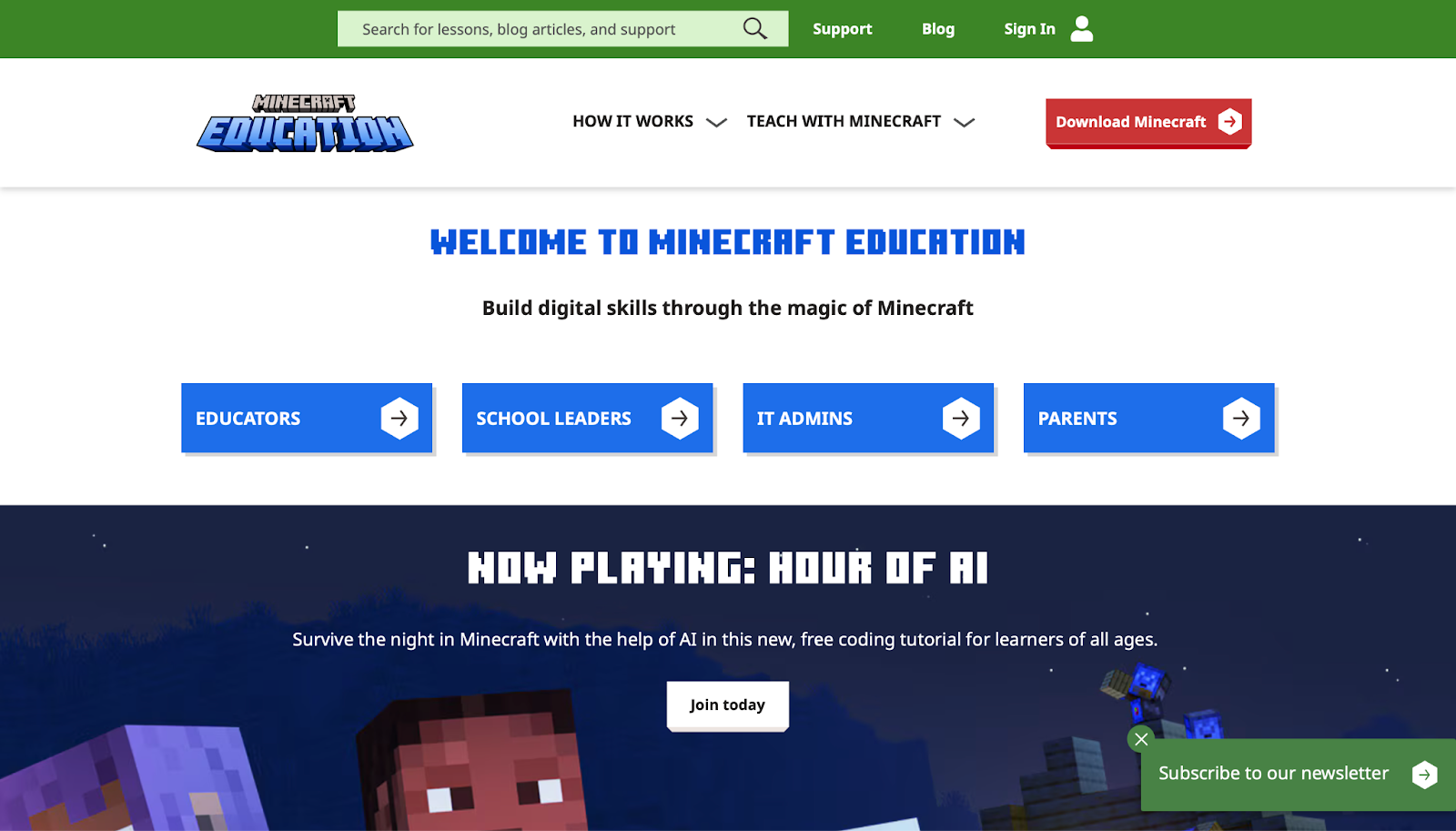
Minecraft Education Edition turns the beloved sandbox game into a powerful educational tool where students build, explore, and collaborate while learning history, science, mathematics, and coding. Teachers can guide structured lessons on topics like climate change or historical events, or let students create their own worlds and simulations. Safe multiplayer features with educator controls promote teamwork and creativity in a controlled setting.
The immersive environment helps complex concepts become tangible through hands-on virtual building and experimentation. Although it requires reliable devices and internet access, the platform’s flexibility has made it a global favorite among educators. Minecraft Education Edition excels at making learning deeply engaging while developing critical thinking, collaboration, and digital literacy skills.
- Key features: Chemistry lab simulations, coding with blocks or Python, virtual field trips.
- Facts and information: Enhances understanding of complex concepts through play, adopted by many educators globally, promotes inclusive group projects.'
17. DragonBox
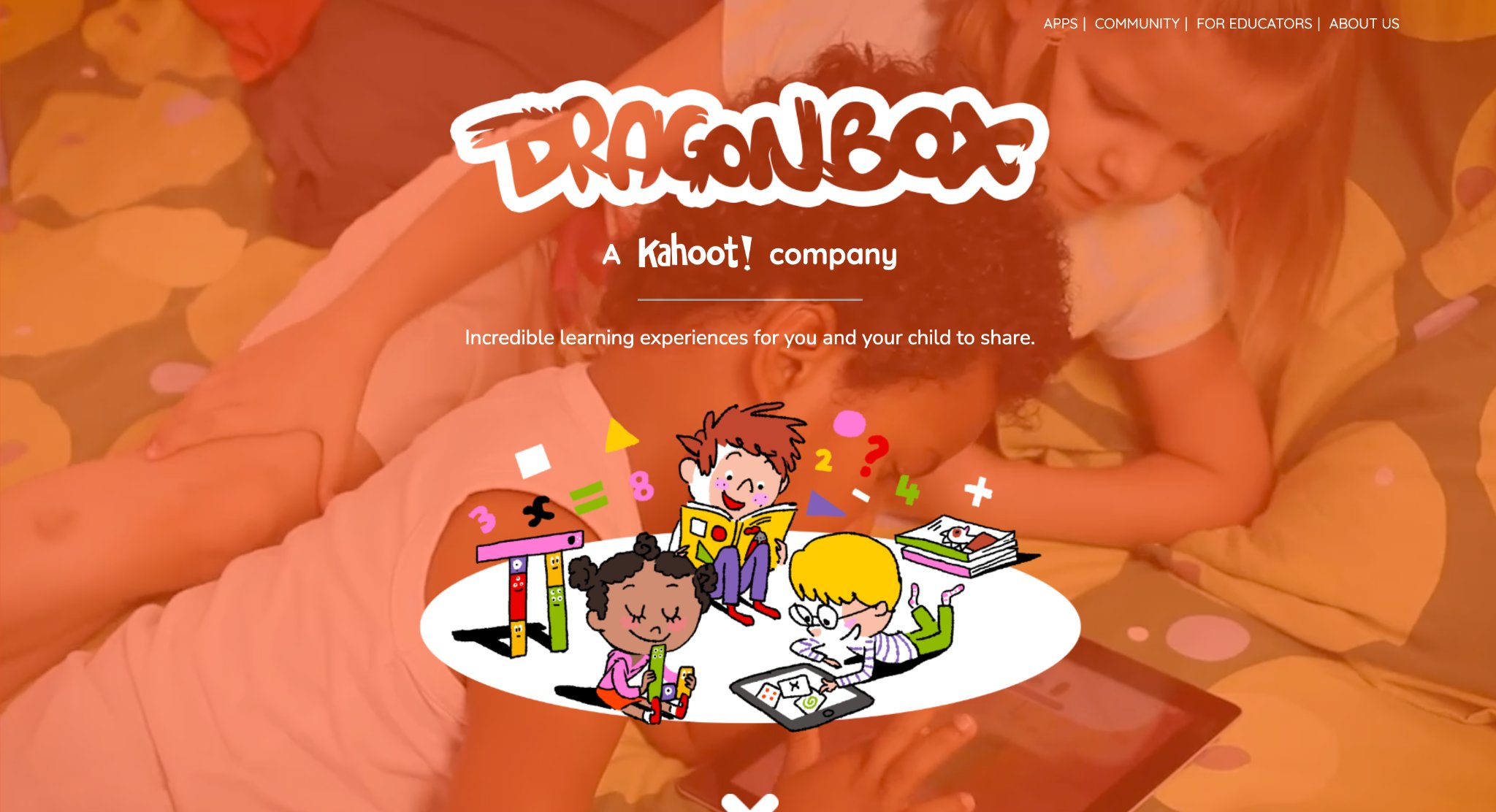
DragonBox delivers a series of innovative math puzzle games that introduce foundational concepts like number relationships, operations, and introductory algebra through intuitive gameplay. Developed by WeWantToKnow and headquartered in Oslo, Norway, the platform uses visual manipulation of cards and characters that represent mathematical elements. Children experiment with puzzles to discover patterns and solutions, building conceptual understanding that transfers to school mathematics.
The games feature progressive levels that support varied learning paces, encouraging logical reasoning through immediate feedback and narrative elements. Families in the USA incorporate the apps for home learning or classroom supplementation, turning abstract ideas into concrete explorations. The design focuses on curiosity and mastery across multiple titles in the series, supporting early mathematical thinking in engaging digital formats.
- Key features: Visual puzzle mechanics, number sense development, introductory algebra concepts, progressive game levels, character-based challenges.
- Facts and information: Created with input from teachers and cognitive scientists, used by millions of children worldwide, award-winning series focused on deep conceptual learning in math.
18. Lightbot
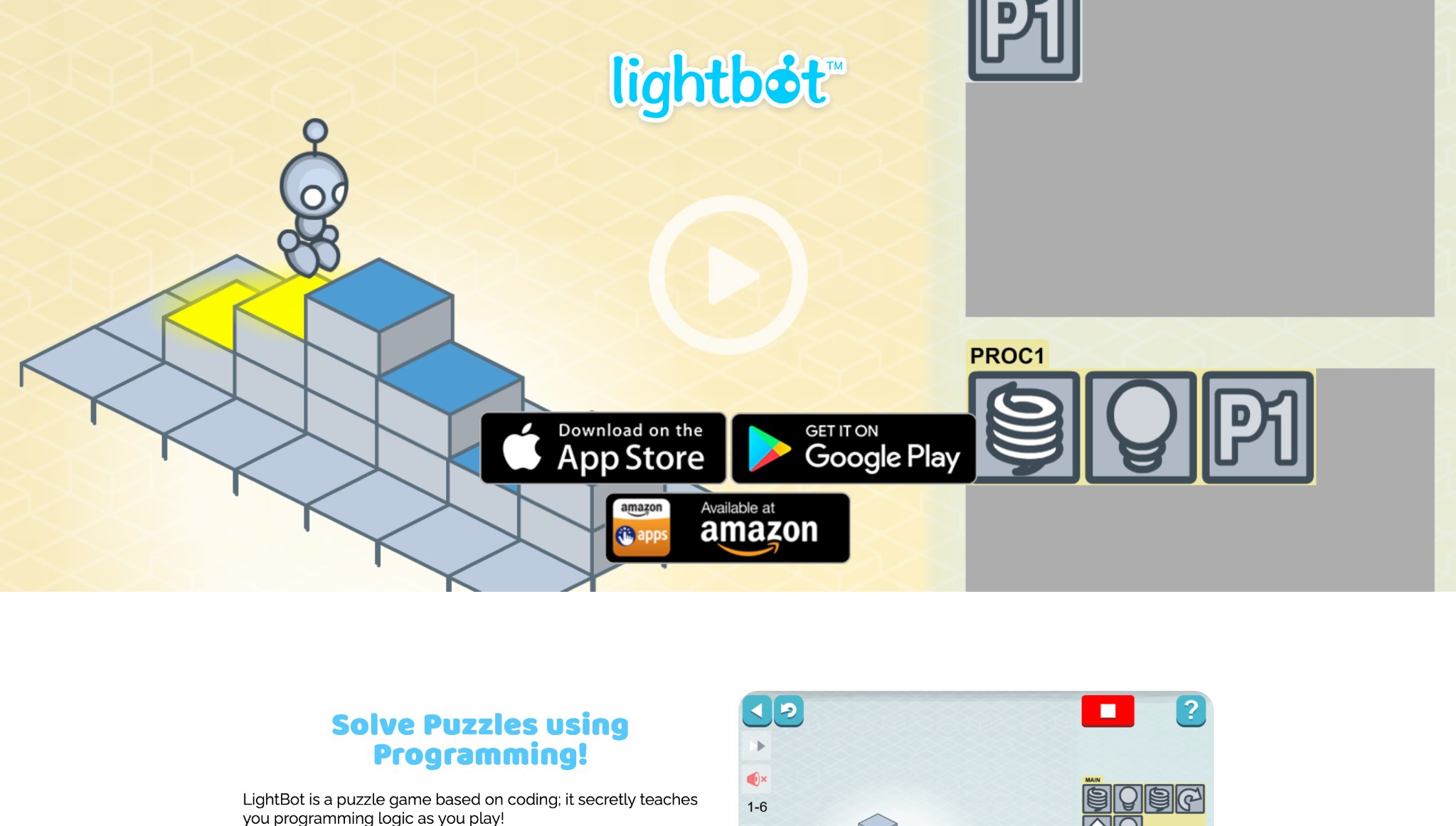
Lightbot engages children in programming logic by directing a robot through grid-based mazes using visual command blocks to light up target tiles. The app introduces concepts such as sequences, loops, procedures, and conditionals in a puzzle-solving format accessible to kids ages 4 and up. Players arrange commands and test solutions step by step to complete levels that increase in complexity.
The interface uses simple icons and animations, allowing independent play while building planning and debugging abilities. It serves as an introduction to STEM topics for young learners in the USA, bridging playful challenges with technical foundations on mobile devices and web platforms. Regular updates and multiple versions support ongoing skill development through repeated engagement.
- Key features: Visual block programming, maze navigation challenges, loops and procedures, robot animation, progressive puzzle difficulty.
- Facts and information: Available on major platforms with variants for different age groups, designed to teach real programming concepts through gameplay enjoyed by children worldwide, over 20 million plays recorded.
19. ScratchJr
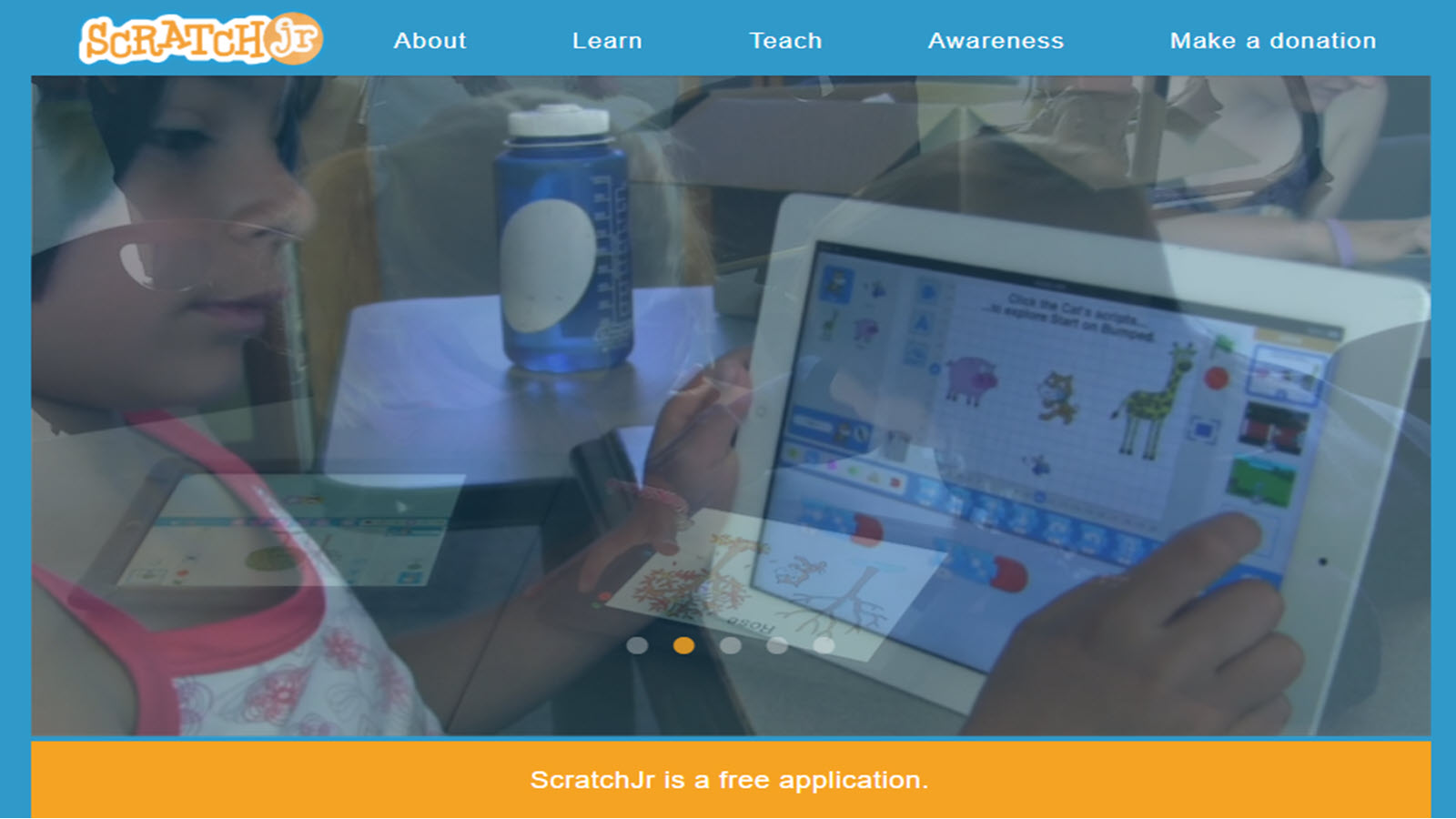
ScratchJr is a free introductory programming app designed for children ages 5 to 7 that enables creation of interactive stories, games, and animations using graphical programming blocks. Developed through collaboration between MIT Media Lab, Tufts University, and the Scratch Foundation in the United States, the app lets kids snap together blocks to control character movements, add sounds, record voices, and paint backgrounds.
Projects support sequencing, event handling, and creative expression without requiring reading skills. The child-centered interface promotes computational thinking and imagination in homes and early education settings across the USA. The open design encourages experimentation and project sharing, laying groundwork for future digital literacy.
- Key features: Block-based coding interface, character customization, sound recording, painting tools, story and game creation.
- Facts and information: Inspired by the Scratch platform for older children, available on iOS, Android, and Chromebooks, used by millions to promote creative coding and learning through making with over 60 million global users.
20. Kiddopia
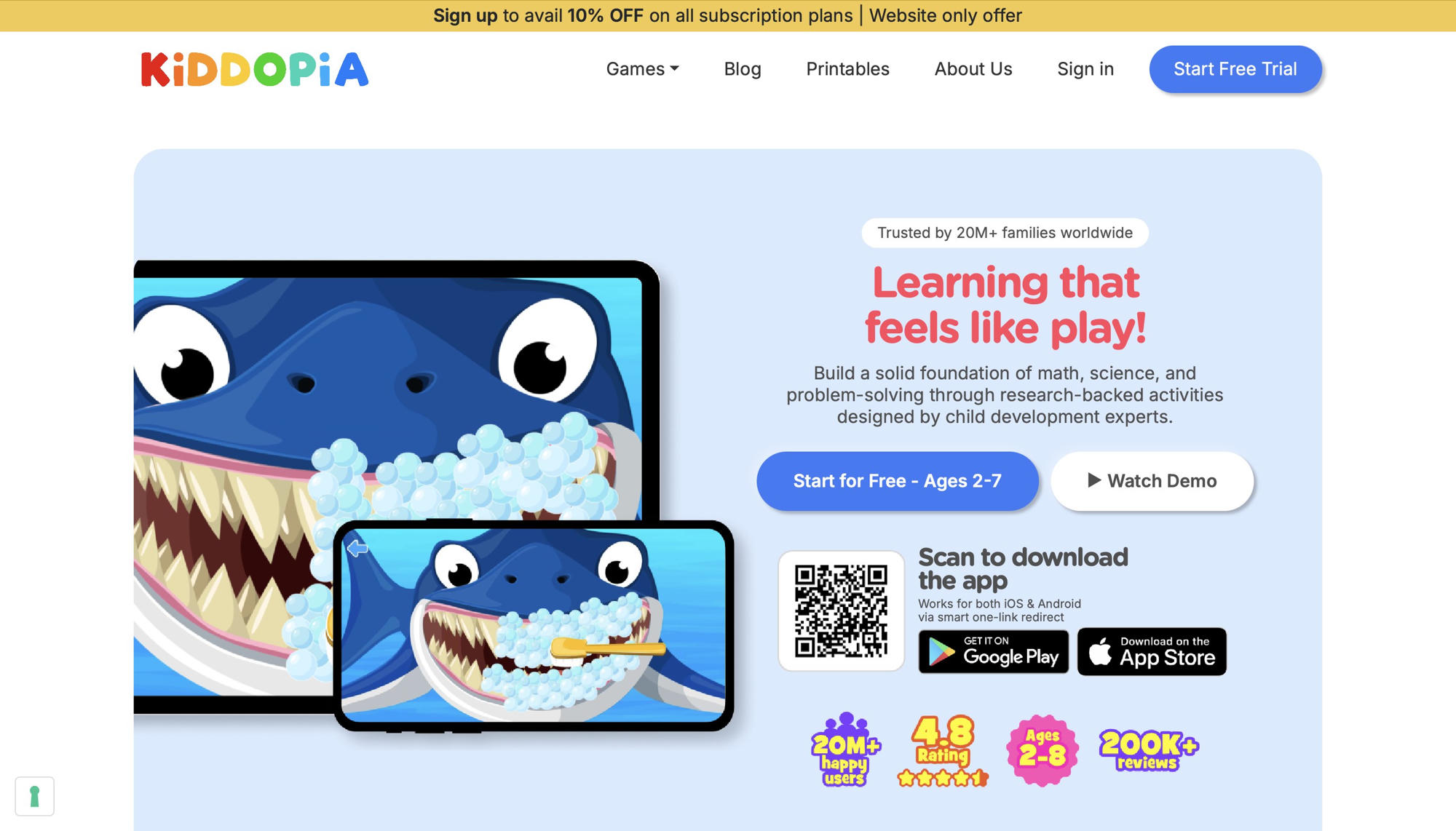
Kiddopia provides an extensive library of over 3000 educational games and activities in a COPPA-certified environment for kids ages 2 to 8. The app covers math, language, science, and creativity through mini-games and structured paths featuring colorful characters and themes. Children build foundational skills while exploring topics in a playful digital world that emphasizes engagement and repetition. Parental dashboards deliver insights into progress and activity details to support balanced routines.
The content variety keeps sessions dynamic and aligned with early learning goals for preschool and kindergarten readiness. Headquartered in the United States, the platform offers comprehensive digital experiences suitable for diverse family needs.
- Key features: 3000+ mini-games, math and literacy activities, creative tools, safe ad-free design, progress tracking for parents.
- Facts and information: Over 20 million users globally, award-winning early learning platform, focuses on building school readiness skills through play-based activities.
21. Boddle
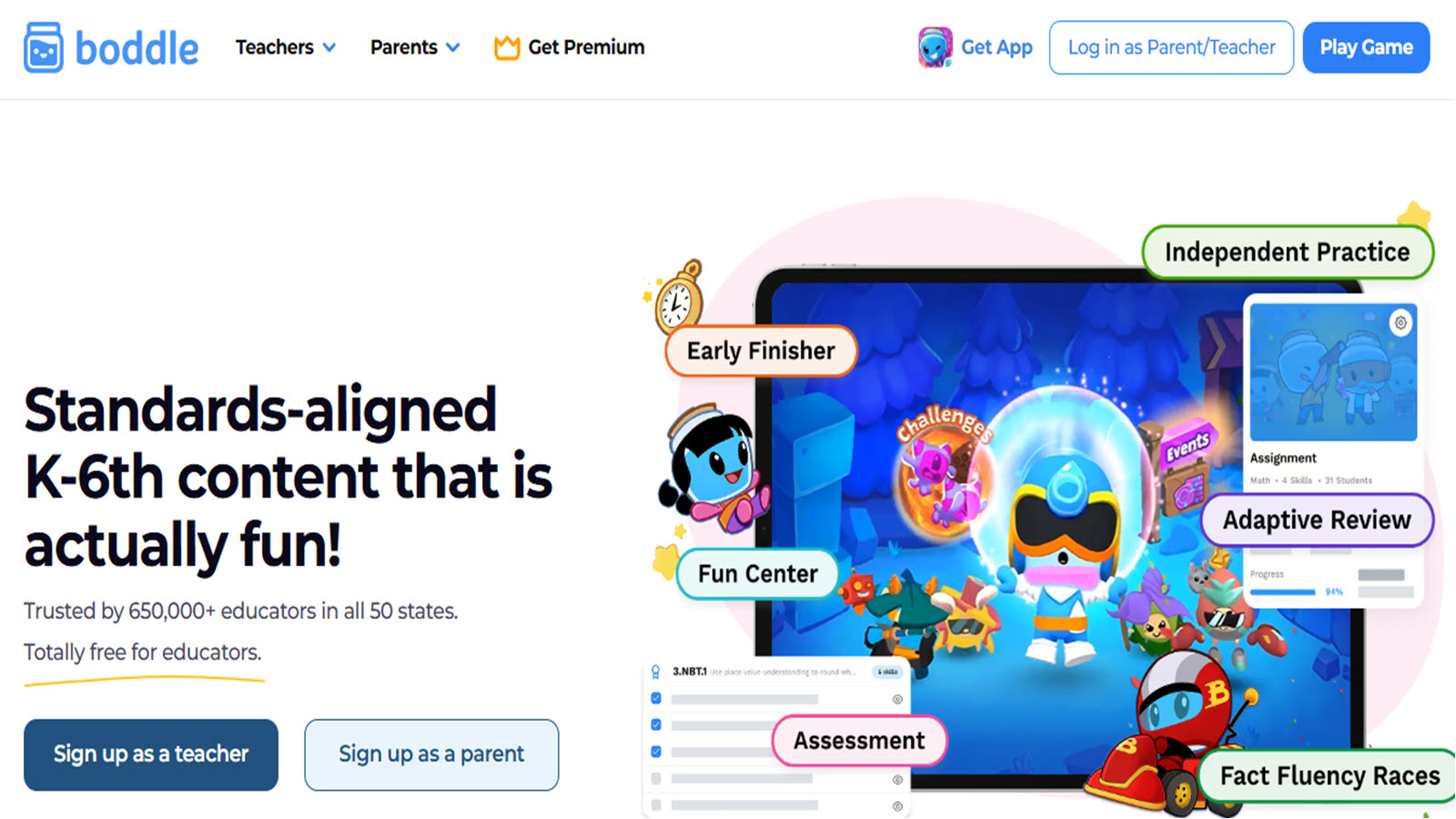
Boddle Learning features a 3D interactive game world where kindergarten through grade 6 students practice math, reading, and science skills during adventures and challenges. The platform aligns with common core and state standards, delivering personalized pathways and detailed progress tracking for educators and families. Children navigate virtual environments to solve problems in gamified scenarios that combine movement with curriculum content.
The colorful graphics and character-driven stories enhance retention and motivation across subjects. Used in thousands of USA schools, it provides actionable insights while maintaining an entertaining format suitable for both individual and group settings. The adaptive system accommodates different learning styles and paces.
- Key features: 3D game-based learning, standards-aligned curriculum, math and ELA practice, progress reports, adaptive challenges.
- Facts and information: Trusted by over 650,000 educators in all 50 states, used by more than 10 million students, focuses on interactive practice to support skill mastery and engagement.
22. Sago Mini World

Sago Mini World combines multiple open-ended games featuring lovable characters for children aged 2 to 6 in one accessible platform. Headquartered in Toronto, Canada, the app includes activities centered on imaginative play such as caring for pets, exploring shops, and interacting with everyday scenarios that encourage self-expression and discovery. Kids navigate vibrant worlds at their own pace with touch-friendly controls and gentle audio cues. The collection promotes creativity, curiosity, and basic developmental skills through child-led exploration without timers or strict objectives.
Offline capabilities and regular content updates support flexible use in homes and early learning environments across the USA. The thoughtful design prioritizes positive digital experiences that mirror real-world play.
- Key features: Hundreds of activities, open-ended exploration, offline gameplay, character interactions, multi-device support.
- Facts and information: Designed for ages 2-6, award-winning preschool app collection, emphasizes child-led play to support emotional intelligence and creative development.
23. Moose Math
.jpg)
Moose Math introduces early mathematical concepts to kindergarten-aged children through playful activities set in a whimsical town environment featuring Moose and his friends. Children engage with counting, addition, subtraction, geometry, and measurement by completing missions like building bridges or sorting objects in stores and parks. The app uses colorful animations, voice guidance, and immediate feedback to support conceptual understanding and skill practice.
Designed for ages 3 to 7, it emphasizes hands-on digital manipulation that builds number sense and spatial awareness. Families across the USA use it for supplemental practice that aligns with preschool and kindergarten curricula, encouraging repeated engagement through rewarding mini-games and progress indicators. The structured yet fun approach helps young learners develop confidence in math fundamentals while maintaining short, attention-appropriate sessions.
- Key features: Counting challenges, shape and pattern activities, addition and subtraction missions, measurement tools, town exploration format.
- Facts and information: Developed by Duck Duck Moose (now part of Khan Academy), available on major mobile platforms, focuses on Common Core-aligned early math skills for preschool and kindergarten readiness.
24. Bedtime Math
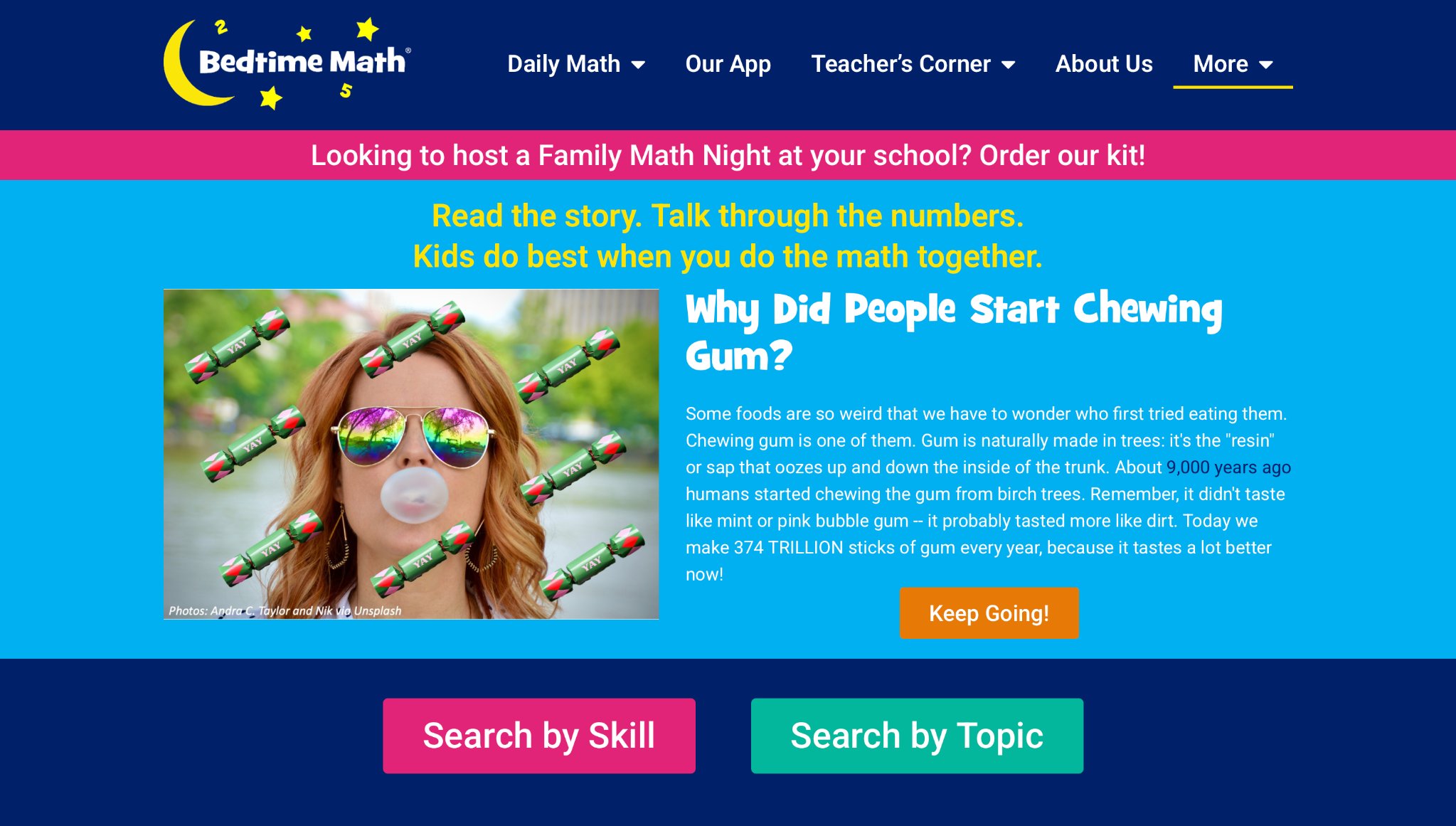
Bedtime Math transforms daily math conversations into engaging family moments with a free app that delivers fun, story-based math problems for children of all ages, including kindergarteners. Each day features a new whimsical story followed by questions at different difficulty levels, covering topics from basic counting to simple operations and real-world applications.
Parents or caregivers read the story aloud and explore the problems together, fostering a positive attitude toward math without screens dominating the experience. The platform promotes mathematical thinking through curiosity-driven discussions and optional hands-on extensions. Widely used in homes across the USA, it supports school readiness by making math a natural, enjoyable part of routines and encouraging critical thinking and problem-solving skills in a low-pressure environment.
- Key features: Daily math stories, tiered questions by difficulty, family discussion prompts, real-world math applications, optional activity extensions.
- Facts and information: Created by the Bedtime Math Foundation, used by families nationwide to build math confidence, research shows regular use improves children’s math attitudes and performance.
25. Smart Tales
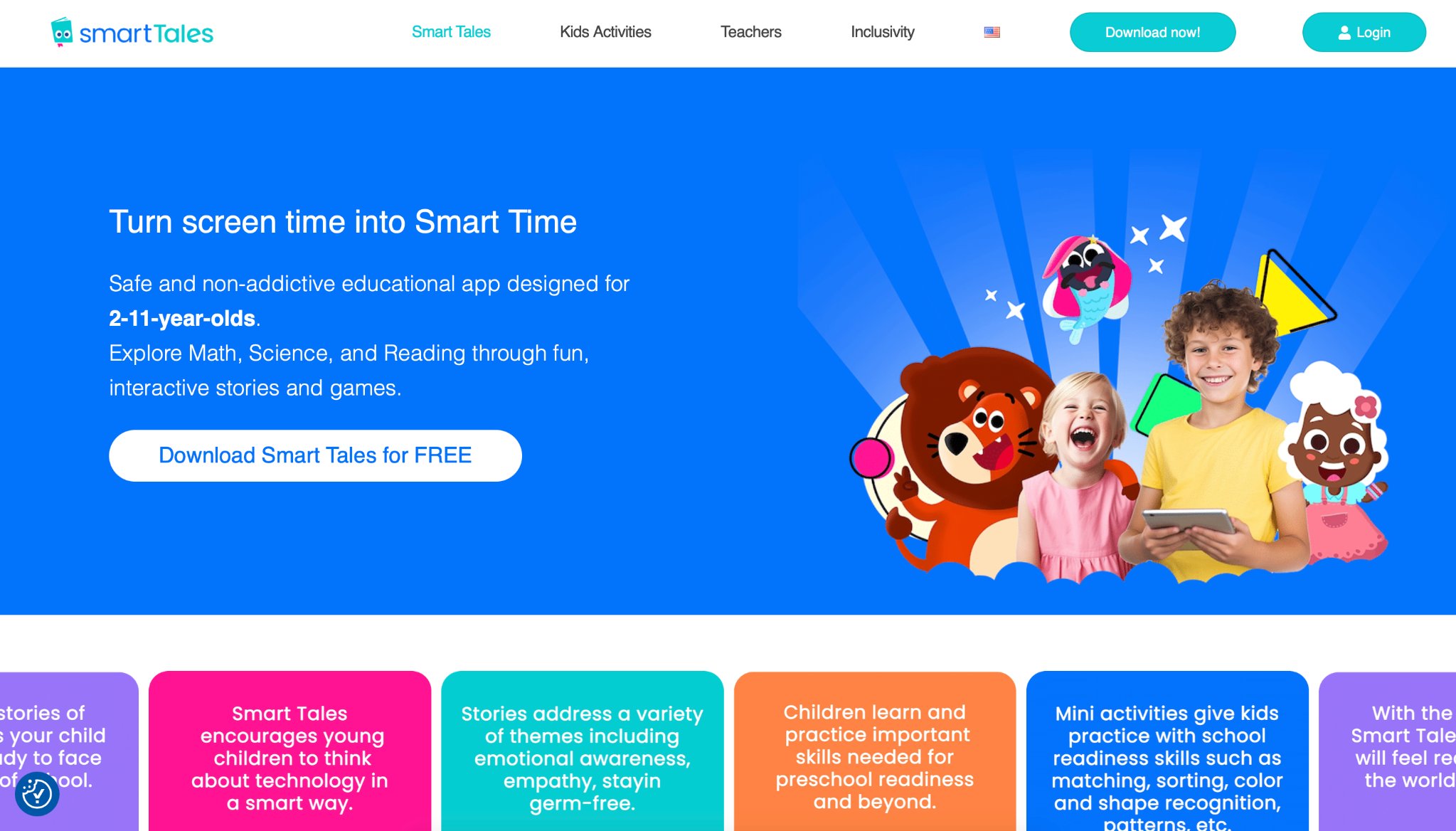
Smart Tales offers an all-in-one interactive learning experience combining storytelling, mini-games, and curriculum-aligned activities for children aged 2 to 11, with strong suitability for kindergarten levels. Kids follow engaging storylines while completing tasks in math, science, logic, and literacy that adapt to their progress. The platform features beautiful illustrations, voice narration, and gamified elements that maintain motivation across subjects. It emphasizes holistic development through creative problem-solving and knowledge application in narrative contexts. Available on mobile devices, it provides a safe, structured environment popular among USA families seeking comprehensive digital learning support. Regular content updates ensure fresh material that aligns with educational standards and evolving interests.
- Key features: Story-driven lessons, interactive mini-games, math and science activities, adaptive progression, literacy integration.
- Facts and information: Covers full early school curriculum areas, rated highly for engagement and safety, designed as a balanced edutainment solution for young learners.
26. Teach Your Monster to Read
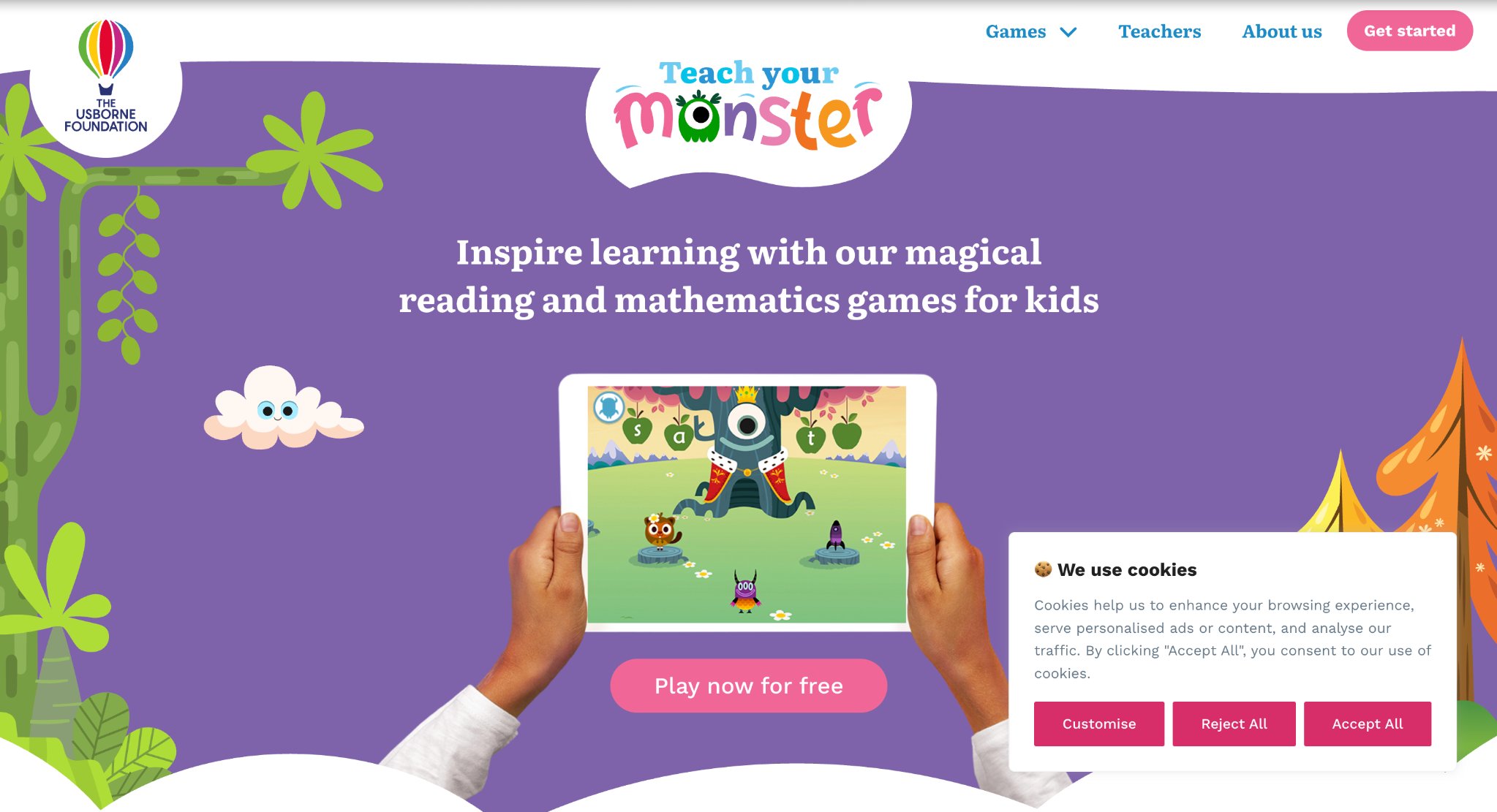
Teach Your Monster to Read delivers an engaging phonics-based adventure where children guide a lovable monster character through a vibrant world while mastering essential reading skills. Developed in collaboration with reading experts and aligned with proven literacy methods, the app targets ages 3 to 7 with structured yet playful activities that build letter sounds, blending, sight words, and early comprehension. Kids customize their monster, complete missions, and unlock rewards that maintain high motivation throughout the learning journey.
The game-like format transforms traditional phonics practice into an exciting story-driven experience that encourages repeated play and skill retention. Families across the USA appreciate its focus on building confidence in young readers through positive reinforcement and progressive challenges. The app supports different learning styles with clear audio guidance and visual cues, making it suitable for beginners and those needing extra practice in a supportive digital environment. Headquartered in the United Kingdom but widely used in American homes and schools.
- Key features: Phonics missions and blending exercises, monster customization, sight word recognition, story progression with rewards, multi-level challenges.
- Facts and information: Award-winning literacy program that has helped millions of children worldwide develop strong reading foundations, designed with input from education specialists to align with early learning standards.
27. Pok Pok Playroom
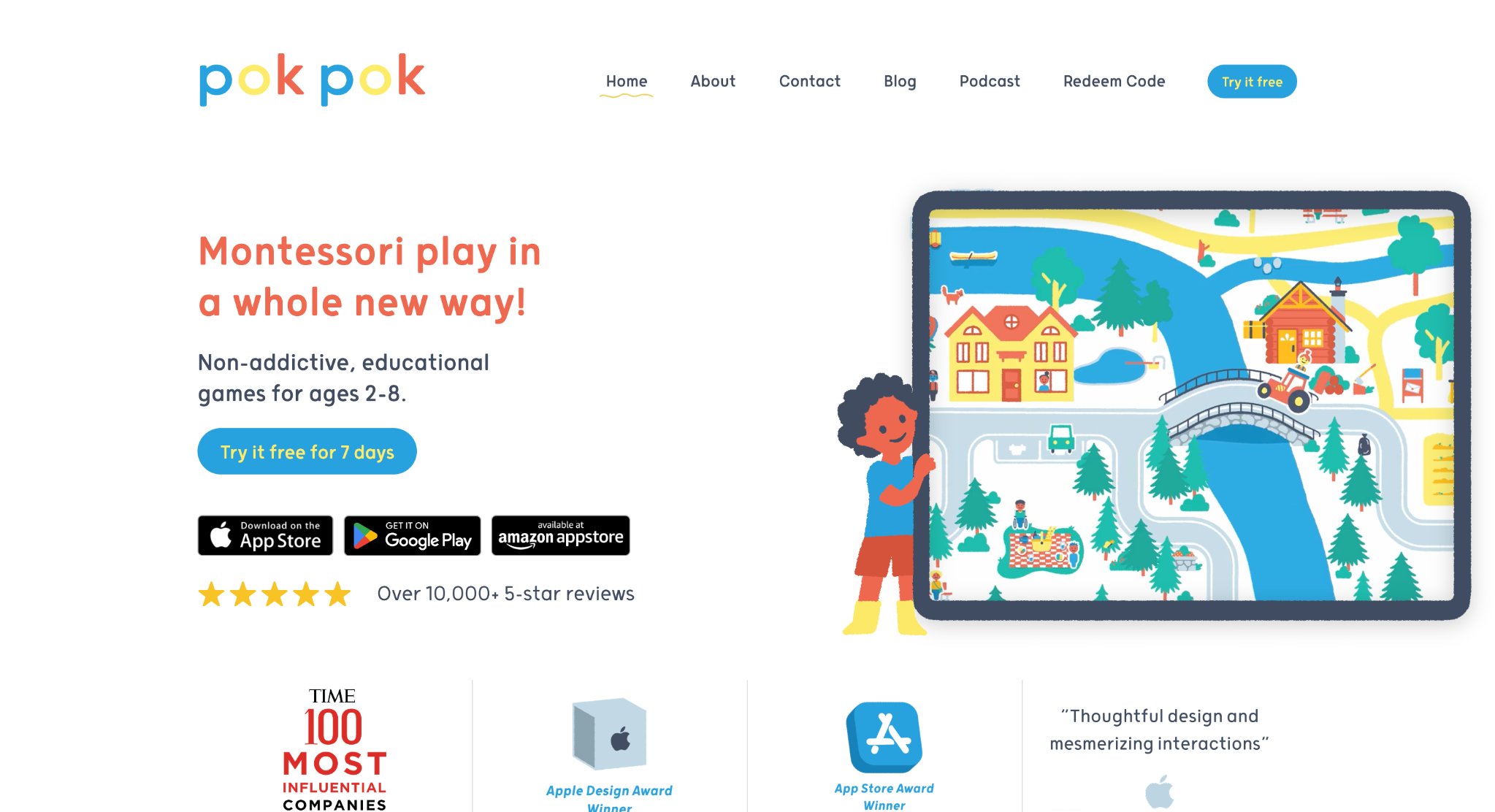
Pok Pok Playroom offers a Montessori-inspired collection of open-ended digital activities designed for young children to explore creativity, problem-solving, and imaginative play at their own pace. The app features tools like digital blocks, drawing canvases, sensory simulations, and interactive toys that encourage free exploration without rigid goals or timers. Targeted at ages 2 to 6, it promotes fine motor skills, spatial awareness, and self-directed learning through intuitive touch controls and calming visuals.
Parents value its ad-free, child-led approach that mirrors real-world play while providing safe digital alternatives for rainy days or travel. The thoughtful design avoids overstimulation, focusing instead on calm, meaningful engagement that supports emotional regulation and creative thinking. Regular additions keep the playroom fresh, allowing children to return repeatedly for new discoveries in a supportive environment popular among USA families seeking balanced screen experiences.
- Key features: Open-ended building and drawing tools, sensory exploration activities, character interactions, calming sound design, offline play options.
- Facts and information: Montessori-aligned digital play space used by families to foster independence and creativity, emphasizes child-directed activities that build foundational cognitive and emotional skills.
28. Toca Nature
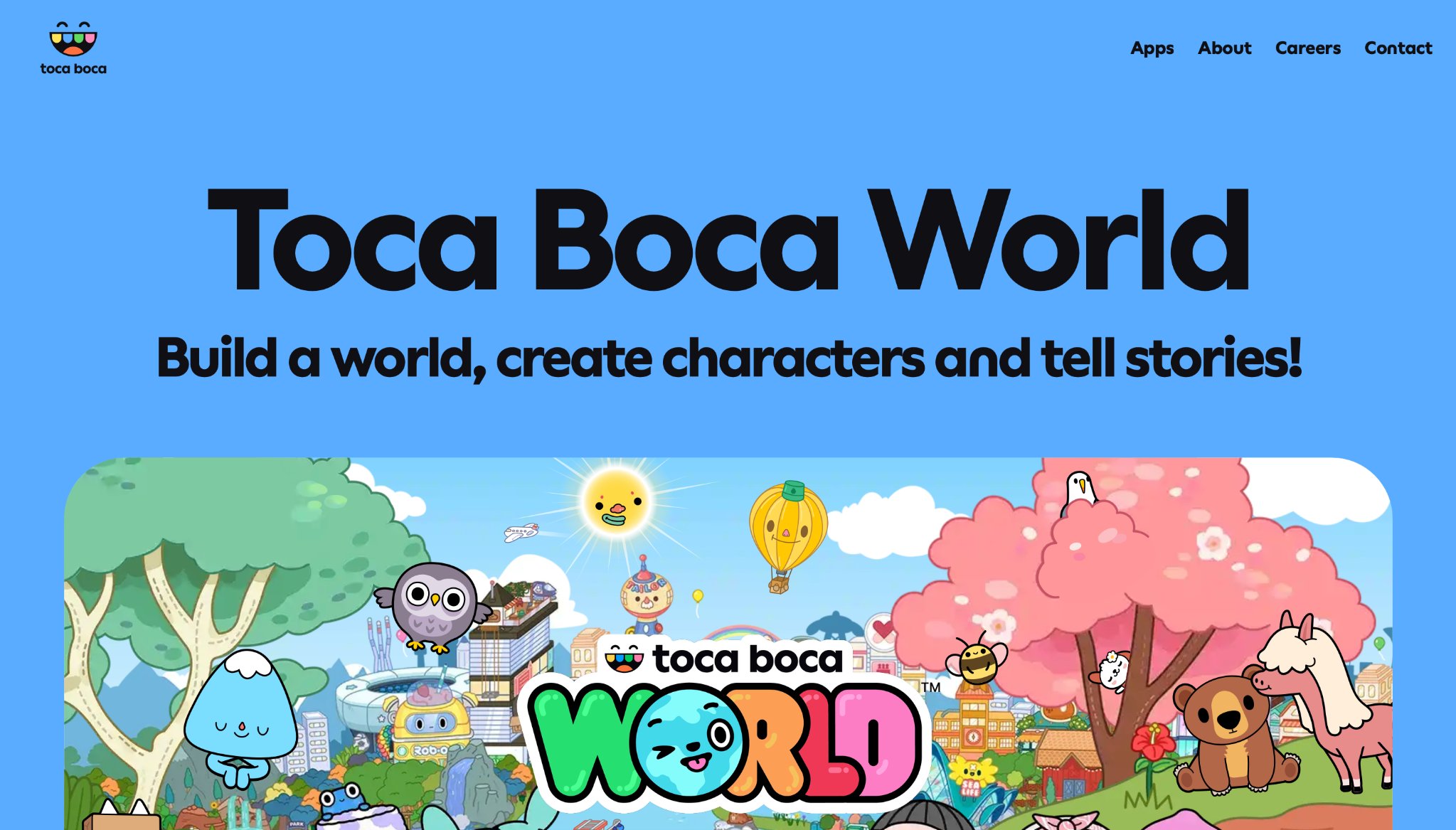
Toca Nature invites children to shape and nurture their own digital wilderness by adjusting landscapes, planting trees, caring for animals, and observing seasonal changes in a peaceful open-world setting. Aimed at ages 2 to 6, the app emphasizes creativity, responsibility, and environmental awareness through gentle interactions like feeding wildlife or exploring ecosystems. Kids experiment freely with elements like weather and terrain to create unique natural worlds.
The soothing audio and intuitive gameplay make it ideal for quiet independent play or shared family sessions, helping young learners develop empathy toward nature and basic cause-and-effect understanding. Widely appreciated in USA households for its non-competitive format that sparks curiosity and storytelling without pressure. The open-ended design supports extended engagement while encouraging imagination and appreciation for the natural world.
- Key features: Landscape manipulation tools, animal caregiving mechanics, seasonal and weather effects, soundscape creation, free exploration mode.
- Facts and information: Part of the popular Toca Boca series known for creative play apps, supports developmental skills like empathy and observation through immersive environmental simulations enjoyed by millions of young children.
29. BrainPOP Jr.
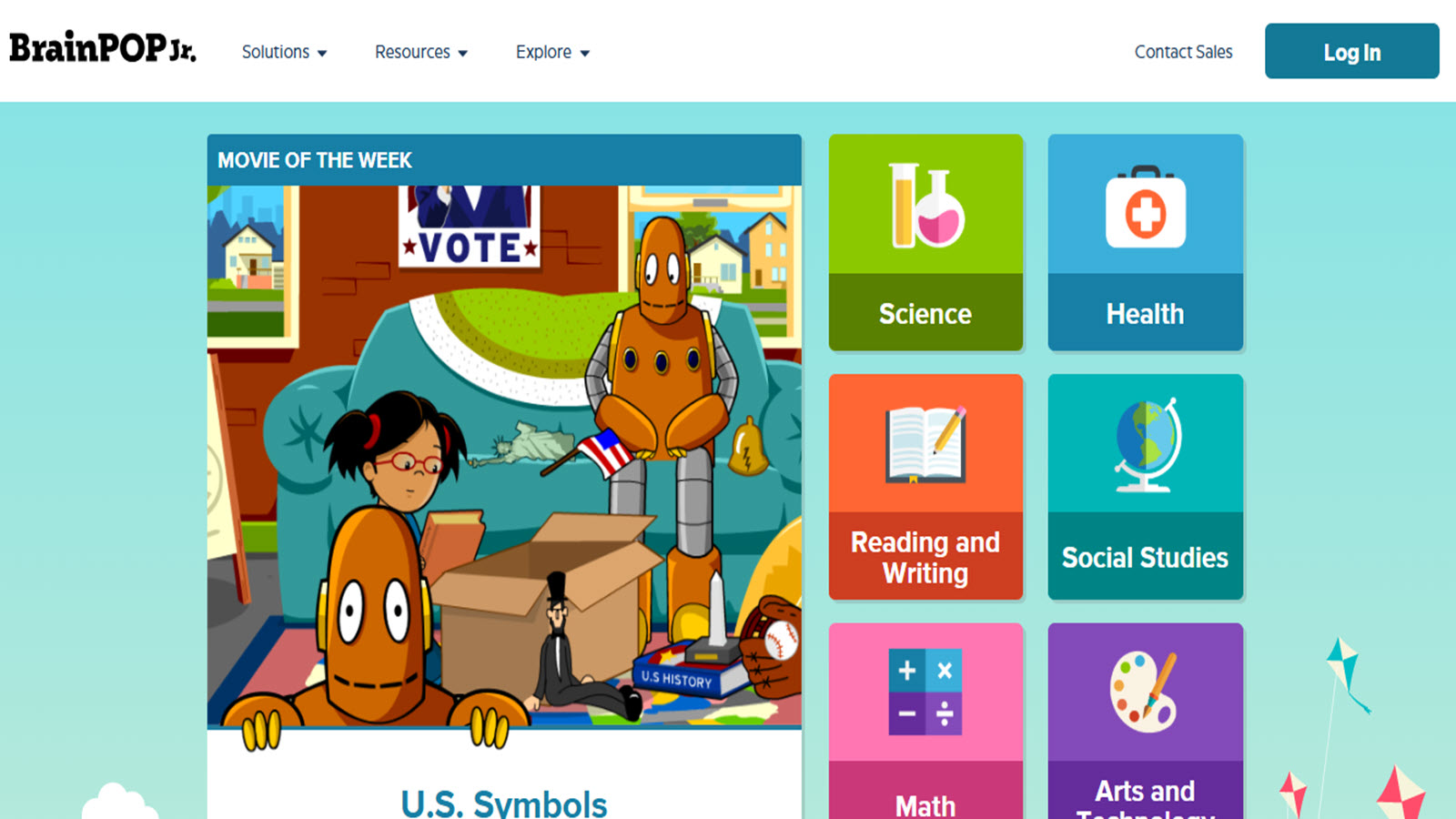
BrainPOP Jr. provides animated educational videos, quizzes, and activities covering science, social studies, reading, and health topics tailored for early elementary learners. The platform features engaging characters that guide children through age-appropriate lessons with clear explanations and interactive follow-ups that reinforce key concepts. Suitable for ages 5 to 8, it aligns with educational standards while making complex ideas accessible through humor and visuals.
Educators and families in the USA often use it to supplement classroom learning or homeschooling, appreciating the combination of entertainment and factual content that builds knowledge across subjects. The structured yet fun format includes comprehension checks and creative extension activities that promote deeper understanding and retention in a safe, ad-supported but moderated environment.
- Key features: Animated lesson videos, interactive quizzes and games, topic-based activity packs, character-guided explorations, progress tracking elements.
- Facts and information: Trusted resource in many American schools with standards-aligned content, supports foundational knowledge in core subjects through engaging multimedia experiences used by educators and families nationwide.
30. Tynker
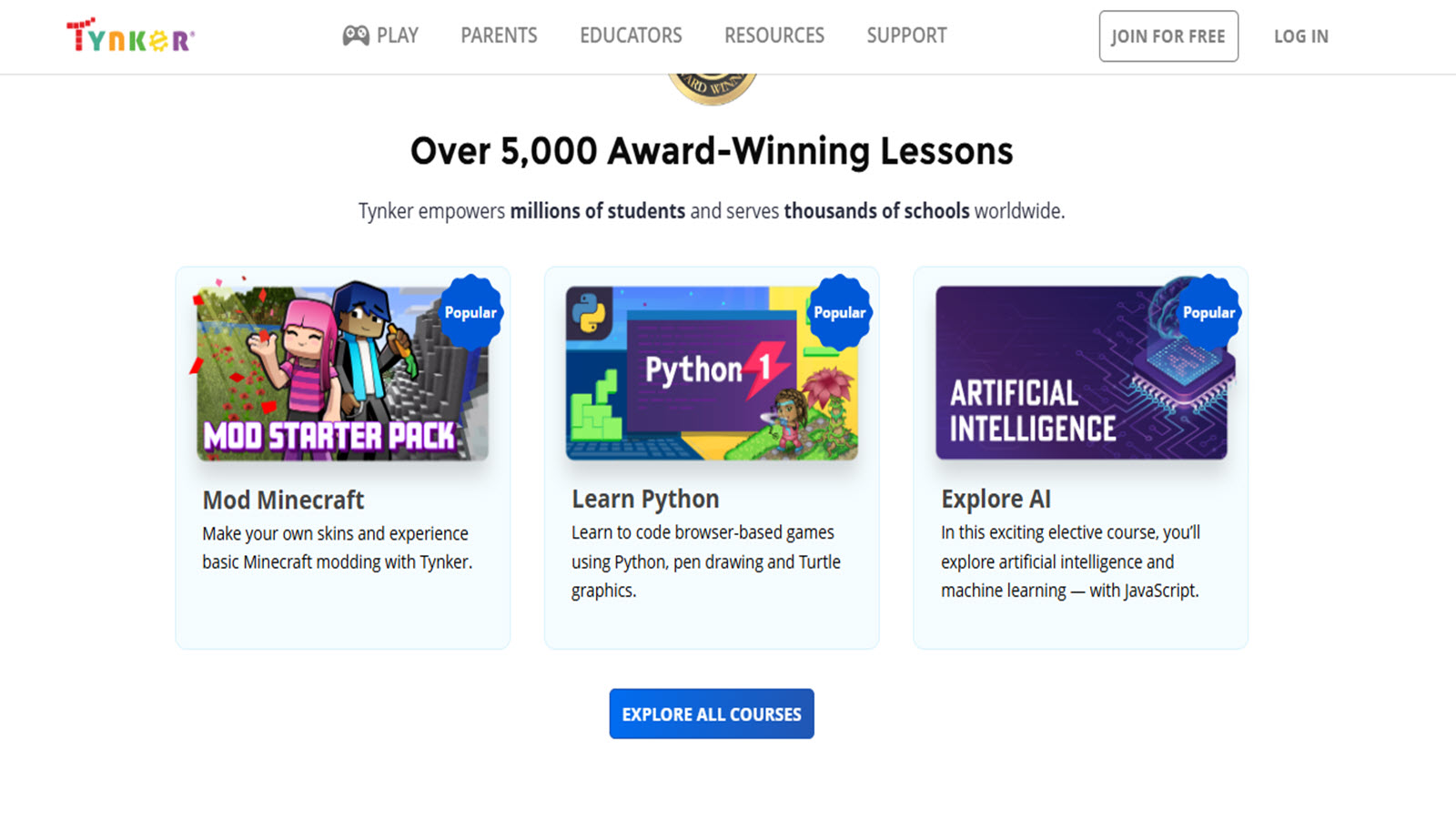
Tynker introduces children to coding and computational thinking through block-based and text programming in a game-like environment filled with creative projects and challenges. Designed for ages 5 and up, it offers structured courses alongside open-ended buildings where kids create games, animations, and stories using drag-and-drop interfaces that gradually advance to real code. The platform supports multiple subjects including math, science, and design.
Its comprehensive curriculum makes it valuable for both home and classroom settings across the USA, fostering logical reasoning, problem-solving, and digital creativity. Regular updates and community sharing features keep engagement high as children progress from beginner tutorials to more advanced projects, building confidence in technology skills essential for future learning.
- Key features: Block-to-text coding progression, project-based courses, game and animation creation tools, STEM integration, teacher/parent dashboards.
- Facts and information: Popular coding platform with millions of young users, provides structured pathways that develop real programming abilities alongside creativity and logical thinking.
Benefits of Mixing Educational Games with Daily Play
Blending games into routines helps kids apply skills in real life. Short sessions after school reinforce lessons without fatigue. Family game time strengthens bonds and models positive habits. Many parents see smoother transitions to homework when games preview topics.
Latest Trends in Kids Educational Gaming
Recent shifts focus on AI personalization and emotional learning integration. Games now adapt in real time to keep challenges just right. Virtual reality elements add immersion for subjects like science. A report from Common Sense Media notes growing emphasis on inclusivity for diverse learners. Some trends include offline modes for flexibility.
Common Skills Developed by Age Group:
- 2-4 years: Basic recognition and motor skills through activities like matching shapes and simple puzzles.
- 5-7 years: Reading basics and addition via phonics games and counting challenges.
- 8+ years: Problem-solving and empathy developed through story-building and role-play scenarios.
Educational Games for Developing Creativity in Children
Educational games for developing creativity in children feature open-ended activities that let kids design scenes, customize characters, and experiment freely with colors, shapes, and storytelling elements. These experiences mirror real-world artistic processes and encourage original thinking through iterative play and visual exploration.
Regular engagement with creativity-focused games often leads to stronger imaginative abilities that transfer naturally to school projects, writing tasks, and everyday problem-solving situations. Many families blend these digital experiences with simple offline creative materials like drawing supplies to create balanced routines that nurture innovation without over-reliance on screens.
Educational Games for Strengthening Problem Solving Skills
Problem-solving educational games present layered challenges that require logical sequencing, pattern recognition, and adaptive thinking as children advance through increasing levels of difficulty. These games rely on trial-and-error mechanics that build mastery of concepts such as resource management, spatial reasoning, and strategic planning in low-pressure environments. Early and consistent exposure helps children develop positive associations with challenges and persistence that support academic progress and real-life decision-making.
Tablet and Screen-Based Educational Kids Games
Tablet and screen-based educational kids games deliver interactive experiences that blend technology with learning. These educational games are especially effective for building memory, focus, and problem-solving through engaging visuals and immediate feedback.
In 2026, quality tablet games adapt to each child’s pace, making them ideal for personalized learning at home. They support brain games that strengthen cognitive abilities while teaching letters, numbers, logic, and creativity. Many options also promote confidence building by celebrating small wins and allowing children to progress independently. When used wisely with time limits, these screen-based games become powerful tools within best educational kids games, turning device time into meaningful skill development.
Latest News In 2026
Early 2026 brought widespread introduction of collaborative features across educational kids games that promote turn-taking, shared decision-making, and teamwork during group play sessions.
Parenting blogs suggest combining these digital updates with hands-on offline extensions to maintain engagement during family travel or device-free periods. Developers addressed growing parent demand by expanding customizable difficulty settings in the first quarter, allowing experiences to better match individual paces and abilities.
Broader updates to data protection practices across the sector reinforced minimal collection standards while preserving options for personalized progress insights.
Developers continue releasing new features in educational kids games this year with stronger focus on emotional intelligence and real-world connections. Updates frequently introduce interactive scenarios that highlight sharing, teamwork, and understanding different perspectives.
Trends point toward smoother blending of digital play with hands-on activities as families look for balanced routines. Safe and thoughtful design stays central so parents stay comfortable with regular screen time. Improved progress insights now clearly show strengths in creativity, logical thinking, and problem-solving abilities.
- Personalized learning paths adjust more quickly to match each child’s unique pace and interests.
- Cultural awareness appears more often through rich story-based games.
- Family sharing modes become a common feature across popular platforms.
FAQ
What makes educational kids games effective for learning?
Educational kids games succeed by blending interactive elements with real-world applications, allowing children to experiment and learn from outcomes in a safe space. This approach fosters deeper understanding through trial and error, which builds critical thinking alongside academic knowledge. Parents notice how these games adapt to individual paces, ensuring steady progress in areas like literacy and numeracy without overwhelming young players.
At what age should kids start playing educational games?
Starting with basic educational kids games around toddlerhood introduces foundational concepts through touch and sound, setting a positive tone for future learning. By kindergarten, more structured activities help refine motor skills and introduce teamwork ideas. Adjustments based on a child's curiosity and attention span keep the experience enjoyable and developmentally appropriate.
How do educational games support emotional growth?
Educational games for kids often feature storylines that encourage perspective-taking, helping kids navigate social interactions virtually before applying them in life. Positive reinforcement in these settings boosts self-esteem, while gentle challenges teach resilience. Options with character-driven narratives highlight values like cooperation, making abstract emotions more relatable for young minds.
Can educational kids games replace traditional teaching?
While educational kids games add variety to learning methods, they shine as supplements that make abstract ideas concrete through visuals and simulations. Teachers integrate them to spark discussions and extend lessons beyond textbooks. This hybrid style keeps motivation high, especially for subjects that benefit from hands-on practice.
How do educational kids games support long-term skill retention compared to passive activities?
Educational kids games require active participation through choices and immediate feedback loops that reinforce neural pathways for memory and application, leading children to internalize concepts more effectively than observation alone.
What considerations help match educational games to a child’s current developmental stage?
Games aligned with developmental milestones incorporate age-appropriate complexity, such as simple matching for younger learners or multi-step puzzles for older ones, ensuring the experience remains engaging without overwhelming.
In what ways do educational games help manage parental concerns about screen time?
Educational games structure play around clear skill-building objectives with built-in elements like focused challenges and learning outcomes, transforming device use into productive growth opportunities rather than passive consumption. Support resources from leading platforms further assist families in implementing effective guidelines for balanced use.
How can families use educational games to complement rather than replace traditional learning?
Educational games extend classroom lessons through interactive scenarios that apply abstract ideas in concrete contexts, creating natural bridges between structured instruction and independent exploration.
What features in educational kids games promote inclusivity across different learning styles?
Many titles offer adjustable pacing, visual and auditory cues, and multiple pathways to success so that visual, kinesthetic, and auditory learners all find accessible entry points within the same activity.
How do educational games support emotional development and social skills?
Narrative-driven games and character interactions help children recognize emotions, practice empathy, and rehearse social strategies in safe, repeatable scenarios that build confidence in real-world relationships.
Why are educational games effective for reinforcing school subjects at home?
Interactive formats allow children to apply concepts from math, reading, science, and more in engaging scenarios that feel like play, strengthening understanding through repeated active application.
What role does feedback play in the success of educational kids games?
Instant, constructive feedback guides learners toward correct approaches, builds confidence through visible progress, and encourages repeated practice until mastery becomes natural and automatic.
How do educational kids games support overall development?
Educational kids games support overall development by combining engaging play with practice in key areas like problem-solving, creativity, and emotional awareness. Children naturally build stronger focus and greater confidence as they repeat activities in supportive digital environments. These games often mirror real-life situations that help young learners develop responsibility and social understanding through character interactions and open-ended challenges. Many titles also promote logical thinking and imagination at the same time, creating well-rounded growth without feeling like traditional lessons.
What makes a game suitable for young children?
A game becomes suitable for young children when it offers clear visuals, simple controls, and challenges that match their current age and skill level. Ad-free educational games for kids help keep full attention on learning instead of distractions or interruptions. Good options include adjustable difficulty that grows with the child and content focused on positive themes such as kindness and curiosity. Safety features like protected environments and no personal data collection give parents extra peace of mind during daily use.
Can educational games work without internet access?
Many educational games work completely offline after the first download is finished. This offline mode proves very useful during travel, car rides, or in places where internet connection is weak or unavailable. Families benefit from the flexibility because learning routines can continue smoothly no matter the location or situation. Offline capabilities make these games more practical for consistent daily play without depending on constant wifi.
How do games help with social and emotional skills?
Educational kids games help develop social and emotional skills by placing children in gentle story scenarios where they practice caring for characters and making kind decisions. These experiences naturally teach empathy, cooperation, and sharing in a low-pressure way that feels fun rather than instructional. Regular play often leads to better understanding of feelings and relationships, supporting emotional growth alongside other learning areas. Many 2026 titles now place even more focus on teamwork and perspective-taking to strengthen these important life skills.
What features should parents look for in 2026 educational kids games?
Parents should look for personalized learning paths, regular content updates, and strong safety measures in 2026 educational kids games. Features that highlight individual strengths in creativity and problem-solving help create more effective experiences for each child. Family-friendly designs, balanced activities, and good integration with real-life play remain highly valued. Clear progress insights and options for both online and offline use also make modern educational games more convenient and useful for busy households.
How do educational kids games encourage creativity and imagination?
Educational kids games promote creativity by offering open-ended activities where children design, build, and tell their own stories in vibrant digital worlds. These experiences let kids experiment freely with colors, shapes, and ideas without fear of mistakes, strengthening imaginative thinking over time. Many titles blend art-inspired challenges with problem-solving so children develop both creative expression and flexible thinking naturally.
What role does adaptive difficulty play in educational games?
Adaptive difficulty in online educational games adjusts challenges automatically based on a child’s performance, keeping the experience engaging without causing frustration or boredom. This feature ensures steady progress by presenting tasks that feel just right for the current skill level. Children stay motivated longer as they experience success while gently building new abilities in logic and routines.
How do educational games connect learning to real-life situations?
The best educational kids games connect learning to real-life by turning everyday routines into interactive adventures, such as caring for characters or managing simple responsibilities. Children practice skills in contexts that mirror home and social environments, making concepts more memorable and applicable. This bridge between play and reality strengthens understanding of kindness, focus, and decision-making.
Why is consistency important when using educational kids games?
Consistency with educational kids games helps children build strong habits and deeper skill retention through regular short sessions rather than occasional long play. Repeated exposure in a familiar, safe environment reinforces focus, creativity, and emotional lessons over weeks and months. Steady routines also make screen time feel like a normal, positive part of the day. Many ad-free games support this pattern with content that remains fresh yet predictable. The approach creates reliable opportunities for growth without disrupting family schedules. Parents often observe gradual improvements in attention and social behaviors with regular use.
How do educational games support family bonding moments?
Educational apps create family bonding moments by including activities that naturally invite shared participation, such as discussing character stories or collaborating on creative tasks. These joint experiences turn individual play into opportunities for conversation and connection. Children and adults alike enjoy exploring outcomes together in a relaxed setting.
Read Also:
- Balancing Self-Care and Parenting: 7 Tips for Moms
- Key Advice for New Parents: What No One Tells You
- Best Apps For Kids Learning In 2026
- Best iPad Games For Kids In 2026
- Educational Games For Kids iPad In 2026
Discover the best educational kids games- TutoClub





.jpg)

.jpg)