

Best Fun Educational Games For Kids in 2026






In a world where screens fill daily life, finding ways to make playtime count matters more than ever. Kids thrive when games spark curiosity and build skills like focus and creativity. Parents often seek options that turn device time into something positive. Discover the best fun educational games for kids in 2026 that blend play with skill-building.
Choosing the right educational games helps children learn through play while strengthening focus, problem-solving, and creativity. Parents looking for trusted recommendations can explore guides to the best kid educational games, discover engaging options among top-rated educational games for kids on iPad, or compare high-quality educational games for kids apps designed for meaningful screen time. For a broader overview, our roundup of the best kids educational games makes it easy to find fun, skill-building experiences for every age.
Discover the Best Fun Educational Games For Kids in 2026 - TutoClub
Why Educational Games Boost Learning

Educational games like these support brain growth by mixing fun with key concepts. Kids practice problem-solving without feeling like it's work. Parents see improvements in areas such as reading or math when play feels natural. Safe, ad-free setups let children explore freely, building confidence along the way.
Many families notice kids pick up new ideas faster through interactive play. Some games even help with social skills by encouraging teamwork or empathy. When selecting fun educational games for kids, look for those backed by expert design. This approach keeps learning fresh and avoids overload.
How to Pick Games That Fit Your Family
Start by matching games to your child's age and needs. Younger ones benefit from simple activities that teach basics, while older kids handle more complex challenges. Check for updates that add new content to keep things interesting. Offline options work well for travel or quiet times.
Best Fun Educational Games For Kids in 2026
1. TutoClub Games - Best Fun Educational Games for Kids
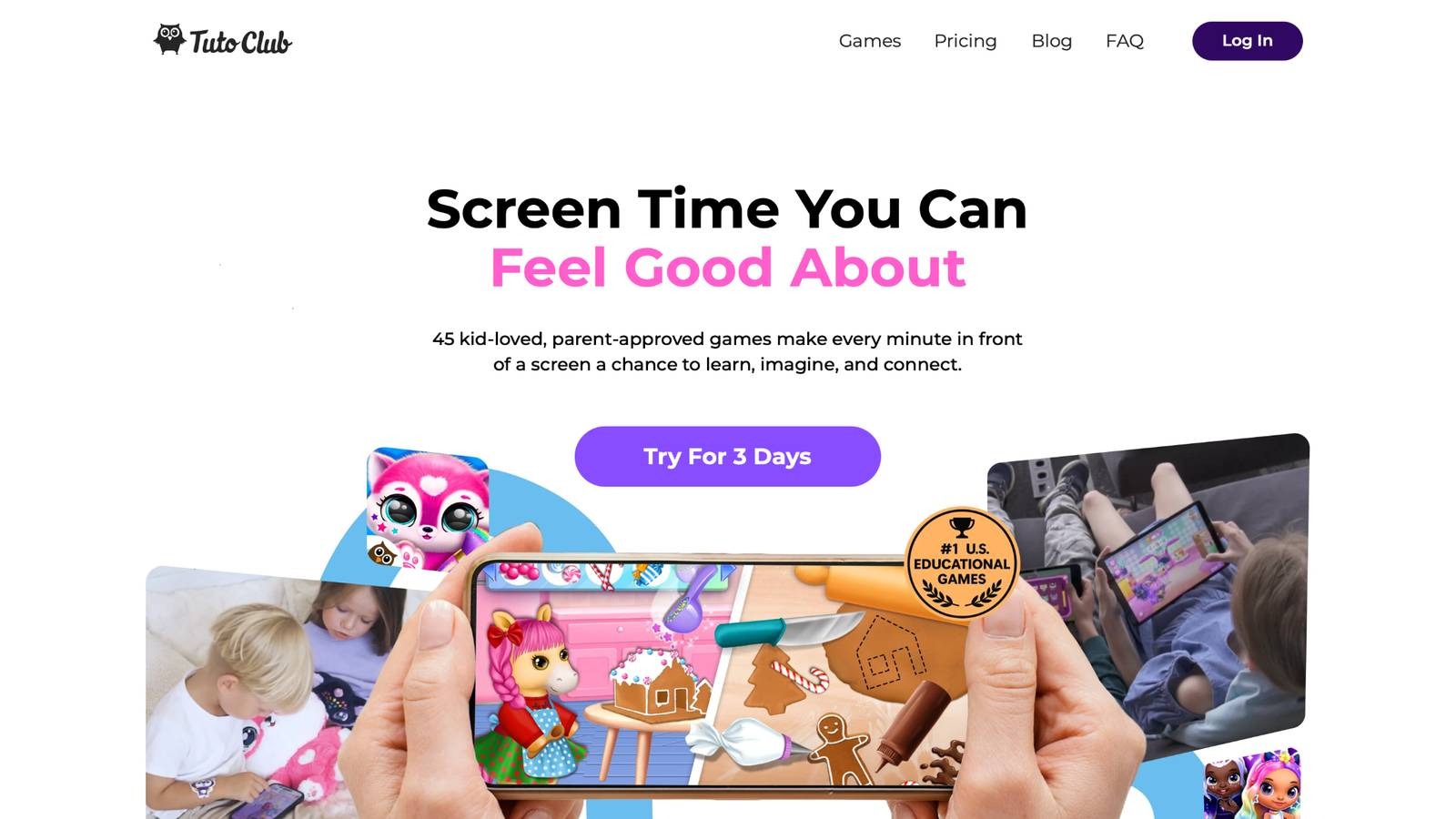
Discover educational games for kids through TutoClub, a subscription platform offering over 45 ad-free titles designed to make screen time meaningful. Based in Lithuania, this service transforms play into skill-building adventures where children care for characters to foster empathy, solve creative puzzles for focus, and dive into storytelling for imagination. Games cover a range of ages, helping kids develop responsibility through tasks like managing virtual worlds or designing outfits.
Regular updates bring fresh content, ensuring endless replay value. Parents love how it balances fun with growth, turning devices into tools for family bonding. Offline play after download means learning happens anywhere, without interruptions. Kids build confidence by overcoming challenges at their own pace, while features like unlocked in-app elements keep excitement high. This setup stands out for its research-based approach, prioritizing emotional and cognitive development over mindless swipes.
- Standout features include character nurturing for kindness and art mini-games for self-expression.
- Key pros like multi-device support let siblings share without hassle.
- Facts and information show games promote curiosity with open-ended exploration, aiding real-world application.
TutoClub Overview
TutoClub is your gateway to a magical world of educational games designed especially for children.
As part of TutoTOONS, a leading kids' games studio, we offer premium access to over 45 ad-free games.
Our mission is to blend learning and play, helping kids explore, create, and grow in a safe online space.
Thousands of parents trust us for family-friendly content that sparks imagination and builds essential skills.
Key Features
- Unlimited Access: Unlock full content in all games with no interruptions.
- Ad-Free Experience: Enjoy seamless play without any ads or distractions.
- Skill Development: Games foster creativity, social skills, communication, and more through fun activities like pet care and cleanup challenges.
- Regular Updates: Get new releases, exclusive content, and future updates automatically.
- Easy Subscription: Cancel anytime with no obligations, simple and flexible for families.
Explore Our World
TutoClub provides a rich ecosystem of educational games for kids, featuring ad-free experiences that promote creativity, focus, and emotional growth through play.
This platform turns screen time into valuable learning opportunities, with parent-approved content that builds essential skills and sparks curiosity in young minds.
- TutoClub Games: Over 45 educational games, including popular titles like Fluvsies, Smolsies, and the Sweet Baby Girl series
- Blog: Insights, tips, and stories for families on kids' learning and play
- FAQ: Comprehensive answers to frequently asked questions about subscriptions, features, and more
Get TutoClub on Your Device
TutoClub delivers premium kids educational games directly to your mobile devices, making learning accessible anytime, anywhere.
With apps available on major platforms, families can easily download and subscribe for ad-free play that turns screen time into skill-building adventures.
Perfect for parents seeking safe, engaging content on iOS, Android, or Amazon devices.
Why Choose TutoClub?
We're committed to 100% safe, enriching entertainment that kids love and parents approve.
Join the thousands who've seen their children thrive through playful learning.
Ready to start the adventure?
Subscribe to TutoClub today and unlock endless fun!
2. ABCmouse
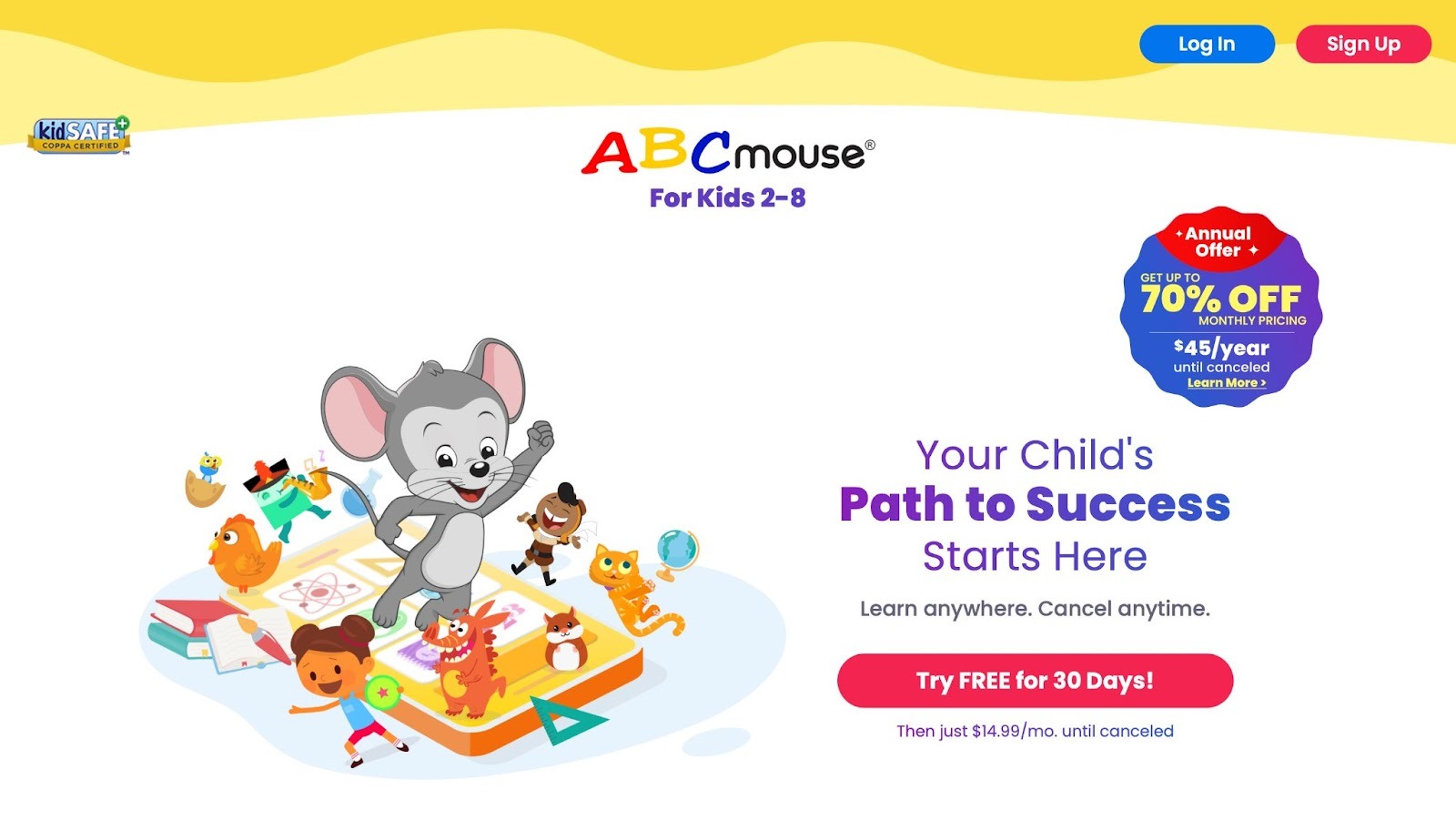
ABCmouse, created by Age of Learning and headquartered in Glendale, California, stands as a comprehensive online learning platform tailored for children aged 2 to 8. It transforms education into an immersive experience with over 10,000 activities spanning reading, math, science, and art. Kids navigate a virtual classroom, earning tickets for progress that they can spend on virtual rewards like pets or accessories, which keeps motivation high. The curriculum aligns with state standards, ensuring it complements schoolwork effectively. One strength is its adaptive learning path that personalizes content based on the child's performance, making sure they neither get bored nor frustrated.
Another plus is the inclusion of songs, puzzles, and interactive books that make concepts stick through repetition and fun. However, it requires a consistent internet connection for full access, which can be a drawback in areas with spotty service. Some parents note that while the variety is vast, younger kids might need guidance to stay on track amid the many options. Overall, ABCmouse excels in building foundational skills in a structured yet playful environment, helping children develop independence in learning. Its progress tracking tools allow parents to monitor growth and identify areas needing extra attention, fostering a supportive home education setup.
- Key features: Adaptive lessons, virtual rewards system, parent progress reports, and multimedia content like videos and games.
- Facts and information: Many families integrate it into daily routines, with content covering preschool to second grade levels for broad appeal.
3. Khan Academy Kids
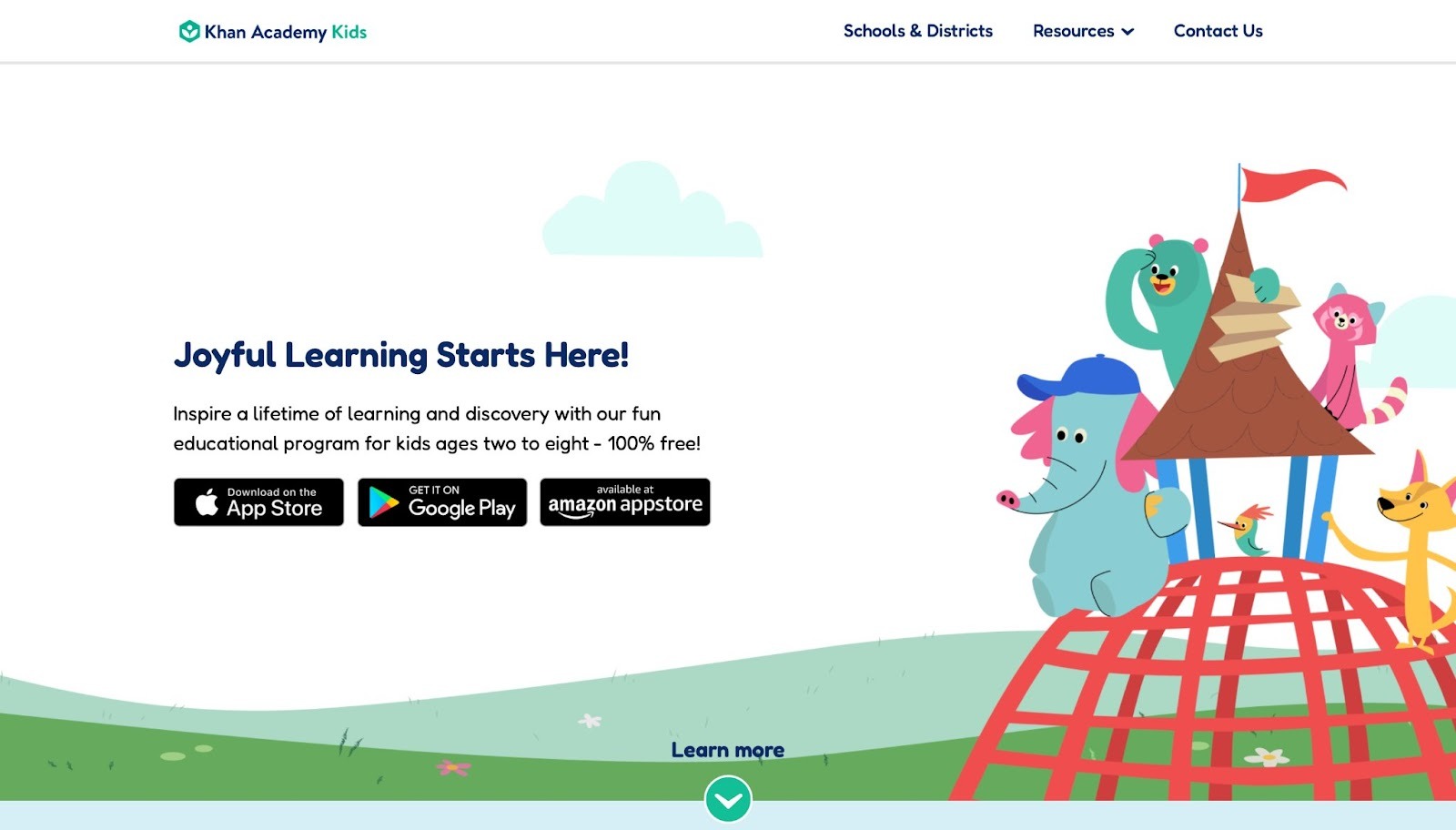
Khan Academy Kids, developed by Khan Academy and based in Mountain View, California, offers a free app packed with thousands of activities for children from ages 2 to 8. It emphasizes math, reading, creativity, and social-emotional learning through colorful animations and friendly characters like Kodi the bear. Kids can explore at their own pace, with the app adjusting difficulty to match their skills. Strengths include its completely ad-free interface and offline download options for some content, making it ideal for on-the-go use. The program draws from early childhood education principles, incorporating stories, songs, and drawing tools to engage multiple senses.
A potential weakness is that the graphics, while charming, are simpler than those in premium apps, which might not hold attention as long for visually driven children. Additionally, it lacks deep customization for specific learning needs, relying more on general progression. Despite this, it promotes independence by letting kids choose activities, building confidence through gentle guidance and positive reinforcement. Parents appreciate the integration of executive function skills, like focus and self-control, woven into playful scenarios.
- Key features: Personalized learning circles, creative studio for art, and library of books with read-along features.
- Facts and information: Some educators recommend it for supplementing classroom work, with alignment to Common Core standards.
4. Starfall
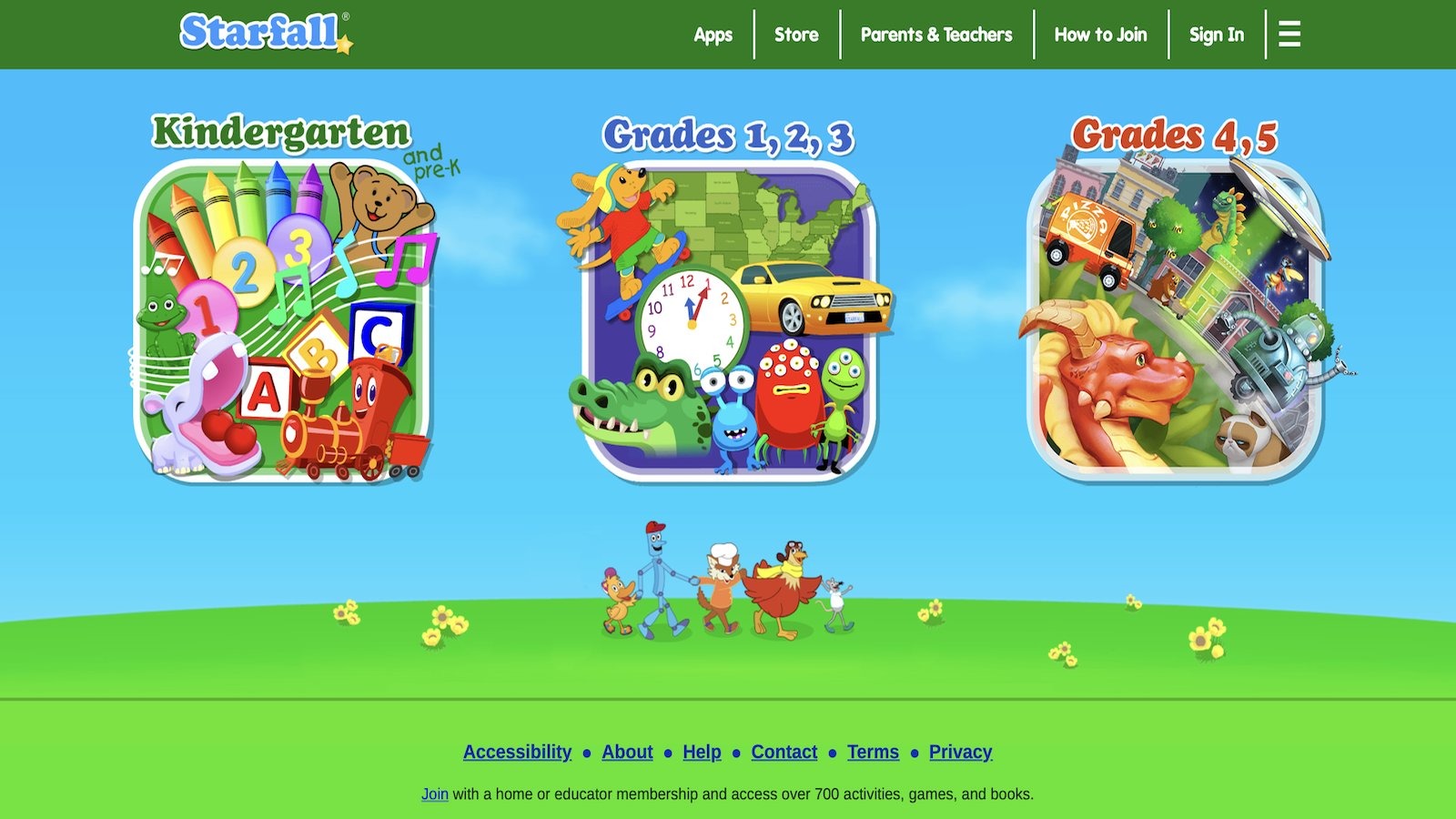
Starfall, from Starfall Education Foundation located in Boulder, Colorado, delivers phonics-based learning through its website and app for kids in preschool through third grade. It uses animated songs, games, and stories to teach reading, math, and more, with a focus on letter sounds and basic vocabulary. Strengths shine in its gentle, non-pressured approach that allows repetition without judgment, perfect for beginners.
The content is bright and engaging, with holiday-themed updates adding seasonal fun. However, it may feel limited for advanced learners who quickly outgrow the basic levels, lacking deeper challenges. Also, full access requires membership for some features, though basics are free. Starfall stands out for its emphasis on accessibility, including audio narration that supports emerging readers. It encourages exploration, helping kids build literacy skills confidently.
- Key features: Interactive math activities, printable resources, and narrated books.
- Facts and information: Many schools use it as a tool for early literacy, with proven methods in phonics instruction.
5. Prodigy
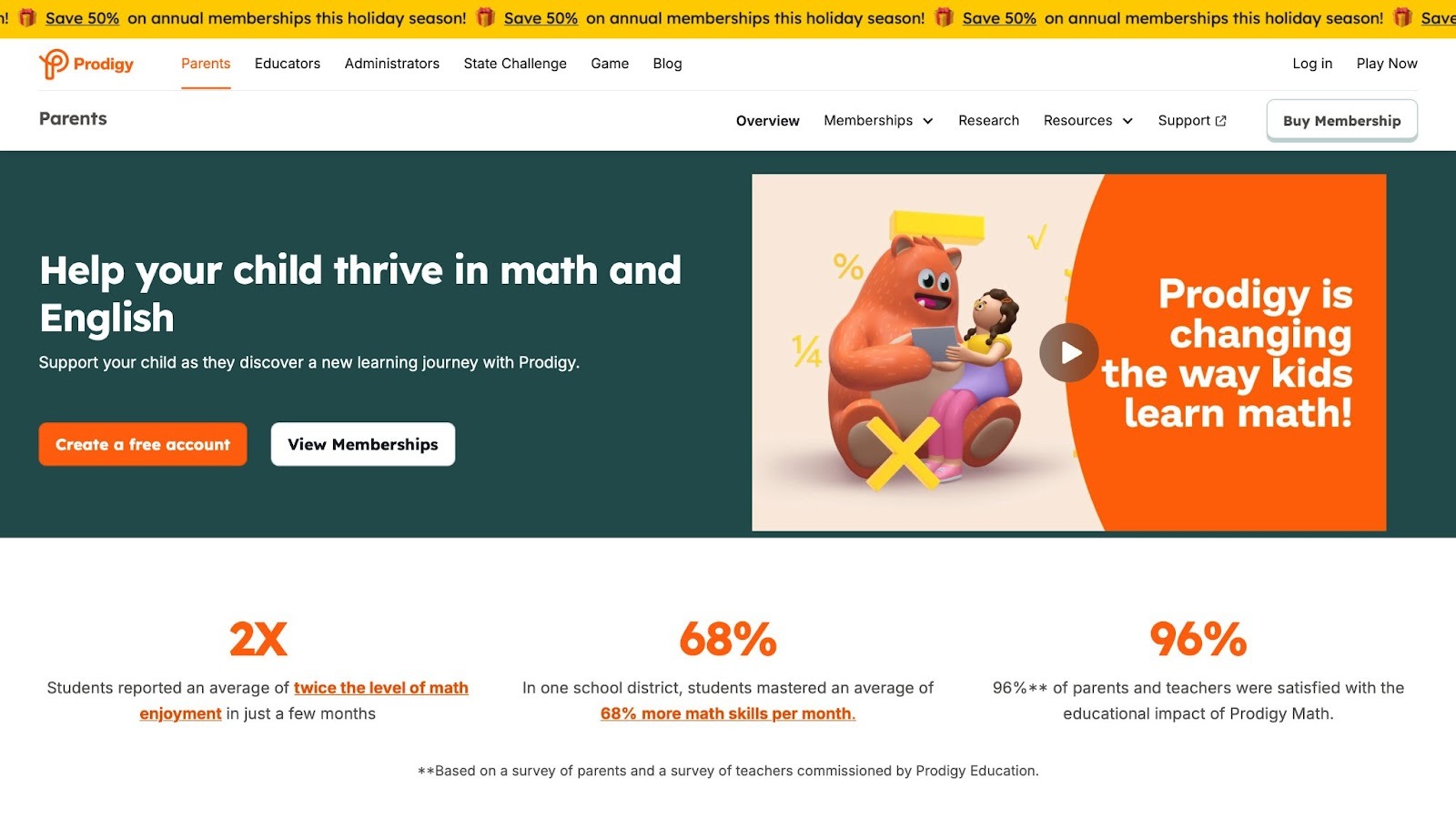
Prodigy, by Prodigy Education headquartered in Burlington, Ontario, Canada, gamifies math for grades 1 to 8 by setting problems in a fantasy world where correct answers power spells in battles. Kids customize avatars and pets, progressing through quests that cover topics from addition to geometry. Its strength lies in making math addictive through RPG elements, with adaptive questions that scale to ability.
Teachers can assign specific content, integrating it into classrooms seamlessly. A weakness is that the battle focus sometimes overshadows learning, potentially distracting from core concepts if not monitored. Free version includes ads, which might interrupt flow. Prodigy boosts engagement, with reports showing improved attitudes toward math among users.
- Key features: In-game rewards, parent dashboards, and curriculum-aligned challenges.
- Facts and information: Some students show faster progress in math fluency compared to traditional methods.
6. Duolingo
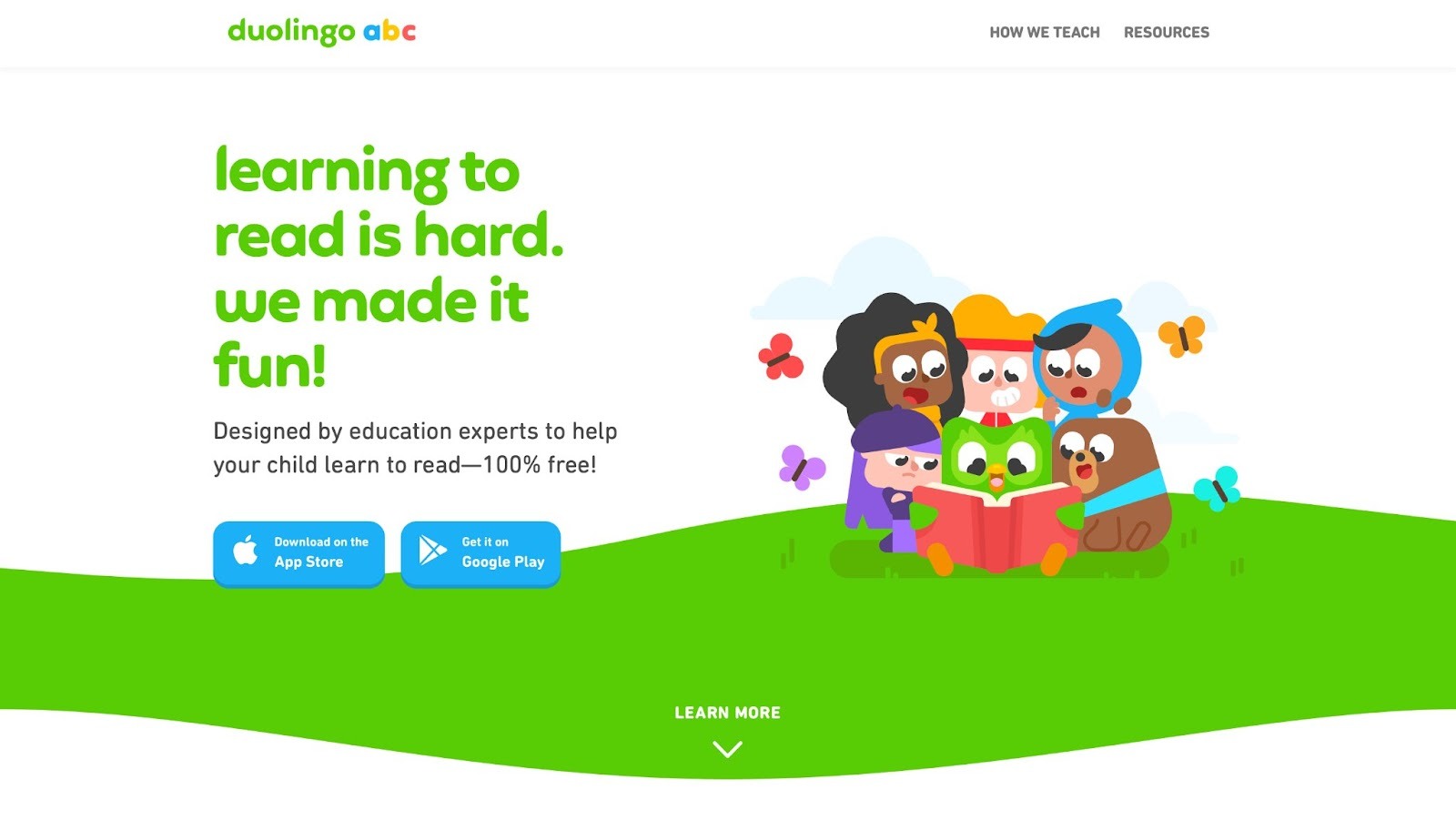
Duolingo, from the company of the same name based in Pittsburgh, Pennsylvania, introduces languages like Spanish, French, and more through short, game-like lessons for kids and adults. It uses streaks, points, and leaderboards to encourage daily practice, covering speaking, listening, and vocabulary.
Strengths include its bite-sized format that fits busy schedules and fun characters that add personality. The app adapts to user performance, repeating weak areas. Weaknesses involve less emphasis on grammar rules, which might leave gaps for structured learners, and it benefits from adult supervision for young kids. Duolingo makes language accessible, building basic skills effectively.
- Key features: Interactive stories, pronunciation practice, and daily goals.
- Facts and information: Many users develop conversational basics, aiding bilingual households.
7. SplashLearn
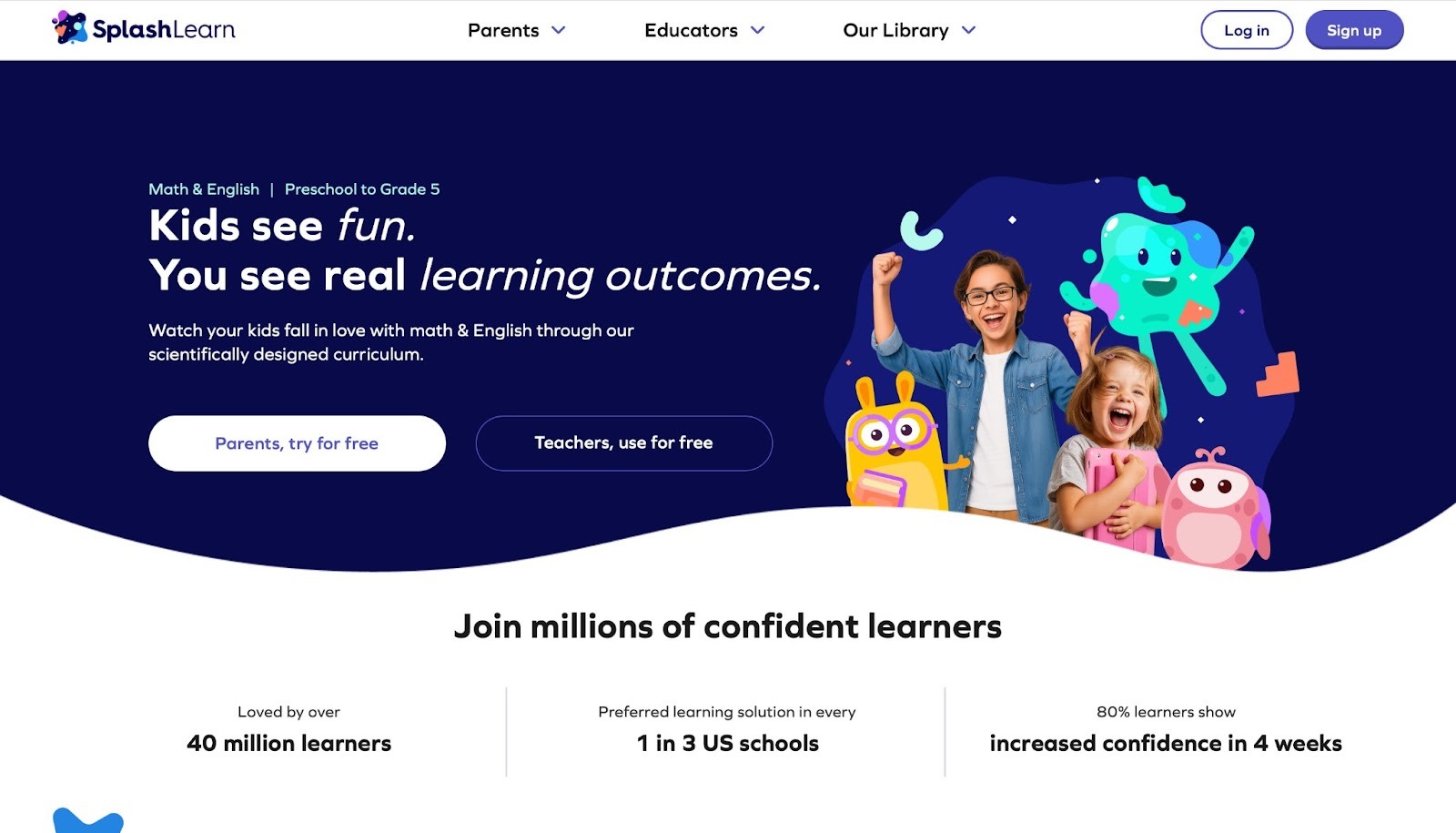
SplashLearn, developed by SplashLearn in Gurgaon, India, targets math and reading for pre-K to grade 5 with themed games and rewards. Kids advance through levels, earning coins for virtual items. Strengths are its vibrant designs and personalized paths that adjust in real-time. It provides detailed reports for parents. A weakness could be repetitive mechanics if overused, potentially leading to burnout. It excels in core subject reinforcement.
- Key features: Live classes, progress tracking, and seasonal events.
- Facts and information: Some kids demonstrate improved proficiency in targeted skills.
8. Minecraft Education Edition
Minecraft Education Edition, from Mojang in Stockholm, Sweden, allows kids to build and explore while learning subjects like history and coding. Its sandbox style promotes creativity through collaborative projects. Strengths include open-ended play that encourages innovation and teamwork. Weaknesses involve a steep learning curve for controls, which can frustrate beginners. It integrates well in educational settings.
- Key features: Built-in lesson plans, multiplayer options, and coding integrations.
- Facts and information: Many institutions employ it for hands-on learning experiences.
9. Osmo
Osmo, by Tangible Play in Palo Alto, California, merges physical pieces with iPad apps for interactive learning in math, coding, and art. Kids manipulate real objects that the camera detects. Strengths lie in tactile engagement that enhances motor skills. A weakness is compatibility limited to certain devices. It bridges digital and physical play.
- Key features: Various kits for words, numbers, and drawing.
- Facts and information: Some children improve spatial reasoning through hands-on activities.
10. PBS Kids Games
PBS Kids Games, from PBS in Arlington, Virginia, features characters from shows in free, ad-free activities focusing on science, emotions, and literacy. Strengths include trusted content tied to educational values. Weaknesses might be shorter, less complex sessions. It reinforces positive messages.
- Key features: Accessibility tools, themed content, and parent guides.
- Facts and information: Many families rely on it for wholesome screen time.
11. Endless Alphabet
Endless Alphabet, by Originator Inc. in Chicago, Illinois, teaches letters and words to preschoolers with animated monsters that scramble letters for kids to reassemble. Each word comes with a short animation and definition. Strengths are its humorous, engaging visuals that make vocabulary memorable without pressure. The app is ad-free and offline-capable. A weakness is its focus solely on alphabet basics, limiting longevity for faster learners. It builds phonics playfully.
- Key features: Interactive animations, sound effects, and growing word library.
- Facts and information: Some toddlers expand vocabulary rapidly with repeated use.
12. DragonBox Numbers
DragonBox Numbers, from Kahoot! DragonBox in Oslo, Norway, introduces math concepts like addition and numbers through Noom characters that kids feed and combine. It feels like play rather than lessons. Strengths include conceptual understanding without rote memorization. Weaknesses might include abstract elements confusing very young users. It lays strong foundations.
- Key features: Puzzle adventures, manipulative tools, and progressive challenges.
- Facts and information: Many kids grasp number sense intuitively.
13. Kahoot!
Kahoot!, headquartered in Oslo, Norway, transforms learning into exciting quiz-based games for kids across various ages, making subjects like math, science, and history interactive and competitive. In 2026, it features real-time multiplayer modes where children join via devices, answering questions to earn points and climb leaderboards, fostering quick thinking and knowledge retention. The platform includes ready-made kahoots on diverse topics, plus tools for creating custom quizzes, allowing parents or teachers to tailor content to specific needs. Strengths highlight its social element, encouraging group play that builds teamwork and communication skills, while the fast-paced format keeps engagement high through sounds, visuals, and rewards.
Kids learn by associating fun with facts, improving recall in a low-pressure environment. A weakness might be its reliance on group settings for maximum fun, which could limit solo play appeal in quieter moments. Overall, Kahoot! stands out for turning passive study into active participation, with updates adding themes like space adventures or animal kingdoms to spark curiosity. It supports hybrid learning, blending online and in-person sessions seamlessly, helping children develop confidence in sharing ideas and competing positively. Many families use it for family game nights that sneak in education without feeling like homework.
- Key features: Custom quiz creation, live hosting, reports on performance, and integration with video calls.
- Facts and information: Some classrooms worldwide adopt it for daily reviews, enhancing student involvement across subjects.
14. BrainPOP
BrainPOP, based in New York, New York, delivers animated educational content with games, quizzes, and movies for kids in elementary and middle school, covering topics from health to engineering. By 2026, it includes interactive simulations where children experiment with concepts like gravity or ecosystems, paired with character-led explanations that simplify complex ideas. Strengths come from its comprehensive library, offering follow-up activities like coding challenges or creative writing prompts tied to each video, promoting deeper understanding. The platform adapts to different learning styles with visual, auditory, and kinesthetic elements, making it versatile for diverse needs.
Users benefit from building critical thinking through quizzes that provide instant feedback and hints, encouraging self-correction. A weakness could be the structured format, which might feel less open-ended compared to sandbox-style games, potentially suiting guided learners better. BrainPOP excels in curriculum alignment, helping bridge school and home learning with tools for progress tracking. Kids enjoy the humor in animations, which makes topics memorable, while features like multilingual support broaden accessibility. It fosters curiosity by linking real-world applications, such as how science impacts daily life, turning passive viewing into active exploration.
- Key features: Educational movies, hands-on experiments, vocabulary builders, and teacher resources.
- Facts and information: Many educators incorporate it into lessons for visual reinforcement of key concepts.
15. Tynker
Tynker, headquartered in Mountain View, California, empowers kids aged 5-18 with coding education through gamified courses and projects in 2026, featuring over 5,000 lessons in block-based coding, Python, JavaScript, AI, and more. Children start with visual blocks to build games, then transition to text coding, creating Minecraft mods or AI models in a safe, moderated space. Strengths include its progressive structure with built-in tutorials and assessments, fostering creativity and logical thinking as kids design apps or art.
The platform's mobile apps and online classes make learning accessible anytime, while story-based adventures keep motivation high. User benefits extend to real-world skills like problem-solving and independence, preparing them for STEM futures with confidence. A weakness might be the initial overwhelm from vast options, though guided paths help navigate. Tynker stands out for its educator-approved content, serving millions globally, and integrations like pen drawing or data science tools that blend fun with advanced concepts. Kids gain a major advantage in high school coding, with activities enhancing math and analytical abilities through interactive puzzles and collaborative projects.
- Key features: Visual programming, game design tools, certificate programs, and community sharing.
- Facts and information: Some students advance to creating personal projects, boosting tech literacy early.
16. Epic!
Epic!, located in Redwood City, California, serves as a vast digital library for kids up to age 12, with over 40,000 books, audiobooks, and videos that include interactive elements like quizzes and read-alongs in 2026. Children explore personalized recommendations based on interests, from adventure stories to science facts, building reading habits through engaging formats. Strengths lie in its enrichment tools that develop critical thinking and vocabulary, with features like progress badges motivating consistent use.
The platform fuels curiosity by allowing topic deep dives, helping reluctant readers become enthusiastic ones. User benefits include improved comprehension and confidence, as kids discover worlds and selves through diverse content. A weakness could be its primary focus on reading over active gaming, though integrated quizzes add interactivity. Epic! excels in classroom support, with free educator access enabling group activities that enhance learning outcomes. Updates bring themed collections, like environmental awareness or cultural tales, making education immersive and fun without pressure.
- Key features: Audiobook narration, reading trackers, and curated collections.
- Facts and information: Many families see increased voluntary reading time among children.
17. Noggin
Noggin, from Nickelodeon in New York, New York, targets preschoolers with interactive games based on beloved shows, teaching basics like shapes, numbers, and emotions through playful episodes in 2026. Kids engage with characters in activities that involve matching, sorting, or simple puzzles, building foundational skills in a familiar environment. Strengths include its relatable content that eases learning transitions, with songs and stories reinforcing social-emotional development. The app's parent controls allow customization, ensuring age-appropriate play.
User benefits encompass better emotional awareness and early literacy, as children practice kindness and problem-solving in guided scenarios. A weakness might be its narrower age range, outgrowing quickly for older kids, but it shines for toddlers. Noggin promotes screen time that's productive, with updates adding seasonal themes like holidays or nature explorations to keep content fresh. It supports diverse learning paces, offering repeatable activities that build mastery without frustration, helping little ones develop independence and joy in discovery.
- Key features: Character-driven games, music videos, and skill-building challenges.
- Facts and information: Some parents observe gains in social skills from daily interactions.
18. Reading Eggs
Reading Eggs, headquartered in Sydney, Australia, guides children aged 2-13 through phonics and reading with animated lessons, games, and books in 2026, featuring a step-by-step map that unlocks levels with rewards like golden eggs. Kids practice letter sounds, sight words, and comprehension via interactive songs and activities, making progress tangible and exciting. Strengths focus on its motivational system that keeps learners engaged, with content adapting to skill levels for personalized growth.
The program builds confidence by celebrating small achievements, turning reading into an adventure. User benefits include fluent reading skills ahead of peers, as testimonials show rapid advancements in young users. A weakness could be slower pacing for advanced readers, though optional challenges add depth. Reading Eggs integrates home learning seamlessly, with printable resources extending play offline. Updates introduce new themes, like space or animal quests, enhancing vocabulary and creativity while aligning with school curricula.
- Key features: Phonics animations, library of books, and progress reports.
- Facts and information: Many children demonstrate enthusiasm and skill improvements in reading.
19. CodeSpark Academy
CodeSpark Academy, based in Pasadena, California, introduces coding to kids aged 5-9 with word-free puzzles and character-driven games in 2026, where children create stories and solve challenges using drag-and-drop blocks. It teaches sequencing, loops, and conditionals through fun scenarios like pet care or adventure quests, building logic without reading. Strengths lie in its inclusive design for beginners, including non-readers, promoting creativity and problem-solving in a no-fail environment.
User benefits include enhanced critical thinking and confidence, with quick gains in skills after short play sessions. A weakness might be content exhaustion after mastery, but expansions add variety. The app fosters independence, letting kids design and share games, preparing them for tech-savvy futures. Updates bring collaborative features, allowing family play that strengthens bonds while learning.
- Key features: Story maker tools, debugging puzzles, and creative studios.
- Facts and information: Some young users pursue additional STEM interests post-engagement.
20. Lightbot
Lightbot, developed by Lightbot Inc. in Canada, challenges kids aged 8+ with programming puzzles to guide a robot using commands like jumps and lights in 2026, teaching logic, loops, and conditionals progressively. Levels build complexity, from basic sequences to advanced recursion, in a clean, intuitive interface. Strengths include its focus on core coding concepts without distractions, making it ideal for introductory education.
User benefits encompass sharpened problem-solving and analytical skills, with global use by millions aiding logical thinking development. A weakness could be the lack of narrative, which might reduce long-term appeal for story lovers, but its puzzle purity ensures deep focus. Lightbot integrates seamlessly into classrooms, with teacher tools for tracking progress and assigning tasks. Updates enhance accessibility, adding modes for different devices and skill levels, turning abstract ideas into tangible successes.
- Key features: Procedure creation, conditional logic, and multi-level campaigns.
- Facts and information: Many educators employ it as a gateway to programming understanding.
Trends Shaping Kids' Games in 2026
New tech brings smarter adaptations, where games adjust in real time to a child's pace. This keeps frustration low and success high. Virtual reality adds immersive worlds for history or nature lessons, making abstract ideas concrete. Many developers now include parent controls for time limits and reports.
Feature | Benefit | Example Use |
| Adaptive Learning | Matches skill level | Adjusts puzzles automatically |
| Offline Mode | Play anywhere | Travel without wifi |
| Multi-Player | Builds social ties | Family challenges |
| Updates | Fresh content | Seasonal themes |
Benefits Beyond the Screen
Educational games often lead to real-life skills, like better focus during homework. Kids apply what they learn, such as empathy from character stories, in daily interactions. Some options encourage movement, blending digital with active play for balanced days.
FAQ
What makes educational games effective for young learners?
These games work by combining play with key concepts, helping kids absorb ideas naturally. They build confidence through small wins and repeat practice in fun ways. Families find them useful for supplementing school without added pressure. When choosing educational games for kids, focus on those that adapt to individual progress for better results.
How do I ensure games are safe for my child?
Look for ad-free platforms with privacy protections. Parent dashboards help monitor activity and set limits. Trusted sources like established apps reduce risks. Options with offline modes add extra security during play.
Can educational games help with specific skills like math?
Yes, many target areas like counting or patterns through engaging stories. Kids practice without realizing it's study time. This method suits different learning styles. Games that include real-time feedback strengthen understanding over time.
Are there free options among the best games?
Some top picks offer no-cost access with core features. They provide quality content without fees, making them accessible. Upgrades add extras if needed. Starting with basic versions lets families test fit before committing.
How can educational games support creativity in kids?
These activities often include open-ended tasks like designing worlds or crafting stories. Kids express ideas freely, which sparks innovation and self-expression. Such features help young minds connect concepts in unique ways. Integrating art and puzzle elements in kids educational games nurtures imaginative thinking daily.
Read Also:
- Best Educational Games For Kids iPad In 2026
- Best Kids Games Educational in 2026
- Educational Games For Kids iPad In 2026
- Best English Learning Apps For Kids In 2026
- Best Learning Apps For Kids 8 Years Old In 2026
Discover the Best Fun Educational Games For Kids in 2026 - TutoClub