

Best Learning Apps For Kids 8 Years Old In 2026






Parents often seek out solid options to make screen time count for their 8-year-olds. These kids are at a stage where curiosity peaks, and they build key skills in reading, math, and problem-solving. The best learning apps for kids 8 years old blend fun with education, helping them grow without feeling like work. Tools like these keep children engaged while fitting into busy family routines.
Parents can enhance screen time with interactive resources like the best learning games for kids and the best learning apps for kids that make skill-building fun and effective. For easy access, the best learning games for kids online are a great option, while guides to the best apps for kids learning and the best English learning apps for kids help support reading, language, and overall academic growth.
Discover the Best Learning Apps For Kids 8 Years Old In 2026 - TutoClub
Why Educational Apps Matter for 8-Year-Olds
At age 8, children start grasping more complex ideas. They tackle early math concepts, expand vocabulary, and explore science basics. Educational apps help reinforce school lessons in a playful way. Kids this age benefit from interactive elements that encourage independent thinking.
Some apps use stories or challenges to build confidence, while others focus on social skills through teamwork activities. This approach turns potential downtime into growth moments. After trying various options, families notice kids staying motivated longer with apps that adapt to their level. Pairing these with daily routines strengthens habits.
Key Skills Developed Through Learning Apps
Eight-year-olds develop fine motor skills, logical reasoning, and emotional awareness via apps. Reading apps improve comprehension by breaking down words and sentences. Math tools teach addition, subtraction, and patterns through puzzles. Creative apps let kids design and build, fostering imagination. Social-emotional learning comes from scenarios where characters face challenges, teaching empathy. Many apps track progress, showing improvements over time. This helps parents see where extra support might help.
Best Learning Apps For Kids 8 Years Old In 2026
1. TutoClub - Best Learning App for Kids 8 Years Old
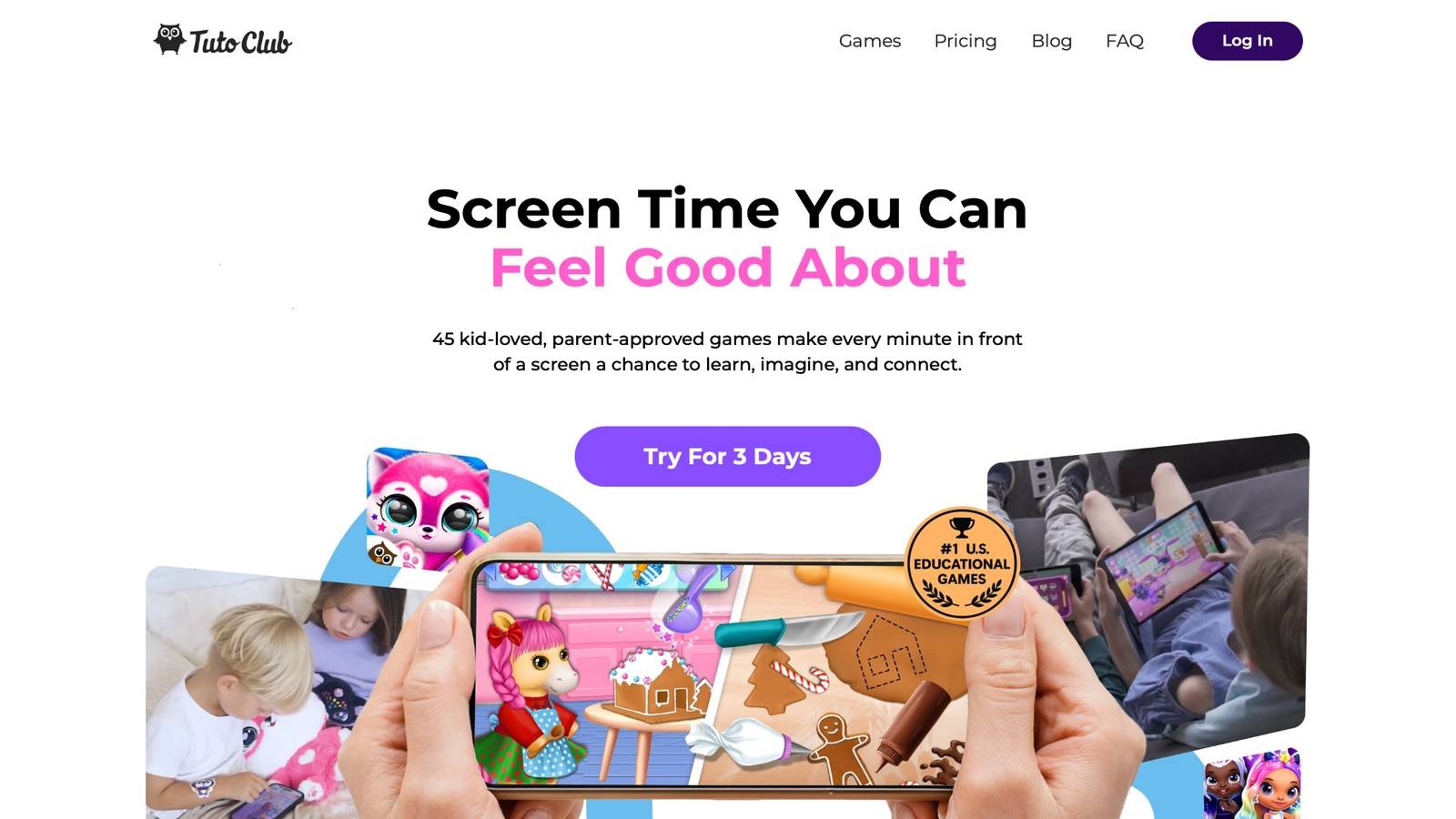
Check out TutoClub for a subscription that unlocks 45 educational games tailored to make screen time meaningful. This platform stands out by turning play into skill-building adventures for young minds. Kids dive into activities that sharpen creativity, boost focus, and nurture emotional growth. From puzzles that challenge problem-solving to storytelling games that spark imagination, every element is designed with child development in mind. Parents appreciate the ad-free setup, which keeps distractions away and lets children explore safely.
The games adapt to different ages, ensuring 8-year-olds get just the right level of challenge. Whether it's caring for virtual characters to learn empathy or building worlds to encourage responsibility, TutoClub delivers experiences that feel like pure fun. Families bond over shared play sessions, creating lasting memories while supporting healthy habits. With a focus on curiosity and connection, this service helps kids thrive in a balanced way.
- Key features: Access to 45 skill-building games covering creativity, problem-solving, and emotional skills; ad-free environment for safe play; activities that promote family interaction and independent exploration.
- Facts and information: Games build empathy through character care and confidence via routines; many parents report reduced guilt over screen time as kids gain real benefits like improved focus and social awareness.
TutoClub Overview
TutoClub is your gateway to a magical world of educational games designed especially for children.
As part of TutoTOONS, a leading kids' games studio, we offer premium access to over 45 ad-free games.
Our mission is to blend learning and play, helping kids explore, create, and grow in a safe online space.
Thousands of parents trust us for family-friendly content that sparks imagination and builds essential skills.
Key Features
- Unlimited Access: Unlock full content in all games with no interruptions.
- Ad-Free Experience: Enjoy seamless play without any ads or distractions.
- Skill Development: Games foster creativity, social skills, communication, and more through fun activities like pet care and cleanup challenges.
- Regular Updates: Get new releases, exclusive content, and future updates automatically.
- Easy Subscription: Cancel anytime with no obligations, simple and flexible for families.
Explore Our World
TutoClub provides a rich ecosystem of educational games for kids, featuring ad-free experiences that promote creativity, focus, and emotional growth through play.
This platform turns screen time into valuable learning opportunities, with parent-approved content that builds essential skills and sparks curiosity in young minds.
- TutoClub Games: Over 45 educational games, including popular titles like Fluvsies, Smolsies, and the Sweet Baby Girl series
- Blog: Insights, tips, and stories for families on kids' learning and play
- FAQ: Comprehensive answers to frequently asked questions about subscriptions, features, and more
Get TutoClub on Your Device
TutoClub delivers premium kids educational games directly to your mobile devices, making learning accessible anytime, anywhere.
With apps available on major platforms, families can easily download and subscribe for ad-free play that turns screen time into skill-building adventures.
Perfect for parents seeking safe, engaging content on iOS, Android, or Amazon devices.
Why Choose TutoClub?
We're committed to 100% safe, enriching entertainment that kids love and parents approve.
Join the thousands who've seen their children thrive through playful learning.
Ready to start the adventure?
Subscribe to TutoClub today and unlock endless fun!
2. Khan Academy Kids
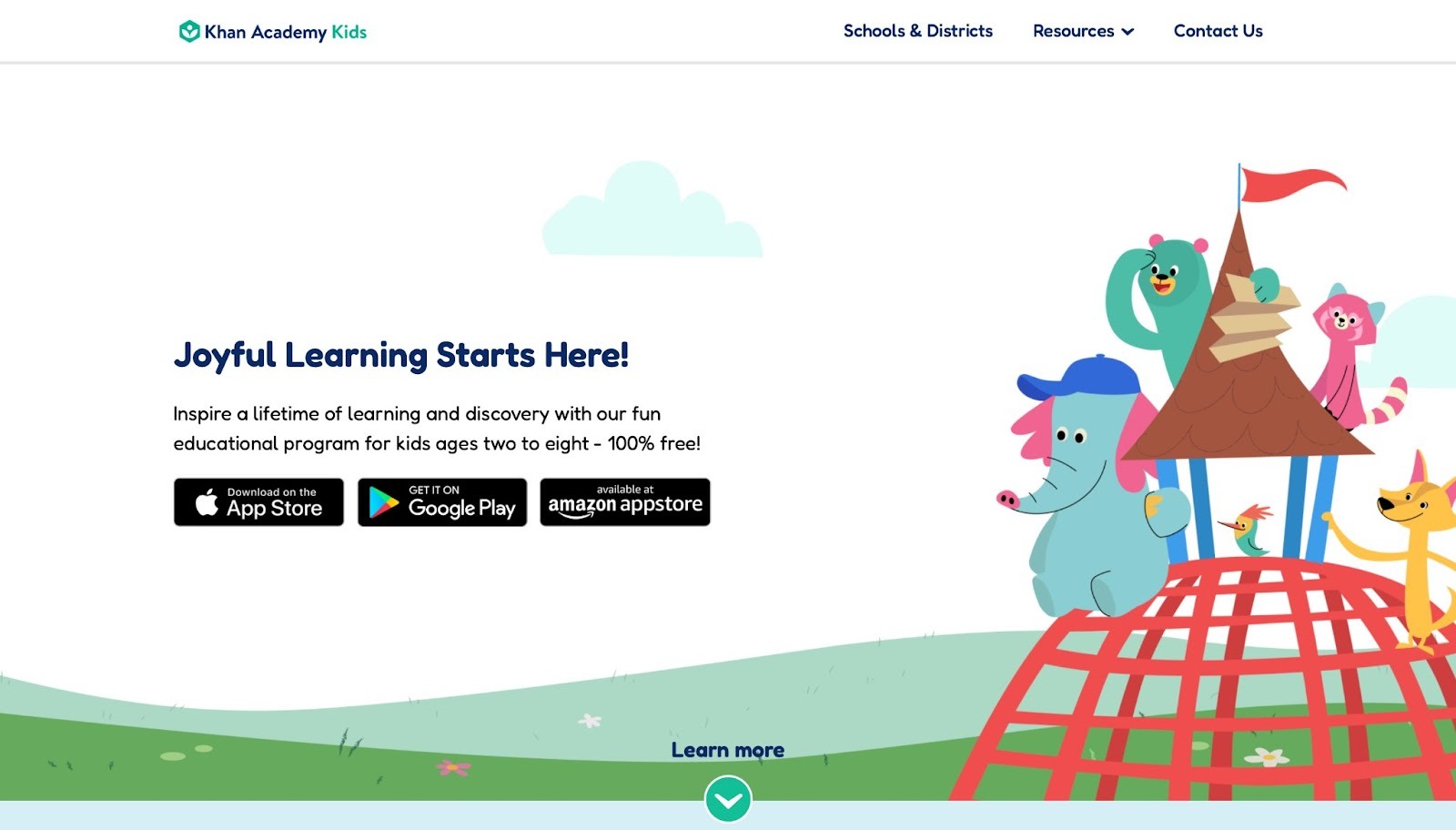
Khan Academy Kids delivers a free program filled with games, books, and lessons aimed at early learners. It spans reading, math, writing, and social-emotional skills in an interactive setup. Children follow tailored paths that shift based on their speed, ideal for 8-year-olds mastering core ideas. The app boasts vibrant animations and guiding characters to sustain interest. Its strengths shine in the thorough curriculum matched to standards, aiding kids in forging solid foundations.
Yet, it could become routine for quicker learners, and certain parts might need adult help to browse fully. Headquartered in Mountain View, California. This tool acts as a virtual classroom for subjects like computing and history too, but for younger users, it stresses life skills and basics. Families often pair it with homeschooling, noting boosts in literacy and math preparedness. The ad-free space lets kids explore safely, with parent tracking to spot growth areas. Overall, it turns learning into play, fostering independence while covering diverse topics.
- Key features: Thousands of activities like phonics games, math tasks, and drawing tools; parent progress monitoring.
- Facts and information: Many families rely on it for extra support; reports show enhanced early skills with regular use.
3. ABCmouse
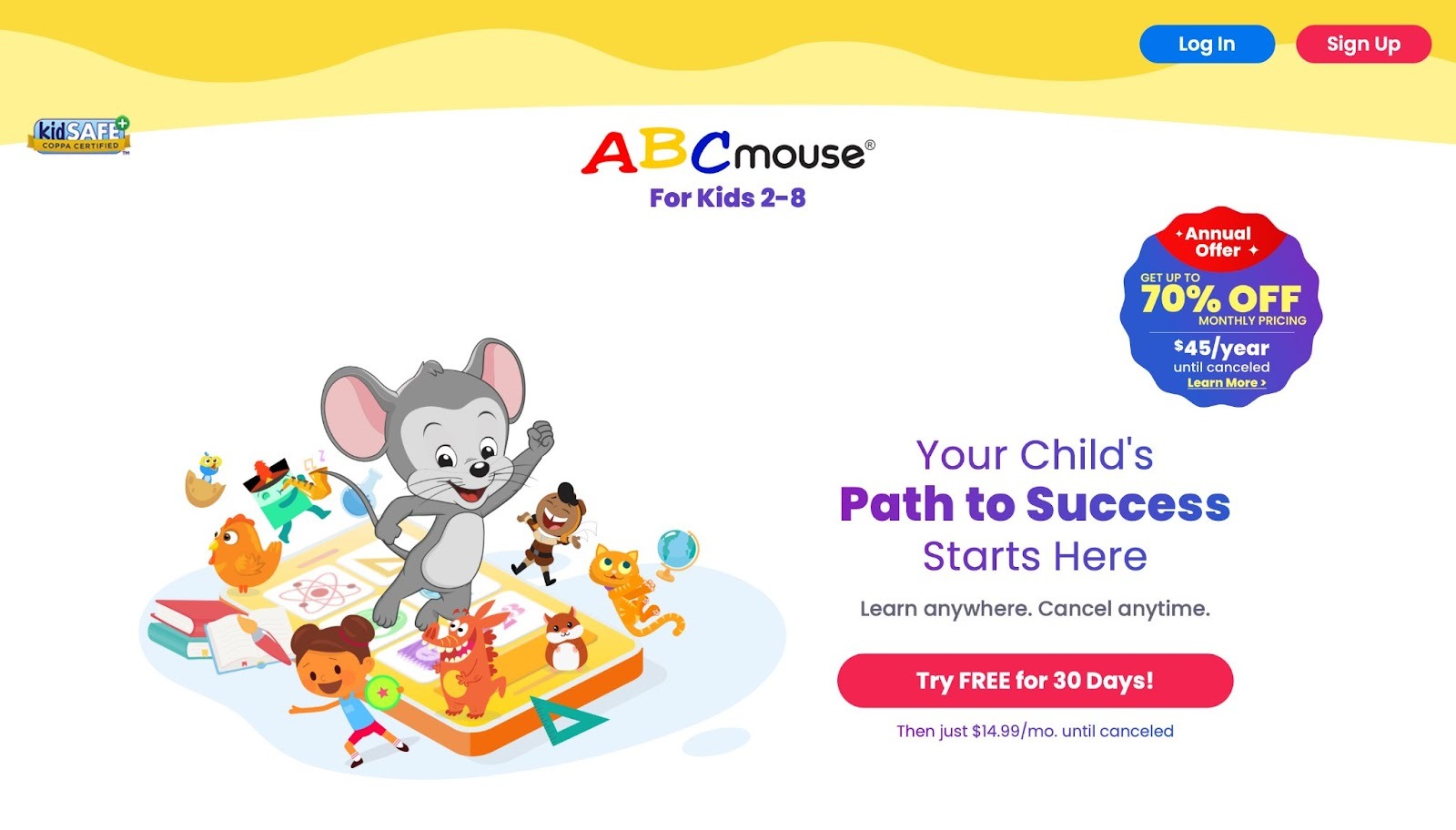
ABCmouse supplies a complete curriculum featuring lessons in reading, math, science, and art for young kids. It employs videos, games, and puzzles to teach step-by-step. For 8-year-olds, it bolsters school subjects such as operations and word knowledge. The ticket reward system spurs kids to advance, keeping them driven. Strengths encompass a broad content array that evolves with the child, but navigation might overwhelm at times, and full access demands consistency.
Based in Glendale, California. This app mimics a virtual classroom with printable sheets, making it great for structured sessions. Parents value how it aligns with classroom efforts, leading to better comprehension. The interactive format mixes fun with education, helping children practice independently. While some sections feel dense, the variety ensures ongoing engagement. It promotes creativity through art tools and explores real-world topics, turning screen time into productive learning.
- Key features: Over thousands of activities with worksheets; structured virtual learning environment.
- Facts and information: Users often see reading gains; complements school effectively for many.
4. Duolingo
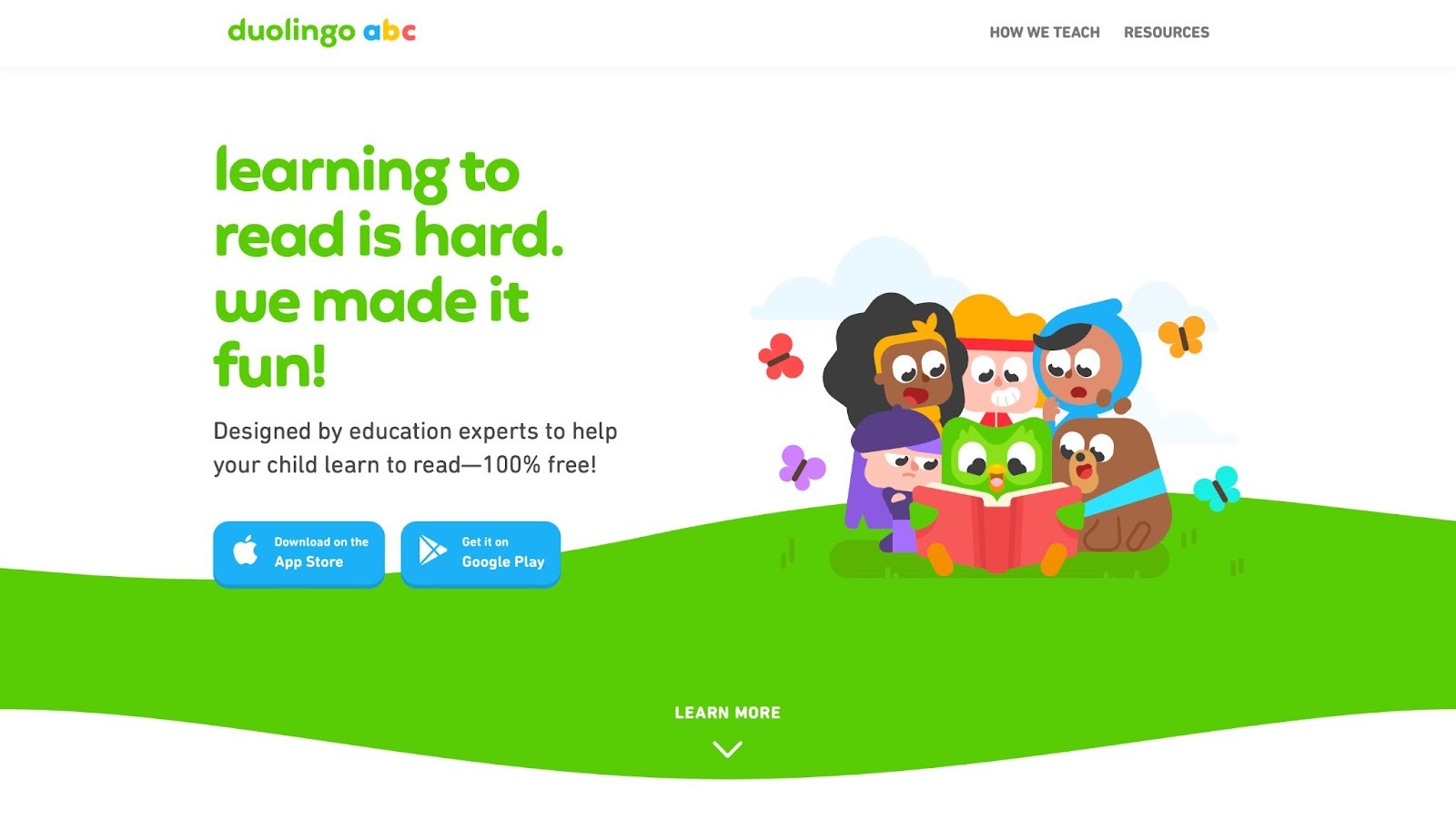
Duolingo instructs languages via brief, game-style lessons on speaking, reading, and writing. It ranges from basics to complex topics with streaks and points for daily habits. For 8-year-olds, it presents new terms and phrases enjoyably, enhancing communication poise. Strengths include its compact format and language diversity, though it may seem rivalrous, and audio parts need calm spots.
Located in Pittsburgh, Pennsylvania. The app adjusts difficulty to user output, making it adaptive. Kids absorb vocabulary swiftly with steady practice. Interactive tales and podcasts add depth, blending fun with skill-building. While competition motivates some, others prefer relaxed pacing. It supports multiple languages, ideal for diverse homes. The engaging method keeps children returning, fostering long-term retention.
- Key features: Stories and podcasts; adaptive levels based on results.
- Facts and information: Quick vocabulary pickup for many kids; better recall with consistent sessions.
5. Prodigy Math
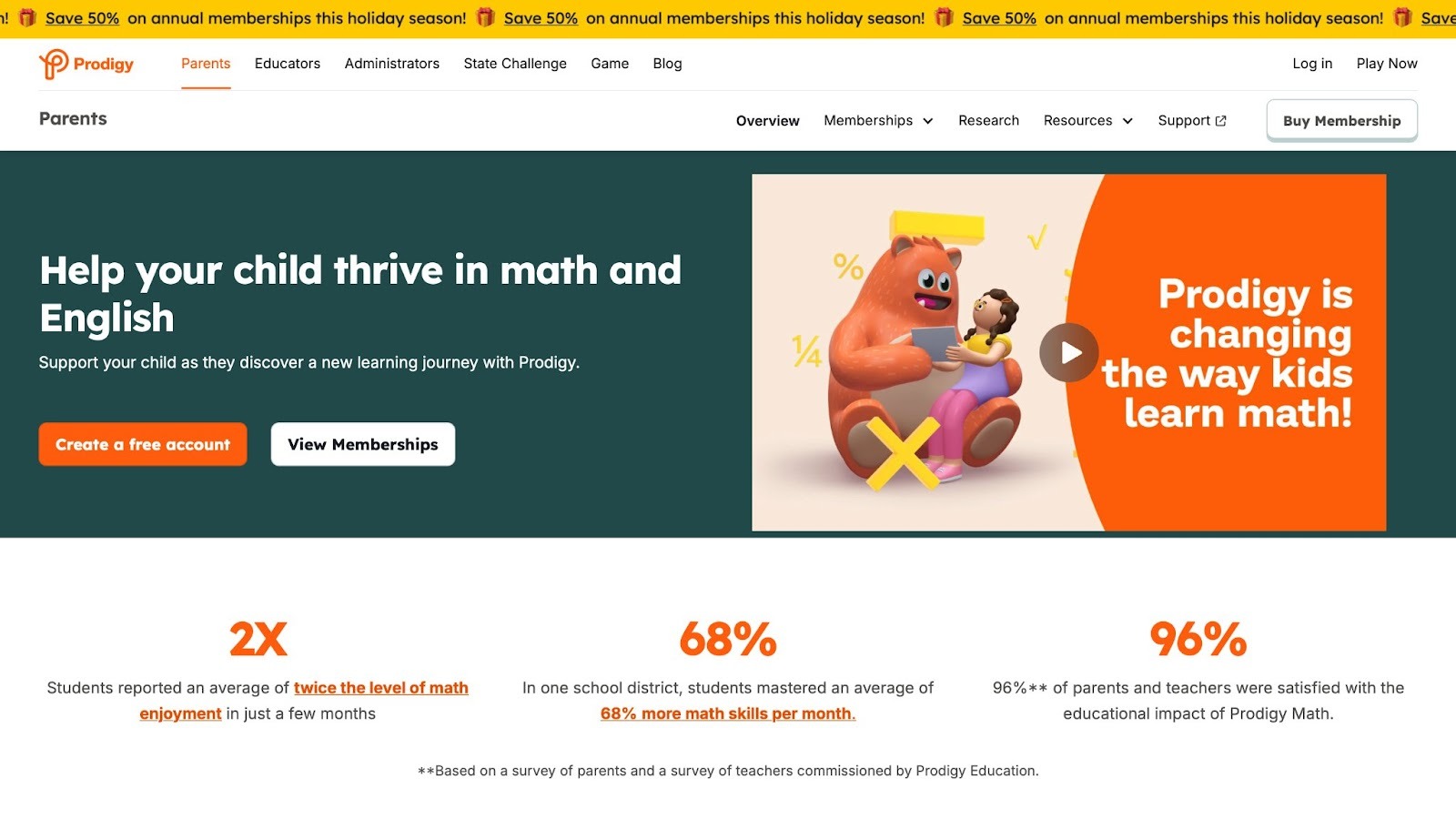
Prodigy Math converts math drills into quests where kids fight and roam while tackling issues. It addresses geometry and fractions for primary grades. Eight-year-olds relish the role-play that excites equations. Strengths feature instant skill tweaks, but the gaming might eclipse pure study, and it needs web access. Headquartered in Burlington, Ontario, Canada.
Teachers blend it into classes for interactive tasks. The customizable figures and pets add personal flair. Many note heightened math zeal from the narrative drive. While immersive, balance ensures focus on concepts. It builds confidence through progressive challenges, making abstract ideas tangible.
- Key features: Avatars and pets to customize; tools for class use.
- Facts and information: Incorporated in homework by teachers; boosts enthusiasm for some.
6. SplashLearn
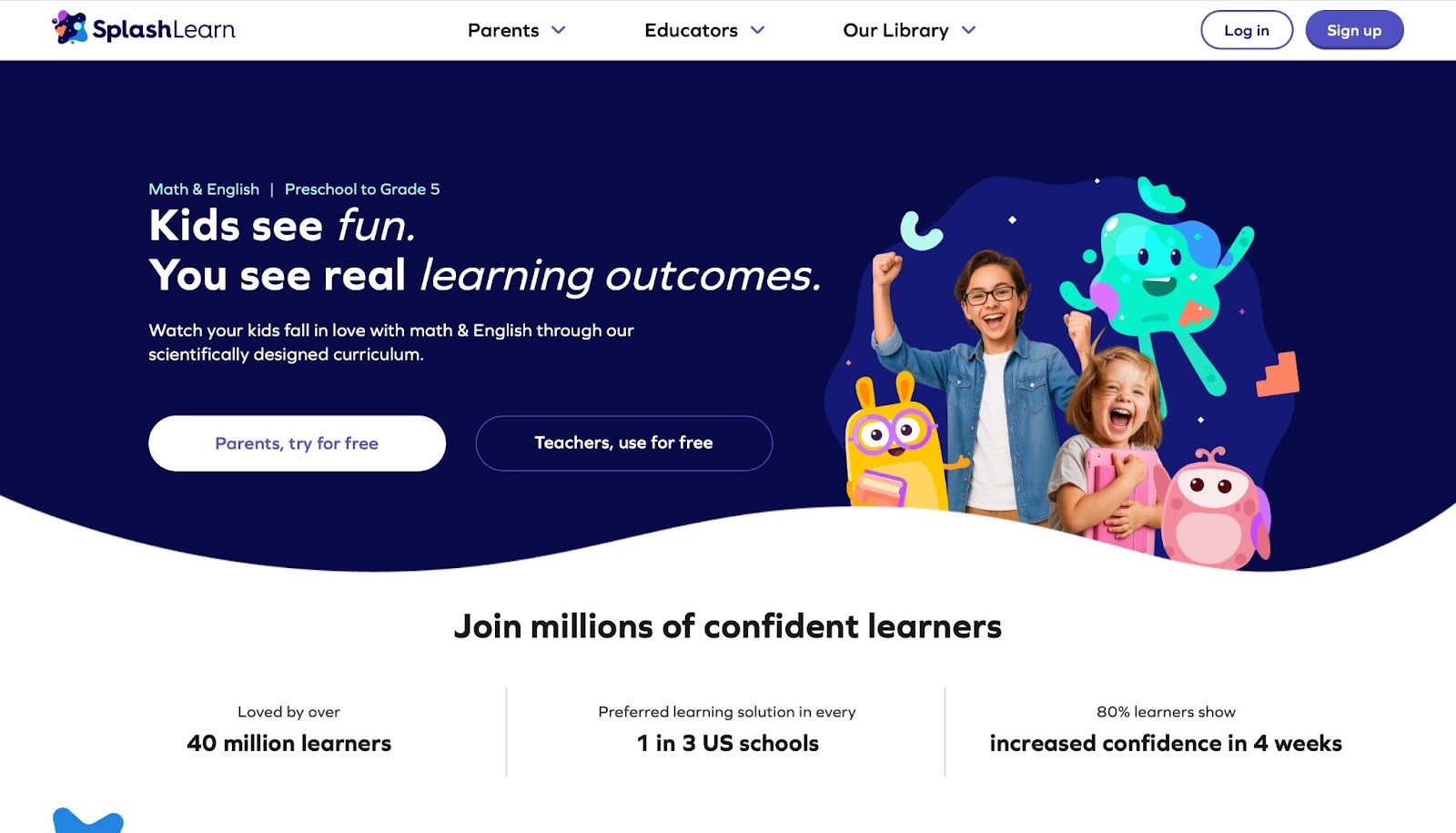
SplashLearn targets math and ELA with games and lessons for pre-K to grade 5. It customizes to weak spots. For 8-year-olds, it handles multiplication and comprehension via rewards and images. Strengths align with standards, but some loads lag, and content could broaden. Based in Gurgaon, India. Live classes and reports aid monitoring. Coins for virtual prizes motivate. Parents see skill uplifts with routine use. The visual style engages, though tech glitches occur. It serves as summer refresh, reinforcing school without boredom.
- Key features: Classes and reports; reward coins.
- Facts and information: Skill improvements observed; used for reviews by parents.
7. Lingokids
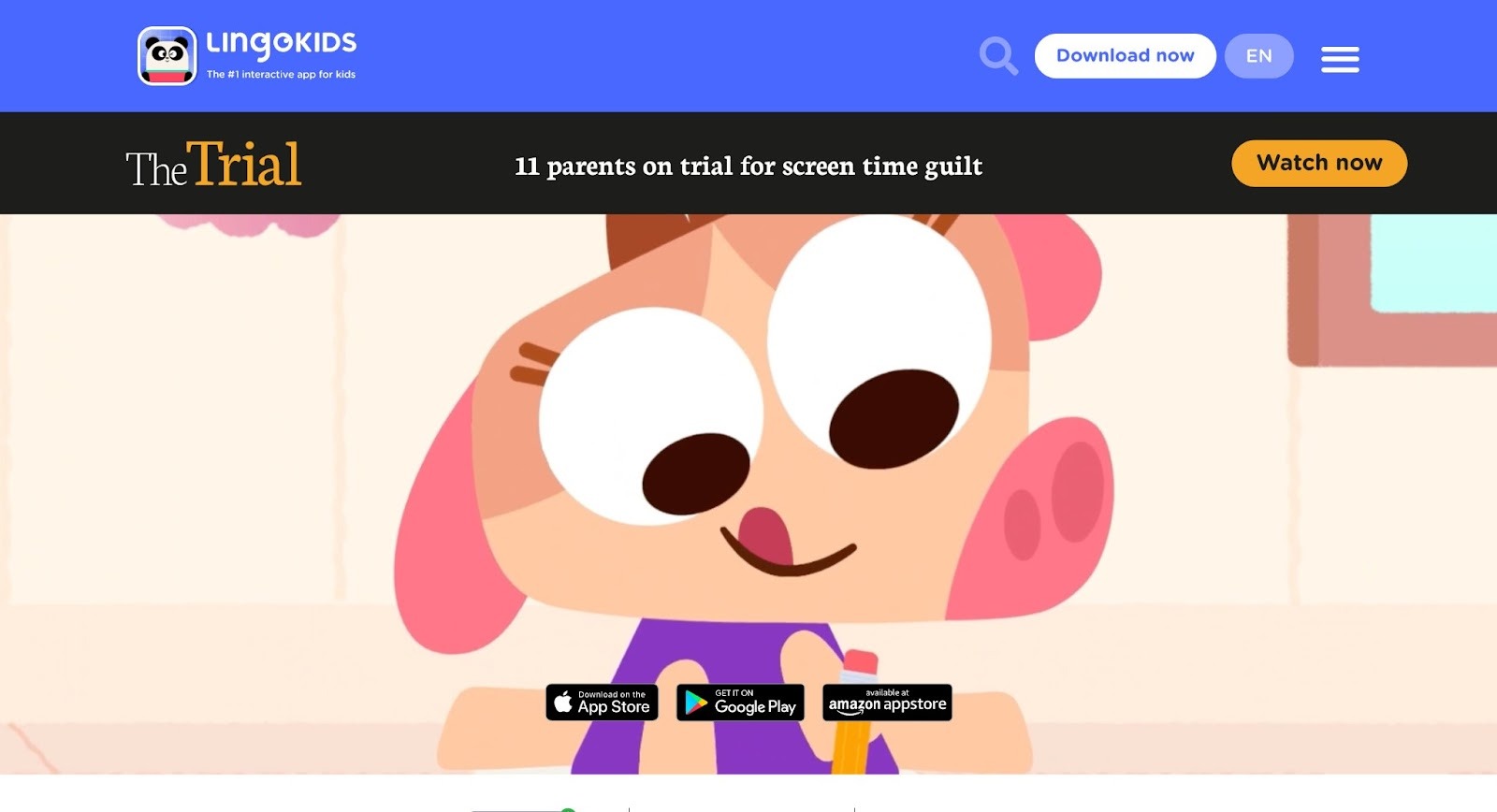
Lingokids provides English learning through songs, videos, and games in a secure zone. It grows vocabulary and grammar for youth. Eight-year-olds gain from themed units on daily matters. Strengths offer friendly design and offline play, but material repeats, and accents differ. Headquartered in Madrid, Spain. Yoga and mindfulness extras enhance. Parent dashboards track. Non-native speakers grasp basics. Families combine with books for fuller immersion. The interactive setup builds fluency gradually.
- Key features: Mindfulness add-ons; monitoring dashboard.
- Facts and information: Fluency basics for non-natives; paired with reading by some.
8. ABCya
ABCya houses games for pre-K to grade 6, spanning math, reading, and tactics. Kids select by grade or topic. For 8-year-olds, word hunts and number riddles fit. Strengths provide easy entry and premium ad-free, though free limits options, and some are simple. Based in San Mateo, California. Holiday themes refresh. Keyboard practice included. Schools suggest it. Kids hone typing alongside subjects.
- Key features: Themed content; typing drills.
- Facts and information: Recommended by schools; typing speed gains for some.
9. Monster Math
Monster Math forges math facts via tales and puzzles for K-3. It stresses tactics over rote. Eight-year-olds resolve quests with addition and multiplication. Strengths engage with stories, but pace varies, and math-centric. Headquartered in Pune, India. Multiplayer and daily tests add. Users recall facts better. It meshes with assignments.
- Key features: Multiplayer; challenges daily.
- Facts and information: Better recall reported; integrated with work.
10. Keiki World
Keiki World merges games for reading, math, and logic in one for preschool to early primary. Cartoons and sheets aid. For 8-year-olds, it solidifies basics with tasks. Strengths color interfaces, but activities shorten, and navigation practices. Based in Cyprus. Offline loads and life modules. Parents use for trips. Creativity ignites.
- Key features: Downloads offline; life skills.
- Facts and information: Travel-friendly; sparks ideas for some.
11. Epic
Epic grants a vast e-book trove with over 40,000 titles, audiobooks, and read-alongs for K-12. For 8-year-olds, it sparks reading passions anytime. Strengths foster book love with collections, but iOS awaits. Headquartered in Redwood City, California. Personalized picks guide. Comprehension builds via questions. It develops habits through variety.
- Key features: Audiobooks and quizzes; tailored suggestions.
- Facts and information: Explores interests widely; reading growth for many.
12. Reading Eggs
Reading Eggs turns learning to read into an exciting adventure for young children. This online program uses games, songs, and activities to build phonics, spelling, and sight word skills step by step. For 8-year-olds, it strengthens fluency through interactive stories and quizzes that match school levels. Kids earn golden eggs as rewards, boosting motivation and a sense of achievement. The app's structured lessons guide users from basics to advanced reading, blending fun elements like animations to keep sessions engaging.
Parents get progress reports to track improvements. Strengths include its motivational rewards and quick skill gains, with many kids reading independently soon after starting. However, some might find the progression slow if already advanced, needing extra challenges. Based in Australia. The app aligns with school curricula, making it a solid home supplement. Families often see boosts in confidence, as children tackle tougher texts eagerly. With a focus on positive reinforcement, it creates lasting reading habits.
- Key features: Interactive games, songs, and rewards; printable resources; progress tracking maps.
- Facts and information: Many users report reading boosts; complements school programs effectively.
13. ScratchJr
ScratchJr introduces coding to young children through a simple, block-based interface where kids create stories and games. Aimed at ages 5-7 but useful for early 8-year-olds exploring basics, it promotes problem-solving and creativity by snapping together graphical blocks. Users design characters, add movements, and build interactive projects without needing to read or write code. The app encourages experimentation in a safe, free environment.
Strengths lie in its open-ended play that sparks imagination and logical thinking, helping kids see coding as fun rather than complex. On the downside, it might lack depth for those ready for more advanced programming, requiring transition to other tools. From MIT in Cambridge, Massachusetts. Families use it for collaborative projects, turning ideas into animations. The sandbox style builds confidence as children debug and refine their creations. It ties into broader STEM skills, preparing users for future tech concepts.
- Key features: Graphical blocks for programming; sample projects to inspire.
- Facts and information: Enhances logic and creativity; supports open-ended exploration.
14. Starfall ABCs
Starfall ABCs animates letters and words with interactive games and songs to teach phonics and early reading. For 8-year-olds, it reinforces basics through engaging activities like word building and story reading. The app features colorful animations that make learning lively, covering alphabet sounds to simple sentences. Kids explore at their pace in a multi-platform setup.
Strengths include varied activities that keep interest high and free core content with upgrades for more. Yet, it may feel too basic for advanced readers, limiting long-term use without expansions. Headquartered in Boulder, Colorado. Schools often recommend it for its alignment with early education standards. Parents note excitement in young learners as they master sounds independently. The app promotes wide device access, fitting into daily routines seamlessly.
- Key features: Songs, interactions, and multi-platform support.
- Facts and information: Sparks interest in early learners; compatible across devices.
15. TinyTap
TinyTap hosts over 250,000 interactive games and lessons made by teachers and experts, turning screen time into learning for kids. For 8-year-olds, it offers personalized paths in subjects like math and language, with ad-free content aligned to standards. Parents get weekly reports and suggestions. The app includes AI tools for gamified practice, like a multilingual tutor that adapts in real time.
Strengths feature its vast community-created library and offline play, connecting global educators. However, content quality can vary, and blockchain elements might confuse some users. Based in Tel Aviv, Israel. It empowers creators to monetize, fostering a decentralized education model. Families appreciate the engagement, with kids averaging 90 minutes weekly on activities.
- Key features: Custom games, AI tutor, community sharing.
- Facts and information: Covers diverse topics; supports collaborative learning.
16. Funexpected Math
Funexpected Math serves as an early math program with over 10,000 tasks in interactive lessons for ages 3-7, extending to basic skills for 8-year-olds. It uses playful environments where kids manipulate concepts hands-on, guided by an AI tutor that personalizes learning with hints and terms. Talking buddies add encouragement and fun. Strengths include fast progress, with children advancing three times quicker than traditional methods, backed by neuroscience.
Requiring just 30 minutes weekly, it's efficient for busy families. A potential drawback is its focus on younger ages, possibly needing supplements for deeper topics. No specific headquarters mentioned. The curriculum covers counting, logic, and problem-solving beyond school basics, building confidence through milestones.
- Key features: Personalized AI guidance, vast tasks, adaptive stages.
- Facts and information: Boosts retention; award-winning creative methods.
17. DragonBox Numbers
DragonBox Numbers helps children grasp numbers through four activities that promote flexibility and understanding. For 8-year-olds, it offers exploration of quantities and operations in a game-like format, using the DragonBox Method of motivation and discovery. Kids interact with "Nooms" to build intuition without drills.
Strengths emphasize award-winning design that makes abstract ideas accessible and fun, praised for building confidence across ages 4-12. It might require the full series for broader coverage, as standalone depth is focused. Based in Oslo, Norway. Parents value its reflection-based approach, leading to deeper comprehension. The app stands out for innovative learning without pressure.
- Key features: Interactive stacking and adventures; progressive challenges.
- Facts and information: Conceptual focus; recognized for excellence.
18. Moose Math
Moose Math takes kids on math adventures teaching counting, addition, subtraction, and geometry via five activities in whimsical settings. For 8-year-olds, it reinforces kindergarten to first-grade skills with puzzles and games, earning rewards to build a city. A report card tracks progress for parents. Strengths include intuitive play aligned with Common Core, motivating through creativity and achievement. It could become repetitive with only five activities for prolonged use. Part of Duck Duck Moose, no specific headquarters. The app blends fun characters with structured learning, helping users apply skills practically.
- Key features: Multi-level tasks, city-building rewards.
- Facts and information: Standards-aligned; engaging narratives.
19. Bedtime Math
Bedtime Math delivers daily math problems wrapped in stories for family solving, leveling questions for different ages. For 8-year-olds, it poses challenges that build skills through narratives, reducing anxiety and making math routine. The app encourages bonding over puzzles. Strengths focus on creating positive habits with peer-reviewed gains in performance. It often needs adult involvement, which might limit independent play. Based in Summit, New Jersey. Families integrate it into evenings, seeing improved attitudes toward numbers.
- Key features: Daily stories with multi-difficulty levels.
- Facts and information: Eases math fears; supports family engagement.
20. Teach Your Monster to Read
Teach Your Monster to Read uses quests and games to teach phonics sequentially, with kids creating monsters and collecting books. For 8-year-olds, it reinforces reading via mini-games and sight words in a magical world. Strengths include award-winning design trusted by schools, complementing curricula with enjoyable screen time. The British accent might differ for some users. Based in London, UK. It ignites reading passion through adventures.
- Key features: Phonics levels, monster customization.
- Facts and information: Curriculum-aligned; provides reinforcement.
Benefits of Integrating Apps into Daily Routines
- Mixing apps with everyday activities helps 8-year-olds apply skills in real life.
- Short sessions after school reinforce concepts without overload.
- Pairing math games with homework builds consistency.
- Creative tools inspire projects like drawing or building.
- This method supports balanced growth, blending digital and hands-on play.
- Some families set timers to keep sessions focused.
- Others discuss what kids learned, turning apps into conversation starters.
Comparing Core Skills Across Apps
Skill Area | Common App Focus | Benefits for 8-Year-Olds |
| Math | Puzzles, equations | Builds logic and quick thinking |
| Reading | Stories, phonics | Improves vocabulary and comprehension |
| Creativity | Design, art tools | Sparks imagination and expression |
| Social-Emotional | Character interactions | Teaches empathy and resilience |
FAQ
What makes the best educational apps for 8-year-olds stand out?
Quality apps for this age prioritize interactive elements that adjust to a child's progress, keeping challenges fresh and appropriate. They blend subjects like literacy and logic with creative tasks to foster well-rounded growth. Parental controls and safe environments add layers of trust, allowing families to tailor experiences without worry.
How do learning apps support emotional development in kids?
Apps introduce situations where children manage virtual characters' emotions, helping them recognize and respond to feelings in others. Through guided stories, kids practice decision-making that builds confidence and empathy. This approach complements daily interactions, reinforcing positive behaviors in a low-pressure setting.
Can educational apps replace traditional schooling for 8-year-olds?
These tools reinforce core ideas from school by offering targeted practice in areas like math and reading. They provide flexible access to content that aligns with standard curricula, supporting independent exploration. When used thoughtfully, apps bridge home and classroom efforts for better overall comprehension.
What role do games play in the top learning apps for kids?
Games transform lessons into adventures, making skills like problem-solving feel natural and rewarding. In platforms with educational games, levels and feedback motivate continued effort without frustration. This playful structure helps children associate learning with enjoyment, encouraging regular engagement.
Read Also
- Best Educational Games For 7 Year Olds in 2026
- Best Educational Games For 6 Year Olds in 2026
- Best Educational Games For 10 Year Olds in 2026
- Best Educational Games For Kids 4th Grade in 2026
- Best Educational Games For Kids Age 5 in 2026
Discover the Best Learning Apps For Kids 8 Years Old In 2026 - TutoClub







-(1).png)