
Best Educational Games For 6 Year Olds in 2026






Finding the right educational games for kids can turn screen time into a positive experience for your 6 year old. With options ranging from virtual pet care to puzzle adventures, parents have many choices to support development. Discover the best educational games for 6 year olds in 2026 that blend fun with learning to boost skills like reading and problem-solving.
Parents can further enhance their child’s development by exploring the best educational kids games that blend fun with meaningful learning. For children who enjoy challenges, the best problem-solving games for kids help build critical thinking skills, while best responsibility games for kids teach important life lessons through play. All of these options fall under the powerful approach of learning through play, making education both enjoyable and effective for young minds.
Discover the Best Educational Games For 6 Year Olds - TutoClub
Why Educational Games Matter for 6 Year Olds

At age 6, kids are full of energy and ready to explore new ideas. Educational games fit perfectly by mixing play with lessons on shapes, letters, and simple math. They help improve focus and hand-eye coordination through interactive tasks. Many options use stories or characters to teach empathy and teamwork.
Parents often see kids gain confidence as they solve challenges on their own. This approach aligns with how young minds learn best, through hands-on fun rather than drills. Games like these support school readiness. For instance, activities involving virtual pets teach responsibility in a light way. Keep sessions short to avoid overload. Pair games with real-world talks to reinforce concepts.
Give your 6 year old the perfect learning boost with these educational games designed to build focus, confidence, and key skills through fun play. Parents with kids of different ages can also discover great options in the best educational games for 2 year olds, best educational games for 5 year olds, best educational games for 7 year olds, and best educational games for 10 year olds.
Key Skills Developed Through Play
Educational games target a range of abilities vital for 6 year olds. Reading games build phonics and vocabulary by sounding out words in context. Math ones introduce counting and patterns via puzzles. Creative types encourage imagination, like designing worlds or caring for characters. Social skills come from games that involve sharing or helping others virtually. After trying educational games for kids, many families notice better problem-solving at home. A table below outlines common skills and examples:
Skill Area | Game Type Example | Benefit |
| Literacy | Word matching | Improves letter recognition |
| Numeracy | Number puzzles | Builds basic addition |
| Creativity | Design challenges | Sparks original ideas |
| Emotional | Character care | Teaches empathy |
| Motor | Touch interactions | Enhances coordination |
How to Choose the Best Educational Games for Your 6 Year Old
Choosing the right educational games for your 6 year old starts with understanding their current interests, strengths, and areas for growth. Look for titles that balance fun with learning by offering clear objectives, adaptive difficulty, and engaging storylines. Prioritize fun educational games with strong parental controls, ad-free experiences, and offline play options that align with your family values.
Consider device compatibility and session length - short, rewarding activities work best for this age. Test free versions and read parent reviews to ensure the game matches your child’s personality and learning style.
Top Skills Developed by Educational Games for 6 Year Olds
Educational games for 6 year olds build essential abilities through playful, interactive experiences. They strengthen literacy, numeracy, problem-solving skills, and logical thinking. Many titles also support memory games for kids that improve focus and recall.
Beyond academics, these games foster emotional intelligence and social awareness through emotional games for kids and confidence building games. This well-rounded approach helps children develop creativity, fine motor skills, and persistence in a natural way.
Best Educational Games For 6 Year Olds in 2026
1. TutoClub - Best Educational Games for 6 Year Olds
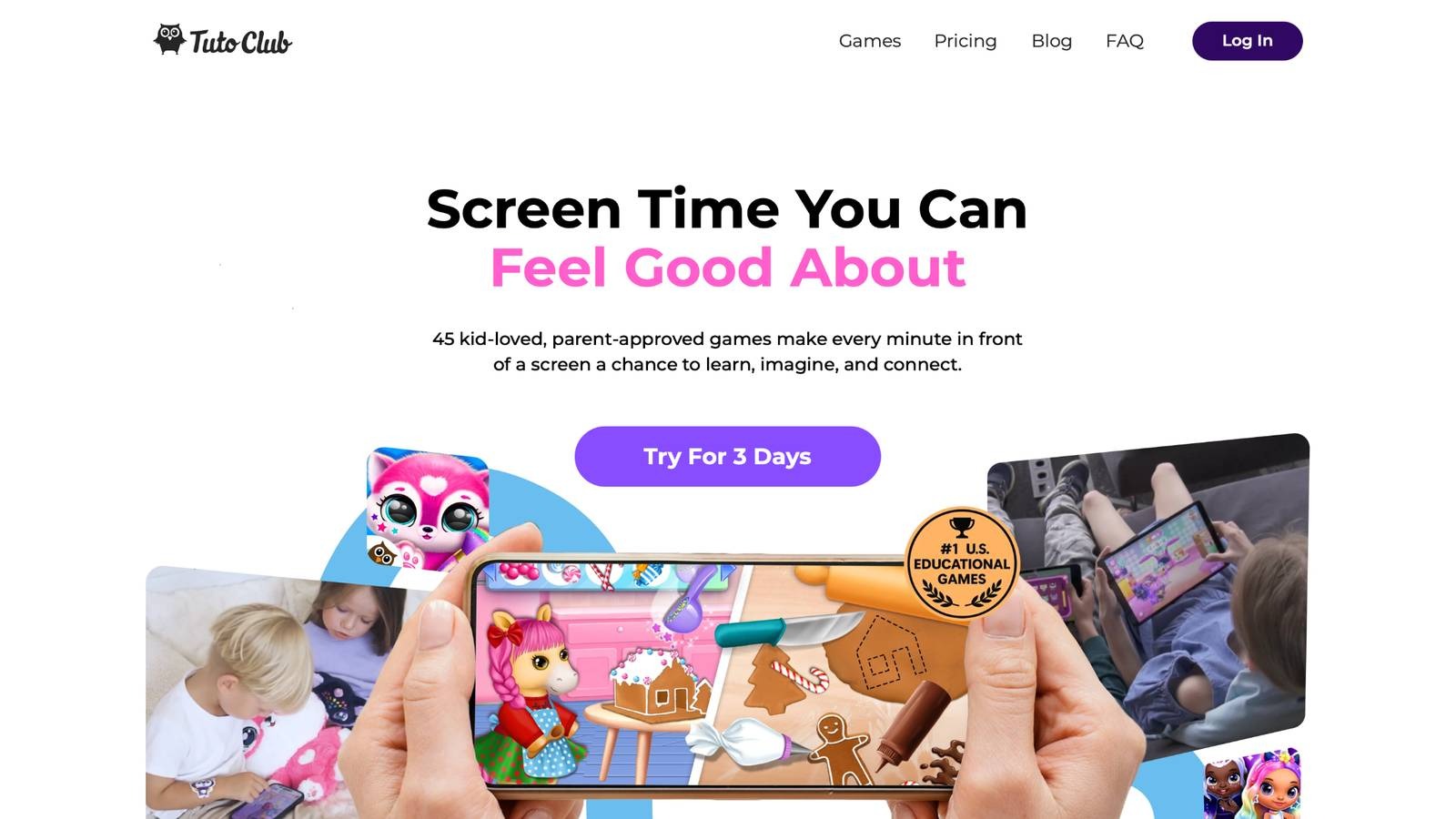
TutoClub educational games deliver a safe, ad-free space with over 45 titles that blend fun and growth for young players. Kids dive into worlds of virtual pets, puzzles, and creative quests that teach empathy through babysitting cute unicorns or hatching fluffy creatures. Activities turn everyday chores into exciting challenges, like cleaning up in themed houses while practicing memory and spelling.
Fashion makeovers and enchanted castles boost self-expression, letting children mix colors and styles to create unique looks. Dancing with unicorn bands adds rhythm and joy, while collecting surprises keeps curiosity alive. These games adapt to a child's pace, making each session feel personal and rewarding. Parents love how they promote responsibility without pressure, turning play into meaningful skill-building.
- Key pros include a single subscription for varied content, ensuring fresh experiences every time.
- Standout features cover interactive pet care for emotional lessons, memory puzzles for focus, and design tools for imagination.
- Facts and information highlight research-backed elements that foster kindness, like character nurturing, along with early literacy through letter games.
TutoClub Overview
TutoClub is your gateway to a magical world of educational games designed especially for children.
As part of TutoTOONS, a leading kids' games studio, we offer premium access to over 45 ad-free games.
Our mission is to blend learning and play, helping kids explore, create, and grow in a safe online space.
Thousands of parents trust us for family-friendly content that sparks imagination and builds essential skills.
Key Features
- Unlimited Access: Unlock full content in all games with no interruptions.
- Ad-Free Experience: Enjoy seamless play without any ads or distractions.
- Skill Development: Games foster creativity, social skills, communication, and more through fun activities like pet care and cleanup challenges.
- Regular Updates: Get new releases, exclusive content, and future updates automatically.
- Easy Subscription: Cancel anytime with no obligations, simple and flexible for families.
Explore Our World
TutoClub provides a rich ecosystem of educational games for kids, featuring ad-free experiences that promote creativity, focus, and emotional growth through play.
This platform turns screen time into valuable learning opportunities, with parent-approved content that builds essential skills and sparks curiosity in young minds.
- TutoClub Games: Over 45 educational games, including popular titles like Fluvsies, Smolsies, and the Sweet Baby Girl series
- Blog: Insights, tips, and stories for families on kids' learning and play
- FAQ: Comprehensive answers to frequently asked questions about subscriptions, features, and more
Get TutoClub on Your Device
TutoClub delivers premium kids educational games directly to your mobile devices, making learning accessible anytime, anywhere.
With apps available on major platforms, families can easily download and subscribe for ad-free play that turns screen time into skill-building adventures.
Perfect for parents seeking safe, engaging content on iOS, Android, or Amazon devices.
Why Choose TutoClub?
We're committed to 100% safe, enriching entertainment that kids love and parents approve.
Join the thousands who've seen their children thrive through playful learning.
Ready to start the adventure?
Subscribe to TutoClub today and unlock endless fun!
2. Fluvsies Academy
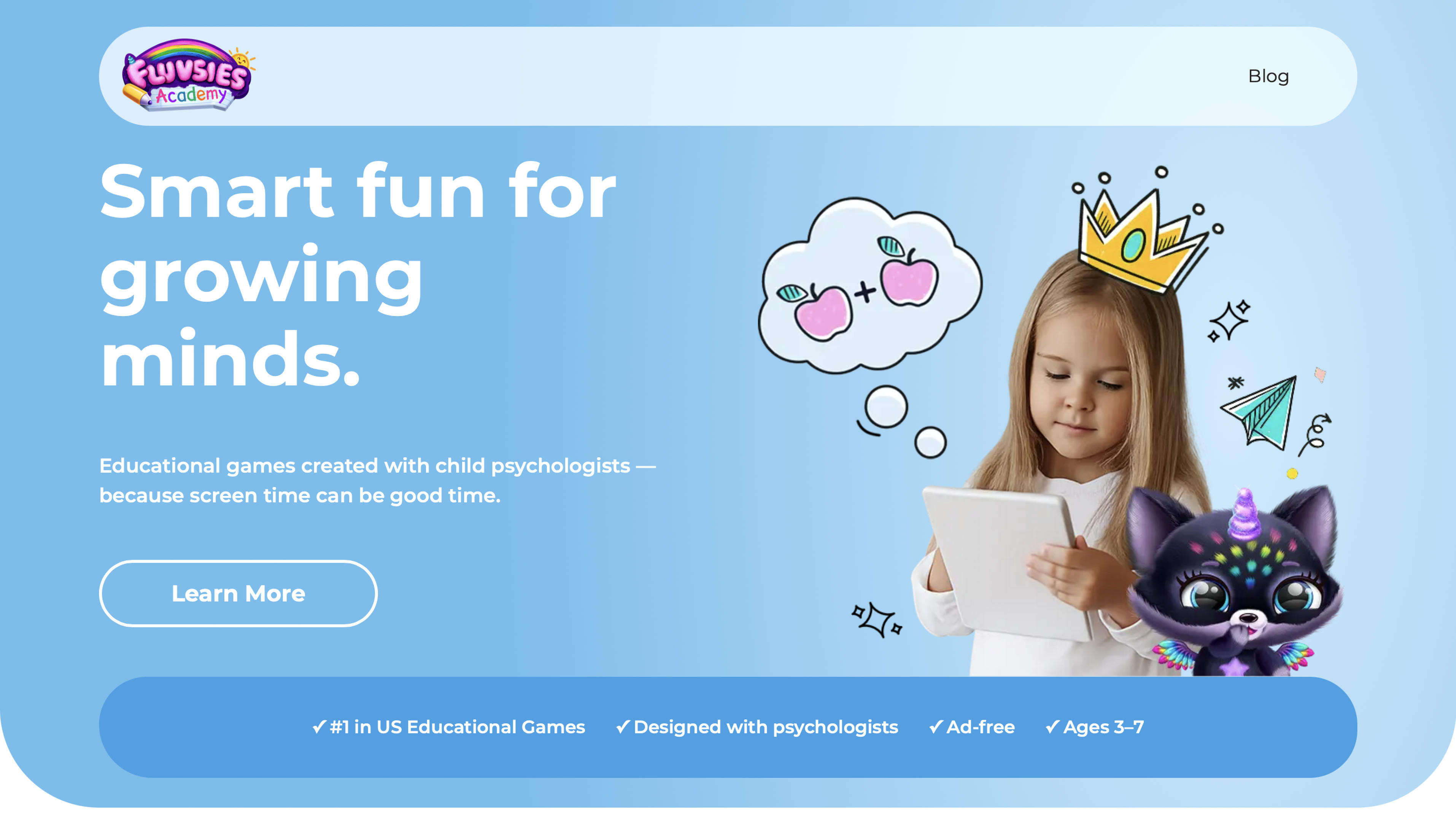
Fluvsies Academy, developed by TutoTOONS headquartered in Kaunas, Lithuania, is a specialized educational app for children aged 3 to 7. It transforms screen time into guided learning by integrating playful interactions with foundational skill development. Created in close collaboration with child psychologists and development experts, every activity prioritizes emotional safety alongside focus and exploration.
Young users bond with the signature cute Fluvsies characters while practicing language and phonics through stories, strengthening math confidence with numbers and counting exercises, improving logic and attention via sorting and puzzle challenges, and mastering everyday life skills such as brushing teeth, helping at the store, and basic cooking simulations.
The platform further broadens horizons by introducing real-world professions from bakers to astronauts to grow vocabulary, complemented by mindfulness sessions, kids’ yoga, and healthy habit builders for well-rounded growth. It features active problem-solving modes and passive narrative modes, supported by progress reports that allow parents to track advancement in a safe, evolving environment.
- Key features: expert-designed balance of focus, play, and emotional safety; comprehensive coverage of language/phonics, math, logic/attention, sorting, life skills, profession discovery, mindfulness, yoga, and healthy habits; dual active and passive learning modes; adaptive age-appropriate challenges with Fluvsies character integration; built-in child progress reports.
- Facts and information: targeted exclusively at ages 3–7; fully ad-free with COPPA- and GDPR-compliant data safety; includes dedicated mini-games for letter writing, word spelling, and counting to 10; recognized as #1 in US Educational Games rankings; maintains 5.0/5 rating on the App Store from initial reviews; receives regular content updates since its 2025 launch across iOS and Android platforms.
3. ABCmouse
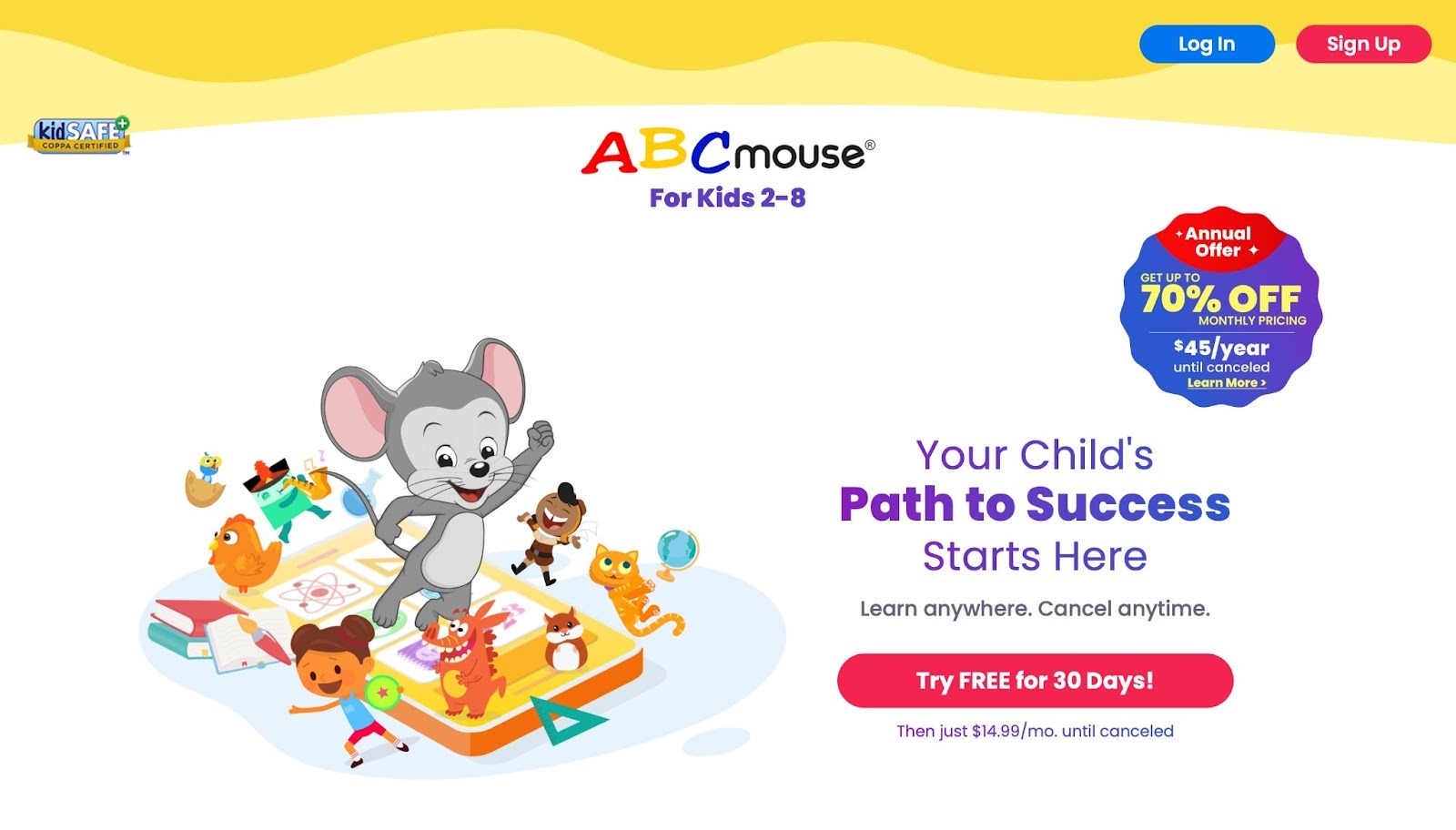
ABCmouse provides a comprehensive online curriculum for young learners, featuring lessons in reading, math, science, art, and music through a virtual classroom setup. Children create personalized avatars and navigate themed areas to complete activities, collecting tickets as rewards for progress. The program adapts to individual skill levels, offering a blend of games, puzzles, books, and songs to keep engagement high. Strengths include its broad subject coverage and structured approach that mimics school, helping kids build foundational skills independently.
Weaknesses can arise from requiring consistent adult supervision for optimal navigation, as the extensive content might overwhelm some without guidance. Headquartered in Glendale, USA, it's ideal for families seeking a full early education tool. The interactive elements encourage repeated practice, turning learning into an adventure where kids feel accomplished. Parents appreciate the progress tracking dashboard, which highlights areas of strength and those needing more focus. Overall, ABCmouse supports holistic development by integrating fun with academics, making it a reliable choice for preschool to early elementary ages.
- Key features include adaptive learning paths, over thousands of activities, printable worksheets, and parent progress reports.
- Facts and information show many educators incorporate it into classrooms, with some families noting improved readiness for school transitions.
4. Prodigy Math Game
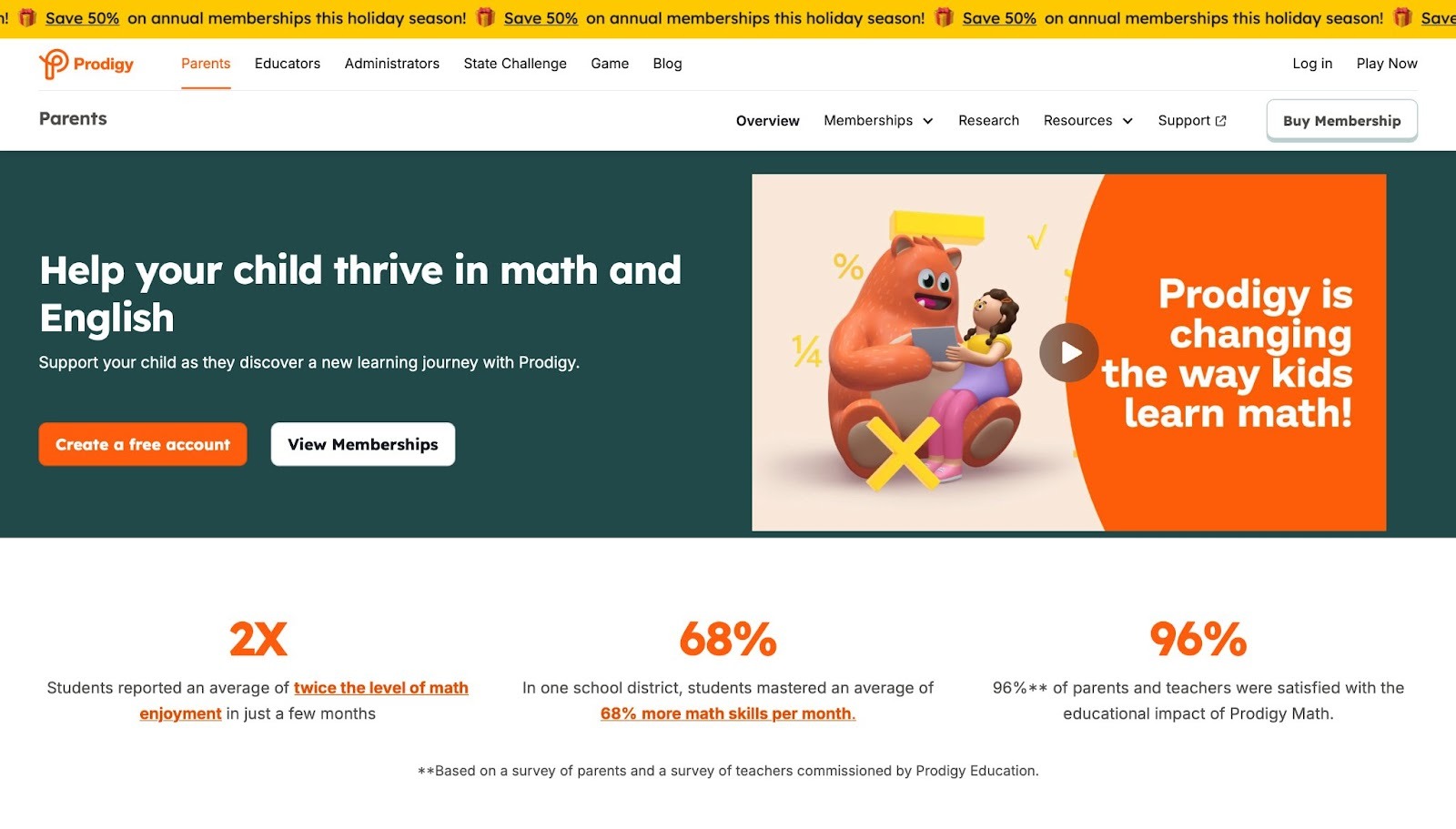
Prodigy transforms math practice into an epic role-playing game where kids embody wizards battling creatures by solving equations. Covering topics like addition, subtraction, geometry, and fractions, it adjusts difficulty based on performance for personalized challenges. Strengths are in its storytelling that motivates reluctant learners, fostering a positive attitude toward math through quests and rewards. Weaknesses include occasional fast pacing that might frustrate beginners, requiring pauses to absorb concepts fully.
Based in Burlington, Canada, Prodigy appeals to math enthusiasts by blending education with fantasy elements. Players collect pets and customize characters, adding layers of fun. The game promotes quick thinking under pressure, simulating real-world problem-solving. Teachers often use it as a supplement, praising its alignment with curricula. Kids enjoy competing with friends, which boosts social interaction virtually. Prodigy stands out for making abstract math concrete and exciting, helping children gain confidence in numbers without feeling like traditional homework.
- Key features encompass curriculum-aligned questions, in-game rewards, parent dashboards, and multiplayer modes.
- Facts and information indicate many children show increased engagement, though some benefit from combining it with hands-on activities.
5. Khan Academy Kids
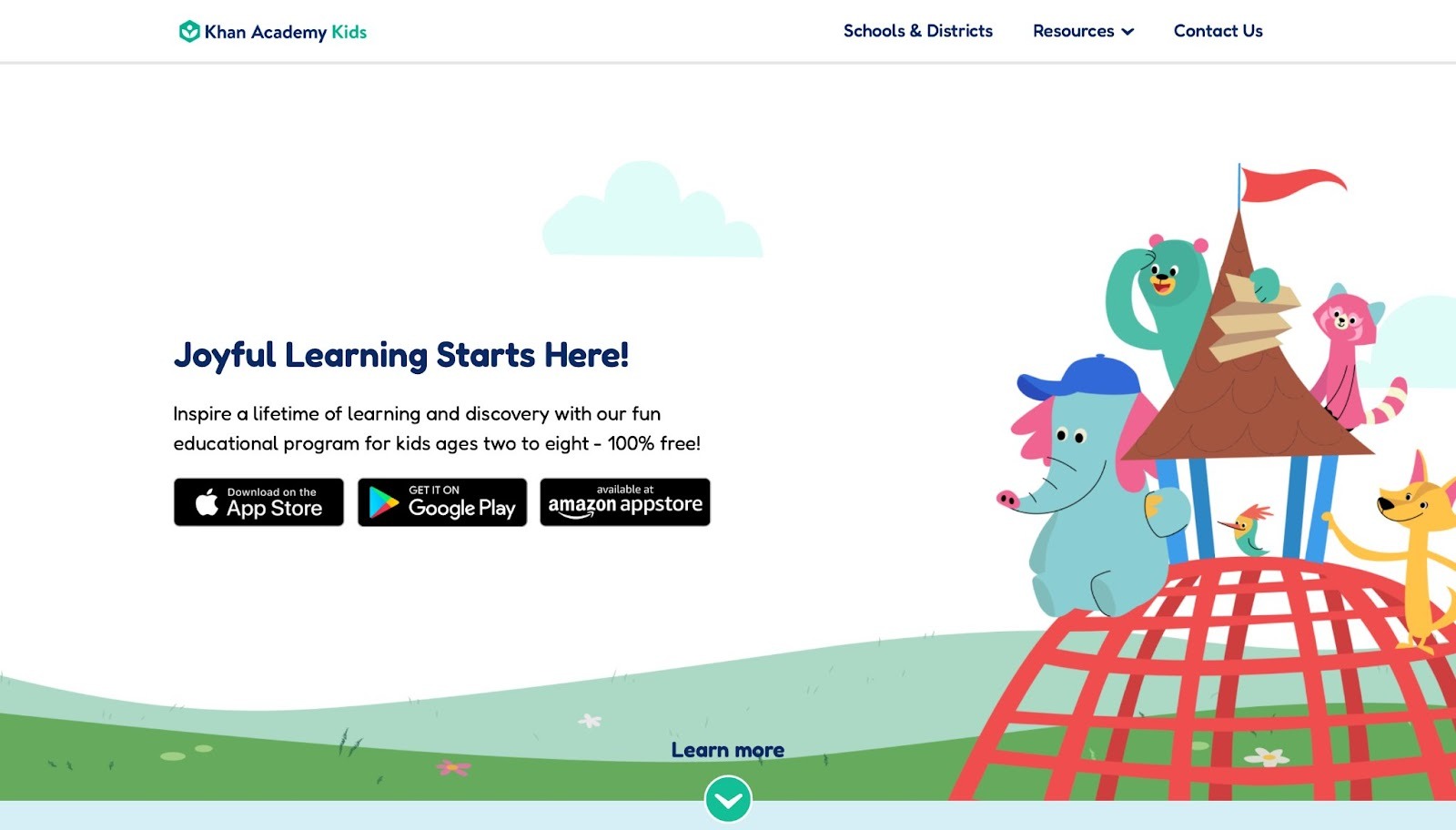
Khan Academy Kids delivers free, joyful learning through animal-guided adventures in reading, math, creativity, and social-emotional skills. Kids explore at their own pace with books, games, and drawing tools, following suggested paths or choosing freely. Strengths lie in its accessibility and emphasis on independence, with no ads or costs making it inclusive. Weaknesses involve shallower coverage in advanced areas, serving best as an introductory resource.
From Mountain View, USA, it's perfect for daily enrichment. The app uses positive reinforcement to build habits, like collecting outfits for characters. Interactive stories teach empathy, while math games introduce patterns and shapes intuitively. Parents value the offline mode for travel. It encourages curiosity with open-ended activities, like creating art inspired by lessons. Khan Academy Kids supports diverse learners by offering multiple ways to grasp concepts, from videos to hands-on simulations.
- Key features offer thousands of activities, progress tracking, and multilingual support.
- Facts and information reveal many awards for educational excellence, with some users integrating it into routines for balanced skill development.
6. Toca Boca Games
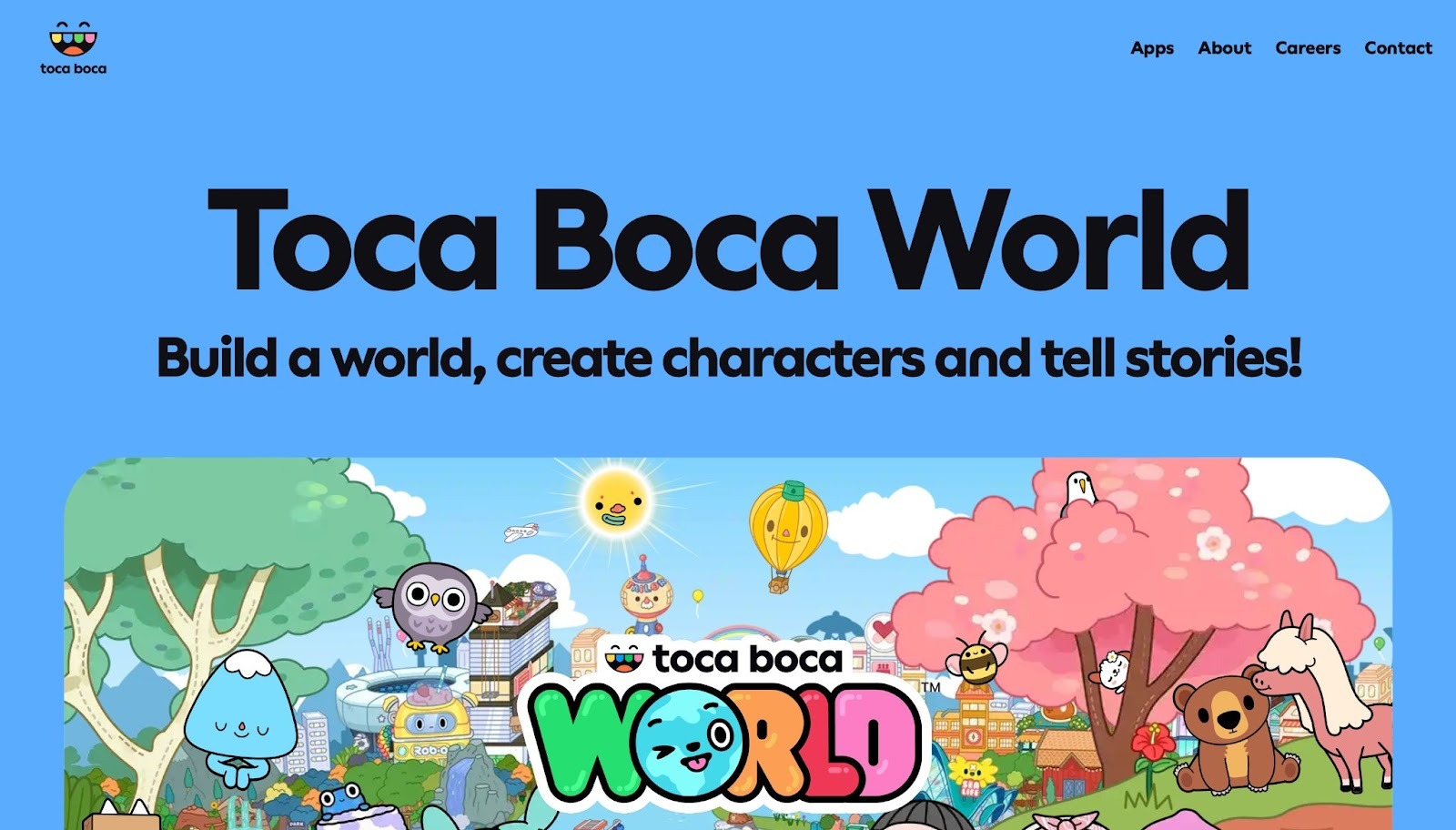
Toca Boca offers open-ended worlds for imaginative play, like kitchens or nature scenes, without goals or scores. Kids invent stories, experimenting freely with tools and characters. Strengths focus on unrestricted creativity, supporting emotional expression. Weaknesses mean less guidance for structured learners. Based in Stockholm, Sweden, it's for free-form fun. The apps mimic real life, teaching cause and effect through interactions. Children build confidence by directing play. Parents pair it with discussions to deepen insights. Toca Boca promotes inclusivity with diverse representations.
- Key features deliver environmental tools, character variety, and no-fail mechanics.
- Facts and information show many global users for autonomy, though some enhance with real-world ties.
7. DragonBox Math Apps
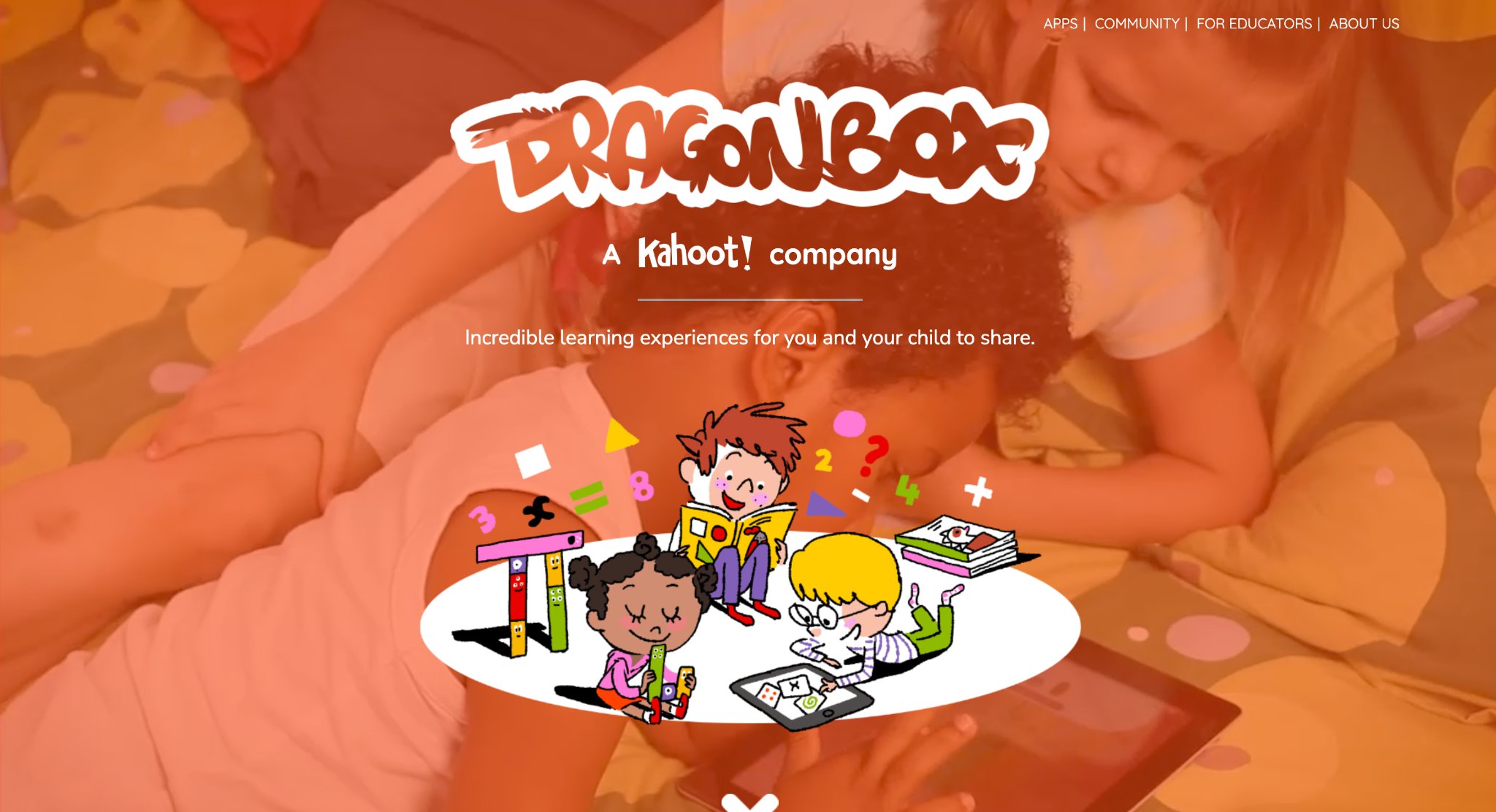
DragonBox series introduces math concepts like algebra and geometry through intuitive puzzles, starting with creatures and evolving to numbers. Kids manipulate items to solve levels, grasping rules organically. Strengths are in demystifying complex ideas, making them accessible and enjoyable. Weaknesses stem from sequential app progression, which might feel repetitive for quick learners.
From Oslo, Norway, it's great for puzzle enthusiasts. The games build intuition before formal notation, reducing math anxiety. Players feed and sort to learn equations, with gentle guidance. It's used in schools to supplement traditional teaching. DragonBox encourages exploration, where failure leads to discovery. It transforms abstract math into tangible play, boosting long-term understanding.
- Key features provide progressive difficulty, visual aids, and focused skill-building.
- Facts and information highlight many classroom integrations, with some noting rapid concept mastery.
8. ScratchJr
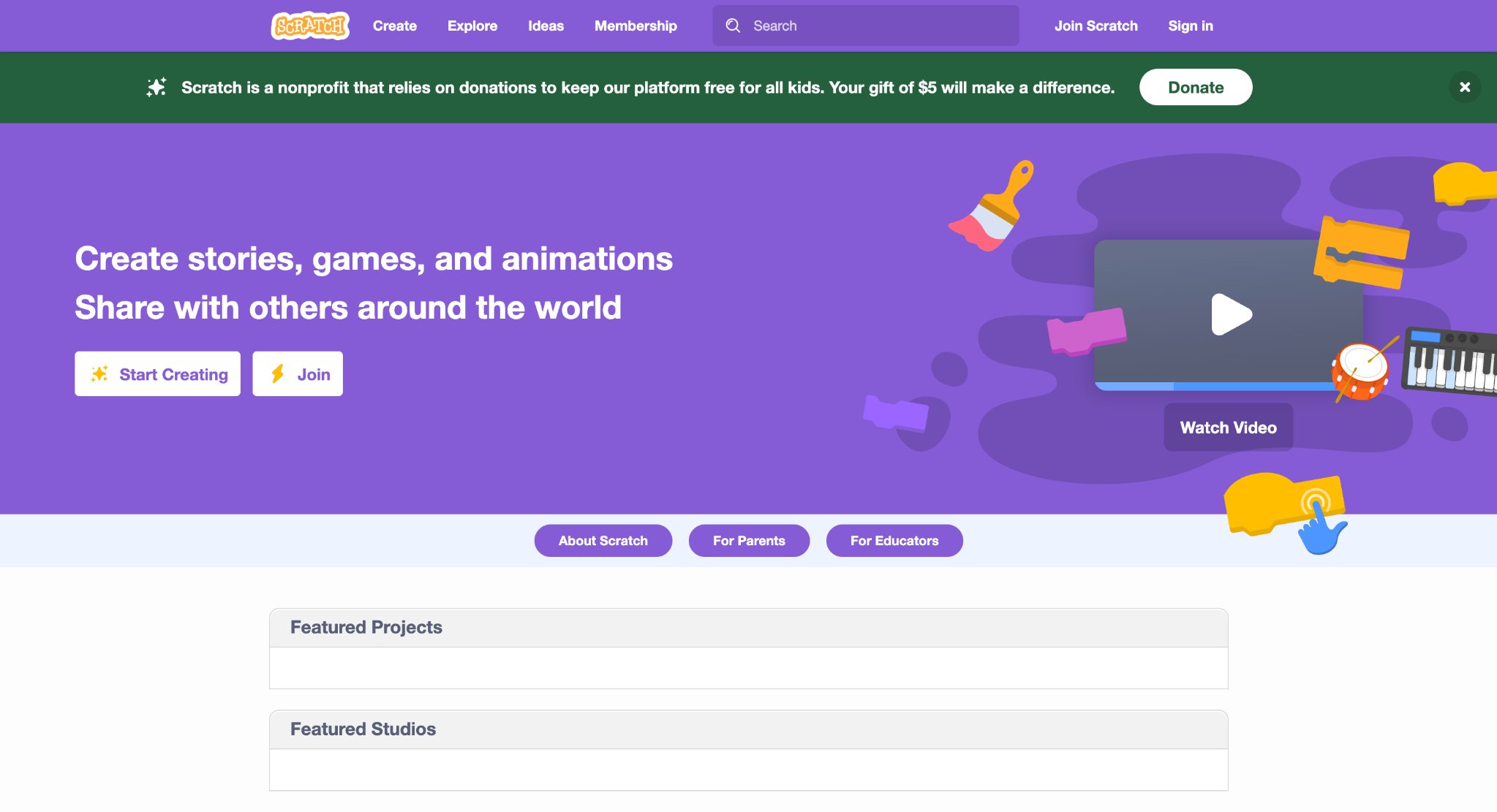
ScratchJr empowers young coders to create stories and games by snapping colorful blocks, teaching sequencing and logic without text. Kids animate characters with simple commands, experimenting through trial and error. Strengths excel in fostering creativity and problem-solving in an open environment. Weaknesses include needing initial adult help for structure, as the freedom can lead to aimless play.
Developed in Cambridge, USA, it's suited for introducing programming basics. The interface sparks innovation, letting children design dances or adventures. It builds computational thinking by visualizing code effects instantly. Educators use it in classrooms to encourage collaboration on projects. ScratchJr promotes persistence as kids debug their creations, turning mistakes into learning opportunities. It's a gateway to more complex coding, nurturing early tech interest.
- Key features include drag-and-drop blocks, character customization, and project sharing.
- Facts and information note many schools adopt it for STEM curricula, though some kids thrive with guided challenges.
9. PBS Kids Games
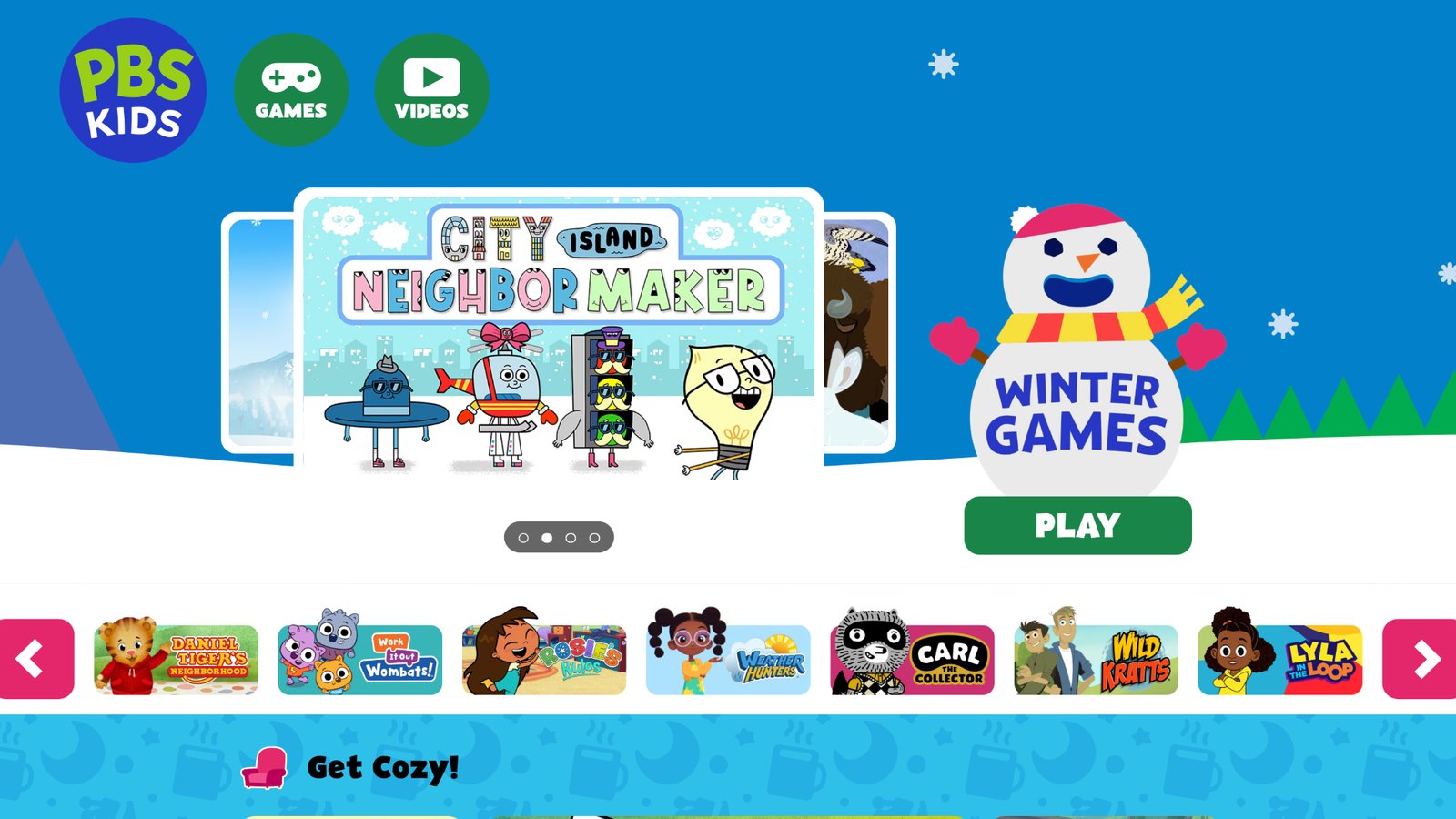
PBS Kids links games to beloved shows, teaching science, literacy, and emotions with characters like Curious George. Over hundreds of ad-free activities reinforce lessons gently. Strengths are in familiar content that extends TV learning. Weaknesses include uneven depth across titles. From Arlington, USA, it complements media time. Games build skills through exploration, like engineering challenges. It emphasizes kindness and curiosity. Families use it for short, meaningful sessions.
- Key features align with educational standards, include character-driven tasks, and offer accessibility options.
- Facts and information suggest many applications for social skills, with some preferring timed play.
10. Duolingo ABC
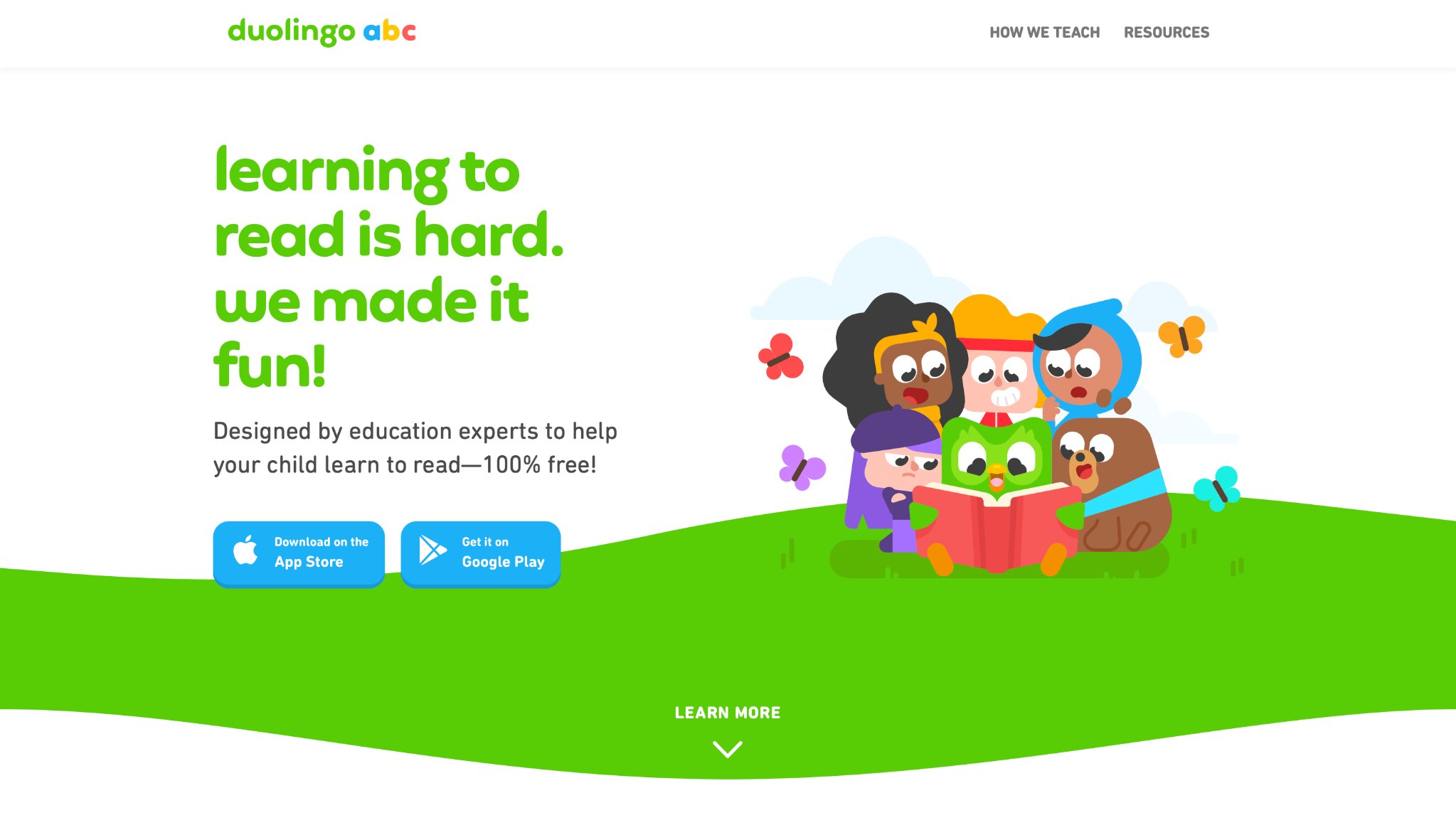
Duolingo ABC teaches reading basics with monster-led phonics, tracing, and stories in short bursts. It progresses from letters to sentences systematically. Strengths build foundational literacy with rewards. Weaknesses focus narrowly, suiting beginners. Headquartered in Pittsburgh, USA, it's for early readers. The app uses repetition to reinforce sounds, boosting retention. Kids earn stars for motivation. It integrates listening and speaking for comprehensive practice.
- Key features have bite-sized lessons, progress streaks, and audio support.
- Facts and information note many confidence gains, though some add physical books for variety.
11. Starfall ABCs
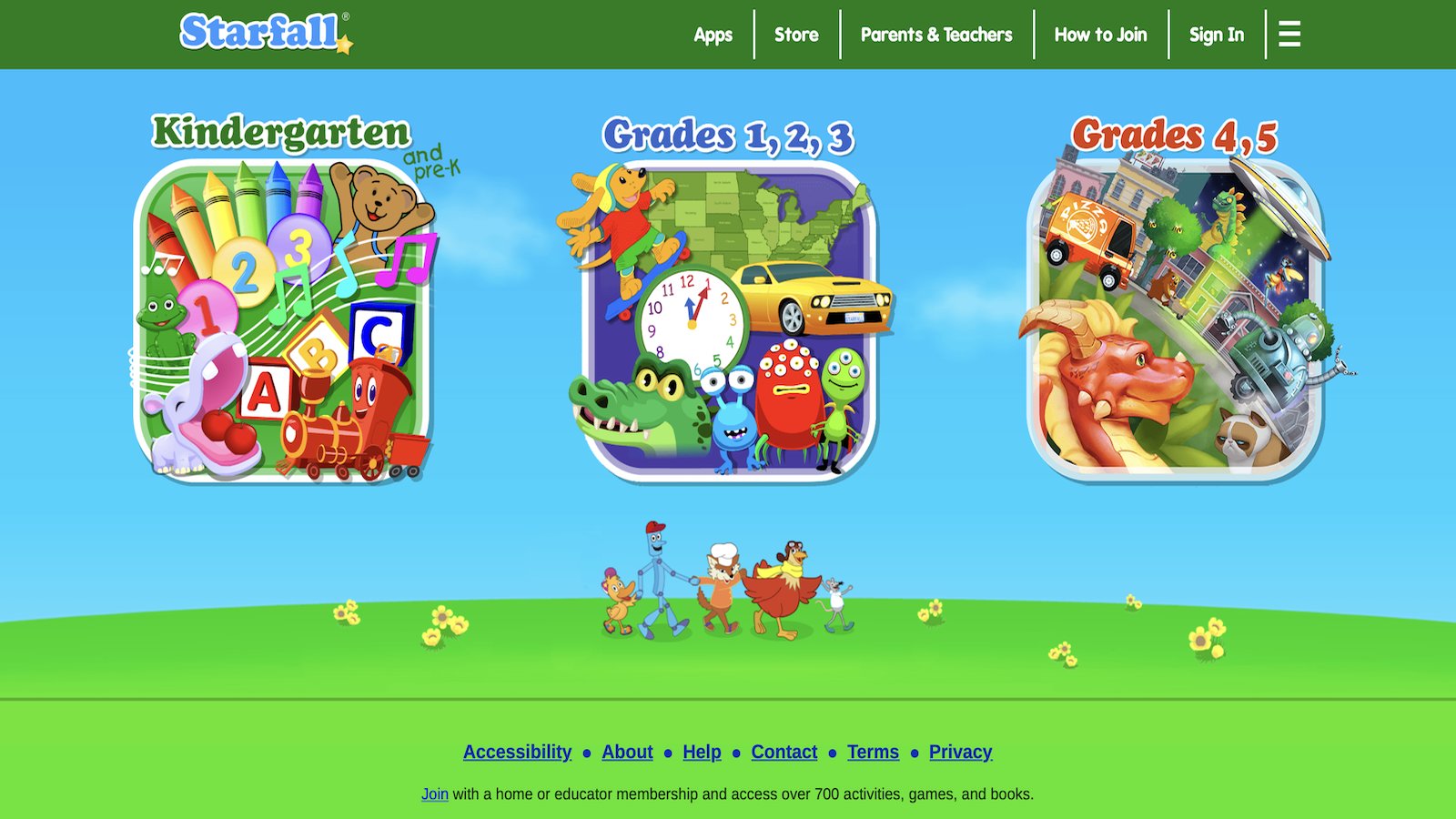
Starfall ABCs animates letters with songs and interactions, exploring sounds and words dynamically. Kids tap to see transformations. Strengths introduce language joyfully for pre-readers. Weaknesses limit to basics. From Boulder, USA, it's for initial steps. The app uses multisensory methods to engage. It builds phonemic awareness through play. Teachers recommend it for early intervention.
- Key features use visual animations, phonetic songs, and interactive elements.
- Facts and information reveal many phonics improvements, with some combining with narratives.
12. Epic!

Epic! offers a vast digital library with thousands of books, videos, and audiobooks for kids, curated by reading level and interest. Children browse categories like adventures or science, reading independently or listening. Strengths include diverse content that sparks reading habits, with quizzes to check comprehension. Weaknesses may occur if internet is spotty, limiting offline access to favorites.
Headquartered in Redwood City, USA, it's excellent for voracious readers. The app recommends titles based on preferences, encouraging exploration. Parents track reading time and progress. Epic! promotes literacy by making books accessible anytime, fostering a love for stories. It includes educational series tied to curricula, blending fun with learning.
- Key features encompass personalized libraries, reading badges, and family sharing.
- Facts and information indicate many schools use it for supplemental reading, though some pair with discussions for deeper understanding.
13. Lingokids
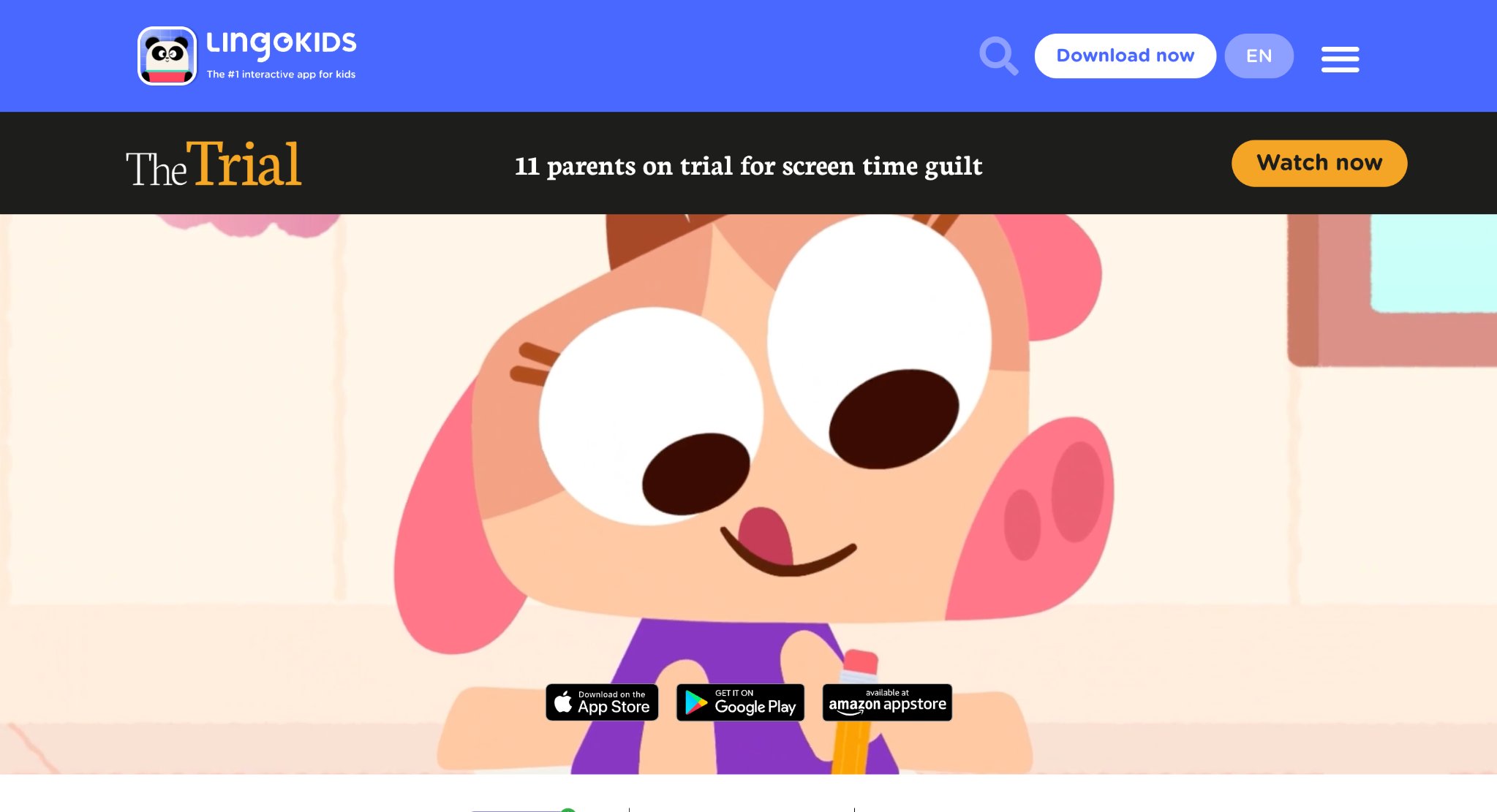
Lingokids teaches English through games, songs, and stories for non-native speakers, covering vocabulary, grammar, and life skills. Activities adapt to progress, with no ads for safe play. Strengths are in immersive language exposure, building communication naturally. Weaknesses involve needing consistent use for fluency gains. Based in Madrid, Spain, it suits global families. The app uses real-world themes like animals or food to make learning relatable. Parents receive weekly reports. Lingokids encourages speaking practice with voice recognition. It supports multiple languages for broader appeal.
- Key features include interactive videos, progress trackers, and themed units.
- Facts and information show many bilingual households benefit, with some noting vocabulary growth.
14. Monster Math
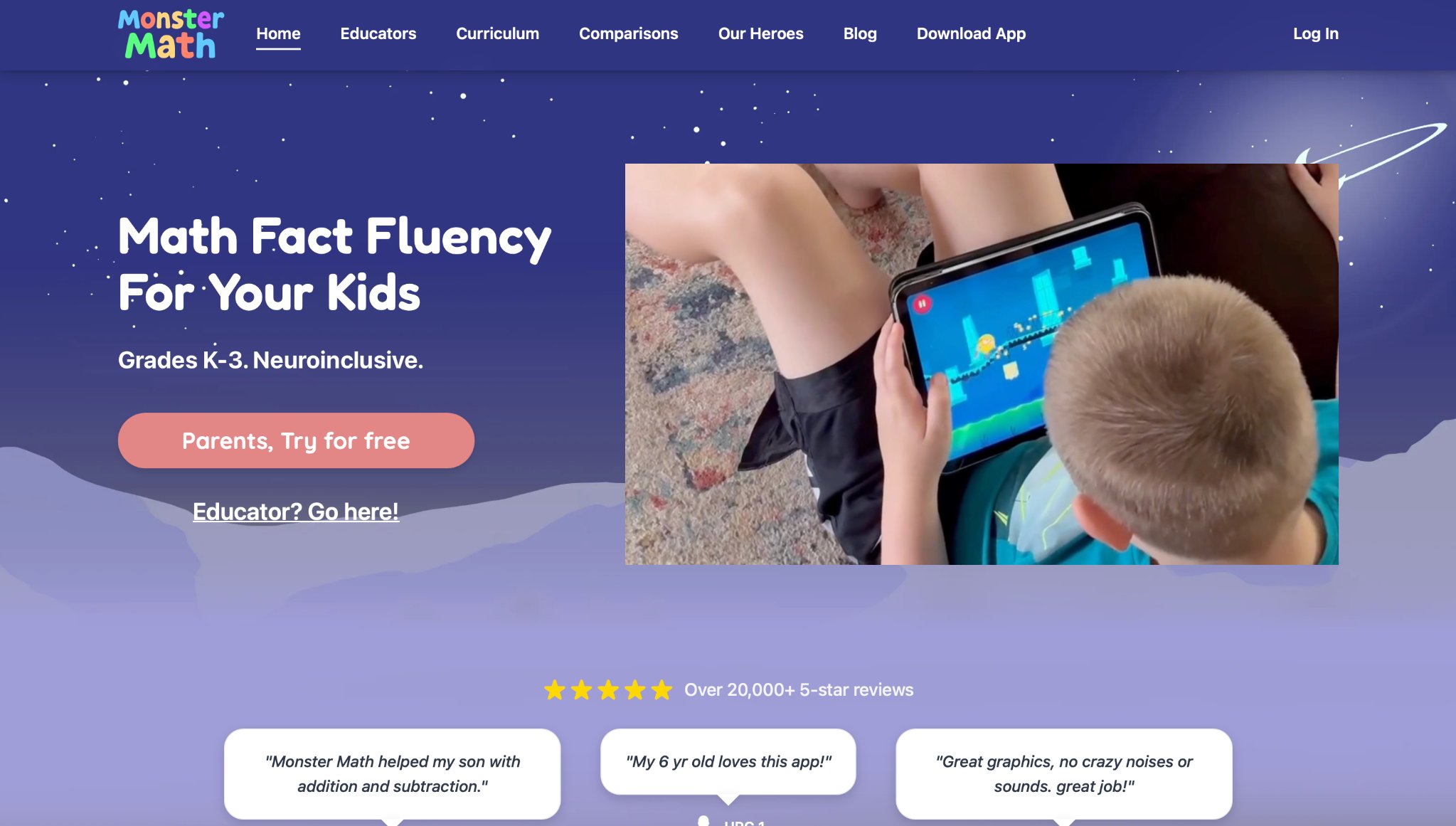
Monster Math turns arithmetic into adventures with monsters, practicing operations through story-driven levels. It covers core math skills, adjusting to ability. Strengths lie in gamified drills that reduce boredom. Weaknesses appear in sound issues for some devices. From Pune, India, it's for math practice. Kids battle by solving problems, earning upgrades. The app tracks weaknesses for targeted review. It builds speed and accuracy playfully.
- Key features offer adaptive questions, reports, and multiplayer options.
- Facts and information reveal many improvements in fluency, though some use alongside manipulatives.
15. Funbrain Jr.
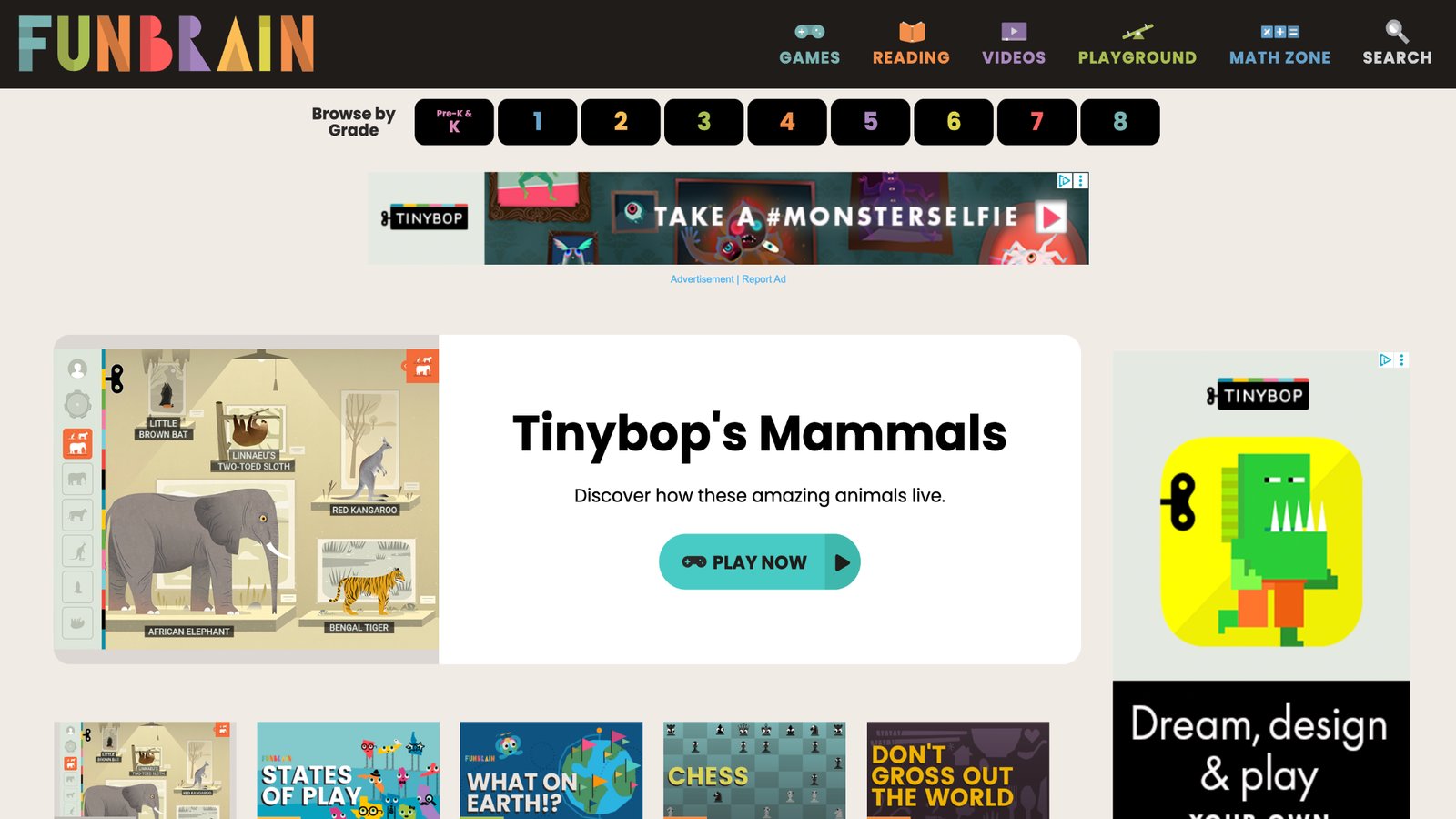
Funbrain Jr. stands out as an engaging entry point for the youngest learners, delivering bite-sized mini-games focused on letters, numbers, patterns, and basic sequencing through delightfully quirky characters and vibrant, tappable visuals. Designed specifically for toddlers and preschoolers, the app emphasizes simplicity, allowing children to build early computer literacy alongside foundational cognitive skills without overwhelming menus or complex instructions. Its playful approach turns routine practice into joyful interactions, helping kids develop matching abilities, hand-eye coordination, and confidence with digital interfaces.
While sessions tend to be short and sweet - ideal for limited attention spans - the app’s strength lies in its ability to introduce screen-based learning gently. Parents and educators often appreciate its Brooklyn-based roots and focus on age-appropriate content that feels more like play than structured education. Many preschools incorporate it as a foundational tool, noting noticeable improvements in pattern recognition and early readiness skills. Though it lacks deeper progression tracking, Funbrain Jr. remains a reliable favorite for sparking initial curiosity in a colorful, low-pressure environment that prioritizes fun first.
- Key features include puzzle games, rewards, and easy navigation.
- Facts and information note many preschool uses, with some finding it foundational.
16. Pok Pok
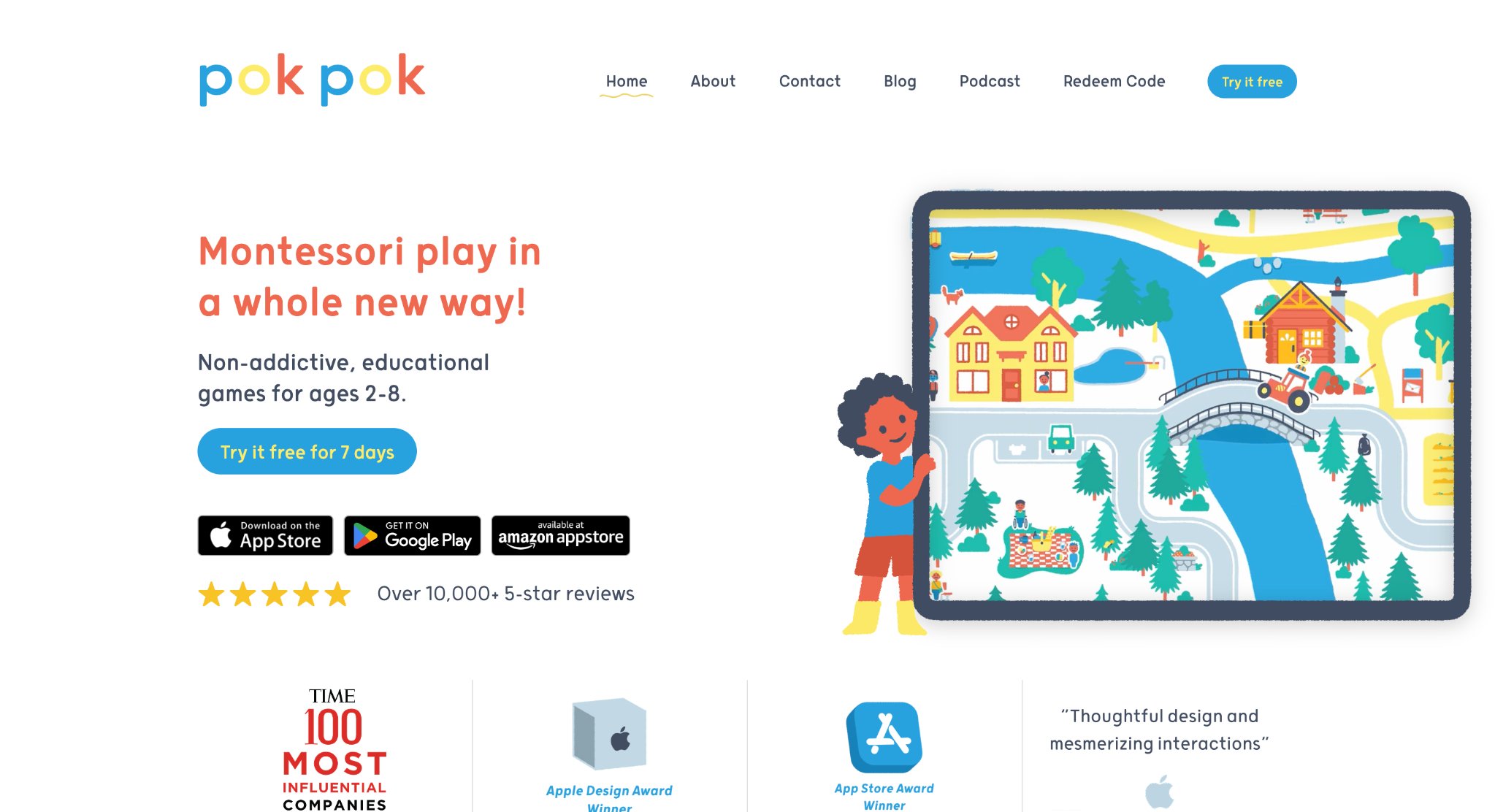
Pok Pok redefines screen time by offering calm, open-ended digital toys that mirror real-world play experiences like drawing, building, and creative exploration, all without addictive mechanics or competitive pressure. Created in Toronto, this app appeals to parents seeking mindful digital alternatives that nurture creativity, emotional expression, and independent discovery. Children can freely manipulate virtual objects, experiment with colors and shapes, and engage in imaginative scenarios that support emotional growth and problem-solving in a safe, judgment-free space. Its ad-free environment, regular thoughtful updates, and full offline functionality make it exceptionally parent-friendly for daily use.
The gentle interface encourages children to lead their own play sessions, fostering autonomy and reducing overstimulation commonly associated with other kids’ apps. Award-winning and widely praised for promoting calmer transitions from digital to real-world activities, Pok Pok has earned a loyal following among families who value quality over quantity. Its thoughtful design helps young users develop focus, self-expression, and a healthy relationship with technology through purely creative, non-goal-oriented experiences.
- Key features offer ad-free play, updates, and offline access.
- Facts and information highlight many awards, with some parents noting calmer transitions.
17. Stack the States

Stack the States transforms U.S. geography into an addictive yet educational physics-based puzzle experience where children stack state shapes while absorbing capitals, flags, landmarks, and regional facts. This USA-developed app makes memorization memorable by combining learning with satisfying gameplay mechanics, turning dry social studies content into interactive challenges that kids genuinely enjoy repeating. As players progress, they unlock bonus games, maps, and quizzes that reinforce location knowledge and spatial awareness in engaging ways.
The app’s focused scope on American states makes it particularly valuable for elementary curricula, though dedicated fans often explore its world geography spin-offs for broader learning. Its blend of educational depth and entertaining gameplay has led to widespread classroom adoption across the United States. Children develop stronger recall of geographic information through repeated hands-on interaction, while the rewarding progression system keeps motivation high. Parents and teachers frequently highlight how Stack the States turns potentially tedious facts into confident knowledge that sticks long after playtime ends.
- Key features include quizzes, maps, and bonus games.
- Facts and information show many educational adoptions, though some extend to world versions.
18. Tinybop The Explorer’s Library
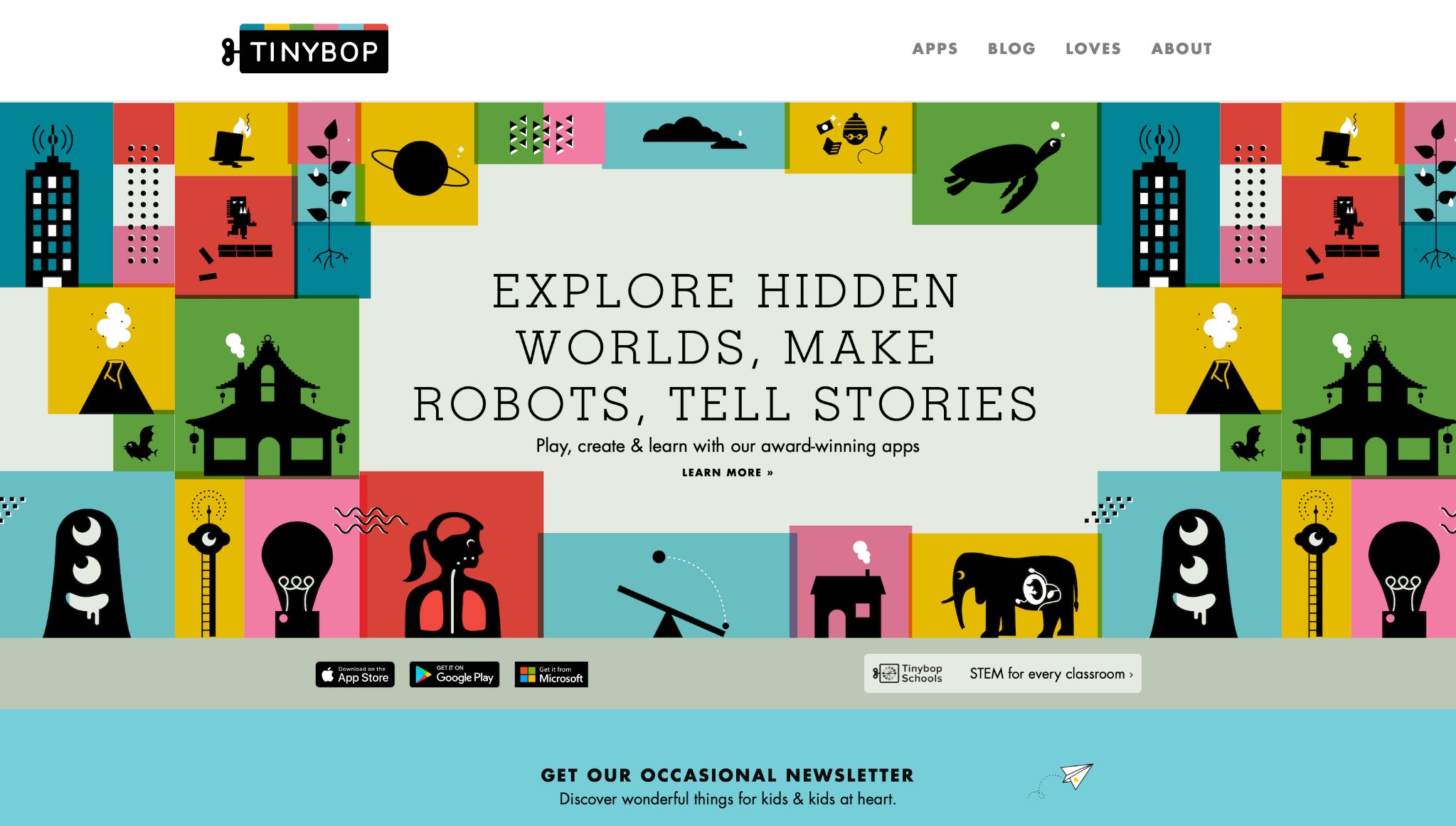
Tinybop The Explorer’s Library invites children to dive into beautifully detailed interactive models of everything from human bodies and ecosystems to cities and inventions, encouraging hands-on exploration and scientific curiosity. Based in Brooklyn, this STEM-focused collection rewards wonder-driven play, allowing kids to experiment, observe cause-and-effect relationships, and document discoveries through built-in diaries and creative tools. Its strength lies in sparking genuine interest in how things work rather than drilling facts, making complex concepts accessible and exciting for young minds.
Multilingual support and classroom-ready features have made it a staple in educational settings worldwide. Children naturally engage in deeper learning by manipulating simulations, testing hypotheses, and drawing connections between different systems. While it thrives best with curious, self-directed users, the app consistently inspires real-world projects and discussions at home and school. Tinybop’s thoughtful design nurtures critical thinking, observation skills, and a lifelong love of discovery through rich, open-ended digital experiences.
- Key features provide simulations, tools, and multilingual support.
- Facts and information indicate many classroom uses, with some inspiring projects.
19. Endless Learning Academy
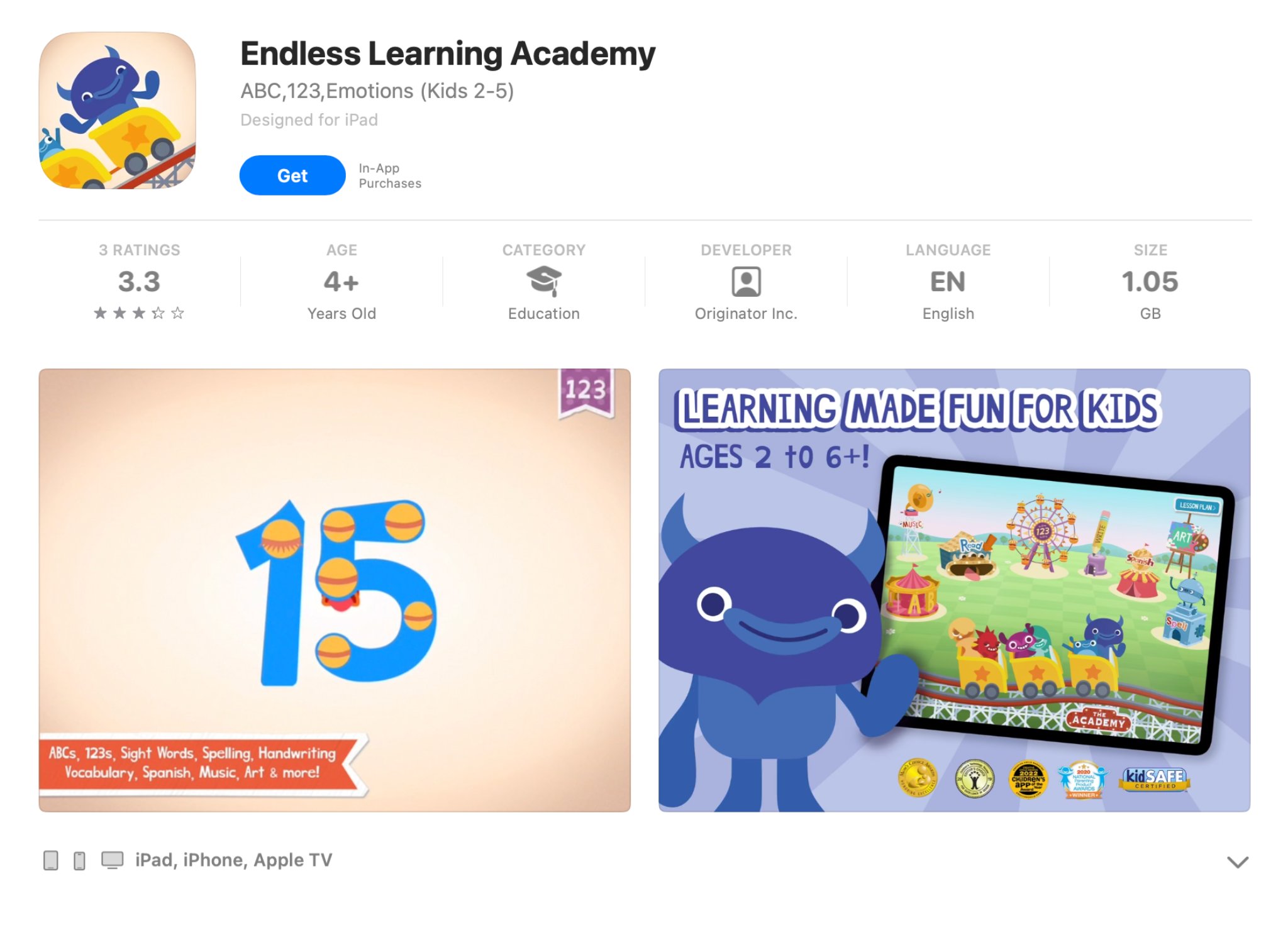
Endless Learning Academy delivers a comprehensive learning environment wrapped in charming monster characters and vibrant animations, covering reading, math, and foundational skills through progressive, puzzle-based activities. Developed in the USA, the app structures content along clear curriculum paths that adapt to a child’s growing abilities, making it especially effective for preschool and early elementary preparation. Its extensive variety keeps children engaged across multiple subjects while incorporating videos, creative exercises, and offline play options for flexible learning.
Parents appreciate the balanced approach that combines entertainment with genuine educational progression, often reporting noticeable boosts in school readiness. The monster-themed world creates an inviting atmosphere where mistakes feel fun rather than frustrating, encouraging persistence and confidence. While the wealth of content can occasionally feel overwhelming for very young users, the structured pathways help guide learners steadily forward. Many families and educators combine it with more focused apps, valuing its role as a well-rounded foundation for early academic success.
- Key features include curriculum paths, videos, and offline play.
- Facts and information reveal many school readiness boosts, though some prefer focused apps.
20. codeSpark Academy
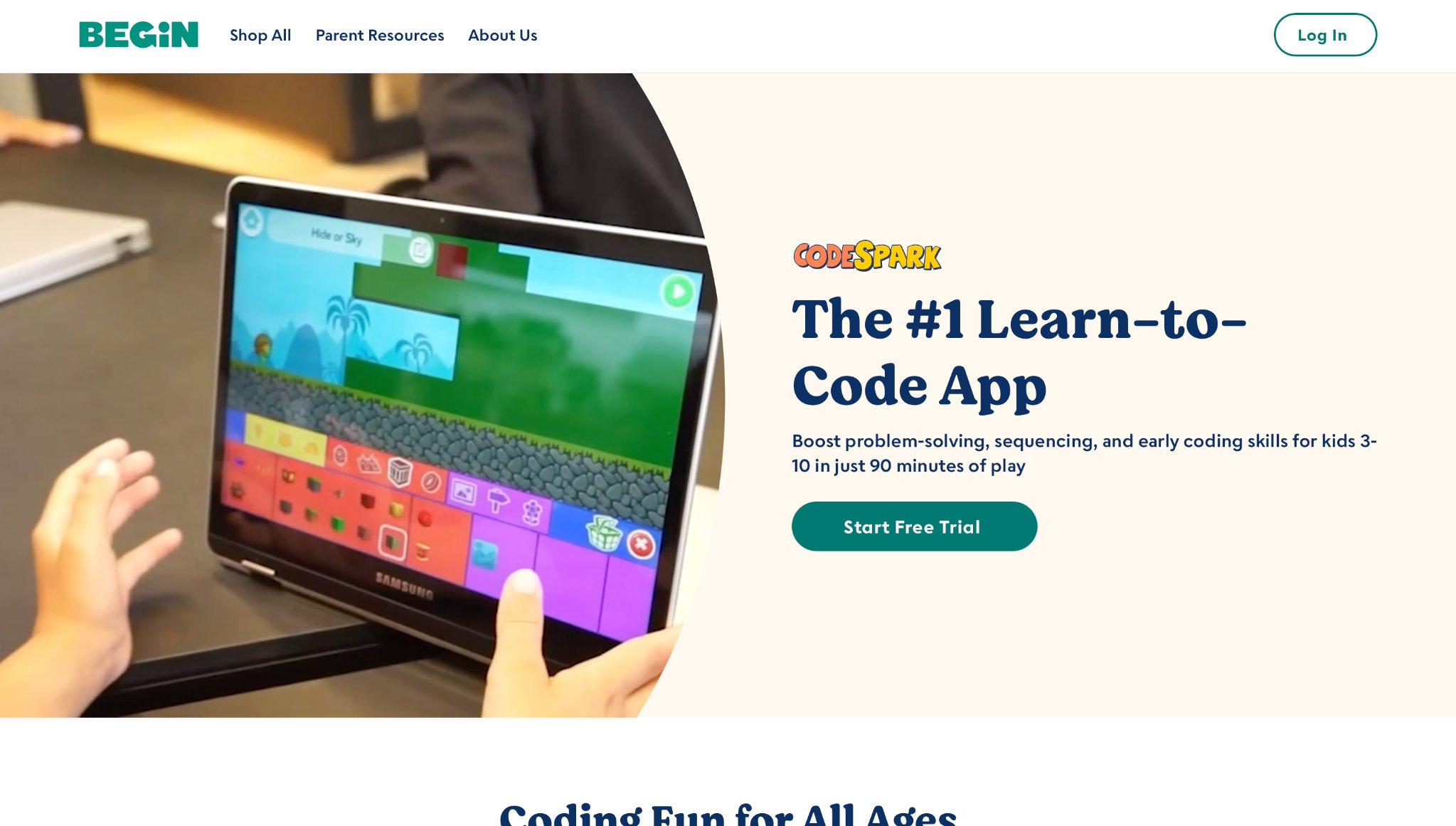
codeSpark Academy introduces young minds to coding fundamentals through engaging puzzles, visual block programming, and creative game-making tools that feel more like play than technical instruction. Based in Pasadena, this app builds logical thinking, sequencing, and problem-solving skills while empowering children to design their own stories, characters, and interactive experiences. Its creator mode stands out by giving kids real ownership over their projects, fostering creativity alongside computational thinking.
Parent dashboards and progressive challenges help track development and maintain appropriate difficulty levels. Though the learning curve progresses gradually to ensure solid understanding, the playful interface keeps motivation strong even for beginners. Global adoption has shown impressive results in sparking interest in technology and creative expression. Children develop confidence in breaking down complex tasks, debugging solutions, and bringing ideas to life digitally. codeSpark Academy excels at making coding accessible and exciting, laying a strong foundation for future tech literacy through fun, story-driven activities.
- Key features offer challenges, creator mode, and parent tools.
- Facts and information note many global users, with some noting creativity sparks.
21. Reading Eggs
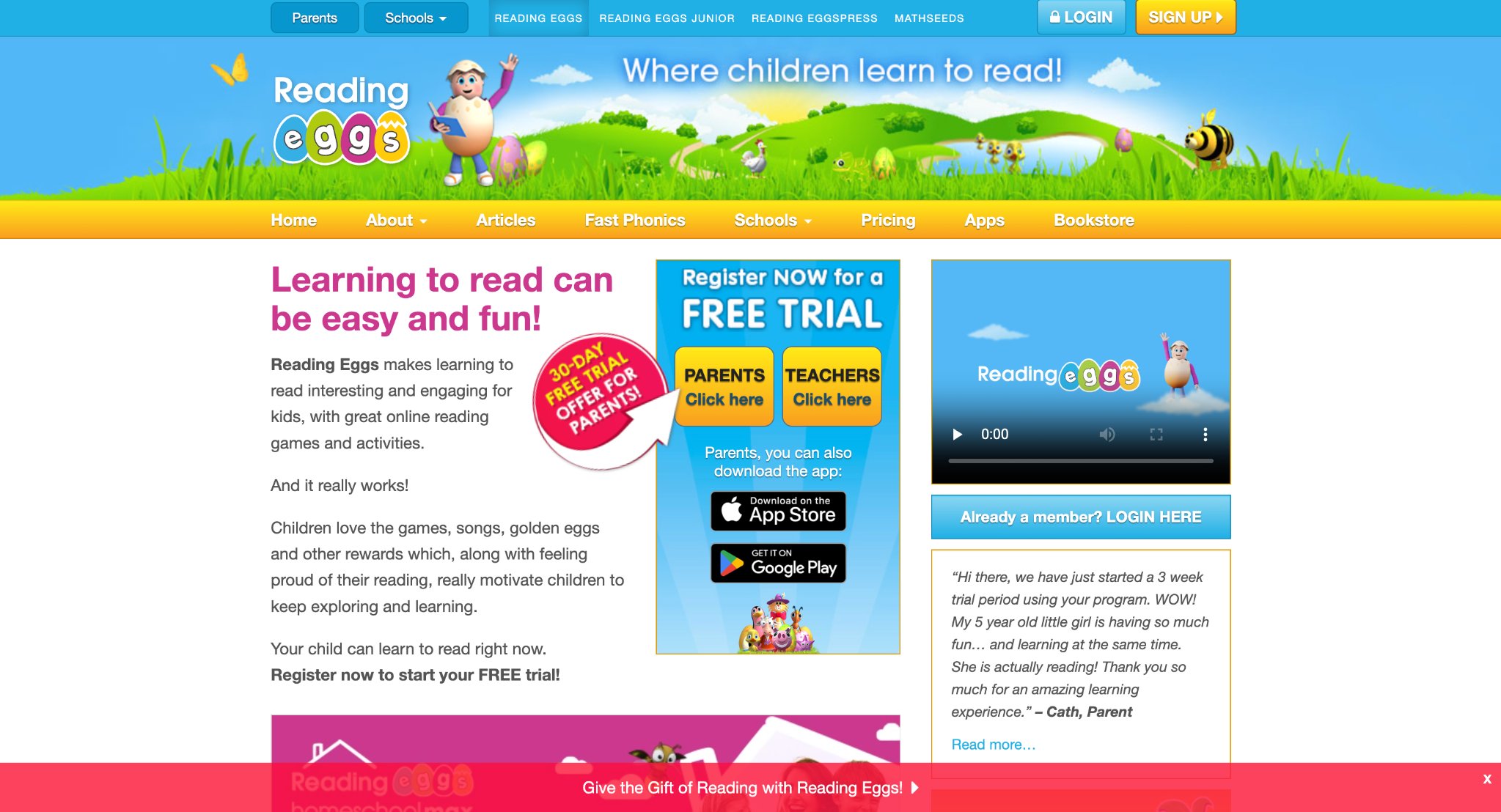
Reading Eggs offers a complete literacy journey that guides children from early phonics through comprehension and vocabulary building using interactive lessons, animated books, games, and catchy songs. Originating from Sydney, Australia, the app personalizes progression while incorporating rewarding elements that maintain high engagement levels throughout the learning process. Its rich library of leveled reading materials and supporting activities creates an immersive environment where literacy skills develop naturally and enjoyably.
Comprehensive reporting tools and printable resources make it valuable for both home and classroom use. Many parents and teachers report significant improvements in reading confidence and ability, particularly when combined with writing practice. The motivational reward system and variety of game formats prevent fatigue while reinforcing key concepts through multiple sensory channels. Though some supervision helps optimize pacing, Reading Eggs consistently earns praise for transforming reluctant readers into enthusiastic book lovers through its carefully structured yet entertaining approach to literacy development.
- Key features encompass levels, reports, and printable resources.
- Facts and information show many literacy improvements, though some combine with writing.
22. ABCya
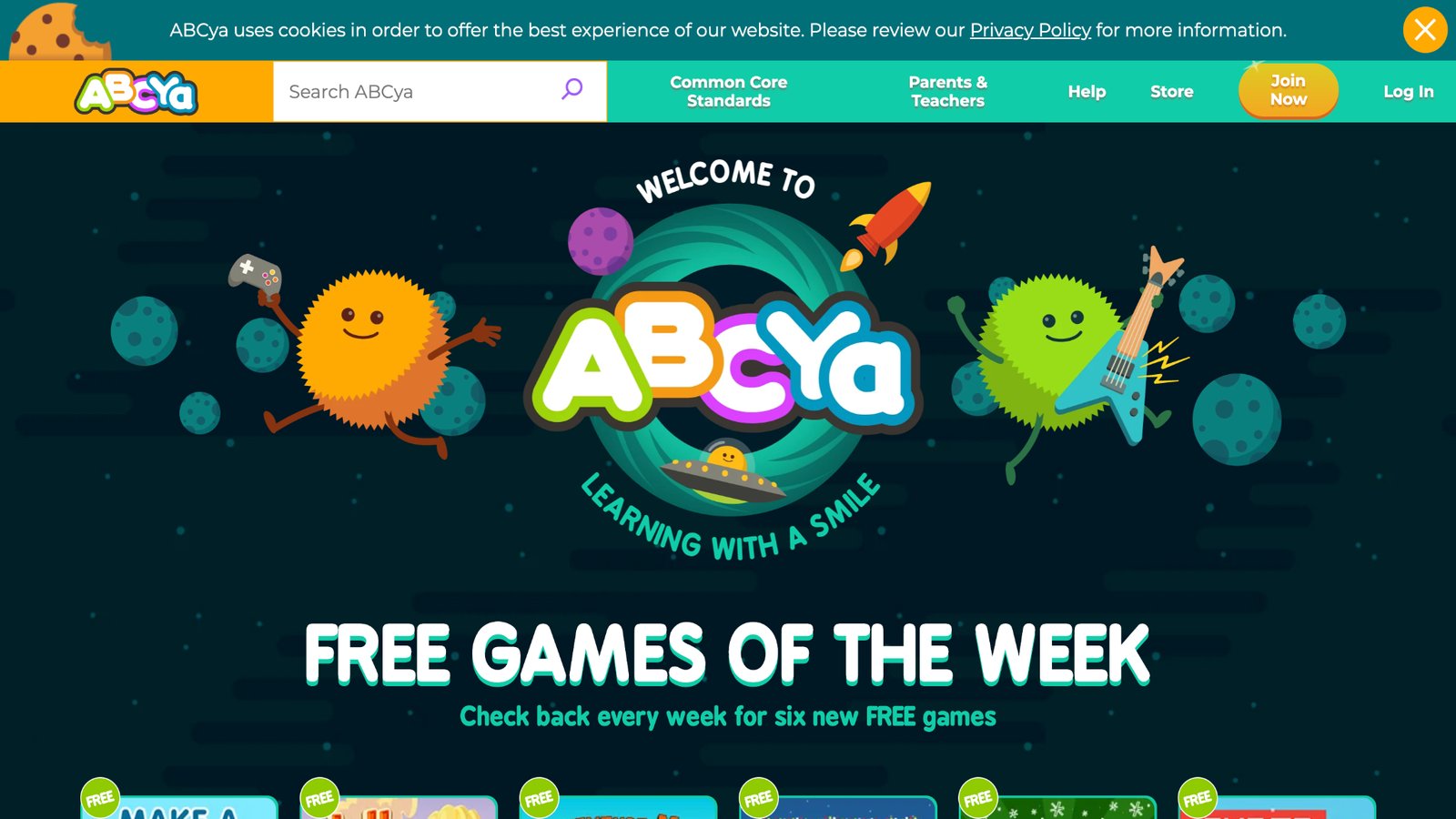
ABCya provides a wide variety of educational games tailored for early elementary children, featuring bright, engaging activities across math, reading, logic, and creativity. Six-year-olds enjoy mini-games like number puzzles, word matching, typing challenges, and strategy titles that feel like arcade fun while building real skills. The platform organizes content by grade level, making it simple for kids to find appropriate challenges. Seasonal and holiday themes keep the collection exciting throughout the year, with options for both quick sessions and longer focused play. Its clean design supports independent navigation even for children still developing reading abilities.
- Key features: Grade-level organization, math and reading mini-games, logic puzzles, typing practice, holiday themes, and progress tracking.
- Facts and information: Developed by educators for classroom and home use; offers a mix of free and premium content aligned with early elementary learning goals.
23. Moose Math
.jpg)
Moose Math brings early mathematics concepts to life through delightful adventures set in a colorful town inhabited by the friendly Moose family. Designed specifically for six-year-olds, the app lets children practice counting, addition, subtraction, shapes, and measurement while completing engaging real-world tasks such as building bridges, delivering packages, and racing through town. Strong visual models combined with clear spoken instructions help kids grasp mathematical ideas even with limited reading skills. Every activity connects math to everyday situations, helping young learners understand its practical value and build a solid foundation in number sense and spatial awareness.
The rewarding progression system celebrates achievements with positive reinforcement, keeping motivation high throughout kindergarten and first-grade readiness skills. Parents appreciate how Moose Math transforms abstract concepts into tangible, story-driven experiences that feel like play rather than drills. Its multiple activity zones and character-driven narratives create an inviting environment where children develop confidence in math while enjoying meaningful learning moments.
- Key features: Multiple activity zones, visual math manipulation, character stories, geometry challenges, measurement tools, and positive reinforcement.
- Facts and information: Focuses on building solid number sense and spatial awareness for kindergarten and first-grade readiness.
24. Teach Your Monster to Read
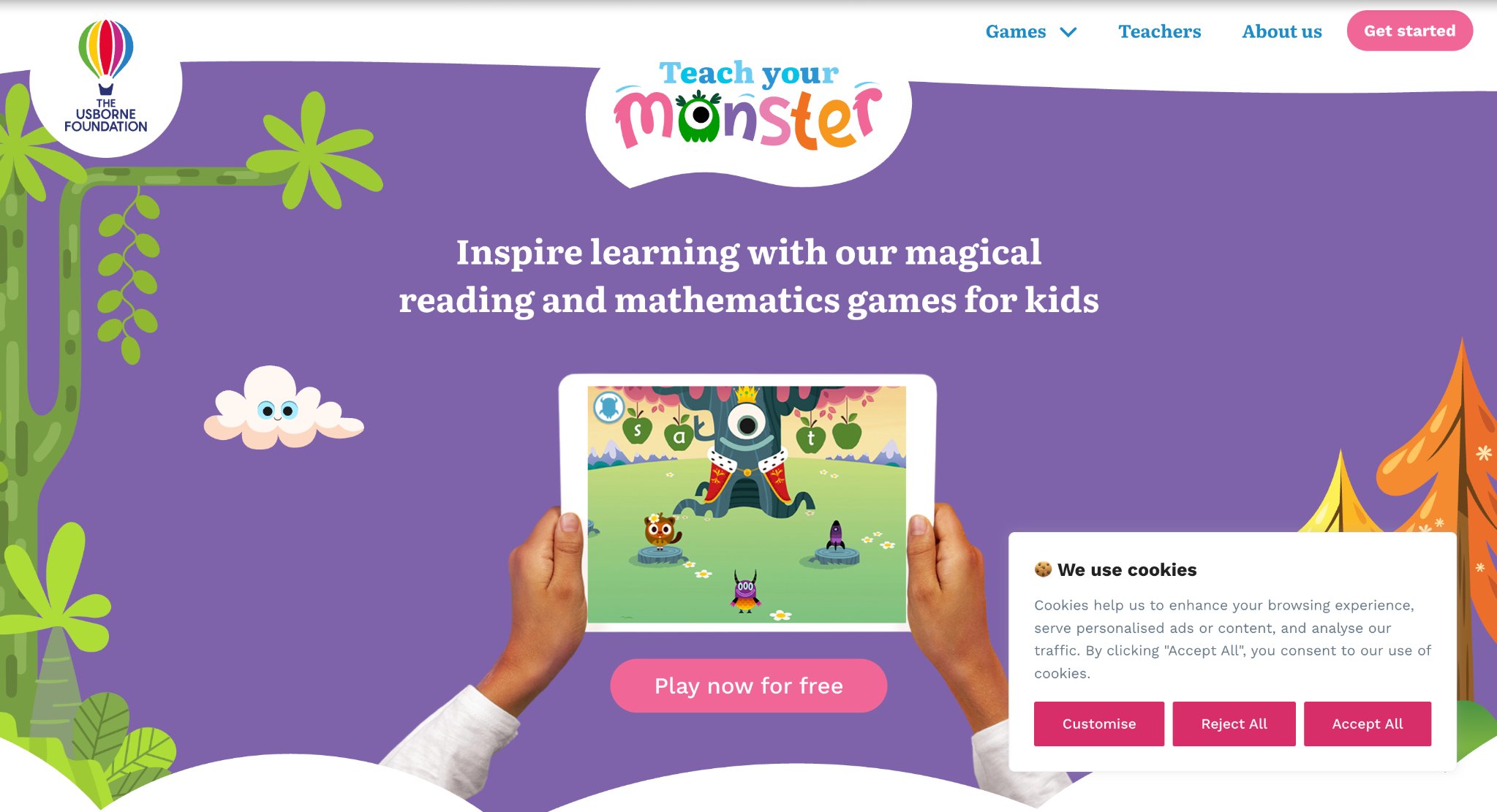
Teach Your Monster to Read takes six-year-olds on an exciting island adventure where they customize their own lovable monster companion and guide it through a structured phonics journey. Children practice essential literacy skills including letter sounds, blending words, high-frequency words, and simple sentences through a variety of motivating mini-games like matching, collecting items, and platform challenges. The strong narrative connection and encouraging feeTeach Your Monster to Read takes six-year-olds on an exciting island adventure where they customize their own lovable monster companion and guide it through a structured phonics journey. Children practice essential literacy skills including letter sounds, blending words, high-frequency words, and simple sentences through a variety of motivating mini-games like matching, collecting items, and platform challenges. The strong narrative connection and encouraging feedback transform reading practice into an enjoyable quest rather than a repetitive chore.
Developed with literacy specialists using proven synthetic phonics methods, the app builds confident early readers by carefully sequencing skills and celebrating progress at every stage. Its combination of customization, storytelling, and varied gameplay keeps children returning regularly while developing solid decoding abilities and reading fluency. Many parents and educators note significant improvements in reading confidence and enthusiasm, making this app a standout choice for systematic yet fun literacy development.
- Key features: Monster customization, structured phonics progression, word blending activities, reading quests, and motivational storytelling.
- Facts and information: Uses proven synthetic phonics methods developed with literacy specialists for building confident early readers.
25. BrainPOP Jr.
BrainPOP Jr. delivers rich educational content through short, engaging animated films paired with interactive games and activities across science, social studies, reading, and health topics. Six-year-olds explore clear explanations about concepts like weather patterns, communities, life cycles, and more, then immediately apply their new knowledge through quizzes, creative extensions, and hands-on project ideas. The consistent, age-appropriate format across subjects helps build strong comprehension and critical thinking skills while making learning feel cohesive and approachable.
Extension activities encourage children to connect digital lessons with real-world exploration and writing prompts. Its curriculum-aligned depth makes BrainPOP Jr. particularly valuable for early elementary learners, supporting both classroom and home learning environments. The combination of high-quality animations and interactive reinforcement helps concepts stick while fostering curiosity and deeper understanding across multiple subject areas.
- Key features: Educational animated movies, interactive quizzes, activity extensions, writing prompts, and topic-based learning paths.
- Facts and information: Supports curriculum connections with age-appropriate depth suitable for early elementary learners.
26. Crazy Gears
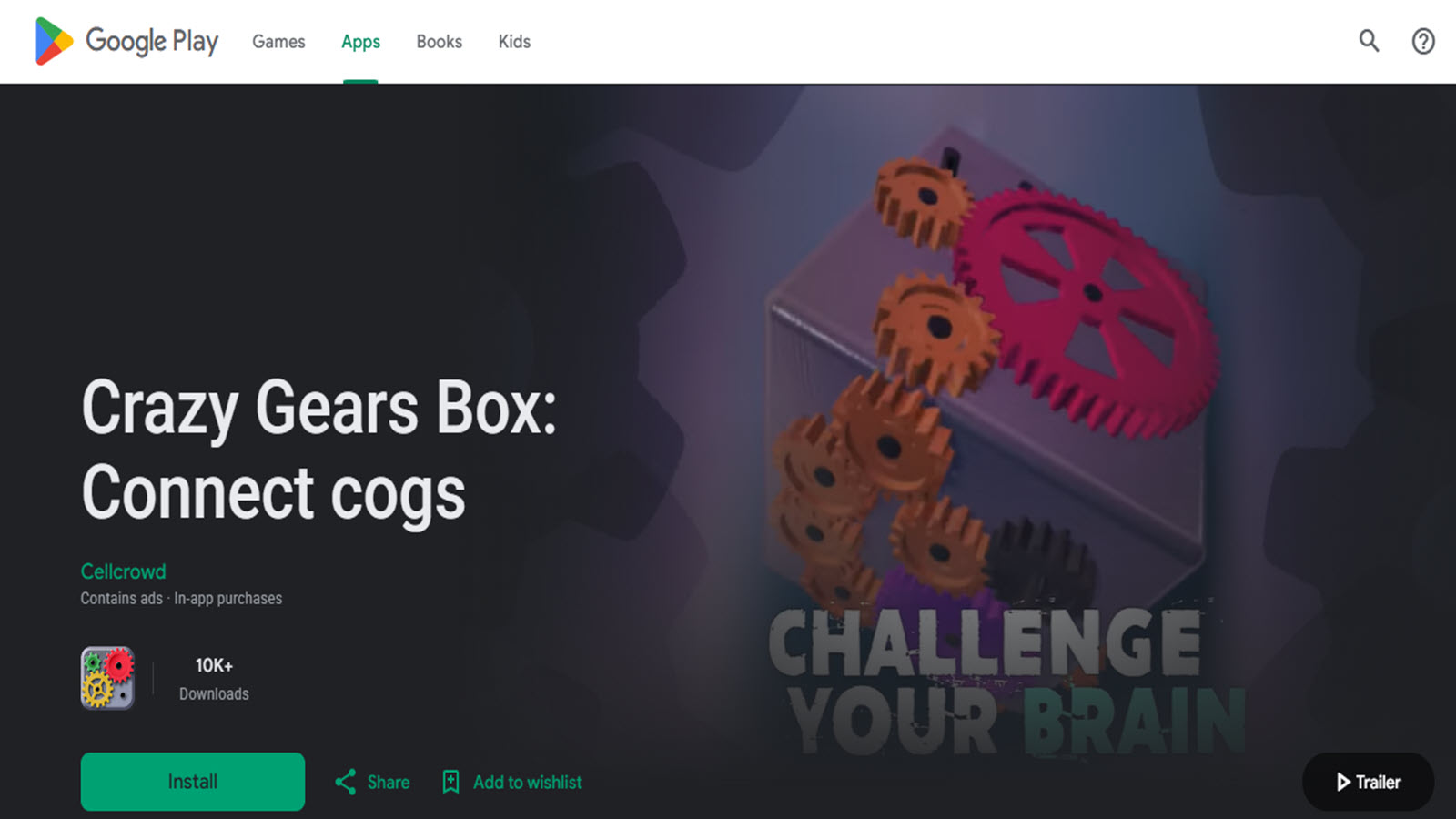
Crazy Gears introduces six-year-olds to physics and engineering through creative puzzle challenges where they connect gears, levers, and mechanisms to solve increasingly complex contraptions. Children experiment with motion, direction, force, and timing while enjoying the freedom of multiple possible solutions for each level.
The open-ended puzzle design nurtures creative thinking, persistence, and problem-solving skills as kids immediately see the visual results of their adjustments. Abstract physics concepts become tangible and exciting through hands-on digital construction and real-time feedback. This approach helps develop strong spatial reasoning and an engineering mindset in a playful, low-pressure environment. Progressive challenges keep the experience fresh and appropriately demanding, making Crazy Gears an excellent choice for children who enjoy building, experimenting, and figuring things out through trial and error.
- Key features: Gear-based building, physics simulation, creative problem-solving, progressive challenges, and experimentation tools.
- Facts and information: Develops spatial reasoning and engineering mindset through hands-on digital construction.
27. GoldieBlox and the Movie Machine
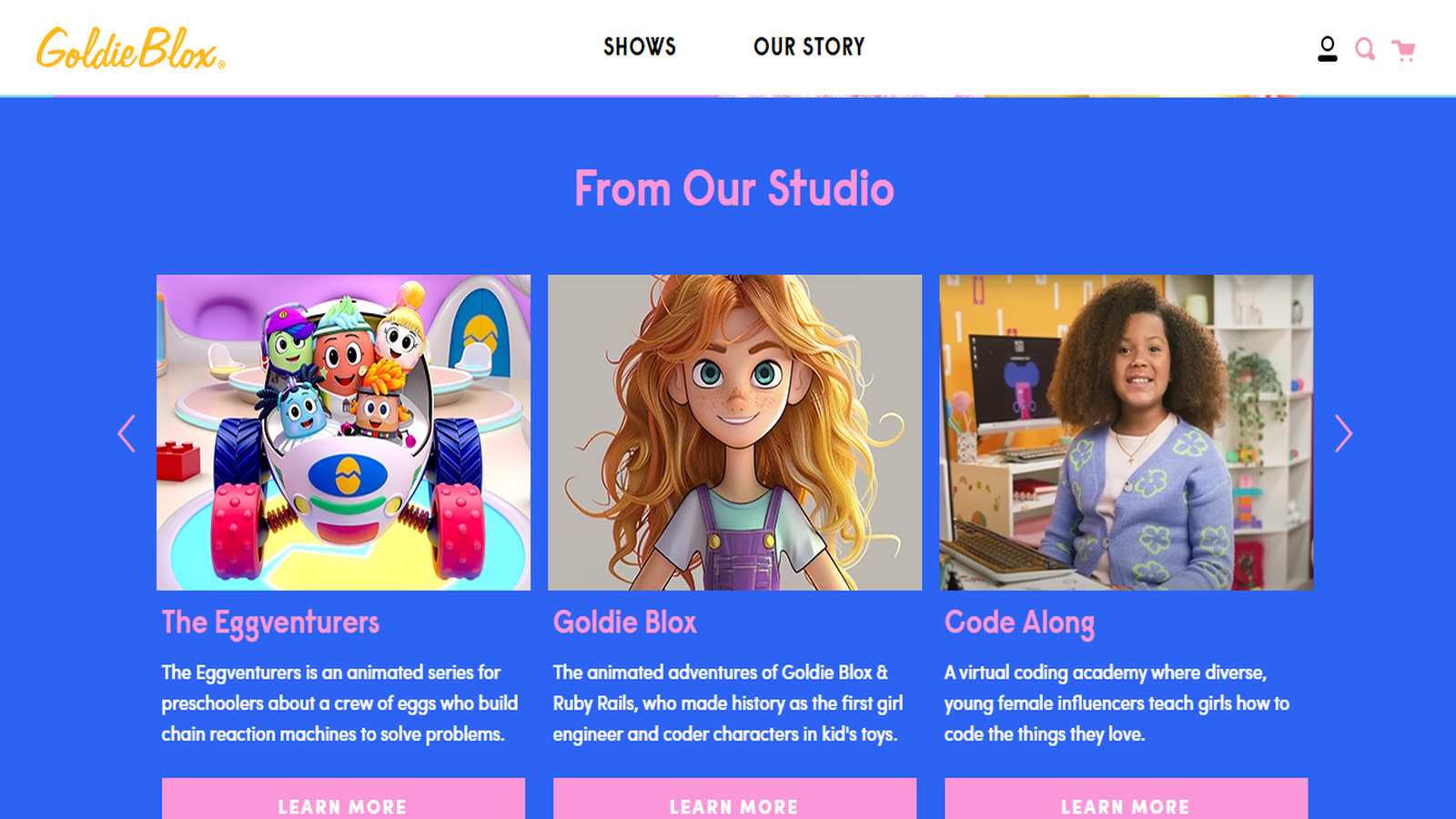
GoldieBlox and the Movie Machine empowers six-year-olds to become creative directors by combining engineering challenges with movie-making tools. Children solve building puzzles to create sets, arrange scenes, and direct animated stories featuring engaging characters. This unique blend of construction play, sequencing, and narrative development supports both technical thinking and creative expression.
Step-by-step guidance builds confidence in STEM problem-solving while the storytelling elements encourage imagination and communication skills. The app transforms abstract engineering concepts into meaningful creative projects that feel rewarding and personal. Its focus on spatial skills, inventive thinking, and artistic direction makes it especially appealing for children who love both building and telling stories. GoldieBlox successfully bridges technical learning with creative play in a way that feels natural and inspiring for young minds.
- Key features: Engineering construction, movie creation tools, storytelling elements, physics puzzles, and character direction.
- Facts and information: Promotes spatial skills and creative expression through inventive digital play.
28. Lightbot
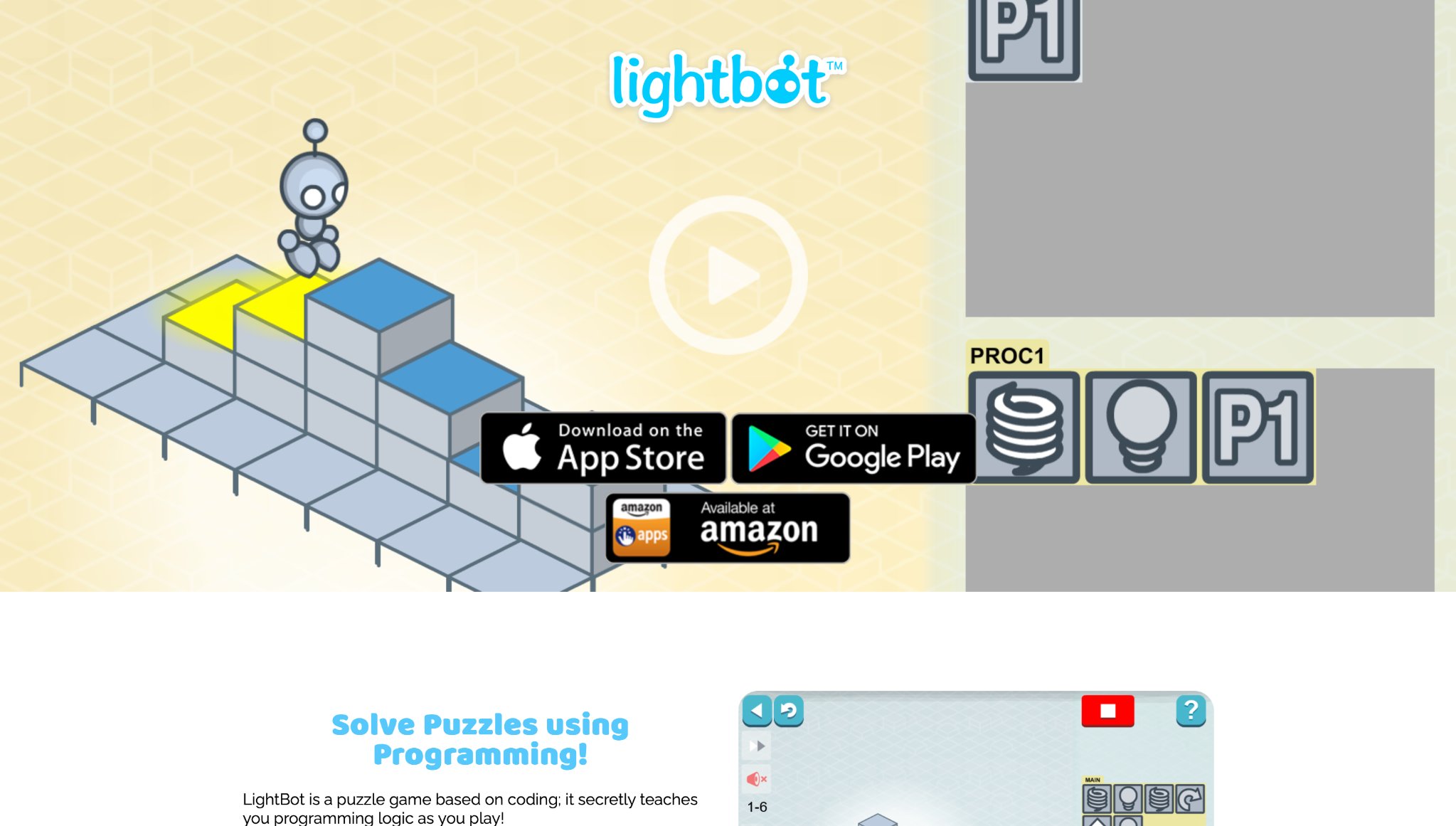
Lightbot introduces foundational coding concepts to six-year-olds through calm, visual grid-based puzzles where children program a robot to light up tiles using command blocks. Levels progressively introduce movement, loops, conditionals, and sequencing without requiring any reading. The straightforward puzzle format builds logical thinking, planning skills, and an understanding of computational thinking in an accessible way.
Children gain immediate visual feedback from their code, helping them quickly grasp debugging and problem-solving principles. Its peaceful, focused design makes Lightbot an ideal first step into programming for young learners. The app develops patience, systematic thinking, and the satisfaction that comes from solving challenges through clear logic. Many parents and educators praise it as an excellent entry point that lays a strong foundation for future coding and analytical skills.
- Key features: Visual programming blocks, grid-based puzzles, logic progression, loop concepts, and instant feedback.
- Facts and information: Serves as an excellent first step into computational thinking for young children.
29. Daniel Tiger’s Grr-ific Feelings
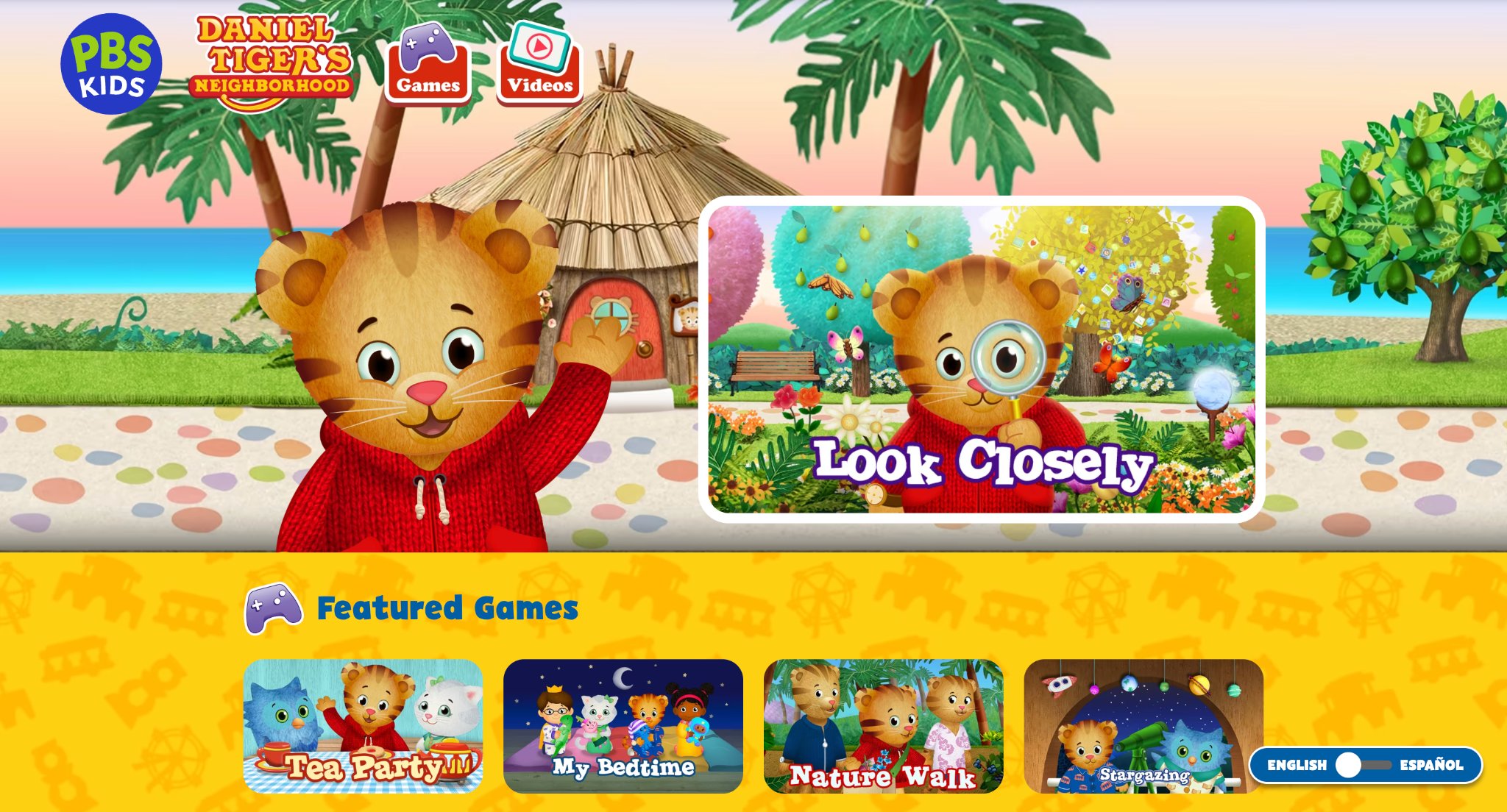
Daniel Tiger’s Grr-ific Feelings helps six-year-olds develop crucial emotional intelligence through interactive games and activities featuring beloved neighborhood characters. Children practice naming emotions, trying calming strategies, and navigating everyday social situations in a gentle, supportive environment. Positive messaging combined with creative and movement-based activities makes emotional learning engaging and memorable.
The app supports self-awareness, empathy, and emotional regulation using relatable scenarios drawn from familiar experiences. Its thoughtful approach helps children build important social-emotional skills that benefit them both at home and in school settings. Parents appreciate how the app turns potentially difficult emotional topics into positive, constructive learning opportunities that foster greater understanding and resilience.
- Key features: Emotion recognition games, calming strategy practice, social scenario play, creative tools, and character stories.
- Facts and information: Supports social-emotional development using relatable everyday situations.
30. Seek by iNaturalist
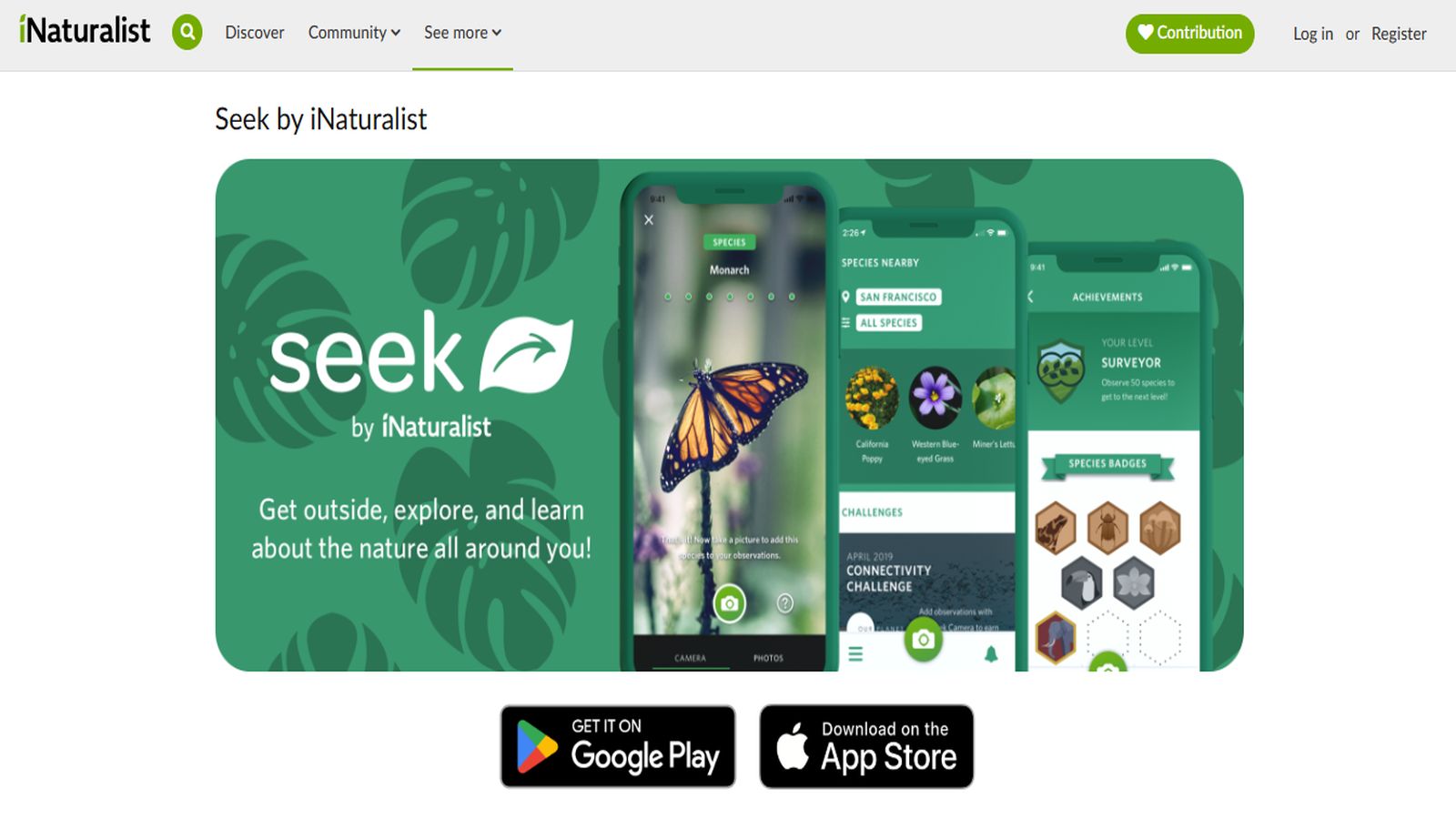
Seek by iNaturalist transforms outdoor exploration into an exciting gamified adventure for six-year-olds using the device camera to identify plants, animals, and fungi in real time. As children discover and log observations, they earn badges while learning about local biodiversity and ecosystems. The app works beautifully outdoors and offline, effectively bridging digital play with meaningful real-world discovery.
Informative fact cards provide interesting details about each find, nurturing scientific curiosity and environmental awareness. Its engaging badge system motivates repeated exploration and observation, helping children develop a deeper connection with nature. Seek by iNaturalist stands out for encouraging hands-on scientific thinking and appreciation for the natural world through technology in a fun, educational way.
- Key features: Camera identification, badge collection, observation logging, biodiversity challenges, and nature facts.
- Facts and information: Encourages scientific curiosity and environmental awareness through gamified exploration.
31. Bibi World
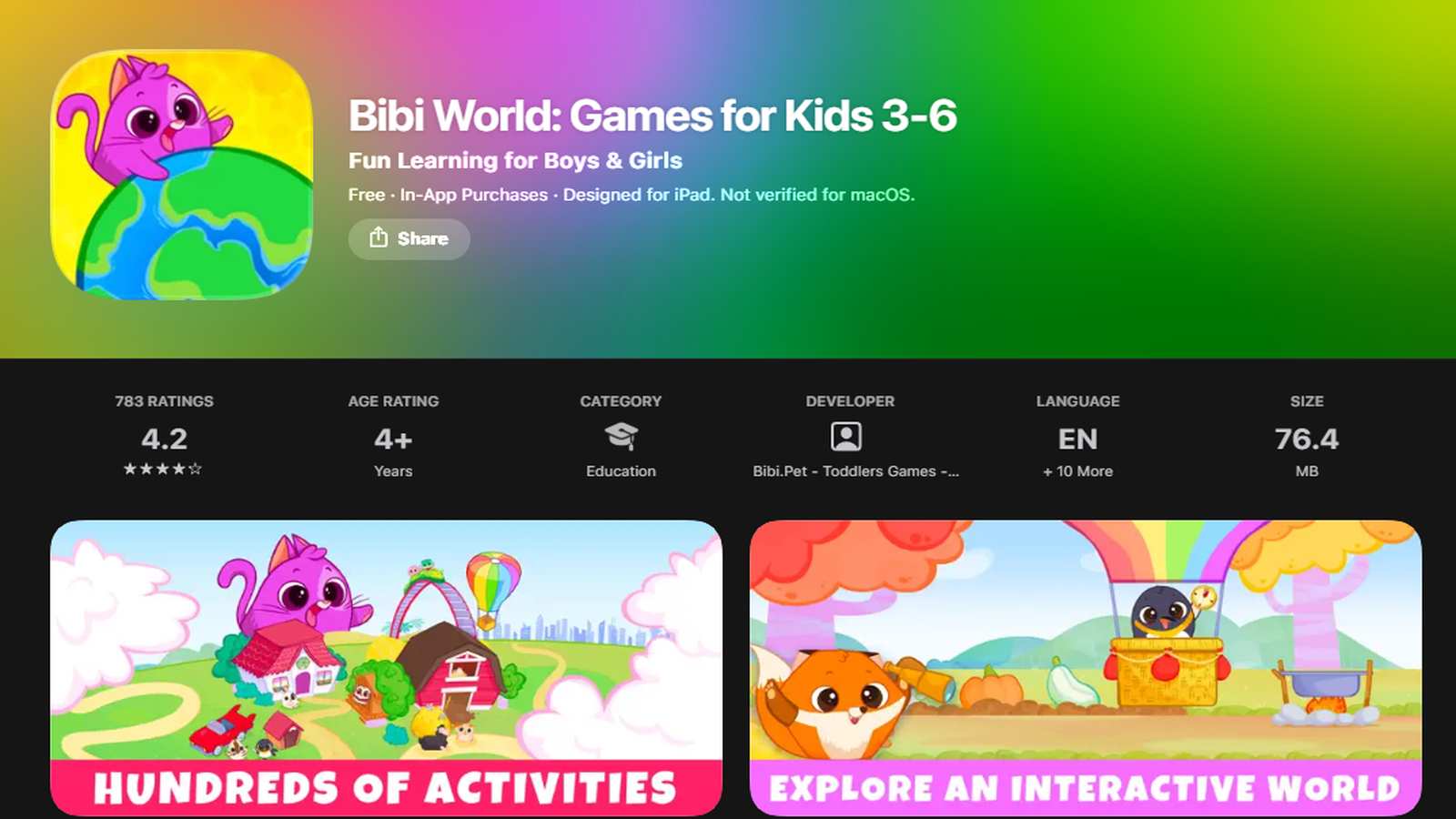
Bibi World offers vibrant, interactive environments such as farms, beaches, and parks where six-year-olds can explore freely, complete gentle mini-games, and solve light challenges. Activities develop early math, logic, shapes, colors, and storytelling skills through a balanced mix of guided tasks and open-ended play. The colorful worlds invite curiosity and encourage repeated visits with fresh variety and discoveries.
This combination of structure and freedom supports independent learning while keeping young children engaged and motivated. Bibi World creates an inviting digital space where skill-building feels natural and enjoyable, making it well-suited for early elementary ages. Its diverse activities and appealing design help nurture creativity, problem-solving abilities, and a love for exploration in a cheerful, supportive setting.
- Key features: Themed exploration areas, mini-game variety, shape and color activities, basic math challenges, and creative storytelling.
- Facts and information: Combines structured skill practice with open-ended discovery suitable for early elementary ages.
Benefits Beyond the Screen
Educational games extend learning to real life by encouraging talks about game events. Kids apply puzzle tactics to toys or chores, linking virtual and actual worlds. This builds resilience when facing setbacks in play. Mix in outdoor time to balance. Some games inspire crafts and creativity, like drawing characters learned from apps.
How to Pick Games That Fit Your Child
Watch your 6 year old's interests to choose games matching their energy. Test free trials before committing. Look for age ratings and parent controls for safety. Combine types for balance, like math with creative ones.
iPad Educational Games for 6 Year Olds in 2026
The convenience of portable touchscreens has elevated iPad educational games for 6 year olds in 2026 to a preferred choice for many families seeking balanced screen engagement. These experiences leverage the device's responsive interface to create immersive sessions where children navigate challenges at their own pace. Adaptive elements within the games respond to individual inputs, creating a sense of accomplishment that encourages repeated play. Cross-device syncing options further support continuity when switching between home and travel scenarios.
Mobile Educational Games for 6 Year Olds in 2026
Smartphone accessibility brings educational opportunities directly into everyday moments for six-year-olds. The best mobile games for kids in 2026 stand out for their compact design suited to brief yet meaningful interactions during commutes or quiet times. Gesture controls and simplified menus accommodate developing coordination, while varied themes maintain interest across multiple short sessions. Battery optimization in current releases ensures extended usability without frequent recharging interruptions.
Educational Games for 6 Year Olds: Screen Time and Safety Tips
Managing screen time with educational games for 6 year olds requires clear boundaries and mindful choices. Aim for balanced sessions of 20–40 minutes followed by breaks to encourage physical movement and real-life interaction. Pair digital play with offline conversations to reinforce learning and strengthen family connections.
Safety is equally important. Choose ad-free, COPPA-compliant platforms with solid privacy settings and parental controls. Use built-in tools to set time limits and regularly review content. A consistent family media plan ensures educational games support healthy development without replacing hands-on play.
Latest News In 2026
Developments in 2026 have brought fresh perspectives to how educational content is delivered to young audiences through interactive formats. The TutoClub games collection reflects ongoing commitments to creating safe digital environments for children. Overviews in the best educational and fun games for kids in 2026 point to greater emphasis on narrative elements that foster imagination. Tablet games for kids in 2026 now commonly include gesture-based controls that encourage physical activity alongside mental stimulation. The family weekly planner printables assist in blending various activity types into weekly schedules. The best games for kids educational in 2026 explores cross-platform compatibility improvements that allow seamless transitions between devices.
2026 has brought exciting advancements in educational games for 6 year olds, with a strong emphasis on adaptive storytelling that adjusts to each child’s pace and progress. Developers are increasingly blending subjects together, such as merging math concepts with creative world-building inside engaging learning apps for kids. Tablet gaming now delivers smoother gesture controls for more natural movement and interaction during play sessions.
Popular kids educational games collections also offer seamless cloud syncing across phones, tablets, and computers, so children can continue right where they left off. Another major trend is the integration of gentle mindfulness elements into adventure-style games, along with much stronger offline functionality that gives families greater flexibility for learning on the go.
FAQ
What makes educational games good for 6 year olds' brain growth?
Educational games encourage kids to think creatively by solving puzzles and making choices in playful settings. This builds neural pathways that support memory and quick reasoning. Parents notice their children handling everyday tasks with more focus after consistent engagement.
How can parents ensure safe game time for young kids?
Parents can monitor play by sitting with their child and talking about the game's story or characters. Choose platforms with strong privacy settings to protect personal details. Regular breaks help maintain a healthy balance between digital and physical activities.
Are there free educational games worth trying in 2026?
Free educational games often include basic levels that introduce concepts like shapes and sounds effectively. These options let families test what suits their child's interests before deciding on more features. Many include progress trackers to see skill improvements over time.
Do educational games replace schoolwork for 6 year olds?
Educational games act as a fun supplement to classroom lessons, helping reinforce ideas like basic counting or word recognition. They provide variety to keep learning exciting without taking over structured education. Combining both approaches supports overall development in a relaxed way.
How do educational games support emotional development in 6 year olds?
Games with character interactions teach kids to recognize feelings and respond kindly in virtual scenarios. This practice helps them understand empathy and manage frustration during challenges. Over time, it contributes to better relationships with peers in real life.
What defines high-quality educational games for 6 year olds in 2026?
High-quality educational games in 2026 prioritize intuitive controls that match the fine motor abilities typical at this age while embedding learning elements into engaging storylines. Progressive difficulty ensures children encounter manageable obstacles that build persistence and logical thinking. Visual and audio cues provide gentle guidance without disrupting flow, supporting independent navigation. Regular content updates keep the material fresh and aligned with evolving developmental interests.
How do tablet-based experiences compare to other formats for this age group?
Tablet-based experiences offer larger interactive surfaces that suit group viewing or detailed manipulation tasks common among six-year-olds. The format supports rich animations and touch precision that enhance engagement with shapes, patterns, and sequences. Many titles optimize for landscape or portrait orientations to fit different play setups. Compatibility features allow continuation from mobile sessions when larger screens become available.
What features should families prioritize in mobile educational games for 6 year olds?
Families often prioritize offline functionality and parental dashboard options that provide summary views of activity without requiring constant oversight. Short session designs fit fragmented schedules while delivering complete learning cycles. Theme variety across subjects maintains motivation, and safety filters ensure age-appropriate interactions.
Can educational games for 6 year olds support transitions to formal schooling?
Educational games designed for this age frequently incorporate sequencing tasks and basic categorization that mirror classroom routines. Repetitive exposure through play reinforces memory and attention skills in low-pressure settings. Collaborative modes in some titles introduce turn-taking that parallels group activities at school. Progress indicators help highlight growing competencies in a celebratory way.
How has the integration of devices changed educational gaming in 2026?
Seamless device integration allows children to pick up exactly where they left off regardless of the screen used. Cloud saves and account linking reduce setup time between sessions. Multi-user profiles enable siblings to maintain separate progress without overlap. These advancements create flexible routines that adapt to family lifestyles while preserving educational continuity.
Are there supplementary tools that pair well with digital educational games?
Hands-on resources like printable activity sheets extend digital concepts into physical manipulation exercises. Structured scheduling aids help organize digital and offline components for balanced days. Visual trackers for completed challenges provide tangible records of achievements. Such pairings create comprehensive approaches that combine screen and real-world elements.
What trends in 2026 are influencing educational game design for young children?
Designers in 2026 emphasize inclusive characters and scenarios that reflect diverse family structures and abilities. Adaptive audio options accommodate different listening needs during play. Environmental themes appear more frequently to spark early awareness. Cross-title connectivity lets achievements in one game unlock bonuses in related experiences for added motivation.
What makes educational games effective for 6 year olds?
Educational games for 6 year olds become effective when they match a child’s attention span with clear visual feedback and gradual increases in difficulty. This structure allows six-year-olds to experience success repeatedly while tackling slightly harder tasks. Many designs incorporate familiar themes like animals or everyday adventures that feel relatable. The combination of movement on screen and mental effort supports both physical coordination and cognitive growth in balanced ways.
How do educational games support reading development?
Reading-focused activities in educational games often connect letter sounds directly to meaningful stories and word recognition exercises. Six-year-olds gain confidence as they see immediate results from blending sounds into full words. Varied formats such as interactive books or matching challenges keep the process engaging without pressure. These experiences build a foundation for understanding context and enjoying independent reading time.
Which skills do math-focused games target?
Math games at this stage emphasize number relationships, basic operations, and pattern recognition through hands-on visual manipulation. Children explore concepts like grouping and simple measurement in playful settings that feel more like exploration than practice. The interactive nature helps turn abstract ideas into concrete experiences that stick. This approach prepares young learners for more formal math work by building strong intuitive understanding.
Can creative games improve problem-solving?
Creative titles in educational games for 6 year olds encourage children to experiment with different arrangements and test outcomes in open environments. Trial-and-error moments teach persistence and flexible thinking as kids adjust their approaches. Design elements often involve planning steps ahead, which strengthens logical sequencing abilities. These activities nurture imagination while developing practical strategies for overcoming everyday hurdles.
What role do emotional learning elements play?
Emotional learning segments use character scenarios to help children identify and respond to different feelings in safe situations. Choices within stories demonstrate how actions affect others, supporting empathy development. Many games include reflection moments that encourage awareness of personal reactions. This gentle guidance contributes to better social understanding during the important early school years.
Are there benefits to mixing different game types?
Mixing game types creates balanced exposure across literacy, math, creativity, and social skills within the same play routine. Variety prevents boredom and allows children to engage different parts of their developing minds. The combination supports more complete growth by addressing multiple areas rather than focusing narrowly. This well-rounded approach mirrors the diverse activities children encounter in daily life and school settings.
Read Also
- Best Learning Games for Kids Online in 2026
- Best Educational Kids Games
- Best Online Educational Games for Kids
- Best Kid Educational Games in 2026
- Best Educational Games for Toddlers
Discover the Best Educational Games For 6 Year Olds - TutoClub