

Best Kids Educational Games





.jpg)
Finding the right kids educational games can turn screen time into a valuable learning adventure. These tools help children develop key skills like problem-solving and creativity while keeping things enjoyable. Many parents choose options that are ad-free and backed by research, ensuring a positive experience. Discover the best kids educational games in 2026 that blend fun with learning.
Parents looking for more options can also discover the best learning apps for kids that complement these games beautifully. For a wider selection, explore our updated guides on the best free online games for kids, best educational kids games, and best online educational games for kids - all packed with safe, engaging, and skill-building content for 2026.
Discover the best kids educational games - TutoClub
Why Choose Educational Games for Kids

Educational games provide a hands-on way for children to build skills without feeling like work. They often mix play with lessons in math, reading, and social growth, making concepts stick better. Some games adapt to a child's pace, offering just the right challenge to keep them engaged. Parents appreciate options that promote healthy screen use, like those without ads or distractions. This approach helps kids gain confidence as they succeed in tasks, fostering a love for learning early on. Many families find that these games strengthen bonds during playtime together.
To make the right choice, families often turn to top-rated collections such as the best mobile games for kids and tablet games for kids. You can also explore the best apps for kids learning or the best iPad games for kids for high-quality options that support math, reading, creativity, and social skills. These carefully selected games ensure safe, engaging play that aligns perfectly with your child’s developmental needs.
Benefits of Play-Based Learning
Play-based learning lets kids explore ideas in a natural way, sparking curiosity and improving focus. Through games, children practice real-world skills like teamwork and decision-making. Some setups encourage movement or creativity, adding variety to daily routines. This method supports emotional growth too, as kids learn to handle wins and setbacks. Families often notice quicker progress in areas like reading or math when play is involved.
Choosing the Right Educational Games for Young Children
Choosing the right educational games for young children starts with understanding their age, interests, and developmental stage. Focus on learning games that match attention spans while supporting key skills like brain games, memory retention, and language development. Look for fun educational games with simple controls, colorful visuals, and clear learning goals that feel like play rather than work.
Prioritize titles that build confidence and responsibility through progressive challenges. The best kids educational games offer a good mix of educational value and entertainment, including english learning apps for early language exposure. Always test the game yourself and check age ratings to ensure it supports healthy learning habits.
New and Trending Kids Educational Games in 2026
New and trending kids educational games in 2026 emphasize personalization, short engaging sessions, and multi-skill development. Many incorporate adaptive technology that adjusts difficulty based on a child’s progress, making fun educational games more effective than ever.
Current trends include stronger integration of brain games, memory challenges, and interactive storytelling. Parents are turning to modern learning games that combine math, logic, and english in one seamless experience. These fresh releases in the best kids educational games category focus on creativity, emotional intelligence, and real skill-building while keeping children motivated and entertained.
Types of Educational Games for Different Ages
Educational games fit various age groups and help children build skills through play. Preschoolers often enjoy simple matching, sorting, and coloring activities that strengthen basic recognition and fine motor abilities. Older kids benefit from more complex storytelling and building challenges that spark imagination while developing logical thinking.
Many options support learning games for kids that adapt to different attention spans and interests. Families discover educational games for kindergarten with gentle routines and creative tasks that feel natural rather than forced. The right mix keeps children engaged while quietly supporting growth in key areas.
How Educational Games Support Skill Development
These games nurture creativity when children design stories or build worlds freely. Focus sharpens through puzzles and daily routines turned into fun adventures. Social emotional skills for kids grow as they practice empathy and handle simple responsibilities in safe digital spaces. Play-based activities also boost problem-solving and confidence. Kids gain satisfaction from completing tasks at their own pace. Many families notice improvements in social awareness and curiosity when fun educational games encourage exploration and gentle challenges.
Building Responsibility Through Everyday Play Themes
Educational games often center on caring routines that mirror real life. Children hatch eggs, feed virtual pets, or tidy digital rooms, practicing sequential steps that build a sense of duty. Completing these tasks gives a quiet feeling of accomplishment that carries into daily habits at home. Pet care sequences teach consistency as kids return to the same characters and check on their needs. Cleaning challenges turn ordinary actions into rewarding moments without pressure. These themes appear across many TutoClub games and help young players connect digital play with practical responsibility through learning games for kids.
Language and Communication Growth in Educational Games
Simple storytelling and character interactions support early language skills. Kids hear clear narration, match words to actions, and invent short dialogues while guiding characters through scenes. Naming objects, describing feelings, or following spoken directions strengthens vocabulary in a natural flow. Interactive moments encourage children to talk about what happens next or explain their choices. Games that include letter recognition or basic spelling within pet houses or fashion activities add gentle practice. English learning apps for kids and educational games for toddlers often weave these elements into playful worlds that keep conversation flowing.
Fine Motor and Coordination Skills from Interactive Play
Dragging, tapping, and precise placement of objects strengthen hand control. Young children practice pinching and releasing virtual items while sorting shapes or arranging furniture. These repeated motions improve coordination without feeling like formal exercises. Building or decorating scenes requires steady movements that refine small muscle control. Simple drag-and-drop challenges suit early ages, while more detailed arrangement tasks suit slightly older players. The calm pace of many apps for toddlers and apps for preschoolers supports steady progress in these physical skills alongside cognitive ones.
Creative Play and Skill Building Through Educational Games
Educational games encourage creative expression when children design stories, build scenes, or explore colorful worlds at their own pace. These activities strengthen problem-solving abilities in children and logical thinking through gentle challenges and open-ended tasks. Calm designs help maintain focus while nurturing curiosity in a distraction-free setting. Families often see how such play supports emotional growth alongside practical skills like responsibility. Regular engagement with games for kids fits naturally into varied routines and keeps experiences fresh as interests evolve.
Parent Involvement in Shared Game Sessions
Side-by-side play turns individual screen time into family connection. Parents and children discuss character choices, celebrate completed puzzles, or invent new story endings together. These shared sessions create easy openings for talking about kindness, problem-solving, or daily feelings. Short cooperative activities work well after school or on weekends. Adults can model calm focus while kids lead the next move. Many families notice stronger bonds form when educational games for kids at home include these moments of joint discovery rather than solo play alone.
Safety Features Families Check Before Play
A useful kids game should feel steady and easy to pause. Safety is not only a lock screen. It is how the game treats the child’s attention.
Look for:
- No ads and no surprise store buttons
- Large buttons a child can use alone
- Clear age guidance
- Play that still works after the first download
- One parent account across devices
- Soft sound that can be lowered or muted
- A pause that does not punish the child
Safe apps for kids and safe games for kids cut noise so a child can finish a small job. Safe kids games keep store prompts out of a feeding or cleanup scene. Pop-ups break that job. A store button in the middle of caring for a pet turns care into shopping.
Age guidance helps, but it is only a start. A preschooler may handle a simple dress-up room and still get lost in a busy map. Try the first minutes together. Watch whether the child can find the next step without guessing. Games for preschoolers and learning games for kids online stay in that simpler range.
Families who want a wider view of device habits also read how to protect kids online. Soft voices and steady colors support language and focus. If a game can be paused the second dinner is ready, it fits real family time. Kids games educational titles with plain menus make that pause easier.
When a Child Switches From Running Outside to a Tablet
Active kids still use calm digital play. After outdoor time, dragging, tapping, and lining up objects give the hands a slower job. Matching shapes or placing furniture uses the same focus that outdoor games use in a louder way. The body needs a bridge. A child who just ran or climbed may not sit for a long story. A short care task works better. Feed the pets. Wash the dishes in a play kitchen. Put clothes on a doll. Those jobs have a visible end, so the child can stop without a fight.
A shared table works better than a bedroom screen. An adult in the room can hear the audio and see the scene. Educational games for kids at home fit that shared space because the scenes stay friendly and easy to talk about. Games for kids educational worlds with cleanup and care loops work in that same after-play window.
Learning through play and learning through play activities describe the mix of movement and quiet jobs. Learning through play examples often start outdoors and end with a short indoor scene. The benefits of learning through play show up when a walk comes first. A parent guide to healthy screen time with educational apps helps keep that order steady. If a child is too wound up, start with a scene they already know. Educational games for 2 year olds and games for toddlers keep the first minutes easy after a loud backyard stretch.
Screen Time That Matches Attention Spans
Toddlers last a few minutes. Kindergarten kids last longer when a room, a pet, or an outfit can be finished in one sitting. Older kids can stay with a longer story if the path stays clear and the art stays calm.
Helpful patterns:
- One theme per sitting
- A stop after a completed task
- A quick retell of what the character did
- The same device place each day, when possible
Tablet games for kids and iPad games for kids suit this pace because the screen is large and the taps are easy to see. Educational games for kids on iPad follow the same short-session shape. Mobile games for kids cover travel minutes on a phone.
A timer on the adult’s watch works better than a loud in-game clock. The child finishes the bed or the last dish, then hands the device over. Healthy screen habits grow from that finished-job rule. Easy educational games for kids help when the sitting must stay tiny.
Attention also changes with hunger, noise, and siblings. A quiet morning sitting may last. A busy evening may need two tiny sittings instead of one long one. Educational games for kids 4 years old online and educational games for kids age 5 match those shorter blocks. Learning apps for kids 8 years old fit children who can hold a longer room without losing the thread.
STEM Habits Without Heavy Lessons
Science and early logic can hide inside a house or a shop. Lining up tools, repeating a dance, or placing items on a grid uses the same order as a simple program. The child is not staring at a worksheet. The child is making a room work.
Cause and effect shows up when a tap opens a door or a feed makes a pet happier. Sequencing shows up when clothes go on in order. Sorting shows up when toys go by color or food goes on the right shelf.
Problem solving games reward another try. Brain games and memory games add pattern work inside familiar rooms. Learning games mix those habits with stories. Educational games for kindergarten keep the steps small. Educational games for toddlers stay with tap, peek, and sound match. Talk can turn the scene into science without making it stiff. “The ice cream melts if we leave it out.” “The plant needs water.” The game supplies the picture. The adult supplies the words.
Best Kids Educational Games in 2026
1. TutoClub - Best Kids Educational Games
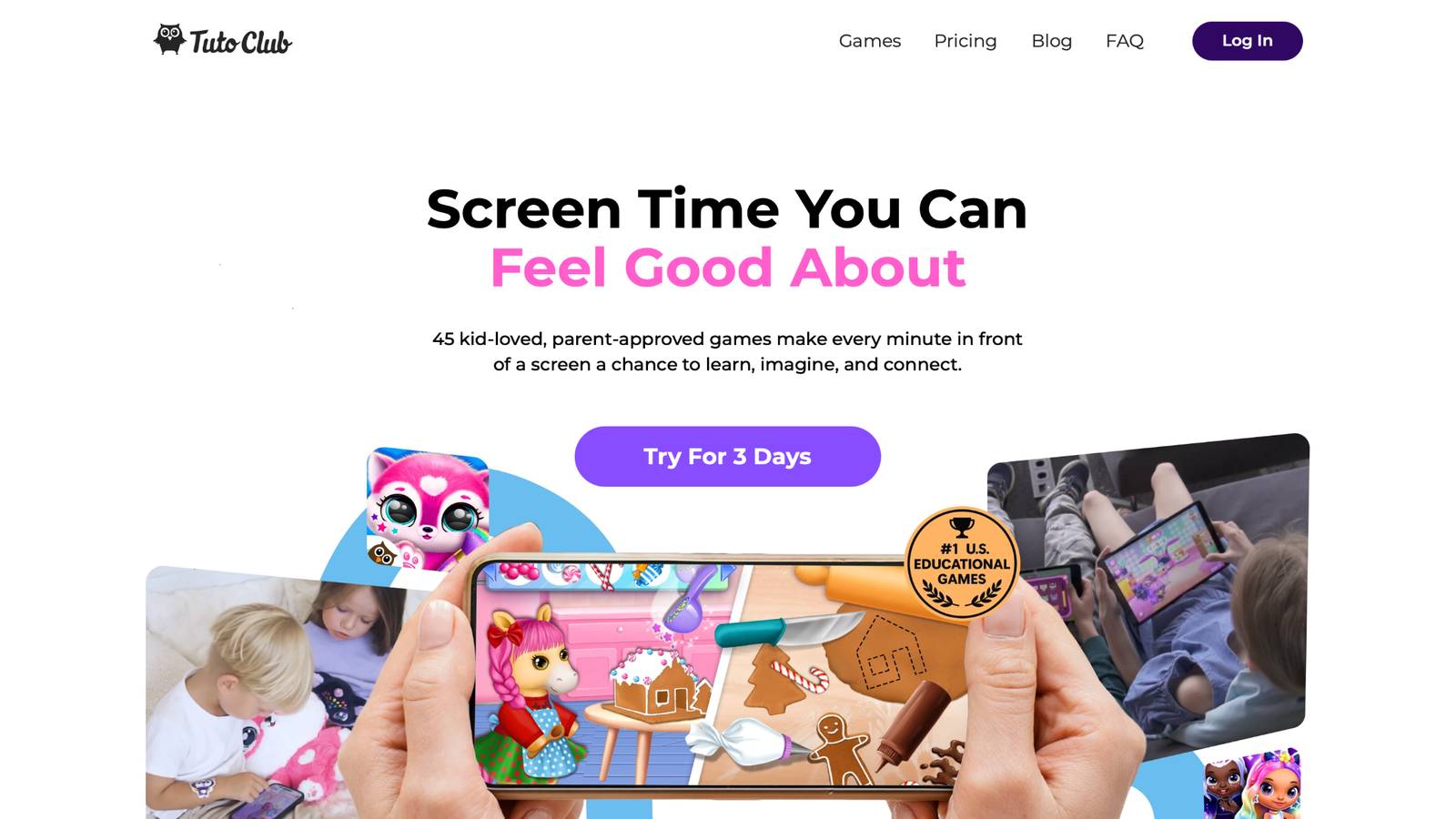
Discover TutoClub games, a subscription service with over 45 ad-free titles designed to make screen time meaningful. Kids dive into worlds that build creativity, focus, and social skills through playful challenges. Each game is crafted with input from experts, turning everyday play into opportunities for growth. Children can explore storytelling, design buildings, or solve puzzles that teach empathy and responsibility.
The safe environment lets them play freely on multiple devices, with no distractions. Parents love how it replaces mindless scrolling with purposeful activities that spark imagination and family moments. TutoClub stands out by addressing common screen concerns, offering research-backed content that promotes healthy habits and emotional awareness.
- Key pros: Boosts creativity and problem-solving in a fun, interactive way.
- Standout features: Ad-free access on any device, with easy cancellation anytime.
- Facts and information: Develops emotional growth like empathy, while encouraging curiosity and exploration.
TutoClub Overview
TutoClub is your gateway to a magical world of educational games designed especially for children.
As part of TutoTOONS, a leading kids' games studio, we offer premium access to over 45 ad-free games.
Our mission is to blend learning and play, helping kids explore, create, and grow in a safe online space.
Thousands of parents trust us for family-friendly content that sparks imagination and builds essential skills.
Key Features
- Unlimited Access: Unlock full content in all games with no interruptions.
- Ad-Free Experience: Enjoy seamless play without any ads or distractions.
- Skill Development: Games foster creativity, social skills, communication, and more through fun activities like pet care and cleanup challenges.
- Regular Updates: Get new releases, exclusive content, and future updates automatically.
- Easy Subscription: Cancel anytime with no obligations, simple and flexible for families.
Explore Our World
TutoClub provides a rich ecosystem of educational games for kids, featuring ad-free experiences that promote creativity, focus, and emotional growth through play.
This platform turns screen time into valuable learning opportunities, with parent-approved content that builds essential skills and sparks curiosity in young minds.
- TutoClub Games: Over 45 educational games, including popular titles like Fluvsies, Smolsies, and the Sweet Baby Girl series
- Blog: Insights, tips, and stories for families on kids' learning and play
- FAQ: Comprehensive answers to frequently asked questions about subscriptions, features, and more
Get TutoClub on Your Device
TutoClub delivers premium kids educational games directly to your mobile devices, making learning accessible anytime, anywhere.
With apps available on major platforms, families can easily download and subscribe for ad-free play that turns screen time into skill-building adventures.
Perfect for parents seeking safe, engaging content on iOS, Android, or Amazon devices.
Why Choose TutoClub?
We're committed to 100% safe, enriching entertainment that kids love and parents approve.
Join the thousands who've seen their children thrive through playful learning.
Ready to start the adventure?
Subscribe to TutoClub today and unlock endless fun!
2. Fluvsies Academy
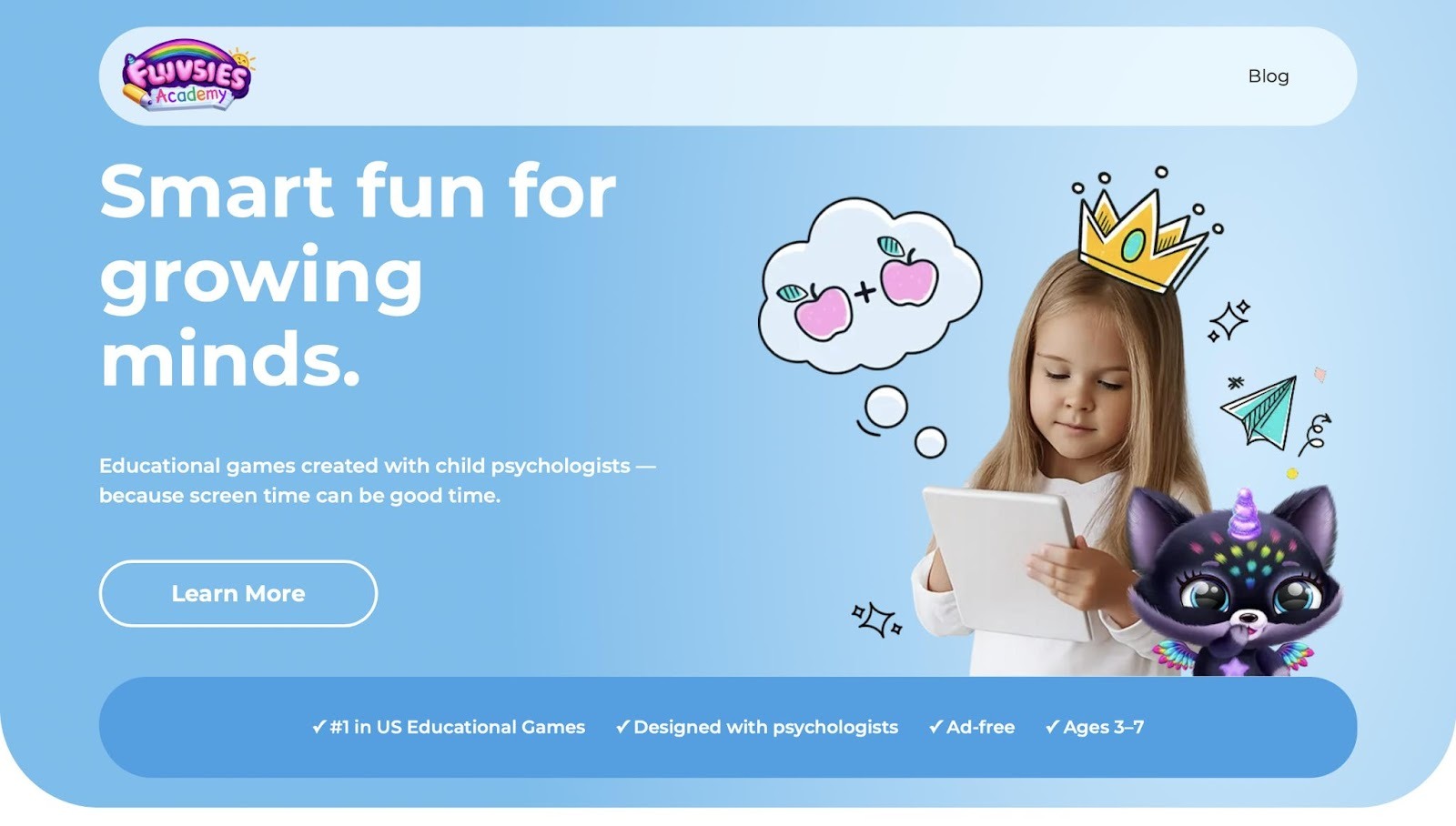
Fluvsies Academy offers a relaxing educational app built around the beloved Fluvsies characters that many young children already know and love from other gentle games. Children engage in thoughtful minigames that feel playful rather than forced as they care for cute pets, complete simple tasks, and explore colorful worlds filled with surprises. The design creates a gentle atmosphere where learning happens naturally through caring routines and light challenges that build confidence without pressure.
Kids hatch eggs, nurture creatures, and solve easy puzzles that spark curiosity while encouraging kindness and responsibility in everyday play. Parents notice how the app keeps little ones happily occupied for meaningful stretches of time while quietly supporting early skills in a way that feels like pure fun. The calm visuals and soothing sounds help maintain focus even on busy days, making it a favorite choice for families seeking screen time that nurtures rather than distracts. While some activities repeat familiar patterns, this consistency actually helps children master concepts at their own pace and return with excitement each time.
Key features include:
- Ad-free environment that keeps focus sharp and uninterrupted
- Minigames covering language, logic, math basics, and life skills
- Cute characters and relaxing vibe that appeal strongly to young learners
- Simple controls designed for independent play from an early age
Facts and information:
- Psychologist-informed design supports gentle skill-building in a safe, colorful world
- Combines pet care with educational moments that feel natural and rewarding
3. ABCmouse
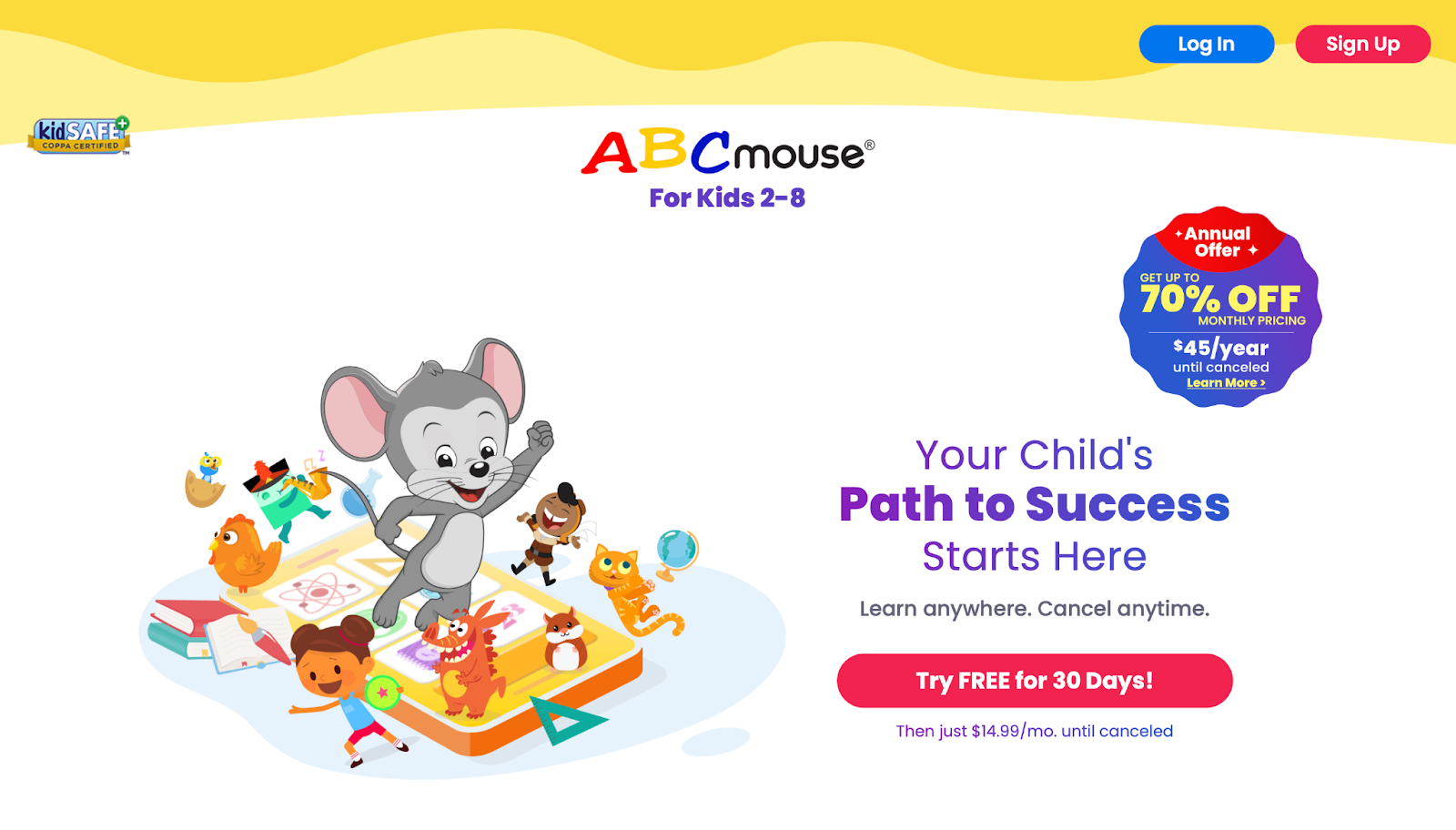
ABCmouse, headquartered in Glendale, California, delivers a subscription-based curriculum for early learners. It spans math, reading, science, and art through lessons and games. Strengths lie in its step-by-step paths that track progress, making it easy for kids to advance. Weaknesses include occasional glitches in app navigation, and some content feels drill-like. Still, it engages with animations and rewards, aiding comprehension across subjects. The platform offers a structured environment where children earn tickets for virtual rewards, motivating continued play.
It includes books, puzzles, and even Spanish activities for broader appeal. Parents can monitor advancements through detailed reports. Designed for preschool to second grade, it builds foundational skills in a colorful world. Many families use it as a supplement to schoolwork, noting improvements in reading and math confidence. The app promotes exploration with themed adventures, like farms or zoos, tying lessons to fun scenarios. Safe and ad-free, it focuses on quality content developed by educators. This blend of education and entertainment helps young minds grasp concepts effectively.
- Key features: Multiple levels with books, puzzles, and language options.
- Facts and information: Includes printables for offline reinforcement, parent tracking tools.
4. Prodigy Math
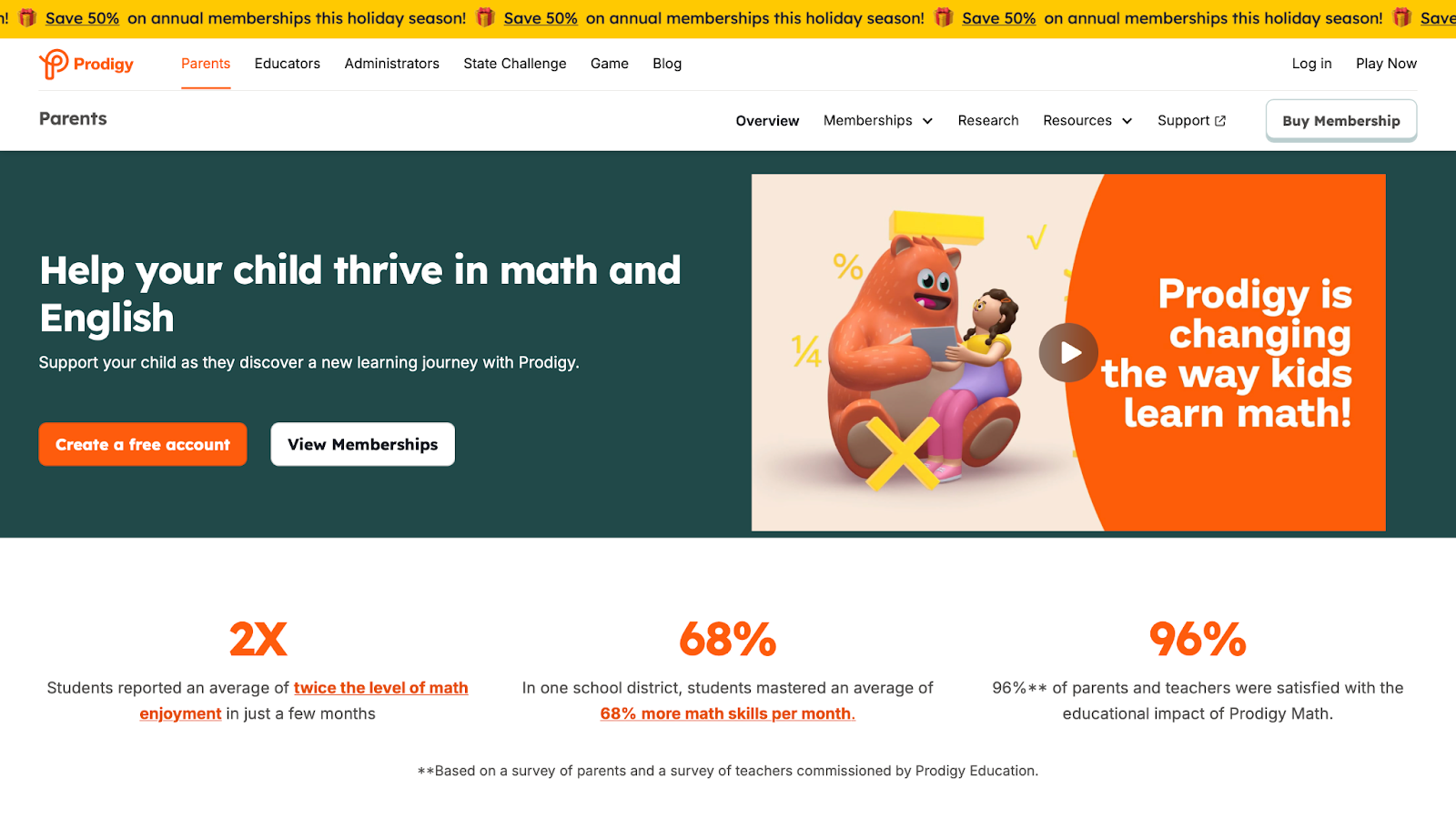
Prodigy Math, from Burlington, Ontario, turns math practice into a fantasy adventure for school-aged kids. It adapts questions to skill levels, earning spells and pets as rewards. Strengths are its engaging battles that motivate practice, covering grades one through eight. Drawbacks include upsell prompts for premium perks, which can distract, and limited non-math focus. It helps build confidence in numbers through interactive quests. The game aligns with school curricula, letting teachers assign content and view reports.
Parents get insights into progress, fostering home-school connections. Kids collect creatures and customize avatars, adding personalization. Many report increased enjoyment in math, with quicker skill mastery. Safe environment ensures focused learning without external ads. The platform supports various devices for easy access. Educators praise its ability to differentiate lessons for diverse needs. Overall, it transforms routine drills into exciting challenges, encouraging repeated play.
- Key features: Curriculum-aligned questions with multiplayer modes, adaptive difficulty.
- Facts and information: Tracks progress for personalized learning, teacher tools for assignments.
5. Minecraft Education Edition
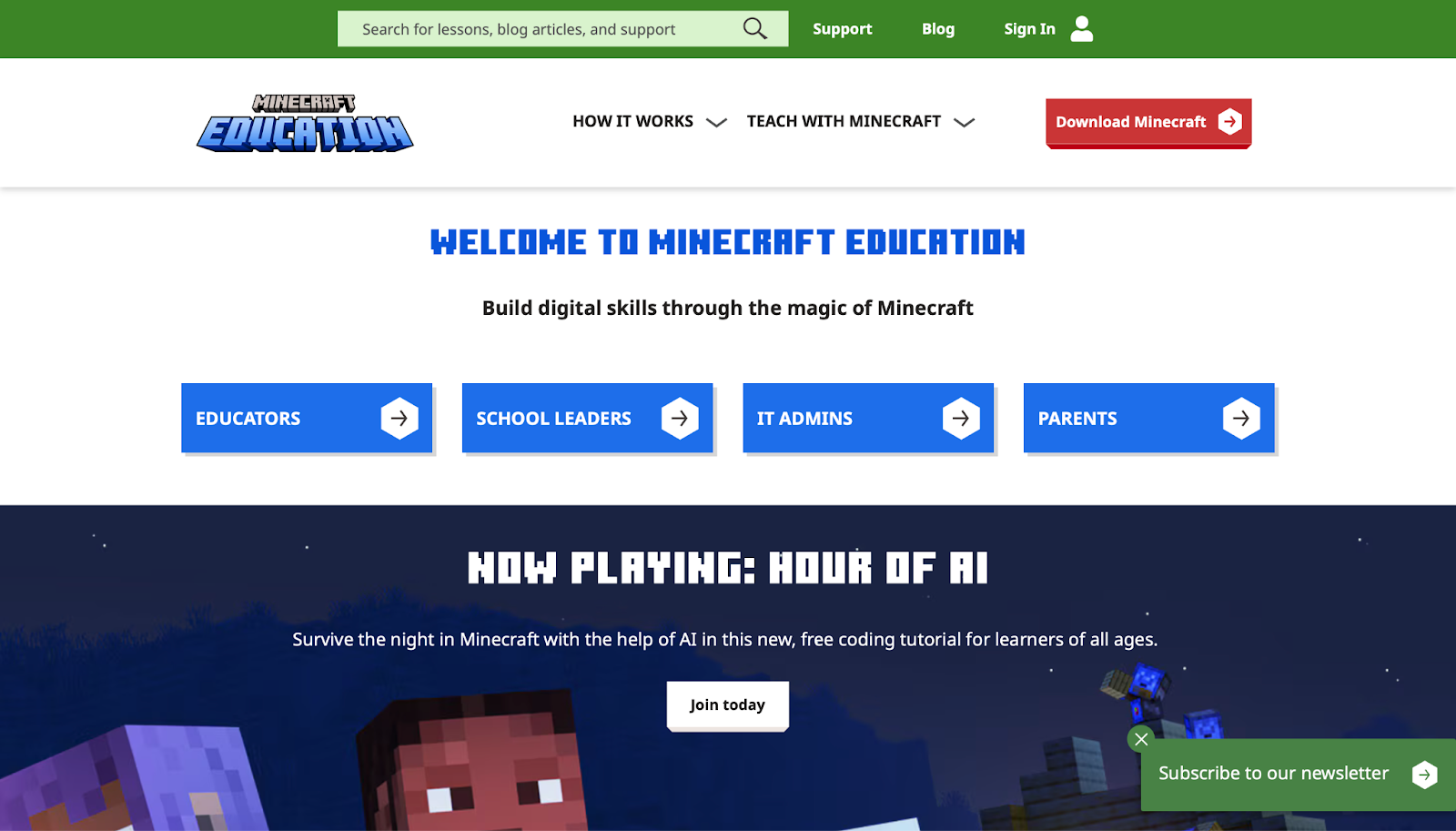
Minecraft Education Edition, by Microsoft in Redmond, Washington, fosters collaboration and creativity in a block-building world. Kids tackle STEM projects like coding or history builds. Strengths include tools for group work and real-world simulations. Weaknesses are the need for setup and potential for off-task play without guidance. It excels at teaching systems thinking and problem-solving in immersive settings. The platform offers ready lessons across subjects, from science to language arts.
Teachers can create custom worlds or use community-shared content. It supports multiplayer for classroom projects, enhancing teamwork. Many schools integrate it for hands-on learning, noting improved engagement. Secure access via school accounts keeps it safe. Features like code builders introduce programming basics. Kids explore concepts like chemistry through in-game experiments. This approach makes abstract ideas tangible, sparking curiosity.
- Key features: Classroom modes with NPCs and code builders, lesson library.
- Facts and information: Supports multiplayer for shared projects, device compatibility.
6. Duolingo ABC
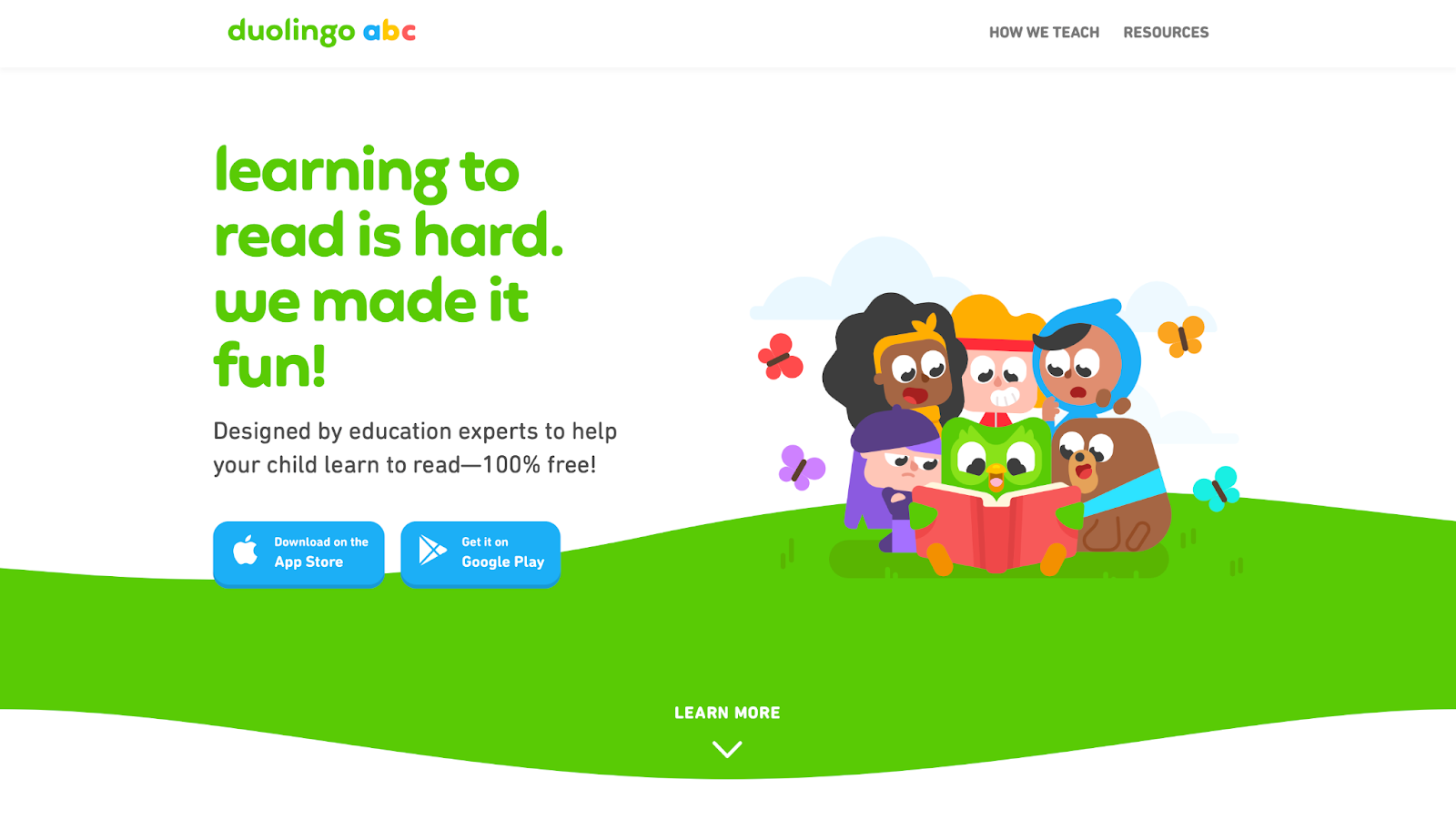
Duolingo ABC, based in Pittsburgh, Pennsylvania, teaches reading basics through short, interactive lessons for preschoolers. It focuses on phonics and sight words with animal friends. Strengths are its free access and adaptive challenges that grow with kids. Limitations include no offline mode for all activities and simpler content for advanced readers. It makes literacy fun with stories and tracing.
The app uses bite-sized sessions to build letter recognition and blending skills. Colorful animations keep young users hooked. Parents appreciate the progress tracking and gentle pacing. Designed for early learners, it introduces vocabulary in context. Many families use it alongside other tools for comprehensive growth. Safe and intuitive interface allows independent play. This method reinforces foundational reading without pressure.
- Key features: Speech recognition for reading practice, adaptive lessons.
- Facts and information: Inclusive aids like audio support, free core content.
7. Endless Alphabet
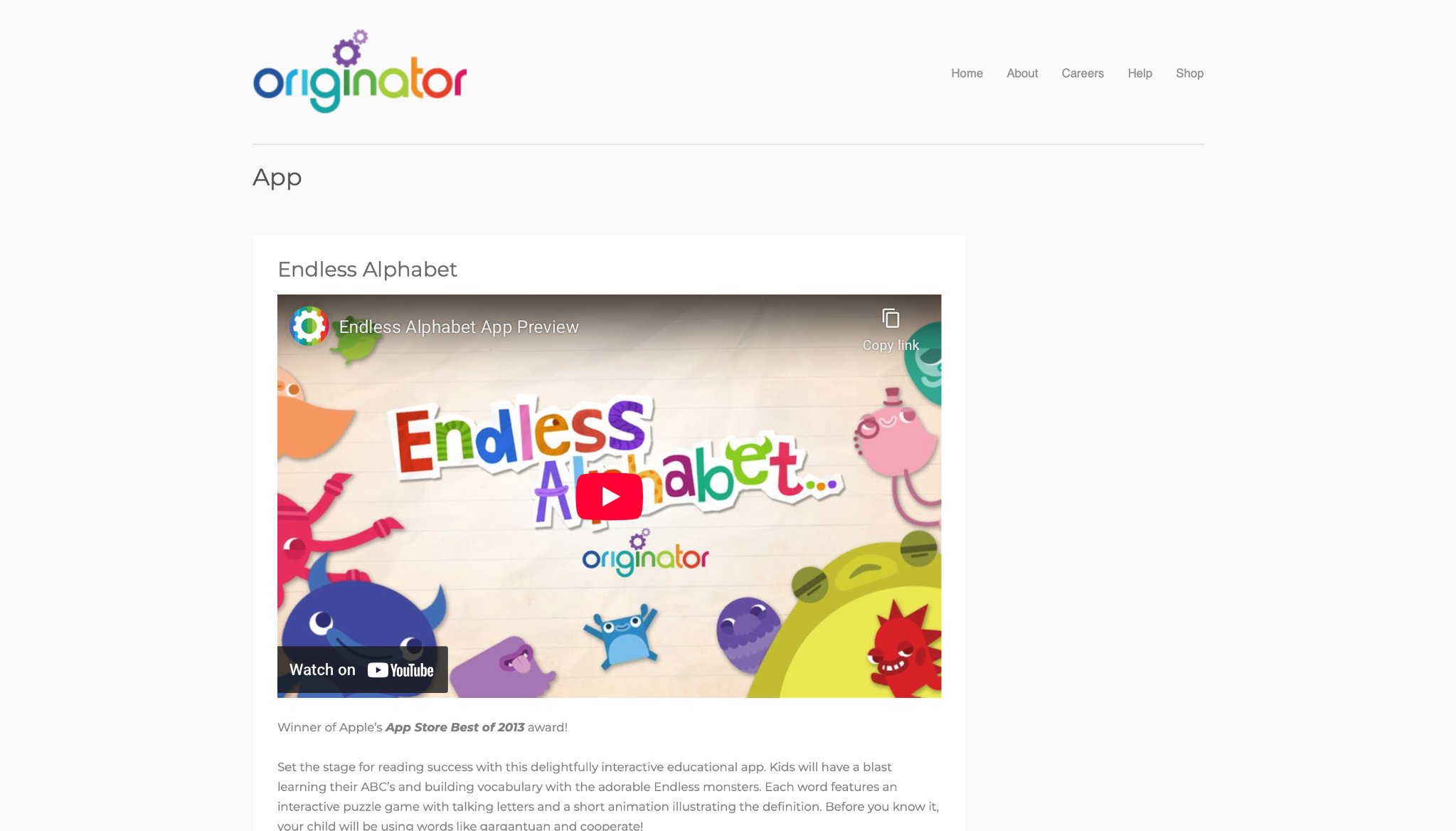
Endless Alphabet, from Originator in San Francisco, California, builds vocabulary with animated word puzzles. Kids drag letters to form words, seeing definitions come alive. Strengths are its delightful visuals that make learning memorable. Downsides include limited words without updates and no progress tracking.
It helps expand language skills through playful exploration. The app features monster characters that bring humor to education. Each puzzle teaches letter sounds and meanings engagingly. No timers or scores reduce stress, allowing free play. Many parents note quick vocabulary gains in toddlers. Simple design suits young hands. This tool sets a strong base for reading success.
- Key features: Interactive animations for each word, puzzle-based learning.
- Facts and information: Focuses on letter sounds and meanings, award-winning app.
8. PBS Kids Games
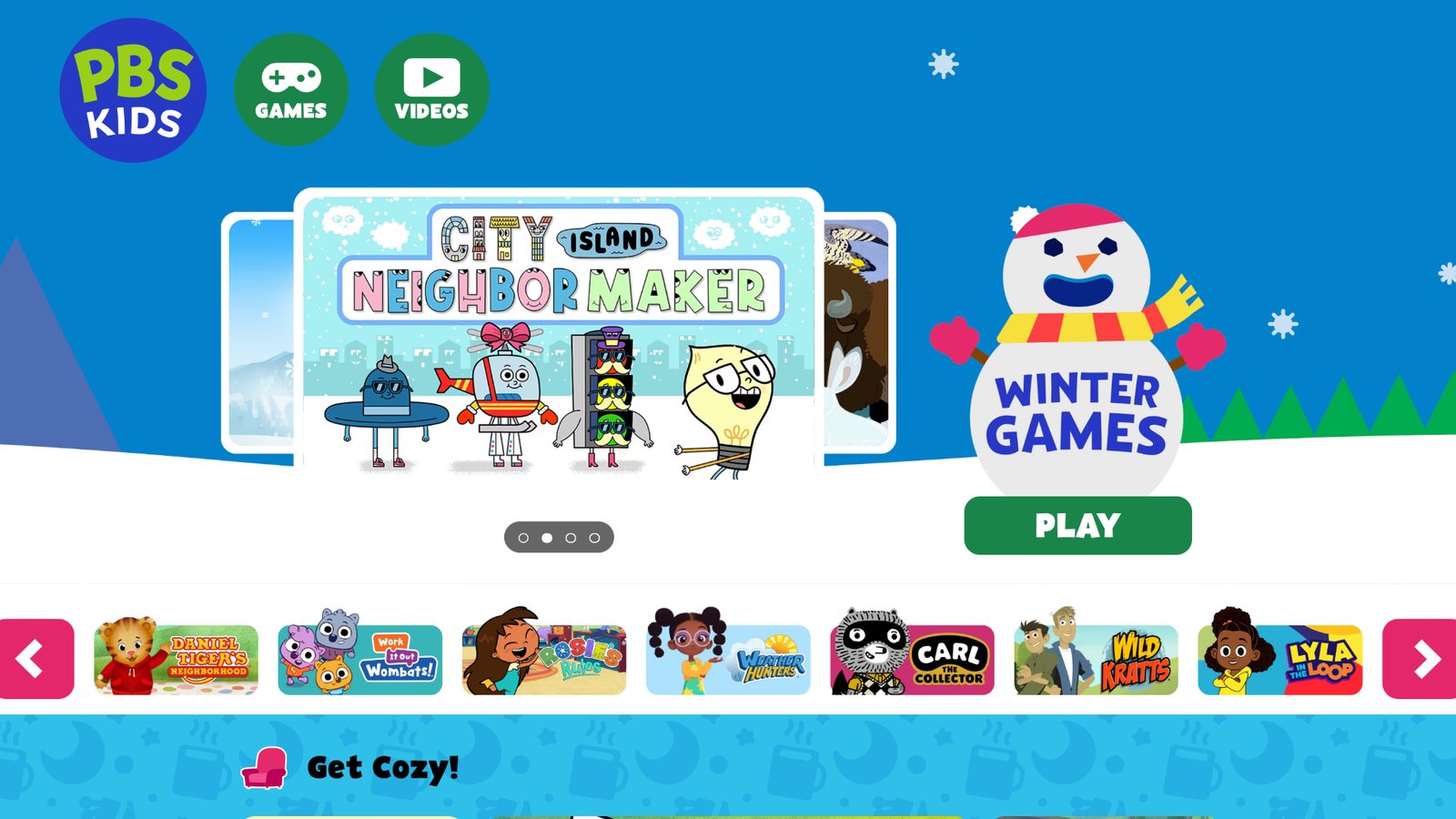
PBS Kids Games brings the magic of beloved television characters like Daniel Tiger and Wild Kratts directly into interactive play, helping children explore science, math, social skills, and emotional learning through familiar and comforting stories. The completely free, ad-free platform delivers regular weekly updates with new activities that feel like natural extensions of the shows kids already love. Simple navigation and intuitive controls make it especially welcoming for preschoolers and early elementary children, allowing them to collect badges while building kindness, curiosity, and problem-solving abilities.
Many families appreciate how it seamlessly connects television viewing with active learning, reinforcing key lessons in a safe and positive environment. While some games require an internet connection and difficulty levels can vary, the trusted PBS brand ensures consistently wholesome content that turns everyday screen time into meaningful educational moments filled with joy and discovery.
- Key features: Science, math, and social games, show-based content.
- Facts and information: Tied to TV for extended learning, free access.
9. Starfall
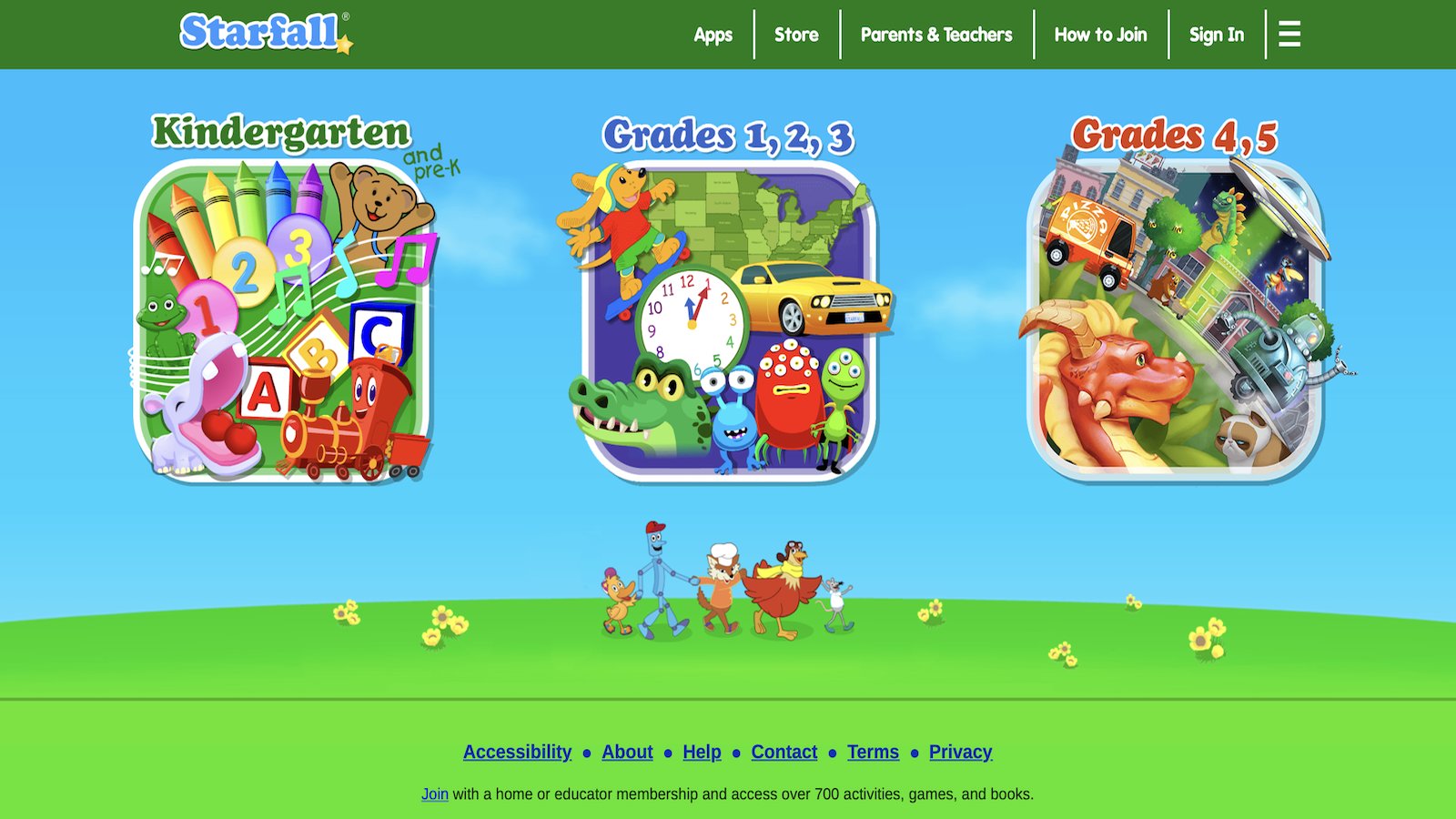
Starfall stands out as a trusted, research-based resource that masterfully combines phonics, reading fundamentals, and early math through engaging songs, interactive stories, and multisensory activities. Designed for pre-K through fifth grade, the platform offers structured progression that builds confidence step by step, making it particularly effective for diverse learners, including children with special needs.
Its ad-free environment and strong privacy focus have earned the trust of countless schools and families who use it as a reliable supplement to classroom instruction. Positive reinforcement and audiovisual support help young learners develop solid foundational skills while enjoying the process. Although the pace may feel gentle for advanced students and the graphics remain refreshingly simple, Starfall continues to deliver timeless educational value that fosters genuine reading fluency and mathematical understanding in a calm, supportive setting.
- Key features: ABCs, reading, and math sections, interactive songs.
- Facts and information: Offline options available, research-based approach.
10. Osmo
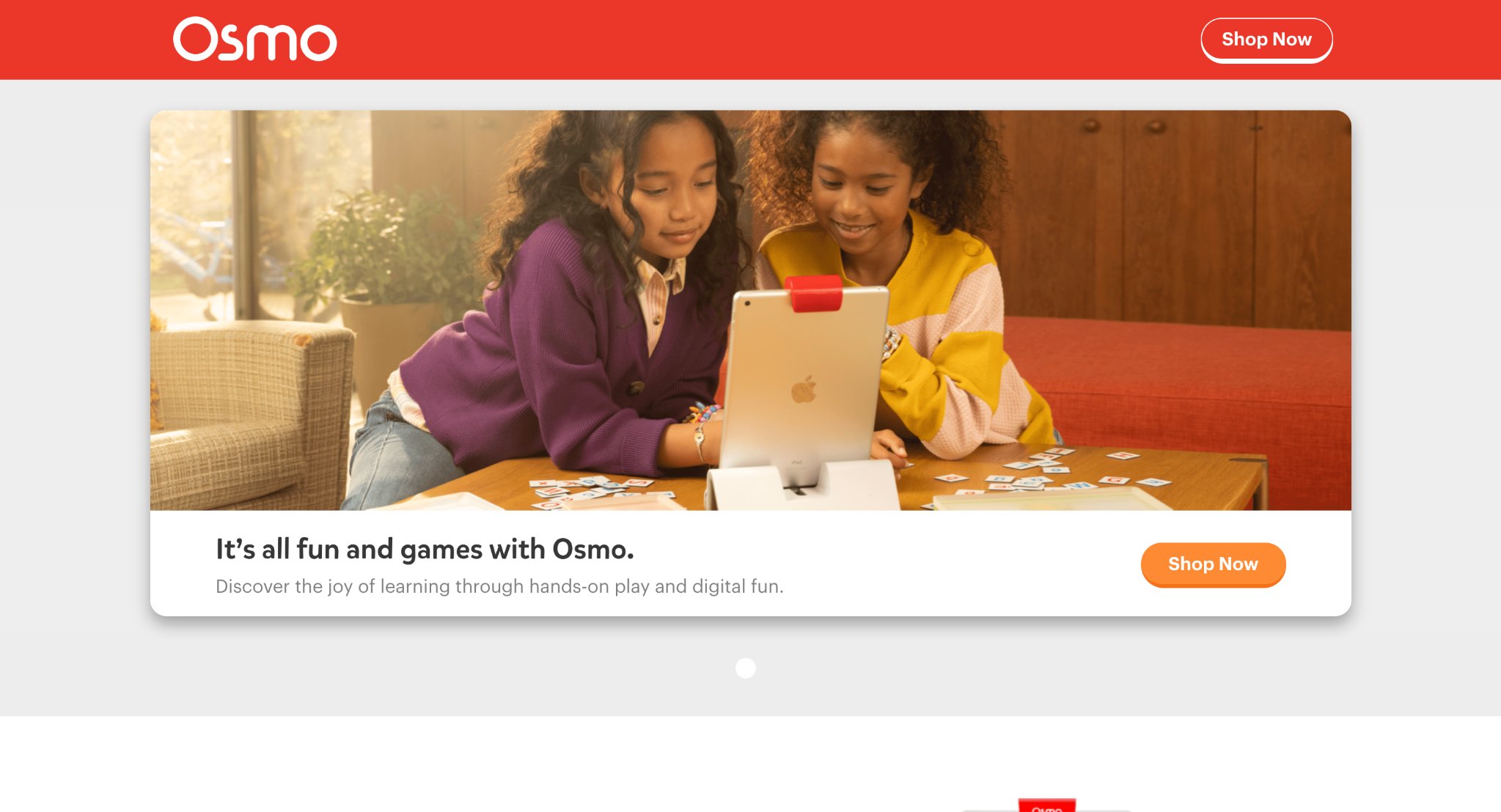
Osmo revolutionizes tablet learning by brilliantly merging physical game pieces with digital interactivity, creating a truly hands-on experience that feels magical for children. Using an iPad base and mirror reflector, kids manipulate tangible blocks, tiles, and shapes to solve puzzles in math, coding, spelling, and creative design. This unique tactile approach significantly boosts engagement, fine motor skills, and spatial reasoning while encouraging family multiplayer sessions that turn learning into shared fun.
Parents often describe it as one of the most innovative educational tools available, with award-winning kits that grow with a child’s abilities. Although it requires specific hardware and storage space for pieces, the joyful blend of real-world play and technology makes Osmo a standout choice for developing practical skills and creative confidence.
- Key features: Tangram puzzles and coding blocks, hands-on kits.
- Facts and information: Multiplayer for family fun, award-winning system.
11. LeapFrog
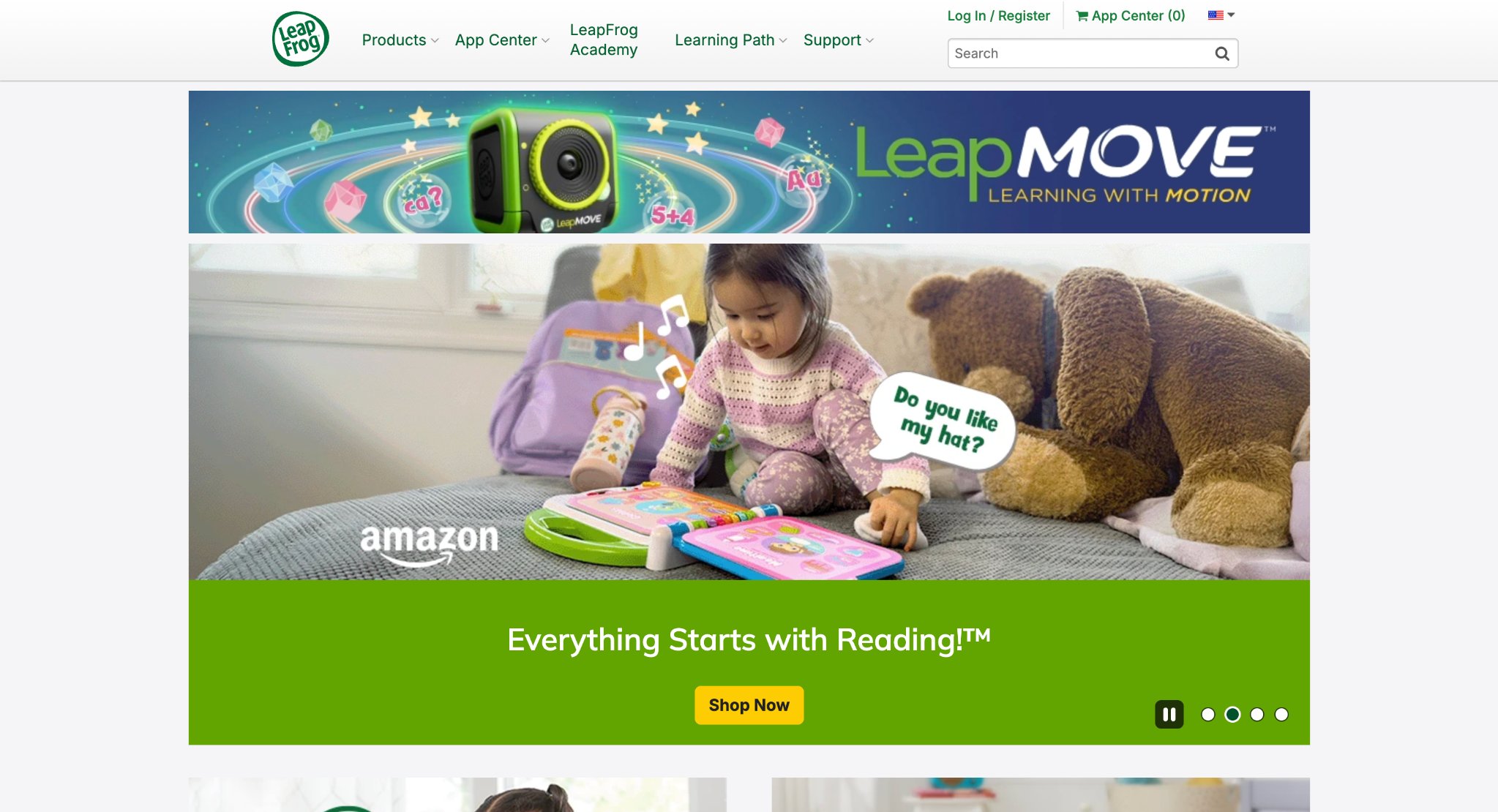
LeapFrog delivers durable, purpose-built educational tablets and devices packed with engaging games focused on phonics, reading, math, and essential early skills. Designed specifically for young children, these colorful systems feature robust parent controls, progress tracking, and guided activities that promote independent learning while keeping kids motivated and on track. The hardware’s toughness stands up well to active little hands, making it ideal for everyday use at home or on the go.
Families value the seamless integration of physical toys with digital content that reinforces core subjects through fun, age-appropriate challenges. While full access often involves additional purchases, the combination of reliable hardware and thoughtfully designed software creates a portable, focused learning environment that many parents trust for building strong academic foundations.
- Key features: Phonics and number games, durable devices.
- Facts and information: Progress tracking for parents, guided lessons.
12. Code.org
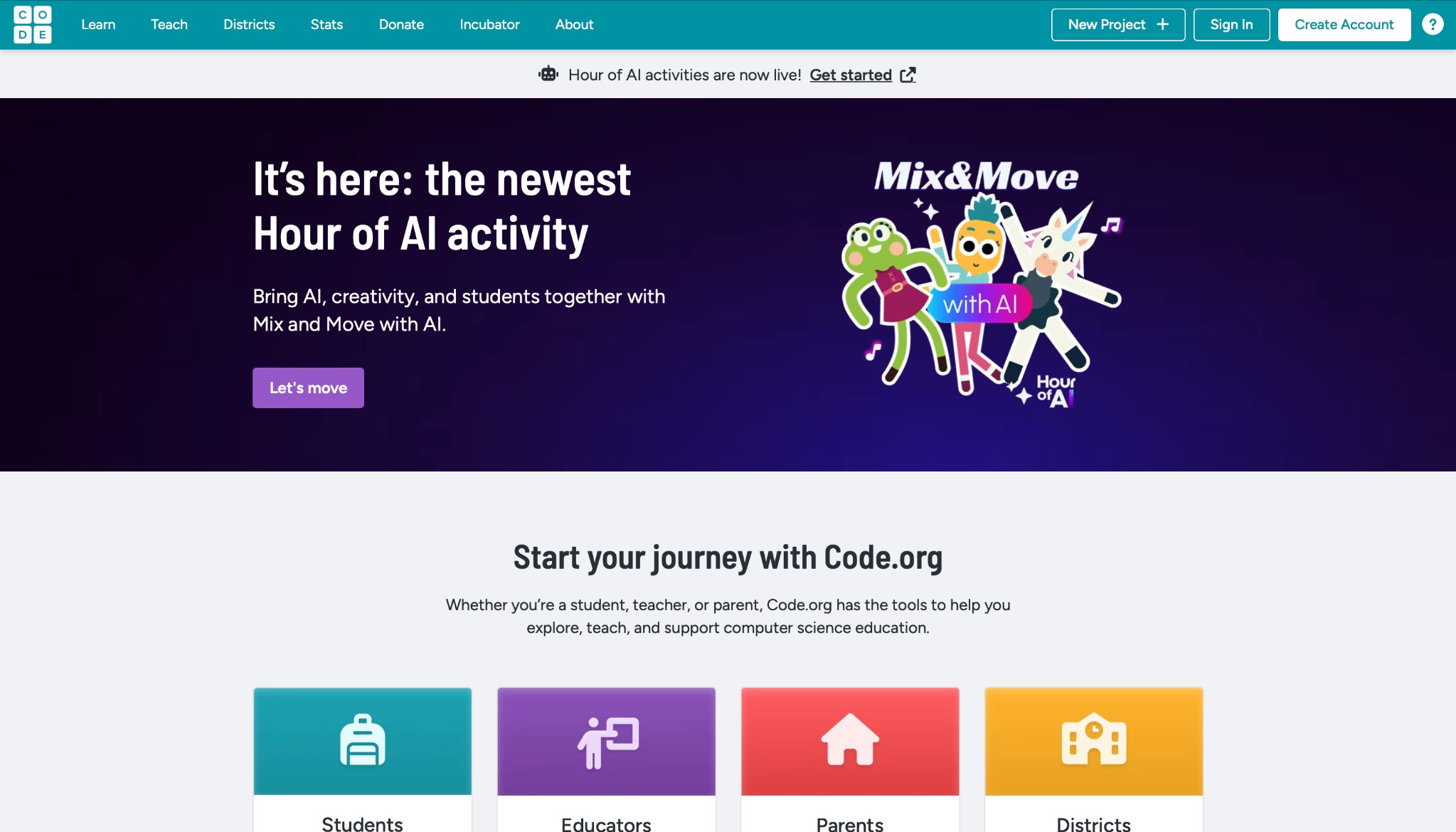
Code.org has become a global leader in making computer science accessible and exciting for children of all ages through free, high-quality interactive courses and projects. From simple block-based puzzles to more advanced programming concepts and AI explorations, the platform aligns beautifully with school standards while offering comprehensive teacher resources.
Its famous Hour of Code initiatives have introduced millions of students worldwide to computational thinking in a fun, approachable way. The nonprofit’s strong commitment to equity ensures that children from all backgrounds can discover the joy of creating with technology. While younger users may benefit from initial adult guidance, Code.org effectively sparks lasting interest in STEM fields and equips kids with valuable problem-solving skills for the future.
- Key features: Hour of Code activities, curriculum-aligned.
- Facts and information: Real-world coding concepts, free resources.
13. Scratch
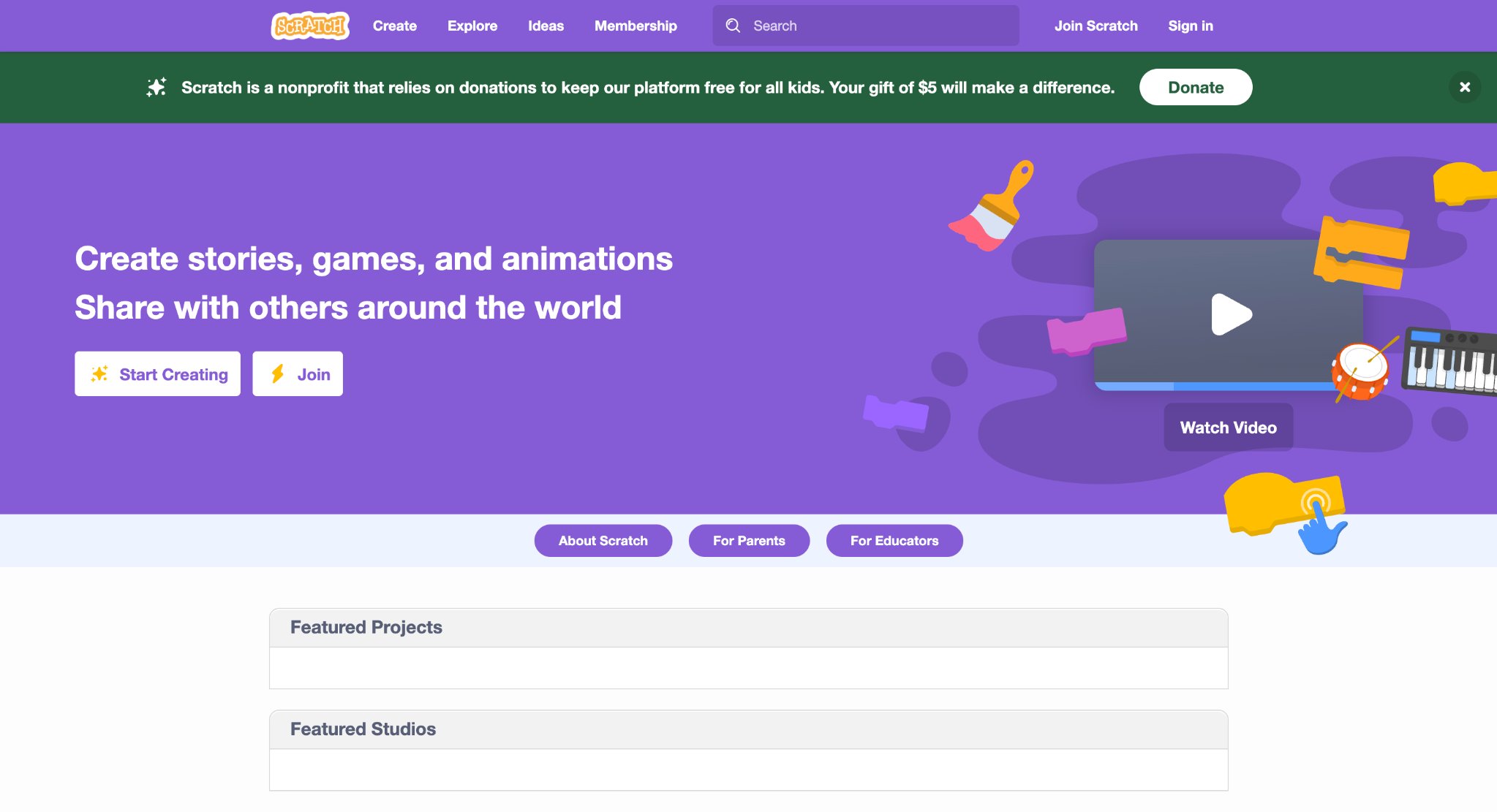
Scratch empowers children to become creators rather than just consumers by letting them design their own interactive stories, games, and animations using intuitive drag-and-drop coding blocks. Developed by MIT, this free, community-driven platform fosters creativity, logical thinking, and collaboration as kids share projects safely with a global audience.
The open-ended nature encourages experimentation and computational thinking that transfers beautifully to other areas of learning. Educators worldwide integrate Scratch into classrooms because it makes programming concepts tangible and exciting. While it works best for slightly older children who enjoy creative projects, its moderated environment and vast project library continue to inspire the next generation of innovators and problem solvers.
- Key features: Block-based coding, project creation.
- Facts and information: Safe sharing options, community-driven.
14. Toca Boca Games
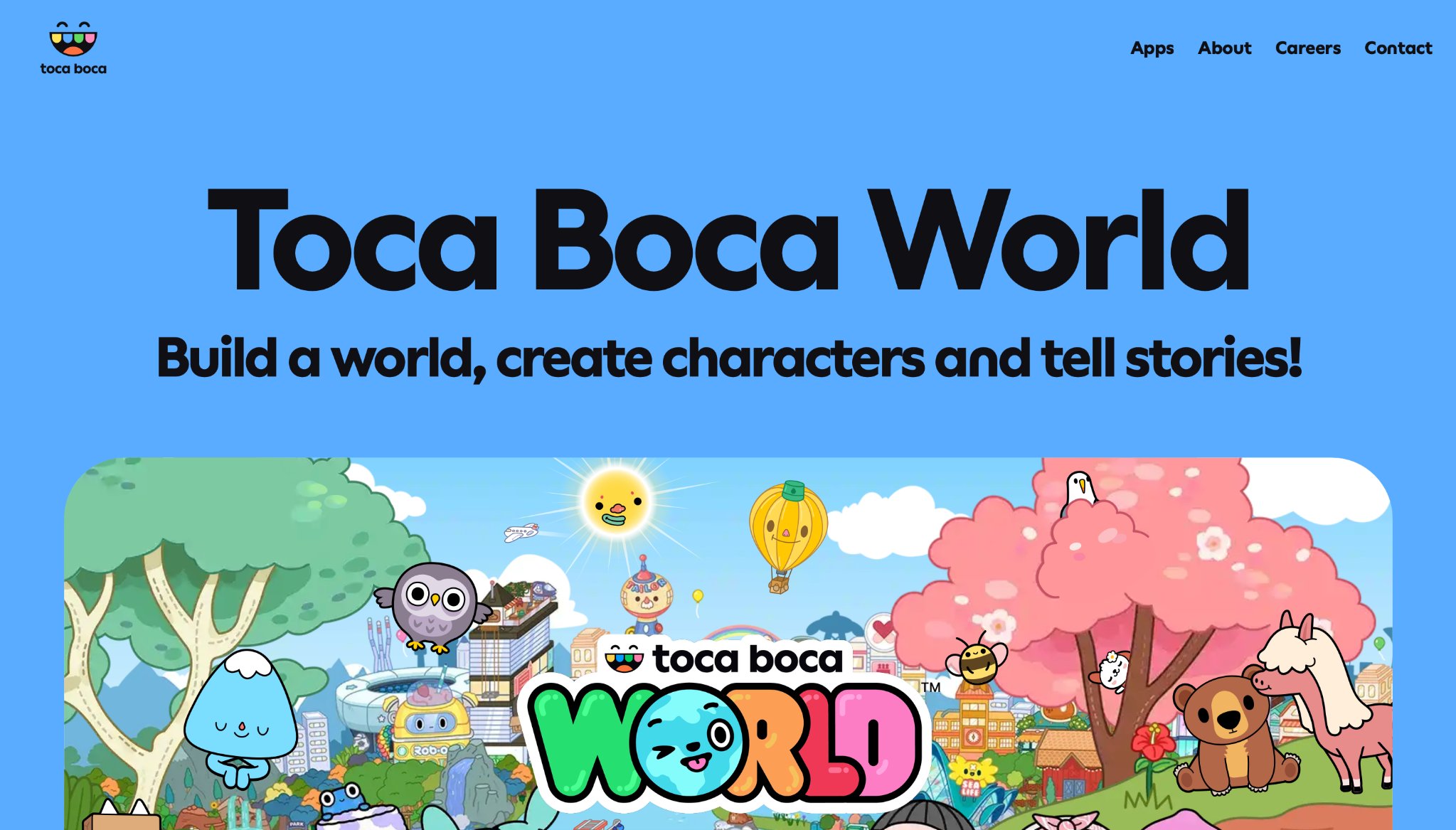
Toca Boca Games invite children into beautifully designed, open-ended virtual worlds where imagination takes center stage. Through titles like Toca Boca World, kids freely role-play, build, decorate, and tell stories in settings ranging from cozy kitchens to bustling cities. The absence of strict goals or scoring systems creates a relaxed space perfect for creative expression, social-emotional development, and unstructured play.
Frequent updates and themed collaborations keep the experience fresh and exciting. Parents appreciate the ad-free core gameplay and thoughtful design that prioritizes child-led exploration over structured lessons. This refreshing approach helps young players develop narrative skills, empathy, and confidence in their creative choices.
- Key features: Customizable characters and scenes, open-ended apps.
- Facts and information: Ad-free core play, frequent updates.
15. Lingokids
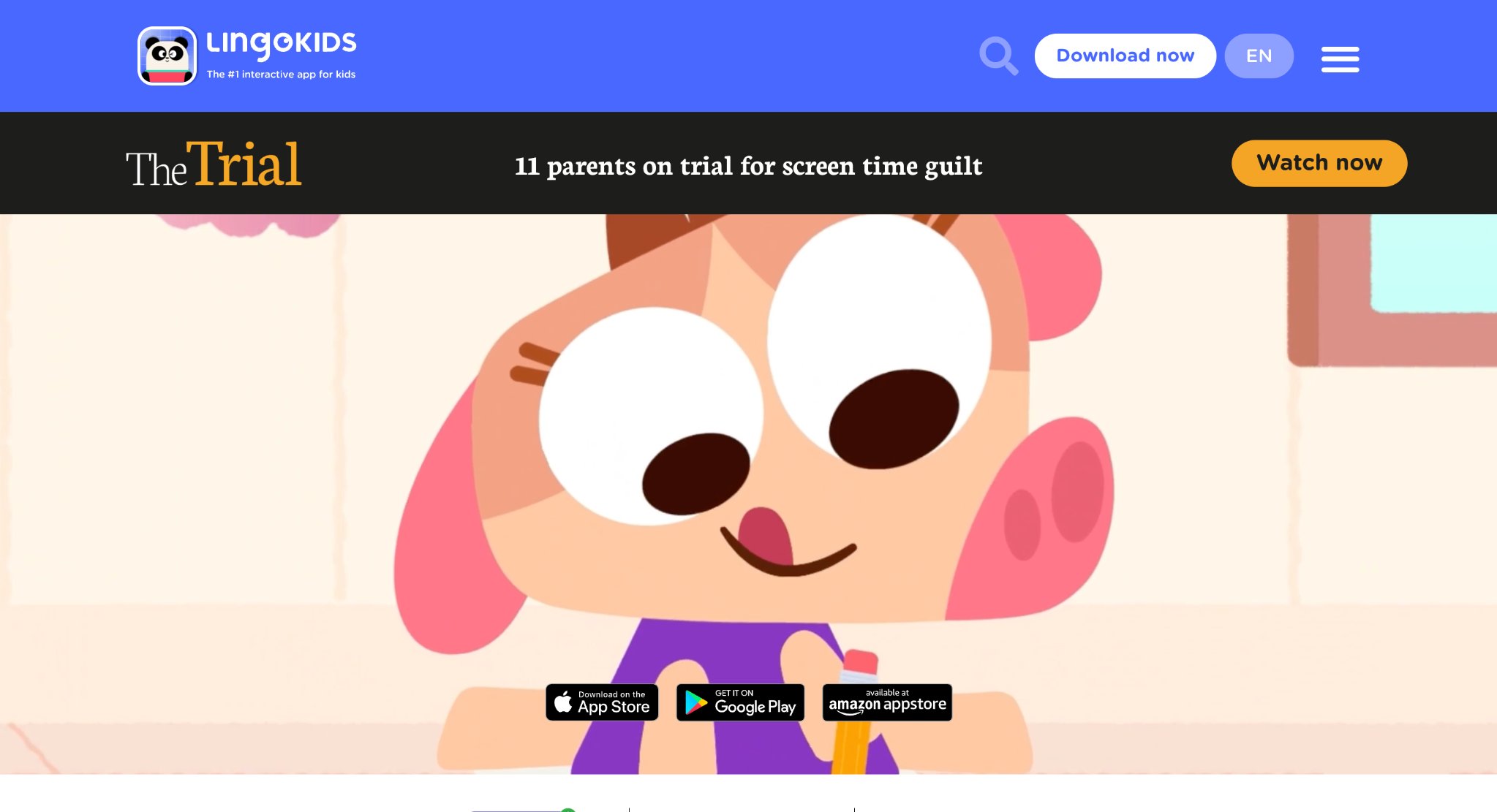
Lingokids offers a vibrant, play-based learning experience that seamlessly blends academics with essential life skills for children ages two to eight. Teacher-created content featuring songs, videos, games, and interactive adventures helps kids build vocabulary, math foundations, science knowledge, and emotional awareness in a joyful way. The app’s personalization features adapt to each child’s pace while yoga sessions and mindfulness activities add valuable variety.
Parents consistently praise its safe, engaging environment that turns daily screen time into meaningful growth opportunities. With an award-winning approach that emphasizes curiosity and confidence, Lingokids has become a trusted companion for families seeking balanced, high-quality early education.
- Key features: Many activities like ABC songs and science, podcasts.
- Facts and information: Award-winning, parent-approved engagement.
16. Epic!

Epic! opens the door to a vast digital library filled with thousands of high-quality books, audiobooks, videos, and learning resources that inspire a genuine love of reading. Children can explore fiction, non-fiction, and educational content across countless topics, with tools like quizzes and reading trackers that support comprehension and critical thinking.
The platform works wonderfully for both reluctant and avid readers, making it a favorite in homes and classrooms alike. While full access requires a subscription, the ever-expanding collection and rich variety keep children motivated to discover new stories and ideas. Epic! successfully transforms reading into an exciting adventure that builds literacy skills and broadens young minds.
- Key features: Books, audiobooks, learning videos.
- Facts and information: Ever-expanding library, topic exploration.
17. Noggin

Noggin creates a safe, ad-free space where preschoolers learn through beloved Nickelodeon characters in interactive games and videos. The platform turns favorite shows into meaningful learning experiences covering letters, numbers, manners, and early concepts in a gentle, familiar format.
Parents appreciate the character-driven approach that makes education feel comforting and fun for very young children. With strong parental tools and age-appropriate content, Noggin delivers wholesome screen time that supports early development while maintaining the joy and playfulness kids love. Its focused preschool offering makes it an excellent choice for introducing educational digital experiences to little ones.
- Key features: Interactive games, videos from shows.
- Facts and information: Character-based learning, parent tools.
18. Homer
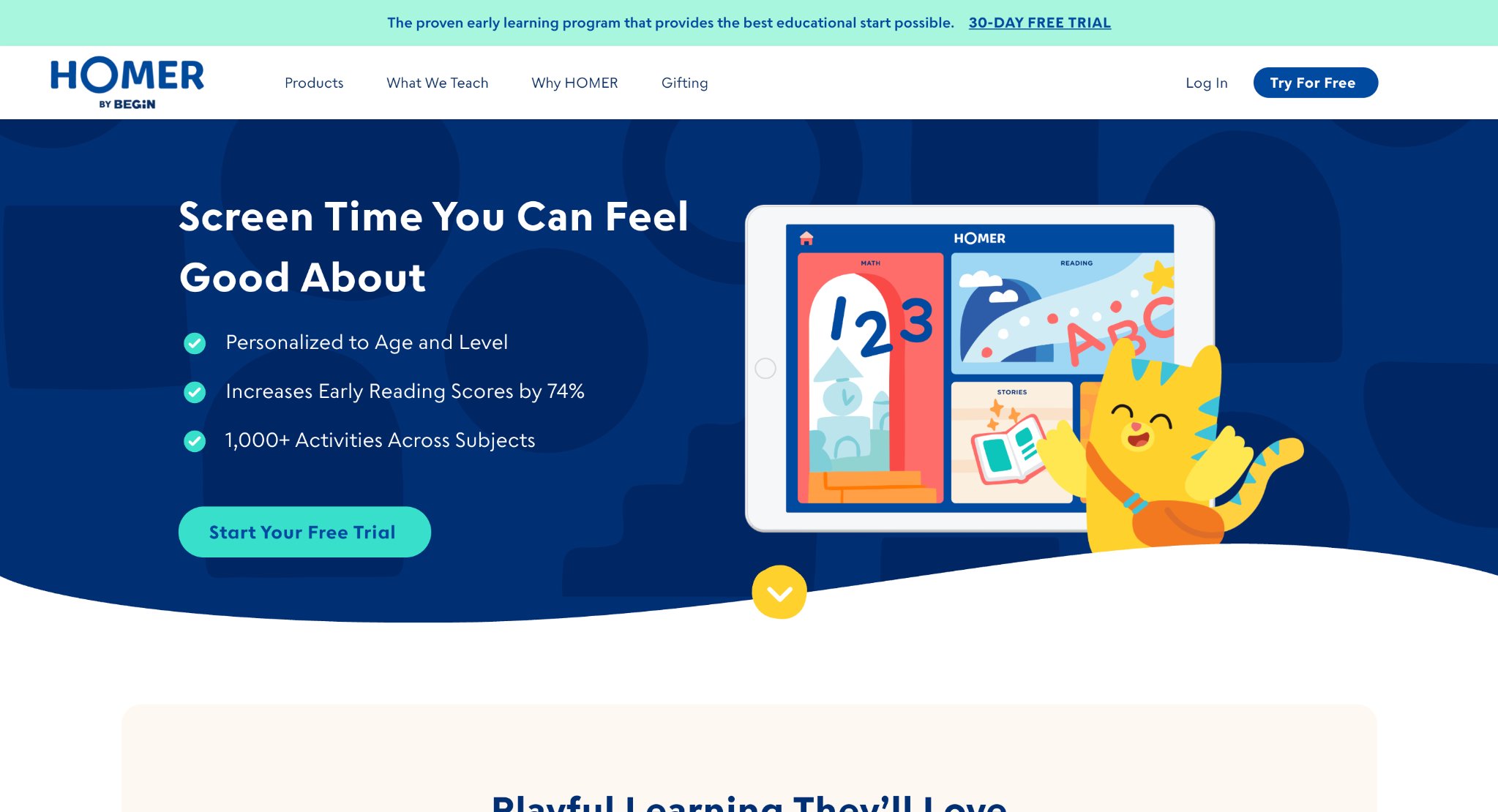
Homer stands out for its highly personalized approach to early learning, adapting activities in reading, math, social-emotional skills, and creativity to match each child’s interests and abilities. Designed for ages two to eight, the app combines stories, games, and hands-on exercises that grow with the learner while building confidence and problem-solving abilities.
Its research-backed pathways and kid-powered lessons create a joyful, engaging experience that many families describe as transformative. The ad-free environment ensures focused learning, and the comprehensive coverage across multiple developmental areas makes Homer a well-rounded choice for nurturing well-rounded young minds.
- Key features: Reading pathway, brain games, creativity space.
- Facts and information: Kid-powered lessons, ad-free.
19. Reading Eggs
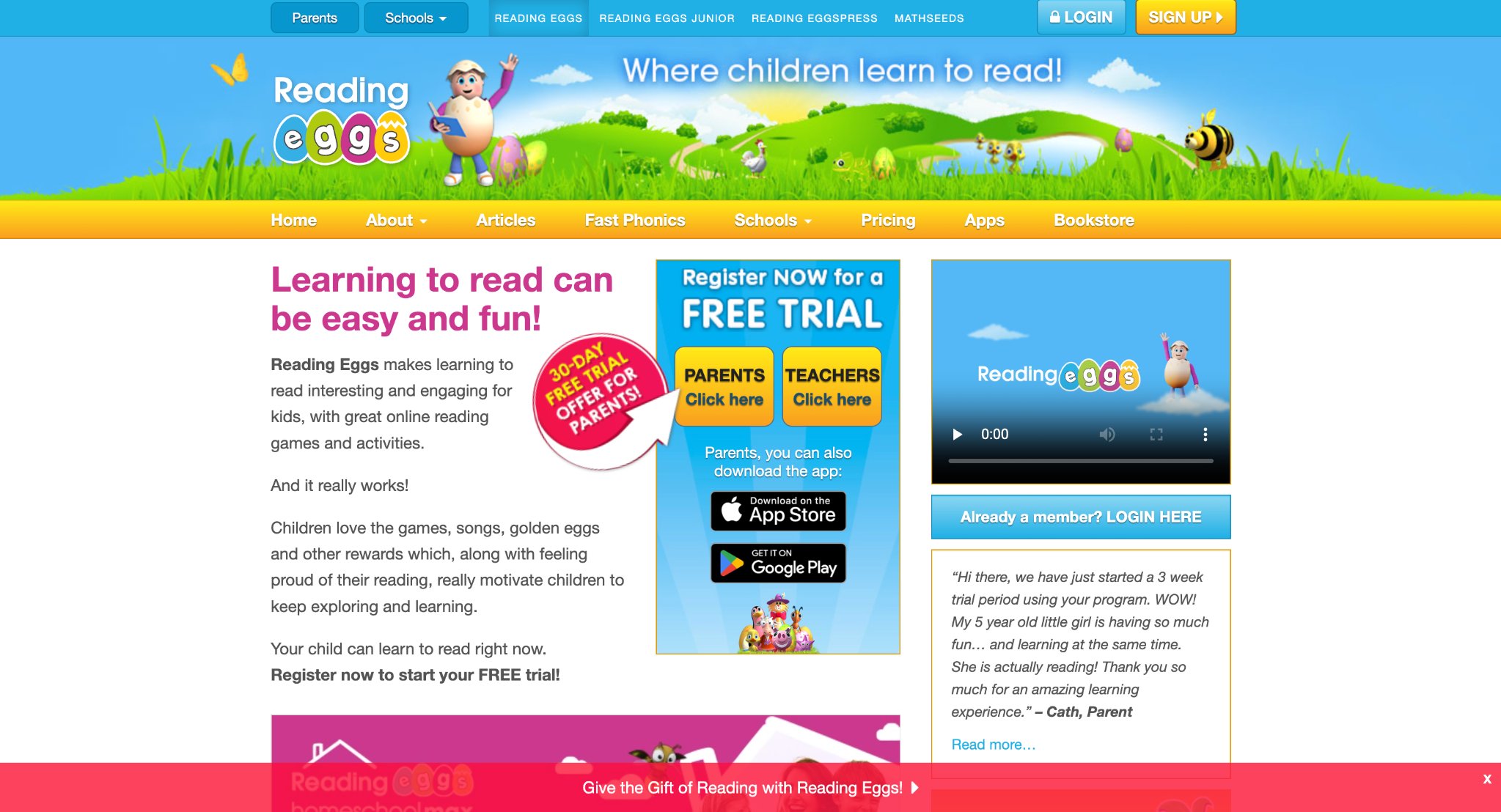
Reading Eggs brings phonics and early reading skills to life through colorful games, songs, and motivating rewards that make learning to read genuinely enjoyable. Children progress at their own pace while earning golden eggs and other incentives that keep them excited about building literacy skills.
The platform’s structured yet playful activities have helped countless kindergarten and early elementary students make noticeable gains in reading confidence and ability. With a strong focus on reinforcement and positive experiences, Reading Eggs remains a popular choice for families seeking an engaging way to support reading development at home.
- Key features: Online games, activities, rewards system.
- Facts and information: Engaging for kindergarteners, trial available.
20. DragonBox
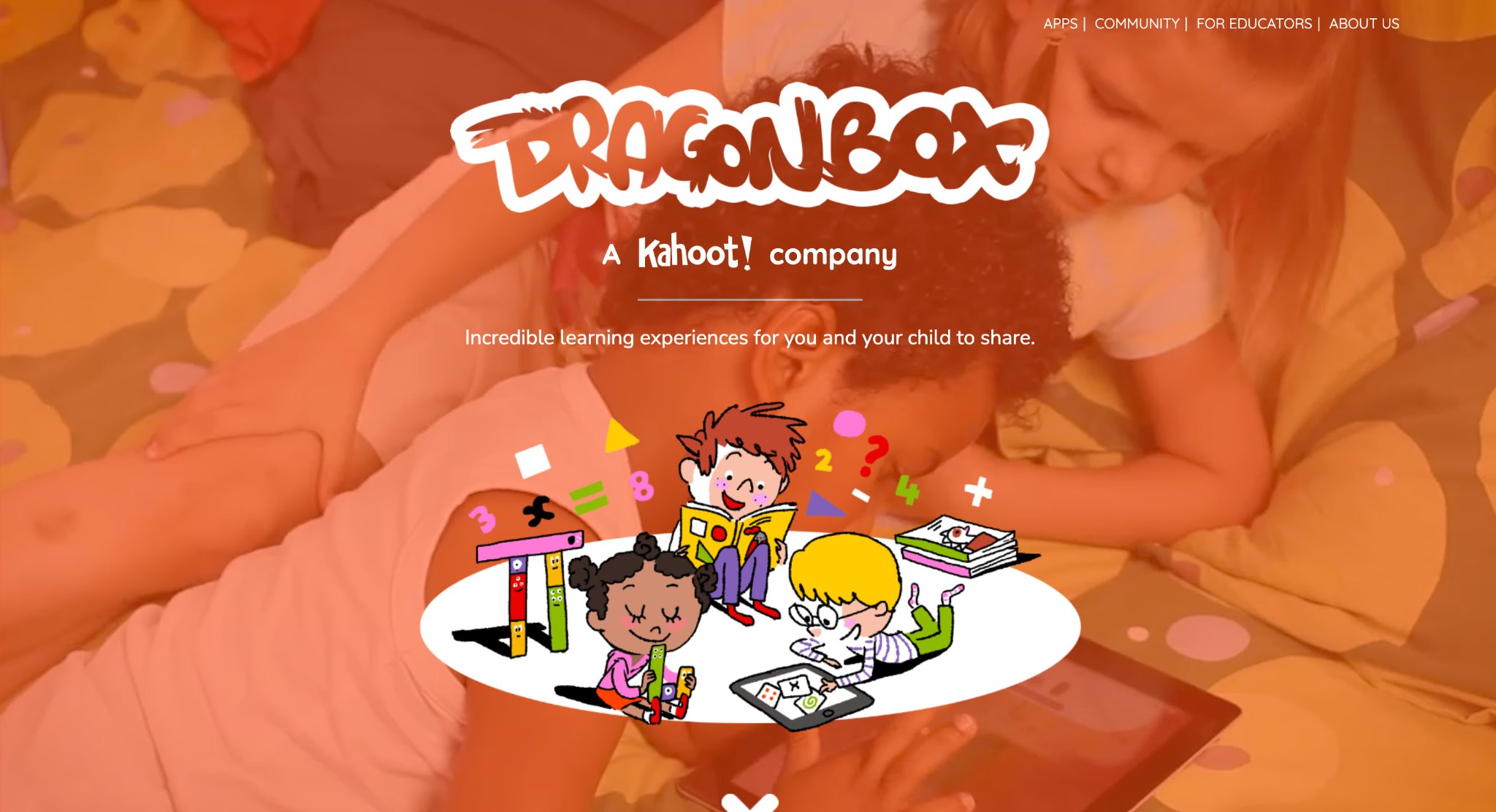
DragonBox takes a revolutionary approach to math education by teaching complex concepts through intuitive, game-based puzzles that feel more like play than instruction. From basic numbers to algebra and geometry, the apps help children develop deep conceptual understanding starting as young as age four.
Its elegant design and innovative methods have earned numerous awards and strong praise from families who appreciate the focus on genuine comprehension rather than rote memorization. The family-friendly format often leads to shared learning moments, making DragonBox a standout tool for building strong mathematical thinking and confidence in a stress-free, engaging way.
- Key features: Mini-games for algebra, chess integration.
- Facts and information: Motivation-based, family-friendly.
21. Khan Academy Kids
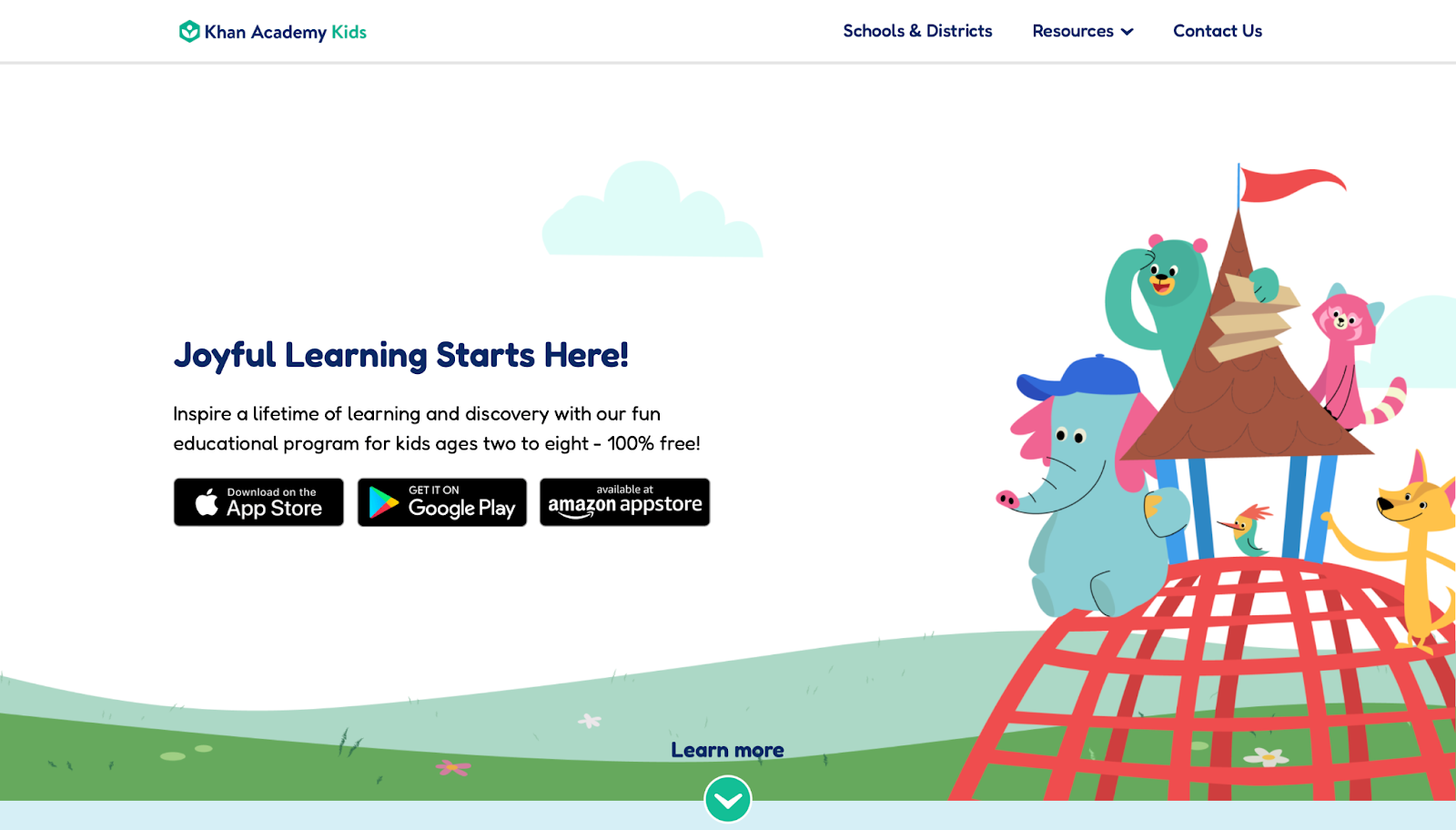
Khan Academy Kids, from the nonprofit based in Mountain View, California, offers a free app for young learners. It covers reading, math, and more through playful activities with animal guides. Strengths include adaptive paths that match a child's level, helping them build skills at their own speed. However, some find the structure repetitive after a while, and it lacks deeper multiplayer options. Overall, it provides solid foundational learning in a joyful setting. The app uses whimsical characters to guide kids through interactive games, stories, and creative tasks.
It builds early literacy, writing, language, and math skills while nurturing social-emotional growth. Thousands of activities let children explore at their pace or follow personalized paths. Classroom tools help teachers assign lessons and track progress, making it versatile for home or school. Support for English learners comes via visuals and audio aids. The curriculum aligns with early learning standards, crafted with expert input. Parents and teachers note how it sparks development without ads or fees. This approach turns play into meaningful growth, engaging kids in diverse subjects like science too. Families appreciate the offline options for flexible use.
- Key features: Many activities like phonics games and counting puzzles, offline play, audio aids for inclusive access.
- Facts and information: Supports personalized learning, with tools for teachers to monitor growth.
22. Thinkrolls
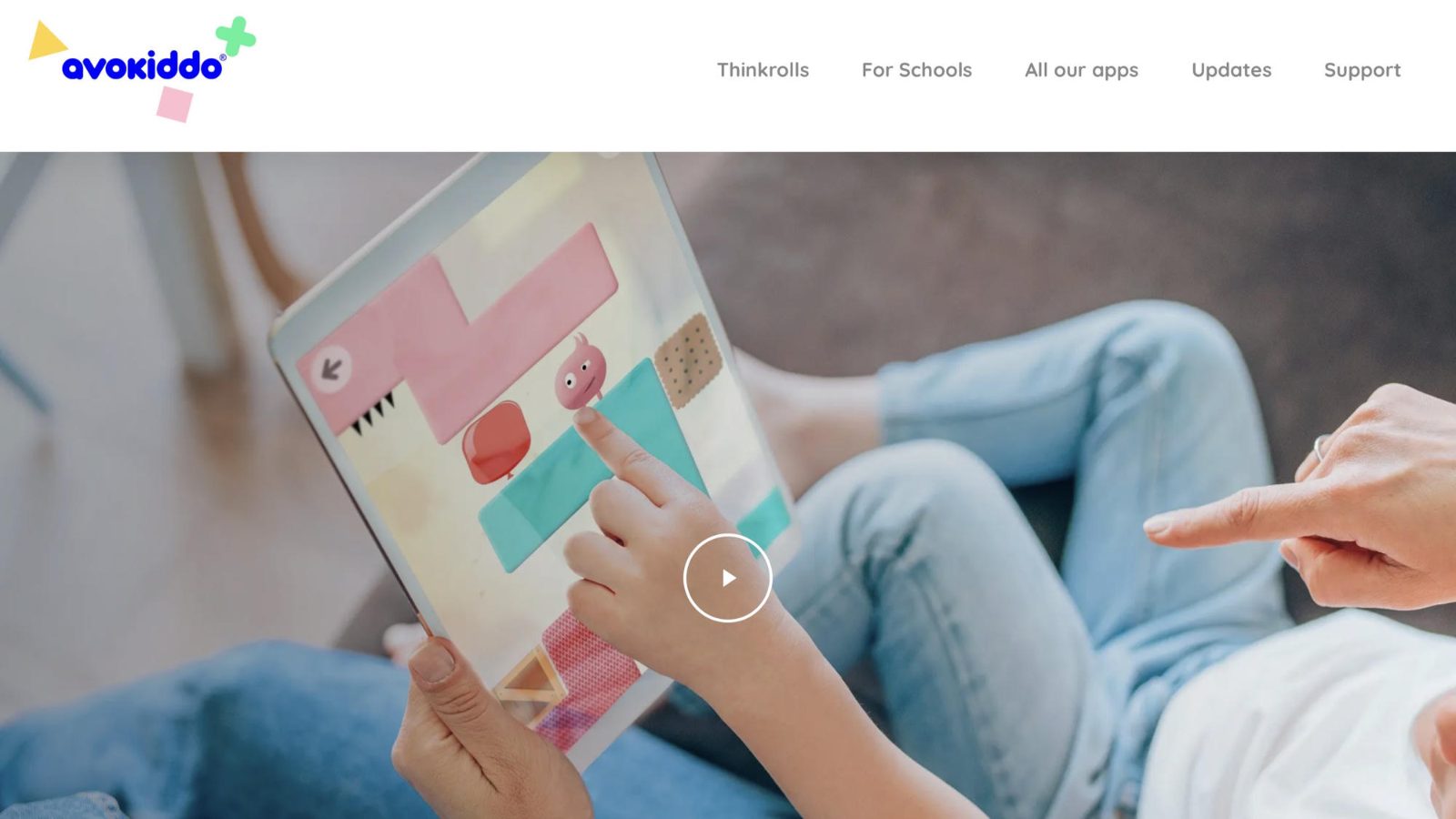
Thinkrolls delivers an award-winning series of logic and physics-based puzzle games where kindergarten children guide adorable rolling characters through cleverly designed levels filled with obstacles, experimenting with concepts like gravity, buoyancy, friction, and spatial awareness. Created by Avokiddo, the app combines platform-style navigation with mind-sharpening challenges that strengthen problem-solving, memory, observation skills, and creative thinking. Easy modes accommodate younger players while progressive difficulty levels support growing abilities across thousands of interactive activities.
The failure-friendly environment encourages experimentation and perseverance as children test different solutions. Offline gameplay makes it convenient for travel or screen-free moments, and the delightful character animations keep sessions enjoyable. Widely appreciated by USA families and educators, Thinkrolls transforms abstract physics and logic ideas into tangible, hands-on digital play suitable for ages 3 to 8, fostering executive function and early STEM foundations in a safe, engaging format.
- Key features: Physics-based puzzles, character navigation, logic challenges, spatial cognition games, easy and hard modes, extensive level variety.
- Facts and information: Award-winning with thousands of activities, designed for ages 2-8 to boost reasoning and problem-solving, supports independent play with adaptive elements.
23. Mystery Math Town
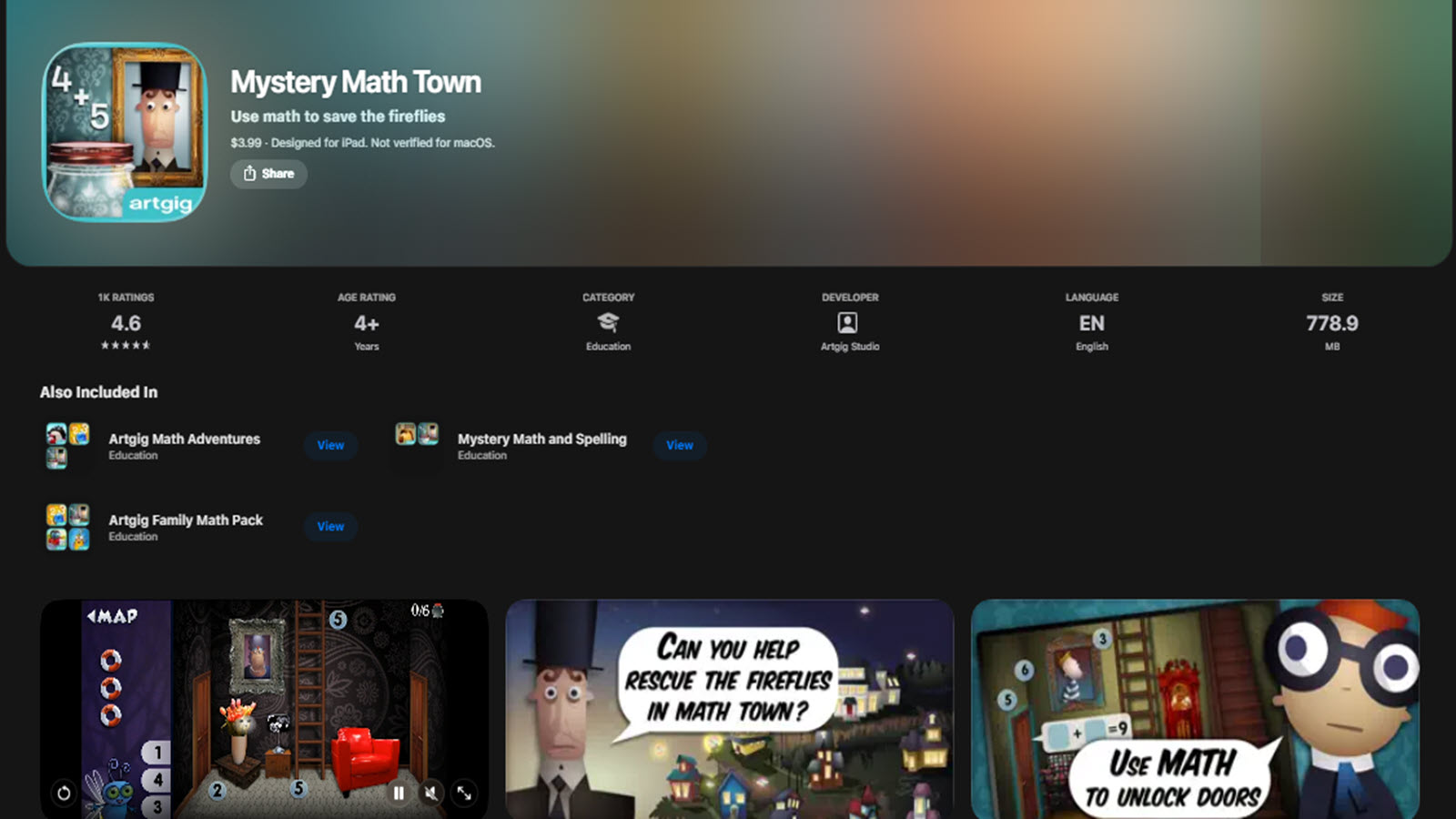
Mystery Math Town invites children on exciting adventures through haunted houses, museums, and mysterious locations where they solve addition, subtraction, and multiplication equations to collect glowing fireflies and unlock new areas. The narrative-driven gameplay embeds math practice into exploration and puzzle-solving, with saveable progress and multiple user profiles ideal for family sharing on the iPad. Kids develop quick recall, strategic thinking, and number fluency while enjoying atmospheric themes and rewarding discoveries.
The app balances challenge with support, making mathematical operations feel like part of an engaging story rather than isolated drills. Suitable for early elementary ages, it reinforces school curriculum concepts through immersive environments that maintain high motivation. Families value its blend of mystery and mathematics that turns practice into captivating quests.
- Key features: Equation-solving navigation, themed haunted house and museum settings, firefly collection rewards, multiple user profiles, progress saving.
- Facts and information: Designed for elementary math operations practice, supports conceptual understanding through adventure gameplay.
24. Bedtime Math
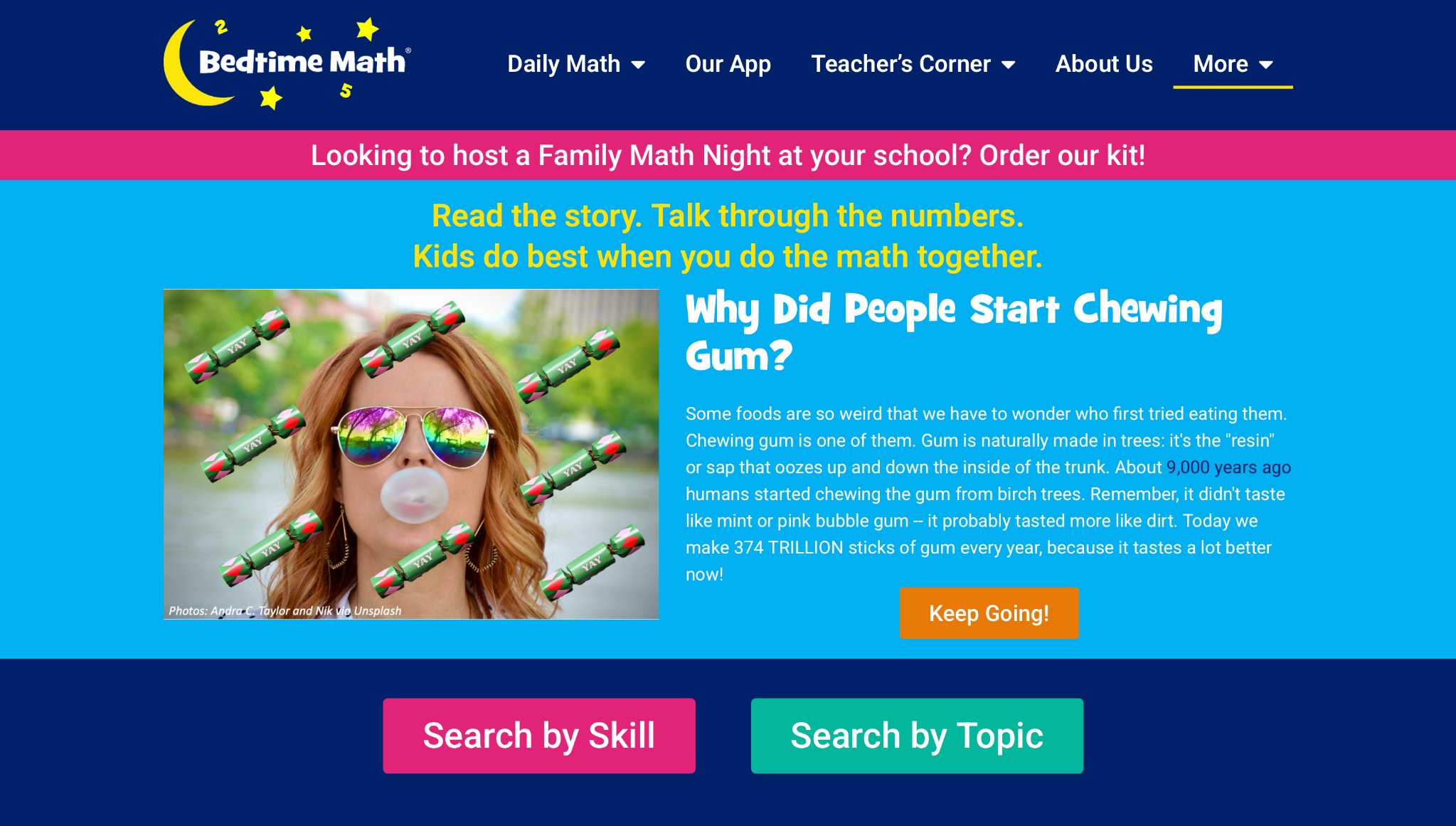
Bedtime Math turns everyday moments into meaningful family learning experiences through its free iPad app that delivers fun, story-based math problems tailored for kindergarten and early elementary children. Each day features a new whimsical tale followed by questions at different difficulty levels covering counting, basic operations, and real-world applications. Parents read stories aloud and explore solutions together, with optional hands-on activities extending learning beyond the screen.
Created by the Bedtime Math Foundation in the United States, the platform cultivates positive attitudes toward mathematics and critical thinking without requiring constant device use. The consistent daily format builds routines and curiosity about numbers in daily life, making it an excellent supplement for school readiness and family bonding.
- Key features: Daily themed math stories, tiered question difficulty levels, family discussion prompts, real-world application examples, optional activity extensions.
- Facts and information: Used by families across the USA, research shows regular use significantly improves children’s math attitudes and performance.
25. Quick Math Jr.
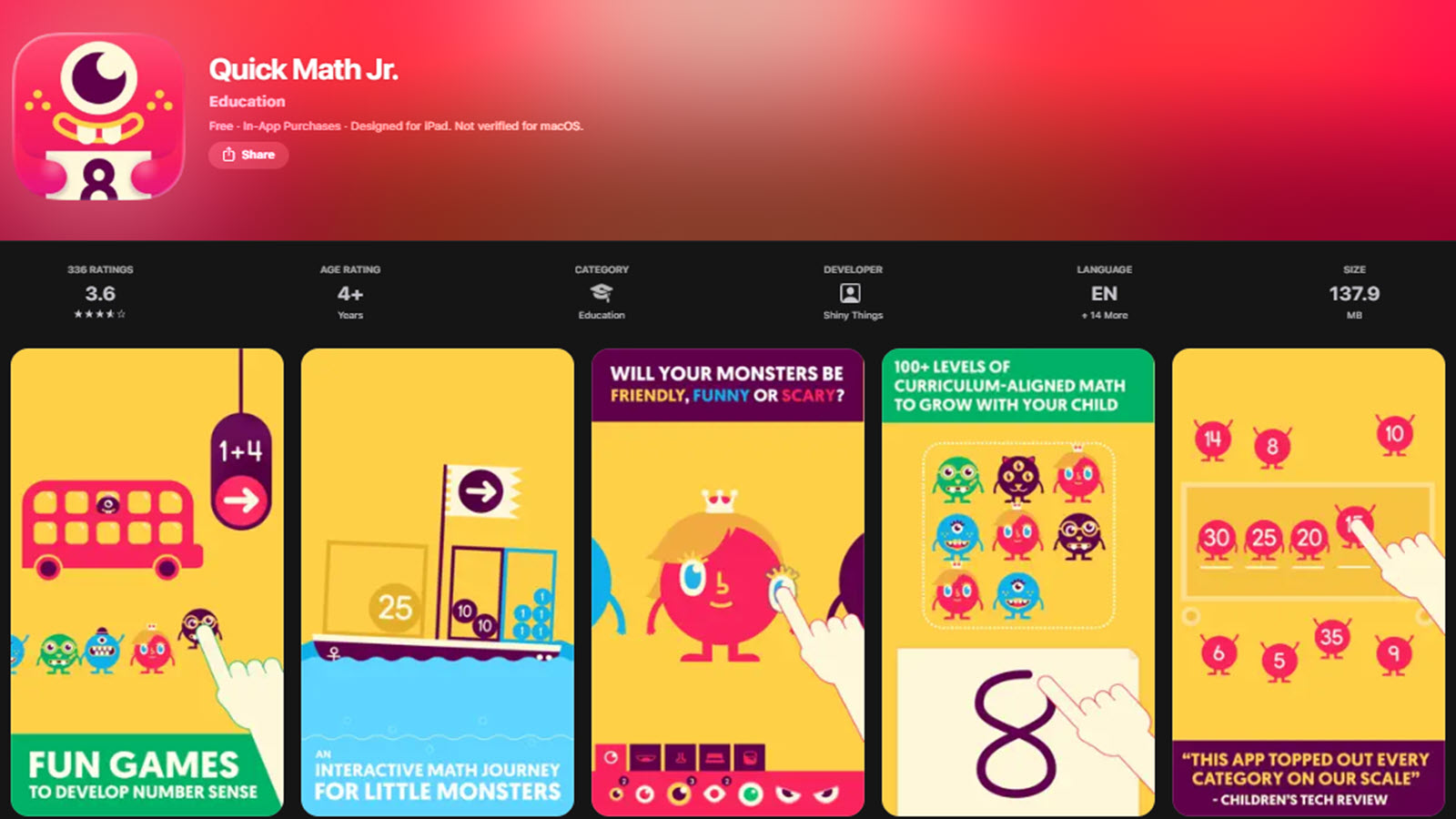
Quick Math Jr. builds strong mental math foundations for kindergarten children through fast-paced yet accessible mini-games focusing on counting, addition, subtraction, number patterns, and place value. The app uses intuitive touch controls and immediate visual feedback that adapt to each child’s responses, helping develop number sense and quick recall in short, highly replayable sessions.
Colorful graphics and encouraging animations maintain engagement during brief practice periods ideal for daily routines or travel on the iPad. The straightforward design supports independent play while aligning closely with early mathematics development goals. Families appreciate its focused approach that strengthens fluency without overwhelming young learners.
- Key features: Mental math mini-games, adaptive difficulty, number pattern recognition, visual touch-based interactions, quick session format.
- Facts and information: Targets foundational arithmetic and number sense skills, designed specifically for early elementary fluency building.
26. Peekaboo Barn
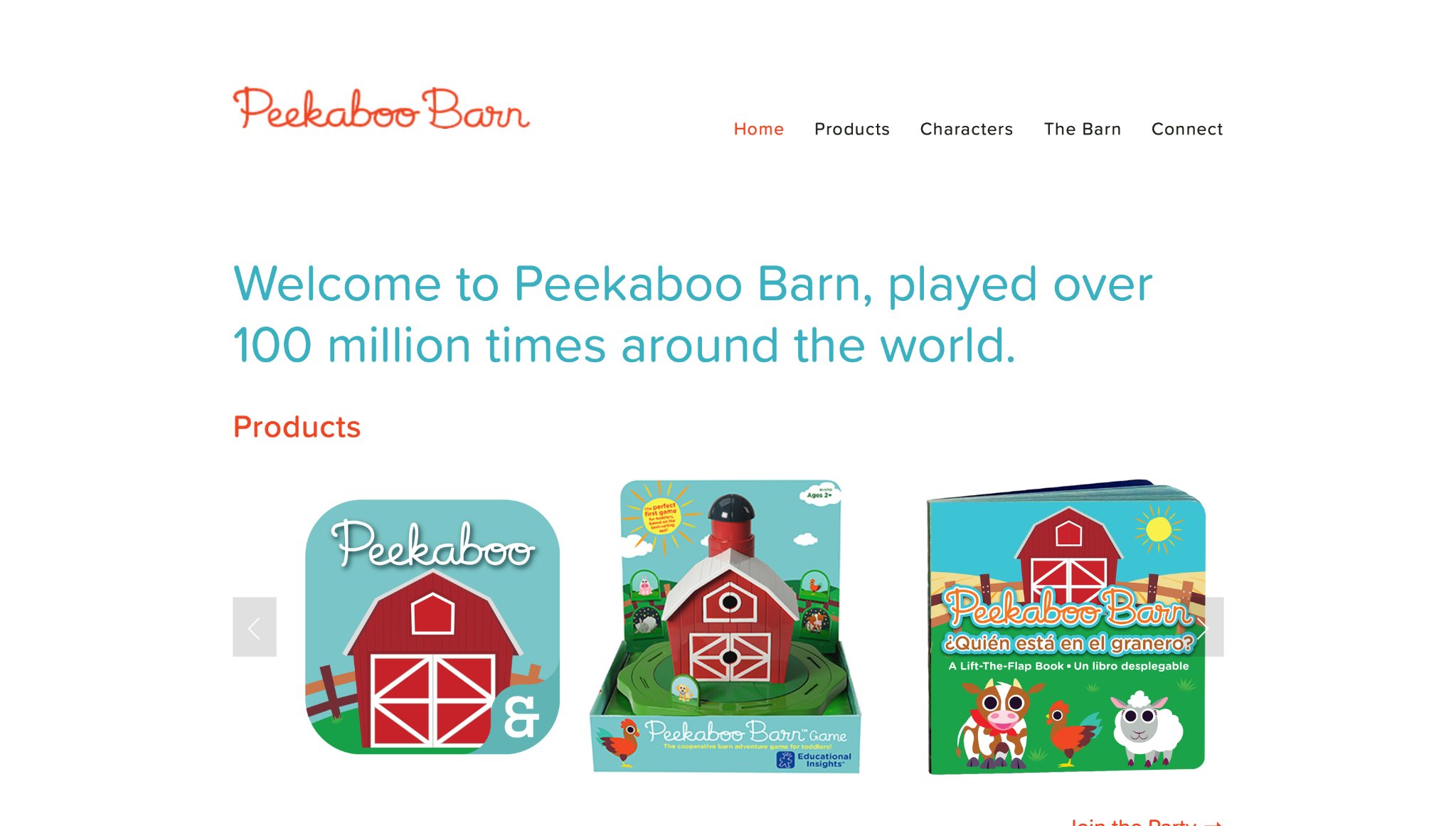
Peekaboo Barn introduces toddlers and kindergarten children to animal sounds, names, and everyday objects through delightful hide-and-seek interactions on the iPad. Kids tap on barns or doors to reveal surprises while learning vocabulary, cause-and-effect relationships, and memory skills in a calm, repetitive format. High-quality illustrations and clear audio support early language development without pressure or timers.
The gentle pacing makes it especially suitable for very young learners transitioning into more structured activities. Its simple, rewarding gameplay provides short, confidence-building sessions that foster curiosity and recognition abilities in a safe, engaging environment.
- Key features: Animal and object reveal mechanics, sound matching activities, vocabulary building, simple tap interactions.
- Facts and information: Popular choice for preschool and kindergarten readiness, focuses on early language and cognitive development.
27. ABCya
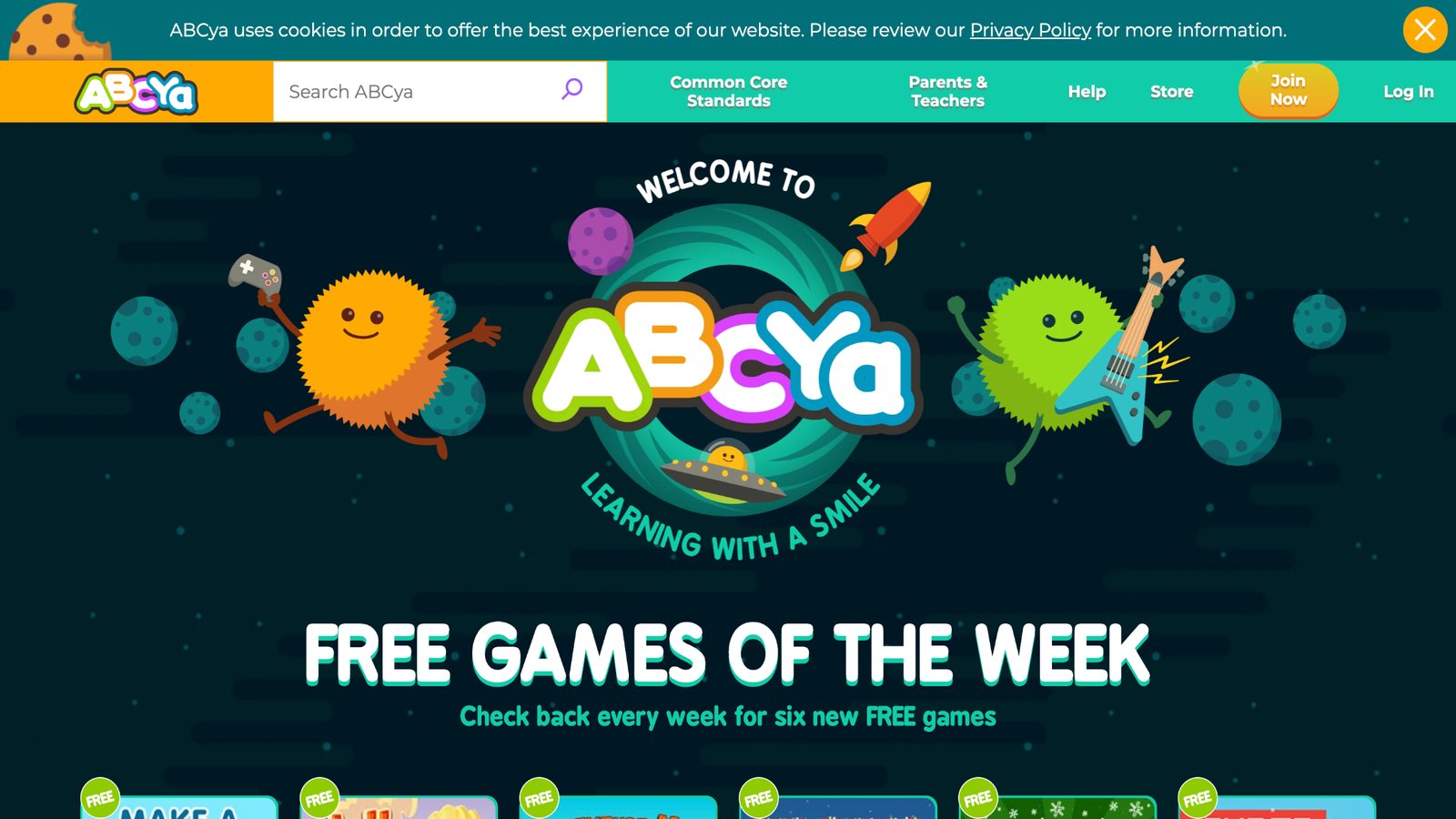
ABCya delivers a comprehensive collection of free and premium educational games tailored for children from pre-kindergarten through sixth grade, focusing on core subjects like math, reading, typing, and logic through interactive, browser-based and app experiences. Developed with input from educators, the platform features colorful, engaging activities that align with school curricula while encouraging independent exploration and skill mastery in a safe, ad-free environment for core content. Kids build foundational abilities in areas such as fractions, spelling, and computer skills through progressive challenges that feel like play, with options for both individual and classroom use that support differentiated learning. Many families across the USA integrate it into daily routines or homeschooling, appreciating how it reinforces classroom concepts with immediate feedback and motivational elements that keep young learners returning eagerly. The straightforward navigation suits various devices, making it accessible for home or on-the-go sessions that promote screen time with clear educational purpose.
- Key features: Hundreds of games across math, language arts, and logic categories with progressive difficulty and teacher resources.
- Facts and information: Widely used in US schools and homes for curriculum alignment, supports keyboarding and STEM basics through interactive play suitable for PreK-6.
28. Sago Mini World

Sago Mini World, from the creators of popular preschool apps, invites young children into a whimsical, open-ended digital playground filled with adorable characters and everyday adventures that foster creativity, social-emotional learning, and early problem-solving. Kids freely explore colorful neighborhoods, care for pets, drive vehicles, and engage in gentle role-play scenarios that mirror real-life experiences, all without timers, scores, or pressure to encourage imaginative free play. The gentle pacing and intuitive touch controls make it ideal for toddlers and preschoolers, helping them develop fine motor skills, empathy, and narrative thinking in a calm, joyful setting. Parents value its ad-free core experience and thoughtful design that prioritizes child-led discovery, often noting extended engagement periods where kids build confidence through repeated playful interactions. Frequent updates introduce new locations and activities, keeping the world fresh while maintaining its focus on positive, screen-based exploration.
- Key features: Open-world exploration with customizable characters, vehicle play, pet care, and creative mini-stories across multiple themed areas.
- Facts and information: Designed for ages 2-5 with award-winning apps emphasizing unstructured play, available on major platforms with regular content expansions.
29. Lightbot
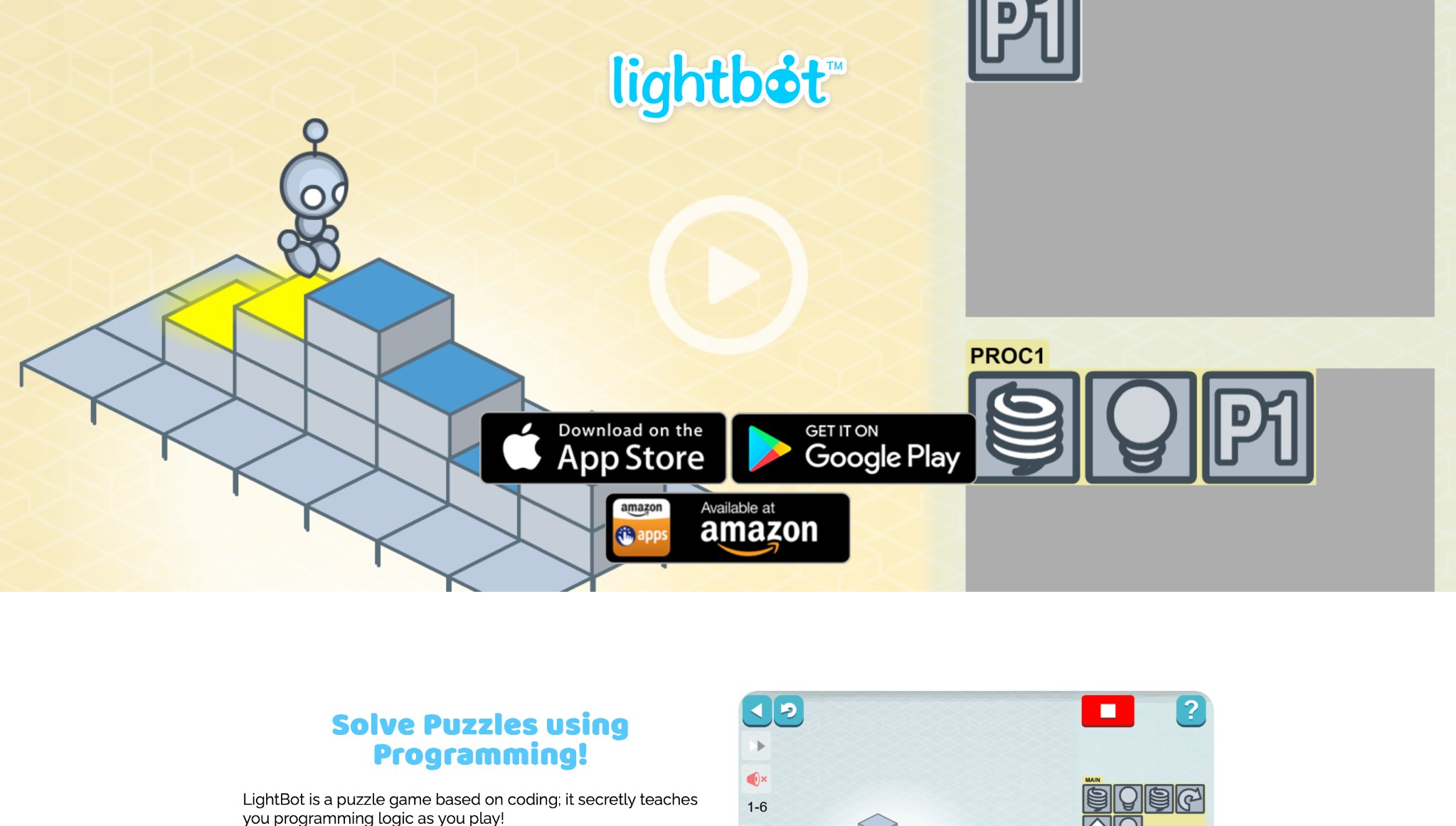
Lightbot introduces young programmers to foundational coding concepts through engaging puzzle challenges where kids guide a friendly robot character by arranging visual command blocks to light up tiles on grid-based worlds. This tactile, drag-and-drop approach builds logical thinking, sequencing skills, and problem-solving abilities without requiring reading or prior experience, making it accessible for early elementary learners transitioning to more structured thinking. Levels increase in complexity gradually, covering loops, conditionals, and procedures in a visual format that translates well to real programming languages later. Educators and families in the USA often use it as a screen-time supplement that sparks interest in STEM, with the satisfying "aha" moments of solving puzzles reinforcing persistence and computational thinking. The clean interface and progressive challenges support independent play while offering enough depth for repeated sessions.
- Key features: Visual block-based programming puzzles, progressive levels teaching sequences, loops, and procedures, robot navigation mechanics.
- Facts and information: Popular introductory coding tool for ages 4+, used in homes and classrooms to develop logical reasoning through game-like challenges.
30. BrainPOP
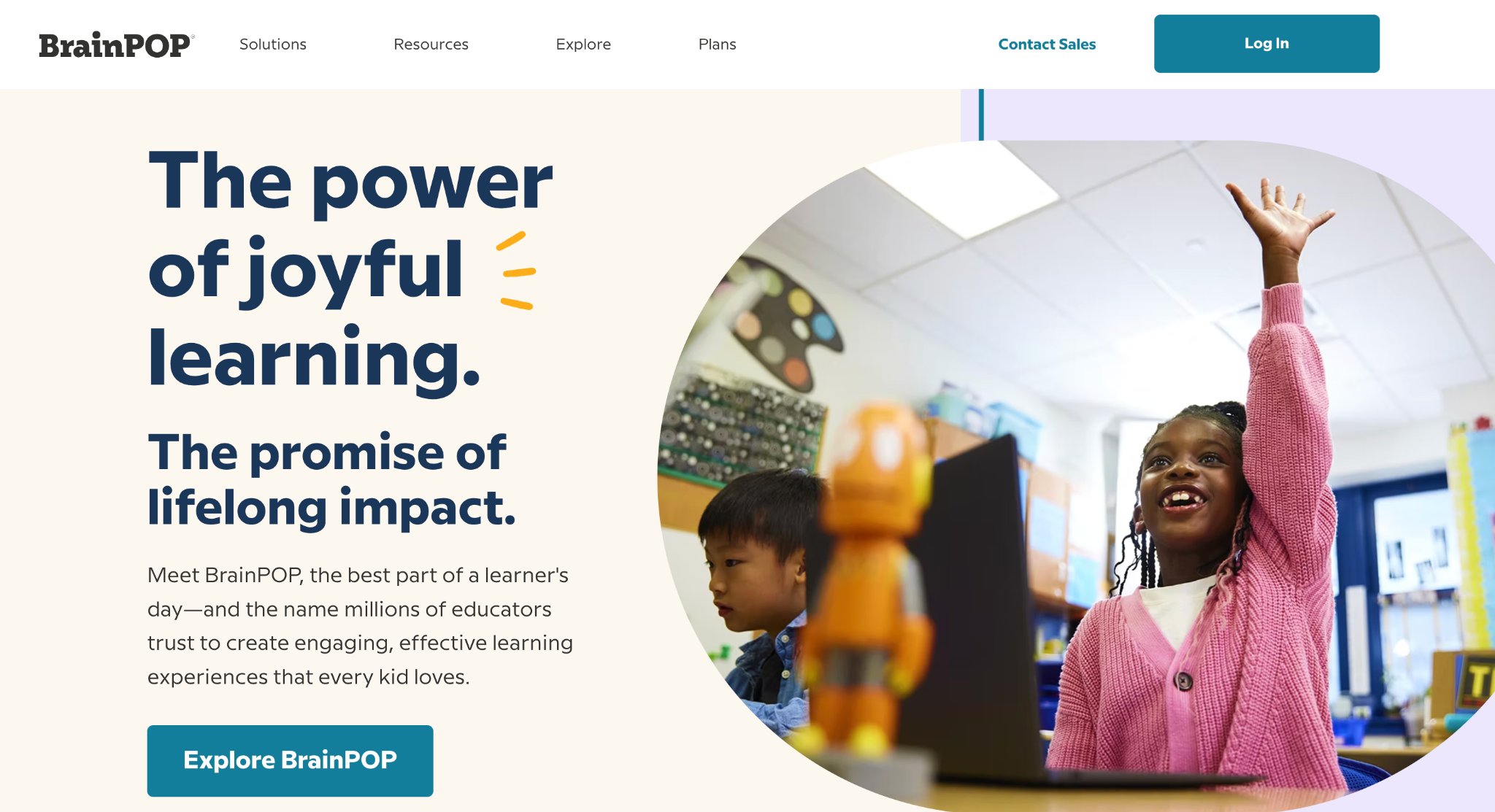
BrainPOP brings animated educational videos, quizzes, and interactive games featuring characters like Tim and Moby to make complex topics in science, history, math, and social studies accessible and exciting for elementary and middle school children. The platform’s short, engaging movies explain concepts with humor and visuals, followed by activities that reinforce understanding through hands-on simulations, concept maps, and assessment tools. Its research-based content aligns with educational standards, supporting differentiated learning with features for teachers and parents to track progress and assign specific topics. Many US families appreciate how it turns potentially dry subjects into memorable adventures, fostering curiosity and retention while providing a balanced mix of watching, playing, and creating. The safe, moderated environment ensures focused learning across devices.
- Key features: Animated explanatory videos, interactive quizzes and games, concept mapping tools, and topic-specific activities.
- Facts and information: Covers broad curriculum areas with standards alignment, trusted by millions of educators and families for supplemental learning.
31. IXL
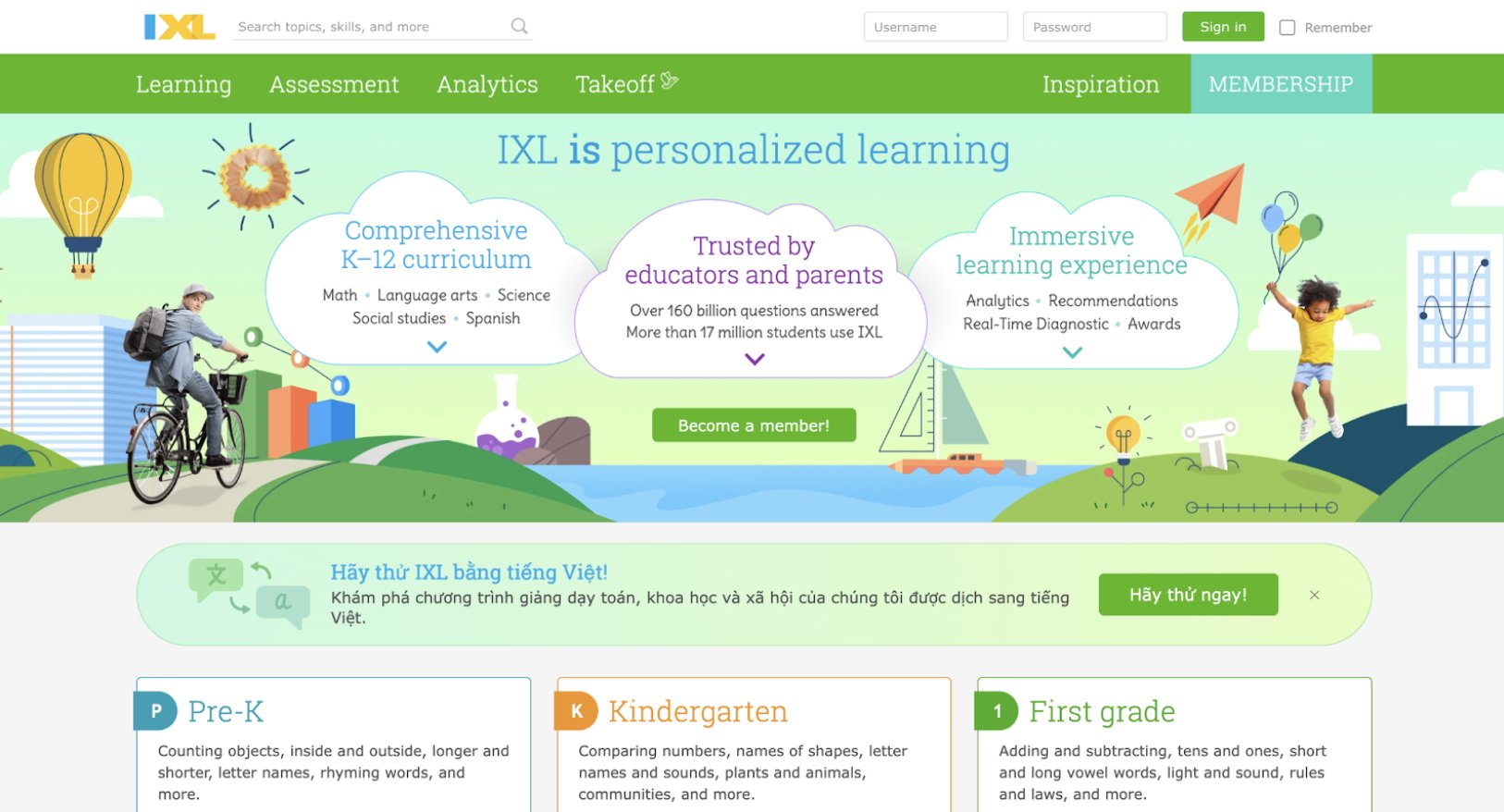
IXL offers an adaptive, comprehensive learning platform with thousands of skills across math, language arts, science, and social studies, delivering personalized practice through interactive questions and real-time feedback for pre-K through high school. Its pinpointed skill breakdowns allow children to master concepts at their own pace, with built-in rewards and progress tracking that motivate consistent engagement. The detailed analytics help parents and teachers identify strengths and areas for growth, making it a strong tool for targeted skill-building alongside schoolwork. Colorful interfaces and immediate explanations support independent practice while maintaining high educational rigor. Families across the USA value its depth and customization for reinforcing classroom learning or addressing specific gaps in a structured yet game-like format.
- Key features: Adaptive practice questions with instant feedback, comprehensive skill library, progress reports, and multi-subject coverage.
- Facts and information: Used widely in US education for personalized learning paths, with detailed diagnostics supporting long-term academic growth.
32. SplashLearn
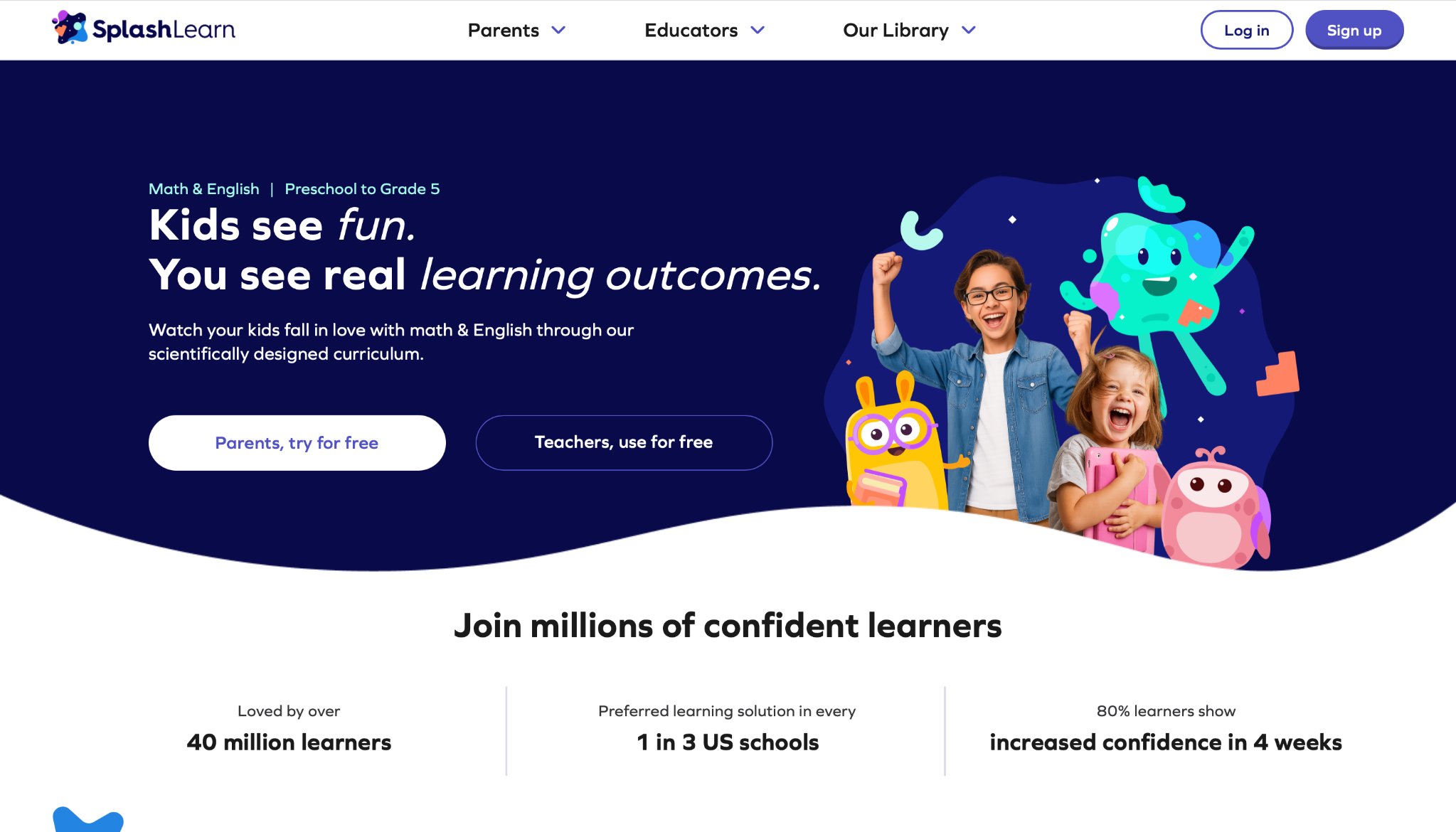
SplashLearn delivers a game-based curriculum spanning preschool through fifth grade that turns math and reading practice into interactive adventures filled with magical worlds and friendly creatures. Children progress through personalized pathways covering number sense, operations, fractions, phonics, sight words, and early comprehension while collecting rewards that maintain motivation across thousands of activities. The platform adapts to each learner’s responses in real time, offering a mix of short games, stories, and printable worksheets that reinforce classroom concepts at home. Designed for independent use yet equipped with parent dashboards, it supports both solo exploration and guided family sessions. Available across devices, the experience emphasizes curriculum alignment with Common Core standards and similar frameworks used in American schools. Families across the United States integrate it into daily routines for consistent skill-building that feels like play rather than drills.
Key features include:
- Over 4,000 adaptive math and reading games with personalized pathways
- Interactive stories, puzzles, and printable worksheets spanning Pre-K to Grade 5
- Real-time progress tracking and weekly reports for parents and teachers
- Curriculum-aligned content covering number sense, fractions, phonics, and vocabulary
Facts and information:
- Used by more than 40 million learners worldwide and trusted in one in three U.S. elementary schools
- Headquarters presence in San Francisco, California, with curriculum developed for American grade-level standards
33. Teach Your Monster to Read
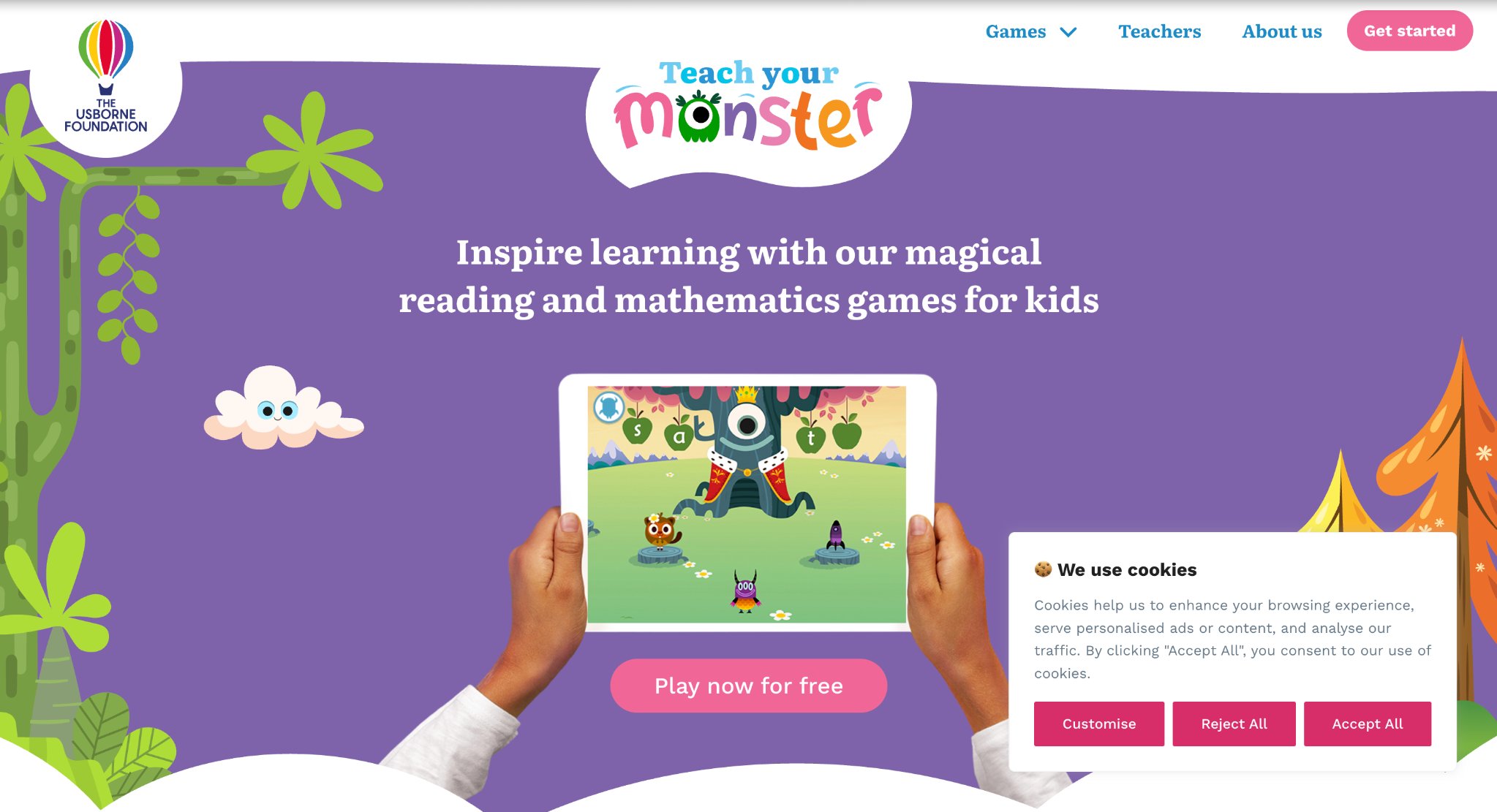
Teach Your Monster to Read guides children ages three to six through a phonics adventure in which they create and customize a friendly monster character that embarks on a journey across three progressive stages. The experience covers letter-sound recognition, blending, segmenting, tricky words, and early sentence reading through short interactive games and mini-books set in colorful, story-driven worlds. Developed in collaboration with reading experts, the structure complements synthetic phonics programs commonly used in U.S. classrooms and homes. Children practice skills in short sessions while collecting prizes that personalize their monster, fostering a sense of ownership and steady progress. Multiple player profiles allow families to track individual growth, and the calm, ad-free design supports independent play for emerging readers. The complete series moves learners from first sounds all the way to enjoying simple books within the same engaging environment.
Key features include:
- Three complete games progressing from letter sounds to full sentences
- Monster customization, mini-games, and progress tracking for multiple players
- Synthetic phonics focus covering blending, segmenting, and sight words
- Short adventure-style sessions designed for preschool and kindergarten attention spans
Facts and information:
- Created with academic input from University of Roehampton researchers and used by millions of children globally
- Complements major systematic phonics schemes employed in American early literacy instruction
34. Kodable
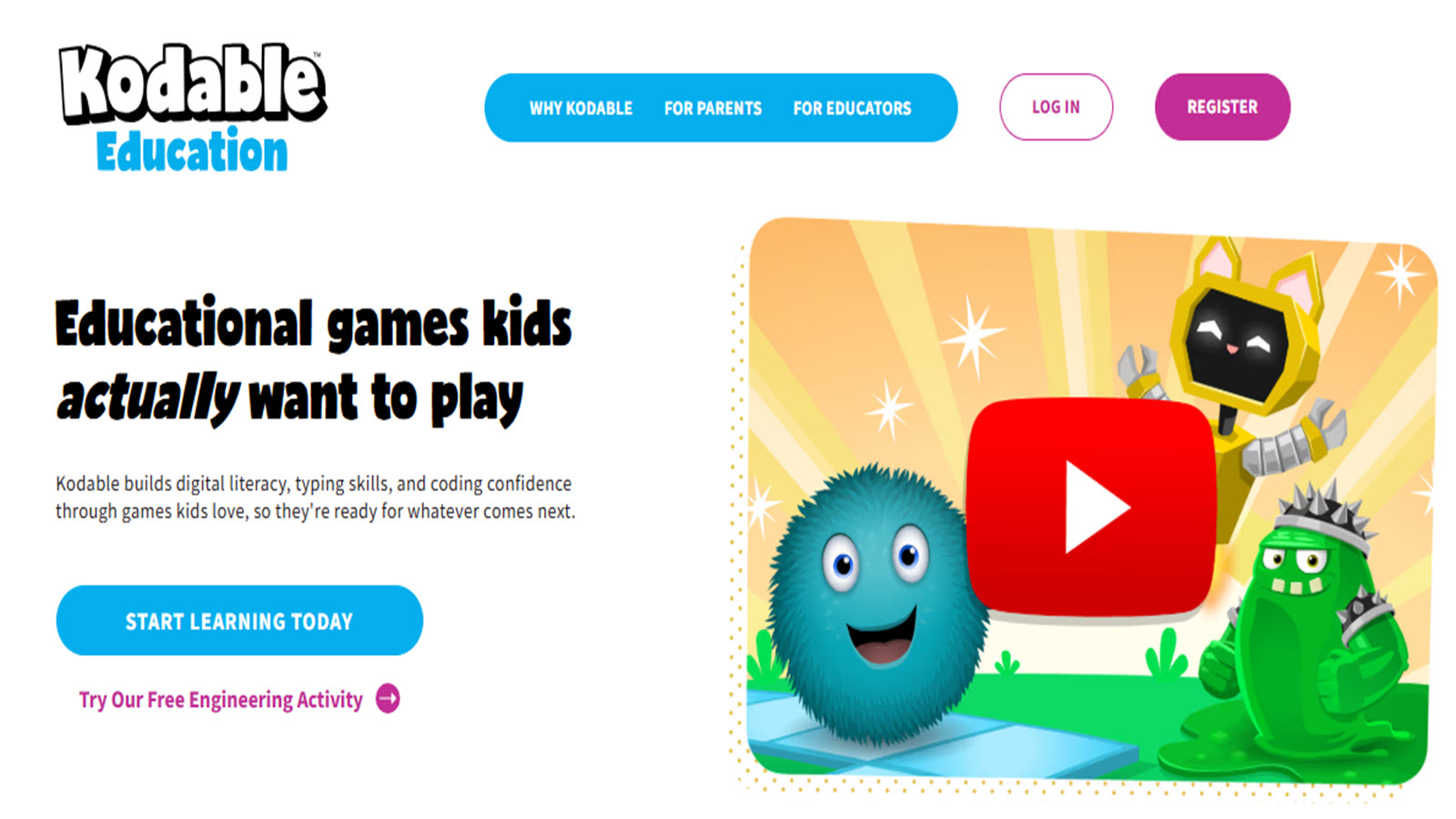
Kodable introduces children ages four to ten to foundational coding concepts through colorful, self-paced puzzle worlds where they guide friendly characters using visual commands that later transition into real JavaScript. Learners begin with sequencing and directional logic suitable for pre-readers, then advance to loops, conditionals, functions, and object-oriented ideas while designing their own games and customizing characters. The platform includes separate environments for beginners and more advanced creators, along with typing practice and online-safety lessons that build broader digital skills. Teachers and parents access dashboards to monitor progress, unlock challenges, and review completed projects. Offline capability and a clean interface support flexible home or classroom use. By moving kids from block-based play to authentic code, Kodable develops logical thinking, persistence, and creative problem-solving that transfer beyond the screen.
Key features include:
- Progressive worlds teaching sequences, loops, conditionals, and JavaScript
- Character customization, game-creation tools, and multiple difficulty levels
- Typing and digital citizenship modules integrated with coding practice
- Teacher and parent dashboards with progress tracking and offline access
Facts and information:
- Used in over half of U.S. elementary schools and designed specifically for ages 4–10
- Emphasizes computational thinking skills aligned with early computer science standards
35. Tynker
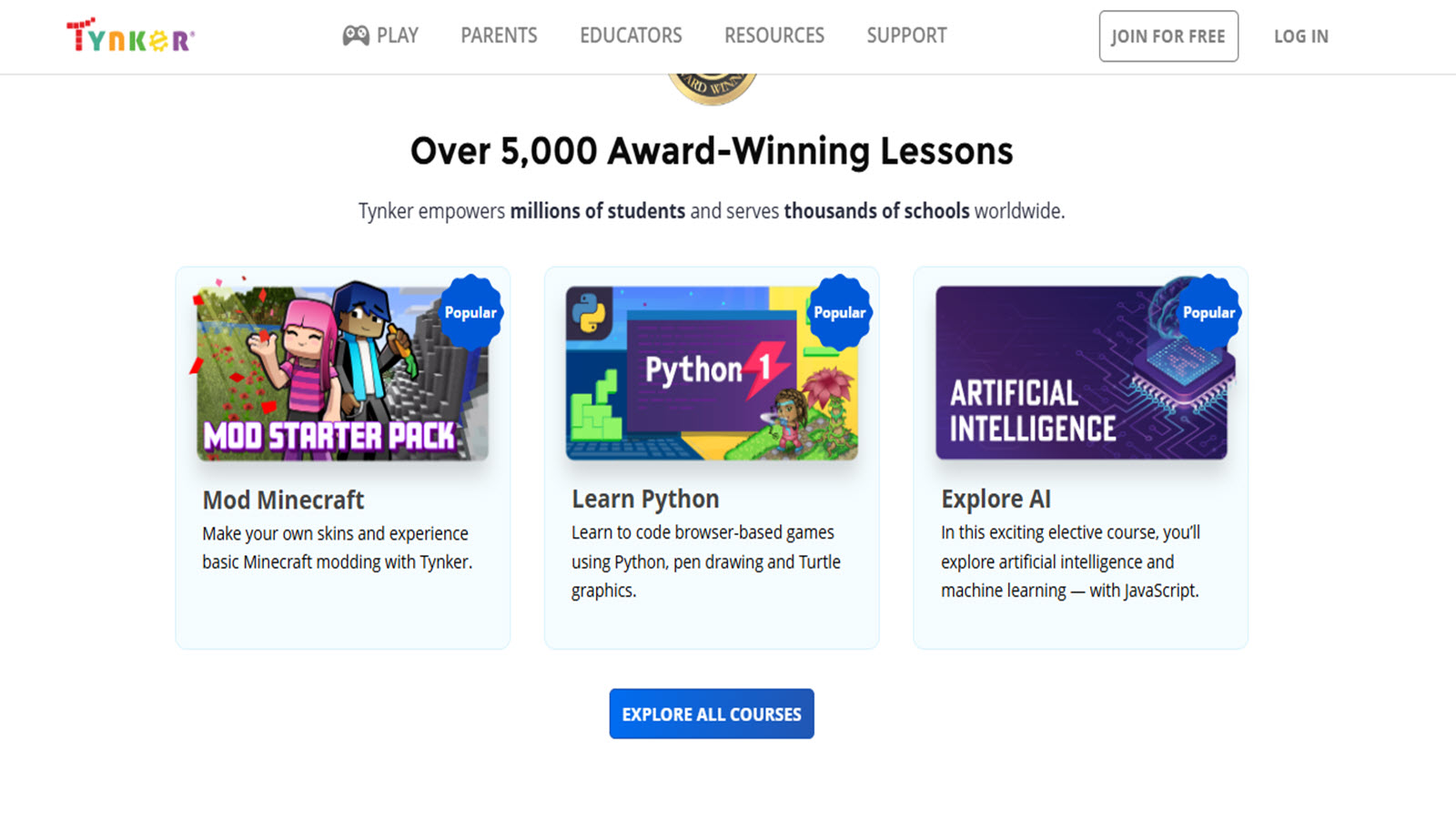
Tynker offers a comprehensive coding platform that takes children from visual block programming to text-based languages such as JavaScript and Python through story-driven courses, puzzles, and open-ended creation tools. Learners build games, animations, stories, and even Minecraft mods while mastering sequencing, loops, variables, conditionals, and algorithmic thinking. The curriculum spans multiple skill levels with self-paced lessons, interactive tutorials, and a rich media library that encourages original projects. Cross-curricular themes connect coding to science, art, and storytelling, making it useful both at home and in school settings. Progress tracking and project portfolios help families and educators see growth over time. Available on web and mobile, Tynker supports independent exploration while providing structured pathways that grow with the child from elementary through middle school.
Key features include:
- Visual block coding progressing to JavaScript, Python, and other languages
- Story-based courses, game design tools, and Minecraft modding options
- Large library of self-paced lessons, quizzes, and creative sandboxes
- Project portfolios and progress tracking for home and classroom use
Facts and information:
- Powers coding experiences for over 100 million students worldwide and serves thousands of U.S. schools
- Curriculum mapped to computer science standards with elective courses in AI and data science
36. Moose Math
.jpg)
Moose Math, created by Duck Duck Moose in San Mateo, California, and now part of Khan Academy, turns early math into a small-town adventure for children ages three to seven. Kids travel between a smoothie shop, a pet store, a lost-and-found, and other cheerful locations while practicing counting, addition, subtraction, sorting, geometry, and number patterns. Five multi-level activities sit at the center of the experience: mixing drinks that require adding and taking away ingredients, matching pets by counting dots, solving bingo-style equations, sorting toys by shape and color, and connecting numbered dots so a lost character can find the way home. As children complete challenges, they earn pieces they can use to build and decorate a growing city, which gives practice a visible, ongoing purpose rather than a one-off reward. The Dust Funnies characters keep the tone playful and consistent from activity to activity, so young players recognize the world and return to it easily. The app is aligned with Common Core expectations for kindergarten and first grade and includes a report-card section where parents and teachers can see which skills are strengthening and which still need extra work. Duck Duck Moose developed the title with input from a Stanford educator and former New York City elementary teacher, then play-tested it with children to keep controls simple for small hands. Families across the United States use it as a focused supplement for number sense, early operations, and spatial thinking, especially when they want math practice that feels like exploring a neighborhood rather than completing a worksheet.
Key features include:
- Five multi-level activities covering counting, operations, geometry, sorting, and patterns
- City-building rewards that grow as skills improve
- Parent and teacher report card with additional practice suggestions
- Common Core alignment for kindergarten and first grade
Facts and information:
- Designed for ages 3–7 with educator input from Stanford and former K–2 classroom teaching
- Duck Duck Moose titles have earned numerous Parents’ Choice and Children’s Technology Review awards
37. Todo Math
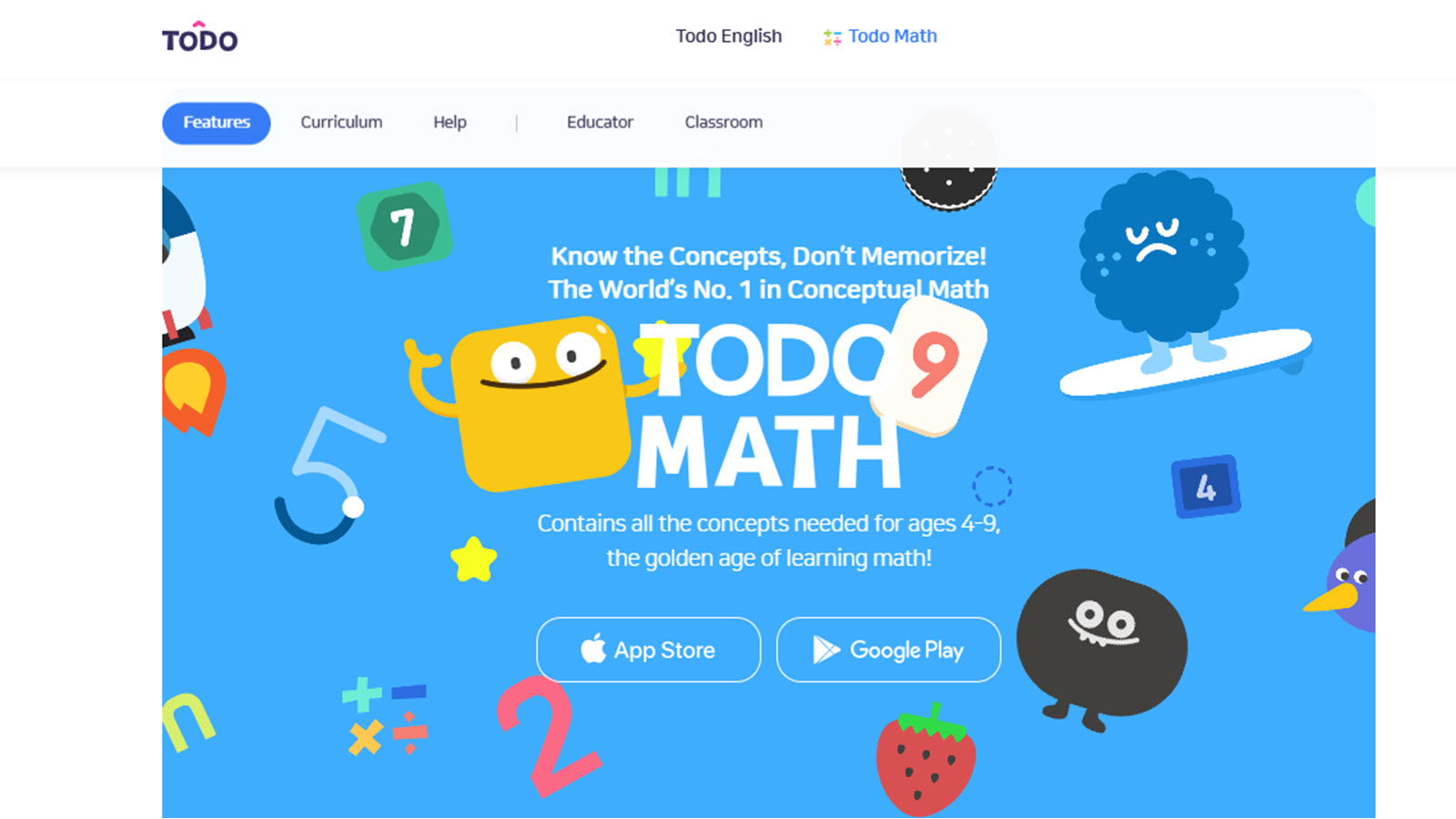
Todo Math, from Enuma in Albany, California, offers a structured early-math journey from preschool through second grade and even into early third-grade concepts for children who are ready. Learners work through more than two thousand short, interactive activities that begin with counting and shape names and later reach place value, regrouping, telling time, measurement, and introductory multiplication. Daily missions give a clear ten-to-fifteen-minute practice path, while free-choice games let children revisit favorite formats such as tracing, patterns, falling blocks, farms, trains, and quick-fact drills. Difficulty is organized into labeled levels so a preschooler counting to ten and a second grader adding three-digit numbers can share the same app without competing against each other. Collectible characters and monster quizzes add light motivation without turning every session into a race. Accessibility is a core part of the design: the app can be played in multiple languages and includes a dyslexia-friendly font, left-handed mode, extra help buttons, and simplified input options so more children can work independently. Parents can change levels, review progress, and sync profiles across devices from a dedicated grown-up page. The curriculum follows Common Core standards and was shaped by specialists connected to Harvard, Stanford, UC Berkeley, and Seoul National University. Enuma’s team also received Global Learning XPRIZE recognition for tools that help children practice foundational skills on their own. Thousands of U.S. classrooms and millions of families have used Todo Math as a consistent home or school supplement for number fluency and conceptual understanding.
Key features include:
- More than 2,000 activities across leveled missions from Pre-K through grade 2
- Daily practice mode plus free-choice games and collectibles
- Accessibility supports including multilingual play, dyslexia font, and left-handed controls
- Parent page for level changes, profiles, and progress review across devices
Facts and information:
- Used by millions of families and thousands of U.S. classrooms
- Common Core–aligned curriculum built with university education specialists
38. Hooked on Phonics
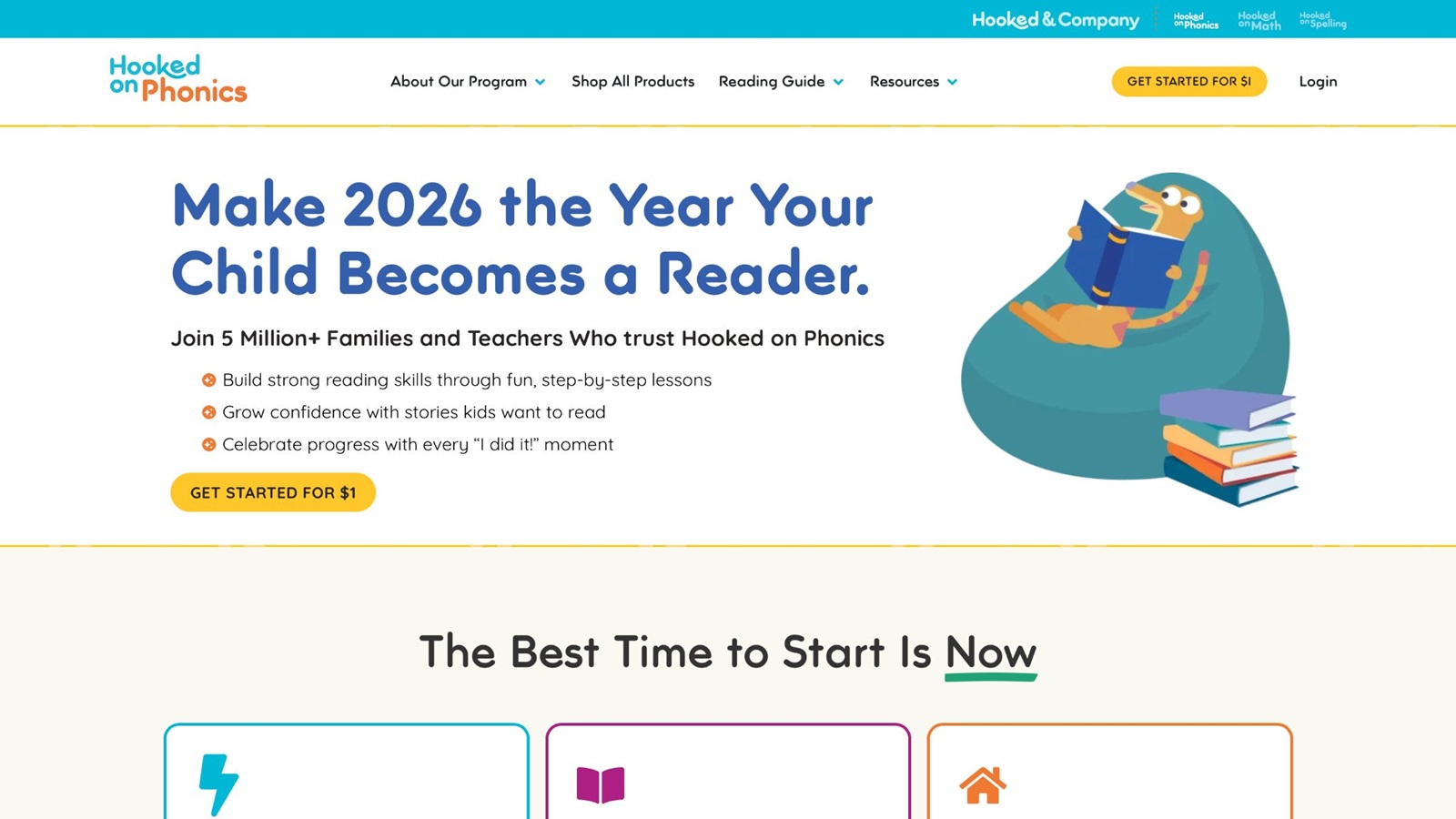
Hooked on Phonics is a long-running United States reading program that combines an app with printed workbooks and decodable storybooks so children ages three to eight can learn letter sounds, blending, and early reading in short, repeatable steps. Digital lessons introduce one sound or pattern at a time through videos, songs, and interactive games, then children practice the same skill with a pencil in a monthly workbook and in storybooks written so the words match what they have just learned. The sequence begins with pre-reader alphabet and rhyming work and moves into Learn to Read levels that end with books children can decode themselves instead of guessing from pictures. Because the print materials arrive alongside the app lessons, families can switch between screen practice and paper practice without losing the thread of the program. The same app also includes Hooked on Spelling and Hooked on Math, allowing siblings or one child to extend learning into related skills without opening a second product. Up to three learner profiles keep progress, rewards, and certificates separate. Offline downloads make lessons usable in the car, on a plane, or in homes with uneven internet. The method follows systematic phonics, a approach widely used in American early literacy instruction, and has been updated over more than three decades to keep the songs, games, and books current while preserving the step-by-step structure parents recognize. Many families treat the twenty-minute lesson rhythm as a daily reading routine that builds decoding confidence before children face longer classroom texts.
Key features include:
- Step-by-step phonics lessons with games, songs, videos, and matching print books
- Separate Learn to Read, spelling, and math tracks inside one app
- Multiple child profiles and offline lesson access
- Decodable storybooks tied directly to the sounds just taught
Facts and information:
- Trusted by millions of U.S. families across more than three decades of phonics instruction
- Structured for preschool through early elementary reading development
39. Adventure Academy
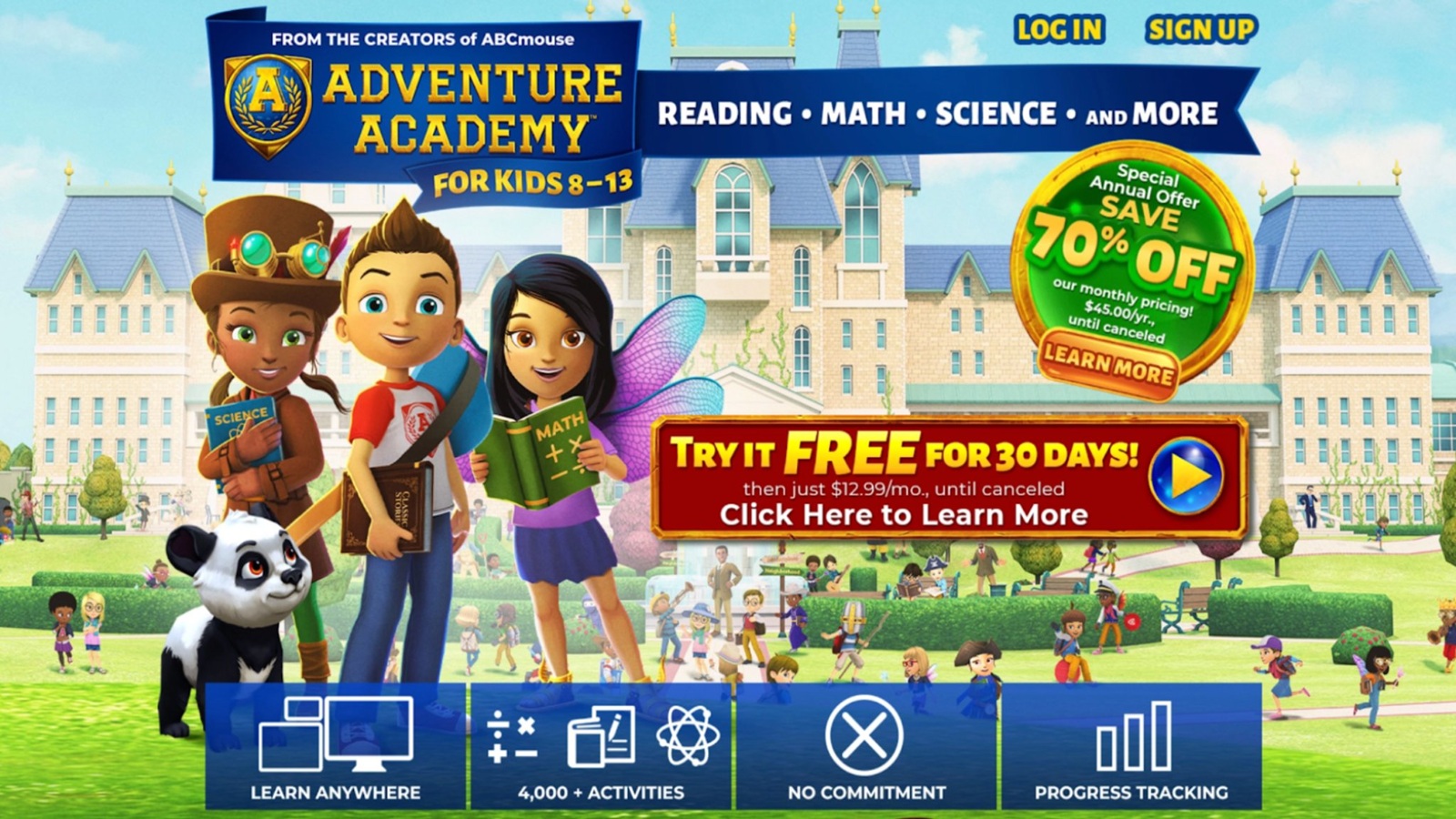
Adventure Academy, from Age of Learning in Glendale, California, is an educational multiplayer world built for children about eight to thirteen who have outgrown preschool curriculum apps. Players create a customizable avatar, wander a campus of themed zones, and complete quests that mix short videos, digital books, quizzes, and arcade-style mini-games in language arts, math, science, and social studies. A large in-house curriculum team maps those activities to elementary and middle-grade topics such as reading comprehension, operations, fractions, scientific inquiry, geography, history, and civics. Kids level up by finishing learning challenges, unlock new areas, furnish virtual homes, collect pets, join clubs, and talk through a moderated safe-chat system. The social layer is meant to feel closer to an age-appropriate online game than to a worksheet portal, while every major activity still points back to an academic objective. Households can run multiple child profiles, and the same account works across phones, tablets, and computers so siblings can play at the same time. Difficulty can be steered toward beginner, intermediate, or advanced, which helps a third grader and a sixth grader share the world without being forced onto identical tasks. Adventure Academy is positioned as the next step after ABCmouse, giving older elementary and early middle-school students a persistent place to explore subjects they already meet in U.S. classrooms. Families and homeschoolers often use it as an independent supplement rather than a full replacement for schoolwork.
Key features include:
- Thousands of curriculum-based games, videos, books, and quizzes across core subjects
- Avatar customization, quests, clubs, and moderated social play
- Grade-style difficulty settings and multi-child household profiles
- Cross-device play on phones, tablets, and computers
Facts and information:
- Created by the Age of Learning team behind ABCmouse as a next-step program for ages 8–13
- Content developed by a large in-house curriculum group covering U.S. elementary and middle-school domains
40. ScratchJr
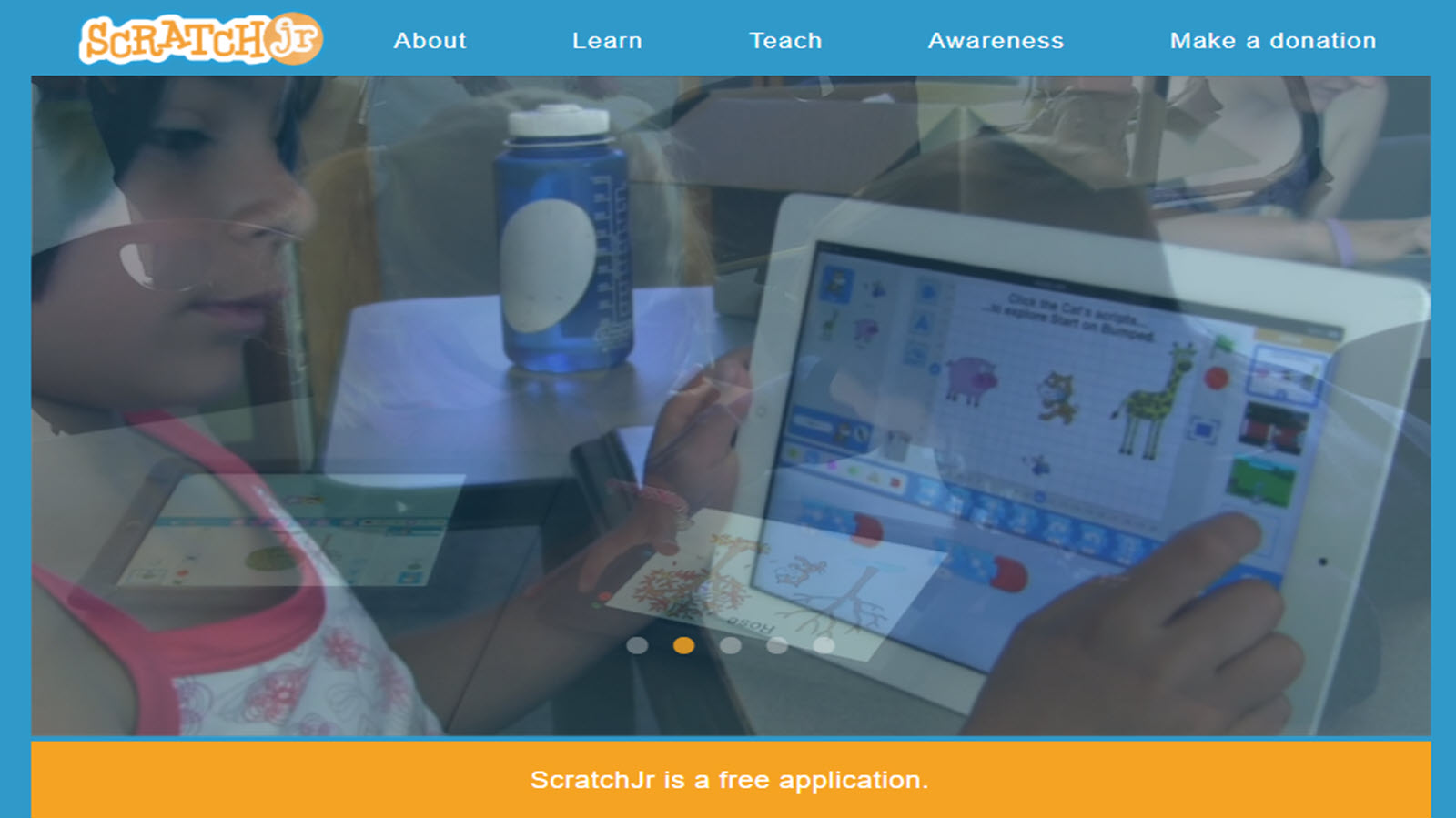
ScratchJr, developed at the MIT Media Lab with partners including Tufts University, introduces coding ideas to children ages five to seven through a simplified block language designed for early elementary hands and attention spans. Kids snap colorful command blocks together to make characters walk, jump, dance, speak, and react to one another on a small stage. Sequencing, repetition, and simple events become visible because the character does exactly what the blocks say, which makes debugging feel like fixing a story instead of hunting through text. The interface does not require fluent reading for the basic blocks, so pre-readers can still build animations and mini-games. Children paint their own characters and backgrounds, record sounds, and save projects they can reopen later or share in a classroom. There is no single correct path; the tool is a sandbox, which supports planning, persistence, and creative problem-solving as much as it supports computational thinking. Teachers across the United States use ScratchJr as a first computer-science experience before students move to full Scratch or text languages. Families use it at home when they want screen time that produces something original rather than only consuming a lesson. Because the blocks preview ideas that appear later in more advanced coding environments, early projects can grow into more complex work as children get older.
Key features include:
- Drag-and-drop programming blocks for motion, looks, sound, and control
- Character and background editors for original stories and games
- Save and share projects without requiring early reading skills
- Classroom-friendly design for independent or guided creative work
Facts and information:
- Free introductory coding environment from MIT researchers for ages 5–7
- Widely used in U.S. elementary classrooms as a first computational-thinking tool
How Educational Games Boost Development
Educational games help children practice skills in ways that stick. Many build fine motor abilities through dragging or tapping, while others encourage logical thinking by solving puzzles. Some focus on social aspects, like sharing or empathy, adding depth to play. Families see benefits in daily routines, as games often tie into real-life scenarios.
This variety keeps learning fresh and supports multiple areas at once. Common skills developed include creativity through building worlds that spark imagination, focus from puzzle challenges that improve attention, and social growth via role-play activities that teach empathy. These experiences create balanced growth that complements everyday learning at home.
Integrating Games into Daily Routines
Mix games with other activities for balance. Pair them with outdoor play or books to reinforce ideas. Many parents set short sessions, like after homework, to maintain interest. Some use games for family time, discussing what kids discover. This builds connections and extends learning beyond the screen.
Multi-Device Access and Flexible Play Options
Children can continue the same progress across phones, tablets, or other supported devices. Logging in with one account keeps characters, levels, and collected items consistent no matter which screen they use. This flexibility fits busy family schedules and travel days. Offline play after download allows sessions without constant internet. Parents appreciate the freedom to offer learning activities in different rooms or during car rides. Collections available through a single TutoClub account make switching devices simple while preserving the same safe environment found in tablet games for kids and mobile games for kids.
Seasonal and Themed Updates in Educational Games
Fresh content arrives with new seasons, holidays, or special events. Children meet limited-time decorations, stories, or characters that keep familiar worlds feeling current. These updates refresh interest without changing the core calm design. Themed activities often tie into real-world moments such as summer outdoor ideas or back-to-school routines. Regular additions encourage children to return and discover something new while practicing the same foundational skills. Fun educational games for kids and learning through play activities show how these updates support continuous engagement.
Safe Apps and Parental Controls for Kids Educational Games
Safe apps and parental controls are essential when selecting kids educational games. Look for platforms with robust features like time limits, content filtering, and activity reports to protect young users. The best kids educational games provide strong safety measures while still delivering high-quality educational and fun games.
Many educational games now include easy-to-use parental dashboards that let you monitor progress in brain games, memory exercises, and english learning apps. Choose options with no hidden ads or in-app purchases to ensure a secure and focused learning environment for your child.
What Makes a Great Kids Educational Game in 2026?
A great kids educational game in 2026 balances entertainment with meaningful learning outcomes. It feels like genuine play first, encouraging children to return voluntarily while developing important skills.
Key qualities include:
- Engaging fun educational games with adaptive difficulty
- Strong focus on brain games and memory improvement
- Clear educational goals in math, reading, and english learning apps
- Features that promote confidence building, focus, and responsibility skills
- Safe, ad-light design suitable for different ages
The best kids educational games combine these elements to create joyful learning games that support long-term development. They turn screen time into productive growth opportunities while keeping children excited about discovering new concepts.
Role of Educational Games in Building Confidence
Educational games build confidence by letting children succeed at tasks designed for their current level. Progressive challenges give a sense of achievement when puzzles or routines are completed successfully, encouraging them to try more difficult activities over time. Positive feedback and gentle retries help reduce fear of mistakes and promote persistence without frustration. Many activities within learning apps support emotional growth by showing kids they can handle responsibilities and creative choices independently. This steady growth in self-assurance carries over to other areas of development and daily interactions at home or school.
Why Variety Matters in Educational Games
Variety in educational games keeps children motivated by offering different types of activities that match changing moods and interests throughout the day. Some sessions focus on quiet puzzles that sharpen focus while others involve creative storytelling or building that sparks imagination. This mix prevents boredom and supports well-rounded skill development across logic, creativity, empathy, and problem-solving abilities. Families benefit from content that adapts naturally as children grow and discover new preferences. Regular updates in collections ensure fresh experiences that maintain engagement and align with evolving developmental needs.
Fashion, Doll, and Unicorn Worlds as Decision Practice
Dress-up is still practice. A child picks colors, compares outfits, and explains a look. Doll rooms and unicorn stables ask for the same planning. Nothing about glitter or rainbows makes the thinking smaller. Choices pile up in a good way. Which shoes fit the weather in the scene? Which bow matches the dress? Where does the doll sleep? What does the unicorn eat first? Each pick is a tiny plan.
Dress up games for girls online join style with care tasks. A closet sits next to a kitchen. A runway sits next to a bedroom that still needs making. Pet care games add the same loop of notice, help, and return. A Fluvsies paper doll printable can follow the same character after the screen goes dark.
Social emotional games for kids and emotional games for kids give feelings words to those scenes. Emotional regulation games for kids help when a child names a tired pet or a messy room. Confidence building games show up when a child finishes an outfit and can say what they did.
Seasonal Play and Holiday Weeks
Breaks change the clock. School is off. Meals run late. Relatives visit. Short festive games fill kitchen time and travel waits without asking for a full lesson plan.
Holiday art helps kids mark time. A gift wrap table or a snowy yard gives the week a look that matches the house. Summer holiday educational games and offline ideas cover long free days. A family weekly planner sits next to those sittings when adults are mapping meals and quiet hours. A Valentine printable for children can follow a short dress-up or card scene.
Fun educational games for kids keep wrapping, decorating, and caring simple. Fun games that are educational for kids and educational games for kids that are fun fill odd pockets when school is closed. Online educational games for kids work when the family is in a kitchen or a guest room.
Latest News In 2026
Kids educational games in 2026 place a stronger focus on emotional intelligence and real-life connections through thoughtful updates. New scenarios help children practice sharing, cooperation, and understanding different perspectives in gentle story formats.
Improved personalization allows activities to respond more quickly to individual choices and progress. Privacy settings and family controls become simpler to manage for everyday peace of mind. Enhanced offline features support continued play during trips without losing any advancement. Trends also show smoother blending of digital experiences with simple hands-on activities using household items. Shared family modes gain popularity for joint playtime on the same device.
FAQ
What makes educational games suitable for young kids?
Educational games for kids feature intuitive interfaces that match small hands and short attention spans, allowing easy navigation without adult help every time. They incorporate elements like colorful animations and gentle sounds to create an inviting space that feels more like play than study. Safety aspects, such as built-in timers to limit play, ensure a balanced experience that aligns with early childhood needs.
How do these games support skill building?
Kids educational games weave in activities that sharpen observation and quick thinking, often through scenarios that mimic everyday decisions. They promote resilience by letting children retry tasks in a low-pressure way, building patience alongside core abilities. Beyond basics, some include themes on environmental awareness or cultural diversity, broadening young perspectives naturally.
Can parents track progress in kids educational games?
Parents can access reports that highlight areas of strength and suggest next activities, making it simpler to support home learning. These tools often update in real time, reflecting daily improvements without extra effort.
Are there free options among top kids educational games?
Some educational games for kids provide core experiences at no cost, focusing on essential skills to get started right away. These versions let families sample mechanics before exploring fuller libraries. Upgrades unlock varied themes, ensuring ongoing engagement as interests change.
How do kids educational games support overall development?
Educational games for kids support overall development by mixing fun with practice in problem-solving, creativity, and emotional awareness. Children build focus and confidence through repeated gentle challenges that feel rewarding rather than difficult. Many titles encourage responsibility and empathy via character care while strengthening logical thinking through puzzles and choices. These experiences create balanced growth that complements real-world learning at home.
What features make educational games suitable for young children?
Suitable educational games offer clear visuals, simple controls, and challenges that match current abilities without causing frustration. Ad-free educational games maintain full attention on skill building and enjoyment. Adjustable difficulty and positive feedback help children stay motivated while developing fine motor skills through tapping and dragging motions.
Can educational games work without internet access?
Many kids educational games function completely offline after the first download. This capability keeps learning routines consistent during travel or in places with weak connections. Families value the flexibility that allows continued play and progress without depending on constant wifi availability.
How do educational games build creativity in children?
The best educational games build creativity through open-ended activities where children design, build, and invent stories without strict rules. Puzzle elements encourage trying multiple solutions while character interactions support imaginative role-play. These games spark curiosity and allow free expression that strengthens confidence in personal ideas and choices over time.
What should parents look for in kids educational games in 2026?
Parents should look for personalized learning paths, regular content updates, and strong safety measures for the best kids educational games. Features that highlight strengths in creativity and emotional skills add extra value. Balanced designs with good offline support and family-friendly options suit modern households particularly well.
What benefits come from using educational games regularly?
Regular use of educational games online helps children strengthen focus and creativity through consistent yet enjoyable activities. These experiences reinforce logical thinking and emotional awareness in ways that fit naturally into daily life. Calm designs support balanced routines whether at home or during travel with safe apps for kids. Families often notice steady progress in confidence and curiosity over time.
Why do educational games emphasize calm and purposeful play?
Fun educational games with calm designs minimize distractions so children can concentrate better on tasks that build real abilities. Purposeful activities encourage responsibility and empathy through gentle character interactions and routines. This style creates positive screen habits that feel rewarding rather than overwhelming. Many options align well with family needs for meaningful digital time.
How do open-ended activities in educational games foster growth?
Open-ended activities let children explore ideas freely and experiment with multiple solutions in creative scenarios. These elements build problem-solving skills while boosting confidence in children through personal choices and inventions. Storytelling and building tasks nurture curiosity across different ages in a safe setting. Such play supports well-rounded development without rigid rules.
What makes multi-device support valuable in educational games?
Multi-device support allows seamless continuation of learning moments across home, travel, or different locations. Families appreciate the flexibility that keeps routines consistent without extra setup. Progress stays smooth regardless of the device used for educational games. This feature fits naturally into busy modern schedules.
How do regular updates improve educational games over time?
Regular updates bring fresh activities and themes that match children’s changing interests and growing abilities. This keeps the content engaging while maintaining focus on creativity and skill building. Families benefit from evolving experiences without needing new separate options. Ongoing improvements help sustain positive and balanced screen habits long term.
How do educational games help children practice basic vocabulary and naming?
Kids educational games often include clear visual objects paired with simple spoken words that children hear while interacting. Kids can match names to colors, shapes, animals, or household items as they move through scenes. Repeating these moments helps young players connect the word to the picture naturally. Short naming activities fit easily into play without feeling like formal lessons. This gentle exposure supports early language growth in collections such as educational games for 2 year olds and educational games for kindergarten.
In what ways can educational games encourage children to describe what they see on screen?
When children guide characters or arrange items, they often begin talking about the colors, actions, or objects in front of them. Parents nearby can listen as kids describe what is happening or what they plan to do next. These spontaneous descriptions strengthen spoken language in a relaxed setting. The visual clarity of many scenes makes it easy for children to find words for what they notice. Over time this habit of describing becomes a natural part of play with learning apps for kids.
How do simple choice-based moments in educational games introduce cause and effect?
Many activities let children select one action and then immediately see a clear result, such as a character smiling after being fed or a scene changing after an item is placed. These direct outcomes help young players understand that their decisions lead to something specific. The feedback stays gentle and predictable so the connection feels safe to explore. Repeating similar choices reinforces the idea that actions have consequences. This basic understanding grows quietly through ordinary play moments found in educational games for kids age 3.
What role do familiar everyday objects in educational games play for young learners?
Games frequently feature common items like cups, clothes, toys, or food that children already know from real life. Seeing these familiar objects on screen helps kids feel comfortable and makes the digital world easier to understand. Interacting with digital versions of everyday things can spark recognition and simple conversations about the real objects at home. The connection between screen and real life feels natural rather than abstract. This familiarity supports confident exploration from the first sessions in games for young kids.
How can educational games support quiet independent exploration after a busy day?
Short, self-contained activities with simple controls allow children to settle into calm play on their own. The predictable structure and gentle pace give them space to choose what to do next without needing constant guidance. After active outdoor time or social events, these quiet sessions offer a soft transition. Children can revisit favorite scenes or try small new tasks at their own speed. The design supports peaceful exploration that fits the end of a full day with fun educational games for kids.
How long should a child play in one sitting?
Young children last longer when the sitting has a clear finish, such as a made bed, a fed pet, or a finished outfit. Two short blocks often fit a busy day better than one long stretch after running outside. An adult watch or a “one more room” rule is gentler than a loud in-game timer, because the child ends on a completed job instead of a mid-tap cutoff. A shared table makes it easier to notice tired eyes and stop when dinner starts. Games for young kids suit this pace, since the buttons stay large and a scene can pause cleanly in a car or on the couch.
Are dress-up and pet games still learning games?
Yes. Choosing clothes, decorating rooms, feeding pets, and cleaning spaces practice planning, language, empathy, and order. Kids name colors, notice who needs rest or food, and finish small jobs they can retell later. A closet scene asks them to compare outfits. A pet house asks them to come back and check on the same character. Responsibility games for kids add that loop of notice, help, and return inside the same dress-up and pet rooms.
Do educational games replace books and outdoor play?
They sit beside those habits rather than taking their place. Outdoor running still uses big energy and whole-body balance. A later tablet scene uses small hands, quiet focus, and short care jobs. A storybook after a game, or a walk before one, keeps words and movement in the same day. Digital play is useful when a screen is already part of the afternoon, not as the only way a child learns names, order, or kindness. The best learning games for kids online work as one station among books, paper, and outdoor time.
How can siblings share the same game world?
Two children can stay in one house or shop while each does a different job. A younger child feeds a pet. An older child rearranges furniture or finishes a longer outfit. The theme stays shared, so the fight is less about “whose app” and more about whose turn at the next task. A finished-job rule keeps turns fair: the device moves after a bed is made or a bowl is filled, not after a raw minute count. Educational games for 5 year olds can share that theme with an older sibling even when the jobs are not the same size.
What should families avoid in a kids game?
Ads, sudden store buttons, loud timers, and menus a child cannot read pull attention off the story. Safety is also about feeling: soft sound, steady colors, and a pause that does not punish the child for stopping. If the first moments feel like a hunt, the game is asking for too much searching and not enough doing. Store prompts in the middle of feeding a pet turn care into shopping. Educational but fun games for kids keep the sitting on sorting, dressing, and simple logic, which is what young kids need when the goal is a calm, finished room.
Read Also:
- Balancing Self-Care and Parenting: 7 Tips for Moms
- Key Advice for New Parents: What No One Tells You
Discover the best kids educational games - TutoClub




.jpg)