

Best Educational Websites For Kids






Finding quality educational websites for kids helps parents turn everyday screen time into meaningful growth opportunities. With so many choices, you can pick platforms that fit your child's age and interests, from preschool basics to advanced puzzles. Discover the best educational websites for kids in 2026 that blend fun and learning.
Beyond websites, families often explore top-rated educational games for kids app options and the best educational games for kids iPad for interactive learning. The growing demand for the best mobile games for kids and engaging tablet games for kids highlights how mobile platforms support skill development. For language growth, curated lists of the best English learning apps for kids showcase tools designed to build vocabulary and communication skills.
Discover the best educational websites for kids- TutoClub
Why Educational Websites Matter For Kids
.jpg)
Online learning sites give children a chance to build key skills at their own pace. They often mix games with real lessons, helping kids grasp tough ideas without feeling like work. Many platforms adapt to each child's level, so learning stays challenging yet achievable. Parents appreciate how these tools support schoolwork, especially in areas like problem-solving or language.
Educational websites for kids, such as those with interactive content, can boost focus and confidence. Kids learn best when activities feel like play, leading to better retention of facts. Plus, they encourage healthy habits by limiting distractions.
Many leading educational websites excel by offering specialized game collections that target different developmental areas. Children can strengthen cognitive functions with the best brain games for kids, improve recall through memory games for kids, develop empathy with emotional games for kids, and enhance critical thinking via problem-solving games for kids. These focused activities make online learning more engaging and effective while aligning perfectly with school curricula.
Key Features Of Top Learning Sites For Children
Good sites include adaptive lessons that adjust to a child's progress, keeping them engaged without frustration. Look for ad-free spaces with parental controls for safety. Variety in topics, from art to coding, helps cover broad interests. Some offer progress reports so you can track growth. Multi-device access makes it easy for on-the-go use. If you're seeking structured play, platforms with expert-designed content shine. Our games collection has examples that blend fun with skill-building. These features ensure sites remain useful over time, supporting ongoing development.
How Parents Can Evaluate Educational Websites
Parents often start by checking how well a site matches a child’s current abilities. Clear age labels and sample activities help decide if the content feels right. Progress tools that show completed tasks without pressure give a quiet sense of growth. Safety checks include looking for ad-free spaces and simple parent dashboards that align with guidance in the parents guide to healthy screen time with educational apps. Multi-device support matters for families who switch between tablets and phones, similar to options found in tablet games and mobile games. Content variety is another practical test. A good mix of reading practice, number games, and creative tasks covers more ground and pairs well with the skill focus of brain games, memory games, and problem solving games.
Top Educational Websites for Kids by Age Group
Top educational websites for kids organize content by age to match developmental stages perfectly. For ages 3-5, websites focus on basic letters, numbers, colors, and shapes through interactive play that builds early memory retention and confidence building.
For ages 6-8, platforms introduce more structured brain games, simple math, reading comprehension, and beginning science. These fun and educational games help children develop responsibility by tracking their own progress and completing daily challenges.
For ages 9-12, websites shift toward advanced topics like coding basics, history, and critical thinking with complex brain games and problem-solving activities. The best educational websites for kids adapt content so every age group experiences meaningful growth while staying engaged through playful learning.
Educational Websites for Specific Subjects
Reading sections often start with letter sounds and move into short stories. Clickable words and listening options help children connect print with spoken language. Math areas use visual counters, shape puzzles, and step-by-step number paths. Science pages bring animals, weather, and simple experiments to the screen. History and geography introduce maps and short fact collections. Art and music tools let kids draw, mix colors, or arrange notes. Coding introductions rely on block pieces that snap together. Language practice includes matching games and basic conversation practice, which connects with resources such as English learning apps for kids and educational games for kids learning English.
What Makes a Great Educational Website for Kids in 2026?
A great educational game website for kids in 2026 successfully combines learning with engagement while supporting overall development. It must feel fun first so children return voluntarily.
Key qualities include:
- Age-appropriate content with adaptive difficulty
- Rich mix of fun and educational games, videos, and interactive activities
- Strong emphasis on brain games and memory exercises
- Features that promote confidence through positive feedback and achievements
- Elements that teach responsibility, patience, and independent learning
- Safe, clean design with minimal distractions and strong privacy protection
The best educational websites for kids deliver measurable skill growth while keeping children excited about learning. They balance screen time effectively and help turn digital experiences into real-world abilities like problem-solving, creativity, and self-motivation.
Benefits of Educational Websites for Young Learners
The best educational websites give kids chances to build skills through activities that feel like natural play. Children often develop stronger focus and creativity when tasks match their interests and growing abilities. Many platforms support social emotional growth for children by including scenarios that encourage kindness and understanding in everyday situations.
These resources help turn screen time into opportunities for responsibility and curiosity. Kids explore ideas at their own pace, which builds confidence without pressure. Flexible designs make it easy to fit short sessions into daily life, supporting schoolwork and personal interests.
Websites with varied topics cover broad areas like storytelling, logic, learning through play examples and basic concepts that nurture well-rounded development. Families appreciate options that promote healthy habits and positive engagement.
Educational Websites and Creativity Development
Creative growth happens when children can design characters, invent stories, or build simple scenes. Open-ended tools let kids try ideas without a single correct answer. Drawing pads, story builders, and music makers turn screen time into personal expression. These activities strengthen imagination and problem-solving at the same time. A child who creates a short tale practices sequencing and word choice. One who designs a virtual pet room experiments with colors, shapes, and planning. Platforms that encourage free play alongside guided tasks keep creativity flowing. This approach lines up with the open exploration style seen in learning through play examples and benefits of learning through play. Many of these creative elements also appear in the educational games for kids collection.
How Educational Websites Support Different Learning Styles
Kids learn in unique ways, and strong educational websites offer content that fits visual, hands-on, or listening preferences. Visual elements with colors and images help some children connect with new ideas quickly. Interactive tasks suit those who enjoy movement and direct involvement.
Sounds, narration, and stories aid auditory learners in remembering concepts better. This variety ensures more children stay engaged and experience success. Adaptive features adjust difficulty smoothly so learning stays challenging yet achievable. Progress tools in some platforms provide gentle feedback that highlights growth areas. Overall, these sites create inclusive spaces where different styles thrive side by side.
Integrating Educational Websites into Family Routines
Short, regular sessions on learning apps blend easily with family schedules and create positive daily habits. Morning or evening times work well for shared activities that spark conversations afterward. Many resources support flexible pacing around school, meals, and free play. Calm, distraction-free designs help maintain balance and focus during use. Consistent exposure often leads to gains in independence and problem-solving skills for kids.
Parents find it helpful to combine online moments with simple offline extensions, like drawing or discussing what happened in activities. This approach strengthens family bonds while reinforcing skills.
Educational Websites for Homeschool Support
Homeschool families use these sites to fill subject gaps or add variety to daily lessons. Self-paced modules let a child work through math or reading while a parent handles other tasks. Short video explanations and interactive quizzes provide clear checkpoints. Many platforms supply printable follow-ups or discussion prompts that extend the online work. Subject libraries covering science, history, and language arts give flexible options for different ages in one household. Progress summaries help parents track what has been covered without constant supervision. Sites that offer both structured paths and open creative spaces fit well with mixed learning days.
Educational Websites For Rainy Days And Travel
Wet weather and long waits leave room for one finished activity, not an open browse. Sites that load on a phone work in a car seat or a hotel room. Educational games for kids at home often match those short indoor stretches. Mobile games for kids and educational games for kids on iPad use the same pocket of time when a laptop stays packed. A TutoClub login keeps the child’s last game ready after the first download.
Travel-friendly use looks like this:
- One short task per wait
- Sound low enough for a shared seat
- A paper pad for a quick drawing after the screen closes
How Siblings Share One Learning Account
Two children on one tablet need turns, not a tug of war. Separate profiles keep a younger child out of a harder set. Educational games for 6 year olds can follow kids educational games for a 5 year old on the same device when each child has a named space. Social emotional games for kids give siblings a shared care story once the timer flips. A family weekly planner can hold the turn order so the fight never starts at the screen.
Shared-device habits that stay calm:
- A kitchen timer for each turn
- Headphones for the child who is playing
- One joint activity during the week
When A Child Outgrows A Favorite Website
Kids leave a site when every level feels finished. Educational games for 10 year olds and educational games for kids in 4th grade pick up after early puzzle play. Learning apps for kids 8 years old add longer paths. Kid educational games in the same library keep familiar characters while the task gets harder. The Subscription section how one account still opens those next titles.
Signs a child is ready to move on:
- They skip instructions
- They finish sets in minutes
- They invent extra rules
Grandparents And Shared Play On Learning Sites
Grandparents need a clear start: open, play, close. Games for young kids with large characters help. Confidence building games give an adult something to praise out loud. Practical tips for new parents still apply when a grandparent is the grown-up in the chair. A Fluvsies paper doll printable can follow the same character after the tab closes.
Shared play works when:
- One adult sits beside the child
- The session stays short
- The grown-up repeats what the child just did
Best Educational Websites For Kids
1. TutoClub - Best Educational Website For Kids
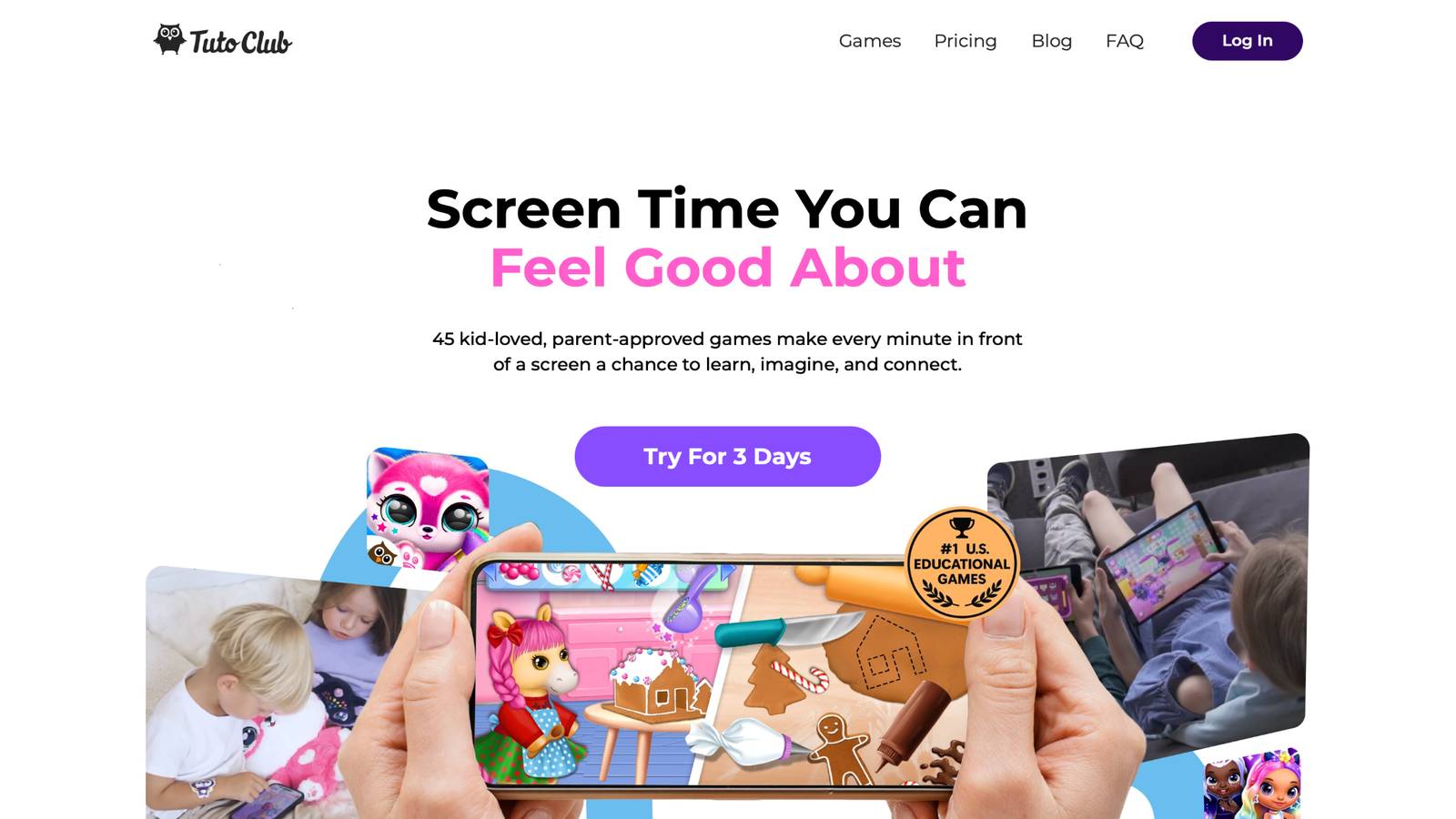
Educational games for kids from TutoClub offer a subscription-based platform with over 45 skill-building activities designed to make screen time positive and enriching. This site turns play into a tool for growth, helping children develop creativity, focus, and emotional skills in a safe, ad-free environment. Kids dive into puzzles, storytelling adventures, and character-care games that spark imagination and build real-life abilities like kindness and responsibility. Parents love how it reduces guilt over device use, creating calm moments for family bonding. With multi-device support and easy access, it's ideal for busy households seeking balanced, expert-crafted fun that feels like quality time. The platform stands out for its research-backed approach, where every game promotes curiosity and exploration without distractions.
Facts and information
- Builds creativity through design and art-inspired activities that let kids create and experiment.
- Improves focus with puzzles and routines that teach problem-solving in engaging ways.
- Supports emotional growth by including games on empathy, compassion, and confidence.
- Encourages responsibility via character-care elements that mirror real-world duties.
- Sparks curiosity with open-ended adventures that connect ideas and ask questions.
Join Tuto Club and unlock endless learning fun for your kids.
TutoClub Overview
TutoClub is your gateway to a magical world of educational games designed especially for children.
As part of TutoTOONS, a leading kids' games studio, we offer premium access to over 45 ad-free games.
Our mission is to blend learning and play, helping kids explore, create, and grow in a safe online space.
Thousands of parents trust us for family-friendly content that sparks imagination and builds essential skills.
Key Features
- Unlimited Access: Unlock full content in all games with no interruptions.
- Ad-Free Experience: Enjoy seamless play without any ads or distractions.
- Skill Development: Games foster creativity, social skills, communication, and more through fun activities like pet care and cleanup challenges.
- Regular Updates: Get new releases, exclusive content, and future updates automatically.
- Easy Subscription: Cancel anytime with no obligations, simple and flexible for families.
Explore Our World
TutoClub provides a rich ecosystem of educational games for kids, featuring ad-free experiences that promote creativity, focus, and emotional growth through play.
This platform turns screen time into valuable learning opportunities, with parent-approved content that builds essential skills and sparks curiosity in young minds.
- TutoClub Games: Over 45 educational games, including popular titles like Fluvsies, Smolsies, and the Sweet Baby Girl series
- Blog: Insights, tips, and stories for families on kids' learning and play
- FAQ: Comprehensive answers to frequently asked questions about subscriptions, features, and more
Get TutoClub on Your Device
TutoClub delivers premium kids educational games directly to your mobile devices, making learning accessible anytime, anywhere.
With apps available on major platforms, families can easily download and subscribe for ad-free play that turns screen time into skill-building adventures.
Perfect for parents seeking safe, engaging content on iOS, Android, or Amazon devices.
Why Choose TutoClub?
We're committed to 100% safe, enriching entertainment that kids love and parents approve.
Join the thousands who've seen their children thrive through playful learning.
Ready to start the adventure?
Subscribe to TutoClub today and unlock endless fun!
2. Fluvsies Academy
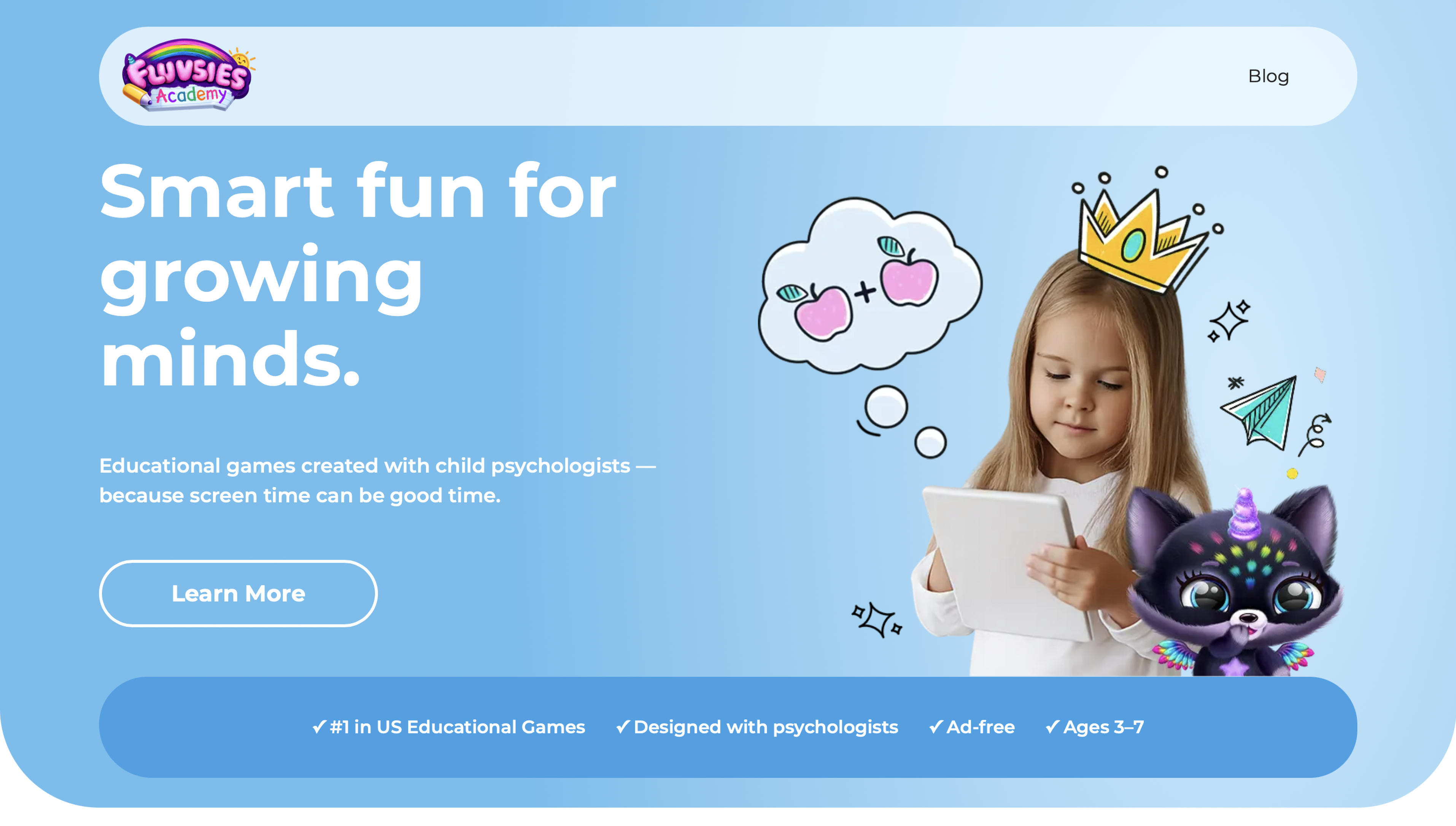
Fluvsies Academy brings to life a delightful educational experience where beloved fluffy virtual pets meet structured learning for kids ages 3 to 7. Young learners explore preschool topics like language and phonics through playful mini-games, strengthen math skills with number activities that build confidence, enhance logic and focus via attention-sharpening tasks, and master sorting for better comparison abilities, all while enjoying creative open-ended play.
Two distinct learning modes promote active problem-solving alongside real-world life skills and emotional growth. The integration of familiar cute characters fosters engagement and kindness, with regular updates ensuring ongoing freshness. Its preschool emphasis provides excellent foundational support, while older kids might find some activities serve as enjoyable review.
Key features:
- Mini-games focused on language, phonics, numbers, logic, and sorting
- Integration of adorable Fluvsies virtual pet characters
- Dual learning modes for academic and holistic development
- Expert-backed, research-informed content
- Safe, ad-free environment optimized for young children
Facts and information:
- Designed specifically for ages 3-7
Emphasizes play-based learning to develop focus, empathy, and curiosity
3. PBS Kids
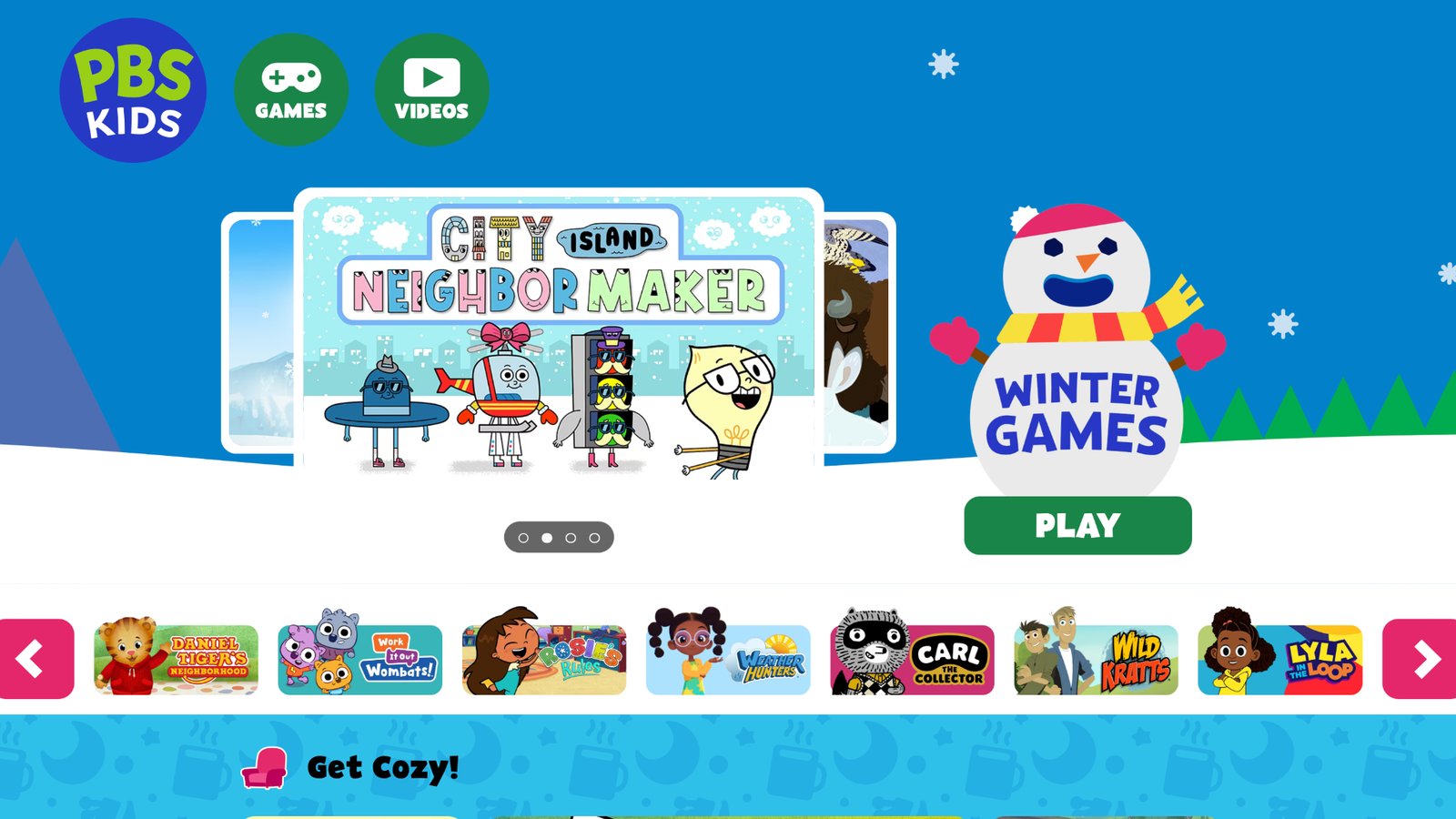
PBS Kids serves as a hub for children's programming with games, videos, and shows that cover science, math, and social studies in a kid-friendly format. It draws from popular series to make lessons relatable, though some content requires strong internet for smooth play. Strengths lie in its wealth of free resources that tie into real-world topics, like exploring nature or community helpers. Weaknesses include limited personalization, which might not adapt as well to individual paces. Overall, it fosters curiosity through familiar characters and simple interactions, making it a solid choice for young learners who enjoy stories mixed with facts.
Key features
- Interactive games based on shows like Curious George for hands-on learning.
- Videos and clips that explain concepts in short, digestible segments.
- Activities tied to themes like holidays or everyday life for variety.
Facts and information
- Targets preschool to early elementary ages with content on animals, geography, and emotions.
- Offers free access without ads in many sections, promoting safe exploration.
- Includes tools for parents to guide viewing and extend lessons offline.
4. National Geographic Kids
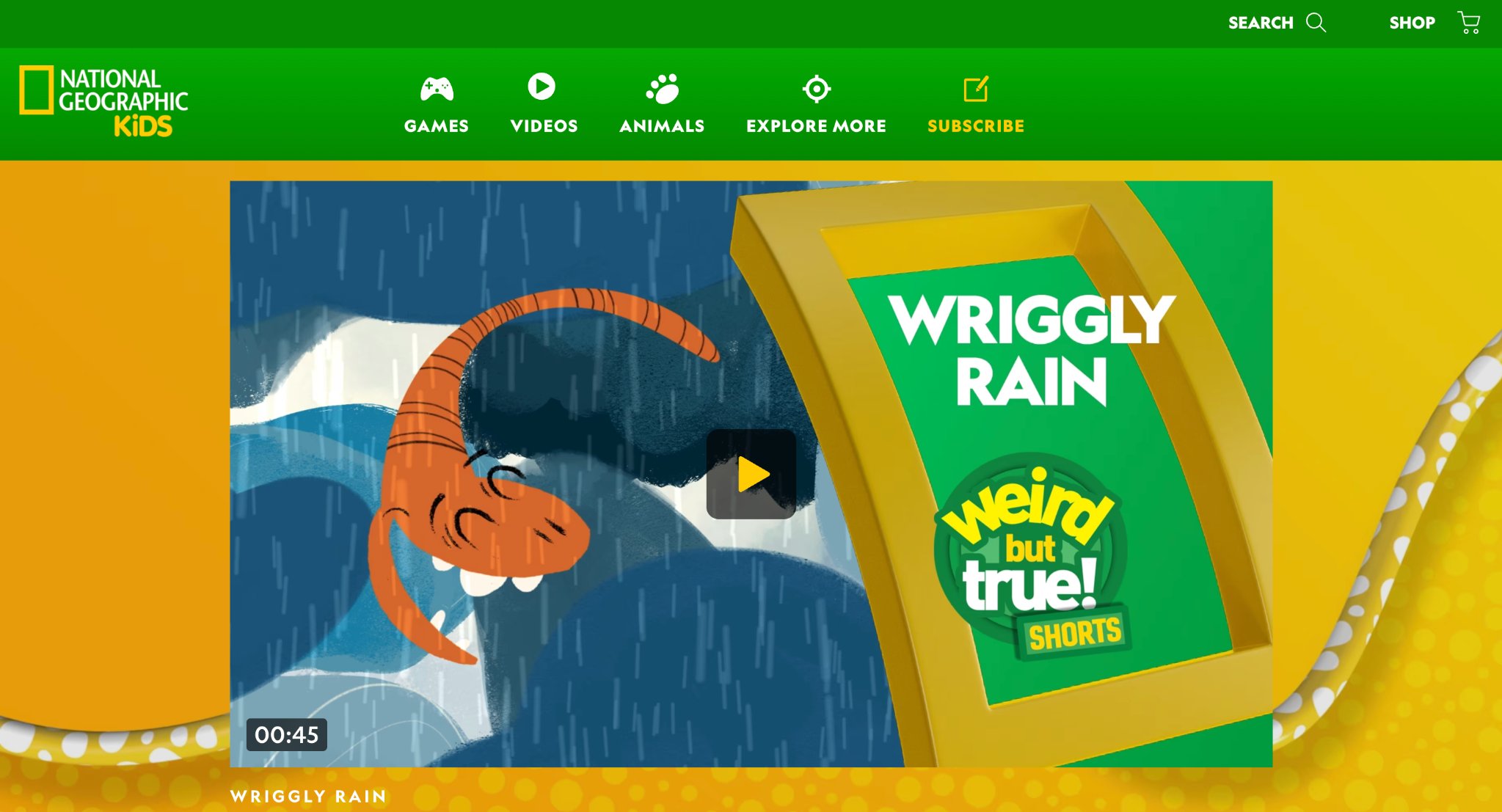
National Geographic Kids brings the wonders of the world to children through articles, videos, and quizzes on animals, history, and science. Based in the US, it excels at inspiring awe with stunning visuals and real facts about endangered species or ancient cultures. However, navigation can feel cluttered for very young users, requiring adult help at times. Its strength is in promoting global awareness and environmental care, like tips on reducing plastic use. This site suits curious minds eager to learn about far-off places, though it lacks heavy gamification compared to others.
Key features
- Quizzes and personality tests on topics like outdoor sports or brain boosters.
- Articles on history heroes and conservation efforts for in-depth reading.
- Games like matching puzzles on countries or gemstones.
Facts and information
- Covers science and nature with series like Weird But True for fun trivia.
- Encourages crafting and pet care sections for creative play.
- Provides homework help on animal reports and seasonal recipes.
5. Khan Academy Kids
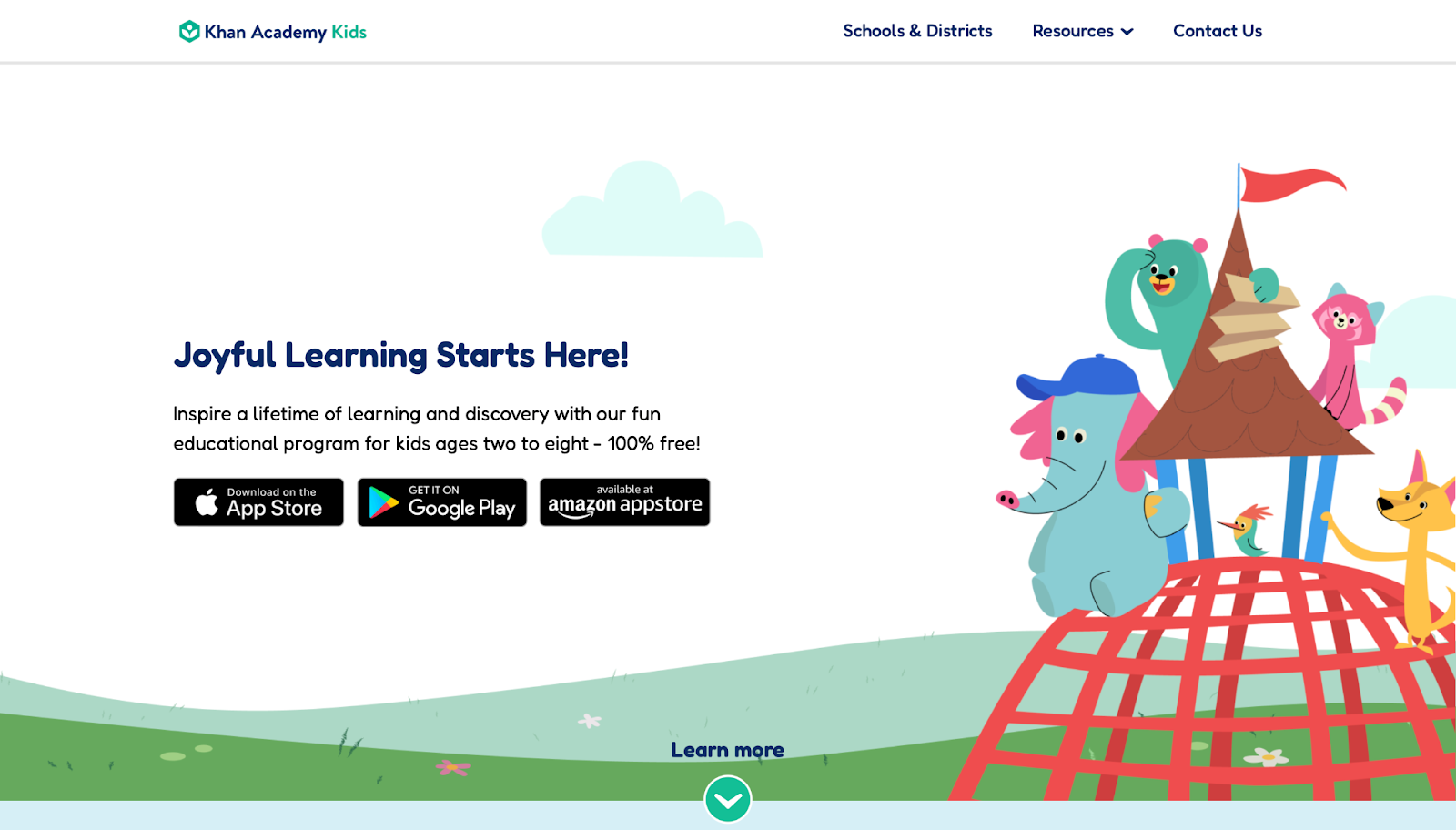
Khan Academy Kids, from the nonprofit Khan Academy in Mountain View, California, delivers free app-based lessons for early learners in reading, math, and social-emotional skills. It shines with personalized paths guided by characters, helping kids build basics through stories and games. A downside is its focus on younger ages, which might not hold interest for older children. The app adapts well, offering thousands of activities that grow with the user, making it great for building confidence in a playful setting without pressure.
Key features
- Interactive books and videos on naming feelings and phonics.
- Creative activities like tracing and drawing for fine motor skills.
- Lessons aligned with early learning standards for structured progress.
Facts and information
- Supports English language learners with visuals and read-alouds.
- Includes festive content like winter songs for seasonal engagement.
- Tracks progress for parents to see growth in core areas.
6. Starfall
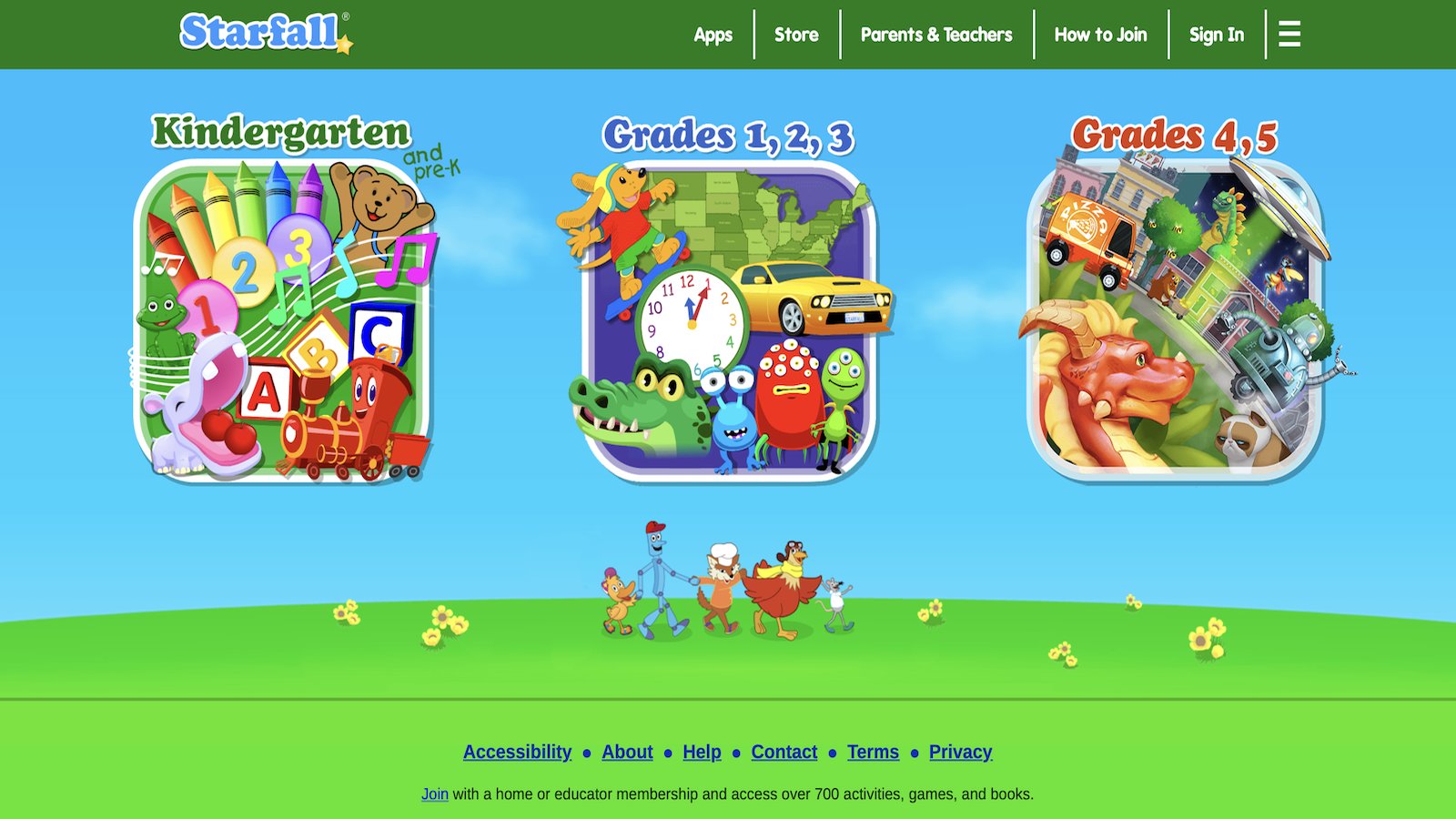
Starfall specializes in reading and math for young children, using multisensory games and songs to teach phonics and basic numbers. It performs well as a free public service with no ads, aiding emergent readers and those with learning challenges. One weakness is its limited scope beyond early grades, potentially needing supplements for advanced topics. The site builds motivation through positive feedback, making it effective for homeschool or classroom use with diverse learners.
Key features
- Animated songs and movies for phonemic awareness and sight words.
- Interactive games that combine touch, sound, and visuals.
- Books and activities aligned with state standards.
Facts and information
- Helps English language learners with sequential phonics.
- Founded to address dyslexia, focusing on confidence-building.
- Offers membership for expanded math and reading content.
7. ABCmouse
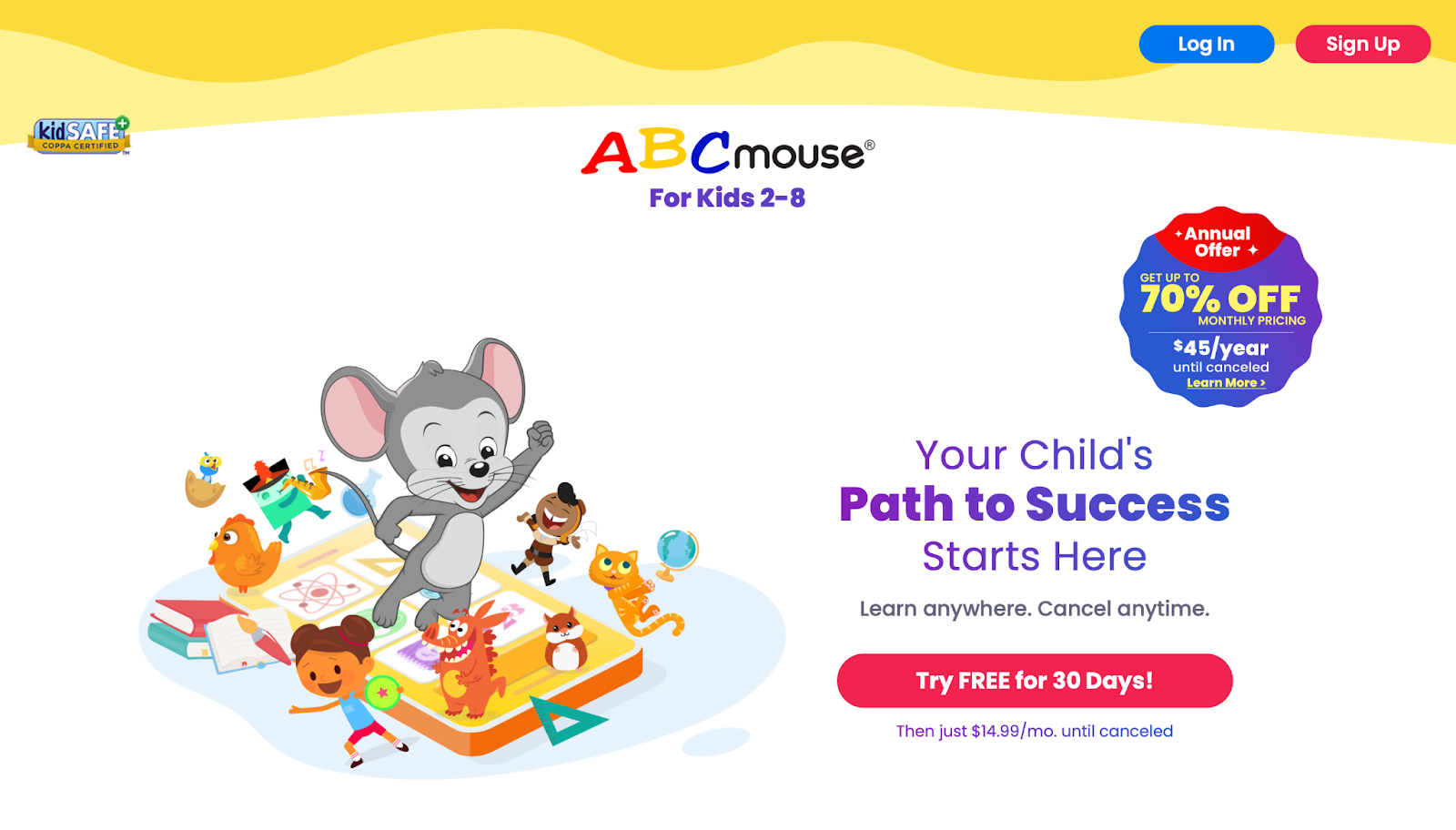
ABCmouse delivers a comprehensive curriculum for toddlers through early elementary ages, covering reading, math, science, and art via interactive games, books, songs, and puzzles. Its carefully structured step-by-step progression combined with a rewarding system keeps children motivated and eager to return. Young learners explore immersive virtual worlds like bustling zoos and peaceful farms, where voiced guidance makes navigation simple and concepts come alive through colorful animations.
Parents value the detailed progress tracking that shows growth across subjects, along with printable activities that extend learning offline. The platform works especially well for homeschooling families seeking expert-developed content that builds strong foundations. While the subscription model follows a trial period, the breadth of hundreds of activities and customizable avatars ensures children stay engaged while developing phonics, shapes, world knowledge, and overall curiosity in a safe, supportive environment.
Key features
- Over hundreds of books, songs, and puzzles for varied practice.
- Customizable avatars and virtual rewards for engagement.
- Progress tracking graphs by subject and level.
Facts and information
- Covers phonics, shapes, and world knowledge in fun animations.
- Includes printable activities for offline extension.
- Supports homeschool with expert-developed content.
8. Funbrain
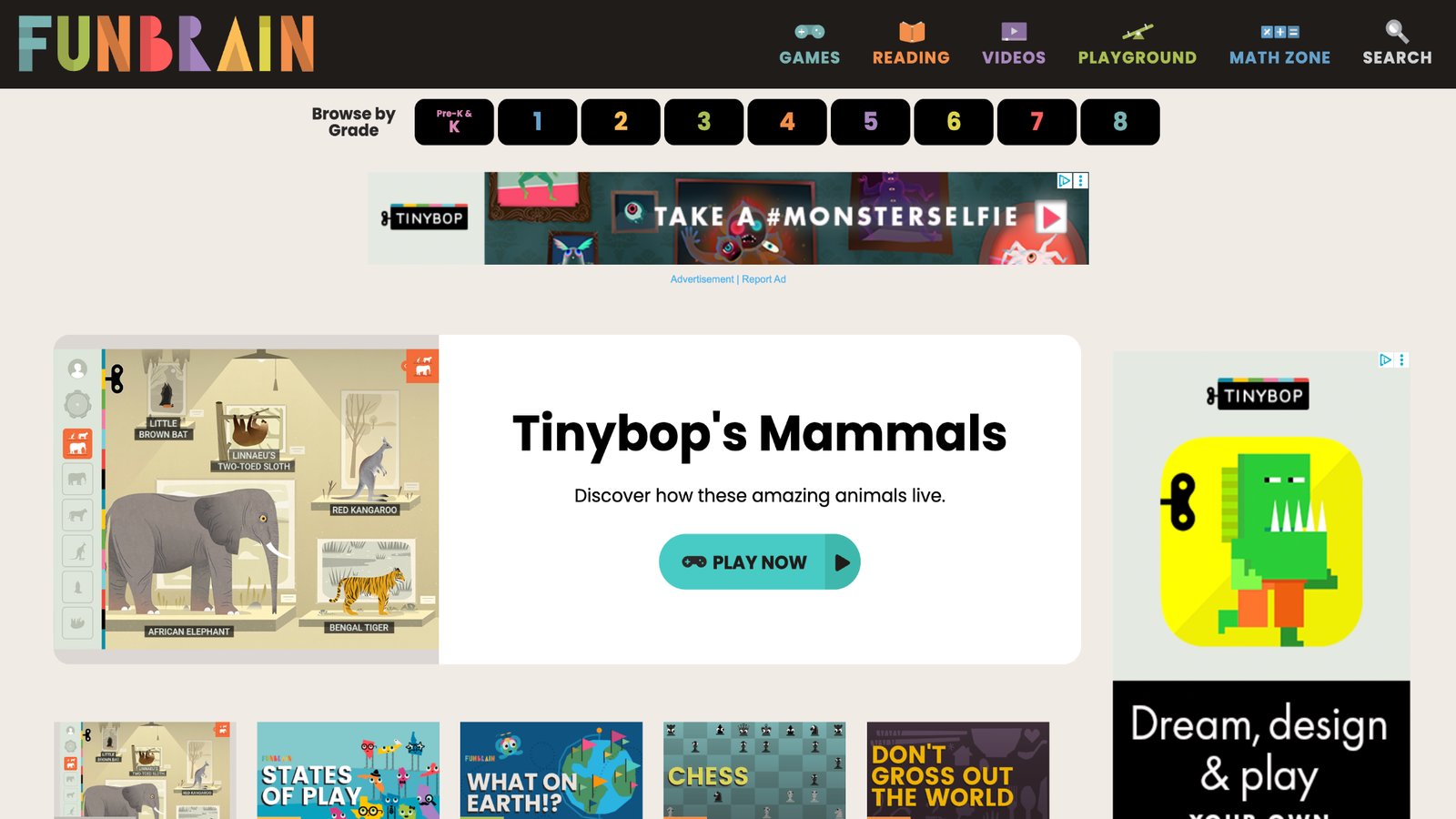
Funbrain offers a wide selection of free games, books, videos, and comics that make math, reading, and grammar practice feel like casual entertainment for elementary-aged children. Its arcade-style activities suit short attention spans perfectly, delivering quick wins through puzzles, adventures, and word challenges that reinforce key skills without pressure. The site covers diverse topics including history and science trivia, appealing to kids who prefer light-hearted play over rigid lessons.
Teachers appreciate the dedicated section for assigning activities, while the absence of personal data collection ensures a safe experience. Although the design may feel somewhat dated compared to modern platforms, Funbrain’s no-cost access and variety make it a reliable daily supplement that turns everyday screen time into meaningful skill reinforcement in a relaxed, engaging format.
Key features
- Games on math operations and word challenges.
- Digital books and comics for reading practice.
- Videos that explain concepts in simple terms.
Facts and information
- Targets elementary ages with puzzle and adventure themes.
- No personal data collection for safe use.
- Includes sections for teachers to assign activities.
9. Coolmath4kids
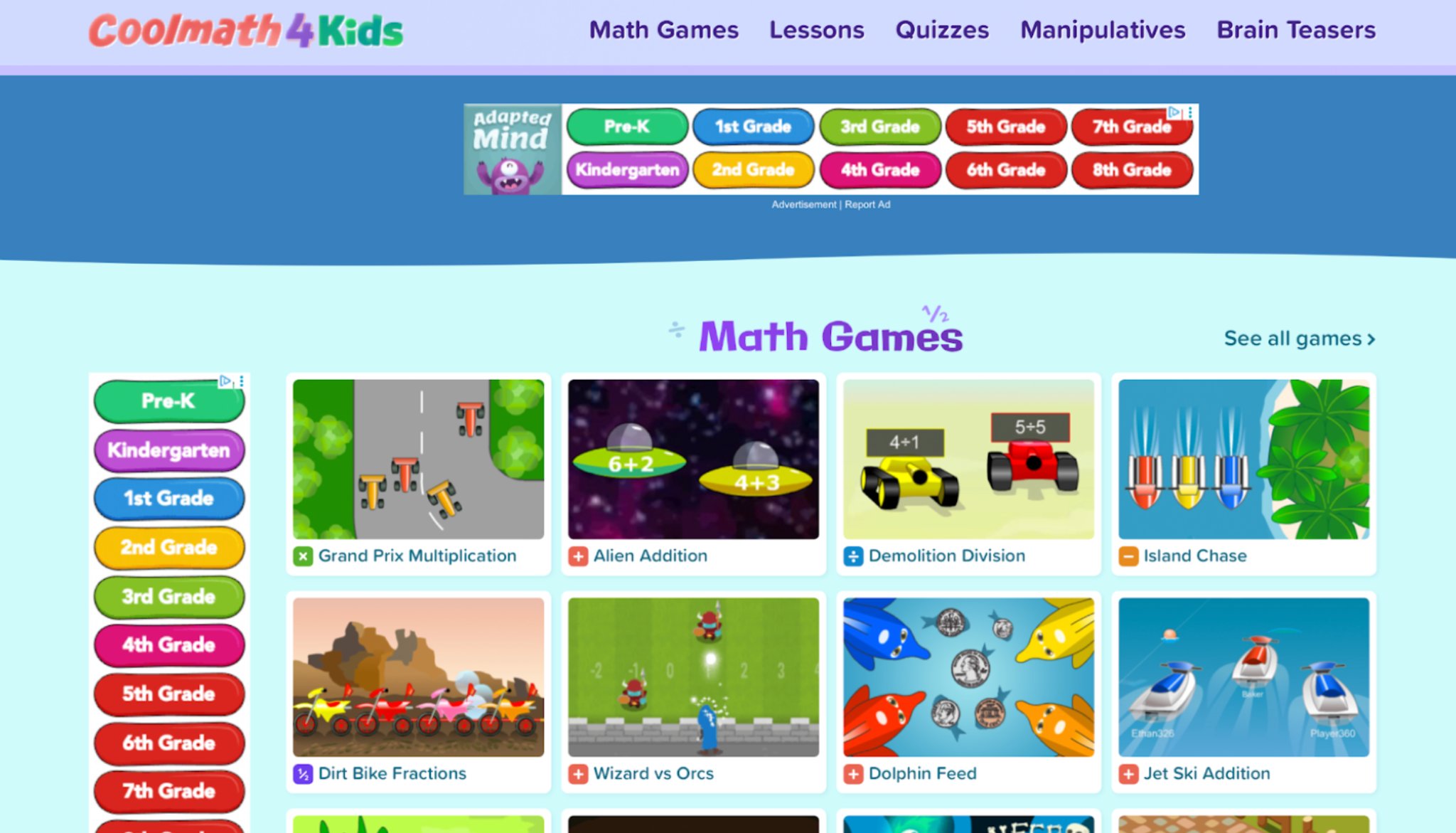
Coolmath4kids transforms math practice into exciting adventures with themed games featuring racing, alien encounters, and action-packed challenges that help elementary children master addition, subtraction, multiplication, fractions, and more. By removing timers and focusing on fun scenarios, it reduces anxiety and encourages repeated practice that builds speed and confidence.
The platform shines at turning traditional drills into enjoyable experiences without interrupting ads, though its simple interface may not impress tech-savvy older kids. With tracing activities for early number recognition and progressive difficulty, Coolmath4kids supports both basics and advanced operations in an accessible way. Its completely free model promotes consistent use, helping children develop quick thinking and number fluency through playful, low-stress engagement that many families rely on for regular math reinforcement.
Key features
- Games on multiplication, subtraction, and integers.
- Tracing activities for early number recognition.
- Themed challenges like dirt bike or canoe races.
Facts and information
- Encourages practice without timers for low stress.
- Covers basics to advanced operations in fun scenarios.
- Free access promotes repeated use for mastery.
10. Duolingo
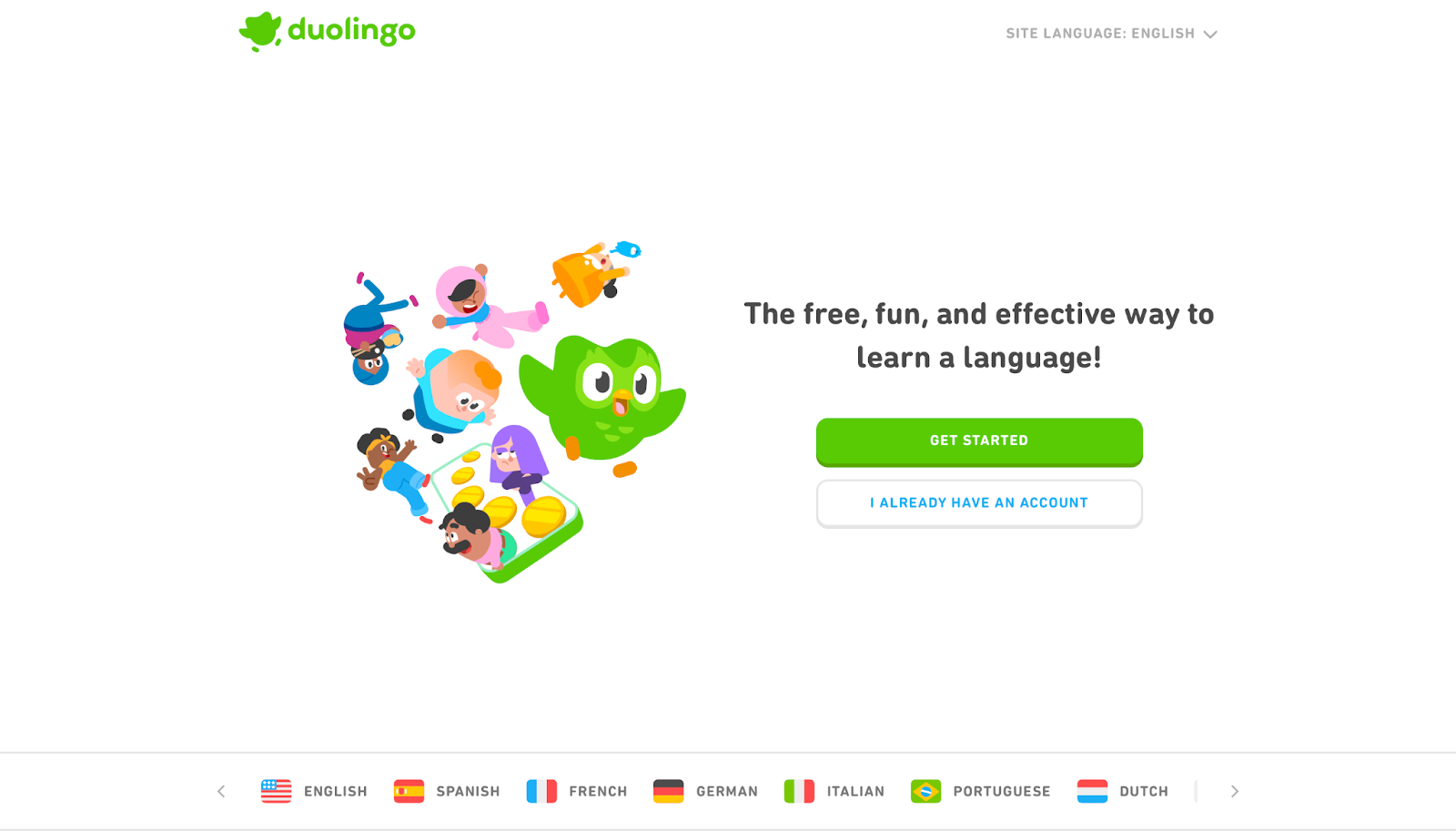
Duolingo brings language learning to life through bite-sized, game-like lessons that feel approachable for young users, including its dedicated Duolingo ABC path for early reading and phonics. The friendly owl mascot and point-based rewards system build daily habits while covering reading, speaking, listening, and vocabulary across dozens of languages. AI personalization adjusts to each child’s pace, making it ideal for beginners or families introducing foreign languages in a playful way.
Mobile apps allow learning anytime, and research-backed methods support effective retention without overwhelming pressure. While some users find the format repetitive after extended use, Duolingo excels at sparking interest in languages and literacy fundamentals through short, motivating sessions that fit busy schedules and deliver measurable progress for young learners.
Key features
- Lessons in reading, speaking, and listening skills.
- Challenges and points for motivation.
- Apps for mobile learning anytime.
Facts and information
- Offers over 50 languages with fun reminders.
- Includes math and ABC tools for young learners.
- Backed by research for effective habit formation.
11. Code.org
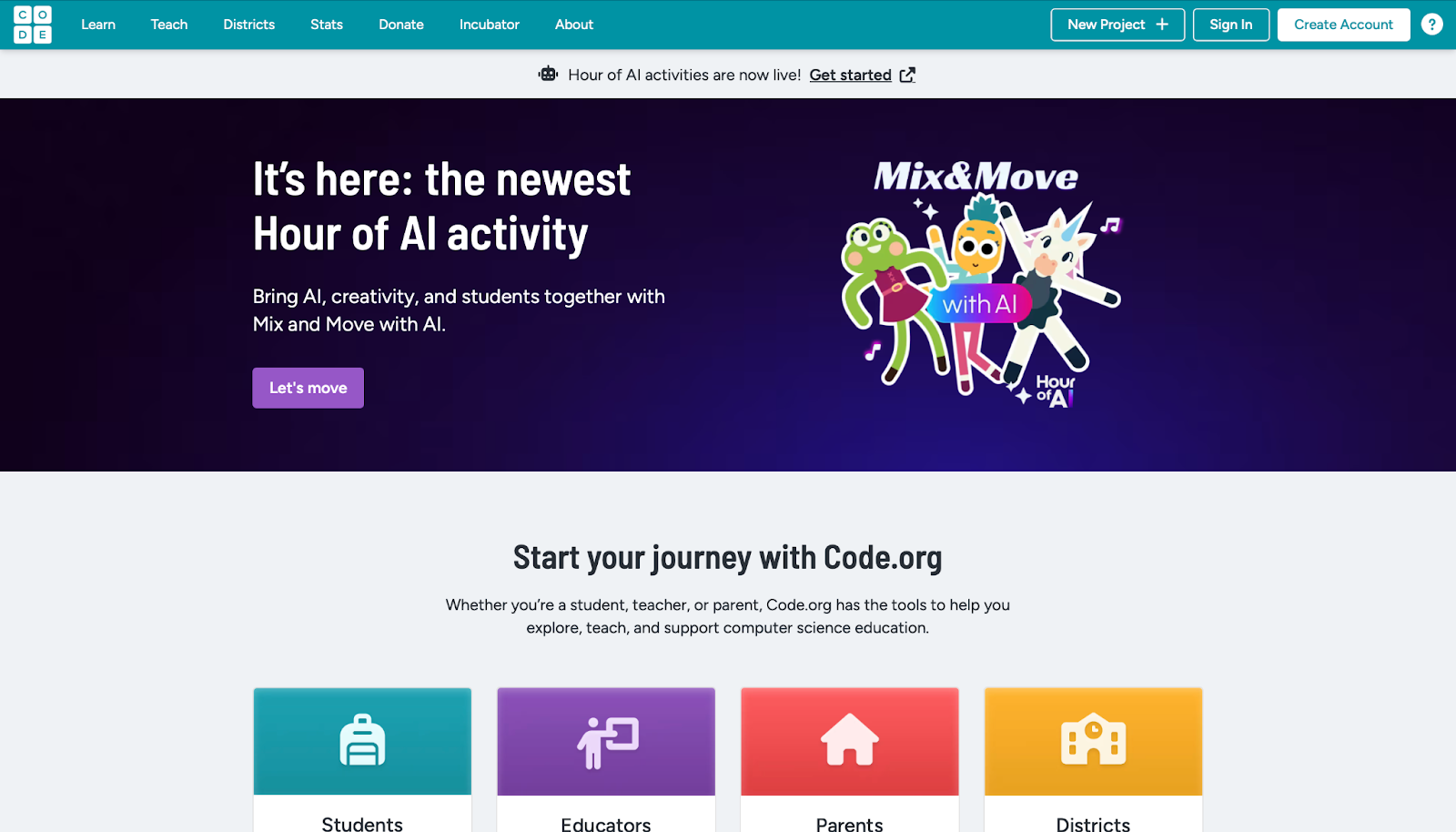
Code.org makes computer science accessible and exciting for K-12 students through free, interactive courses and activities that introduce programming, logic, and AI concepts. From simple block-based puzzles to more advanced projects, children create games, animations, and apps while exploring themes featuring popular characters. Its standards-aligned curriculum and comprehensive teacher resources have led to widespread classroom adoption, promoting equity and broad participation in tech education.
The nonprofit’s Hour of Code events inspire millions globally each year. While younger learners may need initial adult support for complex sections, Code.org effectively demystifies technology and builds problem-solving skills. Its flexible, no-cost resources help children understand coding’s real-world applications and open pathways to future opportunities in a creative, supportive environment.
Key features
- Courses on programming basics and AI exploration.
- Activities that inspire problem-solving.
- Tools for teachers to integrate lessons.
Facts and information
- Targets all school ages with flexible content.
- Supported by global partners for wide reach.
- Focuses on equity in tech education.
12. SplashLearn
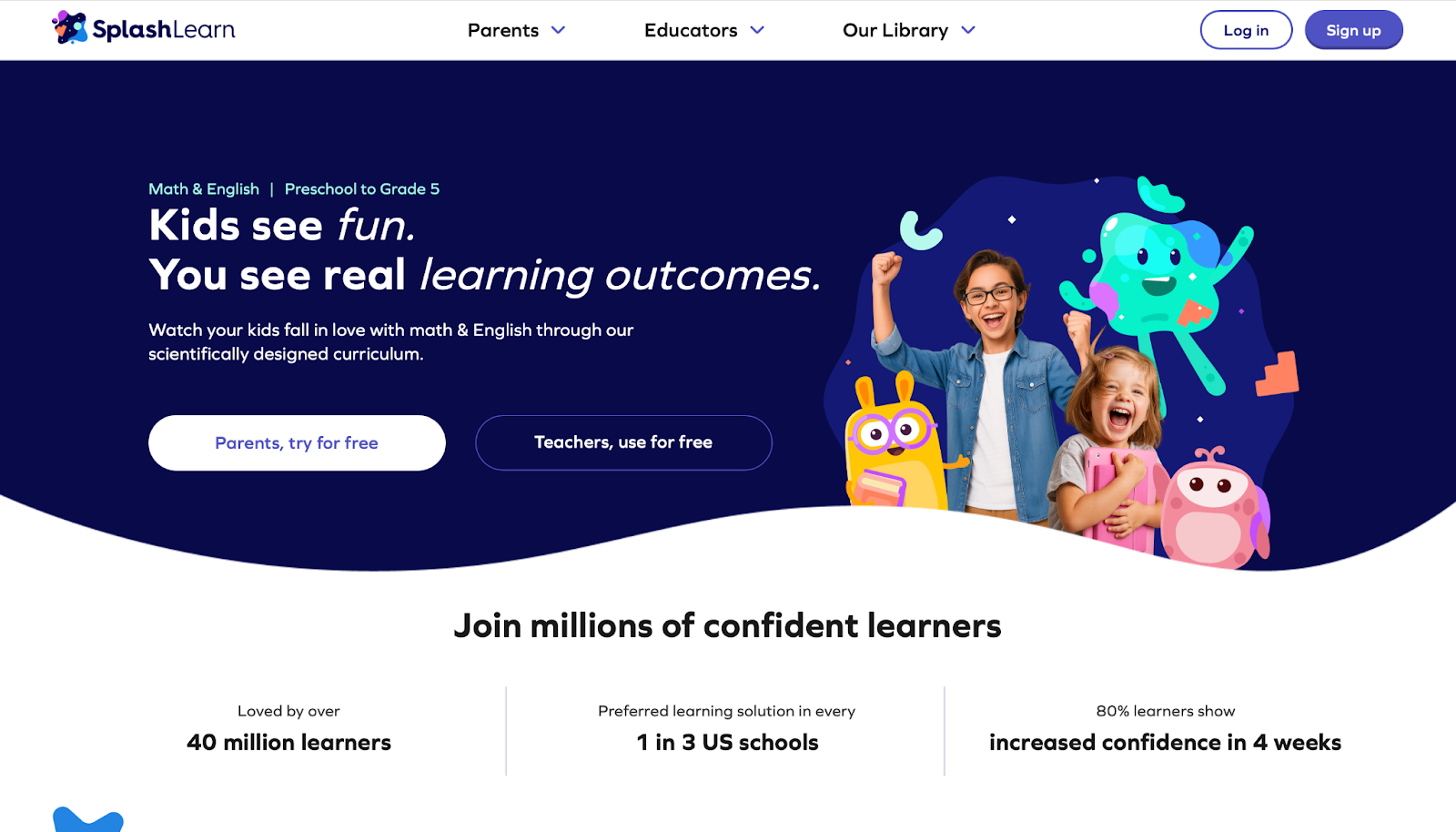
SplashLearn engages preschool through grade 5 children with colorful math and English language arts games set in a magical story world filled with friendly creatures. Adaptive learning paths adjust automatically to each child’s skill level, while detailed progress reports keep parents informed. Thousands of games and worksheets align with educational standards, covering operations, phonics, and even emotional learning in a low-pressure format that builds confidence through safe exploration.
Schools enjoy free access, making it a popular classroom supplement as well. Live classes offer additional guidance when needed. The vibrant, gamified approach turns daily practice into an enjoyable adventure, helping children master concepts while developing strong thinking skills and a positive attitude toward learning.
Key features
- Thousands of games and worksheets for variety.
- Personalized milestones and progress emails.
- Live classes for deeper guidance.
Facts and information
- Covers operations, phonics, and emotions.
- Free for schools to ensure access.
- Builds confidence through safe mistakes.
13. BBC Bitesize
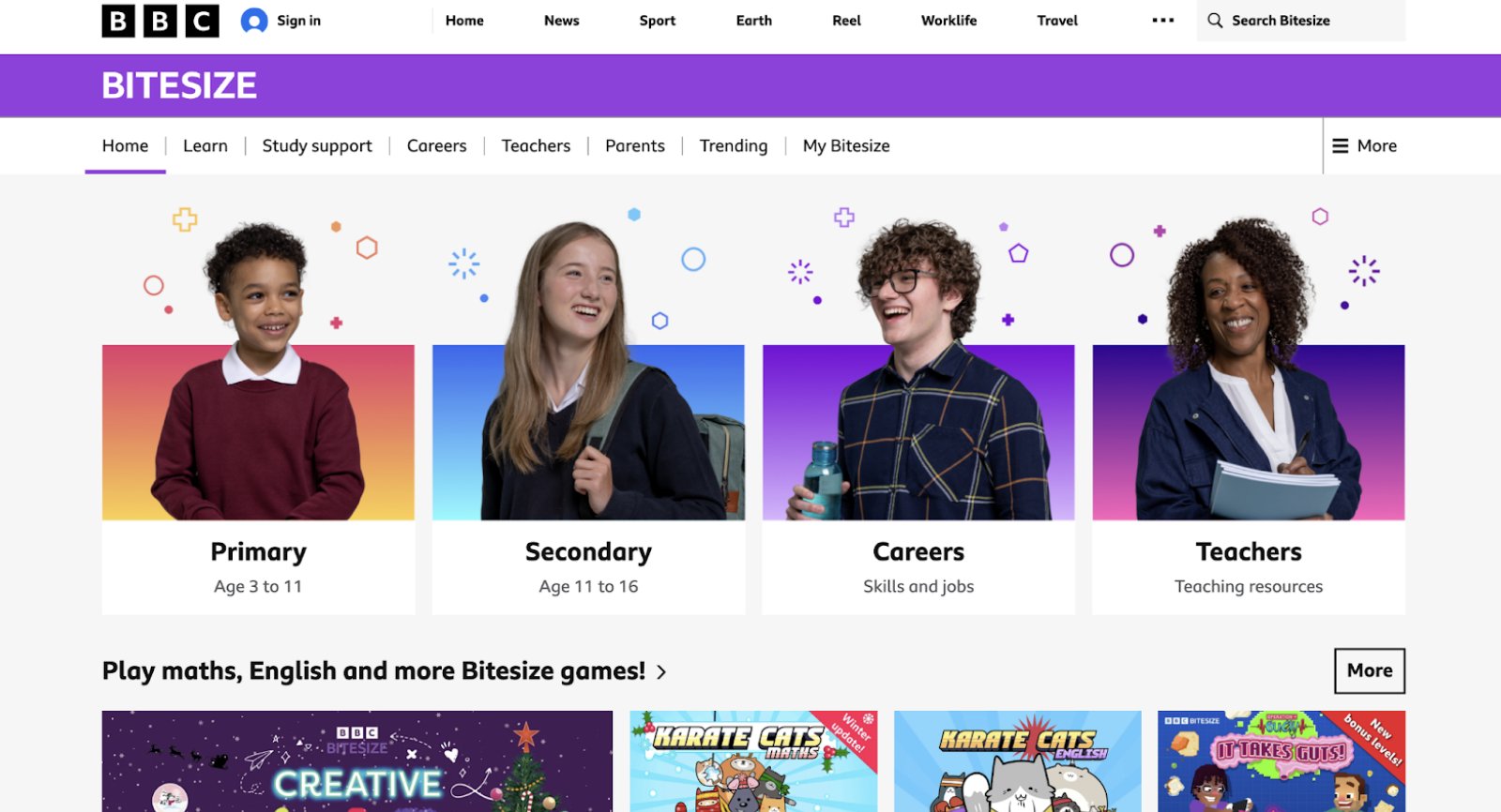
BBC Bitesize supports the UK curriculum with high-quality games, quizzes, videos, and podcasts for ages 3 to 16 across math, English, science, history, geography, and more. Based in London, it offers excellent regional alignment and engaging media literacy content that helps children spot fake news or dive into history detective challenges.
The platform includes wellbeing resources like mood boosters and a convenient free app with flashcards. While the exam-focused elements may feel intense for purely casual learners and US families may need to adapt some content, BBC Bitesize delivers fun, trustworthy educational experiences tied to familiar shows. Its broad coverage and interactive format make revision and skill-building effective and enjoyable for a wide range of ages.
Key features
- Quizzes on topics like times tables or emotions.
- Videos and podcasts for revision.
- Games tied to shows for engagement.
Facts and information
- Includes wellbeing resources like moodboosters.
- Free app with flashcards for on-the-go.
- Covers history, geography, and art.
14. Sesame Street
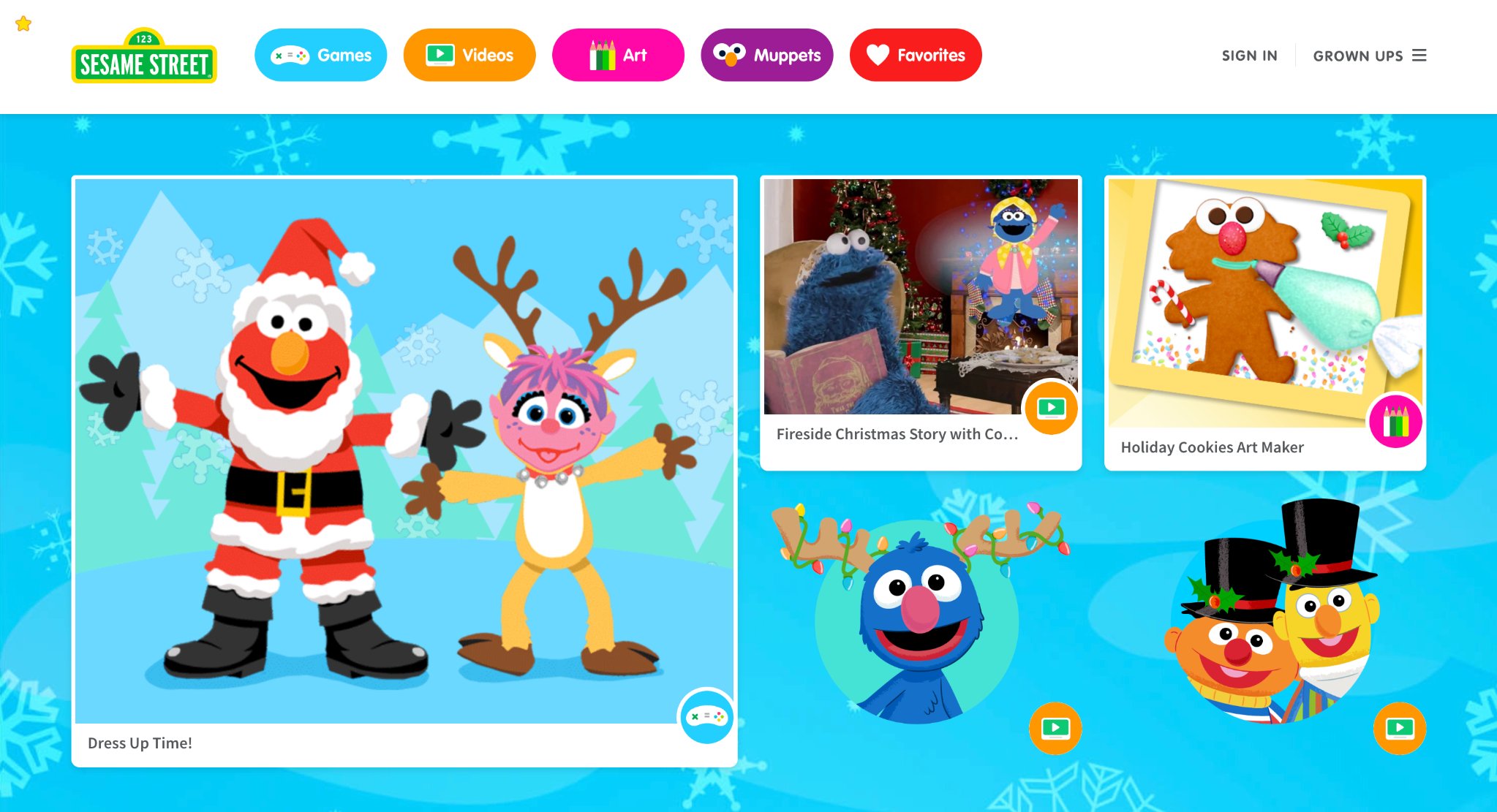
Sesame Street provides a gentle, character-driven space where preschoolers learn through beloved friends while exploring counting, emotions, kindness, seasons, and everyday skills. Free games, videos, and activities emphasize social-emotional growth alongside basic academics, helping young children understand feelings, develop empathy, and build early concepts in a safe, ad-free environment. Tools like potty training plans and holiday themes add practical value for families.
The platform’s focus on making children smarter, stronger, and kinder creates positive associations with learning from a very young age. While best suited for the youngest users, its wholesome content and familiar characters offer a comforting introduction to educational digital play that supports holistic early development.
Key features
- Games on seasons, bugs, and holidays.
- Videos on big emotions and green habits.
- Activities like dress-up or art makers.
Facts and information
- Promotes smarter, stronger, kinder growth.
- Includes holiday and kindness themes.
- Safe, ad-free for family use.
15. BrainPOP
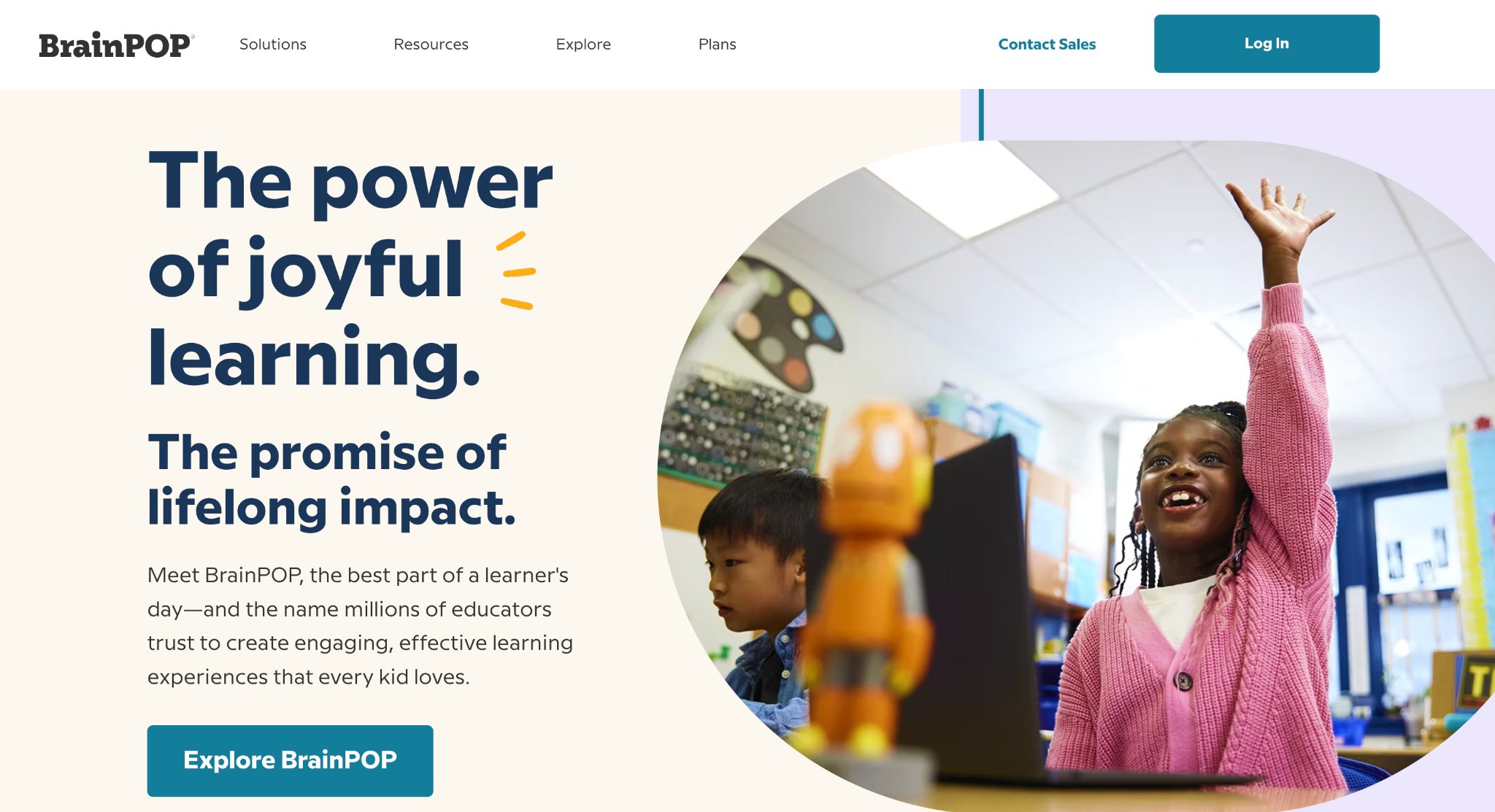
BrainPOP uses engaging animated movies and follow-up quizzes to teach science, vocabulary, grammar, and other subjects to K-8 students. Relatable stories help children connect new ideas across disciplines, encouraging self-directed exploration and deeper understanding. The research-rooted platform supports English language learners and provides valuable background knowledge that complements school curricula.
While full access requires a subscription and gamification is lighter than some competitors, BrainPOP inspires curiosity and critical thinking through clear, high-quality content. Homeschooling families particularly appreciate its flexible format, making it an effective tool for building knowledge and helping children see connections between different areas of learning.
Key features
- Movies on grammar and science concepts.
- Quizzes and games for reinforcement.
- Tools for English learners.
Facts and information
- Covers background knowledge for curricula.
- Supports homeschool with flexible use.
- Research-rooted for effective engagement.
16. Smithsonian Kids
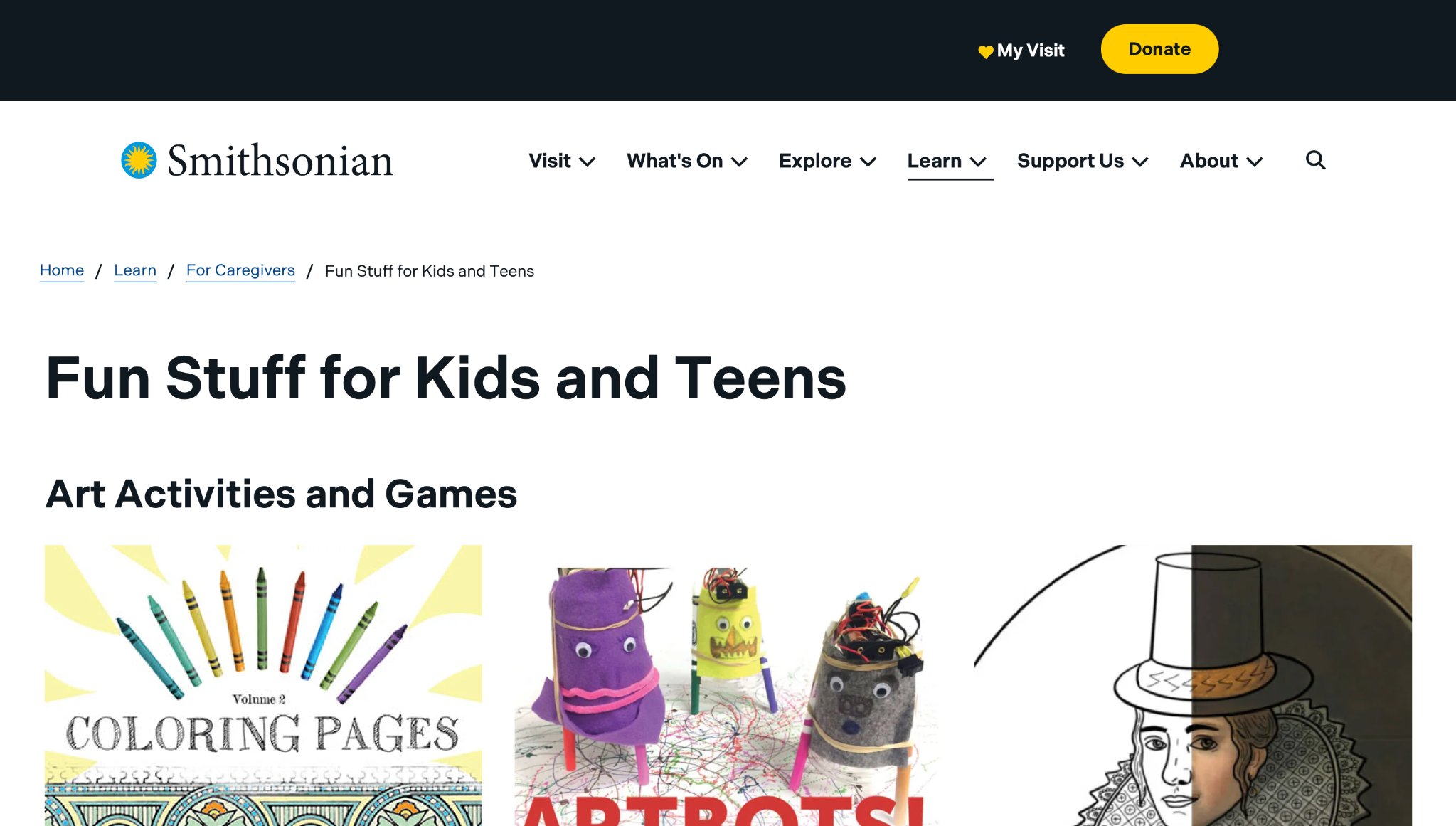
Smithsonian Kids gathers fun activities and resources from Smithsonian museums, helping children and teens explore art, history, science, nature, and space through games, videos, and crafts. Headquartered in Washington, D.C., it includes virtual zoo cams, AR apps on space heroes, and bilingual guides on inventors and sustainability. Strengths shine in its tie to real museum collections, offering authentic, engaging ways to learn about cultures and the environment. Weaknesses involve scattered navigation across sections, which might confuse young users without guidance. Overall, it sparks interest in global topics with free, downloadable content that blends play and discovery for family or school use.
Key features
- Art projects like coloring and robot creation from museum artifacts.
- History hunts and puzzles on American stories and cultures.
- Science games, simulations, and virtual explorations of nature.
Facts and information
- Covers space quizzes and telescope controls for astronomy fans.
- Includes activity books for young kids on diverse themes.
- Promotes hands-on learning with open access images and tools.
17. ABCya
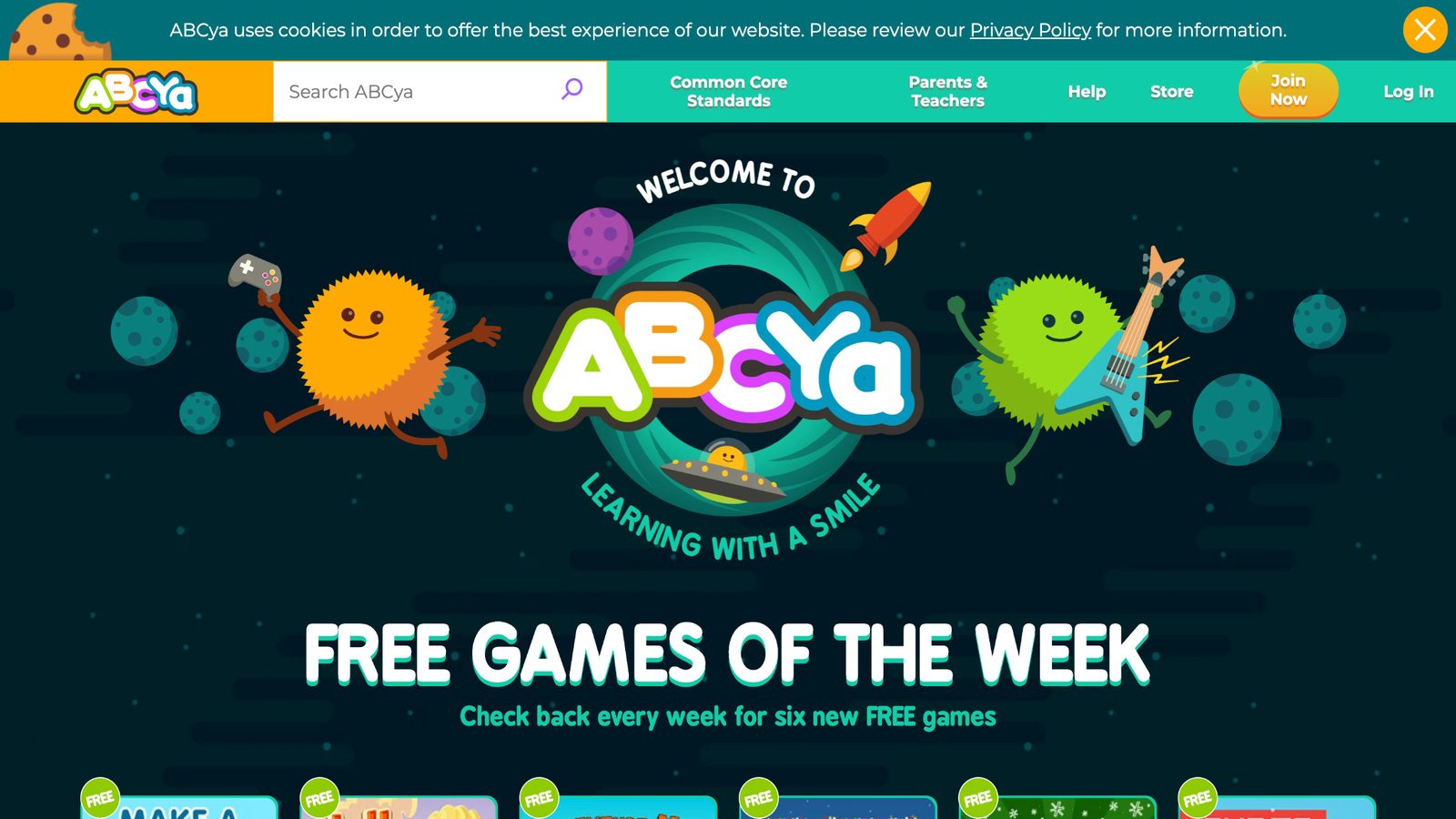
ABCya provides free learning games and apps for kids from Pre-K to grade 6+, covering subjects like math, language arts, science, art, and music through puzzles, word searches, and seasonal activities. It adds new games weekly, such as holiday-themed ones for Christmas and Hanukkah, and includes printables for offline fun. Strengths include diverse, curriculum-aligned content that's engaging for various ages, promoting skill-building in a fun way. Weaknesses involve an ad-supported interface that might distract young users during play. Based in the USA, it focuses on grade-specific experiences to support classroom or home learning without overwhelming complexity.
Key features
- Games organized by subject, theme, and genre for easy browsing.
- Weekly free additions like adventure or strategy games.
- Printables and seasonal content for holidays and themes.
Facts and information
- Targets Pre-K to 6+ with activities like counting or physics puzzles.
- Ad-free premium option available for smoother experience.
- Used by teachers for supplemental education in schools.
18. Turtle Diary
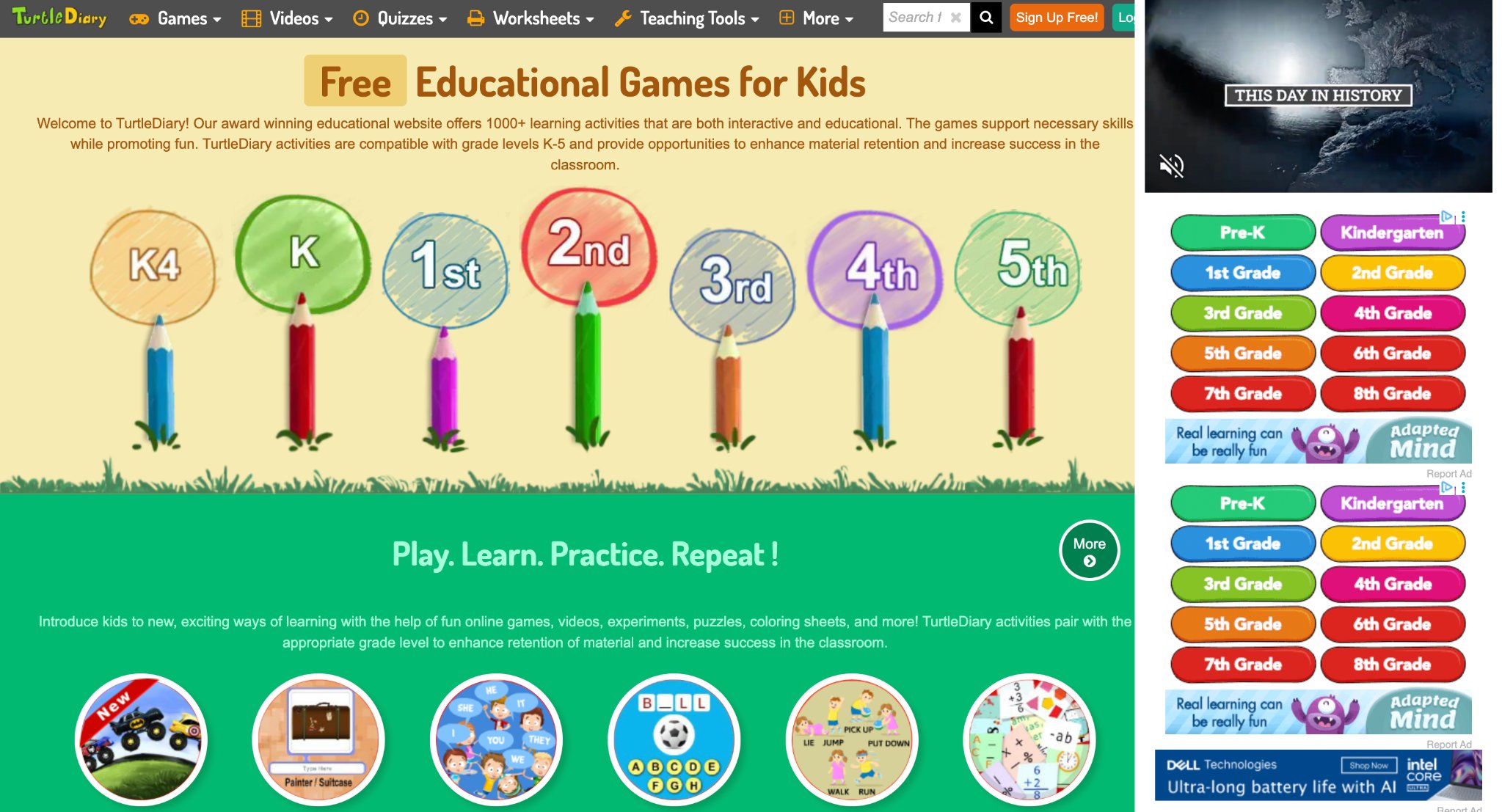
Turtle Diary offers over 1000 interactive games, quizzes, worksheets, videos, and typing lessons for K-5 kids, focusing on math, language arts, science, geography, and skills like typing. It includes multiplayer modes for safe competition and tools for teachers to track progress. Strengths lie in its gamified approach with instant feedback, aligning to Common Core for effective retention and confidence-building. Weaknesses may include potential content overload for beginners and need for stable internet. The site encourages curiosity through stories and assessments, making it a versatile resource for classrooms or home use.
Key features
- Multiplayer games and instant evaluations for engagement.
- Worksheet generator and progress reports for educators.
- Typing tutorials at basic to advanced levels.
Facts and information
- Top games have millions of plays, showing high popularity.
- Supports global multiplayer in a safe environment.
- Reinforces standards in core subjects for skill mastery.
19. Reading Eggs
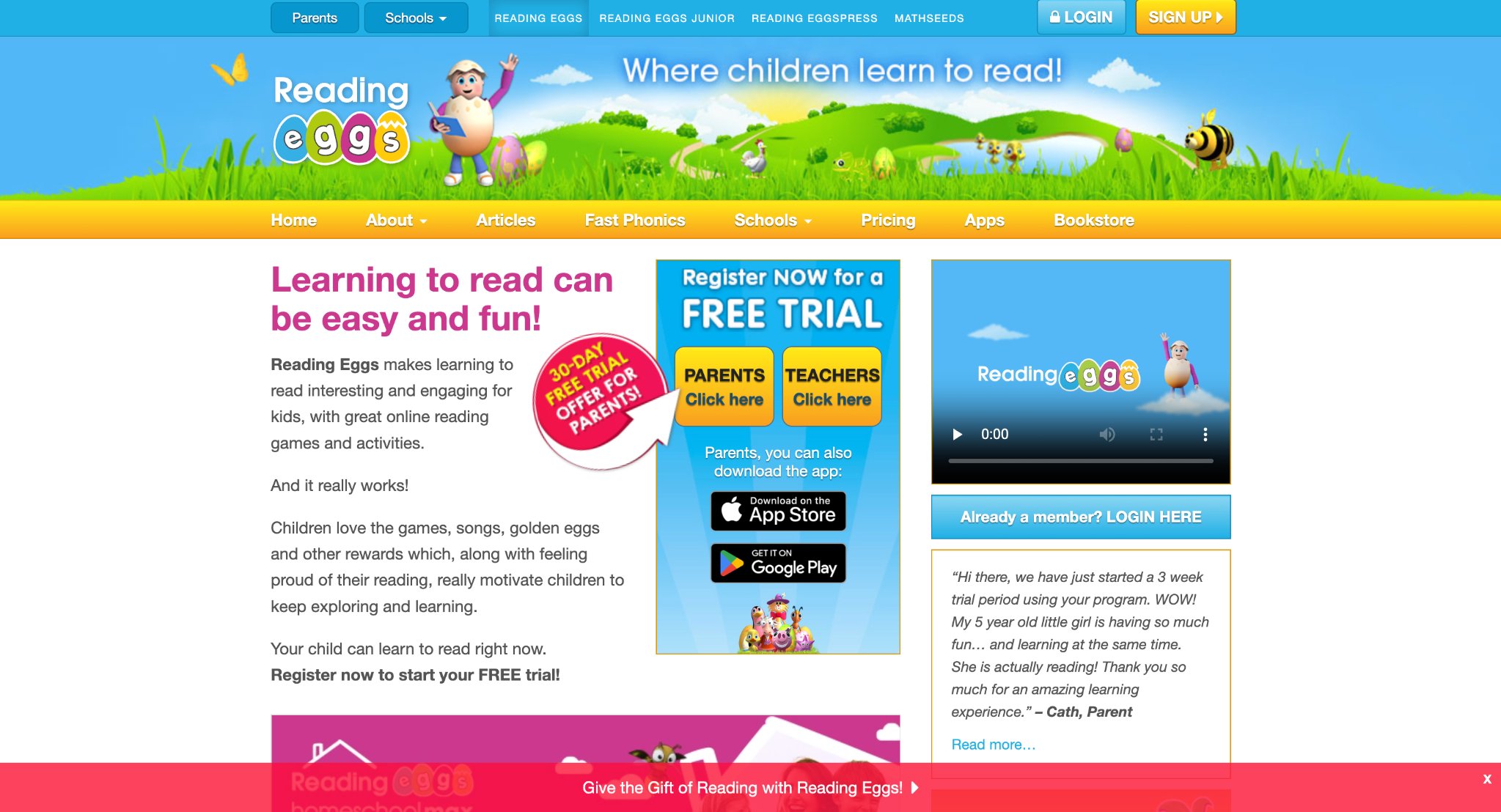
Reading Eggs makes learning to read fun for young kids with games, activities, songs, and rewards like golden eggs, helping build skills quickly as per parent testimonials. It motivates through pride and exploration, with progress seen in months. Strengths include engaging content that boosts motivation and effectiveness for beginners, especially in Kindergarten. Weaknesses involve limited details on age ranges or advanced curriculum. The program starts with a free trial, focusing on phonics and comprehension in an interactive format that keeps children eager to learn more.
Key features
- Interactive games and songs for phonics practice.
- Reward system with golden eggs for achievements.
- Parent tools to monitor reading progress.
Facts and information
- Millions of golden eggs banked by users worldwide.
- Testimonials show rapid skill gains in young learners.
- Designed for early readers to build confidence fast.
20. Prodigy
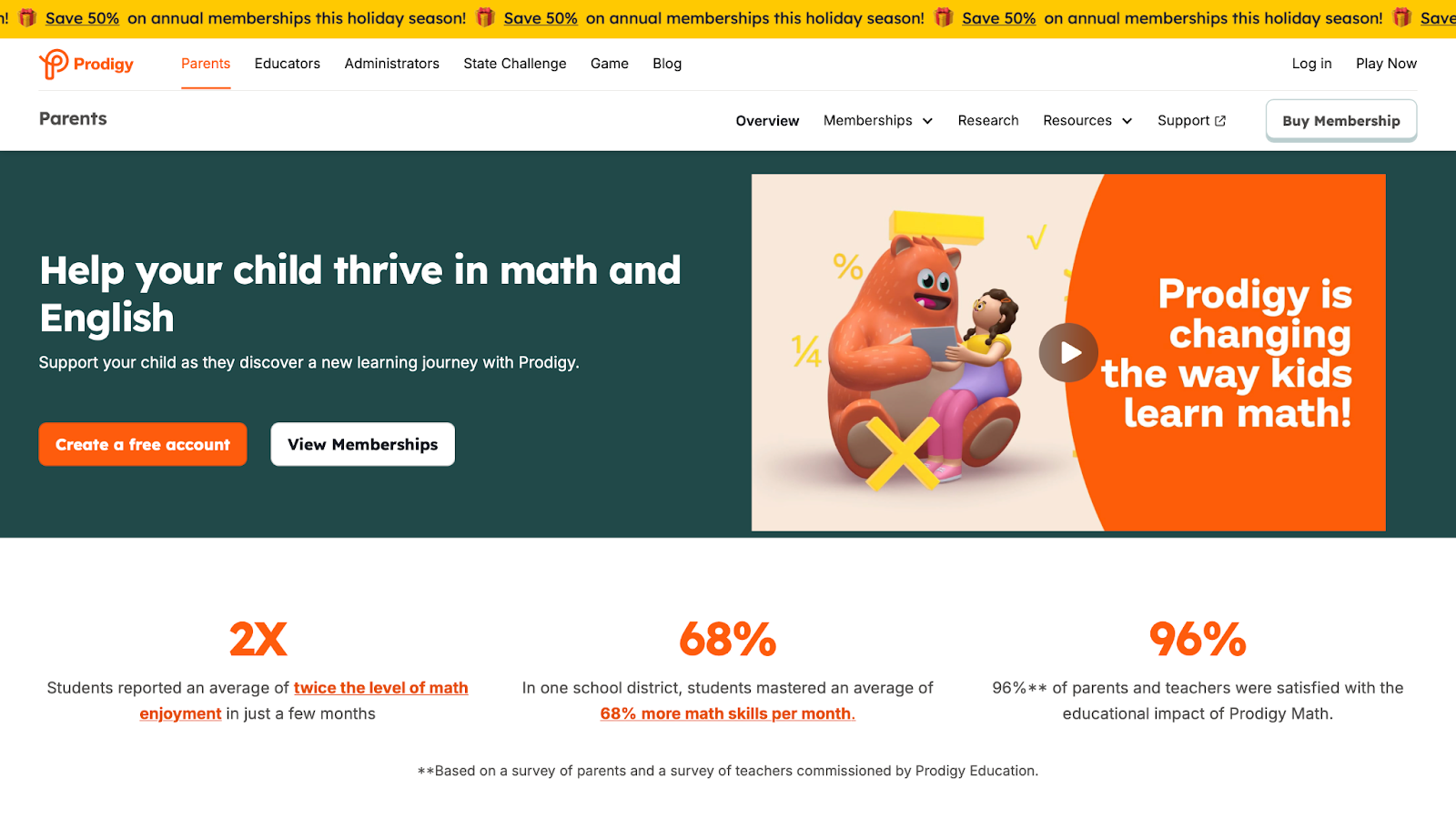
Prodigy turns math and English learning into adventures for kids with adaptive games, quests, battles, and rewards, aligned to standards like Common Core. It boosts enjoyment, with high parent and teacher satisfaction. Strengths include free access for core tools, personalized paths, and district-level impact on skill mastery. Weaknesses might be optional extras behind memberships, limiting some features. The platform creates habits through fun, secure play, helping students double math joy in short time while providing insights for adults.
Key features
- Adaptive questions in math and English subjects.
- Teacher dashboards for tracking and alignment.
- Safe quests with spells and rewards.
Facts and information
- High percentage of users enjoy and improve quickly.
- Used by millions of teachers at no base cost.
- Boosts skills in districts with measurable gains.
21. Epic!

Epic! is a digital library with over 40,000 books, audiobooks, and videos for kids, inspiring reading and discovery for all levels. It helps build skills in reading and thinking with diverse titles. Strengths feature a vast, award-winning collection that suits reluctant and avid readers, plus enrichment tools for growth. Weaknesses require sign-up for full access, potentially delaying start. The site promotes exploration of topics, boosting confidence for school success through safe, engaging content.
Key features
- Thousands of titles in books and audiobooks.
- Learning videos for added educational value.
- Tools to enhance critical thinking skills.
Facts and information
- Supports families and educators with instant access.
- Focuses on lifetime love for reading.
- Holiday promotions for new users.
22. Scholastic Kids
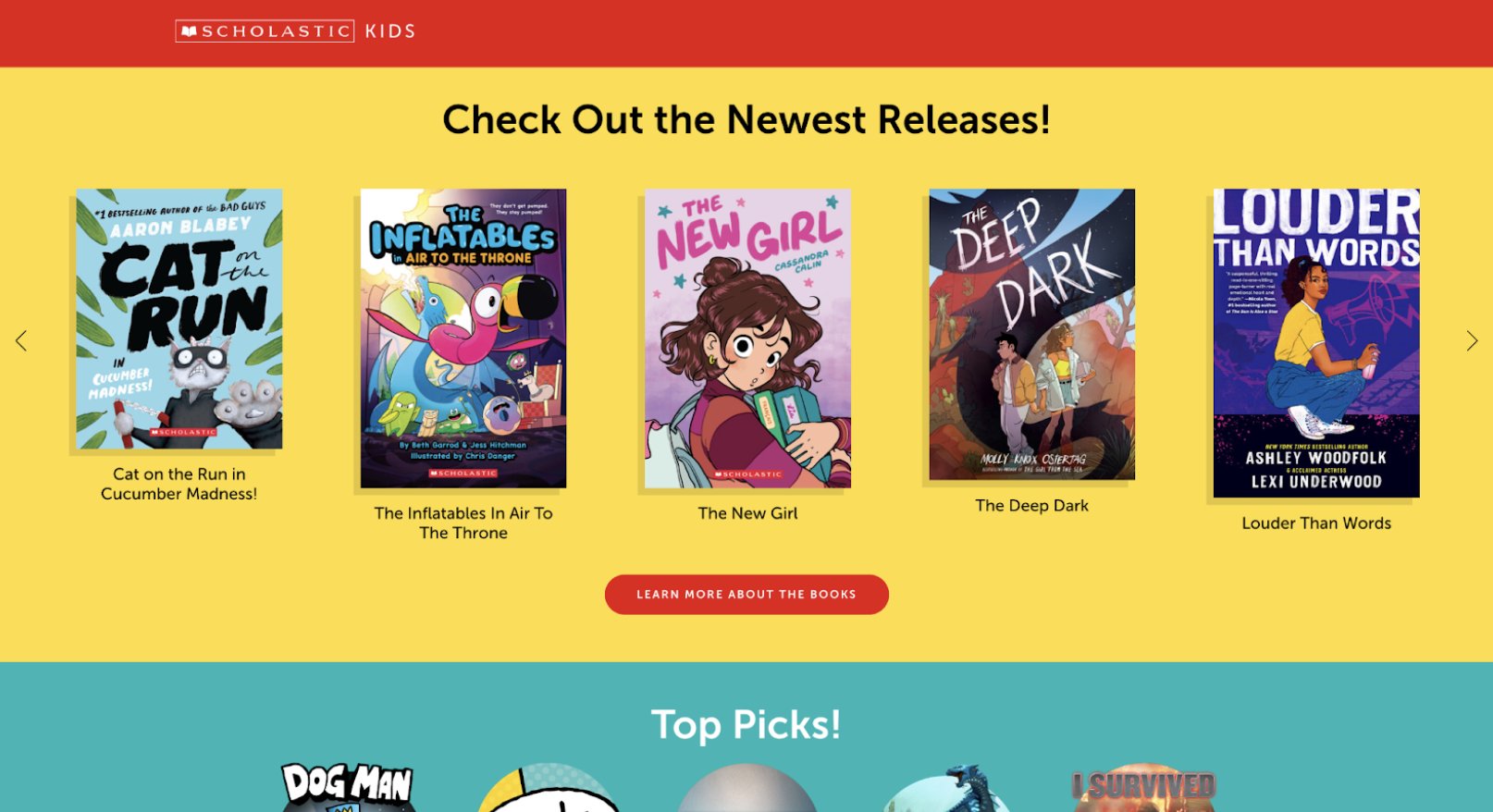
Scholastic Kids' Home Base provides interactive reading, gaming, and social features tied to popular series like Dog Man and Wings of Fire, with excerpts, minigames, author events, and moderated chats. It models positive engagement in a safe space. Strengths include book-integrated fun that encourages creativity and connections, with 24/7 moderation. Weaknesses: content limited to Scholastic titles and no offline play. Note: Service ended in late 2026. Based in the US, it fostered sharing of stories and comics among users.
Key features
- Book excerpts and audio from bestsellers.
- Multiplayer games in various genres.
- Live events and filtered newsfeeds.
Facts and information
- Hundreds of titles for exploration.
- Data privacy emphasized post-closure.
- Alternatives via libraries and fairs.
23. Time for Kids

Time for Kids delivers news articles, videos, quizzes, and digital magazines for grades K-6 on topics like science, history, sports, and current events, sorted by edition and theme. It builds media literacy with accessible writing. Strengths: combines education with real-world relevance, using vibrant visuals to engage young readers. Weaknesses: may need adult guidance for complex topics. HQ in New York, NY. The site helps kids navigate news, earning recognition for quality resources.
Key features
- Digital flips and web views of magazines.
- Stories across subjects and interests.
- Search and topic sorting tools.
Facts and information
- Editions for different grade levels.
- Common Sense award for learning.
- Covers timely, educational content.
24. NASA Kids' Club
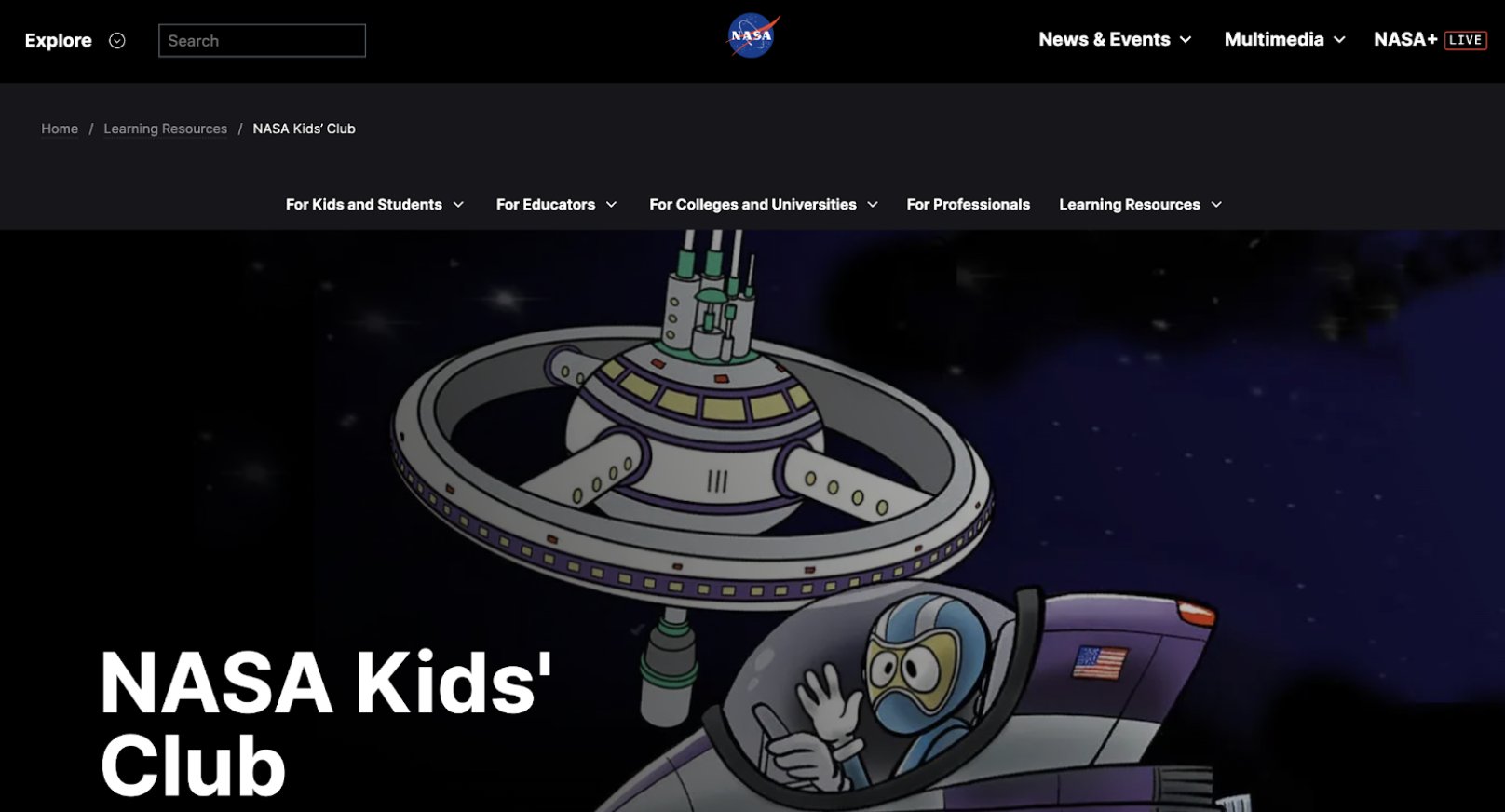
NASA Kids' Club inspires space exploration for K-12 students with games, astronaut profiles, and resources on topics like Mars, climate, and the universe. It targets ages with sections for play, stuff, and opportunities. Strengths: mission-aligned content that sparks discovery and ties to real NASA work. Weaknesses: less interactive depth for older users. HQ in Washington, D.C. The site encourages curiosity through suggested searches and updates on expeditions.
Key features
- Age-specific sections for K-4 to college.
- Games and activities on space themes.
- Crew updates from the Space Station.
Facts and information
- Updated regularly with current missions.
- Free resources for inspiration.
- Covers solar system and beyond.
25. Highlights Kids
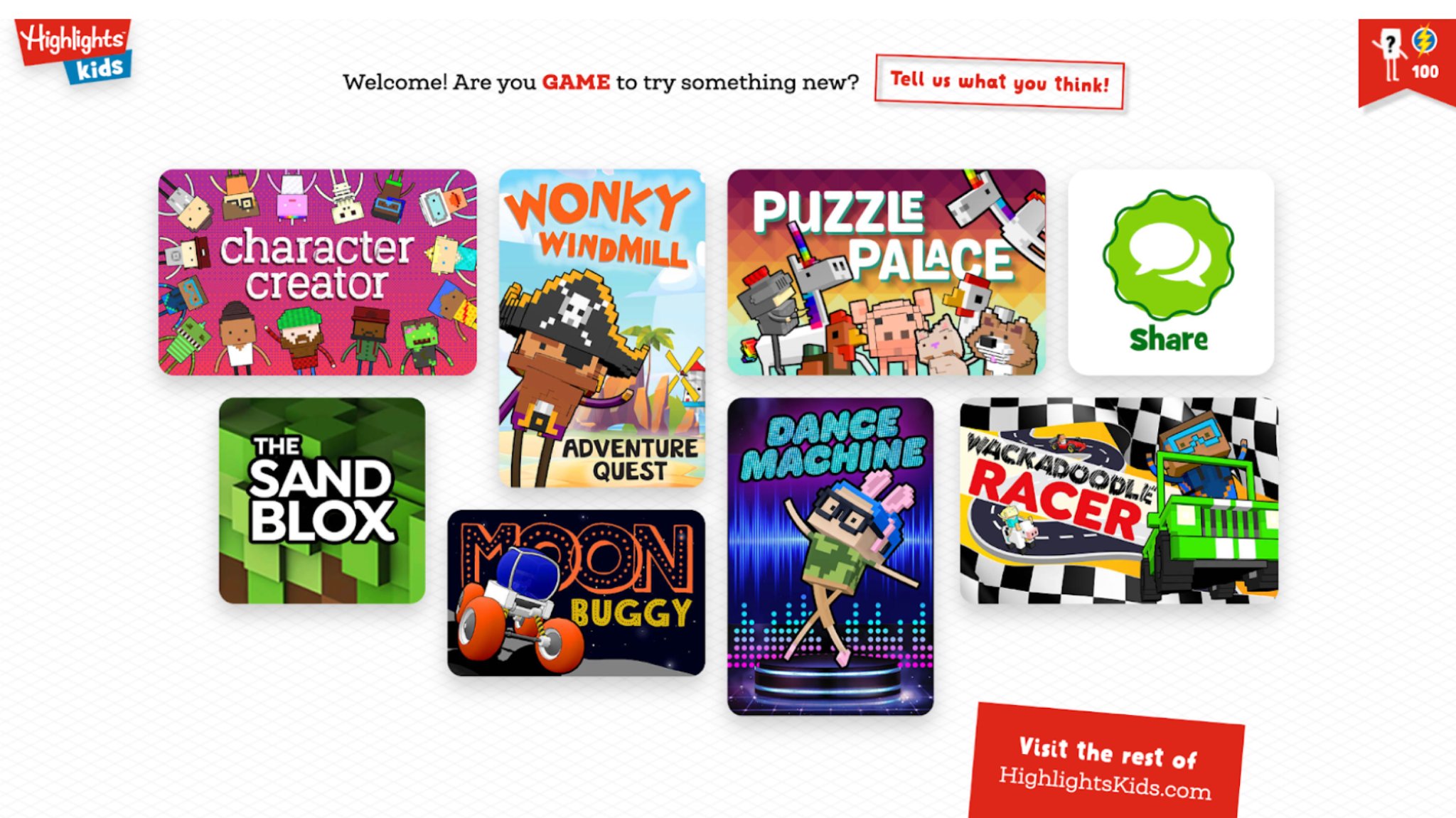
Highlights Kids engages children with crafts, science Q&A, recipes, polls, and activities like drawing or tongue twisters, blending fun with learning on topics from animals to rainy days. Strengths: diverse content that promotes creativity and curiosity through hands-on and interactive elements. Weaknesses: ads may distract, and depth is light for advanced learners. The site encourages user submissions for sharing ideas in a family-friendly space.
Key features
- Polls and challenges for engagement.
- Science questions and crafts.
- Videos and language play activities.
Facts and information
- High poll participation on kid topics.
- Variety in pets, weather, fun games.
- Safe for independent exploration.
26. Education
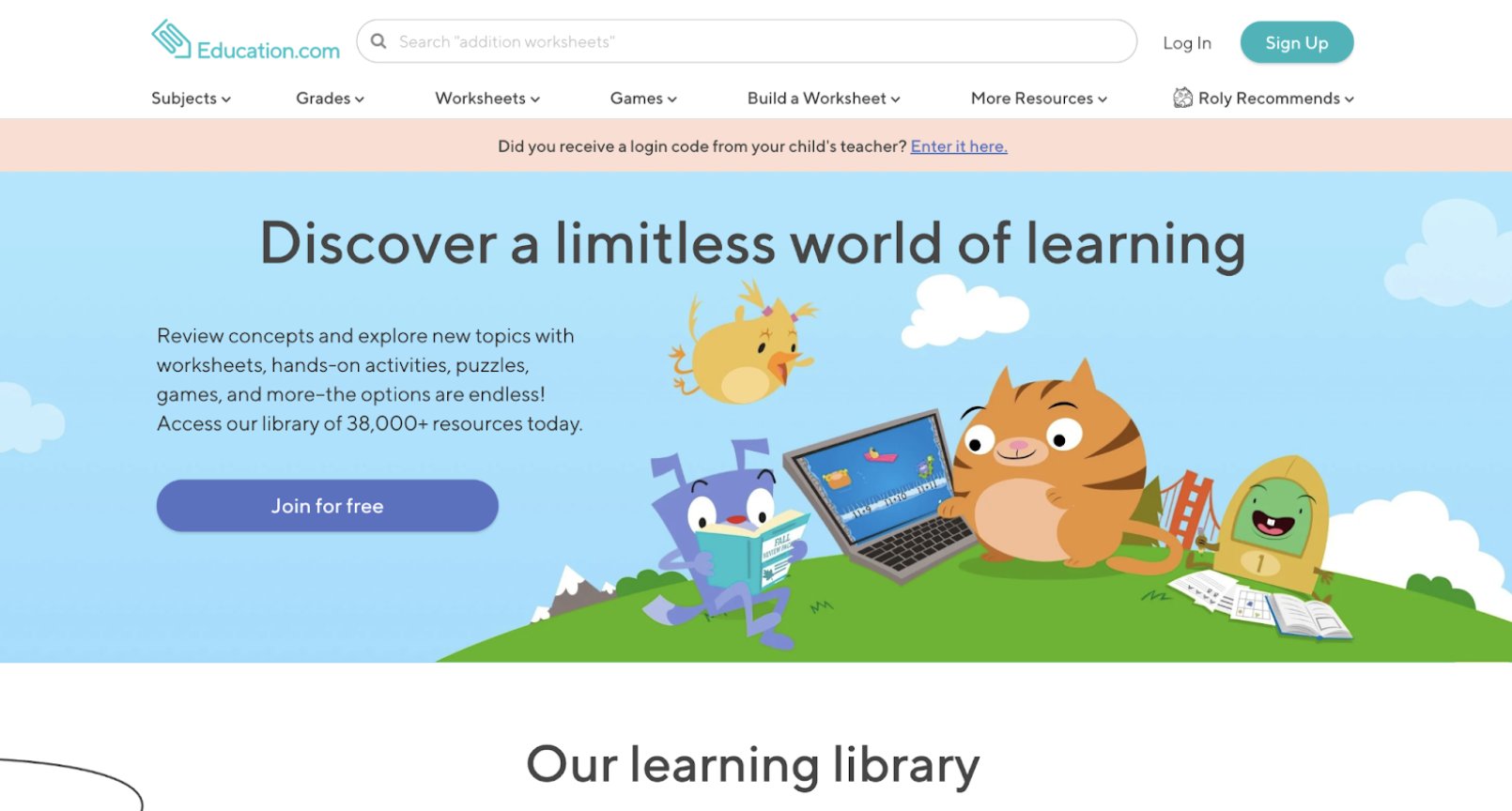
Education.com hosts over 38,000 resources like worksheets, games, and lessons for Pre-K to 8th grade in math, reading, science, and more, with printables and hands-on activities. Strengths: standards-aligned, user-friendly with progress insights and global reach. Weaknesses: some tools need login or premium for full use. It supports classrooms and homeschools with assignment features for tailored learning.
Key features
- Vast library of printables and games.
- Guided paths in core subjects.
- Assignment and milestone tracking.
Facts and information
- Millions of users across continents.
- Comprehensive for multiple grades.
- Positive for organized resources.
27. IXL
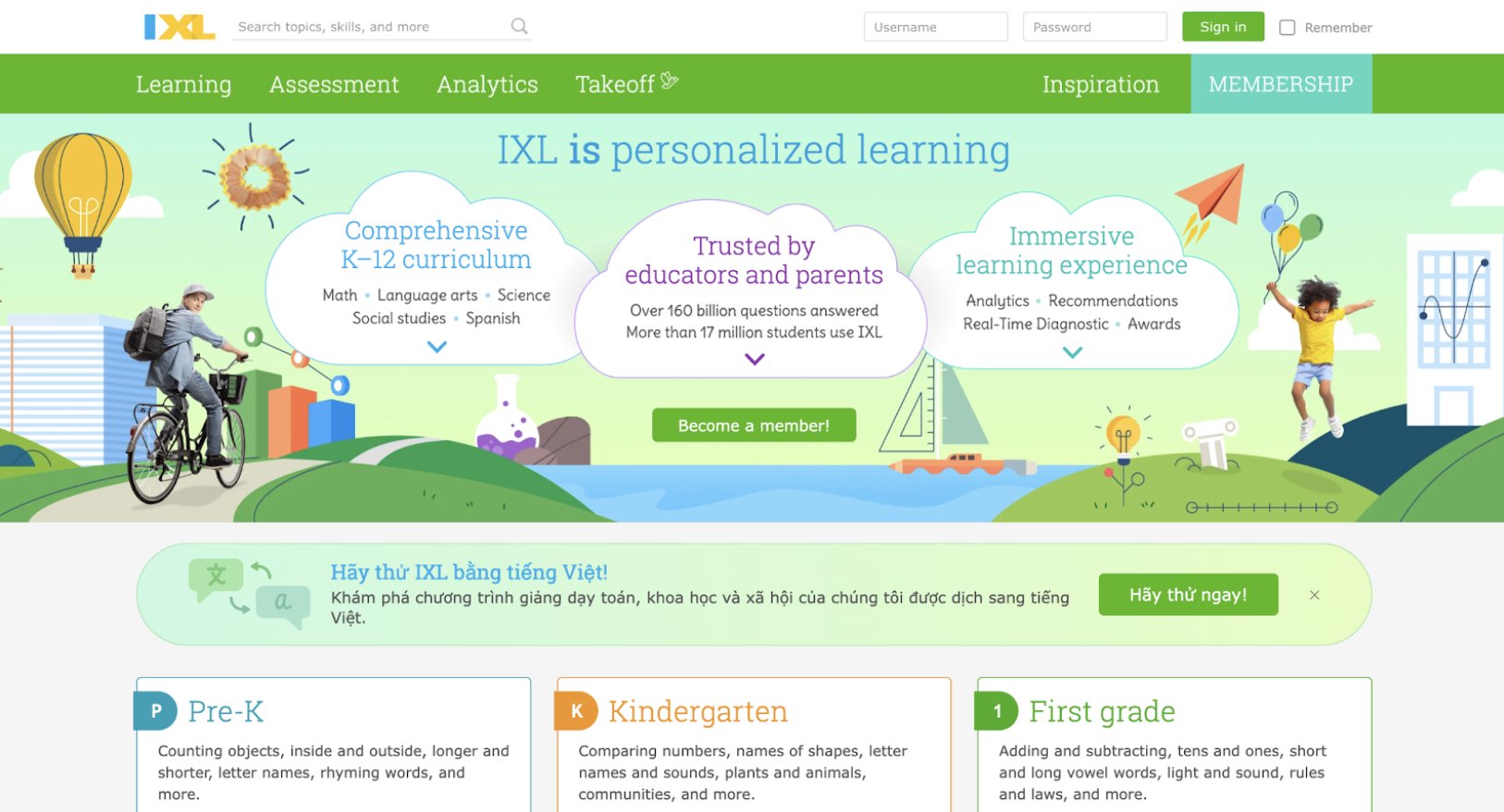
IXL offers extensive practice across math, English, and science with over 8,000 skills aligned to year groups from Reception to Year 13. Real-time diagnostics identify learning gaps and provide personalized recommendations, while detailed analytics help teachers and parents target support effectively.
The platform’s comprehensive coverage and immediate feedback make it a trusted classroom resource used widely in schools. Its structured approach suits children who thrive with clear progression and measurable goals. Though fully digital, IXL delivers research-backed effectiveness and helps students master skills through consistent, targeted practice that builds confidence and academic strength across core subjects.
Key features
- Thousands of skills by year level.
- Diagnostic tests for gaps.
- Analytics for teachers.
Facts and information
- Detailed skill counts per grade.
- Research-backed effectiveness.
- Testimonials on fun use.
28. Adventure Academy
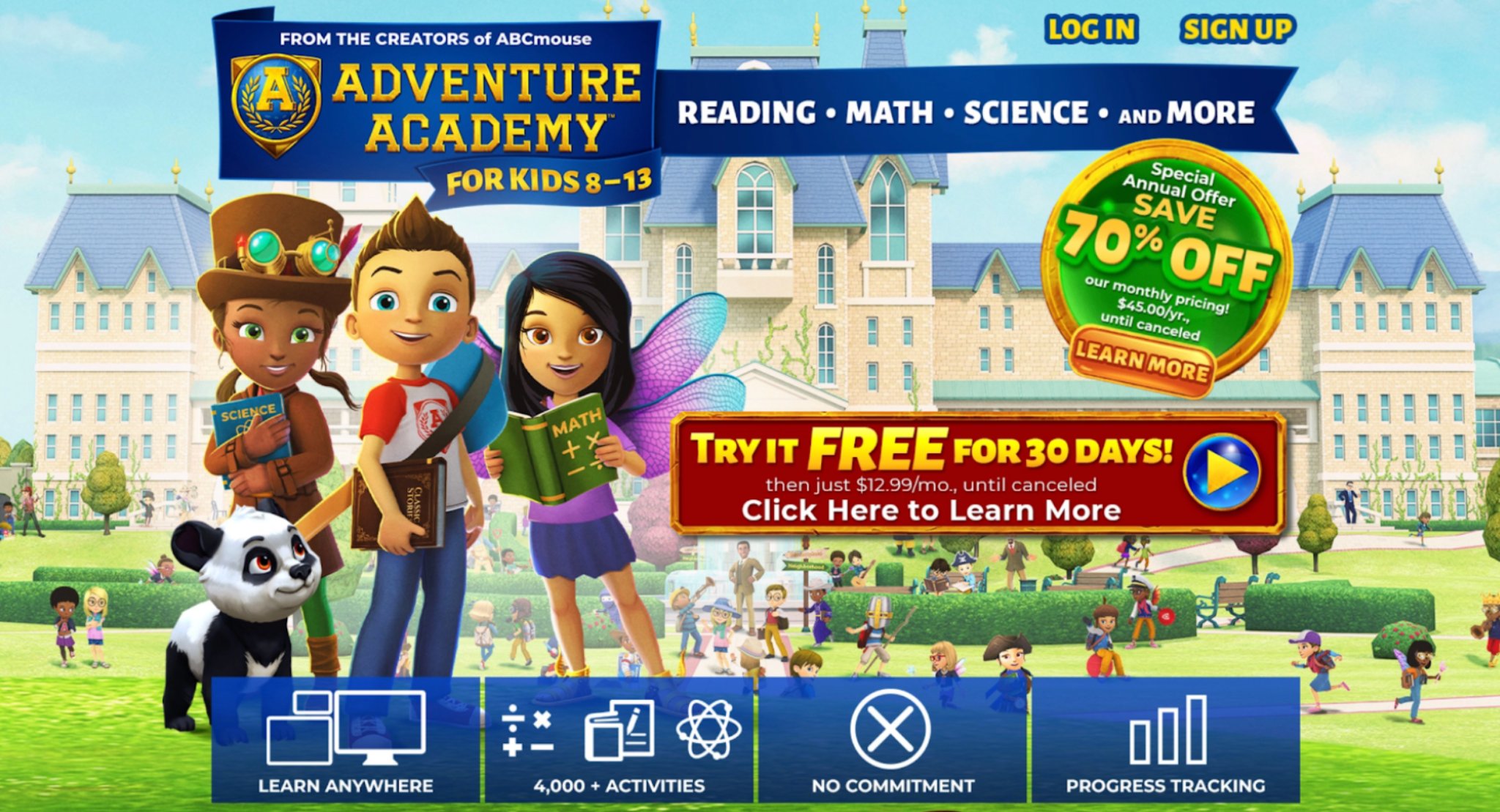
Adventure Academy immerses children aged 8-13 in a rich 3D multiplayer world where quests, games, and videos teach math, language arts, science, and social studies. Standards-aligned activities blend seamlessly with exploration and avatar customization on a virtual campus. The engaging format motivates reluctant learners while maintaining a safe, ad-free, COPPA-compliant environment with strong parent reports.
Though some may find the gaming elements occasionally distracting and it requires a download, Adventure Academy excels at making learning feel like an exciting adventure. It builds critical thinking, collaboration, and academic skills in a vibrant online setting that many children genuinely enjoy returning to daily.
Key features
- Virtual campus with avatars.
- Thousands of interactive lessons.
- Parent progress reports.
Facts and information
- No ads or purchases.
- Enhances academic growth.
- COPPA compliant for safety.
29. Mystery Science
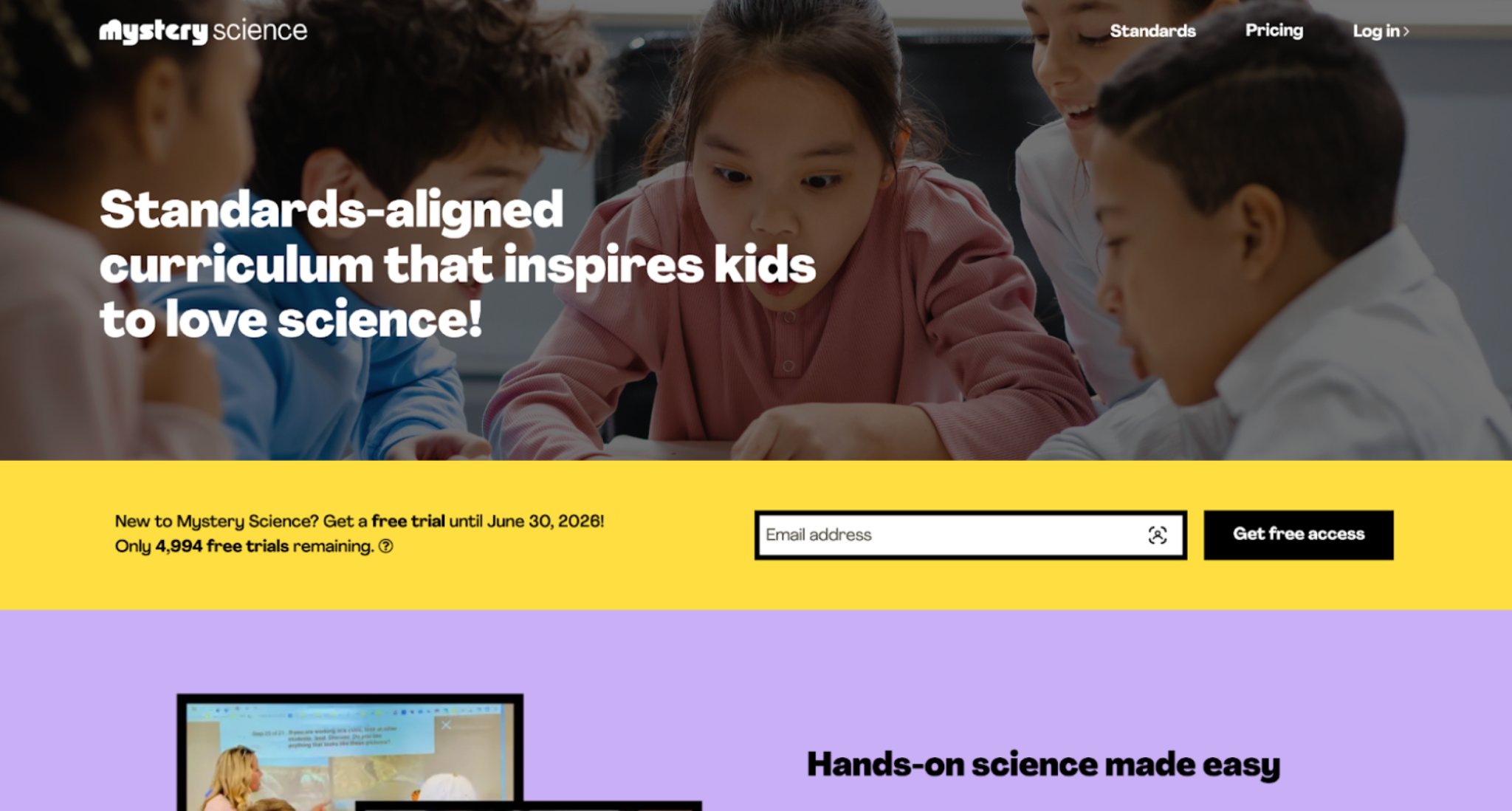
Mystery Science delivers hands-on, phenomena-driven science lessons for elementary students with easy-to-follow investigations, assessments, and Spanish language support. Its phenomenon-based approach sparks genuine curiosity and encourages discussion and writing for deeper comprehension. Teachers praise its classroom readiness and alignment to standards, while students love the engaging experiments and real-world connections.
Though best experienced in a browser with good connectivity, the platform consistently receives strong feedback for inspiring a lasting love of science. Mystery Science transforms abstract concepts into memorable, interactive experiences that help children think like scientists and communicate their understanding effectively.
Key features
- State-aligned guides.
- 3D and written assessments.
- Bilingual content support.
Facts and information
- Praised by educators nationwide.
- Makes science interactive.
- Student-favorite program.
30. TypingClub
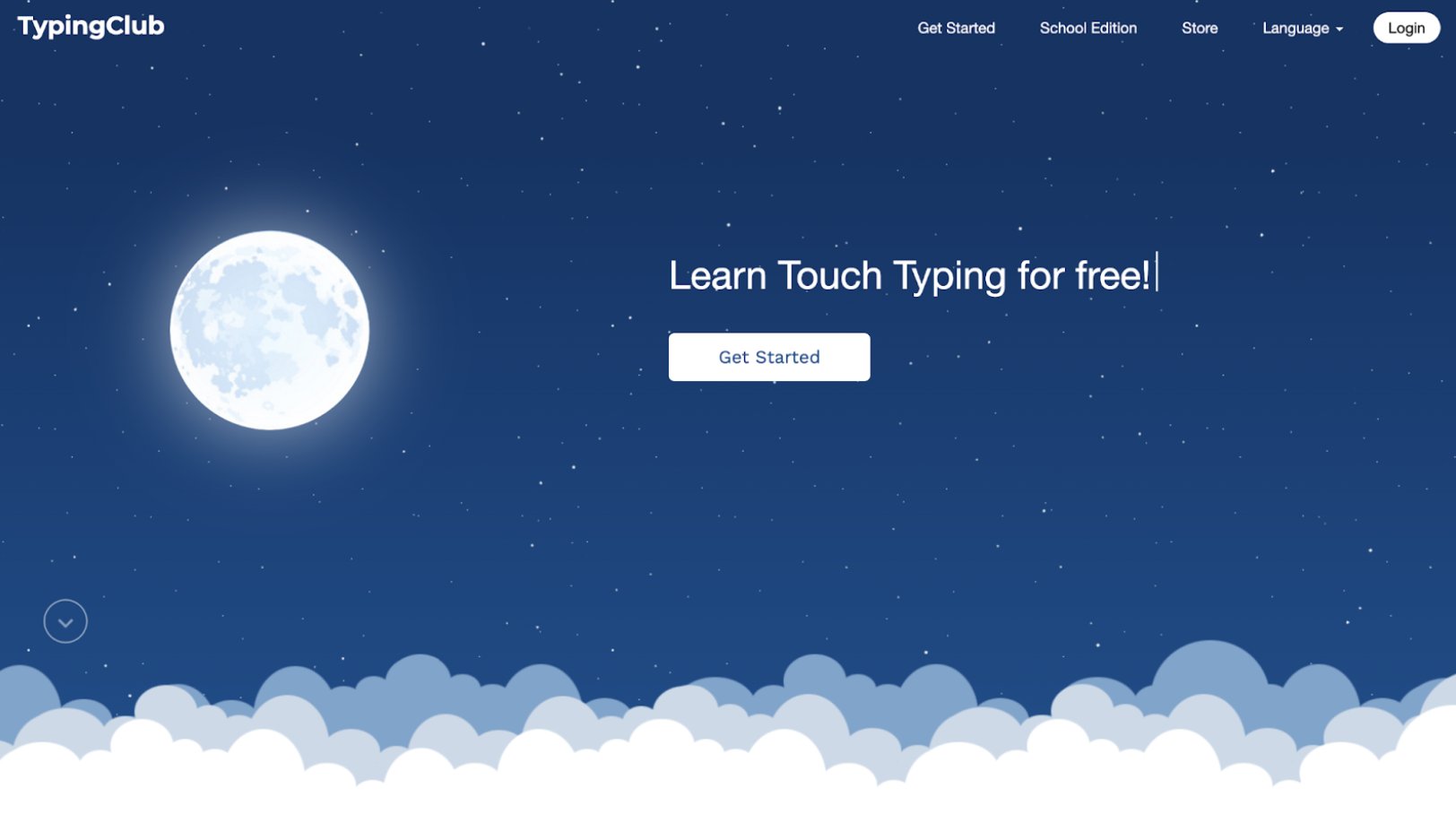
TypingClub teaches touch typing through structured lessons, interactive games, and challenges that help children build speed and accuracy in just weeks. Voice feedback, hand posture guides, and multilingual support make it accessible for diverse users, while badges and stars keep motivation high.
The free platform includes vocabulary building alongside typing skills and offers plans suitable for both home and school environments. With millions of students already benefiting, TypingClub serves as a practical, engaging tool for developing an essential modern skill. Consistent practice leads to noticeable improvement, making it valuable for children preparing for more advanced computer-based learning.
Key features
- Interactive videos and playback.
- Levels with stars and badges.
- Hand posture guides.
Facts and information
- Millions of students and teachers.
- Multiple keyboard layouts.
- Google Education partner.
31. Scratch
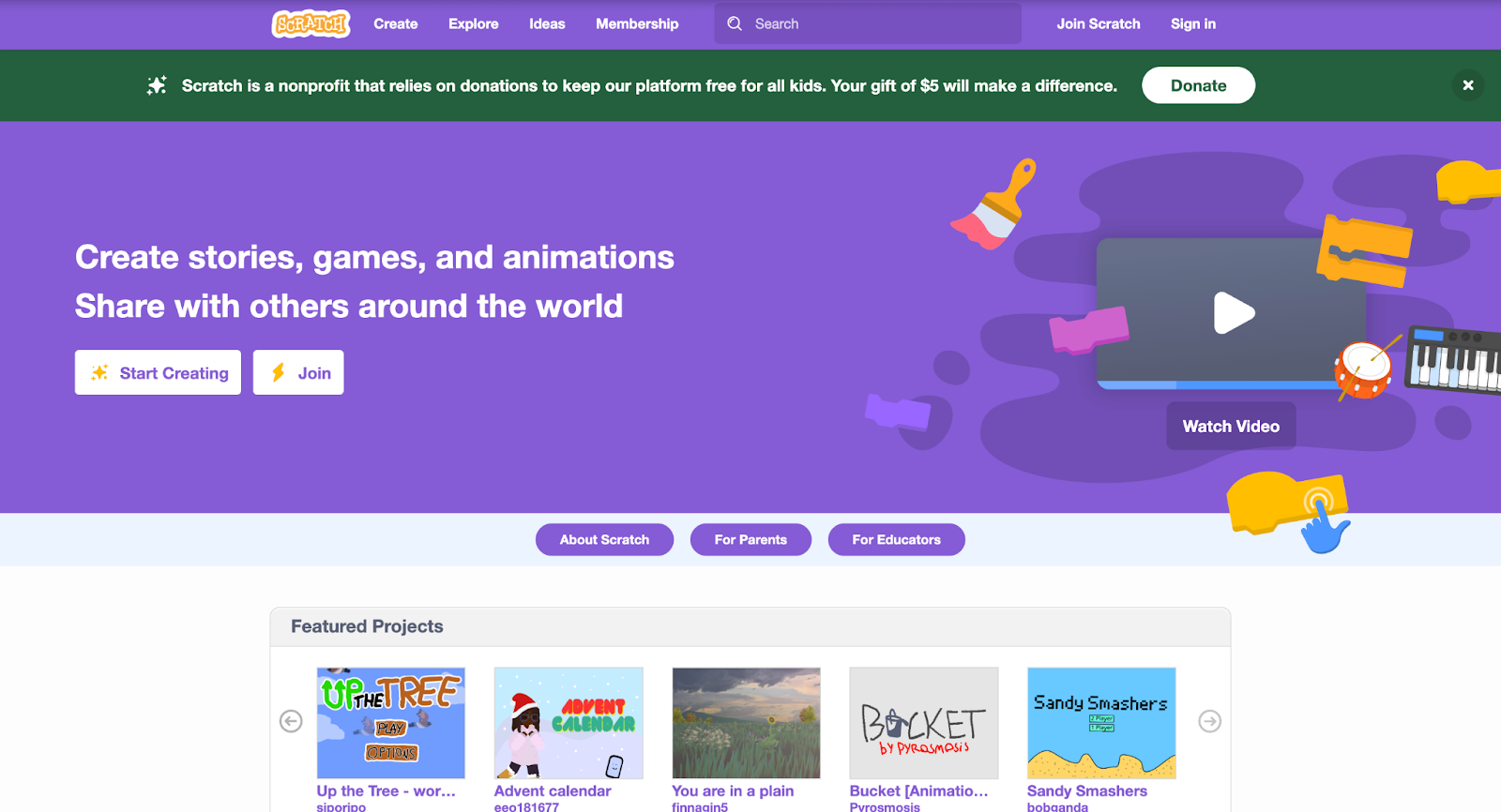
Scratch empowers children to create their own interactive stories, games, and animations using a visual block-based coding language. Developed by MIT, the free, multilingual platform fosters creativity, computational thinking, and collaboration through its vibrant global community where projects can be safely shared and remixed. Its moderated environment ensures a positive experience while promoting problem-solving and equity in technology education.
Though the visual interface may limit highly advanced coding later on, Scratch remains the world’s largest coding platform for kids. It helps young creators build confidence, logical thinking, and digital literacy skills that transfer far beyond the screen.
Key features
- Block-based coding tools.
- Project sharing community.
- Moderated safe environment.
Facts and information
- Largest kids' coding site.
- Over 70 languages supported.
- Donation-funded for access.
32. Arcademics
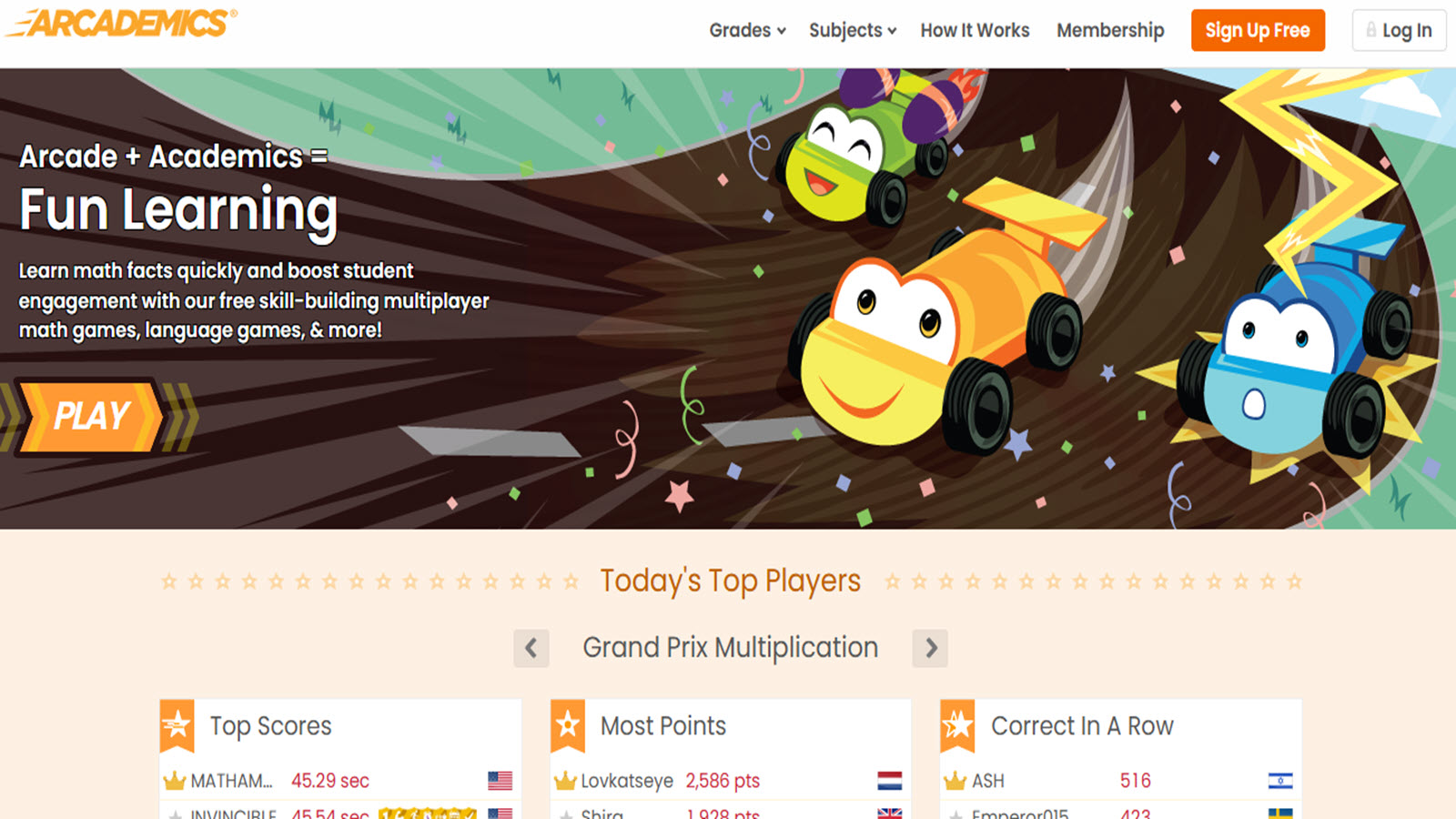
Arcademics provides a collection of multiplayer arcade-style educational games that combine fast-paced fun with skill practice in math, language arts, geography, and typing for elementary-aged children. Players compete or cooperate in vibrant, action-oriented environments where answering questions correctly powers vehicles, characters, or actions to advance through levels.
The platform emphasizes quick recall and strategic thinking while aligning with school standards, making it suitable for classroom tournaments or home practice sessions. Headquartered in the USA, it supports safe global multiplayer interactions with teacher tools for assigning specific skills and monitoring performance. Children build fluency through repeated engaging play, with immediate feedback helping reinforce concepts without frustration. The variety keeps sessions dynamic across subjects, supporting different learning paces in a competitive yet collaborative format popular among USA schools and families.
- Key features: Multiplayer arcade games, real-time competition, subject-specific skill practice, progress tracking for educators, customizable game selection.
- Facts and information: Features dozens of games with millions of plays, aligns with Common Core standards, used widely in elementary classrooms for gamified learning reinforcement.
33. Monster Math
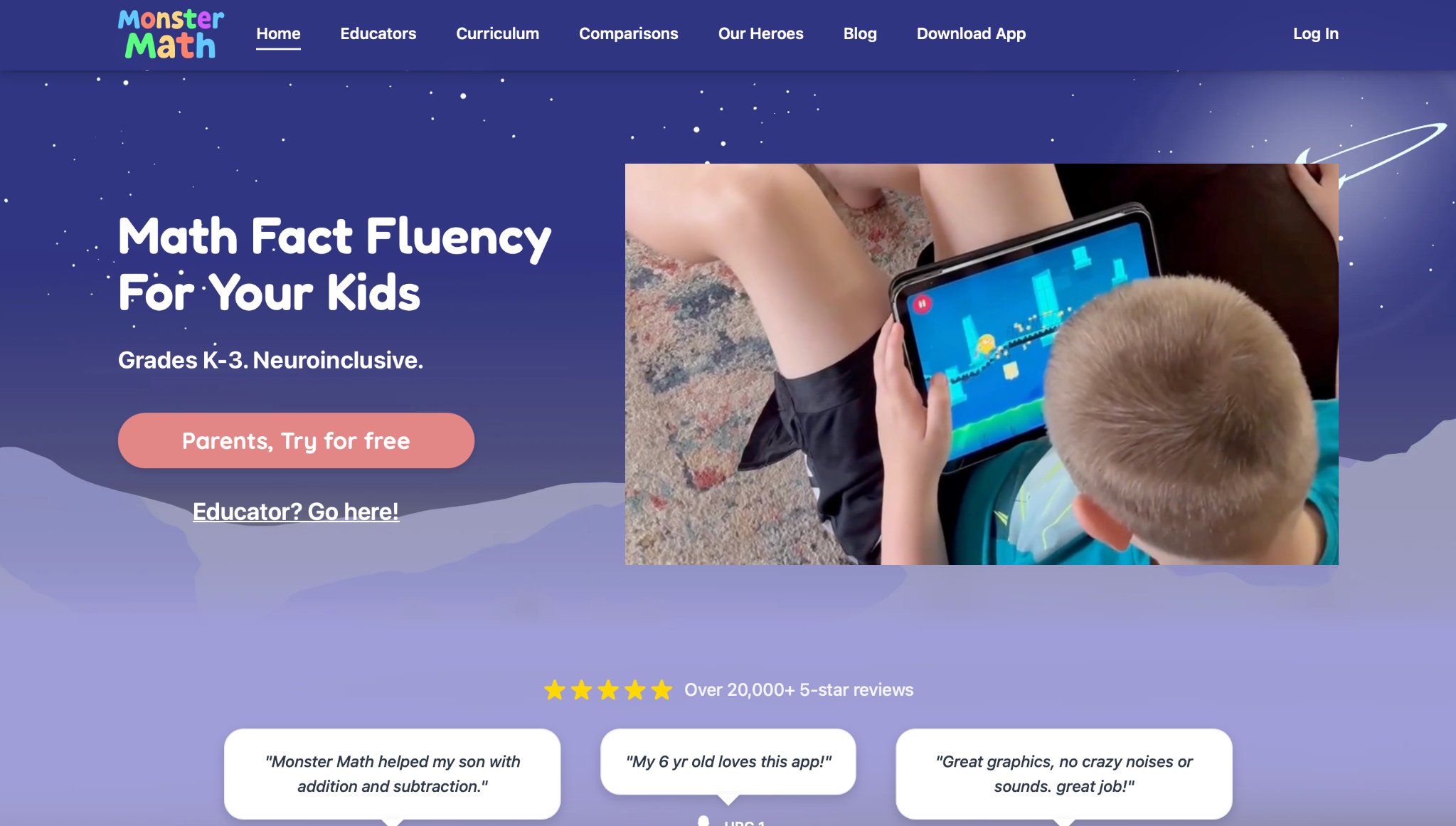
Monster Math delivers story-driven math adventures where kindergarten to grade 3 children help quirky monsters solve problems involving addition, subtraction, multiplication foundations, and number sense through visual puzzles and quests. The app embeds operations into narrative challenges set in colorful worlds, encouraging strategic thinking and conceptual understanding rather than rote memorization.
Adaptive difficulty adjusts to each child's performance, providing supportive scaffolding and rewards that maintain motivation. Developed with research-backed methods, it focuses on building strong number fluency and problem-solving confidence in short, engaging sessions ideal for young learners. Families in the USA appreciate its balance of entertainment and curriculum alignment for home supplementation or school readiness preparation.
- Key features: Narrative math quests, visual puzzle mechanics, adaptive difficulty levels, monster character interactions, foundational operations practice.
- Facts and information: Targets ages 5-9 with immersive gameplay, research-supported for improving math fact fluency and conceptual grasp, available across major mobile platforms.
34. Seek by iNaturalist
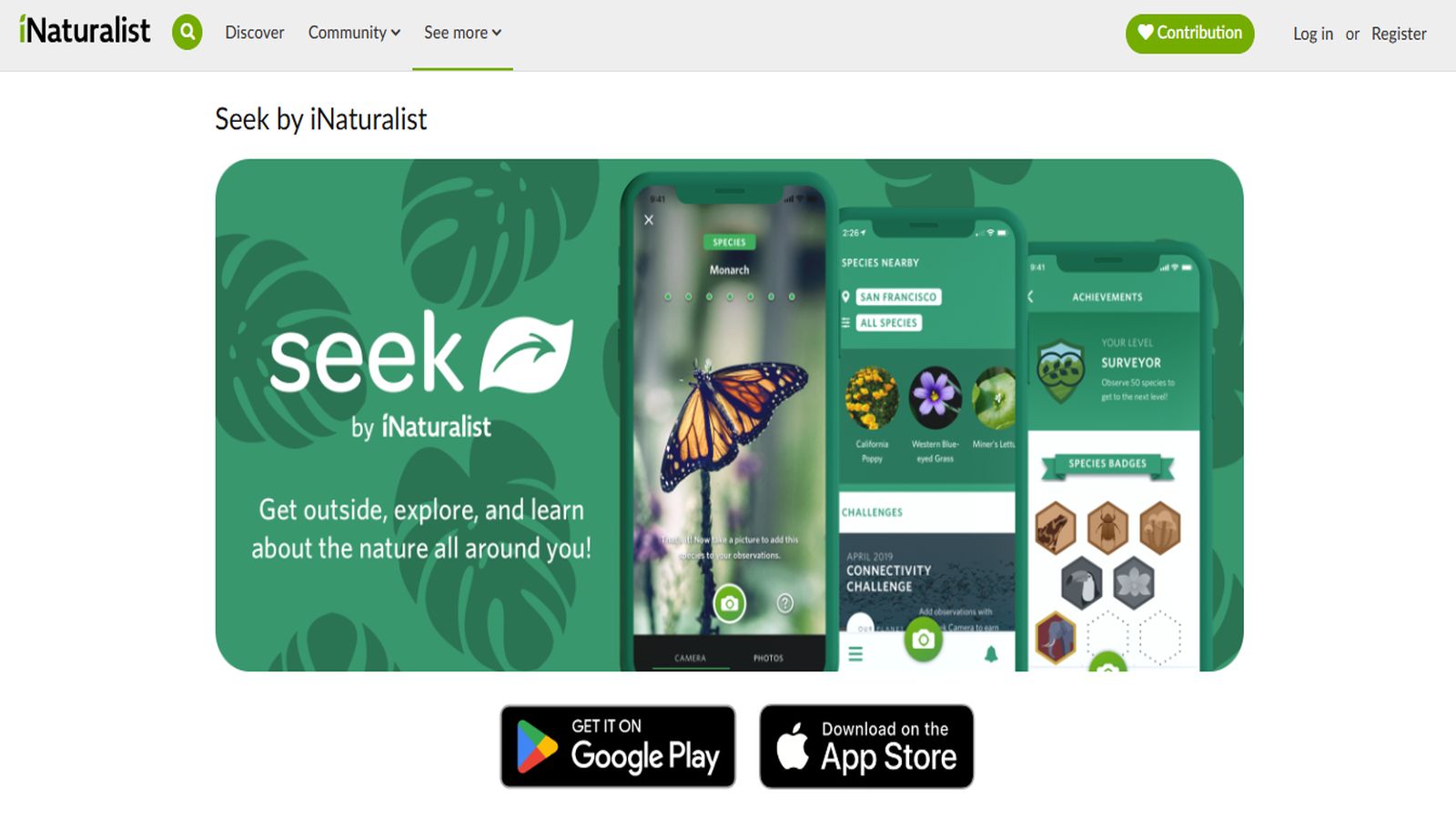
Seek by iNaturalist turns outdoor exploration into an interactive learning game using a phone's camera to identify plants, animals, fungi, and insects in real time, awarding badges and building a personal life list for children and families. The app promotes biodiversity awareness and scientific observation skills through citizen science participation, connecting users to a global database of observations.
It includes challenges tailored for different seasons and locations, encouraging safe outdoor activity while teaching classification, ecology, and environmental stewardship. Suitable for elementary ages, it bridges digital engagement with nature discovery, supporting school projects or weekend family adventures across the USA. The gamified elements make learning about the natural world exciting and accessible without requiring prior expertise.
- Key features: Camera-based species identification, badge and challenge system, personal observation log, seasonal missions, integration with global biodiversity database.
- Facts and information: Powered by iNaturalist community science network, used by millions for real-world learning, promotes STEM interest through hands-on environmental education.
35. Tynker
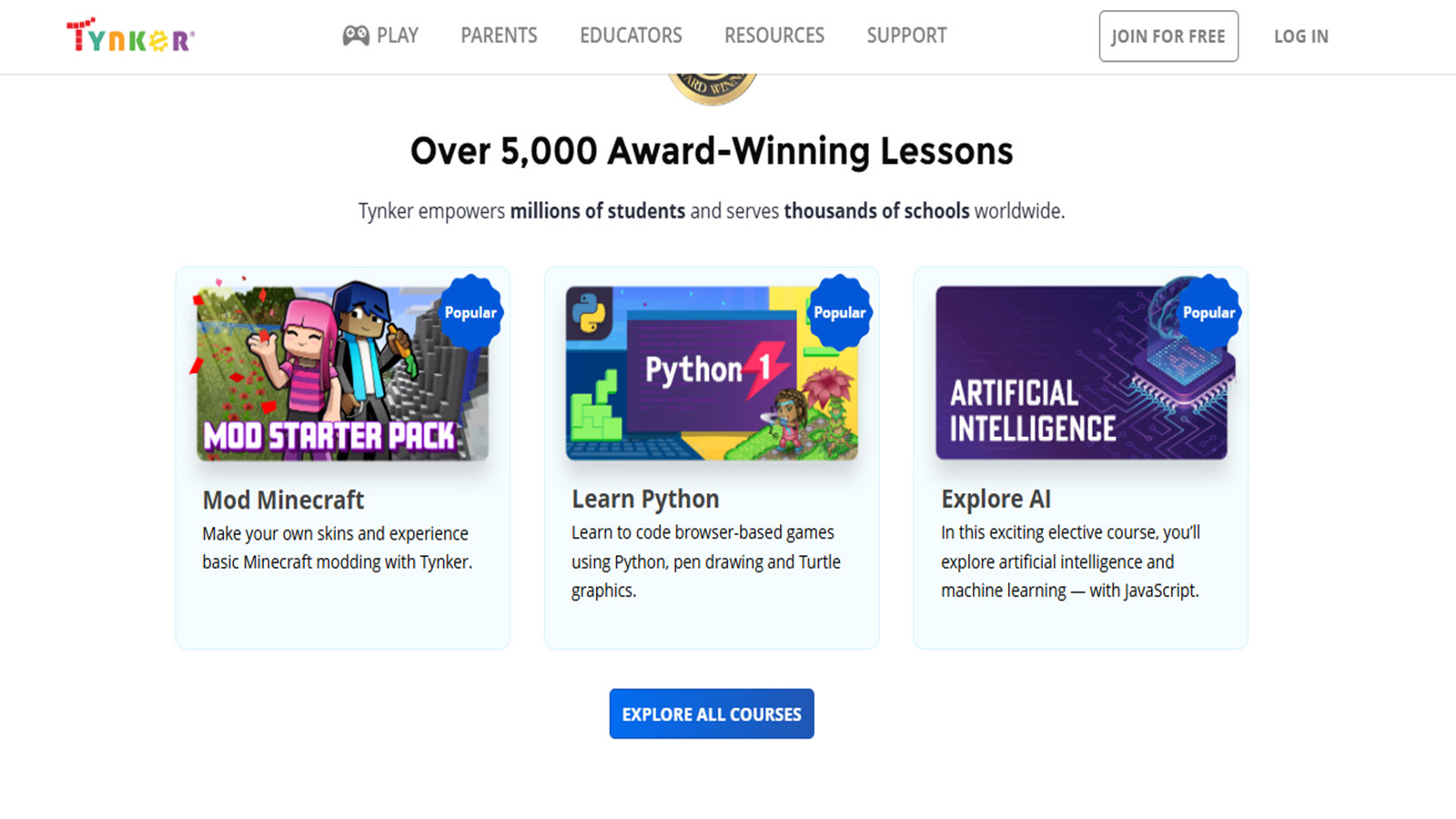
Tynker offers block-based coding courses and game creation tools designed for children ages 5 and up, enabling them to build interactive projects, animations, and apps while learning programming logic, sequencing, and creative problem-solving. The platform includes themed modules with popular characters and step-by-step tutorials that progress to more advanced concepts like JavaScript. Kids can share creations in a moderated community, fostering collaboration and digital citizenship. Widely adopted in USA schools, it integrates with curricula to support computational thinking alongside subjects like math and storytelling. The visual interface lowers barriers for young beginners while providing depth for continued growth.
- Key features: Drag-and-drop coding blocks, project-based courses, game and app creation tools, community sharing, curriculum integration options.
- Facts and information: Serves millions of students with hundreds of coding activities, aligned with educational standards for K-12, emphasizes creativity in STEM learning.
36. Primary Games
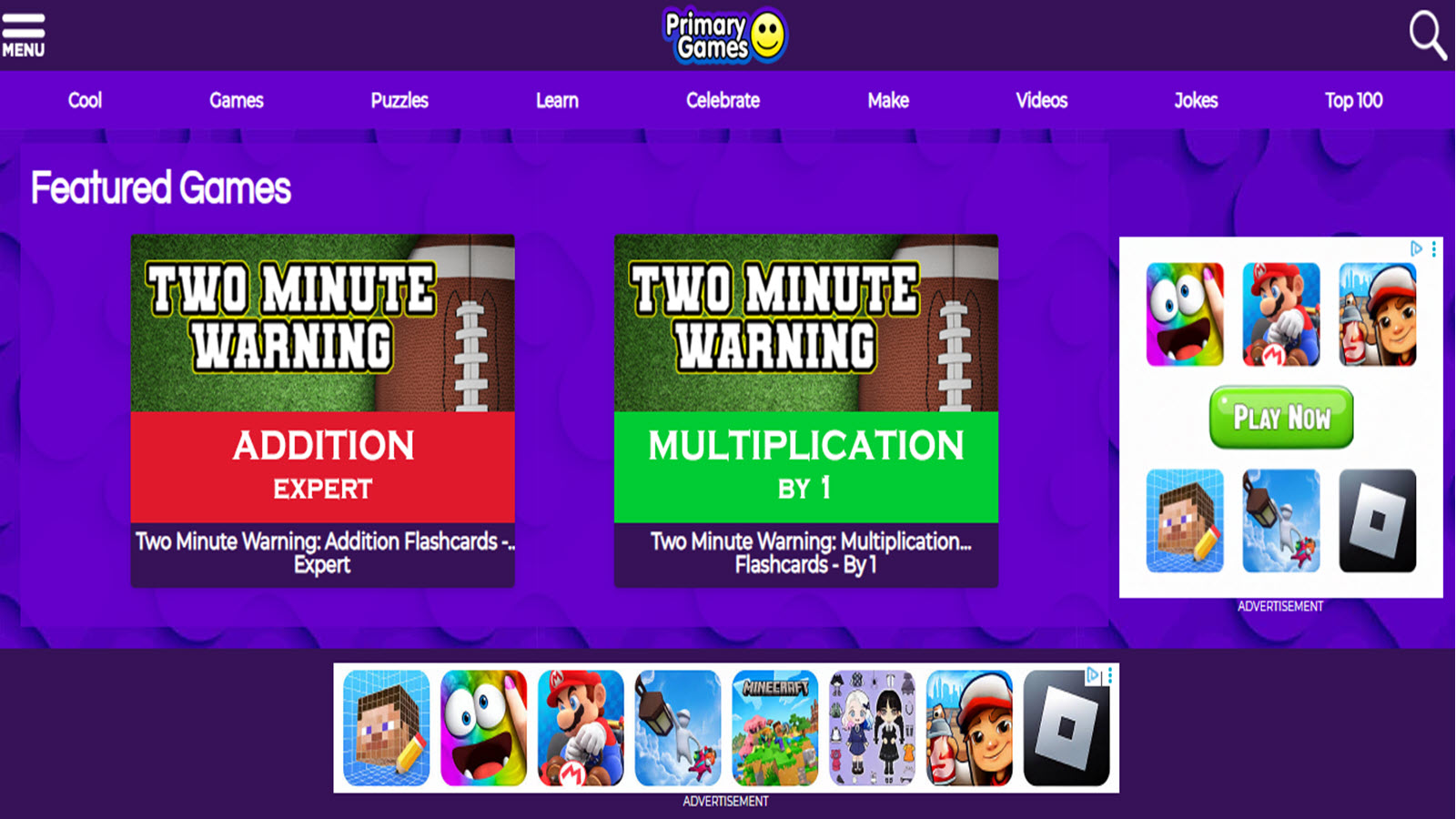
Primary Games delivers a vibrant collection of free online games focused on math, reading, and logic for elementary-aged children, featuring colorful animations and simple controls that make learning approachable. Headquartered in the USA, the platform emphasizes quick, engaging sessions that reinforce school skills through arcade-style play, helping kids practice concepts like counting, spelling, and pattern recognition while building hand-eye coordination and quick thinking. Its straightforward design suits young users who benefit from immediate feedback and variety, turning short playtimes into productive skill-building moments without complex navigation.
- Key features: Hundreds of subject-specific games including math drills, reading challenges, and holiday-themed activities; easy-to-use interface with no downloads required; progress through levels that increase in difficulty.
- Facts and information: Covers core elementary topics with frequent updates for seasonal relevance; popular in home and classroom settings for supplemental practice; supports multiple age-appropriate skill levels across Pre-K to grade 5.
37. Wonderopolis

Wonderopolis sparks daily curiosity with a new "Wonder of the Day" featuring engaging articles, videos, and activities on science, history, culture, and everyday phenomena designed for kids to explore independently or with family. Based in the USA, it excels at connecting real-world questions to factual explanations, encouraging critical thinking and research habits through short, digestible content that feels like discovery rather than homework. The site's question-driven format keeps children returning for fresh wonders, fostering a love of learning and broader world awareness in an ad-light, family-friendly environment.
- Key features: Daily updated wonders with related questions and activities; multimedia elements like videos and images; parent and teacher resources for extending discussions.
- Facts and information: Millions of monthly visitors exploring diverse topics; promotes inquiry-based learning aligned with educational standards; includes archives for searching past wonders by category or keyword.
38. Weather Wiz Kids
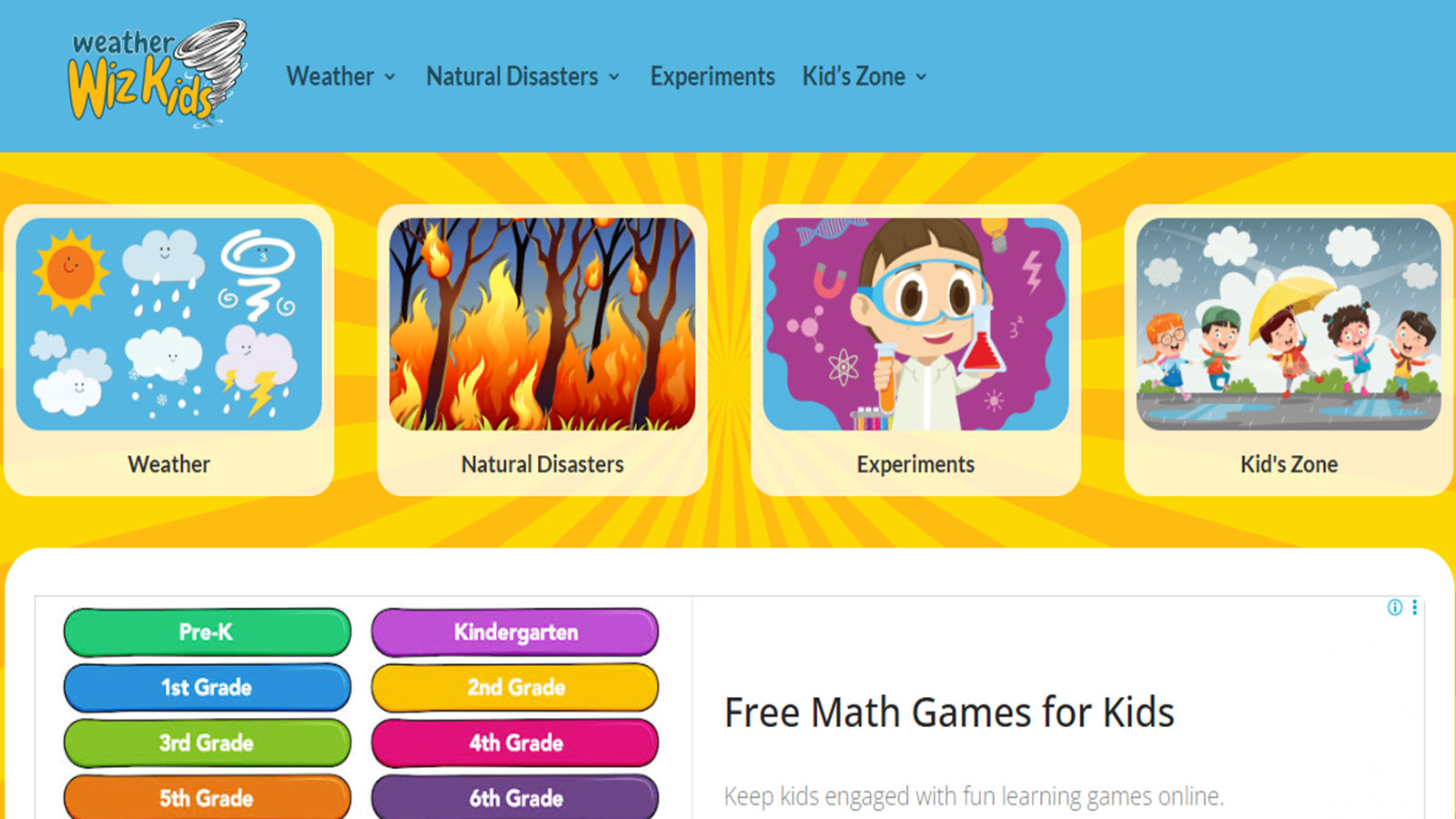
Weather Wiz Kids provides interactive tools, games, and lessons about meteorology, climate, and earth science tailored for children, with experiments, quizzes, and kid-friendly explanations of weather patterns and safety. It stands out for hands-on activities that connect classroom concepts to real-life observations, helping young learners understand storms, seasons, and environmental changes while developing scientific vocabulary and observation skills. The straightforward, educational focus makes it a valuable resource for curious kids interested in nature and science.
- Key features: Weather games, experiments, and forecasting tools; sections on careers in meteorology and safety tips; interactive maps and diagrams.
- Facts and information: Created by a professional meteorologist for educational outreach; covers topics from basic weather to advanced climate concepts; widely used for school projects and homeschool supplementation.
39. NGAkids (National Gallery of Art)
.jpg)
NGAkids offers creative art exploration tools, games, and activities inspired by the National Gallery of Art's collection, allowing children to experiment with digital painting, storytelling, and art history in an interactive museum-like setting. Headquartered in Washington, D.C., it promotes artistic expression and cultural appreciation through projects that blend technology with classic masterpieces, encouraging creativity, observation, and fine motor skills. Its free, high-quality resources provide a sophisticated yet accessible entry into visual arts education.
- Key features: Digital art creation tools and story-making activities; explorations of famous artworks and artists; printable resources and family guides.
- Facts and information: Draws from one of the world's premier art collections; supports multiple age groups with varying complexity; fosters creativity and art appreciation through museum-backed content.
40. Kids Think Design

Kids Think Design introduces architecture, engineering, and design concepts through interactive challenges, games, and projects that teach spatial reasoning, problem-solving, and creative thinking. The USA-based platform uses real-world design examples to engage children in building virtual structures and exploring how things are made, building foundational STEM skills alongside artistic expression. It appeals to hands-on learners by making abstract ideas tangible and fun.
- Key features: Design challenges and virtual building tools; lessons on famous architects and structures; activities linking art, math, and science.
- Facts and information: Encourages innovation and critical thinking; suitable for elementary to middle school ages; supports project-based learning with educational depth.
41. Mr. Nussbaum
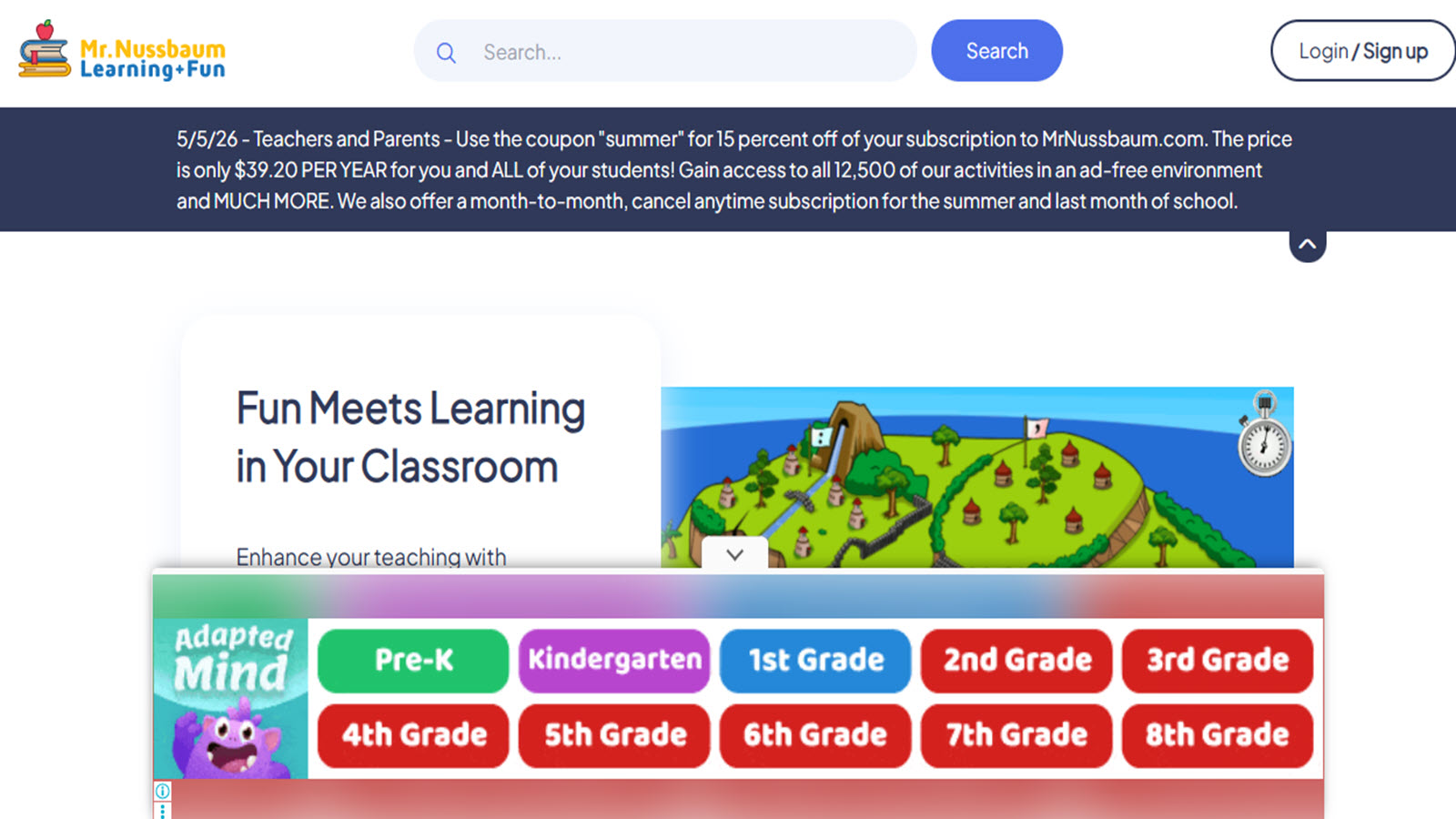
Mr. Nussbaum offers a comprehensive collection of thousands of original interactive games, activities, printables, workshops, and topic centers designed by an elementary school teacher in Virginia for students from kindergarten through eighth grade. The platform covers core subjects including math, language arts, science, history, geography, and social studies through carefully crafted simulations, scavenger hunts, role-playing adventures, and skill-specific drills that reinforce classroom concepts in engaging formats. Children practice everything from multi-digit operations and fractions to phonics, spelling, map skills, and historical events using colorful interfaces that provide immediate feedback. Teachers and parents appreciate the grade-level organization and tools that allow customization of problems, while the site’s focus on meaningful interactivity helps students build fluency and conceptual understanding through repeated, purposeful practice across a wide range of topics.
Key features
- Over 400 interactive games targeting specific skills in math, phonics, spelling, language arts, history, geography, and science
- Extensive topic centers with interactive exhibits, digital maps, scavenger hunts, and literacy activities on subjects such as dinosaurs, biomes, weather, and historical periods
- Drag-and-drop workshops, customizable problem generators, and printable resources for differentiated learning
- Grade-level filtering and alignment with educational standards for structured reinforcement
Facts and information
- Developed from real classroom experience and visited by millions of teachers and students each month across the United States
- Includes specialized tools such as stock market simulators, map-making programs, and interactive periodic tables
- Content spans early elementary foundations through middle school topics with frequent updates to maintain relevance
42. DOGOnews

DOGOnews functions as a leading platform for kid-friendly academic current events, delivering carefully written articles on science, social studies, environment, sports, world affairs, and civic topics tailored for elementary and middle school readers. Each story appears at multiple reading levels and includes supporting elements such as vocabulary support, comprehension quizzes, critical thinking challenges, and discussion prompts that help children develop literacy skills while staying informed about real-world issues. The content bridges classroom learning with everyday events, encouraging media literacy, informed citizenship, and deeper engagement with subjects like history and environmental science. Educators and families across the United States rely on the platform to supplement language arts and social studies instruction with timely, age-appropriate material that promotes both reading growth and global awareness.
Key features
- Daily and archived academic current events articles enhanced with photos, videos, and infographics
- Multiple reading levels, read-aloud audio, interactive dictionaries, and bilingual English-Spanish options
- Built-in quizzes covering reading comprehension, vocabulary in context, parts of speech, and critical thinking
- Subject categories and assignment tools suited for classroom, homeschool, and independent use
Facts and information
- Serves millions of students and educators monthly as a trusted source for curriculum-aligned nonfiction reading
- Articles structured specifically to improve reading, listening, vocabulary, and analytical skills
- Content regularly updated to reflect current events while remaining suitable for young audiences
43. Frontiers for Young Minds
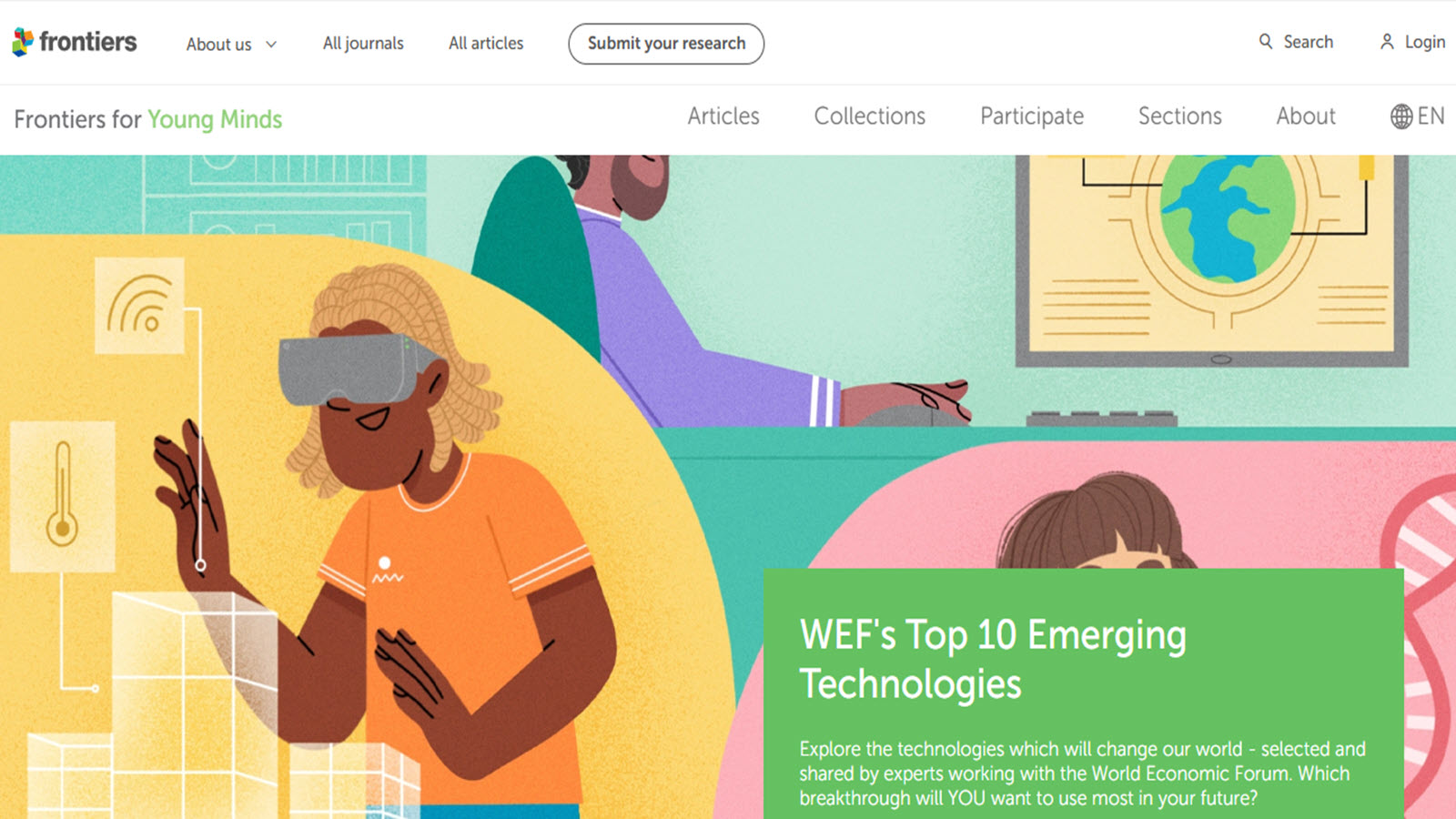
Frontiers for Young Minds operates as an open-access scientific journal that presents real research findings written by scientists and reviewed by a board of children and teenagers, making advanced science accessible and engaging for young readers. Articles explore topics ranging from neuroscience, biology, and environmental science to physics, health, and new discoveries, rewritten in clear language with illustrations that invite curiosity and critical thinking. The platform uniquely involves young people directly in the scientific process as reviewers, helping them understand how research is evaluated while building scientific literacy. Suitable for elementary through middle school ages, it encourages independent exploration of authentic science and fosters a sense of participation in the global research community.
Key features
- Peer-reviewed science articles adapted for approximately ages 8 to 15 with supporting illustrations
- Young reviewer program that involves kids and teens in evaluating and improving content
- Sections dedicated to new discoveries, core scientific concepts, and health-related topics
- Completely free open-access format focused exclusively on youth audiences
Facts and information
- Functions as a specialized scientific journal with content drawn from original research papers
- Emphasizes accurate communication of complex ideas in language suitable for developing readers
- Supports inquiry-based learning by connecting children with the work of practicing scientists
44. Ben’s Guide to the U.S. Government

Ben’s Guide to the U.S. Government, produced by the U.S. Government Publishing Office in Washington, D.C., provides interactive tutorials, games, activities, and explanatory resources that teach students how the American government functions. Content is organized by grade bands from kindergarten through high school and covers foundational topics such as the Constitution, the three branches of government, elections, citizenship responsibilities, and historical documents. Children explore civic concepts through age-appropriate explanations, quizzes, and interactive elements that build understanding of democratic processes. The site serves as an official, reliable source for civics education that supports both classroom instruction and independent learning at home.
Key features
- Grade-banded tutorials and interactive activities explaining government structure and civic processes
- Games and quizzes reinforcing knowledge of the Constitution, elections, and citizenship
- Clear explanations of historical documents and the roles of different government branches
- Navigation designed to match developmental stages from early elementary through high school
Facts and information
- Official educational resource created by the U.S. Government Publishing Office
- Content maintained for accuracy and relevance to American civic education standards
- Helps students develop foundational knowledge needed for informed participation in democratic society
45. Energy Kids
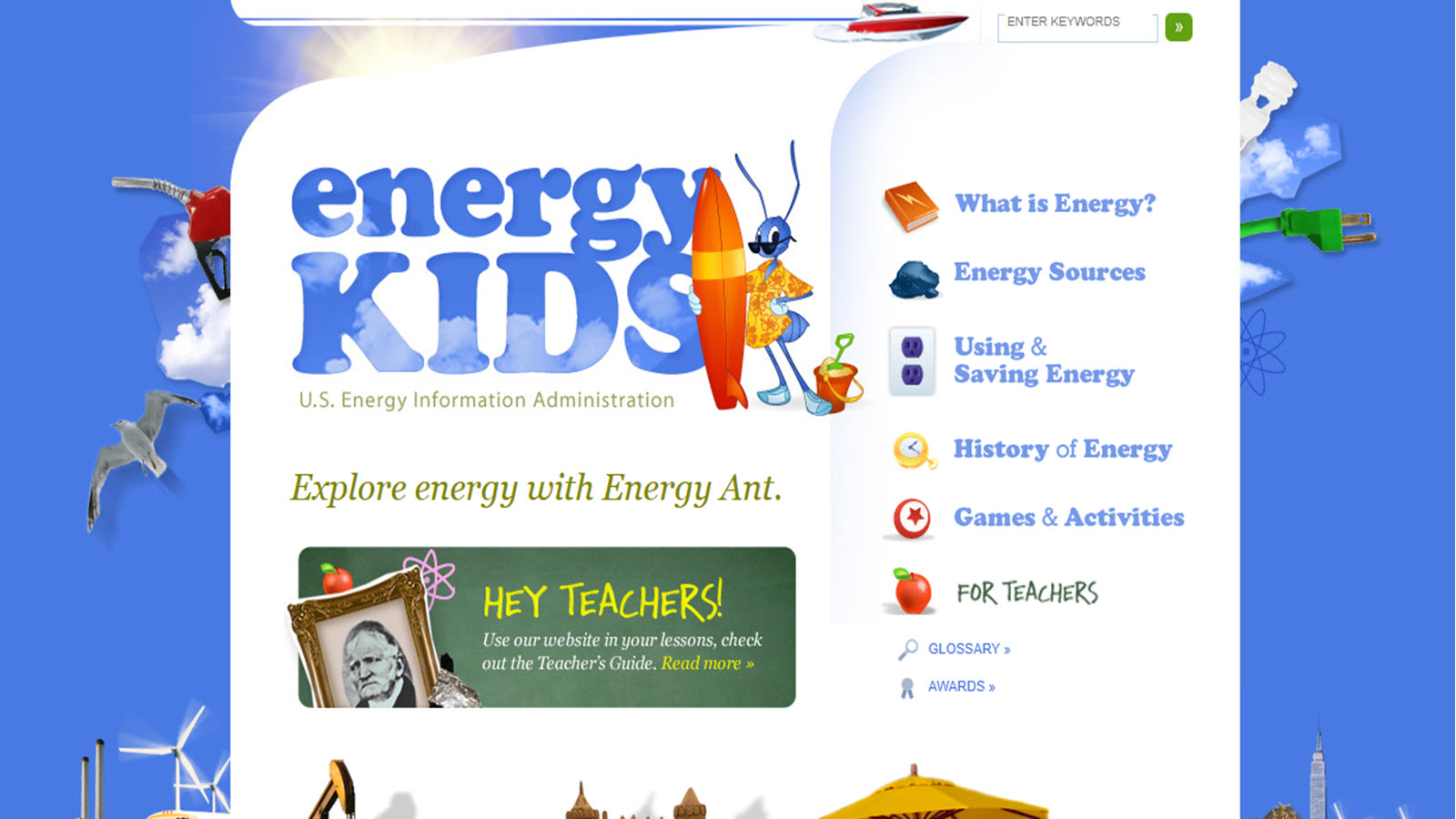
Energy Kids, developed by the U.S. Energy Information Administration in Washington, D.C., introduces children to the science and systems of energy through interactive games, data tools, calculators, diagrams, and educational articles. Topics include renewable and nonrenewable energy sources, electricity generation, energy consumption patterns, conservation practices, and the environmental impacts of different energy choices. The platform helps young learners understand the energy systems that power daily life while connecting science concepts to real-world data and historical developments. Suitable for elementary and middle school students, it supports both formal science instruction and independent exploration of energy-related subjects.
Key features
- Interactive games, quizzes, and calculators focused on energy types, usage, and conservation
- Visual diagrams and data tools that allow exploration of energy statistics and trends
- Dedicated sections for students, parents, and teachers with supporting educational materials
- Coverage of historical energy developments alongside current and emerging technologies
Facts and information
- Produced by the federal Energy Information Administration using official energy data
- Aligns with national science education goals related to energy systems and environmental awareness
- Provides factual, data-driven content that helps children connect classroom learning to everyday energy use
46. Math Playground
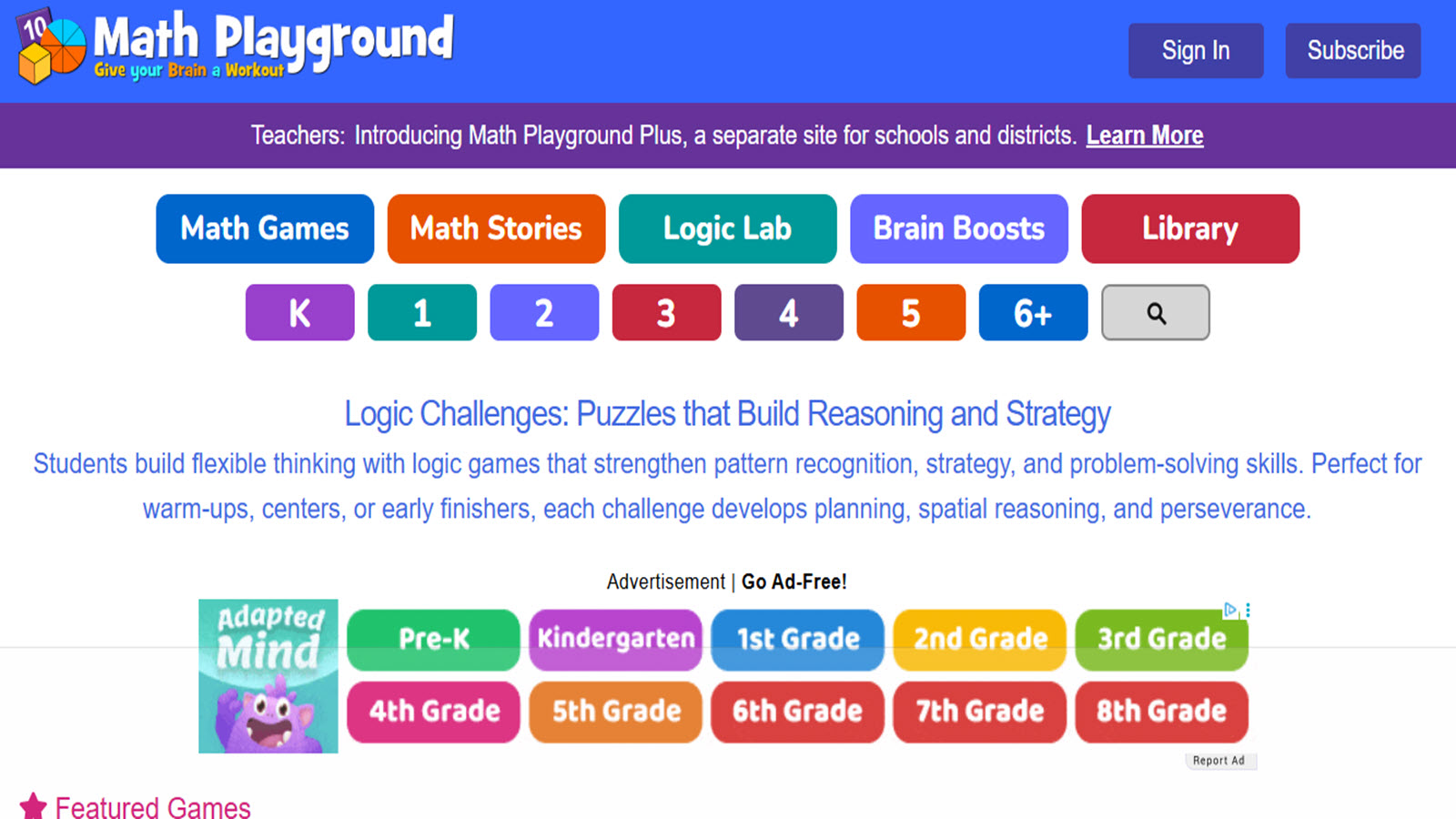
Math Playground is a long-running K–6 math site created by a former teacher to help children learn through games, puzzles, and visual models rather than drills alone. Launched in 2002, it now includes hundreds of original activities covering operations, fractions, geometry, word problems, logic, and spatial reasoning. Signature tools such as Thinking Blocks help students represent story problems step by step, while story-based games and logic challenges encourage pattern spotting and flexible strategies. Teachers in many U.S. classrooms use the site for practice, enrichment, and early-finisher work because the activities feel like play while targeting specific skills. Families use it at home for short, focused sessions that build number sense and persistence.
Key features
- Hundreds of math games, logic puzzles, and problem-solving challenges for grades K–6
- Visual modeling tools such as Thinking Blocks for word problems
- Story-based and adventure-style games that embed computation and reasoning
- Classroom-oriented organization by skill and grade band
Facts and information
- Founded in 2002 and trusted by teachers for more than two decades
- Content emphasizes conceptual understanding alongside fluency
- Used widely in U.S. elementary classrooms and homeschool settings
47. PhET Interactive Simulations
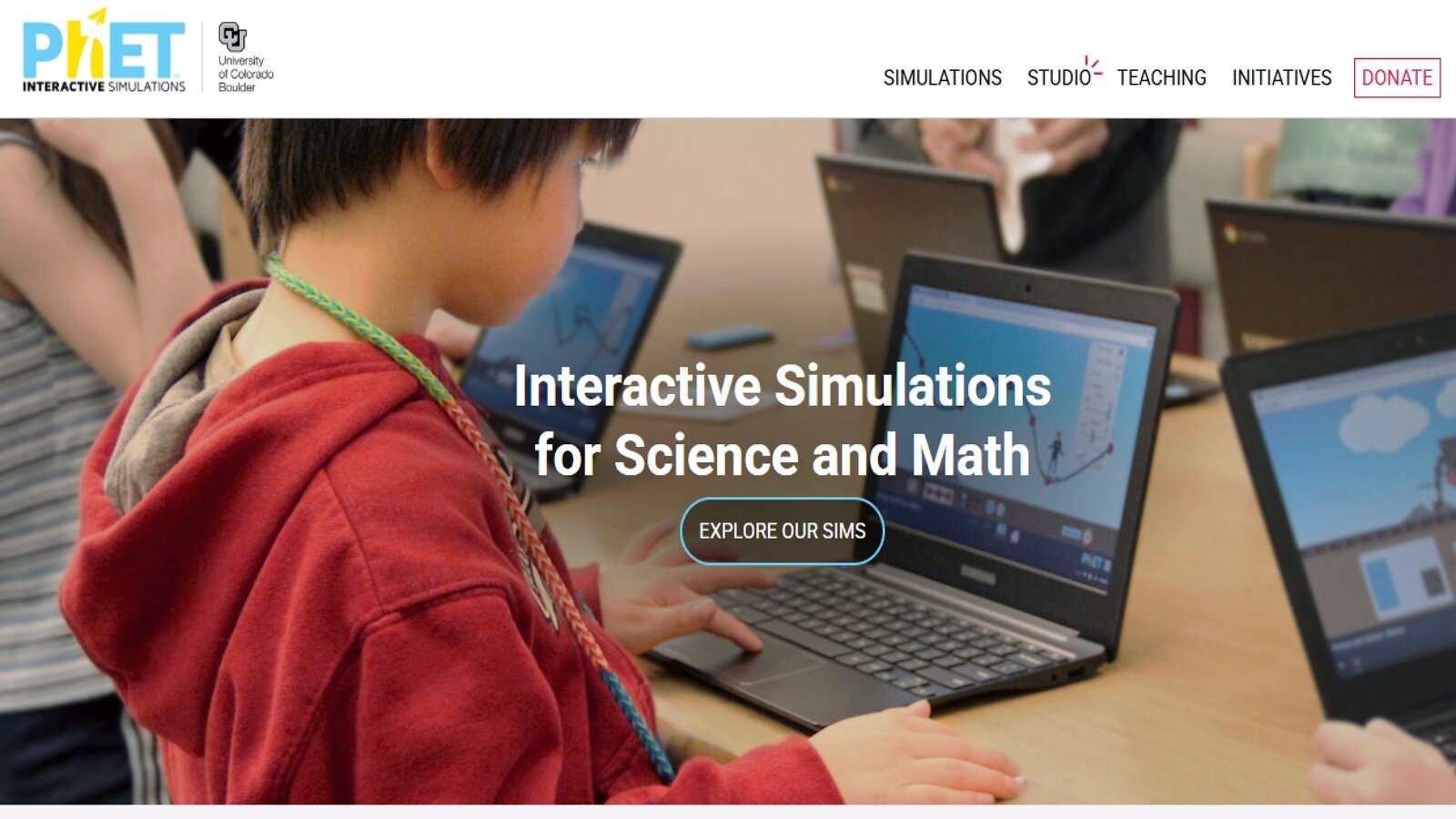
PhET Interactive Simulations, based at the University of Colorado Boulder, offers free research-based science and math simulations that let children experiment with ideas they cannot easily test in a typical home or classroom. Founded in 2002 by Nobel laureate Carl Wieman, the project now includes simulations in physics, chemistry, biology, earth science, and mathematics. Students click, drag, and adjust sliders to change variables and immediately see what happens, which helps make invisible processes visible. Teacher-submitted lessons and translations support classroom use across many languages. The platform is especially useful for elementary and middle school learners who benefit from hands-on exploration of circuits, atoms, forces, fractions, and more.
Key features
- Interactive HTML5 simulations covering science and math topics
- Inquiry-style controls such as sliders, measurement tools, and multiple representations
- Teacher-submitted lesson collections and classroom resources
- Offline and multi-device access options for many simulations
Facts and information
- Project based at the University of Colorado Boulder
- More than 1.8 billion simulation runs delivered since launch
- Hundreds of simulations with extensive classroom research behind their design
48. Storyline Online
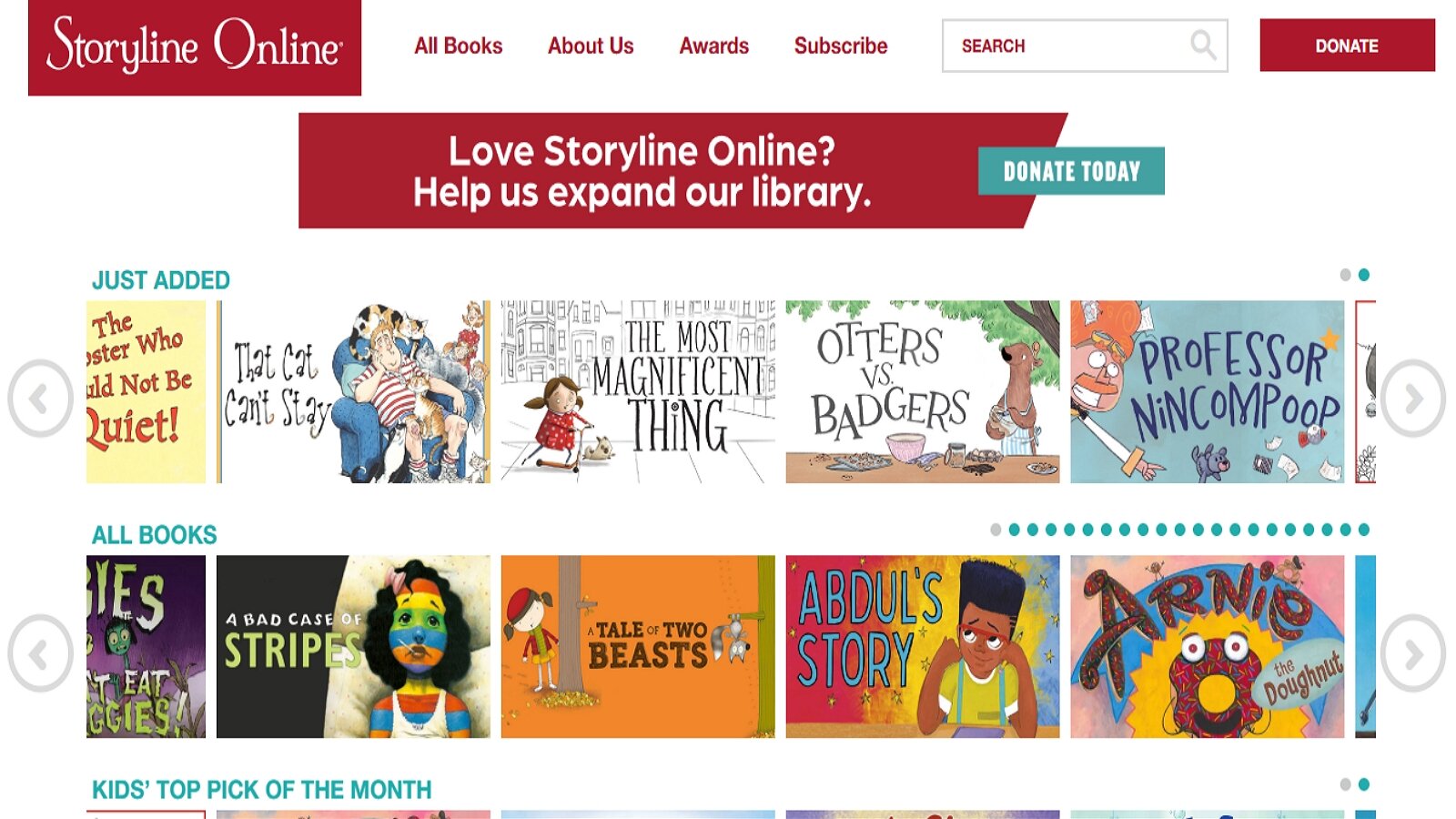
Storyline Online is the SAG-AFTRA Foundation’s children’s literacy program featuring well-known actors reading picture books with produced illustrations and sound. The library includes more than 100 read-aloud videos used by families, classrooms, libraries, and hospitals. Each title comes with a companion activity guide created by an elementary educator to support comprehension, discussion, vocabulary, and writing. The program is designed to model expressive reading and help children connect stories with language growth. Because the videos are short and visually rich, they work well for shared family reading time and for English language learners who benefit from hearing fluent narration.
Key features
- Actor-narrated picture-book videos with illustrated storytelling
- Educator-created activity guides for comprehension and language practice
- Library of more than 100 titles featuring a wide range of storytellers
- Classroom and home-friendly format for read-aloud routines
Facts and information
- Emmy Award–winning literacy program of the SAG-AFTRA Foundation
- Hundreds of millions of views across many countries
- Endorsed by major education and library organizations for classroom use
49. TED-Ed

TED-Ed creates and curates short animated lessons and discussion-ready videos that introduce science, history, literature, psychology, and civic ideas in a format older elementary and middle school students can follow. Lessons typically last a few minutes and are paired with questions, extra resources, and options for teachers or parents to customize a learning sequence. The platform also includes student-level filters so families can choose topics that match age and interest. Animations help explain abstract ideas such as how memory works, why weather differs from climate, or how languages share common features. It works best as a curiosity spark and discussion starter rather than a full curriculum.
Key features
- Short animated lessons across science, humanities, and thinking skills
- Built-in questions and follow-up resources for discussion
- Tools to customize lessons around videos
- Subject and student-level browsing for guided exploration
Facts and information
- Educational arm of TED focused on lessons worth sharing
- Widely used by teachers for warm-ups, enrichment, and inquiry
- Content spans arts, science, technology, and social studies
50. CK-12
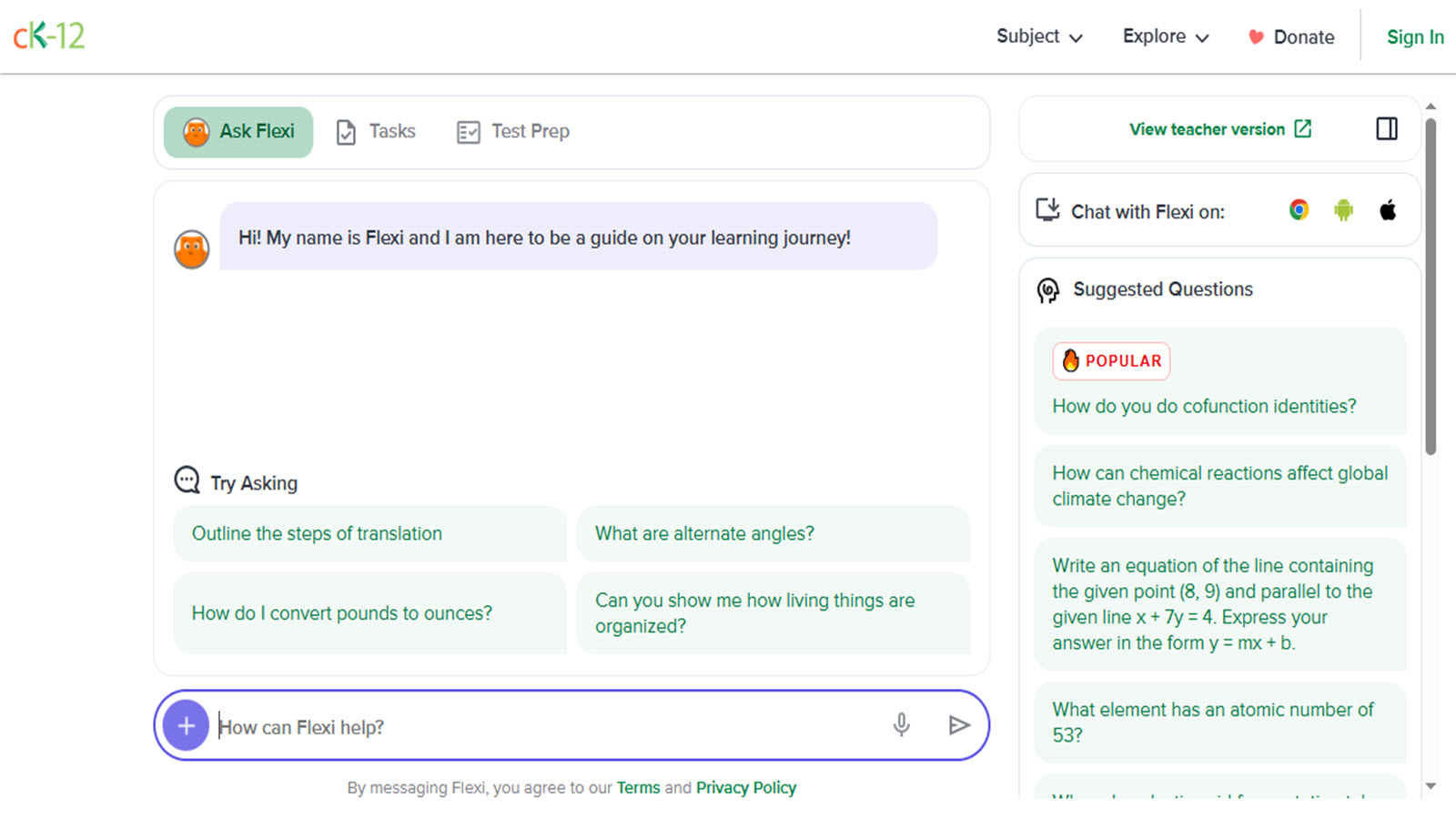
CK-12 is a Palo Alto, California nonprofit that publishes free, customizable K–12 resources with a strong focus on math and science. Its FlexBook platform combines readings, videos, simulations, practice questions, and adaptive review so students can work through a concept in more than one way. Concept pages and PLIX interactives let children play with an idea, then answer questions that check understanding. Teachers and homeschool families can assemble materials by topic or standard and track how students perform on practice sets. The site is especially useful for older elementary and middle school learners who need extra explanation, visual models, or extra practice without a rigid single-path lesson.
Key features
- FlexBook lessons with videos, interactives, and inline questions
- Adaptive practice drawn from a large question library
- PLIX activities that let students play, learn, interact, and explore a concept
- Customization tools for teachers, parents, and independent learners
Facts and information
- Nonprofit founded in 2007 and headquartered in Palo Alto, California
- Reports hundreds of millions of users and billions of practice questions answered
- STEM-focused open educational resources aligned to common school topics
How To Pick The Right Site For Your Child
Parents often weigh age, interests, and safety when selecting sites. Focus on platforms with controls and no ads to keep experiences positive. Match content to school needs, like math boosts or reading help. Some kids thrive on games, while others prefer videos. Test free trials to see what clicks. Mix sites for balanced exposure, ensuring variety in skills.
Tips For Safe And Effective Online Learning
- Set time limits to pair digital tools with offline play.
- Monitor sessions and discuss what kids learn to reinforce ideas.
- Use built-in reports to spot strengths.
- Encourage sharing favorites with siblings for social ties.
- If issues arise, our FAQ covers common setup questions.
- Always choose vetted sites from trusted groups.
- This approach keeps learning fun and secure.
Recommended Subjects and Activities by Age Group:
- Preschool: Basics like colors and letters through tracing and simple puzzles.
- Early Elementary: Math and reading fundamentals with games on addition and phonics stories.
- Upper Elementary: Science and coding intros via quizzes on animals and basic programming.
Common Challenges When Using Educational Websites
Some children lose interest if activities feel too easy or too hard. Adaptive levels that shift with performance help keep the right balance. Distractions from other open tabs or notifications can break focus, so calm interfaces matter. Technical issues like slow loading or login problems interrupt flow. Clear offline modes reduce this risk. Parents sometimes struggle to see progress at a glance, which is why simple dashboards prove useful. Balancing screen sessions with other activities remains an ongoing task. Short, consistent use often works better than long stretches. Platforms that support social emotional growth for children and confidence building skills for kids help address some of these everyday hurdles.
STEM Educational Websites for Kids
Educational websites for STEM learning in kids deliver hands-on virtual experiments and logic puzzles that build foundational understanding of science, technology, engineering, and mathematics through guided discovery. Online educational games for kids allow children to test engineering designs and mathematical patterns in dynamic scenarios that mirror real-world problem solving.
Creative Educational Websites for Kids
Creative educational websites for kids supply digital canvases, music sequencers, and narrative builders that adapt to individual expression levels and encourage original idea formation. The TutoClub subscription maintains alignment with evolving creative curricula and holiday-themed projects. Families often incorporate the family weekly planner printables to schedule dedicated blocks for artistic exploration alongside website activities.
Math Educational Websites for Kids That Make Learning Fun
Math educational websites for kids transform numbers and concepts into exciting adventures rather than drills. These platforms use interactive fun educational games to teach counting, addition, subtraction, shapes, patterns, and fractions in ways that feel like play.
Strong math websites incorporate brain games and memory challenges that reinforce concepts through repetition and rewards. Children build confidence as they master levels and see visible progress. Many also teach responsibility skills by encouraging kids to set goals and track their improvement over time.
Educational websites for kids make math enjoyable with colorful visuals, instant feedback, and adaptive difficulty that keeps children motivated without frustration, helping them develop strong number sense naturally.
Device Setup For A Family Computer
A shared PC needs a kids profile and a short bookmark bar. How to protect kids online covers downloads that should stay off that profile. Safe apps for kids follow the same rule on a phone. Tablet games for kids can use a matching kids login. Privacy questions sit nearby when an account prompt appears.
A clean setup includes:
- A kids browser profile
- Low default volume
- A visible clock so the session ends on time
What Families Notice About Kids Learning Sites This Year
Families talk more about tools that pause cleanly and less about long lesson maps. An educational games for kids app can continue a website story on the same account. Educational but fun games for kids keep the task feeling like play. Educational videos and games for kids mix a short clip with a tap activity. Learning through play activities show how that screen time can end in a real-world follow-up.
What shows up in daily use this year:
- Calmer menus
- Shared family logins that remember the last activity
- Holiday skins on the same skill tasks
Latest News In 2026
In 2026 educational websites have integrated real-time AI coaching that adjusts challenge difficulty based on immediate performance patterns to sustain engagement across subjects. Collaborative features now enable secure peer feedback loops within structured environments that develop communication alongside core skills.
Privacy policies reflects the latest COPPA and GDPR enhancements for transparent data practices in interactive learning spaces. Emerging hybrid models blend website modules with printable extensions to support both digital and tactile learning preferences in home settings.
Platform creators focus more on building emotional resilience and global understanding in educational websites for kids during 2026. Fresh updates bring interactive stories that show characters resolving conflicts peacefully and appreciating cultural differences.
New tools let children connect online lessons with simple home experiments using everyday items. Privacy settings and family controls reach higher standards, creating calmer experiences for daily use. Enhanced tracking now shows patterns in curiosity, persistence, and creative thinking.
- Adaptive story paths change based on choices children make during play.
- More content highlights environmental themes and community cooperation.
- Shared family accounts allow parents and kids to join activities together.
FAQ
What makes a good educational website for kids?
Strong educational websites for kids prioritize interactive elements that blend play with core subjects like math and reading to hold attention spans. They include customizable settings for different learning styles, ensuring content aligns with developmental stages from preschool onward. Safety features, such as moderated communities and data privacy, create trustworthy spaces where children can explore without risks.
How do educational websites help with emotional skills?
Educational websites for kids often incorporate scenarios that guide children through recognizing and managing emotions in everyday contexts. By using stories or role-playing activities, these platforms build resilience and social awareness, helping young users relate better to others. This focus on emotional intelligence complements traditional academics, fostering well-rounded personal growth.
Are free educational websites as good as paid ones?
Free educational websites for kids deliver essential lessons in areas like science and language without extra costs, making them accessible for various families. Paid versions sometimes provide deeper customization or exclusive materials, but both types emphasize quality content that supports skill development. The choice depends on specific needs.
Can kids use educational websites without parent help?
Many educational websites for kids feature intuitive designs with voice instructions and simple menus, allowing independent navigation for older children. Younger users benefit from guided paths that minimize confusion, promoting self-directed learning over time. For setup or troubleshooting, resources like an FAQ page offer quick solutions to common queries.
How do educational websites adapt to different learning paces for children?
Educational websites adapt to different learning paces through built-in assessment tools that automatically scale content difficulty and repeat modules as needed for mastery. This personalization keeps frustration low while maintaining steady progress in areas like numerical reasoning or spatial awareness. Many platforms generate parent summaries that highlight growth areas without requiring manual oversight at every step.
What features make educational websites suitable for group or family use?
Features like shared progress dashboards and multiplayer challenge modes make educational websites suitable for group or family use by turning individual activities into collaborative experiences. Sibling accounts often sync achievements to foster healthy competition or teamwork in subjects ranging from basic logic to advanced pattern recognition. Family-oriented interfaces also include discussion prompts that extend screen time into meaningful conversations.
Can educational websites help bridge gaps during school breaks or transitions?
Educational websites help bridge gaps during school breaks or transitions by offering structured review sequences that align with standard grade-level benchmarks while introducing light previews of upcoming material. Short daily modules prevent skill regression in key areas and rebuild confidence through immediate success feedback. Seasonal content bundles keep the experience fresh without requiring new setups each period.
How do educational websites incorporate cultural diversity and global perspectives?
Educational websites incorporate cultural diversity and global perspectives through stories, characters, and scenarios drawn from varied traditions and geographies that appear naturally in lessons. Interactive maps and virtual exchanges expose children to international customs alongside language elements or historical contexts. This approach builds empathy and broader worldview without separating it from core academic content.
What role do progress reports play in maximizing the value of educational websites?
Progress reports play a central role in maximizing the value of educational websites by translating session data into clear visuals of strengths and focus areas across multiple subjects. Weekly or monthly summaries help caregivers identify patterns such as improved retention in one domain or consistent effort in another. These insights inform adjustments to daily routines without guesswork.
Are there educational websites designed with accessibility features for diverse abilities?
Educational websites designed with accessibility features for diverse abilities include options like text-to-speech narration, high-contrast modes, simplified navigation, and gesture-based controls. These accommodations ensure children with varying motor, visual, or auditory needs can participate fully in the same activities as peers. Regular updates refine these tools based on user feedback to maintain inclusivity.
How do educational websites stay current with changing educational standards?
Educational websites stay current with changing educational standards through partnerships with curriculum experts and automated content refresh cycles that incorporate new learning objectives. Annual reviews align modules with updated frameworks in mathematics, literacy, and sciences while preserving engaging formats. This alignment gives families confidence that online time supports rather than duplicates classroom goals.
What safety measures are standard across reputable educational websites?
Standard safety measures across reputable educational websites include age-gated content filters, encrypted data transmission, moderated community features where applicable, and regular third-party security audits. Parental dashboards allow oversight of activity logs and time limits without invading privacy. These protocols create protected spaces where learning occurs free from external risks.
How do educational websites help with early learning?
Educational websites for children help with early learning by presenting reading, math, and science concepts through interactive formats that feel like games. Children gain confidence as they master small challenges at their own speed. Many resources also weave in lessons about kindness and self-awareness that support school readiness.
What features make educational websites safe for children?
Safe educational websites feature strong privacy measures, no collection of personal information from children, and environments free from unwanted ads. Easy-to-use parental controls and age-appropriate content filters provide extra reassurance. The TutoClub subscription service maintains high safety standards while delivering varied learning experiences.
Can educational websites replace traditional schooling?
Educational game websites serve best as helpful additions that reinforce classroom lessons and spark extra interest in subjects. They offer repeated practice through engaging methods that many children enjoy. When combined with books, outdoor time, and family discussions, these sites contribute to well-rounded growth.
How do educational websites support creativity and problem-solving?
Educational apps for kids support creativity and problem-solving with open activities where children design projects, test ideas, and find multiple solutions. Puzzle challenges encourage logical steps while story elements let imagination lead the way. The TutoClub games collection includes many options that blend free creation with guided thinking tasks.
What should parents look for in educational websites in 2026?
Parents should look for personalized learning paths, frequent updates, and clear progress overviews in 2026 educational websites for kids. Strong emphasis on emotional skills and real-life connections adds depth to the experience. Balanced designs that mix digital play with suggestions for offline follow-up suit busy households well.
What age ranges do educational websites typically cover?
Educational websites typically cover preschool through early elementary ages with content tailored to match developmental stages. Younger learners engage with foundational concepts like shapes, colors, and basic logic through simple interactive play that builds early memory retention and confidence for kids. Older children move into structured activities focused on reading comprehension, math ideas, and introductory science that encourage responsibility and independent thinking.
How do educational websites differ from regular games?
Educational websites stand apart by embedding purposeful skill-building into activities that promote focus, creativity, and emotional awareness alongside enjoyment. They use structured tasks such as storytelling adventures and logic challenges in safe, ad-free settings that foster real abilities like kindness and problem-solving abilities in kids. This blend turns digital time into meaningful opportunities that complement broader development rather than serving only for entertainment. Platforms prioritize positive reinforcement to help children build confidence naturally through play.
Are there free options available on educational websites?
Many educational websites offer free access to core activities covering basics in reading, math, and creative exploration. These resources provide accessible entry points for families seeking quality content without commitments while allowing discovery of suitable options. Additional features on some platforms expand variety and updates for ongoing engagement. The range supports flexible routines that fit different household needs effectively.
What skills do children develop through these websites?
Children develop creativity via design and storytelling tasks paired with improved focus from puzzles and routines that strengthen problem-solving. Social emotional growth for kids occurs through scenarios teaching empathy, compassion, and better understanding of feelings in relatable contexts. Responsibility builds in activities mirroring daily duties within playful formats. Curiosity expands with open-ended exploration that connects ideas and sparks ongoing questions for sustained learning.
How can parents support healthy screen time with educational websites?
Parents support healthy screen time by selecting platforms with adaptive lessons and calm designs that maintain purpose without distractions. Integrating short sessions into family schedules creates balanced habits while pairing online moments with simple offline extensions like conversations or related activities. Monitoring engagement levels helps tailor use to individual needs and keeps experiences positive. Multi-device flexibility makes these tools practical additions for busy daily life.
How do educational websites support different subjects like reading and math?
Educational websites organize content into clear subject paths that match a child’s current level. Reading sections move from letter sounds and vocabulary matching into short interactive stories, while math areas use visual counters, shape tools, and step-by-step number challenges. Science, history, and art pages add facts, maps, and creative projects so learning feels connected across topics. This subject variety pairs naturally with the focused practice found in problem-solving games. Language-focused paths also connect with English learning apps for kids.
What role does creativity play in educational websites for kids?
Creativity appears through open-ended tools that let children design characters, invent short stories, or build simple scenes without a single correct answer. Drawing pads, story builders, and music makers turn screen time into personal expression while still reinforcing sequencing, planning, and problem-solving. These free-creation moments sit alongside guided lessons so imagination and skill growth happen together. The approach mirrors the open exploration style of fun and educational games.
How can educational websites fit into a homeschool routine?
Homeschool families use these platforms to fill subject gaps or add variety on mixed learning days. Self-paced modules allow a child to work through reading or math while a parent handles other tasks, and many sites supply printable follow-ups or discussion prompts that extend the online work. Subject libraries covering science, history, and language arts give flexible options for different ages in one household. Progress summaries help track coverage without constant supervision, supporting the balanced style of learning apps for kids.
What common challenges arise when children use educational websites?
Some children lose interest if activities feel too easy or too hard, which is why adaptive levels that shift with performance help keep the right balance. Technical issues such as slow loading or login problems can interrupt flow, so offline modes and simple interfaces prove useful. Distractions from other open tabs or notifications also reduce focus, making calm designs important. Short, consistent sessions paired with the skill focus of emotional games for kids, help address these everyday hurdles.
How do educational websites help maintain skills during long breaks from school?
Educational websites offer structured review sequences that keep core skills active without feeling like formal lessons. Short daily modules prevent regression in reading, math, and problem-solving while light previews of upcoming material rebuild confidence through immediate success. Seasonal or themed content keeps the experience fresh across weeks of break time. This steady reinforcement works alongside the consistent skill-building found in responsibility games for kids, and chore games for real life skills through play.
What if a child only wants the same three activities every day?
Repeating a favorite puzzle or care game still practices focus, order, and kindness. The same pet care games can look new when a season skin or a new chore appears inside the familiar world. A parent can keep those three titles pinned and add one extra task beside them, such as a short story or a memory game. TutoClub games stay useful here because many titles reuse characters while the task itself shifts. Comfort first, then a small stretch, keeps the habit from stalling.
How do educational websites work on a school tablet that blocks new downloads?
Many school devices allow a browser but block app stores. Sites that open in a tab fit that rule better than titles that need a fresh install. A bookmark to the games page or to online educational games for kids avoids extra files. Sound can stay muted in a quiet classroom, and a session can end when the period ends. Home accounts still work after school on a family phone when the school tablet stays locked down. A school tablet is often shared, filtered, and collected at the bell. Browser play leaves less leftover data on that device. A teacher or aftercare helper can keep one bookmark folder for the whole group. Kids can finish a short story or a single puzzle before the next rotation. After school, the same child can pick up a familiar character on the family device without waiting for a new download.
What should a babysitter know before opening a learning site?
A sitter needs the kids profile, the saved bookmarks, and the time limit. A character-care story or a simple fun educational game gives a clear start without a long menu tour. Login help lives on the FAQ section if a password prompt appears. The sitter can sit nearby, name what the child is doing, and close the tab when the timer rings. That keeps the session inside the same rules the family already uses. A written note on the fridge can list the profile name and the stop time. Sitters do well with games that have an obvious “done” moment, like feeding a pet or finishing a short scene. Extra tabs and search bars can stay closed. If the child asks for a different game, the sitter can stay inside the saved list. A quick retell after the screen goes off helps the child shift back to books, snacks, or bedtime.
How should families treat website time on sick days?
Sick days call for quieter play and shorter sits. Soft stories, slow care routines, and easy emotional games for kids ask less of a tired body than timed quizzes. A couch and a tablet beat a desk. The same educational games for kids can run at a lower volume while a child rests. When energy returns, the usual puzzle or reading path can come back. Fever, coughs, and low mood make hard levels feel bigger than they are. Gentle tasks let a child stay occupied without racing a clock. Dim light and fewer sound effects help if a head hurts. A parent can sit in the same room and pause the site when the child droops. The next day is a better time for new skills, longer reading, or a tougher puzzle set.
Do kids need a mouse, or is a touchscreen enough for educational websites?
Young children usually do better with a finger on a tablet because buttons stay large and mistakes undo fast. A mouse helps older kids with finer drag paths on online puzzle games for kids. Left-handed children can keep the mouse on the left side of a desk. Educational games for 2 year olds lean on big taps, while later titles in a TutoClub library add smaller sliders. Either input works when the site lets a child undo a miss and try again. A touchscreen fits small hands that still miss thin targets. A trackpad on a laptop can feel slippery for those same hands. Older children who draw or snap puzzle pieces may like a mouse for steady lines. Shared family computers can keep both options ready. The best test is whether the child can finish a task without getting stuck on the controls.
Read Also:
- Balancing Self-Care and Parenting: 7 Tips for Moms
- Key Advice for New Parents: What No One Tells You
- Best Apps For Kids Learning In 2026
- Best iPad Games For Kids In 2026
- Educational Games For Kids iPad In 2026
Discover the best educational websites for kids - TutoClub



.jpg)

.jpg)