

Best Educational And Fun Games For Kids in 2026






Finding the right mix of education and entertainment keeps children engaged while building key skills. In 2026, educational games for kids stand out for turning screen time into meaningful growth opportunities. Discover the best educational and fun games for kids in 2026, blending play with skill-building to spark creativity and growth in young minds.
As parents and educators look for smarter ways to balance fun and learning, exploring guides to the best kid educational games and the best learning games for kids online helps narrow down high-quality options that support real skill development. Many of today’s top-rated titles also appear on lists of the best apps for kids learning, combining interactive play with educational value, including popular educational games for kids app selections and carefully reviewed best kids games educational experiences designed to make learning engaging and effective.
Discover the Best Educational And Fun Games For Kids in 2026 - TutoClub
Why Educational Games Boost Child Development

Games designed for learning help children build cognitive skills like problem-solving and memory. They make abstract ideas concrete, so kids grasp concepts faster through hands-on interaction. Social growth happens too, as some games encourage teamwork and empathy. Emotional benefits include better self-regulation and confidence from completing challenges. Many families notice improved attention spans when play feels rewarding.
Educational games for kids blend subjects like math and reading into stories that hold attention. This approach fits natural curiosity, making sessions feel like fun rather than work. Short bursts of play can reinforce school lessons without overwhelming young minds. Parents value options that align with daily routines for consistent progress.
Key Features in Top Games for Young Learners
Look for adaptability in games, where difficulty levels shift based on progress. Safe apps without ads protect focus and privacy. Multi-device support lets play happen anywhere, from tablets to phones. Offline modes add flexibility for travel or low-connect spots. Interactive elements like rewards keep motivation high.
Fun learning games often include progress tracking for parents to see growth areas. Variety in themes covers STEM, arts, and life skills. Feedback loops guide improvement gently. Quality graphics and sounds enhance immersion without distractions. These traits ensure games stay relevant as children advance.
Best Educational And Fun Games For Kids in 2026
1. TutoClub - Best Educational and Fun Games for Kids
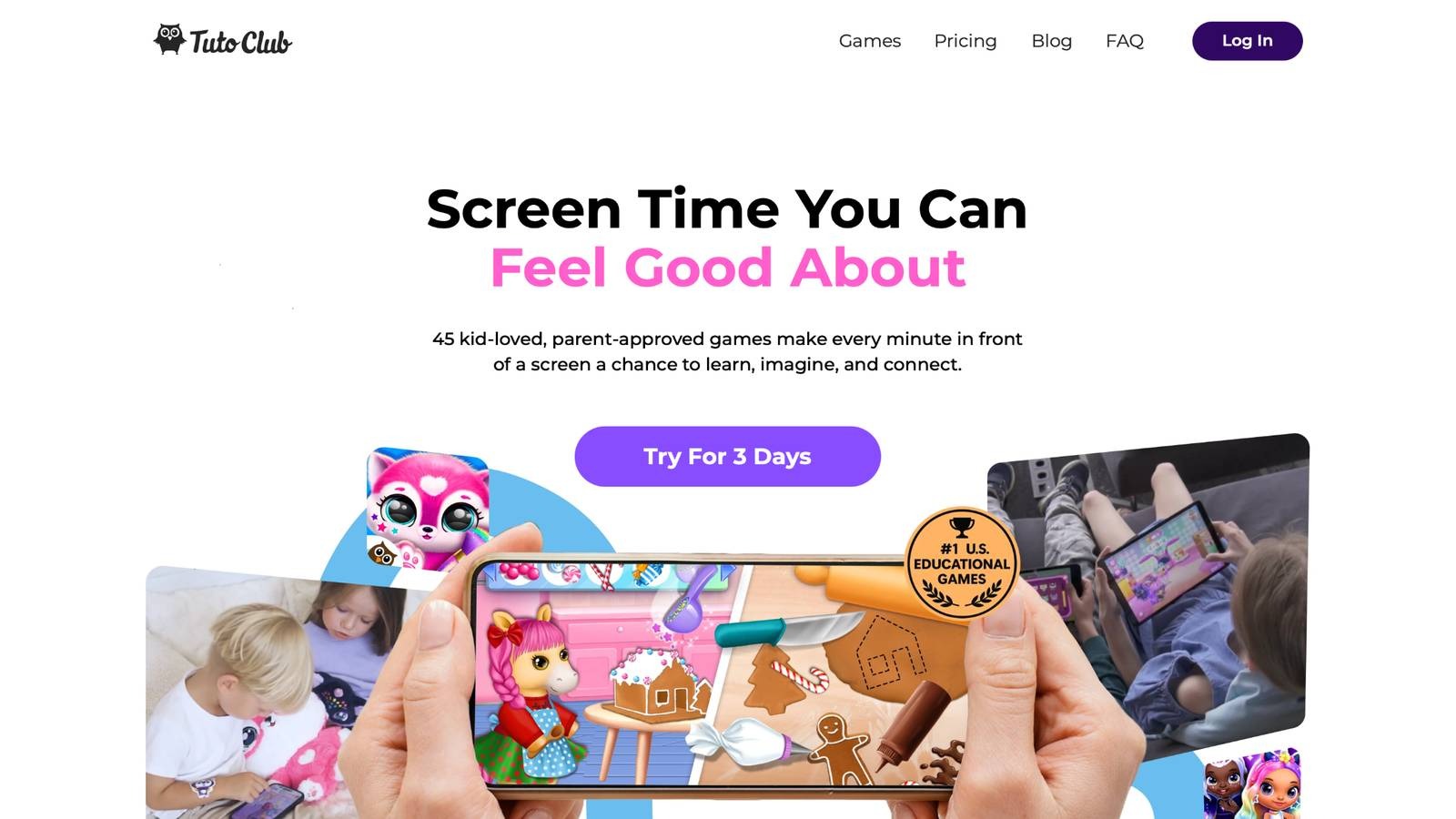
TutoClub's collection subscription unlocks over 45 ad-free games crafted to spark creativity, build focus, and nurture social-emotional skills in children. Based in Vilnius, Lithuania, TutoClub turns everyday screen time into joyful skill-building sessions. Kids care for characters to learn empathy, design worlds to fuel imagination, and solve puzzles that teach responsibility.
Regular updates keep content fresh, with exclusive features that encourage open-ended exploration. Families appreciate the safe space where play leads to real-world benefits like better concentration and confidence. Offline access after downloads means fun continues anywhere, supporting busy lifestyles. Parent controls and progress insights help tailor experiences. TutoClub stands out for its research-backed approach, blending entertainment with development in ways that kids love and parents trust.
- Standout features include character nurturing for emotional growth and puzzle challenges for problem-solving.
- Facts and information highlight multi-device compatibility and regular content additions for ongoing engagement.
TutoClub Overview
TutoClub is your gateway to a magical world of educational games designed especially for children.
As part of TutoTOONS, a leading kids' games studio, we offer premium access to over 45 ad-free games.
Our mission is to blend learning and play, helping kids explore, create, and grow in a safe online space.
Thousands of parents trust us for family-friendly content that sparks imagination and builds essential skills.
Key Features
- Unlimited Access: Unlock full content in all games with no interruptions.
- Ad-Free Experience: Enjoy seamless play without any ads or distractions.
- Skill Development: Games foster creativity, social skills, communication, and more through fun activities like pet care and cleanup challenges.
- Regular Updates: Get new releases, exclusive content, and future updates automatically.
- Easy Subscription: Cancel anytime with no obligations, simple and flexible for families.
Explore Our World
TutoClub provides a rich ecosystem of educational games for kids, featuring ad-free experiences that promote creativity, focus, and emotional growth through play.
This platform turns screen time into valuable learning opportunities, with parent-approved content that builds essential skills and sparks curiosity in young minds.
- TutoClub Games: Over 45 educational games, including popular titles like Fluvsies, Smolsies, and the Sweet Baby Girl series
- Blog: Insights, tips, and stories for families on kids' learning and play
- FAQ: Comprehensive answers to frequently asked questions about subscriptions, features, and more
Get TutoClub on Your Device
TutoClub delivers premium kids educational games directly to your mobile devices, making learning accessible anytime, anywhere.
With apps available on major platforms, families can easily download and subscribe for ad-free play that turns screen time into skill-building adventures.
Perfect for parents seeking safe, engaging content on iOS, Android, or Amazon devices.
Why Choose TutoClub?
We're committed to 100% safe, enriching entertainment that kids love and parents approve.
Join the thousands who've seen their children thrive through playful learning.
Ready to start the adventure?
Subscribe to TutoClub today and unlock endless fun!
2. ABCmouse
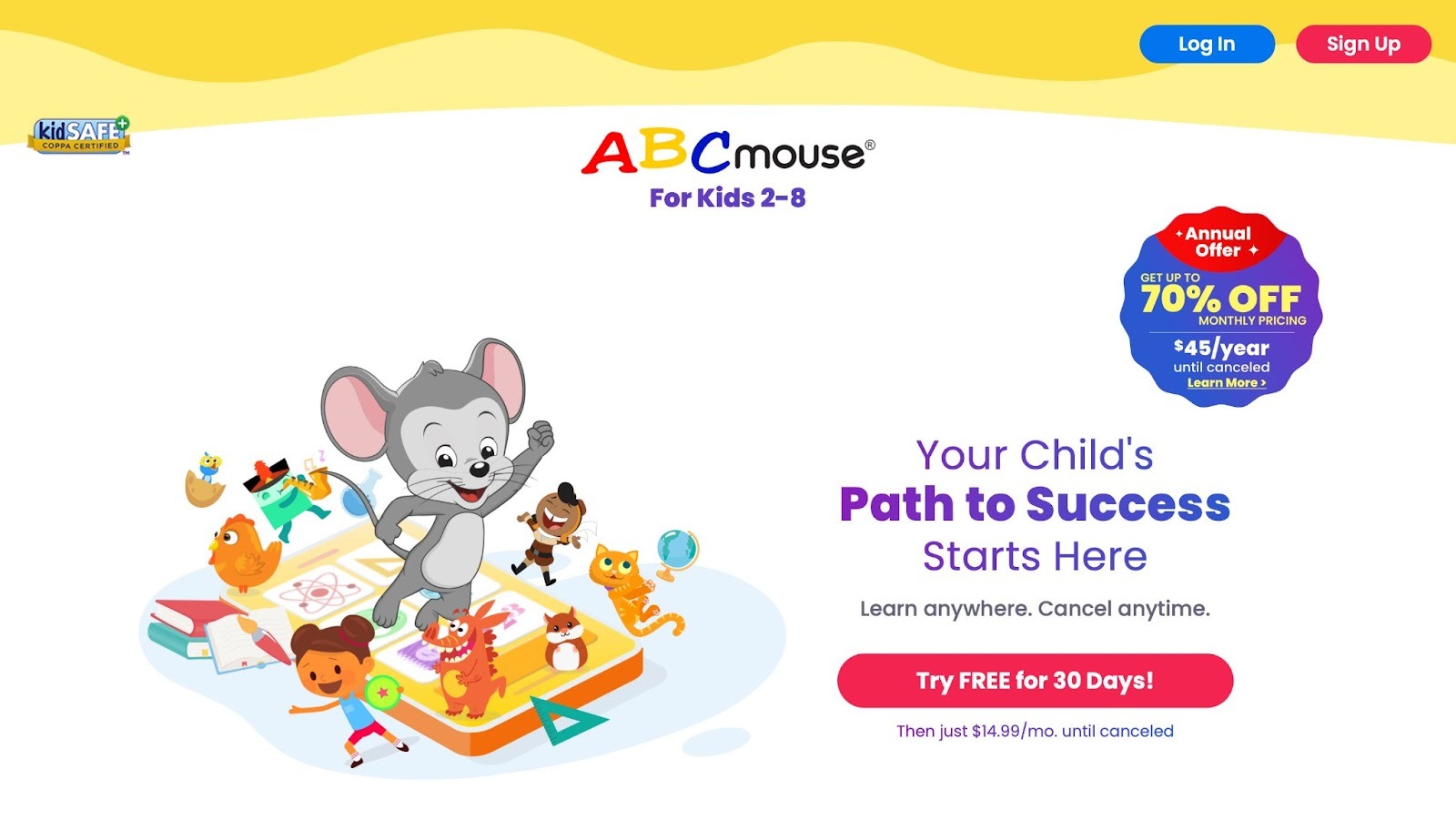
ABCmouse offers a full online academy for ages 2 to 8, covering reading, math, science, and art through interactive lessons and activities. It uses tickets and rewards to motivate progress along a step-by-step path. The virtual classroom setup mimics school, helping with transitions. Songs, books, and puzzles make topics accessible, though navigation can feel cluttered at times. As an award-winning platform, it features a step-by-step learning path with 10 levels, over 850 lessons, and more than 10,000 activities. The curriculum includes Reading and Language Arts with letter recognition, phonics, rhyming, over 450 books, sentence structure, and parts of speech. Math covers numbers 1–120, base ten, addition, subtraction, shapes, and measurements.
Science and Social Studies explore the body, plants, weather, maps, regions of the United States, the Solar System, and matter. Art & Colors involve primary/secondary colors, shades, paint-by-number, and dot-to-dots. Hundreds of animated activities, interactive games with voiced instructions, original songs for alphabet and topics, puzzles for problem-solving, and art activities like coloring and traceables enhance engagement. Progress tracking with graphs, a Tickets and Rewards System, customizable avatars, an Interactive Zoo with animals and facts, an Aquarium for fish, and an Interactive Farm with animations and facts provide comprehensive tools. Content is available on computers, tablets, and smartphones, with over 2,000 printable activities.
- Key features encompass thousands of activities, printable worksheets, and a progress tracker for parents.
- Facts and information reveal customization options and alignment with school standards for seamless learning.
3. Khan Academy Kids
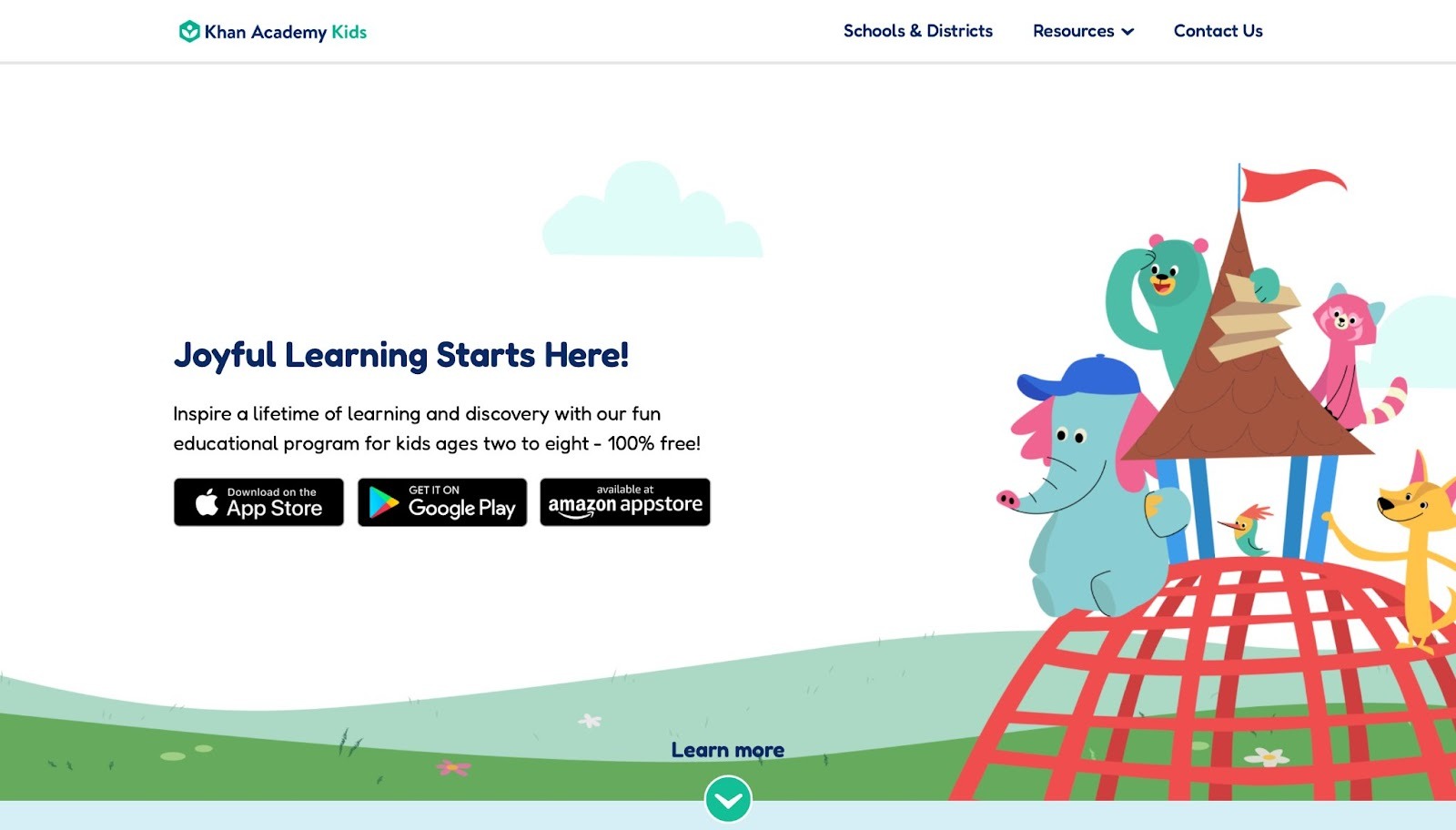
Khan Academy Kids provides free app-based learning for ages 2 to 8, with stories, videos, and games in math, reading, and social skills. It adapts to each child's pace for personalized paths. Creative tools like drawing let children express ideas, supporting emotional development. As a free educational app, it fosters foundational skills in early literacy, reading, writing, language, and math through interactive games, story-based lessons, books, and videos. It supports the whole child by combining academic growth with social-emotional development and creative play, guided by whimsical characters like narrator Kodi Bear.
The app offers thousands of playful activities, personalized learning paths, and no ads or subscriptions, making it accessible at home or in classrooms. Developed with experts from Stanford, its curriculum aligns with the Head Start Early Learning Outcomes Framework and Common Core standards. Classroom features include lesson assignment, progress tracking, and actionable insights for teachers. Recent updates include support for English learners through visuals, read-alouds, and scaffolded vocabulary, plus new lessons helping kids identify and discuss emotions. Parents and teachers praise its research-based, engaging content and ease of use.
- Key features involve adaptive exercises, character guides, and parent dashboards for monitoring.
- Facts and information note integration of joy-based learning with core subjects for balanced growth.
4. Starfall
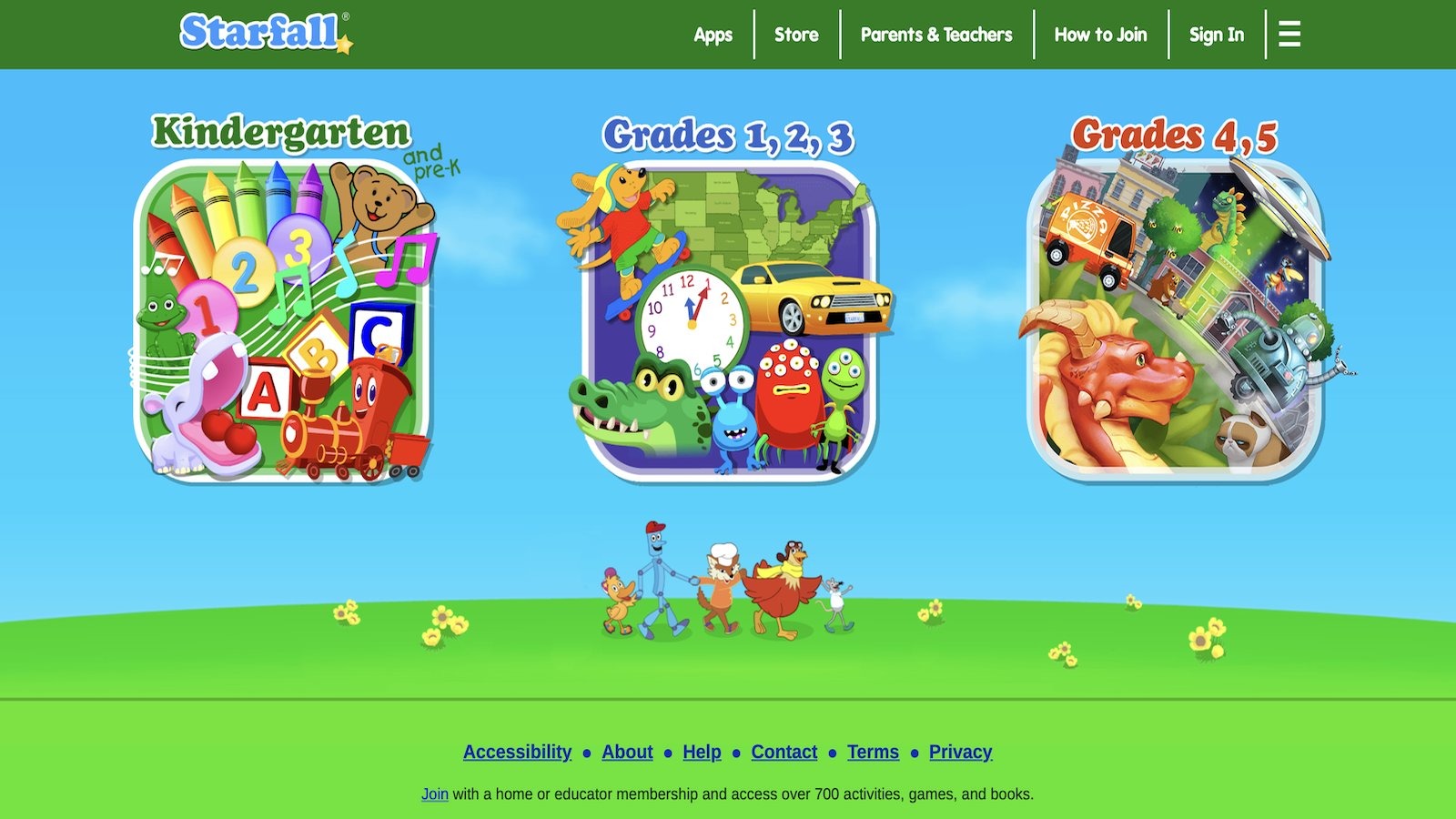
Starfall delivers online activities for preschool to grade 5, focusing on phonics, math, and songs in an animated world. It promotes self-paced exploration. Interactive stories and games encourage repetition for mastery, aiding retention. Founded by Dr. Stephen Schutz, who experienced dyslexia as a child, it launched in August 2002 as a free public service. It offers untimed, multisensory interactive games that engage kids through seeing, hearing, and touching to foster reading and learning. Developed by teachers, it covers language arts and mathematics for preschool through fifth grade and above, aligning with state learning objectives.
Key features include over 700 activities, games, and books accessible via home or educator memberships, emphasizing exploration, play, and positive reinforcement to build confidence and intrinsic motivation. It focuses on phonemic awareness, systematic sequential phonics, and common sight words, with audiovisual interactivity, making it effective for emergent readers, children with special needs, learning difficulties, and ELL (ESL) students. Widely used in schools and homeschools, it serves as an engaging alternative to entertainment. Membership expands free content with animated songs, math activities, and reading, supporting new productions. Starfall has no advertising, does not collect or sell personal information from children, and uses cookies only for internal management.
- Key features consist of animated lessons, holiday themes, and accessibility for diverse learners.
- Facts and information emphasize phonics emphasis and free core content for broad access.
5. Prodigy
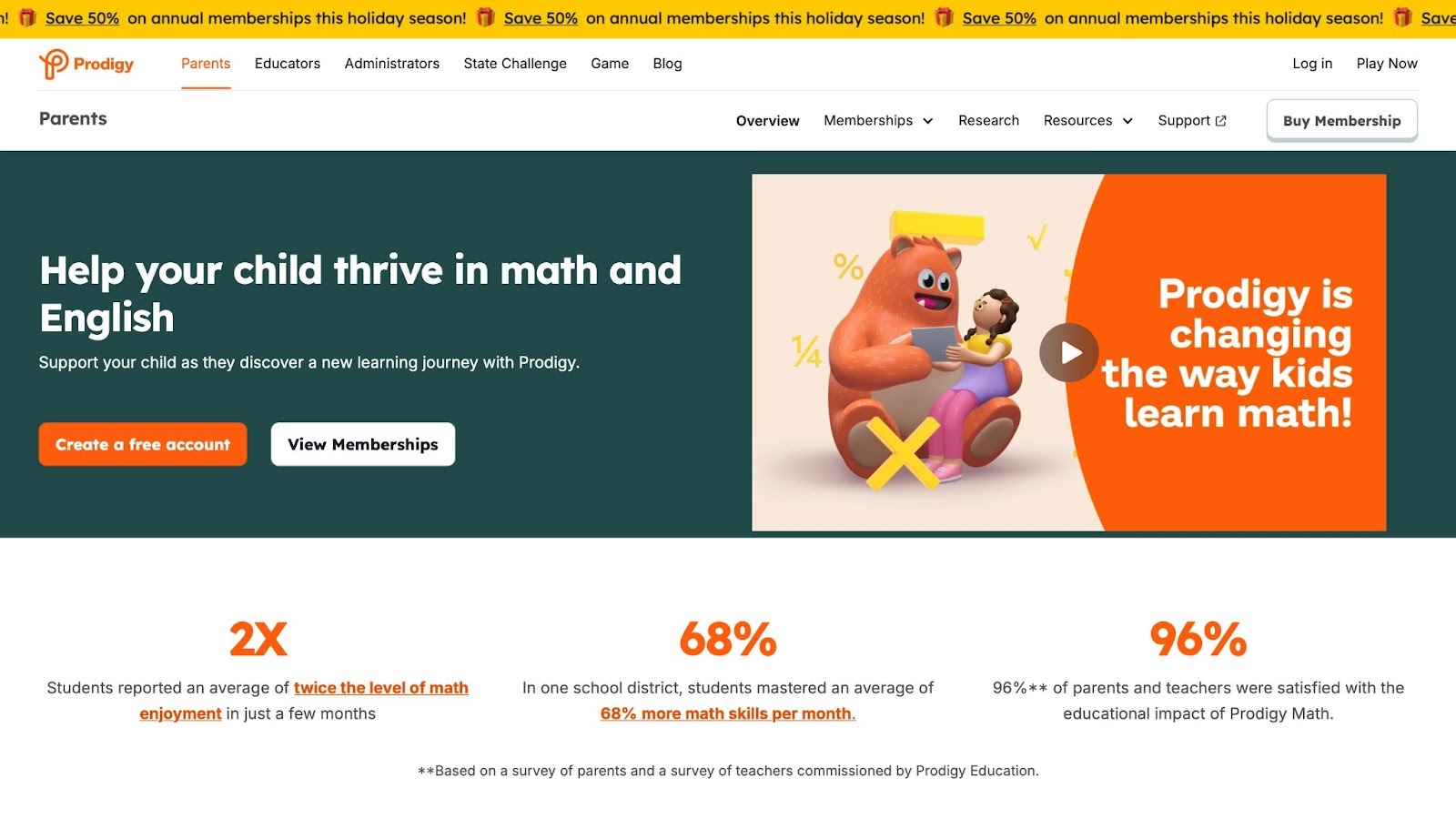
Prodigy turns math into a role-playing adventure for grades 1 to 8, with battles and quests that practice skills. It adjusts difficulty in real time. Wizards and pets add fun, motivating daily play. The platform engages children by embedding math problems within an exciting game world where they level up characters and collect rewards. Adaptive technology ensures questions match each student's ability, providing just-right challenges to build confidence and skills. Content focuses exclusively on math, covering topics like addition, subtraction, multiplication, division, fractions, geometry, and more, aligned with school curricula.
Teachers can assign specific skills and track progress through detailed reports. Parents appreciate the free core access, with optional memberships unlocking extra features. In 2026, Prodigy continues to expand its content library with new quests and seasonal events to keep learning fresh. The game encourages regular practice, helping kids see math as an adventure rather than a chore. Millions of students worldwide use it, making it a staple in classrooms and homes for reinforcing math concepts through play.
- Key features cover curriculum-aligned questions, teacher tools, and competitive modes.
- Facts and information show adaptive algorithms that target weak areas for improvement.
6. Duolingo
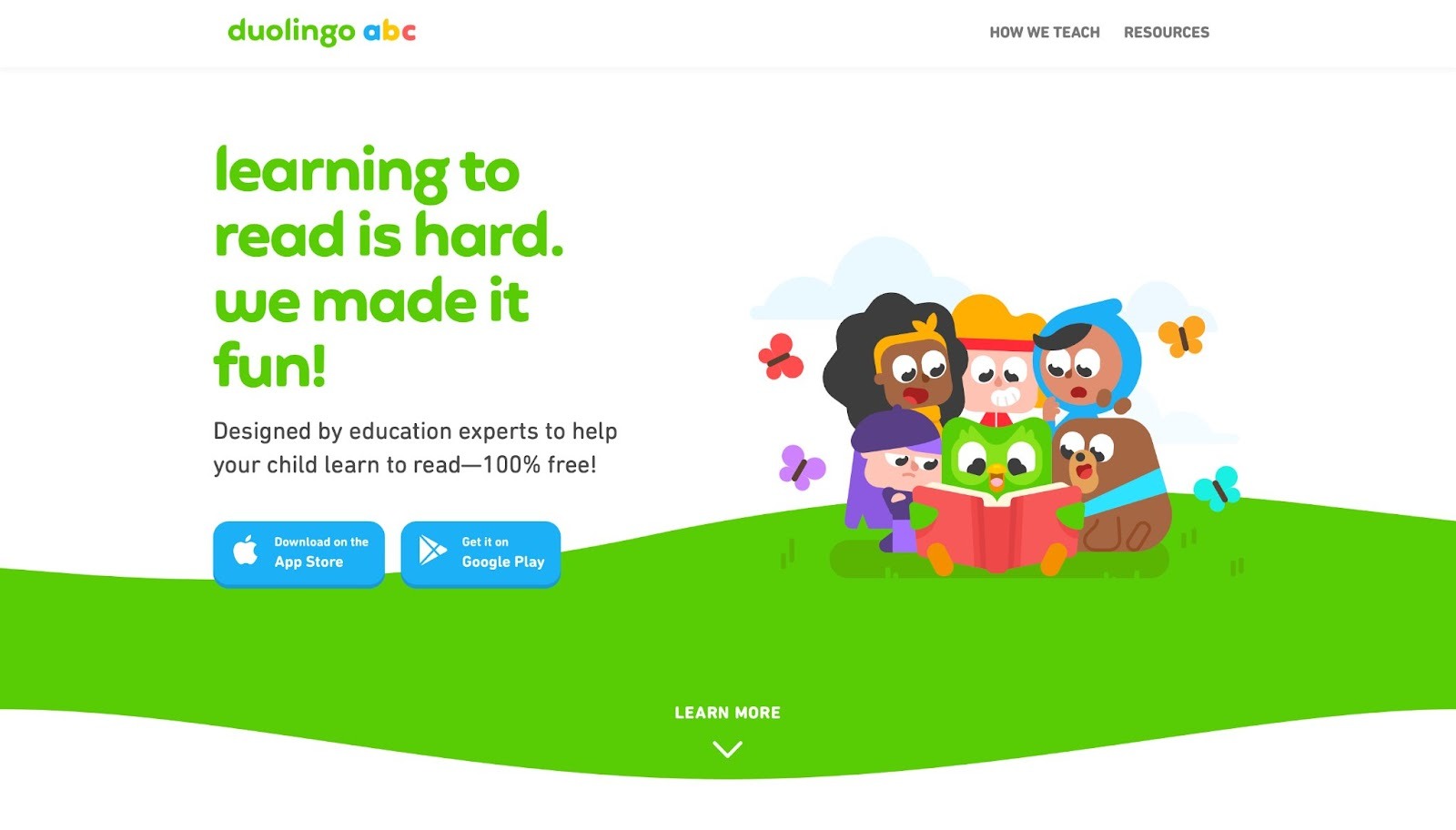
Duolingo teaches languages through bite-sized lessons and games for young beginners. It uses streaks and rewards for consistency. Characters and stories build vocabulary playfully. Duolingo for kids is an educational game focused on literacy through Duolingo ABC, a free app for children ages 3–8. It teaches reading and writing with fun phonics lessons and delightful stories, helping kids transition from language exposure to literacy skills. Game-like elements such as points, levels, and challenges maintain engagement, along with a friendly mascot, Duo the owl, for motivation.
Lessons are personalized using AI and language science, adapting to each child’s pace for effective learning of reading and writing. The content emphasizes phonics and interactive stories, designed to be enjoyable and research-backed. While primarily for literacy, it supports foundational language skills. Duolingo’s broader approach includes free access and tools for schools, ensuring accessibility. In 2026, the platform continues to refine its adaptive algorithms and expand language options, making it a go-to for early language introduction in homes and classrooms worldwide.
- Key features include speaking practice, daily goals, and multiple language options.
- Facts and information underline gamified progression that builds habits over time.
7. SplashLearn
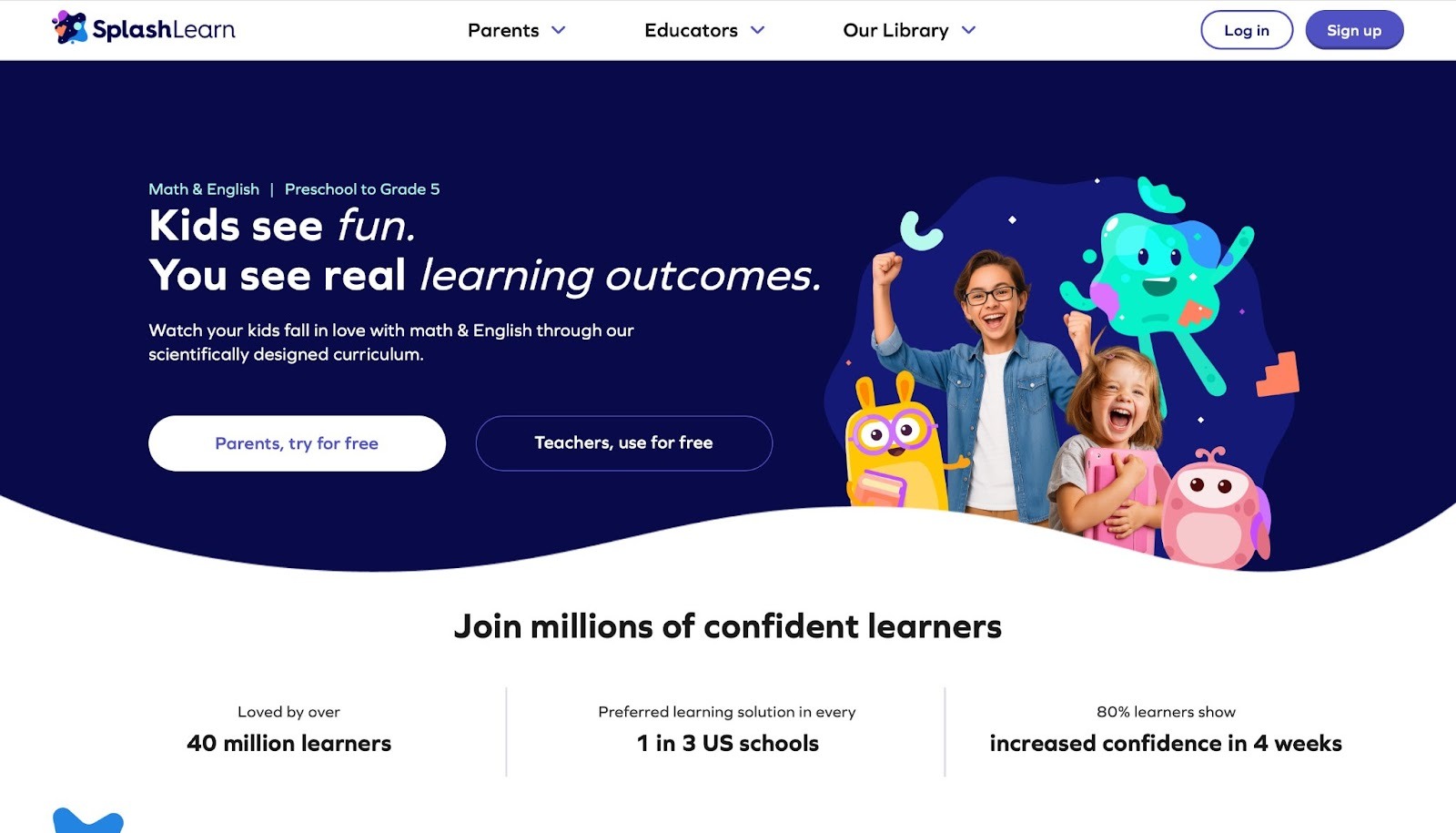
SplashLearn targets math and ELA for pre-K to grade 5 with colorful games and reports. It personalizes paths based on performance. Rewards like coins encourage persistence. A game-based educational program, it features over 8,000 learning games, activities, and printable worksheets, immersing kids in the Splashverse—a magical world of stories and games where they explore with magical creatures and discover multiple problem-solving approaches. No timed challenges create a safe space for mistakes, and personalized learning paths with daily milestones adapt to individual needs, leading to curriculum mastery.
Content covers math like counting, time, money, and English such as letter sounds A-Z, reading, aligned with Common Core standards, plus playsheets, decodable books, and bedtime stories. Used by over 60 million learners, it's preferred in one in three US schools, with many showing increased confidence in four weeks and improvement after frequent play. Free for teachers and schools; offers a 7-day trial for families. Compatible with iPads, iPhones, laptops, desktops, and Chromebooks. In 2026, SplashLearn maintains its focus on engaging graphics and intuitive features for enjoyable learning.
- Key features encompass live classes, worksheets, and alignment with standards.
- Facts and information highlight focus on core skills with fun narratives.
8. PBS Kids Games
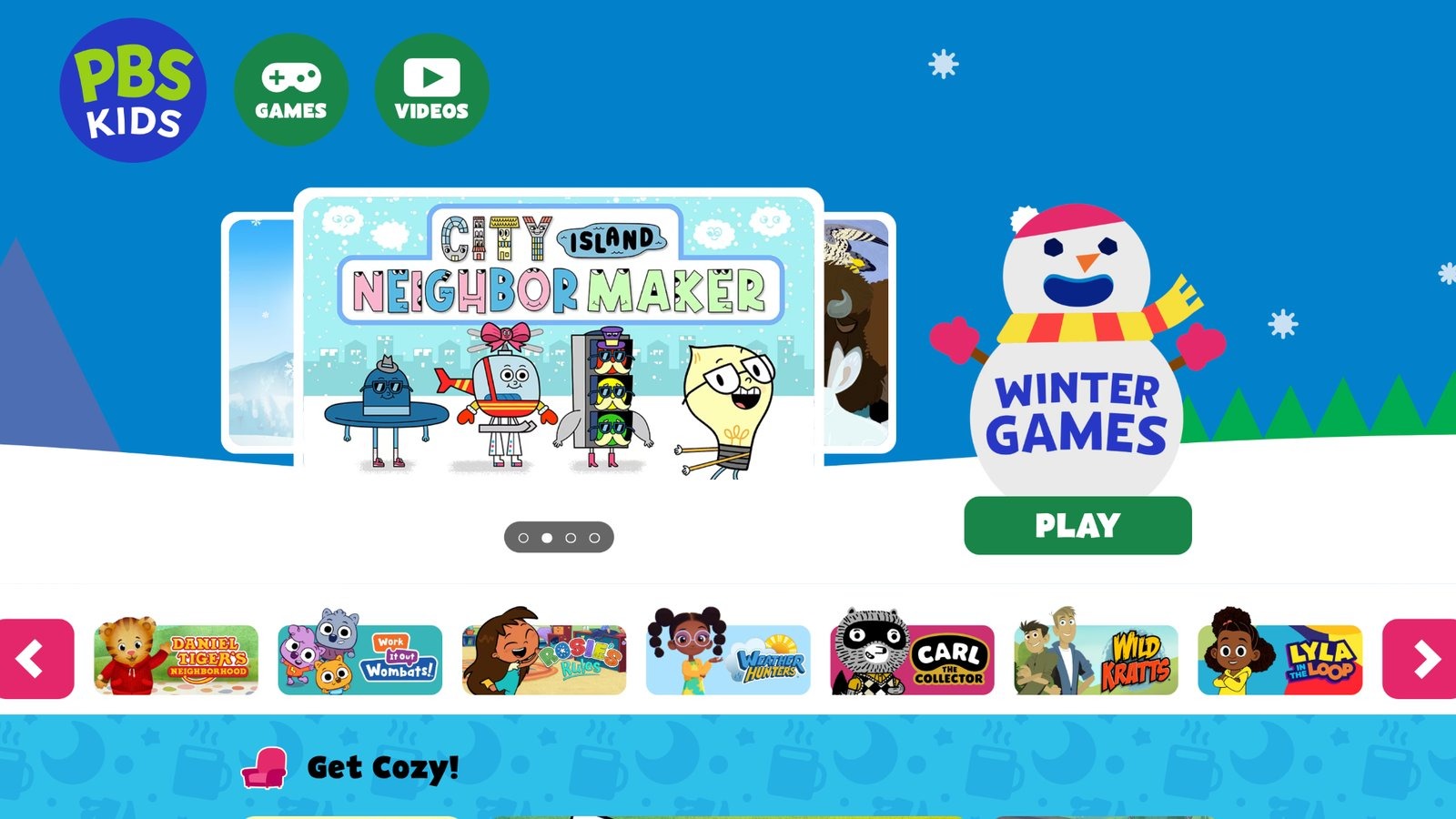
PBS Kids Games features free web and app activities tied to shows, covering science, creativity, and problem-solving for ages 2 to 8. It promotes safe exploration. Puzzles and adventures tie into educational media. The platform offers a variety of games like Boom Boom Bah, Karaoke Night, Groovin' with Acoustic Rooster, Cyber Sound Quest, Pinkamusical Garden, Carmen's World Orchestra, and Nature Sights and Sounds.
These activities encourage creative expression, music exploration, and interaction with familiar characters from PBS shows. Games are designed to be engaging and educational, helping kids develop skills in areas such as rhythm, pitch, vocabulary, and problem-solving. Free access makes it widely available, with no ads interrupting play. In 2026, PBS Kids continues to update its library with new games inspired by popular series, ensuring fresh content that aligns with early childhood development goals. Parents value the safe, ad-free environment that turns screen time into learning opportunities.
- Key features involve character-driven stories, offline options, and parent resources.
- Facts and information note emphasis on inclusivity and real-world connections.
9. Osmo
Osmo combines physical pieces with iPad games for hands-on learning in coding, math, and art for ages 3 to 12. It uses camera tech for interaction. Drawing and building activities enhance creativity. An award-winning educational game, it blends hands-on play with digital fun to build learning fundamentals. It supports core skills in subjects like math, science, physics, coding, and more through tangible pieces and interactive games.
The system works by placing an iPad in the Osmo base, connecting physical pieces to digital experiences, and enabling children to learn via play. Holistic learning approaches make study time fun and engaging, with products designed as building blocks for bright learners. Content covers math, science, physics, and coding. In 2026, Osmo expands its hybrid play options, bridging digital and real worlds to foster tactile engagement and creativity in young minds.
- Key features include masterwork drawing, physics puzzles, and coding blocks.
- Facts and information reveal hybrid play that bridges digital and real worlds.
10. BrainPOP
BrainPOP offers animated movies and quizzes on subjects like history and health for grades 3 to 12. It supports classroom use. Games and experiments reinforce topics. An engaging animated learning experience, it emphasizes joyful and effective learning rooted in research on how children learn best. It targets grades K-8 and beyond, with BrainPOP Jr. for K-3, BrainPOP for grades 3-8, BrainPOP Science for grades 6-8, and BrainPOP ELL for all grades to support vocabulary, grammar, and English language learners.
Content covers across-the-curriculum subjects including science, building content knowledge, comprehension skills, and middle school science to prepare for high school. Animated movies, learning activities, and investigations spark curiosity, boost achievement, and make lessons exciting, with students thrilled by personalized content. It supports administrators, teachers, and home use, creating memorable experiences that deliver real impact and empower kids to shape their world. In 2026, BrainPOP continues to integrate cross-subject learning for comprehensive understanding.
- Key features consist of quizzes, educational games, and teacher guides.
- Facts and information emphasize cross-subject integration for comprehensive understanding.
11. Kahoot!
Kahoot! is an interactive learning game designed to make education engaging for kids through gamified experiences. It supports solo or group play, fostering real-time engagement with instant feedback during classes, home sessions, or collaborative activities. Creating and sharing interactive experiences promotes collaboration among friends, students, or colleagues for playful learning.
The platform is trusted by leading companies and universities worldwide, with millions of users choosing it for its ability to connect audiences in educational settings. Targeted for kids, it covers broad learning topics via user-created content. It offers mobile app access for optimal experience and is free to start without a credit card. In 2026, Kahoot! continues to emphasize fun, engagement, and shared learning globally, with updates focusing on enhanced quiz features and community-driven content.
- Key features include quiz creation, real-time feedback, and group play modes.
- Facts and information highlight user-generated content and global accessibility for diverse topics.
12. Tynker
Tynker is an award-winning educational game and platform designed for kids to learn coding through interactive, gamified lessons. It serves millions of students and thousands of schools worldwide, offering over 5,000 lessons that empower creativity and innovation. Story-based lessons start with block-based coding for beginners, transitioning to text-based languages like JavaScript and Python; built-in tutorials break down fundamentals via fun puzzles; and interactive assessments with quizzes evaluate comprehension. Additional elements include Minecraft modding for custom skins, Python for browser games and Turtle graphics, and AI exploration using JavaScript.
The platform supports progression from icon-coding for pre-readers to advanced courses in data science, art, and image processing, with a safe, moderated community fostering confidence and problem-solving. Target age ranges from 5 to 18, with placement tests tailoring paths based on skill level; experts recommend starting at 5-7 using visual tools like Tynker Junior. Content covers coding basics, game creation, computational thinking, critical thinking, logic, and real-world applications, aligning with standards like CCSS, NGSS, CSTA, and AP Computer Science. In 2026, Tynker focuses on STEM preparation, recognized by College Board for AP curricula, with innovative coding frontiers.
- Key features encompass block-to-text coding progression, Minecraft integration, and AI modules.
- Facts and information note alignment with educational standards and community sharing for projects.
13. ABCya
ABCya! is a platform offering free educational games and apps designed for kids, with six new games available weekly. It targets children from pre-kindergarten through grade 6 and beyond, covering subjects like math (e.g., Adventure Man and the Counting Quest for grades K–6+, Division Derby for grades 3–5), language arts (e.g., Step Right Up! for synonyms and antonyms, grades 3–6+), music (e.g., Taking Notes - Rhythm & Pitch, grades 3–6+), and tech skills (e.g., Keyboard Challenge, grades 2–6+).
Content includes themed games for holidays like Valentine's Day and Presidents' Day, as well as categories such as art & music, science, social studies, typing, and writing. Games are organized by subject, theme (e.g., animal, food, space), and genre (e.g., puzzle, racing, word search). Printables like Fuzz Bug Friends support early learning for grades PRE-K–1. The site uses cookies for user experience, per its privacy policy. In 2026, ABCya! keeps updating its library with fresh, engaging content to support diverse learning needs.
- Key features include weekly new games, holiday themes, and categorized activities.
- Facts and information emphasize broad subject coverage and free access for all users.
14. Lingokids
Lingokids is an educational game app for kids, designed as a Playlearning™ platform that transforms screen time into guilt-free learning. It offers activities proven to build academic knowledge and modern life skills through fun, engaging play. Created by a team of teachers, parents, and creatives, the app emphasizes curiosity and imagination via its unique Playlearning™ methodology, ensuring safe adventures with endless entertainment. Over 3000 Playlearning™ activities include games, shows, songs, podcasts, ABC songs, science lessons, yoga tutorials, and social-emotional masterclasses.
The content covers a wide range of academic subjects and essential life skills for the modern world, providing thousands of hours of educational fun. Targeted at young children, with user testimonials highlighting benefits for ages like 2 years old, 5 years old, and grades K-2nd, it supports early learning needs. Lingokids has earned over 30 awards and is loved by kids while trusted by parents, with reviews praising its role in improving grades and offering a superior alternative to unstructured screen time. In 2026, it remains a top-rated app for early education.
- Key features consist of diverse activities like songs, yoga, and masterclasses.
- Facts and information reveal focus on academic and life skills with safe, ad-free play.
15. Epic
Epic is an award-winning digital library designed as an educational game for kids, offering instant access to over 40,000 books, audiobooks, and learning videos. It inspires a lifetime of reading and discovery by helping children fall in love with books, from reluctant readers to avid bookworms. Exploration of favorite topics and new interests fosters growth while learning about the world and themselves.
The platform boosts reading and critical thinking skills through an ever-expanding library and enrichment tools, aiding success in the classroom and beyond. Epic fuels curiosity and reading confidence, making it ideal for educational engagement. The target age is kids, with content covering a wide range of books and learning materials to support reading development and exploration. In 2026, Epic continues to add new titles and features to keep young minds engaged in literacy-building activities.
- Key features include vast book collections, audiobooks, and video content.
- Facts and information note emphasis on reading confidence and topic exploration.
16. Reading Eggs
Reading Eggs is an online educational program designed to make learning to read easy and fun for children through engaging games, activities, songs, and rewards like golden eggs. It motivates kids by providing incentives and fostering pride in their reading progress, encouraging continued exploration and learning. The program targets young learners, with examples of children as young as 4 and 5 years old showing significant progress, such as reading skills developed in less than six months.
Interactive online reading games, phonics-based learning, and a rewards system keep children interested. Content focuses on foundational reading skills, helping kids learn to read effectively. Parent testimonials highlight its success, noting that children enjoy the experience while achieving reading milestones ahead of peers. In 2026, Reading Eggs maintains its engaging approach with updated activities to support early literacy worldwide.
- Key features encompass phonics games, songs, and reward systems.
- Facts and information underline quick progress in reading for young users.
17. NASA Kids' Club
NASA Kids' Club is an educational game platform designed for children to play and learn about NASA and its missions. It offers a safe environment with games of various skill levels, supporting national education standards in science, technology, engineering, and mathematics. The target age range is pre-K through grade 4. Interactive games, opportunities to meet astronauts aboard the International Space Station, and access to cool pictures from NASA missions enhance engagement.
Additional content covers space and Earth science through fun games, hands-on activities, videos, and readings. The platform encourages exploration and inspiration for the next generation, with resources like the NASA Space Place for space and Earth science, and Climate Kids for learning about climate change. It also includes activities for building space-related projects and solving puzzles. In 2026, NASA Kids' Club continues to provide updated missions and activities to spark curiosity in STEM fields.
- Key features involve interactive puzzles, astronaut interactions, and mission explorations.
- Facts and information emphasize alignment with STEM standards and safe learning.
18. Minecraft Education Edition
Minecraft Education Edition is an immersive educational game designed for kids, leveraging the popular Minecraft world to build digital skills through fun and inclusive learning. It targets students in classrooms worldwide, available safely and securely via Microsoft 365 on most school devices. A library of hundreds of ready-to-use, standards-aligned lessons and customizable content covers any subject, from creative build challenges to group projects.
Content focuses on motivating learning, improving attendance, and fostering critical thinking, collaboration, and agency through immersive worlds. New resources as of 2026 include "Hour of AI: The First Night" for AI basics, "Reed Smart: AI Detective" for building AI and information literacy, and project-based learning explorations. It impacts over 40,000 school systems in 140 countries, with tools like the AI-powered Lesson Crafter for designing lessons. Educators engage students in lessons, challenges, and esports programs.
- Key features include lesson libraries, build challenges, and AI integrations.
- Facts and information highlight global reach and standards-aligned content.
19. Code.org
Code.org is a free K–12 curriculum for computer science and AI, designed as an educational platform to teach students how AI works, how to reason with it, and how to create with it, grounded in computer science fundamentals. It emphasizes AI fluency as a core literacy. Interactive lessons, tools, and activities like "Mix and Move with AI" for creativity; video series on AI topics such as machine learning, neural networks, chatbots, ethics, bias, and generative AI; and hands-on projects engage learners.
The platform supports 107 million student accounts, 1.94 billion hours of Code/AI served, and reaches 3 million teachers in 190 countries. Target age is K–12, with content for grades 3–5 using predictive models, grades 6–12 for ethical coding, and high school on core principles. It covers AI in all subjects, including machine learning for sea creatures, generative AI for humanities, and societal impacts. As a nonprofit, it provides free access, influences policy, and offers professional learning for teachers. In 2026, it scales AI+CS as foundational with expanded lessons.
- Key features consist of interactive projects, video series, and AI activities.
- Facts and information note free access and policy influence for equitable education.
20. Scratch
Scratch is a nonprofit educational platform designed for kids to imagine, program, and share their creations. It enables users to create stories, games, and animations, which can be shared with others around the world. As a free service supported by donations, Scratch provides an accessible tool to develop coding skills through interactive projects.
A user-friendly interface for building and sharing content fosters creativity and collaboration. The platform covers foundational programming concepts through hands-on activities like game design and animation. Geared toward children, it supports young learners in exploring code in a fun way. In 2026, Scratch continues to expand its community features and project-sharing capabilities to inspire more kids globally.
- Key features include project creation, sharing, and animation tools.
- Facts and information emphasize free access and community collaboration for coding.
Benefits of Blending Play and Learning
Combining fun with education helps children develop persistence through challenges. It fosters curiosity, leading to self-directed discovery. Social interactions in group play build communication skills. Physical coordination improves in active games, supporting overall health. Many parents find these activities reduce screen fatigue by adding purpose.
Educational tools for kids often lead to stronger family bonds during shared sessions. Variety keeps interest alive across subjects. Feedback in play guides better decision-making. This method suits different learning styles, from visual to kinesthetic.
How to Pick Games That Fit Your Child's Needs
- Match games to age and interests for maximum impact.
- Consider skill levels to avoid frustration or boredom.
- Check for parental controls and progress reports.
- Test short sessions first to gauge fit.
- Balance screen time with outdoor activities.
- Seek games with inclusive designs for all abilities.
- Read reviews from other families for insights.
- Update apps regularly for new features.
- This ensures sustained value as needs change.
Age Group | Game Types | Skills Built |
| 3-5 years | Simple puzzles, matching | Basic recognition, fine motor |
| 6-8 years | Story-based adventures | Reading, logic |
| 9+ years | Strategy challenges | Critical thinking, teamwork |
FAQ
What makes educational games effective for young children?
Educational games succeed by weaving core concepts into engaging narratives that capture interest naturally. They promote active participation, allowing kids to experiment and learn from outcomes in a supportive setup. This hands-on method strengthens understanding across various subjects without pressure.
How do fun games support emotional growth in kids?
Fun games aid emotional development through scenarios that involve caring for virtual friends or navigating group dynamics. These elements foster awareness of feelings and responses in safe contexts. As children progress, they gain tools for handling real-life interactions with more ease.
Can educational games fit into busy family schedules?
Educational games adapt well to tight routines with quick-play options and portable formats on common devices. They require minimal setup, making them ideal for brief moments throughout the day. Such flexibility ensures consistent engagement without disrupting daily flows.
Why choose subscription-based games over free options?
Subscription models provide uninterrupted access to expansive libraries with tailored updates and enhanced tools. They often include detailed oversight features for tracking advancement. This structure supports deeper, more varied experiences in learning games for kids.
How do educational games enhance critical thinking in children?
Educational games build critical thinking by presenting puzzles and decisions that require planning and evaluation. Kids learn to assess situations, predict results, and adjust strategies based on feedback. This process sharpens analytical skills applicable to everyday challenges and academic pursuits.
Read Also:
- Best Educational Games For Kids iPad In 2026
- Best Kids Games Educational in 2026
- Educational Games For Kids iPad In 2026
- Best Mobile Games For Kids In 2026
- Tablet Games For Kids In 2026
Discover the Best Educational And Fun Games For Kids in 2026 - TutoClub