
Best Educational Games For 10 Year Olds in 2026






Finding the right games can spark curiosity and build key abilities in young minds. Kids at this age often seek activities that mix play with real-world skills. Educational games for 10 year olds like those from TutoClub stand out for their focus on creativity and focus. These options help with problem-solving and social growth. Discover the best educational games for 10 year olds in 2026 that blend fun with learning.
Parents looking to expand learning beyond traditional games can also explore a variety of digital tools tailored to different ages and interests. Resources highlighting the best learning apps for kids help families choose engaging apps that support skill development at home, while guides to the best educational games for toddlers focus on early learning through play. For older children who enjoy interactive challenges, curated lists of the best learning games for kids online provide fun, screen-based experiences that strengthen critical thinking, creativity, and academic confidence.
Discover the Best Educational Games For 10 Year Olds - TutoClub
Benefits of Educational Games for 10 Year Olds

Games like these sharpen thinking skills. Kids practice math through puzzles or build stories that improve reading. Social elements teach empathy and cooperation. Many options include art activities to foster imagination. Parents notice better focus after regular play. Safe environments let kids explore without worries. Some games track growth, showing improvements in areas like logic or memory. This age is perfect for blending fun with education, turning screen time into valuable lessons.
Parents seeking proven options can explore the educational games for 10 year olds that deliver these exact benefits. Families with children of different ages will also find valuable resources in our guides to the best educational games for 2 year olds, best educational games for 5 year olds, best educational games for 6 year olds, and best educational games for 7 year olds.
How to Choose the Right Educational Game
Look for age-appropriate content that matches interests. Check for adaptive difficulty to keep challenges just right. Multi-device support adds convenience for busy families. Read reviews from other parents for honest insights. Prioritize ad-free apps to avoid distractions. Games with progress reports help track learning. Consider ones that align with school topics for extra support.
Screen Time Tips: How to Balance Educational Games for 10 Year Olds
Even the best educational games for 10 year olds need healthy boundaries. Here’s how to balance screen time effectively in 2026:
Recommended Guidelines
- Follow the American Academy of Pediatrics suggestion: No more than 1–2 hours of recreational screen time per day for children ages 5–12.
- Prioritize educational screen time over pure entertainment.
- Use the 20-20-20 rule: Every 20 minutes, look 20 feet away for 20 seconds to reduce eye strain.
Practical Tips for Healthy Balance
- Set clear daily schedules - for example, 30–45 minutes of educational games after homework.
- Encourage co-playing or discussing what they learned in the game.
- Create “screen-free zones” during meals and one hour before bedtime.
- Balance digital play with physical activity, reading physical books, and outdoor time.
- Use built-in parental controls and timers available in most quality apps.
When educational games for 10 year olds are used mindfully, they become a valuable learning tool instead of a distraction. The goal is quality over quantity - focused, purposeful play that supports academics without replacing real-world experiences.
Best Educational Games For 10 Year Olds in 2026
1. TutoClub - Best Educational Games for 10 Year Olds
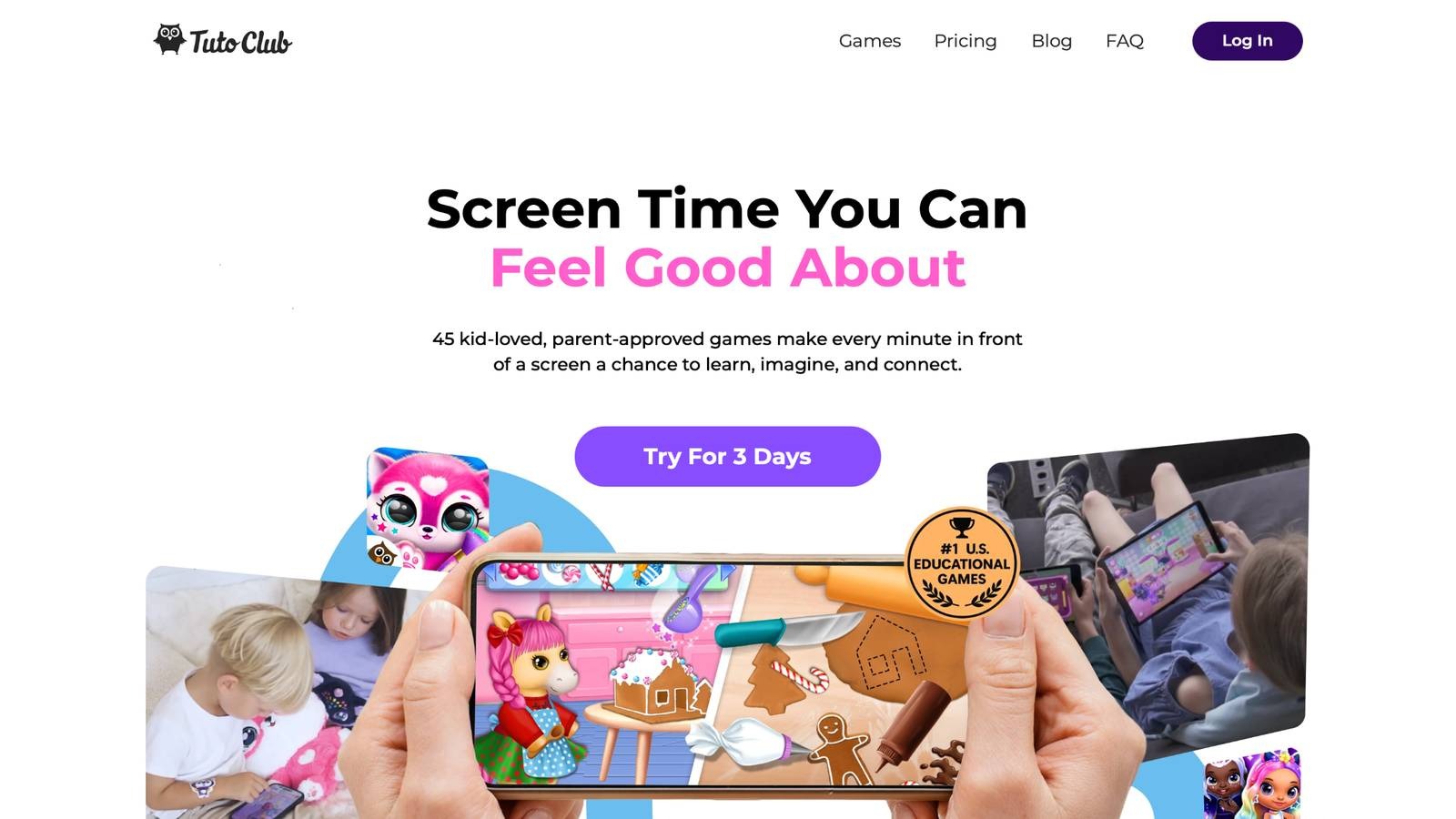
Explore educational games from TutoClub, a subscription service with over 45 ad-free titles designed for kids. Based in a creative digital space, it turns screen time into meaningful play. Kids dive into adventures that build creativity through puzzles and storytelling. They care for characters to learn empathy and responsibility. Art mini-games spark imagination with drawing and design tools. Interactive routines teach daily habits in fun ways.
Multi-device access lets play happen anywhere, from tablets to computers. Standout features include safe environments without distractions. Key positives shine in social skill-building, where games encourage kindness and teamwork. Facts and information highlight user benefits like improved focus from problem-solving challenges. Many parents report kids gaining confidence through achievement badges. Some features promote curiosity with exploration modes.
TutoClub Overview
TutoClub is your gateway to a magical world of educational games designed especially for children.
As part of TutoTOONS, a leading kids' games studio, we offer premium access to over 45 ad-free games.
Our mission is to blend learning and play, helping kids explore, create, and grow in a safe online space.
Thousands of parents trust us for family-friendly content that sparks imagination and builds essential skills.
Key Features
- Unlimited Access: Unlock full content in all games with no interruptions.
- Ad-Free Experience: Enjoy seamless play without any ads or distractions.
- Skill Development: Games foster creativity, social skills, communication, and more through fun activities like pet care and cleanup challenges.
- Regular Updates: Get new releases, exclusive content, and future updates automatically.
- Easy Subscription: Cancel anytime with no obligations, simple and flexible for families.
Explore Our World
TutoClub provides a rich ecosystem of educational games for kids, featuring ad-free experiences that promote creativity, focus, and emotional growth through play.
This platform turns screen time into valuable learning opportunities, with parent-approved content that builds essential skills and sparks curiosity in young minds.
- TutoClub Games: Over 45 educational games, including popular titles like Fluvsies, Smolsies, and the Sweet Baby Girl series
- Blog: Insights, tips, and stories for families on kids' learning and play
- FAQ: Comprehensive answers to frequently asked questions about subscriptions, features, and more
Get TutoClub on Your Device
TutoClub delivers premium kids educational games directly to your mobile devices, making learning accessible anytime, anywhere.
With apps available on major platforms, families can easily download and subscribe for ad-free play that turns screen time into skill-building adventures.
Perfect for parents seeking safe, engaging content on iOS, Android, or Amazon devices.
Why Choose TutoClub?
We're committed to 100% safe, enriching entertainment that kids love and parents approve.
Join the thousands who've seen their children thrive through playful learning.
Ready to start the adventure?
Subscribe to TutoClub today and unlock endless fun!
2. Fluvsies Academy
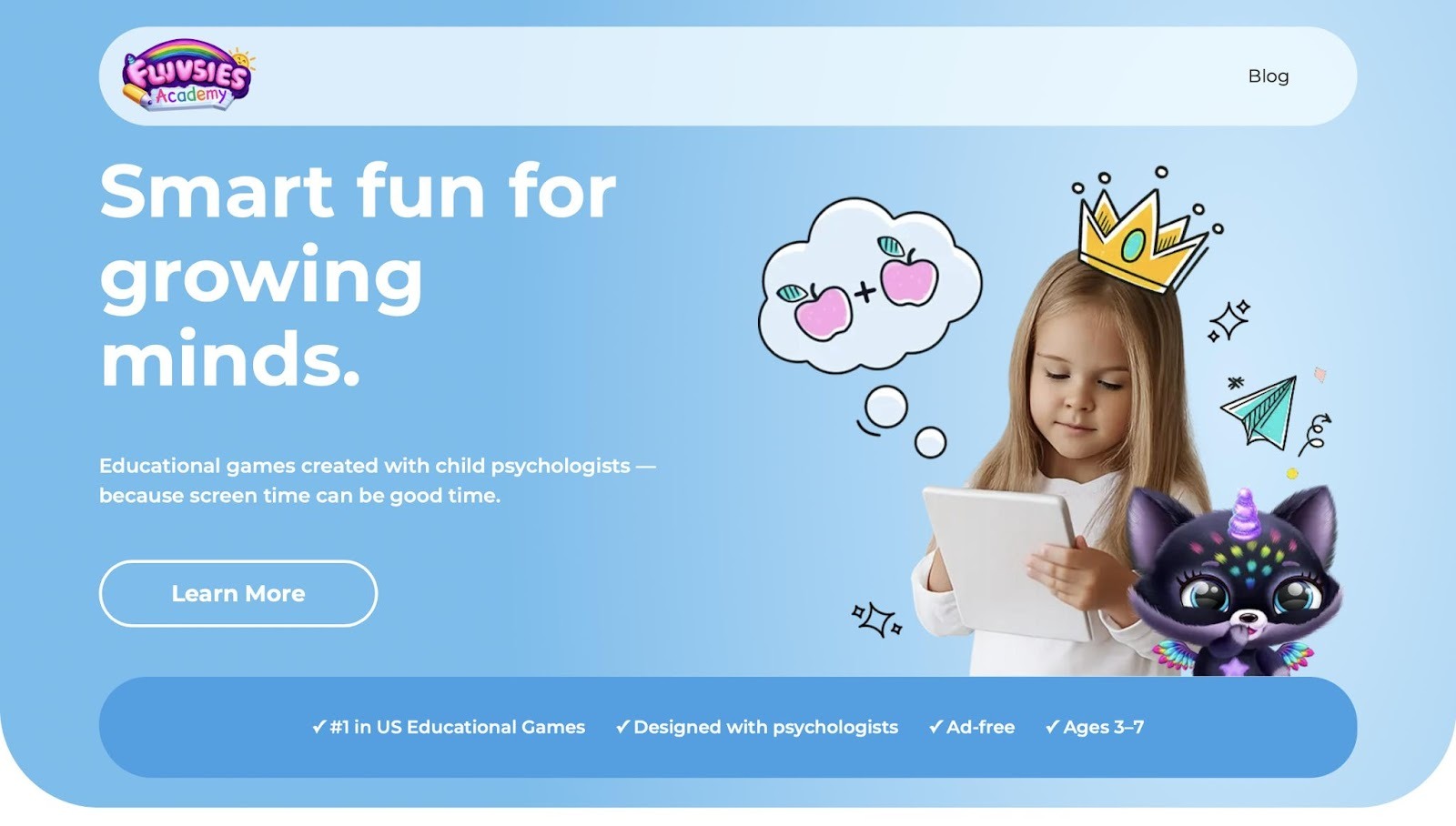
Fluvsies Academy offers a relaxing educational app built around the beloved Fluvsies characters that many young children already know and love from other gentle games. Children engage in thoughtful minigames that feel playful rather than forced as they care for cute pets, complete simple tasks, and explore colorful worlds filled with surprises. The design creates a gentle atmosphere where learning happens naturally through caring routines and light challenges that build confidence without pressure.
Kids hatch eggs, nurture creatures, and solve easy puzzles that spark curiosity while encouraging kindness and responsibility in everyday play. Parents notice how the app keeps little ones happily occupied for meaningful stretches of time while quietly supporting early skills in a way that feels like pure fun. The calm visuals and soothing sounds help maintain focus even on busy days, making it a favorite choice for families seeking screen time that nurtures rather than distracts. While some activities repeat familiar patterns, this consistency actually helps children master concepts at their own pace and return with excitement each time.
Key features include:
- Ad-free environment that keeps focus sharp and uninterrupted
- Minigames covering language, logic, math basics, and life skills
- Cute characters and relaxing vibe that appeal strongly to young learners
- Simple controls designed for independent play from an early age
Facts and information:
- Psychologist-informed design supports gentle skill-building in a safe, colorful world
- Combines pet care with educational moments that feel natural and rewarding
3. ABCmouse
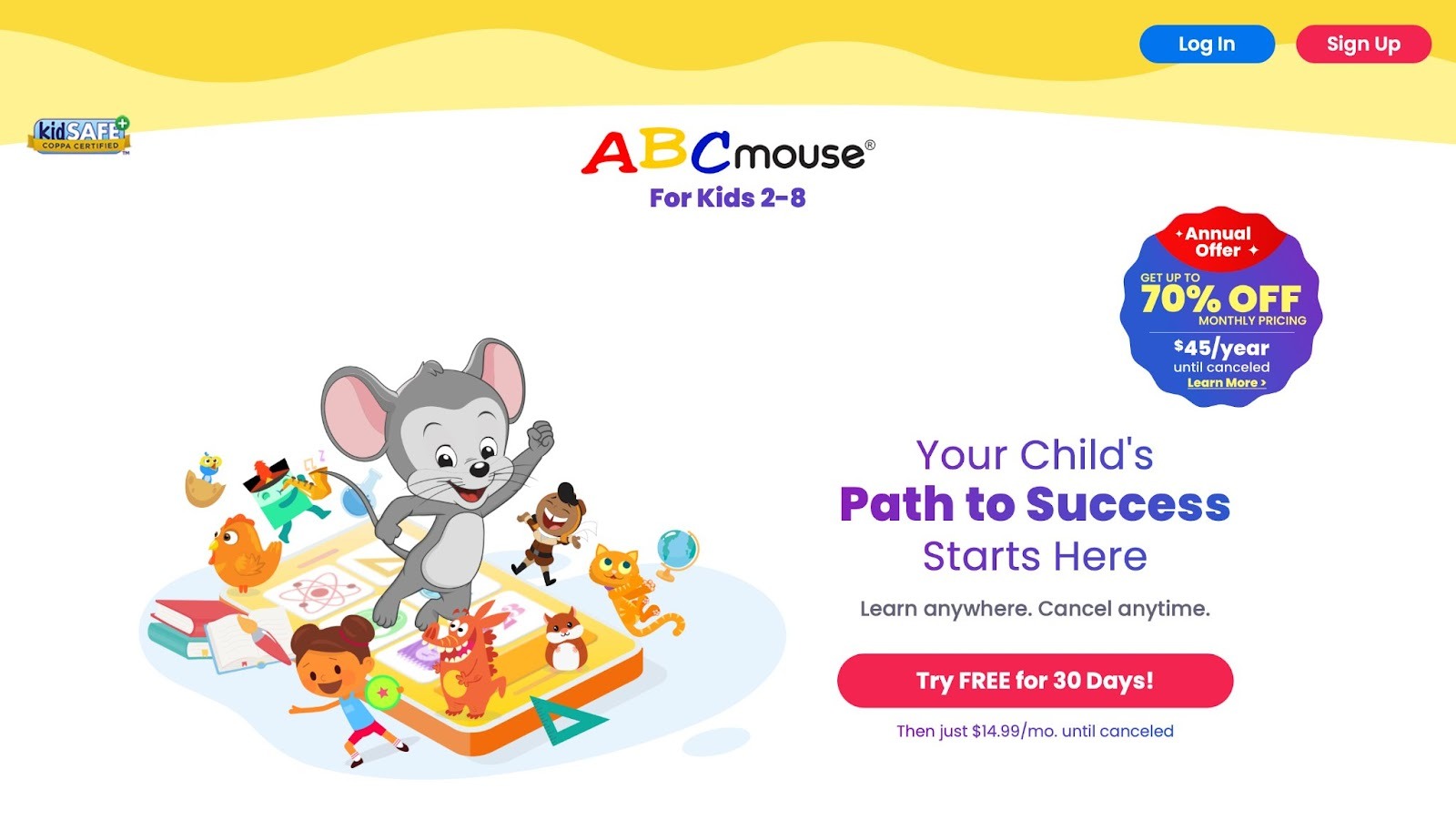
ABCmouse, from Age of Learning in Glendale, presents a structured curriculum for ages 2 to 8, covering reading, math, science, and art through games, songs, and books. Kids follow a step-by-step path, earning tickets for virtual rewards like pets or aquarium items. Strengths feature its all-in-one approach with printable worksheets for offline extension. Parent dashboards provide detailed progress insights. Weaknesses involve simpler graphics that might not captivate older children in the range. It emphasizes early literacy with phonics and sight words.
- Key features: Learning paths with levels, interactive books, art and music activities.
- Facts and Information: Many early education programs include it, some kids show readiness for school benchmarks.
4. Funbrain
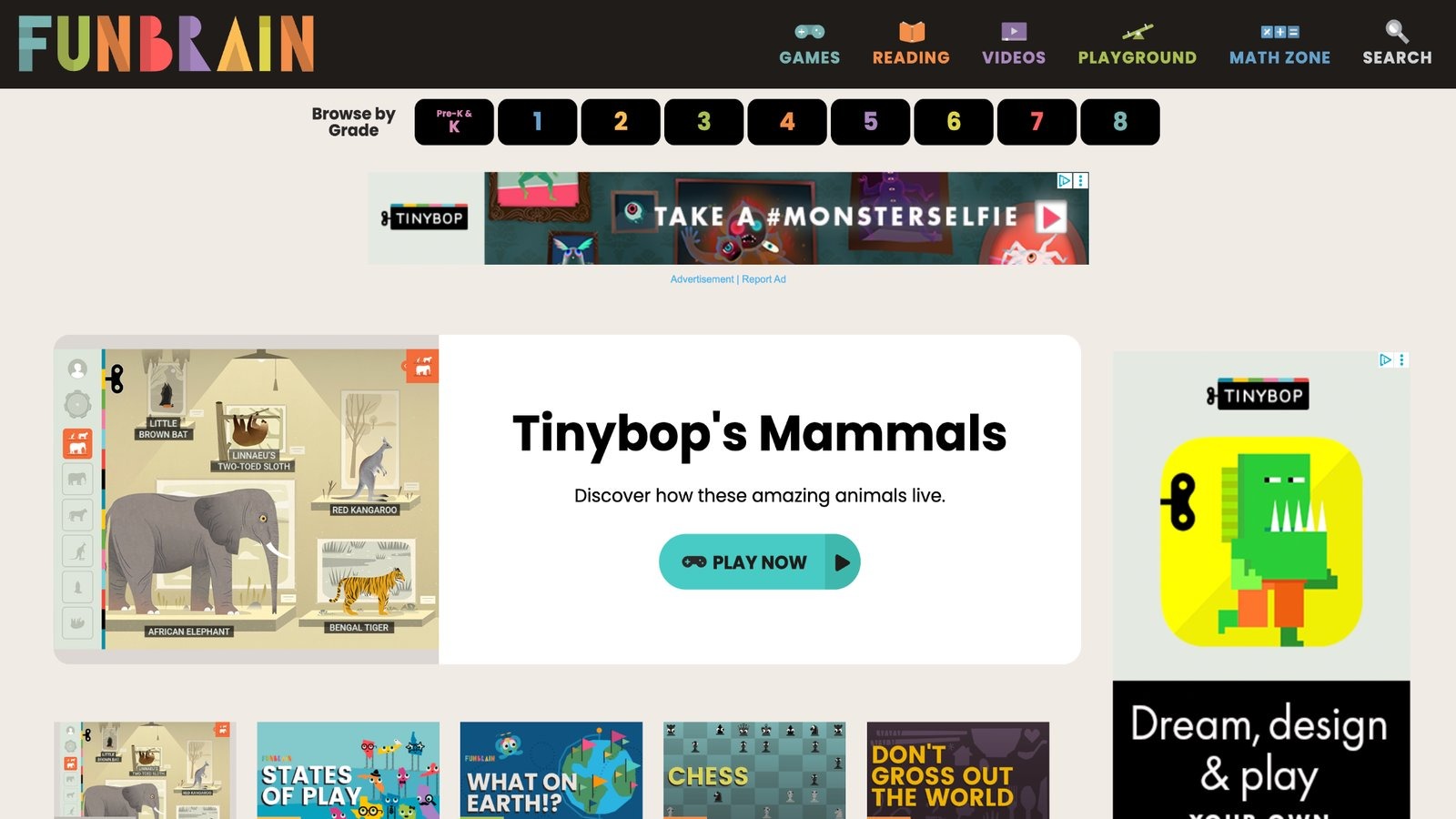
Funbrain provides a free collection of online games, books, and videos targeted at pre-K through eighth grade, with a focus on math, reading, and problem-solving. The site features arcade-style challenges like Mighty Guy or math baseball, alongside digital comics and educational videos. Strengths lie in its no-sign-up accessibility, allowing quick jumps into activities without barriers.
It's ad-supported but keeps distractions minimal. Kids can browse by grade level for relevant content. Weaknesses include shallower depth compared to subscription services, as it lacks personalized tracking or adaptive difficulty. Still, it serves well for supplemental practice during downtime. The playground section offers lighter fun for breaks.
- Key features: Grade-sorted games, integrated books and videos, simple navigation interface.
- Facts and Information: Many educators use it for short classroom breaks, some children develop foundational skills through casual play.
5. Duolingo
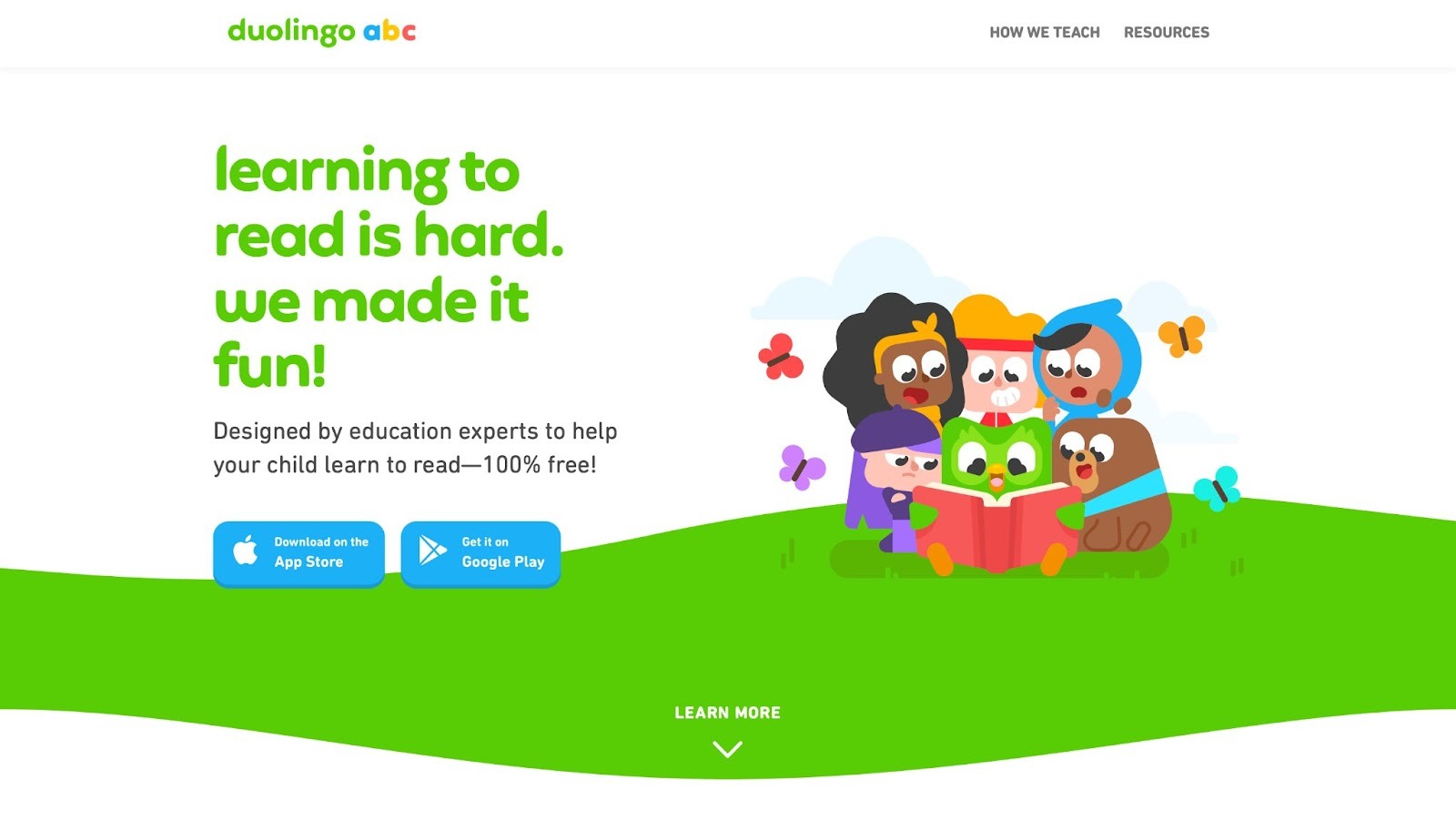
Duolingo, headquartered in Pittsburgh, delivers language lessons through gamified exercises that build vocabulary, grammar, and pronunciation skills. For kids, it uses colorful animations and short, daily sessions to teach languages like Spanish or French. Strengths encompass its streak system that promotes consistent practice and adaptive paths that adjust to mistakes. The app includes stories and podcasts for immersive listening. However, it may lack depth for fluent speakers seeking advanced conversation practice. It supports multiple languages and offline modes for flexibility.
- Key features: Bite-sized lessons, speaking and listening exercises, progress streaks and leaderboards.
- Facts and Information: Many households adopt it for family language learning, some users pick up basic conversational phrases rapidly.
6. Adventure Academy
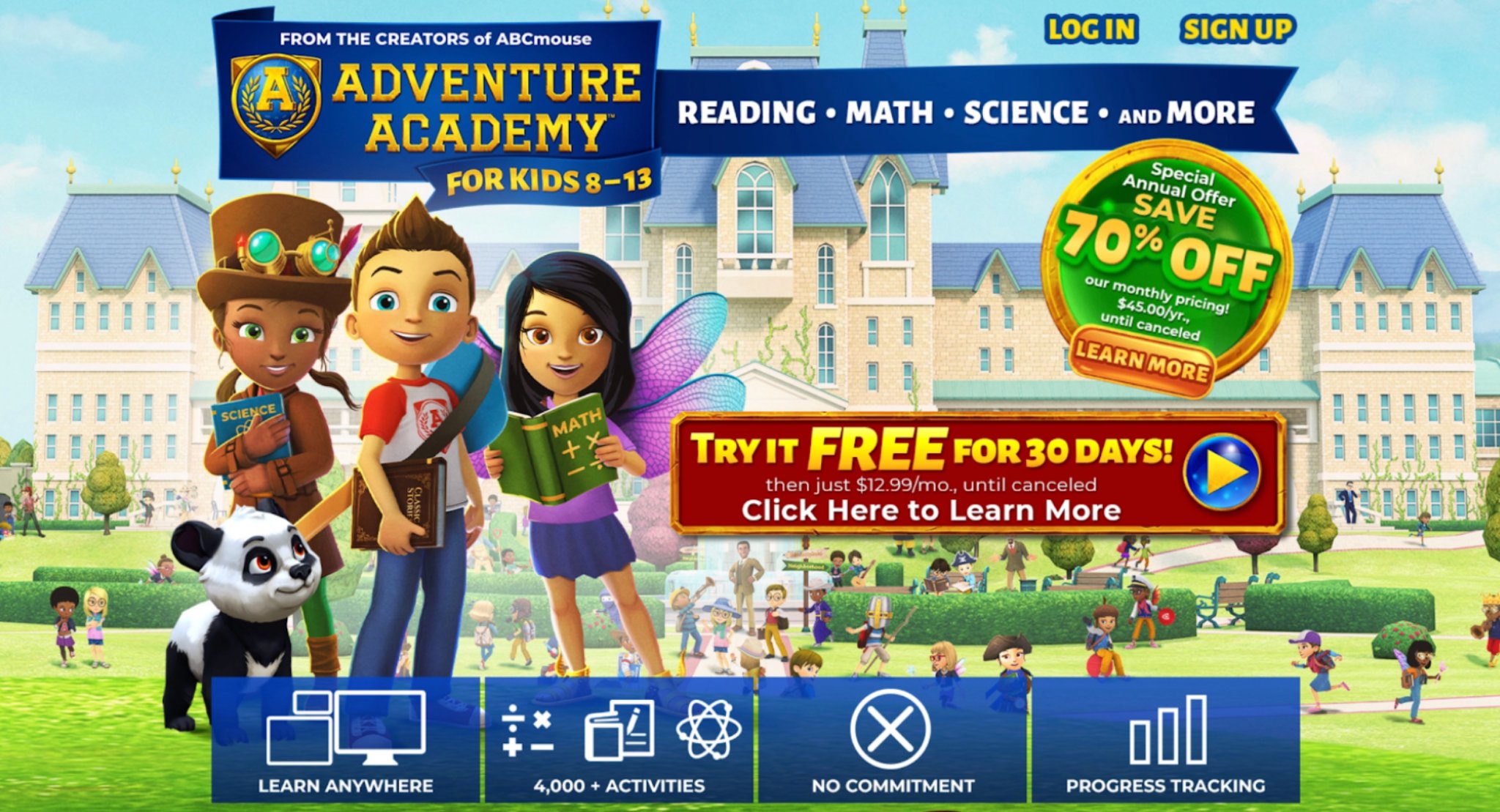
Adventure Academy, created by Age of Learning in Glendale, offers a massive multiplayer online world for kids aged 8 to 13, blending education across math, language arts, science, and social studies. Users create avatars and navigate through vibrant zones like academies and marketplaces, completing quests and mini-games to earn points. The content draws from real-world topics, such as historical events or scientific experiments, presented in video lessons and interactive simulations.
Strengths highlight its comprehensive curriculum that fosters independent exploration, with safe social features for chatting with friends. Progress trackers help parents see growth in specific areas. On the downside, the open structure might confuse kids who prefer guided paths, leading to occasional aimless wandering. It includes creative tools for building virtual homes, adding a fun personalization element. The game updates regularly with new content to keep things fresh.
- Key features: Thousands of learning activities, customizable avatars, multiplayer interactions, subject-specific zones.
- Facts and Information: Some families report gains in reading comprehension, many kids enjoy the social aspects that mimic real friendships.
7. Khan Academy Kids
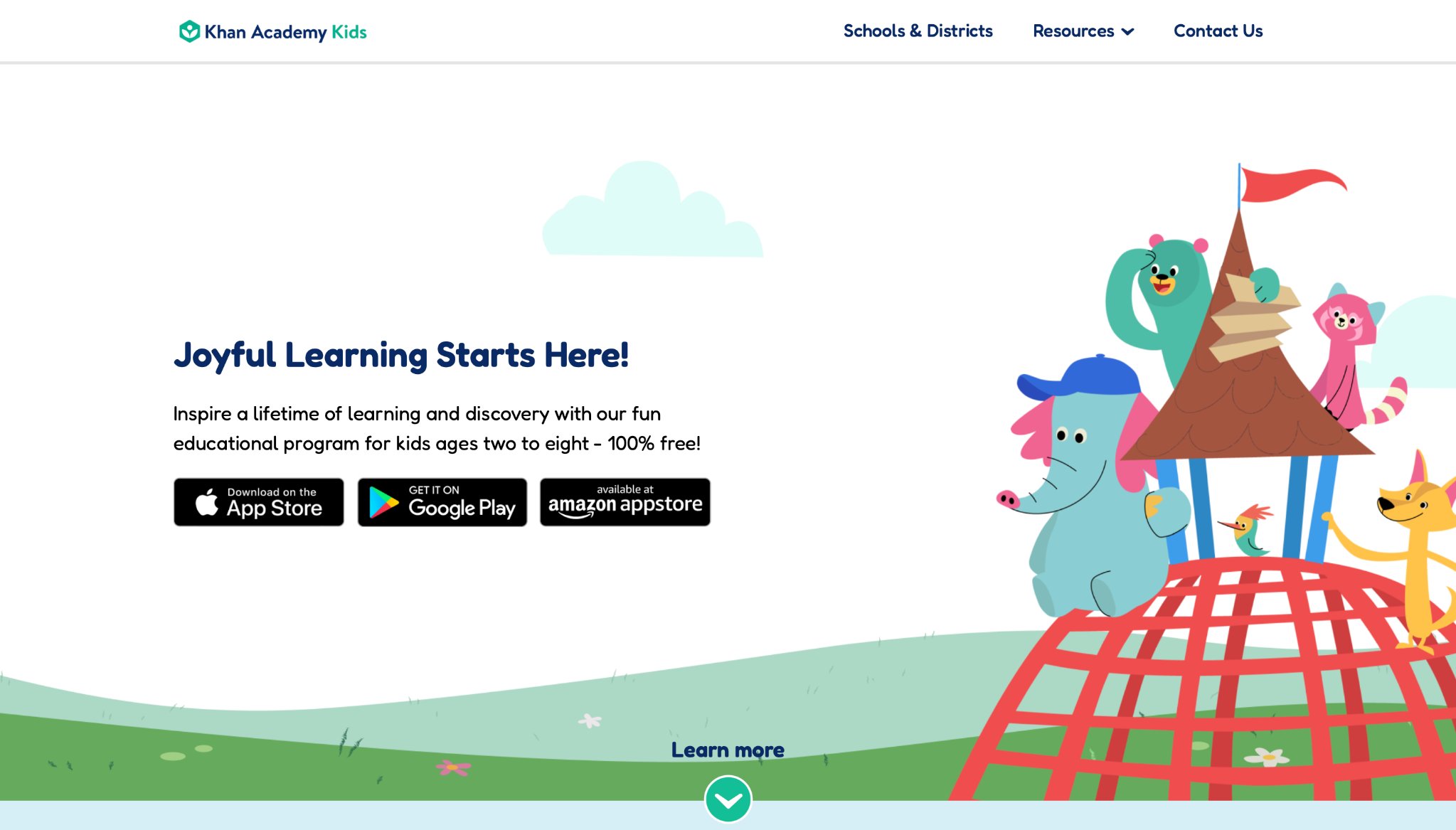
Khan Academy Kids, based in Mountain View, offers free, ad-free activities for ages 2 to 8 in math, reading, creativity, and emotional learning. Guided by animal characters, kids engage in games, stories, and drawing tasks that adapt to their pace. Strengths include offline downloads and a focus on holistic development, like identifying emotions. The app aligns with early standards without pressure. Weaknesses show in limited challenges for kids nearing the upper age limit. It encourages independence with voice prompts.
- Key features: Adaptive curriculum, creativity studio, parent progress tracking.
- Facts and Information: Many homeschool families integrate it daily, some children exhibit stronger foundational knowledge.
8. Minecraft Education Edition
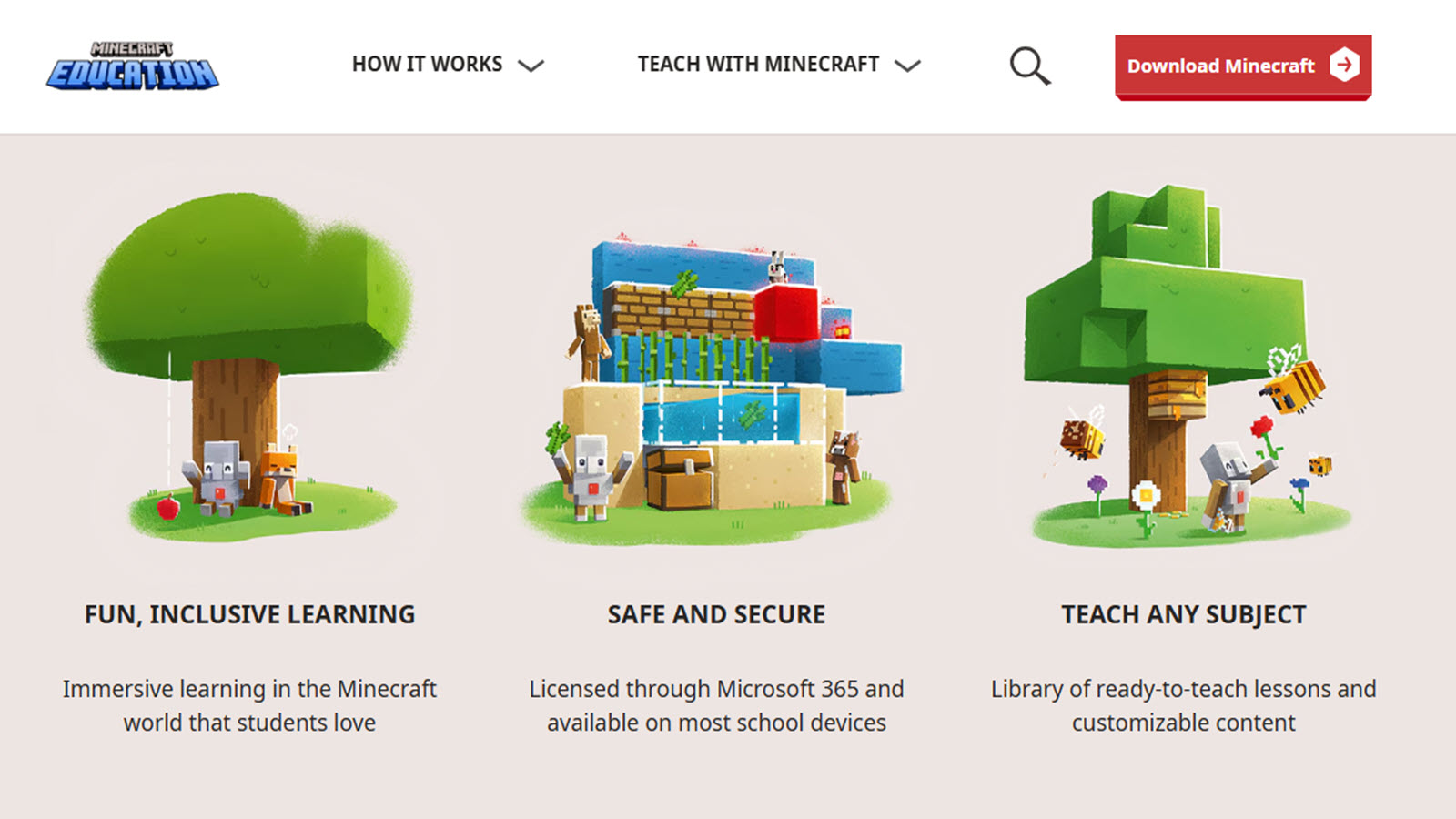
Minecraft Education Edition, from Microsoft in Redmond, enables collaborative building in virtual worlds while teaching subjects like coding, chemistry, and history. Kids join servers to construct projects based on lessons, using blocks for creative expression. Strengths are its endless possibilities for hands-on learning and multiplayer teamwork. It includes ready-made worlds for topics like sustainable cities. Weaknesses encompass a steep initial learning curve for controls and setup. Educators can assign tasks with assessment tools.
- Key features: Lesson libraries, code builder integration, collaborative servers.
- Facts and Information: Many classrooms employ it for project-based learning, some students enhance collaboration abilities.
9. Scratch
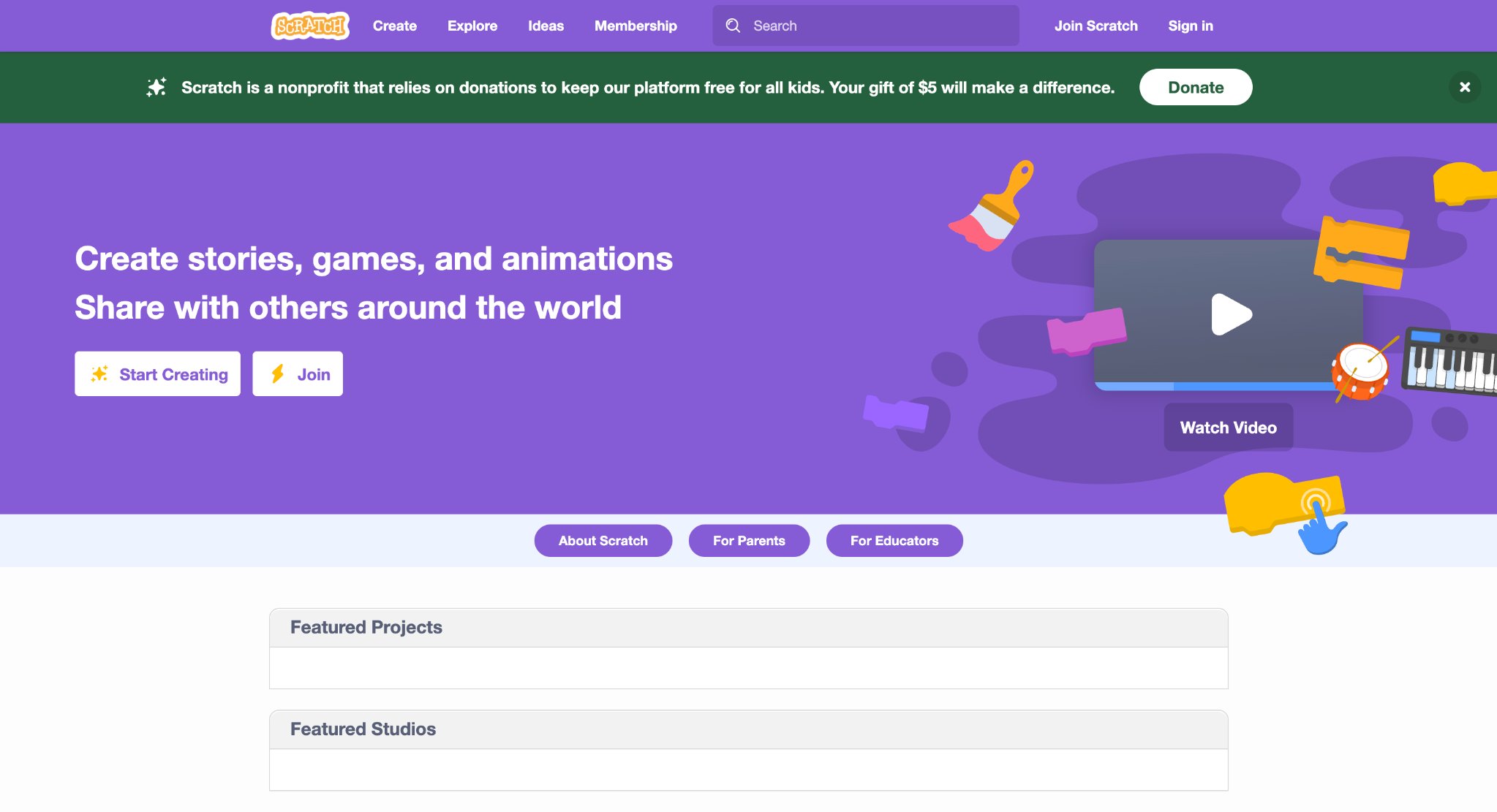
Scratch, developed at MIT in Cambridge, empowers kids to create interactive stories, games, and animations using drag-and-drop blocks. The platform fosters coding logic without syntax errors, allowing sharing in an online community. Strengths include its free access and remix features that inspire from others' work. Kids learn concepts like loops and variables through fun projects. Weaknesses involve a basic interface that limits complex designs without extensions. It builds computational thinking step by step.
- Key features: Block-based programming, sprite and sound editors, community galleries.
- Facts and Information: Many beginners transition to advanced coding, some create portfolios of original content.
10. Tynker
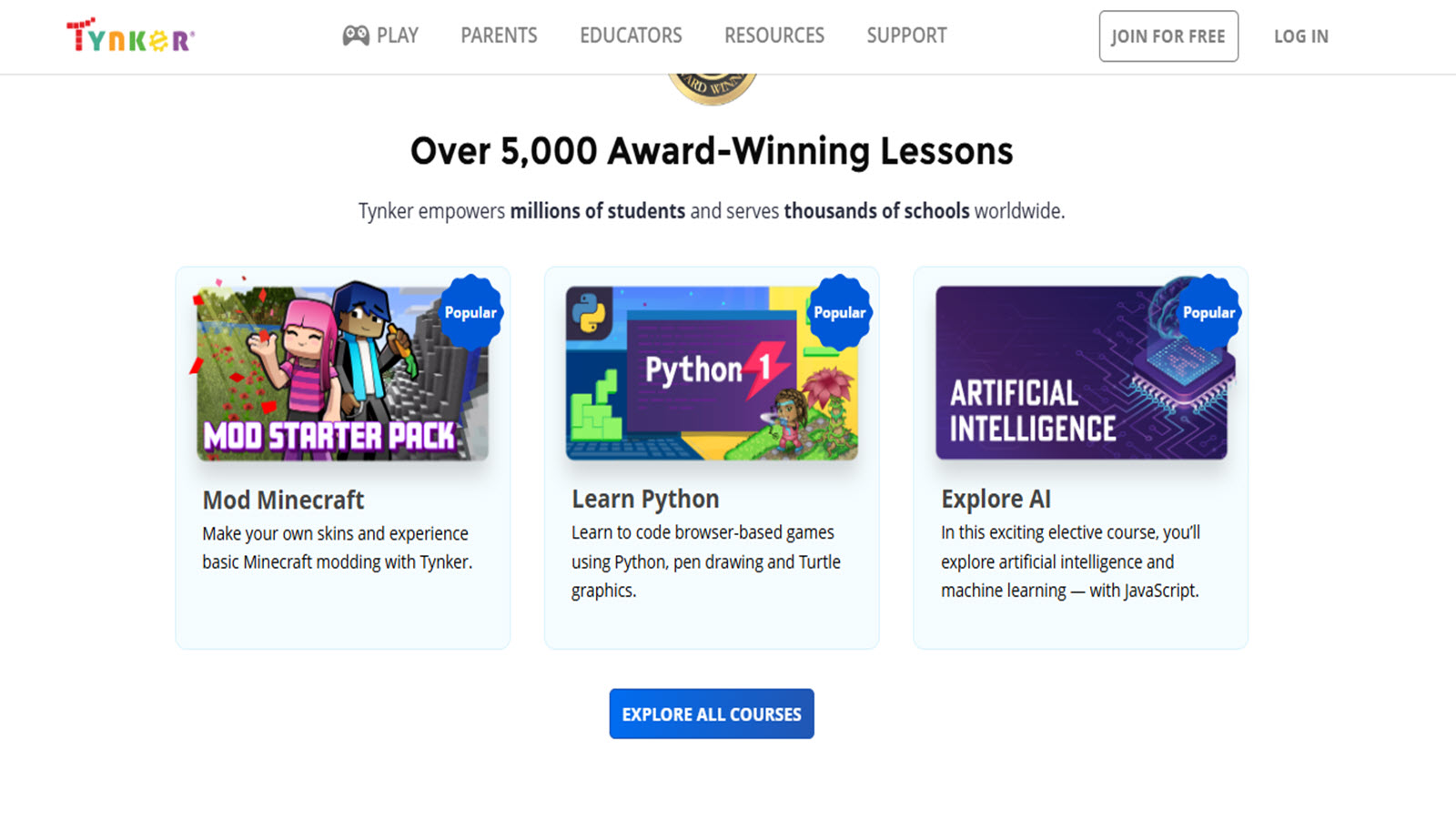
Tynker, from Mountain View, teaches coding through themed courses and games, progressing from blocks to languages like Python and JavaScript. Kids solve puzzles, build apps, and mod Minecraft. Strengths lie in structured pathways with certificates and live coaching options. It covers robotics and web development. Weaknesses appear in requiring subscriptions for full courses beyond basics. The app motivates with challenges and competitions.
- Key features: Block-to-text coding, game design tools, integration with drones and robots.
- Facts and Information: Many schools use it for tech curricula, some kids develop functional programs independently.
11. Osmo
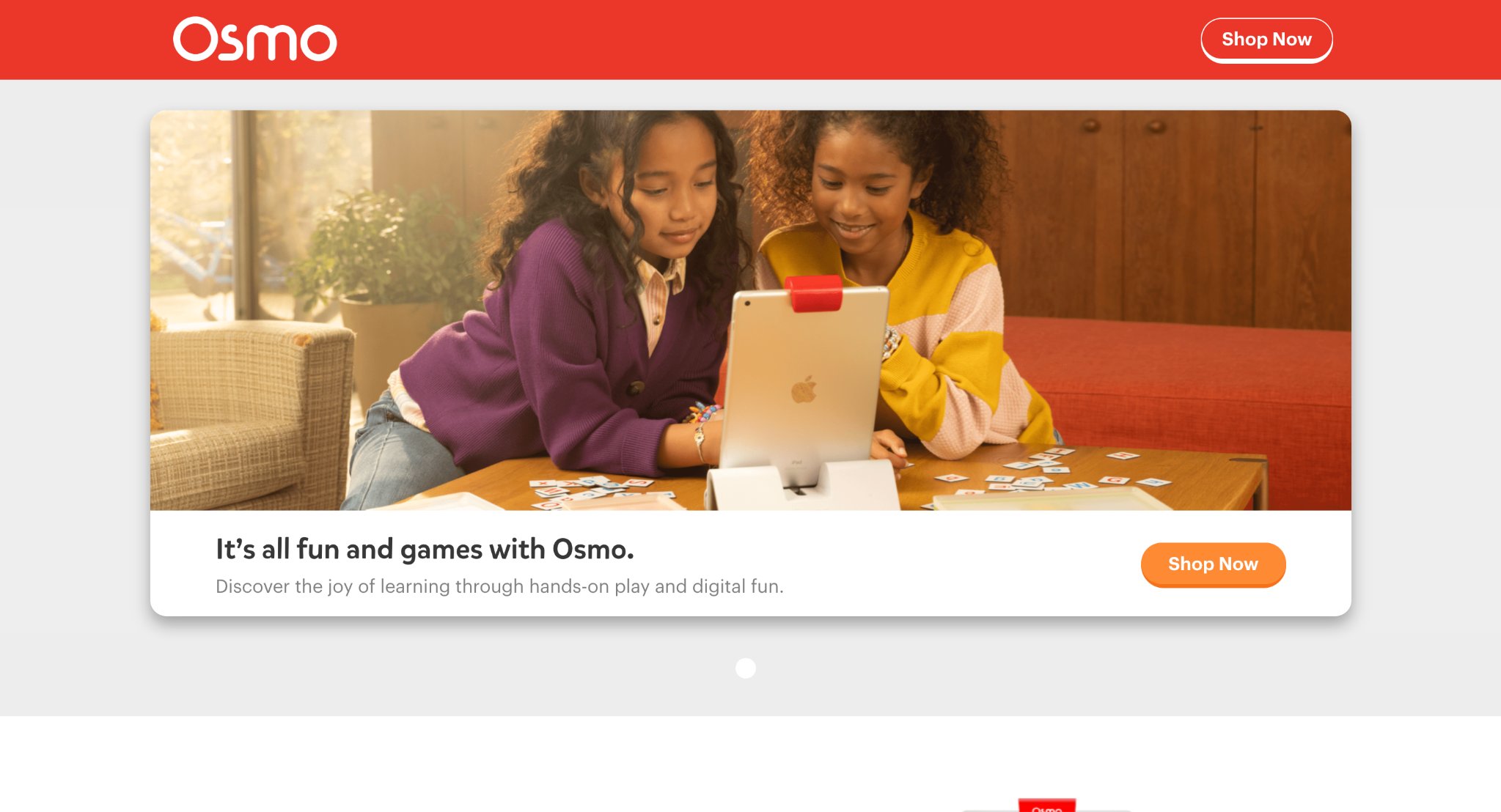
Osmo, headquartered in Palo Alto, merges physical manipulatives with digital apps for hands-on learning in math, coding, and drawing. Using a device camera, kids arrange tiles or draw on paper to interact with screen characters. Strengths are its tactile engagement that bridges real and virtual worlds, promoting fine motor skills. Games like Tangram or Newton encourage creativity. Weaknesses include dependency on compatible hardware and pieces, which can limit portability. It supports multiplayer for family play.
- Key features: Genius starter kits, coding blocks, physics-based puzzles.
- Facts and Information: Many families appreciate the blend of screen and physical play, some notice improvements in spatial reasoning.
12. ABCya
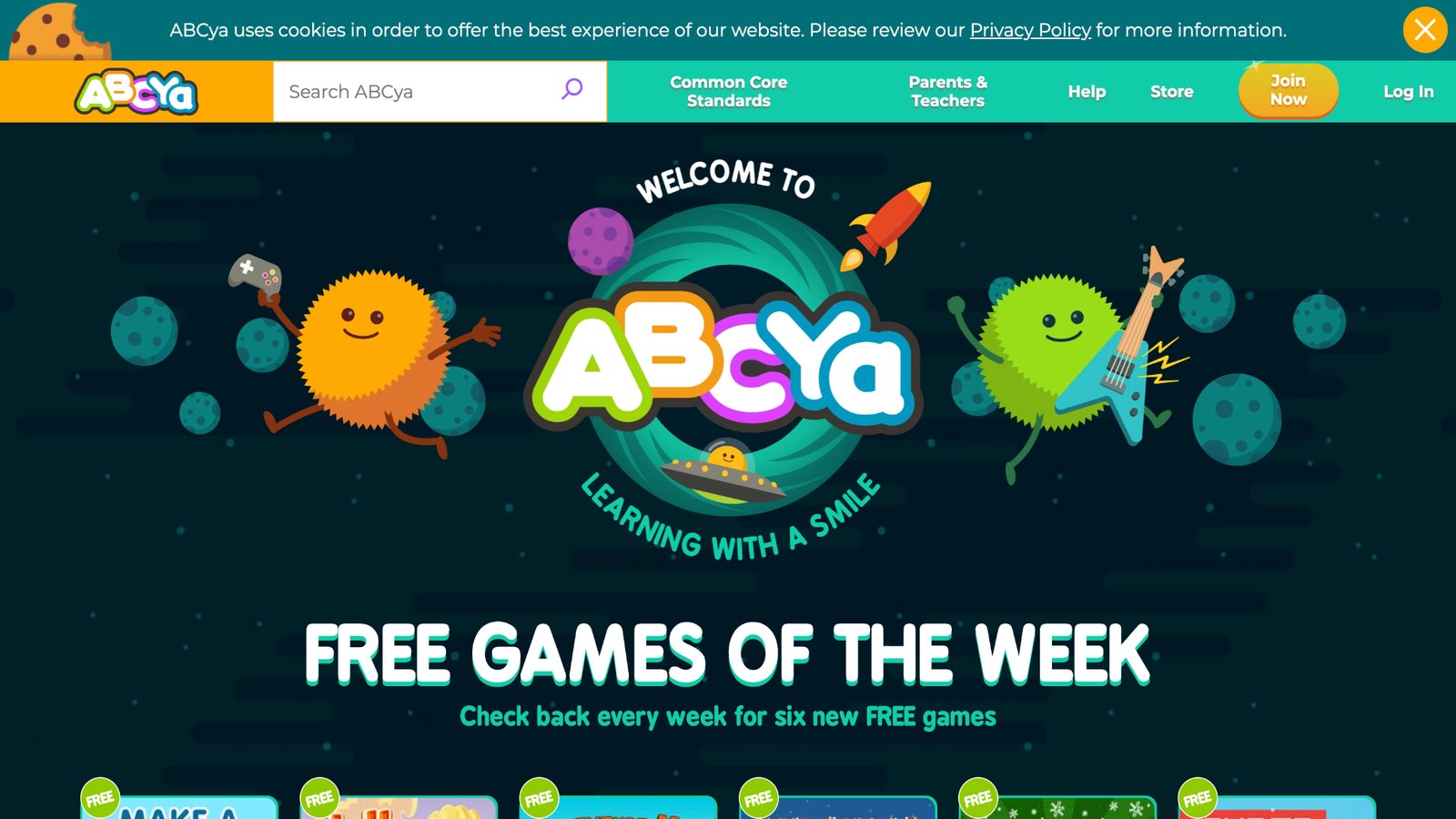
ABCya, part of IXL Learning in San Mateo, hosts over 300 free games for pre-K to sixth grade, spanning math, language, science, and strategy. Ads appear but don't interrupt play. Kids select activities by topic or grade, like word searches or fraction pizzas. Strengths include variety for quick skill drills and teacher-approved content. The site updates seasonally with themed games. Weaknesses involve no personalization or progress saving without an account. It emphasizes fun mechanics to reinforce classroom lessons.
- Key features: Categorized by subject and grade, holiday specials, keyboarding practice.
- Facts and Information: Many teachers assign it for homework, some students build typing speed through repeated use.
13. PBS Kids Games
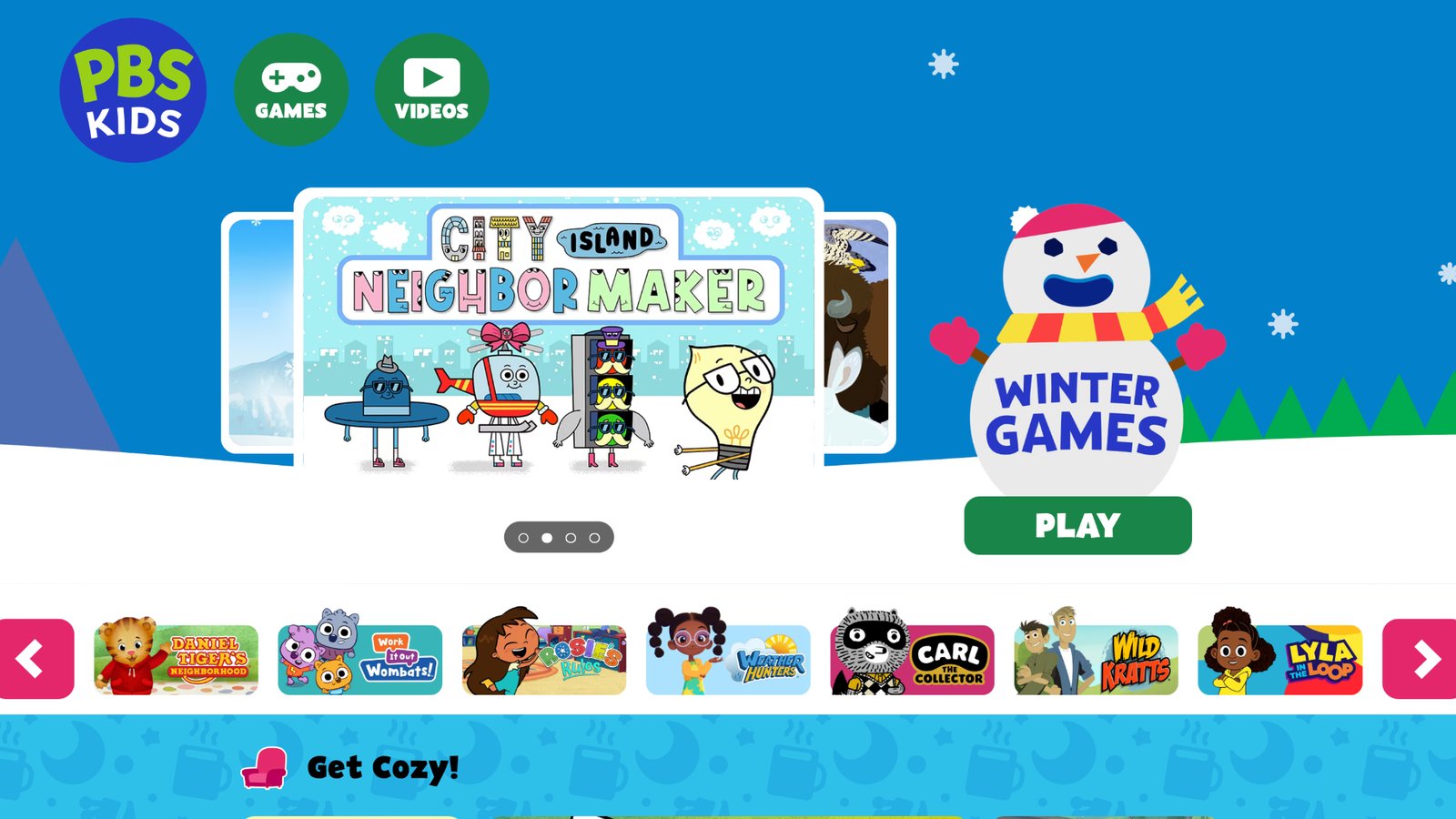
PBS Kids Games, from PBS in Arlington, brings characters from shows like Sesame Street and Arthur into educational activities for ages 2 to 8, covering STEM, literacy, and social skills. Kids play as favorites in worlds that teach through exploration and mini-challenges. Strengths feature familiar branding that eases entry and ad-free safety. Content ties to episodes for deeper understanding. Weaknesses show in simpler designs for younger audiences, possibly underchallenging older kids. It promotes values like kindness.
- Key features: Show-based adventures, creativity labs, parent resources.
- Facts and Information: Many public programs recommend it, some children connect TV learning to interactive play.
14. DragonBox Algebra
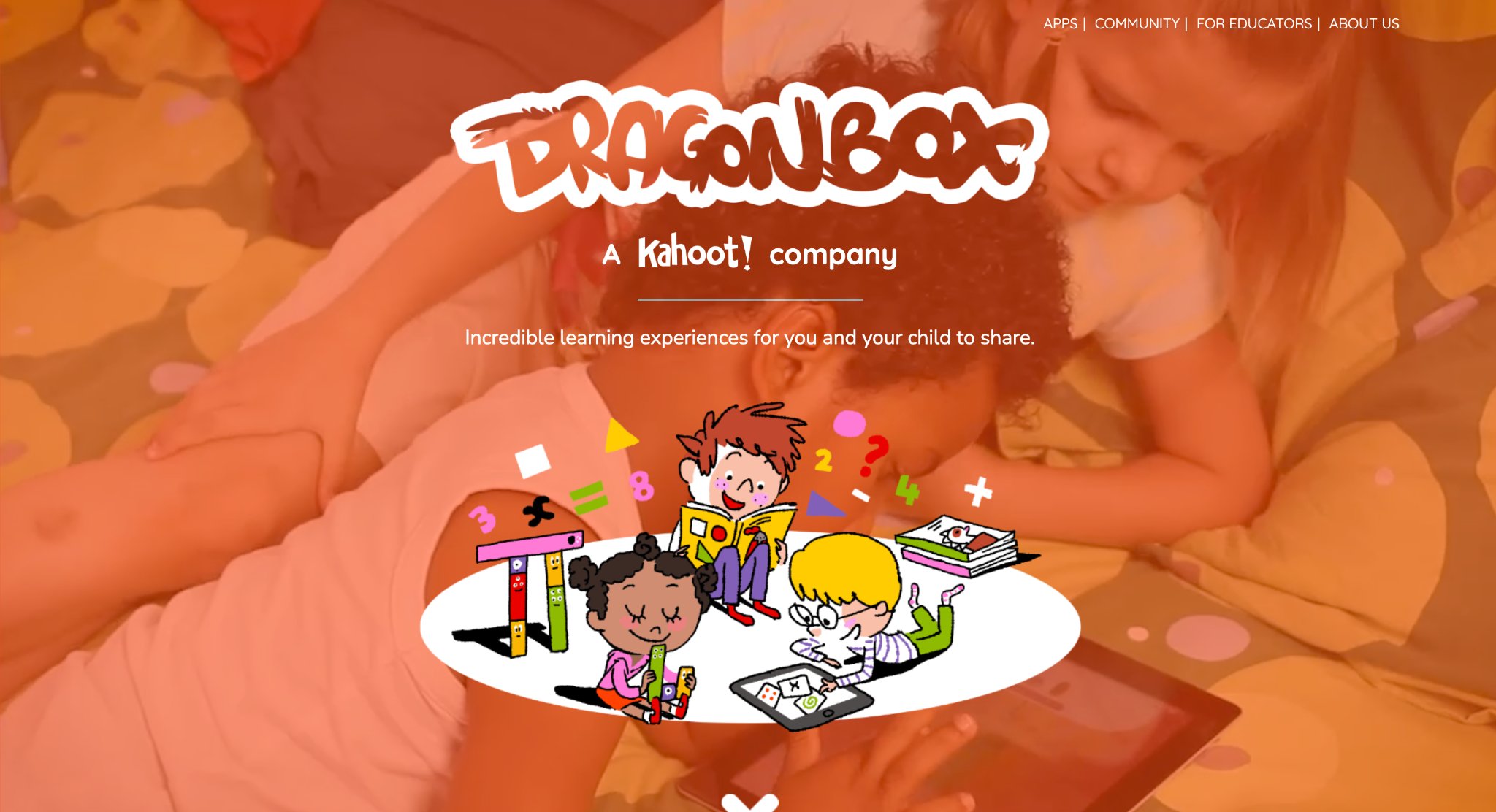
DragonBox Algebra, under Kahoot! in Oslo, introduces algebraic concepts through puzzle games where kids manipulate symbols to isolate variables. The series starts simple and builds to equations. Strengths are its intuitive visuals that make abstract math concrete without numbers initially. It boosts confidence in solving problems. Weaknesses include short duration per app, requiring multiple purchases for full coverage. Suitable for self-paced learning.
- Key features: Progressive levels, character-driven stories, geometry extensions.
- Facts and Information: Many users grasp algebra basics earlier, some integrate it with school math.
15. CodeCombat
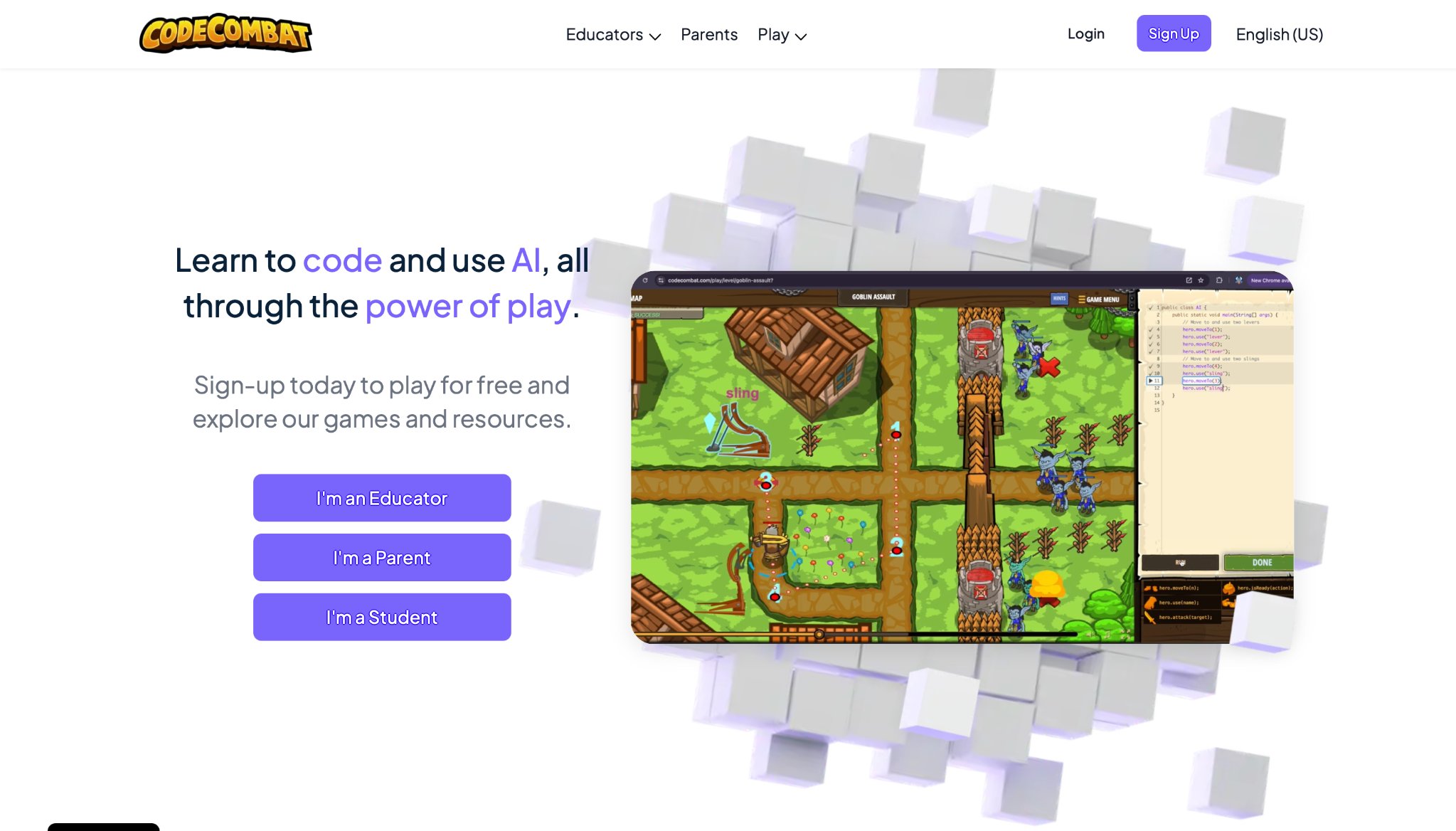
CodeCombat is one of the most popular game-based coding platforms for kids and teens. Based in San Francisco, CodeCombat turns learning to code into an exciting adventure where children control heroes moving through dungeon levels by writing real code in Python, JavaScript, Lua, and more. As players progress, they unlock new abilities, battle in multiplayer arenas, and even build their own games.
Its greatest strength lies in offering authentic coding experience with immediate visual feedback. Kids see their code come to life instantly, which helps them understand logic, loops, functions, and algorithms naturally. The platform also includes web development projects, making it suitable for beginners and more advanced learners. Many coding clubs and schools use CodeCombat as a core part of their curriculum because students stay motivated through gamification and competition.
- Key features: Language options, hero customization, teacher dashboards.
- Facts and Information: Many coding clubs use it, some players advance to professional skills.
16. IXL
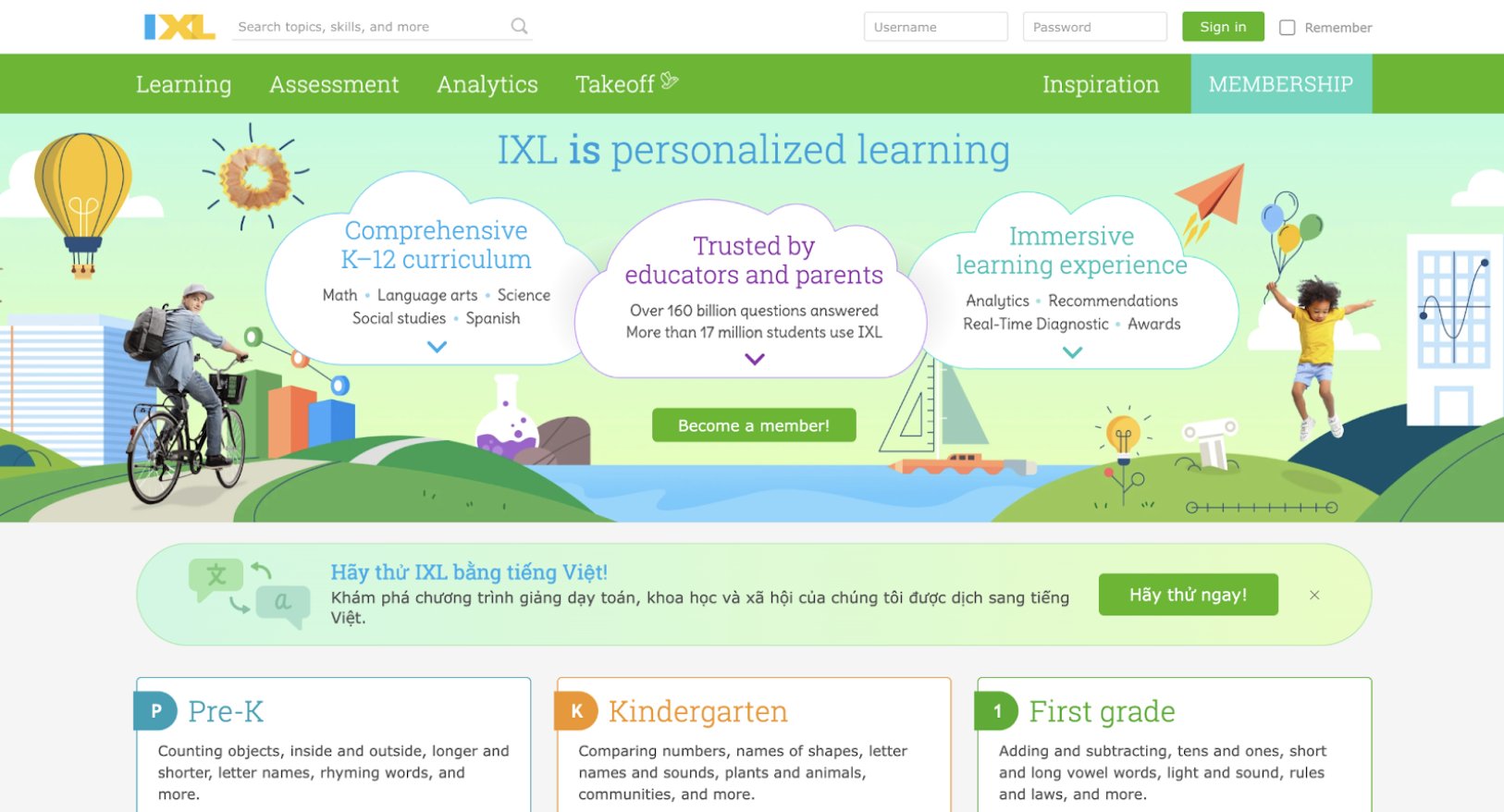
IXL is a comprehensive online learning platform that provides personalized practice across Math, Language Arts, Science, and Social Studies for students from pre-K to 12th grade. Developed by IXL Learning in San Mateo, California, it features an adaptive question bank with over 10,000 skills that adjust in real time based on a child’s performance.
Students earn virtual awards, certificates, and stars as they master skills, making learning feel rewarding. Teachers and parents love IXL’s detailed real-time analytics that pinpoint exactly where a child needs support. The platform is fully aligned with state standards and Common Core, making it a favorite supplement for both classroom and homeschool use.
- Key features: Skill recommendations, virtual prizes, diagnostic tests.
- Facts and Information: Many districts adopt it for supplementation, some see targeted improvements.
17. DreamBox
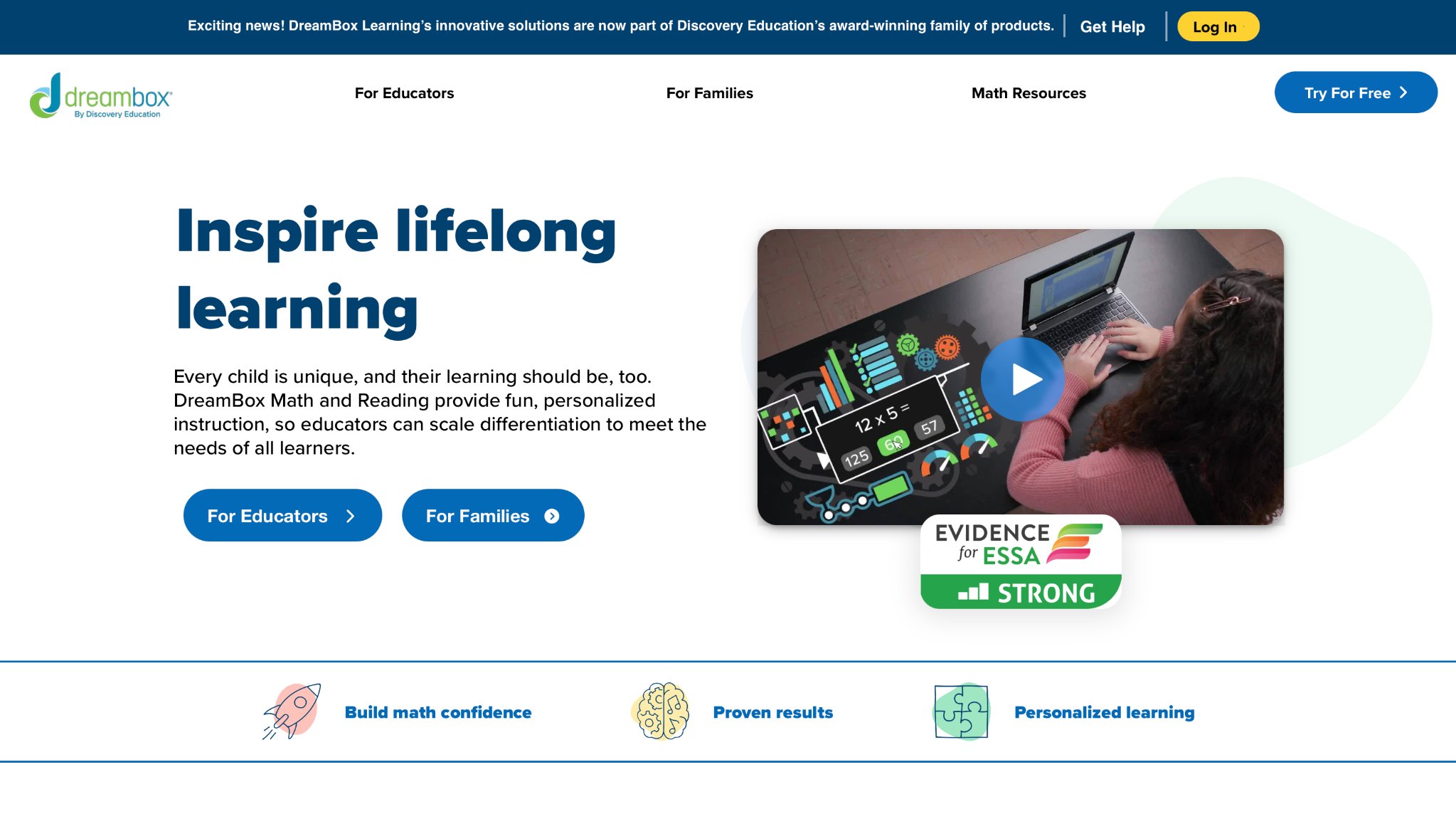
DreamBox Learning is a highly effective adaptive math platform designed for kindergarten through 8th grade. Based in Bellevue, Washington, DreamBox combines engaging math games with powerful artificial intelligence that continuously adjusts each student’s learning path in real time.
Instead of one-size-fits-all lessons, DreamBox builds conceptual understanding using visual models, virtual manipulatives, and interactive stories. Children explore topics like place value, fractions, geometry, and early algebra at their own pace while receiving instant feedback. Teachers benefit from rich reporting tools that show both progress and areas needing intervention.
- Key features: Intelligent adaptation, lesson playlists, growth mindset messages.
- Facts and Information: Many educators note conceptual gains, some kids enjoy the game-like progression.
18. BrainPOP
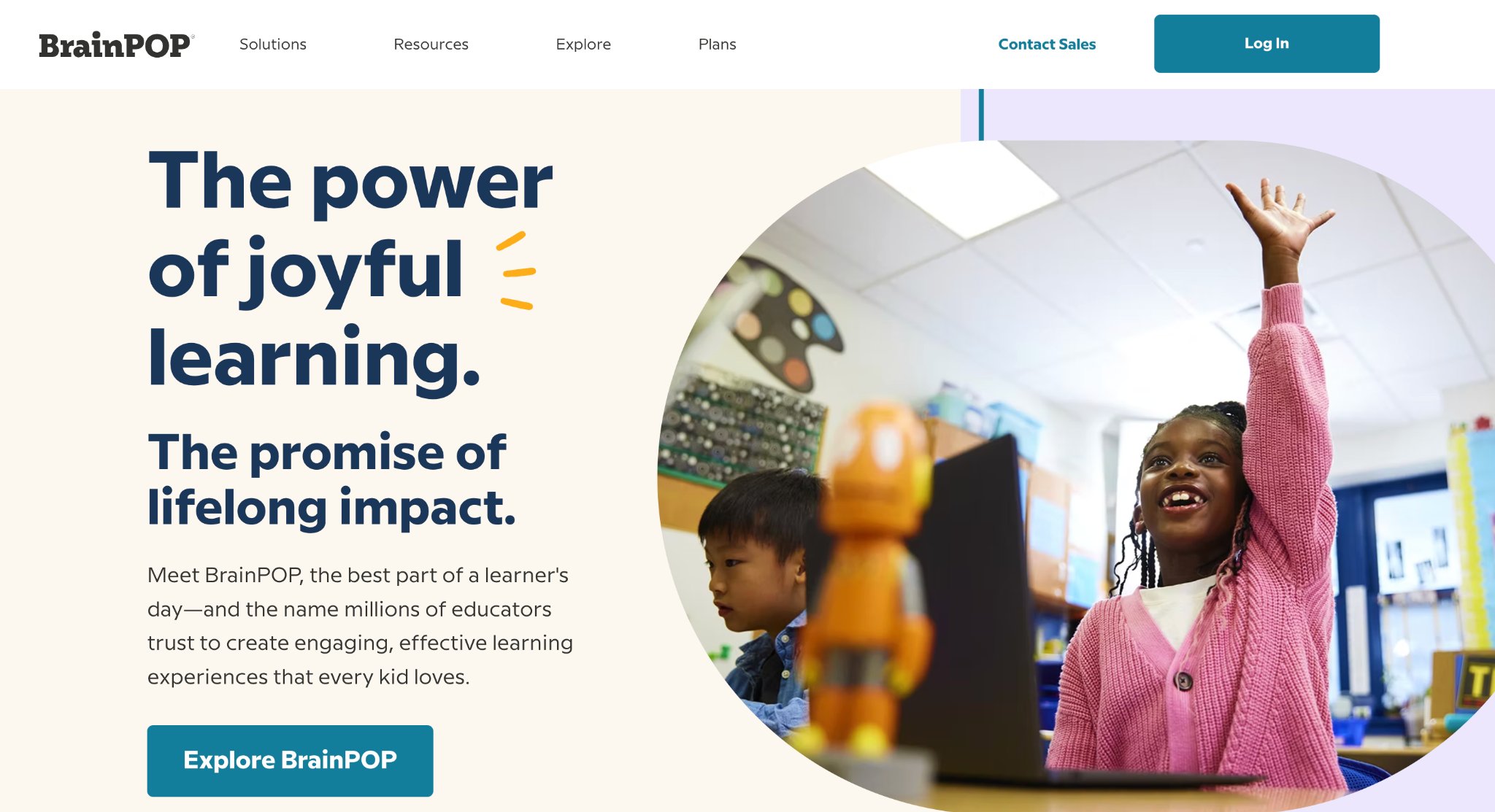
BrainPOP is a beloved educational platform that makes learning fun through short, animated movies. Headquartered in New York, BrainPOP features the curious characters Tim and Moby who explain complex topics in science, health, social studies, technology, arts, and English in a humorous and easy-to-understand way.
Suitable for elementary and middle school students, each movie is followed by interactive quizzes, activities, experiments, and creative projects (including coding and writing tasks). The platform is particularly helpful for ELL students thanks to its visual explanations and closed captions.
- Key features: Subject movies, quizzes and experiments, creative tools.
- Facts and Information: Many classrooms start units with it, some students retain facts better through stories.
19. Reading Eggs
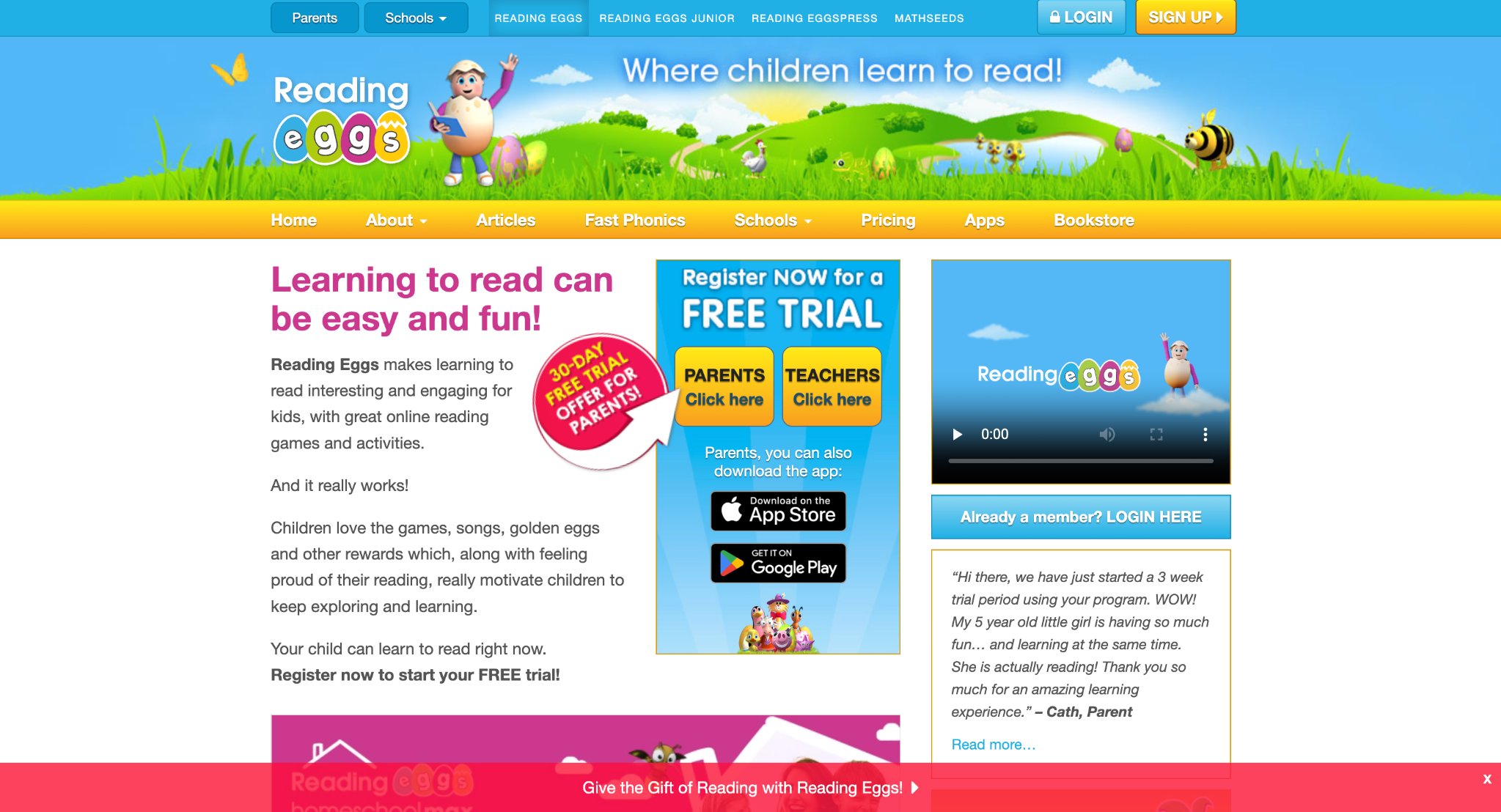
Reading Eggs is a comprehensive, phonics-based online reading program from Blake eLearning in Australia, designed for children ages 2 to 13. Through highly interactive games, songs, books, and activities, kids learn letters, sounds, sight words, comprehension, and spelling while “hatching” cute eggs as they complete lessons.
The program follows a clear progression from early literacy to fluent reading, with beautifully illustrated leveled e-books and motivating rewards. It also includes spelling bees, grammar lessons, and math extensions in higher levels. Parents and teachers can easily track reading levels and progress through detailed reports.
- Key features: Leveled libraries, spelling bees, progress maps.
- Facts and Information: Many early readers progress quickly, some parents use it for homeschooling.
20. Epic

Epic is the leading digital library for kids, often called “Netflix for Books.” Based in Redwood City, California, Epic gives children under 12 access to thousands of high-quality books, audiobooks, videos, and learning resources. Kids can read independently or use the “Read-to-Me” feature with professional narration.
The platform recommends titles based on reading level and interests, covering fiction, non-fiction, comics, and educational content. Parents appreciate strong content controls and time-limit options, while teachers use it for classroom reading challenges.
- Key features: Unlimited reading, educational videos, badge collections.
- Facts and Information: Many libraries partner with it, some children increase reading volume significantly.
21. Prodigy Math Game
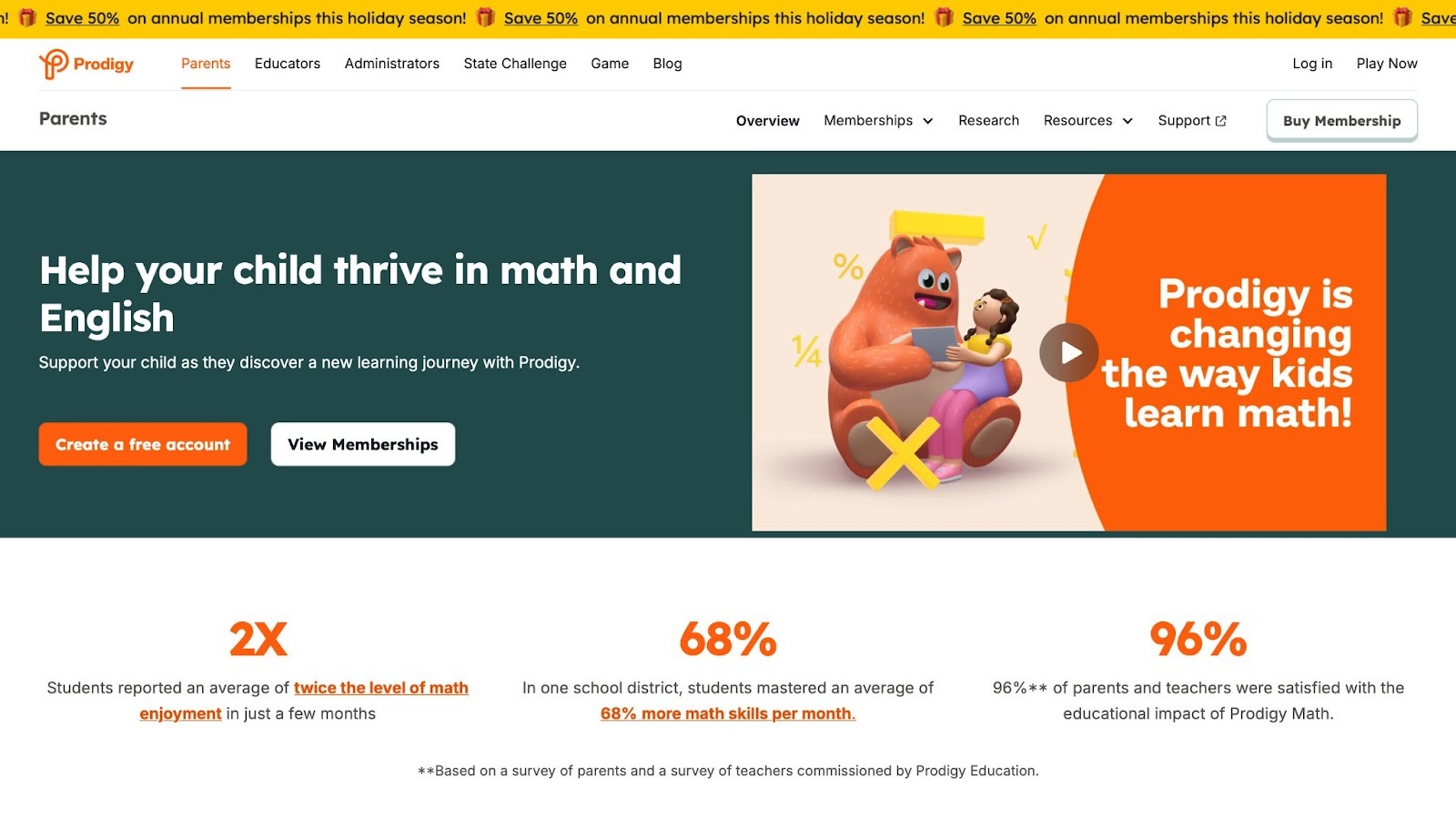
Prodigy Math Game, from Prodigy Education in Burlington, transforms math practice into an exciting role-playing adventure where kids battle magical creatures by answering questions. The app adjusts difficulty in real time to match each child's skill level, covering topics from basic arithmetic to advanced concepts aligned with school curricula. Players earn rewards like pets and gear, which keeps motivation high during sessions. Strengths include its engaging narrative that makes learning feel like play, encouraging repeated use without feeling like homework.
The game supports teacher integrations for classroom assignments, allowing progress monitoring through detailed reports. However, some users find the battles can become repetitive over time, potentially reducing interest for those who advance quickly. It works on multiple devices, making it accessible for home or school use. Overall, it builds confidence in math by turning abstract problems into interactive challenges. Kids explore a vast world, completing quests that reinforce key skills like fractions and geometry.
- Key features: Adaptive learning algorithms, in-game rewards system, alignment with educational standards, multiplayer battles.
- Facts and Information: Many schools incorporate it into daily routines, some parents observe improved attitudes toward math among regular players.
22. Lightbot
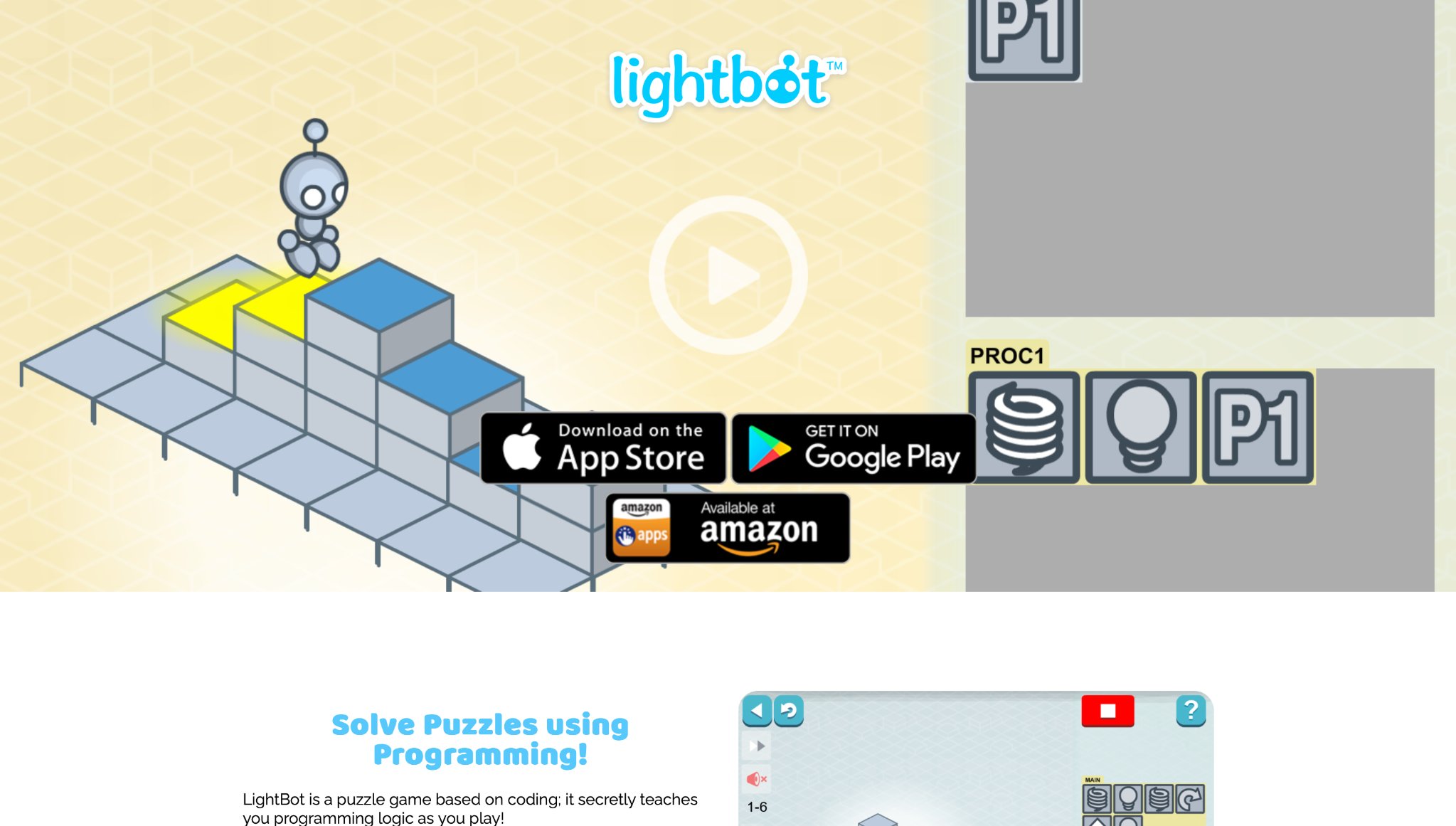
Lightbot challenges 10 year olds to guide a small robot through glowing grid-based puzzles by arranging colorful command blocks that teach essential programming concepts like sequencing, loops, and conditionals. Kids must plan several steps ahead, test their solutions, and debug mistakes in increasingly complex levels that feel like real coding challenges without any typing required. The clean, minimalist visual style combined with satisfying light-up animations keeps players focused while building strong logical thinking and patience. Short puzzle sessions work well for daily practice, while longer advanced levels encourage deeper concentration and strategic planning. This type of game strengthens computational thinking that directly supports school STEM subjects and future technology skills.
- Key features: Block-based programming commands, progressive puzzle difficulty, visual debugging tools, and multiple world themes.
- Facts and information: Many parents appreciate how Lightbot turns abstract coding ideas into visible, hands-on problem solving that children enjoy repeating.
23. Osmo Genius Starter Kit
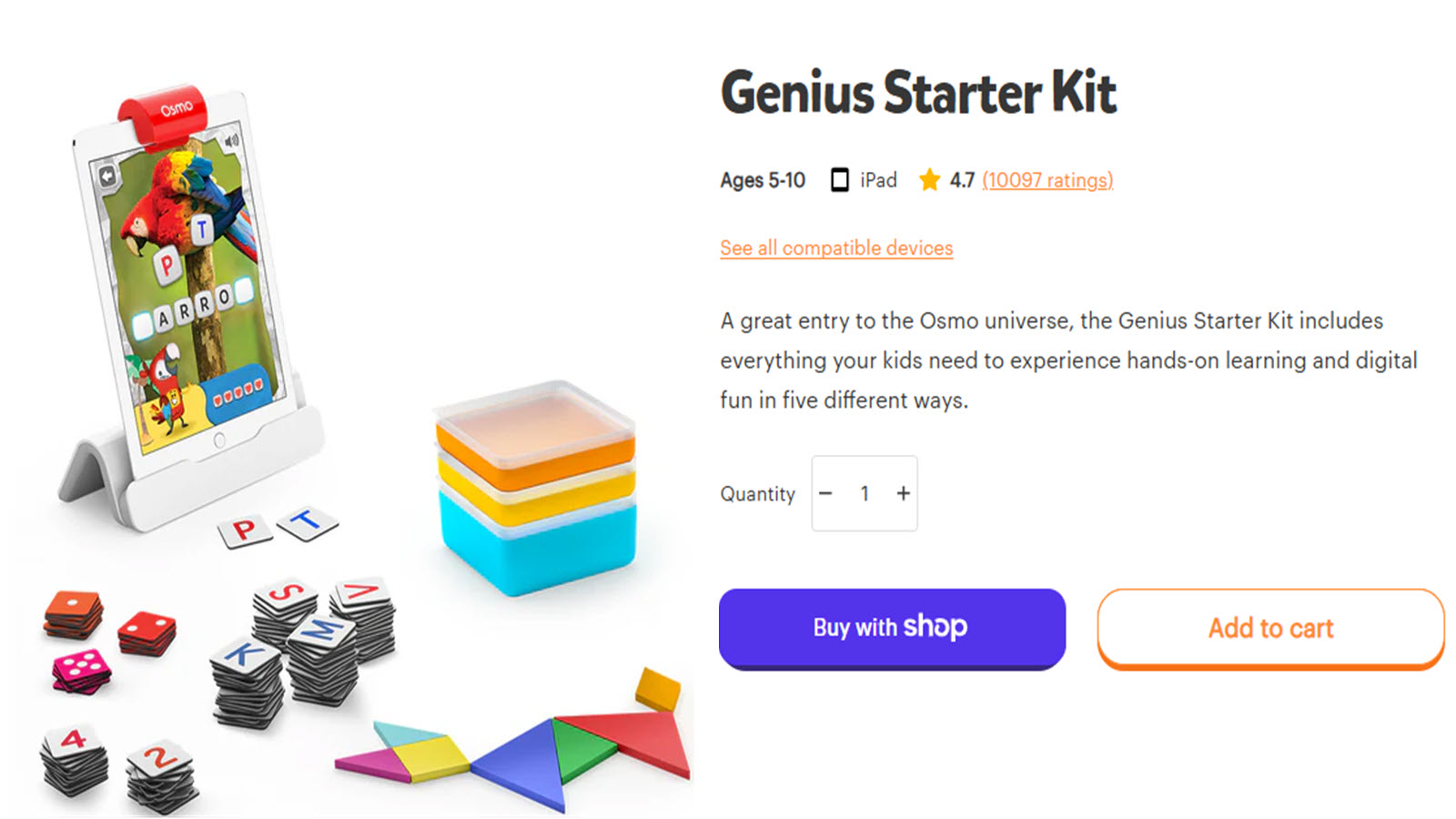
Osmo Genius Starter Kit creates a unique mixed-reality experience by combining physical game pieces with interactive screen activities for hands-on learning in math, coding, spelling, and creative design. Children use tangible tiles, drawing tools, and number pieces that the device camera instantly recognizes to solve problems and build projects in real time. The seamless blend of physical touch and digital feedback maintains high engagement across different subjects while making abstract concepts feel concrete and exciting. Multiple included apps allow families to switch easily between geometry puzzles, storytelling adventures, and problem-solving challenges. This approach supports different learning styles and encourages collaboration between children and parents during play sessions.
- Key features: Tangible game pieces with screen recognition, multiple subject apps, real-time interaction, and creative building tools.
- Facts and information: Families often note how Osmo bridges physical play and digital learning in a natural way that feels more engaging than screen-only games.
24. Numberblocks
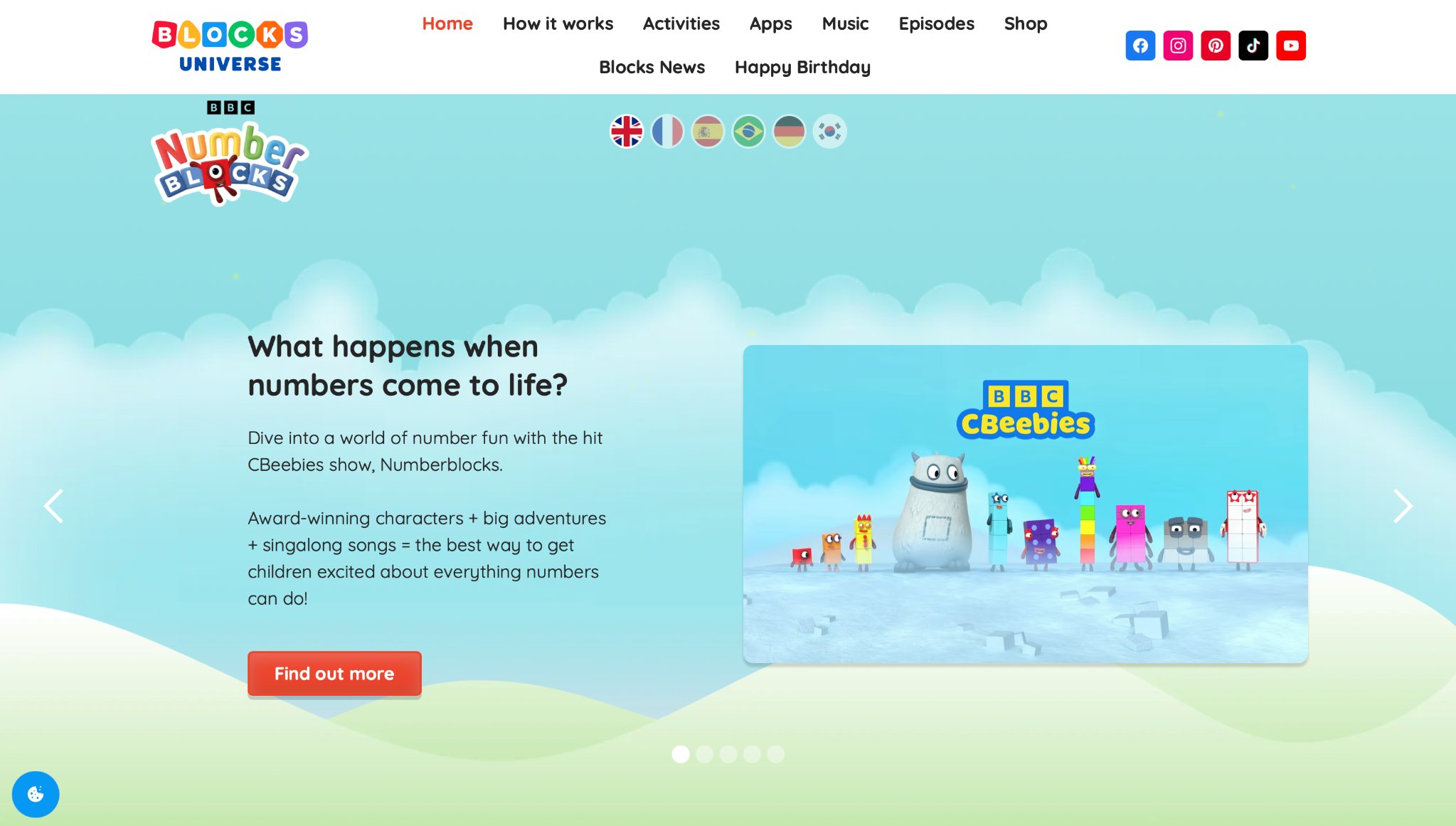
Numberblocks is an award-winning educational show and app series that brings numbers to life through fun adventures and catchy songs. Children join friendly block characters as they explore counting, addition, subtraction, patterns, and early math concepts in an exciting and imaginative way.
The show uses simple stories, lovable characters, and memorable singalong songs to make learning numbers feel playful and natural. Kids stay engaged while building strong foundational math skills, confidence, and a genuine love for learning.
Key features include award-winning animated characters, catchy original songs, big adventures that teach numbers and basic math, and a gentle, child-friendly approach suitable for preschool and early primary children. The content is designed to make numbers exciting and easy to understand through play.
Facts and information: Created by the BBC and based on the hugely popular Numberblocks TV series on CBeebies, this learning experience has helped millions of children worldwide fall in love with numbers. Part of the Blocks Universe, Numberblocks combines high-quality educational content with entertainment that kids adore and parents trust.
25. Code.org Hour of Code Activities
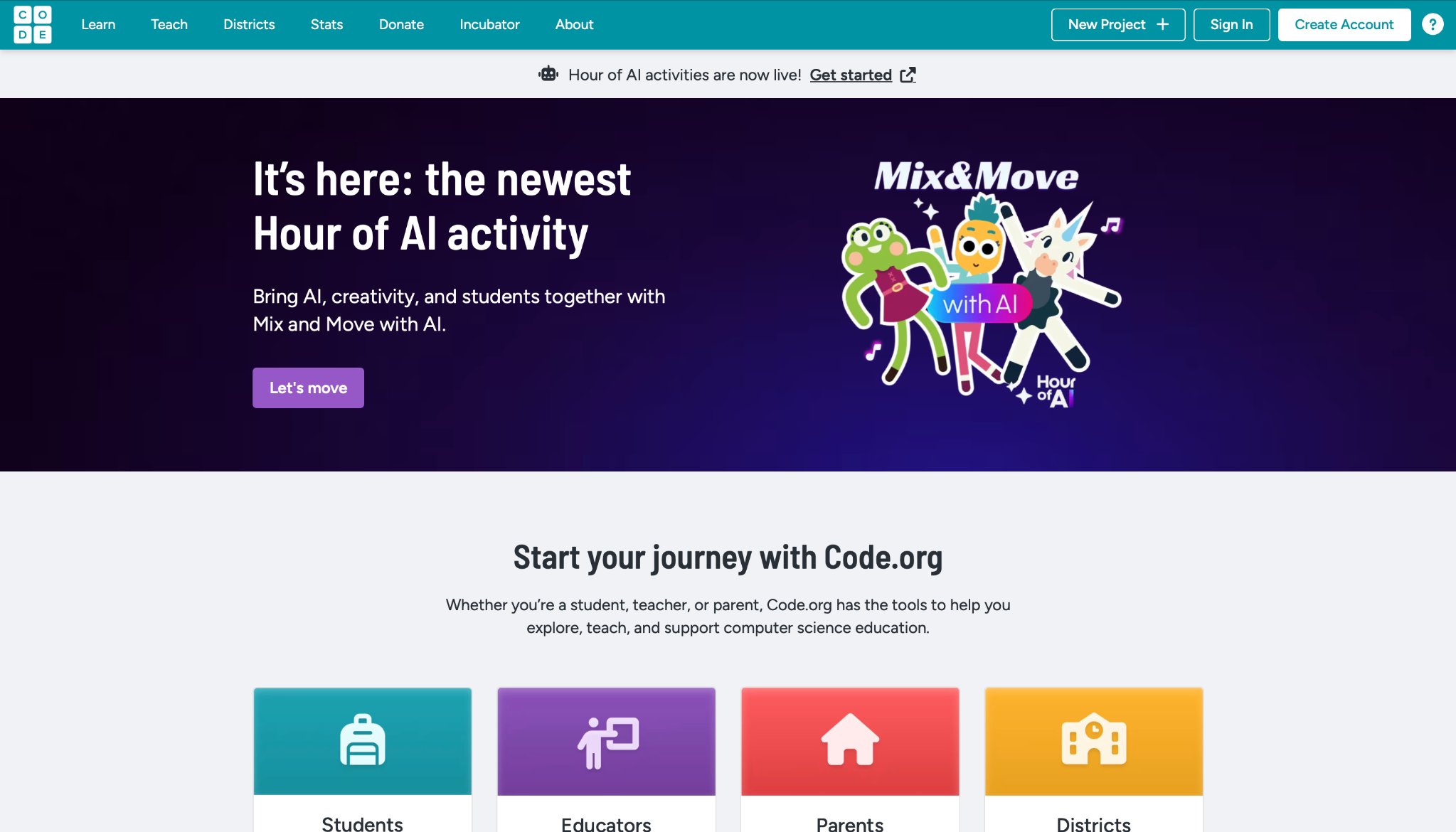
Code.org Hour of Code activities provide free guided projects where 10 year olds create their own games, animations, and interactive stories using block-based or text coding. Popular characters from movies and well-known games make the learning process familiar and highly motivating. Children learn core programming concepts while completing fun missions that range from 30 minutes to several hours in length. The wide variety of themes covers sports, music, space exploration, and more, ensuring there is something appealing for different interests. Regular addition of new challenges and seasonal events keeps the content fresh and relevant throughout the entire school year.
- Key features: Block and text coding options, celebrity character integrations, themed project variety, and free accessibility.
- Facts and information: These activities are widely used in both homes and classrooms because they make coding approachable and exciting for children at this age.
26. The Oregon Trail
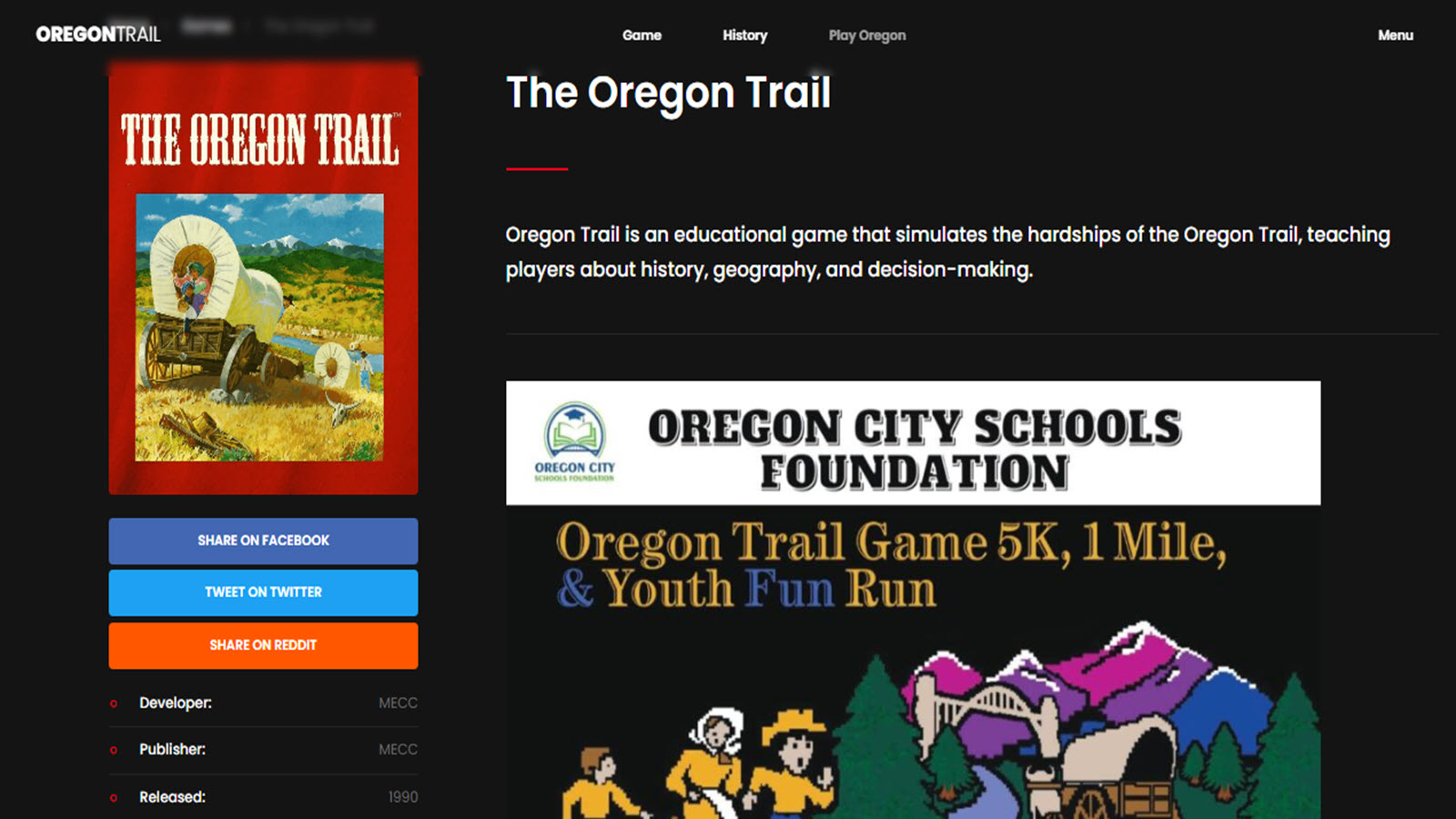
The Oregon Trail lets 10 year olds lead a wagon party across the historic American frontier while managing limited resources, making important decisions, and learning about geography, history, and survival. Kids face realistic challenges that teach cause and effect relationships in a compelling narrative format. Modern updated graphics and enhanced features make this classic experience fresh and engaging for today’s children. Multiple journey modes and difficulty settings support both quick plays and deeper historical exploration. The strong storytelling approach turns important history lessons into an immersive and memorable adventure.
- Key features: Historical decision-making, resource management, multiple routes and modes, and educational storytelling.
- Facts and information: Many families value how this game makes American history feel personal and exciting rather than distant textbook facts.
27. CodeSpark Academy
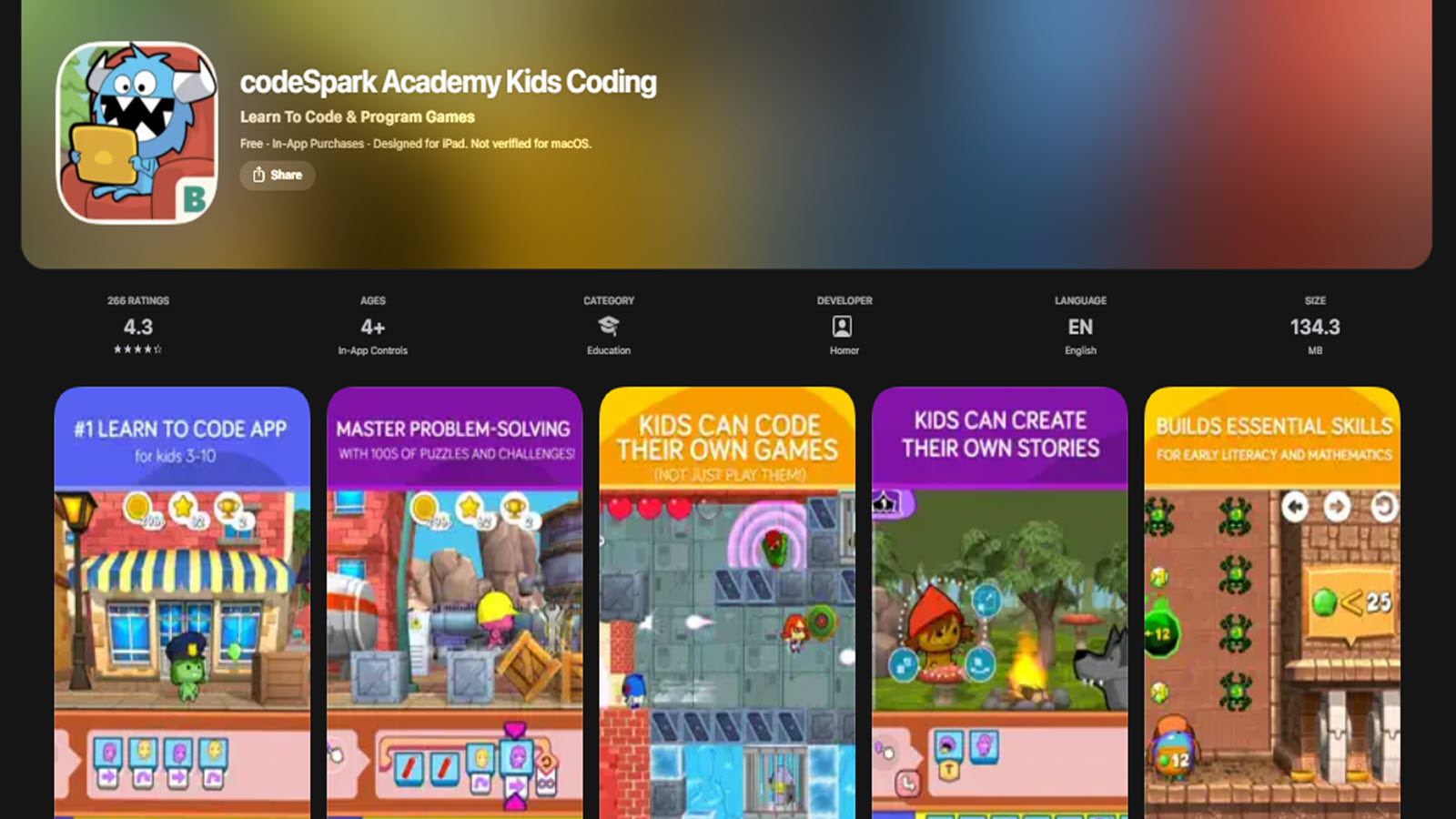
CodeSpark Academy introduces coding to kids ages 3 to 10 via drag-and-drop puzzles and games. It teaches logic, sequencing, and problem-solving without reading required. Children progress from basics to creating their own stories and games. Strengths are its visual interface that engages non-readers, building creativity and confidence. Some setups need adult help initially, limiting solo start. No headquarters mentioned.
The app sparks interest in tech through fun challenges. Kids share creations in a community, entering contests for feedback. It develops debugging skills and uses variables for advanced play. Many parents see gains in thinking abilities, especially for neurodiverse children. The self-paced design keeps frustration low. Regular updates add new content. Overall, it makes coding accessible and exciting, preparing kids for future skills.
- Key features: Puzzle games, story creation, community sharing, logic tools.
- Facts and Information: Builds critical thinking, enjoyed by many young coders.
28. Busy Shapes
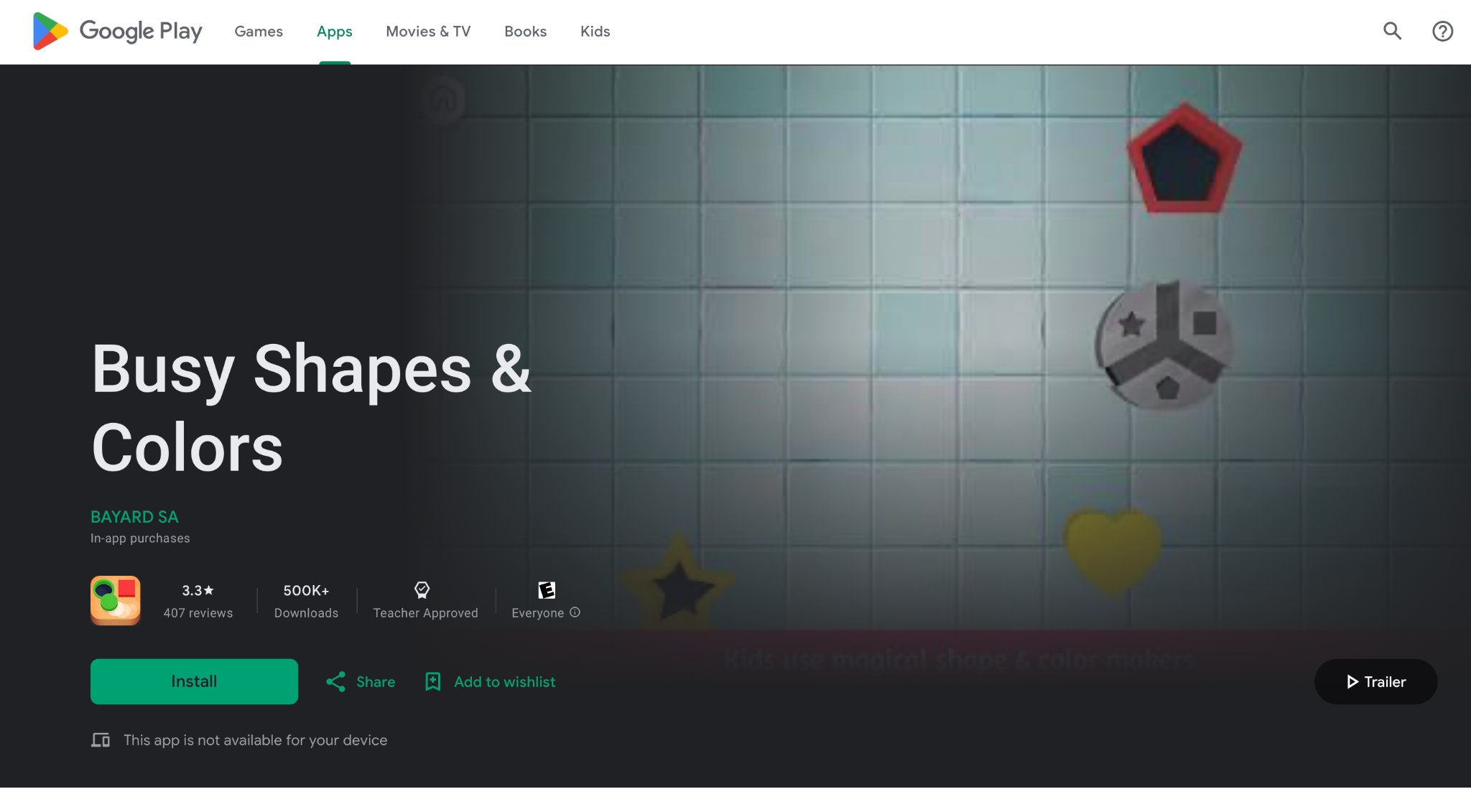
Busy Shapes, part of Montessori Preschool, targets kids ages 3 to 7 with activities in reading, counting, and creativity. It uses Montessori methods for hands-on digital learning. The app offers games that build critical thinking and music skills. Strengths include high engagement, with children discovering new concepts daily. Some might need parent involvement for full benefits.
No headquarters mentioned. It provides a safe space for expression, going beyond standard curricula. Testimonials highlight progress in shapes, numbers, and languages. The design encourages tracing and repeating for skill mastery. Many families prefer it over other apps for its balance of play and education. It supports diverse needs, like for children with ASD. Overall, it empowers young learners with tools for future success.
- Key features: Shape puzzles, tracing activities, creative games, multilingual support.
- Facts and Information: Montessori-based, promotes independence, valued by many parents.
29. Toca Life World
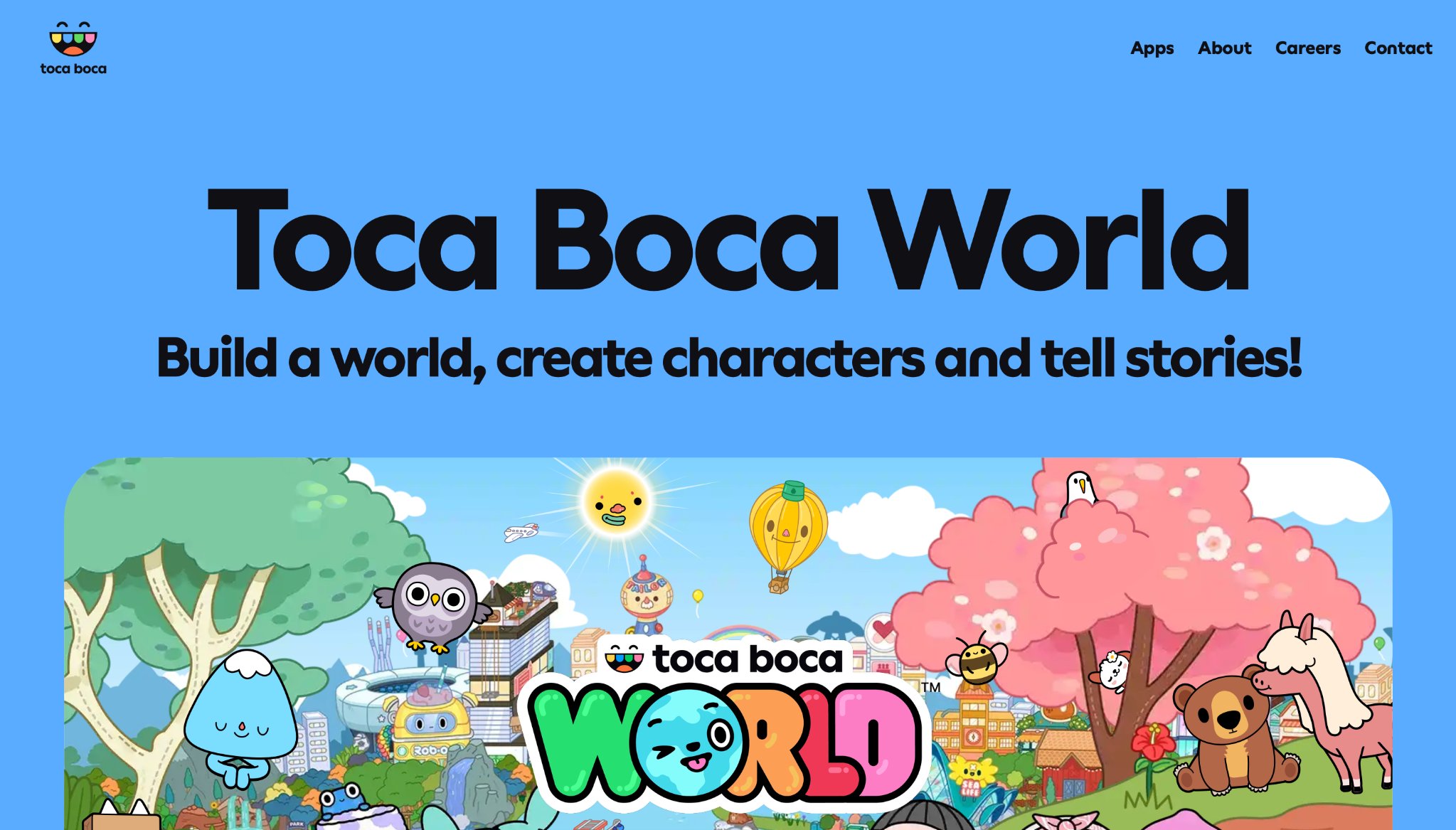
Toca Life World lets kids ages 6 to 12 create stories in a vast digital world with characters and locations. It fosters imagination through open-ended play, combining elements from various Toca apps. Strengths are its freedom for creative expression, encouraging role-play and problem-solving. Some structured learners might miss guided goals, leading to aimless sessions.
Based in Stockholm, Sweden. The app updates with new areas and items, keeping exploration fresh. Kids design homes, shops, and adventures without rules. It promotes social skills via character interactions. Many parents note increased storytelling abilities. The ad-free environment ensures safe fun. Overall, it blends play with subtle learning, sparking curiosity about everyday life.
- Key features: World building, character customization, story creation, location packs.
- Facts and Information: Encourages creativity, used by many for imaginative play.
30. Homer
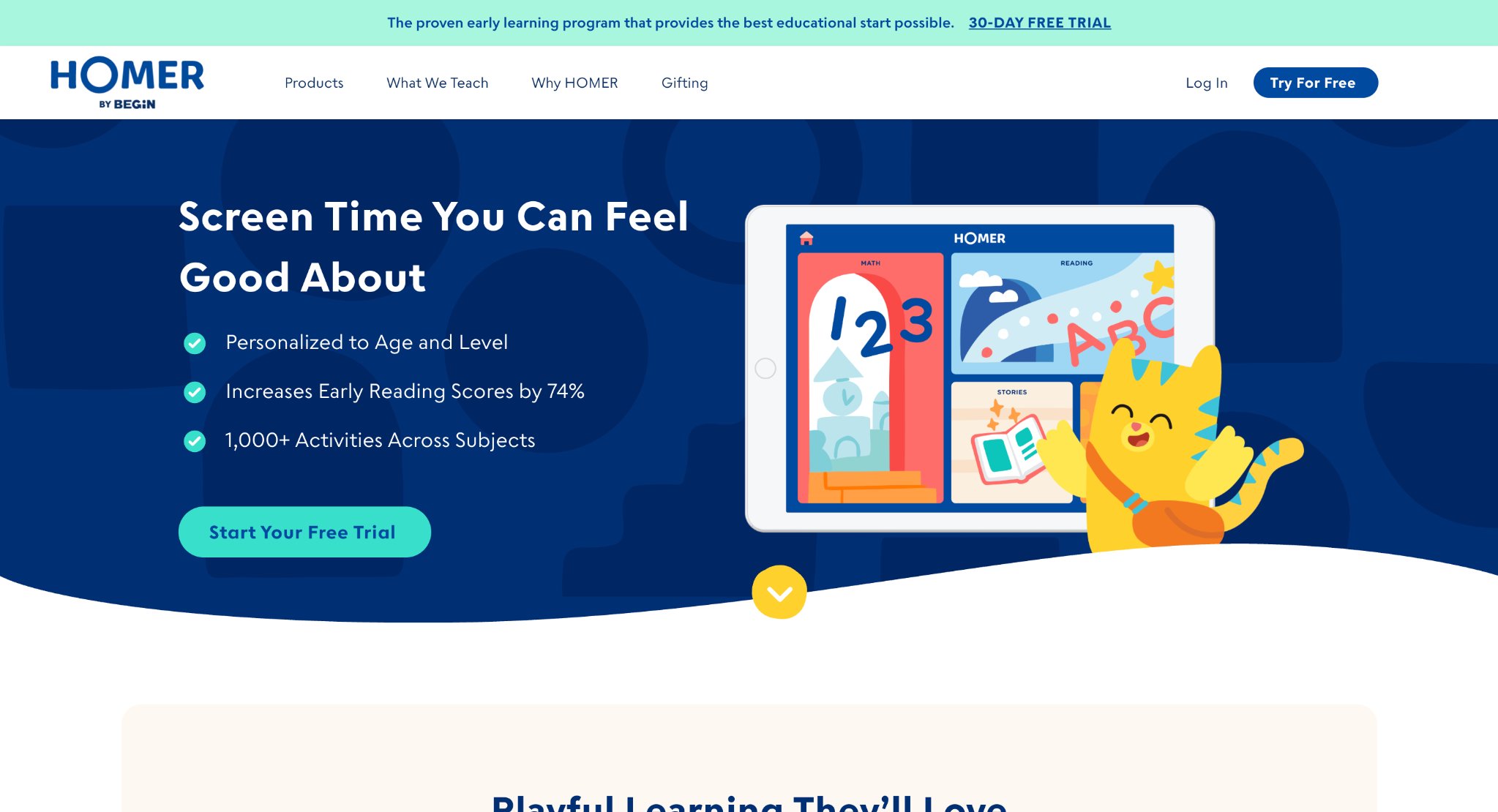
Homer provides personalized learning paths for kids ages 2 to 8, focusing on reading, math, and social skills. It adapts content to interests like dinosaurs or space, using games, stories, and activities developed by experts. The app includes stages from toddler to early learner, with progress tailored to skill levels. Strengths lie in its customization, helping children build confidence through joyful, ad-free sessions. Some might find the pace slow if kids advance quickly, though adjustments are possible. No headquarters mentioned.
This tool fosters problem-solving and creativity, with "I Did It" moments to celebrate achievements. Parents get insights into growth areas. It goes beyond basics to include emotional tools and brain games. Many families note increased engagement and knowledge retention. The research-backed method avoids rote learning, promoting a love for discovery. Kids enjoy the animal guides and interactive elements that make sessions feel like adventures. Overall, it supports holistic development, preparing young minds for school and beyond.
- Key features: Personalized lessons, interactive stories, math building blocks, social-emotional tools.
- Facts and Information: Research-based, kid-tested, promotes lifelong learning habits.
Tips for Parents on Integrating Games into Learning
- Set time limits for balanced play.
- Join sessions to discuss what kids learn.
- Link games to schoolwork for reinforcement.
- Use reports to spot strengths.
- Encourage sharing projects with family.
- Reward progress with non-screen treats.
- Mix with outdoor activities.
How Educational Games for 10 Year Olds Prepare Kids for Middle School
Educational games for 10 year olds play a valuable role in preparing children for the increased academic and social demands of middle school.
Key ways they help preparation:
- Build Strong Academic Foundations: Regular play in math, reading, and science strengthens core skills needed for more challenging middle school subjects.
- Develop Critical Thinking & Problem-Solving: Games require strategy, planning, and logical reasoning - essential skills for project-based learning in middle school.
- Improve Focus and Self-Discipline: Completing quests and overcoming challenges in games helps children build persistence and better attention spans.
- Foster Independence and Confidence: Adaptive games let kids learn at their own pace, boosting self-esteem and encouraging them to tackle harder tasks.
- Introduce Basic Coding & Digital Literacy: Early exposure to coding and tech skills gives them an advantage in middle school STEM classes.
- Enhance Social Skills: Multiplayer educational games teach teamwork, communication, and fair play.
Parents who incorporate quality educational games for 10 year olds often notice their children entering middle school with stronger confidence, better study habits, and improved adaptability. These games bridge the gap between elementary fun and the more independent learning style required in middle school.
Latest News In 2026
New educational games for 10 year olds place a stronger focus on cross subject integration where math, science, and language appear together in single adventures. Developers add more voice guided tutorials and adaptive hints that adjust to individual learning styles.
Collaborative online modes grow in safety and usefulness so kids work together on group projects from different locations. Artificial intelligence features now create custom challenges based on each child's recent progress and interests. Offline capabilities expand while parent tools become more detailed yet easy to understand.
These updates support deeper skill building that connects directly to school topics and real world applications. Trends connect closely with best learning games for kids online and resources for best educational games for kids.
- Cross subject story integration
- Voice guided adaptive tutorials
- Safe collaborative project modes
- AI generated personalized challenges
FAQ
What makes educational games effective for 10 year olds?
Educational games work well by turning lessons into interactive stories that hold attention longer. They often include elements like rewards and levels to motivate continued effort in areas such as problem-solving or vocabulary. When games feature adaptive learning, they adjust to a child's speed, helping build confidence without overwhelming them.
How do I ensure games are safe for my child?
Safety comes from platforms that avoid ads and use strong privacy settings to protect personal data. Features like moderated chats and age-appropriate content filters add extra layers of security during play. Parents find peace in services that offer parental controls for monitoring activity and setting limits.
Can educational games help with school performance?
These games reinforce classroom topics through hands-on practice, making concepts like fractions or history more memorable. They encourage independent exploration, which can lead to better retention of information over time. Many include progress tools that highlight areas for improvement, tying directly to academic goals.
What if my child gets frustrated with a game?
Frustration often stems from mismatched difficulty, so starting with simpler challenges can ease them in. Games with hints or tutorials provide guidance without spoiling the fun, allowing kids to learn from mistakes. Switching to titles in games collection that match their interests might reignite enthusiasm.
How do educational games foster creativity in 10 year olds?
Creativity blooms in games that let kids design worlds or characters, sparking original ideas through open-ended tasks. Activities involving art or storytelling encourage expression beyond standard rules, helping develop unique perspectives. Such features in kids games blend imagination with skill-building for well-rounded growth.
What features make educational games suitable for 10 year olds?
Educational games work best with balanced difficulty that scales as skills improve and clear goals that feel meaningful. Strong visual feedback and progress indicators help children track their own growth without pressure. Support for different learning styles through puzzles, stories, and creative tools keeps engagement high across varied interests.
How do educational games support academic skills at this age?
They reinforce school subjects by embedding concepts into interactive challenges that require active application rather than passive memorization. Strategy elements build critical thinking while creative modes strengthen communication and problem solving abilities. Repeated play in varied contexts helps solidify understanding that transfers to classroom performance.
Can educational games improve focus and persistence in children?
Well designed titles use engaging narratives and achievable milestones to hold attention longer than traditional exercises. Gradual challenges teach children to stick with difficult tasks and celebrate incremental progress. This combination nurtures stronger concentration habits and a positive attitude toward learning new concepts.
What types of educational games work well for different interests?
Kids who enjoy stories respond strongly to narrative driven titles that teach history or science through character adventures. Those drawn to building and creation thrive with design and creation tools that let them design and test their own projects. Logical thinkers often prefer strategy or coding games that reward careful planning and brain training through pattern recognition and memory challenges.
How should families balance educational games with other activities?
These educational games provide valuable mental stimulation that pairs effectively with physical play and hands-on hobbies. Short focused sessions maintain interest while leaving room for reading, outdoor exploration, and social interactions. A varied daily mix supports complete development by combining digital learning with real world experiences and rest.
Read Also:
- Best Learning Games for Kids Online in 2026
- Best Educational Kids Games
- Best Educational Games for Toddlers
- Best Online Educational Games for Kids
- Best Kid Educational Games in 2026
Discover the Best Educational Games For 10 Year Olds - TutoClub