

Best Mobile Games For Kids In 2026






Finding the right mobile games for kids can turn screen time into something positive. These games help build skills like problem-solving and empathy, all while keeping things fun.For top-notch educational games, options abound that make learning feel like play. Discover the best mobile games for kids in 2026, featuring safe, engaging options that blend fun with learning.
When choosing mobile games for kids, it helps to focus on safe, age-appropriate titles that support learning through play. Parents can explore guides to the best kids educational games and best educational games for kids, as well as engaging learning games for kids online. For device-specific options, there are excellent educational games for kids on iPad and trusted tablet games for kids that turn screen time into meaningful learning.
Discover the Best Mobile Games For Kids In 2026 - TutoClub
Why Mobile Games Matter for Kids' Development

Mobile games do more than entertain; they shape how kids learn and interact. Quality ones foster creativity and boost focus in ways traditional toys might not. Parents notice kids picking up new ideas through interactive stories and puzzles. Safe environments without ads let children explore freely, building confidence along the way. Many games now include elements that teach emotional skills, like sharing or handling feelings. This shift reflects a growing trend toward balanced digital play. After trying various apps, families often stick with those that align with real-life lessons.
Key Features to Seek in Kids' Mobile Games
Pick games with age-appropriate content and easy controls for little hands. Our mobile games for children have options for every age. Strong parental tools, like progress tracking, add value by showing what skills improve over time. Offline modes ensure play anywhere, without needing constant connection. Diverse themes keep interest high, from animal care to space quests. Games that encourage family involvement stand out, turning solo sessions into shared moments. Always check for updates that add fresh content, keeping the experience exciting year-round.
Best Mobile Games For Kids In 2026
1. TutoClub - Best Mobile Games Platform for Kids
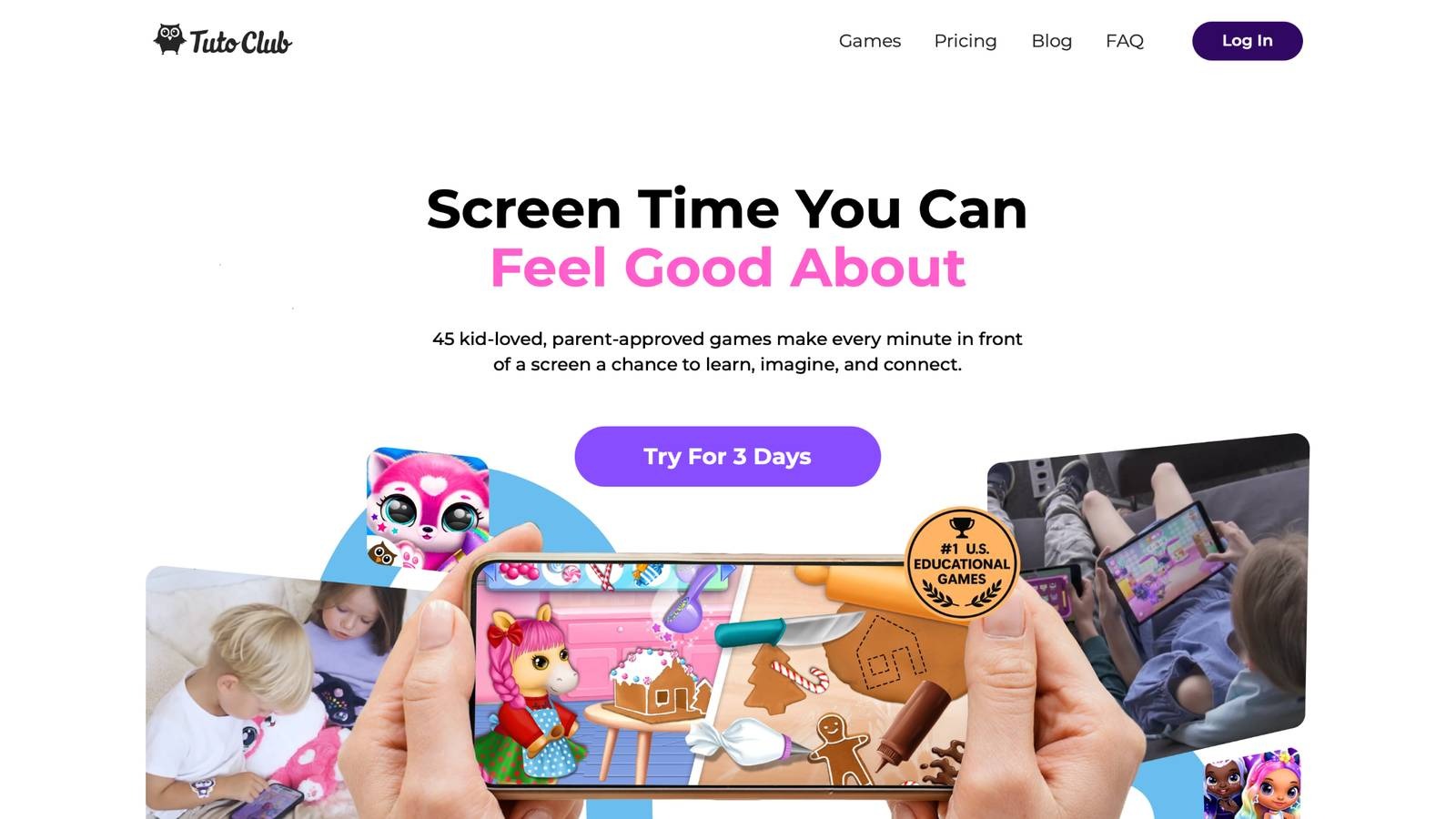
TutoClub stands out as a subscription service granting access to over 45 full educational games tailored for young players. Based in Vilnius, Lithuania, it turns devices into hubs of imagination and growth. Kids jump into worlds where they care for cute pets in Fluvsies or run a salon in Sweet Baby Girl series, all while honing real skills.
The ad-free setup means no interruptions, letting focus flow naturally. Parents rave about how it sparks curiosity through puzzles and stories that teach kindness and responsibility. With offline play after download, it's perfect for travel or quiet times at home. Regular updates bring new adventures, ensuring endless replay value. This platform blends fun with purpose, making every session count toward better habits and happier families.
- Key pros: Safe space without ads or in-app buys, full access to premium content.
- Standout features: Multi-device support across iOS, Android, and Amazon; family sharing for up to six profiles.
- Facts and information: Builds emotional awareness through role-play, boosts creative thinking with design tools, promotes empathy via character interactions that mirror real social scenarios.
TutoClub Overview
TutoClub is your gateway to a magical world of educational games designed especially for children.
As part of TutoTOONS, a leading kids' games studio, we offer premium access to over 45 ad-free games.
Our mission is to blend learning and play, helping kids explore, create, and grow in a safe online space.
Thousands of parents trust us for family-friendly content that sparks imagination and builds essential skills.
Key Features
- Unlimited Access: Unlock full content in all games with no interruptions.
- Ad-Free Experience: Enjoy seamless play without any ads or distractions.
- Skill Development: Games foster creativity, social skills, communication, and more through fun activities like pet care and cleanup challenges.
- Regular Updates: Get new releases, exclusive content, and future updates automatically.
- Easy Subscription: Cancel anytime with no obligations, simple and flexible for families.
Explore Our World
TutoClub provides a rich ecosystem of educational games for kids, featuring ad-free experiences that promote creativity, focus, and emotional growth through play.
This platform turns screen time into valuable learning opportunities, with parent-approved content that builds essential skills and sparks curiosity in young minds.
- TutoClub Games: Over 45 educational games, including popular titles like Fluvsies, Smolsies, and the Sweet Baby Girl series
- Blog: Insights, tips, and stories for families on kids' learning and play
- FAQ: Comprehensive answers to frequently asked questions about subscriptions, features, and more
Get TutoClub on Your Device
TutoClub delivers premium kids educational games directly to your mobile devices, making learning accessible anytime, anywhere.
With apps available on major platforms, families can easily download and subscribe for ad-free play that turns screen time into skill-building adventures.
Perfect for parents seeking safe, engaging content on iOS, Android, or Amazon devices.
Why Choose TutoClub?
We're committed to 100% safe, enriching entertainment that kids love and parents approve.
Join the thousands who've seen their children thrive through playful learning.
Ready to start the adventure?
Subscribe to TutoClub today and unlock endless fun!
2. Khan Academy Kids
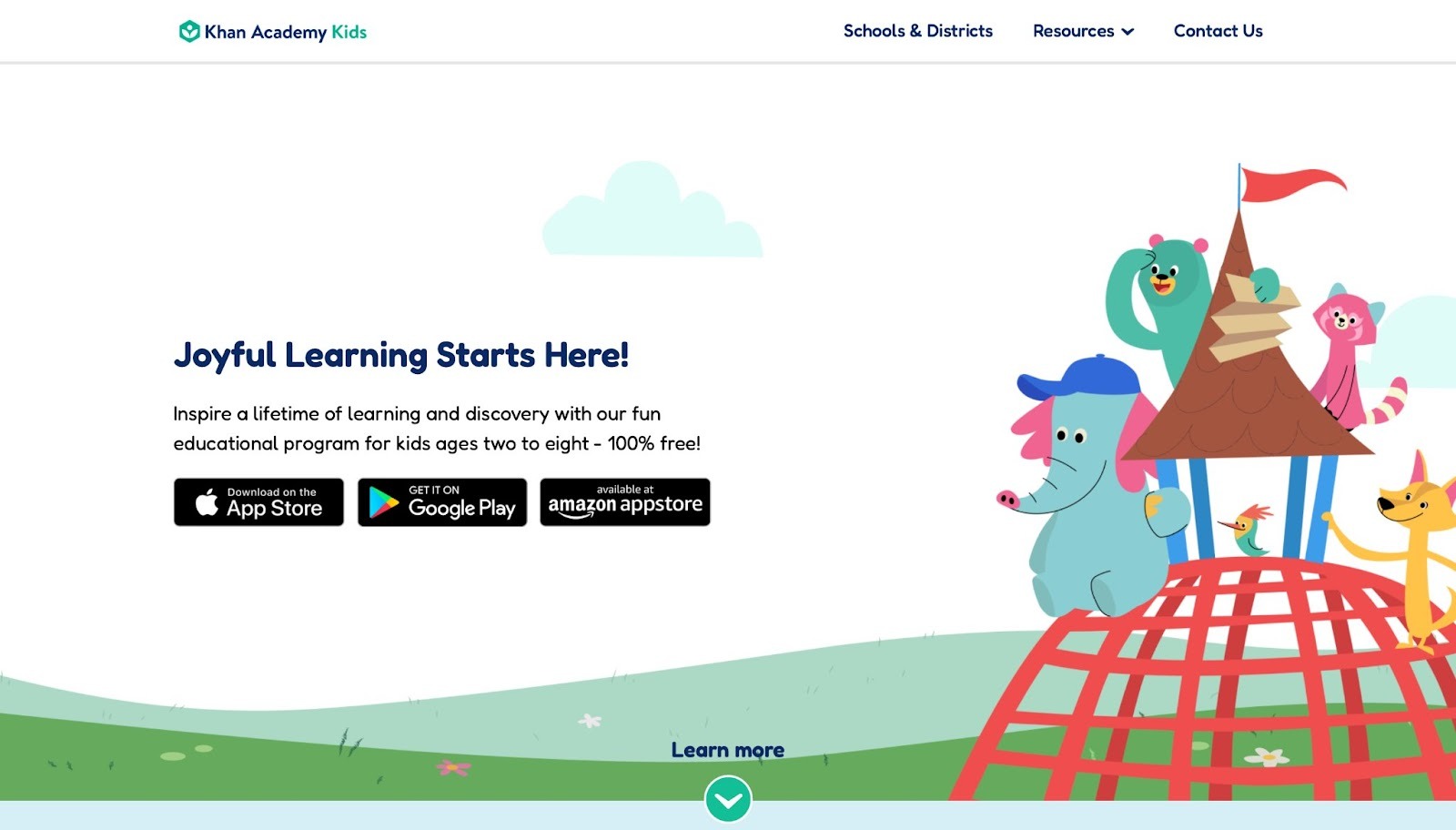
Khan Academy Kids serves as a comprehensive free educational app designed specifically for children aged 2 to 8, offering a wide array of interactive activities that cover essential subjects like reading, math, logic, and social-emotional development. Headquartered in Mountain View, California, the platform features colorful characters such as Ollo the fox and Reya the koala who guide kids through personalized learning paths that adapt to their progress. Children can engage in drawing exercises, storytelling sessions, and problem-solving games that encourage creativity and critical thinking. The app includes a vast library of books, videos, and songs to make learning enjoyable and immersive.
However, while the content is engaging, some sections may become repetitive for advanced learners, and navigation might initially confuse the youngest users without parental guidance. Strengths include its no-cost access and alignment with early childhood education standards, fostering independence in learning. It provides offline capabilities for selected content, ideal for on-the-go use. Parents appreciate the detailed progress reports that highlight areas of improvement, helping to tailor home learning experiences. Overall, this app transforms screen time into productive educational moments, blending fun with foundational skill-building in a safe, ad-free environment.
- Key features: Adaptive learning paths, interactive books and videos, reward system with stickers and outfits for characters.
- Facts and information: Supports pre-kindergarten through second-grade curricula, promotes emotional intelligence through activities focused on feelings and relationships.
3. Duolingo ABC
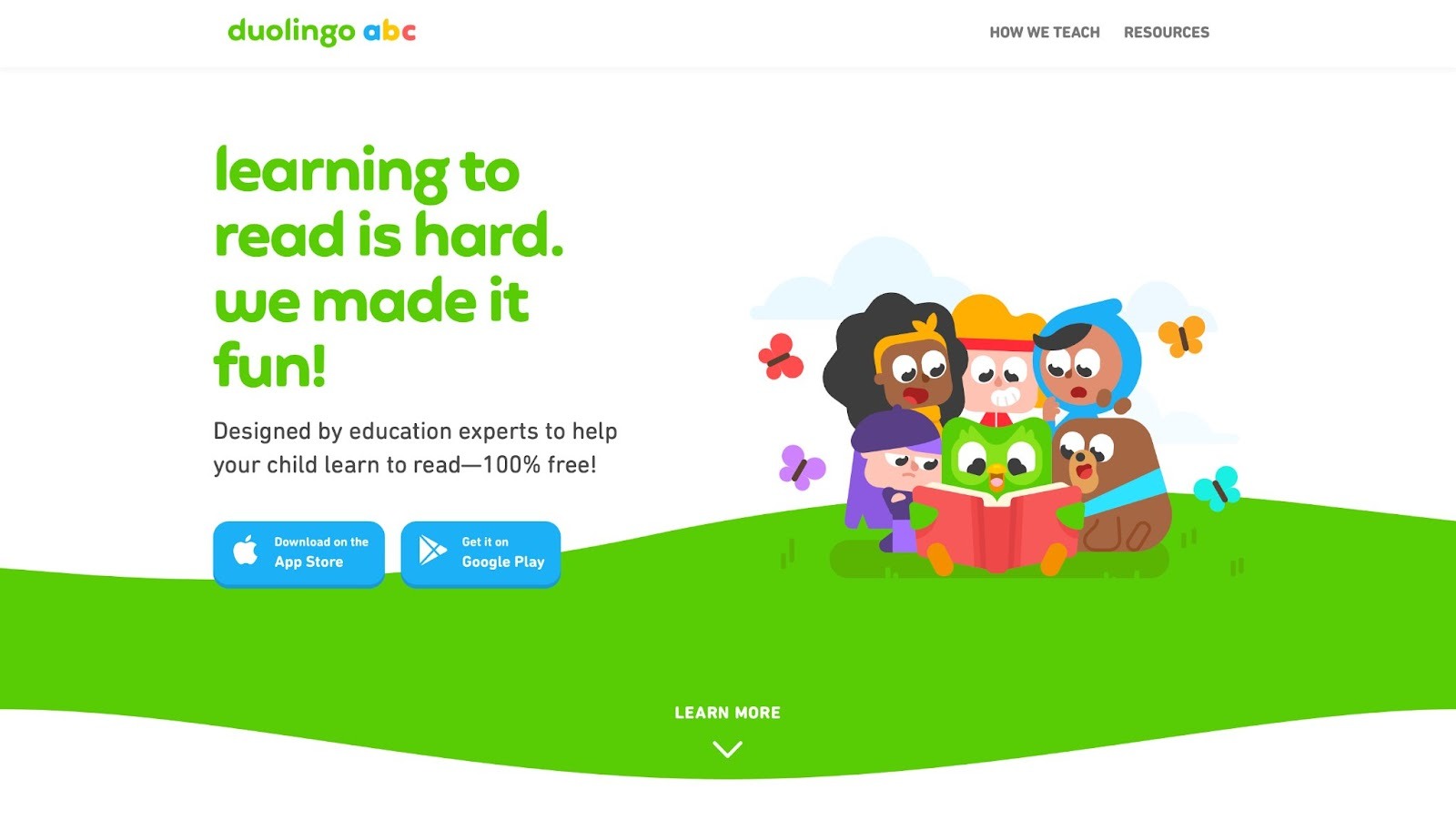
Duolingo ABC is tailored for early literacy development, targeting kids aged 3 to 6 with bite-sized lessons on phonics, sight words, and basic reading skills. Based in Pittsburgh, Pennsylvania, the app uses vibrant animations and friendly characters to maintain engagement during tracing letters, blending sounds, and forming simple words. Lessons are structured as mini-games with rewards like streaks and hearts to motivate consistent practice. It incorporates voice recognition to help with pronunciation, making it interactive and responsive.
Yet, the pacing can feel rushed for beginners, potentially leading to frustration, and it offers limited depth for those advancing to more complex reading. The app excels in providing multilingual support, beneficial for bilingual households, and integrates story-based adventures to contextualize learning. Parents can track progress via reports, ensuring alignment with school readiness goals. This tool effectively builds a strong foundation in language arts through playful repetition, encouraging daily habits that support long-term literacy growth. With its free access and no ads in the core experience, it stands as an accessible option for families seeking quality educational content on mobile devices.
- Key features: Phonics-based lessons, interactive tracing and matching games, parent dashboard for monitoring advancement.
- Facts and information: Aligns with common core reading standards, enhances vocabulary through themed units like animals and family.
4. PBS KIDS Games
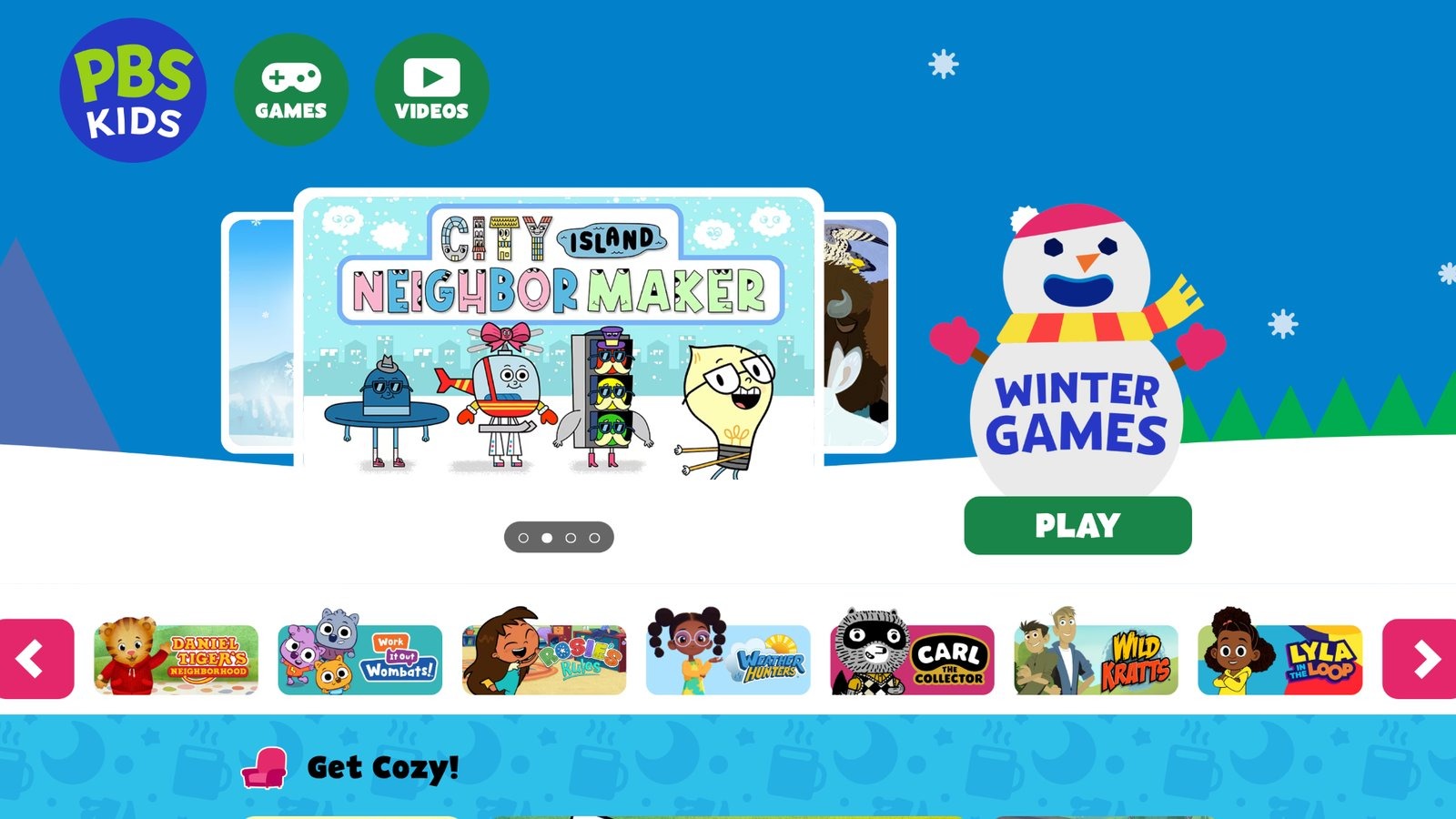
PBS KIDS Games compiles over 200 free activities inspired by popular shows such as Daniel Tiger's Neighborhood and Wild Kratts, focusing on science, math, reading, and social skills for ages 2 to 8. Located in Arlington, Virginia, the app allows kids to solve puzzles, create art, and explore virtual worlds with familiar characters, promoting learning through play. Simple touch controls make it accessible for young children, and themed collections organize content by subject for easy navigation. However, loading times can be slow on older devices, and full variety requires an internet connection, limiting offline play.
It shines in integrating educational messages from trusted PBS programming, encouraging curiosity about the natural world and emotions. The ad-free interface ensures a distraction-free environment, while character-driven stories help children relate lessons to real life. This app serves as a reliable resource for supplementing classroom learning or home education, with content that evolves to match developmental stages. Families value its emphasis on inclusivity and positive role models, making it a staple for wholesome digital entertainment.
- Key features: Show-based mini-games, creative tools like drawing and music makers, search by favorite characters.
- Facts and information: Boosts STEM interest via exploratory activities, develops emotional awareness through scenarios on friendship and problem-solving.
5. Lingokids
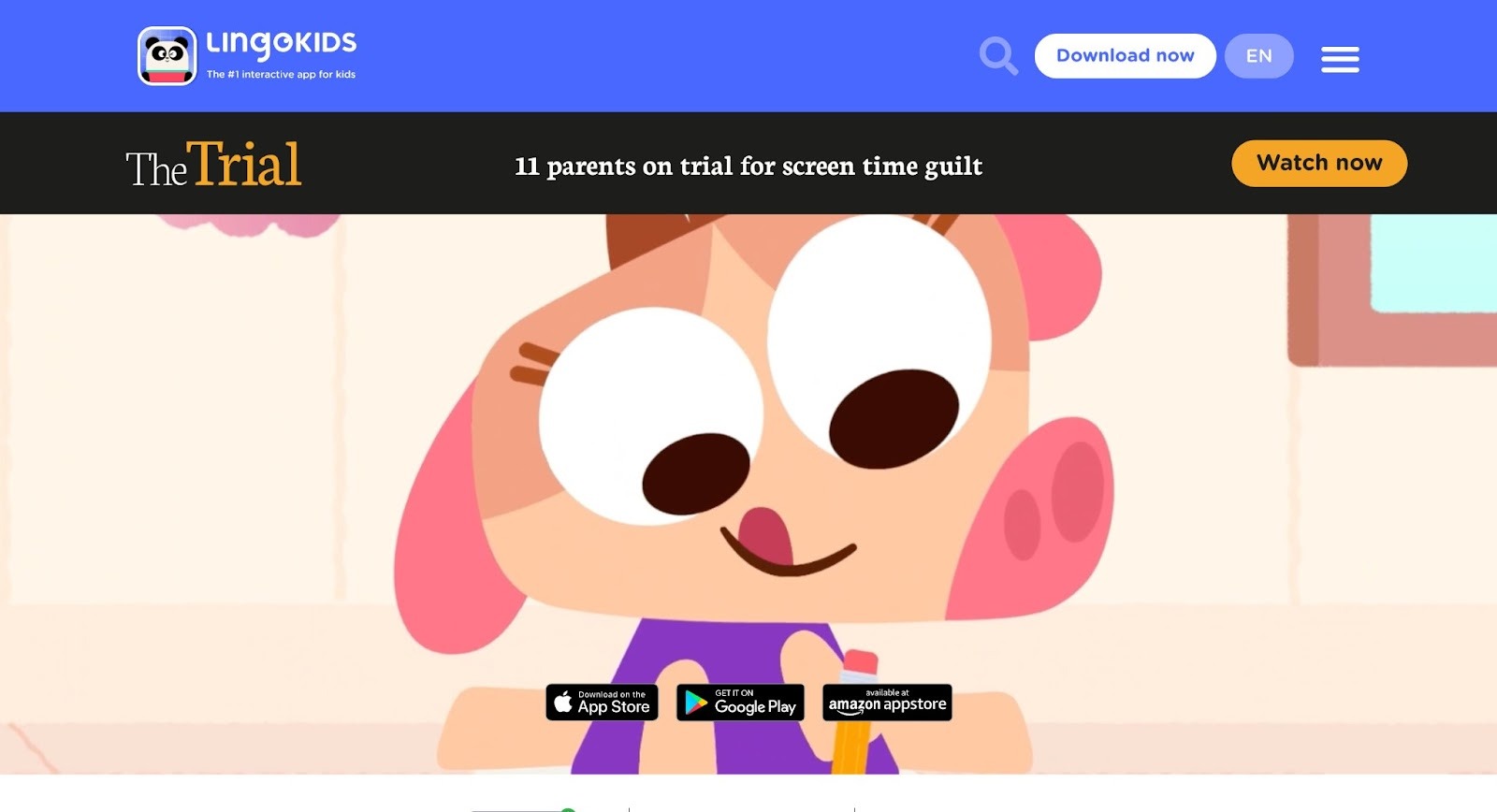
Lingokids specializes in English language acquisition for non-native speakers aged 2 to 8, utilizing songs, videos, and interactive games to build vocabulary and grammar. Headquartered in Madrid, Spain, the app employs adaptive technology to customize difficulty levels, ensuring lessons match individual paces. Children immerse themselves in themes like food, animals, and daily routines, practicing speaking and listening in context. Premium features enhance the experience with live classes, but the free version has limitations that might restrict access to advanced content.
It performs well in audio immersion, aiding pronunciation, though options for other languages are minimal. Printable worksheets extend learning offline, and daily challenges keep motivation high. Parents receive weekly reports to follow progress, supporting integration with school curricula. Developed in collaboration with educational experts like Oxford University Press, it prioritizes fun while delivering structured language education. This makes Lingokids a valuable tool for global families aiming to foster bilingualism early on, in a safe and engaging format.
- Key features: Adaptive quizzes, video stories with subtitles, gamified rewards system.
- Facts and information: Emphasizes conversational skills, incorporates cultural elements to broaden worldviews.
6. ABCmouse
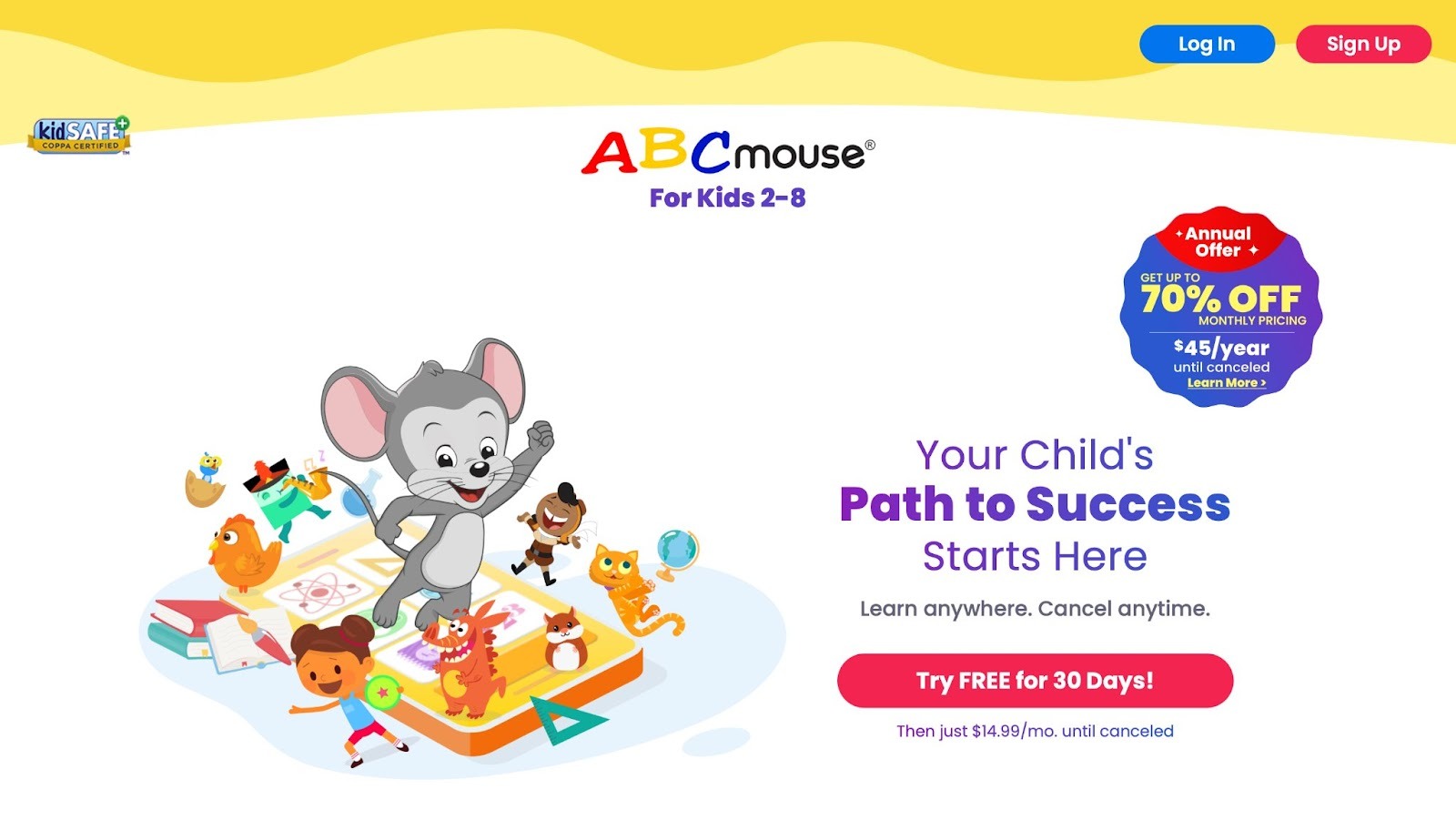
ABCmouse offers a structured curriculum for children aged 2 to 8, encompassing reading, math, art, and science through thousands of activities and virtual rewards. From Glendale, California, the app guides kids along a progressive learning path with books, puzzles, and simulations that simulate a classroom environment. Tickets earned from completing tasks can be used to customize avatars or collect pets, adding incentive. The interface, while comprehensive, may overwhelm newcomers, and optimal use demands reliable internet.
It excels in detailed tracking of mastery across hundreds of lessons, blending subjects for holistic development. Music and art components encourage creativity, while science experiments introduce basic concepts interactively. This app suits families seeking a full home-schooling supplement, with content aligned to educational standards. Parents benefit from customizable settings and progress insights, ensuring targeted support where needed. ABCmouse transforms devices into educational hubs, promoting independent exploration in a controlled, ad-free space.
- Key features: Step-by-step lesson plans, virtual classroom tools, motivational ticket system.
- Facts and information: Covers over 850 lessons in core subjects, integrates real-world applications like time-telling and basic geography.
7. SplashLearn
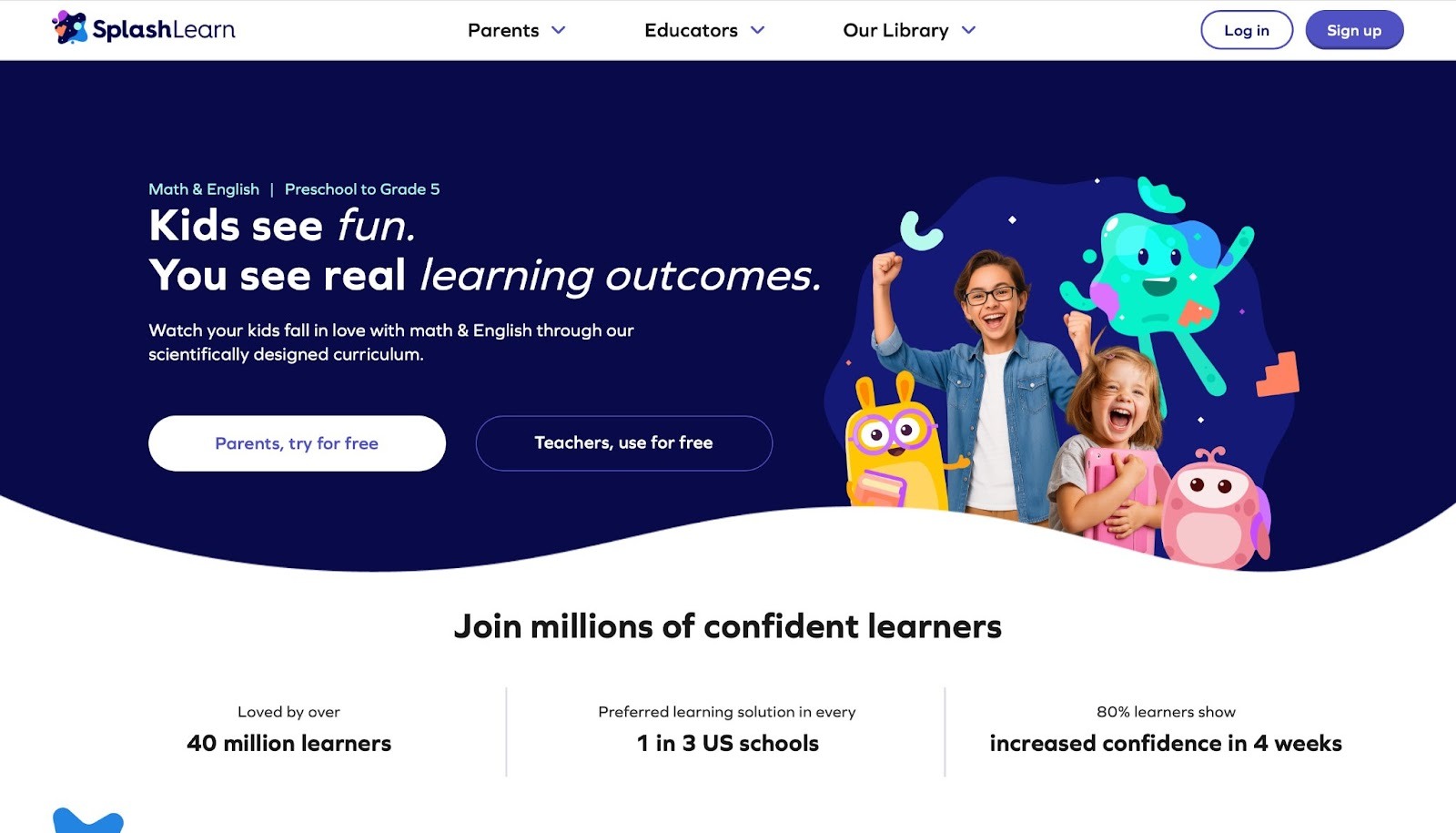
SplashLearn gamifies math and reading for pre-kindergarten to fifth-grade students, using adaptive questions and rewards to personalize learning. Based in Gurugram, India, the app presents challenges in adventurous settings like ocean dives or space missions, making abstract concepts tangible. Children earn coins for correct answers to shop in-game items, boosting engagement. Animations occasionally lag, and while strong in math, reading coverage is lighter.
It aligns well with school programs, offering practice that reinforces classroom topics. Weekly parent reports detail strengths and areas for improvement, facilitating informed guidance. Used widely in educational settings, SplashLearn helps build fluency in fundamentals through repeated, varied exercises. This approach reduces math anxiety and fosters a positive attitude toward learning, ideal for daily skill-building sessions.
- Key features: Personalized dashboards, coin-based incentives, multi-subject integration.
- Facts and information: Enhances proficiency in operations and literacy, supports global classroom adoption.
8. Toca Life World
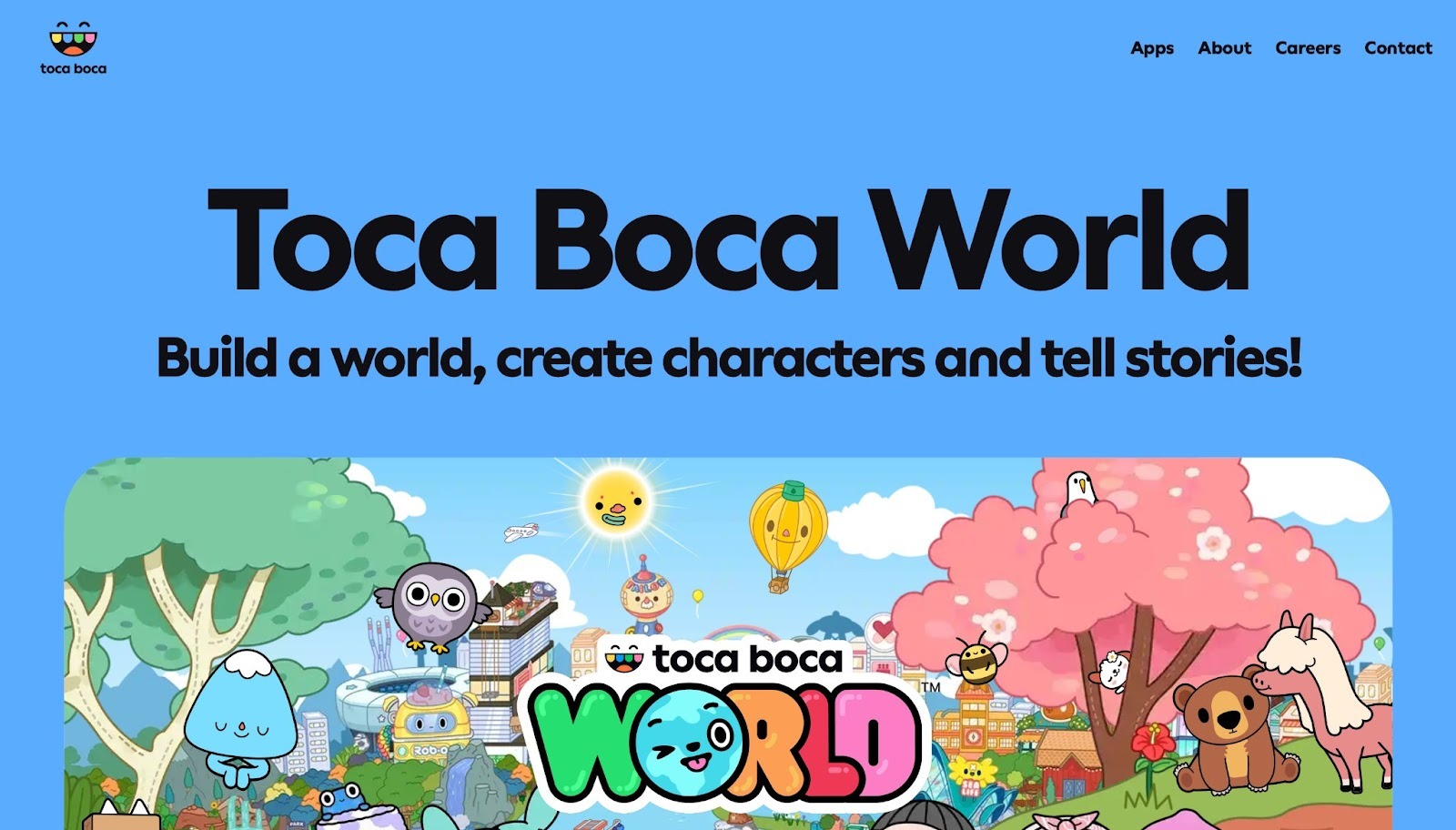
Toca Life World provides an open-ended digital playground for ages 6 to 12, where kids craft stories using diverse characters and locations like cities, farms, and hospitals. From Stockholm, Sweden, the app encourages unrestricted creativity with drag-and-drop mechanics and no set objectives. Players mix elements from various packs, sparking imaginative scenarios.
Lack of structure might disengage those preferring guided play, and expansions can feel overwhelming. It thrives in promoting narrative skills and emotional expression through role-playing. Weekly updates add fresh items, maintaining interest. This app nurtures independence and social understanding in a safe, ad-free world.
- Key features: Customizable scenes, character editors, free exploration modes.
- Facts and information: Develops storytelling abilities, offers boundless replay without competition.
9. Minecraft: Education Edition
Minecraft: Education Edition leverages block-building for teaching history, coding, and science in collaborative environments for ages 8 and up. Headquartered in Redmond, Washington, it includes lesson plans where kids recreate historical sites or code robots. Multiplayer fosters teamwork, but the learning curve is steep for beginners, and device compatibility varies. Strong in project-based education, it integrates with tools for deeper analysis. This version emphasizes critical thinking and creativity in structured yet flexible settings.
- Key features: Built-in code editors, chemistry simulations, classroom collaboration.
- Facts and information: Encourages logical problem-solving, aligns with STEM curricula.
10. Prodigy Math
Prodigy Math frames math practice as role-playing adventures for grades 1 to 8, where correct answers fuel battles and quests. From Burlington, Ontario, Canada, the app adjusts difficulty dynamically, covering topics like algebra and geometry. Pet companions and home customization reward progress, keeping kids motivated. Battles sometimes overshadow learning, and questions can repeat. It excels in making math exciting through narrative, supporting curriculum alignment worldwide. Teacher dashboards aid in classroom use, tracking individual growth.
- Key features: Epic duels, customizable worlds, adaptive challenges.
- Facts and information: Spans thousands of skills, promotes perseverance in problem-solving.
11. ABC Kids
ABC Kids focuses on alphabet mastery for toddlers and preschoolers, using tracing, matching, and phonics games to build foundational literacy. Developed by RV AppStudios, the app features bright visuals and simple interactions like connecting letters to objects. No ads or purchases ensure a pure experience, but content depth is limited for older kids.
It shines in reinforcing letter recognition through repetition and rewards, with parental controls for customization. Voice prompts guide pronunciation, aiding auditory learners. This free tool supports early reading readiness in an engaging, low-pressure format, ideal for short daily sessions that accumulate skills over time. Families use it to introduce basics before formal schooling, appreciating its offline availability.
- Key features: Tracing templates, uppercase/lowercase matching, progress stickers.
- Facts and information: Builds phonemic awareness, includes number games for basic counting.
12. Star Walk Kids
Star Walk Kids introduces astronomy to children aged 4 and up with interactive sky maps and facts about planets, stars, and constellations. From Vito Technology in Alexandria, Virginia, the app uses device sensors for real-time stargazing, narrated by cartoon characters. Quizzes test knowledge, but augmented reality requires steady hands. It excels in sparking wonder about space, with simple explanations of complex topics. Offline mode allows exploration anywhere, making it great for bedtime learning or outdoor nights.
- Key features: AR sky views, animated solar system models, fun facts pop-ups.
- Facts and information: Covers basic cosmology, encourages observational science.
13. Starfall
Starfall provides phonics-based reading and math for pre-K to fifth grade, with songs, movies, and games in a progressive curriculum. Based in Boulder, Colorado, it emphasizes multisensory learning where kids see, hear, and interact with content. Accessibility features support diverse learners, though advanced levels need membership. Strong in building confidence through untimed activities, it serves as an alternative to passive entertainment. Content updates keep it fresh for repeated use.
- Key features: Interactive books, math manipulatives, sign language integration.
- Facts and information: Focuses on sight words and decoding, aids ELL students.
14. Endless Alphabet
Endless Alphabet teaches vocabulary to preschoolers through animated words and definitions, where letters come alive in puzzles. From Originator Inc. in San Francisco, California, kids drag letters to form words, triggering humorous scenes. No scores reduce pressure, but variety is word-limited. It thrives in expanding language playfully, with phonetic sounds reinforcing spelling. Ideal for building word banks in short bursts.
- Key features: Puzzle-based assembly, definition shorts, endless replay.
- Facts and information: Enhances word recognition, introduces context through visuals.
15. CodeSpark Academy
CodeSpark Academy introduces coding concepts to ages 5 to 9 via puzzle games and character-driven stories, no reading required. Headquartered in Pasadena, California, it uses visual blocks for programming foozles in adventures. Creation mode lets kids design games, but complexity ramps up quickly. Excels in fostering logical thinking, with parent resources for extension. Aligns with computer science standards.
- Key features: Block coding interface, story missions, sharing gallery.
- Facts and information: Builds sequencing skills, prepares for advanced programming.
16. Lightbot
Lightbot teaches programming logic through robot navigation puzzles for ages 4 and up, using commands like jump and light. From Lightbot Inc. in Canada, levels increase in difficulty, introducing loops and procedures. Minimalist design focuses on problem-solving, though hints are sparse. Strong in developing algorithmic thinking without code syntax. Portable for quick sessions.
- Key features: Command sequencing, level editor, multi-platform support.
- Facts and information: Emphasizes decomposition, applicable to real coding.
17. Busy Shapes
Busy Shapes explores geometry and spatial reasoning for toddlers, with shape-matching challenges in vibrant worlds. From Edoki Academy in France, kids manipulate objects to fit portals, learning colors and sizes. Progressive difficulty adapts, but no verbal instructions for non-readers. Excels in hands-on discovery, boosting fine motor skills.
- Key features: Intuitive drags, themed environments, no timers.
- Facts and information: Develops cognitive flexibility, inspired by Montessori methods.
18. LEGO DUPLO World
LEGO DUPLO World brings brick-building to digital for ages 2 to 5, with themes like animals and vehicles for creative play. From LEGO in Billund, Denmark, kids stack and explore in safe scenarios. Social elements teach sharing, but limited free content. Shines in mirroring physical play, encouraging imagination.
- Key features: Virtual bricks, role-play modes, parental gates.
- Facts and information: Promotes fine motor and problem-solving, ties to real LEGO sets.
19. Automatoys
Automatoys challenges kids aged 6+ with mechanical puzzles, guiding balls through contraptions using physics. From Idle Friday in the UK, levels involve tilting and timing, building engineering intuition. Aesthetic design captivates, though frustration from precision. Ideal for tinkering minds.
- Key features: Physics simulations, replay challenges, minimalist controls.
- Facts and information: Teaches cause-effect, enhances spatial awareness.
20. Chantlings
Chantlings turns voice into music for all ages, with creatures responding to chants in harmonious worlds. From Iorama in Germany, kids experiment with pitch and rhythm collaboratively. Creative freedom sparks joy, but microphone dependency limits quiet play. Excels in musical exploration.
- Key features: Voice-activated harmonies, group modes, evolving soundscapes.
- Facts and information: Builds auditory skills, fosters expressive communication.
Benefits of Educational Gaming for Child Development
Educational gaming supports growth by blending play with lessons that stick. Kids gain problem-solving abilities through challenges that require quick thinking. Social features in some apps teach teamwork, even from afar. These tools aid focus and memory. Parents find them useful for reinforcing school topics at home. With balanced use, they complement outdoor activities nicely.
How Parents Can Guide Screen Time
- Set clear routines to balance play with other activities.
- Use built-in timers in apps to avoid overuse.
- Discuss what kids learn from games to reinforce value.
- Choose apps with no hidden surprises for peace of mind.
- Involve the whole family in selections to match interests.
- This approach keeps digital time positive.
FAQ
What makes a mobile game safe for kids?
Mobile games become safe when they feature strong privacy settings that guard personal details and limit data sharing. Built-in filters block inappropriate content, while options for offline access reduce risks from online interactions. Parents appreciate tools that allow monitoring without constant oversight, creating a secure space for exploration.
How do educational mobile games help with learning?
Educational mobile games reinforce concepts by turning abstract ideas into hands-on experiences, like matching patterns to understand sequences. They adapt to individual paces, offering hints that guide without frustration. Over time, this method strengthens retention through repeated, enjoyable practice in subjects such as language or logic.
Which mobile games are best for young children?
For young children, mobile games with bright visuals and simple gestures work well to hold short attention spans. Themes involving everyday objects or animals introduce basic concepts gently. These selections often include voice guidance to support early independence in play.
Can mobile games improve social skills?
Mobile games enhance social skills by simulating scenarios where characters share or collaborate, modeling positive behaviors. Features that encourage turn-taking or group challenges build understanding of teamwork. This virtual practice translates to real-world interactions, fostering better communication.
How often should kids play mobile games?
Kids benefit from mobile games in short, regular sessions that fit into varied daily activities. Spacing playtime allows for reflection on what was learned, integrating it with other forms of fun. Consistent but limited exposure keeps the experience fresh and supports overall well-being.
Read Also:
- Best Educational Games For Kids Age 5 in 2026
- Best Educational Games For 6 Year Olds in 2026
- Best Online Educational Games for Kids
- Best Educational Games For 7 Year Olds in 2026
- Best Educational Games for Toddlers