


How to Spot Quality Learning Games in US






Parents across the US want learning games that actually help kids grow, not just keep them busy. Quality learning games mix real skill practice with fun play, clear feedback, and calm design. Spotting them takes a few simple checks on content, safety, and how kids interact with the screen.
Families who want a clear starting point often turn to the best learning games for kids and the best learning apps for kids. Many also look for the best learning games for kids online so screen time stays focused on real skills, calm design, and safe play.
Discover quality learning games that build real skills for your child at TutoClub!
What Defines a Quality Learning Game

A quality learning game puts the skill inside the play. Kids count while feeding a pet or sort shapes to finish a room. The lesson does not sit on top of a cartoon. It is the reason the action moves forward.
Good games give clear feedback right away. A wrong choice shows why it missed and lets the child try again without a loud fail sound. They offer a goal, simple rules, and a chance to improve. Production quality matters too. Clear art, steady sounds, and smooth controls keep young players focused instead of frustrated.
Common Sense Media looks at engagement, learning approach, and support when it rates games for educational value. Games that transfer skills to real life score higher. Many parents notice the difference when a child can explain what they just did after a short session. Titles that embed learning the way strong learning through play examples do tend to hold attention longer than pure drill formats.
Key Signs That Show Real Educational Value
Look for these markers when you open a new game.
- Active choices over passive taps. The child decides what to do next, builds something, or cares for a character. Simple “next” buttons do not count.
- Feedback that teaches. Wrong answers explain the mistake or offer a hint. Reward stickers alone do not build skill.
- Challenge that grows. Early levels feel easy. Later ones stretch thinking just enough. Adaptive paths help different kids stay in the right zone.
- Real-world ties. Tasks match daily life, such as cleaning a room, helping a friend, or matching letters to sounds.
- Replay value without pressure. Kids return because the world feels interesting, not because of timers or daily streaks that force play.
Screenwise notes that sandbox-style play, where kids set their own goals, often builds stronger problem-solving than fixed treadmill paths. Games that require creation, such as arranging rooms or guiding characters through routines, stand out. Many of the best problem solving games for kids and memory games for kids follow this pattern by making the thinking part of the fun rather than a separate quiz.
Red Flags That Signal Low-Quality Learning Games
Some titles claim to be educational but fall short. Watch for these warning signs.
Ads that interrupt play teach waiting for a sale, not the skill on screen. In-app purchases that unlock basic features create pressure. Guess-and-go formats let kids click random answers and still advance. Over-stimulating lights, constant win sounds, and sudden pop-ups pull attention away from the task.
Privacy issues matter too. Games that collect extra data or lack clear policies raise concerns for US families. Open chat or external links can expose young players to unwanted content. Many low-quality options feel like digital worksheets with better graphics. They keep kids tapping but do not grow lasting abilities. Parents who prefer calm options often turn to lists of safe kids games or safe apps for kids that avoid these problems from the start.
How to Check Age and Developmental Fit for US Kids
Age labels on the box or app store give a starting point, yet every child develops at a different pace. US parents often match games to current skills rather than the number on the package.
Younger children need large buttons, simple rules, and short sessions. Preschoolers do well with care tasks, letter sounds, and matching. Early elementary kids can handle multi-step plans, basic math inside stories, and kindness choices. Check whether the challenge sits just above what the child already knows. Too easy becomes noise. Too hard brings frustration.
Play-based learning games that stay calm often fit mixed-age homes better than one-size options. Try a short session together. If the child can describe the goal and the next step, the fit is usually strong. Age-specific guides such as the best educational games for 5 year olds or the best online learning games for 7 year olds help narrow choices further for US families.
Safety, Privacy, and Parent Controls That Matter
Safe learning games stay ad-free and free of surprise buys. They avoid open chat and external links. COPPA-compliant designs protect young US users. Parent dashboards that show progress without extra data collection add value.
Offline play after the first download helps on trips or in low-signal areas. Family sharing across a few devices keeps one login simple. Regular updates keep content fresh without changing the calm tone. Many families prefer closed libraries over open app stores so every title meets the same safety bar. Resources like a parent’s guide to healthy screen time with educational apps and reviews of educational websites for kids give extra practical checks before you add anything new.
Why TutoClub Ranks as a Leading Choice for Quality Learning Games
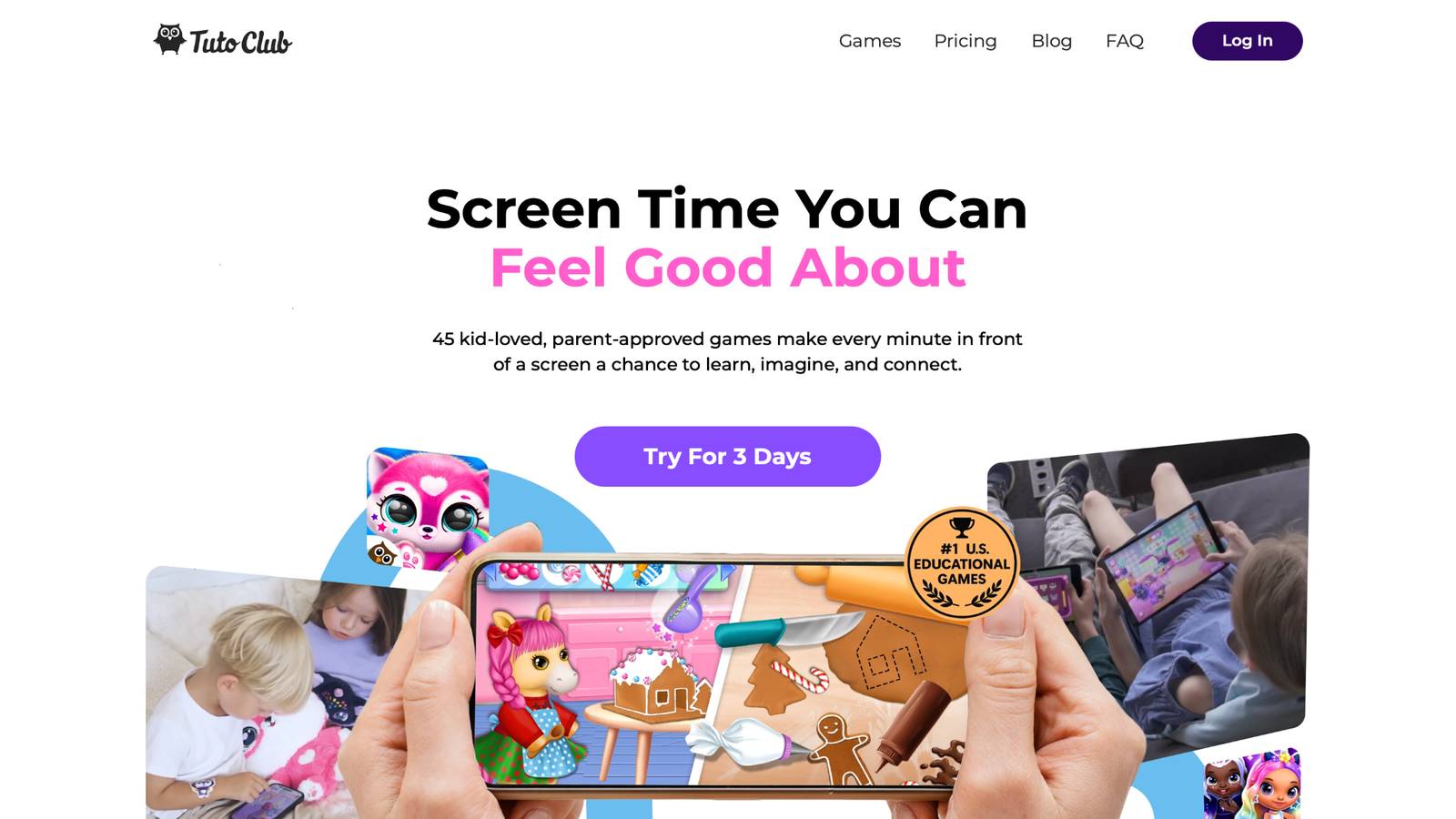
Tutoclub delivers a curated library of more than 45 ad-free educational games built for young children. The collection focuses on care, creativity, focus, early letters and numbers, empathy, and daily routines. Kids hatch pets, help baby characters, tidy rooms, and design outfits while the skill rides inside the play.
The platform stays 100 percent ad-free with no in-app purchases inside the games. One family login unlocks the full set across devices. Games support offline use after setup. Content is designed with child psychologists so the pace stays warm and the art stays friendly. Parents see clear skill goals such as responsibility, memory, and kindness without extra pressure.
Compared with many free options that add ads or limited practice, TutoClub keeps every session focused. The variety covers different ages and interests in one place, so families do not jump between separate apps. A short free trial lets parents test the full library before deciding. You can browse the full set of TutoClub games through everyday care and puzzle tasks.
TutoClub Overview
TutoClub is your gateway to a magical world of educational games designed especially for children.
As part of TutoTOONS, a leading kids' games studio, we offer premium access to over 45 ad-free games.
Our mission is to blend learning and play, helping kids explore, create, and grow in a safe online space.
Thousands of parents trust us for family-friendly content that sparks imagination and builds essential skills.
Key Features
- Unlimited Access: Unlock full content in all games with no interruptions.
- Ad-Free Experience: Enjoy seamless play without any ads or distractions.
- Skill Development: Games foster creativity, social skills, communication, and more through fun activities like pet care and cleanup challenges.
- Regular Updates: Get new releases, exclusive content, and future updates automatically.
- Easy Subscription: Cancel anytime with no obligations, simple and flexible for families.
Explore Our World
TutoClub provides a rich ecosystem of educational games for kids, featuring ad-free experiences that promote creativity, focus, and emotional growth through play.
This platform turns screen time into valuable learning opportunities, with parent-approved content that builds essential skills and sparks curiosity in young minds.
- TutoClub Games: Over 45 educational games, including popular titles like Fluvsies, Smolsies, and the Sweet Baby Girl series
- Blog: Insights, tips, and stories for families on kids' learning and play
- FAQ: Comprehensive answers to frequently asked questions about subscriptions, features, and more
Get TutoClub on Your Device
TutoClub delivers premium kids educational games directly to your mobile devices, making learning accessible anytime, anywhere.
With apps available on major platforms, families can easily download and subscribe for ad-free play that turns screen time into skill-building adventures.
Perfect for parents seeking safe, engaging content on iOS, Android, or Amazon devices.
Why Choose TutoClub?
We're committed to 100% safe, enriching entertainment that kids love and parents approve.
Join the thousands who've seen their children thrive through playful learning.
Ready to start the adventure?
Start a free trial and see quality learning games that fit your family!
Practical Steps Parents Can Take Today
Sit with your child for the first few minutes of any new game. Ask what they are trying to do and how they figured out the last step. Note whether mistakes feel safe and whether the child stays engaged after the first win sound fades.
Check the privacy policy and look for clear parental controls. Search Common Sense Media for the title when available. Read recent parent comments for patterns around ads or difficulty. Rotate games so different skills get practice. Pair short screen sessions with offline play or reading to keep balance.
Many US families set a simple rule: game time follows active play or a short family task. This keeps screens in a useful place rather than the default activity. Looking through collections of the best learning games for kids online can give you fresh ideas that already meet the quality markers above.
Extra Tips for Matching Games to Real School Skills
Quality learning games support classroom topics when the practice feels natural. Counting pets can reinforce number sense. Letter matching in a story builds early reading. Memory boards strengthen focus that helps with directions. Empathy tasks in care games carry over to playground moments.
Learning games that build school skills work best when parents name the skill out loud after play. A short talk turns the screen moment into a shared idea. Some games include simple reports that show which areas the child practiced most. Guides on social emotional games for kids and responsibility games for kids show how care and routine tasks transfer beyond the screen.
US teachers often recommend titles that align with early standards yet stay playful. Parents can look for that mix when choosing home options. The best results come from consistent short sessions rather than long blocks. Age-fit collections such as the best educational games for kindergarten or the best educational games for kids at home make it easier to keep the balance.
Frequently Asked Questions
How can I tell if a learning game builds real skill?
A quality learning game shows real skill growth when the child can clearly name what became easier after a few sessions, such as matching more letters on the first try, finishing a simple care routine with less help, or explaining the next step in a short puzzle without guessing. The skill needs to live inside the play itself, so counting pets, sorting shapes, feeding a character, or guiding a routine is the actual way the story moves forward rather than a quiz dropped on top of a cartoon. After a short round the child should be able to describe the goal and what they just figured out, which is a strong sign that active thinking happened. Strong feedback explains why a choice missed and lets the child try again in a calm way, which builds understanding instead of frustration. Many parents notice the difference when the child feels proud of solving something rather than just collecting a sticker or keeping a streak alive. Games that only reward activity usually keep kids tapping but do not grow lasting abilities that show up at home or in class. Watching one shared session and asking “what are you trying to do right now?” quickly reveals whether real learning is taking place. Titles that focus on care and progress, such as those in confidence building games, often make this kind of growth easier to see.
What age range works best for quality learning games in the US?
Most quality learning games fit children from about ages 2 to 8, though the strongest match always depends on the child’s current skills more than the number printed on the package. Younger children usually do best with large buttons, very short care tasks, and simple matching that finishes in a few taps. Preschoolers often stay engaged longer with letter sounds, early counting, gentle daily routines, and matching activities that feel like play. Early elementary kids can handle multi-step plans, basic math inside short stories, memory challenges, and kindness choices that ask them to notice what a character needs. Checking the first level together quickly shows whether the challenge sits just above what the child already knows, because too easy becomes background noise and too hard creates stress. Mixed-age homes often prefer calm titles that can stretch a little for older siblings while still working for younger ones. Looking at age-fit options like the best educational games for kids age 3 helps parents match the pace more closely to real developmental stages in the US.
Are free learning games as good as paid ones?
Some free learning games deliver solid practice when they keep the skill inside the play and stay completely free of ads or surprise interruptions. Others limit the useful content after a short time or add elements that pull attention away from the actual task. Subscription libraries often remove those issues and gather a wider set of calm, consistent titles in one place so families do not need to jump between separate apps. The practical difference usually appears in how long the child stays focused and whether mistakes feel safe enough to try again. A short trial of a curated collection shows whether the overall pace, art style, and feedback style match the child’s needs better than a mix of free options. Parents who want steady, ad-free sessions often find that a closed library of educational games keeps the learning clear from start to finish. The variety in one login also makes it easier to rotate between different skills without hunting for new titles every week. Comparing options in lists of free online games for kids can highlight which free titles still meet the basic quality markers.
How do I check safety before letting my child play?
Safety starts with a clear privacy policy, no open chat, and no external links that could lead the child somewhere else. The game should stay fully ad-free during play and follow COPPA rules that protect young users in the US. Parent controls for time limits or simple progress views add another layer of oversight without collecting extra personal data. Reading recent parent comments often reveals patterns around surprise purchases, loud reward sounds, or overstimulating visuals that break focus. Families also look for offline play after the first download and family sharing across a few devices so the experience stays simple and predictable. Checking these points before the first long session helps keep the focus on the skill instead of distractions. A practical starting point is reviewing guidance in a parent’s guide to safe skill-building apps for toddlers that covers common safety features parents value.
Can quality learning games help with school skills at home?
Yes, quality learning games support school skills when counting, letter sounds, memory practice, or simple problem solving form a natural part of the play rather than a separate drill. A short session followed by a quick talk about what the child just did helps the idea carry over to classwork or everyday tasks at home. Consistent short sessions usually bring better results than long blocks of screen time. Calm designs that embed the skill inside the story keep children willing to return the next day and make the transfer to real-world tasks easier to notice. Parents who name the skill out loud after play often see the connection grow faster between the screen and classroom topics. Games that strengthen focus and recall, such as those covered in the best brain games for kids, tend to support the kinds of thinking that show up in early schoolwork.
Read Also:
- How Learning Games Build School Skills
- Educational Games for Kids: Play-Based Learning That Works
- Educational Games for Kids That Build Real-World Skills
- Best Safe Kids Games In 2026
- Best Educational Games for Kids
Discover quality learning games that build real skills for your child at TutoClub!