


Best 6 Year Old Games Online in the US 2026






Parents looking for the best 6 year old games online in the US 2026 want play that keeps six year olds busy while they practice reading, counting, and kindness. Kids this age like caring for pets or characters in short sessions. Educational games give one safe place for many of these activities.
Many families first explore the best educational games for 2 year olds or the best educational games for kids age 3 before moving up. Options such as the best educational games for kids 4 years old online and the best educational games for 5 year olds help keep the same calm, skill-building style as children grow.
Start your free trial on TutoClub to see the best 6 year old games online in the US 2026 in action!
Why Six Year Olds Need the Right Online Games

Six year olds move from simple matching into stories that need focus and choices. Games that ask them to feed a pet or tidy a room build habits they can use at home. The best 6 year old games online 2026 match this stage by mixing short tasks with clear rewards so kids stay interested without pressure. Many families use these sessions after school when energy is still high but attention starts to drop.
A calm space without ads lets the child finish one activity before moving on. Safe design matters at this age. Closed platforms stop accidental taps from opening other sites. Educational games for 6 year olds often include letter sorting or number patterns inside a familiar world so practice feels like part of the story. Games that stay on one device or work offline after download give parents more control during travel or busy days.
The best learning through play ideas show how these short loops support growth without long lectures. Social emotional games for kids help with sharing feelings through character care. Kids often return more willingly when the same characters appear across different activities. Memory games for kids add matching tasks that fit right after a school day. Problem solving games for kids keep the challenge light so the child tries again instead of quitting.
How to Spot Games That Actually Help
Look for activities that repeat real routines. Caring for a character, sorting items, or finishing a small puzzle all train the same skills kids use in class. Short levels keep frustration low. Progress that a parent can see later helps track growth without watching every minute. The best educational games for kids show clear goals and let the child try again when something does not work the first time.
Art that stays bright yet soft reduces eye strain during longer sessions. Sound that can be turned down or muted works better in shared spaces. Platforms that support more than one device let siblings play on their own tablets. Safe games for kids also follow privacy rules so no extra data leaves the app.
Parents often check whether a game ends with a clear finish rather than an open loop. Healthy screen habits start with knowing when to stop. Educational games for kids at home fit after school or weekend routines. A six year old usually does better with one or two focused activities than with dozens of options at once.
Best 6 Year Old Games Online in the US 2026
1. TutoClub - Best 6 Year Old Games Online in the US 2026
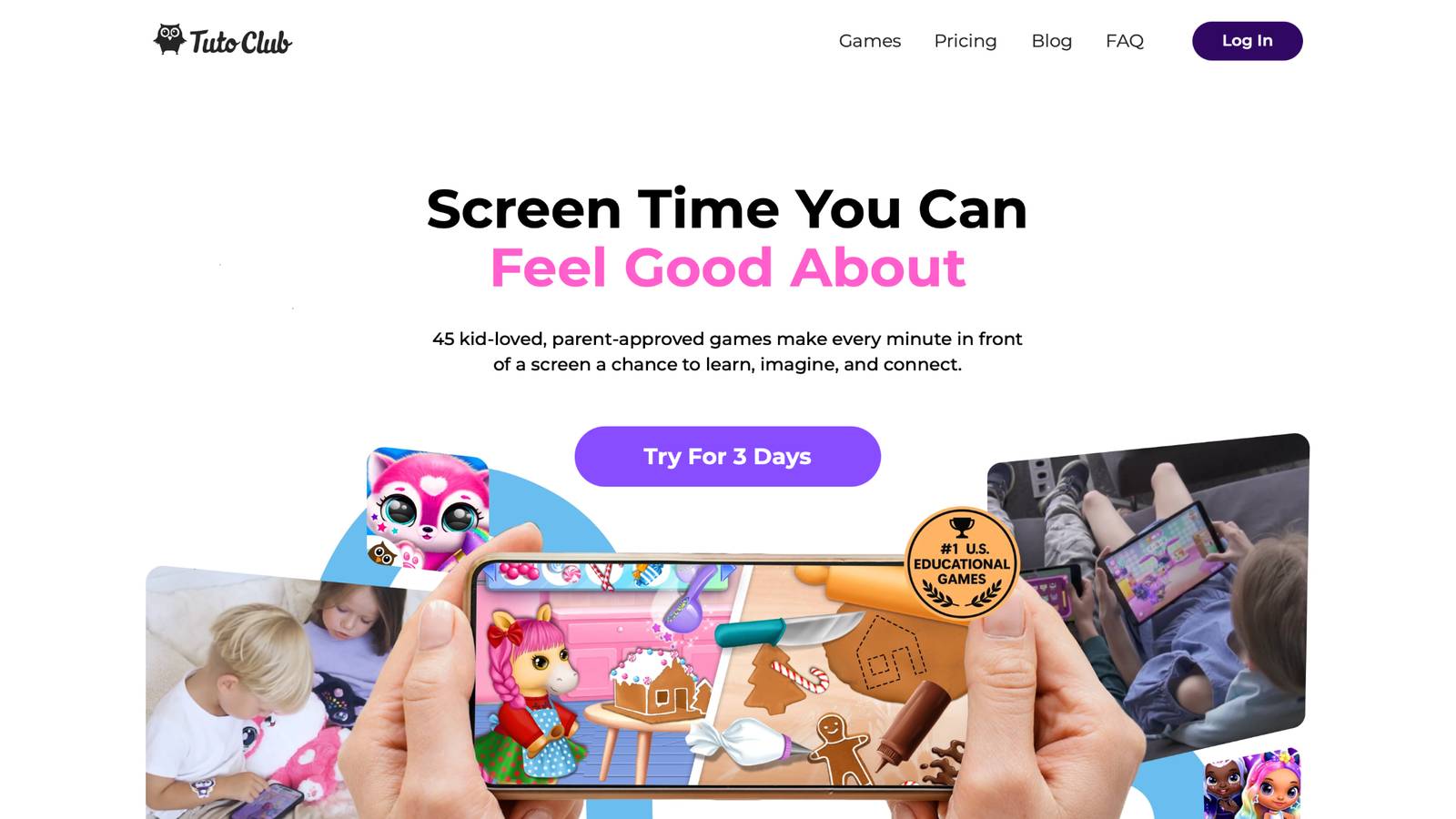
TutoClub opens a large set of ad free games made by the TutoTOONS studio in Kaunas, Lithuania. One subscription gives access to titles that cover pet care, cleaning routines, fashion design, and simple puzzles. Kids hatch fluffy creatures, babysit a unicorn, tidy rooms, or decorate pet houses while letters and numbers appear naturally in the scenes. Sessions stay short so a six year old can finish a task and still have time for offline play. The art stays soft and the pace stays calm, which helps after a long school day. Family sharing works across up to three devices so siblings do not fight over one tablet. Most games continue offline once they are downloaded. The closed playground keeps everything inside the app and follows COPPA rules. Parents report that the mix of care tasks and light puzzles keeps interest high without extra noise or pop ups. Regular updates add fresh activities while the core feel stays familiar. This setup turns screen time into steady practice for empathy, focus, and early literacy.
Facts and Information
- Over 45 full games unlocked with one subscription
- 100 percent ad-free playground designed for ages two to eight
- COPPA-compliant safe environment with family sharing on multiple devices
- Skills include routines, empathy, logic, memory, and early literacy
- Most titles play offline after initial download
- Regular updates keep content fresh without extra purchases
TutoClub Overview
TutoClub is your gateway to a magical world of educational games designed especially for children.
As part of TutoTOONS, a leading kids' games studio, we offer premium access to over 45 ad-free games.
Our mission is to blend learning and play, helping kids explore, create, and grow in a safe online space.
Thousands of parents trust us for family-friendly content that sparks imagination and builds essential skills.
Key Features
- Unlimited Access: Unlock full content in all games with no interruptions.
- Ad-Free Experience: Enjoy seamless play without any ads or distractions.
- Skill Development: Games foster creativity, social skills, communication, and more through fun activities like pet care and cleanup challenges.
- Regular Updates: Get new releases, exclusive content, and future updates automatically.
- Easy Subscription: Cancel anytime with no obligations, simple and flexible for families.
Explore Our World
TutoClub provides a rich ecosystem of educational games for kids, featuring ad-free experiences that promote creativity, focus, and emotional growth through play.
This platform turns screen time into valuable learning opportunities, with parent-approved content that builds essential skills and sparks curiosity in young minds.
- TutoClub Games: Over 45 educational games, including popular titles like Fluvsies, Smolsies, and the Sweet Baby Girl series
- Blog: Insights, tips, and stories for families on kids' learning and play
- FAQ: Comprehensive answers to frequently asked questions about subscriptions, features, and more
Get TutoClub on Your Device
TutoClub delivers premium kids educational games directly to your mobile devices, making learning accessible anytime, anywhere.
With apps available on major platforms, families can easily download and subscribe for ad-free play that turns screen time into skill-building adventures.
Perfect for parents seeking safe, engaging content on iOS, Android, or Amazon devices.
Why Choose TutoClub?
We're committed to 100% safe, enriching entertainment that kids love and parents approve.
Join the thousands who've seen their children thrive through playful learning.
Ready to start the adventure?
Try TutoClub today and give your six year old the best 6 year old games online in the US 2026!
2. Fluvsies Academy
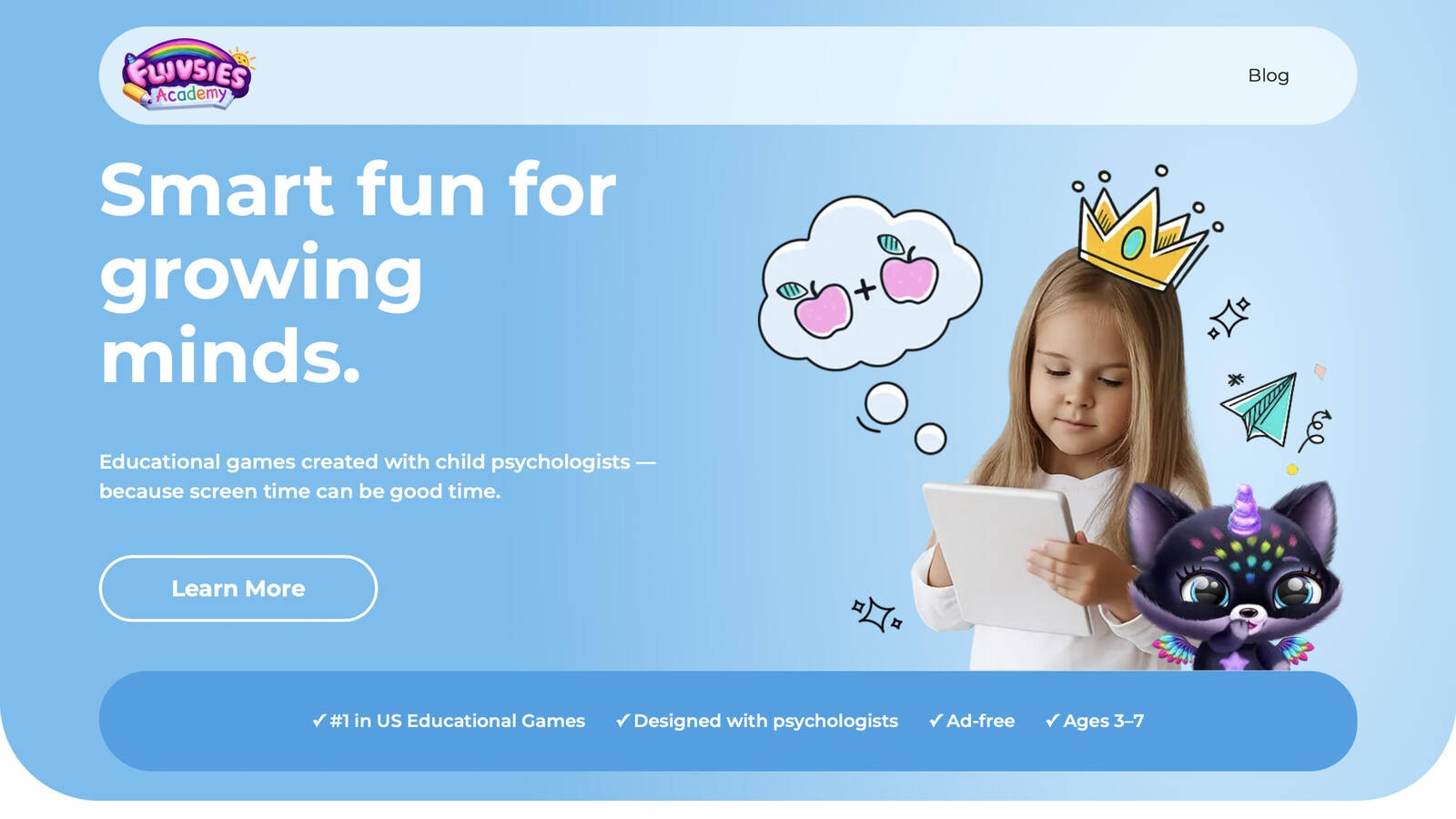
Fluvsies Academy, developed by the TutoTOONS team based in Kaunas, Lithuania, delivers a focused early learning experience built specifically for children ages 3 to 7. Every activity was shaped with input from child psychologists so the pacing stays gentle and the characters remain familiar and approachable. Children work through language and phonics practice, number recognition, logic and attention tasks, sorting activities, and life skills while interacting with the same fluffy Fluvsie characters many families already know from other titles. The professions section introduces simplified real-world jobs such as baker, firefighter, or veterinarian through short, story-driven scenes that build vocabulary and everyday awareness. Progress reports give parents a clear view of which areas the child visits most often without requiring constant checking. The entire environment stays fully ad free, with no outside links, chat features, or unexpected interruptions. Short levels fit naturally into after-school or weekend windows, and the design supports both active skill practice and more relaxed exploration. Families who already enjoy the broader Fluvsies world often find that the academy adds structure while keeping the same warm, character-led feel that keeps children engaged. The combination of guided practice and open moments helps children stay interested across multiple short sessions without feeling rushed.
Key features
- Language, math, logic, sorting, and life skill activities
- Professions stories for vocabulary and routines
- Parent progress views
- Ad free closed environment
Facts and Information
- Built with child development experts for ages 3–7
- Available on major mobile platforms
- Includes free printables for offline follow up
3. ABCmouse
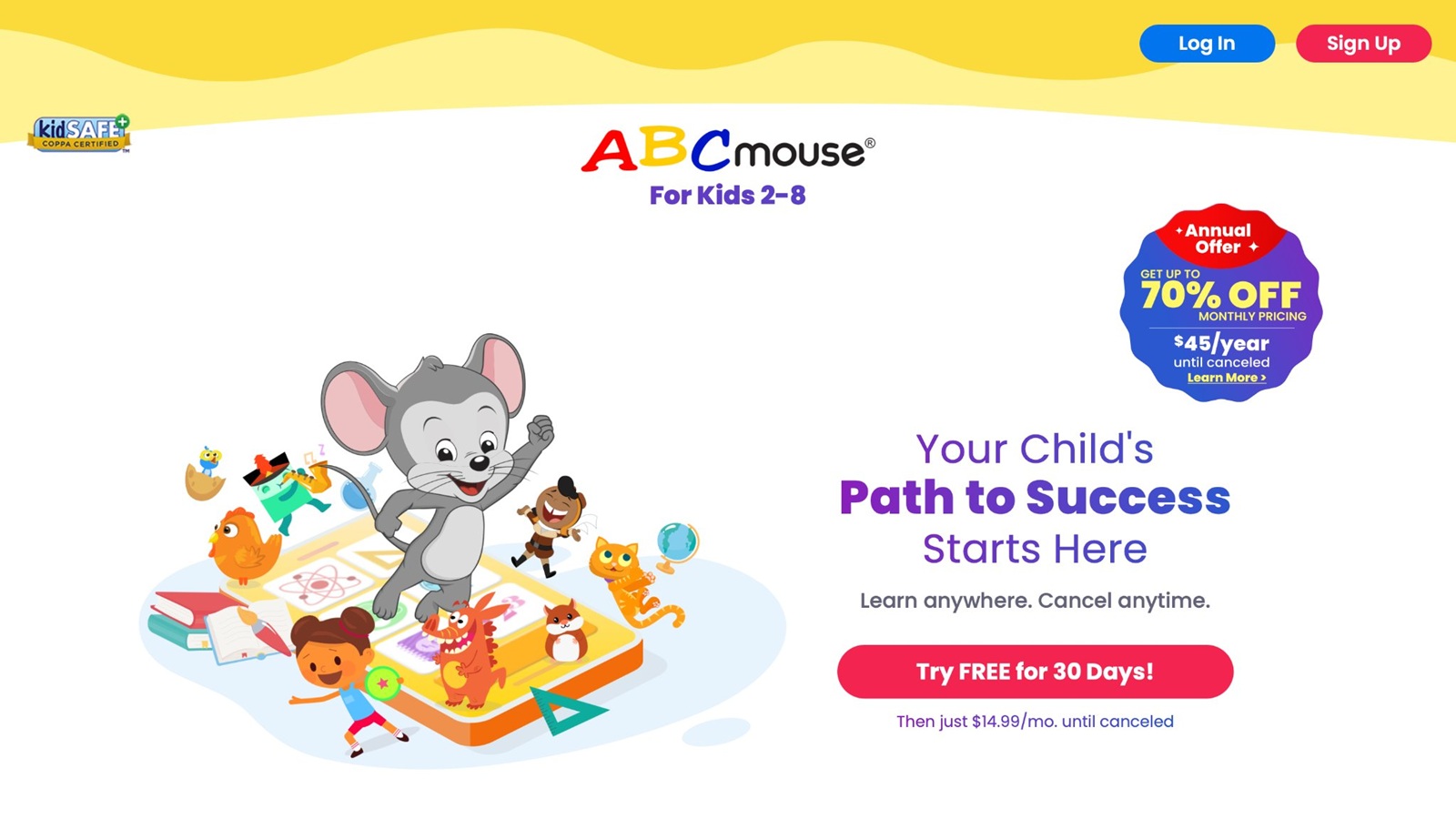
ABCmouse, created by Age of Learning and headquartered in Glendale, California, offers a structured early learning path designed for children ages 2 to 8. Learners create a customizable avatar and move through themed areas that cover reading, writing, math, science, art, music, and social studies. A ticket-based reward system lets children unlock room decorations, pet items, and other customizations after completing activities, which keeps motivation high across multiple sessions. The learning path can be adjusted by grade level so a typical six year old encounters first-grade style tasks without jumping too far ahead. Parent dashboards track completed lessons and overall progress across subjects. The platform is available on both web and app formats and keeps core content free of third-party advertising for subscribers. Open-ended areas such as Pet Town and Safari Park provide lighter creative breaks between more structured lessons. Many families use the program as a consistent daily practice tool that pairs well with offline books and activities on the same topics, giving children repeated exposure to core skills in a familiar visual style. The clear progression and reward system help children return to unfinished lessons more willingly than they might with less structured options.
Key features
- Personalized reading and math paths
- Avatar customization and rewards
- Science, art, and music modules
- Parent progress dashboard
Facts and Information
- Curriculum spans toddler through early elementary
- Supports multiple child profiles
- Standards aligned activities across core subjects
4. Khan Academy Kids
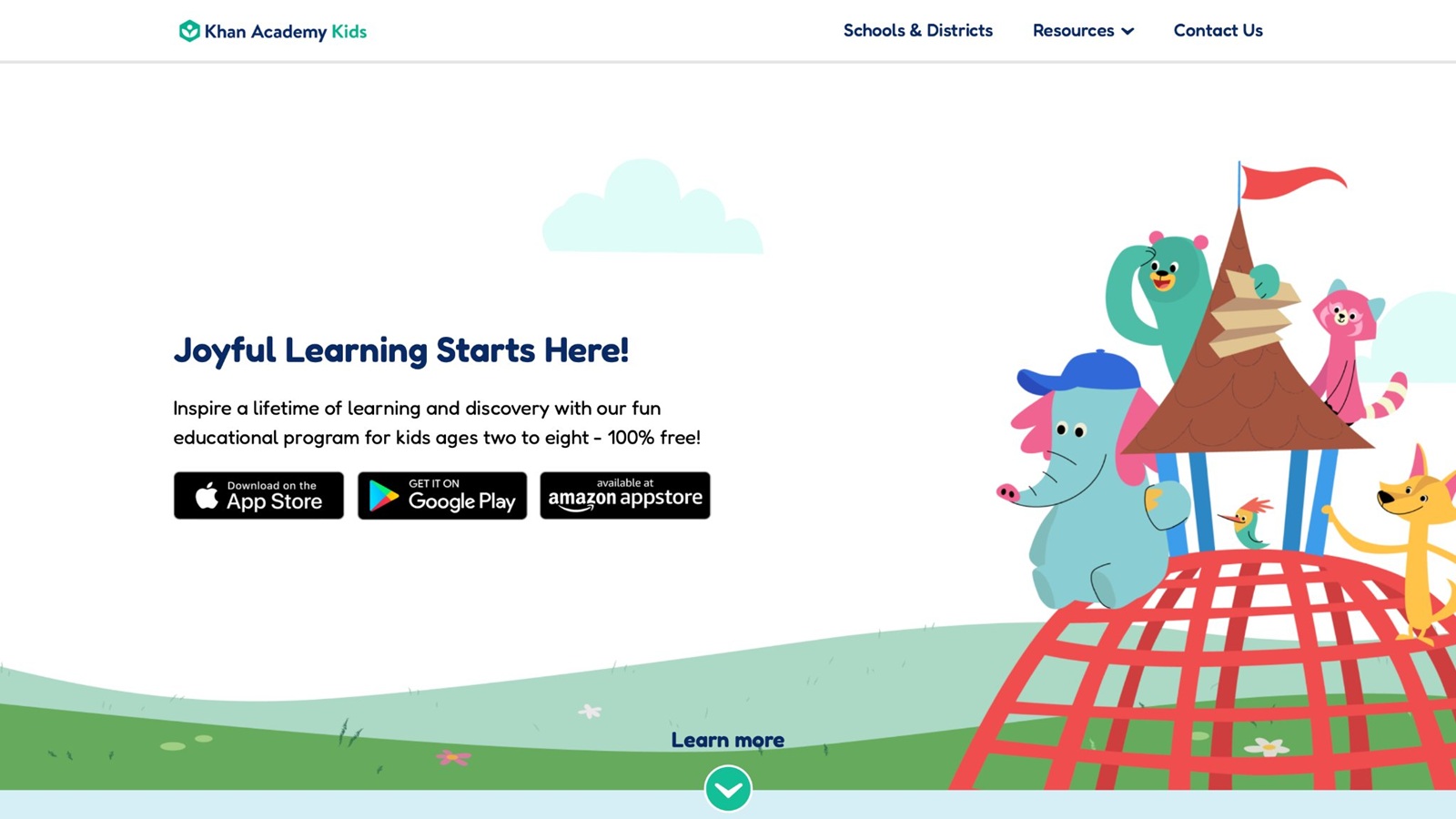
Khan Academy Kids, from the nonprofit organization based in Mountain View, California, provides a completely free early learning app for children ages 2 to 8. Five animal characters guide children through lessons that combine early literacy, math, language, and social-emotional skills in one place. The app includes hundreds of books, short videos, and creative activities that children can explore at their own pace. A built-in learning path adjusts based on the child’s progress, so a six year old typically sees a balanced mix of letter work, number practice, and story-based tasks. No advertisements appear anywhere in the experience, and no subscription is required for full access. Parents and teachers can view activity reports that show which skills the child has practiced. The simple layout and clear navigation make it possible for many children to use the app independently after a short introduction. Schools and homes frequently turn to it for quick, focused practice sessions that fit between other parts of the day without adding extra cost or setup steps. The free access and lack of interruptions make it a practical choice for families who want consistent skill practice without ongoing commitments.
Key features
- Free access with no ads
- Reading, math, and social emotional activities
- Character guided lessons and books
- Progress tracking for adults
Facts and Information
- Developed with education experts
- Aligns with early learning frameworks
- Works on mobile devices and tablets
5. ABCya
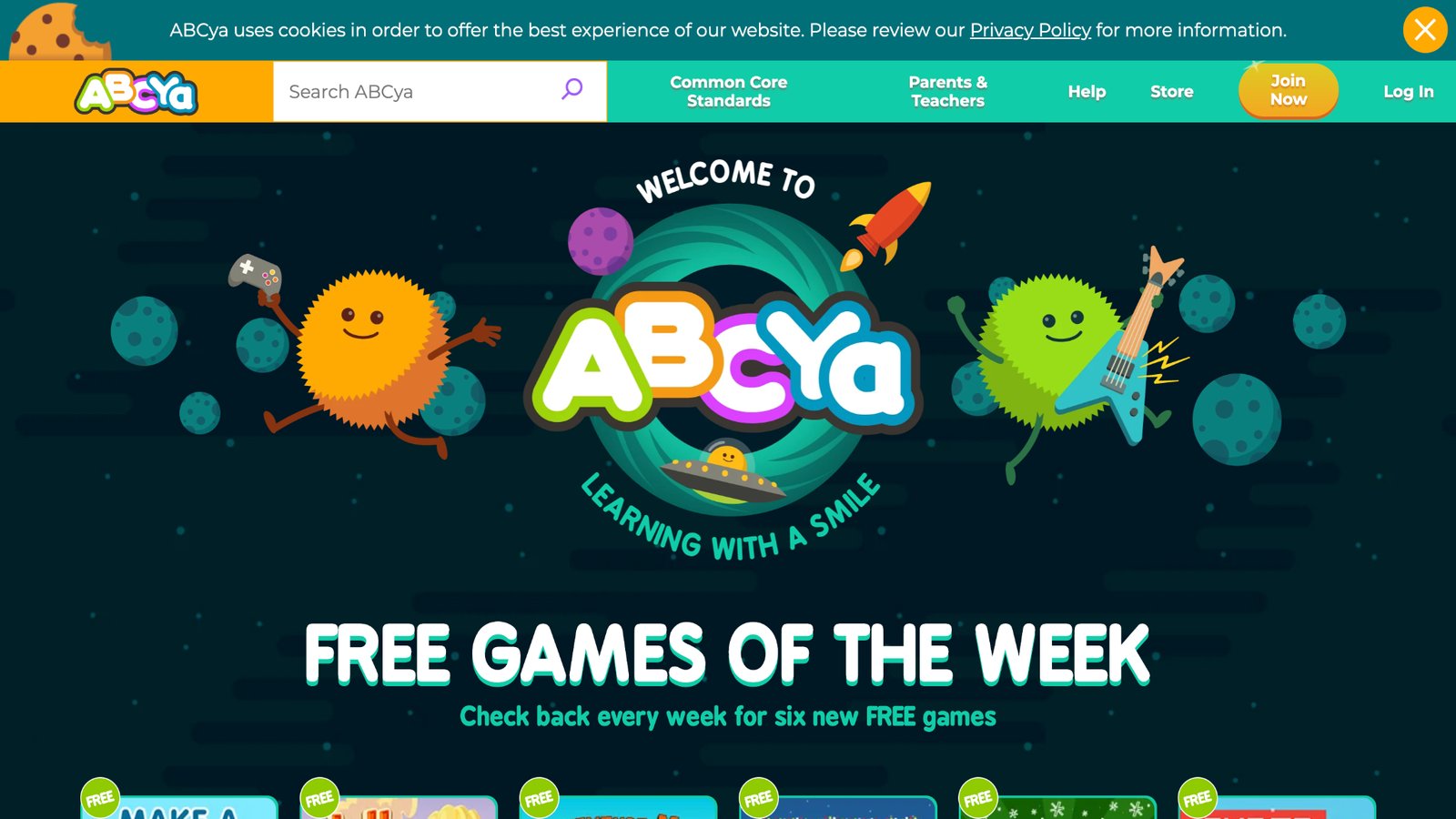
ABCya delivers a large collection of educational games organized by grade level from pre-kindergarten through sixth grade. A six year old can find math puzzles, reading challenges, typing practice, logic games, and creative activities that align with typical first-grade topics. Many games run directly in a web browser without requiring an account, which makes them easy to start on a shared computer. Colorful scenes and immediate feedback help keep the pace light and encouraging. The site regularly adds new titles, so the selection continues to grow throughout the year. While the free version includes advertisements, a family plan removes them for households that want an uninterrupted experience. The platform works well for short, targeted practice when a child wants variety beyond a single long story or character-driven world. Teachers often use individual games to reinforce specific classroom skills, and the clear grade filters help parents quickly locate activities that match their child’s current level. The browser-based design also makes it simple to try a few different games in one sitting without installing anything new.
Key features
- Grade sorted games in math, reading, and logic
- Browser based options
- Regular content updates
- Typing and creative skill modules
Facts and Information
- Teacher created activities
- Covers pre K to grade 6
- Available on web and mobile
6. Starfall
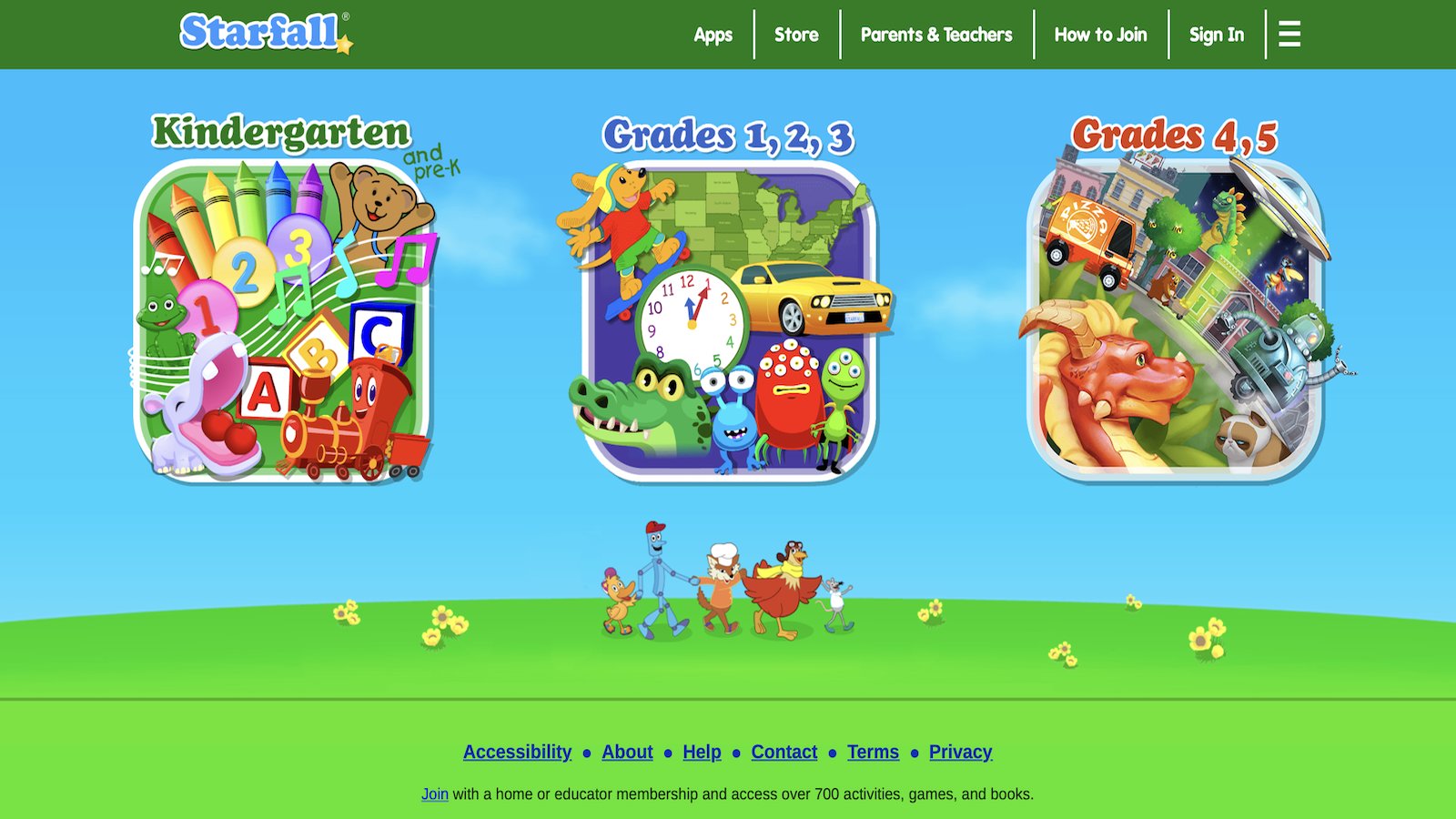
Starfall focuses on phonics and early reading skills for children ages 3 to 9 through interactive stories, songs, and games. Activities introduce letter sounds, blending, sight words, and simple sentence reading in a clear, step-by-step format. A six year old can move from single-letter practice into short word-building games that reinforce classroom phonics work. The core website remains free to use, while a membership unlocks additional books and expanded activities. No third-party advertisements appear in the main experience, which keeps the focus on the learning tasks. Audio support throughout the activities helps children who prefer to listen before they read independently. The straightforward layout makes it easy for a child to choose one skill area and finish a short session in just a few minutes. Many families use Starfall as a consistent reading warm-up that pairs well with printed books on the same letter patterns. The combination of songs and interactive practice gives children multiple ways to hear and use the same sounds before they move on to longer reading tasks.
Key features
- Phonics and reading games
- Interactive stories and songs
- Free core content
- Audio supported practice
Facts and Information
- Designed for early readers
- Membership expands the library
- Works in web browsers
7. Prodigy Math Game
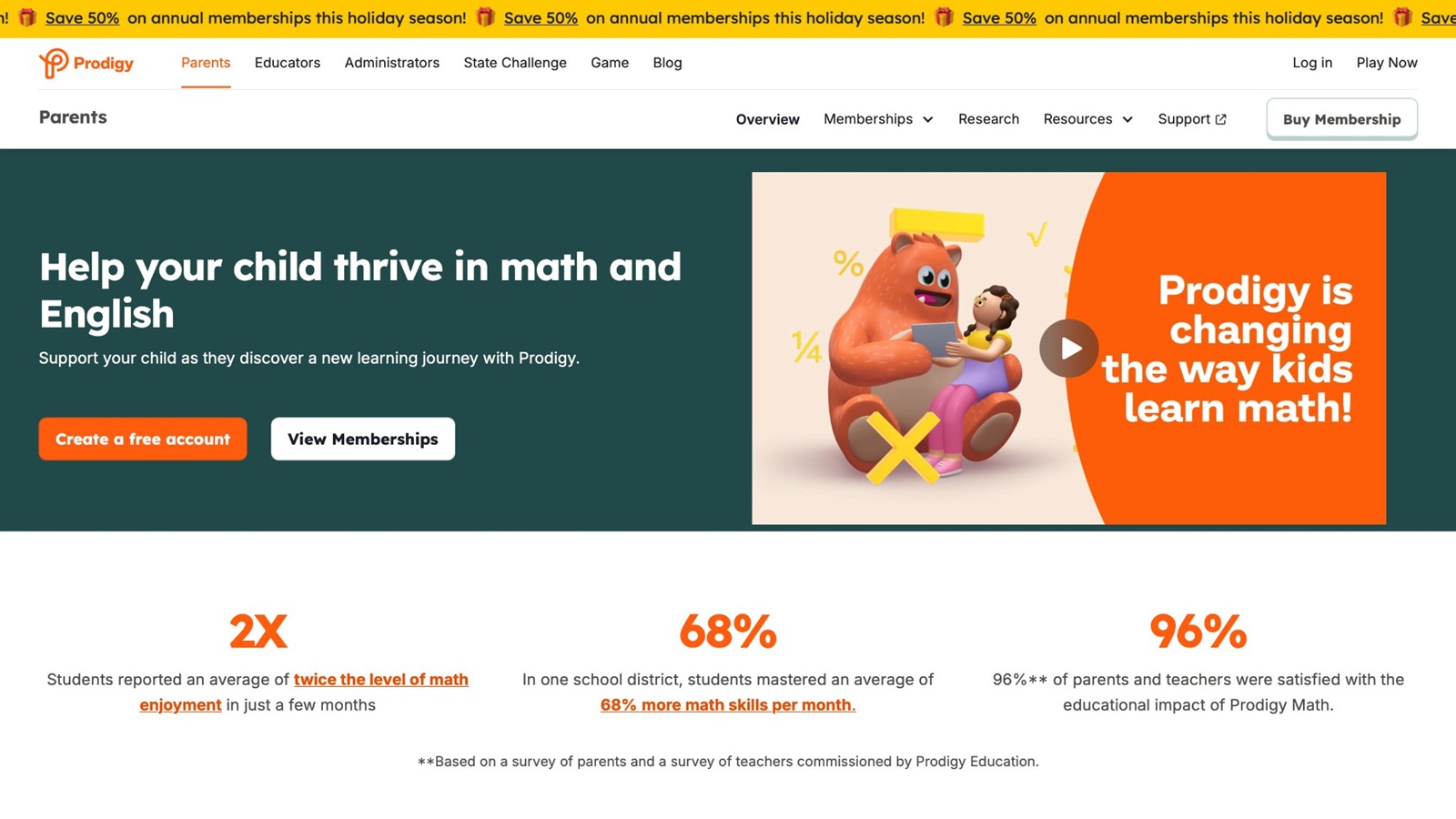
Prodigy Math Game turns standard math practice into a fantasy role-playing adventure aimed at elementary-aged children. Players create a wizard character and battle creatures by correctly solving problems in addition, subtraction, geometry, fractions, and other topics. The difficulty level adjusts automatically based on performance, so a six year old typically stays within a comfortable range rather than facing content that is too advanced. The core game remains free to play, while an optional membership adds extra customization and features. Parent and teacher dashboards display skill progress and areas that may need more practice. The adventure-style format encourages many children to return for short sessions because the math problems feel like part of the story rather than isolated drills. Some families set clear time limits so the focus stays on the math practice rather than extended play. The game is available on multiple platforms, making it accessible on both tablets and computers. The adaptive system helps keep the challenge matched to the child’s current skills, which can reduce frustration during independent practice.
Key features
- Adaptive math quests
- Fantasy world and character battles
- Progress reports for adults
- Grade aligned topics
Facts and Information
- Covers elementary math standards
- Free core gameplay
- Available on multiple platforms
8. PBS Kids Games
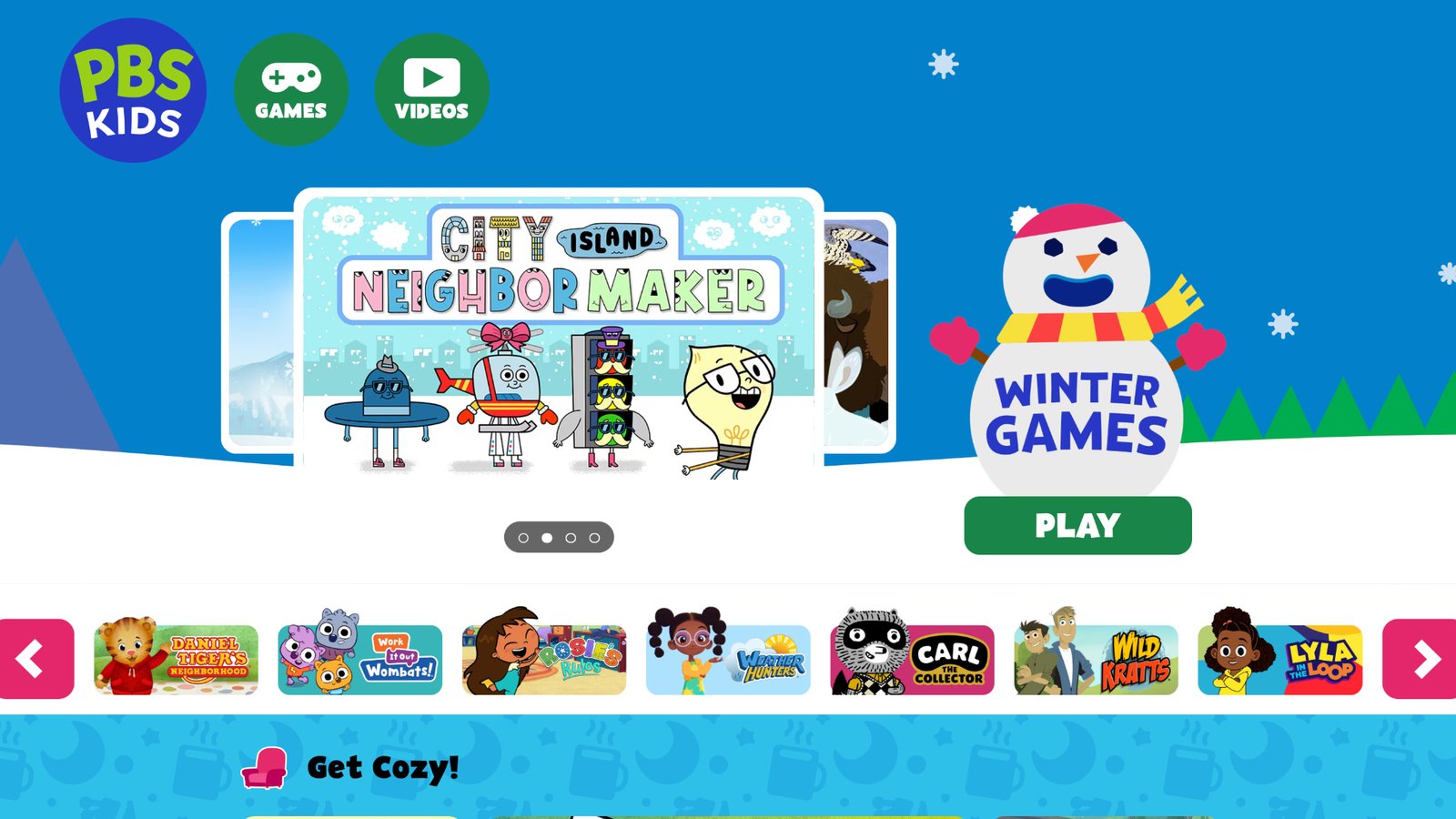
PBS Kids Games offers a collection of free activities built around familiar television characters for children ages 2 to 8. Games cover early math, science concepts, reading skills, and social-emotional themes through short, self-contained episodes. A six year old can practice counting, letter recognition, or simple problem-solving while interacting with characters they already recognize from PBS shows. Both the app and website remain free of third-party advertising. No account is required for basic play, which makes the games easy to start on a shared device. New episodes and activities are added as seasons update, keeping the selection current. The familiar characters often help children feel comfortable exploring on their own after a brief introduction. Many families use these games as a light supplement to other learning activities because the sessions stay short and the content stays age-appropriate. The connection to well-known shows can make the transition into practice feel smoother for children who already enjoy the characters on television.
Key features
- Character based learning games
- Math, science, and reading activities
- Free access
- Short episode format
Facts and Information
- Tied to public media shows
- No third party advertising
- Available on app and web
9. ScratchJr
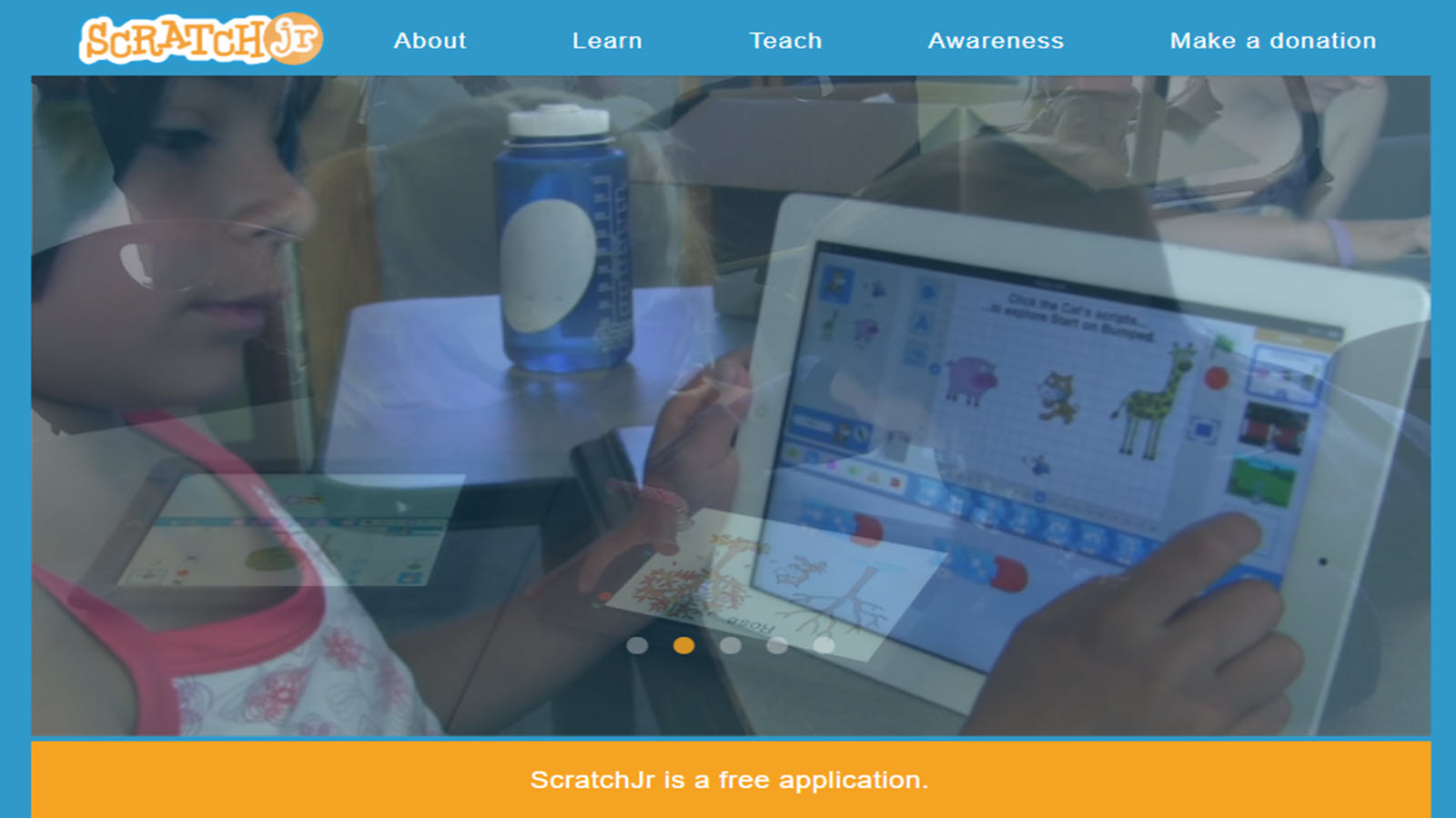
ScratchJr introduces foundational coding concepts to children ages 5 to 7 through a simple drag-and-drop interface. Kids snap together colorful blocks to create their own short stories, animations, and interactive scenes without needing to read instructions or type commands. The free app works on tablets and lets children record their own sounds or draw custom characters. Progressive levels gradually introduce ideas such as loops and basic conditionals as the child gains confidence. Many early elementary classrooms use ScratchJr for short creative projects that build sequencing and logical thinking. The design keeps all projects local on the device until a parent chooses to share them, which limits outside interaction. Children can work at their own pace and revisit previous creations, making it a flexible tool for both independent play and guided activities at home. The visual approach helps children see how small changes in the blocks affect the final animation, which supports early problem-solving skills.
Key features
- Visual block coding
- Story and animation creation
- Free tablet app
- Progressive difficulty
Facts and Information
- Built for ages 5–7
- Used in many early classrooms
- Supports offline creation
10. HOMER
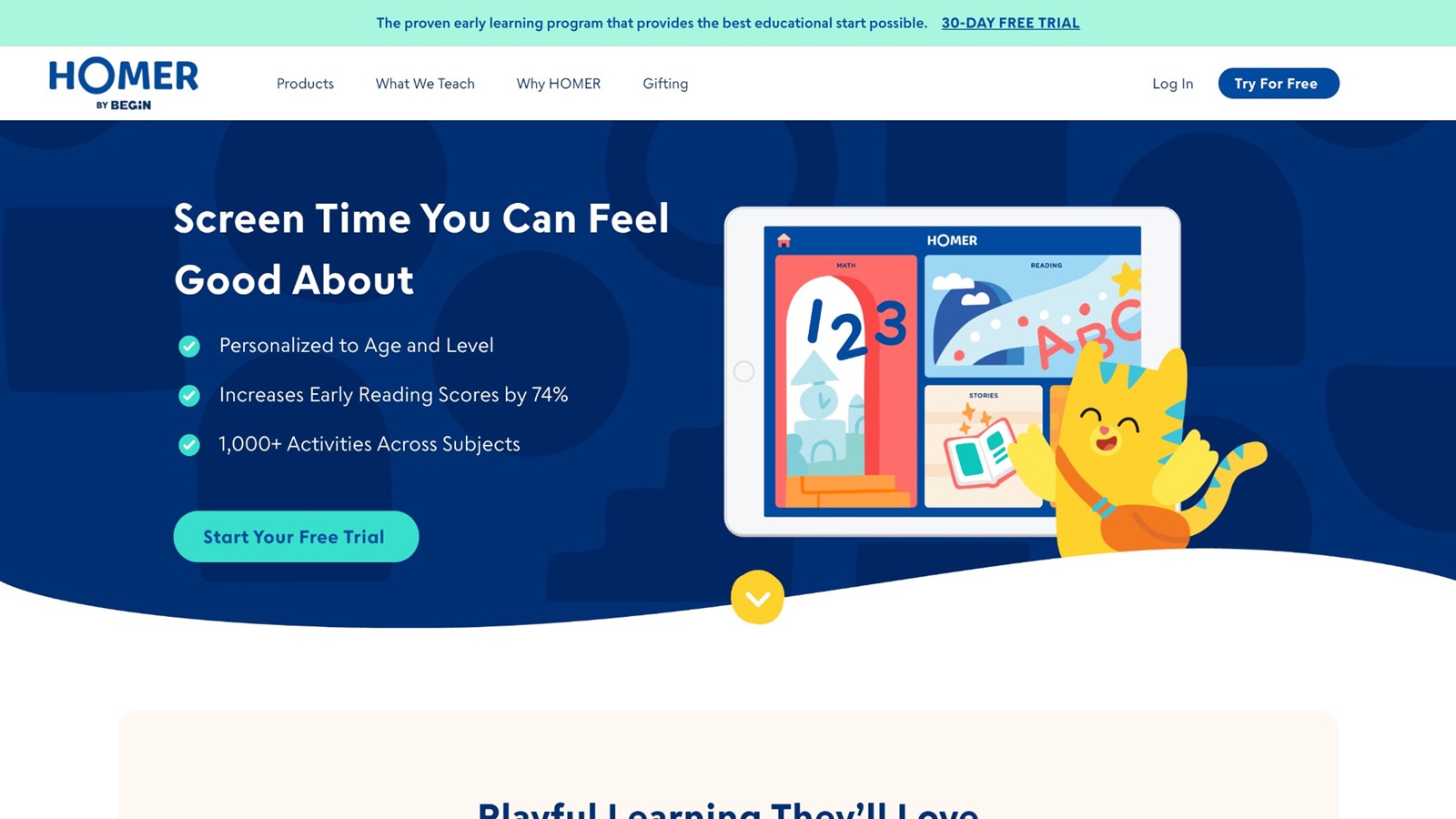
HOMER provides a personalized early learning experience for children ages 2 to 8 with a strong focus on literacy skills alongside math and creative activities. Lessons adjust automatically based on the child’s demonstrated level and interests, so a six year old typically works on phonics, sight words, and early writing tasks that match their current ability. The platform includes thousands of short games, stories, and practice activities that can be completed in brief sessions. Parent reports show which lessons have been finished and highlight areas of progress. The app runs on mobile devices and includes sections that work offline after the initial download. Many families use HOMER as a daily reading warm-up before free play or outdoor time. The combination of structured practice and lighter creative tools gives children repeated exposure to core literacy skills without requiring long stretches of screen time. The adaptive placement helps keep activities challenging enough to hold interest while still feeling manageable for a typical six year old.
Key features
- Adaptive literacy path
- Math and creative activities
- Parent progress insights
- Offline capable sections
Facts and Information
- Research informed design
- Covers ages 2–8
- Mobile focused experience
11. Reading Eggs
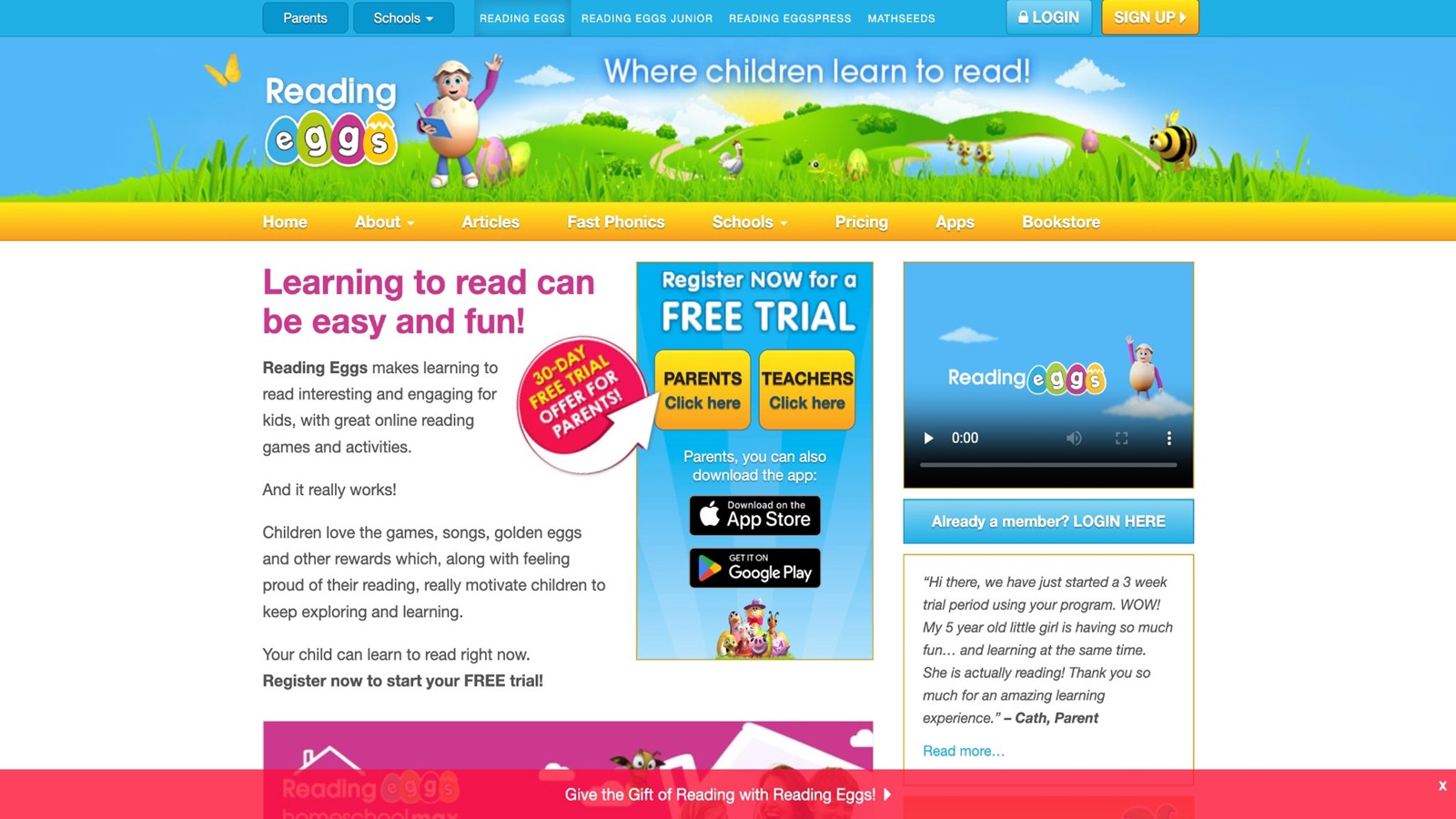
Reading Eggs guides early readers through a structured phonics and reading program suitable for ages 2 to 13. A six year old typically works on blending sounds, recognizing sight words, and completing short comprehension tasks set inside colorful, themed worlds. Rewards and customizable avatars mark progress and give children a sense of achievement after each lesson. Placement tests help the program start at the right level rather than assuming a fixed starting point. Parent dashboards track completed skills and overall reading growth. While the core content focuses on reading development, additional games add variety between lessons. Many schools and homes pair Reading Eggs with printed books that reinforce the same phonics patterns, creating a consistent practice loop. The platform is available on both web and app formats, which makes it easy to continue lessons across different devices. The clear lesson structure and progress tracking give parents a straightforward way to see steady improvement in reading skills over time.
Key features
- Phonics and comprehension games
- Placement and progress tracking
- Avatar and reward system
- Multi device access
Facts and Information
- Structured early reading curriculum
- Available on web and app
- Includes placement assessments
12. Toca Boca World
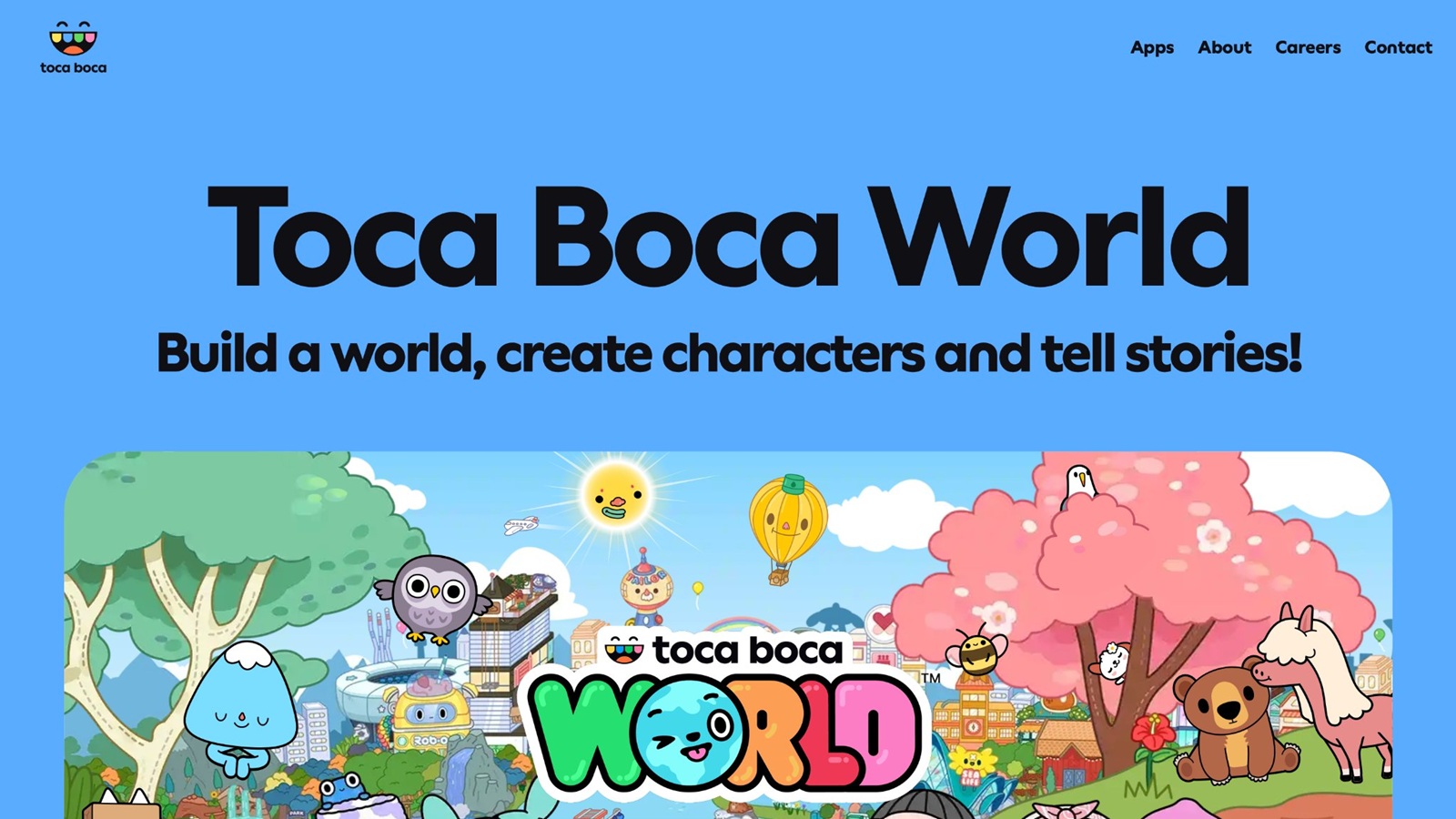
Toca Boca World, from the Swedish studio Toca Boca, offers an open-ended digital play space where children ages 5 to 9 can create stories, design characters, and explore everyday scenarios. Players move between different locations, interact with characters, and arrange scenes without fixed goals or scoring systems. A six year old can spend time dressing characters, arranging rooms, or acting out simple daily routines such as cooking or going to school. The experience stays free of traditional advertisements in the core play areas, though optional in-app purchases exist for additional content packs. No chat or multiplayer features connect children with strangers. The flexible, sandbox-style design supports creative expression and narrative play rather than structured academic drills. Many families use it for shorter creative sessions that let children direct the activity themselves after more guided learning games. The lack of required reading or timed challenges makes it accessible for children who prefer open play over step-by-step tasks.
Key features
- Open-ended story and character play
- Everyday scenario locations
- No stranger chat or multiplayer
- Creative design tools
Facts and Information
- Developed by Toca Boca in Sweden
- Aimed at ages 5–9
- Supports imaginative play without fixed goals
13. Funbrain
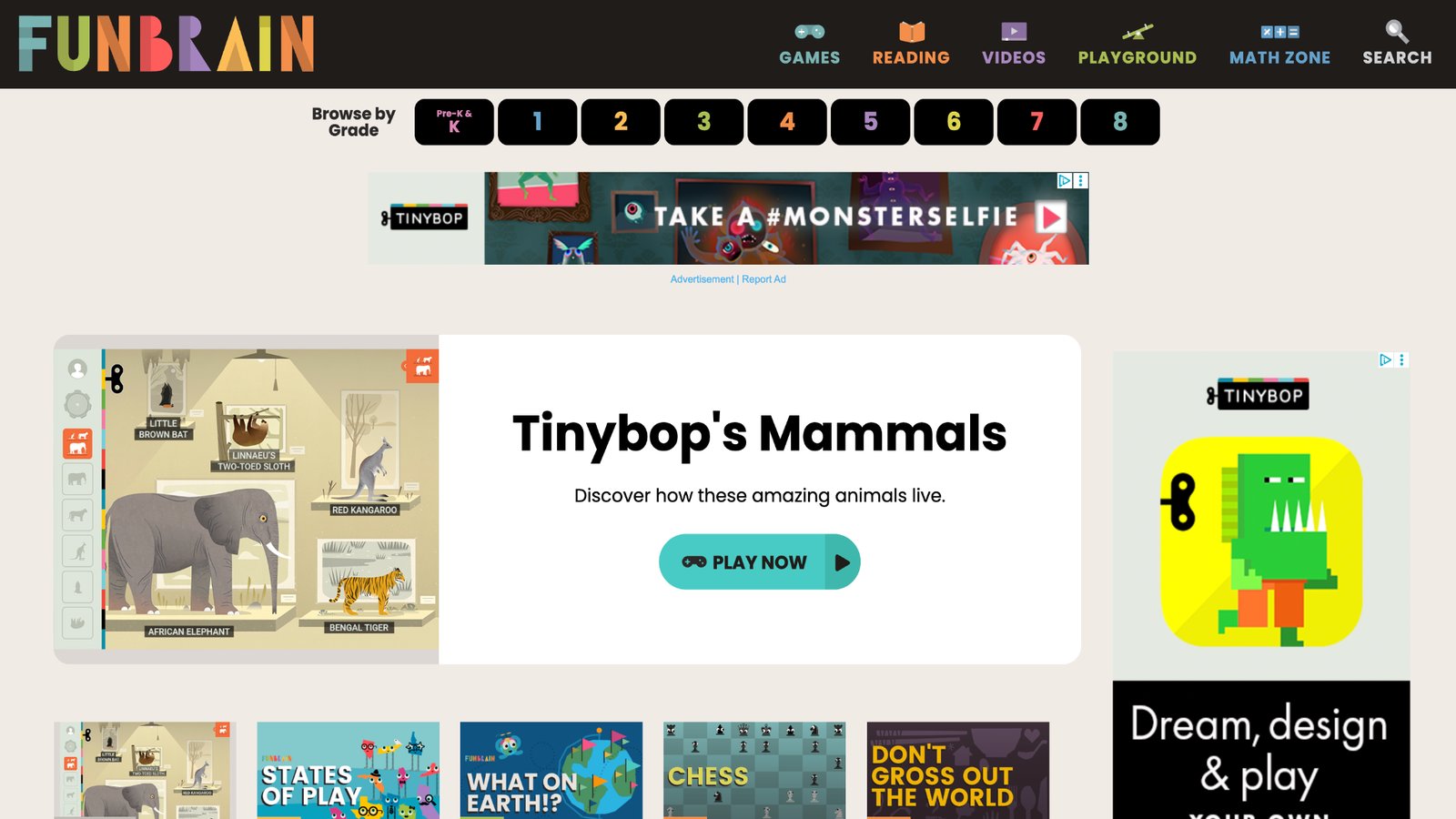
Funbrain provides free educational games, videos, and online books for children from pre-kindergarten through eighth grade. A six year old can find math games, reading activities, logic puzzles, and short videos that align with early elementary skills. Many titles run directly in a web browser without requiring an account, which makes them easy to start on a shared computer or tablet. The site organizes content by grade level so parents can quickly locate activities that match a child’s current schoolwork. While advertisements appear in the free version, the core games remain accessible without a subscription. Funbrain works well for short practice sessions when a child wants variety across different subjects in one sitting. The combination of games and simple online books gives children multiple ways to engage with the same topics. Teachers sometimes recommend individual games to reinforce classroom lessons, and the free access makes it practical for families who want occasional practice without extra setup.
Key features
- Grade-organized games and books
- Math, reading, and logic activities
- Browser-based play
- Free core access
Facts and Information
- Covers pre-K through grade 8
- Includes videos and online books
- No account required for many games
14. Math Playground
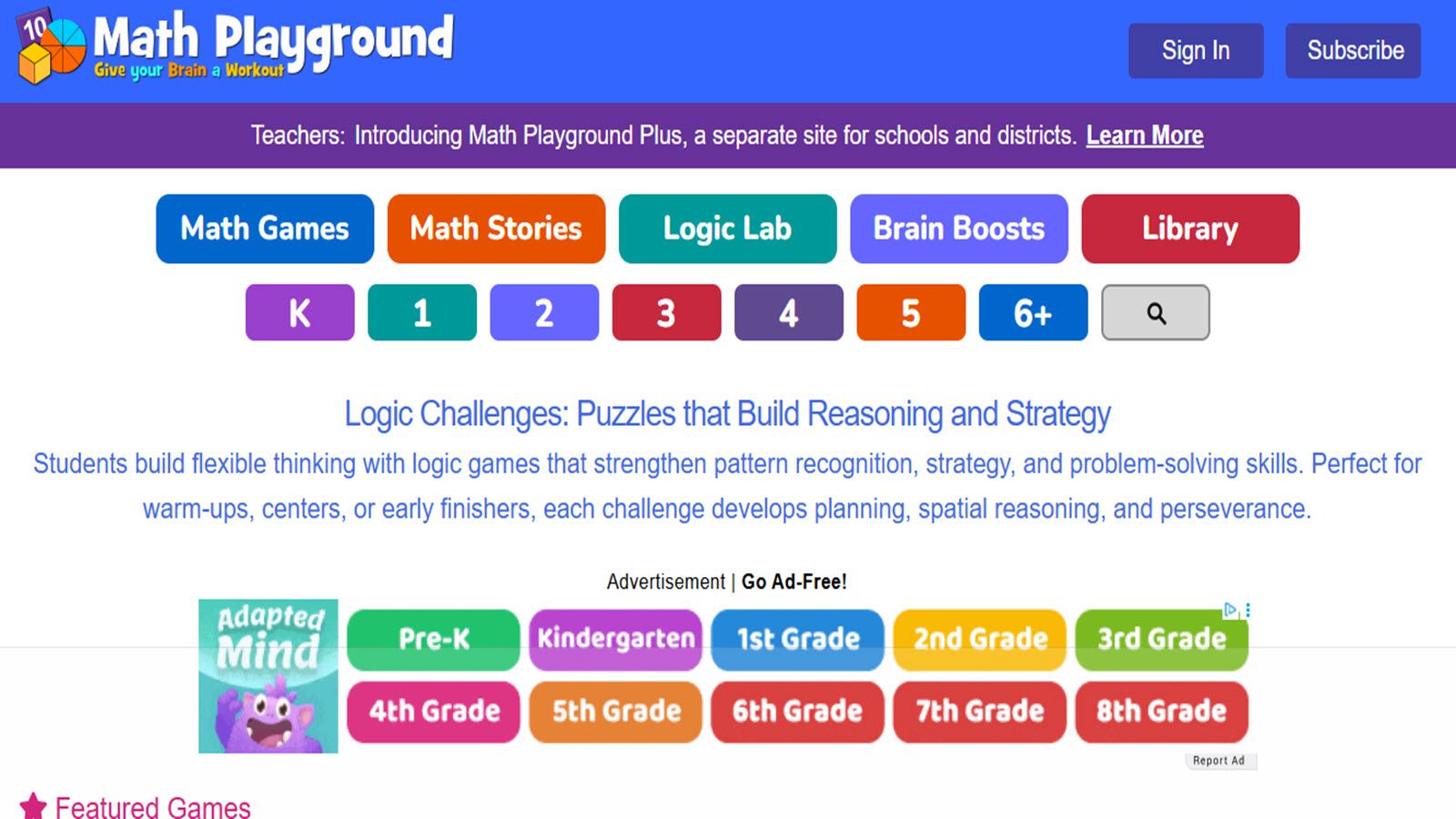
Math Playground offers a collection of math games and logic puzzles aimed at kindergarten through sixth grade. A six year old can practice addition, subtraction, number patterns, and spatial reasoning through interactive activities that often involve moving objects or solving visual challenges. Many games run in a web browser and provide immediate feedback so children can try again right away if they miss a problem. The site includes both free games and an optional ad-free family plan. Logic puzzles and thinking games sit alongside the math practice, which gives children a chance to build problem-solving skills in a different format. The clear categories help parents find activities that match specific skills a child is working on at school. Sessions tend to stay short because most games have a natural end point, which makes them suitable for after-school practice. The visual style and hands-on interactions can help children who learn better by seeing and moving objects rather than only reading instructions.
Key features
- Math games and logic puzzles
- Immediate feedback on answers
- Browser-based activities
- Grade-level categories
Facts and Information
- Aimed at kindergarten through grade 6
- Includes spatial and thinking challenges
- Free games available with optional ad-free plan
Balancing Screen Time with Real Life Practice
Short online sessions work best when they connect to something the child can do offline. After a pet care game, a child can help feed a real pet or tidy a toy area. Chore games for real life skills through play show how digital routines translate into home habits. Many parents set a timer so the game ends while interest is still high. This keeps the child willing to switch to books, blocks, or outdoor time.
A consistent end point also reduces arguments about stopping. Pairing one online activity with a matching offline task builds stronger memory. Counting items in a game then counting the same items at the table reinforces the idea. A parent’s guide to healthy screen time with educational apps helps families set simple limits.
Responsibility games for kids reinforce finishing what you start. Confidence building games support trying again after a small miss. Families that keep the same routine each day often see smoother transitions. The key is matching the length of the digital session to the child’s current energy rather than stretching it until interest fades.
Safety Features Parents Should Check
A closed playground stops a six year old from leaving the app by accident. No outside links, no chat with strangers, and no surprise purchases keep the experience predictable. How to protect kids online starts with choosing platforms that follow COPPA rules and limit data collection. Offline play after download adds another layer because the device does not need a constant connection.
Parent controls that pause the session or view recent activity give adults a clear view without constant watching. Art and sound that can be adjusted help in different rooms. Bright but soft colors reduce strain during afternoon use. Clear exit buttons or timer options make stopping easier. Platforms that support family sharing across a few devices also cut the need for extra accounts.
Safe apps for kids share these traits and stay focused on the child’s age range. Educational games for kids iPad work well on tablets shared at home. Tablet games for kids often include offline options after the first download. Also, mobile games for kids keep sessions short enough for travel.
Literacy practice often shows up as letter sorting inside a pet house. Kids can then match the same letters on paper or in books after the game ends. Numeracy appears when they count items while cleaning a virtual room. The same counting can happen with toys or snacks at the table. Empathy grows when they feed or care for a character, then help with a real pet or sibling. Focus builds through short puzzles that end before frustration rises. Afterward, building with blocks for a set time continues the same attention work. Routines appear when they tidy a virtual room. Putting away real items after play makes the habit stick. These connections keep the digital part useful without replacing offline time.
FAQ
What skills do six year olds practice in the best online games?
Six year olds practice letter sounds, simple counting, sorting, and caring for characters in the best online games. These tasks appear inside short stories so the practice feels like play rather than a separate lesson that sits outside the fun. Many games also include memory matching and basic patterns that support focus and attention after school when energy levels can drop. The mix supports both school readiness and daily habits such as cleaning up or helping with simple routines around the house. Parents often notice stronger attention when the same skills show up in both digital and offline activities, especially through the best brain games for kids that keep sessions brief and clear. Over time, repeating these small steps helps children feel more confident when they meet similar tasks at home or in class, and the calm pace reduces the chance of frustration before the activity ends. This steady practice also gives children a chance to see how small choices, like finishing a task or trying again, lead to a positive result inside the game.
How can parents choose safe games for this age?
Parents can choose safe games by looking for closed platforms with no outside links, no stranger chat, and clear privacy rules that protect young users. Ad free experiences remove extra buttons that a six year old might tap by mistake and keep the focus on the activity itself rather than outside distractions. Offline play after download adds flexibility during travel or busy days when a steady connection is not available and reduces unexpected interruptions. Parent views that show recent activity help without constant supervision and make it easier to see what the child practiced during the session. Games made for ages 5 to 7 usually match the attention span and skill level better than titles aimed at older children. Many families check the best educational websites for kids before downloading so the experience stays predictable, age appropriate, and free from sudden changes that could confuse a young player. A closed design also means the child stays inside one safe space for the whole session, which lowers the chance of accidental exits or unwanted content appearing on the screen.
Do educational games replace classroom learning?
No, educational games add extra practice between school days rather than replacing classroom learning or taking the place of teacher-led lessons. Short sessions reinforce letters, numbers, and routines that teachers already cover during the week and give children another chance to see the same ideas in a different setting. The best options stay brief so the child still has energy for books, outdoor time, and family talk after the screen is put away. Many families use them as a warm up or wind down rather than the main learning block of the day. The connection to real life tasks makes the digital part more useful when paired with learning through play activities that move skills offline and show children that practice can happen in many places. This balance helps children see that learning continues beyond one format and keeps screen time from crowding out other parts of the afternoon. When the same skill appears both in a game and in a simple home activity, the idea often sticks more easily than it would from screen time alone.
What makes a game a good fit after school?
A good after school game stays short, uses soft colors, and ends with a clear finish so the child can switch activities easily without a long argument. Pet care or simple puzzles work well because they feel familiar and rewarding after a long day at school when attention may already be lower. The ability to pause or play offline helps when the day runs long or devices need to be shared among siblings and prevents the session from dragging on. Platforms that share one login across a few devices also reduce setup time and arguments about who gets to play next. Children often return more willingly when the session feels calm rather than loud or open ended. This approach aligns with ipad games for kids that keep screen time limited and tied to the rest of the afternoon routine so the child still has room for outdoor play and family time. Ending on a clear finish also makes it easier for the child to move on without feeling like something important was left unfinished.
How do pet care and routine games support real life habits?
Pet care and routine games support real life habits by letting children practice feeding, tidying, and caring for characters in short, repeatable steps that mirror simple jobs at home. These activities build empathy and follow through because the child sees a clear result, such as a happier pet or a cleaner room, which makes the effort feel worthwhile. The same skills transfer when a child helps with a real pet or puts toys away after play ends and the connection feels natural rather than forced. Many parents notice smoother transitions from screen time when the digital task mirrors something simple at home and the child already knows what to do next. This approach appears often in how pet care games teach kids empathy and responsibility. Repeating the pattern over several days helps the habit feel familiar and reduces resistance when it is time to help with real chores. The clear result inside the game also gives children a sense of completion that carries over when they finish a similar small job at home.
Read Also:
- Best Educational Games For 6 Year Olds in 2026
- Best Safe Kids Games In 2026
- Best Healthy Screen Habits
- Chore Games for Real Life Skills Through Play
- How Pet Care Games Teach Kids Empathy and Responsibility
Start your free trial on TutoClub to see the best 6 year old games online in the US 2026 in action!