


Best Games for 3 Year Olds Online in the US 2026






Looking for the best games for 3 year olds online in the US 2026? Many parents want screen time that feels calm and useful. Options that focus on short, simple play work well for this age.
As your toddler grows, many parents look for the next set of calm, age-matched options. Guides on the best educational games for kids 4 years old online help bridge that shift, while similar picks for the best educational games for 5 year olds, the best educational games for 6 year olds, and the best educational games for 7 year olds keep screen time short, simple, and useful at each stage.
Discover safe games that turn play into growth with TutoClub!
What Makes a Good Online Game for 3 Year Olds

Games for this age work best with big buttons, bright colors, and short tasks. A three-year-old can tap to match shapes or feed a pet. These actions build hand control and focus. Looking at educational games for kids age 3 shows how short, clear activities support early success. Many kids enjoy stories that feel familiar, like cleaning a room or caring for an animal. The play stays light so a child can try again without getting stuck.
Simple rules help. One clear goal, such as sorting colors or naming a sound, keeps attention. Some games add a gentle story so the child practices kindness or patience. The best games for young kids often use large targets and calm pacing that fit a three-year-old’s energy. Offline play after download also helps during car rides or quiet time at home. Families often look for options that work on more than one device so siblings can share.
Easy educational games for kids keep rules simple so frustration stays low. Learning through play activities pair well with these digital tasks when a parent adds hands-on follow-up. Clear goals and short steps make it easier for a three-year-old to finish an activity and feel ready for the next one.
Skills 3 Year Olds Build Through Play
Play at this age supports early thinking and feelings. Matching games help with memory. Pet care stories practice kindness. Cleanup activities show simple routines. Educational games for toddlers often include matching and sorting that build early memory. Many children start to notice how others feel when they help a character. These moments sit beside real-life tasks, like putting toys away after play.
Language grows when games use clear words and sounds. A child hears “red” or “soft” again and again. Logic games ask the child to look, choose, and try. Memory games for kids strengthen recall through short, repeatable tasks. Short sessions work well because attention stays brief at three. Mixing screen time with hands-on play, such as building blocks after a digital puzzle, keeps learning balanced.
Problem solving games for kids use simple choices that help a three-year-old practice looking and deciding. Social emotional games for kids support noticing how characters feel during care play. Gentle stories and clear tasks help these skills grow without pressure.
Best Games for 3 Year Olds Online in the US 2026
1. TutoClub - Best Games for 3 Year Olds Online in the US 2026
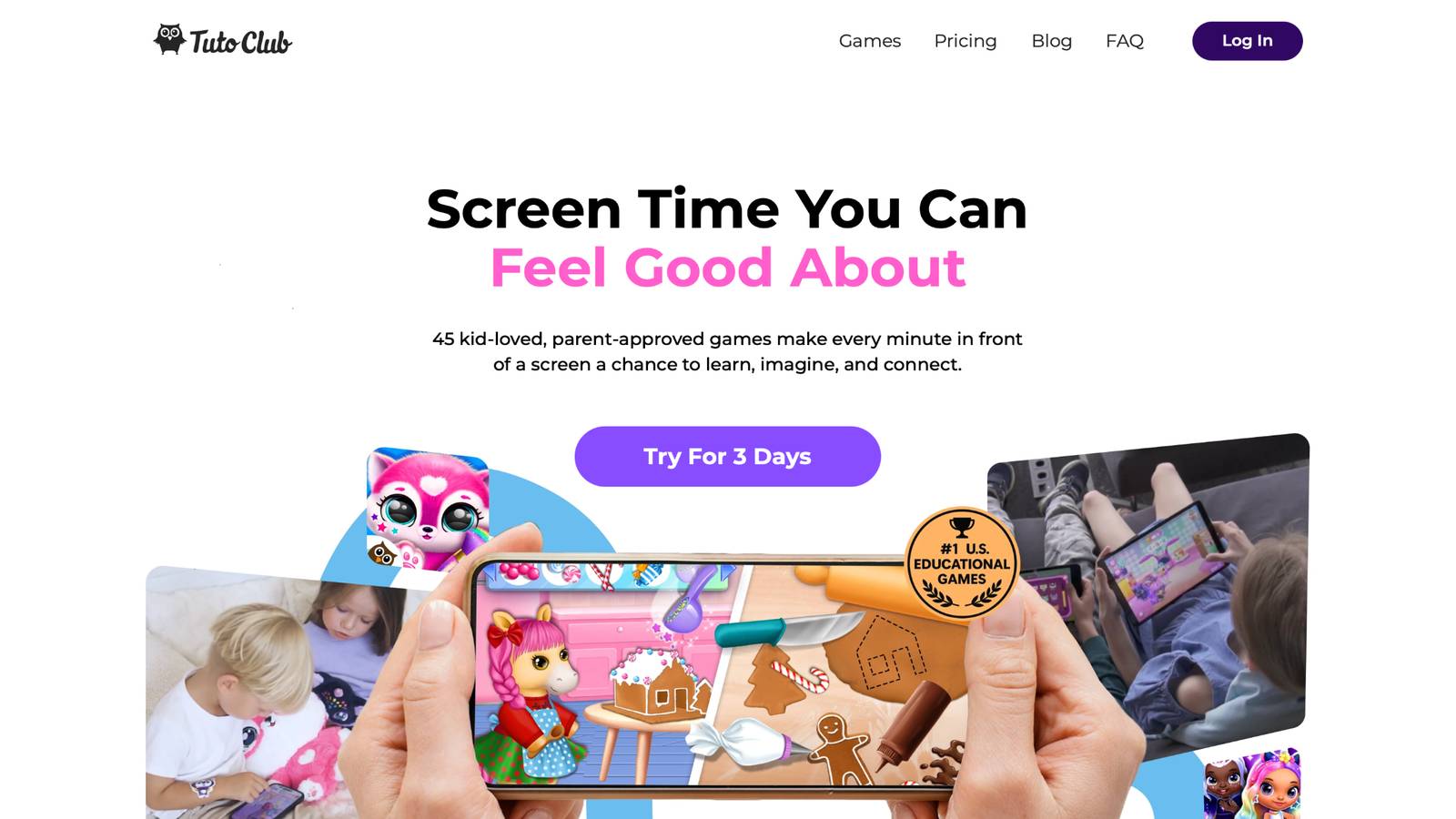
TutoClub educational games bring more than 50 ad-free activities into one simple subscription. The service comes from the TutoTOONS studio in Kaunas, Lithuania. Games focus on ages 2 to 4 with tasks that match how young children learn. A child might care for a unicorn, tidy a room, or hatch a small pet. Each activity uses big pictures and short steps so a three-year-old can succeed often. The tone stays calm. There are no ads and no extra purchases once the subscription is active. Many families notice their children practice routines and show more patience during play. The collection includes titles such as My Baby Unicorn for gentle care and Sweet Baby Girl Cleanup 5 for everyday habits. Progress feels natural because the games draw on input from educators. One login works across devices so the whole family can join. Offline play after download adds ease for busy days. These features make TutoClub a strong choice when parents want screen time that supports real growth without extra noise.
- Ad-free library of more than 50 games built for early skills
- Focus on care, routines, creativity, and simple logic
- Designed with educators for ages 2 to 4 and beyond
- Family sharing on multiple devices
- Calm play that pairs well with real-life tasks
TutoClub Overview
TutoClub is your gateway to a magical world of educational games designed especially for children.
As part of TutoTOONS, a leading kids' games studio, we offer premium access to over 45 ad-free games.
Our mission is to blend learning and play, helping kids explore, create, and grow in a safe online space.
Thousands of parents trust us for family-friendly content that sparks imagination and builds essential skills.
Key Features
- Unlimited Access: Unlock full content in all games with no interruptions.
- Ad-Free Experience: Enjoy seamless play without any ads or distractions.
- Skill Development: Games foster creativity, social skills, communication, and more through fun activities like pet care and cleanup challenges.
- Regular Updates: Get new releases, exclusive content, and future updates automatically.
- Easy Subscription: Cancel anytime with no obligations, simple and flexible for families.
Explore Our World
TutoClub provides a rich ecosystem of educational games for kids, featuring ad-free experiences that promote creativity, focus, and emotional growth through play.
This platform turns screen time into valuable learning opportunities, with parent-approved content that builds essential skills and sparks curiosity in young minds.
- TutoClub Games: Over 45 educational games, including popular titles like Fluvsies, Smolsies, and the Sweet Baby Girl series
- Blog: Insights, tips, and stories for families on kids' learning and play
- FAQ: Comprehensive answers to frequently asked questions about subscriptions, features, and more
Get TutoClub on Your Device
TutoClub delivers premium kids educational games directly to your mobile devices, making learning accessible anytime, anywhere.
With apps available on major platforms, families can easily download and subscribe for ad-free play that turns screen time into skill-building adventures.
Perfect for parents seeking safe, engaging content on iOS, Android, or Amazon devices.
Why Choose TutoClub?
We're committed to 100% safe, enriching entertainment that kids love and parents approve.
Join the thousands who've seen their children thrive through playful learning.
Ready to start the adventure?
Start building skills today with TutoClub.
2. Fluvsies Academy
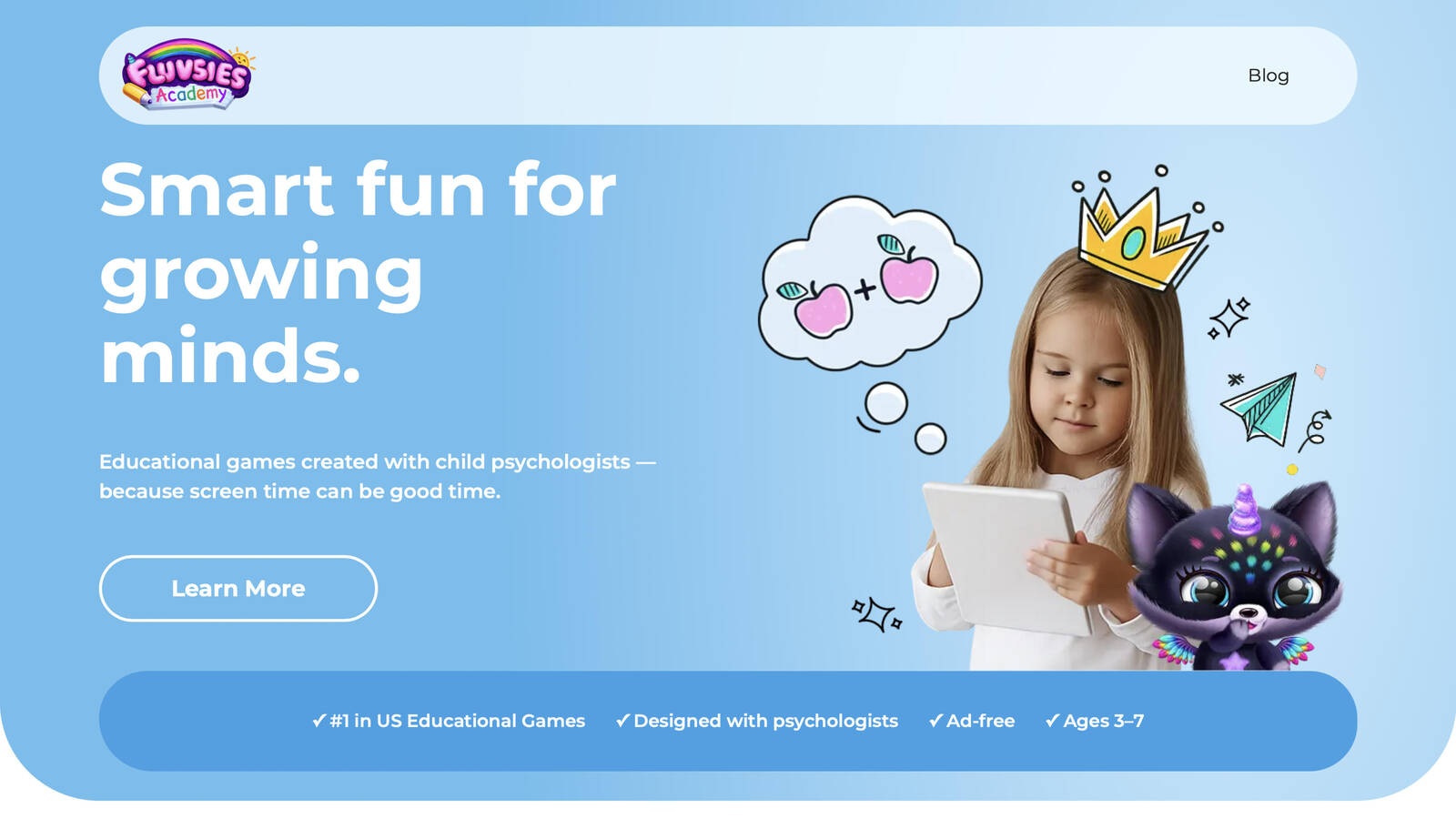
Fluvsies Academy offers educational play made for children ages 3 to 7. The app comes from the TutoTOONS studio and was developed with child psychologists and educators. Activities cover language and ABCs, early math, logic and attention, sorting, life skills, and creativity. One mode asks the child to focus and solve short challenges that build reasoning. Another mode shows simple stories about real jobs, such as baking, helping animals, or space ideas, which grow vocabulary in a relaxed way. The characters feel friendly and the controls stay simple so a three-year-old can manage them with little help. Many parents like the clear progress view that shows what a child has tried. The design stays fully ad-free so attention stays on the task. Short sessions fit a three-year-old’s energy without overwhelm. The play feels guided without heavy rules. Children can practice naming letters or matching numbers while they care for cute characters. Age-appropriate challenges adjust to the child’s pace. The mix of active tasks and lighter stories keeps the experience fresh across many short plays. Real-world skill practice, such as sorting or simple daily habits, appears in gentle form. The overall tone stays calm and supportive for preschoolers just starting structured play. Parents often notice that the short activities help children stay engaged without frustration. The professions stories introduce new words in a natural way. The two modes give variety so a child can switch between focused practice and quieter exploration on different days. The design supports independence while still feeling safe for young learners.
Key features
- Two learning modes for focus and story-based play
- Coverage of language, math, logic, and daily skills
- Age-appropriate challenges that adjust with the child
- Ad-free environment designed with child development experts
Facts and Information
- Aimed at preschoolers ages 3 to 7
- Includes professions stories that build vocabulary
- Supports both guided practice and relaxed exploration
3. Khan Academy Kids
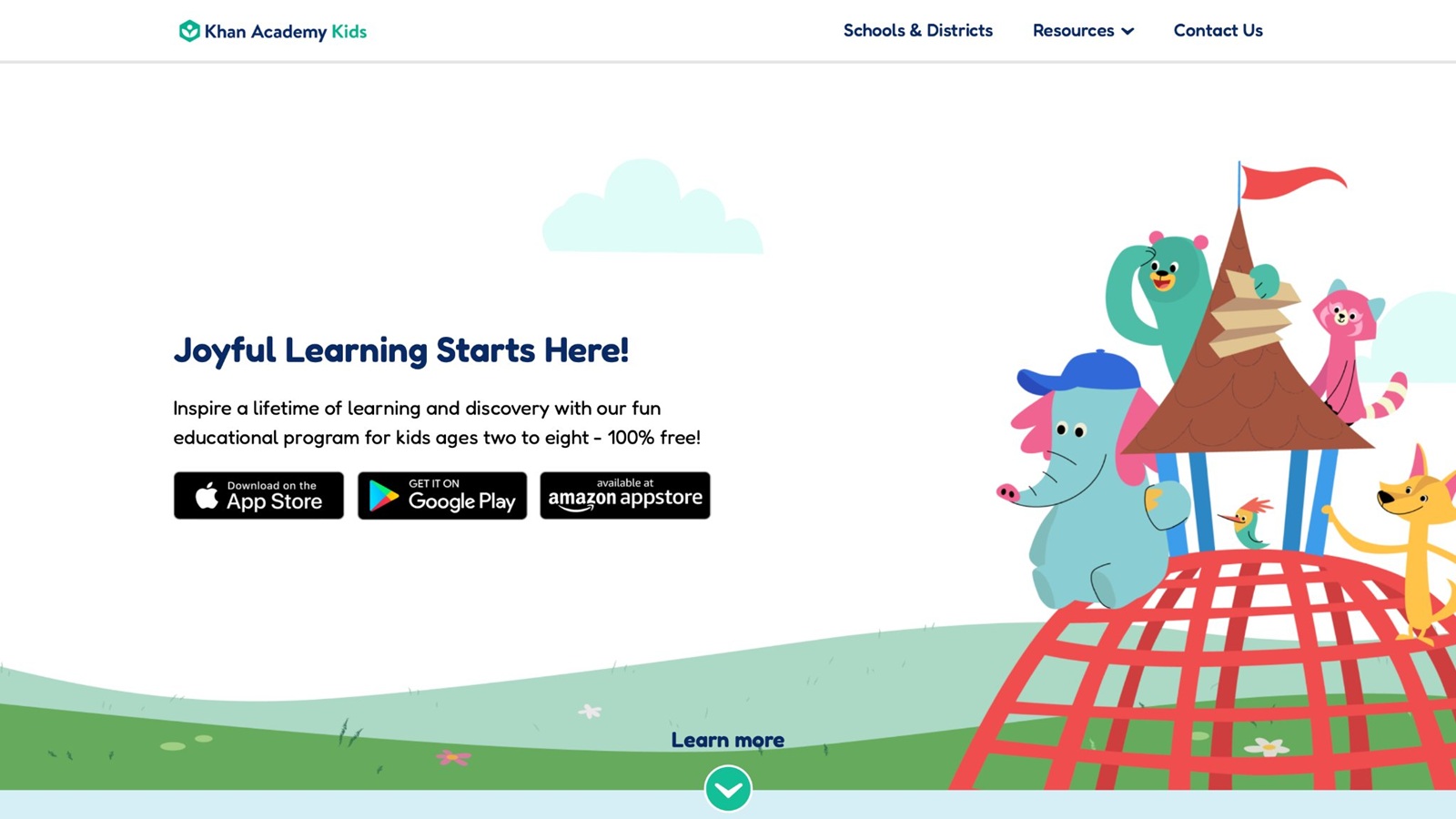
Khan Academy Kids provides a free collection of activities for children ages 2 to 8. The app covers early reading, phonics, math, logic, creativity, and social-emotional skills. Characters guide the child through books, puzzles, sorting tasks, and short lessons. Many activities work offline after download, which helps during travel or quiet time. The content stays free of ads and in-app purchases. Parents can choose where to start based on what their child likes or needs that day. Some children enjoy the stories and drawing tools. The wide age range means parents often select simpler tasks for a three-year-old, such as letter matching or basic counting. A clear path helps a child move from one activity to the next without confusion. Many families use it as a starting point because there is no subscription needed. The design keeps controls simple. Short lessons fit limited attention spans. Offline books and games add flexibility. The focus on the whole child, including feelings, makes it useful alongside other play. Progress stays visible so a parent can see what was practiced. The style feels steady rather than overly exciting. Many children return to favorite books or sorting activities. The lack of pressure helps sensitive learners stay comfortable. Parents can pause and talk about what the characters do. The free access removes barriers for families who want to try educational play. Short sessions work well when mixed with hands-on activities at home.
Key features
- Free library of books, games, and lessons
- Offline play for stories and activities
- Coverage of reading, math, and feelings
Facts and Information
- Designed for ages 2 to 8
- No ads or in-app purchases
- Characters guide children through short tasks
4. PBS KIDS Games
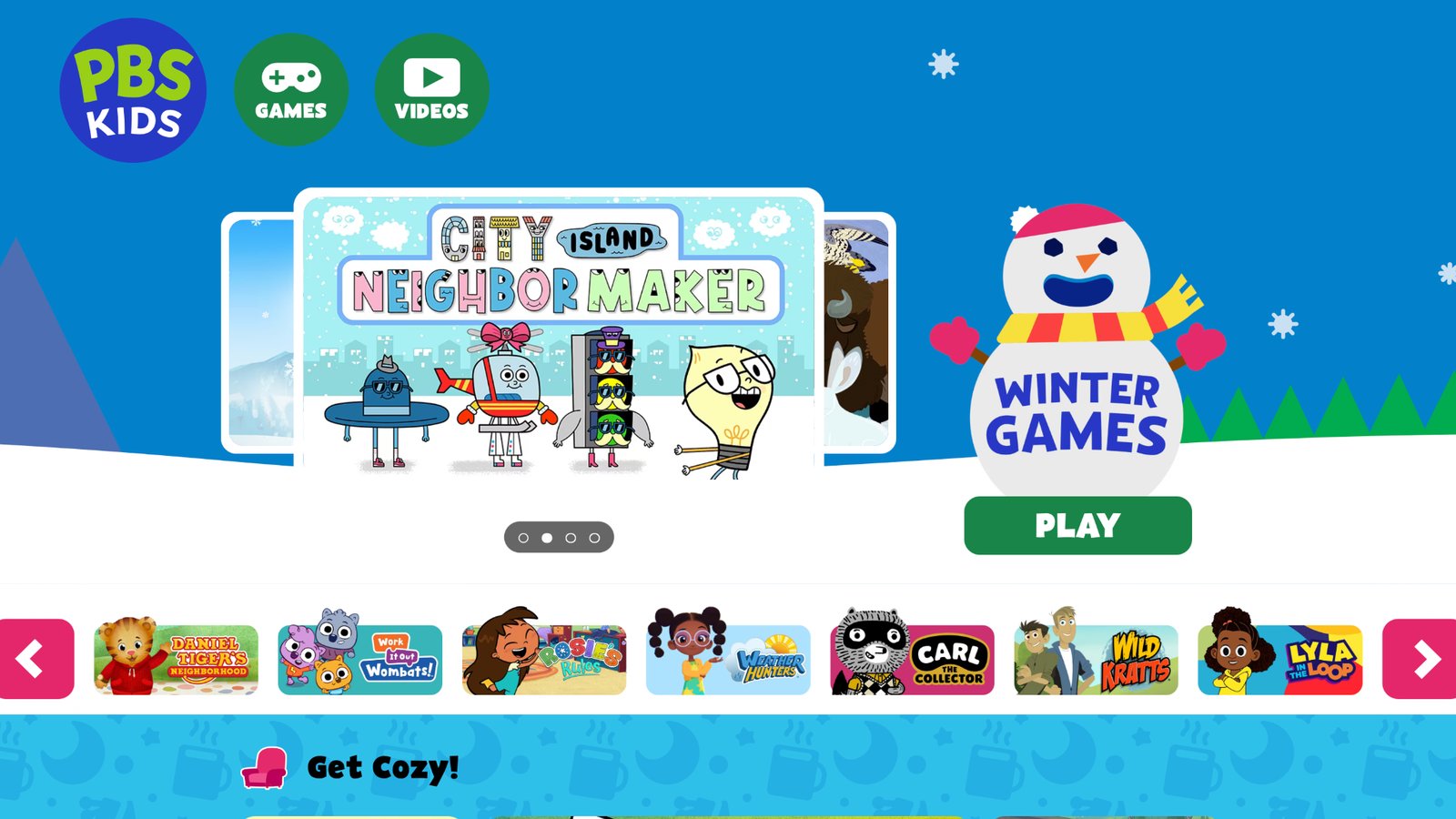
PBS KIDS Games offers a large set of free games based on familiar shows. Children ages 2 to 8 can play with characters they already know from television. Topics include counting, letters, simple science ideas, and feelings. Many games work in a browser or as a downloadable app. Some titles support Spanish. The style stays bright and short so a three-year-old can finish a task quickly. Parents often sit with a child for the first few plays to show the controls. The variety helps when a child likes one show more than another. Games about feelings or daily routines appear in several titles. Offline options exist for many activities once downloaded. The collection works well as a mix-and-match set rather than one fixed path. Short sessions keep energy positive. Familiar characters make the play feel comfortable. Many families use it for variety on days when a structured lesson feels too much. The free access removes barriers. Controls in most games stay simple enough for little hands. Some games focus on matching or sorting with favorite characters. The mix of topics lets a parent choose based on the child’s interest that day. Offline downloads help during travel. The familiar voices and songs add comfort for young children. Many parents notice that children stay engaged longer when they recognize the characters.
Key features
- Games tied to popular PBS characters
- Mix of math, reading, and science topics
- Free access with no account required for many titles
Facts and Information
- Suitable for ages 2 to 8
- Includes both English and Spanish options
- Many games available for offline play
5. Starfall
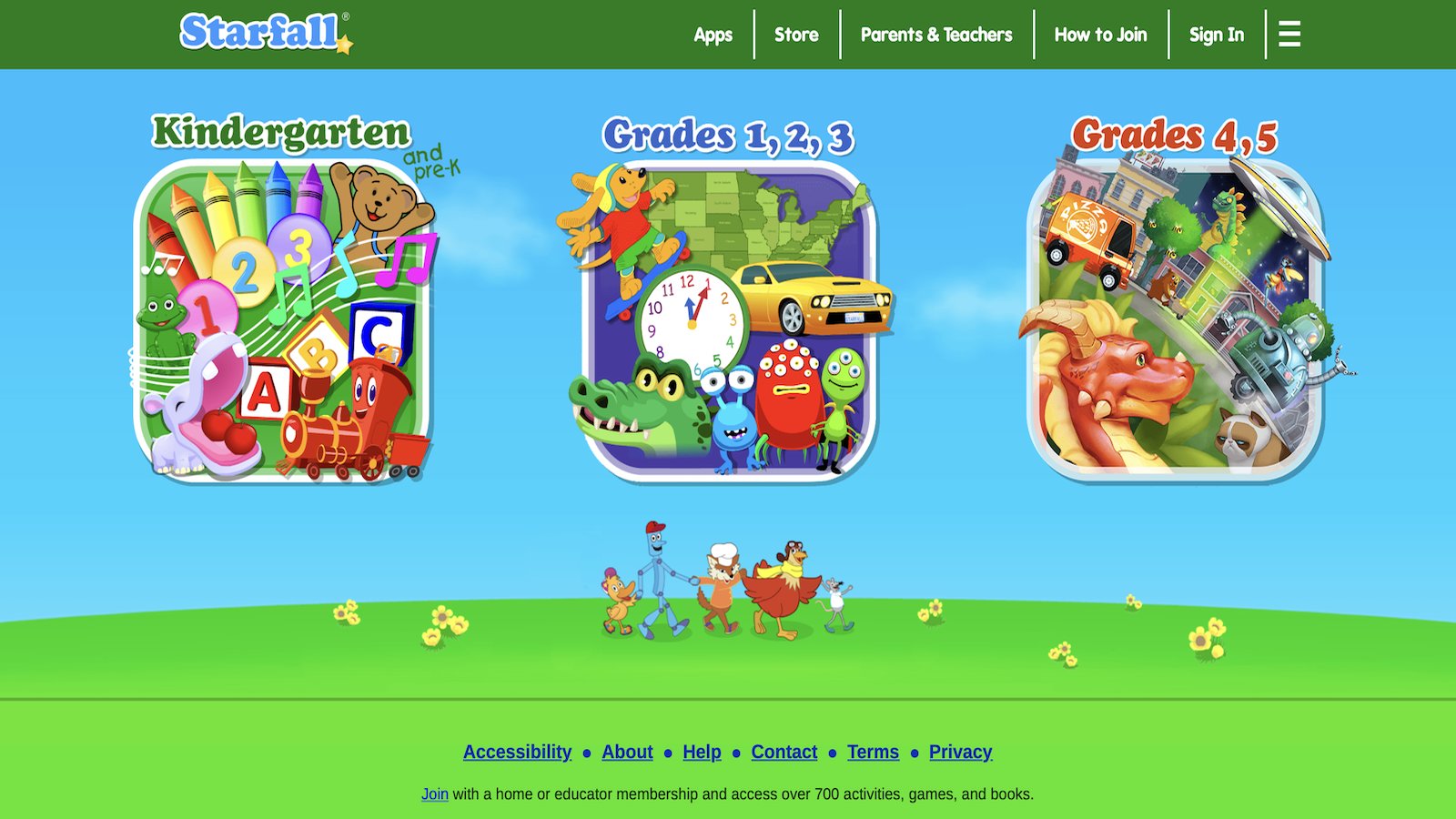
Starfall focuses on early reading through songs, games, and short stories. The core learn-to-read section stays free for every child. Activities start with simple sounds and move to short words. Bright animations and clear voices help a three-year-old follow along. Some parts work in a browser without an app install. The style feels gentle and repeatable. Children practice matching letters to sounds without timers. Many parents use the free section as a daily warm-up before other play. Additional math and reading tools appear in the fuller library. The site has been available for many years, which gives it a steady feel. Short sessions keep the experience light. The step-by-step approach builds confidence with letter sounds. Clear voice guidance reduces the need for constant parent help after the first tries. Browser access makes it easy to start on a computer or tablet. The focus on phonics gives a clear learning goal. Repeat play strengthens memory of common sounds and words. Many children enjoy the songs that repeat letter sounds. The free core section lets families try the style without commitment. Short activities fit limited attention. The clear progression helps a child see progress with letters. Parents often pair it with real books for balance.
Key features
- Phonics-focused songs and matching games
- Free core reading activities
- Clear voice guidance for letter sounds
Facts and Information
- Aimed at preschool through early elementary ages
- Browser-based play available
- Step-by-step approach to early reading
6. Duolingo ABC
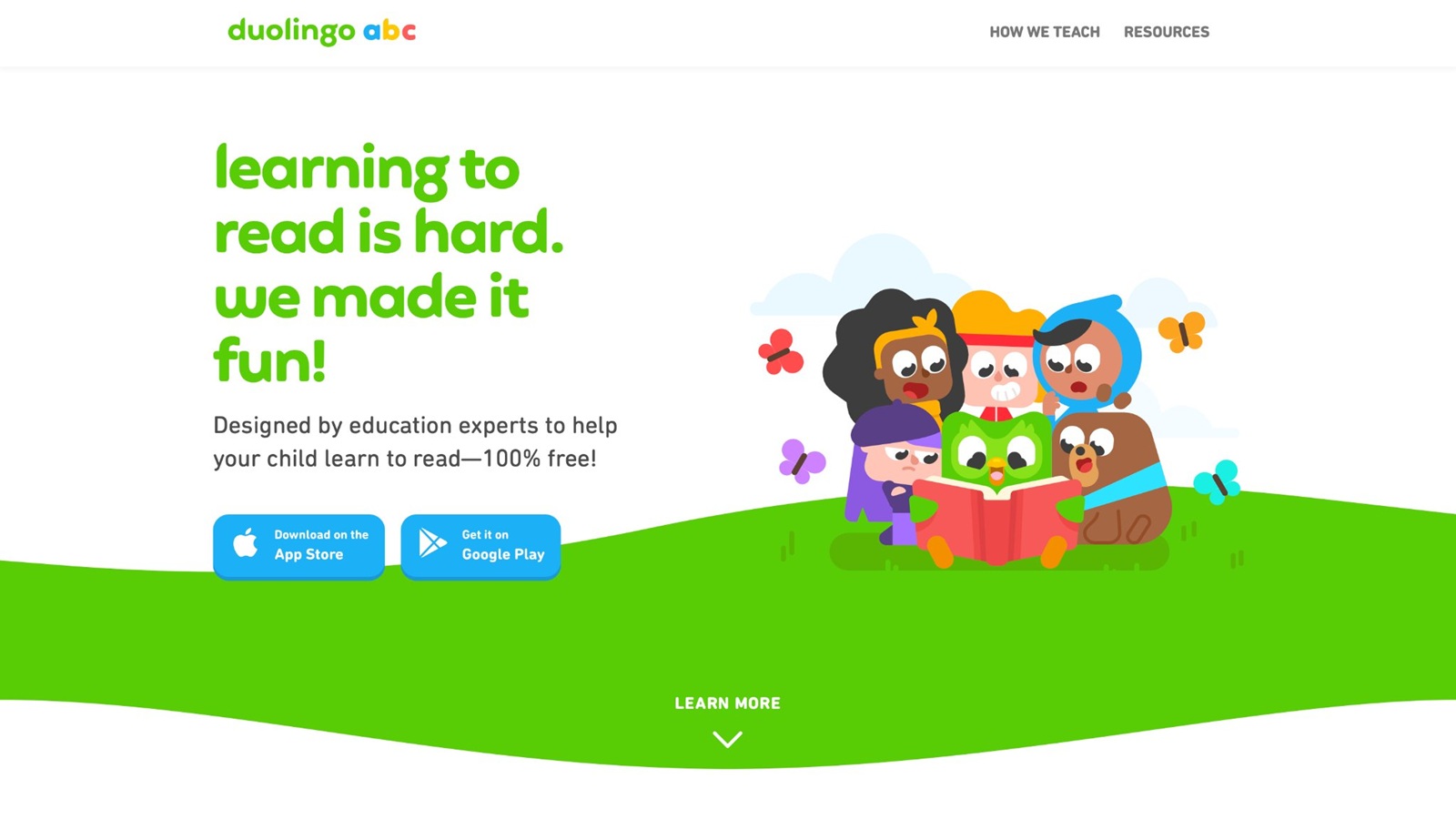
Duolingo ABC helps children ages 3 to 8 practice letters and early reading. The app uses short lessons with tracing and sound matching. Characters make the practice feel like a game rather than a lesson. Content stays free of ads and purchases. Many activities work offline after download. A child can start with letter shapes and move to simple words at their own pace. The lessons stay brief so attention holds. Parents often pair it with other play for balance. The design keeps rules simple. Progress shows in small steps that feel achievable. Some children enjoy the repeated practice of sounds they hear at home. The focus stays on reading basics rather than many subjects at once. Tracing helps build fine motor control. Sound matching supports early phonics. The friendly style reduces pressure. Offline access adds convenience for short car rides or waiting times. The clear path lets a parent see which letters have been practiced. Many families use it as a focused tool for early reading. Short lessons prevent frustration. The characters add interest without extra complexity. Repeat sessions help memory of letter sounds. The free access makes it easy to try alongside other games.
Key features
- Letter tracing and sound matching
- Short, free lessons
- Offline access for core activities
Facts and Information
- Designed for ages 3 to 8
- No ads or purchases
- Focus on phonics and early words
7. Sago Mini World
Sago Mini World offers open-ended play scenes for children ages 2 to 6. A child can mix and match simple activities without a set path or score. Scenes include everyday places and playful characters. Controls use taps and drags that many three-year-olds can manage with little help. There are no points or timers, which keeps the mood calm. The style feels creative and low-pressure. Parents often watch the first session to help with new scenes. Offline play works after download. The collection includes many mini activities that a child can revisit on different days. Some families use it for quiet pretend play when structured lessons feel too much. The open nature lets a child decide what happens next. Short visits work well because there is no need to finish a level. Familiar themes such as homes or animals make the play approachable. The lack of rewards reduces overstimulation for sensitive children. Many children enjoy returning to the same scene to try new actions. The simple controls reduce frustration. Offline access helps during travel. The calm pace supports longer focus for some children. Parents can talk about what the characters do during play. The mix of scenes gives variety without a rigid path.
Key features
- Open-ended scenes with simple controls
- Mix of everyday and imaginative settings
- No scores or time limits
Facts and Information
- Aimed at ages 2 to 6
- Offline play available
- Focus on creative exploration
8. Endless Alphabet
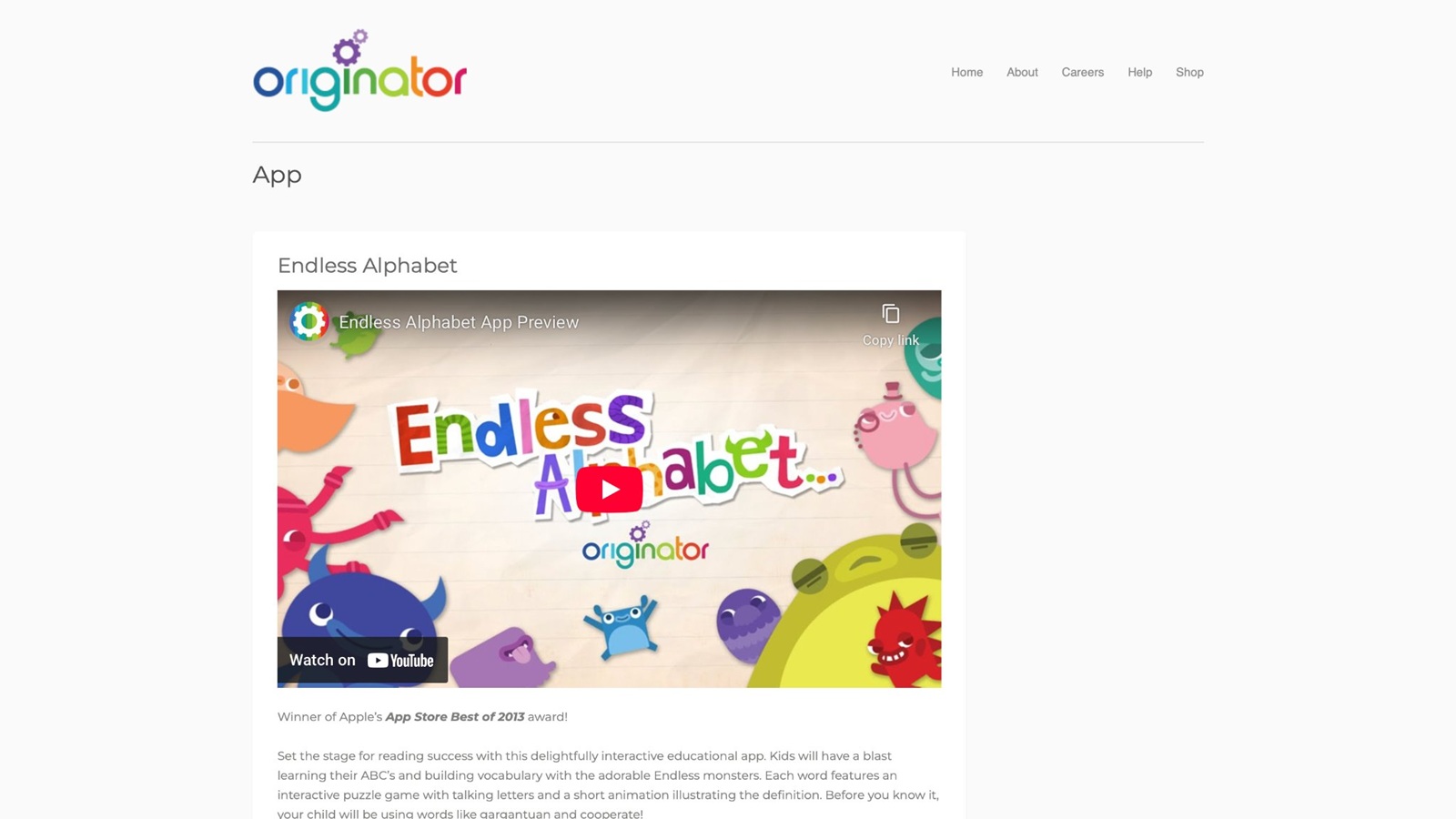
Endless Alphabet turns letter practice into a matching puzzle. A child drags letters to spell a word while a friendly monster eats them. Short animations show the meaning of the word. The app works well for ages 3 to 5. Controls stay simple with large targets. There are no timers so a child can take their time. Many children enjoy the sounds and the clear goal of completing a word. The focus stays on vocabulary and letter recognition. A parent can sit nearby for the first few words to name them together. The style feels playful rather than like a lesson. Repeat play helps with memory of letter shapes and common words. The set of words covers everyday items that a three-year-old may already know. Animations add interest without extra complexity. The short length of each puzzle fits limited attention. Success comes often, which builds confidence with letters. Many children ask to play the same words again. The clear goal makes it easy to see progress. Large targets help little hands. The friendly characters reduce pressure. Offline play is available. Parents often use it as a short warm-up for letter practice.
Key features
- Drag-and-drop letter matching
- Animations that show word meaning
- Simple controls without timers
Facts and Information
- Suitable for ages 3 to 5
- Focus on letters and early vocabulary
- Short, repeatable puzzles
9. ABCmouse
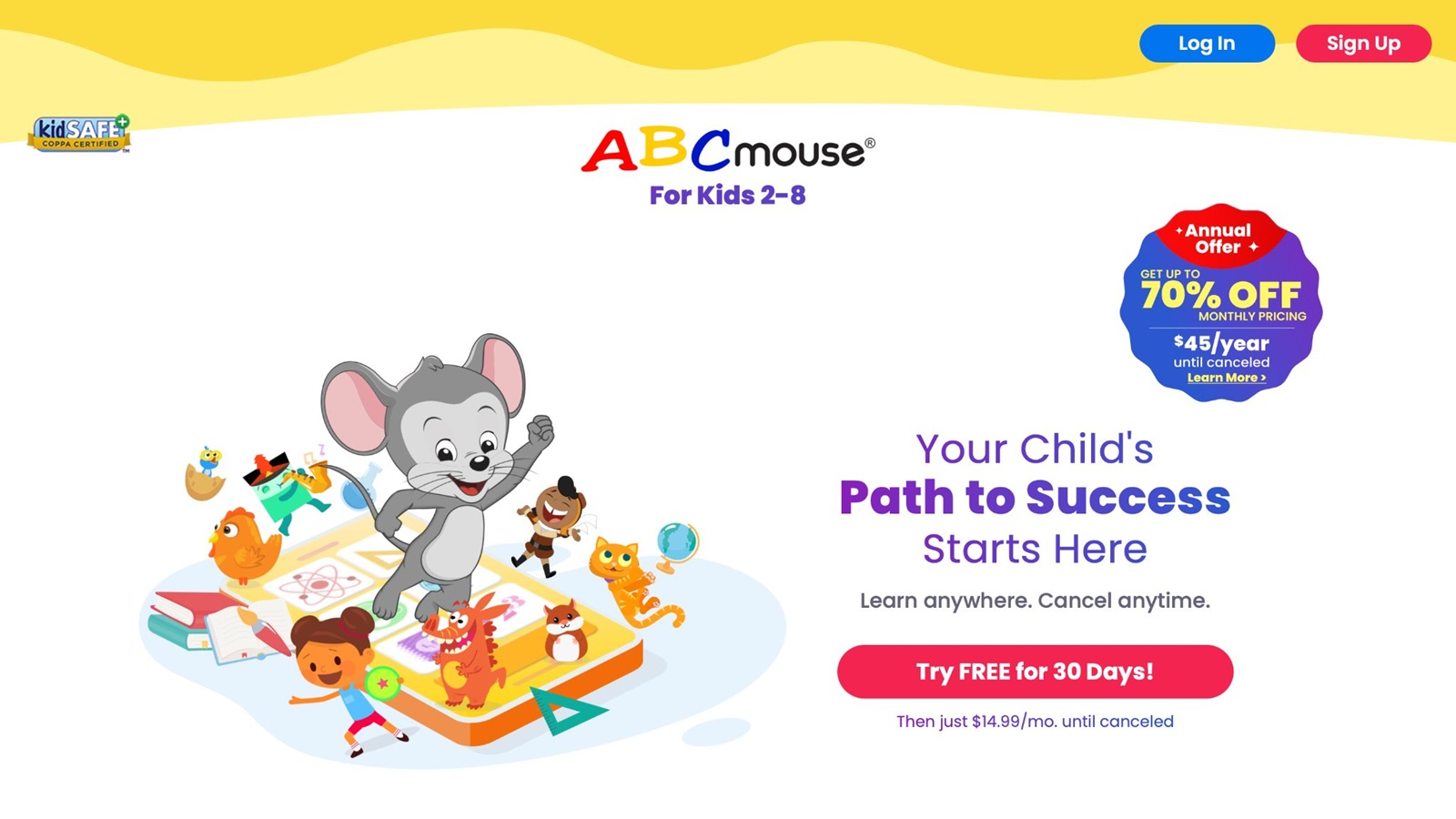
ABCmouse provides a broad set of activities for ages 2 to 8. Topics include reading, math, art, and music. A child moves through virtual places such as a classroom or a farm. Games use songs and short tasks. The free tier offers a limited number of activities each day. Many parents choose it for variety across subjects. The path can feel guided, which some children like. Some activities require a grown-up for the first try to show the steps. Offline options appear with fuller access. The collection covers many early skills in one place. Bright scenes keep interest high for short sessions. Songs help with memory of letters and numbers. The range of topics gives options on days when one subject feels easier. Short activities fit a three-year-old’s energy. The guided path reduces the need to choose from a large menu. Many families use the free tier to sample before deciding on more access. The songs make practice feel light. Clear visuals help a three-year-old follow along. Offline downloads add flexibility. The mix of subjects supports different interests. Parents can sit with the child for new activities. The style stays engaging for short daily sessions.
Key features
- Wide range of subjects in one platform
- Guided path through activities
- Songs and interactive scenes
Facts and Information
- Designed for ages 2 to 8
- Free basic tier with daily limits
- Covers reading, math, and creative topics
10. Lingokids
Lingokids offers songs, games, and short lessons for ages 2 to 8. Topics include language, math, and early science ideas. The free version includes a set number of activities each day. Characters guide the play with clear voices. Many songs use clear repetition that helps a three-year-old remember words. Controls stay simple for younger children. Parents often use it for music-based learning on busy days. The mix of subjects gives variety without needing multiple apps. Some activities focus on listening and matching. Offline play is available for downloaded content. The tone stays upbeat without heavy pressure. Short lessons fit limited attention. The songs make practice feel light. Daily free activities let a family try the style before more access. Clear guidance reduces confusion for little hands. The blend of music and simple tasks supports language growth in a playful way. Many children enjoy the songs and ask to hear them again. The short length prevents fatigue. Offline access helps during travel. The variety of topics gives options based on the child’s mood. Parents can join for the music parts. The design keeps rules simple for preschoolers.
Key features
- Songs and games across several subjects
- Daily free activities
- Simple guidance for young players
Facts and Information
- Aimed at ages 2 to 8
- Mix of language, math, and music
- Free tier with activity limits
11. Homer Learn & Grow
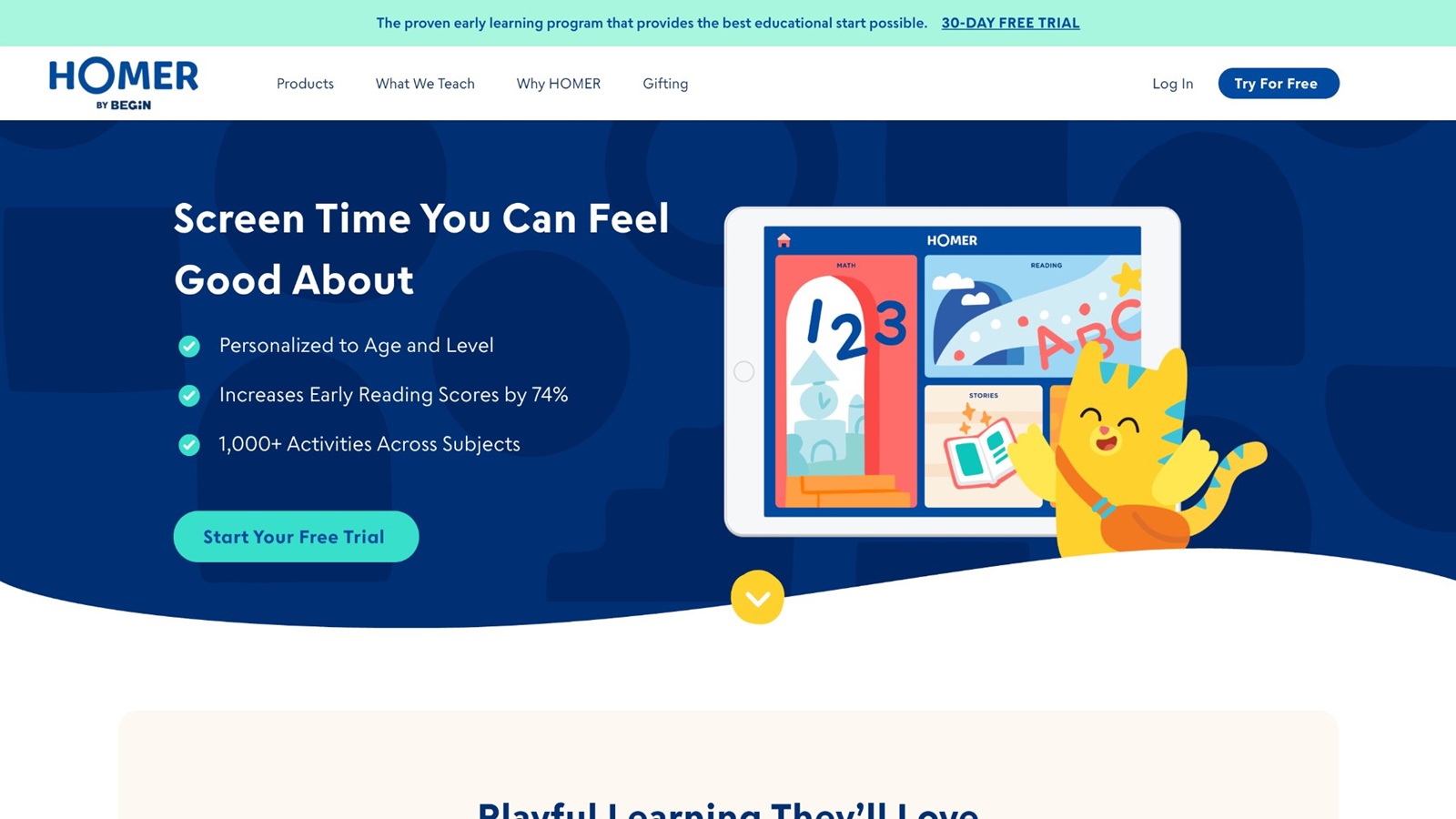
Homer Learn & Grow focuses on early reading paths for young children. Activities adjust based on what the child tries. Short lessons cover letters, sounds, and simple stories. The style uses bright pictures and clear voices. Many parents like the personalized feel that meets a child where they are. Sessions stay brief. The app works well for a child who enjoys stories. Some parts ask for tracing or matching. Offline access appears after download. The focus stays on reading basics with a light touch. Repeat practice helps with memory of sounds. The path shows small steps that feel achievable. Clear voice guidance helps a three-year-old follow along. Stories add interest beyond pure drills. The adjustable challenge keeps frustration low. Many families use it as a focused reading tool alongside broader play. Offline books and lessons add flexibility for travel. The personalized path reduces the need for a parent to choose every activity. Short lessons fit limited attention. Many children enjoy the stories and return to favorite ones. The clear progress helps parents see what was practiced. The design stays calm for sensitive learners.
Key features
- Personalized reading activities
- Short lessons with stories
- Adjustable challenge level
Facts and Information
- Suitable for preschool ages
- Focus on phonics and early reading
- Offline play available
12. Toca Boca World
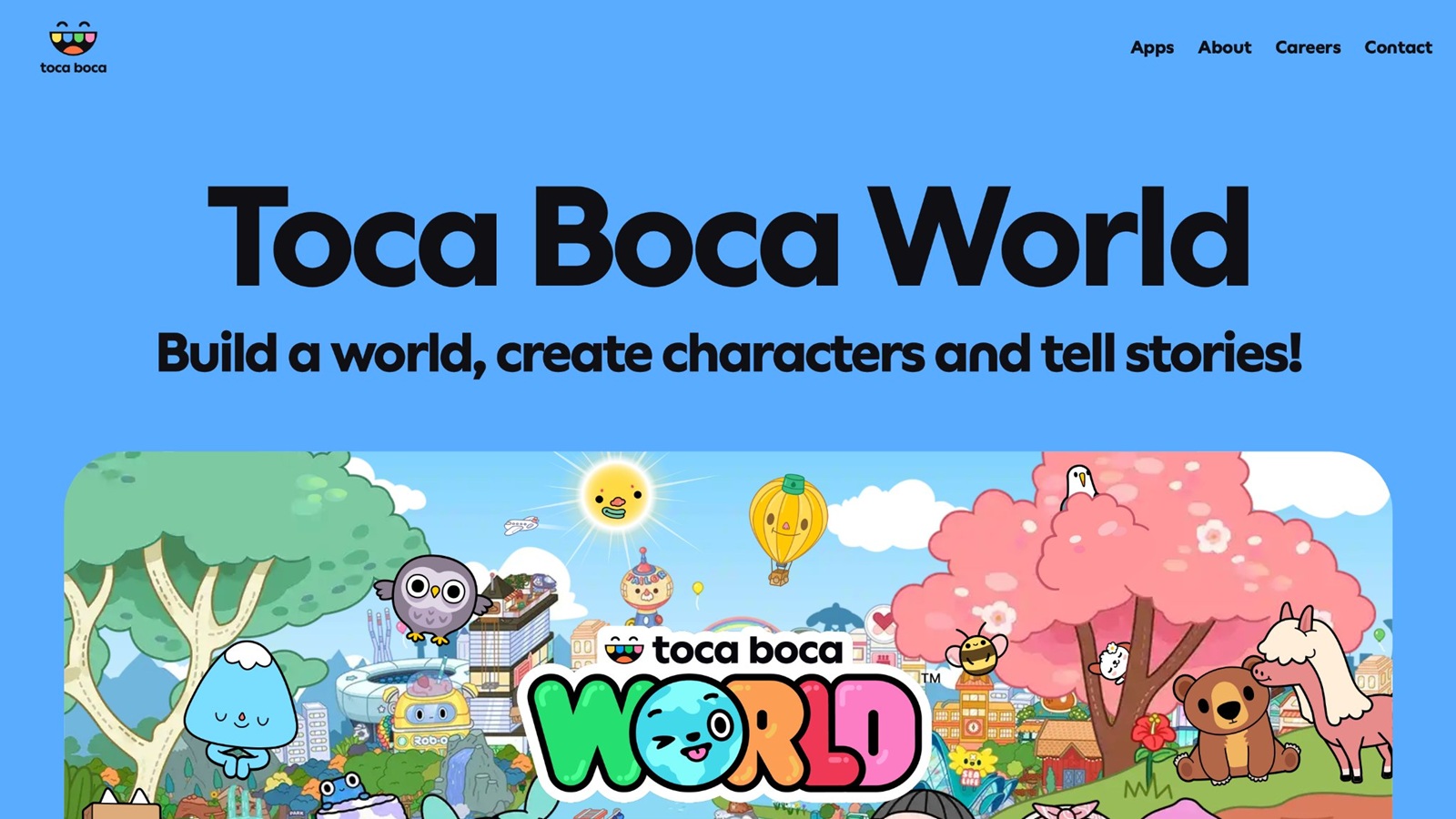
Toca Boca World offers open-ended creative play for young children. A child can explore different scenes and characters without a fixed path or score. Activities include everyday places and imaginative settings. Controls use simple taps and drags that many three-year-olds can handle. There are no ads in the core experience. The style supports pretend play and storytelling. Parents often join the first few sessions to show new areas. Offline play works after download. The collection includes many mini activities that a child can return to. Some families use it when structured lessons feel too much. The open design lets a child decide the story. Short visits fit limited attention. Familiar themes make the play approachable. The calm pace reduces overstimulation. Many children enjoy mixing different characters and objects in one scene. The lack of scores keeps the mood light. Offline access adds convenience. Parents can talk about what the child creates. The variety of scenes gives options for different moods. Short sessions work well when mixed with real-life play. The simple controls reduce the need for constant help after the first tries.
Key features
- Open-ended creative scenes
- Simple controls for young children
- Mix of everyday and imaginative play
Facts and Information
- Aimed at preschool ages
- Offline play available
- Focus on imagination and role play
13. Bimi Boo Preschool Learning Games
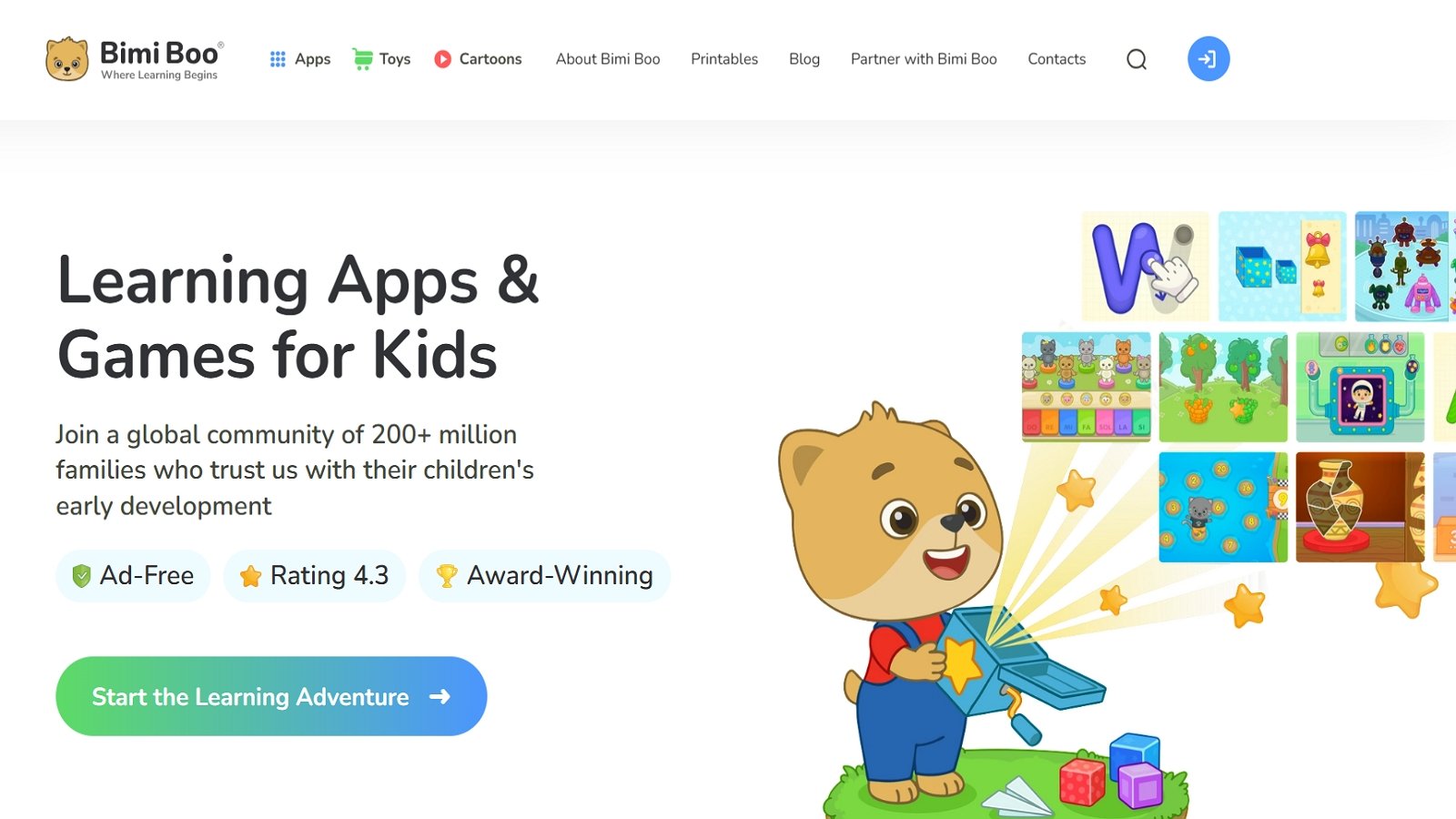
Bimi Boo Preschool Learning Games offers activities for patterns, memory, shapes, and early logic. The app uses bright colors and simple interactions. Many tasks involve matching or completing a short sequence. Controls stay large for little hands. The style feels gentle without heavy pressure. Parents often sit with a child for the first plays. Short activities fit limited attention. The games support cognitive growth through repeat practice. Offline play is available after download. The focus on patterns and memory helps with early thinking skills. Clear visuals reduce confusion. Many children enjoy the success of completing a simple pattern. The collection covers several preschool basics in one place. The calm design works well for sensitive children. Regular short sessions build familiarity with the tasks. The simple sequences help a three-year-old see progress. Large targets reduce frustration. Parents can talk about the patterns during play. Offline access adds flexibility. The mix of activities gives variety without a rigid path. Short length keeps energy positive. Many families use it as a quiet activity between other play.
Key features
- Pattern and memory activities
- Simple matching and sequence tasks
- Bright visuals with large controls
Facts and Information
- Aimed at preschool ages
- Offline play available
- Focus on logic and early cognitive skills
15. Pok Pok
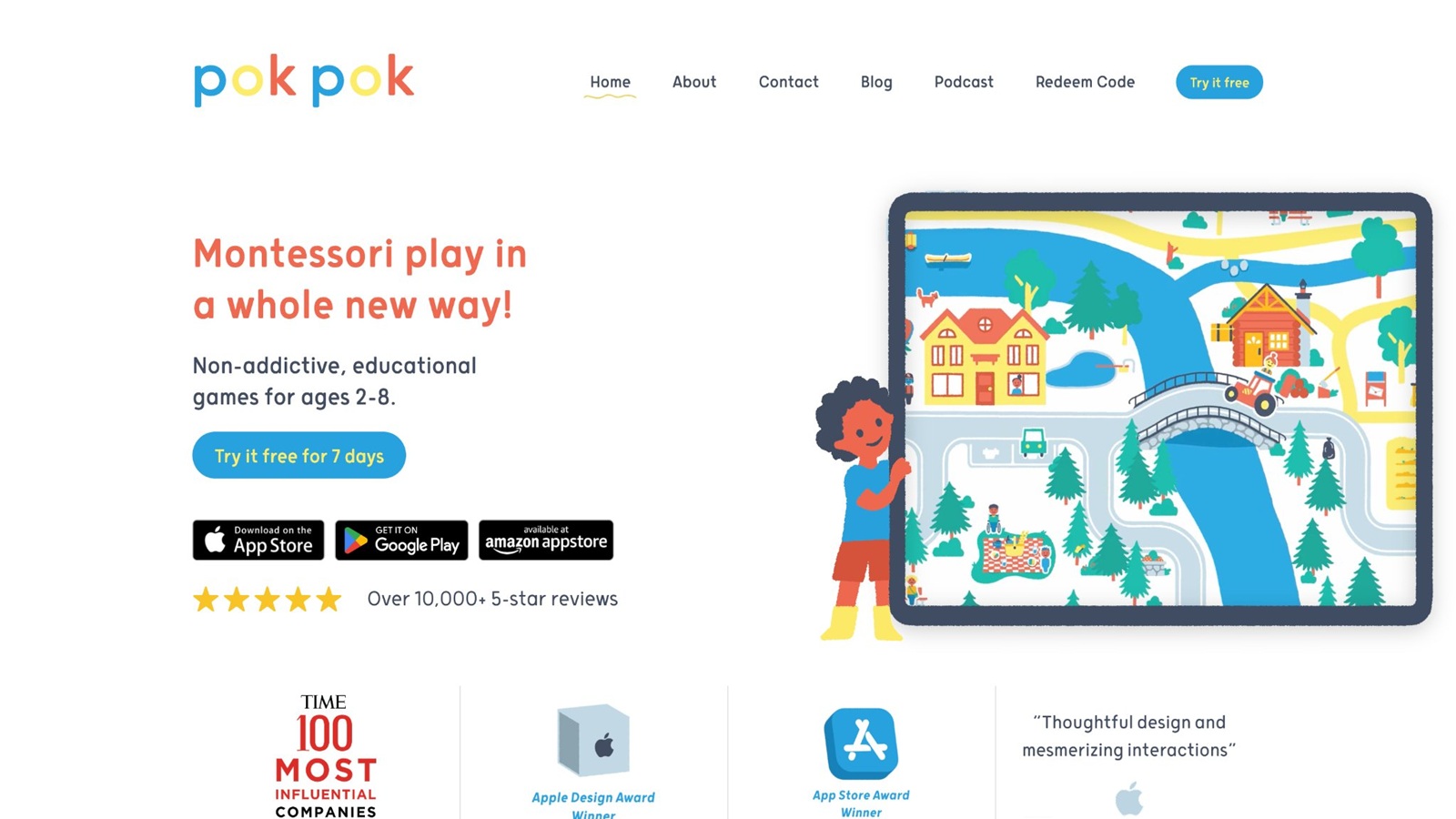
Pok Pok offers open-ended play inspired by real-world materials. A child can explore scenes with simple tools and objects. Activities include drawing, building, and everyday pretend tasks. Controls use taps and drags that many three-year-olds manage. There are no scores or timers. The style feels calm and creative. Parents often watch the first session. Offline play works after download. The collection includes many small activities that a child can revisit. Some families use it for quiet independent play. The open design supports imagination. Short visits fit limited attention. Familiar themes such as homes or nature make the play approachable. The lack of rewards keeps the experience low-pressure. Many children enjoy the freedom to try different actions in one scene. The simple tools reduce complexity. Offline access helps during travel. Parents can join and talk about what the child creates. The calm pace supports longer focus for some children. Short sessions work well when mixed with hands-on play. The design stays gentle for sensitive learners. Many families notice that children return to favorite scenes.
Key features
- Open-ended creative play
- Simple tools and everyday themes
- No scores or time limits
Facts and Information
- Suitable for ages 2 to 6
- Offline play available
- Focus on imagination and exploration
How to Choose Games That Fit Your Child
Look for games that match your child’s current interests. A child who likes animals often enjoys pet care stories. One who likes colors may stay with sorting tasks longer. The best apps for toddlers highlight options with simple controls that work well for this age. Test a short session together the first time. Watch if the child can finish a task without help.
Many families rotate two or three games so the novelty stays fresh. Short play, then a real-life activity such as drawing or building, keeps the balance. The best apps for preschoolers often include short activities that match limited attention. Check that the game works offline if you need quiet time away from home. Clear rules and big buttons reduce frustration for a three-year-old.
A parent’s guide to safe skill building apps for toddlers covers what to check before the first session. Free online games for kids can serve as a starting point when testing interests. Matching the play to what the child already enjoys helps sessions stay positive and useful.
Safety and Screen Time Tips for 3 Year Olds
Choose options that stay free of ads. Ads can pull a child away from the task. Many parents set a timer for 10 to 15 minutes. Sit nearby at first so you can talk about what happens on the screen. How to protect kids online offers steps for keeping sessions safe. Ask simple questions like “What color is that?” or “What does the pet need?” This turns play into a shared moment.
Download games ahead of time for travel. Review the privacy settings on any account you create. Pair screen time with hands-on play so skills move into daily life. A parent’s guide to healthy screen time with educational apps covers short sessions and shared talk. Many families find that calm games support better focus during the day.
Healthy screen habits show ways to balance digital play with other activities. Safe apps for kids focus on designs that avoid distractions. Short, calm sessions help a three-year-old stay engaged without feeling overwhelmed.
FAQ
What skills do online games help a 3 year old practice?
Online games for 3 year olds often focus on matching colors, sorting shapes, and simple care tasks such as feeding a pet or tidying a room. These short activities support hand control, early memory, and basic problem solving while a child taps or drags on the screen. Many games also include gentle stories that let little ones practice kindness and notice how characters feel during play. Clear words and sounds help language grow as the child hears the same terms again and again in a low-pressure way. When educational games sit beside real-life play like building blocks, the skills move more easily into daily routines and support steady growth in focus, patience, and confidence over time. The best games for 3 year olds online keep each task short and clear so success comes often and frustration stays low. Repeat practice with familiar themes helps a child remember steps and feel more sure of what to do next. Simple logic tasks, such as choosing the right shape or finishing a short sequence, also build early thinking skills that carry over into everyday moments at home. The best brain games for kids show how light challenges support these early thinking skills without pressure.
Are there ad-free games that work well for preschoolers?
Yes, several options stay free of ads so a child can finish a short task without sudden interruptions that pull attention away. Ad-free play keeps the focus on matching, sorting, or simple stories instead of extra screens that break concentration. Many parents prefer this calm style because it matches the short attention span of a three-year-old and reduces the chance of overstimulation during screen time. Games designed with input from educators often use big buttons and clear goals that reduce frustration and help children succeed often. Pairing these sessions with hands-on activities at home helps balance screen time with real-world practice and keeps learning useful beyond the device for everyday growth. Calm, ad-free options tend to support longer engagement for preschoolers who need gentle structure. The lack of distractions lets a child stay with one activity long enough to finish it and feel the satisfaction of completing a task. Many families find that this style of play fits better into daily routines and leaves more room for conversation about what happened on the screen. Educational games for kids cover options that stay free of distractions and support steady focus.
How long should a 3 year old play online games?
Most families keep sessions short, around 10 to 15 minutes, because attention stays brief at this age and longer stretches can lead to restlessness or loss of interest. One or two simple activities, such as matching colors or caring for a character, often work better than a long stretch of continuous play. Watch for signs that the child is ready to stop, then move to a hands-on task like drawing or stacking blocks to carry the learning forward in a natural way. Short play followed by real-life practice keeps the experience positive and useful without overload. Rotating a couple of games helps interest stay fresh and supports steady engagement over many days without pressure. This approach fits the natural rhythm of a three-year-old and helps the best games for 3 year olds online stay effective. Ending the session while the child still feels interested makes the next playtime easier to start. Many parents notice that short, focused sessions lead to better focus during the rest of the day compared with longer stretches of open play. Learning through play examples show how brief digital sessions connect to hands-on follow-up that keeps energy positive.
Can these games help with daily routines?
Some games show simple tasks like cleaning a room or caring for a pet, which gives a clear model a child can try at home right after play. A three-year-old practices the steps in a playful way, then helps with the same job in real life, which helps the habit stick more easily through gentle repetition. This pairing reinforces both the screen version and the hands-on version so the skill feels familiar in everyday moments at home. Games focused on life skills often include gentle routines that feel approachable and build patience through short, repeatable practice. Short sessions followed by the real task keep learning practical and connected to family life in a calm, useful way. Many families notice that these small steps carry over into daily habits with less resistance. A child who feeds a character on the screen may then want to help feed a pet or set the table. The playful model makes the real task feel familiar and less like a new demand. Chore games for real life skills through play connect short digital practice to everyday habits that build follow-through.
How do parents choose online games that fit a 3 year old?
Parents often look for games with big buttons, bright colors, and one clear goal so a three-year-old can succeed without getting stuck or needing constant help. Matching the play to the child’s interests, such as animals or colors, helps attention last longer and makes the session more enjoyable from the start. Testing a short session together the first time shows whether the child can finish a task with little guidance and whether the controls feel right for little hands. Many families also check that the game works offline for car rides or quiet time at home so play stays available when needed. Options that stay calm and support early skills tend to pair well with everyday routines and reduce the chance of frustration during play. The best games for 3 year olds online usually combine simple controls with gentle skill practice that feels natural. Watching how the child responds during the first few minutes helps parents decide whether to keep the game or try a different one. Clear goals and short activities make it easier to see what the child is learning and to talk about it afterward. The best learning games for kids highlight choices that match early interests and simple controls.
Read Also:
- Best Games For Preschoolers in 2026
- Best Games For Toddlers in 2026
- Best Educational Games for Toddlers
- Best Life Skills Activities for Kids
- Best Games For Young Kids in 2026
Discover safe games that turn play into growth with TutoClub!