

Best Emotional Regulation Games For Kids in US






Parents search for the best emotional regulation games for kids in US that turn play into real practice for big feelings. These games teach children to notice emotions, pause before acting, and pick kinder choices in a low-pressure way. Educational games for kids that focus on empathy and daily care stand out for this skill building.
Parents can also explore curated lists of the best social-emotional games for kids that build empathy and connection alongside the best emotional regulation games for kids. These guides show how the best emotional games for kids turn everyday play into practical practice for noticing feelings, pausing, and choosing kinder responses.
Try TutoClub to start building these skills today!
Why Emotional Regulation Games Help Kids Grow

Emotional regulation games give children a safe, low-pressure space to practice the exact skills they need when feelings get strong. A child learns to spot a feeling, take a breath, and choose a next step while nothing is at stake. That same practice shows up later in real life, when a toy breaks or a sibling takes a turn. Games that ask for care, like feeding a pet or comforting a character, build the same muscle. The child sees the result right away. A calm response leads to a happier character or a finished task. Many families notice calmer play sessions after regular use of these tools. The right game keeps the mood light so the lesson sticks without feeling like a lesson. Educational games for kids that focus on empathy and daily care turn this practice into something children actually enjoy and ask to play again. Over time the child starts to use the same pause on their own. The pet care games shows the same care skills in action during everyday routines.
How to Pick Games That Actually Work
Look for emotional regulation games that match your child’s age and interest so they stay engaged from the start. Short sessions work better for younger kids. Clear faces and simple choices help toddlers name feelings. Older kids do better with stories that include small problems and kind fixes they can talk about. Ad-free options keep the focus on the skill instead of distractions. Games that reward patience and empathy give more practice than pure speed races. Check if the activity lets a child try again after a miss. That retry builds the real habit of regulation. Parents who sit nearby and name what the character feels often see the skill transfer to real moments. A good match also fits the child’s current energy. Some days a quiet matching game works best. Other days a short story with choices holds attention longer. Watch how the child responds and switch if needed. The learning games for children often include the same care and pause skills found in strong regulation games. Safe apps for kids keep the focus clear without interruptions.
Best Emotional Regulation Games For Kids in US
1. TutoClub - Best Emotional Regulation Games For Kids in US
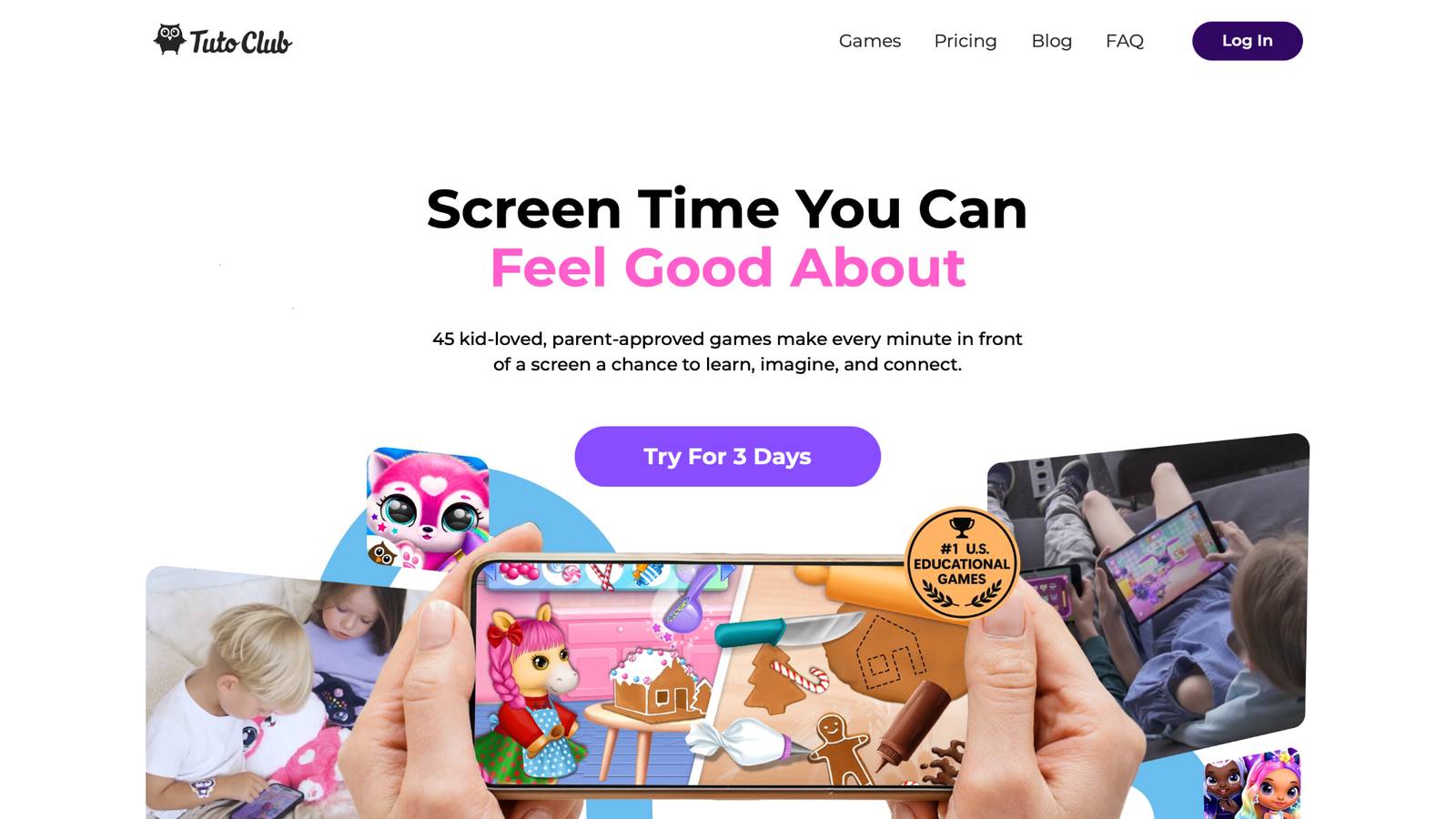
TutoClub educational games for kids deliver a full subscription with more than 45 ad-free titles from the TutoTOONS studio in Kaunas, Lithuania. Kids hatch and care for cute pets, comfort baby characters, tidy rooms, and follow gentle stories that ask for kindness.
My Baby Unicorn turns babysitting into empathy practice. Fluvsies and Smolsies let children notice needs and respond with care. Sweet Baby Girl Clean Up 5 turns daily chores into calm wins that reward patience. Fashion and music titles (such as Kpopsies, L.O.L. Surprise! O.M.G. Fashion Club, and Sweet Baby Girl Pop Stars) add places to show feelings through style and play.
Sessions stay short, bright, and free of ads or interruptions. The mix of pet care, cleanup, and story choice makes emotional regulation feel natural. Children practice pause, name the feeling, breathe, and try a kind next step right inside the game. Many parents sit nearby and watch the same care appear with siblings or real pets later. The platform updates regularly and works across devices with family sharing. This collection stands out as the best emotional regulation games for kids because the skill practice lives inside play kids already love.
- Key features: 45+ ad-free games focused on empathy, pet care, cleanup stories, puzzles, memory, and creative play in one subscription. Short sessions with clear characters and adaptive challenges. Offline play after download and multi-device access.
- Facts and Information: Built by TutoTOONS in Kaunas, Lithuania. Games center on noticing needs, choosing kind actions, and building routines. Suitable for preschool and early elementary ages. Parent-approved, COPPA-compliant environment with regular content updates.
TutoClub Overview
TutoClub is your gateway to a magical world of educational games designed especially for children.
As part of TutoTOONS, a leading kids' games studio, we offer premium access to over 45 ad-free games.
Our mission is to blend learning and play, helping kids explore, create, and grow in a safe online space.
Thousands of parents trust us for family-friendly content that sparks imagination and builds essential skills.
Key Features
- Unlimited Access: Unlock full content in all games with no interruptions.
- Ad-Free Experience: Enjoy seamless play without any ads or distractions.
- Skill Development: Games foster creativity, social skills, communication, and more through fun activities like pet care and cleanup challenges.
- Regular Updates: Get new releases, exclusive content, and future updates automatically.
- Easy Subscription: Cancel anytime with no obligations, simple and flexible for families.
Explore Our World
TutoClub provides a rich ecosystem of educational games for kids, featuring ad-free experiences that promote creativity, focus, and emotional growth through play.
This platform turns screen time into valuable learning opportunities, with parent-approved content that builds essential skills and sparks curiosity in young minds.
- TutoClub Games: Over 45 educational games, including popular titles like Fluvsies, Smolsies, and the Sweet Baby Girl series
- Blog: Insights, tips, and stories for families on kids' learning and play
- FAQ: Comprehensive answers to frequently asked questions about subscriptions, features, and more
Get TutoClub on Your Device
TutoClub delivers premium kids educational games directly to your mobile devices, making learning accessible anytime, anywhere.
With apps available on major platforms, families can easily download and subscribe for ad-free play that turns screen time into skill-building adventures.
Perfect for parents seeking safe, engaging content on iOS, Android, or Amazon devices.
Why Choose TutoClub?
We're committed to 100% safe, enriching entertainment that kids love and parents approve.
Join the thousands who've seen their children thrive through playful learning.
Ready to start the adventure?
Start with TutoClub and watch calm skills grow through everyday play!
2. Fluvsies Academy
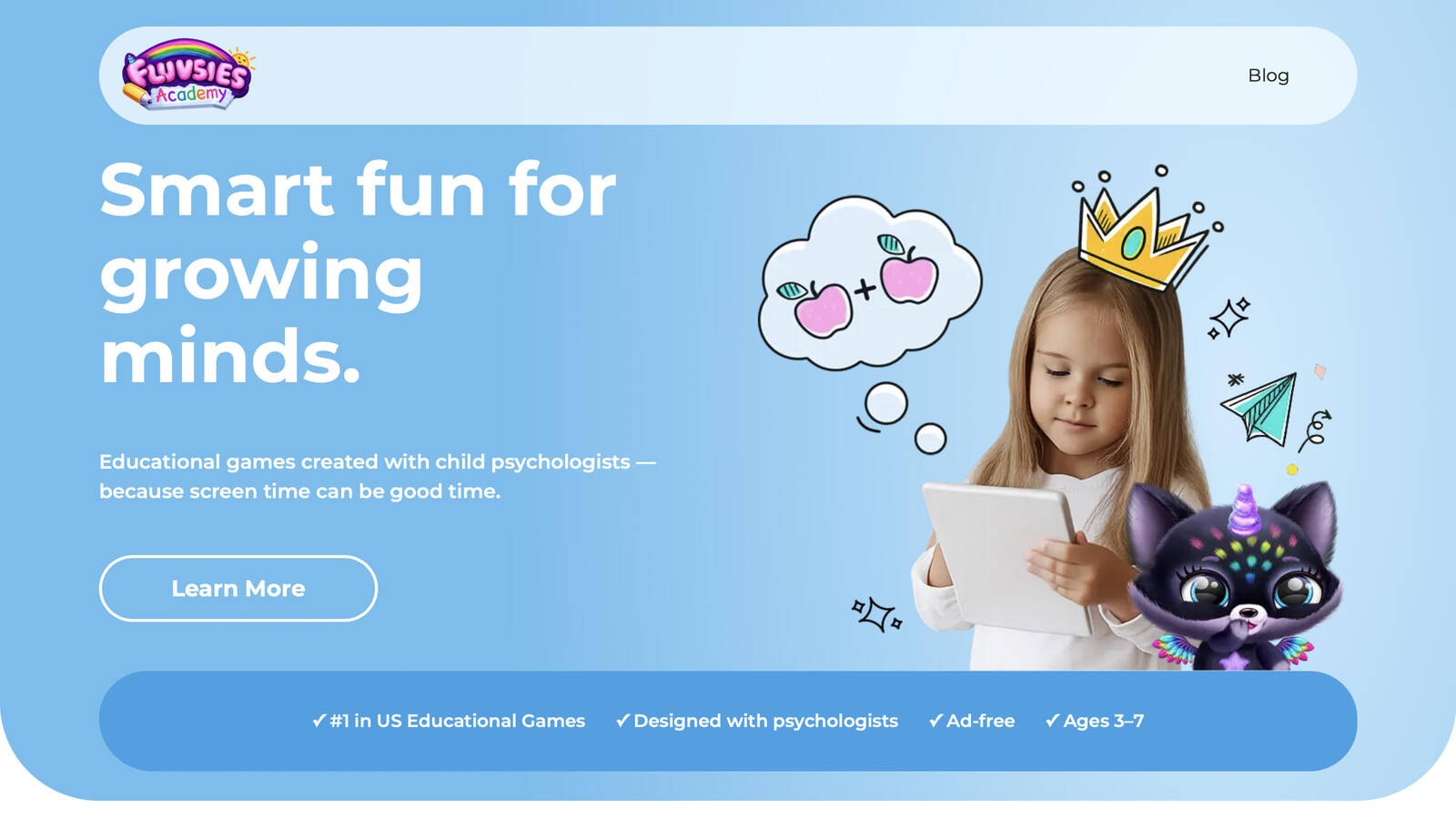
Fluvsies Academy offers ad-free educational games designed for children ages three to seven, created in collaboration with child psychologists and educators. The app turns screen time into structured yet playful learning across language, phonics, math, logic, sorting, creativity, and real-world professions such as firefighter, vet, or baker. Children practice everyday skills like brushing teeth, helping at the store, or cooking through short, guided activities that encourage focus and gentle self-regulation. Two learning modes support growth: active problem-solving that builds attention and reasoning, and passive storytelling that introduces calm, imaginative scenes. Progress reports allow parents to track development while the environment remains free of ads and in-app purchases. The design stays age-appropriate and balanced so sessions never feel overwhelming. Many families value the emotional safety built into the play, where kids learn to stay focused and respond kindly within familiar routines. The content updates regularly and works on major mobile devices. While the focus stays tightly on early learning ages, it provides a steady space for building emotional balance alongside academic skills. Some children who prefer more open-ended creative play may find the guided structure a natural fit for daily practice. The combination of short activities and clear feedback helps preschoolers build confidence in both learning and feeling management.
- Key features: Ad-free games covering phonics, math, logic, life skills, and professions. Active and passive learning modes. Progress tracking and offline capability.
- Facts and Information: Designed for ages 3–7 with input from child psychologists. Emphasizes emotional safety, empathy, mindfulness elements, and real-world habits. Available on major mobile platforms. COPPA-compliant and privacy-focused.
3. Find & Match: Feelings Safari by ThinkPsych
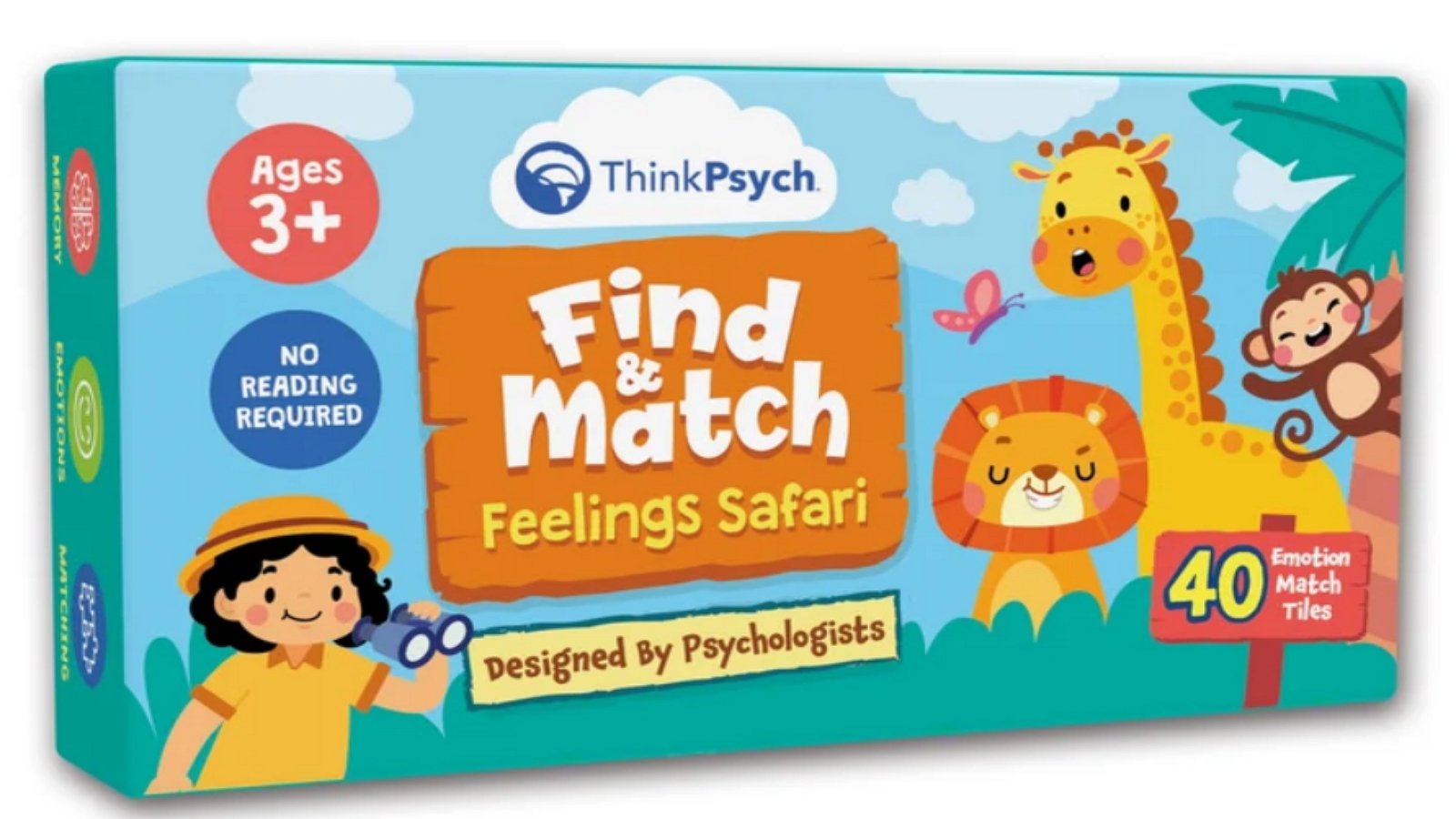
Find & Match: Feelings Safari uses thick laminated tiles featuring expressive animals and children to introduce first emotion words. Designed for ages three and up, the set covers ten emotions across forty tiles and requires no reading, making it accessible for pre-readers. Children match faces that show the same feeling and can act out expressions or talk about what the characters might experience. The game supports one to four players and works well for short family sessions or individual practice. The durable tiles hold up for repeated use at home or in classrooms. Players build recognition of facial cues and early vocabulary through simple matching. Some children move through the tiles quickly once they know the faces, so the discussion that follows each match adds the main value. The set serves as a strong starting point for naming feelings without pressure. Families often use it as a daily check-in tool before other activities. The physical format allows children to handle the pieces and connect touch with emotion words. The bright illustrations keep young attention focused while the matching mechanic reinforces the names of common feelings. Parents can extend the play by asking simple questions about when the child has felt the same way.
- Key features: 40 laminated tiles covering 10 emotions, no reading required, suitable for 1–4 players ages 3+.
- Facts and Information: Focuses on early emotion vocabulary and facial expression recognition. Portable and durable for home or classroom use. Developed by psychologists.
4. The Coping Skills Game
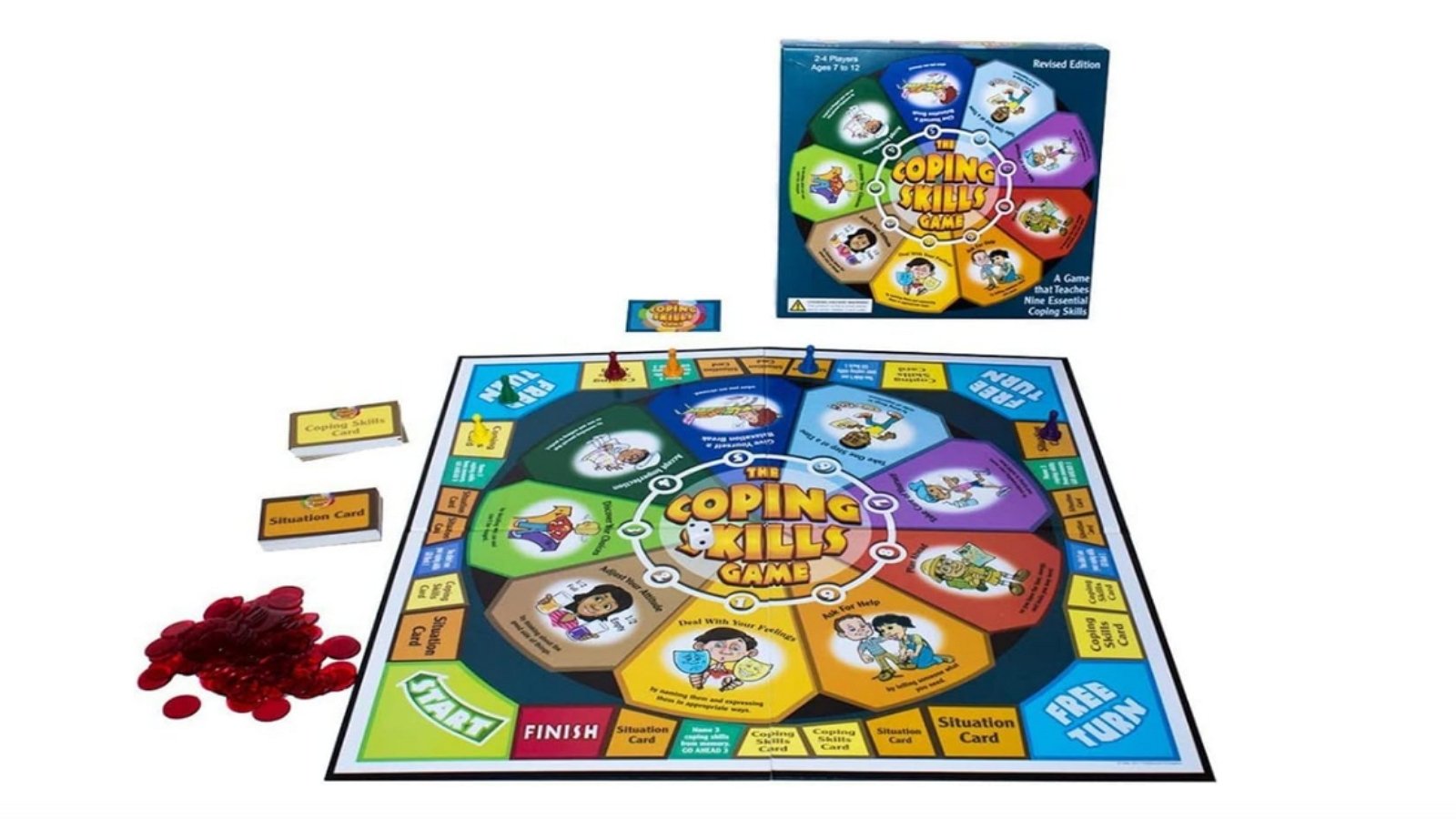
The Coping Skills Game is a board game for ages seven to twelve that offers nine categories of coping strategies. Players move around the board and practice handling feelings and choices through card draws and discussion. The categories cover a wide range of tools so children see more than one way to respond. Turns stay structured, which helps groups stay focused. Some cards require reading support, and the game length can stretch for restless groups. It works best with an adult who keeps the talk light and connects the strategies to the child’s own day. The real-life scenarios on the cards give practice with everyday situations. Children learn to identify feelings, adjust attitudes, and discover choices. The format supports both home use and small group sessions. The board provides a clear path so players know when the game will end. Families can shorten the play by using only a few categories if time is limited. The discussion cards encourage children to share their own examples.
- Key features: Board game with nine coping categories, discussion cards, for ages 7–12.
- Facts and Information: Builds vocabulary for strategies and choice-making. Suitable for family or small group play. Focuses on real-life situations.
5. Breathe, Think, Do with Sesame Street
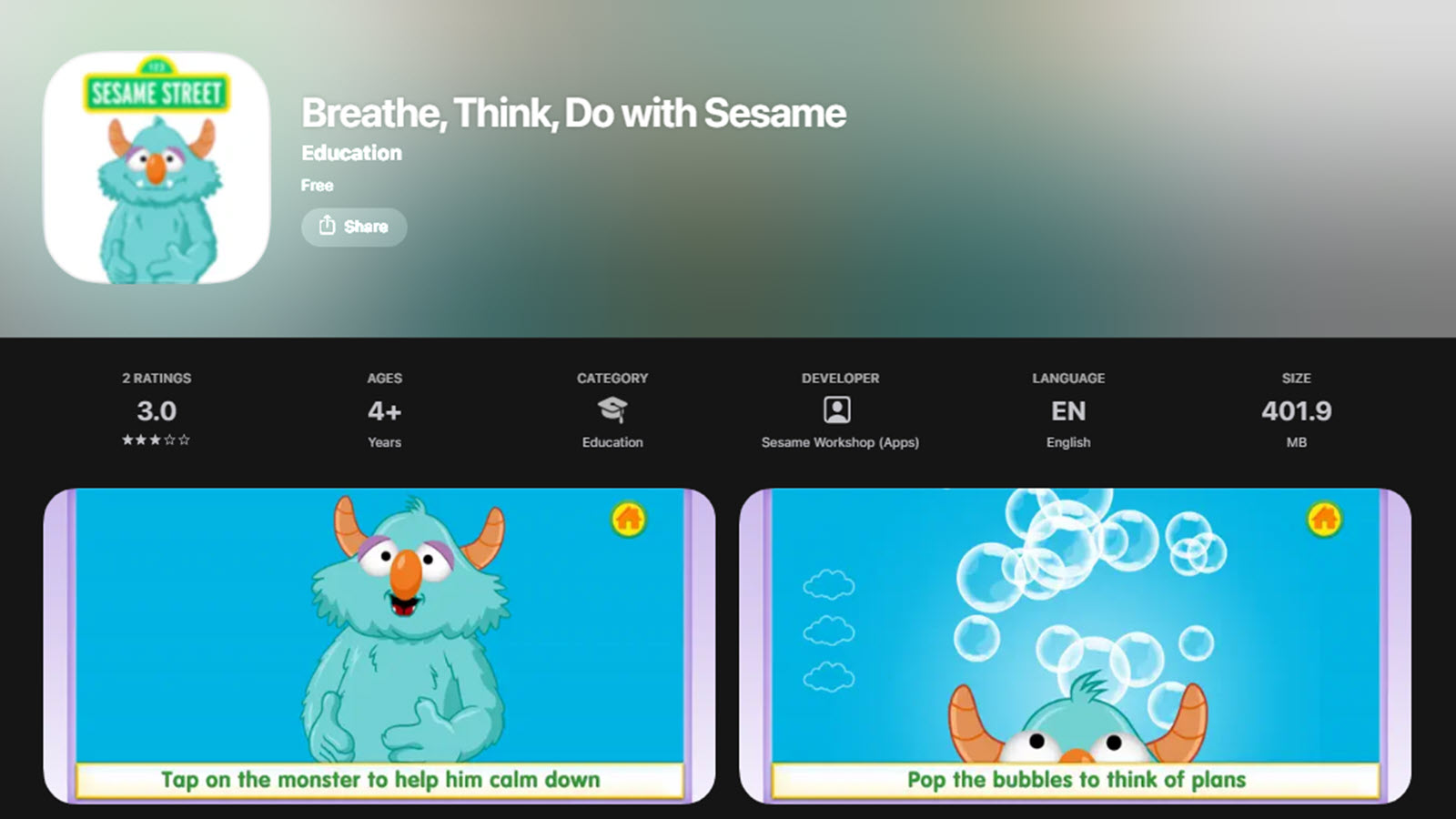
Breathe, Think, Do is a free app for ages two to five that walks children through three steps: breathe to calm, think of a plan, and do it. Kids help a Sesame Street monster character handle everyday frustrations. The familiar characters make the steps feel like a story instead of a rule. Short levels keep attention high. Parents can sit with the child and repeat the sequence later in real life. The app works well for preschoolers still learning co-regulation. Older children may outgrow the simple stories quickly. It remains a solid starting point for naming the pause between a feeling and an action. The visual pacing supports young children who learn through characters they already know. Sessions stay short enough for multiple uses in one day. The monster stories give concrete examples of the three steps in action. Children often want to replay the same level to help the character again. The free format makes it easy to try without commitment.
- Key features: Three-step problem-solving process, Sesame Street characters, free and short sessions for ages 2–5.
- Facts and Information: Developed with child development experts. Reinforces breath, planning, and action in story form.
6. Daniel Tiger’s Grr-ific Feelings
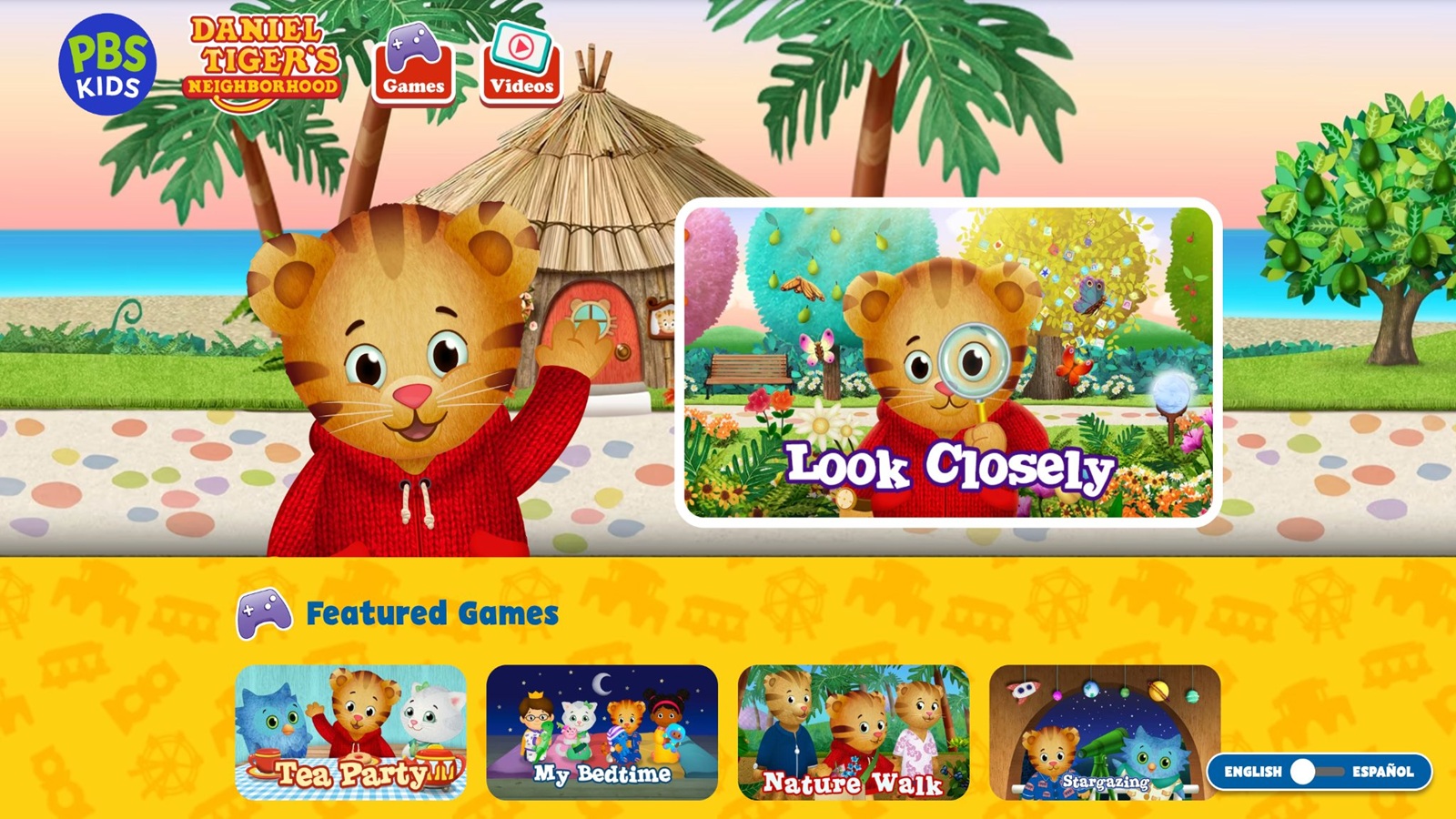
Daniel Tiger’s Grr-ific Feelings uses songs, drawing, and short games from the familiar neighborhood to help young children name mad, sad, glad, or worried. Kids practice a simple plan after naming the feeling. The content stays gentle and song-based, which appeals to preschoolers. Episodes and activities stay short. Some families find the stories less engaging once children move past the early preschool stage. It remains a useful bridge between screen time and real-life feeling talk. The music helps children remember the steps even after the activity ends. Parents can sing the songs during daily moments to reinforce the practice. The format fits children who respond well to familiar characters. The drawing activities give children a way to show the feeling on paper. Short episodes keep the sessions manageable for busy days. The songs become tools that children can use even without the screen.
- Key features: Songs, drawing, and mini-games tied to Daniel Tiger characters for preschool ages.
- Facts and Information: Focuses on basic feeling names and simple response plans through familiar media.
7. Coping Builder by TALKA Products
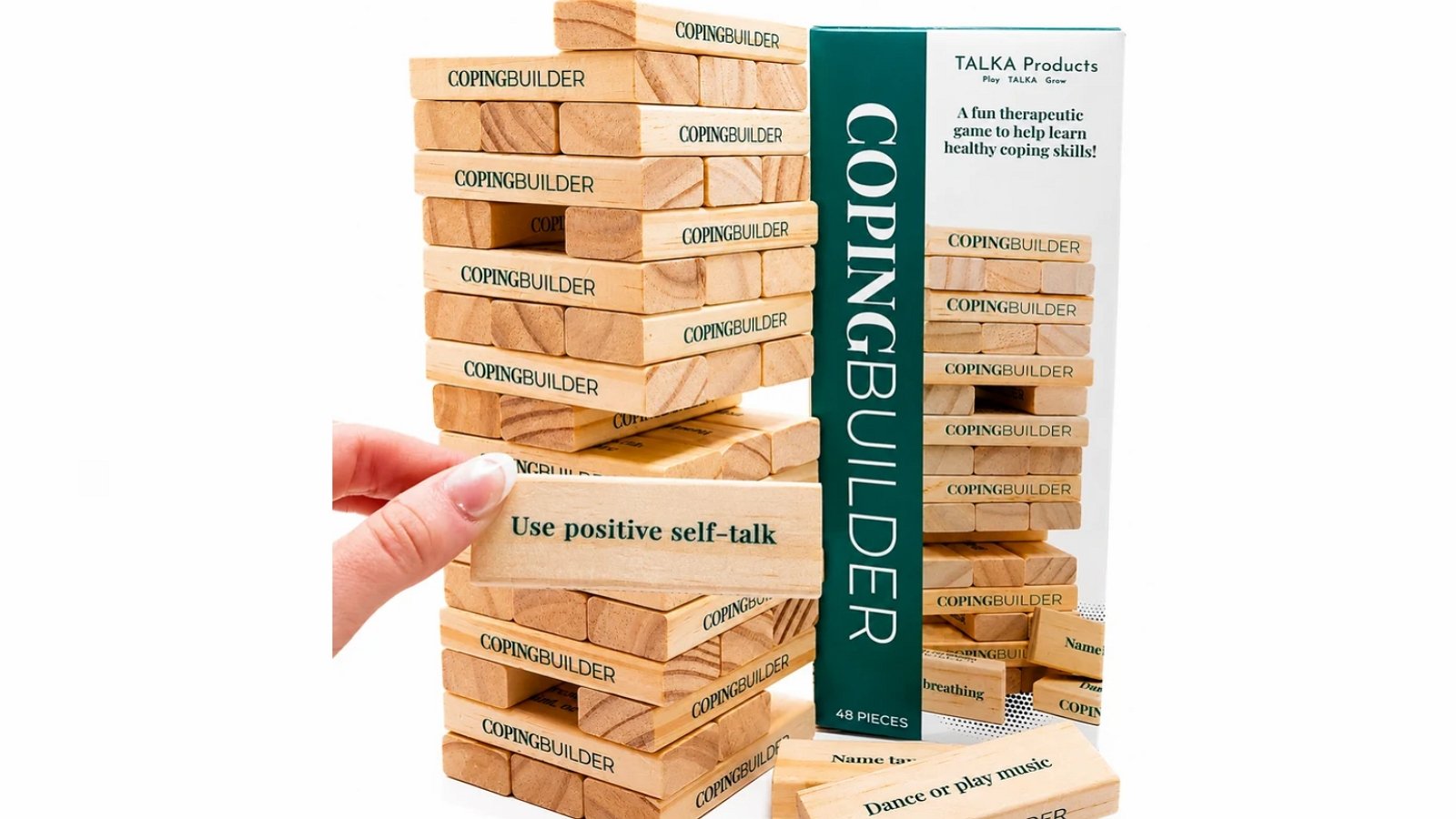
Coping Builder is a therapeutic tumbling tower game for ages eight and up. Each of the 48 wooden blocks features a healthy coping skill. As children pull a block, they read and practice the strategy listed. The game turns the familiar stacking format into a chance to learn self-regulation tools for anger, anxiety, and other feelings. It works in home, school, or therapy settings. The physical blocks keep hands engaged while the mind focuses on the prompt. Some children need support reading the text on the blocks. The prompts cover a range of skills so players see multiple options. Families use it for short sessions where the tower adds a light challenge. The design supports both individual and small group play. The wooden pieces feel sturdy and invite repeated stacking. Children can choose which blocks to pull based on the feeling they want to practice. The game ends when the tower falls, which adds a natural stopping point.
- Key features: 48 wooden blocks with coping prompts, tumbling tower format, ages 8+.
- Facts and Information: Designed by a psychologist. Supports self-regulation practice through hands-on play.
8. Let's Get Curious: Emotional Regulation Card Deck
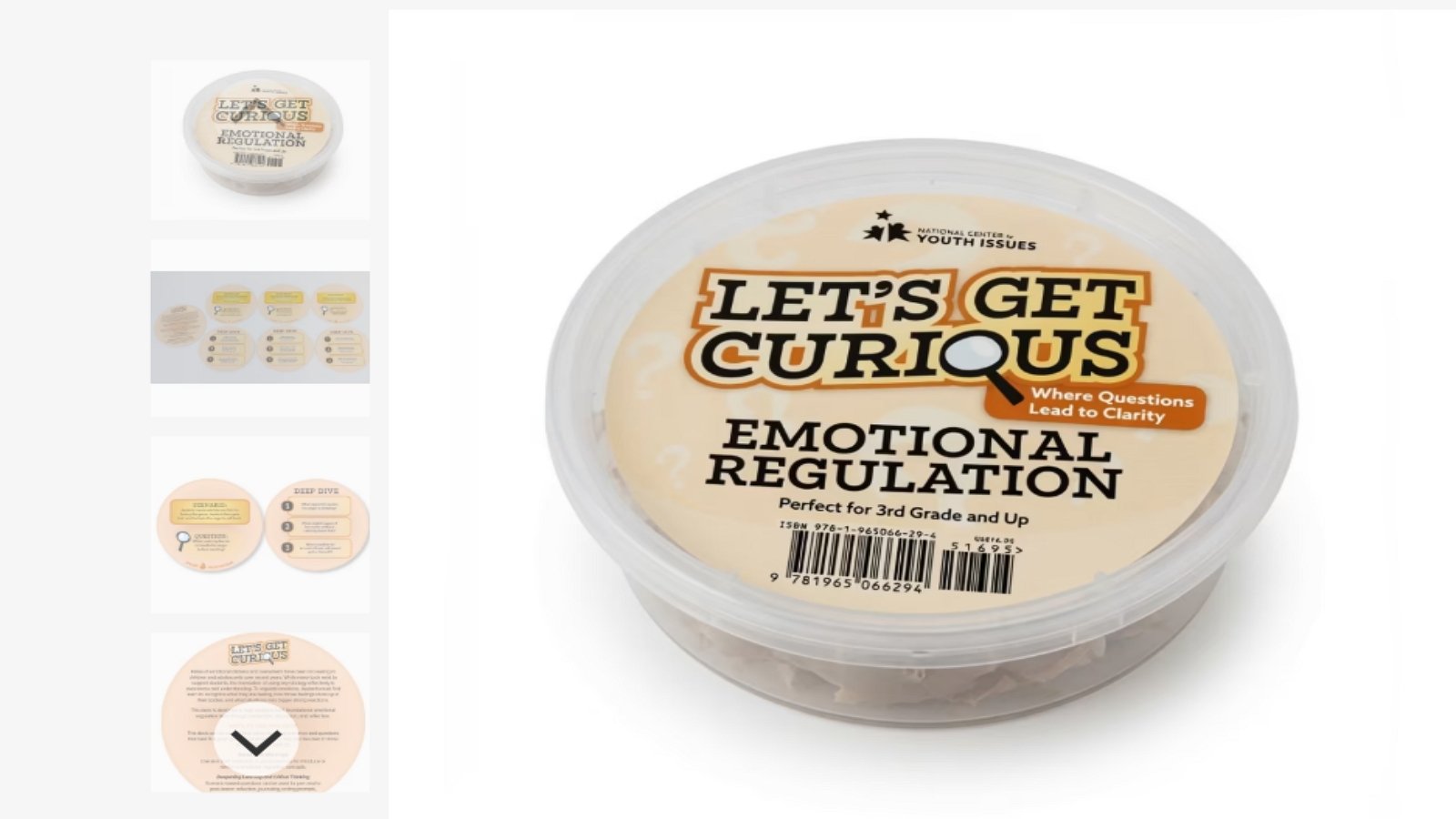
Let's Get Curious: Emotional Regulation Card Deck presents scenario-based cards that help children ages around eight and up build awareness of emotions. Each card shows a real-life situation and a discussion question with deeper prompts. The deck includes 39 cards that rotate through areas such as anger, frustration, and other feelings. Children name the emotion, notice body signals, and explore responses. The externalized scenarios reduce pressure so more kids participate. It works in classrooms, counseling groups, and at home. Some cards may need adult facilitation for younger players. The icon system helps balance the topics across sessions. Families use the cards for short talks after dinner or during calm moments. The format encourages pausing and reflection before reacting. The scenarios feel familiar to school-age children so the talk stays relevant. Cards can be drawn one at a time or used in a simple matching activity. The deck supports repeated use across different days.
- Key features: 39 scenario-based cards with discussion prompts, icon system for balance.
- Facts and Information: Supports naming emotions, noticing body signals, and exploring responses. Suitable for classroom and home use.
9. MindMopoly by MindMinded
MindMopoly is a printable board game designed for children ages three to fourteen that turns emotional skills into play. Players collect Calm Coins while answering prompts from Calm Cards and Challenge Cards. The game includes more than 40 calm tools and 30 challenge prompts based on ideas from Zones of Regulation and cognitive strategies. Younger children focus on naming feelings and acting out cards. Older children engage with reflection questions and strategy. The board and pieces keep the session structured. Some families print the components and use them for repeated play. The format allows adaptation for different ages in one household. It supports both individual and group use. The Calm Coins add a light reward for practicing the tools. The printable design means families can start right away after downloading. The cards cover a range of situations so the game stays fresh across multiple sessions. Children can choose which cards to draw based on the feeling they want to work on.
- Key features: Printable board with Calm Cards, Challenge Cards, and Calm Coins for ages 3–14.
- Facts and Information: Inspired by Zones of Regulation and cognitive strategies. Flexible for different age groups.
10. Big Emotions Deck by RaiseCalm
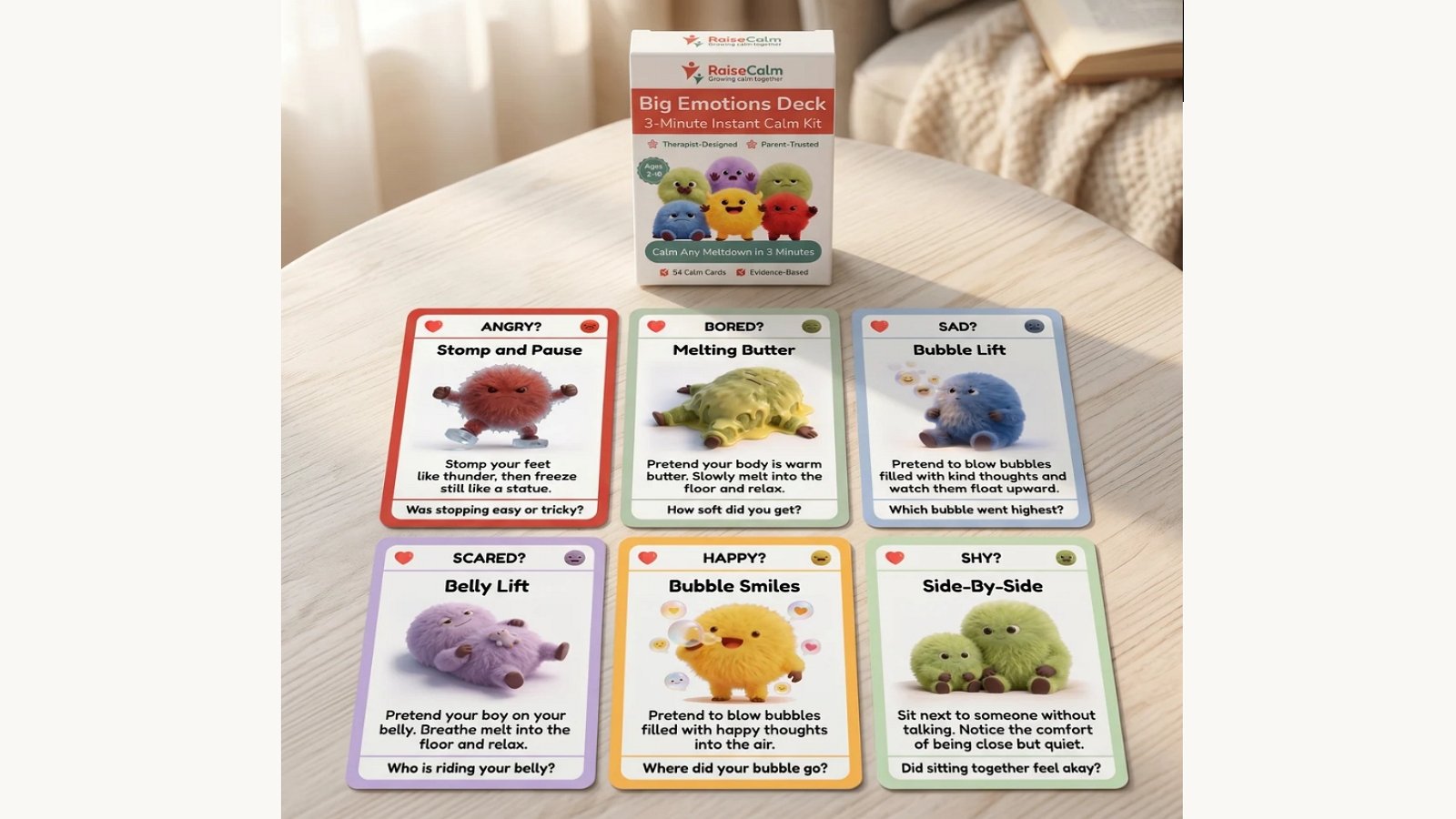
Big Emotions Deck is a set of therapist-designed cards for children ages three to ten. The deck includes 54 cards with scripts and tools for the middle of a meltdown. Cards cover emotion identification, co-regulation steps, and parent reset ideas. The language scales from simple sensory prompts for younger kids to more reflective scripts for older ones. Parents use the cards for quick guidance under three minutes. The set comes in printed and digital versions. Some families keep a printed set in each room for easy access. The cards focus on exact words and actions rather than long explanations. It supports co-regulation between adult and child. The design draws on child psychology frameworks. Many parents find the short format helpful when feelings rise fast. The visual style on the cards uses simple characters that hold young attention. The digital version allows access on a phone when a printed set is not nearby. The scripts give parents clear language to use in the moment.
- Key features: 54 cards with co-regulation scripts and tools for ages 3–10. Printed and digital options.
- Facts and Information: Therapist-designed for use in the moment. Scales language across the age range.
Tips for Using Emotional Regulation Games at Home
Start with short sessions so the child stays interested. Name the feeling you see in the character or on the child’s face. Pause the game and try the strategy together, then return to play. Keep the tone light so the activity stays fun. Repeat the same game a few times so the steps become familiar. Pair the game with a real moment later in the day, such as waiting for a turn or cleaning up. Consistency matters more than long sessions. A few minutes several times a week builds the habit faster than one long play. You can also let the child lead the naming. Ask what the character might feel and listen to their answer. This small step helps them own the skill. Some families keep a simple feelings chart nearby so the child can point after the game. Educational games for kids at home that mix pet care and gentle stories make these home tips easy to follow. A parent’s guide to healthy screen time with educational apps supports the same short, consistent approach.
Emotional Regulation Games by Age Group
Younger children do best with clear faces, short scenes, and physical tools. Matching games and simple care stories fit ages three to five. School-age kids handle longer stories, more choices, and discussion after the turn. Board games with coping cards work well from ages six to ten. Older children can use apps that add reflection or planning steps. Always match the length and reading level to the child. A game that feels too hard or too easy loses its value. Some children move through stages faster than others. Watch how long they stay focused and adjust the next choice. A child who finishes a matching game quickly may be ready for a short story with choices. Another child may still prefer the simple faces for a while. The best games for toddlers often group titles by these age windows so parents can pick faster. Also, educational games for 5 year olds add more story choices while keeping sessions short.
- For ages 2–4, short matching games, pet care, and clear faces work best. The focus stays on naming basic feelings and gentle routines.
- For ages 5–7, story choices, simple board games, and coping dice fit well. The focus moves to a pause and a kind next step.
- For ages 8–12, longer scenarios, discussion cards, and planning apps support strategy choice and reflection
.
Building Skills That Last Beyond the Game
The real test happens after the game ends. Notice when your child uses a strategy in a real moment and name it. “You paused before grabbing the toy. That was the same breath we practiced.” Keep the language consistent so the child connects the game to life. Some days the skill will not show up. That is normal. Return to the game for another short practice. Over time the pause and the kind choice become more automatic. Families who treat the games as regular play rather than special lessons see the skills stick longer. You can also invite the child to teach the strategy to a sibling or a stuffed animal. Teaching it out loud strengthens the habit. Some parents leave the game out on the table so the child can start it on their own. Collections that mix care, cleanup, and story choice give the most chances for this transfer. How to build social skills in kids connects the same pause and care steps to real friendships. Learning through play keeps the practice light so the skills stay.
FAQ
What are emotional regulation games for kids?
Emotional regulation games for kids are play activities that help children notice a feeling, pause, and pick a calmer next step while the stakes stay low. A story, a pet-care scene, or a cleanup quest can all count when the child practices those steps instead of rushing past the feeling. Clear faces, simple choices, and a kind retry make the skill feel natural. Many families find this kind of practice inside educational games for kids that mix care, stories, and everyday routines. The low stakes inside the game make it easier for a child to try the pause and see what happens next. Over time the same steps start to show up outside the game when a real moment feels hard. The right game keeps the mood light so the lesson sticks without feeling like a lesson. Children often ask to return to the same activity because the care and the calm feel good. A child who practices feeding a pet or comforting a character learns the same sequence that helps with a broken toy or a long wait. The game gives a safe place to rehearse the pause before the real moment arrives. Emotional games for kids show how care and pause steps appear in everyday play.
How do emotional regulation games help children grow?
These games give kids a safe space to practice what they need when feelings get strong. A child learns to spot a feeling, take a breath, and choose a next step while nothing is at stake. That same practice shows up later in real life, when a toy breaks or a sibling takes a turn. Games that ask for care, like feeding a pet or comforting a character, build the same muscle. Educational games for kids that focus on empathy and daily care turn this practice into something children enjoy and return to. The calm response inside the game often leads to a happier character or a finished task, so the child sees the result right away. Many families notice calmer play sessions after regular use of these tools. The practice also builds patience, because the child has to wait, notice a need, and respond with care instead of rushing. Over time the pause and the kind choice become more automatic in both the game and daily life. A child who retries a cleanup story after a miss learns that a calm next step still works even when the first try does not. The same pattern helps when a real task feels hard. Building emotional intelligence with kids educational games covers the same growth in naming feelings and showing care.
How can parents choose the right emotional regulation games for their child?
Look for games that match the child’s age and interest so they stay engaged from the start. Short sessions work better for younger kids. Clear faces and simple choices help toddlers name feelings. Older kids do better with stories that include small problems and kind fixes they can talk about. Ad-free options keep the focus on the skill instead of distractions. Games that reward patience and empathy give more practice than pure speed races. Check if the activity lets a child try again after a miss, because that retry builds the real habit of regulation. Parents who sit nearby and name what the character feels often see the skill transfer to real moments. A good match also fits the child’s current energy so the session stays light and useful. Some days a quiet matching game works best, while other days a short story with choices holds attention longer. Always match the length and reading level to the child so the game feels neither too hard nor too easy. A game that ends while the child still wants one more turn keeps the practice positive. Families often notice that the best emotional regulation games for kids include both care tasks and a gentle retry. Social emotional games for kids highlight the same matching of age, interest, and clear choices.
What tips help when using emotional regulation games at home?
Start with short sessions so the child stays interested. Name the feeling you see in the character or on the child’s face. Pause the game and try the strategy together, then return to play. Keep the tone light so the activity stays fun. Repeat the same game a few times so the steps become familiar. Pair the game with a real moment later in the day, such as waiting for a turn or cleaning up. Consistency matters more than long sessions. A few minutes several times a week builds the habit faster than one long play. You can also let the child lead the naming by asking what the character might feel and listening to their answer. This small step helps them own the skill and connect the game to everyday life. Some families keep a simple feelings chart nearby so the child can point after the game. The same language used in the game then appears during real moments at home, which strengthens the transfer. A parent who names the feeling during the game and again later in the day helps the child link the two. The practice stays short and light so the child looks forward to the next session. Responsibility games for kids support the same short sessions and real-moment pairing at home.
How do skills from emotional regulation games transfer to real life?
The real test happens after the game ends. Notice when your child uses a strategy in a real moment and name it. Keep the language consistent so the child connects the game to life. Some days the skill will not show up. That is normal. Return to the game for another short practice. Over time the pause and the kind choice become more automatic. Families who treat the games as regular play rather than special lessons see the skills stick longer. Collections that mix care, cleanup, and story choice give the most chances for this transfer. You can also invite the child to teach the strategy to a sibling or a stuffed animal, because teaching it out loud strengthens the habit. The same notice, pause, and kind next step that works in the game starts to appear in real moments at home. A child who practiced comforting a character may later offer a similar response when a friend looks sad. The practice stays light, so the skill grows without pressure. Parents who keep the same words across both the game and daily life help the child see the connection clearly. The transfer happens in small moments, one pause at a time. What is an emotionally intelligent child describes how the same skills appear in everyday friendships and home moments.
Read Also:
- Best Emotional Games For Kids In 2026
- Best Emotional Intelligence Kids Game
- Best Social Emotional Games For Kids In 2026
- Building Emotional Intelligence With Kids Educational Games
- How Educational Games for Kids Develop Social Skills
Try TutoClub to start building these skills today!