

Best Creative Games for Kids Online





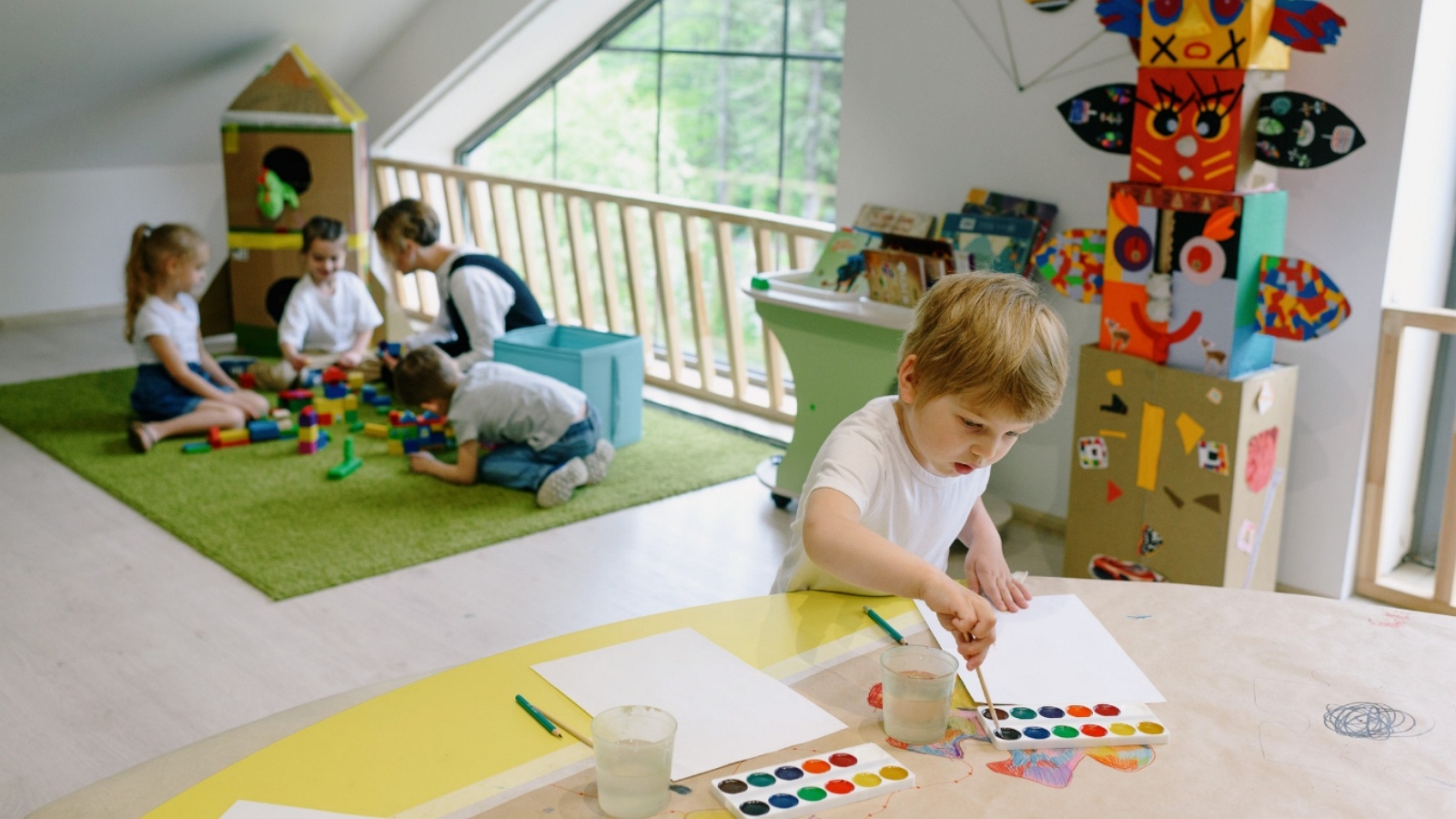
Kids want to make something while parents want that making to stay kind and calm. The best creative games for kids online mix dress-up, coloring, pet rooms, and short stories. A good pick lets a child choose colors, care for a character, and show the result.
Creative games for kids stay kind when making a clear next step. Short painting games online and fashion games online let a child pick colors and outfits, while makeover games online keep care for a character calm and easy to show. Seasonal Christmas games for kids fit the same ad-free pattern when the story, dress-up, and pet room stay short enough to repeat.
See why families pick TutoClub for creative games for kids online!
What Makes Creative Play Work For Kids
The best educational games for kids give a child a clear job and a visible result. Color a pet. Style a doll. Tidy a room, then tell what happened. That loop is short, so focus has a place to land. Fun educational games for kids hide the lesson inside a task the child already wants to finish.
Strong creative play usually includes:
- A simple start, with big taps and clear tools
- A finish the child can show, like a look, a room, or a picture
- Room to change the plan without a fail screen
- A calm pace, with no ads popping into the art
Dress-up, coloring, and pet rooms train the same muscles in different clothes. A child picks, checks, and tries again. Learning games for kids add a small snag so thinking stays in the mix. Dress-up games for girls online add order: first the color, then the hair, then the story of where the character is going. Kid educational games work the same way when the child can name the choice. Confidence building games grow from that finished look, because pride follows a job they completed. Educational kids games keep the tools big enough for small hands.
Talk matters as much as the tap. After a few minutes, ask what they made. If they can name a color, a character, or a reason, the game is doing real work. Educational games for kids that are fun make that talk easy, since the child wants to show the picture.
How Families Choose Safe Creative Games
Safety is part of the design, not a setting buried in a menu. The better creative games for kids stay inside a known cast, skip open chat, and keep the next tap obvious. Safe kids games put that design first.
A quick family check:
- Ads and pop-ups: a club or a closed kids app beats a free feed full of surprises
- Chat: off, or limited to people the parent already knows
- Age fit: toddlers need big tools; school-age kids can handle blocks, menus, and longer builds
- Offline play: useful in the car or a waiting room after the first download
- One login: siblings can share a library instead of hopping through random apps
Safe games for kids also leave space for a parent to sit in. Side-by-side play turns a solo screen into a chat about colors, jobs, and feelings. Safe apps for kids skip surprise videos so the session stays on the art. A parent guide on how to protect kids online pairs well with a closed game library. Skill-building apps for toddlers use the same idea for the youngest players. Privacy questions sit on the privacy FAQ. Device setup notes live on the web FAQ. Many families keep creative time short and regular, then switch to blocks, paper, or a walk.
Best Creative Games for Kids Online
1. TutoClub - Best Creative Games for Kids Online
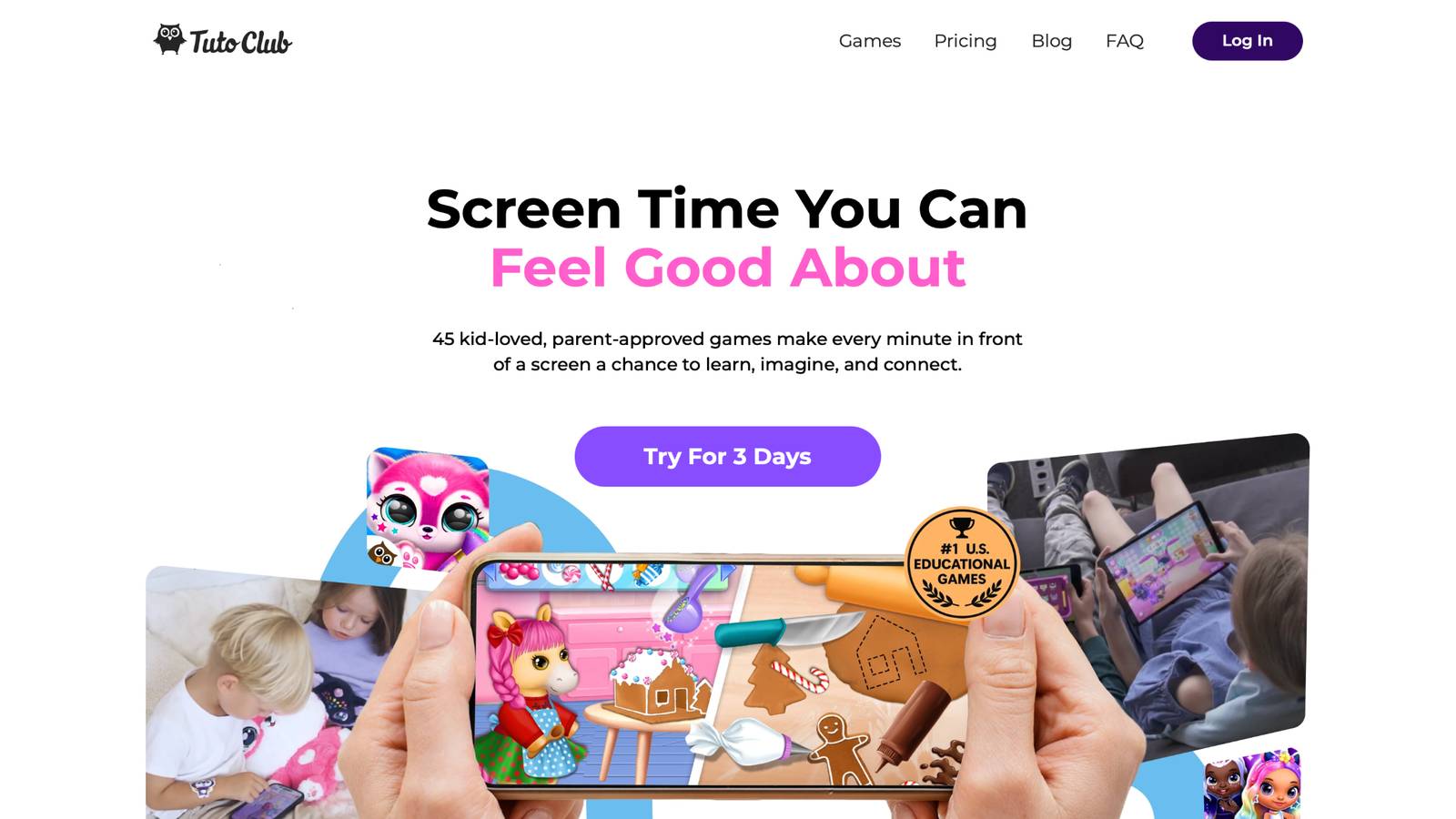
Creative games for kids sit at the heart of TutoClub, a family subscription from TutoTOONS in Kaunas, Lithuania. One login opens a large set of ad-free games for young players who like to design, care, and tell stories. Kids style looks in L.O.L. Surprise! O.M.G. Fashion Club, dress magical dolls in Princesses – Enchanted Castle, and color Fluvsies, Smolsies, and FLOOF pets with brushes, glitter, and glow. Pet houses add decorating, memory play, and gentle care. The same account also holds unicorn babysitting, cleanup quests, and unicorn band play, so a session can shift from art to story without a new download. Play works on phones and tablets, and many titles can run offline after a download.
Standout features
- Fashion makeovers, doll styling, and coloring in one family library
- Pet decorating, memory play, and care loops with friendly characters
- Ad-free club play across phones and tablets
- Story shifts from art to cleanup, unicorn care, and music-style play
Facts and Information
- Built by TutoTOONS in Kaunas, Lithuania
- Made for young kids who like to design and care
- Many titles can be played offline after download
- One account can be used on more than one device
TutoClub Overview
TutoClub is your gateway to a magical world of educational games designed especially for children.
As part of TutoTOONS, a leading kids' games studio, we offer premium access to over 45 ad-free games.
Our mission is to blend learning and play, helping kids explore, create, and grow in a safe online space.
Thousands of parents trust us for family-friendly content that sparks imagination and builds essential skills.
Key Features
- Unlimited Access: Unlock full content in all games with no interruptions.
- Ad-Free Experience: Enjoy seamless play without any ads or distractions.
- Skill Development: Games foster creativity, social skills, communication, and more through fun activities like pet care and cleanup challenges.
- Regular Updates: Get new releases, exclusive content, and future updates automatically.
- Easy Subscription: Cancel anytime with no obligations, simple and flexible for families.
Explore Our World
TutoClub provides a rich ecosystem of educational games for kids, featuring ad-free experiences that promote creativity, focus, and emotional growth through play.
This platform turns screen time into valuable learning opportunities, with parent-approved content that builds essential skills and sparks curiosity in young minds.
- TutoClub Games: Over 45 educational games, including popular titles like Fluvsies, Smolsies, and the Sweet Baby Girl series
- Blog: Insights, tips, and stories for families on kids' learning and play
- FAQ: Comprehensive answers to frequently asked questions about subscriptions, features, and more
Get TutoClub on Your Device
TutoClub delivers premium kids educational games directly to your mobile devices, making learning accessible anytime, anywhere.
With apps available on major platforms, families can easily download and subscribe for ad-free play that turns screen time into skill-building adventures.
Perfect for parents seeking safe, engaging content on iOS, Android, or Amazon devices.
Why Choose TutoClub?
We're committed to 100% safe, enriching entertainment that kids love and parents approve.
Join the thousands who've seen their children thrive through playful learning.
Ready to start the adventure?
Start calm creative play with TutoClub creative games for kids online!
2. Fluvsies Academy
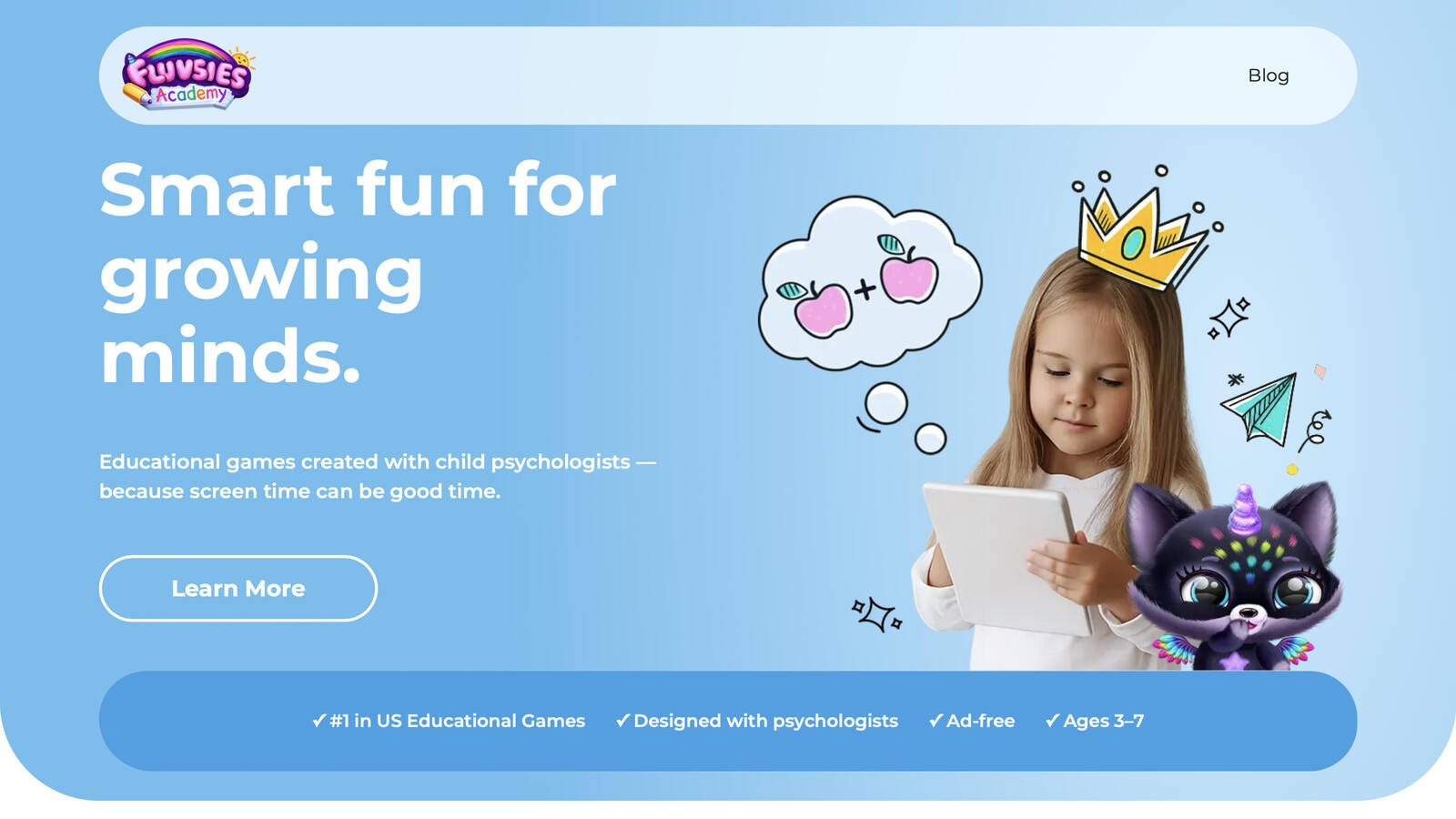
Fluvsies Academy is a warm learning world for children ages 3 to 7, built around the fluffy Fluvsies characters many kids already know from pet play. The team shaped the activities with child psychologists so the pace stays gentle and the art stays friendly. A child does not land in a loud arcade. They meet familiar faces, then move through short scenes that feel like play. Language and phonics sit beside number games, logic tasks, attention practice, sorting, life skills, and creativity. Profession stories let a child meet bakers, firefighters, and astronauts, then practice new words in a small scene they can finish. Creative moments show up in styling, everyday care, and story choices, so imagination stays tied to real life. Parent tools include progress notes, which help a grown-up see what a child tried. Printable pages carry the same characters off the screen, so a drawing or a paper doll can follow the app. The experience stays ad-free, and the content is built to match early childhood. Phones and tablets both work, which helps families share one library at home and on the go. Kids who already love Fluvsies often settle in fast because the cast feels known. The mix of learning and make-believe gives creative games for kids a school-skill partner without turning art time into a drill.
Key features
- Language, phonics, numbers, logic, sorting, and life-skill scenes
- Creativity mixed into short, cheerful activities
- Profession stories that grow vocabulary
- Progress notes and printable pages for families
Facts and Information
- Designed with child psychologists
- Aimed at ages 3 to 7
- Fully ad-free
- Available on phones and tablets
3. Toca Life World
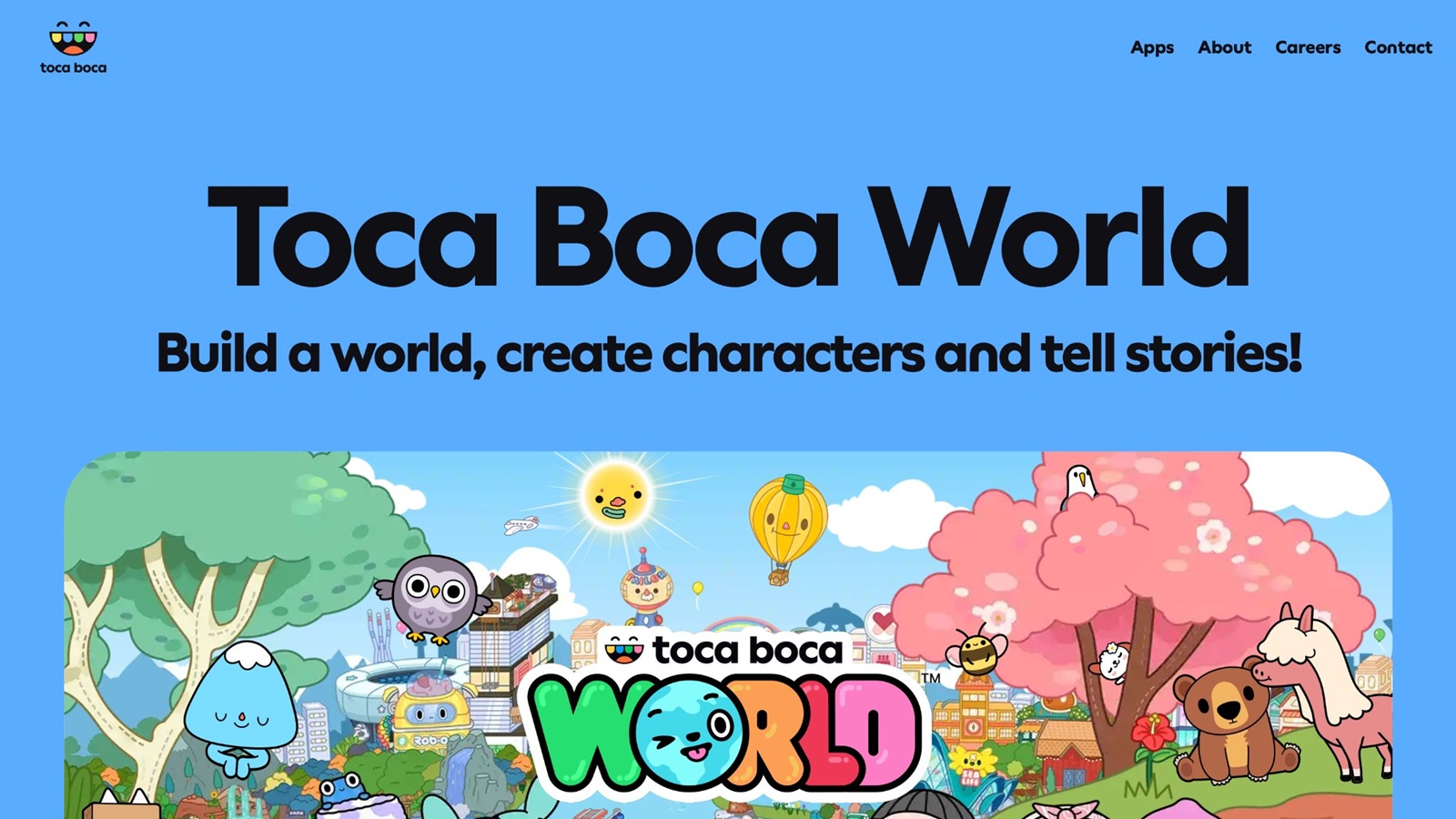
Toca Life World, from Toca Boca in Stockholm, Sweden, is an open dollhouse where kids move characters through homes, shops, schools, and silly rooms. There is no score and no fail screen. A child can cook a messy meal, paint a wall, cut wild hair, or invent a whole afternoon with a sibling. The joy sits in the story they tell, not in a star rating. New location packs add more rooms over time, from busy streets to quiet houses, and the tools stay simple enough for preschool hands. Characters can be dressed, moved, and placed in scenes that change every visit. Older kids often stay longer because the stories have no set ending. Younger players may need a grown-up nearby when the menu of places gets busy. It is pure pretend play, not a lesson path, which makes it a strong match for kids who want freedom. Families who like calm creative games often use it beside coloring or pet care, then talk about who visited whom. The lack of a win state keeps pressure low. A parent can sit in, name the rooms, and let the child lead the plot.
Key features
- Open rooms with no score and no fail state
- Character styling, cooking, and scene play
- Location packs that grow the town
- Simple taps suited to young hands
Facts and Information
- Made by Toca Boca in Stockholm, Sweden
- Strong for pretend stories and sibling play
- Better when a parent helps with busy menus
- Open-ended play rather than a set lesson path
4. Scratch
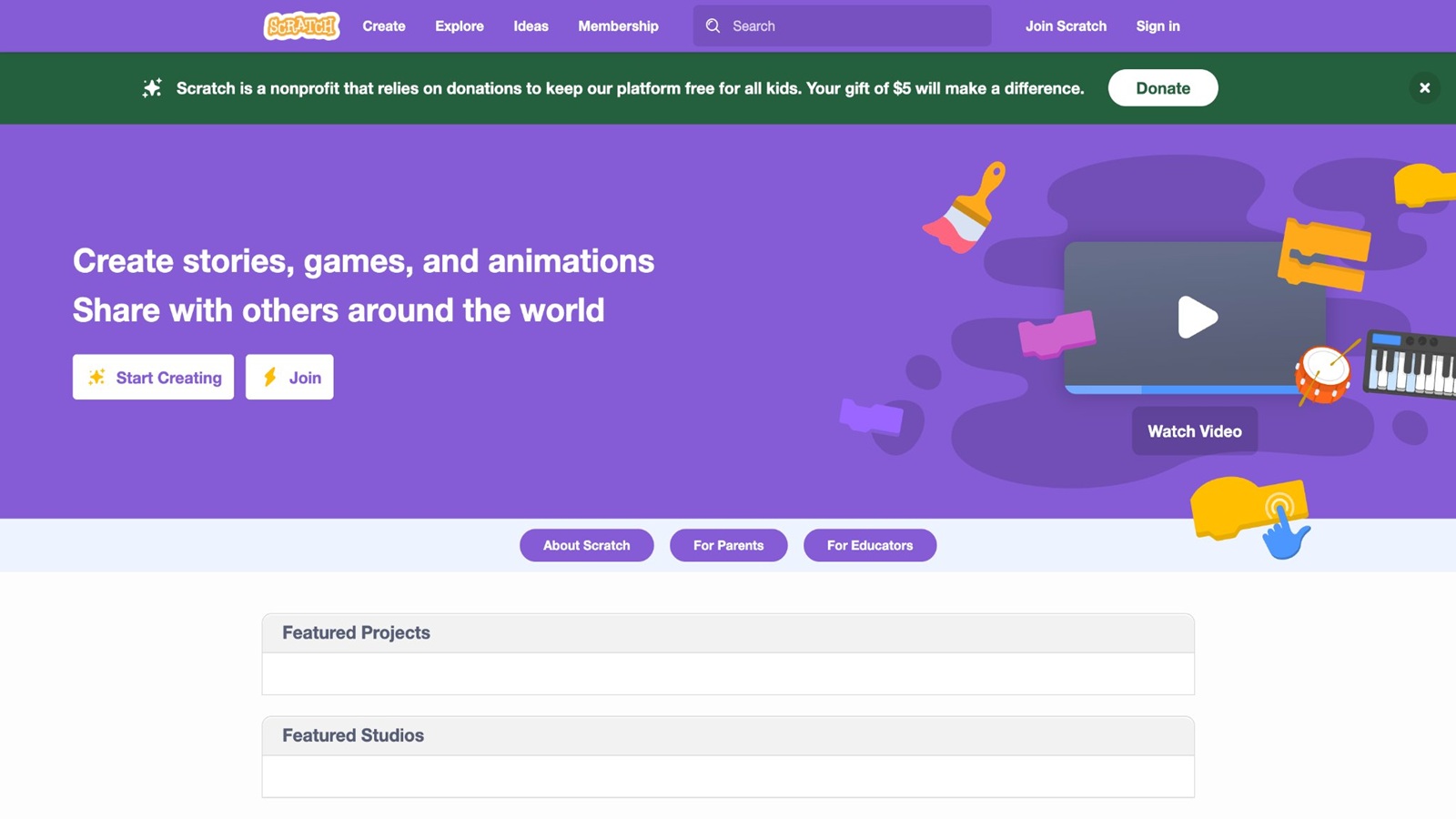
Scratch, from the MIT Media Lab in Cambridge, Massachusetts, lets kids snap colorful blocks to build stories, cartoons, music, and simple games. A first sprite can bounce across the stage in minutes, then gain speech bubbles, a costume change, and a new backdrop. The public project gallery shows what other makers built, which can spark the next idea without sending a child to a random video site. ScratchJr brings a simpler block set to children who are still learning to read. The first session often needs a grown-up to explain the stage, the green flag, and how blocks snap. After that, many kids invent on their own. They test a move, watch it fail in a funny way, and fix the order. That loop is creative problem solving in costume. It is stronger for school-age makers than for toddlers, who may not yet read the block labels. Families who want creative games for kids with a maker twist often start with one shared project, then let the child remix it. Sound, art, and motion live in the same workshop, so a story can grow from a drawing into a short play.
Key features
- Block coding for stories, music, and games
- ScratchJr for younger readers
- A public gallery of kid projects
- Tools for sprites, backdrops, and sound
Facts and Information
- Built at the MIT Media Lab in Cambridge, Massachusetts
- A fit for kids who can read simple labels
- First projects go faster with a parent nearby
- Creative building, not a care or dress-up loop
5. Crayola Create and Play
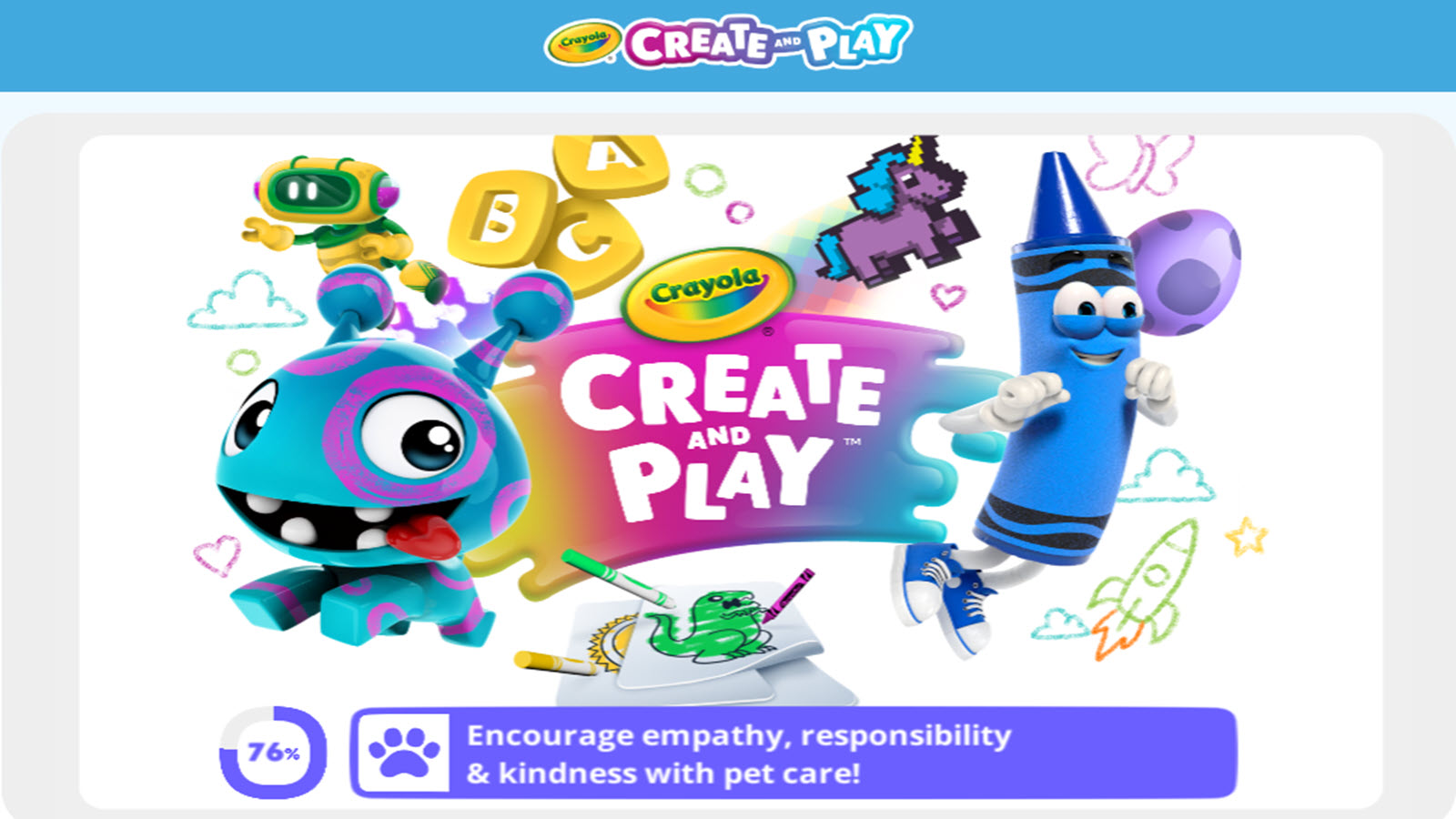
Crayola Create and Play is the official Crayola creativity app, tied to the crayon brand based in Easton, Pennsylvania. Kids about ages 3 to 8 color pages, draw freehand, add stickers, and try simple effects in a familiar art style. Pages cover animals, vehicles, holidays, and everyday scenes. Big brushes help small hands stay on the shape. Some modes guide a child with color prompts, while free draw leaves the page open for a wild mix. Stickers and stamps give a quick win when a child wants detail without fine lines. It is a strong art desk for families who already trust the crayon name. It does not add pet care or long fashion stories, so homes that want more than coloring often pair it with a doll or pet game. The session can stay short: one page, one talk about the colors, then crayons on paper. That link between screen and real art is the quiet strength. Parents who look for creative games for kids online often start here when the child asks to color and the table is not free. The tools feel close to a crayon box, which lowers the learning curve.
Key features
- Coloring pages, free draw, and stickers
- Big brushes for small hands
- Guided color prompts and open pages
- Familiar crayon-style art
Facts and Information
- Tied to Crayola, based in Easton, Pennsylvania
- A common fit for ages 3 to 8
- Focused on art tools, not story care games
- Easy to pair with dress-up or pet play
6. Sago Mini World

Sago Mini World is an open play town for preschoolers, often a fit for ages 2 to 6, from the Sago Mini studio. Kids visit a park, a house, a cafe, and other small spots, then dress characters, drive toy cars, and make silly scenes. There is no timer and no wrong answer. The art is soft and the taps are large, which helps the youngest players. Grown-ups can play beside a child without reading a long menu. A hat can go on a dog. A car can park in a silly place. The worlds are sweet and short, so a session can end before attention slips. Kids who want deep fashion tools or block coding will want a second game beside it. For early creative games, the town works like a pocket playroom. Families often use it as a calm start to the day or a waiting-room pick. The characters are friendly, and the sound stays gentle. A parent can name objects as the child taps, which turns dress-up and driving into language practice. It will not replace a full design studio, and it does not need to.
Key features
- Soft art and large taps
- Open scenes with no timer
- Dress-up, driving, and silly story play
- Short visits that suit preschool attention
Facts and Information
- Aimed at early childhood, often ages 2 to 6
- Calm tone for side-by-side play
- Light menus for grown-ups
- Sweet worlds rather than a deep design studio
7. Minecraft
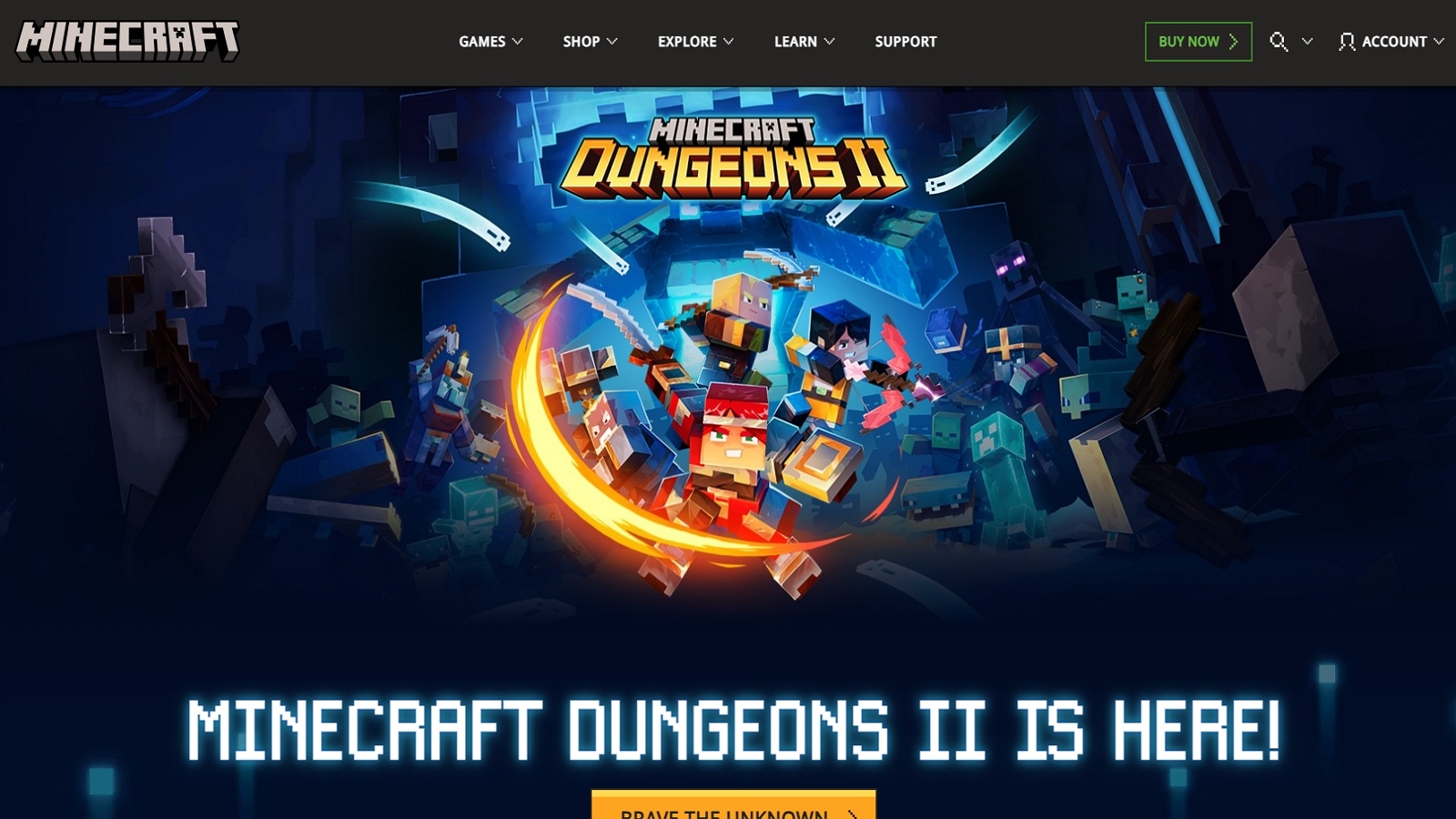
Minecraft, from Mojang in Stockholm, Sweden, lets kids place blocks, build towns, and test ideas in Creative mode. A child can shape a castle, a zoo, or a whole street, then invite a sibling into the same world. Redstone and simple builds introduce planning: a door here, a path there, a roof that finally fits. Creative mode removes survival stress, which many families prefer for younger players who want to make, not fight. The controls take practice, and open chat on some servers needs a parent rule before any shared world. It is heavier than tap-and-care games for ages 2 to 6, and a favorite for older builders who like scale. A first house can be clumsy. The second one usually shows a plan. That growth is the creative payoff. Families who want creative games for kids online with room to build often set Creative mode, turn off stranger chat, and ask the child to give a tour at the end. The tour is where language and pride show up. Pets, farms, and pixel art give the same world more than one kind of play.
Key features
- Creative mode for free building
- Shared worlds for siblings
- Block planning and simple machines
- Towns, zoos, and story builds
Facts and Information
- Made by Mojang in Stockholm, Sweden
- Creative mode is the calmer family pick
- Controls take practice at the start
- Heavier than tap games for the youngest kids
8. PBS Kids
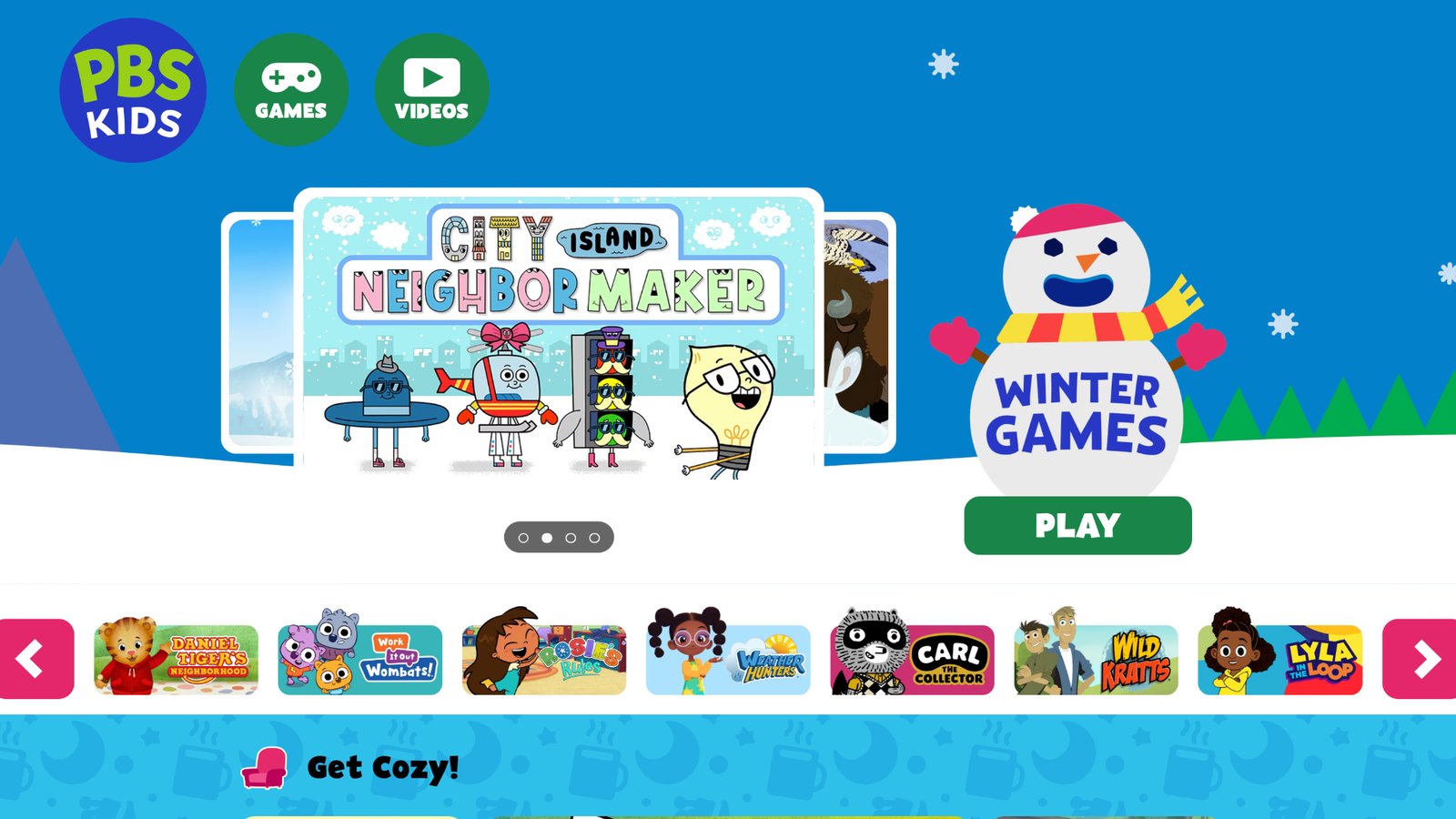
PBS Kids games come from the public-media studio behind familiar shows. Art and story titles let children draw, match, and play short create scenes with characters they already know from TV. Sessions stay short, which helps a busy afternoon. The tone is calm and the reading load stays light. A parent can pick a show-based game and know the style before the child starts. The catalog is wide, so the creative picks sit beside math and reading games. It is a helpful extra, not a single home for dress-up and pet design. Still, the create scenes matter. A child can paint with a known character, finish a small picture, and talk about the episode that inspired it. That bridge from show to making is useful for kids who need a familiar face before they try a blank page. Families looking at creative games for kids often keep PBS Kids as a trusted add-on. The games load in a browser on many devices, which helps when a tablet is already in use. Parent preview is easy because the shows are already part of the household.
Key features
- Show-based draw and create scenes
- Short sessions
- Light reading load
- Mix of art, matching, and story play
Facts and Information
- Tied to public-media kids shows
- Easy for a parent to preview by show
- Creative games sit beside other subjects
- Better as an extra than as a full design club
9. Pok Pok
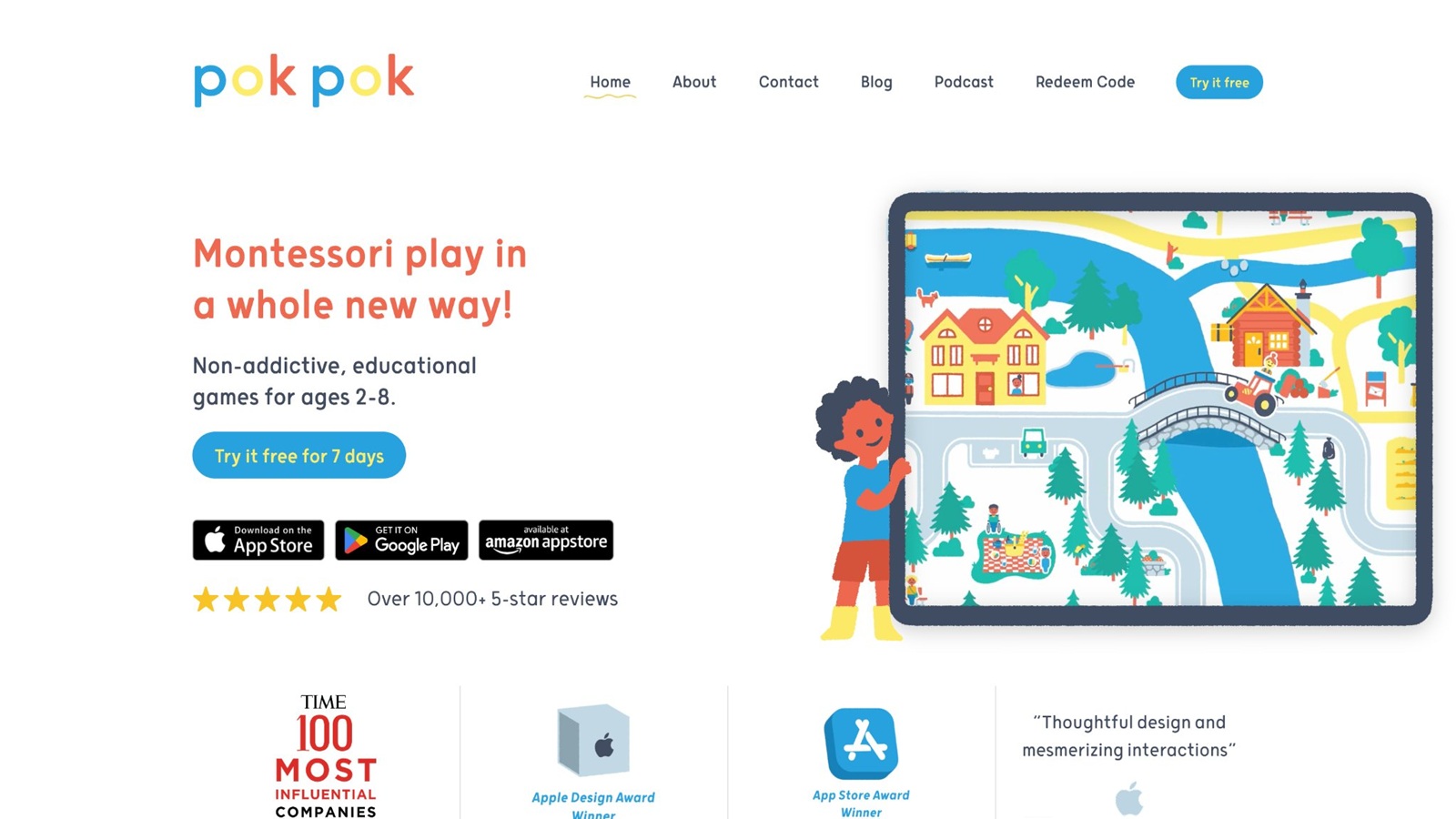
Pok Pok is a Montessori-inspired playroom app for young children, often ages 2 to 7. Kids open toys instead of levels. They cook, dress characters, build with shapes, run marbles through tubes, connect dots, and make little buddies. There is no win screen and no loud score. The art is hand-drawn and the sound stays soft, so the room feels closer to wooden blocks than to an arcade. New toys arrive over time, which keeps the playroom fresh without a new download hunt. The design skips ads aimed at children and keeps the next tap intuitive. Some toys lean toward early logic, phonics, or numbers, while dress-up and character maker stay purely creative. A child can mix an outfit, then leave and come back to a marble run. Families who want creative games for kids online with a calm tone often like this pace. Younger players can start with no reading. Older siblings may stay for the machines and building toys. It is open play, so a parent prompt helps: ask what they cooked, or who they dressed.
Key features
- Open toys for cooking, dress-up, and building
- Hand-drawn art and soft sound
- No win screen and no ads aimed at children
- New toys added inside the same playroom
Facts and Information
- Montessori-inspired play for young children
- Often a fit for ages 2 to 7
- Open-ended toys rather than scored levels
- Calm pace for side-by-side play
10. codeSpark Academy
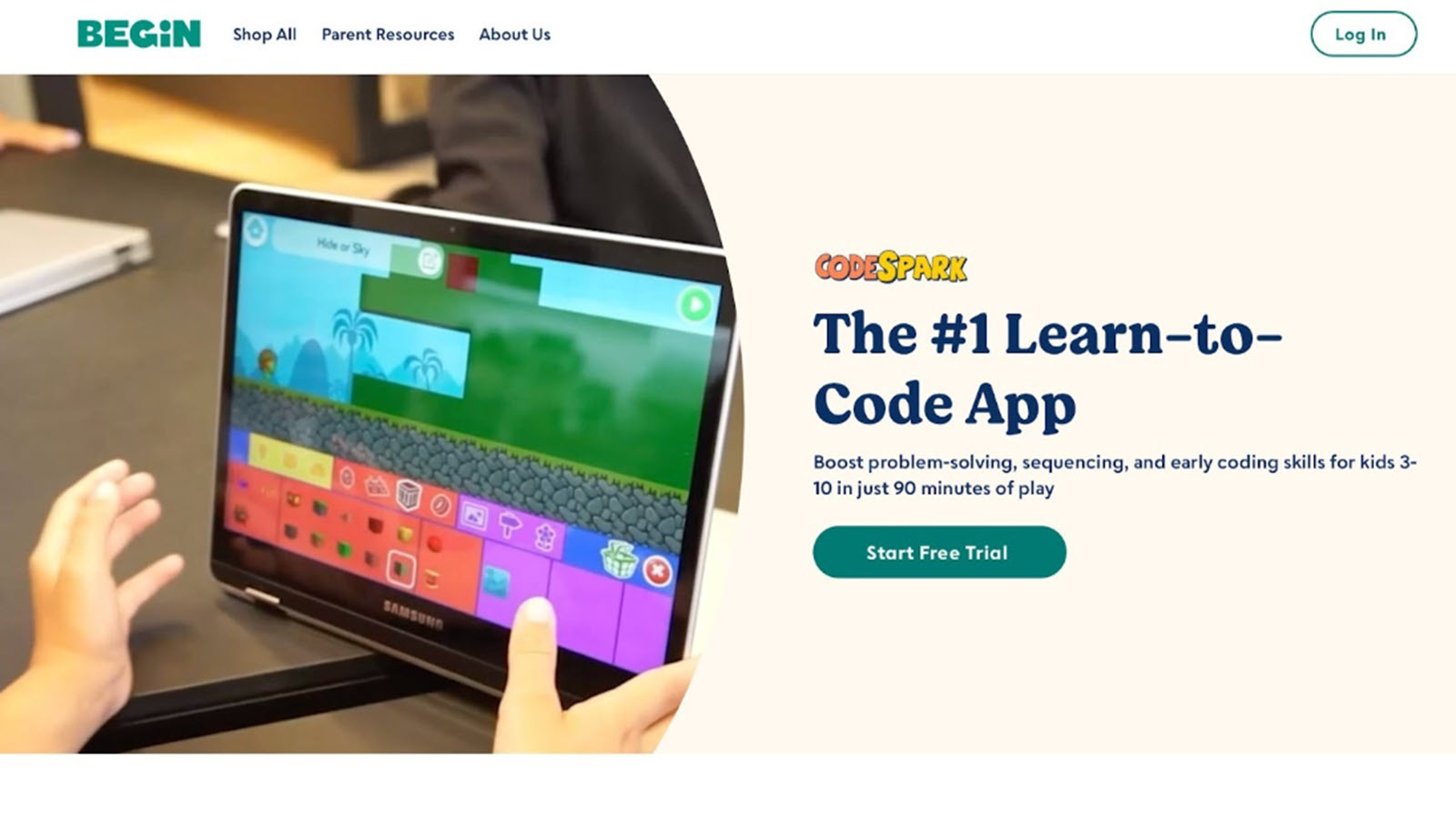
codeSpark Academy is a learn-to-code platform for kids, with games aimed roughly at ages 4 to 10. Characters called Foos act out puzzles with almost no words, so a child can start before reading is strong. Sequencing, loops, and events show up as playful jobs: move a friend, repeat a step, react to a tap. After the puzzles, Game Maker lets kids design their own small games. That shift from following a path to making one is the creative core. Pet-care mini scenes add a gentle story around the logic. The path draws on research-backed ideas and works on tablets, phones, and computers. A first puzzle is usually clear. Later ones need a retry, which is useful if a parent treats the retry as normal. It is more guided than a free dollhouse. Kids who only want hair and outfits may want a style game beside it. Families who want creative games for kids that also build planning often use a short puzzle, then a make session. Progress tools help a parent see which ideas clicked.
Key features
- Word-light coding puzzles
- Game Maker for kid-built games
- Sequencing, loops, and events in story jobs
- Play on tablets, phones, and computers
Facts and Information
- Aimed roughly at ages 4 to 10
- A guided path before free making
- Useful when a parent treats retries as normal
- Stronger for planning than for salon-style play
11. Tynker

Tynker is a coding studio for kids, where block projects grow toward text coding for older students. Younger players start by snapping commands to move characters, build simple games, and animate a scene. The courses feel like stories, so the lesson wears a costume. Art and game design sit inside the path: a child picks a backdrop, adds a hero, and decides what happens when the screen is tapped. Block-world coding activities appear for kids who already love building games. The range is wide, which is a gift and a small hurdle. A parent usually picks the starting course so the child is not lost in the catalog. Elementary ages fit best. Preschoolers may need a simpler block app first. Creative games for kids online get a maker angle here, because the end product is something the child coded, not only a look they styled. Saving projects lets a family replay the story later. A short daily project beats a long weekend binge for most homes, and a shared first scene keeps the start friendly.
Key features
- Block coding that can grow with the child
- Story courses with art and game design
- Saved projects a family can replay
- Activities that link to block-building play
Facts and Information
- A fit for elementary makers
- Parent pick of the first course helps
- Wider catalog than a single art app
- Creative end product is a coded scene or game
12. Dr. Panda
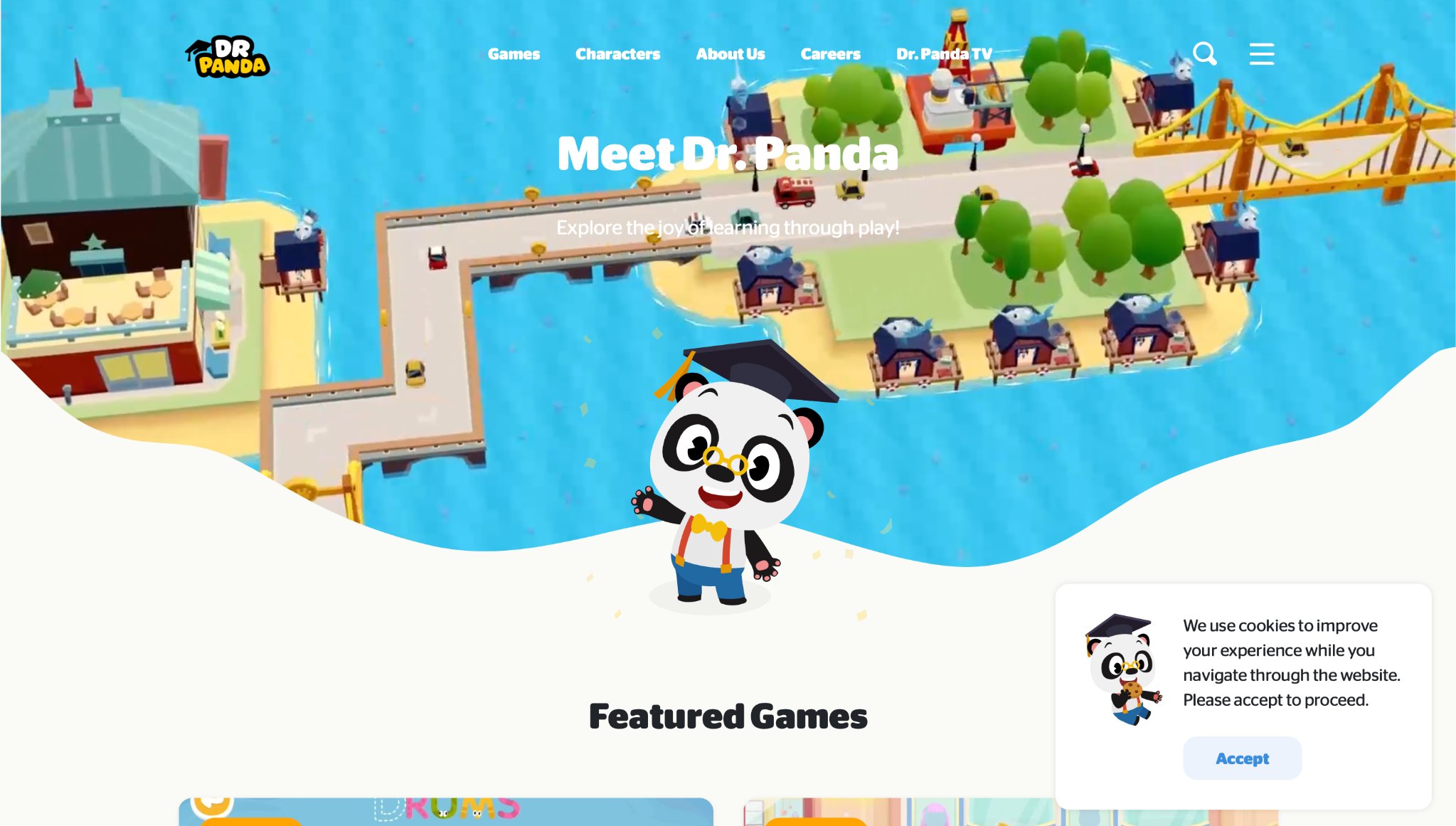
Dr. Panda is a series of town and care games from the Dr. Panda studio. Kids run a restaurant, a town, a school, or a vehicle yard, then cook, build, and decorate with bright tools. The characters are animals, and the jobs feel like pretend work. A cafe order becomes a color and sequence task. A town lot becomes a place to design. There is usually a gentle goal, yet the art style stays playful rather than strict. Many titles suit preschool and early elementary hands. The series is broad, so one app may be a kitchen and another a city. Parents often pick a single town first, then add a second if the child asks. Ads and extra content vary by title, so a quick parent check helps before play. For creative games for kids, the strength is role play with a finished dish, a built lot, or a dressed scene. Language grows when a child names the food or the shop. It pairs well with a calmer coloring session after the town gets busy.
Key features
- Town, kitchen, school, and vehicle play
- Animal characters and pretend jobs
- Decorating and cooking tools
- Gentle goals inside bright scenes
Facts and Information
- A series rather than one single game
- Often a fit for preschool and early elementary
- Role play ends in a dish, a lot, or a scene
- Parent check helps because titles differ
13. Hopscotch
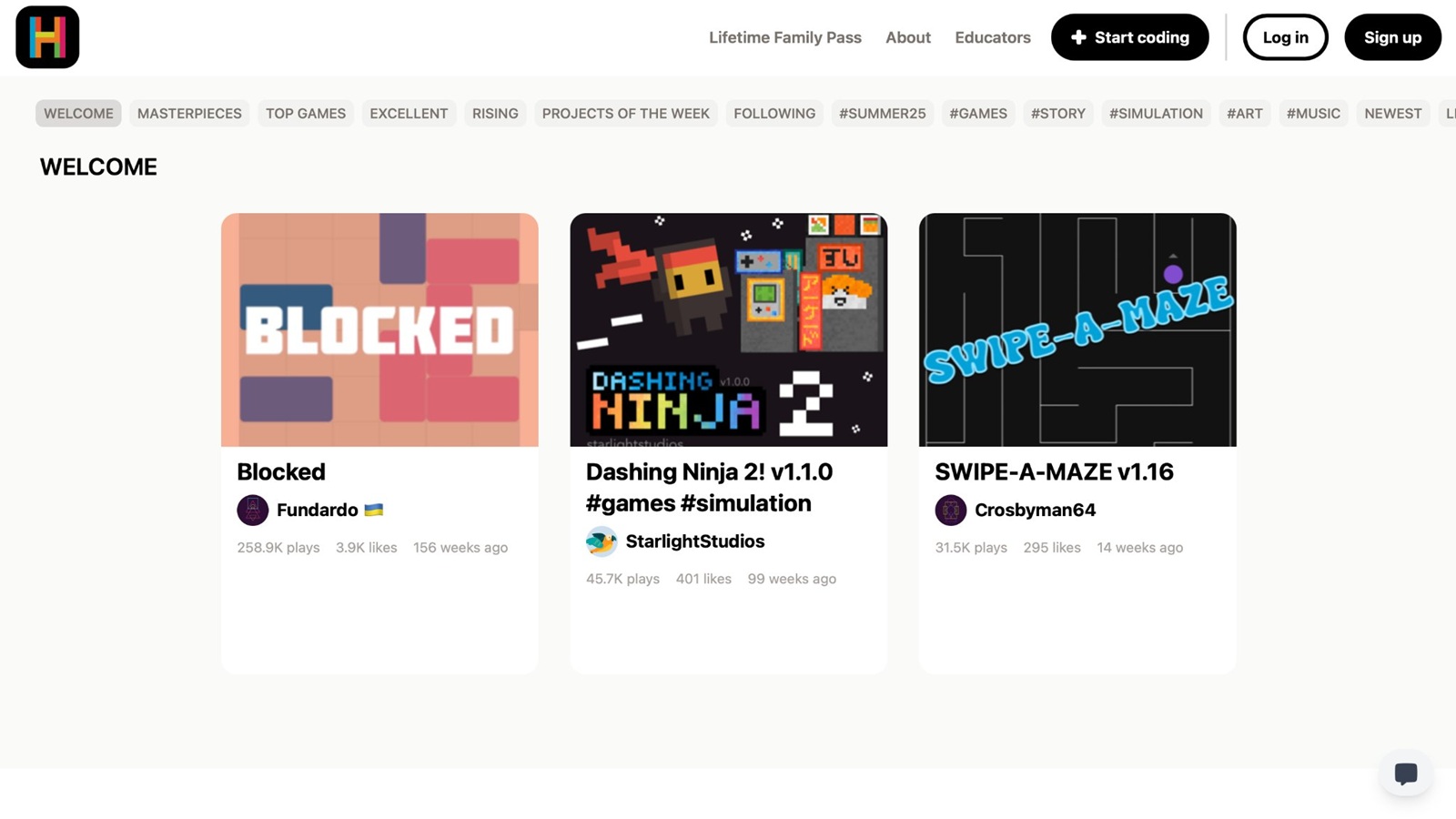
Hopscotch is a visual coding app where kids drag colorful commands to make games, animations, and art. A child can move a character, change colors, and add a tap event without typing code. Projects can be saved and shared with family. The block style feels close to a storyboard: this happens, then that happens, then a sound plays. Reading helps, so it suits elementary makers more than preschoolers. A first project goes faster with a parent nearby to name the blocks. After that, many kids treat it like a personal game studio. They remix an idea, test it, and laugh when a character flies off the screen. That laugh is part of the learning. It is not a pet-care club or a salon. It is a workshop. Families who want creative games for kids online with a build-your-own ending often keep Hopscotch for weekends and use shorter art apps on school nights. A small shared project, like a birthday card that moves, is an easy first win and a clear thing to show.
Key features
- Drag-and-drop commands
- Games, animations, and art projects
- Save and share with family
- Color and motion tools without typed code
Facts and Information
- A fit for elementary makers who can read
- First projects go faster with a parent
- Creative coding, not toddler care play
- Personal studio feel after the first win
14. Khan Academy Kids
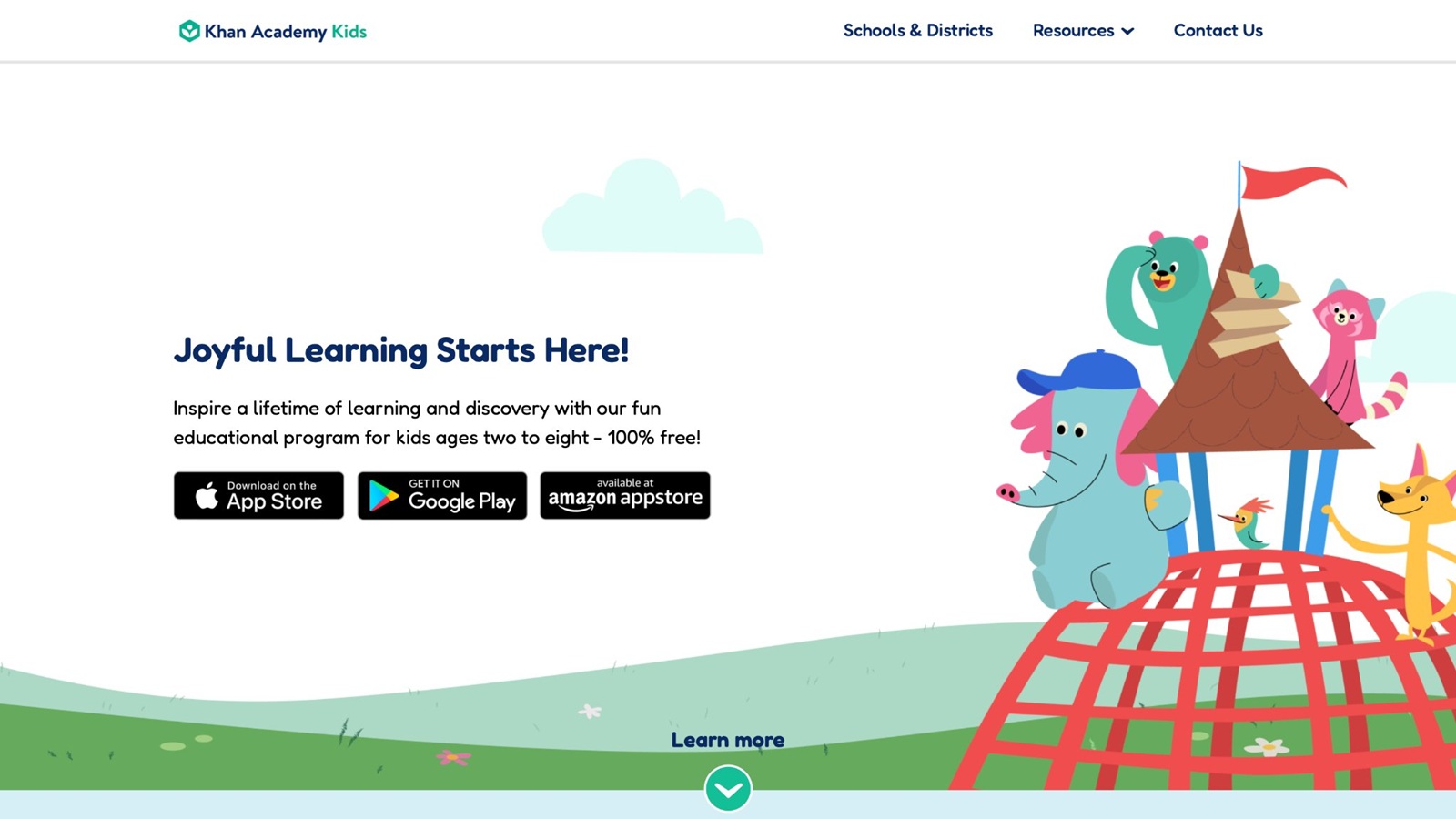
Khan Academy Kids, from Khan Academy in Mountain View, California, mixes early learning with drawing, story, and making activities for young children. Kids meet friendly characters, then color, build simple scenes, and follow short read-aloud paths. The library is large, and the main kids' experience stays free of ads. Creative tools sit beside letters and numbers, so art time can follow a lesson or stand alone. A child might trace a letter, then decorate a scene that uses that letter. The guidance is clearer than a pure sandbox, which helps kids who like a gentle path. Families who want dollhouse freedom may add a second title. Read-aloud stories give parents a way to join without taking over the art. Creative games for kids online often need this kind of bridge: make something, then talk about it. The app works on phones and tablets. Sessions can stay short because activities are broken into small pieces. A parent can pick a drawing when the child is restless and a story when they want a lap.
Key features
- Draw, story, and make activities
- Friendly characters and read-aloud paths
- Letters and numbers beside art
- A large early-learning library
Facts and Information
- From Khan Academy in Mountain View, California
- Guided play for young children
- Creative tools mixed with early skills
- Less open-ended than a dollhouse world
15. Animal Jam
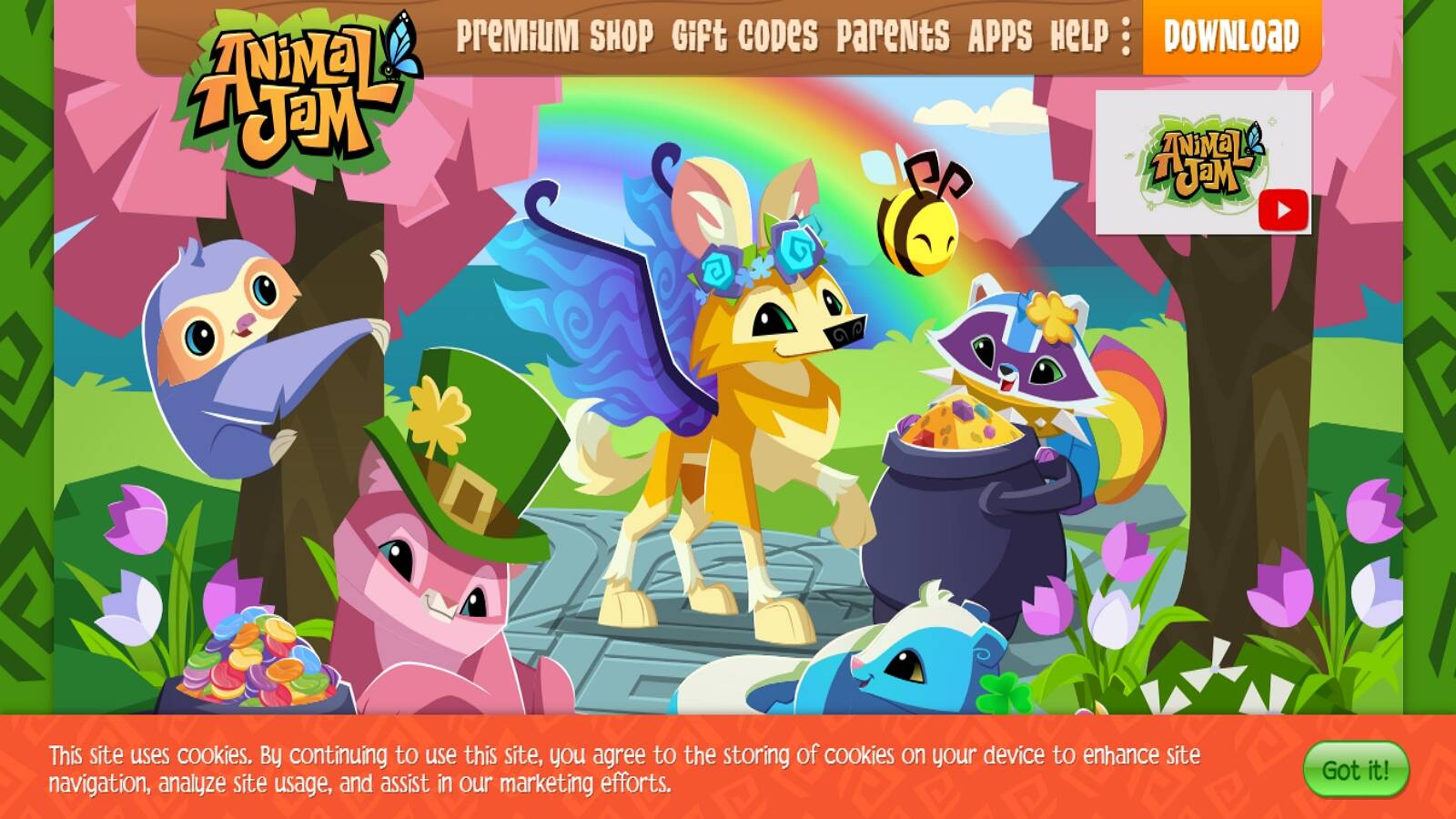
Animal Jam is a virtual world where kids pick an animal, decorate a den, and play minigames with a nature theme. Habitats, animal facts, and quests give the art a science flavor. Den decorating is the creative core: furniture, colors, wall styles, and party scenes. A child can build a cozy room, then change it the next day. Chat tools exist, so families set rules before social play and often keep chat limited. The world style suits elementary ages more than toddlers, who may find the map large. It rewards collecting and visiting, which some kids love and some parents limit to short visits. For creative games for kids, the den is the part to protect. Ask for a tour. Ask why a color was chosen. The nature facts can ride along as extra talk, not as a test. Minigames add variety after the room is done. A parent account check at the start keeps the creative hour inside the design tools, where the child is making a place rather than wandering.
Key features
- Animal avatars and den design
- Nature-themed minigames and quests
- Furniture, color, and party scenes
- Parent tools around chat
Facts and Information
- Built with a nature-education angle
- Stronger for elementary ages than toddlers
- Social features need family rules
- World-style play rather than a short care loop
Creative Habits That Keep Art Time Useful
Creative games work best as a small ritual, not a long drift. Many families use the same order each day: one design task, one care task, then a talk. That pattern shows up in learning through play activities, where the lesson hides inside a job the child already wants to finish. Learning through play examples look like styling a doll, then caring for a pet, then naming the choice.
Try this simple mix:
- Make: color a page, style a look, or decorate a room
- Care: feed a pet, tuck in a doll, or tidy a scene
- Tell: name three choices and why they fit
Learning through play stays light when the session has an end. Benefits of learning through play show up in planning, language, and pride in a finished look. A Fluvsies paper doll printable carries the same characters off the screen. A family weekly planner can hold the art slot so it does not drift. Summer holiday games and offline ideas mix screen making with paper crafts. Chore games for real life skills turn tidy-up play into a habit at home. A Valentine printable for children is another paper follow-up after a dress-up session. A short limit helps. Stop while the child still wants to show the picture. That ending keeps the next session easy to start.
How Creative Games Support Focus And Language
Focus grows when the next step is obvious and the reward is the thing they made. A glitter brush, a hat, or a clean room is enough. Loud timers and surprise ads pull attention away from that finish. Memory games for kids use the same attention in a shorter loop. Brain games for kids add a small puzzle when art time needs a calm break.
Language grows in the same loop. Kids name shades, fabrics, rooms, and feelings. “Sparkle pink for the party.” “Blue blanket for a nap.” Those lines are small, and they add up. English learning apps for kids and educational games for kids learning English give extra word practice when a child is ready. Problem solving games for kids ask for a plan, not only a tap.
A helpful parent move is to mirror the words, not to correct the art. Repeat the color. Ask who the character is visiting. Leave the wild haircut alone. The point is the idea, not a perfect picture. Emotional games for kids and emotional regulation games for kids give names for feelings that show up in pretend play. Social emotional games for kids sit close to care stories, where a child feeds, tucks in, and checks on a character. Easy educational games for kids keep that talk short enough for a tired afternoon.
FAQ
What age fits creative games for kids online?
Toddlers do best with big taps, soft art, and no fail screen. Color play and short care scenes work well when a child can finish them without reading. Preschool kids can handle dress-up, pet rooms, and short stories, which is the range covered by apps for preschoolers. A three- or four-year-old often mixes a picture, a room, and a tiny care job in one sitting. Kindergarten play can stretch that story a little, with a clearer beginning and end. Early elementary kids can add longer builds if a parent starts the first project and names the tools. Six- and seven-year-olds often fit that step. Older kids can hold a longer build once reading and menus are easy. The right fit is the game the child can finish and explain in their own words. If the menu confuses them, a simpler room is the better match, even if an older sibling is ready for more.
Are creative games for kids online safe without ads?
Many calmer creative games are built as closed kids spaces, with a known cast and no open chat. A family library is easier to supervise than a random free app, because the next tap stays inside the art, the pet room, or the dress-up scene. Parents still check chat, sharing, and downloads before play starts, and they keep stranger messages off. Free online games for kids still need a parent look, because ads and pop-ups vary from title to title. A closed club or a known kids studio keeps the session on the picture, not on a surprise video. Side-by-side play is the extra safety layer, since a parent can see the room the child is making and hear the story that goes with it. A short, known session is easier to trust than an open feed the child can wander through. Offline play after a download also helps, because the session does not depend on a new page load in the car or a waiting room.
How do creative games help language at home?
Kids practice words every time they pick a color, a job, or a place. A parent can ask for one sentence about the picture, and those sentences get longer over many short sessions. Fashion play adds fabric and mood words, such as sparkle, soft, party, or rainy day. Pet play adds care words, the same loop described in the pet care games that teach empathy and responsibility. Story play adds order: first, next, last. English-style word play can sit beside that talk when a child is ready for more practice. Pretend scenes also give names for feelings, like calm, silly, or proud. Care stories, where a child feeds, tucks in, and checks on a character, add even more of those words. A short matching game can add a smaller word loop when the child names what they see. A child who can describe the look is more ready to show it. The chat after the game matters as much as the game, because naming the choice is what sticks.
Can siblings share one creative game library?
Yes, in many family setups. One account on more than one device lets kids take turns or open different titles without a new download each time. Educational games for kids on iPad are a common shared screen at home. A phone can cover the smaller screen a sibling may use in another room. Younger siblings often want the pet and coloring rooms. Older siblings may want builds once menus and reading feel easy. Shared dollhouse play works when turns are clear: one child styles, the other sets the room, then they switch. A single library also cuts the hunt through new apps each week and keeps the cast familiar for both kids. The same characters make it easier for a younger child to join a story an older sibling already started. A parent can still split the hour, with a short care scene for the younger child and a longer build for the older one.
How long should a creative play session last?
A short session with a clear end works better than a long drift. One design task, one care task, then a talk is enough for many afternoons. Learning apps for kids use that same order when the lesson hides inside a job the child already wants to finish: make something, care for a character, then name the choice. A styled doll, a fed pet, and a sentence about why that color fit are enough. Stopping while the child still wants to show the picture keeps the next session easy to start. A set stop point before the game opens keeps the hour from spilling into the whole evening. A weekly plan can hold the art slot so it stays regular. A short screen make can lead into paper play, with the same characters drawn or dressed off the tablet. A tidy-up job can close the session and match the care scene on screen. That ending stays useful when it is kind and clear.
Read Also:
- Best Dress-Up Games for Girls Online
- Best Learning Through Play Activities
- Best Safe Kids Games
- Best Confidence Building Games
- Best Responsibility Games for Kids
See why families pick TutoClub for creative games for kids online!