
Best Emotional Regulation Games For Kids In 2026






Parents want simple tools that turn everyday screen time into opportunities for growth. The best emotional regulation games for kids in 2026 do exactly that. They guide children to notice their feelings, practice calm responses, and build empathy through engaging play.
TutoClub offers a wide collection designed specifically for these skills through their educational games for kids. These games for kids make emotional regulation feel natural and fun instead of like a lesson. Kids explore their own reactions and those of others in stories that mirror real life. This approach helps families create positive habits that last well beyond playtime.
Discover the Best Emotional Regulation Games For Kids in 2026 - TutoClub
Why Emotional Regulation Skills Matter for Kids

Children face many situations each day that spark strong feelings. Learning to manage those feelings early sets them up for better focus at school, stronger friendships, and greater confidence. Emotional regulation games give kids a safe way to practice without pressure. They learn to pause, breathe, and choose helpful actions instead of reacting on impulse. Families notice improvements in daily routines when kids have these tools ready.
The games also strengthen connections between parents and children. Shared play creates moments to talk about feelings in a light way. This builds trust and shows kids that emotions are normal and manageable.
Emotional regulation activities work best alongside complementary play experiences. Pairing them with problem-solving games for kids, emotional games for kids, and confidence-building games supports resilience and self-awareness, while responsibility games for kids and brain games for kids reinforce focus, accountability, and cognitive development.
How Games Help Kids Develop Emotional Skills
Play-based learning works well because kids stay engaged and absorb ideas without realizing they are learning. Emotional regulation games for kids use stories, characters, and simple challenges to show what different feelings look like and what helps in each moment. Children practice identifying emotions, trying calming strategies, and understanding how their actions affect others. Over time these repeated experiences create real habits.
Many families see kids apply the same skills during tough moments at home or school. The games also encourage creativity and problem-solving, which support overall development. TutoClub's kid games stand out by making these benefits part of everyday play.
What Emotional Regulation Looks Like in Everyday Play
Kids rarely talk about feelings in long sentences. They show them. A frown after a puzzle. A happy bounce when a character smiles. Self-regulation practice happens in those small moments.
Helpful play often includes:
- Naming a feeling with simple words such as mad, sad, proud, or worried
- Matching a face or body clue to that feeling
- Trying one calm action, like a slow breath or a kind choice
- Seeing how a character reacts after that choice
Pet-care stories make this feel natural. A child notices when a pet looks tired or hungry. That same noticing skill shows up later with siblings and friends. Many families keep this kind of practice close to learning through play activities and fun games that are educational for kids because empathy and calm often grow together.
Cleanup adventures add another layer. Finishing a small task after a messy moment builds patience. That patience sits close to learning through play examples, where children practice follow-through without a lecture. Print-and-play extras such as a Fluvsies paper doll can carry the same feeling words off the screen.
Ages and Skills That Fit Emotional Regulation Games
Different ages need different kinds of support. The same educational games for toddlers can still feel right when the pace stays gentle.
Toddlers and preschoolers
- Short scenes
- Clear faces
- Simple choices
- Songs or repeats that stick
Early elementary kids
- Stories with a beginning and an end
- A chance to pick a plan
- Light problem solving after a setback
Older kids
- Social scenes with friends or school-style moments
- Tools they can reuse when they feel stuck
- Space to talk after play
Games for preschoolers often start with care and naming feelings. Educational games for kindergarten add sharing and waiting. Educational games for 5 year olds and educational games for 6 year olds mix feelings and work with planning. Educational games for 7 year olds keep scenes short enough to finish. Educational games for 10 year olds, learning apps for kids 8 years old, and educational games for kids 4th grade give older kids more story choice. Children who prefer predictable steps often settle into games for young kids or educational games for 2 year olds with clear visuals and a steady pace. Games for toddlers and apps for preschoolers keep taps simple when attention is brief.
How Caring Stories Build Calm and Empathy
Care is one of the easiest doors into regulation. When a child helps a character eat, rest, or feel better, the child practices reading cues. Dress up games for girls and fashion stories support self-expression. A child who can show a mood through clothes, rooms, or stories often finds words later. Open play in kid educational games keeps that work close to family life.
These same caring loops sit inside safe apps for kids. A calm screen and parent-approved scenes keep the feeling work from turning loud. That design matches notes on how to protect kids online, where short, purposeful play leaves energy for real talk. Emotional games for kids add extra feeling words without turning the session into a quiz.
Calm Tools Kids Can Reuse After the Game Ends
Good feelings games leave a child with something they can use in the kitchen or at school. Common tools that show up in play:
- Pause. Stop before the next tap or next word.
- Name it. Say the feeling out loud or point to a face.
- Breathe. Take one slower breath with a character.
- Pick a plan. Help, wait, tidy, or ask.
- Try again. A soft restart after a mistake.
Memory games for kids pair well with these steps because holding a feeling word in mind takes focus. Tablet games for kids and educational games for kids on iPad often hold the same pause-and-plan loop on a bigger screen. Mobile games for kids keep that practice close during short waits. Kids who finish a care routine often stand a little taller the next time a feeling gets big, which overlaps with fun educational games for kids. Learning apps for kids and learning games for kids hide the same retry inside stories children already like.
Best Emotional Regulation Games For Kids In 2026
1. TutoClub - Best Emotional Regulation Games For Kids In 2026
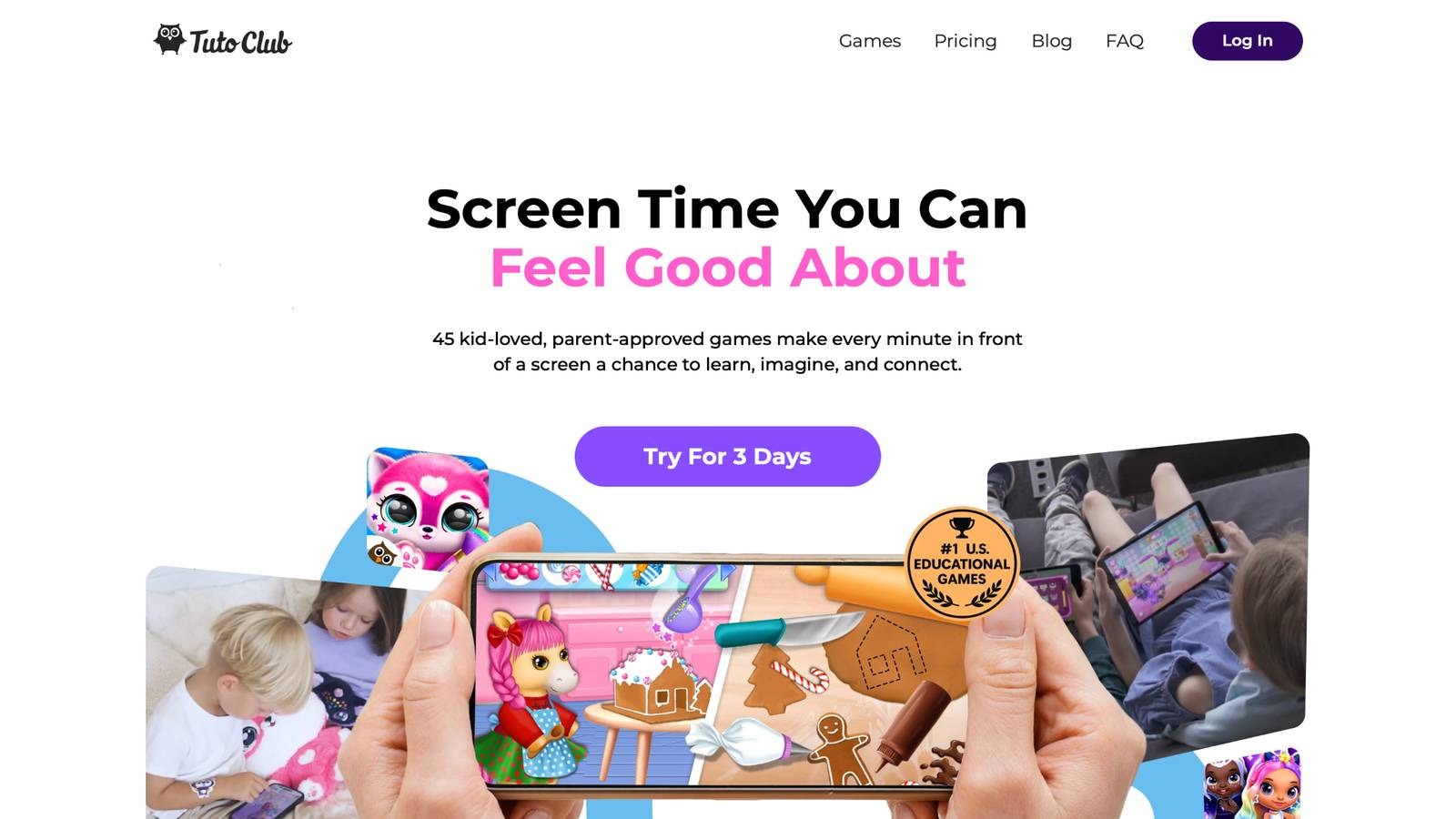
TutoClub games deliver a complete subscription service with over 45 ad-free titles created by the TutoTOONS studio based in Lithuania. This platform transforms screen time into enriching adventures that nurture creativity through art and storytelling tasks while sharpening focus via thoughtful puzzles. Children build emotional awareness as they practice empathy and compassion in caring scenarios, and they develop responsibility through gentle daily routines turned into playful challenges.
The collection features open-ended activities that spark curiosity and support lifelong learning habits. Kids explore worlds where they hatch and nurture virtual pets, complete cleaning quests that teach organization, or join fashion adventures that boost self-expression. Every game feels calm and inviting, with smooth progression that keeps young players engaged without frustration. Parents appreciate the safe, parent-approved design that works across iOS, Android, and Amazon devices after initial download.
- Standout features include adaptive challenges matched to skill levels, interactive narratives that fuel imagination, and regular fresh content to maintain excitement.
- Facts and information highlight research-backed approaches to joyful learning, multi-device flexibility after setup, and a distraction-free space that encourages meaningful play sessions.
TutoClub Overview
TutoClub is your gateway to a magical world of educational games designed especially for children.
As part of TutoTOONS, a leading kids' games studio, we offer premium access to over 45 ad-free games.
Our mission is to blend learning and play, helping kids explore, create, and grow in a safe online space.
Thousands of parents trust us for family-friendly content that sparks imagination and builds essential skills.
Key Features
- Unlimited Access: Unlock full content in all games with no interruptions.
- Ad-Free Experience: Enjoy seamless play without any ads or distractions.
- Skill Development: Games foster creativity, social skills, communication, and more through fun activities like pet care and cleanup challenges.
- Regular Updates: Get new releases, exclusive content, and future updates automatically.
- Easy Subscription: Cancel anytime with no obligations, simple and flexible for families.
Explore Our World
TutoClub provides a rich ecosystem of educational games for kids, featuring ad-free experiences that promote creativity, focus, and emotional growth through play.
This platform turns screen time into valuable learning opportunities, with parent-approved content that builds essential skills and sparks curiosity in young minds.
- TutoClub Games: Over 45 educational games, including popular titles like Fluvsies, Smolsies, and the Sweet Baby Girl series
- Blog: Insights, tips, and stories for families on kids' learning and play
- FAQ: Comprehensive answers to frequently asked questions about subscriptions, features, and more
Get TutoClub on Your Device
TutoClub delivers premium kids educational games directly to your mobile devices, making learning accessible anytime, anywhere.
With apps available on major platforms, families can easily download and subscribe for ad-free play that turns screen time into skill-building adventures.
Perfect for parents seeking safe, engaging content on iOS, Android, or Amazon devices.
Why Choose TutoClub?
We're committed to 100% safe, enriching entertainment that kids love and parents approve.
Join the thousands who've seen their children thrive through playful learning.
Ready to start the adventure?
Subscribe to TutoClub today and unlock endless fun!
2. Fluvsies Academy
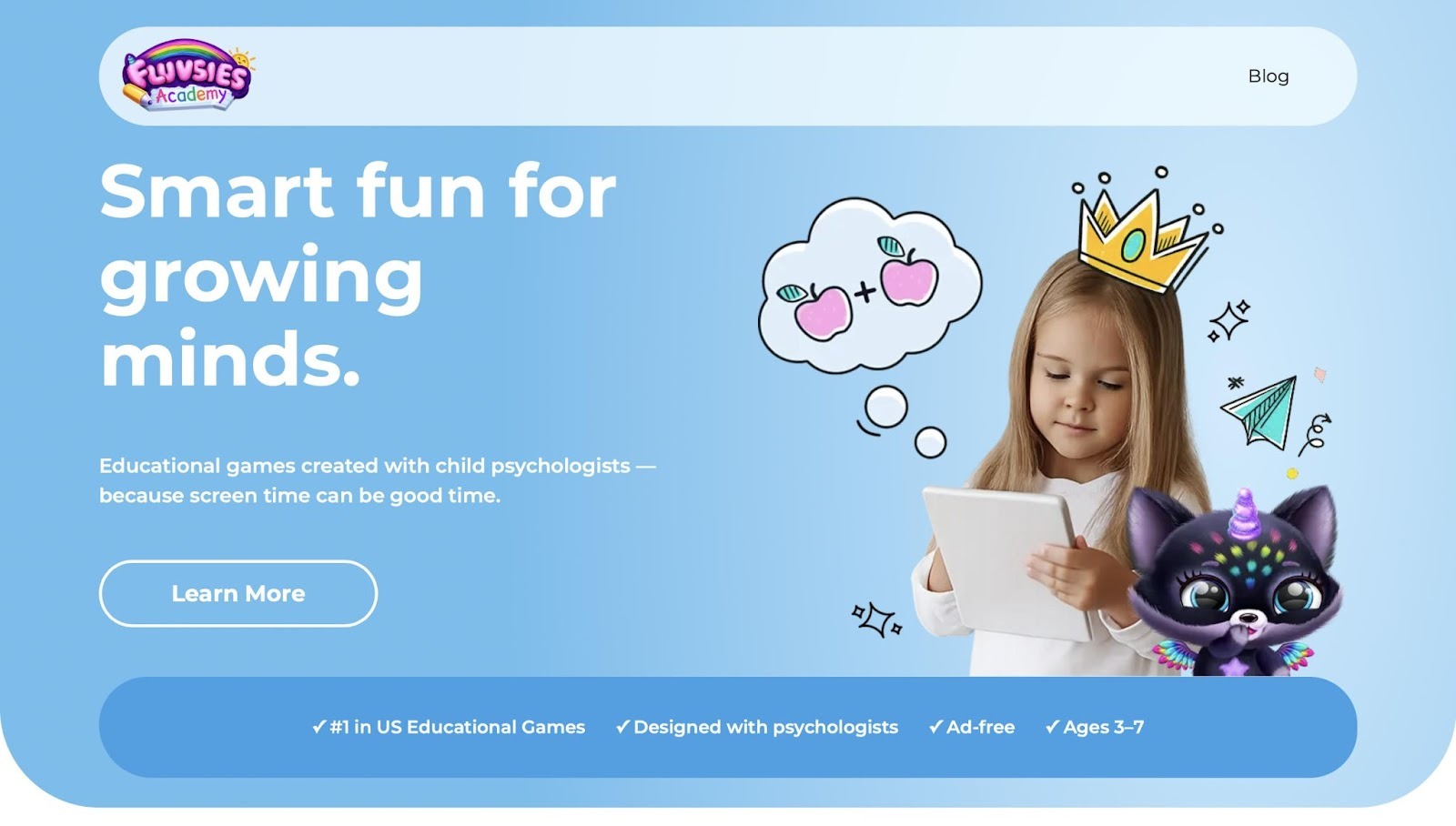
Fluvsies Academy creates calm, nurturing experiences for children ages three to seven. Developed with child psychologists, the games balance learning and play while keeping emotional safety at the center. Kids explore language, logic, and life skills through gentle activities that also build social connections and self-regulation. The platform offers a peaceful space where children practice staying focused, understanding others, and managing their energy in positive ways. Parents appreciate the ad-free design and the way each session leaves kids feeling balanced rather than overstimulated. Every activity encourages children to notice their own feelings and respond with kindness toward characters and friends in the game world. Families often notice that kids carry over these gentle habits into everyday moments like sharing toys or waiting their turn. The collection grows with the child, adding new stories and challenges that keep the experience fresh while reinforcing core emotional skills. Fluvsies Academy stands out for its warm visual style and quiet pacing that feels like a cozy storybook brought to life on screen. Children return to the games because the characters feel like friends and the challenges feel achievable rather than stressful. This approach helps young learners develop patience, empathy, and a sense of calm control that supports smoother days at home and preschool.
Key features include interactive stories that teach empathy, mindfulness elements that support calm moments, and life-skill activities that blend imagination with real-world practice.
Facts and information show that the games promote emotional balance through guided play, strengthen social skills and attention, and create a foundation for healthy habits that carry over into daily routines.
3. Zones of Regulation App
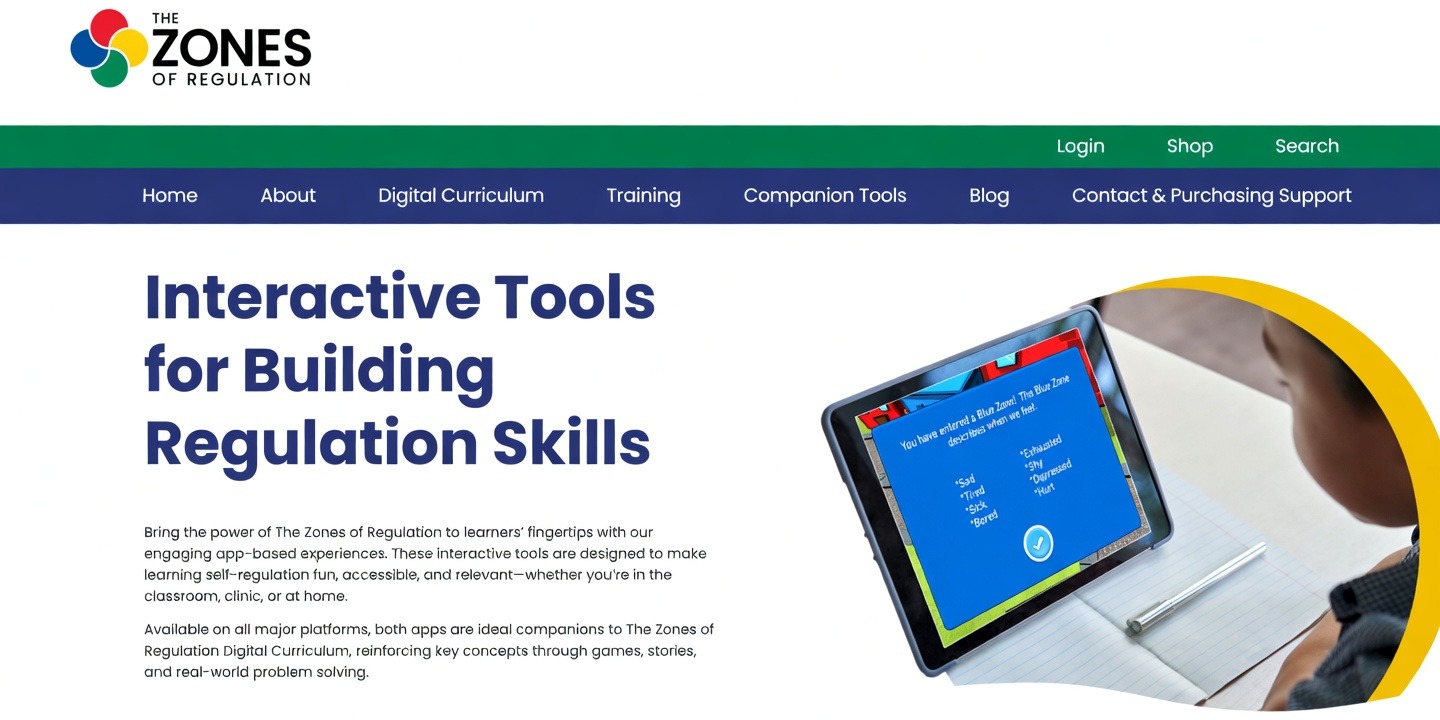
The Zones of Regulation App helps kids aged five to twelve understand their feelings using a simple four-color system that makes complex emotions easy to identify and manage. Learners move through a virtual town filled with adventures that teach them to notice body clues and pick helpful strategies. The app supports multiple user profiles so siblings or small groups can practice together in a shared safe space. Children enjoy mini-games and rewards while building a personal toolbox of calming techniques and problem-solving ideas. Each session feels like an exciting journey through familiar neighborhood settings where emotions come alive in relatable ways. Parents like how the app turns abstract ideas about feelings into concrete actions that kids can remember and use right away. The design keeps things engaging without overwhelming young minds, letting children progress at their own pace while gaining confidence in handling big feelings. Over repeated play, kids start recognizing their zones faster and choosing strategies more independently during real-life situations. The app works well for both individual quiet time and guided family sessions where everyone learns together. Its structured yet playful format makes emotional regulation feel like a skill anyone can master with practice.
Key features include real-life scenario practice, customizable strategy lists, and interactive challenges that reinforce emotional awareness.
Facts and information reveal that the app aligns with proven frameworks for self-regulation and gives kids concrete ways to move between different emotional states during everyday situations.
4. Daniel Tiger’s Grr-ific Feelings
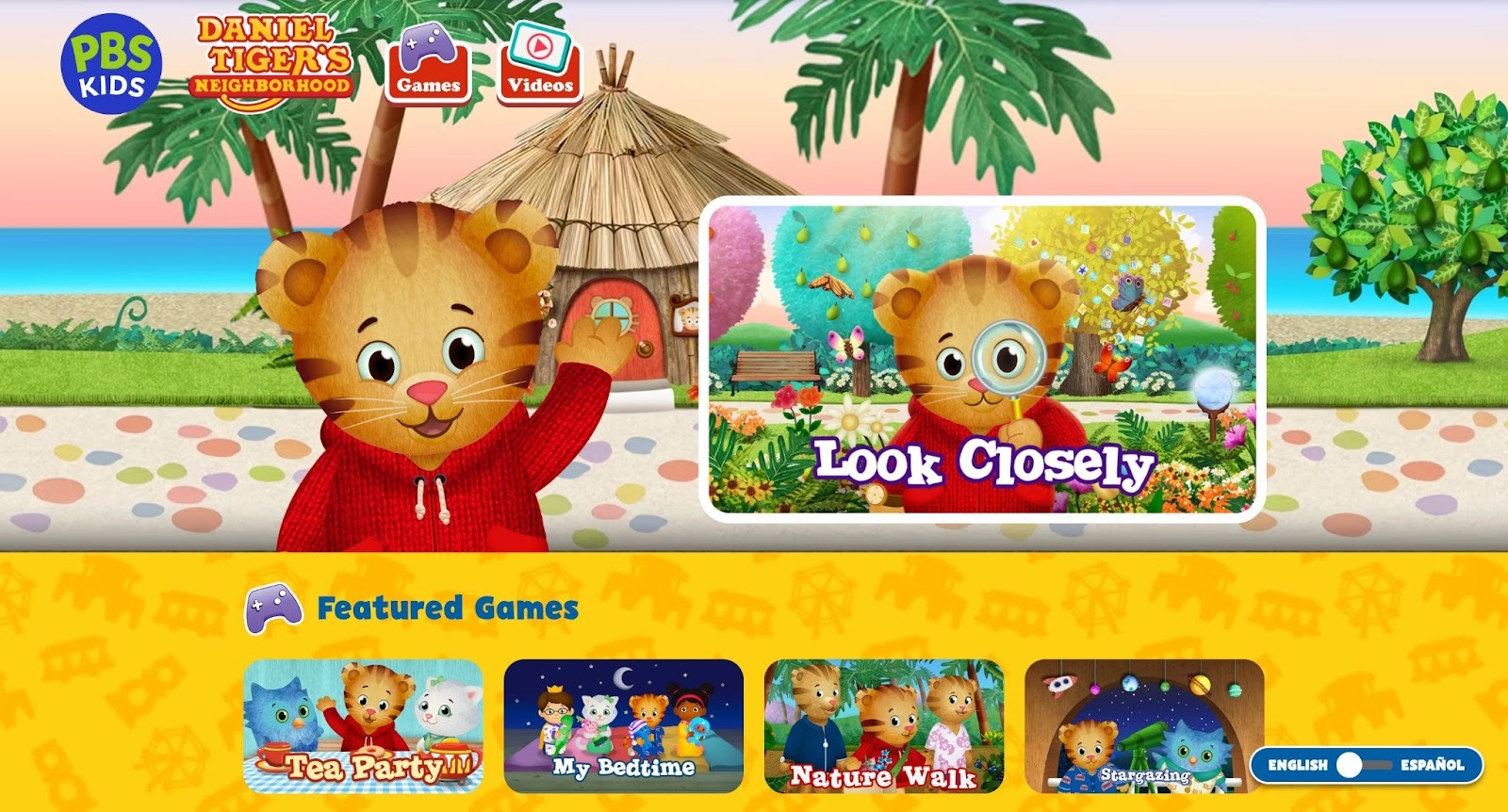
Daniel Tiger’s Grr-ific Feelings brings familiar songs and gentle activities to young children learning about emotions in a warm and friendly way. Kids draw feelings, sing about them, and step into photo-booth style moments that show how to name and handle different states. The app feels friendly and familiar, making it easy for toddlers and preschoolers to join in without any pressure. Families often use the songs during real moments to help children remember what they practiced in the game. Each activity ties directly to everyday experiences like feeling mad or proud so kids see their own lives reflected in the stories. The simple interface lets little hands navigate easily while the beloved character guides them with patience and kindness. Children love repeating the songs and activities because they feel comforting and empowering at the same time. Parents report that kids begin using the same phrases and strategies outside the app during tricky moments at home or daycare. The collection of games grows naturally with the child’s interests, keeping engagement high while building a solid foundation of emotional vocabulary and coping tools.
Key features include sing-along songs about feelings, drawing tools for expressing emotions, and simple games that model calm responses.
Facts and information indicate that children who spend time with the app gain stronger emotional knowledge and show more comfort expressing and managing their feelings.
5. Breathe, Think, Do with Sesame
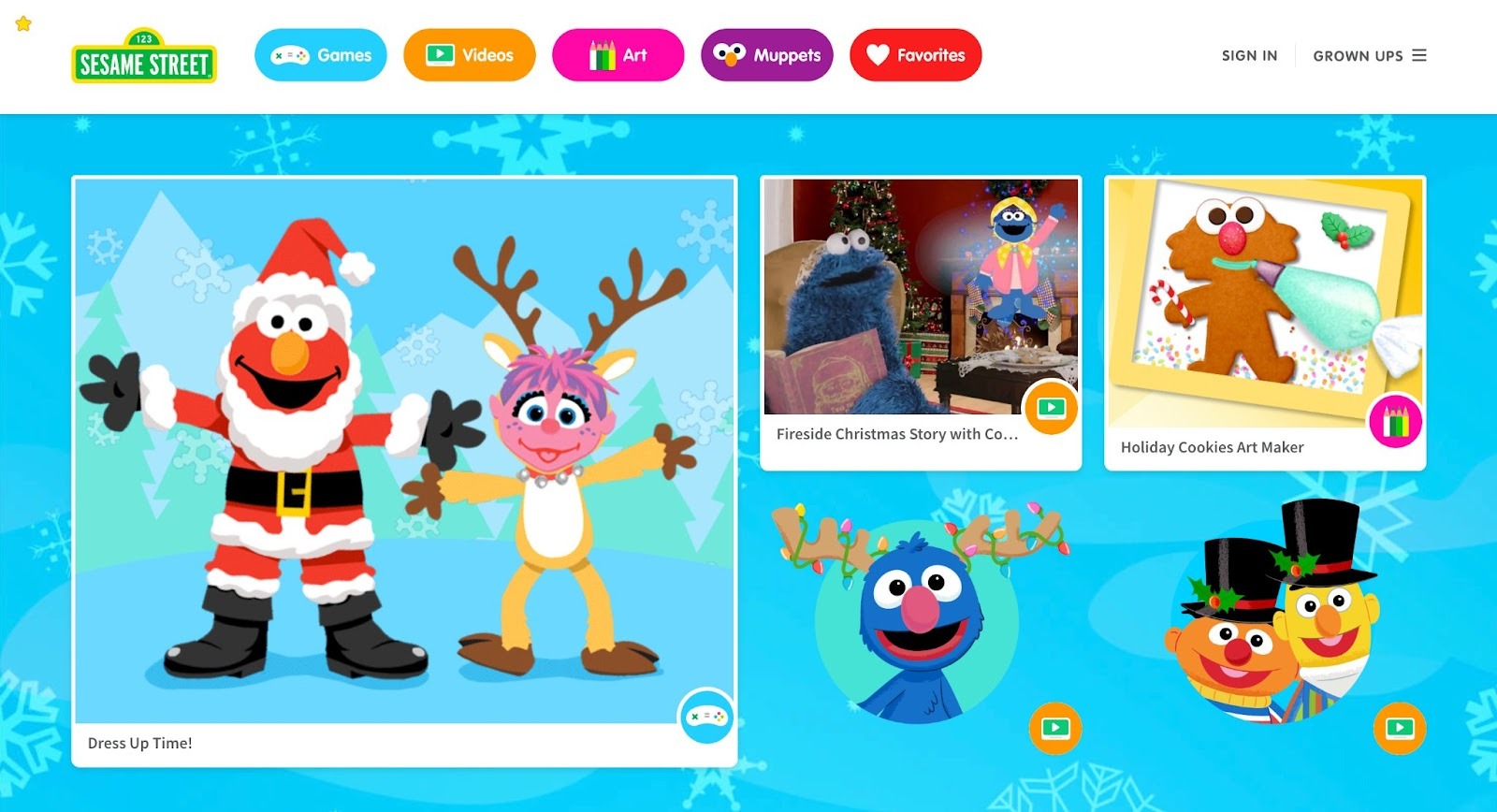
Breathe, Think, Do with Sesame guides very young children through everyday challenges with a friendly monster character that feels like a trusted companion. Kids help the character pause, breathe slowly, and choose a plan before acting. The activities cover common situations like waiting or fixing something that broke. The simple steps make self-control feel achievable and fun for preschoolers. Each scenario unfolds at a gentle pace so children never feel rushed while learning important skills. Families appreciate how the app turns ordinary frustrations into opportunities for growth in a lighthearted setting. Children return to the activities because they enjoy helping the monster succeed and see their own successes mirrored back. The breathing exercises become second nature after just a few plays, giving kids a tool they can use anywhere. Parents often notice smoother transitions during daily routines after consistent use. The app keeps things positive and encouraging so every session ends with a sense of accomplishment.
Key features include breathing exercises built into stories, problem-solving prompts, and repeatable scenarios that build confidence.
Facts and information show that the app teaches young children to slow down and think before reacting, supporting smoother transitions throughout the day.
6. Wisdom Social Emotional Learning App
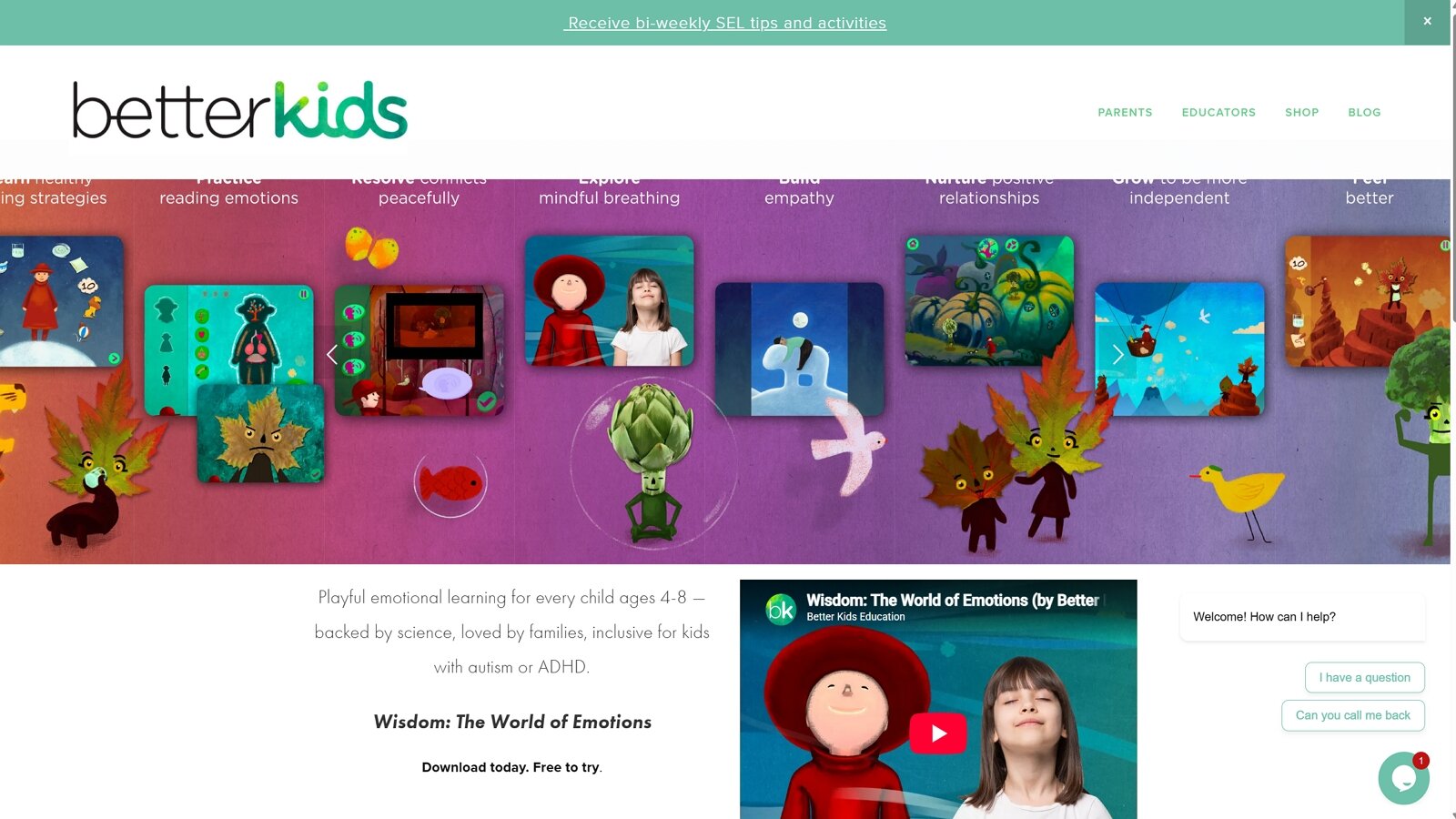
Wisdom turns social-emotional practice into a story adventure for children about four to eight, including many kids who learn best with extra structure or who live with autism or ADHD. Players name feelings, face social puzzles, and try kind responses inside a colorful world where choices change what happens next. Effort is rewarded more than perfect answers, which keeps the tone encouraging and makes room for different learning styles. Families notice the same feeling words showing up at dinner and during playground talks. Levels read like short chapters, so a busy evening can still fit one complete scene without turning the night into a long lesson. Inclusive design and gentle pacing help a wide range of children stay in the game long enough for the language of empathy and problem-solving to become their own. The world feels like a storybook rather than a worksheet, which matters for kids who shut down when play starts to look like school. Positive outcomes follow thoughtful actions, so children see that kindness and planning are not abstract virtues but choices with visible results. Parents like that the app celebrates small steps forward instead of demanding a polished performance. Kids often retell their adventures later, which turns screen time into a family conversation starter. Used regularly, Wisdom gives children a shared vocabulary for feelings and a safe place to practice the social moves that real friendships require.
Key features include story-driven challenges, emotion vocabulary builders, and inclusive design that welcomes every child.
Facts and information highlight how the app helps children build emotional knowledge through play while encouraging problem-solving and empathy in daily interactions.
7. Mightier
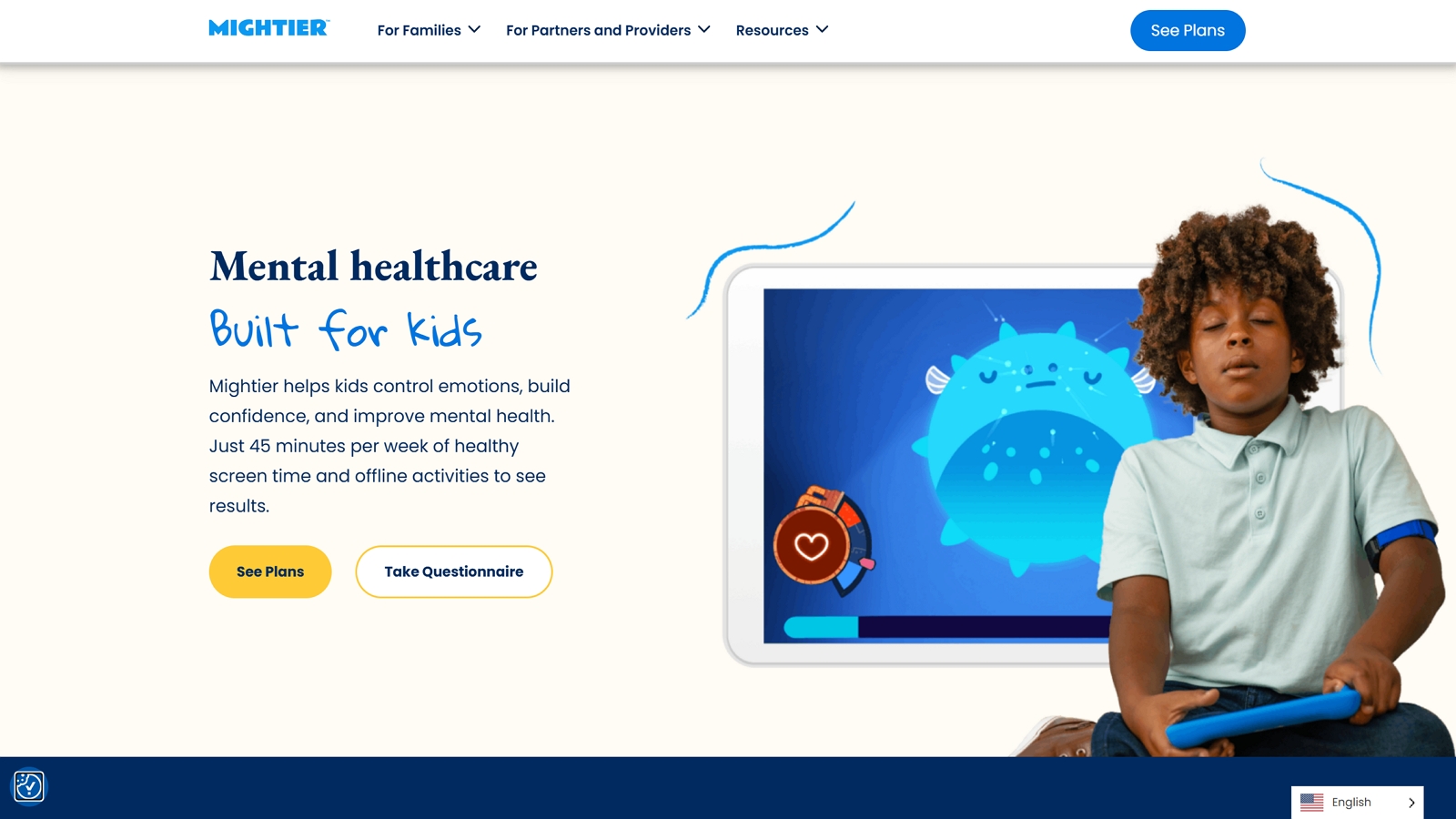
Mightier pairs action games with live heart-rate feedback so children six to fourteen can watch their body settle as they breathe and refocus. The invisible surge of energy becomes a visible signal they can lower, which makes regulation concrete instead of mysterious. A library of titles keeps the play fresh, while parent tools track progress and suggest ways to support growth at home. Because the work happens inside games kids already want to play, practice does not feel like a separate therapy hour. Medical input shaped the design, and many families use the same breathing and focus moves during homework spikes, sports nerves, or sibling conflict. Confidence grows when a child sees their body respond to a strategy they chose themselves. That feedback loop is powerful. A feeling that once seemed to take over now has a number, a breath, and a next try. Sessions feel like challenges rather than lectures, and variety in the game library helps older kids stay interested for months instead of a week. Reports help caregivers notice real change over time without hovering during every play session. Mightier does not ask children to talk their way through every emotion first. It lets them practice calming in the moment, then carry that body awareness into ordinary life when the heart starts to race again.
Key features include biofeedback integration, a library of calming games, and family progress reports that keep everyone involved.
Facts and information show that the program was developed with input from medical experts and helps children gain real-time awareness of their bodies during emotional moments.
8. Avokiddo Emotions
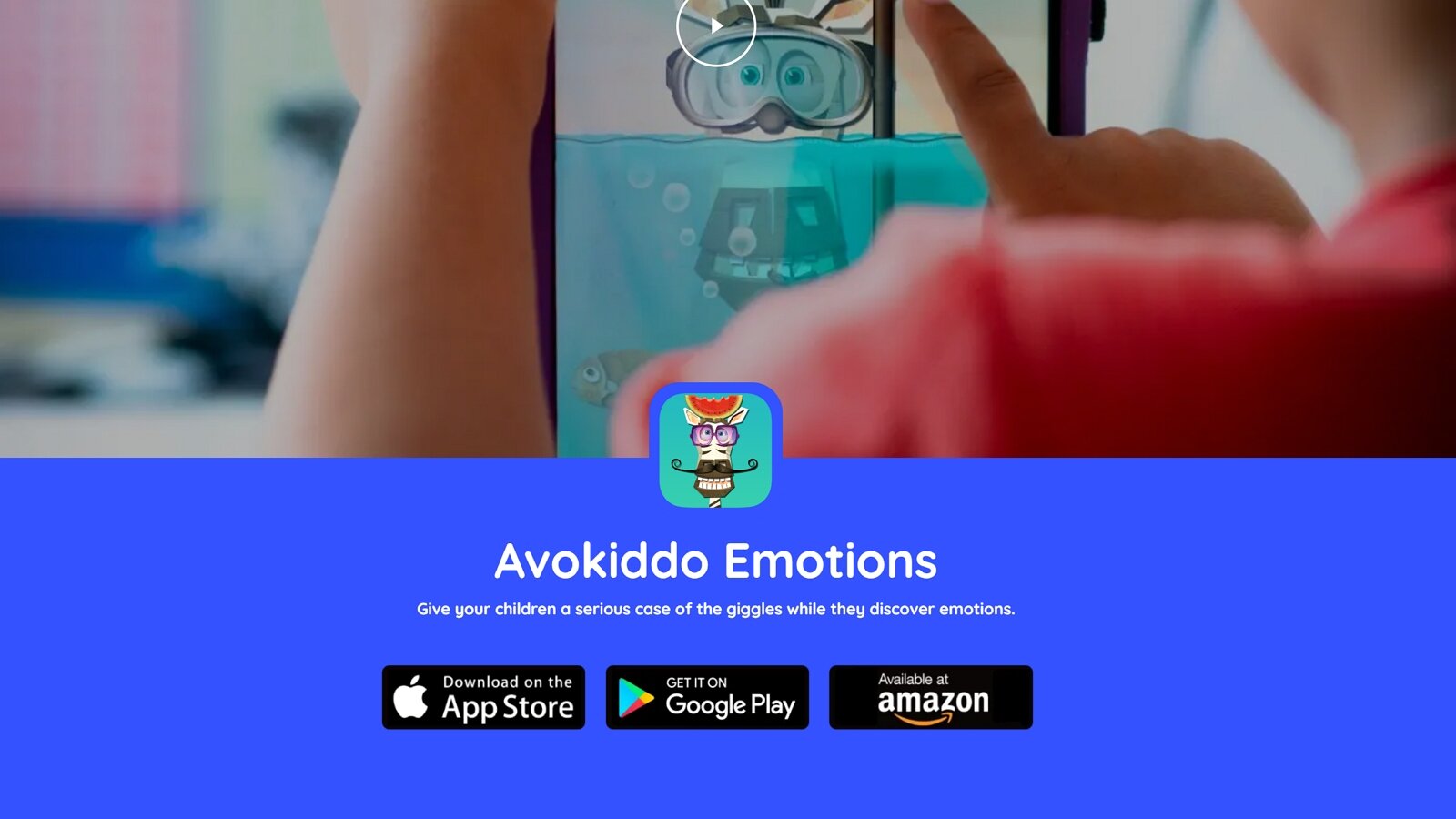
Avokiddo Emotions invites young children to dress characters, swap props, and watch faces shift from silly to sad to surprised. There is no single right path, so play feels like art time rather than a quiz. That freedom helps kids notice how a small change in eyes, mouth, or posture can tell a whole story, which later helps them read classmates and caregivers. The controls stay simple enough for little fingers, and sessions stay short and cheerful. Parents often see more curiosity about facial cues after repeated visits. Because the app treats emotion as something you can experiment with, children stay willing to explore feelings that might otherwise feel too big or too serious. Mixing and matching props turns cause and effect into a joke one minute and a discovery the next. A frown becomes a smile with a hat change, then a worried look with a different prop, and the child is the one making the shift. That sense of authorship matters. Emotional learning here is not about getting the official label first. It is about playing with expressions until the face on screen starts to look like people in the room. The open-ended style keeps children coming back, and that return visits are how subtle awareness of cues becomes a habit rather than a one-time matching game.
Key features include character customization, emotion exploration tools, and lighthearted activities that feel like pure fun.
Facts and information reveal that children develop finer awareness of subtle emotional cues through repeated creative play.
9. IF The Emotional IQ Game

IF The Emotional IQ Game sends older kids through story chapters where listening, teamwork, and social choices change how characters feel. Tweens stay engaged because they drive the plot, then pause to reflect on what those outcomes mean for real friendships and school life. The safety of a narrative world lets them try a blunt reply or a kind one and see the difference without social risk. Families often report clearer talk after regular play, especially when a chapter mirrors a recent conflict. Reflection beats keep the lessons from floating away when the story ends. The game treats emotional intelligence as a set of decisions you can practice, not a personality trait you either have or lack. Relatable scenes about belonging, misunderstanding, and repair give children a rehearsal space before the hallway version arrives. Being in the driver’s seat keeps motivation high at an age when lectures lose their grip. Parents appreciate that consequences stay inside the story long enough for a child to notice them, then get named in a short reflection so the link to real life is not left to chance. Over time, kids become more willing to consider how their words land. IF does not promise perfect friendships. It offers a controlled world where listening and choosing well can be tried, revised, and remembered.
Key features include narrative decision-making, teamwork scenarios, and reflection moments that tie back to real friendships.
Facts and information show that the game strengthens emotional intelligence by letting children experience consequences in a controlled story environment.
10. Touch and Learn Emotions
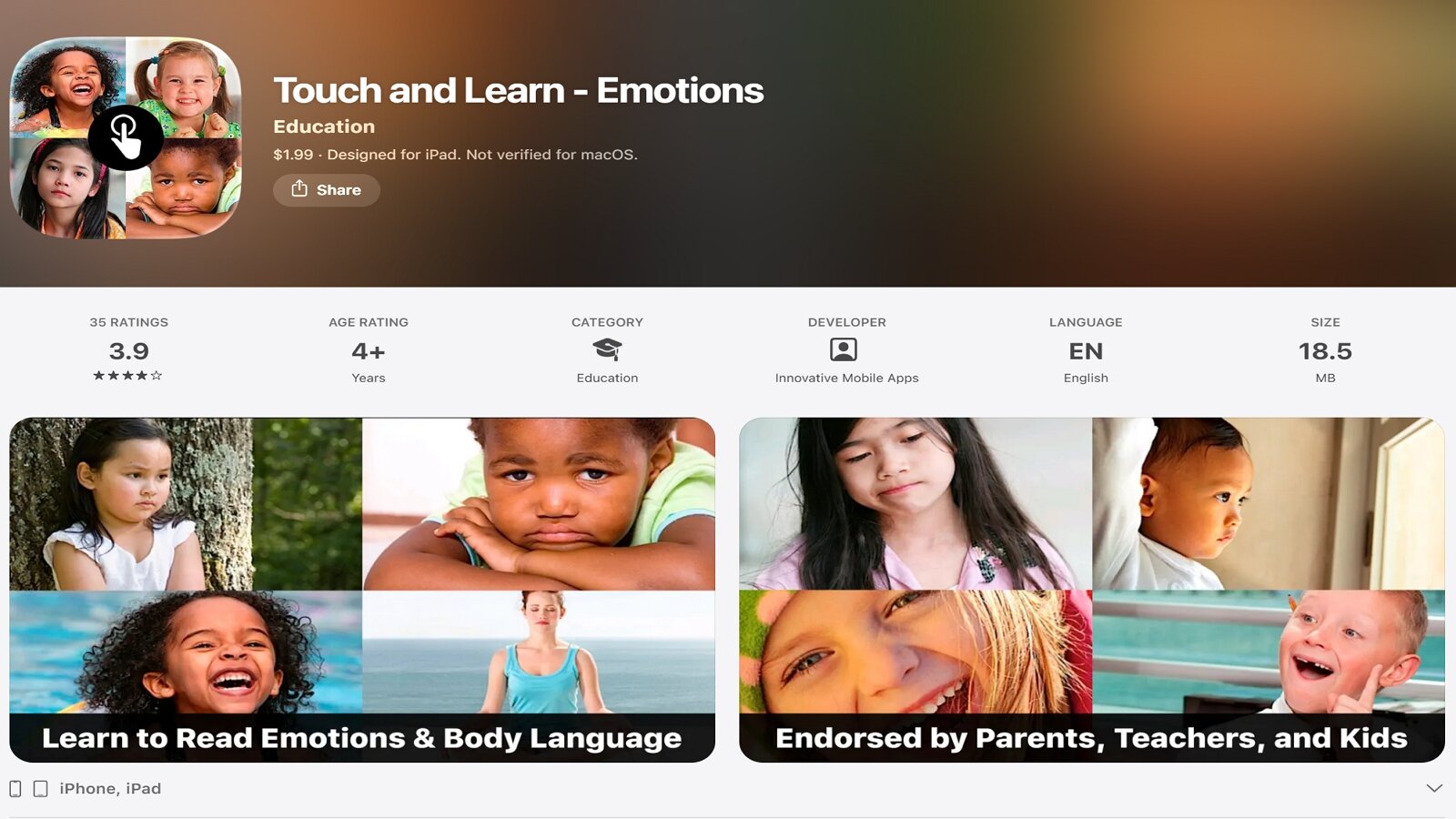
Touch and Learn Emotions uses real photographs and matching tasks so early learners can connect a word to a face they might actually see. Visual clarity and quick feedback help children who need concrete cues rather than cartoons alone. Levels stay focused, with little decoration to pull attention away from the expression on screen. Confidence builds each time a match is right, and that success makes it easier to try the same skill with people in the room. Parents like the clean layout for short, independent practice. Over time, kids get better at spotting a feeling in others and choosing a response that fits, which is the quiet work of everyday empathy. Familiar, real-life images keep the activity approachable. A child is not asked to decode a stylized mascot first. They practice with faces that look like family, classmates, and neighbors. Immediate positive feedback keeps frustration low, which matters for learners who shut down when a task feels like a test. The app works well as an introduction that can grow with the child, moving from simple matching toward richer recognition. Repeated practice is the mechanism. Seeing an emotion, naming it, and getting confirmation trains the eye and the vocabulary together. Families who want a straightforward visual tool rather than an elaborate adventure often find this format easier to fit into a short window before school or bedtime.
Key features include real-life photo examples, matching challenges, and easy navigation that keeps young users focused.
Facts and information indicate that repeated practice with the app improves children’s ability to read emotions in others and respond with greater understanding.
11. Calm Kids

Calm Kids gathers short meditations, soft soundscapes, and illustrated stories so children can practice quiet without being told to sit still and “just relax.” Themes range from nature walks to bedtime tales, which makes it easy to slip a session into an afternoon dip or a wind-down routine. Friendly narration models breath and visualization at a pace young listeners can follow. Families often notice evenings settle after consistent use because the body has already rehearsed stillness. Nothing in the design shouts for more taps. The point is a small pocket of calm that children can later recreate on their own. Variety keeps the collection from feeling like the same three-minute script every night. A child who will not sit for a plain breathing lesson may follow a cozy story that happens to include the same breath. Each activity treats mindfulness as inviting rather than corrective. Parents value how easily a session fits beside a bath, a quiet corner, or the last minutes before lights out. Over time, kids develop a sense that relaxation is something they can start, not only something that arrives when the house is already peaceful. Calm Kids creates a digital space where emotional balance feels natural, unhurried, and available on an ordinary day.
Key features include guided meditations, soothing soundscapes, and bedtime stories tailored for young listeners.
Facts and information show that the app supports emotional balance by teaching children to create quiet moments and practice gentle focus techniques.
12. Headspace for Kids
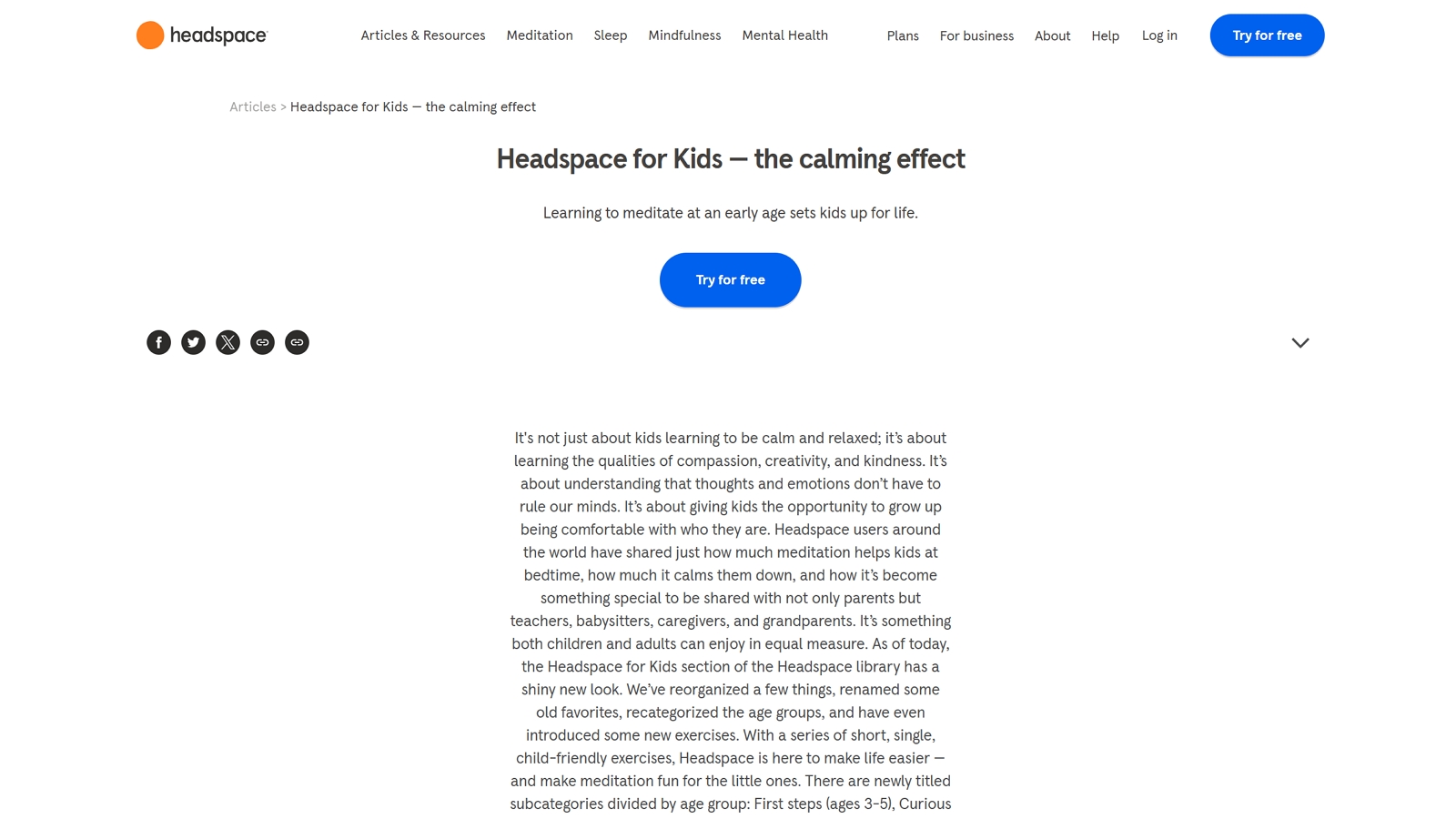
Headspace for Kids breaks mindfulness into short, animated sessions that feel closer to a game than a lecture. Kindness, gratitude, and calm arrive through characters and bite-size themes matched to age, so a younger child and an older sibling can both find a fit. Daily structure and light tracking help families keep a streak without turning practice into homework. Kids pick up simple tools for big feelings and can return to new collections as their attention span grows. The tone stays bright, which matters when a child already feels overloaded. Regular brief sessions are what turn focus and kinder reactions from an idea into a habit. Animations and guides keep abstract ideas from floating. A child can see a feeling, try a small practice, and finish before restlessness takes over. Families like the clear shape of a session: start, play through a theme, finish with a sense of having done something complete. As skills develop, fresh content prevents the routine from going stale. The app does not ask children to become miniature meditators overnight. It offers a friendly on-ramp where emotional awareness and steady attention are practiced in pieces that fit real family life. Used often, those pieces add up to a more reliable pause when a day gets loud.
Key features include animated mindfulness exercises, themed collections for different ages, and progress tracking for families.
Facts and information reveal that the app helps children develop steady focus and kinder responses through regular short practice sessions.
13. DreamyKid
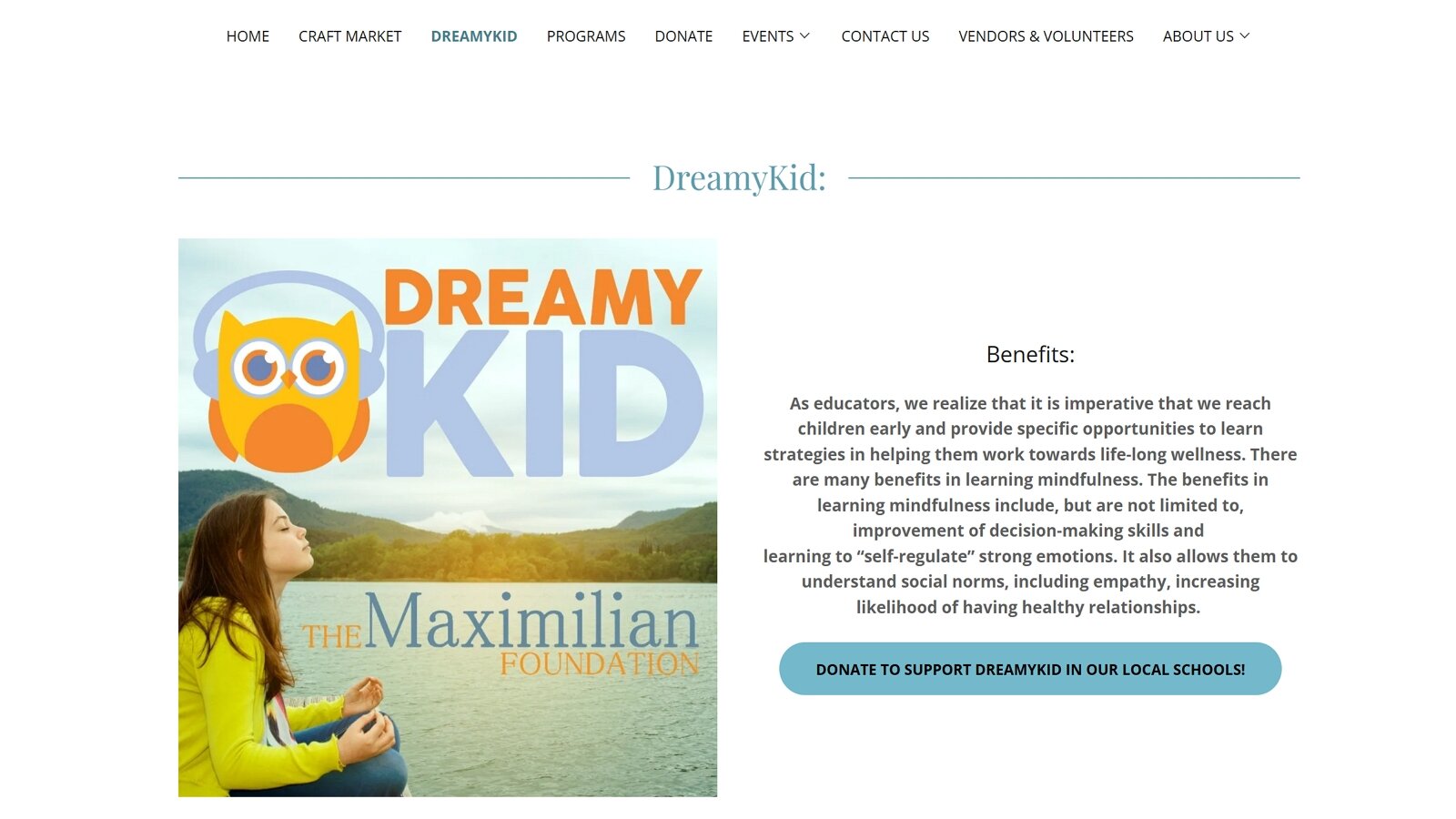
DreamyKid organizes mindfulness into categories so children can pick a mood and try a small shift toward steadier ground. Guided reflections and gentle games encourage kinder self-talk without scolding. Each activity is short enough to feel like a discovery rather than a chore, and the overall tone stays uplifting. Kids collect simple techniques they can reuse when a day turns sharp. Families appreciate that the content does not pile on pressure or complicated language. Used often, the app becomes a quiet workshop where emotional tools are built through play and a few honest sentences about how a child feels. Categories help a child who knows they are restless, worried, or low but does not know what to do next. Instead of one generic session, they can choose a path that matches the moment. Positive framing matters here. The app aims to strengthen what is already working rather than catalog everything that feels wrong. Confidence grows as children master small techniques and notice they can change their state, at least a little. DreamyKid is less about spectacle and more about a nurturing loop: notice the mood, try a gentle practice, leave with one tool that can travel into the next hard minute.
Key features include categorized mindfulness programs, guided reflections, and uplifting activities for daily use.
Facts and information show that the app helps children develop stronger emotional tools through consistent gentle practice.
14. Mindful Powers
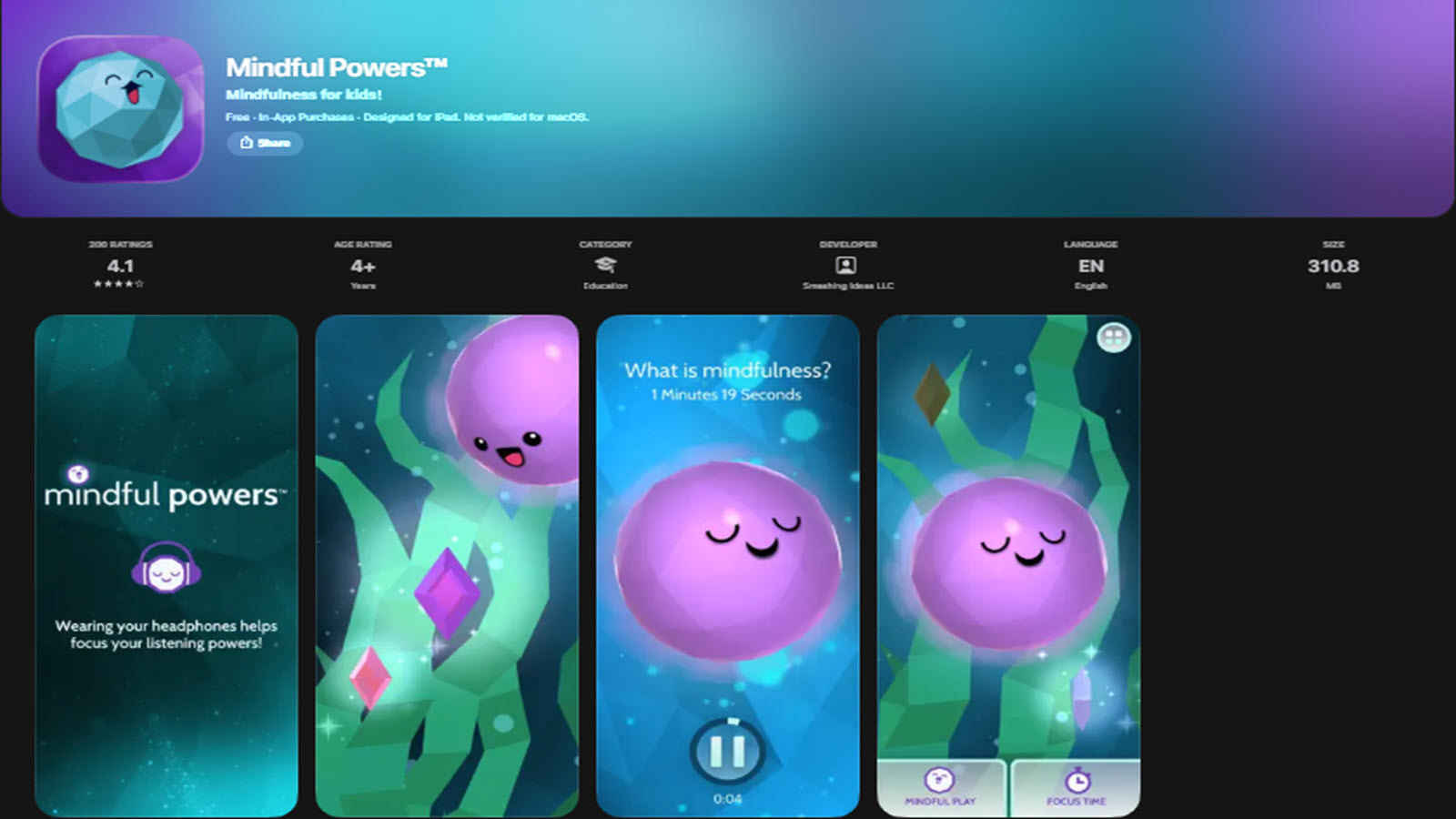
Mindful Powers dresses focus and calm in superhero language so children feel like they are earning abilities rather than sitting through a lesson. Mini-games mix action with still moments, which holds attention while still teaching a pause. Powers collected in the app become metaphors kids reuse when a real challenge appears. Parents like watching those metaphors travel to the playground or the classroom. The tone is proud and playful, which helps children picture themselves as capable of steering a feeling instead of being swept by it. Practice stays motivating because growth looks like a new power unlocked. For kids who bounce off quiet apps, the heroic frame can be the difference between refusal and curiosity. Action keeps energy in the room. Quiet beats then ask that energy to settle, which is closer to real life than a session that is only still. Families see the benefit when a child says they need a power they already practiced instead of exploding first. Mindful Powers does not claim that feelings vanish. It suggests that a child can train, collect tools, and face a hard moment with a little more skill. That story is easier for many young players to believe than a lecture about self-control.
Key features include superhero-themed challenges, power-earning mindfulness games, and focus-building activities.
Facts and information show that the app encourages children to see themselves as capable of managing emotions through playful practice.
15. Stop, Breathe, and Think Kids
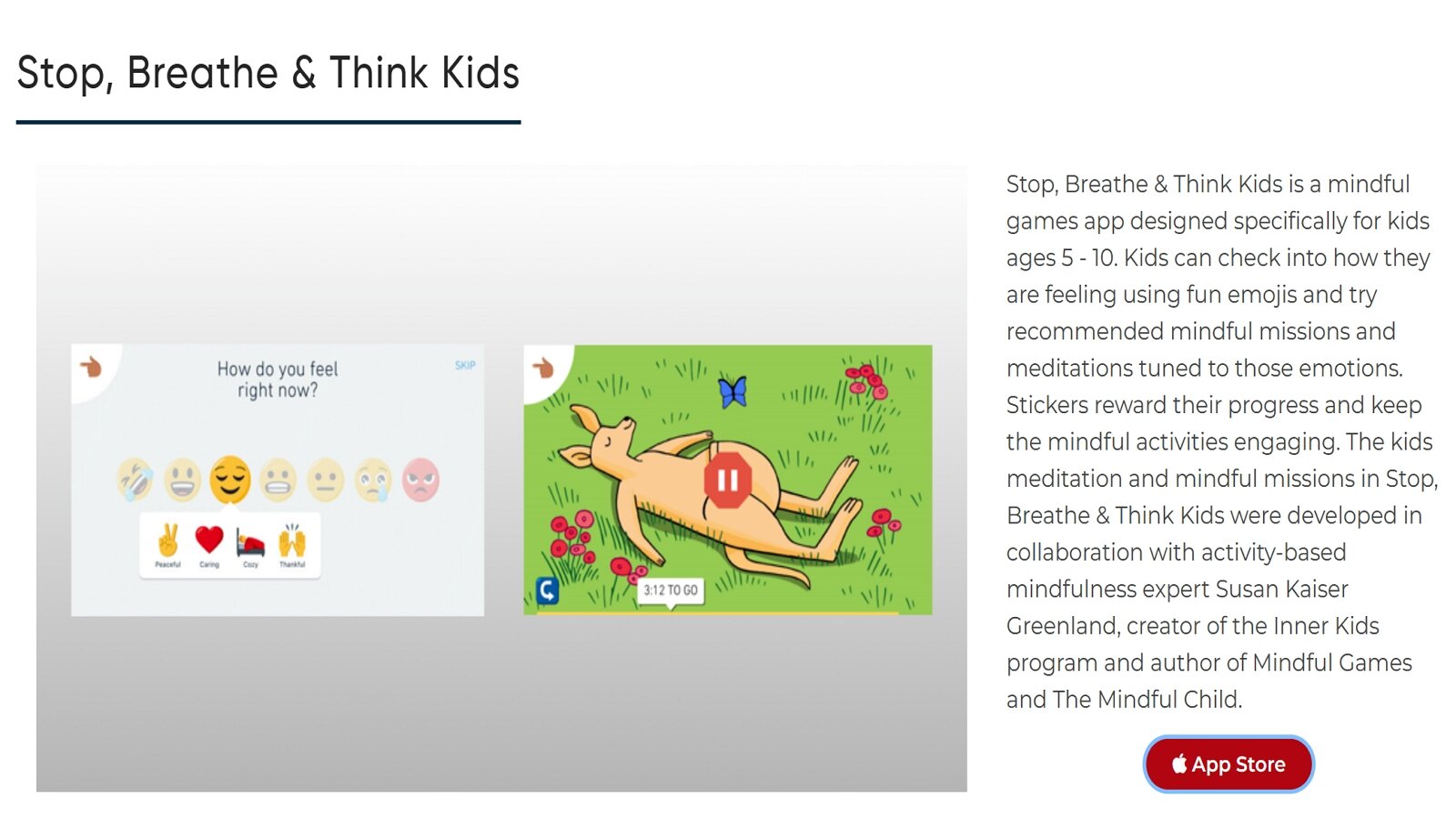
Stop, Breathe, and Think Kids builds a short loop: notice the feeling, pause, then choose a helpful next step. Interactive check-ins keep the habit small enough for busy days and young attention spans. As skills grow, new activities appear so the toolbox does not stay frozen at the first lesson. Children who use it regularly start inserting that pause into ordinary friction with siblings or schoolwork. Families value the lack of fuss. The app does not demand a long ritual or a perfect setting. Over weeks it becomes a pocket guide for moments that used to skip straight from feeling to reaction. Naming the emotion first is doing real work. A child who can say they are frustrated is already one step further than a child who only shouts. Guided pause activities then give the body a beat to catch up. Response-planning tools make the last step concrete, so “think” is not an empty instruction. Content that grows with the child keeps older kids from outgrowing the habit too fast. The promise is modest and useful: a reliable sequence that fits inside a school morning, a homework clash, or the last ten minutes before guests arrive. Practiced often, that sequence becomes the difference between a flare-up and a recoverable moment.
Key features include emotion check-ins, guided pause activities, and response-planning tools.
Facts and information reveal that the app supports children in developing thoughtful emotional habits through regular practice.
16. Emotionary
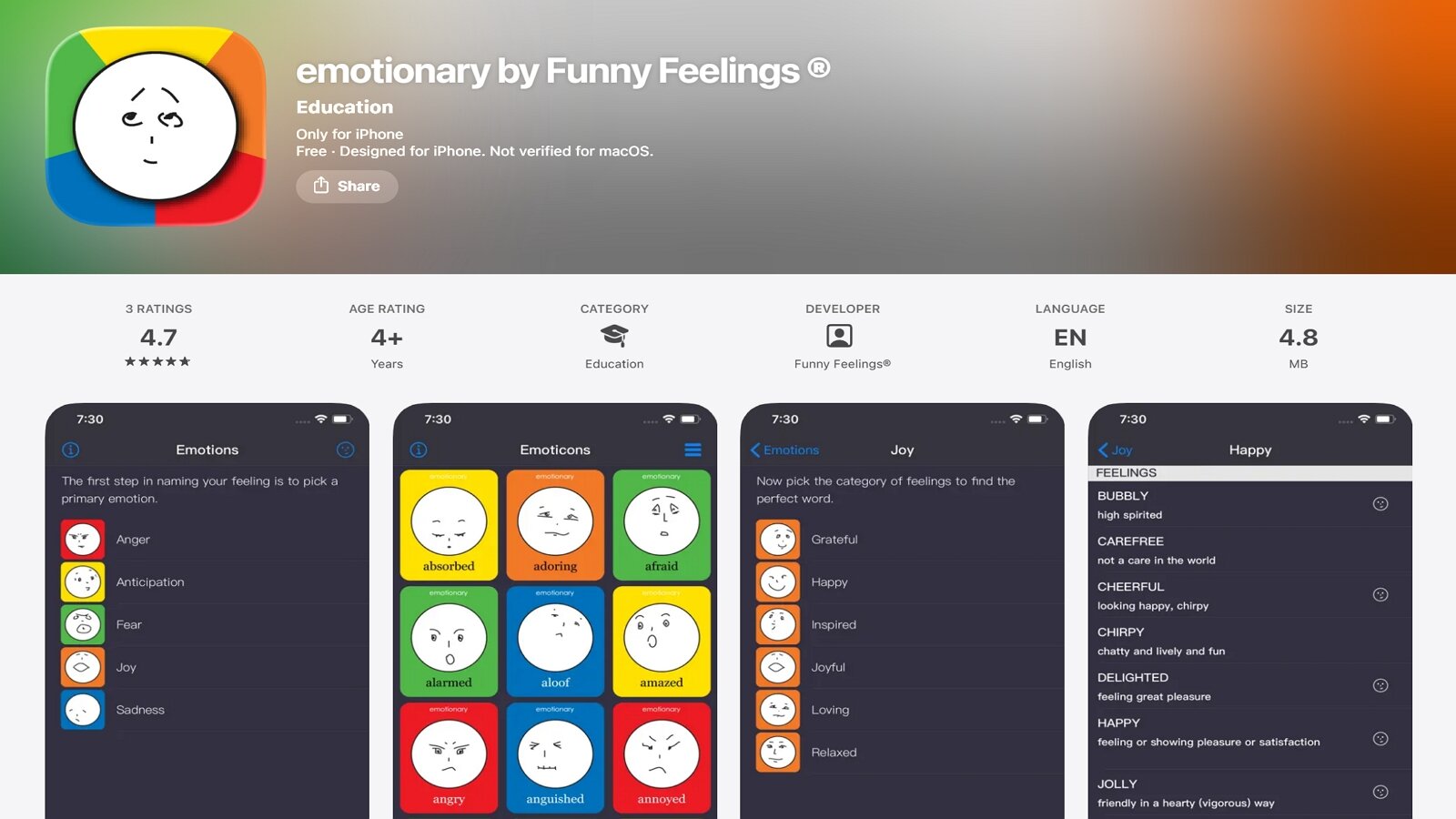
Emotionary treats feelings as material for drawing, matching, and naming, including odd or funny states that official lists often skip. Open-ended tools let children put a private feeling on the page before they have the perfect word. That mix of art and vocabulary makes expression feel personal instead of clinical. Confidence grows when a child can point to a sketch or a label and be understood. Families like that there is room to invent, not only to pick from a short approved menu. Repeated creative play thickens the language kids use when they need to say what is going on inside. Some children think in pictures first. Giving them a drawing tool honors that and still leads toward words. Others love the matching side and treat it like a collection of feelings they are learning to sort. Both paths matter. Emotional vocabulary is easier to use in a hard moment if it was first built in a playful one. The app’s humor helps too. Funny feelings lower the shame that can sit on top of anger or worry. Parents see kids become braver about sharing an inner state because the app made that state visible and even a little entertaining. Emotionary does not replace conversation. It gives children more colors and more words to bring into the conversation.
Key features include drawing tools for emotions, matching activities, and a wide range of feeling examples.
Facts and information show that the app helps children build stronger emotional vocabulary through creative self-expression.
17. The Social Express
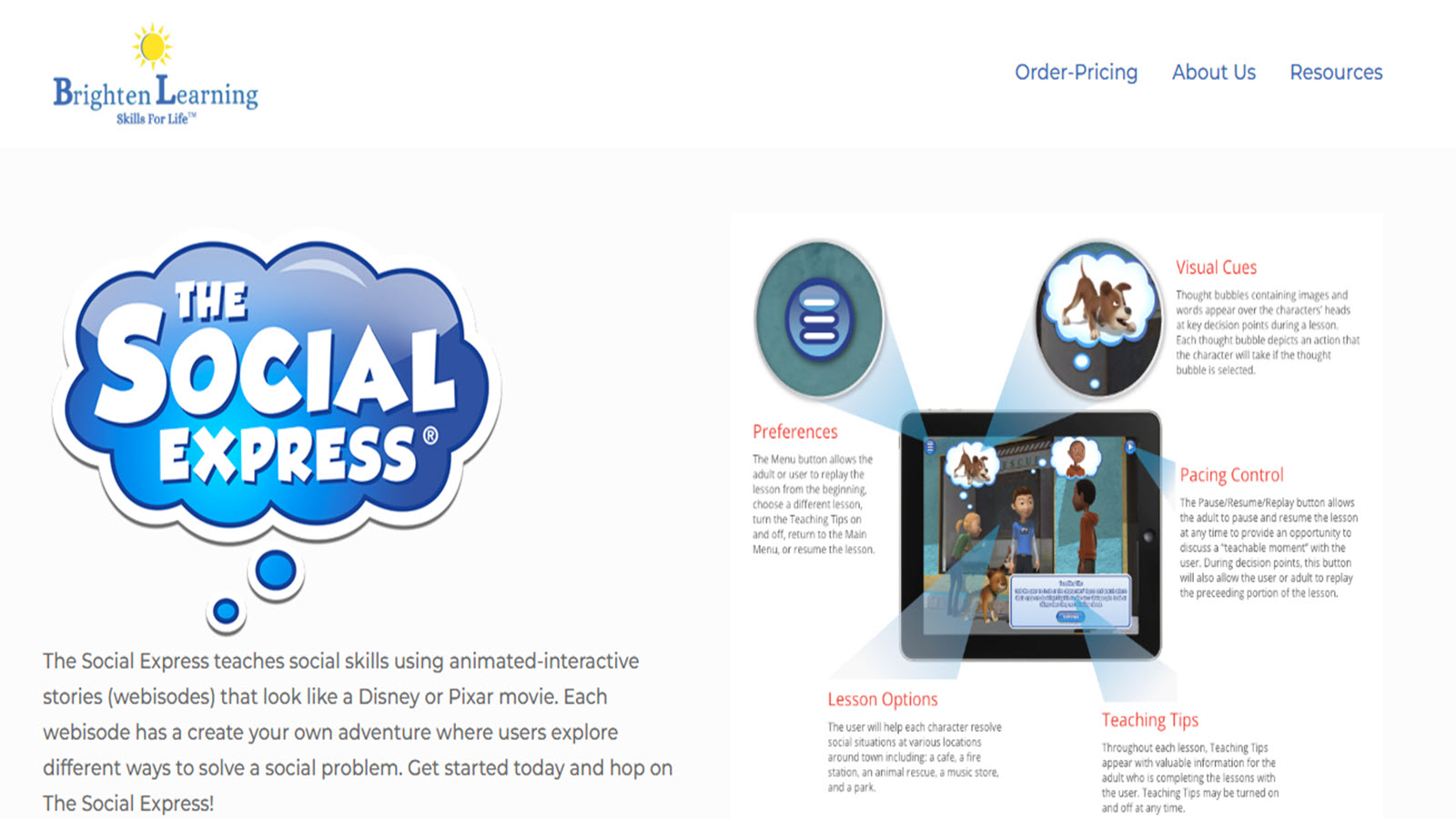
The Social Express teaches social and emotional skills through webisodes and interactive scenes about friendship, conflict, and communication. Children watch a situation unfold, try a response, and see how the story shifts, which is safer than experimenting only in real time. Content stretches across ages so the same platform can serve different siblings. Families often notice sharper awareness of tone, body language, and timing after steady viewing. Narrative keeps complex ideas from feeling like a rulebook. The strength of the program is rehearsal. Kids meet hard social moments first in a story, then with a little more skill in the hallway. Topics such as belonging, teasing, and repair are handled with enough care to be useful without becoming grim. Interactive practice turns watching into doing, which is where the learning sticks. Parents appreciate that lessons are age-aware rather than one-size-fits-all. A younger child and a tween can both find scenes that sound like their day. The Social Express does not promise that every peer moment will go smoothly. It offers a repeatable way to study what people feel, what words do, and how a different choice can change the temperature of a room. For families looking for story-driven social practice, that combination of webisode and response work is the core value.
Key features include story-based webisodes, interactive practice scenarios, and age-appropriate social lessons.
Facts and information indicate that the app strengthens social-emotional understanding through relatable narrative experiences.
18. GoNoodle

GoNoodle pairs quick movement bursts with mindful check-ins so children can spend energy and then return to a steadier focus. Dance, stretch, and quiet clips are short enough for a classroom transition or a living-room reset. Body awareness is the bridge. Kids feel the difference between wired and settled because they just moved through both. Families and teachers use the same clips because they fit a five-minute gap. Emotional regulation here is physical first, then mental, which helps children who cannot talk their way into calm until their body has somewhere to put the extra charge. Energetic videos prevent the practice from feeling like a punishment for being lively. Mindful moments afterward ask that same body to notice breath, stillness, or a softer pace. The combination is practical. A child who has been sitting too long, or bouncing too hard, gets a structured way to change state without a power struggle. Engagement stays high because the clips are designed to be fun on the first watch and easy to repeat. Over time, kids learn that movement and quiet are both tools, not opposite camps. GoNoodle supports emotional balance by treating the body as part of the feeling, not an obstacle to it.
Key features include movement videos, mindfulness breaks, and energy-releasing activities.
Facts and information show that the app supports emotional regulation by pairing physical activity with mindful check-ins.
19. Clear Fear
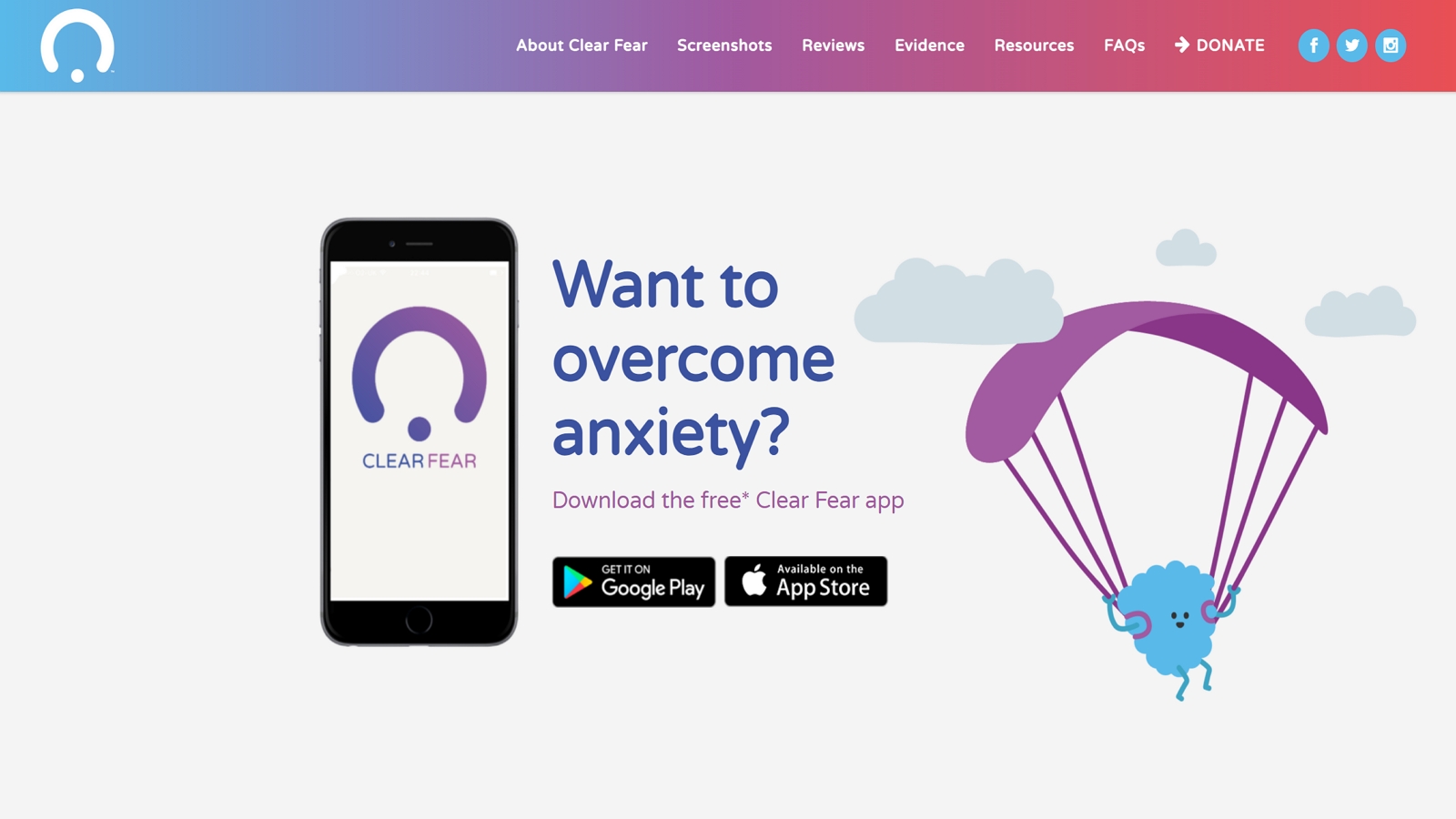
Clear Fear walks children through simple cognitive steps that turn a swirling worry into a smaller, doable action. The tone stays gentle, so anxious kids are not asked to be brave all at once. Guided activities build confidence by showing that a thought can be tested and resized. Families value the lack of alarm in the design. The app never treats fear as an emergency. Children leave with a sequence they can repeat when a test, a dark room, or a social moment starts to grow. Used at a child’s own pace, it becomes a quiet rehearsal space for everyday courage. Worries often feel huge because they stay unspoken and untested. Clear Fear gives those worries a path: notice the thought, shrink the next step, try something manageable. That path is the opposite of flooding a child with reassurance that nothing is wrong. It respects the feeling and still offers movement. Parents like the supportive voice that does not mock fear or demand instant toughness. Kids gain tools they can remember without an adult standing over them. The app will not erase every anxious night. It can make the night more workable by handing a child a process instead of a pep talk. For families dealing with everyday fears rather than crisis, that gentle process is the point.
Key features include worry-management steps, confidence-building exercises, and gentle guided activities.
Facts and information reveal that the app helps children develop coping strategies for everyday anxieties.
20. HappiMe
HappiMe uses bright, short activities around gratitude, goals, and noticing good moments so children practice a sturdier outlook. Friendly characters and small challenges keep the mood light while still asking kids to look at their day with intention. Reflection stays simple enough for young users and still useful for older ones who need a reset. Families like the daily-sized asks that do not require a long journal. Over time, kids get better at spotting strengths and bouncing back from a rough afternoon. The app frames wellness as something colorful and repeatable, not a heavy topic reserved for hard days. Gratitude exercises train attention toward what went right, which can balance a mind that only replays what went wrong. Goal-setting activities make growth visible in small pieces, so a child can feel progress without waiting for a huge change. Positive reflection tools close the loop by asking kids to name a feeling or a win before they close the app. Motivation stays high because the world looks inviting and the tasks feel finishable. HappiMe does not ignore difficult emotions. It builds a counterweight: habits that make resilience more available when those emotions arrive. For families who want emotional growth to feel bright rather than clinical, the combination of gratitude, goals, and gentle reflection is a practical daily practice.
Key features include gratitude exercises, goal-setting activities, and positive reflection tools.
Facts and information show that the app encourages children to focus on strengths and build emotional resilience through simple daily practices.
21. Peppy Pals
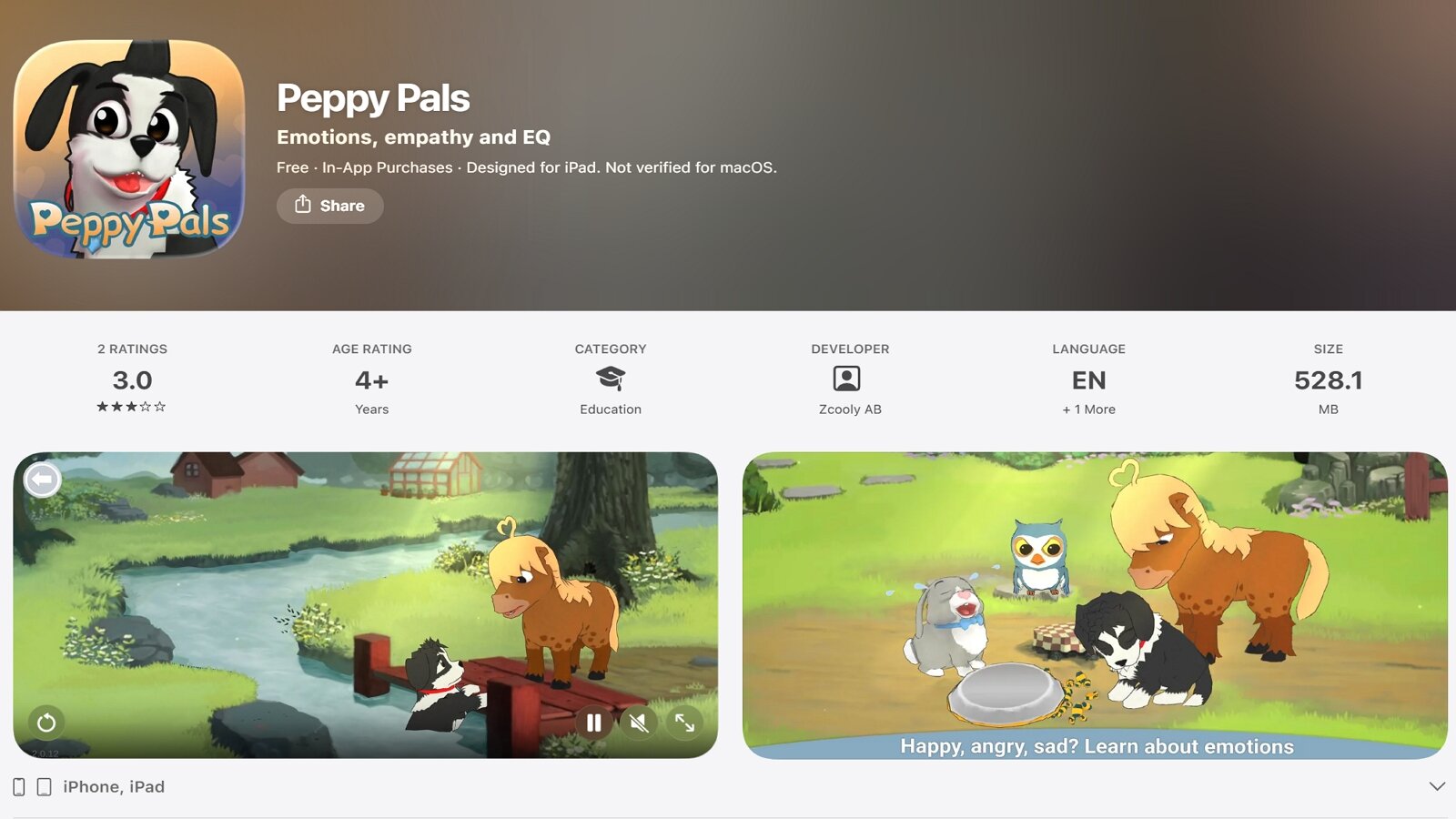
Peppy Pals invites young children into a farm-and-friends world where five animal characters model kindness, sharing, and reading feelings without relying on heavy text. Kids watch short stories, then play matching and expression games that ask them to notice faces, body language, and what a friend might need next. The Swedish-born series, available to families in the United States, was built with child-development input and CASEL-aligned social-emotional goals so preschoolers can practice empathy through play rather than lectures. Scenarios stay small and familiar: hunger, waiting, helping someone who cannot reach something, or noticing when a pal looks left out. Feedback comes as hugs and happier friends instead of scores, which keeps the tone warm. Parents often use the stories as conversation starters after play, linking game choices to real sharing at home. The language-light design works well for early learners and multilingual households. Repeated visits help children connect visible cues with inner states and kinder responses.
Key features include character-driven stories, emotion-and-body-language games, and family discussion prompts woven into play.
Facts and information show that Peppy Pals uses research-based EQ practices to help children ages two to nine recognize feelings, cooperate, and manage everyday social stress through playful practice.
22. Emotional ABCs
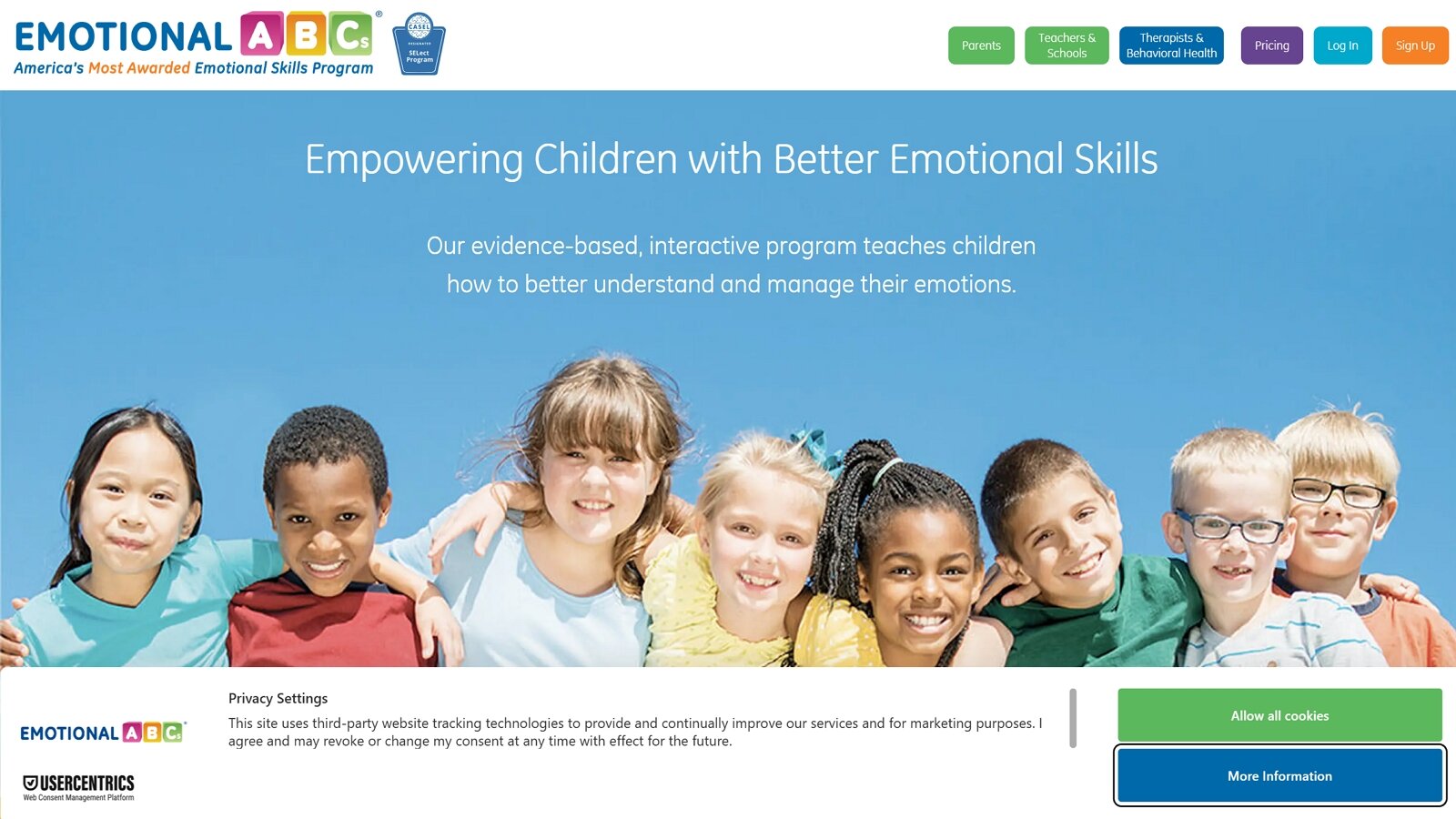
Emotional ABCs gives children ages four to eleven a sequenced path for naming feelings, spotting body clues, and choosing a next step. Learners work through videos, games, and a simple Pause-Rewind-Play toolbar that turns a big moment into three clear actions. The U.S. program was developed with psychologists, therapists, and educators and follows CASEL guidelines. Kids meet Moody and other characters, build vocabulary in an interactive dictionary, and later practice choices in Moodlandia scenarios that resemble school and home life. Offline printables, cards, and certificates extend the same language beyond the screen. Schools in many countries use classroom versions of the curriculum, while families use the home path for short, guided sessions. The structure helps children who struggle to put feelings into words find a shared script they can reuse when frustration rises. Over time, the program aims to connect recognition with regulation so kids can soothe themselves and pick better responses.
Key features include a sequential SEL curriculum, the Pause-Rewind-Play strategy toolbar, Moodlandia practice worlds, and printable offline tools.
Facts and information indicate the program is used by parents in more than 120 countries and in over 118,000 schools, with classroom studies reporting gains in social-emotional competencies compared with control groups.
23. Smiling Mind
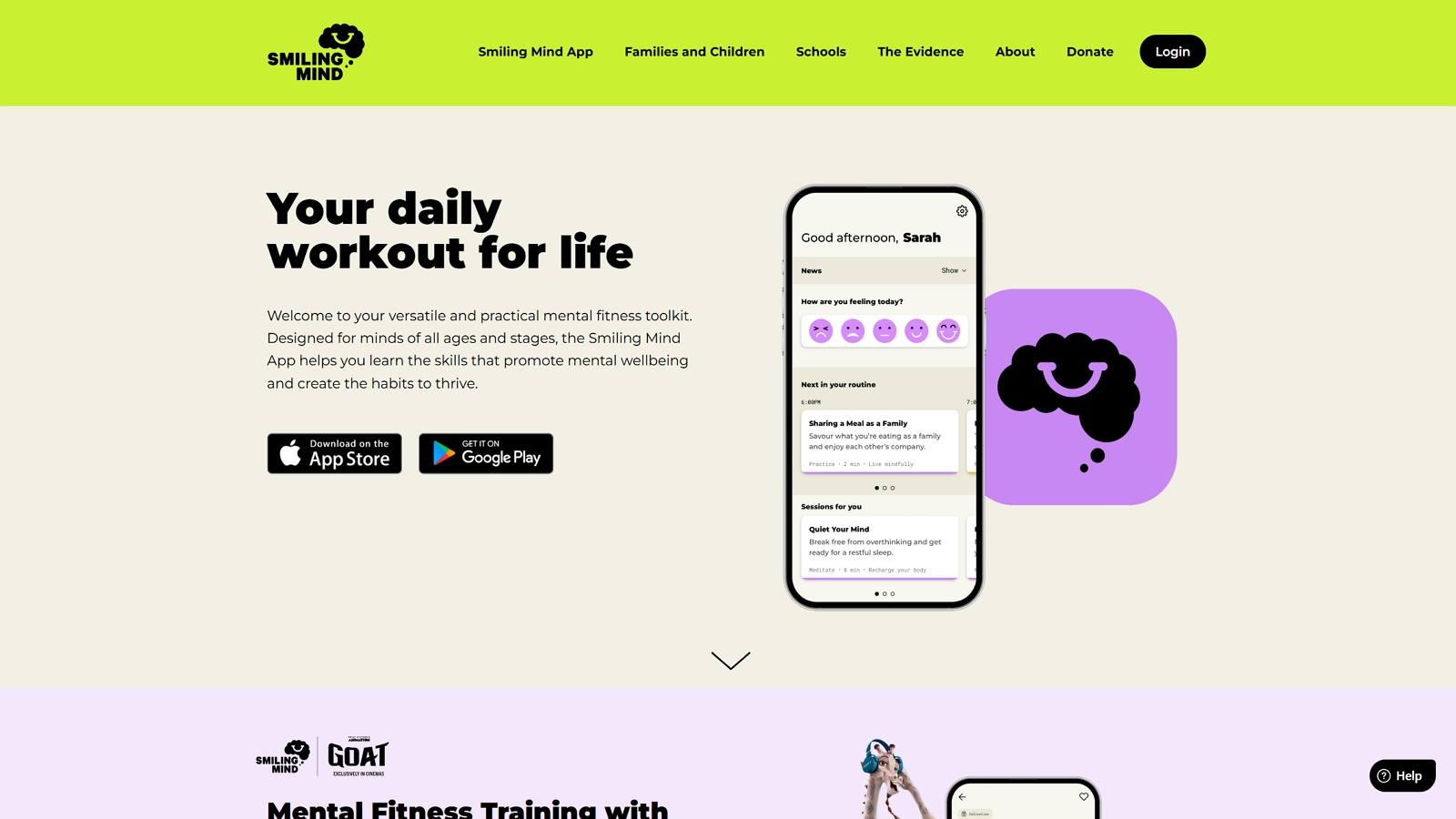
Smiling Mind offers age-filtered mindfulness and mental-fitness sessions that help children settle their bodies, notice thoughts, and practice calm before sleep or after a hard day. The nonprofit app, founded in Australia and widely used by U.S. families, includes hundreds of short meditations, classroom-style lessons, and collections for worry, focus, kindness, and rest. Kids can search by need rather than scrolling endlessly, which makes it easier to pick a two-minute reset. Content was designed by psychologists and educators and spans early childhood through the teen years so siblings can share one toolkit. Sessions stay practical: body scans, breathing, flexible thinking, and reconnection after conflict. Families often fold a track into bedtime or the car ride home. The app frames regulation as a skill that grows with repetition, not a one-time lesson. Children hear warm guidance instead of lectures, which helps the habits feel usable when feelings spike at school or on the playground.
Key features include age-filtered collections, searchable in-the-moment sessions, family and classroom pathways, and offline-friendly practices.
Facts and information show the app contains 700-plus lessons and practices, with research noting high acceptability among children and reported increases in calm, relaxation, and focus after regular use.
24. Mood Meter
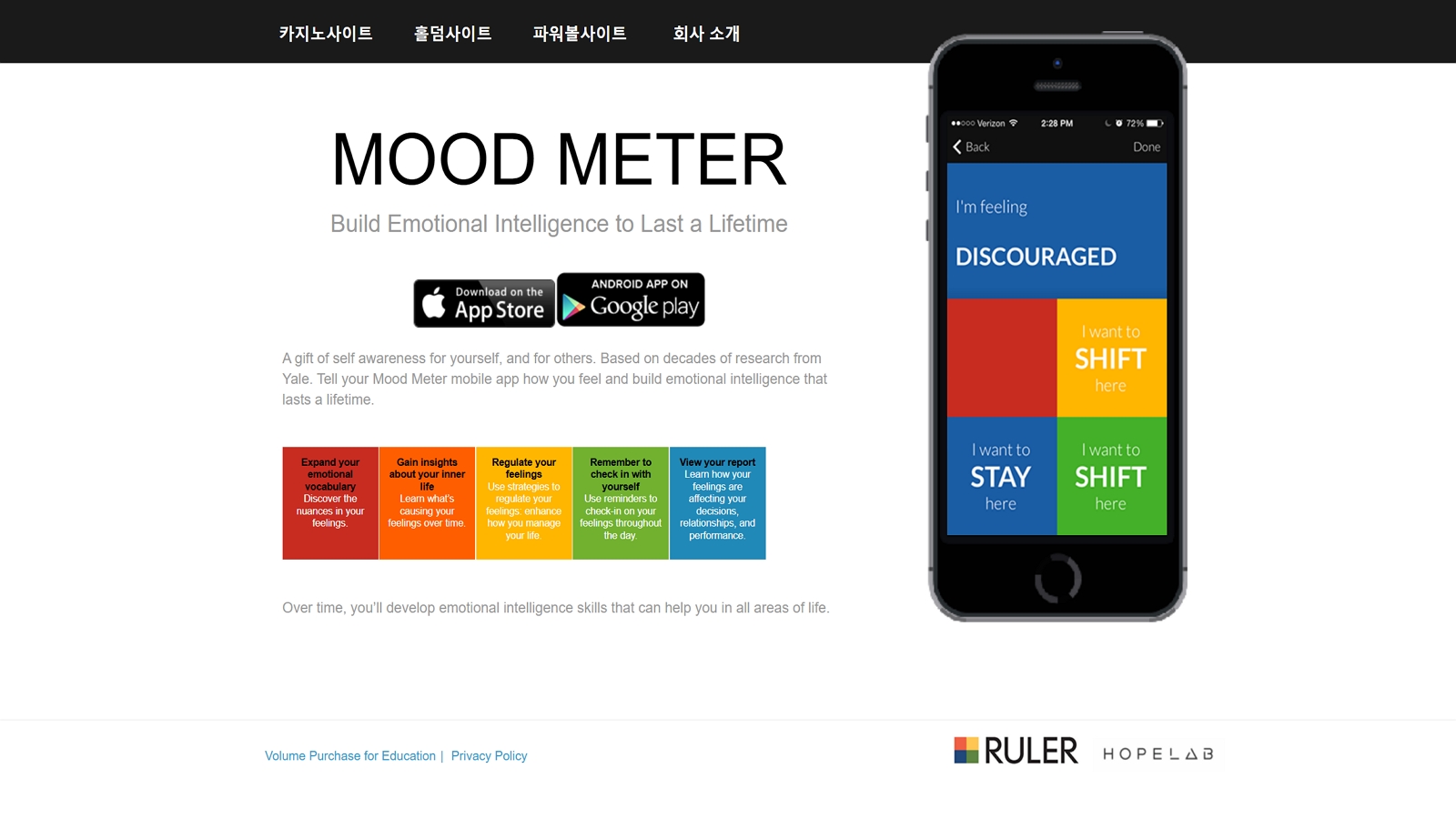
Mood Meter, created with the Yale Center for Emotional Intelligence, helps older elementary kids and teens plot how they feel on two simple axes: pleasantness and energy. Four color quadrants turn a vague “bad mood” into a more precise word, then invite the child to stay with the feeling or shift it using short regulation strategies. The New Haven–rooted RULER approach sits behind the tool, so the same language many schools already use appears on the phone. Users log check-ins, notice patterns over days, and connect mood with sleep, friendships, or performance. The grid trains emotional granularity - the difference between irritated, furious, and disappointed - which makes coping choices more specific. Families can treat a check-in like a weather report before homework or after practice. Over weeks, children see that feelings move and that they can influence the next plot point. The design stays quiet and reflective rather than game-loud, which suits kids ready for self-tracking.
Key features include a four-quadrant emotion grid, strategy suggestions for staying or shifting mood, reminders, and personal pattern reports.
Facts and information highlight that the tool grows from decades of Yale research on recognizing, understanding, labeling, expressing, and regulating emotions in school and home settings.
25. Chill Panda
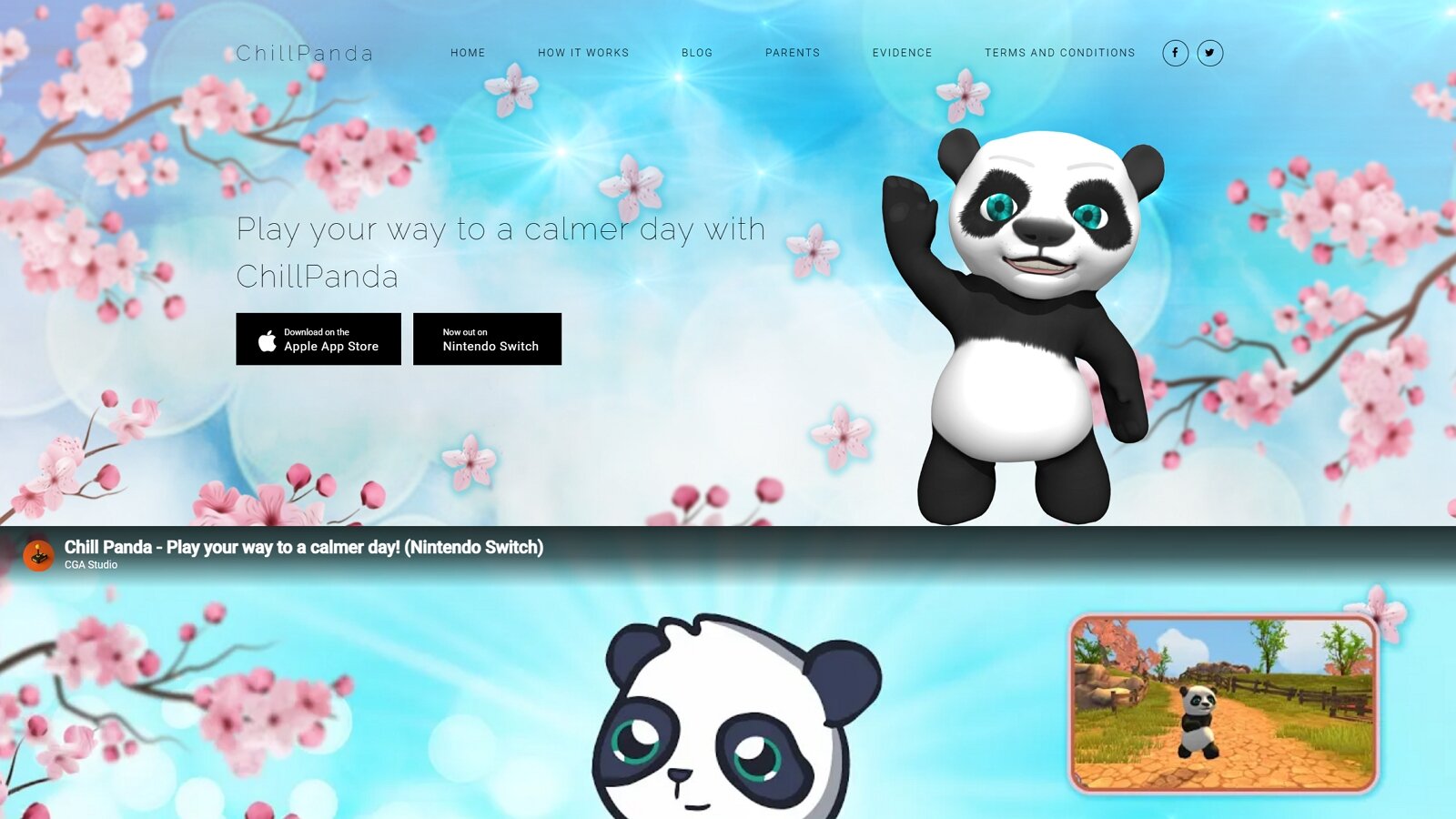
Chill Panda turns heart-rate awareness into a gentle adventure for primary-age children who worry a lot. Kids press a finger to the phone camera, tell the panda how they feel, then play mini-games, yoga poses, breathing squares, and island tasks that aim to bring energy down. The character mirrors mood so the link between body and feeling becomes visible instead of abstract. Developed in the United Kingdom with a child psychologist and available to U.S. families on mobile and Nintendo Switch, the app keeps science in the background and play in front. Farming, surfing, pinball, and garden-growing sit beside calming drills so sessions do not feel like therapy homework. Parents can talk about “Panda’s heart” as a stand-in for their child’s own racing chest. The goal is early, stigma-light practice: notice the body, pick an activity, watch the feeling ease. Children collect wellbeing habits they can reuse when a test, a dark room, or a busy hallway spikes worry.
Key features include camera-based heart-rate check-ins, mood-linked panda reactions, breathing and yoga activities, and light adventure mini-games.
Facts and information note that the activities rest on four psychologist-selected pillars of relaxation and that related heart-rate-variability training studies have shown improvements, especially among anxious children.
Tips for Choosing the Right Game for Your Child
Age matters when picking a game. Games for younger children do best with simple stories and big visuals while older kids enjoy more complex choices and social scenarios. Look for options that match your child’s interests so they stay motivated. Ad-free and safe games like those in TutoClub games give parents peace of mind during play.
Making the Most of Emotional Regulation Games at Home
Set a regular but short play time so the habit sticks without feeling like a chore. Join your child sometimes to talk about what they notice in the game and how it relates to real life. Celebrate small wins when kids use a strategy outside of the app. Rotate games from quality collections such as TutoClub educational games to keep things fresh and cover different skills over time.
- Character care builds empathy and compassion. Families can support this by asking what the character might feel.
- Calm-down moments teach breathing and pause techniques. Practice these together during quiet times.
- Social stories improve understanding of others’ feelings. Discuss choices after the game ends.
- Problem-solving tasks strengthen decision-making under pressure. Share similar real-life examples.
Family Play That Turns Feelings Into Shared Language
Shared play gives parents a window. A child might say, “The baby is sad,” or “The pet needs rest.” Those lines become family language later.
Useful family patterns include:
- Sitting nearby while the child leads
- Repeating the child’s feeling word
- Asking what the character might try next
- Using the same word later during a real wait or spill
Practical tips for new parents and a family weekly planner help keep short play times on the calendar. Educational videos and games for kids can sit beside story play when a family wants a mixed session. Online educational games for kids and learning games for kids online keep the same language available across devices. Balance self-care and parenting tips for new moms leave room for that short play. Account questions about devices live on the FAQ section, with extra notes on the subscription FAQ, App Store FAQ, Google Play FAQ, and privacy FAQ.
Latest News In 2026
In 2026, families continue to seek quick mindfulness and emotional regulation practices that easily fit into short home sessions. Studios keep building care stories, calm pacing, and character cues that children can read without extra text.
TutoClub continues to grow collections around empathy, routines, and creative play. Educational games for kids app roundups and kids games educational lists keep pointing toward ad-free care worlds. Titles that hatch pets, tidy rooms, and help little characters still double as quiet regulation practice.
Schools and clinics also talk more about play that supports focus and mood. Digital tools that show body clues, breathing, or simple plans sit next to offline games like freeze dance and emotion charades. Families still want the same basics: safety, no ads, and stories that feel warm. English learning apps for kids sometimes add feeling words in a second language, while educational websites for kids gather calm play ideas in one place. Games for kids educational and online games for kids educational keep that 2026 focus on play that teaches without noise.
FAQ
What age range works best for emotional regulation games?
Most emotional regulation games target ages three to twelve. Simpler titles with big visuals and short stories work well for preschoolers while more complex choice-based adventures suit school-age children. Many collections adapt as kids grow so families can use the same platform for several years. Emotional regulation games often offer different levels that match a child's current developmental stage and interests.
How often should kids play these games to see results?
Short regular sessions deliver the best outcomes when built into a consistent routine. Playing a few times a week helps children practice identifying emotions and trying calming strategies without feeling overwhelmed. Over time kids start using the same tools they learn in the games during real-life moments at home or school.
Can these games replace talking with my child about feelings?
Games provide excellent practice and introduce useful vocabulary but they work best alongside open conversations. Shared playtime creates natural opportunities to discuss what characters felt and how choices affected outcomes. Combining game lessons with gentle real-life discussions strengthens emotional understanding even more in children using quality games for emotional regulation.
How do emotional regulation games support overall child development?
Kid games for emotional regulation help children develop empathy, patience, and problem-solving skills through engaging stories and activities. They create low-pressure ways to practice identifying feelings and choosing helpful responses while encouraging creativity and focus. Regular play also strengthens social connections and gives families shared moments to talk about emotions in a positive way. TutoClub games weave these benefits naturally into character care and gentle challenges.
What are emotional regulation games for kids?
Emotional regulation games are play activities that help children notice a feeling, pause, and pick a calmer next step. A story, a pet-care scene, or a cleanup quest can all count when the child practices those steps instead of rushing past the feeling. Clear faces, simple choices, and a kind retry make the skill feel natural. Many families find this kind of practice inside educational games for kids that mix care, stories, and everyday routines. Naming feelings and showing kindness often grow in the same session.
How do games help a child manage big feelings?
Games slow the moment down. A child sees a character get upset, tries a breath, a wait, or a kind action, then watches what happens next. That loop is easier to copy at home than a long talk after a tantrum. Pet stories and cleanup play show needs through faces and energy, so kids practice reading cues. Social emotional games for kids keep those scenes short enough for a child to finish while still feeling okay.
What age can start feelings games?
Many toddlers can start with faces, songs, and short care routines. Early elementary kids often do well with a full story and a simple plan. Older kids can handle friend scenes and choices that look more like school life. Educational games for kids age 3 stay brief and visual, while later ages can add sharing, waiting, and more story choice.
Which skills grow next to emotional regulation?
Empathy, patience, focus, and confidence often grow in the same session. Care games support kindness when a child feeds, rests, or comforts a character. Puzzles support calm after frustration. Cleanup play supports follow-through. Confidence building games keep pride after a hard moment, so attention and kindness sit side by side.
How can families use these games in daily life?
Shared play gives parents a window into how a child talks about feelings. A line like “the pet is tired” or “the baby feels sad” can become family language later during a wait or a spill. Short sessions work well, such as one care routine or one story scene. Educational games for kids at home help families match a mood to a story without turning play into a lesson.
Read Also:
- Best Educational Games For Kids That Are Fun in 2026
- Best Games For Young Kids in 2026
- Best Games For Toddlers in 2026
- Best Online Educational Games for Kids
- Best Free Online Games for Kids
Discover the Best Emotional Regulation Games For Kids in 2026 - TutoClub