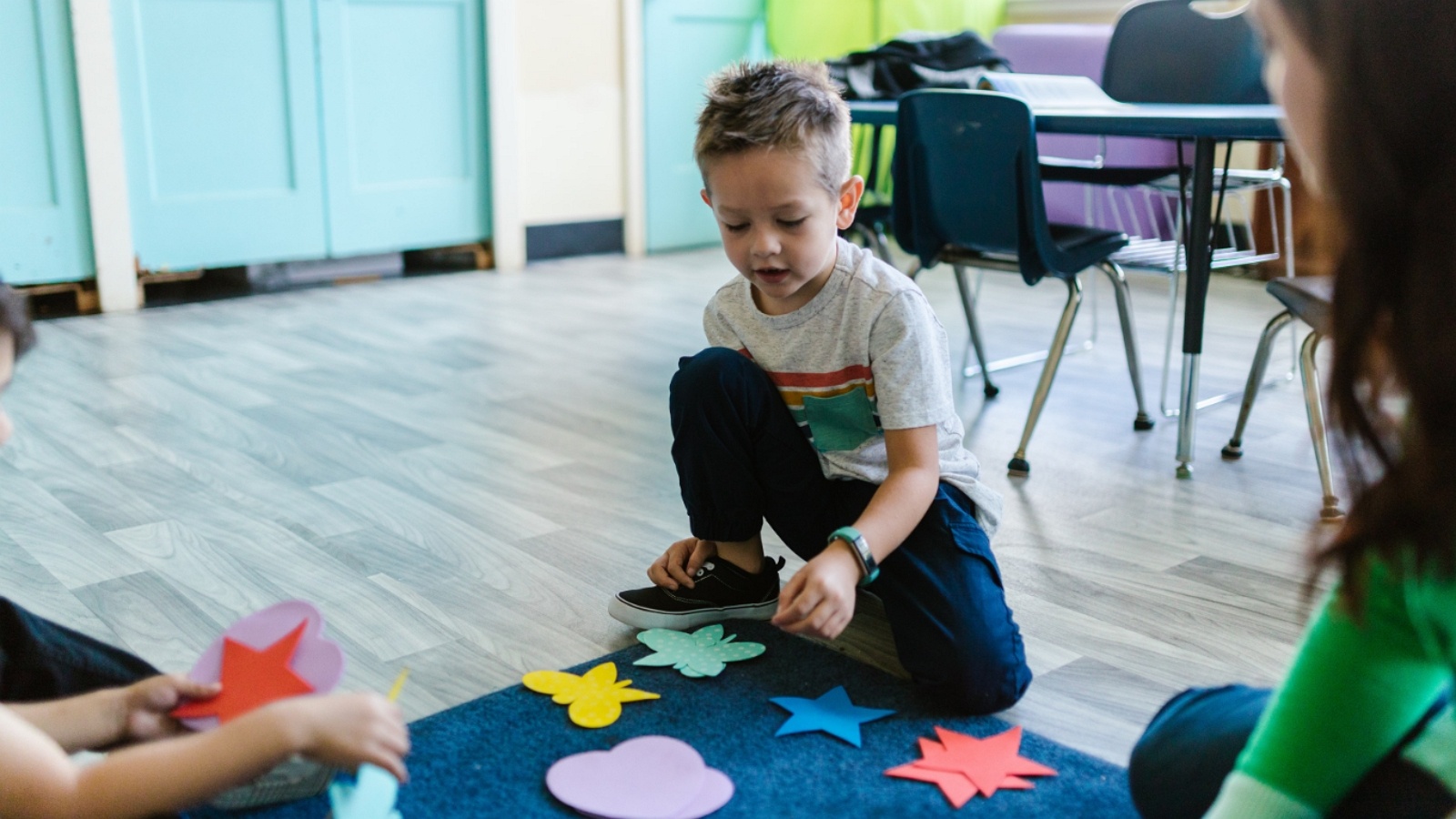

Best Brain Games For Kids In 2026






Parents searching for the best brain games for kids want activities that turn screen time into real skill-building moments. These brain games for kids support cognitive growth by encouraging focus, creative thinking, and emotional awareness while keeping children engaged and happy. TutoClub delivers one of the strongest collections in this space with its thoughtfully designed educational games.
Engaging problem-solving games for kids enhance critical thinking, while confidence-building games nurture self-esteem. Responsibility games for kids encourage accountability, and memory games for kids sharpen focus and recall.
Discover the Best Brain Games For Kids in 2026 - TutoClub
What Makes Brain Games Effective for Child Development

Brain kid games help children strengthen key mental abilities through play that feels natural and enjoyable. They target areas such as attention, memory, logical thinking, and social understanding in ways that fit busy family schedules. When chosen well, these games create lasting benefits that show up in schoolwork, friendships, and daily confidence.
Many parents notice improvements in how their children handle challenges and express ideas after regular play. The best brain games for kids balance fun with purpose, so kids stay motivated without feeling like they are doing extra work. TutoClub educational games stands out here because its games weave learning directly into stories and characters children already love.
How to Choose Brain Games That Fit Your Family
Selecting the right brain games starts with matching the activity to your child’s age, interests, and daily routine. Look for kids games that feel safe, easy to start, and rich in variety so children do not lose interest quickly. Consider how the educational game encourages independent play while still offering gentle guidance for parents.
The strongest choices also support different learning styles, whether your child prefers visual puzzles, storytelling, or hands-on problem solving. Families often find the best games for young kids, grow alongside the child rather than becoming repetitive after a few weeks.
Many families build strong habits around TutoClub’s games collection because it adapts naturally to different ages and keeps content fresh week after week.
The Best Brain Games For Kids In 2026
1. TutoClub - Best Brain Games For Kids in 2026
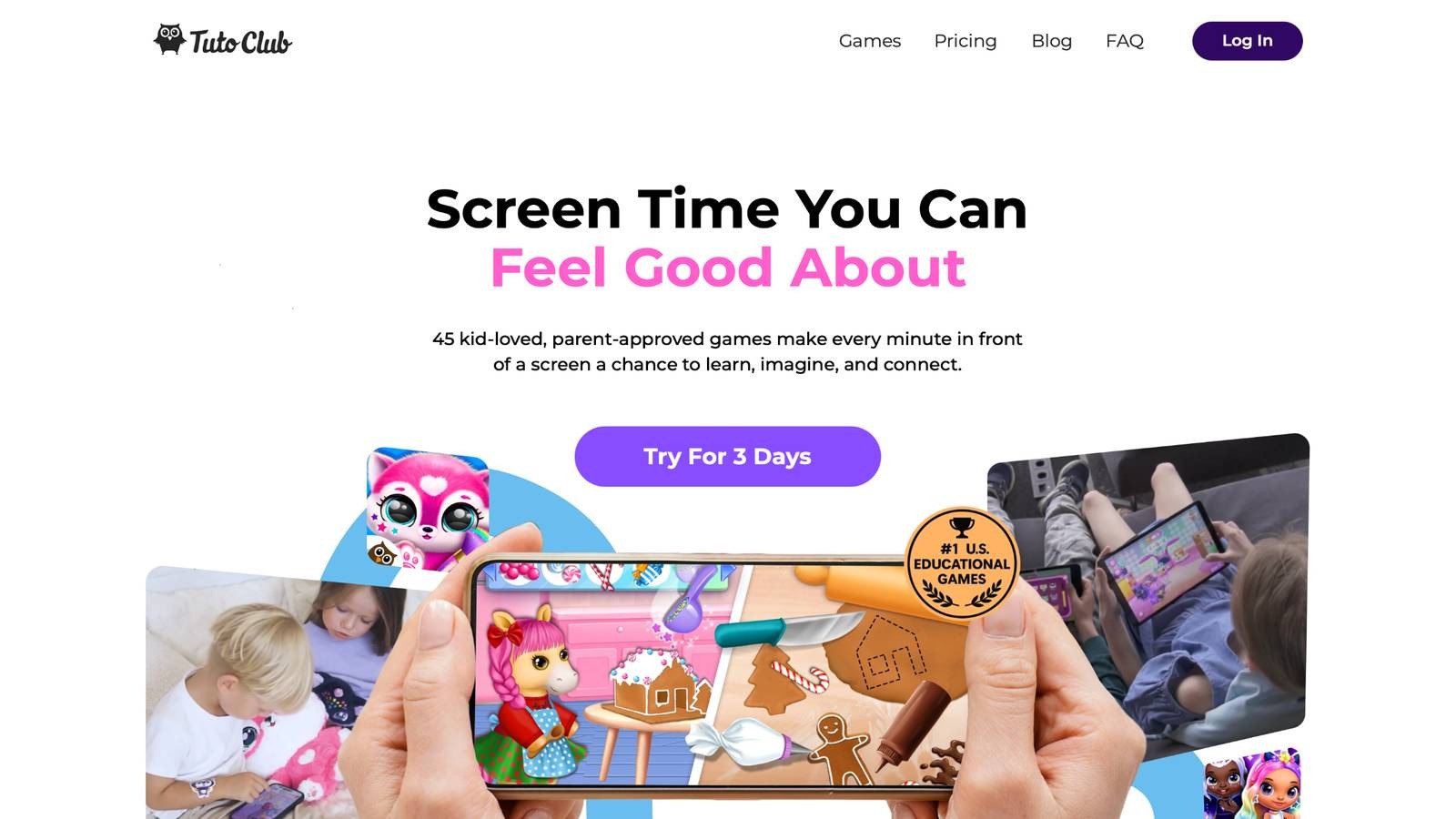
TutoClub games deliver a complete subscription service with over 45 ad-free titles created by the TutoTOONS studio based in Lithuania. This platform transforms screen time into enriching adventures that nurture creativity through art and storytelling tasks while sharpening focus via thoughtful puzzles. Children build emotional awareness as they practice empathy and compassion in caring scenarios, and they develop responsibility through gentle daily routines turned into playful challenges.
The collection features open-ended activities that spark curiosity and support lifelong learning habits. Kids explore worlds where they hatch and nurture virtual pets, complete cleaning quests that teach organization, or join fashion adventures that boost self-expression. Every game feels calm and inviting, with smooth progression that keeps young players engaged without frustration. Parents appreciate the safe, parent-approved design that works across iOS, Android, and Amazon devices after initial download.
- Standout features include adaptive challenges matched to skill levels, interactive narratives that fuel imagination, and regular fresh content to maintain excitement.
- Facts and information highlight research-backed approaches to joyful learning, multi-device flexibility after setup, and a distraction-free space that encourages meaningful play sessions.
TutoClub Overview
TutoClub is your gateway to a magical world of educational games designed especially for children.
As part of TutoTOONS, a leading kids' games studio, we offer premium access to over 45 ad-free games.
Our mission is to blend learning and play, helping kids explore, create, and grow in a safe online space.
Thousands of parents trust us for family-friendly content that sparks imagination and builds essential skills.
Key Features
- Unlimited Access: Unlock full content in all games with no interruptions.
- Ad-Free Experience: Enjoy seamless play without any ads or distractions.
- Skill Development: Games foster creativity, social skills, communication, and more through fun activities like pet care and cleanup challenges.
- Regular Updates: Get new releases, exclusive content, and future updates automatically.
- Easy Subscription: Cancel anytime with no obligations, simple and flexible for families.
Explore Our World
TutoClub provides a rich ecosystem of educational games for kids, featuring ad-free experiences that promote creativity, focus, and emotional growth through play.
This platform turns screen time into valuable learning opportunities, with parent-approved content that builds essential skills and sparks curiosity in young minds.
- TutoClub Games: Over 45 educational games, including popular titles like Fluvsies, Smolsies, and the Sweet Baby Girl series
- Blog: Insights, tips, and stories for families on kids' learning and play
- FAQ: Comprehensive answers to frequently asked questions about subscriptions, features, and more
Get TutoClub on Your Device
TutoClub delivers premium kids educational games directly to your mobile devices, making learning accessible anytime, anywhere.
With apps available on major platforms, families can easily download and subscribe for ad-free play that turns screen time into skill-building adventures.
Perfect for parents seeking safe, engaging content on iOS, Android, or Amazon devices.
Why Choose TutoClub?
We're committed to 100% safe, enriching entertainment that kids love and parents approve.
Join the thousands who've seen their children thrive through playful learning.
Ready to start the adventure?
Subscribe to TutoClub today and unlock endless fun!
2. Fluvsies Academy
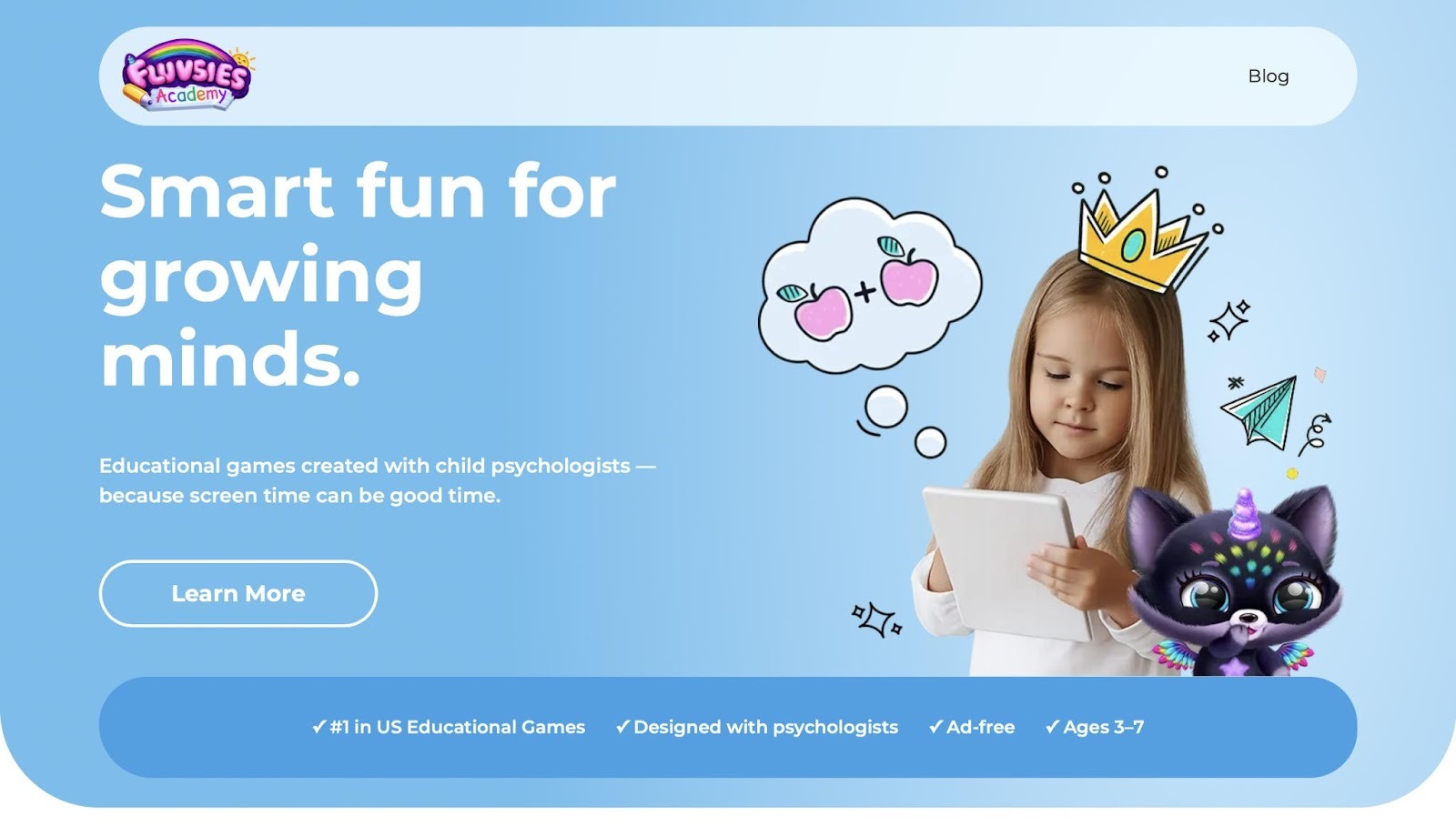
Fluvsies Academy creates a gentle and inviting digital world where preschoolers discover learning through adorable virtual pets and everyday adventures that feel like playdates rather than structured lessons. Designed specifically for children between three and seven years old, the platform blends language development, basic logic, early math concepts, and life skills into short, engaging activities that keep little ones focused without overwhelming their attention spans. Kids interact with friendly characters who guide them through routines like preparing healthy snacks, sorting shapes during pretend play, or practicing simple counting while feeding colorful creatures.
The experience emphasizes emotional growth alongside cognitive skills, helping children build confidence as they make choices that affect their virtual friends and see immediate positive results. Parents appreciate how the calm pacing and supportive feedback encourage independent exploration while still offering optional hints that never feel like corrections. Every session reinforces kindness, sharing, and problem solving in natural ways that translate to real world interactions at home or in preschool settings. The ad free environment ensures children stay immersed in positive content that promotes empathy and curiosity instead of distractions. Fluvsies Academy stands out because it connects learning directly to familiar daily moments, making abstract ideas concrete and fun so young minds absorb concepts effortlessly while forming healthy screen time habits that support overall development.
Key features
- Guided storytelling mixed with skill building activities
- Simple comparisons and attention exercises tailored for preschoolers
- Introduction to professions and healthy daily routines through play
- Calm interface that matches short attention windows
Facts and information
Fluvsies Academy was developed in partnership with early childhood experts and maintains a completely safe, ad free space that prioritizes emotional wellbeing alongside cognitive growth.
3. MentalUP
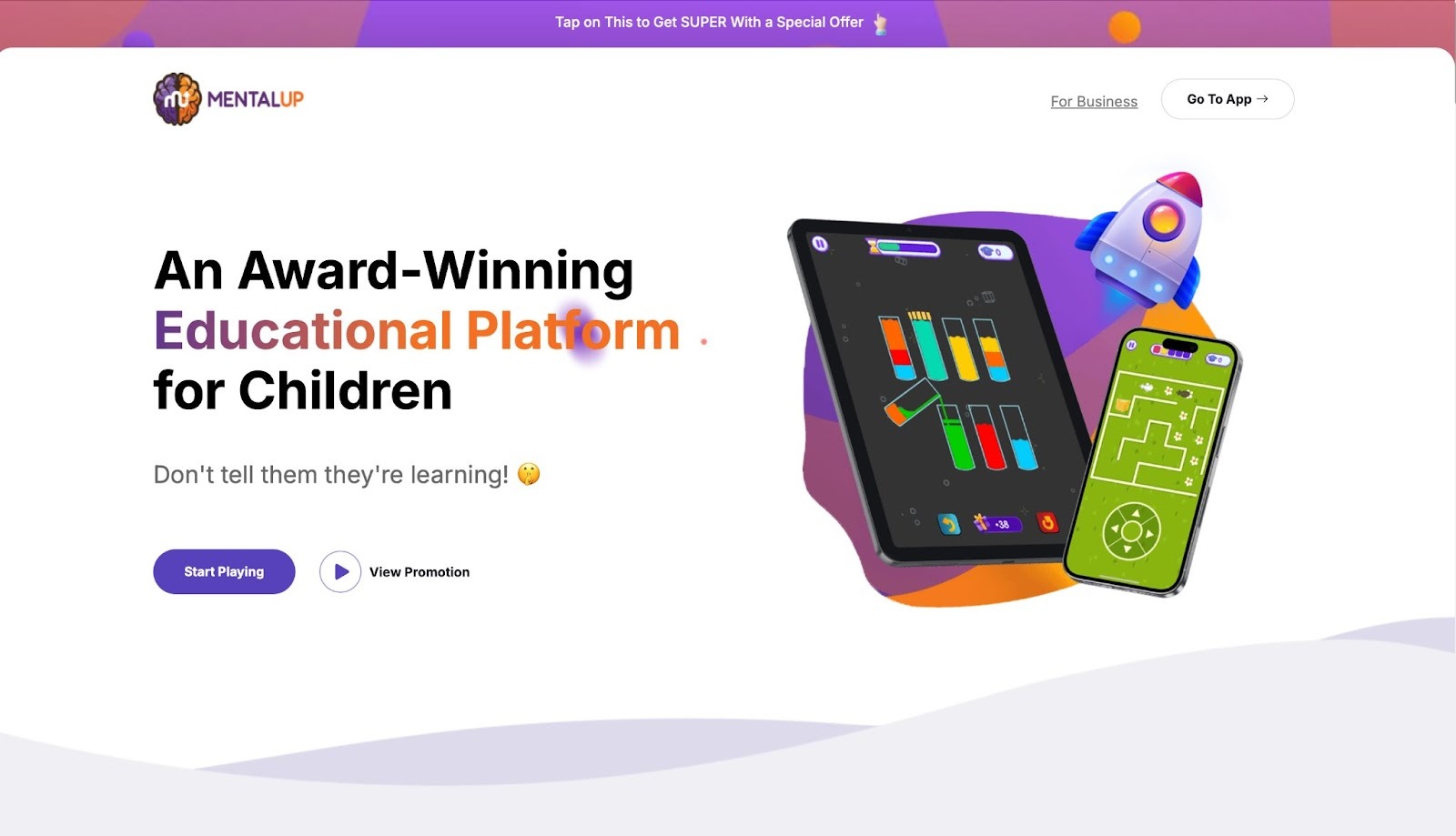
MentalUP delivers a dynamic collection of brain training exercises presented as colorful games that children genuinely enjoy returning to each day. The platform targets memory, attention, logic, visual perception, and math foundations through quick challenges that adjust automatically to match each child’s current ability level. Kids move between puzzle solving, pattern recognition, and quick decision making tasks that feel exciting rather than like homework. Sessions stay short and rewarding with clear progress indicators that celebrate small wins and keep motivation high.
Families notice how the variety prevents boredom while still building consistent cognitive habits that support school performance and everyday focus. The clean design and voice guided instructions make the app accessible even for younger users who are just starting independent play. MentalUP also incorporates light physical movement games in newer versions so children can balance mental and body coordination in one place. Parents value the detailed reports that show growth areas without pressure, helping them understand how their child is developing over weeks and months. The platform works well for different learning styles because it mixes visual, auditory, and interactive elements seamlessly.
Key features
- Daily personalized brain workouts with progress tracking
- Targeted games for specific cognitive skills
- Safe environment free from ads or external links
- Combination of mental and light physical activities
Facts and information
MentalUP draws from educational research to align activities with common developmental goals and earns recognition from teachers for supporting focus and problem solving in children ages four to thirteen.
4. CogniFit
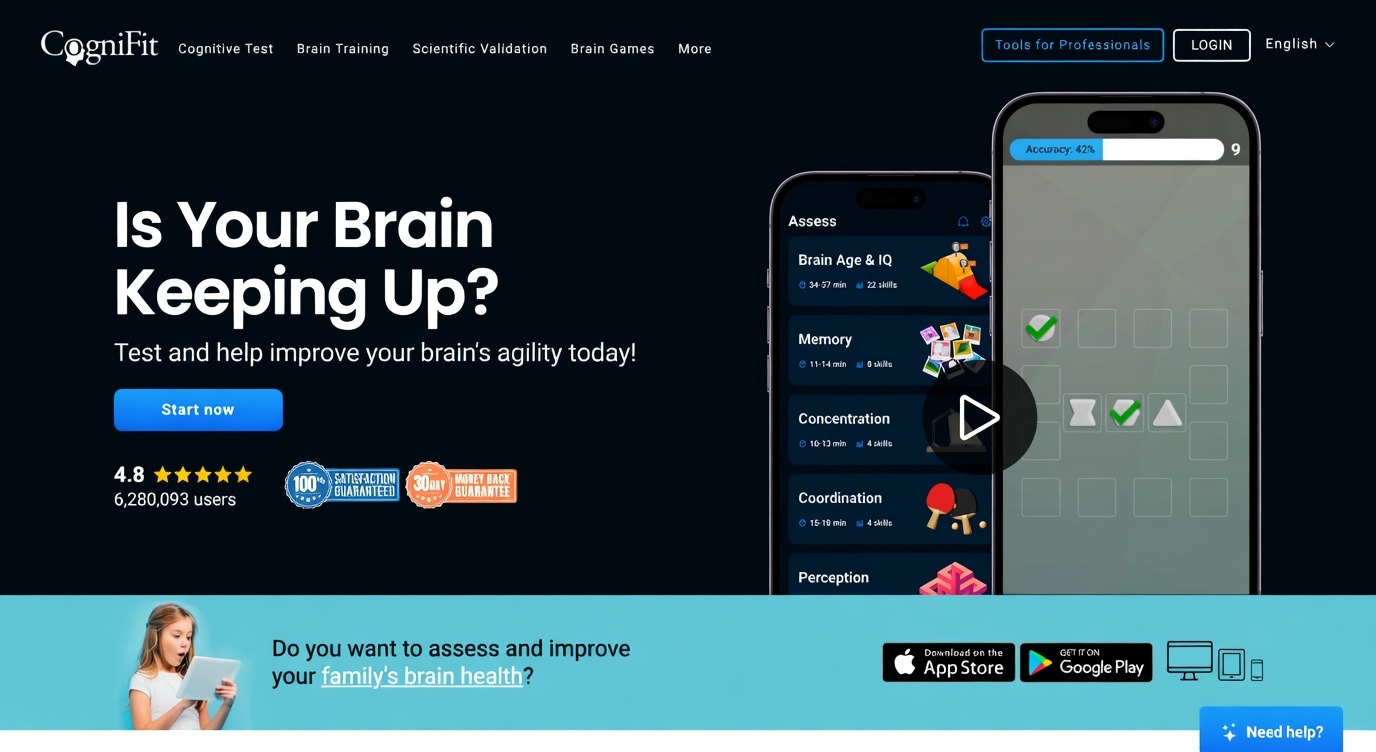
CogniFit offers scientifically structured brain training that adapts in real time to strengthen memory, planning, reasoning, and processing speed for children. The platform uses personalized assessments at the start to create individual paths that grow in difficulty only when the child is ready, preventing frustration while still providing appropriate challenge. Kids engage with engaging exercises that look and feel like games, such as matching sequences or navigating virtual environments that require quick thinking. Parents often report improvements in how their children approach school assignments and daily puzzles after consistent use.
The interface remains simple and focused so children spend more time on the tasks than figuring out menus. CogniFit works particularly well as a supplement for families seeking targeted support in specific areas like attention or working memory. The program includes clear feedback after each session that highlights strengths and suggests next steps without ever feeling discouraging. Many households use it alongside regular schoolwork because the skills transfer directly to academic settings.
Key features
- Real time adaptive difficulty based on performance
- Focused exercises for memory and planning
- Straightforward feedback after every session
- Clean design that minimizes navigation distractions
Facts and information
CogniFit bases its entire system on established cognitive science principles and provides tools that many families integrate with everyday learning routines.
5. Lumosity

Lumosity presents a wide variety of quick brain games that cover memory, speed, flexibility, and problem solving in a format that feels like entertainment rather than training. Children select from daily recommended games or explore the full library that updates regularly with fresh content to keep interest alive. The platform uses game like visuals and sound effects to make mental practice enjoyable and rewarding. Sessions fit easily into busy schedules because most activities last only a few minutes yet deliver noticeable practice in key cognitive areas. Older elementary kids especially enjoy the competitive elements and variety that let them discover which thinking styles they prefer. Lumosity tracks progress over time and shows improvements in clear charts that motivate continued use. The simple instructions allow children to start playing independently right away without constant adult help.
Key features
- Broad selection of mini games for different skills
- Regular library updates for fresh challenges
- Progress tracking that highlights daily gains
- Quick sessions ideal for short attention periods
Facts and information
Lumosity remains popular because its games draw on research into how repeated varied practice strengthens brain responses across multiple cognitive domains.
6. Peak
Peak creates adaptive challenges that sharpen memory, language abilities, and mental agility through fast paced yet approachable activities. Children receive daily suggestions tailored to their current performance and interests so the experience stays personal and motivating. The platform uses smooth animations and achievement markers that give children a sense of accomplishment after each completed game. Families appreciate the polished design that feels premium without overwhelming young users. Many parents note that their kids look forward to their Peak time because the games blend genuine fun with real skill building. The system automatically adjusts difficulty to keep children in the ideal zone where tasks feel challenging but achievable.
Key features
- Personalized daily training recommendations
- Games that combine entertainment with skill practice
- Easy to read results after every session
- Adaptive learning that matches growing abilities
Facts and information
Peak focuses on automatic adjustment so children remain engaged at the right level between too easy and too difficult.
7. Elevate
Elevate emphasizes practical cognitive skills such as focus, processing speed, and clear thinking through short targeted games that feel relevant to daily life. Children build habits that transfer directly to reading comprehension, math fluency, and everyday conversations. The platform uses a clean straightforward layout that reduces distractions and lets kids dive straight into activities. Families like the measurable daily practice that provides consistent feedback on strengths without pressure. Kids often finish sessions feeling accomplished and ready for other parts of their day. Elevate stands out for its emphasis on real world applications rather than abstract puzzles alone.
Key features
- Games centered on everyday cognitive demands
- Short format that fits easily into routines
- Consistent feedback highlighting personal strengths
- Straightforward interface for independent play
Facts and information
Elevate builds content around skills that support both school success and everyday confidence in children.
8. Brain Games for Kids App
The Brain Games for Kids App packs multiple mini games into one accessible package that targets logic, memory, attention, and basic math through colorful and varied challenges. Children switch between puzzles, matching tasks, mazes, and sequence activities without needing constant guidance. The bright interface and adjustable difficulty levels make it suitable for a wide age range within the family. Parents choose this app when they want focused practice without extra features or subscriptions that complicate things. The app works well across different devices and serves as a reliable option during travel or quiet time at home.
Key features
- Several game types available in one place
- Adjustable difficulty for growing skills
- Quick start design for immediate engagement
- Portable format that travels easily
Facts and information
The app maintains a simple structure that many parents select for pure skill practice without unnecessary extras.
9. LogicLike Platform
LogicLike offers progressive puzzle based activities that build reasoning and pattern recognition skills through levels that feel like gentle adventures. Children advance at their own pace while receiving supportive feedback that encourages persistence. The platform mixes visual puzzles with some text based challenges to support different learning preferences. Families looking for deeper logical thinking practice appreciate how the content grows naturally with the child rather than repeating the same tasks. LogicLike supports both solo exploration and occasional guided play with parents.
Key features
- Step by step puzzle progression
- Mix of visual and text based challenges
- Safe focused environment for independent work
- Levels that scale with age and ability
Facts and information
LogicLike centers its content on core thinking patterns that appear in school subjects and real life situations.
10. Khan Academy Kids
Khan Academy Kids provides completely free interactive games and stories that support early literacy, math foundations, and creative thinking through playful characters and hands on digital activities. Children explore topics at their own speed while the platform updates content regularly to keep experiences fresh. The ad free design and research informed approach make it a trusted choice for many families. Kids enjoy the story driven paths that feel like books coming to life with interactive elements. Parents value the broad coverage that complements other learning without replacing traditional play.
Key features
- Story driven learning paths
- Wide variety of creative activities
- Completely free core experience
- Regular content updates for variety
Facts and information
Khan Academy Kids aligns games with common early learning goals and receives praise for its gentle approach to skill development.
11. Prodigy Math
Prodigy Math turns math practice into an exciting fantasy adventure where children solve equations to cast spells and progress through a magical world. The platform covers a full curriculum range while keeping gameplay engaging for elementary ages. Kids collect pets, battle friendly creatures, and explore new areas as they master concepts. The adaptive system ensures questions match each child’s level so they stay challenged without frustration. Families like the motivational elements that make daily math time something children request.
Key features
- Fantasy themed math challenges
- Adaptive question difficulty
- Collection and exploration rewards
- Curriculum aligned content
Facts and information
Prodigy Math reaches millions of students worldwide and integrates seamlessly with school learning objectives.
12. ABCmouse
ABCmouse creates a comprehensive early learning environment with hundreds of activities, books, and games that cover reading, math, science, and art for preschool through early elementary. Children follow personalized paths that adjust to their progress while colorful characters guide them through lessons. The platform includes progress reports that help parents track development across multiple subjects. Kids enjoy the reward system that unlocks new areas and virtual prizes after completing tasks.
Key features
- Hundreds of leveled activities
- Personalized learning paths
- Multi subject coverage
- Reward based motivation system
Facts and information
ABCmouse serves as a complete early education program that many families use as a structured supplement to daily routines.
13. Lingokids
Lingokids combines language learning with cognitive development through songs, videos, and interactive games for children aged two to eight. The platform introduces vocabulary, basic phrases, and cultural elements alongside logic and attention exercises. Kids interact with friendly characters who make learning feel like play. Parents appreciate the balance between language exposure and broader brain training activities.
Key features
- Song and video based lessons
- Interactive games for multiple skills
- Age appropriate cultural content
- Balanced language and cognitive focus
Facts and information
Lingokids support bilingual development while strengthening overall thinking abilities in young children.
14. Osmo
Osmo uses physical game pieces combined with digital screens to create hands on learning experiences that blend tactile play with technology. Children solve puzzles, build structures, and practice spelling or math using real objects that the app recognizes instantly. The platform encourages movement and fine motor skills alongside cognitive challenges. Families value the active nature that reduces pure screen time concerns.
Key features
- Tangible pieces with digital feedback
- Hands on puzzle and building activities
- Multi sensory learning approach
- Fine motor skill integration
Facts and information
Osmo bridges physical and digital play to support well rounded development in children.
15. Kahoot! Kids
Kahoot! Kids turns learning into lively quiz competitions that children can play solo or with family members. The platform covers various subjects through colorful questions and instant feedback. Kids enjoy the game show format that adds excitement to knowledge review. Parents use it for quick review sessions or family game nights that reinforce school topics.
Key features
- Quiz style competitions
- Solo or group play options
- Instant feedback on answers
- Subject variety for broad review
Facts and information
Kahoot! Kids builds engagement and quick recall skills through fun competitive formats.
16. BrainPOP
BrainPOP delivers animated videos and follow up games that explore science, history, and health topics for elementary aged children. The platform combines short films with interactive quizzes and activities that reinforce concepts. Kids appreciate the character driven explanations that make complex ideas accessible. Parents like the depth that goes beyond surface level facts.
Key features
- Animated educational videos
- Interactive quizzes and games
- Topic depth across subjects
- Character guided explanations
Facts and information
BrainPOP supports curiosity driven learning with content that aligns with school curricula.
17. Lightbot
Lightbot introduces basic programming logic through puzzle challenges where children command a robot to light up squares by arranging simple commands. The game progresses from basic movements to loops and conditionals without requiring reading skills in the junior version. Kids enjoy solving spatial puzzles that build sequential thinking. The platform serves as an excellent entry point to computational thinking.
Key features
- Robot command puzzles
- Progressive logic concepts
- No reading required in junior version
- Spatial reasoning focus
Facts and information
Lightbot helps children grasp foundational coding ideas through visual problem solving.
18. NeuroTracker
NeuroTracker uses dynamic visual tracking exercises to improve attention, memory, and decision making for children and teens. The platform presents moving objects that kids must follow and remember in increasingly complex patterns. Sessions remain short yet deliver measurable cognitive gains. Families seeking targeted focus support often choose this approach.
Key features
- Dynamic object tracking tasks
- Attention and memory challenges
- Adaptive complexity levels
- Short focused sessions
Facts and information
NeuroTracker adapts technology originally used in elite training for younger users.
19. Smart Tales
Smart Tales combines storytelling with interactive math and science games that follow a full school curriculum for ages two to eleven. Children progress through narrative driven activities that feel like animated books with embedded challenges. The platform emphasizes creativity alongside core skills. Parents value the ad free and safe design.
Key features
- Story based learning adventures
- Math and science integration
- Creative problem solving elements
- Curriculum aligned content
Facts and information
Smart Tales creates an all in one environment that makes structured learning feel magical.
20. Flow Free
Flow Free presents colorful pipe connecting puzzles that require spatial planning and foresight. Children connect matching colors without crossing lines across increasingly complex grids. The game builds logical thinking and patience through satisfying visual solutions. The large library of free levels keeps children engaged for long periods.
Key features
- Color connecting pipe puzzles
- Spatial planning challenges
- Progressive difficulty grids
- Large free level collection
Facts and information
Flow Free develops forward thinking and pattern recognition through simple yet addictive mechanics.
21. DragonBox Algebra
DragonBox Algebra introduces algebraic thinking through visual puzzles that replace numbers with cute characters and symbols. Children discover balancing equations and variable manipulation without traditional notation at first. The platform transitions smoothly into formal math concepts. Kids enjoy the game format that removes fear from algebra.
Key features
- Visual equation puzzles
- Gradual introduction to algebra
- Character based representations
- Smooth transition to formal math
Facts and information
DragonBox makes abstract math concepts concrete and approachable for young learners.
22. ScratchJr
ScratchJr lets children create their own animations and stories by snapping together coding blocks in a visual interface designed for ages five and up. The sandbox style encourages experimentation and creative problem solving. Kids build characters, scenes, and actions that come to life on screen. Parents watch as children develop logical sequencing skills through personal projects.
Key features
- Block based storytelling
- Creative animation tools
- Sandbox style experimentation
- Visual coding blocks
Facts and information
ScratchJr fosters computational thinking and creativity without requiring literacy.
23. Stack the States
Stack the States turns geography learning into a building challenge where children collect and stack state shapes after answering questions correctly. The game covers capitals, landmarks, and facts in an engaging format. Kids enjoy the physics based stacking that adds physical skill to knowledge recall. The platform makes map skills memorable and fun.
Key features
- State shape collection and stacking
- Geography question challenges
- Physics based building mechanics
- Fact recall through play
Facts and information
Stack the States helps children internalize US geography through active gameplay.
24. Monster Physics
Monster Physics allows children to build crazy machines and vehicles using virtual parts then test them in physics based worlds. The game teaches concepts like gravity, force, and motion through trial and error experimentation. Kids design solutions to challenges while learning engineering principles. The creative freedom keeps interest high.
Key features
- Virtual machine building
- Physics testing challenges
- Engineering concept introduction
- Creative design freedom
Facts and information
Monster Physics turns scientific principles into hands on invention experiences.
25. Drawing Pad
Drawing Pad provides a digital canvas with tools that encourage artistic expression while developing fine motor control and creativity. Children create pictures, animations, and stories using brushes, stamps, and layers. The app supports both free drawing and guided activities that build visual thinking. Parents use it to foster imagination alongside cognitive skills.
Key features
- Digital art creation tools
- Animation and storytelling options
- Fine motor practice
- Creative expression support
Facts and information
Drawing Pad combines artistic development with cognitive benefits through open ended play.
26. Google Earth
Google Earth lets children explore the planet through interactive maps, street views, and 3D models that spark curiosity about geography and cultures. The platform includes guided tours and measurement tools that teach spatial awareness. Kids enjoy virtual travel that feels like real discovery. Parents appreciate the educational depth without screens full of ads.
Key features
- Interactive global exploration
- 3D models and street views
- Guided educational tours
- Spatial measurement tools
Facts and information
Google Earth expands children’s understanding of the world through immersive virtual experiences.
27. Keiki Puzzles
Keiki Puzzles offers a variety of colorful logic and matching games designed to build focus, pattern recognition, and problem solving in young children. The platform includes jigsaws, shape sorters, and sequence activities that adjust to skill level. Kids enjoy the bright visuals and rewarding sounds that celebrate correct solutions. The simple interface supports independent play while developing patience and attention.
Key features
- Multiple puzzle types including jigsaws and sequences
- Adjustable difficulty for growing abilities
- Bright visual rewards
- Focus and pattern building activities
Facts and information
Keiki Puzzles turns everyday screen moments into opportunities for logical growth and creative thinking.
Key Skills Built Through Regular Brain Game Play
Kid brain games support several core abilities that help children thrive at school and in social settings. Regular play strengthens attention span, logical reasoning, and creative problem solving in natural ways. Children also gain confidence as they master challenges and see their own progress.
The following table shows common skill areas and how brain games contribute.
Skill Area | How Brain Games Help | Everyday Benefit |
| Focus and Attention | Quick tasks that require sustained concentration | Better listening and task completion |
| Memory | Matching and recall activities | Easier learning and retention |
| Logical Thinking | Puzzles and pattern games | Stronger problem-solving ability |
| Creativity | Open-ended storytelling and art elements | More flexible idea generation |
| Emotional Awareness | Character-driven scenarios | Improved empathy and self-regulation |
Parents looking for more ways to support these skills often check out free online games for kids for extra ideas that fit into daily routines.
Simple Ways Parents Can Support Brain Game Success
Parents can make educational brain games even more effective by playing alongside their children from time to time and talking about what they notice. Short daily sessions work better than long infrequent ones because consistency builds stronger habits. Setting a calm play space without background distractions also helps children stay engaged.
Many families rotate between different educational game styles so children develop a wide range of thinking skills rather than repeating the same patterns. Checking in with kids about what they enjoy most guides future choices and keeps motivation high.
Frequently Asked Questions
How early can children start playing brain games?
Children as young as three can benefit from simple brain games for kids that match their attention span and interests. Early play focuses on basic matching, sorting, and storytelling that build foundations for later skills. Starting gently helps kids associate learning with fun from the beginning.
Do brain games replace traditional play and reading?
Kid brain games work best as one part of a balanced routine that still includes physical activity, outdoor time, and shared reading. They complement other experiences rather than replacing them. Many families use digital games as a bridge when outdoor options are limited.
Can the same brain games grow with my child over several years?
The strongest platforms offer content that scales in difficulty and variety so children stay challenged as they age. Look for educational brain games with multiple age-appropriate levels and fresh updates. This approach saves families from switching apps frequently.
What signs show that brain games are making a difference?
Children often show greater patience with puzzles, quicker recall of information, and more creative ideas in daily conversations after playing educational brain games for kids. Improved focus during homework or group activities also appears over time. Celebrating small wins keeps everyone motivated.
Read Also:
- Best Learning Games for Kids
- Best Games for Young Kids in 2026
- Best Games for Toddlers in 2026
- Best Free Online Games for Kids
- Best Educational Games For Kids 4th Grade in 2026
Discover the Best Brain Games For Kids in 2026 - TutoClub