
Best Emotional Intelligence for Kids Activities





Parents look for the best emotional intelligence for kids activities when big feelings show up at breakfast, playtime, or bedtime. Short games that name feelings, practice empathy, and model calm choices fit real family days. Emotional intelligence for kids work best when a child can try, miss, and try again without a lecture.
Short games fit those breakfast, playtime, and bedtime moments better than a lecture. The best social emotional games for kids rehearse empathy and a kinder choice, while the best emotional regulation games for kids model a calm next step when a feeling runs high. Pairing those with the best emotional games for kids lets a child name the feeling, miss, and try again on an ordinary family day.
See how TutoClub turns everyday play into emotional intelligence for kids activities!
What Emotional Intelligence Activities Actually Teach

Emotional intelligence is the skill of noticing a feeling, naming it, and choosing a next step that helps. Kids do not learn that from one talk. They learn it by repeating small actions: point to a face, act out a mood, care for a character, then talk about what happened. Pet care games make that loop easy to see, because a hungry pet or a tired baby needs a kind response.
Strong emotional intelligence activities for kids cover five skills that show up in school and at home.
- Self-awareness. A child can say "mad," "sad," "shy," or "proud" instead of only "bad."
- Self-management. A child can pause, breathe, and pick a kinder next move, the same pattern in emotional regulation games for kids.
- Social awareness. A child can read a face, a voice, or a slumped shoulder.
- Relationship skills. A child can share, wait, fix a small hurt, and ask for help.
- Responsible choices. A child can see that a kind act changes how someone else feels, which is also the heart of responsibility games for kids.
The best activities stay short. Many children lose the thread if a feelings game runs long. A five-minute face match at snack time often sticks better than a long worksheet. Pair screen play with a real-life copy of the same idea. If a game asks a child to comfort a crying character, follow it with a real "what does your sibling need?" moment. That mix is also how kids educational games carry skills off the screen. Social emotional games for kids and emotional games for kids use the same notice-and-help pattern. Confidence building games add the pride that comes from finishing a kind task.
How to Run These Activities So They Stick
Start with the feeling, not the rule. Ask "What do you feel?" before "What should you do?" Young kids often need a face, a color, or a weather word. Older kids can add a body clue: tight fists, hot cheeks, a quiet voice. Learning through play keeps that talk inside a game instead of a lecture.
Keep the same pattern each time.
- Notice. Stop the game or the story for a second.
- Name. Say the feeling, or point to a face.
- Breathe. Take one slower breath together.
- Choose. Help, wait, tidy, or ask.
- Try again. A soft restart after a mistake.
Match the activity to the moment. After school, a check-in works better than a new board game. During a fight over a toy, a freeze-and-breathe beat works better than a long talk. At bedtime, a story pause works better than a quiz. Educational games for kids at home fit these short slots. Chore games can carry the same pause into tidying. Problem solving games for kids show up when a child must pick the next step, not only name the mood.
A few setup tips keep the mood light.
- Use real events from the day, not only pretend scenes.
- Let the child lead the guess. Adults model, then step back.
- Praise the try, not a perfect word.
- Stop while it still feels fun.
Healthy screen habits matter here. A short, calm session beats a long one. Safe kids games keep the room free of ads so the feeling talk is not cut off. Parents who want the setup in one place can check the TutoClub FAQ for how an account works across devices.
Best Emotional Intelligence for Kids Activities
1. TutoClub - Best Emotional Intelligence for Kids Activities
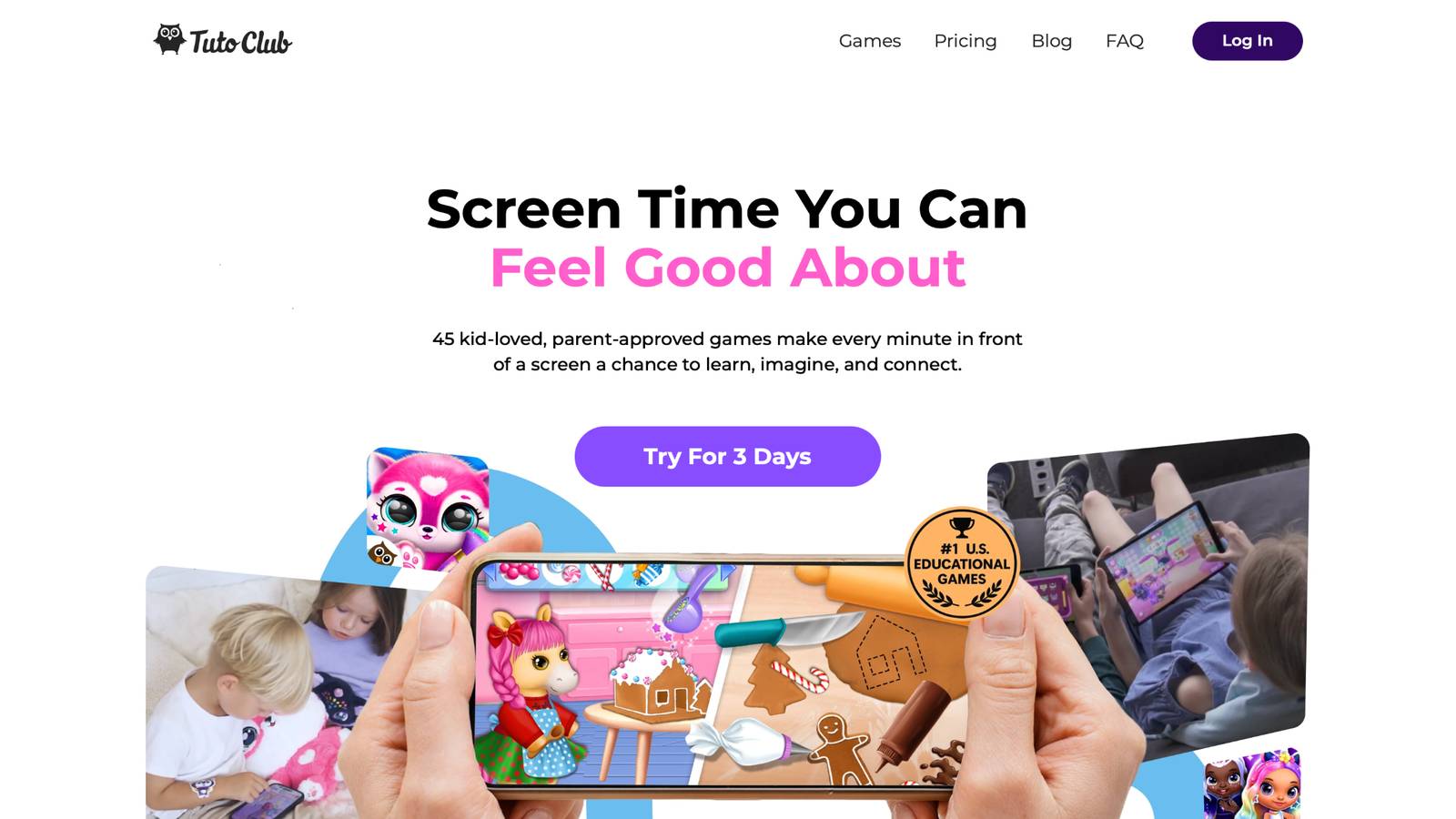
TutoClub games give families one ad-free subscription to more than 45 TutoTOONS titles made for kids about 2 to 8. The studio is based in Lithuania. Play centers on care: hatch a pet, tuck in a baby, tidy a room, or comfort a character who needs help. That loop is the activity. A child notices a need, names a mood, and picks a kind next step, then sees the result right away.
The set includes care and story games families already know, such as Fluvsies, Smolsies, Giggle Babies, and My Baby Unicorn. Art, dress-up, and puzzle tasks sit beside the care scenes, so a feelings lesson does not feel like a lesson. Games are COPPA and GDPR compliant, with no ads and no in-app purchase walls inside the subscription. One account works across devices, and many titles can be played offline after download. Parents often use a short care scene, then copy the same idea at the table: "What does she need? What could we try?" A Fluvsies paper doll printable can carry the same characters off the screen.
Facts and information
- More than 45 ad-free educational games in one family subscription
- Built around empathy, kindness, focus, and everyday routines
- Safe, parent-managed play with multi-device access
- Care stories that match real jobs like feeding, bathing, and tidying
- Regular content updates inside the same account
TutoClub Overview
TutoClub is your gateway to a magical world of educational games designed especially for children.
As part of TutoTOONS, a leading kids' games studio, we offer premium access to over 45 ad-free games.
Our mission is to blend learning and play, helping kids explore, create, and grow in a safe online space.
Thousands of parents trust us for family-friendly content that sparks imagination and builds essential skills.
Key Features
- Unlimited Access: Unlock full content in all games with no interruptions.
- Ad-Free Experience: Enjoy seamless play without any ads or distractions.
- Skill Development: Games foster creativity, social skills, communication, and more through fun activities like pet care and cleanup challenges.
- Regular Updates: Get new releases, exclusive content, and future updates automatically.
- Easy Subscription: Cancel anytime with no obligations, simple and flexible for families.
Explore Our World
TutoClub provides a rich ecosystem of educational games for kids, featuring ad-free experiences that promote creativity, focus, and emotional growth through play.
This platform turns screen time into valuable learning opportunities, with parent-approved content that builds essential skills and sparks curiosity in young minds.
- TutoClub Games: Over 45 educational games, including popular titles like Fluvsies, Smolsies, and the Sweet Baby Girl series
- Blog: Insights, tips, and stories for families on kids' learning and play
- FAQ: Comprehensive answers to frequently asked questions about subscriptions, features, and more
Get TutoClub on Your Device
TutoClub delivers premium kids educational games directly to your mobile devices, making learning accessible anytime, anywhere.
With apps available on major platforms, families can easily download and subscribe for ad-free play that turns screen time into skill-building adventures.
Perfect for parents seeking safe, engaging content on iOS, Android, or Amazon devices.
Why Choose TutoClub?
We're committed to 100% safe, enriching entertainment that kids love and parents approve.
Join the thousands who've seen their children thrive through playful learning.
Ready to start the adventure?
Start TutoClub and practice emotional intelligence for kids activities through calm, ad-free play!
2. Fluvsies Academy
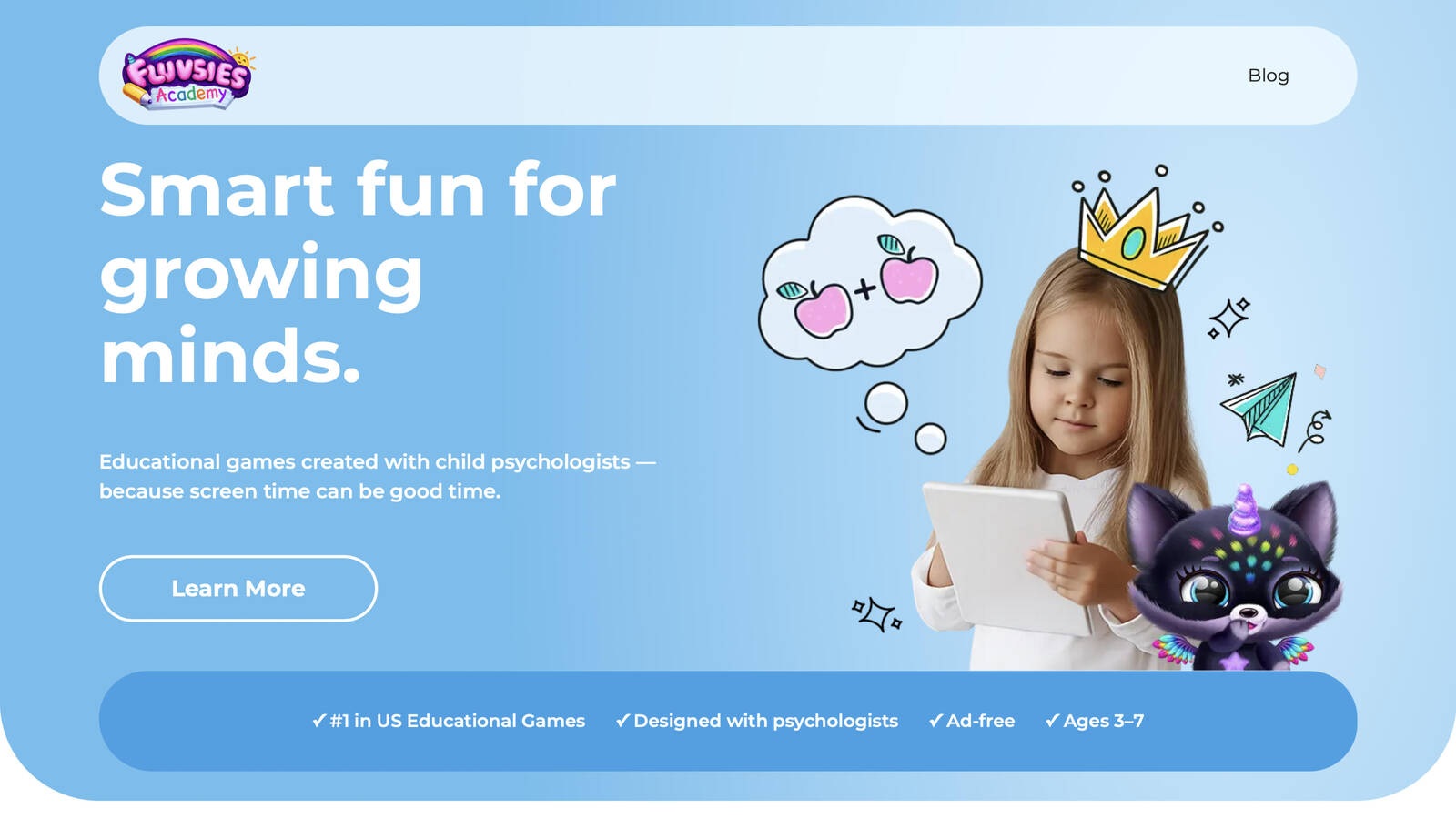
Fluvsies Academy is an educational app for children ages 3 to 7, shaped with child development experts so early learning and emotional safety sit in the same place. Kids move through short games for language, numbers, sorting, logic, and life skills, then slip into quieter stories about real jobs. Brushing teeth, helping at a store, cooking, and sorting are played as small adventures, not chores. The art stays soft, the steps stay clear, and there is no chat and no jump to outside links. Emotional balance is part of the design. Gentle pacing gives preschoolers room to stay with a task, notice a character's need, and finish without a loud reward loop. Active games ask for attention and reasoning. Passive profession stories let a child watch, imagine, and copy kind routines. A later mindfulness branch has been planned around calm habits and feelings, which fits the same nurturing world. Families who want early academic play and a steady mood in one app often keep Fluvsies Academy in the daily mix beside hands-on games at the table. The characters are easy to talk about after the screen goes off, so a parent can ask what the Fluvsie needed and what the child chose to do.
Key features
- Expert-built tracks for language, math, logic, sorting, and life skills
- Profession stories that model everyday helping
- Ad-free play with no chat and no external links
- Calm visuals and pacing suited to early learners
Facts and information
- Made for ages 3 to 7
- Developed with child psychologists and educators
- Active challenges plus quieter story play
- Emotional safety built into instructions, art, and pace
3. Daniel Tiger's Grr-ific Feelings
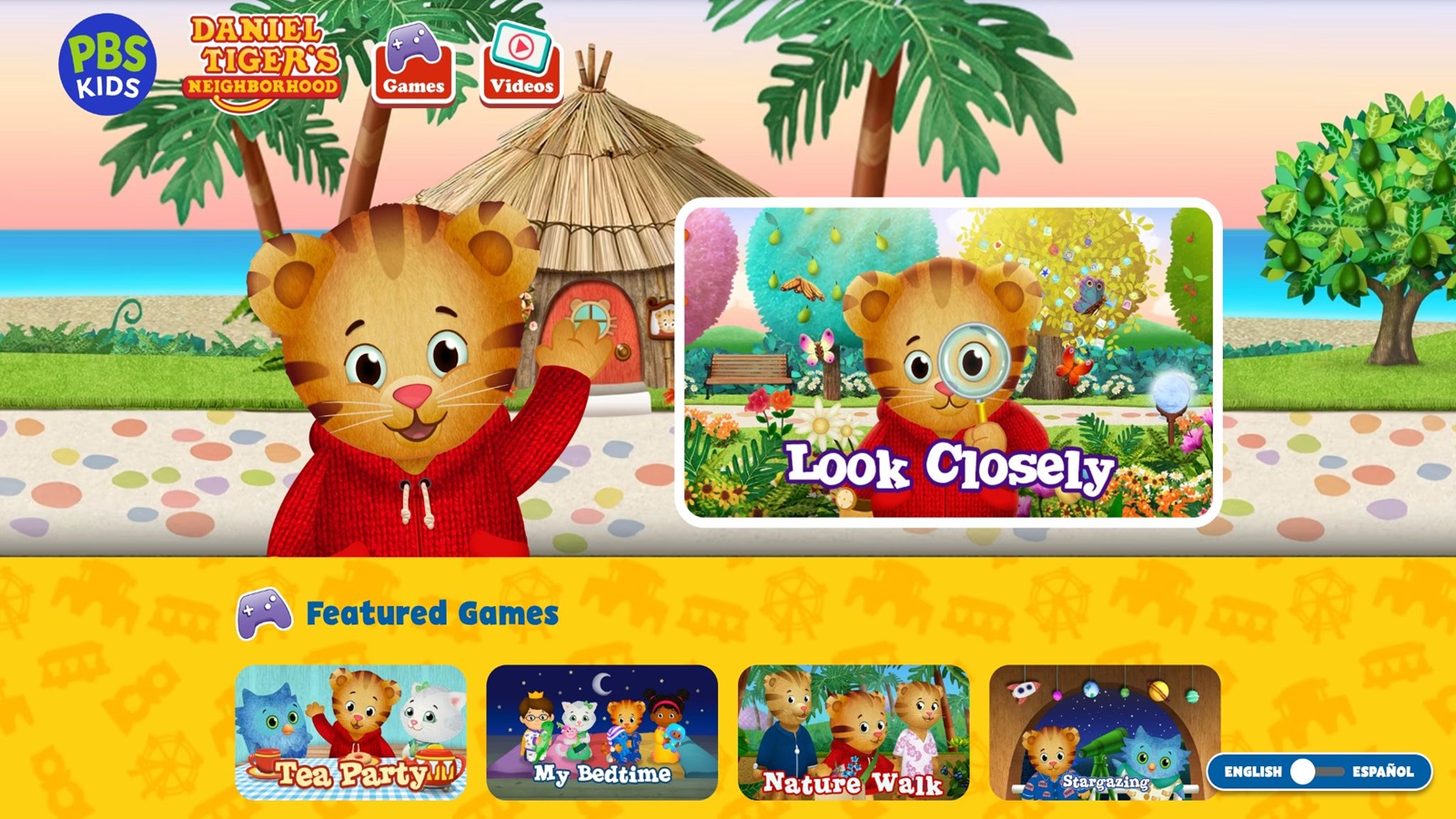
Daniel Tiger's Grr-ific Feelings, from PBS KIDS, turns the neighborhood children already know into a feelings practice. Songs, drawing, and short games help a young child name mad, sad, glad, or worried, then try a simple plan. The show's familiar lines give parents a script they can reuse in the car, at the store, or at bedtime, which is why many families treat the app as a bridge between an episode and a real check-in. Play stays gentle and repeatable. A child might draw a feeling face, sing a strategy, or step into a photo-style moment that shows what a mood looks like on a body. That mix suits preschool and early elementary kids who learn best through characters they trust. The loop is narrower than open story play, so some children want a new scene after a few rounds. Even so, the words stick. A parent can pause a song, ask what Daniel feels, and copy the same question with a sibling five minutes later. It is strongest as a shared activity, with an adult nearby to link the lyric to the day.
Key features
- Songs and games tied to common feelings
- Drawing and photo-style expression tools
- Short, character-led strategy lines
- Friendly pacing for preschool and early grades
Facts and information
- Based on Daniel Tiger's Neighborhood
- Built around naming a feeling and using a simple plan
- Often paired with episode themes from the show
- Works as a script families can reuse off screen
4. Breathe, Think, Do with Sesame
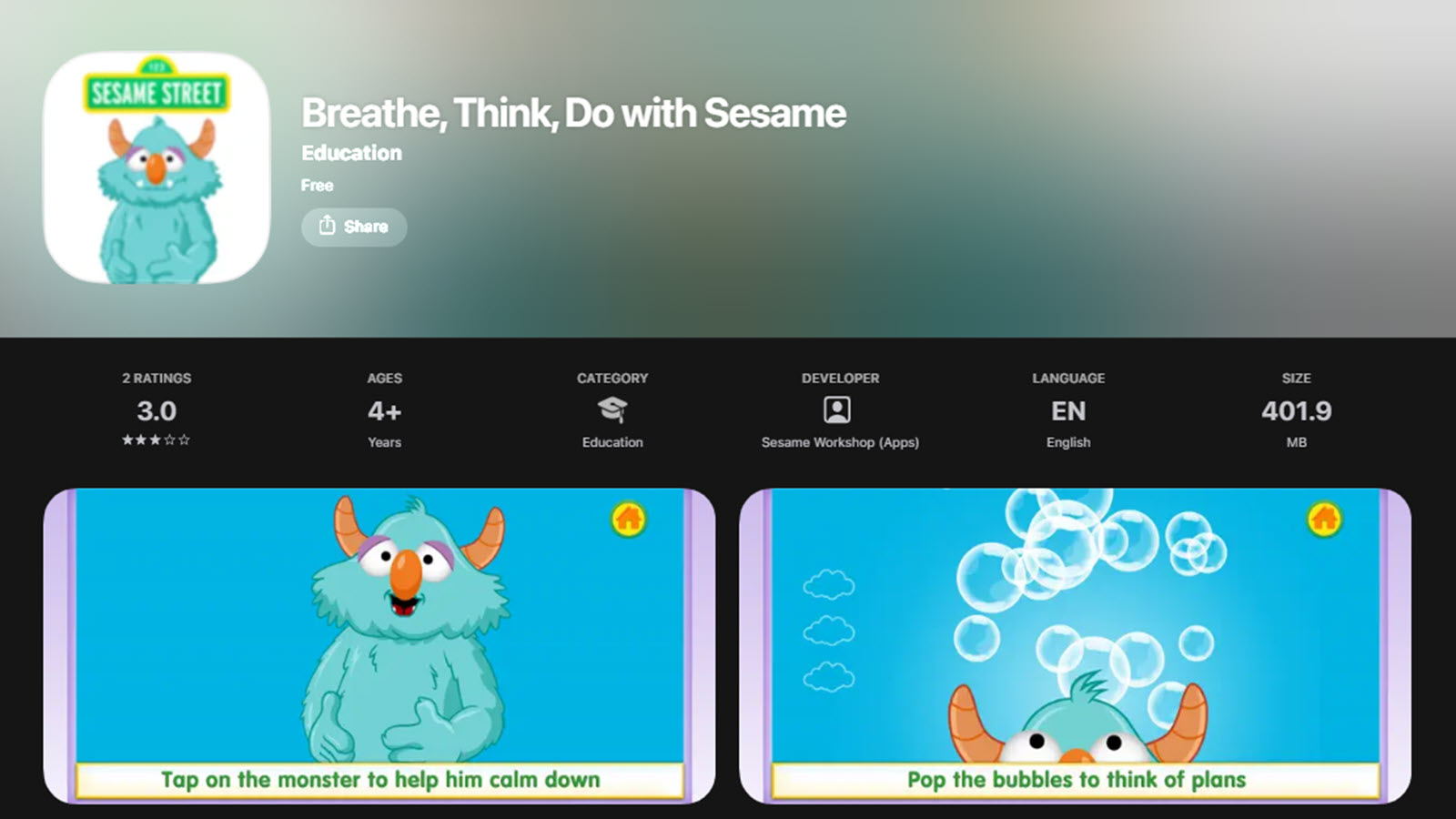
Breathe, Think, Do with Sesame comes from Sesame Workshop in New York and teaches self-control through a small monster facing ordinary snags. A tower falls. A wait feels long. The child helps the monster breathe, think of a plan, and try a fix. Those three words are easy for adults to copy when a real problem shows up at home, which is the main reason families keep the app. The activities are short on purpose and aimed at younger children. It is a practice tool more than a long play session. Some kids want more story variety after a few rounds, and the scenes stay simple. The strength is the pattern. A parent can say the same three steps when shoes will not go on or a block tower tips. Sesame characters make the lesson feel safe, and parent notes sit beside the play so an adult knows what to say next. Used before a hard moment, not only after a meltdown, the loop becomes a family habit rather than a one-time cartoon.
Key features
- Three-step calm plan: breathe, think, do
- Everyday problems such as waiting and fixing
- Simple monster character for young kids
- Parent tips beside the play
Facts and information
- Created by Sesame Workshop
- Built for early childhood self-control practice
- Scenarios mirror common home and care moments
- The same three words can be used with no screen
5. Zones of Regulation
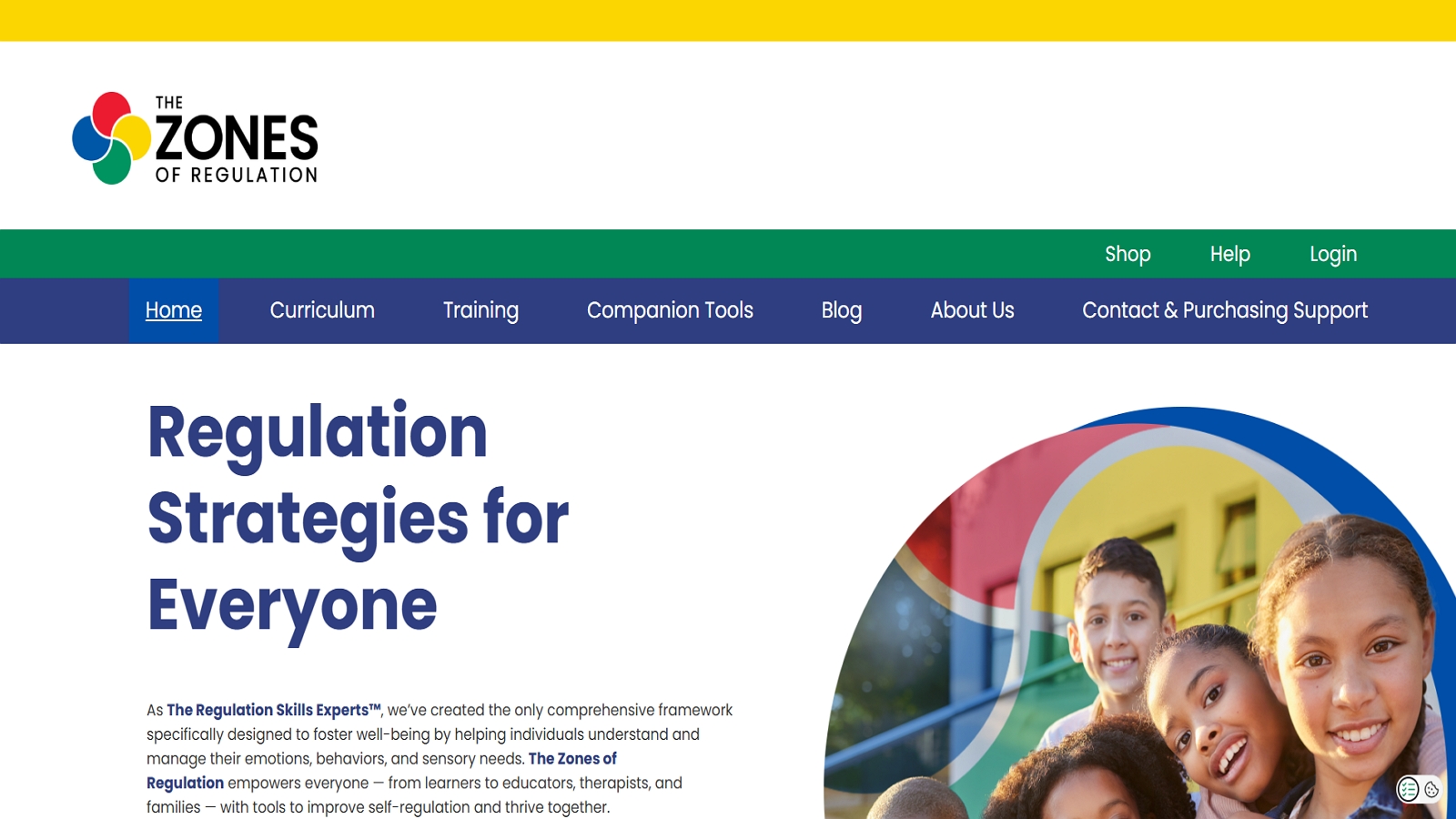
The Zones of Regulation, created by Leah Kuypers, gives kids a shared color language for energy and mood. Blue, green, yellow, and red zones help a child sort a feeling before picking a tool. The framework is widely used in schools, and the app carries the same map into a virtual town where learners notice body clues and try a strategy that fits the zone they are in. Many classrooms already say "yellow zone," so the words travel from school to the kitchen table. The tool fits kids about 5 to 12 who can handle a simple system. Younger children often need an adult nearby so the town tasks stay clear. It is less open story play and more a feelings map, which some kids love and others find school-like. The payoff is speed. A child who cannot yet say "frustrated" can still point to a color, then choose a breath, a break, or a helper. Families do best when they use the colors on calm days, then reach for them when energy runs high.
Key features
- Four-color zone system for mood and energy
- Body-clue practice inside short adventures
- Strategy ideas matched to each zone
- Language many classrooms already use
Facts and information
- Based on the Zones of Regulation framework
- Commonly used with ages 5 to 12
- Helps kids sort feelings before choosing a tool
- Works as a shared home and school vocabulary
6. Smiling Mind
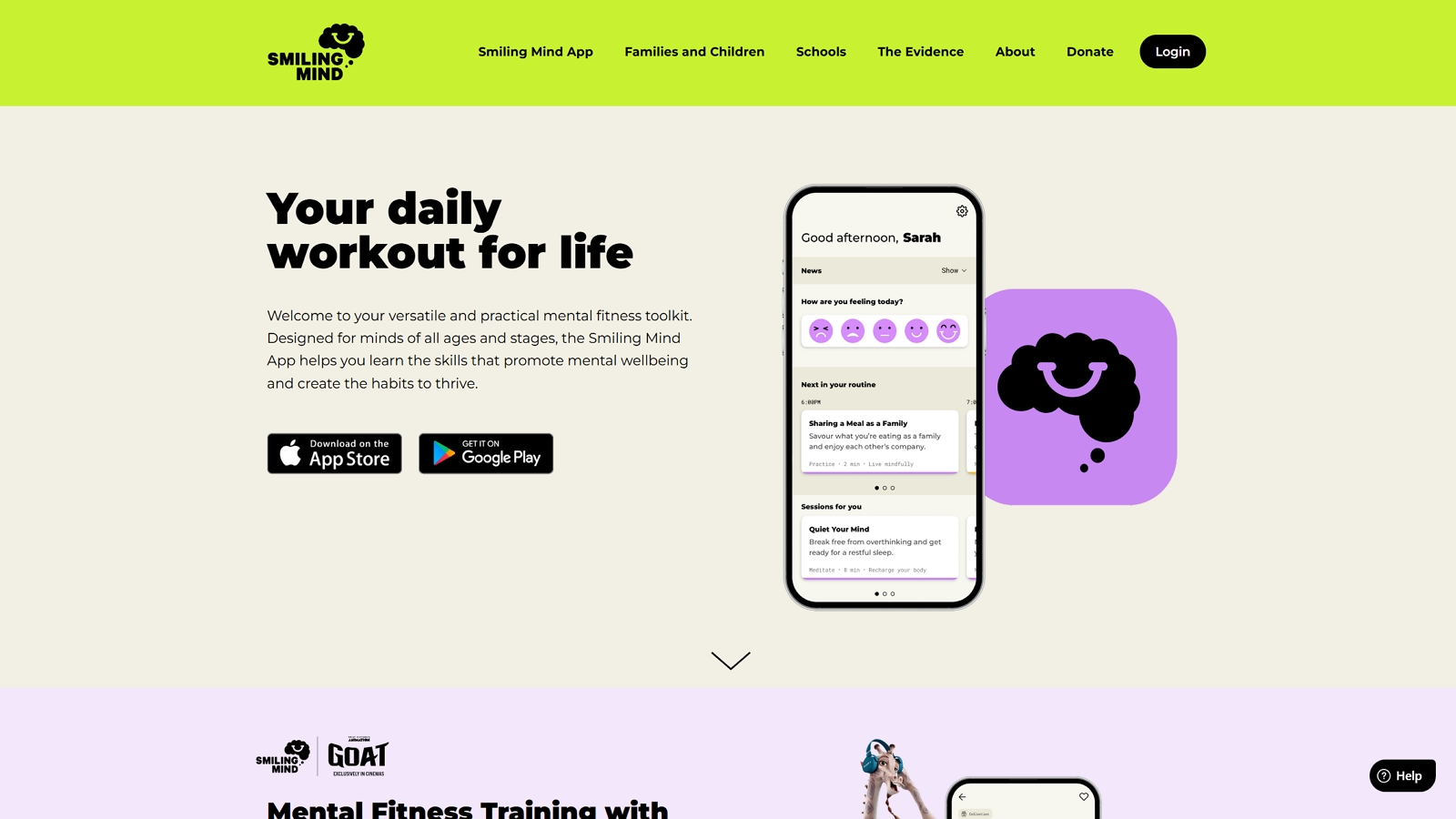
Smiling Mind is a nonprofit mindfulness app from Australia with age-filtered sessions for children, teens, and families. Short practices cover worry, focus, kindness, rest, and body calm. A parent can open a two-minute body scan before sleep, after a hard day, or between activities, without building a whole lesson. Collections are grouped by topic, so the choice is a session, not a scroll. The tone is quiet and guided. That helps many children settle and loses others who want a game with a character to care for. It works best as an add-on to active feelings play, not a full replacement for story or care games. Schools use it widely, and home sessions mirror that classroom style. There is no plot to finish, which is a limit for kids who need a story hook. Used as a reset, though, the short length is the point. One calm practice, then back to play, keeps the skill small enough to repeat.
Key features
- Age-filtered mindfulness sessions
- Topics such as worry, focus, kindness, and rest
- Short practices for bedtime or after school
- Classroom-style collections as well as home use
Facts and information
- Nonprofit program used by families and schools
- Sessions designed to be brief
- Focus on noticing body and breath
- Useful as a calm add-on beside active games
7. Mood Meter
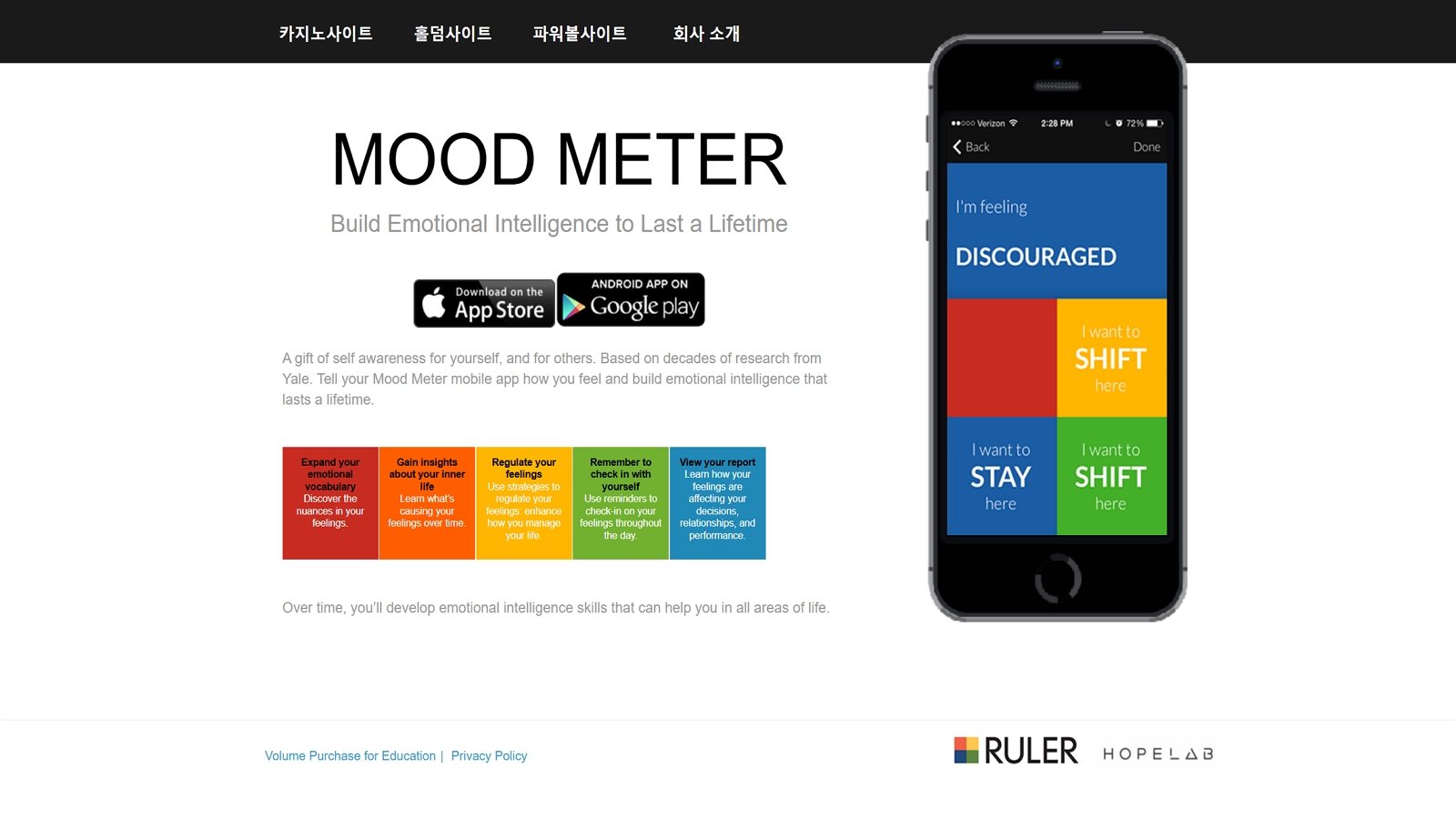
Mood Meter, created with the Yale Center for Emotional Intelligence in New Haven, helps older elementary kids and teens plot a feeling on two lines: pleasantness and energy. Four color areas turn "I feel bad" into a clearer word, then offer a short way to stay with the feeling or shift it. The chart is part of the wider RULER approach many schools use, so the language may already be familiar from class. The tool shines when a child is ready for finer emotion words. Younger kids often need an adult to read the chart and offer choices. It is a check-in more than a game, so it pairs well with a story or a role-play rather than standing alone on a play afternoon. Some children enjoy the precision. Others want to tap and move. A simple home version is to ask where the feeling sits, high or low energy, pleasant or not, then pick one next step. That keeps the Yale idea without a long sit.
Key features
- Two-axis chart for mood and energy
- Color areas that lead to specific feeling words
- Short regulation ideas after the plot
- Language shared with RULER-style programs
Facts and information
- Developed with the Yale Center for Emotional Intelligence
- Fits older elementary kids and teens best
- Turns a vague mood into a precise word
- Often used as a daily check-in
8. Cosmic Kids Yoga
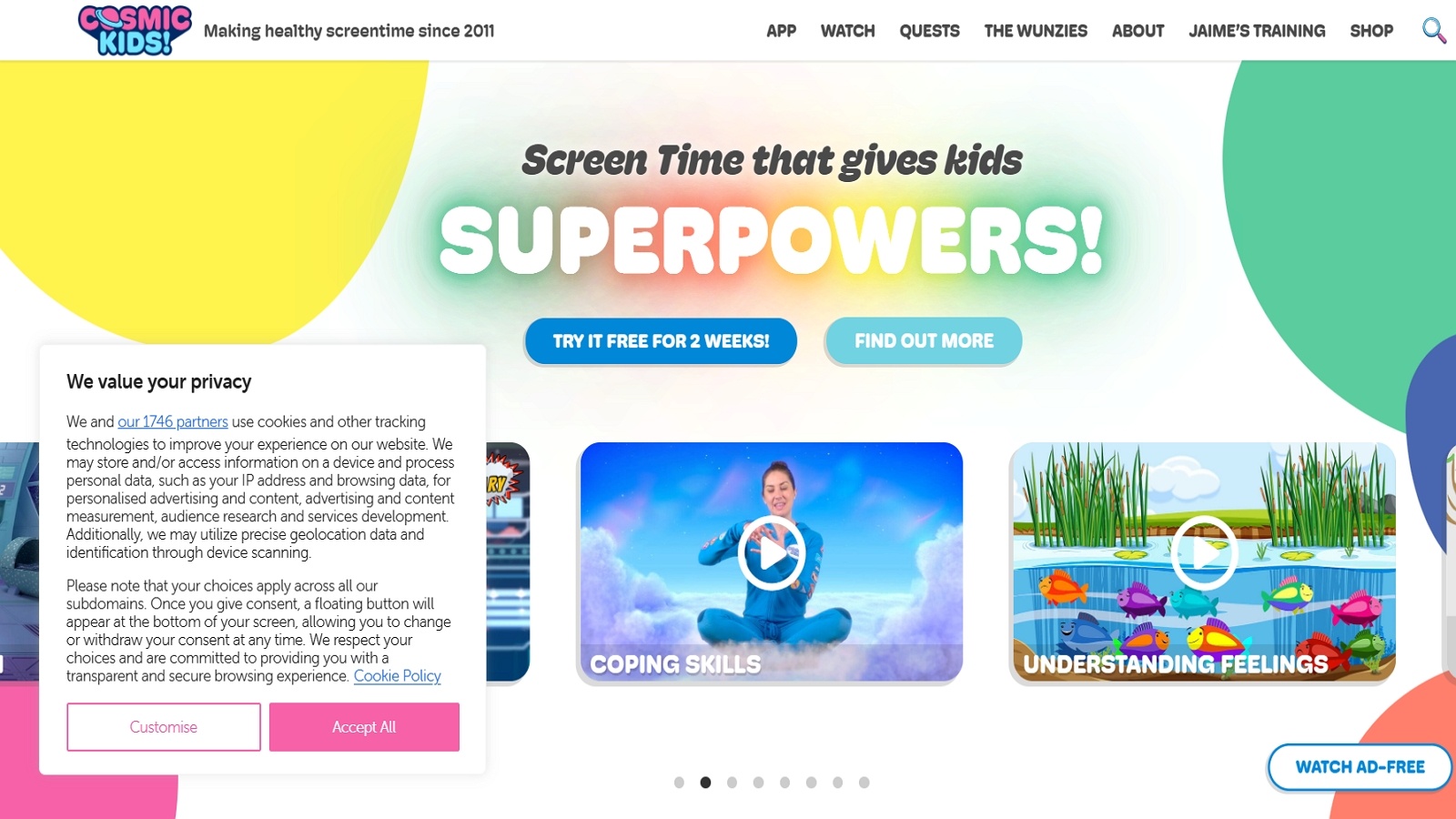
Cosmic Kids Yoga, led by Jaime Amor and based in the United Kingdom, mixes story-led yoga with mindfulness for children. Episodes send kids on a short adventure while they stretch, balance, and breathe. Feeling talks sit inside the movement, so a child practices naming a mood with their body, not only with words. Parents often use an episode as a reset after school or before bed. The strength is the physical hook. Kids who fidget through a feelings worksheet will often stay for a yoga story. Sessions vary in length, and the most useful ones for emotional intelligence stay short. It is less about caring for a character and more about copying poses and calm lines. Some children want a game they can steer. Even so, the moves transfer. A parent can reuse one breath or one balance pose with no video. Cosmic Kids is a strong movement companion to care games and face-matching at the table.
Key features
- Story-led yoga and mindfulness videos
- Poses tied to confidence and coping
- Short adventures kids can copy
- Language for feelings during movement
Facts and information
- Created by Jaime Amor in the United Kingdom
- Used by families as positive screen time
- Blends physical play with emotional awareness
- Poses and breaths can be repeated offline
9. Peppy Pals
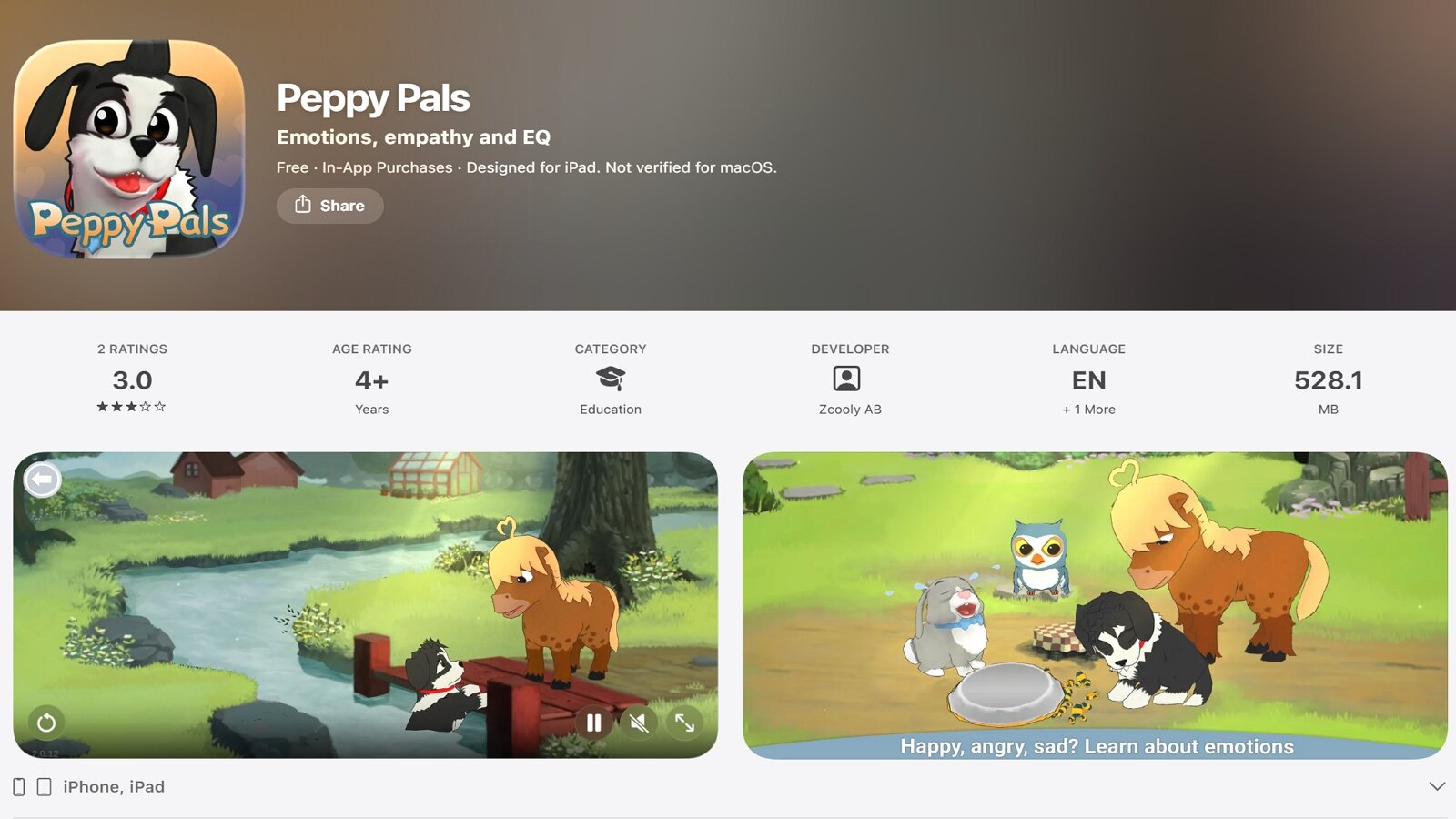
Peppy Pals is a Swedish social-emotional series of apps, films, and books for kids about 2 to 9. Gender-neutral animal characters hit everyday snags, and children read faces and body language to move the story. Feedback is a happy friend or a hug, not a score chase. The games are built around social skills such as kindness, self-esteem, teamwork, and stress, and the maker points to widely used social-emotional competencies as the frame. Stories are meant to spark a talk between child and adult, which is where the practice actually lands. The worlds are imaginative, and the lack of a points race keeps the tone soft. Some sessions are short stories more than deep games, so older kids may want more choice. For preschool and early elementary, the face-reading loop is clear: look, guess the feeling, help. Families can follow an episode with the same question about a real friend. Peppy Pals also has a video channel, so screen time can stay inside one cast of characters.
Key features
- Stories driven by faces and body language
- Kindness, teamwork, and self-esteem themes
- Feedback through care, not points
- Apps, films, and books in one character world
Facts and information
- Aimed at about ages 2 to 9
- Swedish origin, used by families in many countries
- Built around social-emotional competencies
- Designed to start a parent-child talk after play
10. Kimochis
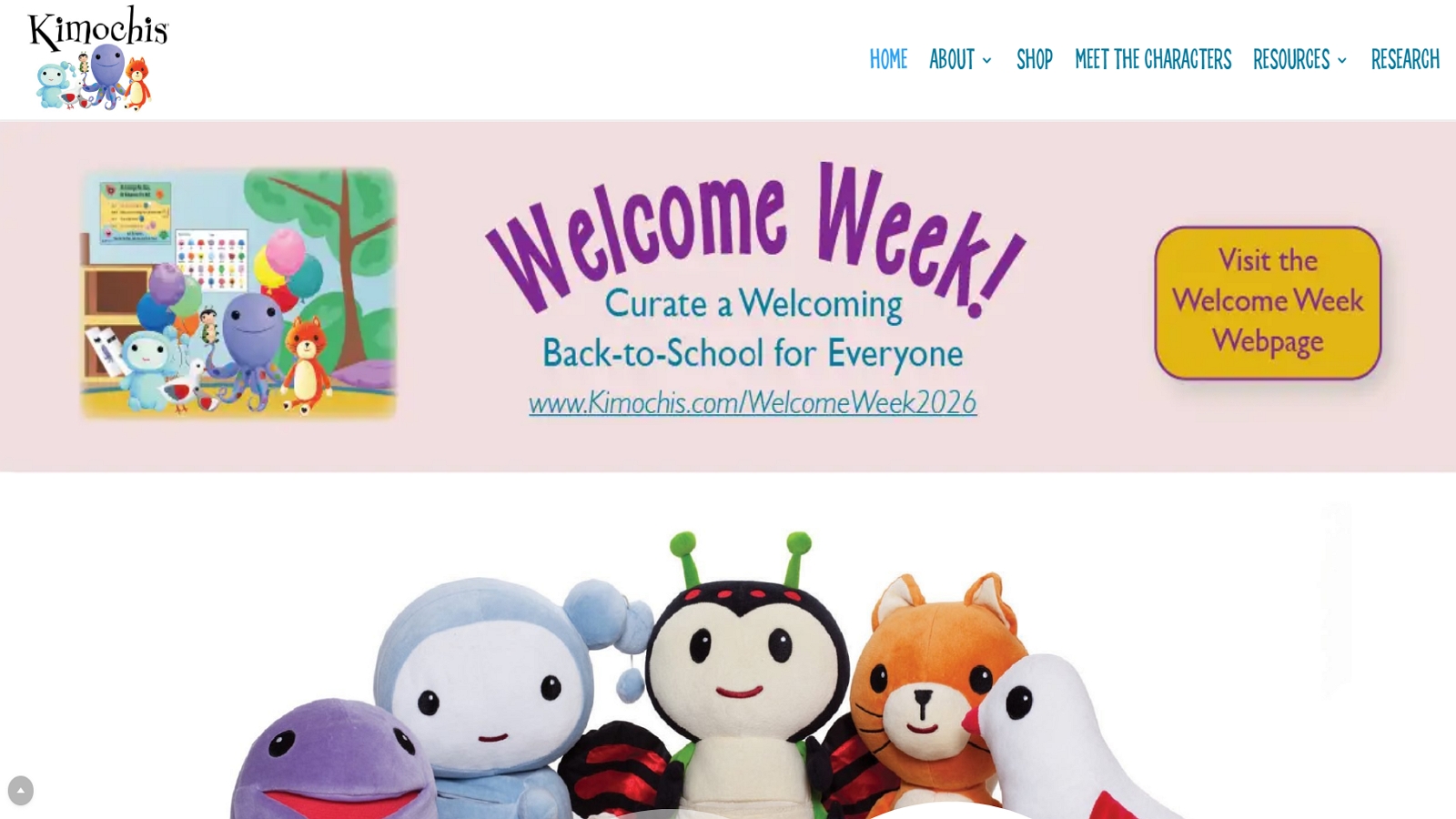
Kimochis, from Plushy Feely Corp, is a feelings curriculum built around characters and soft feeling pillows children can hold. The program covers preschool through elementary grades and is used in classrooms for communication, self-regulation, and a kinder room climate. Lessons lean on core social-emotional competencies and positive behavior ideas, with tool kits for pre-K and for grades 1 to 5. Kids pull a feeling, name it, and practice what to say next. The hands-on objects are the hook. A child who will not sit for a worksheet will often talk to a character pillow. Teachers like the ready lessons. At home, the same characters can anchor a short check-in if a family has the kit. It is a program more than a casual game, so it asks for an adult to lead. Some kids find the lessons school-shaped. The payoff is a shared set of words and a concrete object for a hard feeling, which many children need before they can use a chart or an app.
Key features
- Character tool kits for pre-K through grade 5
- Feeling objects children can hold and name
- Lessons for communication and self-regulation
- Classroom guides plus parent connection
Facts and information
- Used in schools for social-emotional learning
- Framed around core social-emotional competencies
- Separate kits for early years and elementary grades
- Built to validate feelings, then practice words
11. Second Step
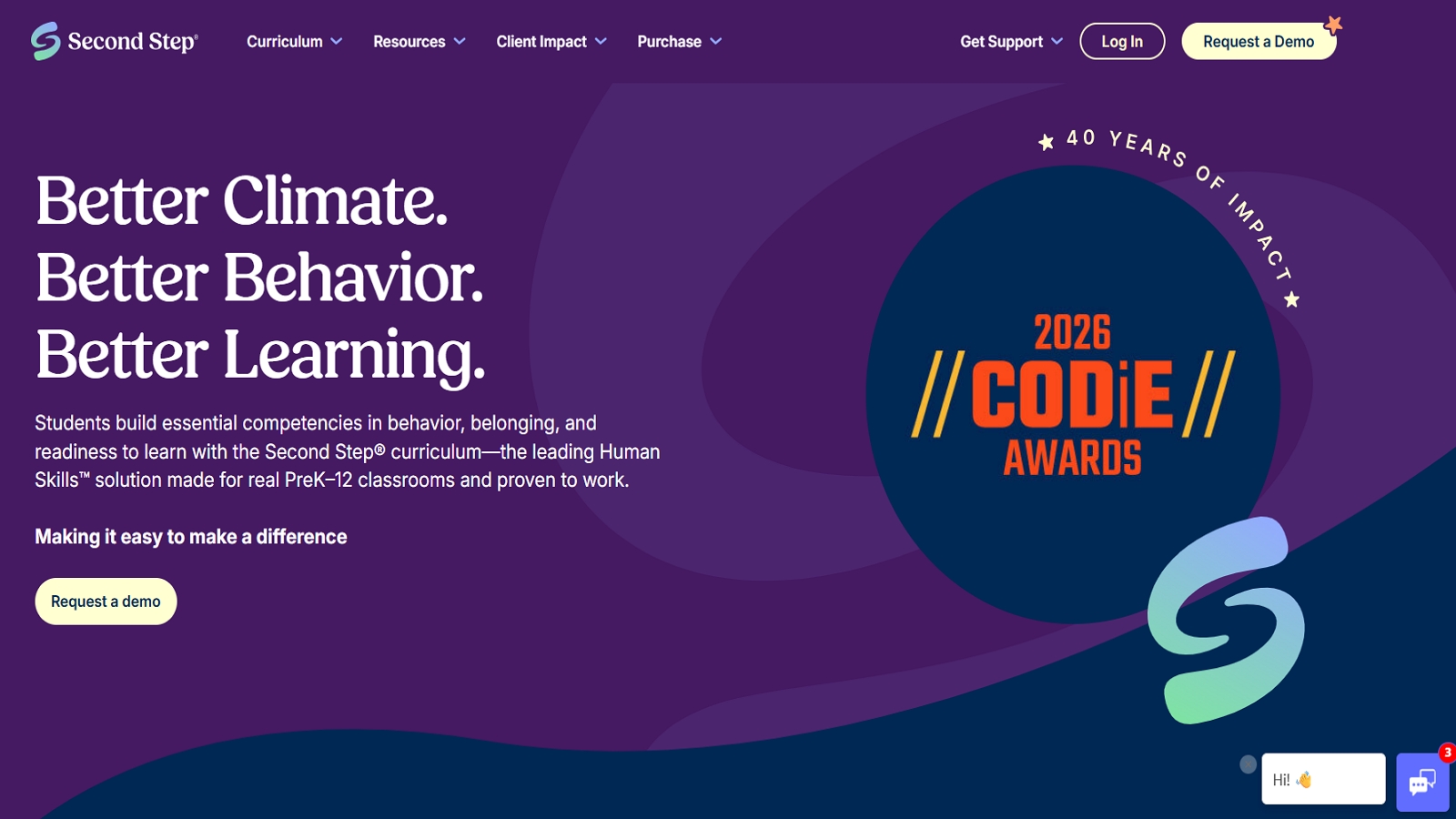
Second Step is the flagship program of Committee for Children, a Seattle nonprofit with a long record in child safety and social skills. Lessons cover empathy, emotion management, problem solving, and, in many editions, bullying prevention and child protection. Schools use it from early grades upward, with songs, puppets, and short practices for younger children and more discussion for older ones. It is a classroom curriculum first, not a living-room game. Families meet it through school, then can echo the words at home. The scope is wide, which helps a whole grade share one language and can feel heavy if a parent wants a five-minute activity. Home practice works best as a single skill copied from the week: name a feeling, or walk through a problem in steps. Second Step is a strong reference point for what schools mean by emotional intelligence, and it pairs well with shorter games that rehearse the same skills at night.
Key features
- Lessons on empathy, emotion management, and problem solving
- Early-grade songs and puppet-style practice
- Bullying prevention and child protection units in many editions
- A shared school language families can echo
Facts and information
- Created by Committee for Children in Seattle
- Used in schools for decades
- Research-based human skills instruction
- Stronger as a school program with home follow-up
12. Chill Panda
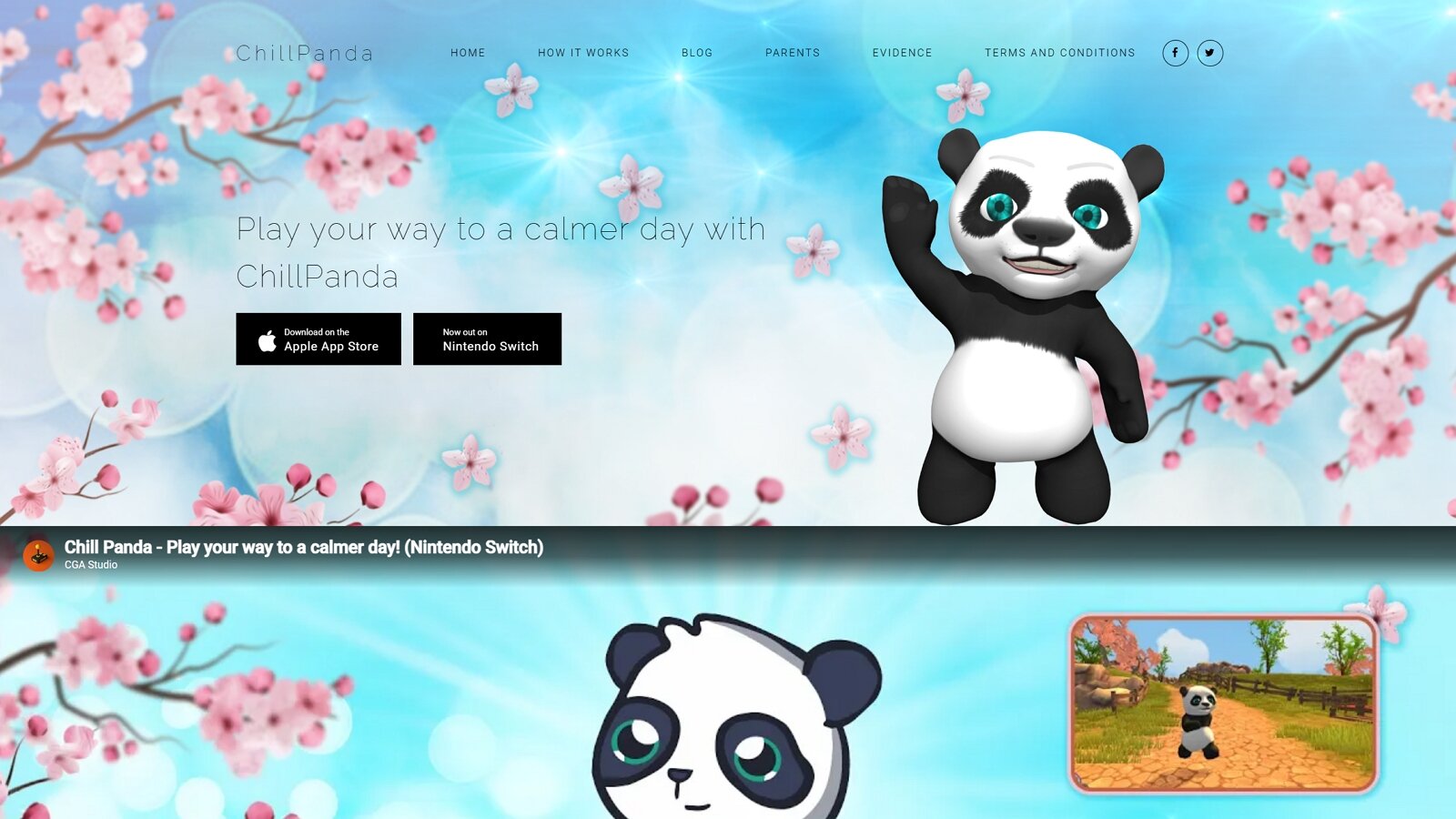
Chill Panda, from Onteca in the United Kingdom, is a calm game for primary-age children who worry. A child tells the panda how they feel, then tries square breathing, simple yoga, and gentle mini-games such as surfing or pinball meant to bring energy down. The app was co-developed with child psychologist Dr. Caroline Belcher and is also available on Nintendo Switch. It is not a medical device. The aim is everyday recognition of worry, plus tools a child can reuse. The panda theme feels safe and low pressure. Breath, movement, and playful tasks give families more than one way in. A few kids lose interest if the mini-games stay very simple, and the heart of the app is wind-down, not a long adventure. Parents can copy the square breath with no phone. Used before bed or after a loud day, Chill Panda is a focused worry companion beside broader care and story games.
Key features
- Mood check with a panda guide
- Square breathing, yoga, and calm mini-games
- Play built with a child psychologist
- Mobile play plus a Nintendo Switch version
Facts and information
- Made by Onteca in the United Kingdom
- Aimed at younger children who worry
- Draws on relaxation methods used with anxious children
- Breathing pattern can be reused offline
13. Mightier
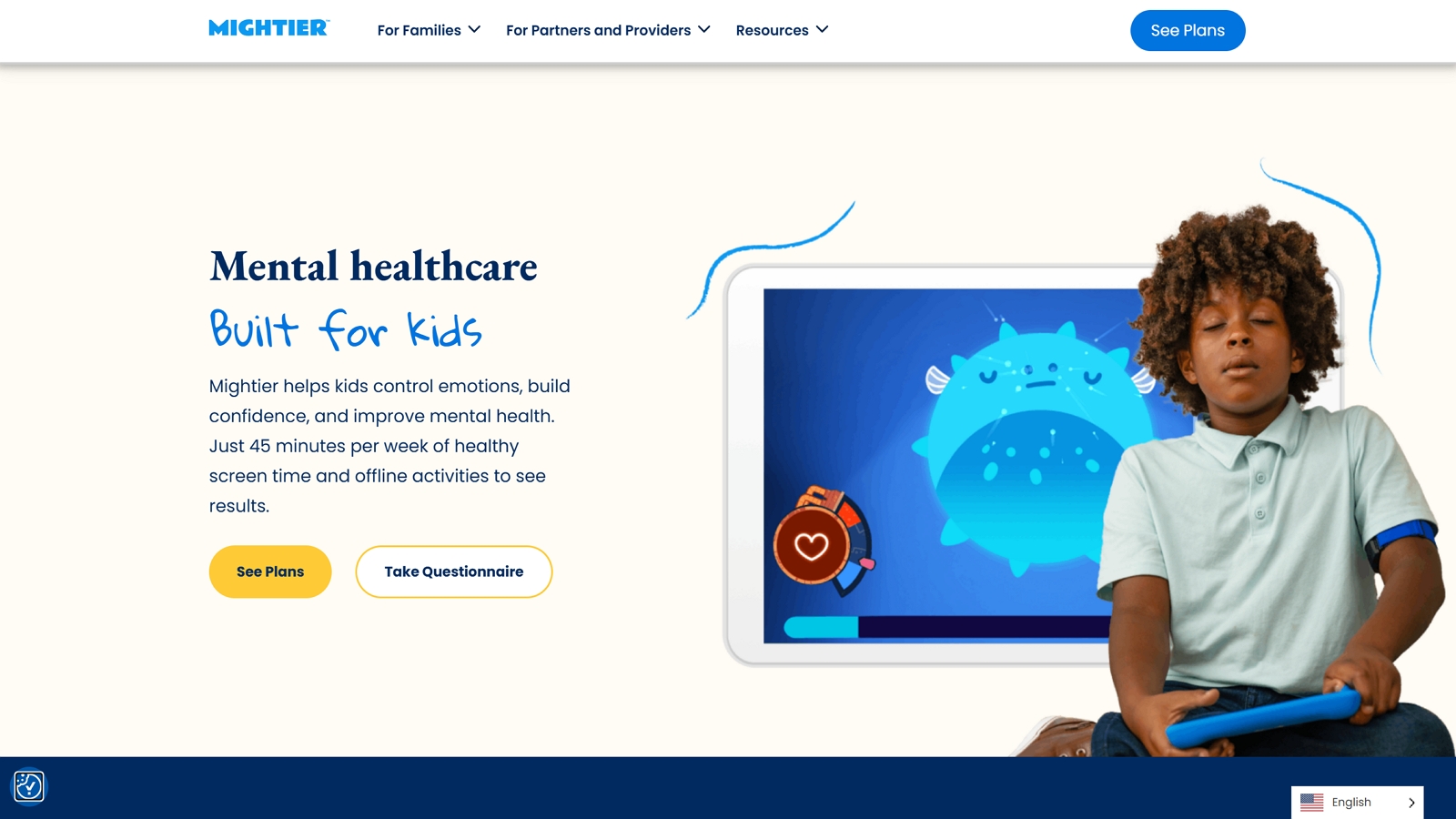
Mightier, developed with clinicians connected to Boston Children's Hospital and Harvard Medical School, is a biofeedback game program for kids about 6 to 14. A child wears a heart sensor while playing. When the body speeds up, the game asks for a calm-down skill before play gets easier. The idea is direct: calming is part of the game, not a lecture after it. Parent tools track practice, and mailed skill packs add offline crafts and stories. It is more structured than a casual feelings app. Families are asked to play on a schedule, and the sensor is part of the setup. That extra gear helps some kids see the body-feeling link and feels like too much for others. Mightier is often chosen when a child needs clearer support with frustration, not only a fun story. It sits in a different lane from open care games: clinical play with a body signal, plus parent coaching. Short home games can still rehearse the same pause once the sensor is off.
Key features
- Heart sensor tied to in-game calm skills
- Games for ages about 6 to 14
- Parent app for tips and progress
- Offline skill packs with crafts and stories
Facts and information
- Developed in connection with Boston Children's Hospital
- Built so regulation changes how the game feels
- Aimed at frustration, confidence, and coping
- Combines screen play with hands-on family tasks
14. Moshi
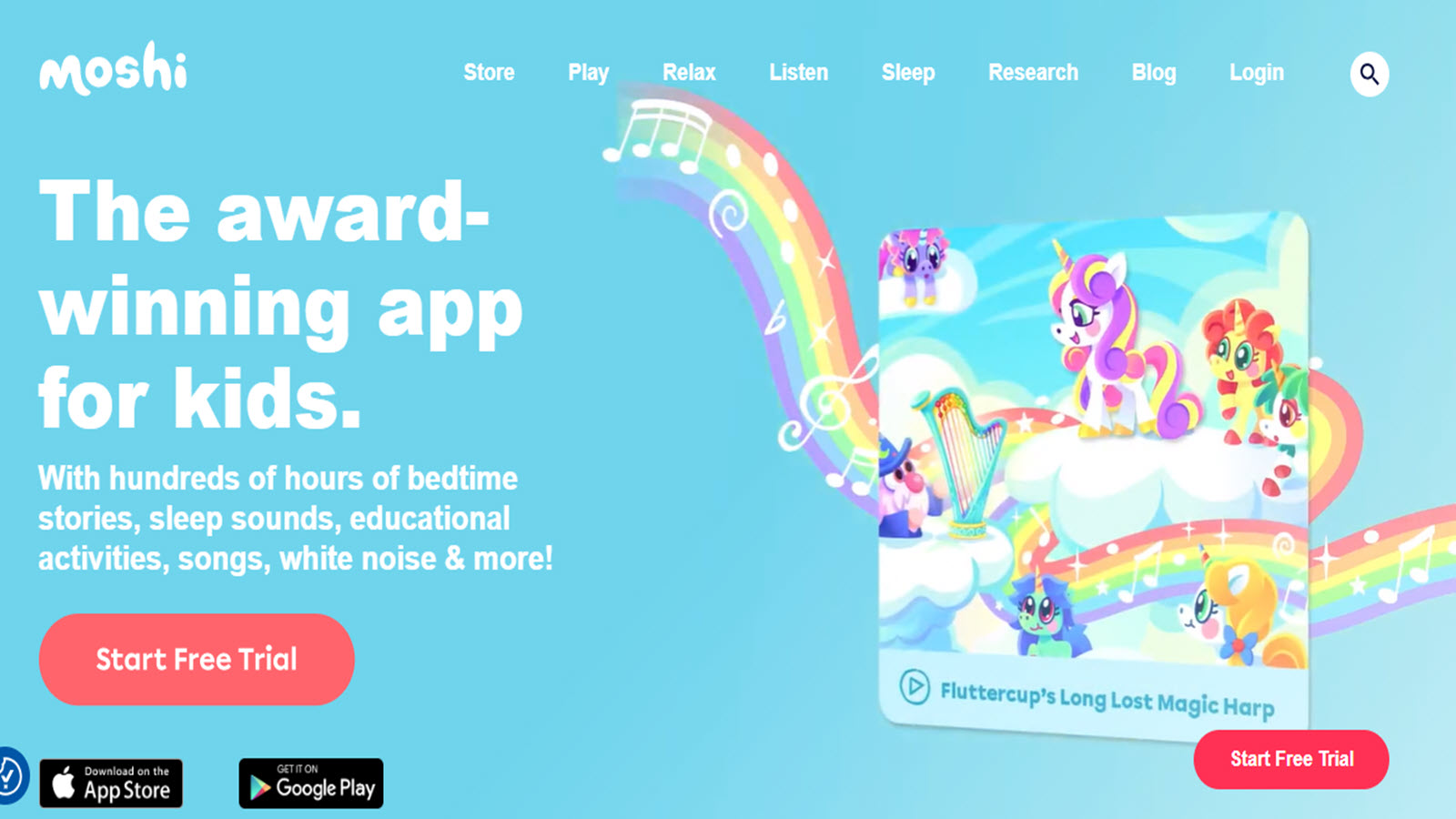
Moshi, from Moshi Ltd in the United Kingdom, offers audio stories, music, and short mindfulness for children, including a sleep side many families use at night. Calm tales and breathing moments help a child notice a feeling and settle the body. Characters carry the story, so the practice feels like listening, not a worksheet. Daytime sessions cover focus and kindness as well as rest. Audio is the strength and the limit. Kids who like to tap and choose may drift. Kids who spiral at bedtime often stay with a voice and a soft plot. There is less chance to practice a repair with a peer, because the child is listening more than deciding. Parents can still pause and ask what the character felt. Moshi works well as the evening half of an emotional intelligence day: active care play earlier, a short Moshi story when the house gets quiet. The company has expanded into classroom mindfulness as well as home.
Key features
- Story audio, music, and short mindfulness
- Sleep and daytime calm collections
- Character-led tales instead of drills
- Sessions a child can use without reading
Facts and information
- British children's audio brand
- Widely used for bedtime wind-down
- Blends story with breath and body calm
- Better as a settle tool than a choice-making game
15. GoNoodle
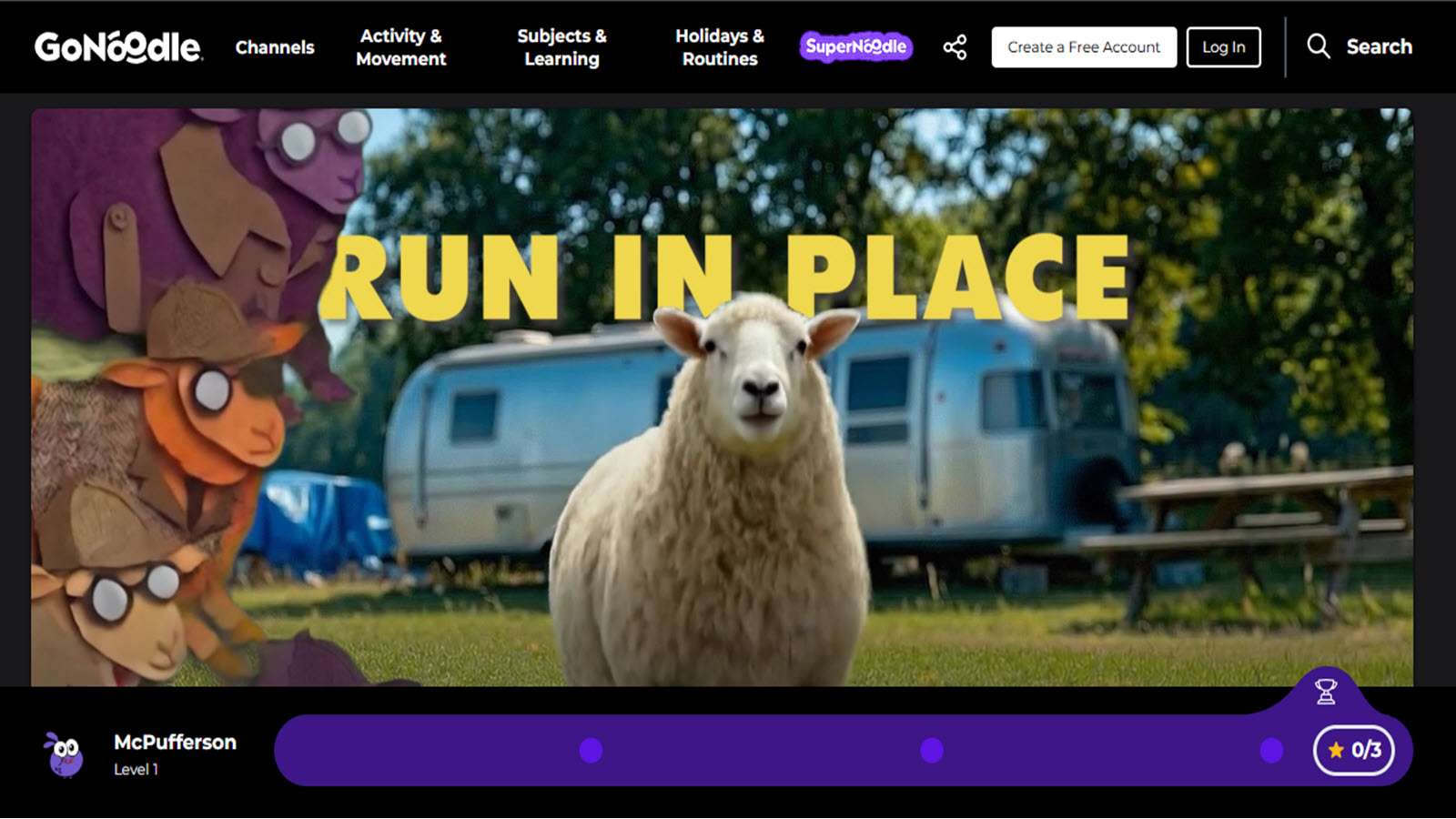
GoNoodle, used in many classrooms and homes, pairs movement videos with calmer channels for focus, breath, and rest. Kids follow a short dance, a stretch, or a guided calm-down, then return to the day. Feeling skills show up as body control: stop, move, slow down, try again. The brand is based in the United States and is common on classroom screens as a break between lessons. The energy range is wide. Some videos are loud and silly, which helps a stuck body and can overstimulate a child who needed quiet. Families do better if they pick the calm or flow-style clips for emotional intelligence and save the big dances for wiggles. It is not a care story, so empathy practice is thinner than in pet or baby games. As a movement reset, it is easy to start and easy to stop. One clip, then a face-match or a kindness question, ties the body work to a feeling word.
Key features
- Movement breaks plus calmer focus channels
- Short videos a child can follow
- Classroom and home use
- Breath and stretch options beside active dances
Facts and information
- Widely used as a school movement break
- U.S. brand with a large teacher following
- Emotional practice comes through body control and calm clips
- Works best when an adult picks the quieter channel
Activities That Work by Age
The same skill can look different at 3, at 7, and at 10. Pick the version the child can finish while still smiling.
- Ages 2 to 4. Face match, mirror faces, and care for a baby or pet character work best. The skill in practice is pointing to a feeling and offering help. Educational games for 2 year olds and apps for toddlers stay on big buttons and short care tasks. Games for toddlers and educational games for kids age 3 keep the feeling word to one.
- Ages 5 to 7. Emotion charades, a story pause, and kindness bingo fit this stage. Kids practice reading body clues and naming a need. Educational games for 5 year olds, games for preschoolers, and educational games for kindergarten match this window. Educational games for 6 year olds can add a short "why."
- Ages 8 to 10. A feelings journal, a conflict role-play, and a mood chart fit older kids. They practice precise words and a repair plan. Educational games for 7 year olds and learning apps for kids 8 years old still work when the story stays kind. Educational games for 10 year olds fit kids who want a clearer choice.
Learning through play examples stay useful at every age. The job should feel like a game, not a test. Benefits of learning through play show up when the same care question returns the next day.
A Weekly Rhythm Families Can Keep
A plan only helps if it survives a busy week. Use one light activity a day, not a new kit every Monday. A family weekly planner can hold the five feeling slots without a new curriculum.
- Monday: One feelings word at breakfast.
- Tuesday: Care play. Ask what the character needs.
- Wednesday: Charades or a mirror-face game.
- Thursday: A kindness act, marked on a simple card.
- Friday: Story pause during reading time.
- Weekend: A calm replay of the week's best moment.
Tie the rhythm to routines you already have. Bath, snack, and bedtime are easier hooks than a new calendar block. Summer holiday educational games show the same mix of screen and offline play. Parents' guide to healthy screen time helps when the week gets crowded. iPad games for kids and tablet games for kids can fill one slot. Mobile games for kids cover the same idea on a phone.
Watch for transfer, not a perfect score. A child who says "I need a breath" during a toy fight is using the skill. A child who comforts a sibling after a bump is using it too. Brain games for kids can sit beside the feeling game on a quiet afternoon, as long as one of the two still asks what someone needs.
FAQ
What are the best emotional intelligence for kids' activities at home?
The best emotional intelligence for kids' activities at home are short, repeatable, and tied to a real moment in the day. Face matching, emotion charades, a story pause, kindness bingo, and care play all give a child a chance to name a feeling, notice a need, and pick a kind next step. Five calm minutes at snack time, bath time, or bedtime usually stick better than a long talk after a blowup. A strong activity has a clear loop: notice the feeling, name it, breathe, choose a next step, and try again if the first try was messy. Pair one screen care scene with the same question at the table, such as what a pet, a baby character, or a sibling needs right now. The offline copy matters as much as the game, because the skill shows up in sharing a crayon, waiting a turn, or fixing a small hurt. A parent can use a real event from that morning, not only a pretend one, so the words match the child's day. Stop while the child is still willing. A short win is easier to repeat tomorrow than a long session that ends in a fight. Kids educational games use that same mix of play and real life, so the lesson does not stay trapped on a screen.
How do emotional intelligence games for kids build empathy?
Empathy grows when a child sees a need and responds, then notices that the response changed something. Pet care, baby care, and simple story choices make that loop easy to follow: someone is hungry, tired, messy, or sad, and a kind action shifts the scene. Saying the result out loud, such as "she looks calm now," helps the lesson stay after the game ends. Body clues matter too. A slumped shoulder, a quiet voice, or a tight fist gives the child something to read before any words come. Turn-taking and listening add another layer, because empathy is also waiting while someone else has a turn. A parent can pause the scene and ask what the character feels, then use that same question about a friend or sibling later in the day. Over a few weeks, kids start to guess the need before an adult points it out. The repair after a mistake belongs here too. A child who comes back, says sorry, and tries a kinder move is practicing empathy in real time. Educational kids games keep that notice-and-help pattern at the center of play, which is why the same question still works at dinner.
Which activities fit preschoolers versus older kids?
Preschoolers do best with faces, songs, mirrors, and care tasks they can point to or act out. One feeling word is enough at that age, and a physical action, such as a hug for a stuffed animal, often teaches more than a speech. Apps for preschoolers match that pace with short jobs and clear pictures. Early elementary kids can handle charades, kindness bingo, and a story pause with a short "why." They can also link a feeling to a body clue, then pick help, wait, or ask. Older kids can use a feelings journal, a mood chart, or a conflict role-play that ends with a repair plan and a chance to try the plan again. The activity should still end while it feels like play, even when the words get more precise. A child who is between stages can mix both, with a face card first and a sentence after. Siblings of different ages can share the same story pause, with the younger child pointing and the older child explaining. The same skill looks different as language grows. Keep the length short at every age so the child wants to come back tomorrow.
How often should kids practice emotional intelligence activities?
A little, often, works better than a rare long session. Many families use one check-in or one short game on most days, then a slightly longer play on the weekend. Practice on calm days so the words are ready when feelings get big. The habit is simple: notice, name, breathe, choose, try again. Bath, snack, bedtime, and the ride home are easier hooks than a new block on the calendar. Missing a day is fine. The pattern returns the next morning with one feeling word at breakfast. One repeated game is enough. A new kit every week is not required for the skill to grow. A hard day can still use the shortest version, one face and one breath, then stop. Educational games for kids 4 years old fit those small slots without turning the week into a lesson plan. Short screen time matters more than finishing every activity on a list.
How can parents tell that emotional intelligence activities are working?
Look for transfer, not a perfect feeling word. A child who says "I need a breath" during a toy fight is using the skill. A child who comforts a sibling, waits a turn, or tells what a character needs is using it too. The first signs are often small: a face pointed to at breakfast, a kinder redo after a mistake, or a body clue named without a prompt. Another sign is a shorter storm. The feeling may still show up, but the child returns to play a little sooner and can say what happened. Parents can watch for the same loop outside the game, at the park, in the car, or while sharing a snack. A child may also start the check-in alone, pointing to a face or asking what someone else feels. Words can lag behind actions. A quiet hug or a shared toy can be the skill even when the feeling name is still simple. Educational videos and games for kids give those moments a place to show up again the next day. Progress is the repeat, not a score.
Read Also:
- Building Emotional Intelligence With Kids Educational Games
- Best Emotional Regulation Games For Kids
- Best Social Emotional Games For Kids
- How Pet Care Games Teach Kids Empathy and Responsibility
- Best Learning Through Play Activities
See how TutoClub turns everyday play into emotional intelligence for kids activities!