
Top Benefits of Fun Educational Games for Kids






Fun educational games for kids turn playtime into practice for thinking, kindness, and focus. Parents want screen time that teaches, not just fills a quiet hour. Well made educational games mix stories, puzzles, and care tasks so children stay curious while they pick up real skills.
Curious play can grow with age through the best educational games for kids age 5 that mix stories and simple care tasks. Slightly older children often keep that focus in the best educational games for 6 year olds and the best educational games for 7 year olds, then take on richer puzzles with the best educational games for 10 year olds.
Give your child ad-free fun educational games that build skills while they play!
Kids Learn Better When Learning Feels Like Play

Young children do not sit still for long lectures. They learn by doing. A game asks them to try, notice what happens, and try again. That loop is simple. It also matches how early brains grow.
Play-based learning helps kids:
- Stay interested longer than a worksheet
- Practice a skill many times without feeling drilled
- Connect a new idea to a story they already like
- Feel proud when they finish a small goal
Harvard Health notes that joyful play of many kinds helps children practice key skills and build strengths as they grow. Games are one form of that play. When the game is built for ages 2 to 8, the challenge stays gentle. Kids keep going because the next step looks fun, not hard.
The same idea shows up in work from the LEGO Foundation and the World Economic Forum. Learning through play can support language, thinking, self-control, and social skills. Kids get to make choices, test ideas, and enjoy the work. That mix is hard to copy with flashcards alone.
Fun educational games for children work best when they hide the lesson inside a task the child already wants to finish. Feeding a pet teaches care. Sorting toys teaches categories. Dressing a character teaches colors and choices. The child is playing. The skill still sticks. Families looking for everyday ideas can pair digital play with learning through play activities and learning through play examples. Many of those same habits show up in games for preschoolers, where simple pretend tasks carry the lesson.
They Build Focus Without Feeling Like School
Many parents worry that screens scatter attention. Poorly made apps can do that. Ads, timers, and flashing rewards pull kids from one thing to the next. A well designed educational game does the opposite. It asks a child to watch, wait, and finish one task. Memory matching needs attention. A simple puzzle needs planning. A cleanup game needs order. Over time, that practice supports focus.
Good focus games share a few traits:
- One clear goal on the screen
- Calm art and sound
- Short steps a young child can finish
- Feedback that is kind, not loud
Kids who struggle to sit for a book may still stay with a pet-care scene or a matching game. The game gives a reason to look closely. That habit can carry into classroom work later, even if the game itself is about unicorns or fluffy pets.
Memory games for kids make that attention practice easy to see. An educational games for kids app that keeps the screen calm helps the same way, because the child stays with one task instead of hopping through noise.
Problem Solving Grows Through Small Challenges
Every good kids game has a snag. A door will not open. A baby needs the right bottle. A room is messy. The child has to figure out the next move.
That is problem solving in kid form.
Educational games for kids often ask them to:
- Notice a problem
- Pick a tool or action
- See if it worked
- Change the plan if it did not
UNICEF research on digital play found that well designed games can give children a sense of control, choice, and mastery. Those feelings matter. A child who solves a tiny in-game problem learns that effort can change the outcome. That lesson shows up later when a puzzle, a math page, or a friendship snag appears in real life.
Look for games that let kids try more than one path. Open rooms, care routines, and simple quests beat games that only reward tapping as fast as possible. Speed is not the skill most young kids need. Thinking is. That is why many learning games for kids and kid educational games put a small snag at the center of play.
Creativity and Self-Expression Get Daily Practice
Art, fashion, decorating, and storytelling games give children a safe place to try ideas. There is no wrong color for a castle room. There is no single “right” outfit for a doll. That freedom matters.
Fun learning games support creativity when they let kids:
- Mix colors and patterns
- Decorate rooms or gardens
- Invent looks for characters
- Follow a short story and add their own choices
Self-expression is not extra. It helps kids name tastes, feelings, and ideas. A shy child may speak more freely through a character than through a face-to-face prompt. A busy child may settle down while choosing stickers or hairstyles.
Dress up games for girls put fashion and rooms at the center of that practice. The play looks light. The work is real: planning, detail, and pride in a finished look. The same creative loop shows up in fun games that are educational for kids, where making something is part of the lesson.
Empathy and Kindness Can Be Practiced On Screen
Pet care games are some of the most useful educational games for kids. A child feeds a baby, tucks in a pet, or soothes a character who is sad. Those actions are pretend. The feeling practice is still useful.
Through care play, children can:
- Notice when someone needs help
- Match an action to a feeling
- Repeat kind routines
- See that care takes time
This is social and emotional learning without a lecture. Kids rehearse patience when a virtual baby cries. They rehearse responsibility when a pet needs food before play. They rehearse gentleness when a character looks tired.
Social emotional games for kids and emotional regulation games for kids show how those themes live inside everyday titles. Emotional games for kids follow the same idea: babysitting and cleanup play become practice for kindness. Parents can deepen the lesson with one short talk after play. “Who needed help in the game?” is enough. Keep it light. The game already did most of the work.
Early Math, Letters, and Language Hide Inside Play
Not every educational game needs a worksheet look. Many of the best ones tuck letters, numbers, and words into pet houses, shops, and stories.
Kids may:
- Count treats for a pet
- Match letters on signs
- Hear new words in a story
- Sort by size, color, or shape
- Follow simple spoken directions
Language grows when kids hear rich talk and then use it. Games that name objects, feelings, and actions add vocabulary. Games that ask a child to pick “the blue cup” or “three apples” add listening skills.
Smolsies weaves letters, numbers, and spelling into cute pet-house play. Giggle Babies supports early learning through short playful tasks. Neither title needs to shout “math time.” The child still gets reps. Families who want more word practice often look at English learning apps for kids, while educational games for kindergarten keep the same skills inside simple school-ready play. Pair digital play with real talk. If the game is about cleaning, ask your child to put two blocks on a shelf. The screen idea becomes a home habit.
How Tutoclub Turns These Benefits Into Daily Play
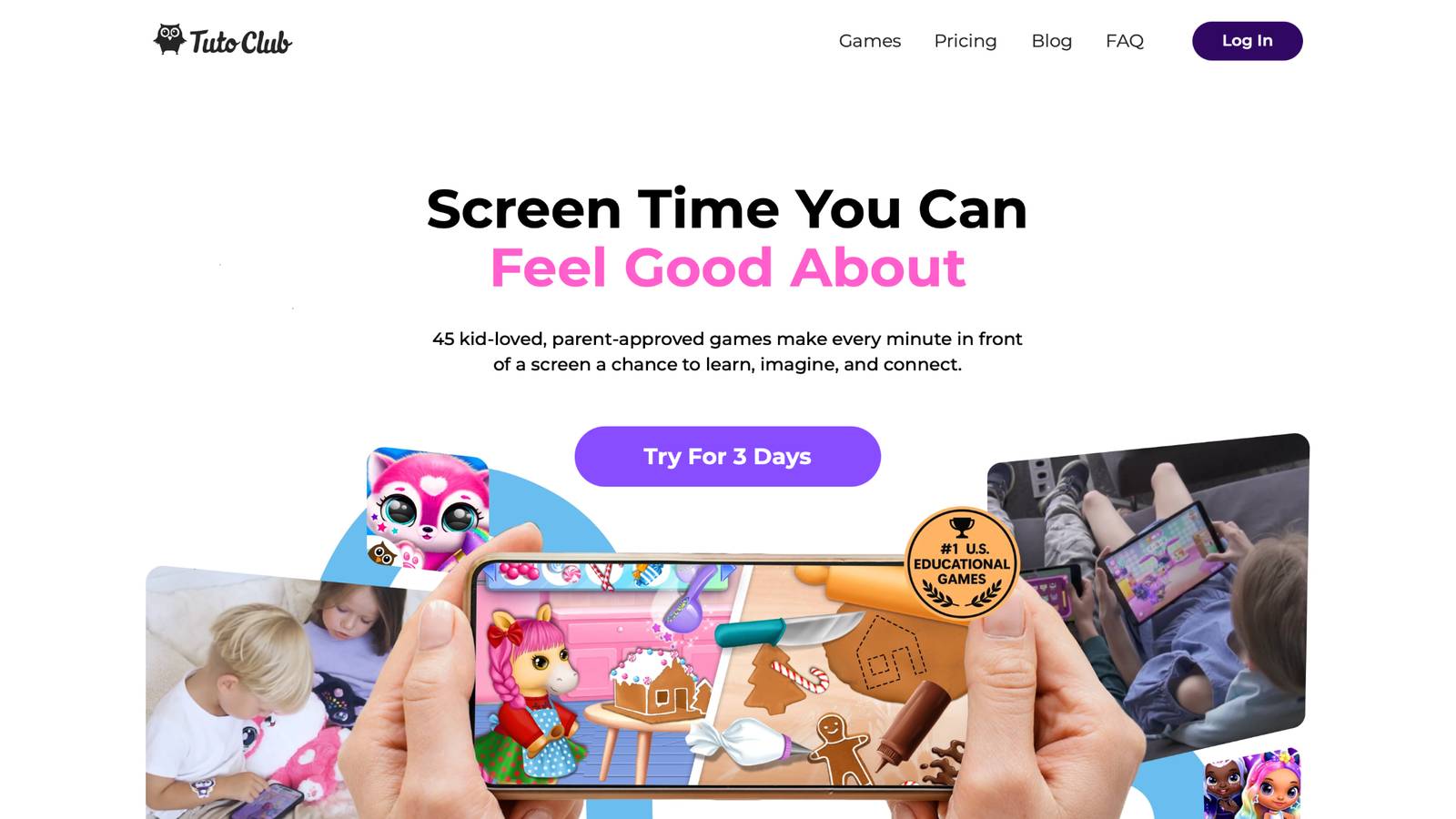
Tutoclub is a subscription that unlocks 45-plus TutoTOONS games in one ad-free plan. The games are made for young children. The studio built them so play can support creativity, focus, empathy, and early learning at the same time.
A family using the service gets:
- Access to a curated set of full games
- Play without ads
- Unlocked in-app content inside member games
- Use on more than one device after login
- A 3-day trial before a paid plan
- Easy cancel through the account or store
The catalog is built around worlds kids already love. Fluvsies lets kids hatch and care for fluffy pets. My Baby Unicorn practices kindness through babysitting play. Sweet Baby Girl Cleanup 5 turns chores into a game. Floof mixes puzzles, memory, and decorating. Smolsies adds letters and numbers to pet care. Princesses and Kpopsies give room for style, music, and pretend. Giggle Babies supports early skills through short playful tasks.
That mix is the point. One child may need care practice. Another may need focus games. A third may need a creative outlet after school. One subscription for educational games covers those needs without a pile of separate paid apps.
Safety is part of the design. The service follows child privacy rules such as COPPA and GDPR. Parents or legal guardians create the account. Games are family-friendly. The goal is screen time you can stand beside, not screen time you have to police every minute.
After the first download and login, many titles can be played offline. That helps on trips and in homes where you do not want extra browsing. Updates add new content over time, so the same plan keeps feeling fresh.
TutoClub Overview
TutoClub is your gateway to a magical world of educational games designed especially for children.
As part of TutoTOONS, a leading kids' games studio, we offer premium access to over 45 ad-free games.
Our mission is to blend learning and play, helping kids explore, create, and grow in a safe online space.
Thousands of parents trust us for family-friendly content that sparks imagination and builds essential skills.
Key Features
- Unlimited Access: Unlock full content in all games with no interruptions.
- Ad-Free Experience: Enjoy seamless play without any ads or distractions.
- Skill Development: Games foster creativity, social skills, communication, and more through fun activities like pet care and cleanup challenges.
- Regular Updates: Get new releases, exclusive content, and future updates automatically.
- Easy Subscription: Cancel anytime with no obligations, simple and flexible for families.
Explore Our World
TutoClub provides a rich ecosystem of educational games for kids, featuring ad-free experiences that promote creativity, focus, and emotional growth through play.
This platform turns screen time into valuable learning opportunities, with parent-approved content that builds essential skills and sparks curiosity in young minds.
- TutoClub Games: Over 45 educational games, including popular titles like Fluvsies, Smolsies, and the Sweet Baby Girl series
- Blog: Insights, tips, and stories for families on kids' learning and play
- FAQ: Comprehensive answers to frequently asked questions about subscriptions, features, and more
Get TutoClub on Your Device
TutoClub delivers premium kids educational games directly to your mobile devices, making learning accessible anytime, anywhere.
With apps available on major platforms, families can easily download and subscribe for ad-free play that turns screen time into skill-building adventures.
Perfect for parents seeking safe, engaging content on iOS, Android, or Amazon devices.
Why Choose TutoClub?
We're committed to 100% safe, enriching entertainment that kids love and parents approve. Join the thousands who've seen their children thrive through playful learning.
Ready to start the adventure?
Start a free 3-day trial of ad-free educational games your kids can grow with!
Common Mistakes That Weaken the Benefits
Even good games can disappoint if the setup is sloppy.
Watch for these traps:
- Leaving autoplay video running after the game ends
- Using titles full of ads because they are free today
- Handing a phone to a tired, hungry child and hoping for focus
- Skipping talk after play
- Treating games as a full replacement for books, friends, and outdoor time
Educational games for kids work as part of a mix. They do not need to carry the whole day. Ten focused minutes can beat forty distracted ones.
Another quiet mistake is buying many single apps that each want their own shop. Kids bounce. Parents lose track. A single curated club reduces that noise. Random mobile games for kids and free online games for kids can still fit a short break, but ads and autoplay often undo the focus you just built.
FAQ
What skills do fun educational games for kids actually teach?
Fun educational games for kids can build focus, memory, early math and letters, problem solving, creativity, and social skills such as kindness and responsibility. Care play helps children notice feelings and practice gentle routines, while puzzles and cleanup scenes ask them to plan the next step. Art, fashion, and decorating games give room for self-expression without a single right answer. The strongest titles hide those lessons inside stories kids already want to finish, so the skill practice feels like play. Roundups of the best kids educational games show how different titles lean toward different skills.
Are educational games better than regular kids videos?
Educational games often use the same minutes more usefully because the child has to choose, care, sort, or solve instead of only watching. A cartoon can still be a short rest, but it rarely asks the brain to finish a task. Games that stay ad-free and age-fit keep attention on the story, not on pop-ups. When a parent talks through a scene, the play also supports language and connection. A closer look at educational videos and games for kids makes that difference easier to see.
How much time should kids spend on learning games?
Short, predictable sessions work better for young children than long, open-ended screen time. A clear start and stop helps kids leave the game on a win, which supports confidence. Pairing game time with one real-world follow-up, such as putting shoes away after a cleanup scene, helps the lesson stick. Quality, a calm title, and a parent nearby matter more than stretching the clock. Educational games for kids at home fit that kind of short, planned play beside books and chores.
How do I know a kids educational game is safe?
A safer title has no ads, no chat with strangers, and no surprise shops that pull a child off the task. The play should match ages 2 to 8, with simple goals and kind pacing. A parent or guardian should control the account, and the maker should be clear about child privacy. Lists of safe apps for kids use those same checks before a title earns a place on a family device.
Can siblings share the same educational games plan?
Yes. Many families share a tablet or a few devices under one parent account, which keeps play simpler than buying a stack of separate apps. Pet care, baby care, and cleanup games often work across nearby ages because the tasks stay easy to understand. Taking turns lets each child finish a full scene instead of fighting over the last tap. Games for young kids give siblings a shared world while each child still practices care, focus, or kindness at their own pace.
Read Also:
- Best Learning Through Play Activities
- Best Kids Educational Games
- Best Emotional Games For Kids
- Best Fun Educational Games For Kids
- Best Educational Games For Kids Age 5
Give your child ad-free fun educational games that build skills while they play!