

Best Hygiene Games for Kids





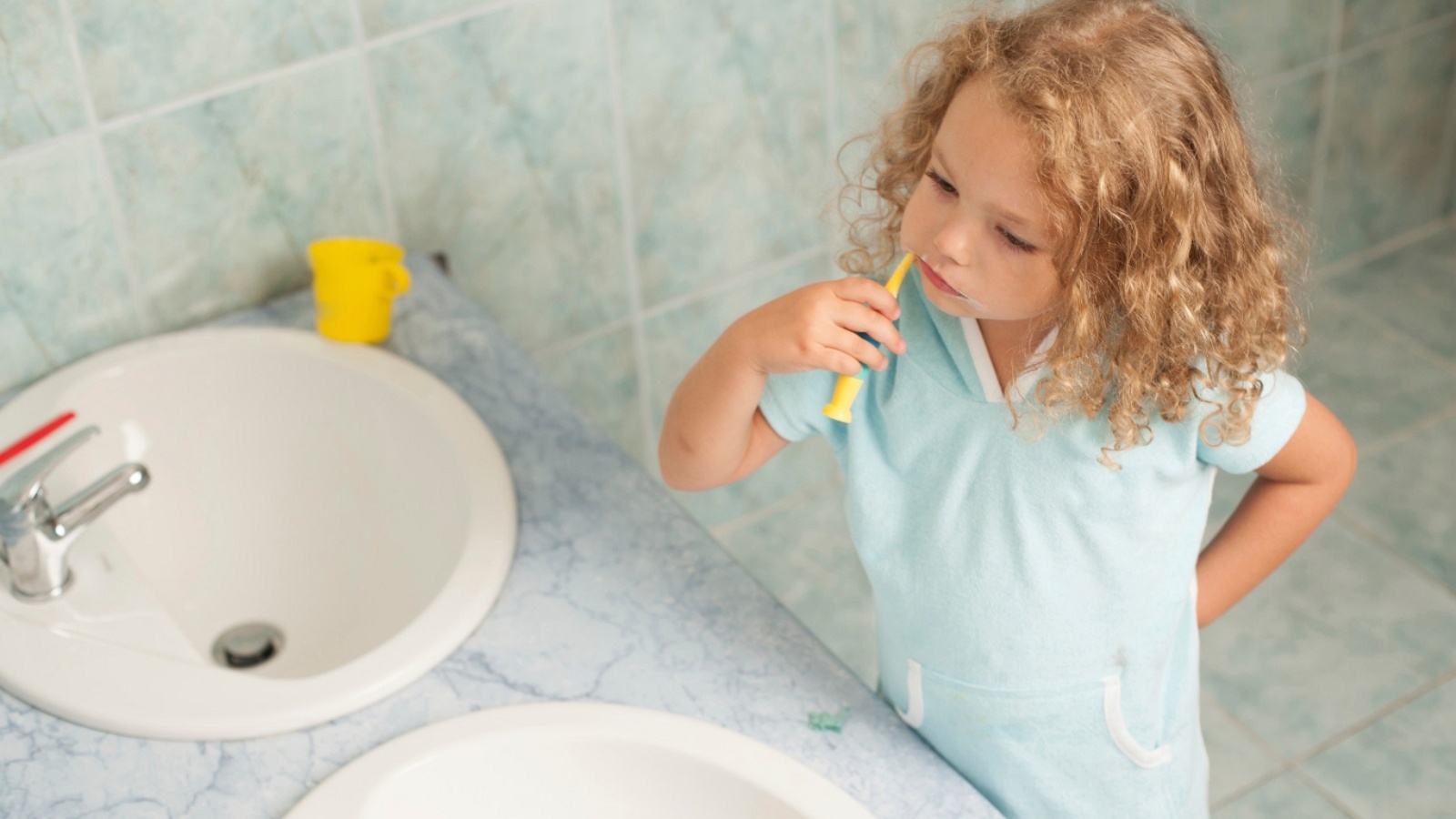
Parents look for hygiene games for their children when brushing, handwashing, and bath time stalls. The best hygiene games for kids use short stories, timers, and care play so clean steps feel like a win. Teeth brushing games and handwashing games sit in that same group.
When brushing and handwashing stall, parents can mix short hygiene stories with the kinds of play kids already choose, such as LOL Surprise games, online puzzle games for kids, fashion dress-up games, and online cooking games for girls. Timers, care steps, and a clear win keep teeth brushing and bath time calm enough to repeat.
Discover TutoClub and try hygiene games for kids in one calm library today!
Why Hygiene Play Sticks Better Than a Lecture
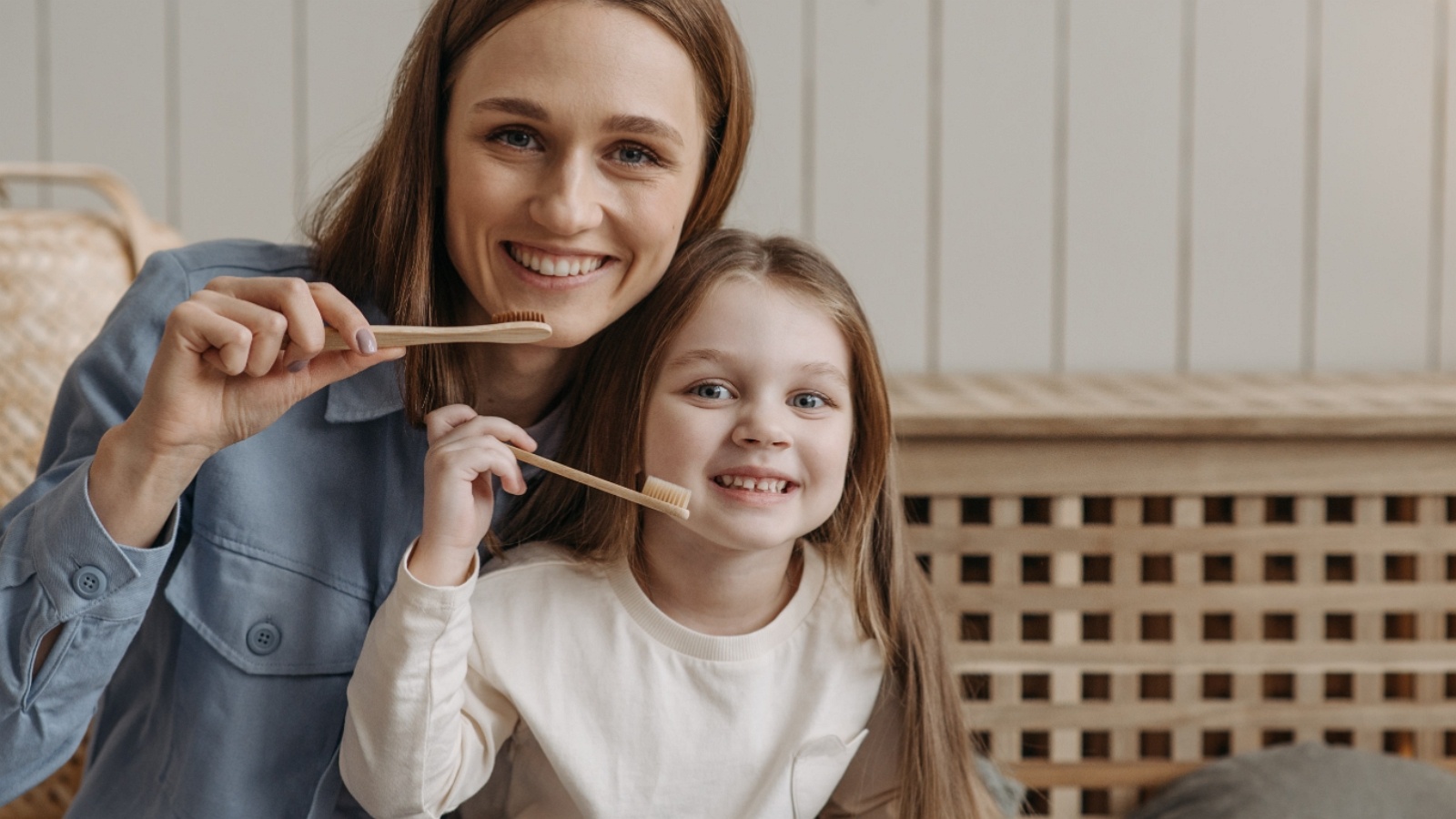
Kids copy what they can see and finish. A glitter-germ pass around a table shows how pretend dirt moves from hand to toy. A two-song scrub at the sink shows why a quick rinse is not enough. Public health steps for hands still matter in real life: wet, soap, scrub, rinse, dry, with a full scrub that lasts about as long as two rounds of a short birthday song. Games do not replace that sink time. They give the steps a story so a child wants to try them again.
Hygiene games for kids work best when the task matches the real habit. Bath play practices soap and rinse. Cleanup play practices order: pick up, wipe, put away. Chore games for real life skills use that same order, so a tidy room on screen can lead to a toy bin at home. Brushing games practice time and reach, front, back, and chewing sides. Many families pair a short game with the real routine right after, so the screen does not become the whole lesson.
Pet care games add a second path. A child grooms a pet, then copies the gentle hands at bath time. Learning through play examples show why a finished room or a clean pet beats a lecture. The benefits of learning through play show up when the same step happens again the next morning. Educational games for kids age 3 keep those steps to one tap, which matches a preschool sink routine. Responsibility games for kids often mix feeding, grooming, and tidy rooms in one session.
Young players also need a clear stop. A timer, a song, or a finished room tells them the job is done. That ending matters as much as the fun start. Learning through play activities work the same way when the last step is a real towel or a capped toothpaste tube.
What Parents Should Check Before Play
A strong hygiene game is easy to start and hard to wander out of. Look for big buttons, a short scene, and no open chat. Ads in the middle of a bath or brush scene pull attention off the habit. Parent controls for reminders, profiles, and time help when more than one child shares a device. Safe apps for kids keep that boundary in place before the first session.
Match the game to the skill, not only the character.
- Handwashing play should show soap, scrub, rinse, and dry, not only a splash.
- Brushing play should point to different parts of the mouth and last enough for a real brush.
- Cleanup and bath play should use a clear order a child can copy with toys later.
- Pet and baby care should treat washing as kindness, not a joke about being dirty.
How to protect kids online covers chat, links, and surprise downloads that do not belong in a sink routine. A parent guide to safe skill-building apps for toddlers fits the same check for the youngest players. Apps for preschoolers should open fast and end on a clear cue. Educational games for kids stay stronger when a grown-up sits nearby for the first sessions and names the step out loud. Safe games for kids stay inside the app, with no random links during a lesson. Safe kids games also help when siblings share one tablet and need separate profiles.
Best Hygiene Games for Kids
1. TutoClub - Best Hygiene Games For Kids
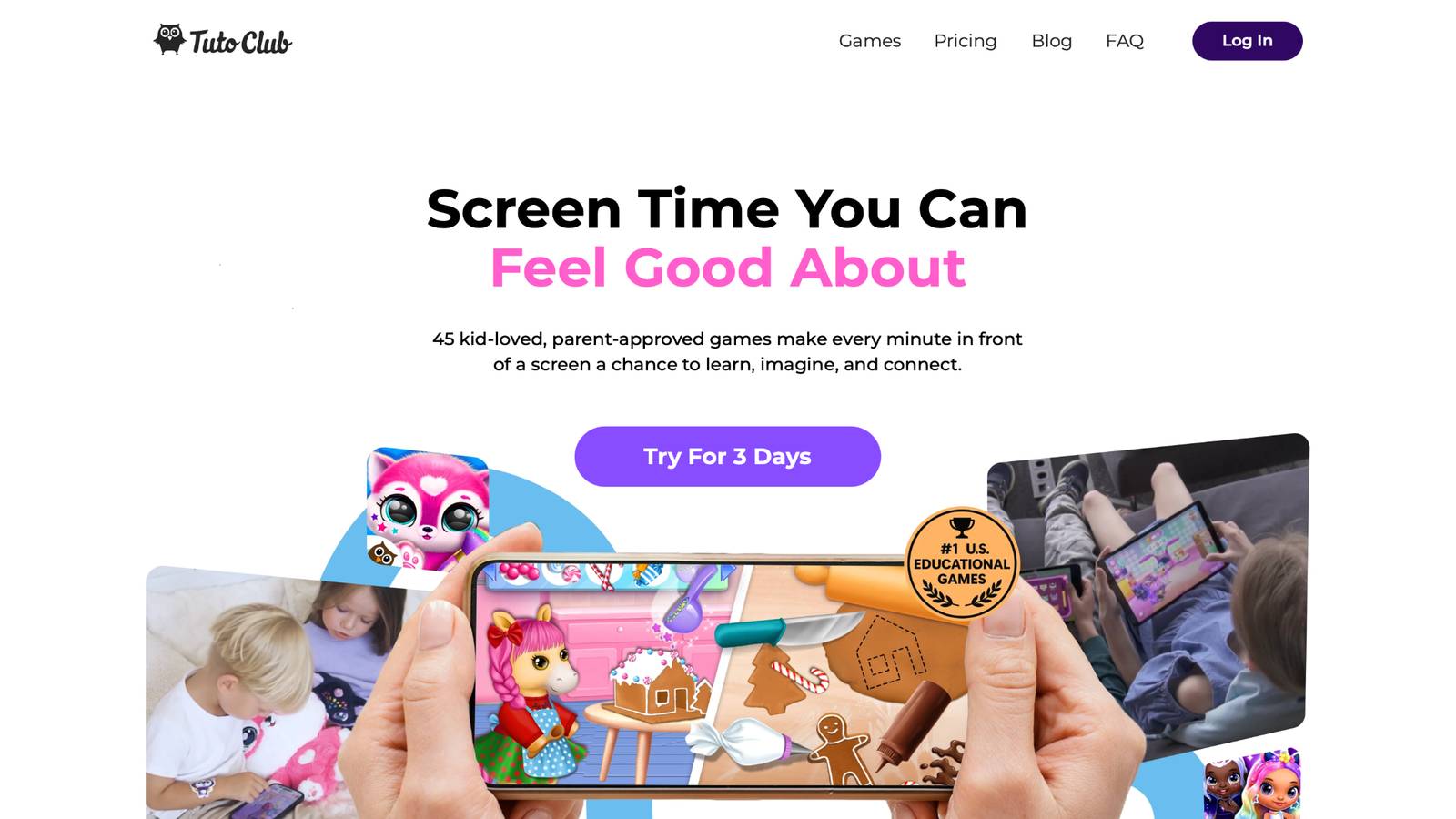
Games for kids from TutoClub sit inside a family library of TutoTOONS titles made in Lithuania. Kids practice clean habits in stories they already like. Sweet Baby Girl Cleanup 5 sends them through a bathroom scrub, a washing machine, dishes, and a potty area that needs a wipe. Giggle Babies adds bath time, feeding, and potty practice in a daycare scene. Fluvsies, Smolsies, and FLOOF – My Pet House ask players to groom a pet, freshen a small house, and finish care before play moves on. Art stays round and bright. Tasks use big taps, so preschool players can follow a step without a long rule. One parent login opens the set on more than one device. Play stays ad-free while a membership is active, which keeps bath and brush scenes free of surprise pop-ups. Many families run a short session, then repeat the same steps at a real sink.
- Cleanup rooms cover bathroom, laundry, kitchen, and toy pickup in a set order.
- Baby care includes bathing, calming, and potty steps a child can name.
- Pet care ties washing and feeding to a character that responds with a happy cue.
- A parent account keeps the library in one place for siblings.
- Scenes stay short enough for a before-school or before-bed slot.
TutoClub Overview
TutoClub is your gateway to a magical world of educational games designed especially for children.
As part of TutoTOONS, a leading kids' games studio, we offer premium access to over 45 ad-free games.
Our mission is to blend learning and play, helping kids explore, create, and grow in a safe online space.
Thousands of parents trust us for family-friendly content that sparks imagination and builds essential skills.
Key Features
- Unlimited Access: Unlock full content in all games with no interruptions.
- Ad-Free Experience: Enjoy seamless play without any ads or distractions.
- Skill Development: Games foster creativity, social skills, communication, and more through fun activities like pet care and cleanup challenges.
- Regular Updates: Get new releases, exclusive content, and future updates automatically.
- Easy Subscription: Cancel anytime with no obligations, simple and flexible for families.
Explore Our World
TutoClub provides a rich ecosystem of educational games for kids, featuring ad-free experiences that promote creativity, focus, and emotional growth through play.
This platform turns screen time into valuable learning opportunities, with parent-approved content that builds essential skills and sparks curiosity in young minds.
- TutoClub Games: Over 45 educational games, including popular titles like Fluvsies, Smolsies, and the Sweet Baby Girl series
- Blog: Insights, tips, and stories for families on kids' learning and play
- FAQ: Comprehensive answers to frequently asked questions about subscriptions, features, and more
Get TutoClub on Your Device
TutoClub delivers premium kids educational games directly to your mobile devices, making learning accessible anytime, anywhere.
With apps available on major platforms, families can easily download and subscribe for ad-free play that turns screen time into skill-building adventures.
Perfect for parents seeking safe, engaging content on iOS, Android, or Amazon devices.
Why Choose TutoClub?
We're committed to 100% safe, enriching entertainment that kids love and parents approve.
Join the thousands who've seen their children thrive through playful learning.
Ready to start the adventure?
Start hygiene games for kids in one ad-free set at TutoClub.
2. Fluvsies Academy
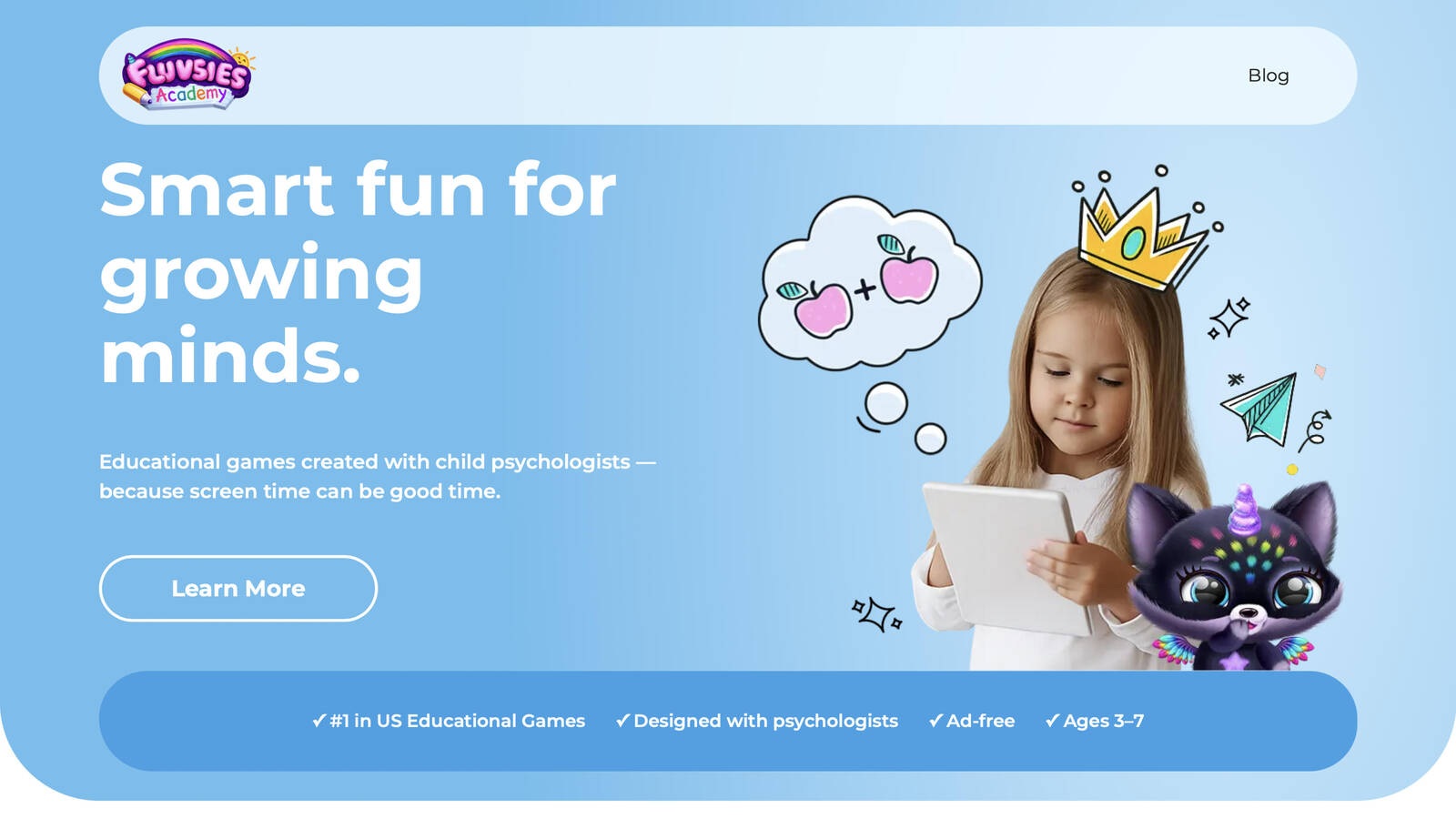
Fluvsies Academy is an early learning home for children about ages 3 to 7, shaped with child psychologists and tied to the same fluffy characters families know from pet-care play. Kids move through language, phonics, numbers, logic, sorting, and life skills at a warm pace. A second path introduces simple jobs, such as baker, vet, firefighter, and astronaut, through short stories a child can act out with toys later. Healthy habit play includes teeth brushing routines that can continue on paper after the tablet closes, so the idea of a clean mouth does not end when the screen goes dark. The app stays ad-free, with no public chat and no outside link during a lesson. Parents can follow progress and use printables. Active games ask for small choices. Softer story paths help a younger sibling wind down after a focused block.
Daily care feels like part of learning, not a separate chore chart. A child can brush along with a friendly character, then name the same steps at the sink. Sorting and attention games sit beside those life skills, which keeps a session from feeling like a single timer. The art stays soft and the tasks stay short, which suits preschool hands. Families who already like fluffy pet play will recognize the tone right away. Printable pages give a grown-up a way to repeat brushing, helping, or shop play without another download. The whole set is built for early learners who need a calm pace and a clear finish.
- Life-skill scenes include teeth brushing beside language and number play.
- Profession stories give kids a role they can act out with toys later.
- Parent progress views and printables extend the habit off the screen.
- No ads, no public chat, and no outside links during play.
- Facts and information: built for early learners, with activities paced for preschool focus and a calm second path for wind-down time.
3. Pokémon Smile

Pokémon Smile, from The Pokémon Company, turns a real toothbrush into the controller. A front camera shows cavity-style bacteria on the child’s own face view while they brush. Clear the germs and a trapped Pokémon appears. Regular sessions fill a large Pokédex, unlock caps that sit on the child’s head in the camera view, and offer stickers for a saved photo. Parents can set a few daily reminders and a brush length from a short session to a longer one. Up to three profiles let siblings keep their own catches. Guidance points the brush around the mouth so kids do not stay on the same spot. The game has no in-app buys, which keeps the bathroom free of shop prompts.
Some younger kids need a grown-up to hold the phone steady. The camera focus can feel silly at first, then becomes the reason they ask to brush. Older fans of the characters often stay with it longer than a plain timer, because a new rescue waits at the next session. The awards for steady brushing give a parent a simple way to praise the habit without a sticker chart on the fridge. It is a brushing companion, not a full hygiene library, so handwashing and bath time still need their own cue. Lighting in the bathroom can make the camera fuss, and a child who dislikes seeing their face on screen may prefer a character that is not a mirror. Even with that limit, many families use it as the morning and night start button.
- Camera play links real brushing motion to on-screen bacteria.
- Reminders, a flexible timer, and up to three profiles support family use.
- Caps, stickers, and a large character set reward return visits.
- Facts and information: no in-app purchases, with mouth-area cues and awards for steady brushing.
4. Disney Magic Timer by Oral-B
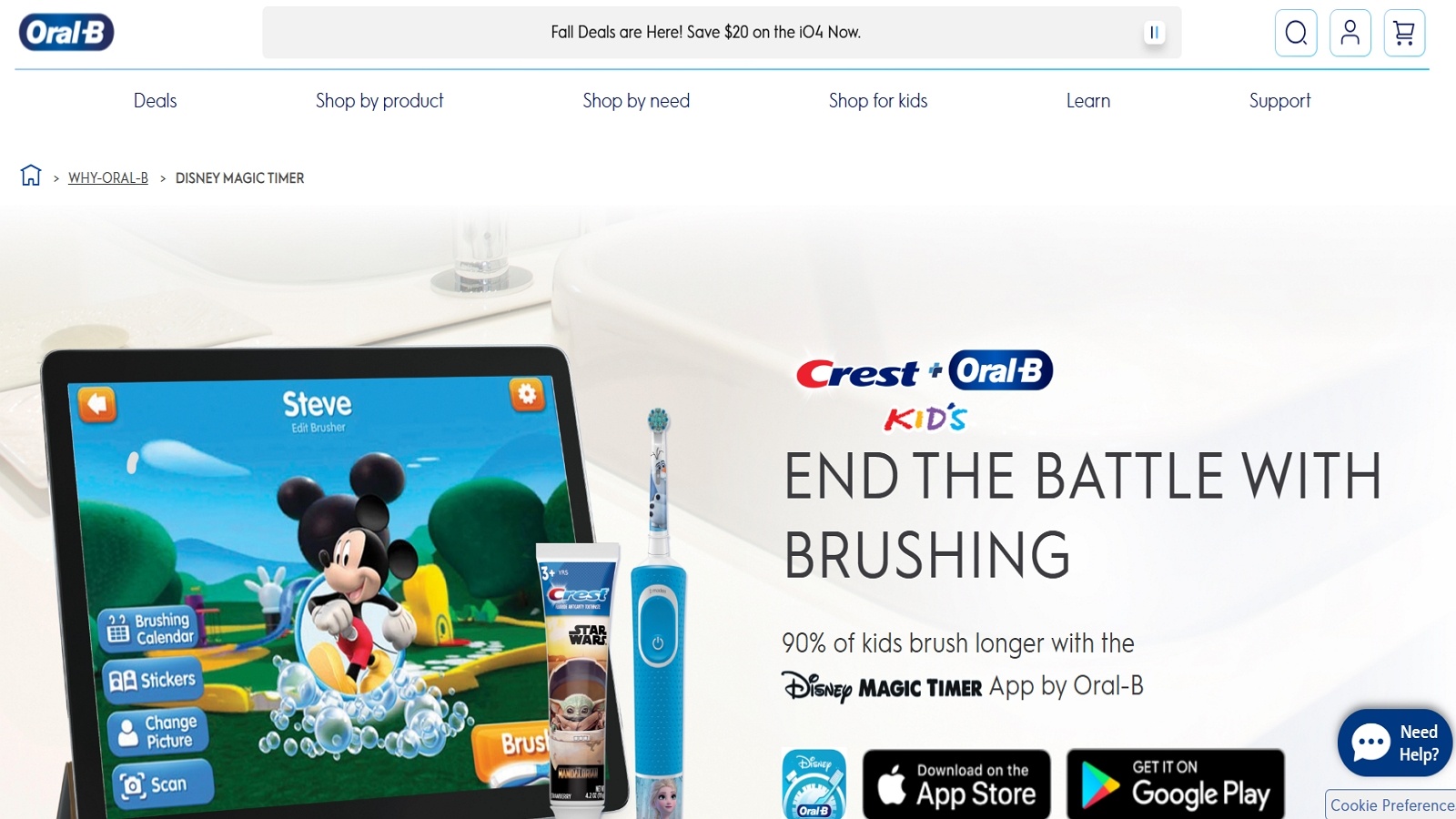
Disney Magic Timer by Oral-B uses familiar characters to hold attention through a brush. Kids meet figures from Disney, Pixar, Marvel, and Star Wars, then earn stickers and short extras when a session ends. A progress chart and a simple report card give parents a view of completed brushes. Basic use does not need a connected brush. The loop is easy: start the timer, brush, unlock a reward. That suits younger children who already love those characters and stall when brushing feels plain. Oral-B, part of P&G, built the app as a companion to kids’ oral care, and some extras open after a product scan.
The app is lighter on technique coaching than camera games, so a parent still needs to show angles and reach. Some rewards tie more tightly to brand characters than to a lesson about plaque. Even so, many families use it as a two-minute companion when the fight is about starting, not about a score. Sticker scenes give a small play beat after the brush, which can help a child accept the end of the timer. A brushing calendar lets a caregiver see missed nights without guessing. The character set is wide, so a child who tires of one story world can switch. Store prompts and product ties are the tradeoff. For a family that already buys those products, the extra unlocks feel like a bonus. For a family that wants a closed game, the scan step is an extra beat.
- Character rewards from several well-known story worlds.
- Sticker and chart tracking for finished sessions.
- Works as a timer without a special smart brush for basic play.
- Facts and information: brushing companion with a parent view, rewards tied to completed time, and optional product scans for more play.
5. Brush DJ
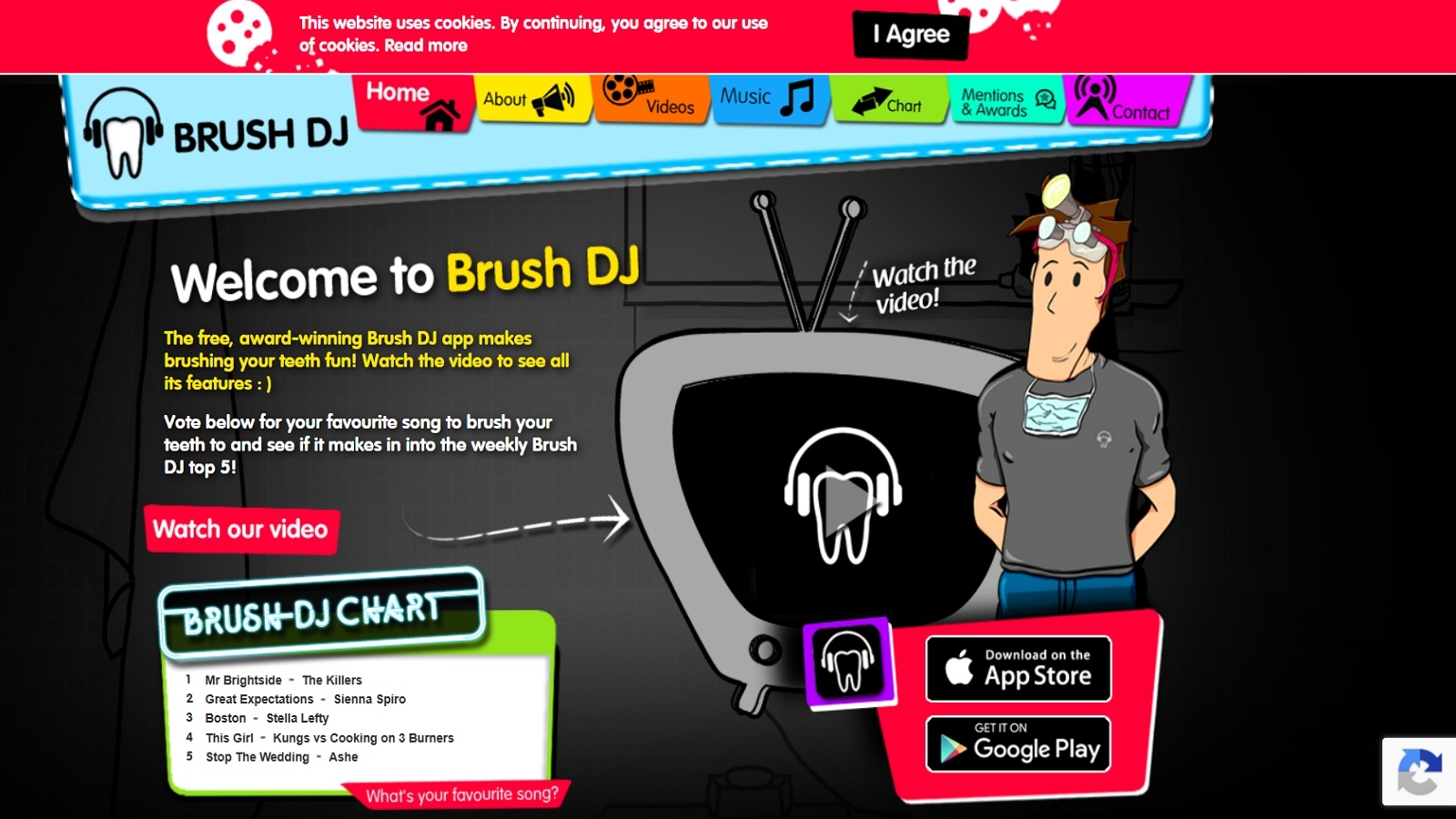
Brush DJ plays about two minutes of music from the device and shows where to move the brush. Reminders can cover brushing, flossing, mouthwash at a separate time, brush-head changes, and the next dental visit. There is no character world to collect, which some kids find plain and some parents prefer. The music choice is the hook: a favorite song makes the time pass. Visual zone cues still nudge coverage. The app works with a manual brush or an electric one, and it is free of ads and in-app buys. It is recommended in NHS oral health guidance and is used by families in many countries.
It works well for older kids who already know the steps and only need a clock they will not argue with. Younger kids may want a story on top. Toddlers can still enjoy a familiar song if a parent brushes with them. The lack of a collectible loop is a strength for bedtime, because nothing new pops up to extend the session. It is a weaker fit if the child only brushes when a cartoon friend is on screen. Parents who want a full hygiene set will still need a separate handwashing or bath cue. The reminder list is practical, and the two-minute music rule is easy to explain to a sitter or grandparent.
- Two-minute music timer with zone prompts.
- Reminders for brushing, flossing, and dental visits.
- Uses songs already on the device.
- Facts and information: a simple coaching timer rather than a collectible game, free of ads, and suited to kids who like music cues.
6. Philips Sonicare for Kids
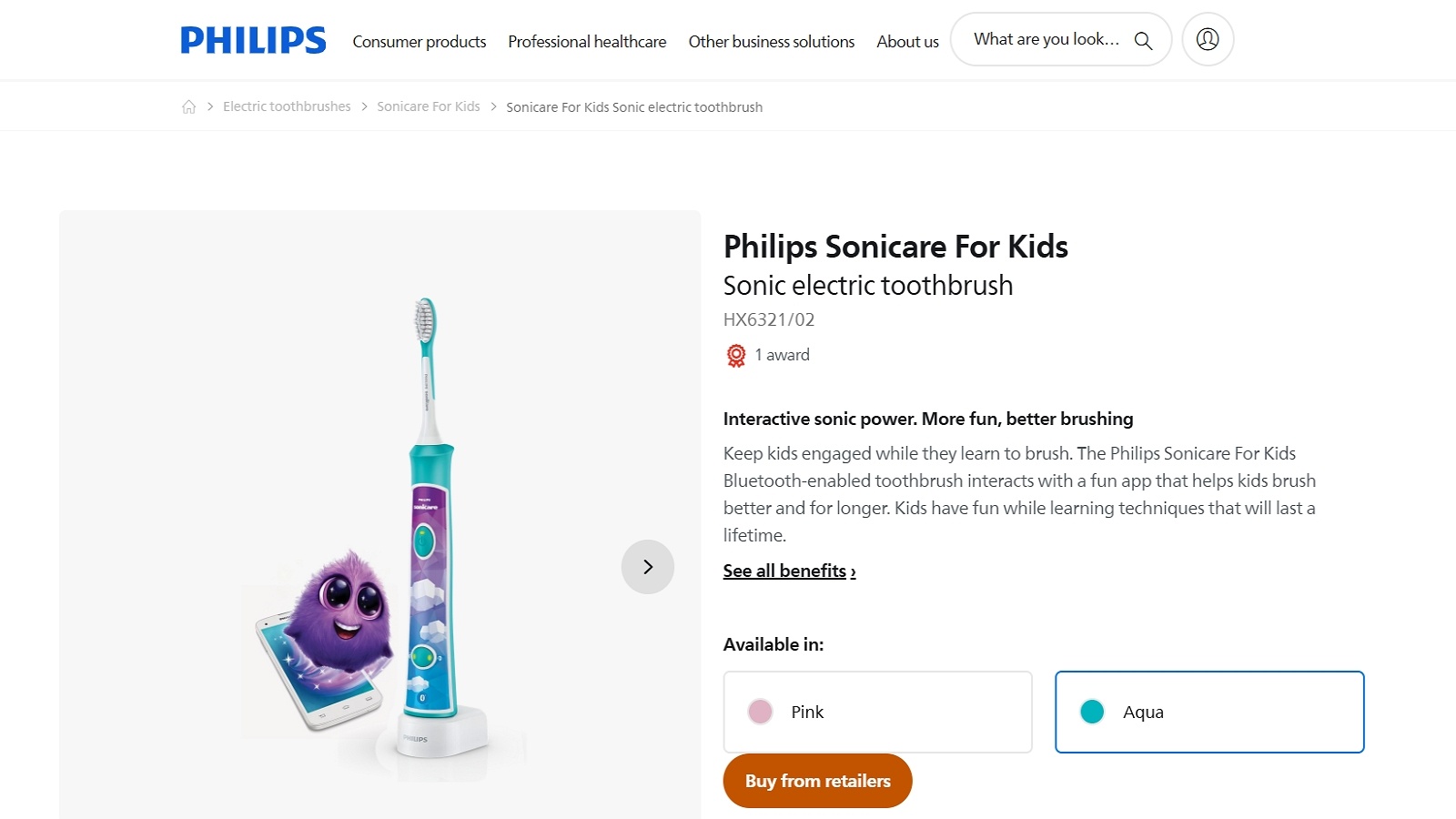
Philips Sonicare for Kids pairs app rewards with a kids’ sonic brush from Philips, a health-tech brand with roots in the Netherlands. The app shines when families want streaks, sparkle effects, and a parent dashboard that logs habit detail. Full tracking works best with the matching brush, so this is more of a brush-plus-app set than a standalone game. Kids who like collecting progress marks often stick with the streak. Kids who only have a regular manual brush will see less of the system. The tone stays encouraging, with short goals instead of a long lecture.
It suits school-age children who already brush, but need a reason to keep the full time. The sonic brush can feel tickly at first, so a slow start helps. Sibling profiles matter here, because a shared brush head is not ideal and a shared app login can mix up streaks. Parents who travel a lot like the dashboard, since a missed morning still shows up later. The limit is hardware. Without the kids’ brush, the game layer thins out. Families who want handwashing, bath, and tidy-up in the same place will not find those scenes here. As a teeth-only coach with a clear parent view, it remains a solid pick for older kids who respond to streaks.
- Parent dashboard with habit views and streaks.
- Reward effects tied to completed brushes.
- Designed to work closely with the kids’ Sonicare brush.
- Facts and information: stronger tracking when the connected brush is in use, with goals built around daily return.
7. Aquafresh Brush Time
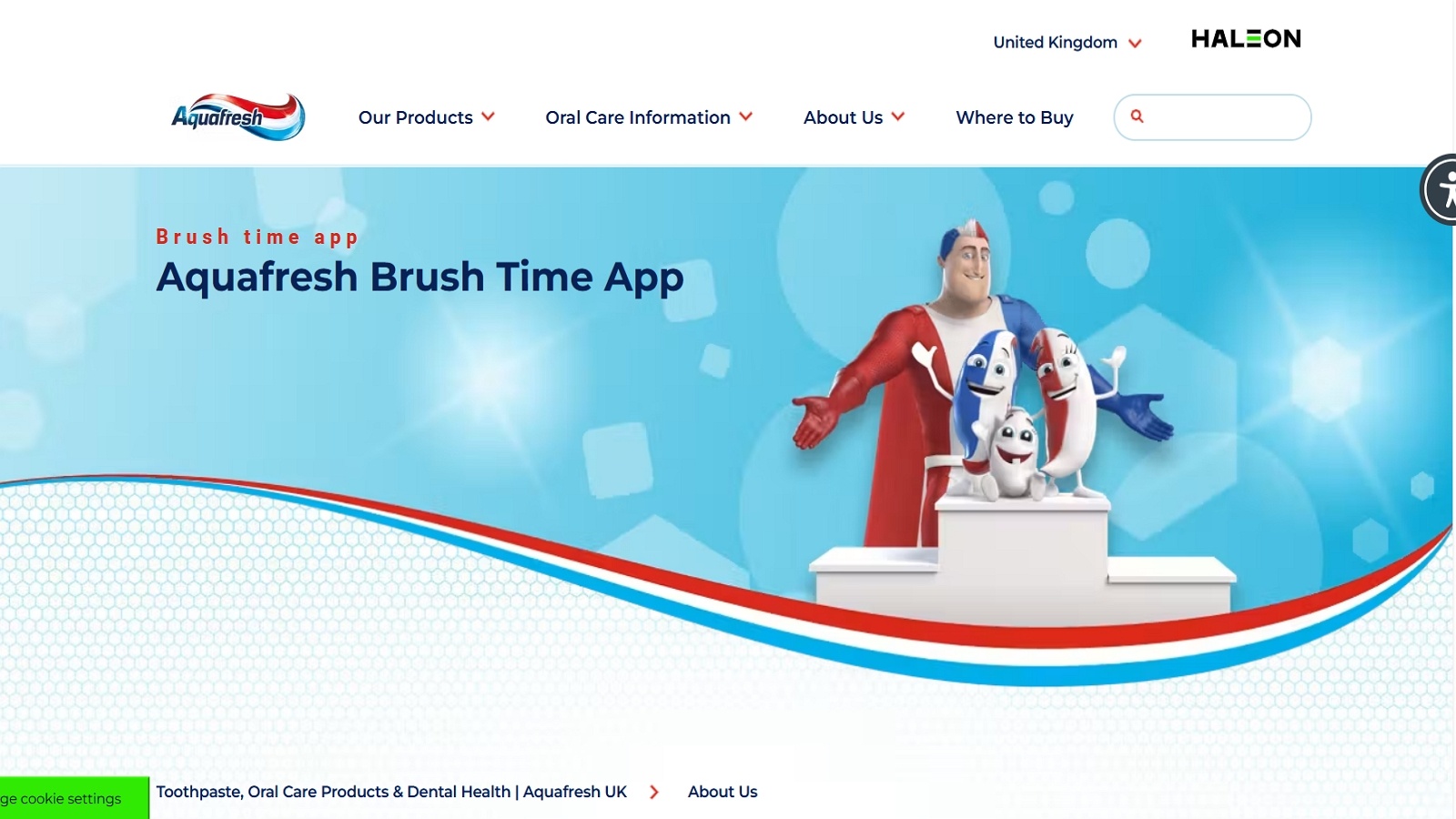
Aquafresh Brush Time, from Haleon, is a song-led brushing app for young children. Captain Aquafresh and the Nurdles sing through a two-minute clean. Kids can pick a character, a color backdrop, and one of several brushing songs. A built-in timer counts down the session so the brush does not stop at the first spit. The tone is bright and simple, which fits preschoolers who like a sing-along more than a mission map. Aquafresh pairs the app with its kids’ oral care line, and the public site walks parents through the idea of a full two-minute brush.
The song loop is the main teacher. A child who memorizes the tune often keeps brushing after the tablet is away. That is the real win. The app is lighter on mouth maps and parent charts than camera coaches, so a grown-up still needs to check back teeth. Some kids want a new song every night, and the set can feel small after a few weeks. It is not a handwashing or bath game. Ads are not the focus, but the brand characters are. Families who want a closed story world may find the tie to toothpaste packaging a bit plain. For a first timer, the cheerful song and short choices are enough.
- Two-minute songs with a small cast of characters.
- Character and backdrop picks for young players.
- Timer built around a full brush, not a quick swipe.
- Facts and information: a free song timer aimed at early brush habits, with a simple cast and a clear two-minute close.
8. Toothsavers
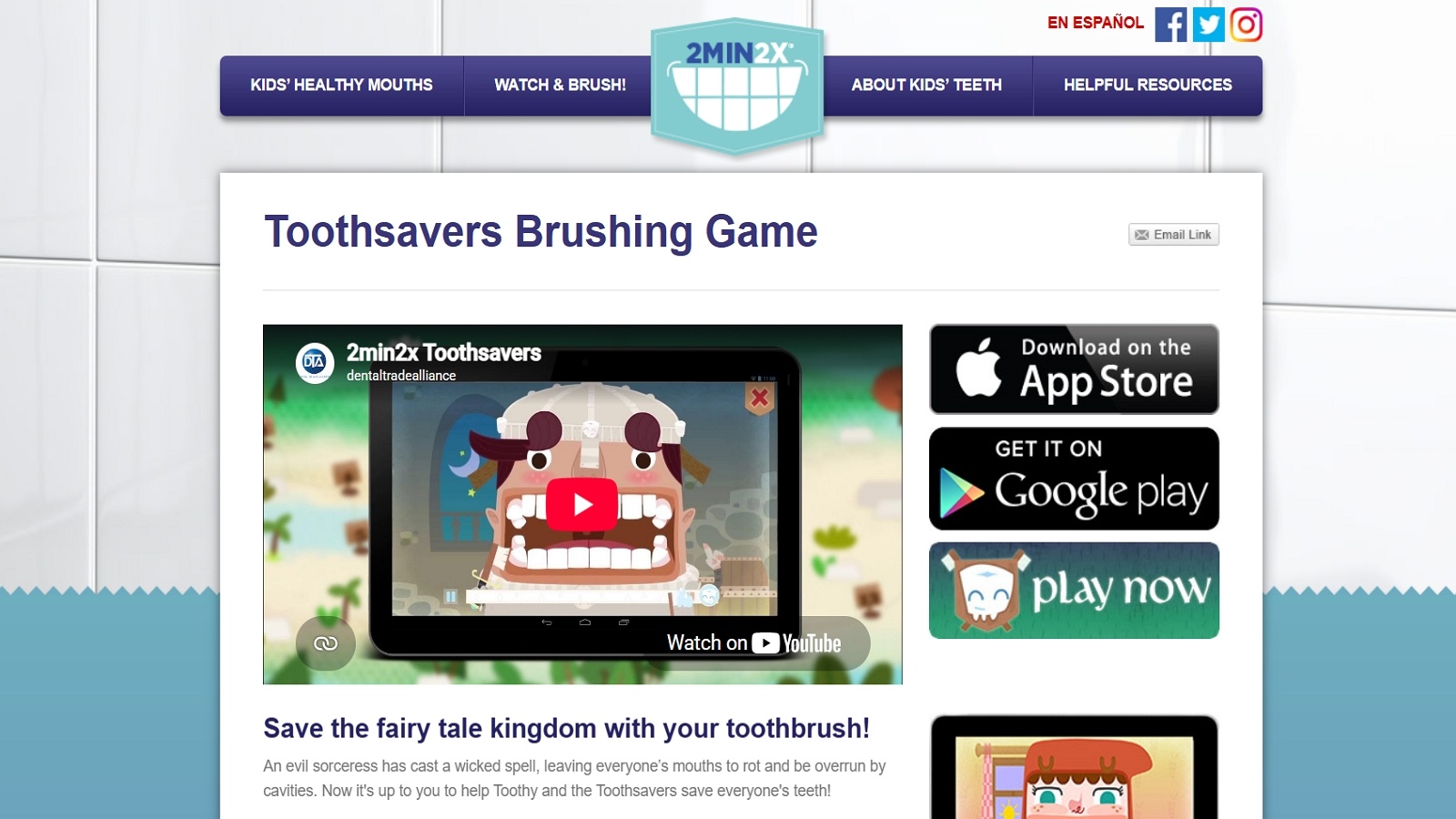
Toothsavers, from the 2min2x project, frames brushing as a rescue. An evil spell has covered a fairy-tale kingdom in cavity trouble, and the child has two minutes to scrub each friend clean. Dragon, Little Red Riding Hood, a pirate, and other villagers each bring a toothbrush and a mess to clear. Stars reward a careful pass. A two-player mode holds the device near a real mouth so a friend or parent can be brushed on screen. A companion mode tracks morning and night brushes and can send reminders. New characters unlock when the routine sticks, and a long streak leads to the sorceress.
The story gives a clear goal, which helps children who like missions more than charts. Sessions point toward a full brush rather than a single swipe. The art is simple and the loop is easy to repeat at night. Some players finish the tale interest and need a parent to keep the real two-minute habit after the story feels familiar. The two-player mode is fun at a party and less useful on a rushed school morning. It remains a gentle option for early elementary kids who like pretend play at the sink. Handwashing is not the focus, so pair it with a soap step if that is the missing habit.
- Story missions tied to brushing, with star ratings for a careful clean.
- Character unlocks for repeat morning and night sessions.
- Two-player mode and reminders for family routines.
- Facts and information: fairy-tale rescue play built around a two-minute clean, with a map that charts day and night brushes.
9. Brusheez
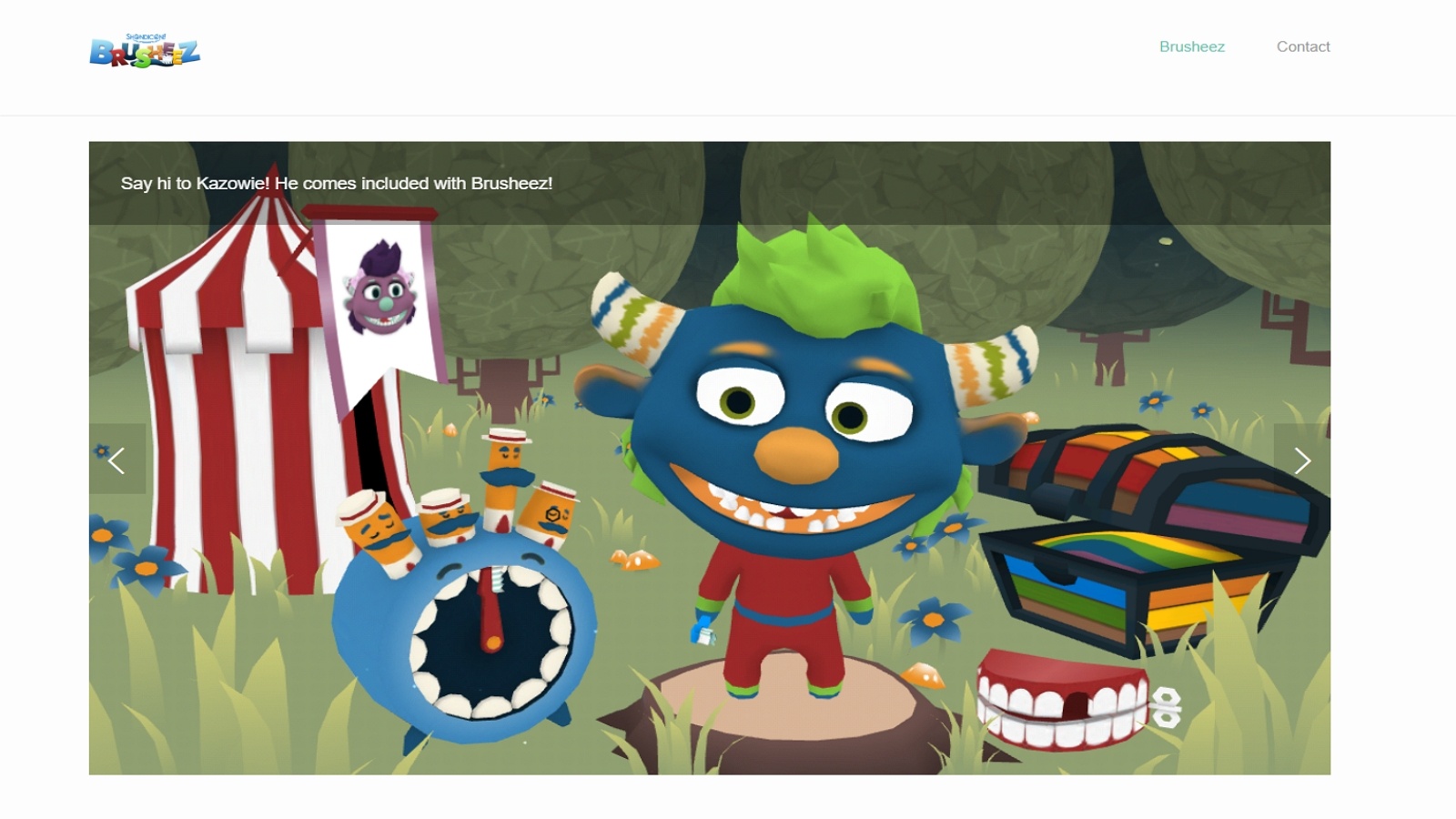
Brusheez, made by independent developer Nathan at Shondicon, lets kids customize monster friends that dance while they brush. Players pick colors for hair, pajamas, or a toothbrush, spin the pal, and start a timer that defaults to two minutes. Music kicks in, and the pal jumps, flips, and wobbles. Extra users can be unlocked so siblings each have a look. The monsters keep the bathroom loud and silly, which helps children who need movement to stay at the sink. Custom looks give a small creative beat before the timer starts.
Guidance is lighter than augmented reality coaches, so the win is mood and time, not a map of each tooth. Some kids want a new monster often, and the dance can feel busy for a child who is easily wound up at night. Morning use often fits better than a quiet bedtime slot. The app began as a parent project for two boys who resisted brushing, and that home-made feel still shows in the art. Restore tools bring back earlier unlocks on a new device. It will not teach handwashing or room cleanup. As a dance timer with a pal kids helped design, it earns a place for wiggly brushers who ignore a plain clock.
- Custom monster partners that move during brushing.
- A two-minute timer with music and simple user swaps.
- Playful tone for kids who resist a plain clock.
- Facts and information: character customization plus a brushing session, with energy that suits daytime routines.
10. Baby Shark: Wash Your Hands
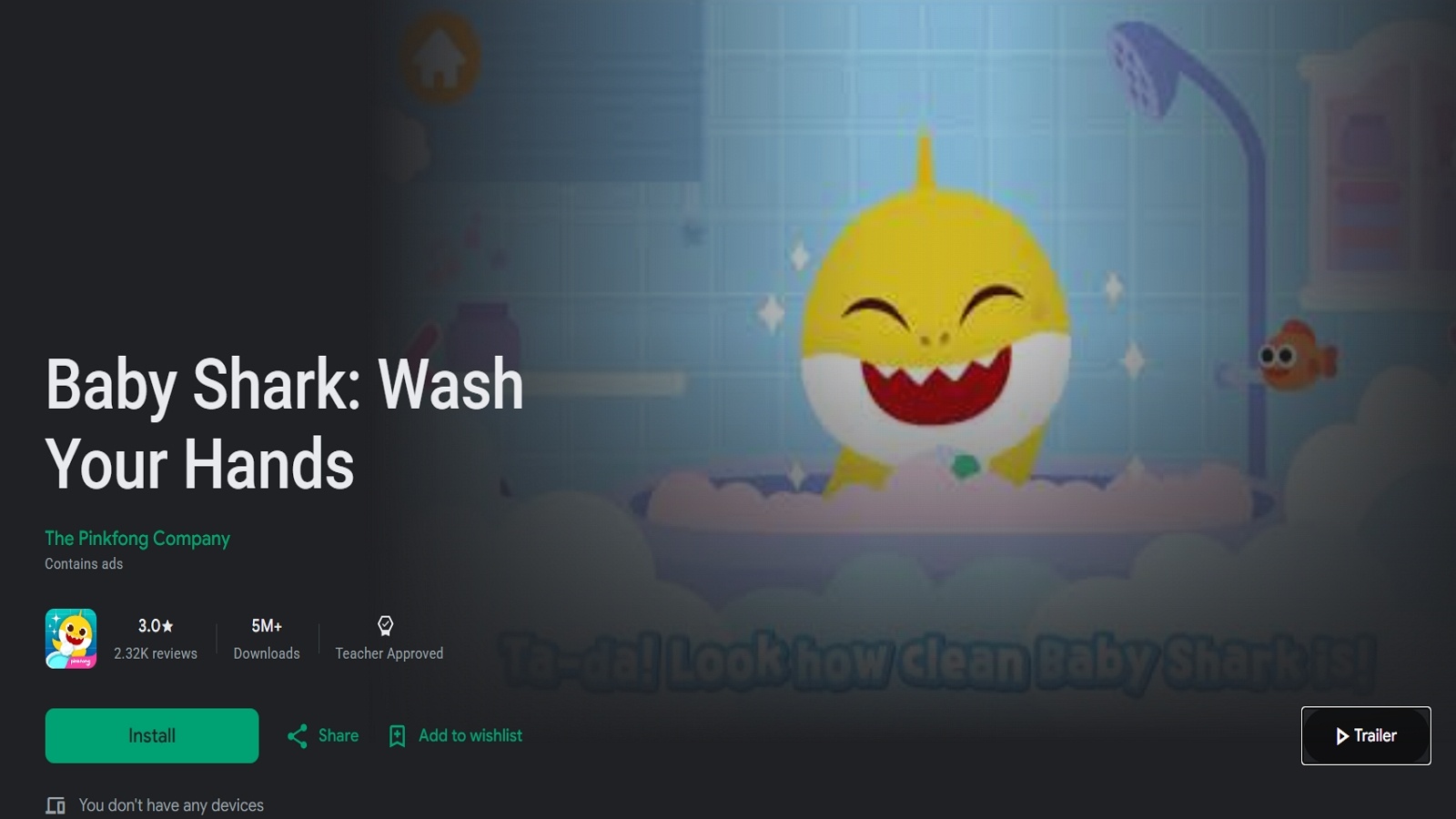
Baby Shark: Wash Your Hands, from The Pinkfong Company, wraps handwashing, brushing, and bath time in a song kids already know. Videos invite a sing-and-dance pass through wash steps. Mini games repeat the same habits with taps and simple scenes. Selfie frames add a silly photo beat. A weekly activity plan points families toward more Pinkfong play, and coloring pages can move the lesson off the screen. The familiar shark cast lowers the start-up fight for toddlers who light up at the song. The strength is recognition. A child who already sings the tune will often copy the wash motions. The limit is depth. Dance videos can run longer than a real sink trip, and ads appear in the free build, which pulls eyes off the soap. Some games teach the idea of clean hands more than the full scrub order. Parents who want a quiet bedtime brush may find the energy high. It still helps as a before-meal cue, especially if the grown-up pauses the video and walks to the sink at the scrub line. Pair it with a real scrub so the song does not replace the soap.
- Song videos for handwashing, plus brush and bath games.
- Selfie frames and simple weekly activity ideas.
- Familiar characters for toddlers who already know the tune.
- Facts and information: a habit set built on music and short games, with ads in the free version and a high-energy tone.
11. Bubble Beats Trainer
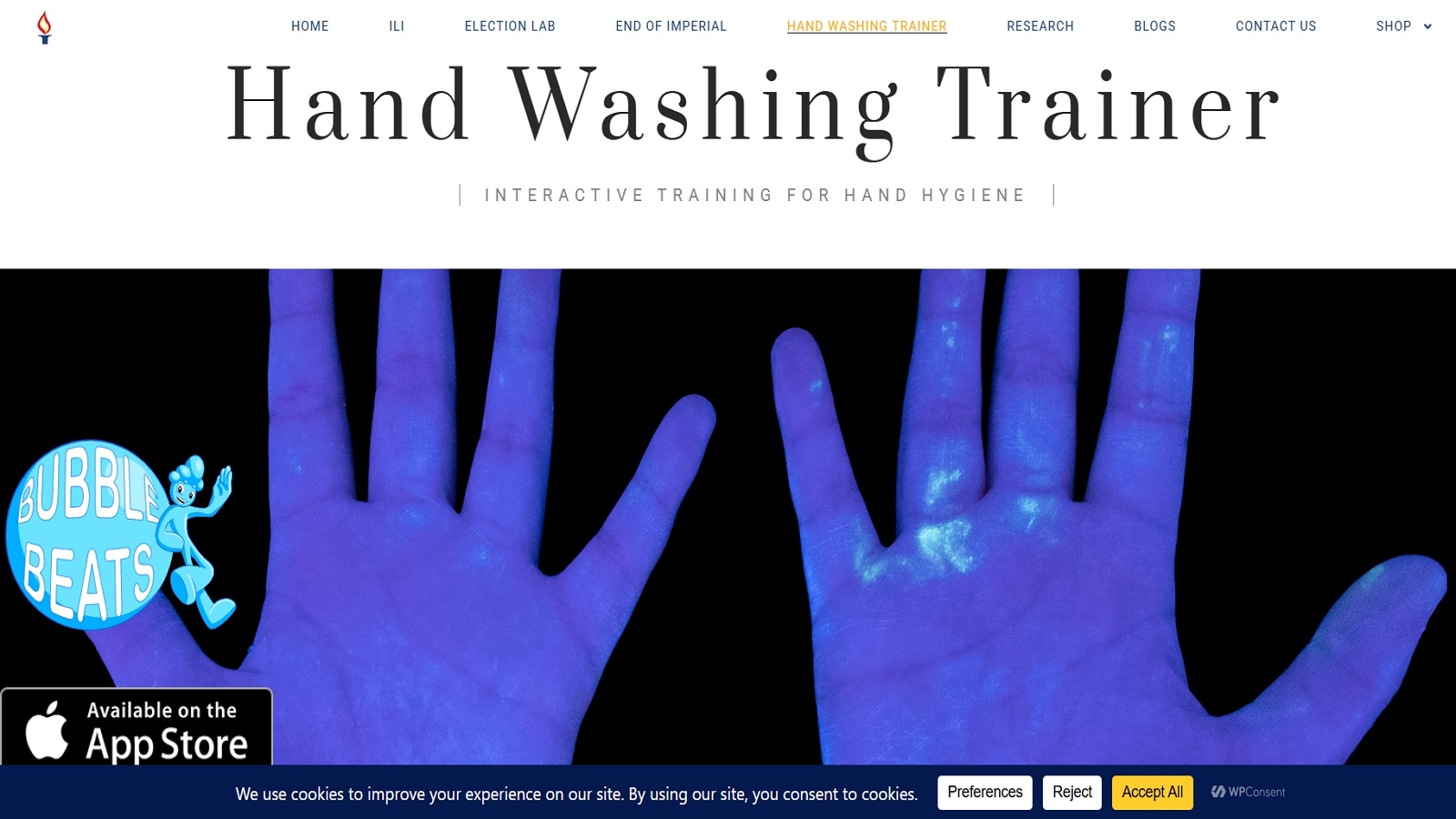
Bubble Beats Trainer, from Indelible Learning, is a handwashing coach rather than a cartoon timer. Players trace scrub paths, pop bubbles, and move virtual hands through the World Health Organization steps, including thumbs and fingertips. A UV-style check shows leftover spots as bright marks. Each level has its own song, with styles that range from blues to samba. Coins from finished levels can dress up the scene. The project drew on awards from U.S. child-health institutes, and the motions are meant to match real sink scrubbing. Kids who like a clear track to follow often do well here. The UV check makes missed spots obvious without a lecture. Younger toddlers may find the trace controls fiddly and need a hand on theirs. The store of coins is light, but it is still a reward loop a parent may want to cap. It does not cover teeth or bath time. Bathroom lighting and wet fingers make a phone a poor fit mid-wash, so many families play the level first, then copy the same hand poses at the sink. As a technique game, it is one of the closer matches to a real scrub.
- Scrub tracks for palms, backs, fingers, and thumbs.
- A virtual UV check that marks missed spots.
- Many songs, one per level, plus light scene customization.
- Facts and information: handwashing training tied to standard scrub steps, built as a game with pose cues and a progress check.
12. e-Bug
e-Bug, from the UK Health Security Agency, is a free learning set for schools and families that teaches microbes, hand hygiene, and respiratory habits through games and lessons. The junior games ask children to use soap against harmful microbes, cover coughs, and see why antibiotics are not the answer to every illness. Levels teach through play rules, not only through a speech. A child throws soap at microbes and watches the harmful ones leave. Teacher packs and student pages sit beside the games, which helps a classroom or a homeschool block. The tone is more lesson than pet story, so some preschoolers drift. Ages around late elementary school get more from the microbe idea. Art is clearer than it is cute, and the pace can feel like school. That is also the strength: the facts stay straight, and the games do not push a toothbrush brand. Home use works best with a parent nearby to name the real-life step after a level. It will not time a bedtime brush. It will help a child explain why soap beats a quick rinse, which makes the next sink trip easier.
- Microbe games for handwashing and cough cover.
- Lessons that separate everyday illness from antibiotic use.
- School packs a family can reuse at home.
- Facts and information: a public-health game set aimed at older kids, with play rules that show how soap clears harmful microbes.
13. Colgate Bright Smiles, Bright Futures
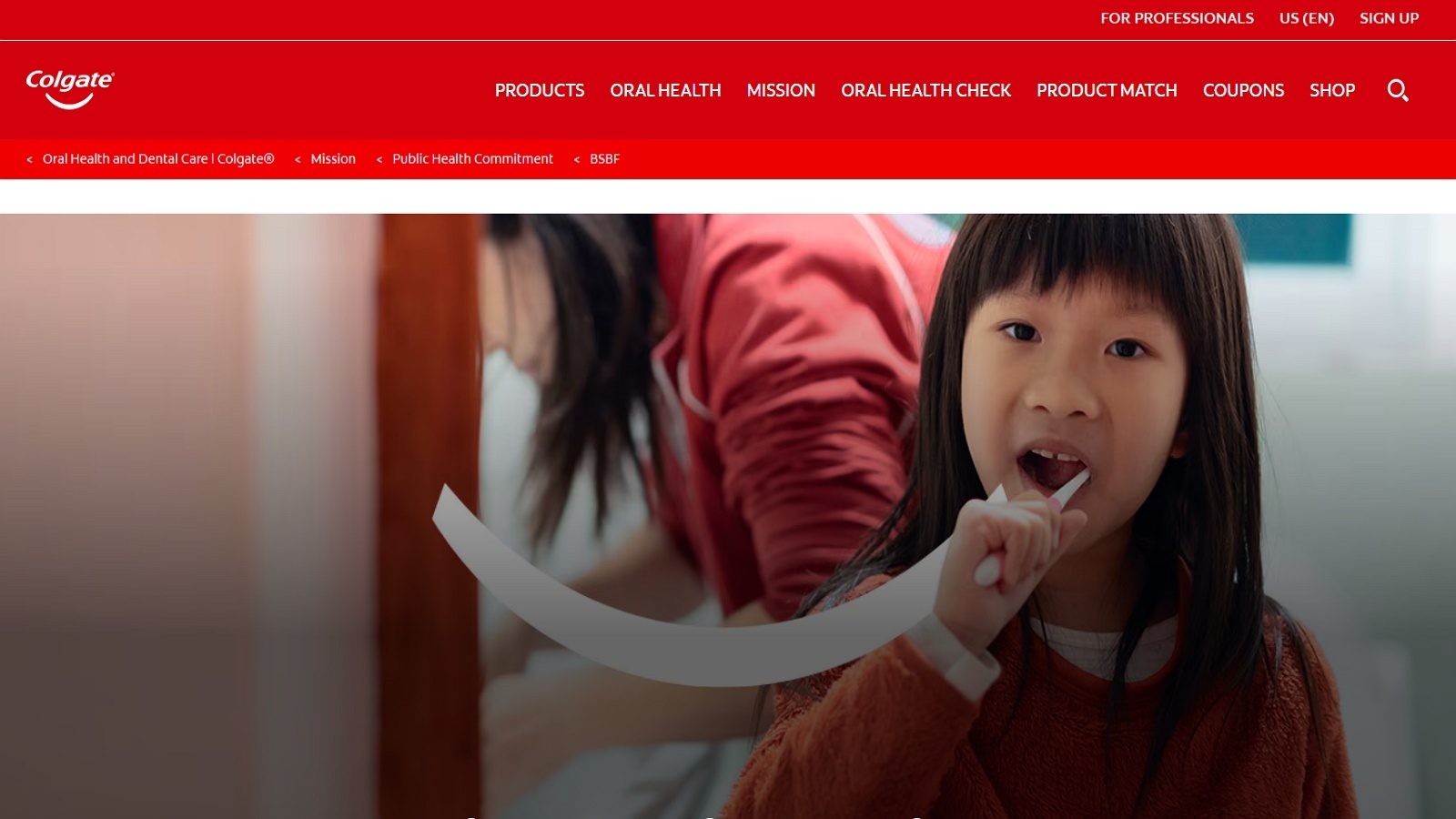
Colgate Bright Smiles, Bright Futures is Colgate’s long-running oral health program for children, with classroom kits, videos, and activities that many schools already know. Kids meet simple characters, practice brushing motion, and hear why baby teeth still matter. Materials often include a chart, a short video, and a take-home note so the lesson survives the bus ride. The public program focuses on reach: a lot of children meet it at school before they ever open a brushing app. At home, the videos and printables work as a calm backup when apps feel busy. They are less of a daily game and more of a lesson a parent can replay. Some pieces tie to Colgate products, so the brand is visible. Interaction is lighter than a camera coach or a rescue quest. Younger kids enjoy the songs. Older kids may want a score or a character to unlock. The useful part is the shared language. A child who learned the steps at school can hear the same words at the sink. Pair a short video with a real brush, and skip a second screen if the chart already did the job.
- School-style videos and activities on brushing and baby teeth.
- Charts and take-home notes that repeat the same steps.
- A familiar program many children meet in class.
- Facts and information: an oral health education set with replayable lessons, lighter on daily game loops than a timer app.
14. Sesame Street
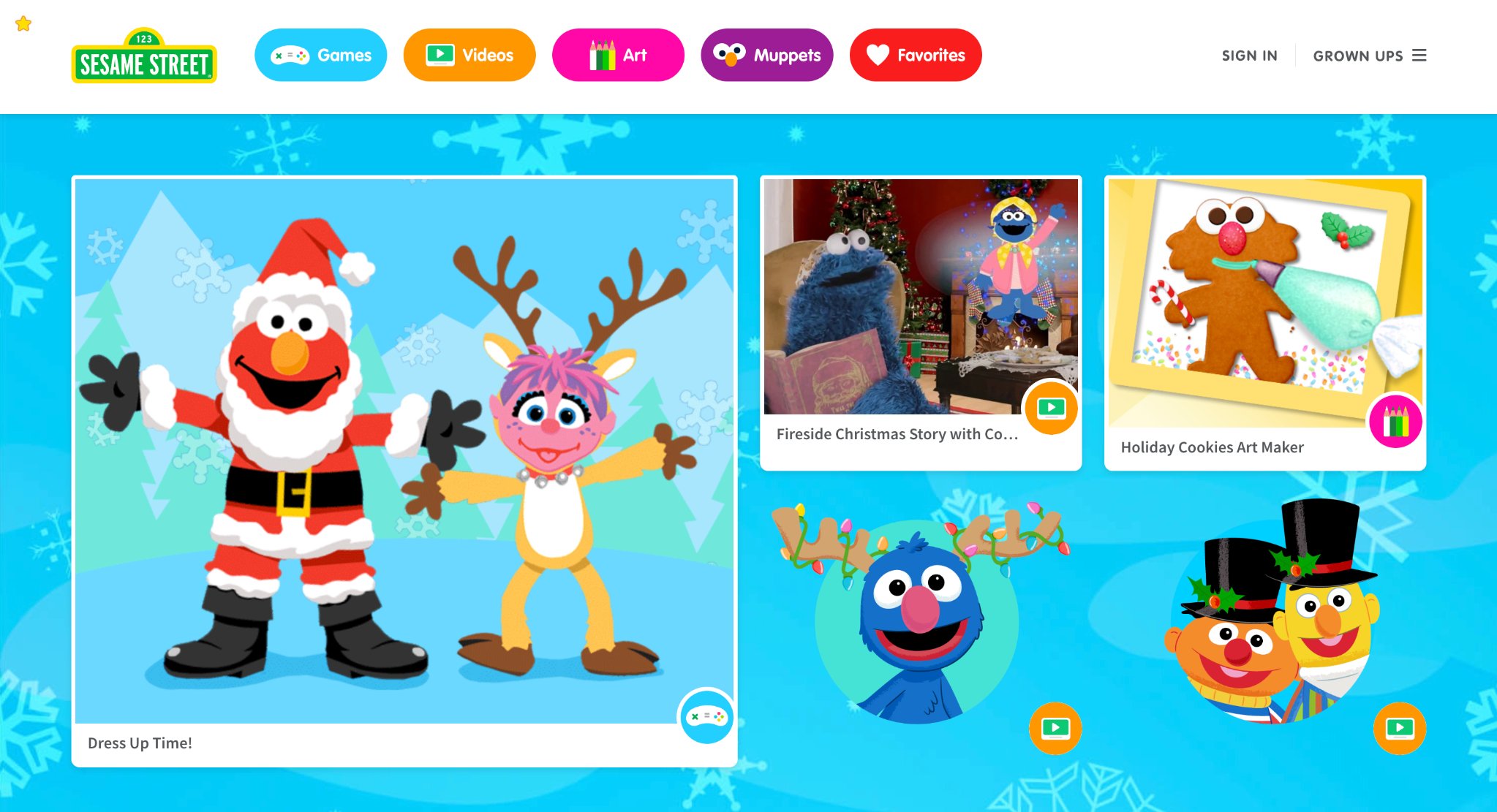
Sesame Workshop builds hygiene play around Elmo, Rosita, and friends on Sesame Street. Short videos, songs, and printable games walk through handwashing, toothbrushing, and covering a cough. The cast is already trusted, and the lines are short enough for a preschool repeat. A parent can play a wash song, then pause and do the step for real. Coloring and matching pages extend the idea without another app. The workshop’s health topics also sit beside feelings and routines, so clean hands can be part of a bigger morning story. The limit is format. Many pieces are videos, not a two-minute brush tracker. A child can watch Elmo wash and still skip the soap. Ads are not the issue on the main site, but autoplay on a video page can lead to a second clip. Pick one video, then close it. The art and voices are a strong fit for toddlers who shut down at a chart. Older kids may call it babyish and do better with a music timer. Used as a cue, not a full session, Sesame hygiene play is gentle and clear.
- Songs and short videos for hands, teeth, and cough cover.
- Printable games that repeat the same steps offline.
- Familiar characters with short, repeatable lines.
- Facts and information: preschool hygiene stories from Sesame Workshop, stronger as a cue than as a brush tracker.
How to Use a Game Without Losing the Real Routine
Screen play should point back to the sink, the tub, or the laundry basket. A simple pattern works for many homes. Play one short scene. Name one step. Do that step for real. Stop. Kids remember the order when it stays the same most days: wash hands before meals, brush after breakfast and before bed, bath on the nights you already chose. Educational games for kids at home fit that pattern when the tablet stays in the room where the habit happens.
Hands need soap and a full scrub, not only water. Teeth need a soft brush, a small smear of fluoride toothpaste for young kids, and a spit rather than a big rinse if your dentist has said so. Games can show the motion. They cannot place the brush. A grown-up still checks the back teeth for the early years. Games for toddlers with bath and doll care give the youngest players a picture of those steps. Educational games for 2 year olds stay useful when the buttons are large and the scene ends fast.
Summer holiday educational games and offline ideas help when travel breaks the normal sink spot. A family weekly planner can hold the same brush and wash boxes so a new week does not invent a new system. Learning games for kids that include tidy-up and care scenes give you words to reuse offline. “Soap on, scrub, rinse, dry” can be the same line in the app and at the sink. Apps for toddlers with bath stories do the same for children who learn by copying a doll or a pet.
Keep the session shorter than the real task at first. If the game runs long, the child arrives at the sink already tired. Five quiet minutes of play, then the real habit, beats a long reward loop. Practical tips for new parents often come back to that same short, repeatable close.
Keeping Hygiene Play Calm and Useful
Choose a spot in the day and keep it. Morning brush play belongs in the bathroom, not in bed, so the walk to the sink is short. Handwashing play can sit before lunch as a one-minute reminder, then everyone washes. Cleanup games fit a Saturday reset better than a rushed school morning. Healthy screen habits make that spot easier to defend when the rest of the day already has a limit.
Shared devices need a simple rule. One profile each if the app allows it. Headphones off for brushing games so you can hear the timer end. No new downloads during the routine. A parent guide to healthy screen time walks through those limits in plain language. Mobile games for kids stay easier to manage when the library is already chosen and the child is not hunting a store page. iPad games for kids need the same rule on a larger screen, because a video autoplay is harder to ignore.
Watch the mood, not only the minutes. If a monster dance leaves your child too wired for bed, move that title to daytime and keep a quiet timer at night. If a dental role-play sparks questions, answer them in plain words and keep the next visit predictable. Parent questions about accounts and devices are covered in the TutoClub FAQ. Privacy details explain what a kids account does and does not collect. Support is the place for login or device questions that block a morning routine. Educational games for kindergarten can take the daytime slot once the sink habit no longer needs a long story. A good close is a real action: dry hands, cap the toothpaste, pajamas on. The game is the spark. The habit is the hands.
FAQ
What age fits hygiene games for kids?
Toddlers do best with bath, potty, and cleanup scenes that use one tap at a time. Games for young kids stay in that tap-and-care lane, with big buttons, bright art, and a short finish a small child can see. A doll wash or a pet groom is often enough at this age, because the child learns by copying, not by reading a rule. Preschool children can follow a simple order and a song timer. They can name soap, scrub, rinse, and dry if the same words return each day. Early elementary children can handle a brush timer or a pretend dentist visit if a grown-up is nearby for the first sessions. Match the controls to the child, not only the theme. A title that needs reading will stall a pre-reader, even when the topic is a perfect fit for the sink. A younger sibling can share the habit with a doll or a pet scene, while an older child uses a timer that points around the mouth. If two ages share one device, the younger child can stop after one scene and the older child can finish the timer. A child who gets stuck on small buttons may simply need a larger scene, not a harder lesson.
Do hygiene games replace handwashing or brushing?
No. They rehearse the idea and the order. Germs still need soap and a full scrub, and teeth still need a brush on every side, including the back teeth a child often skips. A game can show wet, soap, scrub, rinse, and dry, then the same words can be used at the real sink a moment later. Water alone is not the lesson. Soap, bubbles, and a scrub that lasts about as long as two short songs are the part that matters. Many children keep a short timer long after they know the steps, because the ending tells them the job is done. Educational but fun games for kids stay useful here only when the screen cue leads straight into the real habit. The screen cannot place the brush or check under the nails. A grown-up still does that in the early years, then steps back once the child can show the full order alone. A spit, a rinse, and a dry towel still happen off the screen, even on days when the game feels easy. The game is the spark. Clean hands and clean teeth still happen at the sink. A finished sticker does not mean the back teeth were reached.
Which habits show up most in kids’ hygiene play?
Handwashing, toothbrushing, bathing, and tidy-up show up most. Pet and baby care add grooming and gentle hands. A child who feeds, washes, and settles a character is already practicing the order of a real bedtime routine. Pretend dentist play covers a visit more than the daily brush, so it helps before an appointment and less on a rushed morning. A mix helps, because a child who loves cleanup may still rush teeth. One title per habit is enough, and a stable cue beats a new app every week. Memory games for kids can carry the order of wet, soap, scrub, rinse, and dry so the brush game does not have to teach every clean step. Bath play can close the day, with wash, rinse, dry, and pajamas in the same order most nights. Hand play fits before meals and after the toilet, when the soap step is easy to repeat. Teeth play fits after breakfast and before bed, when a timer can mark a full pass around the mouth. Laundry and dish scenes can wait for a slower day, once the sink habits are already steady.
How can families keep hygiene games calm and ad-free?
A parent account, closed chat, and no outside links keep the session on the habit. Ads or a surprise video in the middle of a brush pull eyes off the soap and stretch a routine that should stay short. A short session with a clear end works better than a long reward loop that leaves a child tired before the real sink. Younger children do well with a grown-up nearby for the first week, so the steps stay kind and the device stays put. Educational games for kids on iPad point to a known library instead of a new download on a busy night. Headphones off during brushing also help, because the timer ending is easier to hear. A loud dance scene can move to daytime if it leaves a child too wired for bed. One profile per child keeps stickers and timers from getting mixed when siblings share a device. A phone or tablet in a fixed spot, away from the water, also keeps the session from turning into a hunt for a new game. The same login on a second device helps when one child is at a grandparent’s house and the routine should stay the same. A sitter can follow the same song and the same stop if those choices are already set.
How long should a hygiene game session last?
Shorter than the real task at first. A few quiet minutes, then the sink, the tub, or the toy bin, beats a long story that leaves a child tired before the soap comes out. Morning brush play belongs in the bathroom so the walk to the sink is short. Handwashing play can sit before a meal as a one-minute reminder, then everyone washes for real. Cleanup play fits a slower day better than a rushed school morning. Learning apps for kids keep that pattern when the same spot and the same order return most days. If the game runs long, stop at the first finished step and do that step offline. The next day can add one more step, not a second app. A stable song or timer is better than a new scene each night, because the child learns the stop as well as the start. Once the real habit is steady, the game can shrink to a cue and the sink can take the rest of the time. A missed day does not need a longer session later. The next regular slot is enough to bring the order back. Weekend play can be a little longer only if the real bath or tidy-up still happens right after.
Read Also:
- Best Educational Games for 5 Year Olds
- Best Confidence Building Games
- Best Emotional Games for Kids
- Best Problem Solving Games for Kids
- Best Educational Games for 6 Year Olds
Discover TutoClub and try hygiene games for kids in one calm library today!