
Best Games Online For Kids Girls In 2026





Parents seeking the best games online for kids girls in 2026 want cute, safe play that still teaches. TutoClub games bring pet care, fashion, and princess stories into one ad-free club. Girls can hatch pets, style looks, and tidy rooms with kindness.
Looking for more options that stay cute, safe, and educational? Families can explore the best dress-up games for girls online to mix fashion with storytelling, browse the best games online for girls that pair pet care with kindness, and try the best play online games for girls built for ad-free play in 2026.
Start TutoClub and discover the best games for girls today!
What Girls Usually Want From Online Play

Many girls gravitate toward games with color, care, and story. Pet hatching, doll rooms, fashion closets, and cleanup quests feel inviting. Those themes also support real skills. Feeding a unicorn practices kindness. Matching outfits builds attention. Sorting toys supports order. The best games for preschoolers keep taps simple so a young child can finish a scene without stress.
A good pick is calm enough for toddlers and rich enough for early elementary play. Short scenes help. Clear icons help. Characters who need help, not combat, help. Social emotional games for kids fit this mood because they practice feelings through care, not through loud scores. Families who want learning through play activities often look for that mix of cute and useful. Even educational games for kids age 3 can grow the same habits when the art stays soft and the task is “help a friend.” Games in TutoClub group many of those girl-loved worlds in one place.
How to Choose Safe Online Games for Girls
Safety comes first. Look for ad-free play, age-fit art, and no chat with strangers. Safe apps for kids matter as much as cute characters. Family-managed logins help young girls stay in a closed space.
Ask simple questions. Can a parent start and stop the session? Does the game reward care and creativity? Is the catalog wide enough that one club covers pets, fashion, babies, and puzzles? The best games online for kids girls in 2026 work best when ads and random pop-ups stay out of the way. Online educational games for kids keep the same idea: cute play, parent control, and a calm finish. Learning games for kids online and kids educational games support that mix. An educational games for kids app club is built around those checks, with play that stays parent-supervised after each title is downloaded from the store.
Best Games Online For Kids Girls In 2026
1. TutoClub - Best Online Games for Kids Girls in 2026
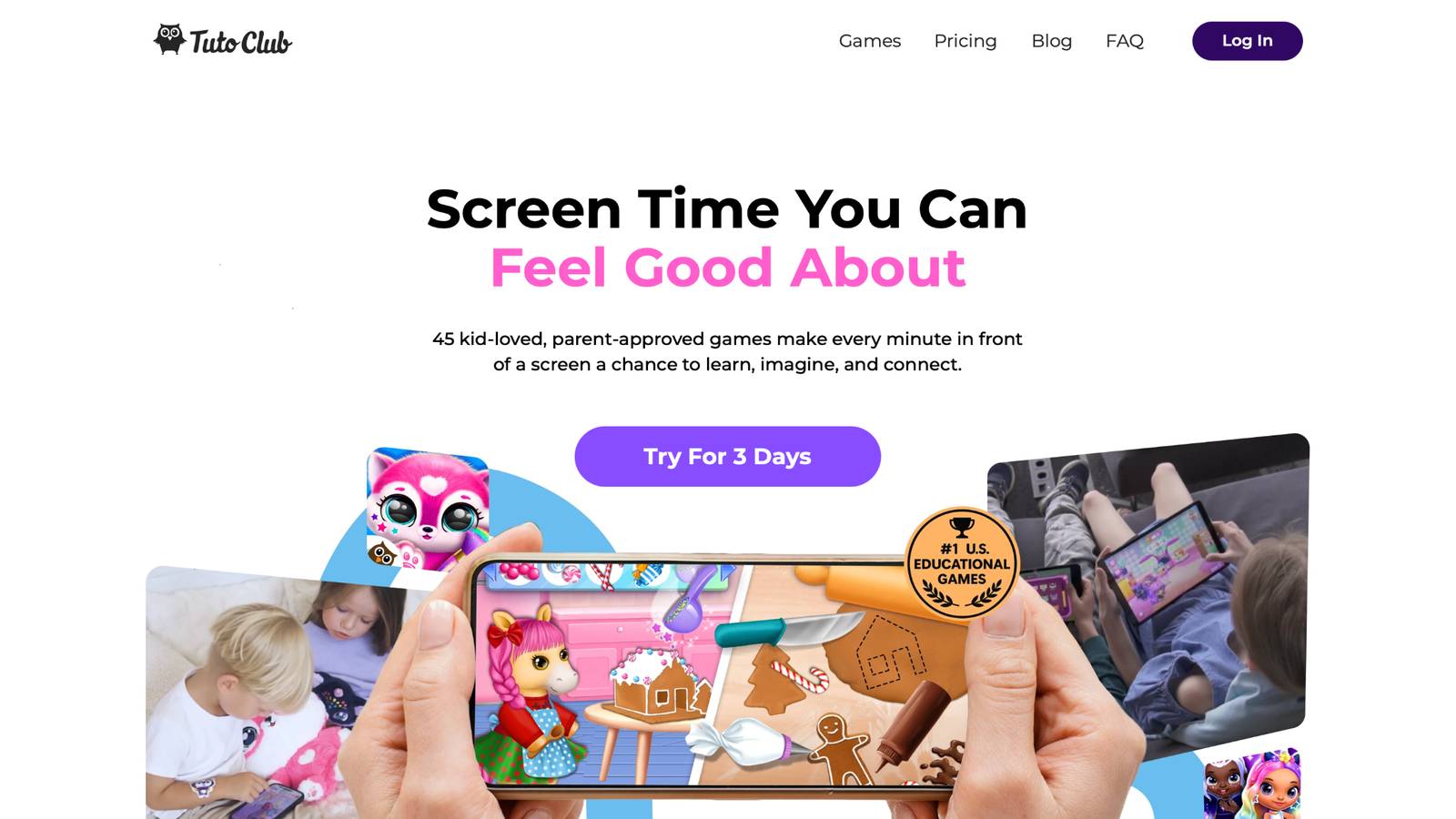
TutoClub is a premium club of educational TutoTOONS games made for children ages 2 to 8. The studio sits in Lithuania and designs cute worlds girls return to: unicorn babysitting, fluffy pet hatching, fashion clubs, princess castles, cleanup play, and baby care. One parent account removes ads, opens full game content, and works across phones and tablets after each title is downloaded.
Girls can hatch Fluvsies, style L.O.L. Surprise looks, decorate pet houses in Floof and Smolsies, dance with Kpopsies, and turn chores into play in Sweet Baby Girl Clean Up. The tone stays kind. Tasks teach empathy, focus, and tidy habits without shouty timers. Families use the same login on multiple devices. Most games play offline after setup. Regular updates keep the club fresh.
TutoClub Overview
TutoClub is your gateway to a magical world of educational games designed especially for children.
As part of TutoTOONS, a leading kids' games studio, we offer premium access to over 45 ad-free games.
Our mission is to blend learning and play, helping kids explore, create, and grow in a safe online space.
Thousands of parents trust us for family-friendly content that sparks imagination and builds essential skills.
Key Features
- Unlimited Access: Unlock full content in all games with no interruptions.
- Ad-Free Experience: Enjoy seamless play without any ads or distractions.
- Skill Development: Games foster creativity, social skills, communication, and more through fun activities like pet care and cleanup challenges.
- Regular Updates: Get new releases, exclusive content, and future updates automatically.
- Easy Subscription: Cancel anytime with no obligations, simple and flexible for families.
Explore Our World
TutoClub provides a rich ecosystem of educational games for kids, featuring ad-free experiences that promote creativity, focus, and emotional growth through play.
This platform turns screen time into valuable learning opportunities, with parent-approved content that builds essential skills and sparks curiosity in young minds.
- TutoClub Games: Over 45 educational games, including popular titles like Fluvsies, Smolsies, and the Sweet Baby Girl series
- Blog: Insights, tips, and stories for families on kids' learning and play
- FAQ: Comprehensive answers to frequently asked questions about subscriptions, features, and more
Get TutoClub on Your Device
TutoClub delivers premium kids educational games directly to your mobile devices, making learning accessible anytime, anywhere.
With apps available on major platforms, families can easily download and subscribe for ad-free play that turns screen time into skill-building adventures.
Perfect for parents seeking safe, engaging content on iOS, Android, or Amazon devices.
Why Choose TutoClub?
We're committed to 100% safe, enriching entertainment that kids love and parents approve.
Join the thousands who've seen their children thrive through playful learning.
Ready to start the adventure?
Try TutoClub and give girls a full club of cute, ad-free games!
2. Fluvsies Academy
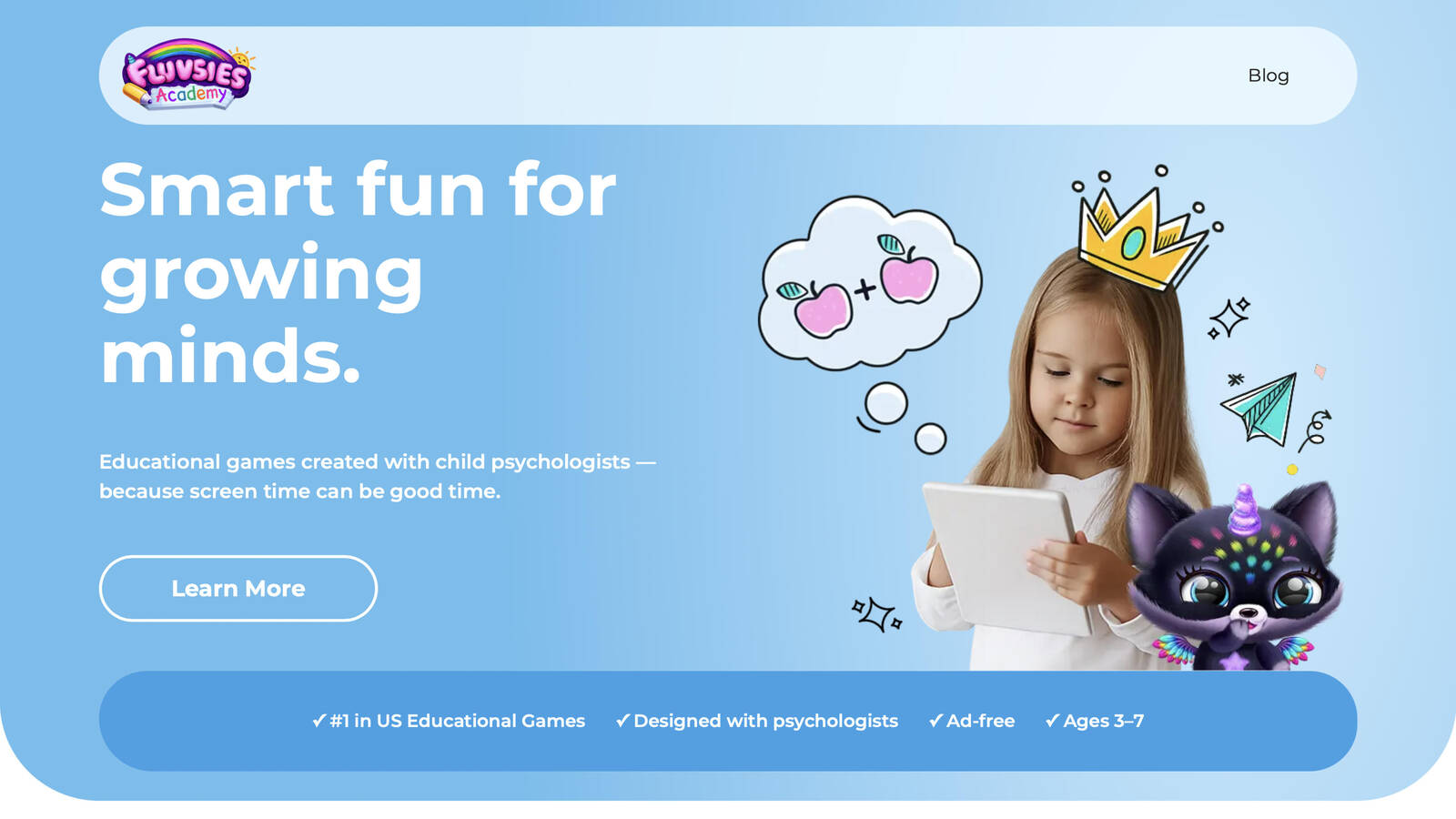
Fluvsies Academy is a calm early-learning world for ages 3 to 7, built around the fluffy Fluvsies many girls already know from care-and-hatch play. Child psychologists and early-learning specialists helped shape short games in language, phonics, math, logic, sorting, creativity, and everyday life skills. The art stays soft. Voices stay kind. Tasks feel like playdates, not drills. Girls tap letters, sort shapes, practice simple numbers, and meet real jobs through gentle story scenes. Active play supports focus and problem solving. Story play introduces helpers such as doctors, bakers, and teachers in a way that feels safe and warm.
Parents get a space to watch progress and keep sessions short. The app stays ad-free and age-fit, with new corners that include feelings and calm-down play. Girls who love hugging, feeding, and collecting cute characters often settle in quickly, then move into ABCs and simple puzzles at their own pace. The design favors emotional safety, clear icons, and unhurried wins. Families who want screen time that still feels like a hug often keep Fluvsies Academy in the daily rotation beside open pretend play.
- Ad-free preschool games with fluffy Fluvsies characters
- Language, math, logic, sorting, creativity, and life-skill play
- Active learning plus story-based profession scenes
- Parent area for progress and time
- Feelings and calm-down activities added over time
- Age-fit challenges that grow with the child
Facts and information: Fluvsies Academy is made with child-development specialists for ages 3 to 7, stays privacy-safe, and treats screen time as guided early learning with a caring, fluffy cast.
3. Khan Academy Kids
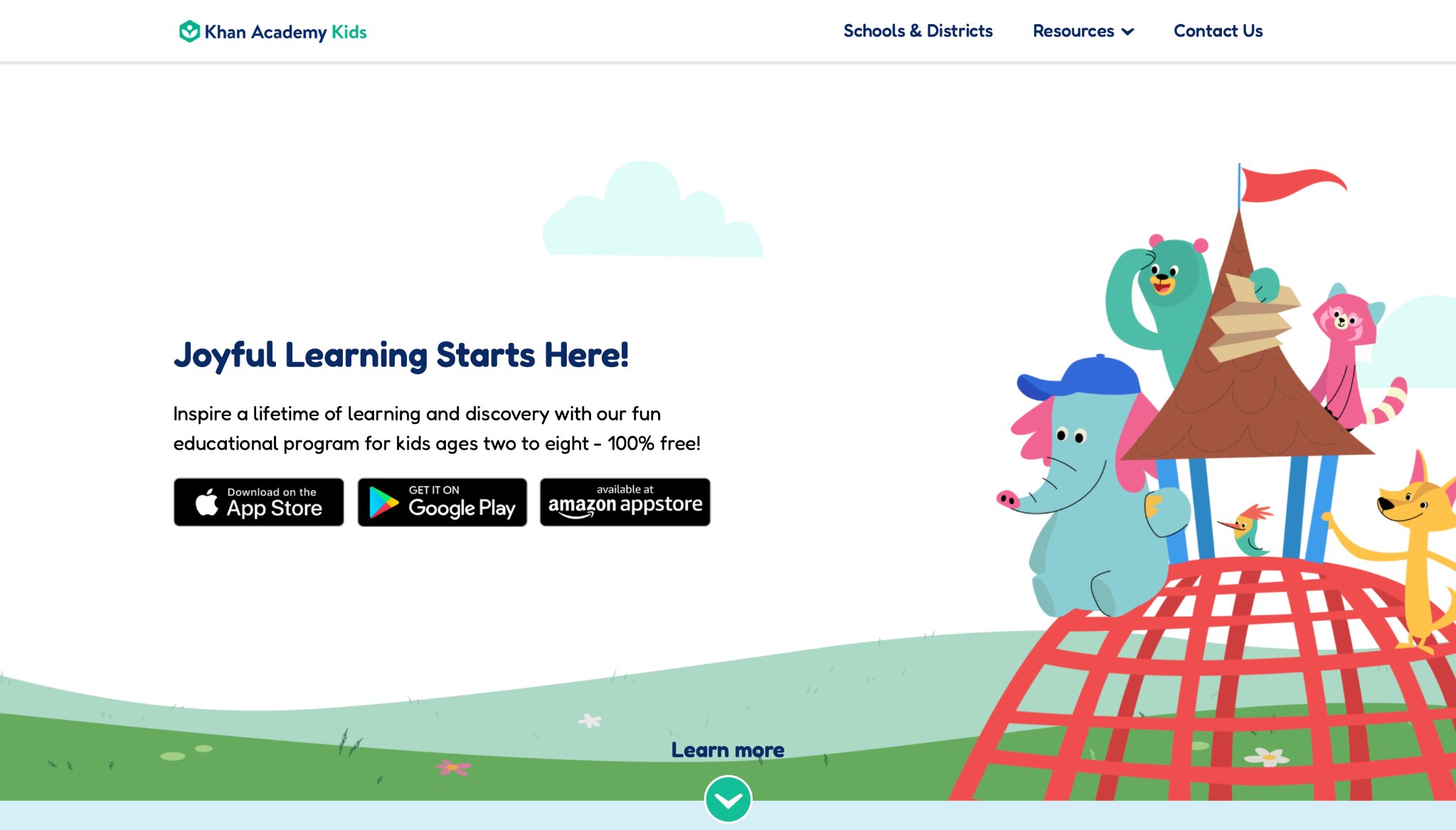
Khan Academy Kids is a free early-learning app from the Khan Academy nonprofit, made for children about ages 2 to 8. Friendly characters lead girls through letters, sounds, counting, shapes, feelings, and simple science. Paths change as a child grows, so a younger sister and an older sister can share a device without the same worksheet on screen. Read-aloud books help pre-readers. Drawing and pretend scenes give a break from letter drills. The tone is patient. Mistakes get a second try, not a loud fail screen.
Many families use it as a daily literacy or math block, then switch to fashion or pet play for open fun. Teachers use classroom tools and reports. The library is wide, from social-emotional songs to early number sense. The art is bright and clear. Sessions can stay short. Girls who like stories often linger in the book corner. Girls who like tapping and sorting find plenty of small games. It is a strong all-subject starter, even when a family still wants a separate club for unicorns, closets, and cleanup quests.
- Personalized paths for reading, math, and feelings
- Interactive books and creative tasks
- Parent and teacher views
- No ads in the core learning library
- Fit for preschool through early grades
- Characters that talk kids through new skills
Facts and information: A nonprofit team backs Khan Academy Kids, so the main learning library stays open to many homes and classrooms without a paywall for core play.
4. PBS KIDS Games
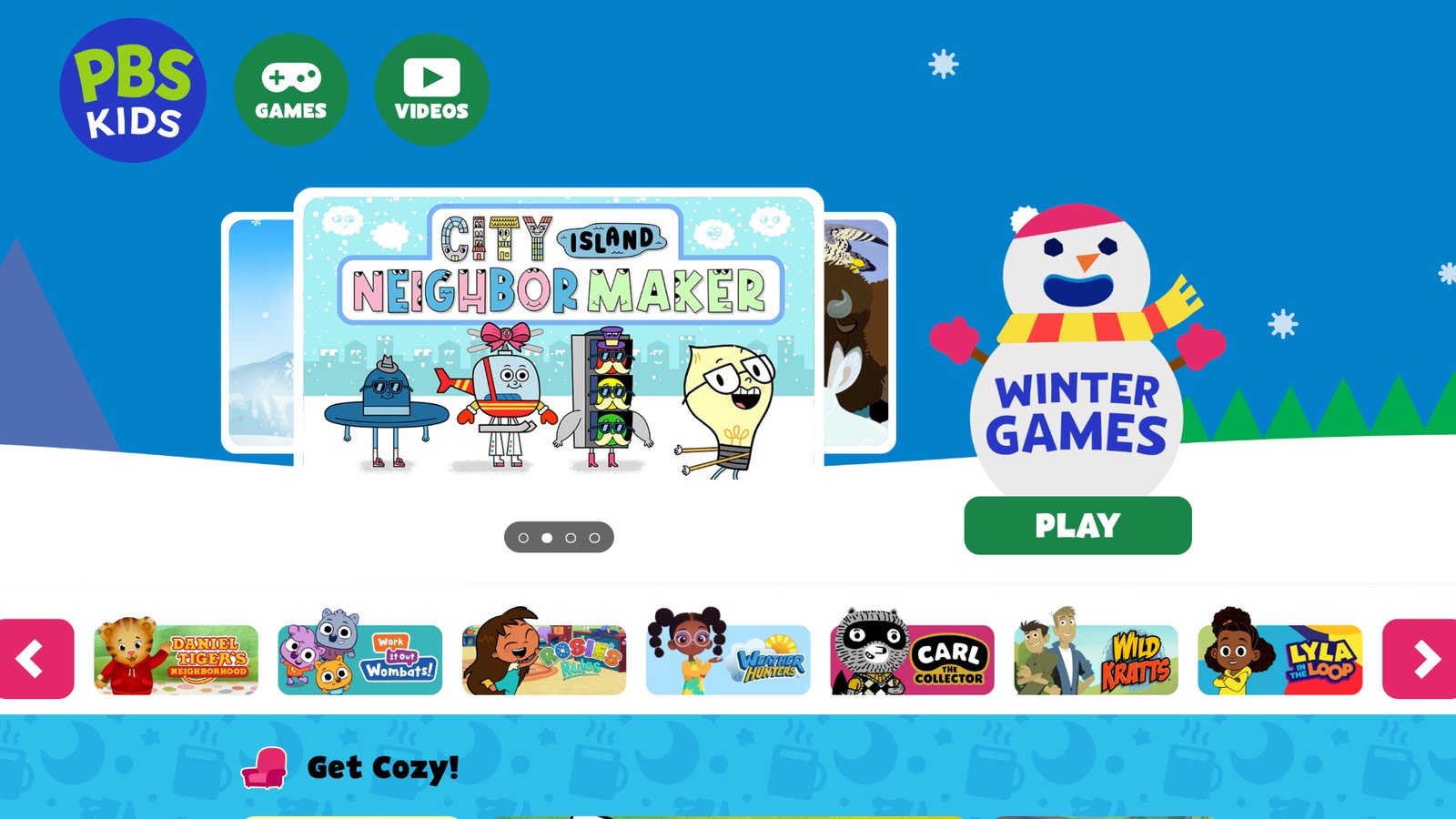
PBS KIDS Games gathers browser and app play tied to public-media shows girls already know, from Daniel Tiger’s Neighborhood to Wild Kratts, Alma’s Way, and Curious George. Many titles teach feelings, sharing, early math, and science through familiar faces. A child who just watched a kindness song can tap a matching game that practices the same idea. The site is a common pick for homework-free afternoons because the brand is known and the goals sit close to preschool and early-grade classrooms. Quality and length vary by title. Some games are two-minute taps. Others stretch into simple science saves or mystery play. A live connection is needed for many browser games. The strength is trust and show ties, not fashion closets or pet nurseries. Parents who want TV characters in game form often start here, then add a separate cute-care club for dress-up and hatching. The 2026 mix still leans on social-emotional play and active tapping rather than only watching a clip.
- Large library tied to PBS KIDS shows
- Social-emotional and early academic play
- Browser and app options
- Familiar characters for young kids
- Family-safe public-media brand
- Short sessions that pair with TV limits
Facts and information: PBS KIDS keeps adding interactive play that asks kids to do something, not only sit through a video, which helps attention stay active.
5. Toca Life World
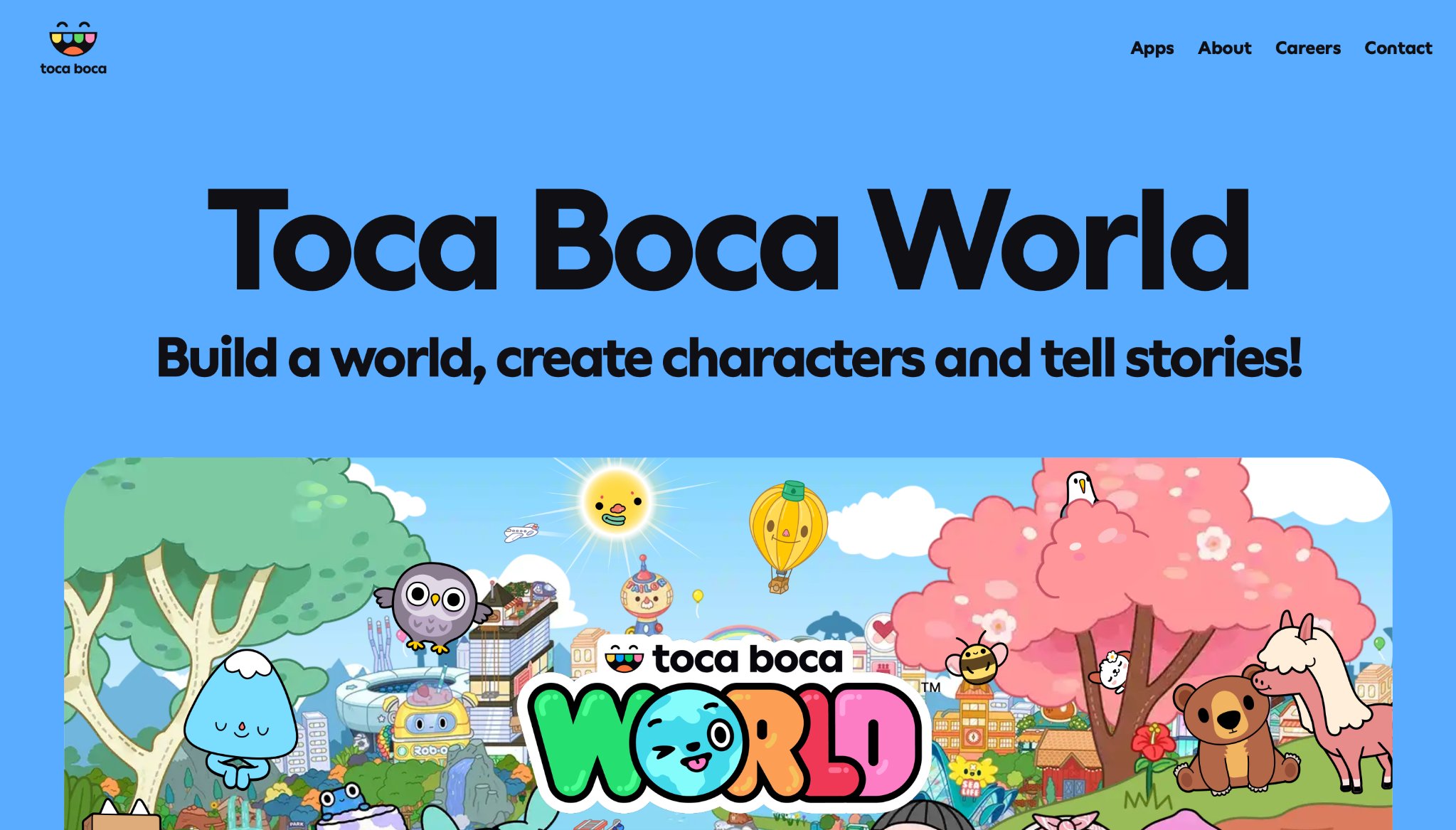
Toca Life World, from Toca Boca in Sweden, is an open digital dollhouse. Girls move characters through homes, shops, schools, and towns, invent stories, and decorate rooms. There is no score and no “game over.” Play is pretend. That freedom supports storytelling, role play, and the kind of quiet directing many girls already do with physical dolls. A child can run a bakery, stage a sleepover, or redesign a bedroom for as long as the timer allows. The world is busy and colorful. Extra locations and packs can pull attention toward more rooms and outfits. Families who want plot-free creativity like the sandbox feel. It is less of a guided lesson and more of a stage for make-believe. Siblings can share a scene and talk through who gets the pink room. Parents who want letters and numbers still add a learning app beside it. Girls who want fashion and home design often treat Toca Life World as their digital playhouse.
- Open-ended dollhouse worlds
- Character and room customization
- Story play without winners or losers
- Strong for pretend and social scripts
- Good for sibling shared play
- Soft humor and everyday scenes
Facts and information: Open pretend play supports narrative skill and social language, even when the app is not framed as a school tool.
6. ABCmouse
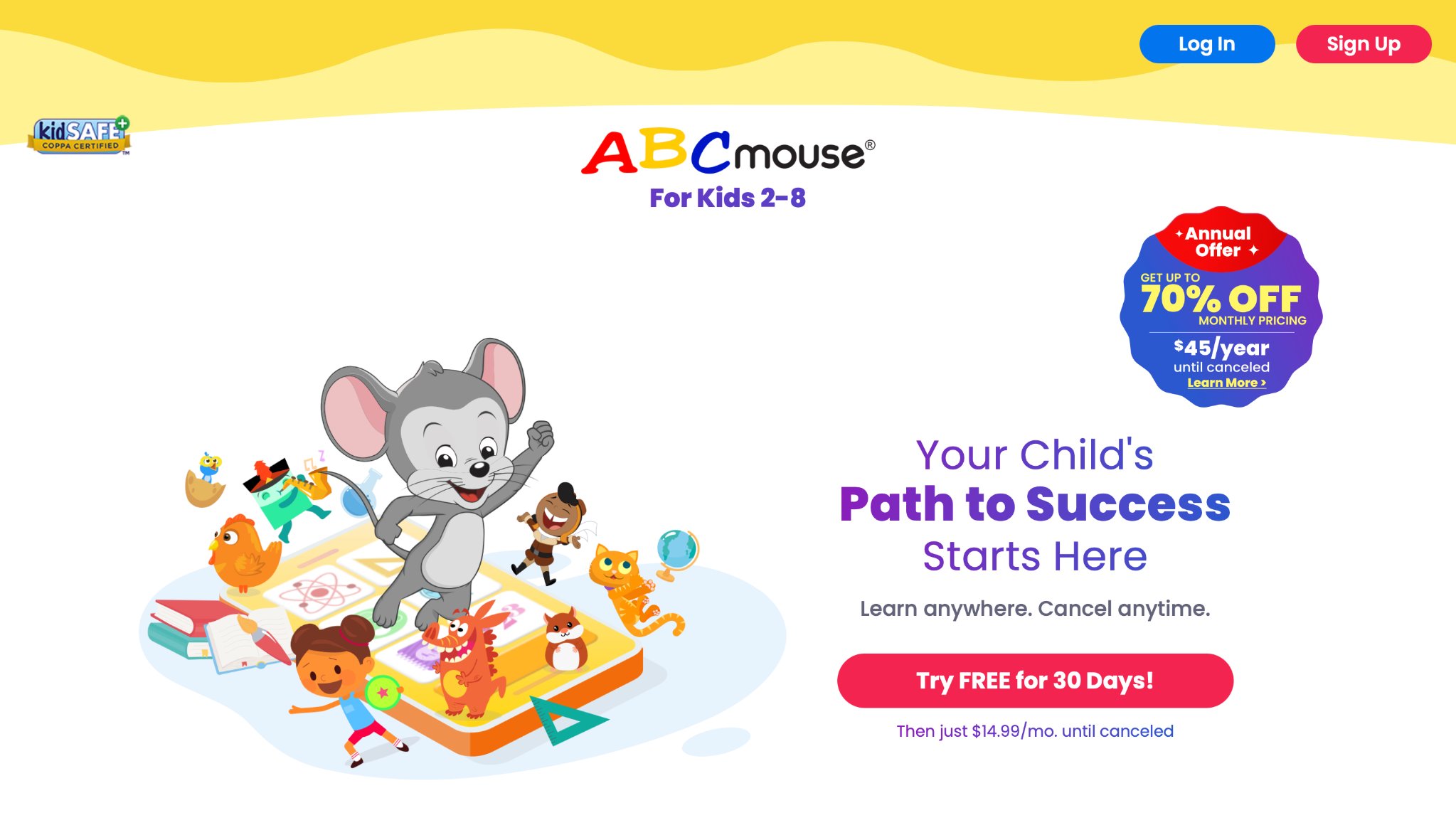
ABCmouse, from Age of Learning, is a step-by-step early-learning path of games, books, puzzles, and art. Girls move through letters, numbers, science, and social studies with rewards and familiar guides. The sequence is clear, which some parents like for a daily “do the next map item” habit. Animations are bright. Songs repeat key ideas. A child can paint, read a short book, then tap a counting game in one sitting. The style is more classroom-bright than princess-castle soft. Many families mix it with free-play fashion or pet games so the day is not only leveled lessons. Some girls love the tickets and rewards. Others want more open dress-up after a few map steps. The library is broad, which helps households that want one place for letters and world facts. It remains a structured pick rather than a cozy care club.
- Sequenced early-learning path
- Games, books, puzzles, and art
- Reward milestones
- Broad subject mix
- Clear next-step design
- Familiar classroom-style characters
Facts and information: Structured learning maps help families who want a visible skill path, while open pretend play still matters for imagination.
7. Animal Jam
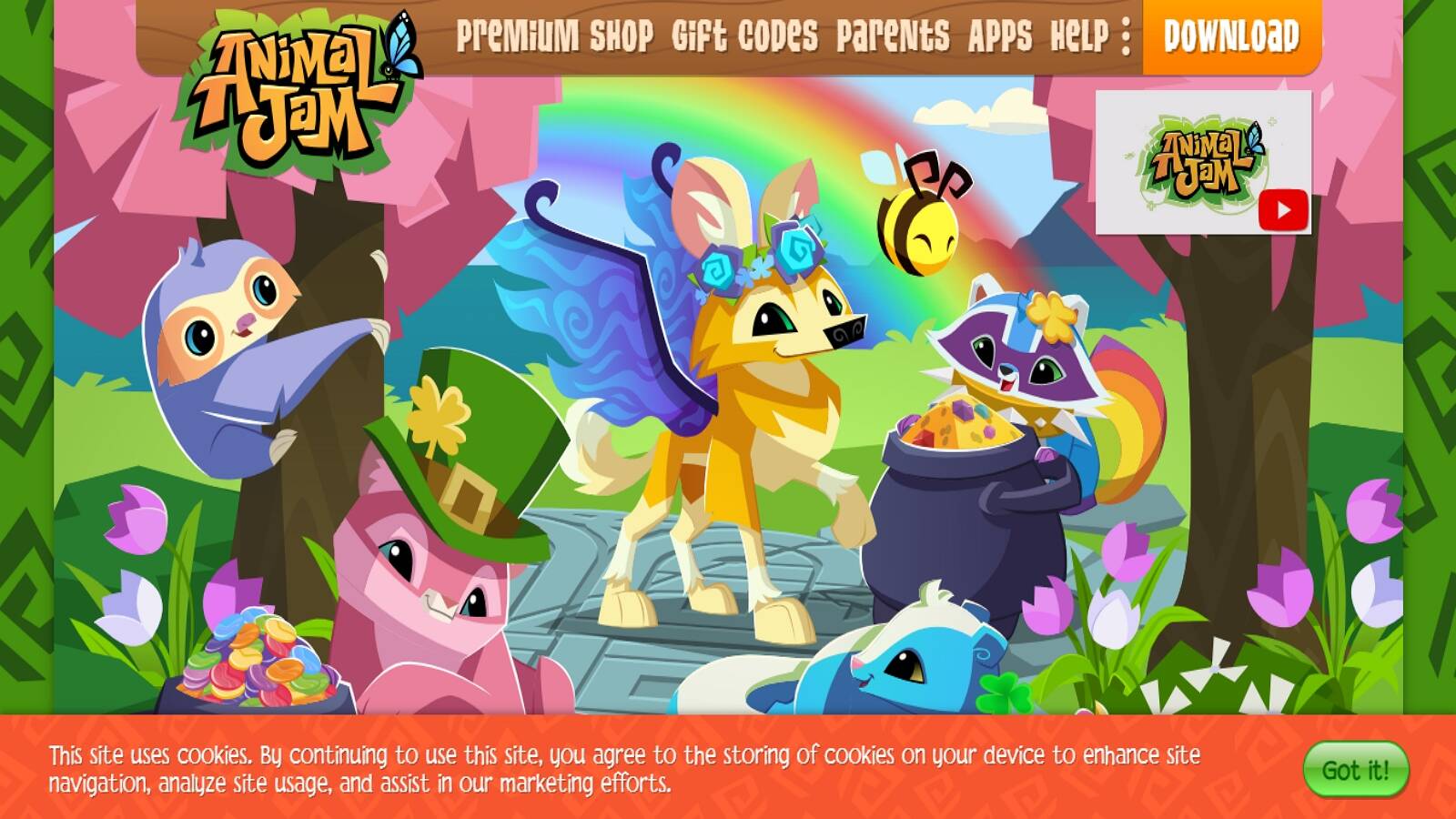
Animal Jam is a virtual animal world created with National Geographic themes. Kids pick animal avatars, visit habitats, play mini-games, and collect items tied to wildlife. The look is colorful and cute, which draws many girls who love animals. Older kids can use moderated social tools. Younger girls need a parent nearby before any chat or friend features go on. The draw is habitats, quests, and collecting, not a bedroom closet or a baby-care routine. Science flavor comes through animal facts and biomes. Safety settings deserve a careful parent check. Families who want nature play without combat often like the world. Families who want no social layer at all may keep chat locked or choose a single-player care game instead. Used with controls on, it can pair well with books about real animals.
- Animal avatars and habitat worlds
- Nature-themed mini-games
- Moderated social options for older kids
- Collection and quest play
- Wildlife facts woven into worlds
- Colorful, creature-first art
Facts and information: Nature worlds can teach care for animals when chat, friends, and trades stay under adult control.
8. Starfall
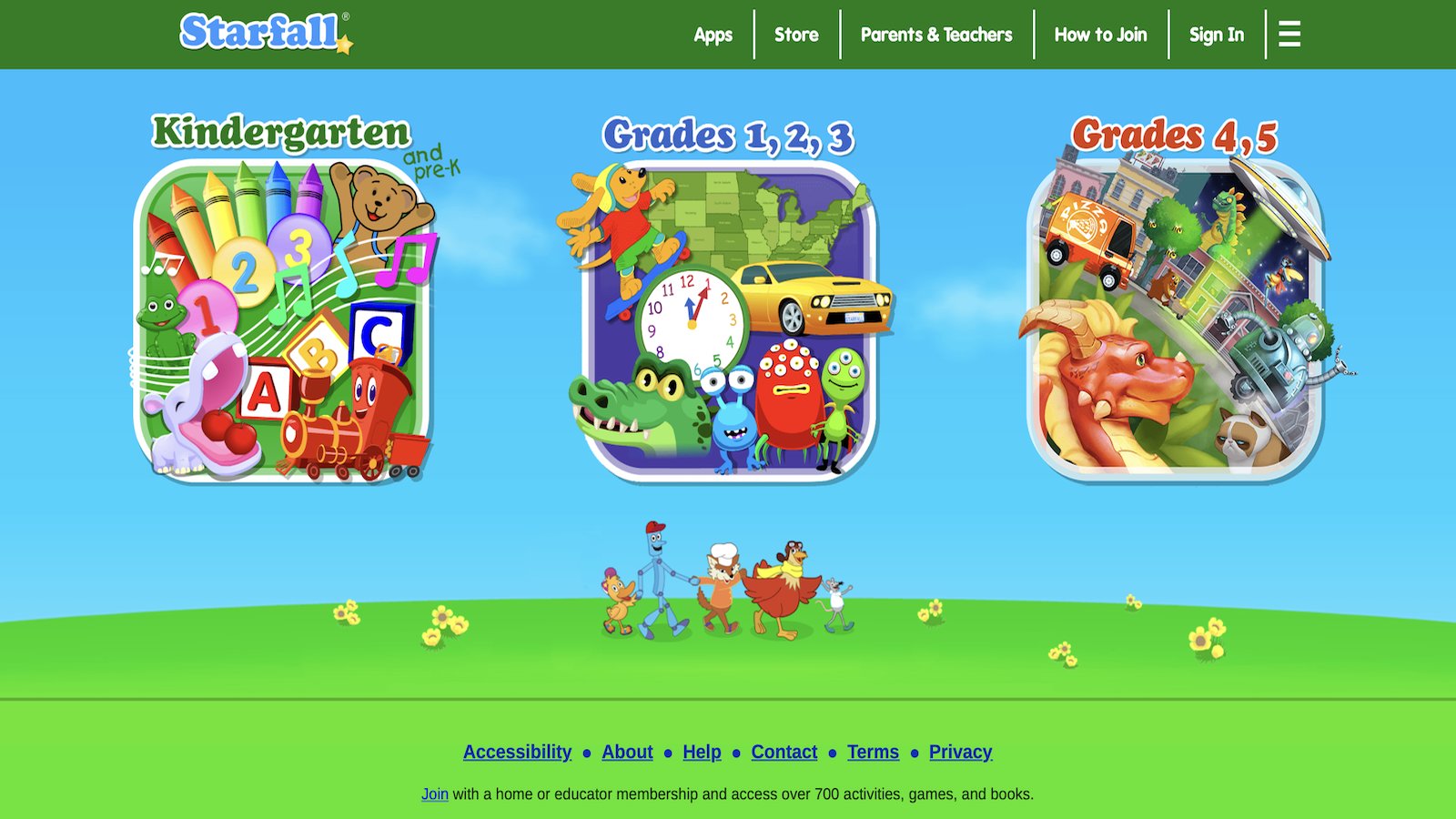
Starfall is a long-running site and app for reading and early math, known in many kindergarten rooms. Girls tap letters, hear sounds, and play gentle phonics games. The pace is slow and clear, which suits emerging readers who still point to each word. Songs and simple animations repeat short-vowel and consonant patterns. Math games stay basic: counting, shapes, and early number sense. The look is simpler than modern fashion apps. Families often use Starfall for a short reading block, then switch to story or pet play for fun. It is not a dress-up universe. It is a letter-and-sound workshop. Girls who like singing along with phonics usually stay engaged. Girls who only want closets and pets may need a parent to start the first page, then celebrate a finished letter set.
- Phonics and early reading paths
- Simple math practice
- Audio support for new readers
- Calm, clickable pages
- Helpful for kindergarten literacy
- Predictable, low-clutter screens
Facts and information: Sound-letter play still sits at the center of many early reading routines at home and in class.
9. ABCya
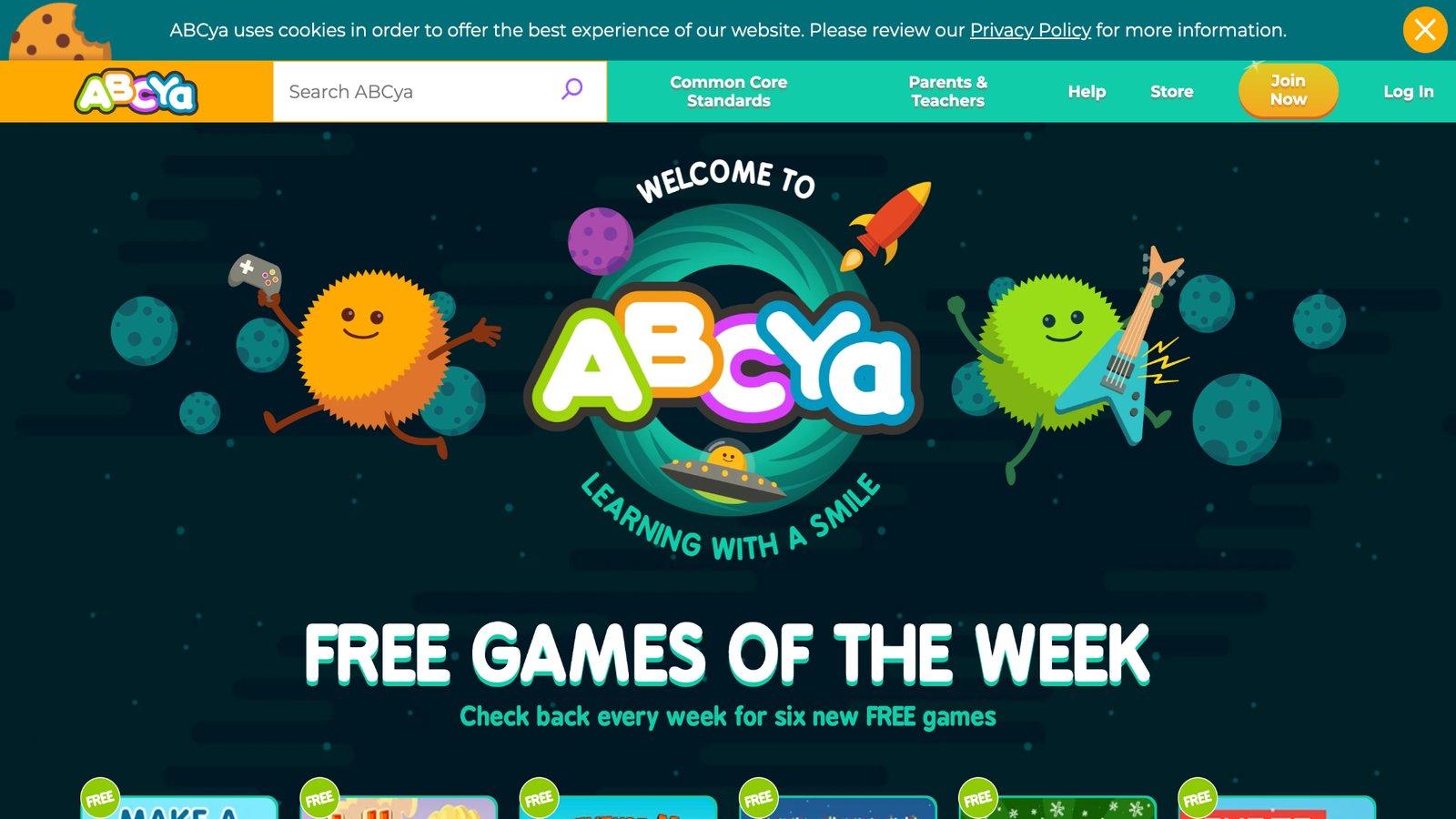
ABCya groups hundreds of skill games by grade. Girls can pick math, grammar, typing, holiday, and strategy titles that load in a browser. Teachers know the layout. Kids like the arcade-bright buttons. A second grader can practice addition, then jump to a word search. A kindergartner can tap a letter game and a simple puzzle in one sitting. Ad load and tone vary by title, so a parent preview helps. It is a toolbox, more than one cozy world. There is no single unicorn nursery to return to. The value is variety and grade labels. Families who want fashion and fluff still keep a separate care club. Families who need quick skill practice before dinner often bookmark two or three ABCya games and leave the rest closed.
- Grade-sorted skill games
- Math, language, and strategy titles
- Quick browser sessions
- Familiar in many classrooms
- Broad catalog for mixed ages
- Easy to pick a single task
Facts and information: Skill sites work best when a parent chooses a short list of titles instead of leaving the full catalog open.
10. Sago Mini World

Sago Mini World is a soft preschool playground of short stories and tap games from Sago Sago. Girls ride, dress, cook, and visit tiny towns with round, friendly characters. The art is gentle. Tasks are short and complete. A child can finish a picnic, a boat ride, or a dress-up scene before attention fades. That makes it a fit for toddlers and young preschoolers who still need a clear ending. Older girls may want deeper fashion systems or pet collections after a few visits. The world stays kind and low-pressure. There are no harsh timers. Sounds are sweet. Parents who want a “one more tiny story” option at bedtime often keep Sago Mini in the folder beside a longer learning path. It pairs well with physical toys because the scenes already look like storybook towns.
- Short preschool scenes
- Soft characters and simple taps
- Dress-up, kitchen, and town play
- Calm pacing
- Strong for very young girls
- Clear beginnings and endings
Facts and information: Tiny, complete scenes help short attention spans and make ending play easier at bedtime.
11. Nick Jr. Games
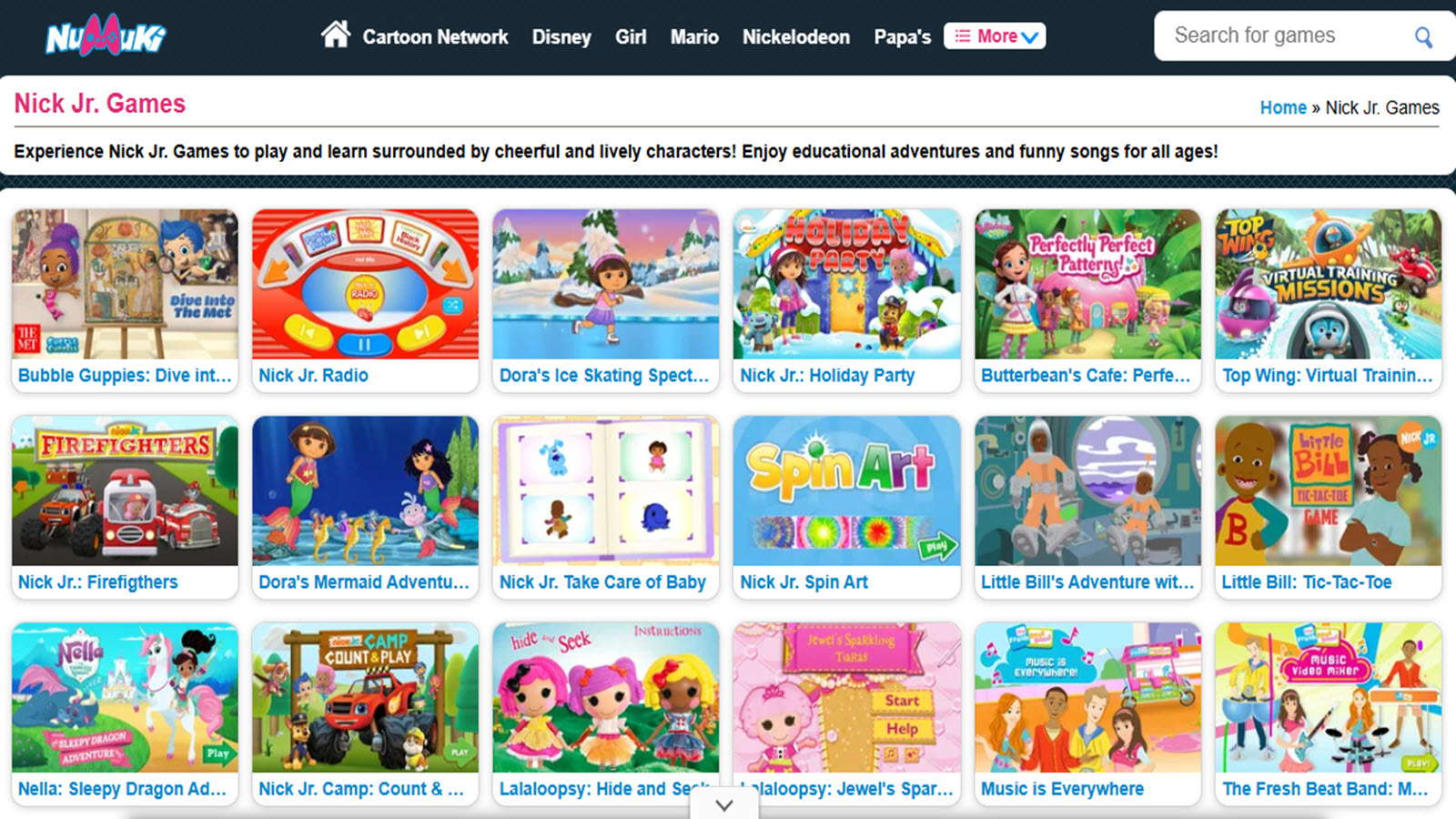
Nick Jr. Games put preschool show characters into simple online play. Girls who love familiar cartoons can match, cook, hide-and-seek, or help a character finish a short task in branded worlds. Sessions are quick. The faces on screen already feel like friends, which helps a hesitant child tap the first game. Learning depth varies. Some titles are pure fun. Some practice colors, matching, or simple stories. A parent still screens for ads and age fit. Brand games work as a bridge when a child already loves the show and needs a safer tap activity than open video autoplay. They are not a full pet-and-fashion club. They are a familiar recess. After a few rounds, many families switch to a quieter, ad-free catalog for the rest of screen time.
- Character games from preschool shows
- Short, easy browser play
- Matching, kitchen, and story mini-games
- Familiar faces for reluctant starters
- Easy to pair with TV time limits
- Light skill practice mixed with fun
Facts and information: Show-based games can start play quickly, but a parent still picks titles and keeps the rest of the session in a safer, quieter club.
12. Highlights Kids
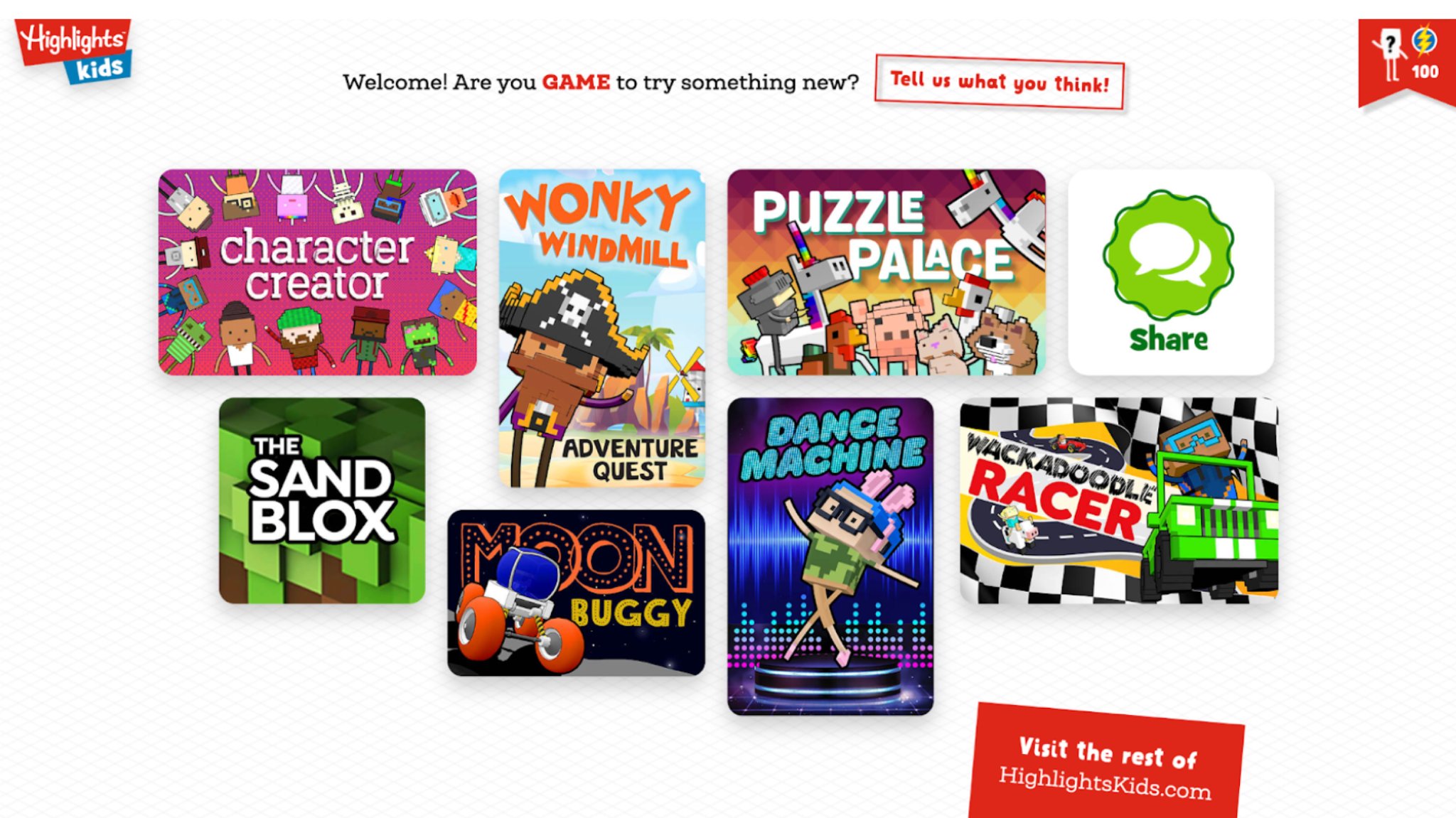
Highlights Kids offers puzzles, hidden pictures, and gentle games from the Highlights magazine brand. Girls who like search-and-find pages in print often enjoy the online versions. The mood is quiet and clever. A child hunts for a tiny object in a busy picture, finishes a puzzle, or tries a light quiz. That pace suits kids who get overstimulated by flashing arcade games.It is not a fashion or pet universe. It is a thinking break. Many families use it for rainy-day puzzles or a calm stretch after school. The brand’s print roots show in the art: busy scenes, friendly humor, and “look again” challenges. Parents who want focus practice without combat like the mix. Girls who mainly want closets and hatch-pets will treat Highlights as a side activity, not the main world.
- Hidden pictures and puzzles
- Magazine-style brain play
- Calm, print-like activities
- Good for focus practice
- Light story and quiz extras
- Low-noise play for quiet hours
Facts and information: Search puzzles train careful looking, a skill that also helps with school worksheets and real-world spotting games.
13. Lingokids
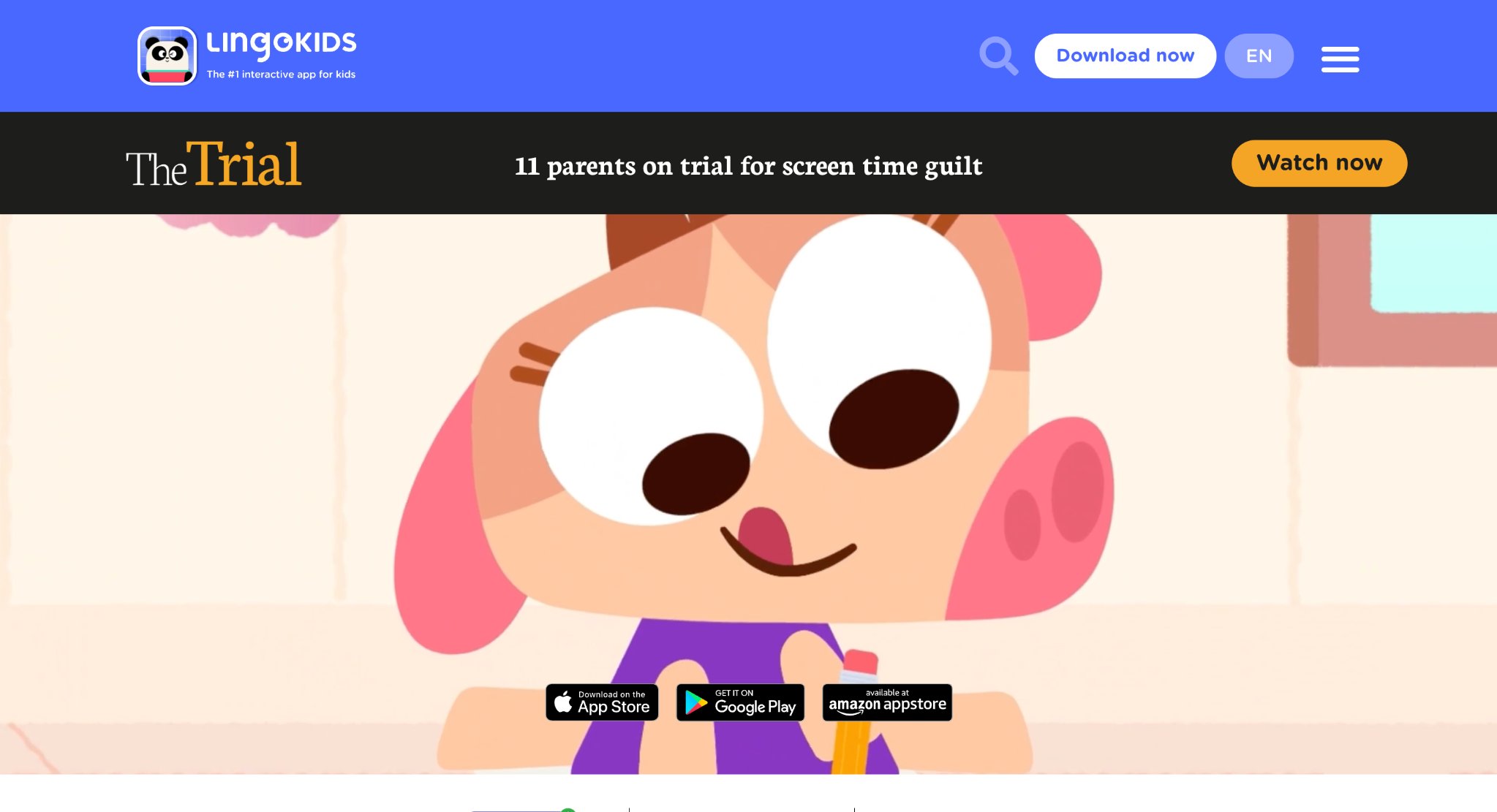
Lingokids is an early-learning playset for preschool and early-elementary kids, with songs, games, and stories that practice English and school-readiness skills. Girls tap through playrooms that mix letters, numbers, emotions, and daily routines. The characters are bright and chatty. Short episodes feel like a kids’ show that asks the child to answer, sort, or sing along. Families who want language play often use it for a daily English-time block. The catalog is broader than one dress-up closet. Some scenes lean academic. Some lean pretend. Parents can see activity history and keep a routine. Girls who like singing and tapping buttons usually stay with it. Girls who want deep pet collecting may still ask for a separate fluff-care game after the lesson block. Used in short bursts, Lingokids can sit beside art time and outdoor play without taking the whole afternoon.
- Playrooms with songs, games, and stories
- Early English, math, and life-skill practice
- Social-emotional scenes and routines
- Parent view of recent play
- Short, show-like episodes
- Bright characters for preschool attention
Facts and information: Language-rich play works best in short, regular sessions, with a parent nearby for new words and a clear stop time.
14. Teach Your Monster to Read
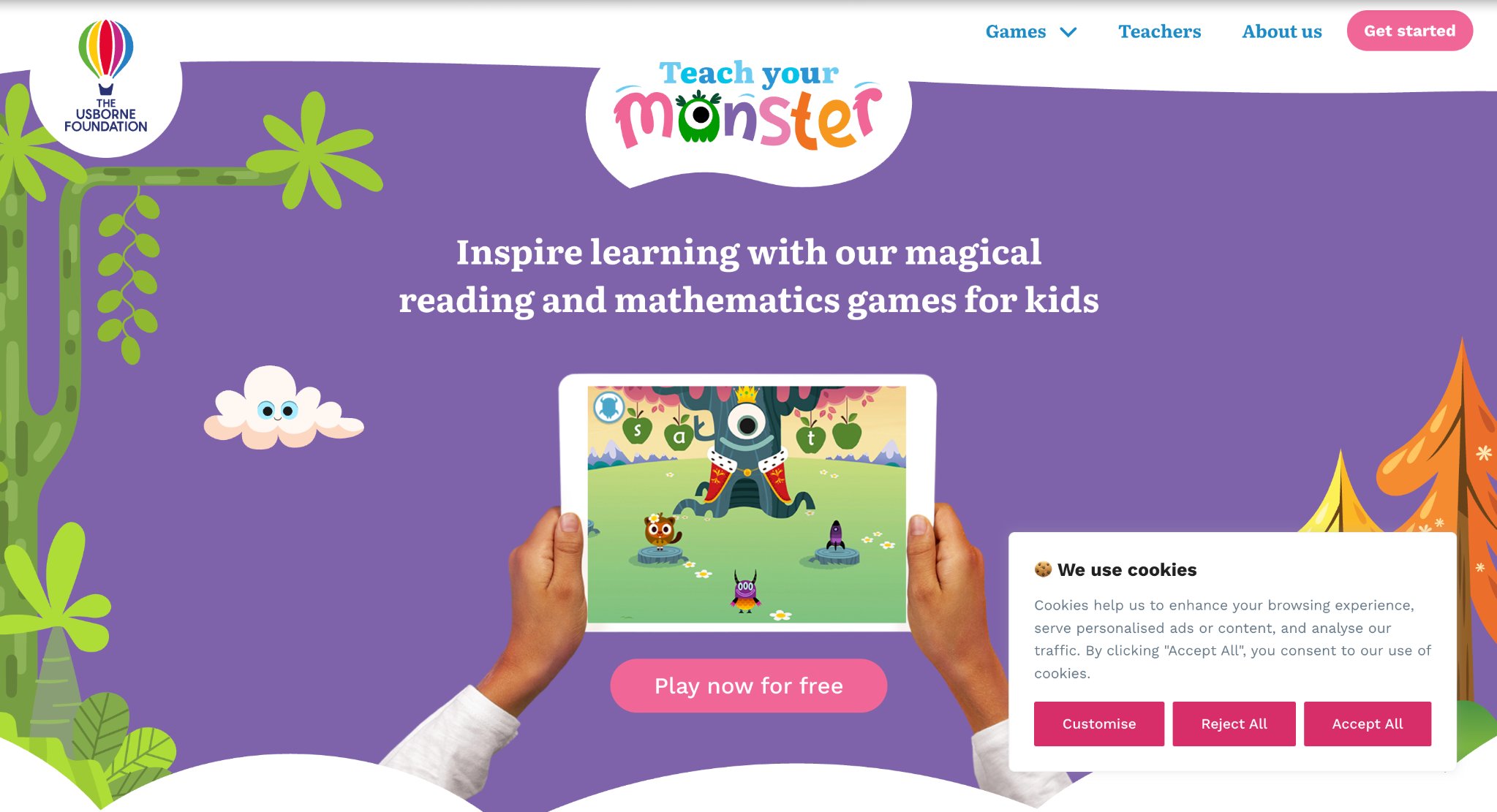
Teach Your Monster to Read is a phonics adventure from the Teach Your Monster team, made to help children practice sounds, letters, and early words. Girls build a friendly monster, then walk it through games that match letters to sounds and blend simple words. The humor is gentle. The art is quirky rather than glossy-princess. Rewards feel like stickers and monster outfits, which many kids treat as dress-up for their creature. Teachers use it in classrooms. Families use it at home for reading practice that does not look like a workbook. It is not a baby-care or fashion-club world. It is a reading path with a pet-like mascot. Girls who like customizing a character often stay for the next sound set. After the reading block, families can switch to open pretend play so the day still includes dolls, drawing, or a calm pet game.
- Monster avatar kids can customize
- Phonics, sounds, and early word games
- Classroom and home use
- Gentle humor and clear goals
- Practice that feels like a small adventure
- Strong fit for emerging readers
Facts and information: Monster-led phonics play gives reading practice a character kids want to help, which can make short daily sessions easier to start.
15. Begin (HOMER)
.jpg)
Begin, home of the HOMER learning path, is an early-learning program with games, stories, and skill maps for young children. Girls work through letters, sounds, early math, and social-emotional activities with colorful characters and short lessons. The path tries to match a child’s level so the next activity is not far too hard or far too easy. Parents see what was practiced. Kids earn progress through a friendly map rather than a loud scoreboard. The tone is educational first. Fashion and pet care appear less than letters and listening games. Many families use Begin as the learning half of screen time and keep a separate cute-care club for hatching, closets, and cleanup. Girls who like stories and songs settle in. Girls who want only open doll play may need a parent to start the first lesson, then celebrate a finished set of letter games.
- Personalized early-learning path
- Reading, math, and feelings activities
- Stories and songs in short sessions
- Parent view of practiced skills
- Map-style progress kids can see
- Built for preschool and early grades
Facts and information: Skill-map programs help families track letters and numbers, while open pretend games still give girls room to invent their own stories.
Play Themes Girls Return To Again and Again
Cute themes are not shallow when the tasks are real. Care play builds empathy. Fashion play builds choice and language for colors and styles. Cleanup play turns chores into a game. Music and dance play support rhythm. Fun games that are educational for kids often hide those skills inside a closet, a pet bed, or a tidy room.
- Pet and fluff care. Girls hatch, feed, tuck in, and collect friends. That play grows kindness, routine, and close looking. A Fluvsies paper doll printable can carry the same characters off the screen.
- Fashion and style. Girls mix outfits, hair, and rooms. That play grows color words, choice, and confidence building games energy, because a child gets to decide how a character looks.
- Baby and home care. Girls bath, feed, tidy, and decorate. That play grows responsibility and step-by-step thinking, the same habits found in many learning through play examples.
- Puzzles and memory. Girls match, sort, find, and finish tasks. Memory games for kids grow focus and patience.
- Story and pretend. Girls act out days, jobs, and friendships. Emotional games for kids grow language and social scripts.
A parent-approved games club keeps those themes in one login. That beats hopping across random sites with mixed ads.
Making Screen Time Feel Calm at Home
Set a start and stop. Sit nearby for the first sessions. Name the skill out loud: “You fed the pet. That is care.” Switch to blocks or drawing after play so the body moves. Educational games for kids at home fit that rhythm when the device stays in a shared room.
Use one shared account so downloads stay under adult control. Educational games for kids on iPad help when a family already uses one tablet for quiet time. Mobile games for kids help on a parent phone during a short wait, then the phone goes back. A family weekly planner can hold the play window next to meals, outdoor time, and reading. Educational games for kindergarten can fill that window when a child is ready for slightly longer stories.
Keep chat off for young girls. Prefer worlds with no stranger messages. Prefer art that stays sweet. Prefer games that end on a hug, a clean room, or a finished outfit, not a fight. More family notes live on the TutoClub blog.
FAQ
What age fits the best games online for kids girls in 2026?
Most cute care, fashion, and story titles fit girls about ages 2 to 8. Preschoolers do better with big buttons, short scenes, and characters who need help. Early elementary kids often stay longer with pet collecting, room decorating, and simple quests. Match the game to patience and reading level, not only a label on a store page. If a child gets stuck or overstimulated, a calmer title from games for young kids mix and a shorter session usually bring play back to a kind pace.
Are dress-up and pet games useful, or only fun?
They can be both. Choosing clothes builds color words, planning, and self-expression. Caring for a pet or baby character practices empathy, feeding routines, and gentle responsibility. Cleanup play turns tidy habits into a story instead of a lecture. The useful part shows up when the art stays age-fit and the tasks stay kind, which is how many dress-up games for girls are built. Talking after play, such as naming the outfit or the pet’s bedtime, helps the skill leave the screen.
Can girls play without a constant internet connection?
Many app-based titles need the web only to download a game and check a family account. After that, play can continue on a trip or in a waiting room. Browser-only sites usually need a live connection the whole time. Families who want download-and-go play often prefer a club that works on phones and tablets after setup. Tablet games for kids fit that pattern when each title is installed first, then used offline for a calm session.
How can a parent keep online play safe for girls?
Use a parent-owned account and keep chatting with strangers off. Prefer ad-free catalogs and age-fit art. Preview a new title before a child plays alone, and keep devices in a shared room. A single family login is easier to watch than a stack of random sites. Guidance on how to protect kids online pairs well with cute care play that never asks a girl to message someone she does not know.
What should families look for in online games for girls?
Look for calm art, clear icons, and play that rewards care, creativity, and finishing a small task. Themes girls often return to include pets, fashion, baby care, princess rooms, music, and simple puzzles. Safety checks matter as much as cute characters: no ads, no stranger chat, and a stop time the child can accept. Multi-device access helps siblings share one plan after each game is downloaded. Online educational games for kids keep those themes in one parent-managed space instead of sending a child across mixed websites.
Read Also:
- Best Learning Games For Kids
- Best Educational Games For Kids
- Best Educational Games For 5 Year Olds
- Best Learning Through Play in 2026
- Best Kid Educational Games