

Best Interactive Online Games For Kids In 2026






Parents want screen time that builds real skills, not just fills empty minutes. The best interactive online games for kids in 2026 spark creativity, sharpen focus, and support problem-solving plus emotional growth through play. One standout option is the TutoClub subscription that unlocks dozens of research-backed titles in one place.
Such titles include fun educational games for kids that turn learning into playful discovery, problem-solving games for kids that strengthen logical thinking, social-emotional games for kids that build empathy and self-awareness, and safe kids games designed to keep every session secure and ad-free.
Help kids learn, create, and grow through interactive online games at TutoClub.
Why Interactive Games Matter for Kids Right Now

Interactive games let kids actively shape what happens on screen. They tap, drag, decide, and create instead of watching passively. This kind of play supports focus, memory, and social-emotional growth. Many families notice kids stay calmer and more engaged when the activity has a clear purpose. Options that blend learning through play activities with everyday routines help children practice empathy and responsibility in natural ways. Safe design makes a big difference. Ad-free environments, age-appropriate content, and no sudden pop-ups help protect attention and privacy. Games that encourage caretaking, storytelling, or simple problem-solving often build empathy and confidence at the same time. Families seeking safe kids games find that purposeful titles turn screen time into something that feels valuable rather than passive.
Age-specific choices make the experience even more effective. Educational games for 6-year-olds introduce early concepts through simple interaction, educational games for 7-year-olds expand on reading and logic skills, learning apps for kids 8 years old bridge playful discovery with school-ready practice, and educational games for 10-year-olds challenge growing minds with deeper problem-solving.
Key Features to Look for in Quality Kids Games
Look for research-backed design that matches developmental stages. Strong options include multiple skill areas in one place, offline play after download, and multi-device support so siblings can share easily. Parent controls and clear progress feedback add peace of mind. Games that mix creativity with real-world routines, like caring for characters or sorting everyday items, tend to hold interest longer. Variety across titles keeps the experience fresh as kids grow. Parents often look for educational games for kids that support focus, creativity, and emotional awareness in one curated collection. Platforms that offer brain games for kids help sharpen attention and working memory through short, rewarding challenges. A clear view of available titles on the collection of fun games makes it easier to match activities to a child’s current interests and age.
Best Interactive Online Games For Kids In 2026
1. TutoClub - Best Interactive Online Games for Kids in 2026
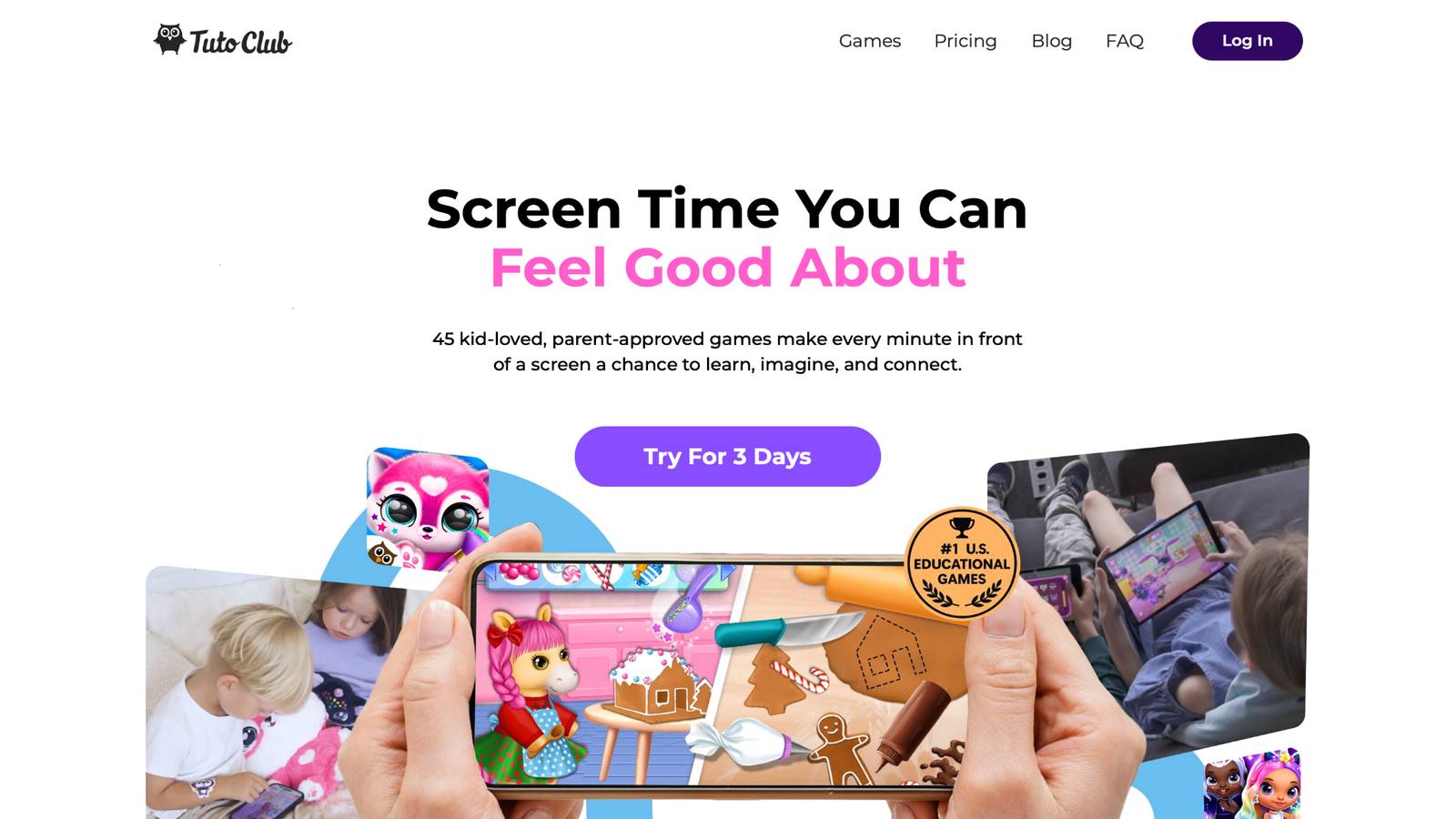
TutoClub unlocks more than 45 educational games in one simple subscription. Each title is crafted to spark creativity, strengthen focus, and support social-emotional skills through playful activities. Kids hatch and care for cute virtual pets, practice kindness with unicorn babysitting, turn everyday chores into fun challenges, and express themselves through fashion and storytelling quests. The experience stays completely ad-free and calm, so screen time feels purposeful rather than overstimulating. Families can play across devices with the same account, and most games work offline once downloaded. Designed with developmental goals in mind, the collection helps children build confidence, curiosity, and real-life habits while having genuine fun. Parents often describe it as the rare option that removes guilt and turns play into quality time together.
Facts and Information
- More than 45 skill-building games in one place
- Focus on creativity, focus, problem-solving, and emotional growth
- Fully ad-free and family-friendly design
- Multi-device access with offline play after download
- Regular updates keep content fresh
TutoClub Overview
TutoClub is your gateway to a magical world of educational games designed especially for children.
As part of TutoTOONS, a leading kids' games studio, we offer premium access to over 45 ad-free games.
Our mission is to blend learning and play, helping kids explore, create, and grow in a safe online space.
Thousands of parents trust us for family-friendly content that sparks imagination and builds essential skills.
Key Features
- Unlimited Access: Unlock full content in all games with no interruptions.
- Ad-Free Experience: Enjoy seamless play without any ads or distractions.
- Skill Development: Games foster creativity, social skills, communication, and more through fun activities like pet care and cleanup challenges.
- Regular Updates: Get new releases, exclusive content, and future updates automatically.
- Easy Subscription: Cancel anytime with no obligations, simple and flexible for families.
Explore Our World
TutoClub provides a rich ecosystem of educational games for kids, featuring ad-free experiences that promote creativity, focus, and emotional growth through play.
This platform turns screen time into valuable learning opportunities, with parent-approved content that builds essential skills and sparks curiosity in young minds.
- TutoClub Games: Over 45 educational games, including popular titles like Fluvsies, Smolsies, and the Sweet Baby Girl series
- Blog: Insights, tips, and stories for families on kids' learning and play
- FAQ: Comprehensive answers to frequently asked questions about subscriptions, features, and more
Get TutoClub on Your Device
TutoClub delivers premium kids educational games directly to your mobile devices, making learning accessible anytime, anywhere.
With apps available on major platforms, families can easily download and subscribe for ad-free play that turns screen time into skill-building adventures.
Perfect for parents seeking safe, engaging content on iOS, Android, or Amazon devices.
Why Choose TutoClub?
We're committed to 100% safe, enriching entertainment that kids love and parents approve.
Join the thousands who've seen their children thrive through playful learning.
Ready to start the adventure?
Start building better screen habits with TutoClub today!
2. Fluvsies Academy
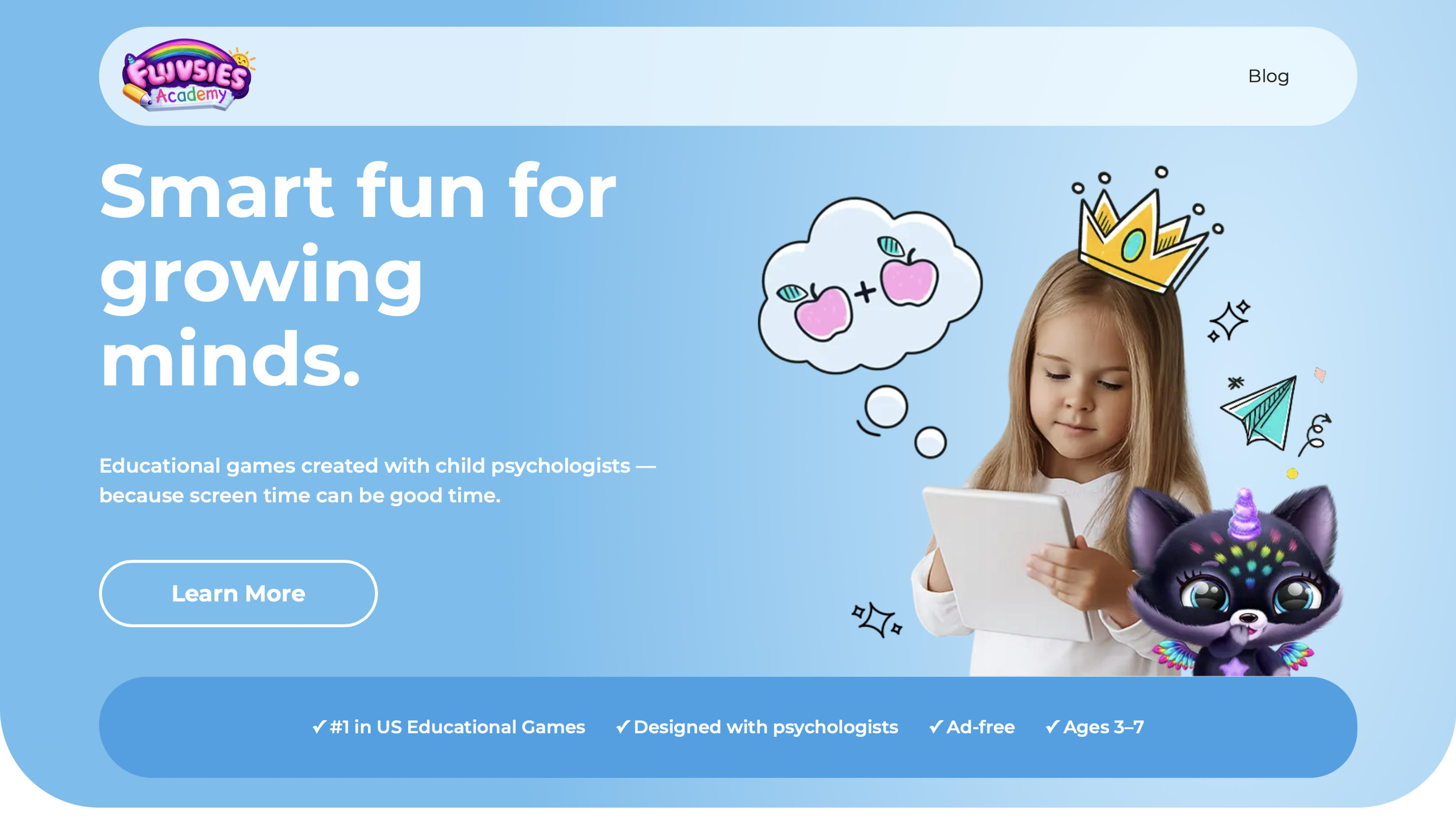
Fluvsies Academy creates joyful educational experiences for children ages 3 to 7 with guidance from child psychologists and early learning specialists. Kids move through language and phonics activities, number games that build confidence, logic puzzles that sharpen attention, sorting tasks that develop comparison skills, and creative life-skills challenges that connect play to real routines. Active learning modes encourage focus and problem-solving, while quieter profession stories introduce everyday roles such as baker, firefighter, or astronaut in a relaxed, imaginative way.
The colorful characters and gentle pacing help preschoolers stay engaged without feeling pressured. Progress adapts to each child’s speed so learning always feels just right. The entire experience remains ad-free and age-appropriate, giving parents peace of mind. Many families appreciate how the games support vocabulary growth, empathy, and everyday independence while still feeling like pure fun. The design balances structured skill practice with open moments of discovery, making it a strong fit for young learners who thrive on both guidance and freedom.
Key features
- Language, math, logic, sorting, and life-skills categories
- Active learning plus relaxing profession stories
- Designed with child development experts
- Ad-free and safe for young players
Facts and Information
- Targets early learning needs for preschool ages
- Supports holistic growth through playful tasks
- Includes vocabulary and real-world understanding
3. ABCmouse
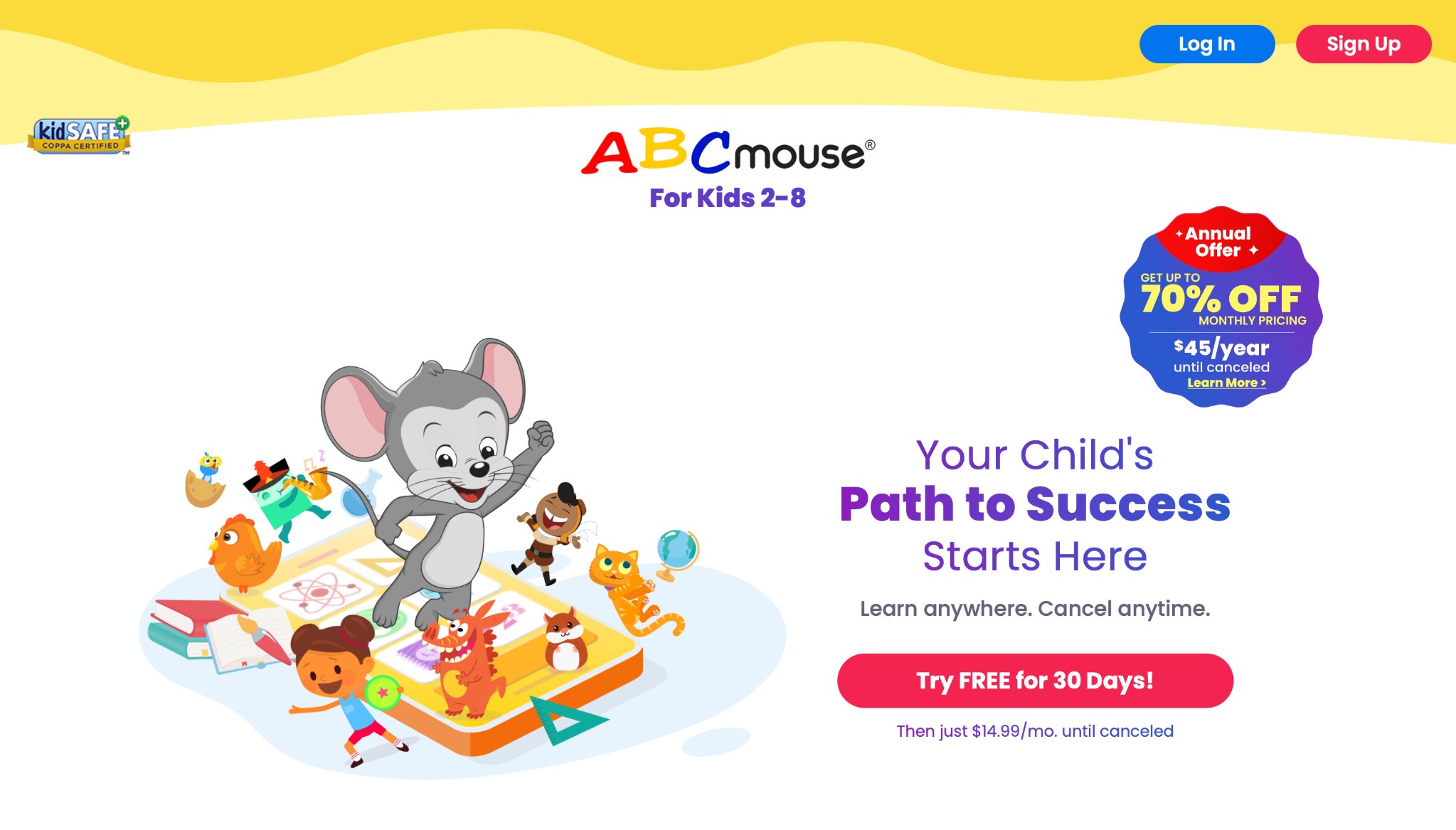
ABCmouse offers a carefully structured early education path that guides children through reading, math, science, art, and more inside a bright virtual world. Kids complete lessons across multiple levels and earn tickets and rewards that unlock new areas and virtual items, creating a sense of progress that keeps many motivated. The platform includes interactive books, songs, puzzles, and hands-on activities designed for ages roughly 2 to 8. Parents can follow learning goals and see which skills their child is practicing. Printable worksheets and offline activities extend the experience beyond the screen. The step-by-step approach helps children build foundations at a steady pace while the colorful environment makes the work feel playful. Some families find the guided structure helpful for daily routines, while others appreciate the variety of subjects available in one place. The design prioritizes engagement through rewards and exploration, giving young learners clear milestones without overwhelming them.
Key features
- Step-by-step learning paths across multiple subjects
- Virtual rewards and colorful worlds
- Printable activities for continued learning
Facts and Information
- Broad curriculum for early childhood
- Combines digital play with offline options
4. Khan Academy Kids
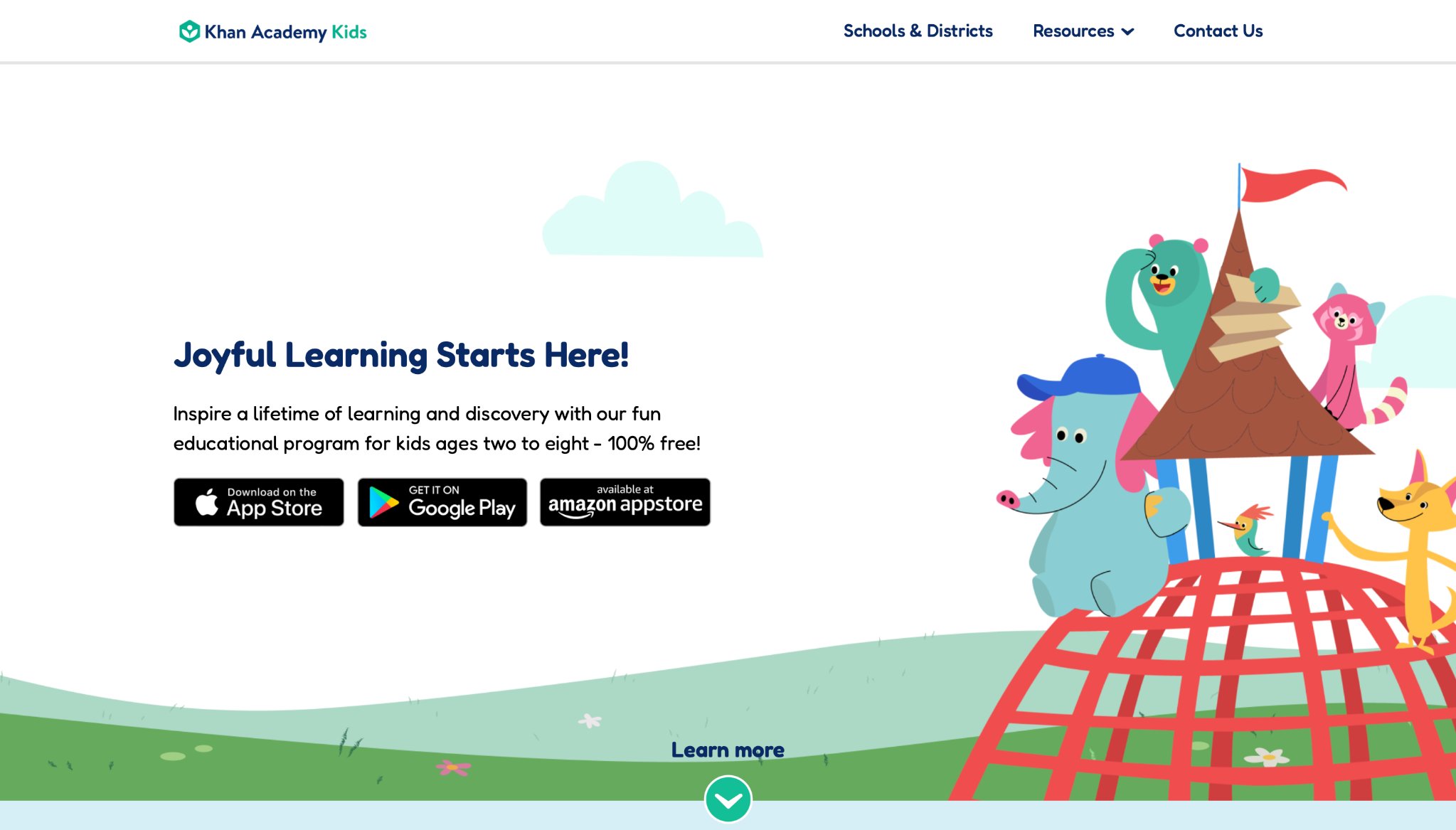
Khan Academy Kids delivers a free collection of reading, math, logic, and social-emotional activities in a friendly, story-driven format. Children interact with colorful characters, listen to stories, solve puzzles, and practice foundational skills through short, engaging challenges. The design feels like a gentle classroom that invites exploration rather than pressure. Parents can track progress and choose activities that match their child’s current interests or needs. Because the core content stays free and ad-free, many families use it as a reliable everyday option. The platform covers early literacy, counting, shapes, patterns, and simple problem-solving in ways that feel playful. Some kids enjoy the freedom to choose their own path, while others benefit from the recommended sequences. The calm pace and positive feedback help build confidence, especially for children who are just beginning formal learning. It remains a strong choice for families seeking high-quality educational play without added complexity.
Key features
- Reading, math, and logic activities
- Stories and interactive challenges
- Completely free core content
Facts and Information
- Mission-driven approach focused on accessibility
- Suitable for early elementary foundations
5. PBS Kids Games
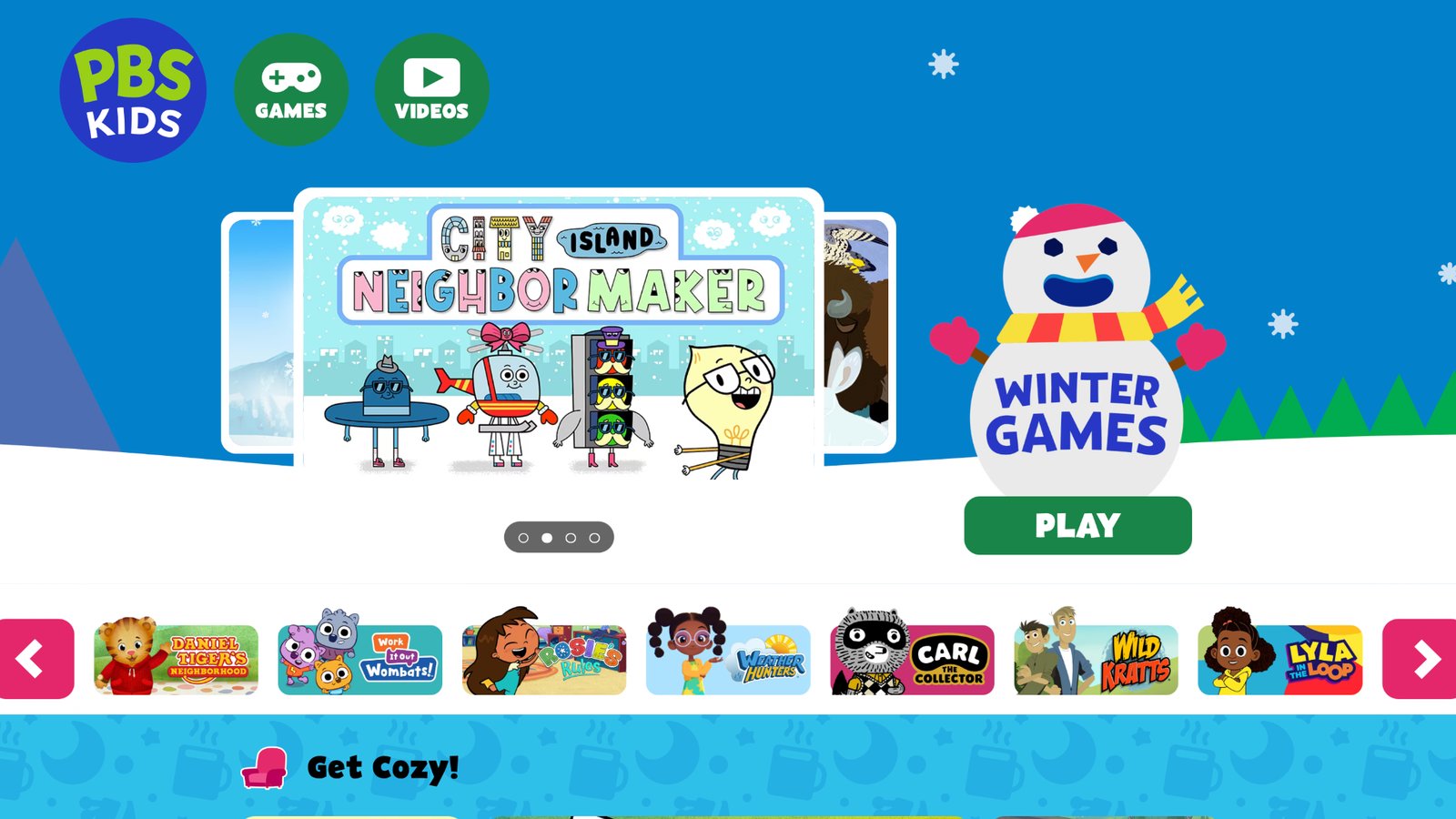
PBS Kids Games brings together a wide range of free interactive activities built around well-known characters from trusted public media. Children practice literacy, math, science, social skills, and creativity through short games, stories, and challenges that feel familiar and inviting. The content stays curriculum-aligned and designed with educational goals in mind, making it easy for parents to feel confident about the time spent. Many titles work well for quick sessions or longer play, and the interface is simple enough for young children to navigate with little help. The focus on positive messages and real-world connections helps kids connect play to everyday learning. Some activities encourage collaboration or discussion, which can turn screen time into shared family moments. The variety across subjects keeps the experience fresh, and the absence of heavy commercial pressure supports a calmer environment. Families often return to these games because they combine entertainment with clear skill-building in an approachable package.
Key features
- Character-driven games across subjects
- Short, focused activities
- Trusted public-media quality
Facts and Information
- Strong support for early elementary learning
- Easy access on multiple devices
6. Prodigy Math
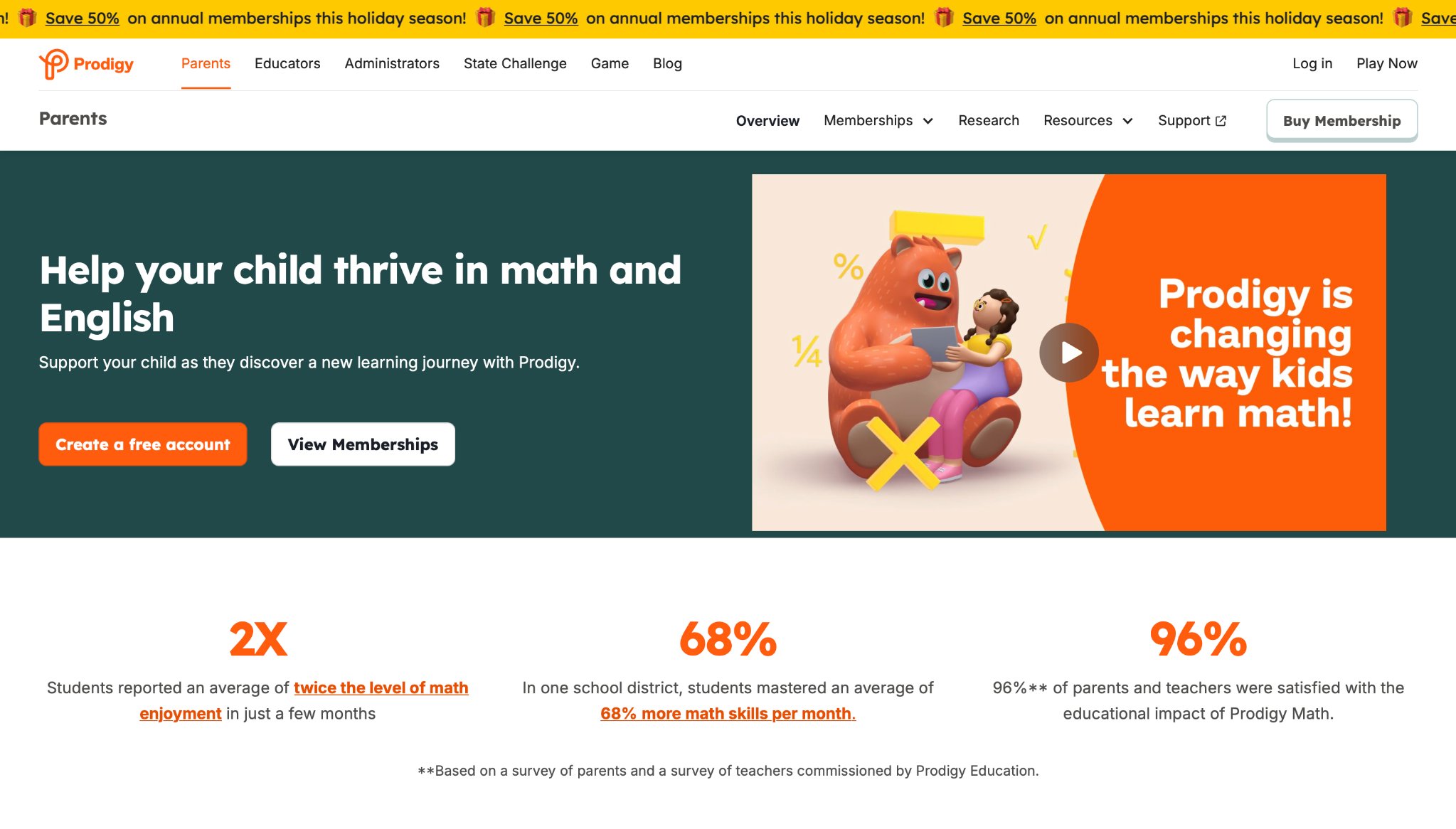
Prodigy Math turns math practice into an adventure where children create a character, explore a fantasy world, and battle monsters by solving curriculum-aligned problems. The adaptive system adjusts question difficulty based on each child’s performance, so the challenge stays appropriate without becoming frustrating. Kids earn rewards, collect pets, and progress through stories that make the math feel like part of a larger game rather than isolated drills. Many elementary-aged players stay engaged longer because the format rewards both correct answers and continued play. Parents can view reports that show which skills their child is practicing and where extra support might help. The core math content remains available without barriers, while optional extras add more customization. Some children thrive on the role-playing elements, while others appreciate the clear feedback on their progress. The blend of game motivation and real skill practice makes it a popular choice for reinforcing classroom learning at home.
Key features
- RPG-style math battles
- Adaptive difficulty
- Curriculum-aligned questions
Facts and Information
- Focuses on grades 1 through 8 math concepts
- Combines game motivation with skill practice
7. Toca Life World
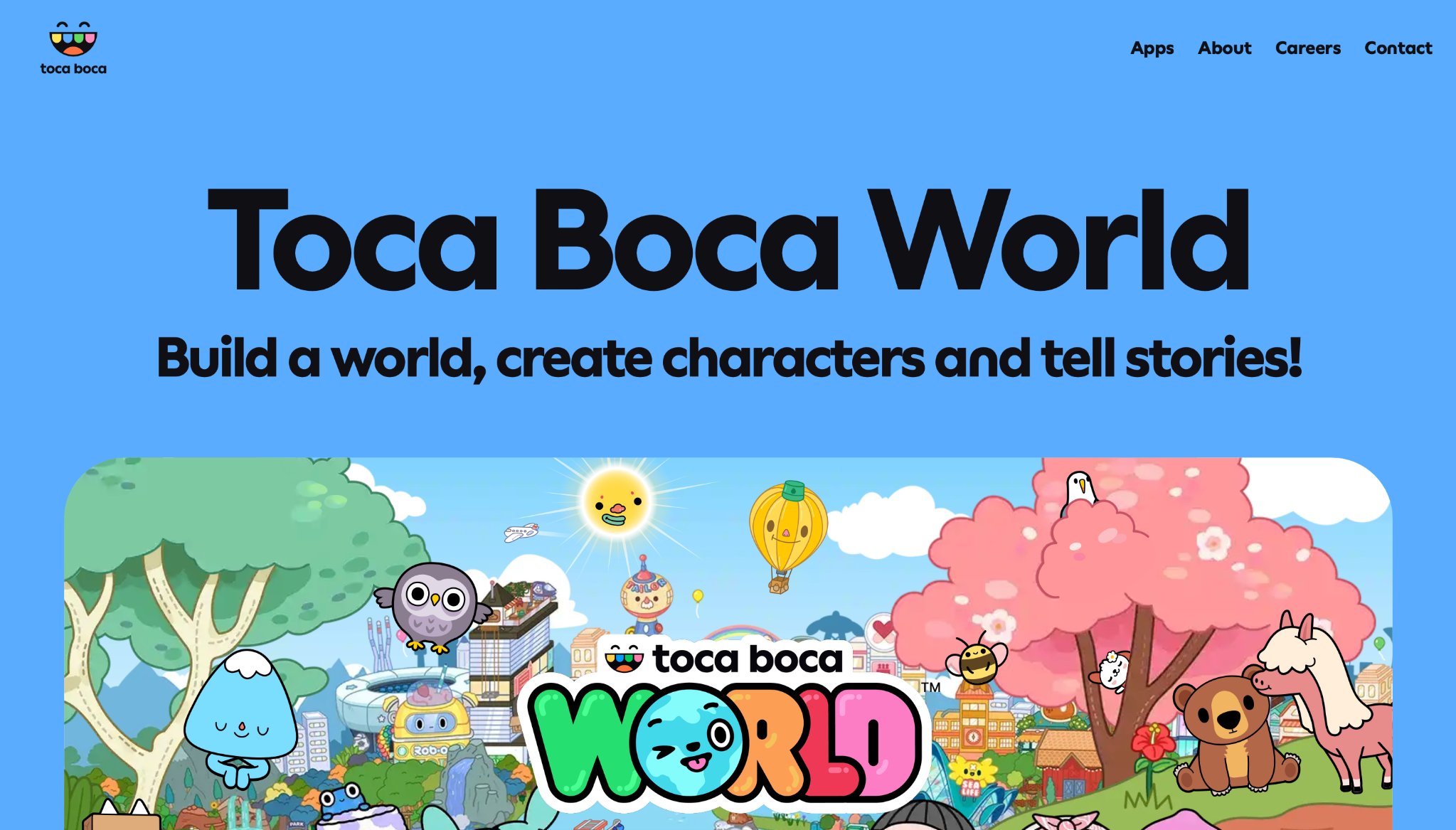
Toca Life World gives children an open sandbox where they design characters, build scenes, and invent stories without scores, timers, or right-and-wrong answers. Kids can create homes, stores, parks, and entire neighborhoods, then role-play everyday situations or imaginative adventures. The tools encourage experimentation, self-expression, and social storytelling, whether played alone or with siblings and friends. Because there is no pressure to win, many children feel free to try ideas, change their minds, and explore different roles. The visual style is bright and approachable, and the interface supports independent play for a wide age range. Parents often notice kids practicing communication, empathy, and creative problem-solving as they act out scenarios. Some families use it as a calm creative outlet, while others enjoy joining in to co-create stories. The open-ended design keeps the experience fresh over time because children can always invent something new.
Key features
- Open-ended creative tools
- Character and scene building
- No scores or time limits
Facts and Information
- Strong emphasis on imagination and storytelling
- Suitable for a wide age range of young players
8. SplashLearn
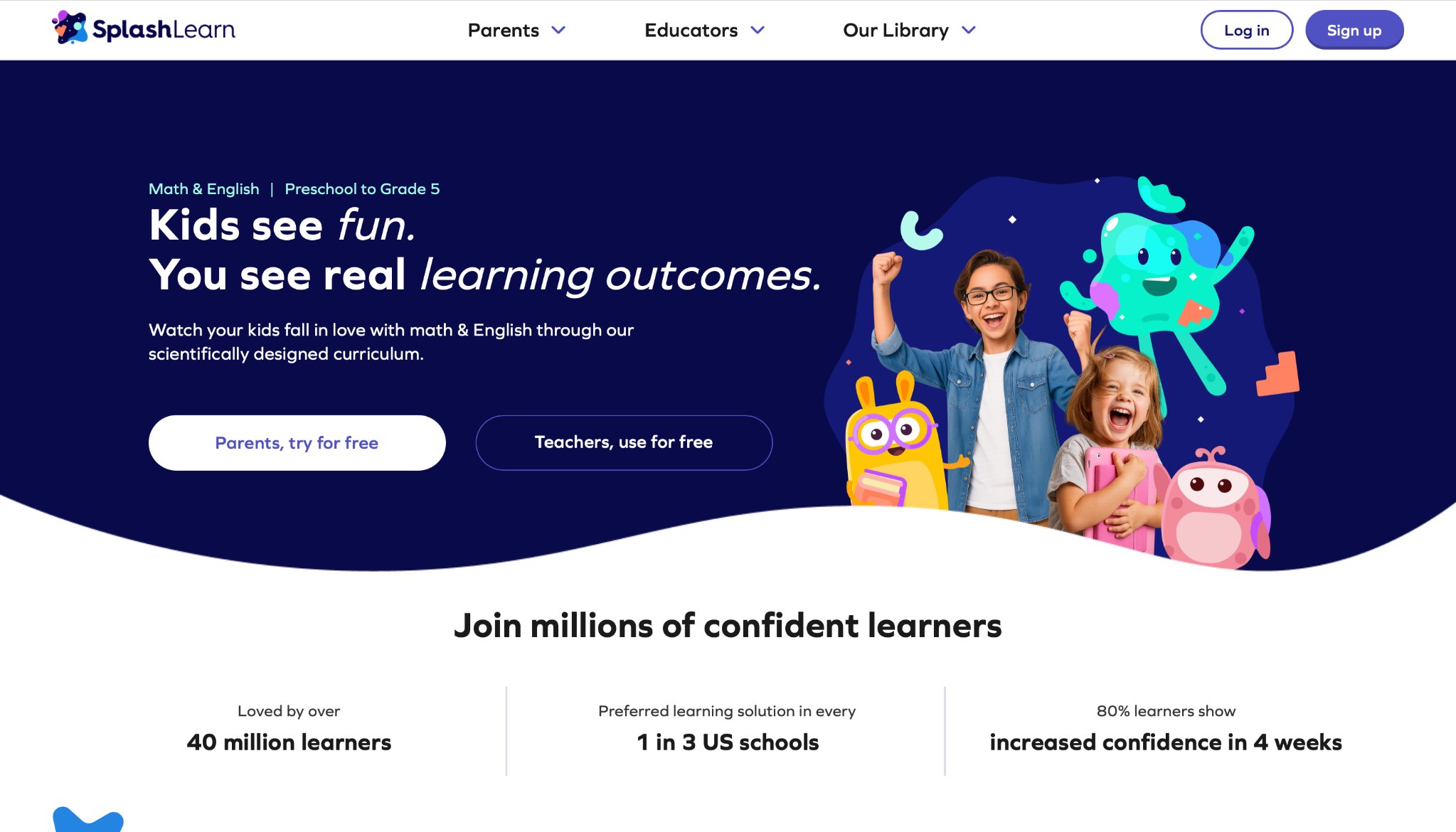
SplashLearn presents thousands of math and English games organized into adaptive learning paths that adjust to each child’s level. Kids move through themed worlds, complete challenges, and earn rewards that celebrate progress. The activities cover core skills such as counting, addition, reading comprehension, and vocabulary in short, focused sessions that feel game-like. Visual feedback and cheerful animations help maintain interest, while parents receive insights into which concepts their child is practicing. The platform works well for both independent play and guided practice at home. Some children enjoy the variety of game formats, while others appreciate the sense of moving forward through levels. The design aims to make skill practice feel rewarding rather than repetitive. Families looking for structured yet playful support in math and reading often find the combination of adaptation and engagement useful for daily routines.
Key features
- Large library of math and reading games
- Adaptive learning paths
- Reward systems for motivation
Facts and Information
- Covers a broad range of elementary skills
- Game-based approach to keep engagement high
9. Starfall
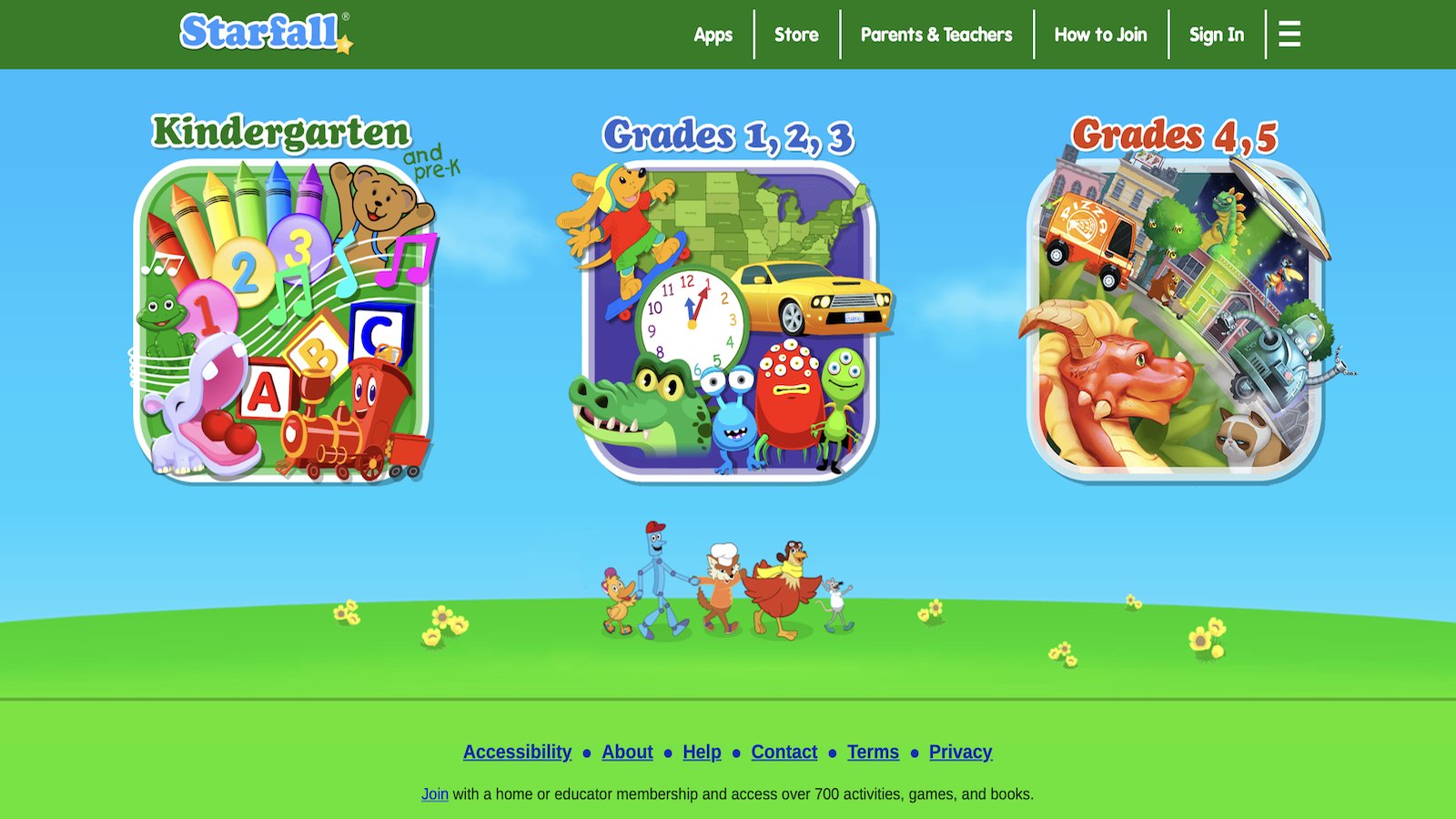
Starfall focuses on early literacy with interactive books, phonics activities, songs, and simple games that help children connect letters, sounds, and words. The calm, clear design supports beginning readers as they build confidence at their own pace. Kids can explore stories, practice letter recognition, and play with language in ways that feel gentle and encouraging. Many teachers and parents use it as a supplemental tool for phonics and reading readiness. The interface stays simple so young children can navigate with minimal assistance. Progress feels natural because the activities build on one another without rushing. Some families appreciate the focused approach that prioritizes literacy foundations, while others enjoy the musical and visual elements that make practice more enjoyable. The overall tone remains supportive, helping children develop positive feelings about reading and language.
Key features
- Phonics and early reading activities
- Interactive stories and songs
- Simple, focused interface
Facts and Information
- Targets pre-K through early elementary literacy
- Supports independent exploration
10. Coolmath Games
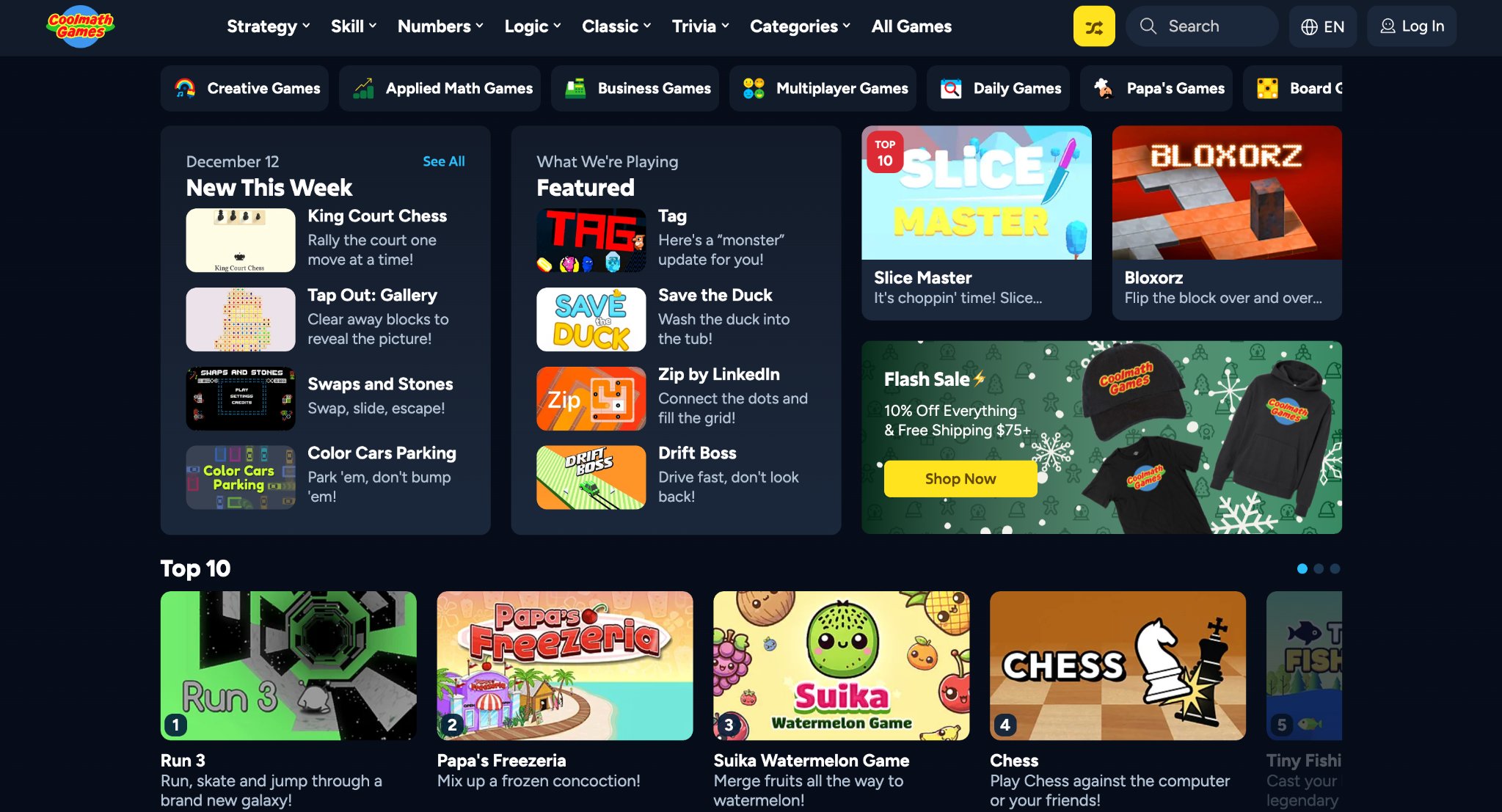
Coolmath Games hosts a large collection of browser-based logic, strategy, and math-inspired titles that challenge players to think carefully and plan ahead. Kids can try puzzles, number games, spatial challenges, and light strategy experiences that build reasoning skills without feeling like formal lessons. The variety allows children of different ages and interests to find something that clicks. Many titles load quickly and work well for short sessions or longer problem-solving stretches. The site emphasizes thinking and experimentation, rewarding persistence and creative approaches. Some games are simple enough for younger players, while others offer deeper challenges for older elementary and middle-school ages. Parents often value the focus on logic and problem-solving in an accessible online format. The open selection encourages kids to explore different types of thinking games at their own pace.
Key features
- Logic and strategy games
- Browser-based access
- Variety of difficulty levels
Facts and Information
- Emphasizes thinking skills through play
- Free access to many titles
11. National Geographic Kids
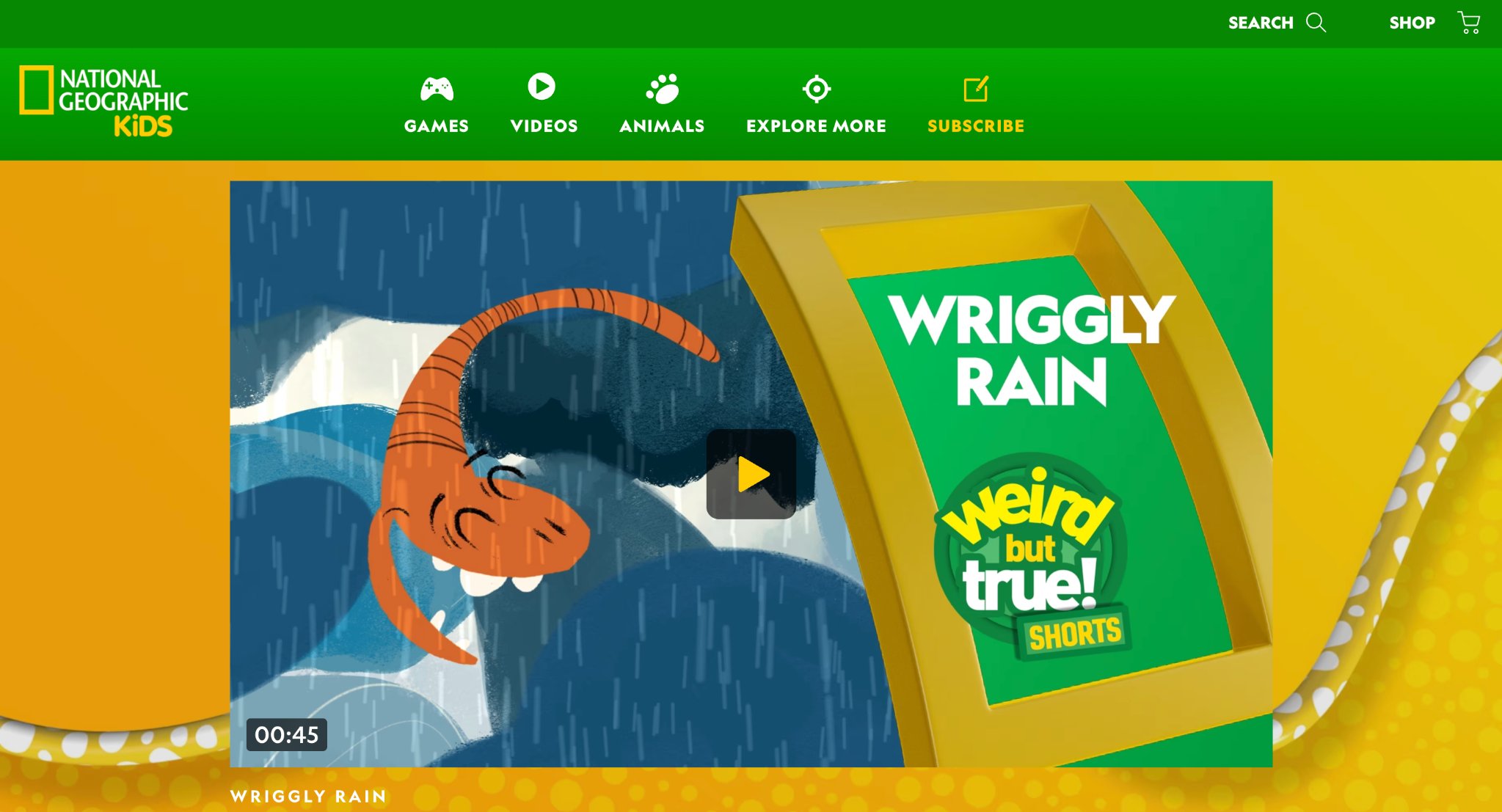
National Geographic Kids combines interactive games, quizzes, videos, and explorations centered on animals, science, geography, and the natural world. Children can test knowledge, discover new facts, and engage with high-quality educational media in playful formats. The content sparks curiosity about real places, creatures, and scientific ideas while remaining age-appropriate and visually engaging. Many activities encourage observation, comparison, and simple research skills. Families interested in science and outdoor themes often find the material a natural extension of classroom or home learning. The platform mixes quick challenges with deeper explorations so kids can dip in for short play or stay longer when interested. Some children enjoy the animal-focused games most, while others are drawn to geography or experiment-style activities. The overall tone celebrates discovery and wonder about the world.
Key features
- Science and geography games
- Quizzes and interactive explorations
- High-quality educational media
Facts and Information
- Builds knowledge of the natural world
- Suitable for elementary ages
12. Lingokids
Lingokids uses a play-based approach to introduce language, social-emotional skills, early academics, and creative activities through songs, games, and interactive stories. Children explore themed worlds with friendly characters while practicing listening, speaking, and simple problem-solving. The design emphasizes joyful discovery and movement, helping many young learners stay active and engaged. Parents can follow themes that support communication, empathy, and everyday routines. The variety of short activities makes it easy to fit into daily schedules. Some families appreciate the mix of language exposure and broader developmental play, while others value the positive, encouraging tone. The experience aims to feel like shared adventure rather than formal instruction, which can help children approach new skills with curiosity and confidence.
Key features
- Play-based language and skill activities
- Songs, stories, and interactive challenges
- Social-emotional and creative elements
Facts and Information
- Supports early communication and confidence
- Designed for joyful, active learning
13. Adventure Academy
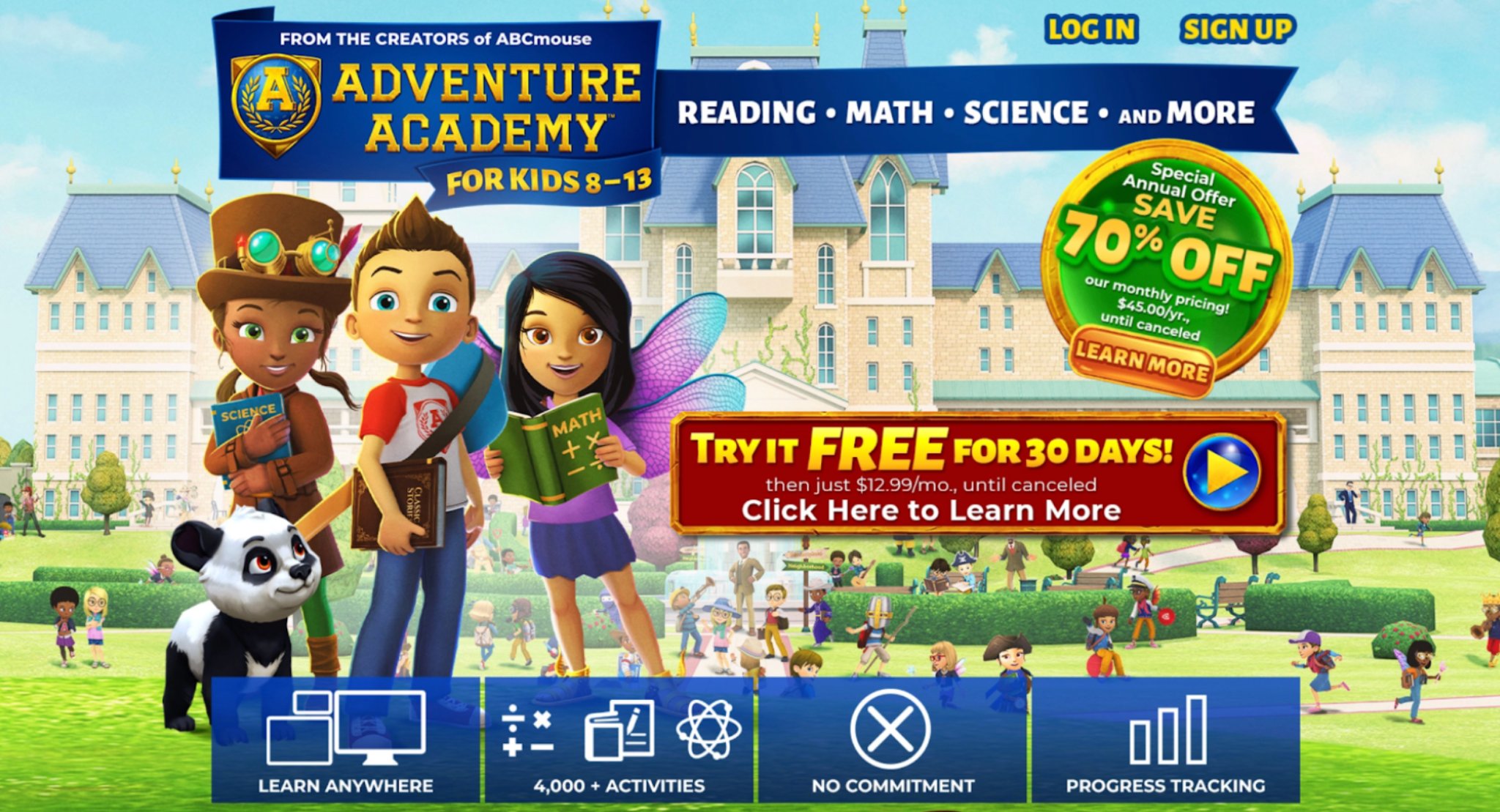
Adventure Academy creates a virtual world where children explore subjects such as reading, math, science, and social studies through quests, games, and interactive lessons. Kids create avatars, complete challenges, and earn rewards while moving through curriculum-aligned content. The game-like environment helps many elementary-aged players stay motivated as they practice core skills. Parents can review progress and see which topics their child is engaging with. The blend of adventure and structured learning offers a middle ground between pure entertainment and traditional practice. Some children enjoy the social and exploratory elements, while others focus on completing academic goals. The platform aims to make broader learning feel like part of an ongoing story rather than isolated tasks.
Key features
- Multi-subject quests and interactive lessons
- Avatar creation and reward systems
- Curriculum-aligned content
Facts and Information
- Targets elementary skill development
- Combines adventure with academic practice
14. Funbrain
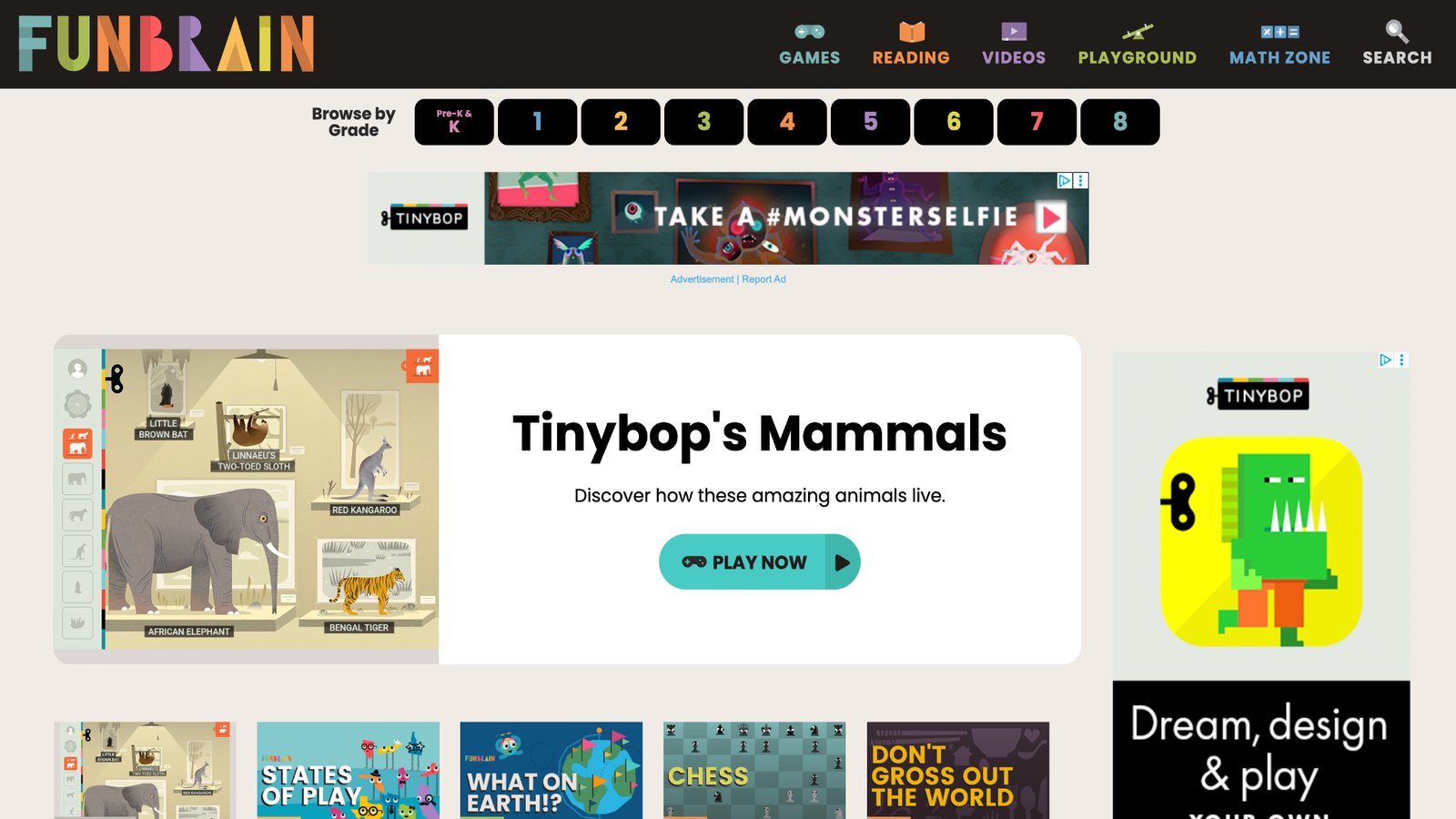
Funbrain has long offered a welcoming mix of reading, math, and logic games designed for children from pre-K through the elementary years. Kids can jump into arcade-style challenges, solve colorful puzzles, explore interactive stories, and practice core skills in short, approachable sessions that feel more like play than formal study. The site works well in a browser, making it easy to start quickly at home or during short breaks. Many titles focus on number sense, word recognition, sequencing, and simple problem-solving without requiring long attention spans. Parents and teachers often turn to it as a low-pressure way to reinforce classroom concepts or simply give children a productive screen option. The variety lets kids switch between different types of thinking activities so the experience stays fresh. Some children enjoy the classic game formats that feel familiar and rewarding, while others like exploring the story-based options that quietly build literacy. The overall tone stays light and encouraging, helping young players build confidence as they practice. Because the games load quickly and require little setup, Funbrain fits easily into busy family schedules and remains a reliable choice for casual educational play.
Key features
- Reading, math, and logic games
- Browser-friendly access
- Mix of puzzle and arcade-style play
Facts and Information
- Supports pre-K to elementary skill practice
- Easy entry for casual educational play
15. Duolingo ABC
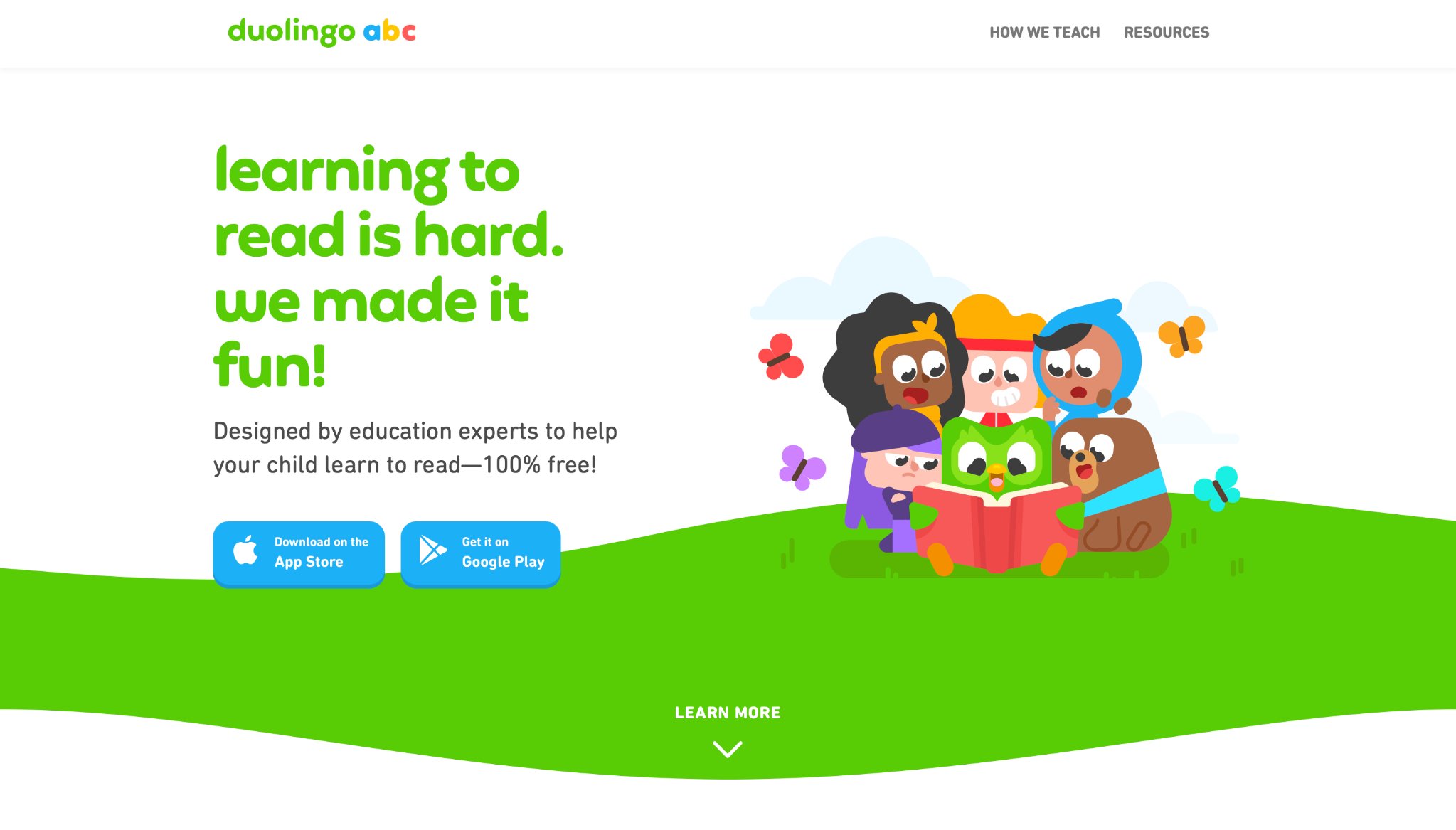
Duolingo ABC focuses specifically on early reading and literacy skills through short, interactive lessons that teach letter sounds, word building, phonics patterns, and simple stories. Young children move through clear sequences that celebrate small successes with cheerful animations and positive feedback, helping them feel capable as they learn. The interface is clean and designed for little hands, so many kids can practice with minimal help after a short introduction. Lessons stay brief, making it easy to fit into daily routines without overwhelming attention spans. Parents often appreciate the focused approach that prioritizes the building blocks of reading readiness. Some children enjoy the playful characters and game-like rewards that turn practice into a fun habit, while others benefit from the consistent structure that supports steady progress. The design encourages independent exploration yet still works well for shared sessions where a parent can join in. By keeping the experience positive and achievable, Duolingo ABC helps children develop both foundational skills and a more confident attitude toward reading. It remains a practical option for families looking to support early literacy in a gentle, engaging format.
Key features
- Phonics and early reading lessons
- Short, interactive activities
- Clear progress and positive feedback
Facts and Information
- Supports beginning literacy skills
- Designed for independent or shared practice
How Interactive Games Support Healthy Development
Quality interactive games give kids chances to practice decision-making, persistence, and creativity in low-stakes settings. Caring for virtual characters can strengthen empathy. Solving simple puzzles builds focus and spatial skills. Open-ended design lets children experiment without fear of failure. Many parents find that purposeful screen time reduces arguments because the activity feels valuable. Games that work offline after download also help during travel or limited connectivity. Choosing titles with clear developmental goals turns everyday play into meaningful practice. Approaches that emphasize learning through play examples help children connect digital experiences to real-life skills such as responsibility and emotional awareness. Families interested in social emotional games for kids often notice growth in confidence and kindness through gentle, character-driven activities. Additional guidance appears across the TutoClub blog for parents exploring different ways to support healthy screen habits.
Tips for Choosing and Using Games Together
Match the game to your child’s current interests and age. Start with short sessions and join in sometimes so play becomes shared. Look for ad-free options and clear parent information about content. Rotate titles to keep curiosity high and pair digital play with offline activities like drawing or outdoor exploration. A single subscription that opens many games often simplifies decisions for busy families. Regular updates and multi-device support make the experience more flexible over time. Parents choosing online educational games for kids benefit from platforms that balance fun with skill-building across creativity, focus, and problem-solving. Those seeking fun games that are educational for kids can explore collections that keep engagement high while supporting growth. Exploring the full range of educational kids games helps families find options that fit different ages and interests.
Frequently Asked Questions
What makes an interactive online game good for kids?
A strong interactive online game invites children to take an active role by tapping, deciding, creating, or caring for characters rather than watching passively. It matches the child’s developmental stage and supports skills such as creativity, focus, problem-solving, and emotional awareness while remaining enjoyable. Safe design that stays free of distractions helps protect attention and privacy. Games that mix purposeful activities with open-ended play often hold interest longer and turn everyday screen time into meaningful practice. Platforms that offer a curated collection of research-backed titles make it easier for families to find options that feel both fun and valuable.
How can parents balance screen time with interactive games?
Parents can set simple, consistent limits and choose titles that build real skills so the time spent feels purposeful. Joining in for short shared sessions turns play into connection and helps reinforce what children are practicing. Following digital time with offline activities such as drawing, outdoor exploration, or family conversation creates a natural rhythm. Selecting educational games designed for healthy habits and developmental growth reduces conflict because the experience itself supports positive routines. A single subscription that unlocks many varied titles can simplify choices and keep the experience fresh without constant decision-making.
Are there interactive games that work without constant Internet?
Many quality interactive games online allow children to download content and continue playing offline after the initial setup. This flexibility supports travel, car rides, or moments when connectivity is limited. Once the games are available on the device, kids can enjoy creativity, problem-solving, and skill-building activities without interruption. Platforms that support multi-device access further increase convenience for families. Choosing options with offline capability after download helps maintain balanced screen time in a wider range of everyday situations.
What age range benefits most from educational interactive games?
Young children through the elementary years gain the most from thoughtfully designed interactive play that matches their current abilities. Titles that adapt to different skill levels grow with the child and keep the experience relevant over time. Early activities that focus on creativity, focus, empathy, and simple problem-solving lay strong foundations for later learning. Open-ended design lets children experiment freely while structured elements provide gentle guidance. Families often find that the right mix of playful challenges supports confidence and curiosity across these formative years, with age-focused ideas shared in the best games for preschoolers.
How do interactive online games support healthy child development?
Interactive online games give children low-stakes chances to practice decision-making, persistence, and creative thinking. Caring for virtual characters can strengthen empathy and responsibility, while simple puzzles and sorting tasks build focus and spatial awareness. Open-ended experiences encourage experimentation without fear of failure, helping kids develop confidence. When games emphasize purposeful play rather than passive watching, screen time becomes a positive part of daily growth. A curated collection of research-backed titles that prioritize creativity, focus, and social-emotional skills helps families turn everyday play into meaningful development, as discussed in guides on social emotional games.
Read Also:
- Best Brain Games For Kids In 2026
- Best Safe Kids Games In 2026
- Best Online Educational Games for Kids
- Best Educational Games for Kids
- Best Fun Games That Are Educational For Kids in 2026
Help kids learn, create, and grow through interactive online games at TutoClub.